Sunday, June 15, 2014

The Developmentalist State is Cannibalizing Taiwan

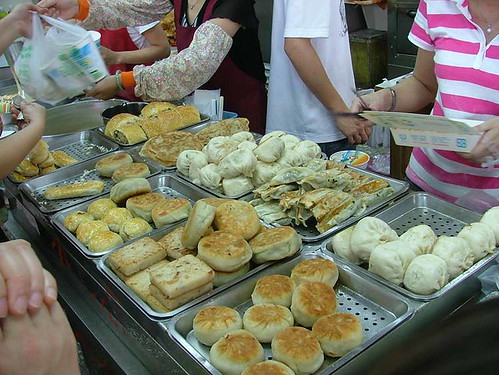
Goodies at a small shop near Jiufen.

It's a wondrous transmutation, where the blood of one man is turned into the money of another. Lead into gold is nothing to it. 

Several good pieces in Taipei Times this week on the developmentist state that runs the domestic political economy and its negative effects on local lives and the island's environment. Commentator Lai Min-huang observes that Chiayi floods are man-made:
On June 3, Changhua, Yunlin and Chiayi counties and Greater Tainan were hit by a series of thunderstorms. Most streets in Chiayi City are supplied by the high-lying Lantan Reservoir (蘭潭水庫) on the east side of the city toward lower areas on the west side. Given that Chiayi is built on hilly land about 100m above sea level and considering its geological composition of red soil and gravel beds, it is not an area in which floods should easily occur.

The main cause of the floods is connected to the rising property prices over the past decade. Before development, most of the land was hilly terrain that effectively drained and held back floods. The hinterland around Chiayi Park and the Chiayi Botanical Garden performed a similar function. However, almost all of these hills have been developed into luxury homes and non-agricultural village estates for the rich. These commercial developments are paved with impermeable surfaces.

Consequently, even Chiayi University’s Lantan campus is awash with mud. When rain fell on Fenci Lake (奮起湖) and the upper reaches of the Bajhang River (八掌溪) 20 years ago, it took about eight hours to reach the south side of Chiayi City 40km away. Now it takes little more than two hours to arrive.
The housing bubble is driving ever expanding development of hills and mountains near cities, a process that began in the 1990s after the first housing bubble. The author notes that the flooding is also linked to the greater power of storms and rising seas driven by humans heating the earth, an outcome of developmentalist mentalities everywhere. The rapidity with water from the hills now reaches the sea, thanks to construction-industrial state concreting of so many of Taiwan's rivers, was a major cause of the massive flooding in southern Pingtung after Morakot.

This constant development is laced with bitter irony for the island's ordinary people. Another TT commentator noted this week:
However, not long ago, the Ministry of Justice released data comparing housing prices and incomes. The comparison allows observers to estimate how affordable housing is. The ministry’s data ranked Taipei and New Taipei City first and third in the world, with housing price to annual income ratios of 15.01 and 12.67 respectively. The loan burden was 63 percent and 53 percent respectively, resulting from the government allowing the commercialization of housing.

The public housing that the administration promoted in the past was built at below-market costs, but it was common knowledge that once the properties were sold on to future buyers, their prices would be more equivalent to the going market rate.

This was undoubtedly because the government helped the public drive up housing prices, which was why the public housing policy failed and was called “lotto housing.”

.....

The affordable housing policy that the government started pushing in 2010 might sound novel and original in name, but it is not very different from the old public housing policy. It aims to cheaply sell land to developers who stand to make a profit on construction work.
The writer observes that this development proceeds apace, despite the fact that the cities are filled with empty homes. This is not difficult to explain: subsidies for construction and land development make it so lucrative that a developer need merely fill half the homes in a large project to break even.

The policy the government has selected to bring down housing prices is to build more housing. Who benefits? People who build homes and develop land, of course. There are many policies the government might choose, such as subsidizing rents, direct subsidies to workers to pay for housing, or buying empty residences and renting them. But none of these policies benefits the construction-industrial state that runs Taiwan because they do not result in new land being "developed" or new buildings being thrown up.

The writer's main point is simple: public housing should be for rent only. If you make it sellable, people will simply buy it at the below market price it is offered, and then sell it at the market price, realizing a quick profit. Boom! No wonder they say the lucky recipients of the right to buy public housing have hit the lottery! Thus, public housing simply becomes another speculator's tool helping to keep market prices high and the price of homes out of reach of ordinary people. The only reason people can survive is because rents remain astoundingly low; not many places where you can pay $300 US a month rent on a home that might sell for $500,000 US. The vast number of empty buildings paradoxically keeps rent low. If they ever rise, there'll be blood in the streets...

A 2012 piece commented on the government's intimate relation with construction firms in the public housing market:
Bidding for the government’s affordable housing project is finished and “lottery-style” public housing will be built next to the A7 station on the future airport MRT line. However, the Housing Act (住宅法) passed late last year does not define “social housing.” It states only that 10 percent of new social housing must be reserved for disadvantaged groups. The government shirks all responsibility for the project, which will be a BOT project favoring construction companies. Housing prices will be announced on a district-by-district basis so pricing is neither transparent nor based on real market prices.
That writer also noted that other countries in the region social housing provision exceeds Taiwan's.

Destroying the environment? Consuming the future of the nation's workers? Yes, and taking a wrecking ball to justice. A commentary in the Taipei Times pointed out:
The reason the corruption case involving former Taoyuan County deputy commissioner Yeh Shih-wen (葉世文) has caused such alarm is that Yeh was also for a long period in charge of the Construction and Planning Administration. In this position, he passed countless urban planning and renewal projects, as well as land zoning changes for non-urban areas, many of which would have involved forced land expropriation.

Past land expropriation appeals have been mere formalities, mostly for show, so if the Urban Planning Commission has passed a motion, the subsequent land expropriation is practically guaranteed. A case in point is the verdict handed down by the Greater Taichung High Administrative Court on the Dapu Borough (大埔) demolitions in Miaoli County, the appeals for which were cursory at best, taking on average little more than five minutes each to go through.

It has been many years since martial law was lifted, yet the government has not changed in terms of its excessive use of land expropriation. If anything, things have become worse in the past few years. For example, in the period up until late December 2012, the government completed the expropriation of 95 zones, involving about 7,672 hectares.
The mere formality aspect of appeals processes is common whenever the big money touches on an aspect of Taiwan life, from land development to ECFA and the services pact, whose KMT-led "review" was originally declared over before it had begun.
_______________________
Don't miss the comments below! And check out my blog and its sidebars for events, links to previous posts and picture posts, and scores of links to other Taiwan blogs and forums!
Future KMT Candidates Positioning for the Presidency

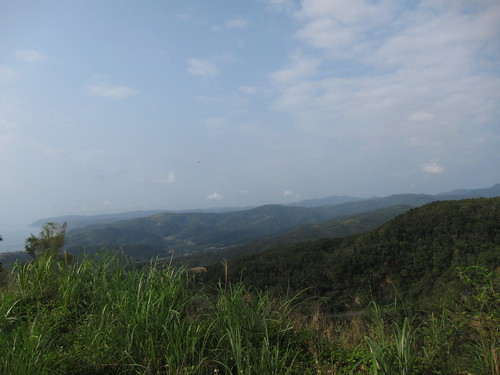
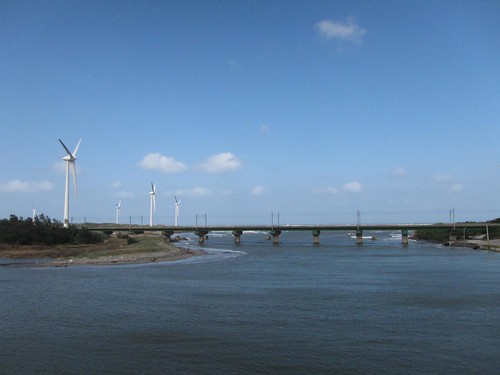
East coast above Tawu

One reason that Ma Ying-jeou was able to get elected is that almost alone among the politicians of his generation he was able to clench his teeth for a short period before each election and spit out the words "I am Taiwanese." This was purely an election tactic, dispensed with as soon as he was safely in office.

So it was with great interest that I watched three leading contenders for the KMT's presidential candidacy this week aver that the citizens of Taiwan (ROC) could decide their own fate (Taipei Times), along with Ma Ying-jeou hisownself.

The Affair of Who Decides began last week when Tainan Mayor William Lai gave an interview in China in which he gave the standard DPP line that the future of Taiwan should be decided by its 23 million people, along with some other comments on Tiananmen and other topics that cause sudden changes of underwear at high levels in Beijing. Chinasmack summarized:
Several days ago, Mayor of Tainan and DPP party member William Lai said in an interview that “the future of Taiwan shall be collectively decided by the island’s 23 million citizens.” During a routine press conference of the PRC’s Taiwan Affairs Office of the State Council this morning, spokesperson Fan Liqing responded: “Any issue touching upon Chinese sovereignty and territorial integrity must by collectively decided by all Chinese people including our Taiwan compatriots.” Fan also reiterated China’s firm stance against Taiwanese independence.
William Lai is looking mighty presidential with comments like this, but he needs a period of service in the north or at a higher level so he can increase his name recognition.

Meanwhile, the CCP's claim that all "Chinese" should decide Taiwan's fate was the object of much merriment on the internets, since Chinese cannot even decide their own government. Note that spokesperson gave the typical my-way-or-the-highway version of Beijing's demands: we think everyone in China should decide Taiwan's fate, so long as they don't decide to make it independent. This is simply the PRC version of Ma Ying-jeou's ROC version that the 23 million people of Taiwan should determine the island's fate so long as there is no independence. That is why, in the WantWant piece above, Ma's "no independence" position was immediately reiterated after he made the comment about who determines Taiwan's fate.

Thus, the response of the KMT hopefuls Jason Hu (Mayor of our Taichung), Eric Chu (New Taipei City) and Hau Long-bin (Taipei)....
The future of Taiwan is a decision to be made by its 23 million people, three Chinese Nationalist Party (KMT) mayors said yesterday in response to controversial comments made by a China’s Taiwan Affairs Office (TAO) spokesperson.

Taipei City Mayor Hua Lung-bin (郝龍斌), New Taipei City Mayor Eric Chu (朱立倫) and Greater Taichung Mayor Jason Hu (胡志強) were welcoming a planned visit to Taiwan by China’s Taiwan Affairs Office Director Zhang Zhijun (張志軍).
Hau, interestingly, is positioning himself with the growing Taiwanese consciousness. He's slyer than I gave him credit for, or else he has really good handlers. He also took a moderate position on the Sunflowers. This group has learned from Ma's example. Chu announced he would not run for Mayor again, meaning that Hau and Chu are positioning themselves for 2016. Hu faces an uphill battle in Taichung. Just yesterday I talked with some small shop owners, and the consensus is that Hu will lose to Lin, though of course, they noted, when those resources of the KMT come into play...

This affair also shows that the independence position -- that's what determining your own fate really means -- is totally mainstream. Paul Lin commented on another aspect of it:
During his visit to China, Lai was neither haughty nor humble. When he talked about Taiwan independence, it was because a Chinese academic had raised the subject. Lai showed a lot more guts than Mainland Affairs Council Minister Wang Yu-chi (王郁琦) did when Wang visited Nanjing University. Nonetheless, Lai is a moderate in the DPP — about as moderate as you can get without being pro-unification.
and also observed:
Meanwhile, former vice president Lien Chan (連戰) and his family have followed a path of allying themselves with the Chinese Communist Party (CCP) to combat Taiwan independence. The reward they seek is to add even more to the Lien family’s already vast economic interests.

Now the KMT has put forward Lien’s son, Sean Lien (連勝文), as its candidate for mayor of Taipei — in an attempt to use the “new generation” to cover up its true nature as a party-state vested interest group.
The Lai Affair shows how out of touch Sean Lien really is.

Another nifty facet of Lai's words is that they put the onus on China for straining relations, as one commentator argued. Meant to shore up Ma's pro-annexation policies, they actually compelled him to reiterate support for Taiwanese to decide their own future, which must have been deeply distasteful to him, and reminded Taiwanese of Beijing's hateful expansionist policies.
_____________________
Daily Links:
_______________________
Don't miss the comments below! And check out my blog and its sidebars for events, links to previous posts and picture posts, and scores of links to other Taiwan blogs and forums!

Friday, June 13, 2014

Facebook Stories

Looks like the DPP has decided to support Ko in Taipei against Sean Lien. Taoyuan is looking more interesting by the minute, lots of stuff on the blog tomorrow, stay tuned. Meanwhile....

Taiwan joke I heard the other day:

Q: How do you know the person standing in front of you is Chinese?
A: They keep trying to persuade you that YOU are Chinese....

A friend posted this to her Facebook:

Taiwan's Invisibility

A medical researcher at X University mentioned it's getting harder for Taiwanese to participate in international conferences. The pharmaceutical companies used to pay for Taiwanese scholars to attend, but now they pay mostly for mainland Chinese.

At the last conference she attended, her nationality was listed as "Taiwan, Province of China" and this was even on her name tag! In the past, asking conference organizers to correct it might get a positive response. These days the organizers get angry!

I suggested she get the message across in a more personal way, by talking to people face-to-face: When meeting someone at the conference, shake their hand, and point to your name tag, smiling brightly, and say, "I'm (name)--and by the way, Taiwan is NOT part of China!" Laugh a bit, then immediately return to a conference-related topic.

China can bully you internationally, but no one can stop you from speaking your mind...at least, not here.

When you chat with mainland tourists, if you don't say anything about it, they really do go home thinking you're okay with Taiwan as part of China, just like one big family!

Instead, would you dare to say, "We like people from mainland China, but we don't want to have the same government," and then tell them why?

Because Taiwanese are so quiet, so humble, and prefer to avoid conflict, most mainland Chinese actually have NO IDEA that Taiwanese people might not be happy to be part of China. I'm told it can be quite a shock when they find out.

Isn't it possible to remain gentle without becoming...invisible?
_______________________
Don't miss the comments below! And check out my blog and its sidebars for events, links to previous posts and picture posts, and scores of links to other Taiwan blogs and forums!
Wednesday, June 11, 2014

There is no dealing with Beijing

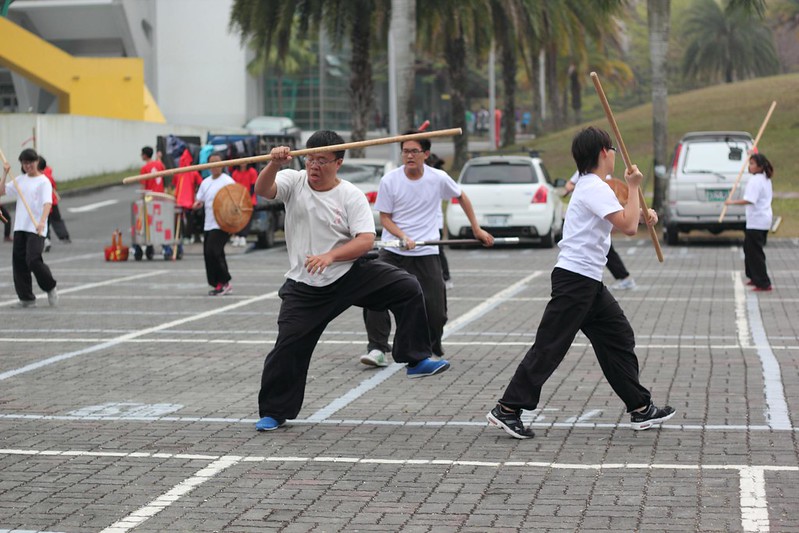
Martial dance.

J Michael spent some time on China's first ever White Paper on Hong Kong.
China on June 10 issued its first-ever white paper on “one country, two systems” and the current state of things in Hong Kong, the former British colony that was re-unified with the Mainland in 1997. While the document contains little that is unexpected in terms of rhetoric that expounds the virtues of the system or calls for patriotism, the timing of its release — this summer promises to be eventful as activists prepare for a series of sit-ins, “unofficial” referenda and other escalatory measures in defiance of Beijing and its allies in the territory — is very telling. The unintended message of the white paper is that Beijing is worried, and that further restrictions are to be expected. There are a few lessons and warnings in there for Taiwan.
As my friend Tommy Patterson remarked on Facebook, it is not as though we didn't know that One Country Two Systems is a facade. Democracy in Hong Kong threatens Party control over China, while democracy in Taiwan keeps it free. Hence the paper says that Taiwan would be able to maintain its capitalist system -- note, not its democracy -- over a long time, which, as J Michael observes, is not indefinitely.

One common position held by pro-unificationists who are not Chinese is that Taiwan should annex itself to China now to get "the best deal" that it can. But Beijing wants Taiwan annexed and its democracy crushed. Cole writes:
Hence the several warnings in the white paper, such as: “The high degree of autonomy of HKSAR is not an inherent power, but one that comes solely from the authorization by the central leadership. The high degree of autonomy of the HKSAR is not full autonomy, nor a decentralized power.” [italics added by JMC.] We are told who is boss, and reminded that autonomy could be denied should things degenerate in the territory. More ominous is a passage in the section “Fully and Accurately Understanding the Meaning of ‘One Country, Two Systems,’” which emphasizes that China is, in the end, a “single-system nation” (中華人民共和國是單一制國家). The mask is off: one country lies supreme, and there is absolutely no reason to believe that Beijing is even willing to countenance a more permissive model when it comes to Taiwan, as was made perfectly clear late last month when the Taiwan Affairs Office shot down a “greater one China” proposal initiated on Taiwan’s side to help resolve the impasse in the Taiwan Strait.
The resulting political system will depend on the "goodwill" of Beijing. Which has none. Beijing's treatment of Tibet (tearing up the 17 point agreement) and Hong Kong (delaying or not implementing agreements) shows that idea of "a good deal" is a delusion. In neither example has Beijing kept its promises. There is no good deal to be had from Beijing, it's Beijing's way or war.
_______________
Daily Links:
_______________________
Don't miss the comments below! And check out my blog and its sidebars for events, links to previous posts and picture posts, and scores of links to other Taiwan blogs and forums!
Tuesday, June 10, 2014

Early polls taipei race

The Kuomintang News organ reports....
According to the latest opinion poll conducted by Apple Daily on the support ratings of candidates in the Taipei City mayoral election, Ko Wen-je (柯文哲), a pro-Green camp independent, leads the KMT's Sean Lien (連勝文), son of former Vice President Lien Chan (連戰), by approximately 11 percentage points (47.35% vs. 36.73%), while Sean Lien leads DPP legislator Pasuya Yao (姚文智) by 41.96% to 39.27%. Yao won the DPP's first-stage primary for the Taipei mayoral election in a public opinion poll on May 14.

According to an opinion poll conducted by TVBS, Sean Lien trails Ko by 6 percentage points (39% vs. 45%) but leads Pasuya Yao by 12 percentage points (46% vs. 34%)
Well well. This doesnt really mean anything. The "independent" candidate Ko I expect to crash and burn over some ill-thought or too-honest remark, while Pasuya Yao is simply an attention troll. Polls like this reflect public dissatisfaction with Sean Lien, who is getting this position because he is KMT royalty and not because he put in years of work in the trenches on behalf of the Party. Likely the money from A Certain Party will roll down to the precinct captains, the votes will be properly corralled and disciplined, and Lien will win in a total travesty. Don't expect too much from Taipei....

UPDATED: A reader observes that the polls are probably matched for ethnicity to the national ratio of about 15% mainlander, rather than the 30% that Taipei hosts. That may account for the discrepancy. Another reader pointed out that lowball polls in Blue papers are a way of motivating KMT voters. However, Apple Daily had generally the same numbers.
_______________________
Don't miss the comments below! And check out my blog and its sidebars for events, links to previous posts and picture posts, and scores of links to other Taiwan blogs and forums!
Monday, June 09, 2014

Truku aboriginals shut down Mugumuyu over excessive tourism, police vow to prosecute

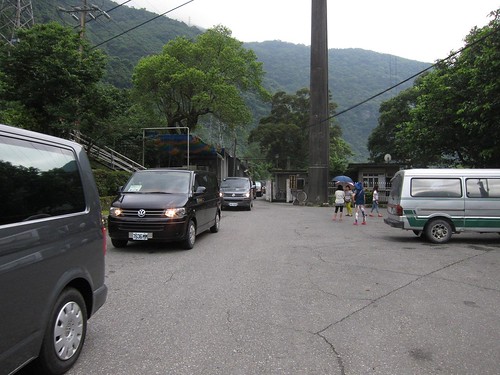
Vans pouring out of Mugumuyu.

UPDATE: Don't miss the comments below.

Mugumuyu is a stunning and rich river gorge southwest of Hualien city, just west of Liyu Lake. Last month I biked into Mugumuyu to enjoy its beauty, but got rained out. Nevertheless, I noted the number of small buses and vans flowing in and out, an appalling number of visitors, when supposedly the number was controlled. So I was dismayed, but unsurprised, to hear that the local aboriginal community had finally taken matters into its own hands and shut the road into their community down, to block the endless flow of vans in and out. TT observes:
Prior to blocking the road, the residents performed a ritual at a monument erected in remembrance of 39 villagers who were buried by mudslides triggered by Typhoon Ofelia in 1990 by firing gunshots into the air and sending up smoke signals, declaring to their ancestral spirits their determination to defend their traditional territory.

“It’s not that we do not welcome visitors, but since our village has been opened to outside visitors in 2006, there have been on average more than 100 minibuses bringing in about 3,000 visitors per day on holidays,” village council chairman Masaw said.

“The large number of vehicles has polluted the air, creates traffic jams on the roads and makes it difficult for us to go to work in the fields,” he added.

Rakaw Didi, a spokesman for the village, which is administratively known as Tongmen Village (銅門), said that to maintain the village’s ecology and quality of life, the village council passed resolutions at the end of last month to close off the village for a year and to ask future visitors to enter into the village on foot, not in cars.
Now the local news is reporting that the police plan to prosecute the aborigines. Of course.
_______________________
Don't miss the comments below! And check out my blog and its sidebars for events, links to previous posts and picture posts, and scores of links to other Taiwan blogs and forums!
American busted for Mary Jane

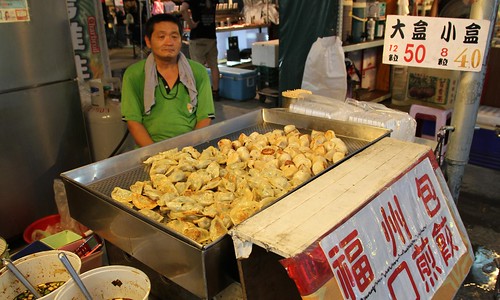
A small night market in Taipei.

TT reports:
The Changhua District Prosecutors’ Office on Friday indicted a 37-year-old US man for violating the Narcotics Hazard Prevention Act (毒品危害防制條例) by growing nearly 300 marijuana plants in a house in Changhua County’s Yuanlin Township (員林).
Please don't be stupid: the judicial system is decades behind here and marijuana is still classified with dangerous hard drugs as a dangerous drug and dealers, even low level dealers, are punished accordingly. Foreigners who come here and sell drugs usually do not operate with police or gang protection. They are freelancers  often working established territories belonging to someone else. Moreover, the police love to bust foreigners -- it enables them to feed all the local foreign tropes --- and locals are happy to sell out foreign dealers to get brownie points with the police. Although I have not heard of many busts, they typically have this same pattern -- the police get a tip-off and only the foreigner gets punished, his local friends, middlemen, and dealers aren't bothered.

Don't sell drugs here, it just ain't worth it.
________________
Daily Links:
_______________________
Don't miss the comments below! And check out my blog and its sidebars for events, links to previous posts and picture posts, and scores of links to other Taiwan blogs and forums!
Sunday, June 08, 2014

Student Activist Roughed up at Chinese Culture University

Two men rough up a student activist calling for suspension of the Taoyuan Aerotropolis project and public hearings on the project. Note end of video when kid is flung against the wall and then dragged by his hair. Are these men university staff?
_______________________
Don't miss the comments below! And check out my blog and its sidebars for events, links to previous posts and picture posts, and scores of links to other Taiwan blogs and forums!
Saturday, June 07, 2014

Some links

_______________
Daily Links:
_______________________
Don't miss the comments below! And check out my blog and its sidebars for events, links to previous posts and picture posts, and scores of links to other Taiwan blogs and forums!
Ma Gov't Rep Bullshits the US on Radar =UPDATEDX2=

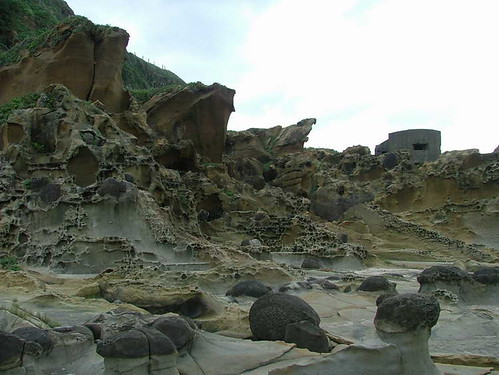
Miaoli county, near Tiangou.

UPDATE 2: J Michael Cole at Thinking Taiwan discusses the affair and provides much detail on MOFA's clarification of who said what. Washington insiders point out that there is no request for radars. Absurd.

FINAL UPDATE: WashTimes has completely rewritten the article

The Washington Times reports:
The [Cong. J Randy] Forbes proposal calls for the Pentagon’s Missile Defense Agency to explore the costs and benefits of merging a Taiwanese early-warning radar, which has the ability to peer deep into China, with the U.S. military’s own missile defense and sensor systems.

Mr. Jieh said two to four “long-range early-warning radars” have been built along Taiwan’s western coastline, but some in Taiwan are resisting the idea of expanding the system.

“President Ma has been enduring so much domestic pressure, questioning, ‘Why do you need these long-range radar towers detecting the long-range missiles of mainland China that won’t target Taiwan but target some other countries?’” he said.

Despite the opposition, Mr. Jieh said, the Ma government has “been very affirmative in helping the U.S. set up these radar towers because the Ma administration does believe that setting up these long-range radar towers not only helps the U.S., but also helps Taiwan.”

“It’s not my personal criticism, but a lot of people’s criticism in Taiwan is that, ‘Hey, why do we, Taiwan, need such big radar towers that can detect the inner land of mainland China?’” Mr. Jieh said. “‘We don’t need that, actually.’ That’s some people’s argument.”
I can't emphasize this enough: no one but some fringe Chinese nationalists within the KMT is resisting these radars, and they do that because they imagine themselves to be Chinese and identify with China. The DPP is solidly behind the radar purchase and deployment and supports increase military purchases and contacts with the US. In my years of riding and talking all over Taiwan I have never heard a single peep against these radars. There is literally no domestic opposition. Again, all the opposition comes from the right-wing freak fringe of the KMT, which opposes anything that might interfere with China's ability to dominate the area.

Two conclusions may be drawn here. First, this misrepresentation shows how weird the dialogue within the KMT about policy truly is: it is so weird and out of touch that fringe groups become "many voices" and insanity is treated as so normal that it can be taken out and displayed before the US as if Ma is making sacrifices in supporting the radar: "See how much the President is suffering?" Except the friction is from his own party, because for Ma, those are the only voices that really count.

It also shows something else, something deep and visceral about the KMT: its abiding contempt for both Japan and the US. Missiles flying over Taiwan aimed elsewhere can only be aimed at Japanese and US military. Clearly many within the KMT, the party that so many in the US support, are happy to have US and Japanese boys killed by Chinese missiles. Because it doesn't concern them... and makes them feel strong and powerful, because they identify with China, not the west, and not Taiwan.

The US needs to rethink its support of the KMT and the Ma Administration. Note again: these facilities and other US defense policies have the solid support of the DPP. The US is backing the wrong.... Horse.

UPDATE: Taipei Times has latest. Privately I've heard that Jieh says Washington Times put the words of others in his mouth.
_______________________
Don't miss the comments below! And check out my blog and its sidebars for events, links to previous posts and picture posts, and scores of links to other Taiwan blogs and forums!
Friday, June 06, 2014

JapanFocus, forwarding Chinese propaganda again...

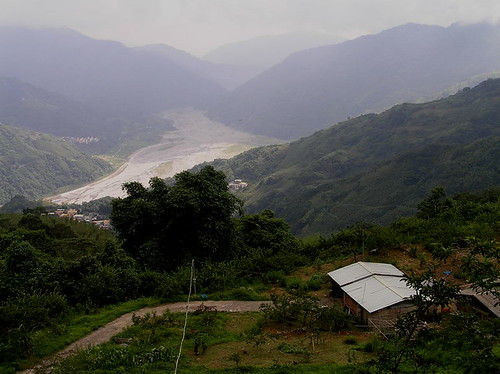
Wetlands in Changhua.

The other day JapanFocus posted another in the seemingly endless examples of Lefties forwarding the claims, language, and ideology of imperialism and expansionism -- apparently, so long as it is non-western imperialism, it is ok. This is Lin Man-houng's awful Taiwan and the Ryukyus (Okinawa) in Asia-Pacific Multilateral Relations – a Long-term Historical Perspective on Territorial Claims and Conflicts (アジア太平洋地域の多国間関係における台湾と琉球諸島(沖縄)領土権主張や紛争を長期的視野でとらえる), a turd so vast that, properly composted, it could fertilize California for a year. Ordinarily I'd just give this laugher a nod on my way by, but it contains new propaganda points that allow me to pass along some useful links and discussion. Onward and downward...

Early on, Lin observes:
Both areas [Taiwan and Ryukyus] were at one time central to the trading hub in East Asian waters (14th~17th Century): As the Ryukyus became the “Bridge to various countries” including China, Japan, Korea and South East Asia, it entered its “Golden Age” during the 14th~17th Century (Lin 2006b). In contrast, despite frequent trade between China and the South Seas during the 13th and 14th centuries, there were few contacts between China and Taiwan at this time. But between 1540 and 1700, the East Asian sea route became vibrant with trade pivoting on Japanese silver, Chinese silk and other commodities. At this time, three quarters of the silver China needed for its silver-based currency came from western Japan. Yet this vibrant trade was not conducted directly. Just as Hong Kong was a third party terminal for Taiwan and mainland China between 1988 and 2008, Korea, Hanoi, Macau, the Ryukyus and Taiwan were all important sites for this Japan-China silver-silk trade. (Lin 2006a: Chapter 1)

At the time, Taiwan had no substantial political organization or formal ties with the Chinese government, so Zheng Zhilong, the Fujian sea-trade businessman, followed by the Dutch, the Spanish and then the family of Zheng Chenggong, successively established trading entrepots on this island. The Zheng family’s wealth, rooted in Japanese silver, was an important means for establishing political power in Taiwan. With the Chinese silk—Japanese silver trade as the core, other goods from Europe, South East Asia, Japan, mainland China, and elsewhere were also traded in Taiwan, making it an Asia-Pacific commercial centre. This was also why in the 17th Century, Chinese people flocked to Taiwan, and from a minority group eventually became the majority population on Taiwan. However, by the second half of the 17th Century, Japan restricted silver to its domestic use. The result was that the Sino-Japanese silk and silver trade declined, and the Ryukyu kingdom also entered a period of decline. From 1609, while paying tribute to the Qing Dynasty, the Ryukyus also paid tribute to Japan, and the Qing replaced the Zheng family in ruling Taiwan between 1683 and 1895 (Lin 2006c).
I've bolded several of her claims. For those of you for whom these claims will be new (i.e., everyone not the author), you will probably nod when you realize that Lin has in fact cited herself for this set of claims.

Observe the second paragraph's first sentence with its telltale assumptive claims:
At the time, Taiwan had no substantial political organization or formal ties with the Chinese government, 
Why should it have formal ties with the Chinese government? And the aborigines had substantial political organizations, they just were not of the nature that the Chinese recognized, then or today. Next she says:
...Zheng Zhilong, the Fujian sea-trade businessman, followed by the Dutch, the Spanish and then the family of Zheng Chenggong, successively established trading entrepots on this island
Zheng was a pirate/trader, of course. Where does this claim come from? If you're feeling the tingle of right-wing Chinese expansionist propaganda because the Zhengs are conveniently re-located to the period before the Europeans, congrats, your spidey sense is dead-on. Tonio Andrade's excellent and eminently sensible How Taiwan Became Chinese is available for free on Gutenberg (note, I said FREE. Read it.). He writes in Chapter 6...read it most carefully:
Perhaps there were other Chinese organizations that sponsored Chinese colonization. Yang Yanjie, a historian from mainland China, argues that the pirates Yan Siqi and Zheng Zhilong established "political authority" (政權) on Taiwan before the arrival of the Dutch.11 His aim is to show that Chinese claims to Taiwan predate the Dutch, and he overstates his case (he also, perhaps intentionally, conflates Taiwan with the Penghu Islands, using the anachronistic term Tai-Peng, 台澎), but he does make an important point: Chinese pirate-merchant organizations may have contributed to the sinification of Taiwan. Still, it is difficult to determine the extent of the colonial involvement that these organizations had on Taiwan, because our evidence is scanty and indirect.8

For example, we know next to nothing about Yan Siqi. As we have seen, he did use Taiwan as a base before the Dutch arrived, and his organization is said to have been large and well structured, with ten "stockades" (寨), scores of ships, and hundreds of men, hierarchically organized.12 Did his people build actual stockades on Taiwan? If so, they were not in evidence when the Dutch arrived, and Chinese fortifications would have attracted Dutch mention in the voluminous and verbose records of the Dutch East India Company. More likely, his men lived among aborigines or in temporary camps near moored vessels. For the first twenty years of Dutch rule, the company struggled against Chinese "smuggling" organizations north of the Bay of Tayouan. It is possible that they were related to or descended from Yan Siqi. But there is no evidence of dedicated Chinese settlements in these areas, and the extent to which Yan Siqi encouraged colonization must remain in doubt.

We know far more about Zheng Zhilong, who, as we have seen, cruised the Taiwan straits under the Dutch flag. He likely had contacts with Chinese sojourners in the Bay of Tayouan and the deer- and pirate-rich areas northward, but the more interesting evidence for his role in Taiwan's colonization comes after he became a Chinese official in 1628. Chinese sources indicate that, during a severe drought in Fujian Province, he had a conversation with officials in Fujian and suggested moving drought victims to Taiwan, providing "for each person three taels of silver and for each three people one ox."13 This is a fascinating idea, but there seems to be no evidence that the plan was actually carried out. Until more sources are found, we must be careful not to overstate the role merchant-pirate organizations played in Taiwan's colonization. In any case, would-be settlers needed more stability and security than pirates probably would (or could) provide.
Reality: the claim that Zheng preceded the Dutch and Spanish is Chinese expansionist nonsense, deliberately constructed to create the false view that the Chinese were there first. An oft-overlooked aspect of this move is that it ignores prior aboriginal claims to Taiwan. Other scholars have also dismissed the (Chinese nationalist) claim that there were many Chinese on Taiwan before the Dutch, see also John Shepard's superb Statecraft and Political Economy on the Taiwan Frontier, 1600 to 1800 for an accounting.

Where Lin got the idea that there was some kind of massive silver trade bringing Chinese thronging into Taiwan I have no idea, but Andrade has a thorough discussion of Chinese colonization in the book (well worth reading, accessible and erudite). His Conclusion summarizes how Chinese settlers under Dutch administration carried out colonization and trade, and the Spanish pursued similar policies. Japanese traders could be found on Formosa in those days, until 1635, when the ruler of Japan issued edicts against leaving Japan and closed the ports in 1639, freeing the Dutch from Japanese competition. The silver trade fell off after that time because its value eroded on the world markets and other reasons (see this fascinating overview paper). Though the Dutch used the port of Taoyuan/Tainan as a transshipment point for goods from China going to Japan sold by the Dutch for Japanese silver, Taiwan was not any major part of this flow of wealth from the silver mines of Japan and Mexico. The trade in silver for Chinese luxury goods went directly and illegally between Japan and China, as well as through Portuguese Macau and the central Vietnam port of Hoi-an. The Spanish silver trade flowed through Manila (the "almighty dollar" originally was the Spanish silver dollar). While there was trade, Taiwan could hardly be described as an Asia-Pacific commercial center. Note that Lin's pro-China presentation studiously avoids saying that Taiwan was a Dutch colony during this period. Inconvenient facts? Evanesco!

I should add that one reason Chinese settlement fell off after 1670 because the fighting between Ming and Qing died off and people who had fled that now sought to return. Not because the massive trade of the "Asia-Pacific Commercial Center" fell off.

In sections 2 and 3 Lin subtly forwards another common Chinese expansionist claim, that Japan incorporated Okinawa in 1879. The Ryukyu kingdom actually became a vassal state of the southern Japanese kingdom of Satsuma in 1609 (Wiki). Lin repositions this as "From 1609, while paying tribute to the Qing Dynasty, the Ryukyus also paid tribute to Japan..." with the Qing at the forefront. Wiki observes:
The kingdom's royal governmental structures remained intact, along with its royal lineage. The Ryukyus remained nominally independent, a "foreign country" (異国, ikoku)[32] to the Japanese, and efforts were made to obscure Satsuma's domination of Ryukyu from the Chinese Court, in order to ensure the continuation of trade and diplomacy, since China refused to conduct formal relations or trade with Japan at the time. However, though the king retained considerable powers, he was only permitted to operate within a framework of strict guidelines set down by Satsuma, and was required to pay considerable amounts in tribute to Satsuma on a regular basis.
In Chinese expansionist presentations this period of Japanese control typically vanishes. Like in this piece, for instance, when the sovereignty over the Ryukuyus suddenly jumps into view in 1879 -- it had been incorporated into the Japanese central government in 1868, and under Japanese rule as a vassal state since 1609. This should also be a signal to readers of China's coming claim to Okinawa. Chinese expansionists quietly complain from time to time that China should have been consulted when Okinawa was returned to Japan. Longtime readers know the drill.

Further down Lin gives the standard rightist Chinese reading of the Treaty of Taipei:
The sovereignty Japan gained over Taiwan from the Treaty of Shimonoseki was renounced in Article 2 of the San Francisco Peace Treaty. Article 4 (b) of the San Francisco Peace Treaty stipulates that: “Japan recognizes the validity of dispositions of property of Japan and Japanese nationals made by or pursuant to directives of the United States Military Government in any of the areas referred to in Articles 2 and 3.” The US Military order relevant to Taiwan was General Order No.1 of 1945, specifying that, “the senior Japanese commanders … within … Formosa… shall surrender to Generalissimo Chiang Kai-shek.”  Article 26 of the San Francisco Peace Treaty provided that Japan shall conclude with any State which signed or adhered to the United Nations Declaration, and which is at war with Japan, which is not a signatory of the San Francisco Peace Treaty, a bilateral Treaty of Peace on the same or substantially the same terms as are provided for in the Peace Treaty. In terms of the conclusion of war between the Republic of China (“ROC”) and Japan, the Treaty of Peace between the Republic of China and Japan that was signed in Taipei on April 28, 1952 (Illustration 1), ratified by both the Showa Emperor of Japan and Chiang Kai-shek, the President of the Republic of China (Illustrations 2&3), and exchanged and became effective on August 5th of the same year, (hereafter “Taipei Treaty”), is one such international treaty specifying the transfer of sovereignty of Taiwan. The Taipei Treaty was registered in the United Nations in 1952 as Treaty Series, No. 1858 (United Nations, 1952). The Japanese Embassy in the ROC, which became the Interchange Association in 1972, has been based in Taipei since the Taipei Treaty became effective (Guoshiguan 1999, p.162). The articles in relation to the conclusion of war and transfer of Taiwan sovereignty in the Taipei Treaty were in the nature of having been executed, which is not comparable to articles providing for diplomatic relations that are executive in nature and were terminated in 1972 when Japan established diplomatic relations with the People’s Republic of China (“PRC”).3 This is akin to the termination of consular jurisdiction of the United Kingdom in China in 1943 without terminating the 99 year-lease of Hong Kong.
  1. General order number 1 is here. It should be noted that the Japanese troops on Formosa are surrendering to the Allies and that Chiang was acting as their representative. Chiang IS NOT accepting surrender of Formosa on behalf of China alone as Lin appears to be implying. 
  2. Treaty of Taipei: This is basic knowledge: nowhere in the Treaty of Taipei is the transfer of sovereignty over Taiwan from Japan to the ROC implied or stated. It is an article of faith that the Treaty of Taipei transfers sovereignty to Taiwan only among Chinese right-wingers, ritually re-iterated periodically to remind everyone how out of touch they are. The Treaty of Taipei is subordinate to the San Francisco Peace Treaty which in turn deliberately does not specify who the sovereignty of Taiwan belongs to. Moreover, the ROC knows this perfectly well. As I have noted several times in posts and comments:

    After signing the treaty [of Taipei], the ROC delegate, then ROC foreign minister George Yeh (葉公超), faced harsh questioning from legislators in a Legislative Yuan meeting regarding why the treaty between the ROC and Japan did not state unambiguously that Taiwan and Penghu were returned to the ROC.


    Yeh replied that "No provision has been made either in the San Francisco Treaty or the Sino-Japanese Treaty as to the future of Taiwan and Penghu." Yeh further explained: "In fact, we control them now, and undoubtedly they constitute a part of our territories. The delicate international situation, however, means that they do not belong to us. In these circumstances, Japan has no right to transfer Formosa (Taiwan) and the Pescadores (Penghu) to us. Nor could we accept such a transfer from Japan even if she wished to do so."
Lin finally moves on to the Diaoyutai/Senkakus. She calls her article a "long-term historical perspective" on the Senkakus, but focuses on the period after 1895 and in fact lectures us at length on undersea geology. She says the Senkakus/Diaoyutai are separated from Japan by the Okinawa Trench, a common Chinese expanionist claim. Judge for yourself, or Google Search. More importantly, the reason she doesn't give us the long list of documents showing Qing control over the Senkakus is that there aren't any, which is why her discussion focuses on what the Japanese were doing. There's no reason to review her comments since I've discussed that so many times elsewhere.

Please my fellow lefties, stop forwarding Other People's Imperialism.

Droned on long enough, enjoy the weekend...
_______________________
Don't miss the comments below! And check out my blog and its sidebars for events, links to previous posts and picture posts, and scores of links to other Taiwan blogs and forums!
Thursday, June 05, 2014

Links...for now

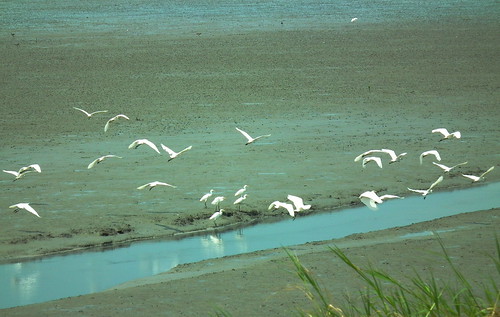
A tiny spider hangs in the balance.

I'll have a couple of posts up tonight, but for now, enjoy...
_______________________
Don't miss the comments below! And check out my blog and its sidebars for events, links to previous posts and picture posts, and scores of links to other Taiwan blogs and forums!
Tuesday, June 03, 2014

Just a note on the Senkakus/Diaoyutai mess

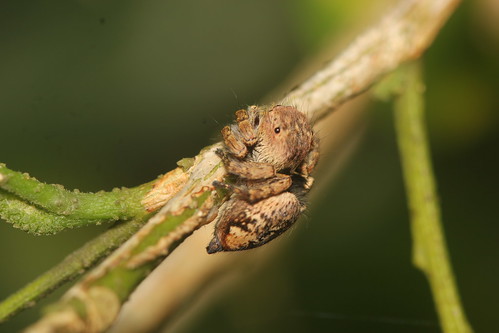
Oops.

Jon Sullivan over at the U of Nottingham tweeted round this paper on the Senkakus/Diaoyutai and western and eastern systems of international governance (the next paper in that file discusses Taiwanese netizen attitudes towards the Senkakus and sovereignty). It makes some interesting points and is constructed in a very articulate and smooth propagandistic way. However, it contains an interesting anecdote about the Senkakus that I hadn't heard before....
...when former US President Ulysses Simpson Grant was visiting China and Japan in mid-1879. Grant agreed to mediate the dispute at the request of Li Hongzhang and Prince Gong, and offered a proposal with American diplomats in Japan as a basis for negotiation. The proposal suggested dividing the Ryukyu Islands into three parts: the central part would belong to the residual Ryukyu Kingdom protected by Chinese and Japanese consuls, the southern part would belong to China, being close to Taiwan, and the northern part would belong to Japan, being close to Satsuma (Kagoshima).
Think about it for a second. If the Manchus thought the Senkakus were part of their colonial empire, they would have said "we already own that, the issue is the islands to the north." But no one did. Instead, Grant had to suggest that the southern islands of the Ryukyus be annexed to Taiwan... because they weren't at that time. D'oh.
_______________________
Don't miss the comments below! And check out my blog and its sidebars for events, links to previous posts and picture posts, and scores of links to other Taiwan blogs and forums!
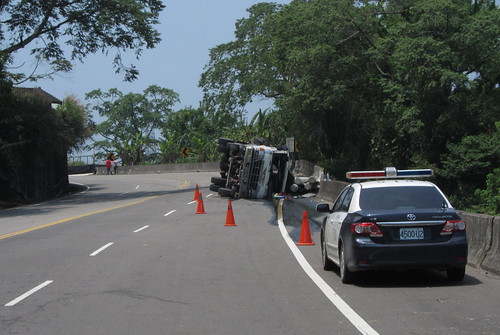
Farglory Bribery Scandal engulfs Taoyuan county.

A roach checks out possible danger.

Taoyuan County Commissioner John Wu was out there apologizing to the taxpayers for (yet another) land development scandal involving KMT politicians....
Yeh Shih-wen (葉世文) was dismissed from his position as deputy Taoyuan county commissioner on Friday last week, after prosecutors raided his office and residence earlier that day as part of an investigation into corruption allegations.

Yeh allegedly accepted bribes from Farglory Land Development Co (遠雄建設) chairman Chao Teng-hsiung (趙藤雄) in connection with a land development project in the county.
The mess is far reaching...
Leaders of the county government’s Urban and Rural Development Bureau, Department of Land, and Public Works Department were relieved of their positions and the director and secretary-general of the Office of Ethics were reassigned to other departments due to their dereliction of duty, he added.
Taoyuan County is booming as the communities near Taipei are rapidly becoming bedroom communities for Taipei's workers, who can no longer afford to live in the capital. The Taipei metro system is being extended out to the county. Development is everywhere, and so is money. Farglory paid a bribe of over $500K US for the privilege of constructing a housing development, according to the confession of its Chairman the other day.

Yeh was formerly the head of the Construction Planning Agency (see this 2010 Taiwan Review piece), which means that dozens of land development cases involving him and Farglory will be probed. Allegations of bribery in connection to another Farglory land development case during his tenure have already been made. John Wu, meanwhile, was blindsided by the case and may take a hit in the upcoming elections, though he currently enjoys a big lead over the DPP candidate.

The shocking thing about the case is not the bribery, which appears routine, but the fact that the Chairman of Farglory was denied bail yesterday. The usual procedure is for the court to grant bail, which the accused white collar criminal with good political connections then uses to flee to abroad, usually China (see Chen Yu-hao, etc). But in this case, the court shut him down. This has led to private speculation that there's a political angle going on behind the scenes, though I know of no evidence to support that claim.

But let's not forget the human cost of all this bribery and corruption...
Amber Shyu (徐玉紅), a resident of the Linkou project site who has been resisting forced eviction for nearly a decade, said she hopes investigators will work independently to dig out unlawful conduct involved in the project, so that the people can live happily and peacefully in their homes.
Hidden behind the euphemism "urban renewal" is a wasteland of corruption and destruction of ordinary people's lives and property.
_________________
Daily Links:
_______________________
Don't miss the comments below! And check out my blog and its sidebars for events, links to previous posts and picture posts, and scores of links to other Taiwan blogs and forums!
Monday, June 02, 2014

Monday Links

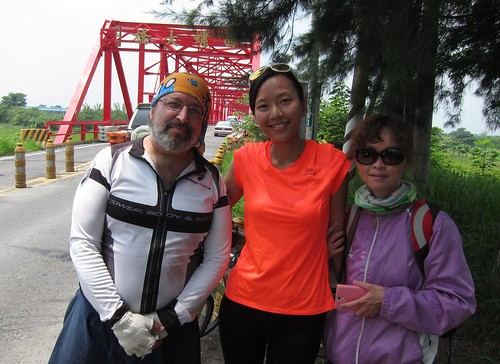
My friend Flora Chen and I went out riding yesterday, and ran into this woman in purple just as we entered the 145 off the 19 near Pitou. "Is this the 1?" she queried in a piteous voice. She was riding round the island, but had never checked a map and had no idea where she was. Some bike group she contacted told her to take the 1, a road unfit for human use, but by great good luck she had hit probably the best road in the area, the 145. Here we are just before the big bridge into Xiluo. She had left her three children in Hsinchu before deciding to venture the Huandao (round the island ride). She had no idea where anything was located relative to what road or town, but had simply launched herself into space hoping for a happy landing. She was so brave.

Enjoy some links, catching up on work today.
_______________________
Don't miss the comments below! And check out my blog and its sidebars for events, links to previous posts and picture posts, and scores of links to other Taiwan blogs and forums!