Showing posts with label drugs. Show all posts

Saturday, March 11, 2017

Taiwan News Latest: DPP on Drugs, don't worry, be happy

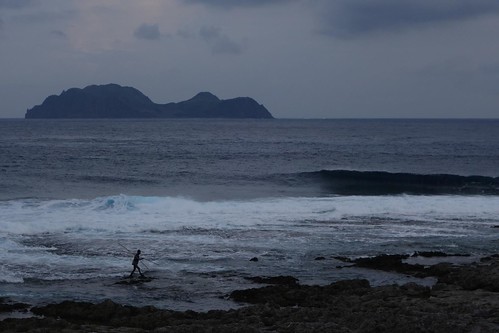
Net fishing on Lanyu

“They wanted to have a good time, but they were like children playing in the street; they could see one after another of them being killed--run over, maimed, destroyed--but they continued to play anyhow.”

Taiwan's anti-drug regime has a dual nature: it is absolutely brutal, yet has a strong rehabilitative element. I look at it in my latest piece for Taiwan News...
Although it is not often remarked on, side by side with the loud regime of strict punishment to restore society’s moral order by scapegoating an outcast is a quiet regime of rehabilitation, forced rehab in the case of repeat offenders. It is important to note that the DPP Administration did not advocate disturbing any of this. Although DPP politicians have from time to time joined the call to punish drug use more severely, by and large the DPP has avoided the KMT’s harsher approaches.
The "War on Drugs" was announced in 1993 by then-premier Lien Chan. Drugs suck twice over: first they destroy you, then the government steps in and destroys you again. Lien's order destroyed the lives of many people only harming themselves. Fortunately, as I note in the piece above, in 1994 the government also moved to impose a rehabilitation regime. This means that in Taiwan drug users have the twin status of patients and criminals.

According to one of the papers I read in preparation for this, the reason for the KMT administration's decision to make war on victims was simple: the US was also promoting its own costly and destructive War on Drugs, and the KMT wanted to curry favor with the US. It also saw participation in international "anti-drug" efforts as a way to align itself with the international community and raise the ROC's profile, in the KMT's never ending religious quest to become a recognized state.
_______________________
Don't miss the comments below! And check out my blog and its sidebars for events, links to previous posts and picture posts, and scores of links to other Taiwan blogs and forums!
Friday, August 07, 2015

Taiwan and Cocaine in the Japanese era

eedafgh.jpg
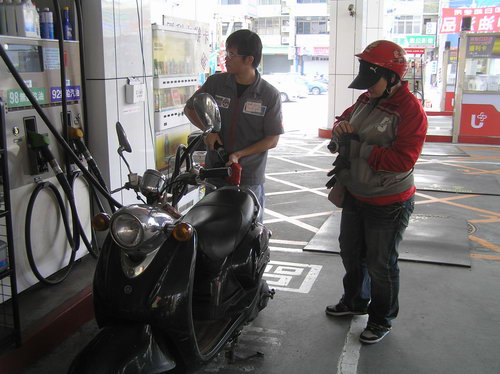
Fill er up.

There's a blurb in George Kerr's immortal Formosa Betrayed where he discusses the tons of coca leaf that vanished when the KMT took over Taiwan in 1945. That little remark is a clue to vast network of coca growing and processing that helped fund the Japanese colony in Taiwan, but was also part of a larger worldwide explosion of coca growing in the colonies of imperial powers of Europe as well. Consider:
The rapid rise of the Dutch to prominence in the world coca and cocaine trades took interested parties by surprise, especially the Peruvians, who until 1900 felt they enjoyed a natural birthright to the world coca market. In 1904 the Dutch island of Java (now part of Indonesia) exported only 26 tons of coca leaf; this figure soared to 800 tons in 1912 and 1,700 tons in 1920, glutting the world the world market. The Dutch built an especially productive and integrated industrial cocaine regime, but it was dismantled by decree almost as quickly as it arose.(p332)
The British also took an interest in coca production in India, but German chemists produced the cheapest cocaine out of Peru, driving most other nations out of the business at the turn of the century, and making the nation the world center of coca leaf and cocaine production. Even the Japanese bought land in Peru, and a thriving expat community helped run the cocaine business in that country.

According to the Gootenberg book cited above, Japan's interest in cocaine grew out of the State's involvement in the production of drugs. A Japanese chemist who had worked for Parke-Davis during heyday of its production of cocaine (as an anesthetic) returned to Japan and brought his expertise in cocaine manufacture with him. By the 1910s Japan's big sugar interests in Formosa had begun to invest in coca production. By the 1930s Japan was one of the largest makers and sellers of cocaine in Asia. Gootenberg observes that you can view Japan's production of cocaine as part of the larger Japanese policy of economic self-sufficiency and state-capital marriage (recall that Japan didn't define some drugs as legal and others as illegal like the US; it had no "drug problem"), or you can see it as something increasingly sinister and illicit. The latter view predominated in the US and among nations interested in stamping out the trade after 1930.

Gootenberg writes in another paper:
By 1920, Japan itself produced more than 4,000 lbs. of cocaine, which then doubled to 8,000 by 1922 (see TABLE 4). Official figures for the 1930s shrunk to just under 2,000 lbs., if considered by some historians and contemporary League officials as doctored for international consumption. (This is a hard charge to prove, though Karch has tried by putative estimates of coca-alkaloid capacity.) Exports across Asia officially dropped to negligible levels, though complaints registered about Japanese firms and reporting, as well as cases of deliberate smuggling (such as the “Fujitsuru” and “Taiwan Governor” brand vials in India). Other specialists have noted growing diplomatic cooperation between Japan and international drug officials, at least until the invasions of Manchuria and China, when opiates became a major issue. The firms making cocaine and morphine were among Japan’s largest: Hoshi, Sankyo, Koto and Shiongo Pharmaceuticals, and enjoyed growing links to major trading trusts (such as Mitsui and Mitsubishi) and to interlocking governmental, colonial and military officials. In 1934, we know that Taiwan’s [Chiayi] district kept 694 acres under intensive coca cultivation (by Taiwan Shoyaku and Hoshi); earlier plots on Iowa Jima and Okinawa fall off the record. About 300,000 pounds of Formosan leaf were harvested annually in the late 1930s.
In yet another work, Gootenberg says that by the late 1920s Taiwan was producing 3 tons of cocaine per year (Columbia produced 350 tons in 2010 according to the UN), a figure he questions in one of his books (below). The major producers were Sankyo and Hoshi Pharmaceuticals, which combined had 684 acres under cultivation in Chiayi.  Jennings' book on Japan's opium policies in Korea says in a footnote...
By the mid-1920s, Hoshi's Taiwan plantation was producing an average of 40-50,000 pounds of dried coca leaves per year, while his Peru operation average 20-25,000 pounds a year. The raw coca was shipped to Japan for processing, and most of the cocaine probably wound up in the illicit traffic in China.
Hoshi was thick with the Opium Monopoly in Taiwan and knew Goto Shinpei. In Taiwan he bought semi-refined morphine from the Opium Monopoly, shipped it back to Japan, and processed it into heroin, perfectly legal in those days. Having vanquished the opium laws, Hoshi then branched into cocaine. Gootenberg says that Formosan coca leaf had three great advantages: the Foreign Office handed out permits for it like candy, it was much cheaper to ship it to Asia than Peruvian cocaine, and it had more alkaloids than Peruvian leaf (in fact yielded twice as much cocaine as Andean coca). Gootenberg writes:
Once the refined cocaine was produced in Tokyo, Japanese law made disposing of the cocaine an easy matter. Smugglers did not even bother to repackage the standard 700-gram packages they bought from wholesalers. As a result, the brand names of the Japanese manufacturers such as Hoshi Pharmacueticals, Dai Nippon, and Sankyo Pharmaceuticals, were as well known in Calcutta as they were in Tokyo, even though medicinal cocaine exports to India were nil. 
Hoshi would also be involved in attempting to set up cinchona production for quinine in Taiwan's mountains, cultivating the first cinchona trees in 1922 and producing the first quinine in 1934 (link).

For a period in the late 1920s and early 1930s, according to Gootenberg, the Taiwan military government took over production of cocaine at one of the local firms, supplying its own label for the packaging which said "Taiwan Governor General, Central Factory." That label eventually supplanted the other leading Japanese label in India, and the British Governor-General there complained loudly about it. The Imperial Military was deeply involved in the drug trade, as papers unearthed by the US Occupation showed, escorting tramp steamers laden with opium and apparently, carrying cocaine from Taiwan to China after the war began.

Gootenberg also presents some simple calculations based on South American and Javanese examples that the Japanese were vastly underreporting their cocaine production in Taiwan, which he contends should have been nearly 7 tons annually. The Japanese "cooked their books" as the US Occupation showed; during the 1920s Japan was importing a million pounds of coca leaf from Java alone, and Japanese also operated coca plantations on Iwo Jima and Okinawa. In fact after the 1920s Japan's problem was disposing of all this production, since cocaine became little used in medicine.

The war ended this "autonomous" Japanese sphere of cocaine production; the fact that Japan's production was beyond western ability to control was likely the real driver of US complaints about Japan's cocaine trade. The British also feared competition with opium from cocaine, while the US, the moral crusader on drug use, coincidentally had no colonies which produced cocaine.

Coca plants will grow most anywhere; it is something of a historical accident that today South America and not Taiwan or Java is the world center of the trade, a result of the US victory in WWII and Japan's destruction of the coca plantations in Java. Imagine the alternate universe where I am posting pictures of coca plants on farms in Chiayi during my rides there...
_______________________
Don't miss the comments below! And check out my blog and its sidebars for events, links to previous posts and picture posts, and scores of links to other Taiwan blogs and forums!

Monday, June 09, 2014

American busted for Mary Jane

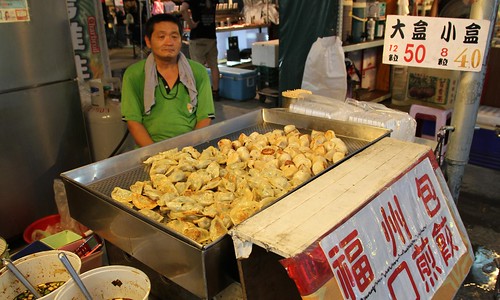
A small night market in Taipei.

TT reports:
The Changhua District Prosecutors’ Office on Friday indicted a 37-year-old US man for violating the Narcotics Hazard Prevention Act (毒品危害防制條例) by growing nearly 300 marijuana plants in a house in Changhua County’s Yuanlin Township (員林).
Please don't be stupid: the judicial system is decades behind here and marijuana is still classified with dangerous hard drugs as a dangerous drug and dealers, even low level dealers, are punished accordingly. Foreigners who come here and sell drugs usually do not operate with police or gang protection. They are freelancers  often working established territories belonging to someone else. Moreover, the police love to bust foreigners -- it enables them to feed all the local foreign tropes --- and locals are happy to sell out foreign dealers to get brownie points with the police. Although I have not heard of many busts, they typically have this same pattern -- the police get a tip-off and only the foreigner gets punished, his local friends, middlemen, and dealers aren't bothered.

Don't sell drugs here, it just ain't worth it.
________________
Daily Links:
_______________________
Don't miss the comments below! And check out my blog and its sidebars for events, links to previous posts and picture posts, and scores of links to other Taiwan blogs and forums!
Wednesday, June 19, 2013

Get 'em young, train 'em right: dope testing for schoolchildren in Taichung

Steve contemplates the beauty of a soon to be drug tested landscape

Don't miss Far Eastern Sweet Potato's disturbing post on the apparent pattern of organized crime attacks on critics of Beijing in Hong Kong: a preview of what will happen here? It certainly worked that way in the martial law days. But here at home in the Intelligent City of 2013, the City is mandating massive drug testing for school students (Chinese). Taichung AmCham sent around an English summary:
While the city had previously announced plans to increase the numbers of students pulled out for urine drug testing, this week saw the announcement of some firm numbers--including a pledge to conduct a minimum over 4000 such tests on students in junior and senior high schools and vocational schools. This compares with a mere 193 such tests conducted last year and only 71 conducted so far this year. The city in February announced the standards for determining which students will be targeted, which ranged from the very specific, such as if the parents of the student have a record of taking drugs or the student is found in an internet cafe. Other standards are considerably more subjective, such as if the student arouses suspicions of a fellow student and is backed by a teacher or simply exhibits ‘odd behavior’. They also announced in February that the policy does not require parental consent. Other actions announced include plans to try and get all students, campuses and communities to act as enforcement gatekeepers and a plan for schools to ‘intimidate’ students by telling them drug abuse harms the bladder, which could lead to them having to attend school in diapers. 
This program incorporates some of the worst features of Taiwan schools, including the use of students to rat on one another, a feature that begins from the first day of elementary school. "Being found in an internet cafe" can trigger a drug test? And exhibiting "odd behavior?" This is sick. There will be many false positives and as in all things official in Taiwan, the real dopers will soon learn how to defeat the test. Soon everyone's locker will look like Jude Law's refrigerator in Gattaca, with bags of clean urine hanging from every nail... and if a test is positive, will they test again? And if it is positive, will that result in a permanent record, arrest, and trial? And who is paying for all these tests? The stupidity of this is monumental. You can see how students will use it to hassle kids who are different or who they have grudges with...... this isn't enforcing drug laws, it's enforcing conformity....

Hopefully this program will stay, and die, here in Taichung.....
_________________
Daily Links:
_______________________
Don't miss the comments below! And check out my blog and its sidebars for events, links to previous posts and picture posts, and scores of links to other Taiwan blogs and forums!
Friday, December 19, 2008

Economic Importunity

Reuters had an absolutely hilarious article on dope smuggling from China making the rounds today. With direct links comes 30 kilos of ketamine in the first cargo runs....

About 30 kg (66lb) of smuggled party drug ketamine arrived on one of the first direct cargo flights between political rivals China and Taiwan following six decades of hostile relations, a Customs official said on Friday.

Airport Customs agents in Taipei found the popular powdered hallucinatory drug on Thursday packed into eight boxes on a Chinese cargo plane, customs officials said.

"Our expectation was that direct cargo links could possibly lead to drug smuggling," said Lin Shu-chi, deputy Taipei Customs Office head. "I can't say this was beyond our imagination."

Brilliant to smuggle 30kg of dope on those flights, because everyone knows customs officials wouldn't be paying much attention to the very first direct regular cargo flights in sixty years. The best part was the final paragraph:

A 31-year-old Chinese woman was arrested in connection with the ketamine, which was destined for a convenience store in central Taiwan, local media said.

...and when they say you can buy anything at a convenience store in Taiwan, it's really true. But I'm sure tests will reveal it's not real ketamine, just melamine, recolored, like everything else out of China.

Ketamine is an animal knock-out drug, which reminds me of another sad tale this week: the booming stray dog population as owners dump dogs they can no longer care for. Kudos to the China Post for its superior local reporting, for hitting on this issue. My wife and I live in a popular dumping spot near the mountains, and we've noticed an upswing in the dog population and many new dogs appearing.

Tallies compiled by Taipei City’s Environmental Protection Department, which is responsible for handling stray dogs, show that the highest number of abandoned canines were captured in the Shihlin and Beitou districts, adjacent to Yangmingshan National Park, a recreation area in northern Taiwan.

The park has become a popular dumping ground because dog owners believe its vast wooded environment is suitable for dogs to find food, take shelter and survive on their own.

Huang estimated that there are more than 300 or 400 stray dogs roaming within the park at any given time.

They survive on food and snacks left by visitors as well as small wild animals, such as snakes and mice, Huang said.


Shelter officials noticed that more pricey breeds are showing up as even the formerly well-to-do lose their ability to care for their animals. In our neighborhood that is also true. Unfortunately we already have three large ones, and can't take any more.

MEDIA: Kudos too to Reuters for The Formula:
China has claimed sovereignty over Taiwan since 1949, when Mao Zedong's Communists won the Chinese civil war and Chiang Kai-shek's Nationalists (KMT) fled to the island. Beijing has vowed to bring Taiwan under its rule, by force if necessary.
Note how The Formula takes no position on China's claim to own Taiwan, simply noting that Beijing has promised to kill, if necessary, to annex the island. None of this "bring Taiwan back into the fold" swill, and no "split in 1949" nonsense that AP has taken out a patent on -- instead correctly noting that what "split" were the KMT and the CCP. Great job, guys!