Showing posts with label ROC. Show all posts

Thursday, November 03, 2016

Xi-Hung Meeting = Big Nada

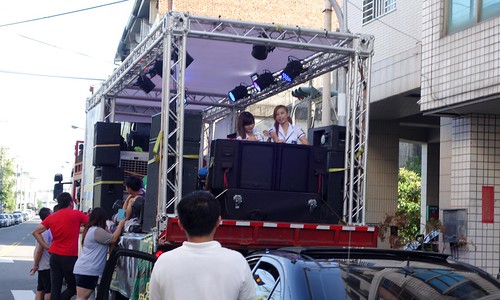
Preparing for a neighborhood event...

Brian Hioe at New Bloom summed it up...
THE FACT THAT Hung Hsiu-Chu’s meeting with Xi Jinping in Beijing has largely been a non-event in Taiwan probably attests to its futility. Given that Hung is already known for outlandishly extreme pro-unification views, Hung’s meeting with Xi probably does not really surprise the Taiwanese public, in the way that Eric Chu’s or Ma Ying-Jeou’s meetings with Xi Jinping in 2015 provoked stronger reactions. Hence the lack of any real public response. But does the Hung-Xi meeting indicate anything new?
Brian and I had a good laugh about the Xi-Hung meeting over drinks last night. The only people who really cared about the meeting were the international media.Beijing well understands how this ritual of the Beneficent Emperor presiding over a visit from an eager vassal looks to the media, which loves a good TAIWAN IS TENZ! story. Bloomberg's hilarious headline was China’s Xi, Taiwan opposition leader voice concern over tensions. Voice concern over tensions... they themselves caused, as a friend pointed out on Twitter.

Prior to the meeting J Michael Cole had wondered aloud over at CPI what agreements Hung might make with Xi. But Xi, meeting in his capacity as Party Chairman rather than Emperor of China, was never going to make any agreements with the isolated head of a fading, split party whose members he undoubtedly plans to use and then have shot when China comes over.

The issue highlighted what many of us have said for a while now, some for over a decade now, that China has no Taiwan strategy (Cole wrote on that this week as well). It is simply following the well-worn grooves of its reflexive actions of the part, supplying ceremonies to satisfy its domestic audience. AP reported that...
Chinese President Xi Jinping met with Taiwan's opposition leader Tuesday, underscoring Beijing's message to the island's independence-leaning administration that it won't have access to the mainland's highest levels of power if it doesn't accept that Taiwan is part of China.
...but it could just as well written that Xi has no access to Taiwan's highest levels of power. Xi's refusal to deal with Tsai has not painted Tsai into a corner. Instead, it has forced the CCP to court a political party whose influence is fading, limiting the CCP's ability to affect Taiwan politics. Since it won't deal with DPP politicians it can't court, influence, or subvert them. It can't makes its case to pan-Green voters. As if to underscore that, the CCP even banned reporters from pro-Green papers from covering the meeting. This strategy could hardly be more self-defeating.

Fortunately the CCP is too ideologically blind to realize that. Indeed, the KMT once again reminded voters what its values are, which won't help it at the polls -- each kow-tow to the CCP reinforces the KMT's irrelevance for Taiwanese voters. As Brian H pointed out in his piece, even Ma Ying-jeou, whose China policy was one of the chief causes of the KMT's catastrophic 2014 and 2016 election losses, realizes this.

The pro-KMT China Post reported that the chief difference between Hung's trip was that the KMT itself is split....
Lawmakers banded together and called for assurances, revealing a divide between party headquarters and the KMT rank and file. The legislators called on Hung to be sensitive to the KMT's current image problem, pleading for her to make "certain statements" at "appropriate settings."

The internal strife was clear in reports that Hung and former President Ma Ying-jeou clashed over viewpoints on the "1992 Consensus."

Ma reportedly attempted to drive home the importance of its "different interpretations of one China" clause, while Hung showed a reluctance to be boxed in.

The ensuing public spats between Central Policy Committee Director Alex Tsai and the aides of former President Ma offered few reassurances that consensus within KMT existed before Hung left for China.

It was under these two sources of pressure that Hung promised a no-frills encounter with Chinese leader Xi Jinping. A perfunctory checklist would indicate that Hung did what was advised and has managed to stay out of trouble. Barring last-minute contingencies, her trip has not derailed the KMT in any dramatic fashion.
Behind closed doors, certain media reported Xi said Taiwan independence would destroy the CCP. Thanks for supplying another incentive for Taiwan independence.

The Cross-Strait Peace Agreement that Hung keeps touting is hugely vague on the details. It will never work -- if peace is institutionalized across the Strait Taiwan will move further towards independence -- only the CCP threat to murder Taiwanese keeps the island from declaring independence. Beijing understands this, which is why Xi was cold to the idea. Institutionalized peace institutionalizes Taiwan as a de facto independent state.

Surely the KMT must realize this. The Party is not pursuing it on behalf of Taiwan, but on behalf of the ROC, a virtual state which must, whether China comes over or Taiwan becomes independent, be swallowed up by history. Institutionalized peace institutionalizes the continued existence of the ROC and the KMT's umbilical connection to it -- it institutionalizes the possibility of a continued future for the KMT.
_______________
Daily Links:
_______________________
Don't miss the comments below! And check out my blog and its sidebars for events, links to previous posts and picture posts, and scores of links to other Taiwan blogs and forums!

Saturday, March 19, 2016

China does the Gambia Gambit

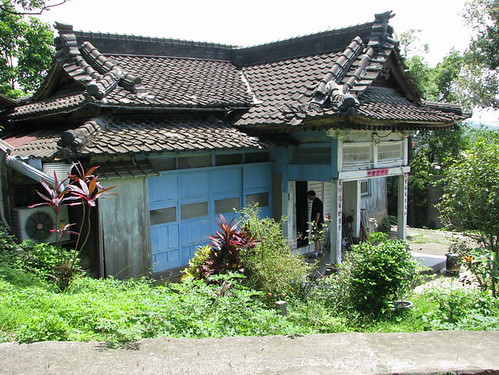
The Abbot's house at the old Shinto Temple in Tunghsiao.

First, from the Nelson Report, the Washington Insider Report:

+++++++++++++++++++++

THE TAIWAN FACTOR...In recent years, there has been something of a "working understanding" that so long as Taipei didn't make too much trouble about joining international institutions requiring national state status, Beijing would not resume its campaign to take-away the couple of dozen foreign countries which still extend official, formal diplomatic recognition to the Republic of China.

So if for various reasons this implicit deal collapses, but especially to try and force incoming DPP president Tsai Ing-wen to officially embrace the "1992 Consensus", that would signal heightened tensions across the Strait this year, most folks agree.

Why would that be in anyone's interest, we innocently ask? Our question is prompted by Loyal Reader Robert Blohm, who caught this in today's NY Times, then adds perspective:

http://www.nytimes.com/2016/03/19/world/asia/china-gambia-taiwan-diplomatic-relations.html?emc=eta1
Chris,

The Gambia first recognized Taiwan when it represented China at the UN, then switched to Mainland China when the UN switched. In 1995 a coup installed the current president who switched to Taiwan. When Taiwan refused to increase aid to The Gambia, it broke off relations with Taiwan in 2013 (and also left the British Commonwealth) but the Mainland didn't step into the breach out of deference to the friendly Taiwan KMT government of Ma.

Last December The Gambia declared itself the newest Islamic state. Following Feb. 1st installation in the legislature of Taiwan's newly elected DPP government, prior to Ms. Tsai's inauguration on May 20th, and immediately on closure of the Twin Meetings of the Mainland legislature, the Mainland has now elected to oblige The Gambia and re-establish diplomatic relations, reducing to 22 the number of countries recognizing Taiwan.

Is this is the Mainland's first action signaling disapproval of Taiwan's new government?

BOB MANNING, Atlantic Council:

If this proxy diplomatic battle is renewed, no way Taiwans can win that one. Taipei should focus on TPP, trade deals and UN special organizations like WHO, and try to cut deal w/ Beijing for that as their "international space".

Xi would be smart to agree, it would strengthen Tsai's hand politically in Taiwan, and make it easier for her to do what he wants...accept '92 consensus. But that all makes way too much sense...

Your Editor: good "trade" suggestions, so we've been asking around, and are assured that the re-installed DPP will indeed focus on what needs to be done to get Taiwan "into the game" re TPP.

Harken back to last July's Brookings' conference where AIT chairman Ray Burghardt spoke about a shift under the Obama Administration which has transformed the US-Taiwan relationship so it's no longer an appendage of the US-China relationship...

An involved observer comments:

"Ray's 'shift' might well be in play if the DPP can get their ducks in line re pork and beef, plus the protectionist/regulation/SOE etc issues that need to be addressed to get Taiwan at least up to the KORUS level. If so, and if China uses Malaysia, for example, to block Taiwan's accession to the TPP, might the US be willing to move on TIFA and, maybe even an FTA with Taiwan? That's a long jump, but..."

Bearing in mind that DAS/State Thornton has called Taiwan a "vital partner", observers predict a set of more proactive moves ahead as Tsai gets into office this May. For now, there's another Obama initiative which should provide Taiwan with reassurance, a recently signed "MOU" with the State Department on something called the "Global Cooperative Training Framework."

An informed source:

"This is anavenue to explore greater US-Taiwan activity that gives options for joint action on a variety of issues, e.g. women's empowerment, humanitarian relief and disaster assistance,etc. Former Rep. Marjorie Margolies (Chelsea Clinton's mother-in-law and who was a victim of voting for the Clinton 1993 budget deal) was recently in Taiwan hoping to establish Taiwan as an Asia hub for her Women's Campaign Initiative. State was very supportive of her visit and hopes to see the DPP government provide some serious attention to this.

Also Kurt Tong, PDAS at State, two weeks ago sat publicly at a GW event with Bruce Linghu, Dep MOFA, at a program discussing this GCTF. It certainly appears that the Ma Administration has been "slow walking" implementation. You can bet a Tsai Administration will be fast walking these opportunities!

So you should expect to see more in this area - moving Taiwan into position with those organizations that don't require "statehood" but give Taiwan a place at the table where it can be a "responsible stakeholder." Beijing might not like this, but since "statehood" is not in play..."

++++++++++++++++++++

At Thinking-Taiwan, a well thought out and measured article by Timothy Rich observes....
A knee-jerk reaction by Taiwan would be to try to find a replacement for the loss of The Gambia, similar to a Major League Baseball team trying to replace their former star player with a flashy free agent. However, such a strategy does little for Taiwan. The Gambia after all was not a major trading partner, served no security interests, and remains one of Africa’s more brutal authoritarian regimes. President Yaya Jammeh’s rule has included restrictions on expression, life sentences for those of the LGBT community, and President Jammeh’s own claim to have an herbal cure for AIDS.

The Democratic Progressive Party (DPP) of course does not wish to be viewed as weak on cross-strait relations, emphasizing their commitment to strengthening ties with their remaining twenty-two diplomatic allies. It is also easy to view The Gambia within the lens of Taiwan’s historic January elections and assume broader Chinese strategic intent to restart a diplomatic competition that favors Beijing, rather than cautiously view this as an isolated case in which Taiwan tangibly has lost little. Unofficial relations with stable and powerful democracies provide far more in regards to Taiwan’s national interests, while myopically focusing on the potential return of diplomatic battles serves only to constrain Taiwan’s options.
Reuters has been gleefully presenting this as a "shot across the bow" of Tsai Ing-wen, which is how everyone is seeing it. Interestingly, it happened on Ma's watch -- why didn't the PRC simply wait two months and have Gambia flip the day Tsai is sworn in?

In any case, Shannon Tiezzi observes at The Diplomat that in 2013 at least five of the ROC's allies approached the PRC about switching, but Beijing turned them down, just to be nice to Ma.

The existence of the ROC depends on four things: its existence on Taiwan, its control of islands off China's coast, its territorial claims, and its diplomatic allies. Beijing will likely pick off a few because it can, and to put pressure on Tsai. But if Beijing scoops them all up, then the ROC will effectively equal Taiwan, which Beijing does not want, since that encourages Taiwan independence. For that reason, some independence advocates argue that Beijing should be encouraged to do that. Moreover, Beijing needs the ROC alive and well, because it is counting on the ROC to annex Taiwan to China without a war. That is also why it has never taken back Kinmen and Matsu, though it easily could.

Meanwhile, Taiwan's truly important links are with Japan and the US, and neither of those are ROC-driven. So relax, and brace for comforting your Taiwan friends when more countries switch. There isn't a thing anyone here can do about it, and in the long run, it might even be a good thing.
_______________________
Don't miss the comments below! And check out my blog and its sidebars for events, links to previous posts and picture posts, and scores of links to other Taiwan blogs and forums!
Friday, June 06, 2014

JapanFocus, forwarding Chinese propaganda again...

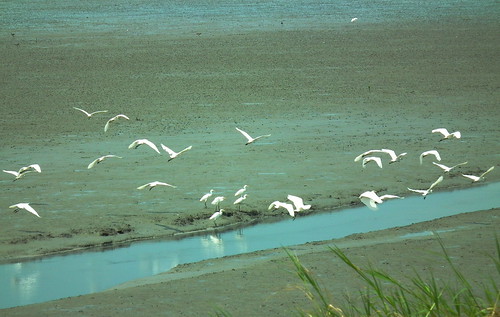
Wetlands in Changhua.

The other day JapanFocus posted another in the seemingly endless examples of Lefties forwarding the claims, language, and ideology of imperialism and expansionism -- apparently, so long as it is non-western imperialism, it is ok. This is Lin Man-houng's awful Taiwan and the Ryukyus (Okinawa) in Asia-Pacific Multilateral Relations – a Long-term Historical Perspective on Territorial Claims and Conflicts (アジア太平洋地域の多国間関係における台湾と琉球諸島(沖縄)領土権主張や紛争を長期的視野でとらえる), a turd so vast that, properly composted, it could fertilize California for a year. Ordinarily I'd just give this laugher a nod on my way by, but it contains new propaganda points that allow me to pass along some useful links and discussion. Onward and downward...

Early on, Lin observes:
Both areas [Taiwan and Ryukyus] were at one time central to the trading hub in East Asian waters (14th~17th Century): As the Ryukyus became the “Bridge to various countries” including China, Japan, Korea and South East Asia, it entered its “Golden Age” during the 14th~17th Century (Lin 2006b). In contrast, despite frequent trade between China and the South Seas during the 13th and 14th centuries, there were few contacts between China and Taiwan at this time. But between 1540 and 1700, the East Asian sea route became vibrant with trade pivoting on Japanese silver, Chinese silk and other commodities. At this time, three quarters of the silver China needed for its silver-based currency came from western Japan. Yet this vibrant trade was not conducted directly. Just as Hong Kong was a third party terminal for Taiwan and mainland China between 1988 and 2008, Korea, Hanoi, Macau, the Ryukyus and Taiwan were all important sites for this Japan-China silver-silk trade. (Lin 2006a: Chapter 1)

At the time, Taiwan had no substantial political organization or formal ties with the Chinese government, so Zheng Zhilong, the Fujian sea-trade businessman, followed by the Dutch, the Spanish and then the family of Zheng Chenggong, successively established trading entrepots on this island. The Zheng family’s wealth, rooted in Japanese silver, was an important means for establishing political power in Taiwan. With the Chinese silk—Japanese silver trade as the core, other goods from Europe, South East Asia, Japan, mainland China, and elsewhere were also traded in Taiwan, making it an Asia-Pacific commercial centre. This was also why in the 17th Century, Chinese people flocked to Taiwan, and from a minority group eventually became the majority population on Taiwan. However, by the second half of the 17th Century, Japan restricted silver to its domestic use. The result was that the Sino-Japanese silk and silver trade declined, and the Ryukyu kingdom also entered a period of decline. From 1609, while paying tribute to the Qing Dynasty, the Ryukyus also paid tribute to Japan, and the Qing replaced the Zheng family in ruling Taiwan between 1683 and 1895 (Lin 2006c).
I've bolded several of her claims. For those of you for whom these claims will be new (i.e., everyone not the author), you will probably nod when you realize that Lin has in fact cited herself for this set of claims.

Observe the second paragraph's first sentence with its telltale assumptive claims:
At the time, Taiwan had no substantial political organization or formal ties with the Chinese government, 
Why should it have formal ties with the Chinese government? And the aborigines had substantial political organizations, they just were not of the nature that the Chinese recognized, then or today. Next she says:
...Zheng Zhilong, the Fujian sea-trade businessman, followed by the Dutch, the Spanish and then the family of Zheng Chenggong, successively established trading entrepots on this island
Zheng was a pirate/trader, of course. Where does this claim come from? If you're feeling the tingle of right-wing Chinese expansionist propaganda because the Zhengs are conveniently re-located to the period before the Europeans, congrats, your spidey sense is dead-on. Tonio Andrade's excellent and eminently sensible How Taiwan Became Chinese is available for free on Gutenberg (note, I said FREE. Read it.). He writes in Chapter 6...read it most carefully:
Perhaps there were other Chinese organizations that sponsored Chinese colonization. Yang Yanjie, a historian from mainland China, argues that the pirates Yan Siqi and Zheng Zhilong established "political authority" (政權) on Taiwan before the arrival of the Dutch.11 His aim is to show that Chinese claims to Taiwan predate the Dutch, and he overstates his case (he also, perhaps intentionally, conflates Taiwan with the Penghu Islands, using the anachronistic term Tai-Peng, 台澎), but he does make an important point: Chinese pirate-merchant organizations may have contributed to the sinification of Taiwan. Still, it is difficult to determine the extent of the colonial involvement that these organizations had on Taiwan, because our evidence is scanty and indirect.8

For example, we know next to nothing about Yan Siqi. As we have seen, he did use Taiwan as a base before the Dutch arrived, and his organization is said to have been large and well structured, with ten "stockades" (寨), scores of ships, and hundreds of men, hierarchically organized.12 Did his people build actual stockades on Taiwan? If so, they were not in evidence when the Dutch arrived, and Chinese fortifications would have attracted Dutch mention in the voluminous and verbose records of the Dutch East India Company. More likely, his men lived among aborigines or in temporary camps near moored vessels. For the first twenty years of Dutch rule, the company struggled against Chinese "smuggling" organizations north of the Bay of Tayouan. It is possible that they were related to or descended from Yan Siqi. But there is no evidence of dedicated Chinese settlements in these areas, and the extent to which Yan Siqi encouraged colonization must remain in doubt.

We know far more about Zheng Zhilong, who, as we have seen, cruised the Taiwan straits under the Dutch flag. He likely had contacts with Chinese sojourners in the Bay of Tayouan and the deer- and pirate-rich areas northward, but the more interesting evidence for his role in Taiwan's colonization comes after he became a Chinese official in 1628. Chinese sources indicate that, during a severe drought in Fujian Province, he had a conversation with officials in Fujian and suggested moving drought victims to Taiwan, providing "for each person three taels of silver and for each three people one ox."13 This is a fascinating idea, but there seems to be no evidence that the plan was actually carried out. Until more sources are found, we must be careful not to overstate the role merchant-pirate organizations played in Taiwan's colonization. In any case, would-be settlers needed more stability and security than pirates probably would (or could) provide.
Reality: the claim that Zheng preceded the Dutch and Spanish is Chinese expansionist nonsense, deliberately constructed to create the false view that the Chinese were there first. An oft-overlooked aspect of this move is that it ignores prior aboriginal claims to Taiwan. Other scholars have also dismissed the (Chinese nationalist) claim that there were many Chinese on Taiwan before the Dutch, see also John Shepard's superb Statecraft and Political Economy on the Taiwan Frontier, 1600 to 1800 for an accounting.

Where Lin got the idea that there was some kind of massive silver trade bringing Chinese thronging into Taiwan I have no idea, but Andrade has a thorough discussion of Chinese colonization in the book (well worth reading, accessible and erudite). His Conclusion summarizes how Chinese settlers under Dutch administration carried out colonization and trade, and the Spanish pursued similar policies. Japanese traders could be found on Formosa in those days, until 1635, when the ruler of Japan issued edicts against leaving Japan and closed the ports in 1639, freeing the Dutch from Japanese competition. The silver trade fell off after that time because its value eroded on the world markets and other reasons (see this fascinating overview paper). Though the Dutch used the port of Taoyuan/Tainan as a transshipment point for goods from China going to Japan sold by the Dutch for Japanese silver, Taiwan was not any major part of this flow of wealth from the silver mines of Japan and Mexico. The trade in silver for Chinese luxury goods went directly and illegally between Japan and China, as well as through Portuguese Macau and the central Vietnam port of Hoi-an. The Spanish silver trade flowed through Manila (the "almighty dollar" originally was the Spanish silver dollar). While there was trade, Taiwan could hardly be described as an Asia-Pacific commercial center. Note that Lin's pro-China presentation studiously avoids saying that Taiwan was a Dutch colony during this period. Inconvenient facts? Evanesco!

I should add that one reason Chinese settlement fell off after 1670 because the fighting between Ming and Qing died off and people who had fled that now sought to return. Not because the massive trade of the "Asia-Pacific Commercial Center" fell off.

In sections 2 and 3 Lin subtly forwards another common Chinese expansionist claim, that Japan incorporated Okinawa in 1879. The Ryukyu kingdom actually became a vassal state of the southern Japanese kingdom of Satsuma in 1609 (Wiki). Lin repositions this as "From 1609, while paying tribute to the Qing Dynasty, the Ryukyus also paid tribute to Japan..." with the Qing at the forefront. Wiki observes:
The kingdom's royal governmental structures remained intact, along with its royal lineage. The Ryukyus remained nominally independent, a "foreign country" (異国, ikoku)[32] to the Japanese, and efforts were made to obscure Satsuma's domination of Ryukyu from the Chinese Court, in order to ensure the continuation of trade and diplomacy, since China refused to conduct formal relations or trade with Japan at the time. However, though the king retained considerable powers, he was only permitted to operate within a framework of strict guidelines set down by Satsuma, and was required to pay considerable amounts in tribute to Satsuma on a regular basis.
In Chinese expansionist presentations this period of Japanese control typically vanishes. Like in this piece, for instance, when the sovereignty over the Ryukuyus suddenly jumps into view in 1879 -- it had been incorporated into the Japanese central government in 1868, and under Japanese rule as a vassal state since 1609. This should also be a signal to readers of China's coming claim to Okinawa. Chinese expansionists quietly complain from time to time that China should have been consulted when Okinawa was returned to Japan. Longtime readers know the drill.

Further down Lin gives the standard rightist Chinese reading of the Treaty of Taipei:
The sovereignty Japan gained over Taiwan from the Treaty of Shimonoseki was renounced in Article 2 of the San Francisco Peace Treaty. Article 4 (b) of the San Francisco Peace Treaty stipulates that: “Japan recognizes the validity of dispositions of property of Japan and Japanese nationals made by or pursuant to directives of the United States Military Government in any of the areas referred to in Articles 2 and 3.” The US Military order relevant to Taiwan was General Order No.1 of 1945, specifying that, “the senior Japanese commanders … within … Formosa… shall surrender to Generalissimo Chiang Kai-shek.”  Article 26 of the San Francisco Peace Treaty provided that Japan shall conclude with any State which signed or adhered to the United Nations Declaration, and which is at war with Japan, which is not a signatory of the San Francisco Peace Treaty, a bilateral Treaty of Peace on the same or substantially the same terms as are provided for in the Peace Treaty. In terms of the conclusion of war between the Republic of China (“ROC”) and Japan, the Treaty of Peace between the Republic of China and Japan that was signed in Taipei on April 28, 1952 (Illustration 1), ratified by both the Showa Emperor of Japan and Chiang Kai-shek, the President of the Republic of China (Illustrations 2&3), and exchanged and became effective on August 5th of the same year, (hereafter “Taipei Treaty”), is one such international treaty specifying the transfer of sovereignty of Taiwan. The Taipei Treaty was registered in the United Nations in 1952 as Treaty Series, No. 1858 (United Nations, 1952). The Japanese Embassy in the ROC, which became the Interchange Association in 1972, has been based in Taipei since the Taipei Treaty became effective (Guoshiguan 1999, p.162). The articles in relation to the conclusion of war and transfer of Taiwan sovereignty in the Taipei Treaty were in the nature of having been executed, which is not comparable to articles providing for diplomatic relations that are executive in nature and were terminated in 1972 when Japan established diplomatic relations with the People’s Republic of China (“PRC”).3 This is akin to the termination of consular jurisdiction of the United Kingdom in China in 1943 without terminating the 99 year-lease of Hong Kong.
  1. General order number 1 is here. It should be noted that the Japanese troops on Formosa are surrendering to the Allies and that Chiang was acting as their representative. Chiang IS NOT accepting surrender of Formosa on behalf of China alone as Lin appears to be implying. 
  2. Treaty of Taipei: This is basic knowledge: nowhere in the Treaty of Taipei is the transfer of sovereignty over Taiwan from Japan to the ROC implied or stated. It is an article of faith that the Treaty of Taipei transfers sovereignty to Taiwan only among Chinese right-wingers, ritually re-iterated periodically to remind everyone how out of touch they are. The Treaty of Taipei is subordinate to the San Francisco Peace Treaty which in turn deliberately does not specify who the sovereignty of Taiwan belongs to. Moreover, the ROC knows this perfectly well. As I have noted several times in posts and comments:

    After signing the treaty [of Taipei], the ROC delegate, then ROC foreign minister George Yeh (葉公超), faced harsh questioning from legislators in a Legislative Yuan meeting regarding why the treaty between the ROC and Japan did not state unambiguously that Taiwan and Penghu were returned to the ROC.


    Yeh replied that "No provision has been made either in the San Francisco Treaty or the Sino-Japanese Treaty as to the future of Taiwan and Penghu." Yeh further explained: "In fact, we control them now, and undoubtedly they constitute a part of our territories. The delicate international situation, however, means that they do not belong to us. In these circumstances, Japan has no right to transfer Formosa (Taiwan) and the Pescadores (Penghu) to us. Nor could we accept such a transfer from Japan even if she wished to do so."
Lin finally moves on to the Diaoyutai/Senkakus. She calls her article a "long-term historical perspective" on the Senkakus, but focuses on the period after 1895 and in fact lectures us at length on undersea geology. She says the Senkakus/Diaoyutai are separated from Japan by the Okinawa Trench, a common Chinese expanionist claim. Judge for yourself, or Google Search. More importantly, the reason she doesn't give us the long list of documents showing Qing control over the Senkakus is that there aren't any, which is why her discussion focuses on what the Japanese were doing. There's no reason to review her comments since I've discussed that so many times elsewhere.

Please my fellow lefties, stop forwarding Other People's Imperialism.

Droned on long enough, enjoy the weekend...
_______________________
Don't miss the comments below! And check out my blog and its sidebars for events, links to previous posts and picture posts, and scores of links to other Taiwan blogs and forums!
Monday, February 10, 2014

Hegemonic Warfare watch: US Rejects Nine-Dash Line

Making Longan cakes.

Ka-boom! Uncle Sam's representatives call on China to explain what it is doing in the South China Sea.
The United States for the first time has explicitly rejected the U-shaped, nine-dash line that China uses to assert sovereignty over nearly the whole South China Sea, experts say, strengthening the position of rival claimants and setting the stage for what could be an international legal showdown with Beijing.

Washington has always said that it takes no position on competing territorial claims in the South China Sea among China, the Philippines, Vietnam, Malaysia, Taiwan and Brunei and opposes any use of force to resolve such issues.

But U.S. Assistant Secretary of State for East Asian and Pacific Affairs Daniel Russel in effect ended the ambiguity last week when he testified before the House of Representatives Committee on Foreign Affairs, experts say.

Russel said that under international law, maritime claims in the South China Sea "must be derived from land features" and that any use of the nine-dash line by China to claim maritime rights not based on claimed land areas "would be inconsistent with international law."
The piece further observed:
Unlike other countries, Beijing's claim to up to about 90 percent of the South China Sea is not based on claims to particular islands or other features but on a historical map China officially submitted to the United Nations in 2009.

The map contains a nine-dash line forming a U-shape down the east coast of Vietnam to just north of Indonesia and then continuing northwards up the west coast of the Philippines.

The nine-dash line has been considered by many experts as incompatible with the 1982 United Nations Convention on the Law of the Sea (UNCLOS), which rejects historically based claims.
This is a major shift in the declared US view. Sadly the US has not signed onto UNCLOS, meaning that its position is compromised. It is also compromised by its many years of silence on this issue. Still, it is nice to hear the US for once coming down on the side of right. Brookings has a longer review here.

In addition to the UNCLOS violation the US identifies, Philippines has previously contended that China is not an island nation and cannot make such claims. Manila has taken China to the international court, which China has ignored (also here for the facts on China's claims). If Manila wins, presumably this will impinge on the ROC claim, which is identical to the China claim because the ROC claims to rule China and everything that China rules, and also includes Mongolia in its "China."

South China Sea? Arunachal Pradesh? The Senkakus? Which war will we get? Probably not even Beijing knows.
______________
Daily Links:
_______________________
Don't miss the comments below! And check out my blog and its sidebars for events, links to previous posts and picture posts, and scores of links to other Taiwan blogs and forums!

Sunday, January 27, 2013

Richard Bush on ROC 100th, Sept 2012

Richard Bush's speech to the Academia Historica in Taipei last September, up at Brookings this month. Bush is a major US government expert on Taiwan. The speech is studded with errors and omissions, most likely the result of a need to play to its audience. I'd like to isolate a couple of points. Bush writes:
Civic nationalism, I would suggest, is becoming the dominant type for a majority of Taiwan people. It is an attachment to the island’s democratic system and its norms of popular sovereignty and majority rule. To put it simply, it is an attachment to today’s ROC and all it stands for.
The last sentence has everything backwards. Taiwanese are attached to their democracy and link it to the ROC only to the extent that the ROC equates itself to Taiwan. The Taiwanese are hardly attached to the ROC's grandiose territorial goals and do not see themselves as the rulers of China. Moreover, as I have noted here many times, prominent ROC symbols, such as the flag are increasingly being reinterpreted by the locals as symbols of Taiwan. Of course, the attachment to democracy is not an attachment to the ROC and all it stands for -- to get democracy, the locals had to fight the ROC and all it stood for. But Bush can't say that to a bunch of crusty old deep blues at a national nostalgia fest, I suppose.
These differences between ethnic nationalism and civic nationalism and between territory and the state are not simply an abstract academic matter. They have significant consequences for cross-Strait relations. A Taiwan that cannot agree on these issues is a Taiwan that is in a weaker position visà-vis the PRC.
Skipping over his remarkably bass-akwards construction of ethnic and civic nationalism, Bush has been making this point about Taiwan's lack of internal consensus for a while (for example). This point is often made, but it is never made concretely. For example, Bush has never identified what would count as "consensus" or explained how such a "consensus" would help Taiwan concretely.

Indeed, does Bush really want Taiwan to internally resolve the issue of whether it is a territory or a state? Fact is, Washington analysts like Bush would be buying ulcer medicine by the case if Taiwan ever actually came to a consensus and formally resolved the issue of whether it is a territory or a state. Because everyone who has ever lived here for twenty minutes knows which outcome the Taiwanese would prefer. The actual consensus on that issue -- do nothing, hope we can muddle through somehow -- is what keeps Washington happy.

Ironically Bush already named some of the elements of the Taiwan consensus in another piece of his, a response to Bob Sutter he co-wrote with Alan Romberg (here with my responses). The actual, real consensus in Taiwan rests on the bedrock of Taiwan's democracy and is quite clear. So is the consensus about dealing with China -- everyone wants the economic benefits, nobody wants political talks. And nobody wants to pay to clean up the mess.

Further, it is hard to see how this alleged lack of consensus makes Taiwan any weaker than it already is in talks with China. Taiwan's problems are caused by China's rampant military buildup and growing economic might. There is little Taiwan can do about that. This situation is compounded by the fact that Washington has burned trillions of dollars and tens of thousands of lives over the last decade making central Asia and the Middle East safe for Chinese investment and expansion, instead of having its eye on the ball in Asia and investing in its people at home.

The truth is that Taiwan's divisions over China mirror the Beltway's own schizophrenic behavior -- it formally defines Taiwan's status as undecided but breaks out in hives if the I-word is mentioned. It lauds democracy, human rights, rule of law, and social consensus, but then supports the KMT, the party that benefits the most from ruling a divided society with a rough, imperfect democracy. It worries about China's growing power and influence, yet trades with it, transfers new technologies to China, trains its engineers and technologists, and invites its state-run economy to play in capitalist markets. Even Washington's China experts and punditocracy fill the airwaves with China commentary and advice to the government, while quietly doing lucrative consulting deals with Beijing. In fact, it seems to me that the real division and lack of consensus lies in Washington, and that as soon as the Beltway starts providing real leadership on Asia and displays a consistent, forward-looking, and concrete policy attitude on China, Taiwan will respond.

Lead, Washington.

REF: Bush once wondered aloud why China continued with the military build up since Ma was playing ball. Washington amazes me sometimes.
_______________________
Don't miss the comments below! And check out my blog and its sidebars for events, links to previous posts and picture posts, and scores of links to other Taiwan blogs and forums! Delenda est, baby.