Showing posts with label Taiwan independence. Show all posts

Monday, March 28, 2016

Catching up: Huadu + links =UPDATED=

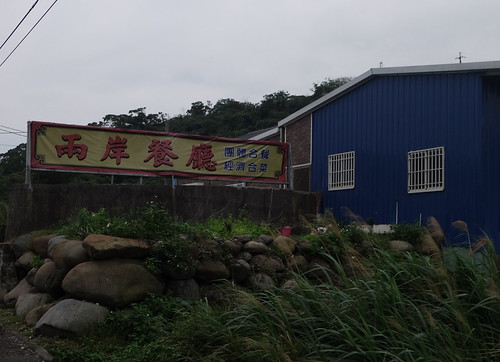
The Cross-Strait restaurant outside Changbin, where Taiwan is served on a platter daily.

Last week spokesman extraordinaire J Michael Cole wrote a rather odd piece for the China Policy Institute claiming that Beijing now faces 2 independence camps in Taiwan. The piece blew up a dismissive term used by some Taiwan independence types (=Taidu) for independence types who are willing to accept independence under the ROC label (=Huadu) into a full blown political camp. Ben Goren and I pointed out Cole's error in a follow on piece at CPI.
Although the piece is creative, it posits a false dichotomy based on a misunderstanding of the etymology of the term ‘Huadu’. Although the term has become more popular in recent years, it originated as a dismissive phrase coined by Taidu supporters to refer to other Taiwanese who they see as weak-willed appeasers of the ongoing ROC colonial occupation of Taiwan. Outside of this tiny subset of active citizens who are politically engaged on the issue of Taiwan’s independence, the term Huadu remains largely unknown.
Persual of BBS systems where people discuss such things shows that the term remains a mystery even to those might use it; outside of a few young people engaging in discussions on the internet, there is no camp, no ideology, no political demands, no philosophy for the "huadu". It exists as no more than a feeling that it might be ok to be independent under the ROC label, though it is obvious that people who think that way have never thought much about what the means. Some random remarks from users on a BBS:
華獨派除了憲法跟國名外,跟台獨根本一樣啊XD
Huadu faction [note: not "camp"], except for the Constitution and the nation's name, are Taidu
華獨是希望隨著時間對岸可以逐漸的變成正常國家
Huadu hopes that over time the opposite side will gradually become a normal country
國號根本不重要 某些台獨派太狹隘
What we call the nation is not important. Some Taidu people are too narrow-minded
Taidu and Huadu are just labels that are used to divvy up the independence movement into purist and moderate factions, largely for discussion purposes among a few aficionados. Outside of this discussion among Taidu types about other Taidu types, there is no Huadu camp. As Ben and I note in the piece at CPI, if China ever permitted Taiwan to be independent, this "difference" would vanish in a heartbeat.

Brian Hoie at New Bloom riffed on Cole's piece to speculate on how the DPP might treat ROC independence. He also observes of Cole's error:
If terms such as “ROC independence” or “Taiwanese independence” are terms commonly used in Taiwanese discourse about unification/independence politics to frame specific political positions, such terms are not used in English. Discussion of political positions about independence/unification politics are framed in different terms in English.

In writing about the use of such terms in Taiwanese discourse about unification/independence politics, one hopes to bridge the sometimes vast gap between Taiwanese political discourse within Taiwan and Anglophone discourse about Taiwan—even if others may arrive at different political conclusions than one’s own. But that leaves open the possibility that individual seeks to appropriate a term from its original meaning in Taiwanese discourse to create a different meaning for it in English, which creates misleading perceptions about political discourse within Taiwan.
This does not mean that at some point in time this discourse might spill outside its current existence on the BBS and become a full blown camp with advocates, a program, an ideological system, and so on. Perhaps Cole was just trying to get the jump on such a process as a couple of people observed: "I saw it first!". But at present, there is nothing like that in the offing, and Beijing contends with the Taiwanese and their democracy, as Cole rightly noted in his piece.

ADDED: Jenna responds to Ben and I
Where, however, it seems to me - again in my totally non-scientific observation - that they are wrong is in dismissing it as existing at all simply because it is not an organized or semi-organized political force or a self-identifying label
...except, we never denied that such people existed. *sigh* What we denied was that they represented a "camp" that Beijing had to contend with, or that the terms used in a tiny subset of the political discourse could be blown up that way. To wit:
The only evidence of Huadu’s existence surfaces intermittently in polls that ask whether Taiwanese want independence, the status-quo, or annexation. Those polls provide too little information on the identity of respondents to conclude that those who favour the status-quo have a unique and consciously shared political identity
Taidu is a real political identity conscious of itself, with an ideology and program. "Huadu" is a term used by Taidu people to describe other Taidu types who are less purist. It's really that simple. Everything else is just blowing the whole discussion out of proportion.
_____________
Daily Links:
_______________________
Don't miss the comments below! And check out my blog and its sidebars for events, links to previous posts and picture posts, and scores of links to other Taiwan blogs and forums!
Friday, December 25, 2015

Taiwan independence in class

I assigned my students to present on a social/political issue in Taiwan. One group did Taiwan independence, which I thought was kind of cool. The ready way they selected this, with its suggestion that they did not feel anyone would be offended, shows how things have changed. After READ MORE are the PPTs they made, reproduced with their permission. On the "system of value" when I asked for an example of different values, they said Taiwanese treat each other with more respect than the way Chinese treat each other. The comment about women represents better women's rights in Taiwan. They laid it out in advantages vs disadvantages format, and concluded about what you'd expect for this generation...

Tuesday, February 24, 2015

Case No. 59213: China Specialists Don't Get Taiwan

A ladybug predating.

I often complain about how China specialists just don't get Taiwan. Here is another example of it. taiwansecurity.org published an interview with longtime, well-known China specialist Andrew Nathan last week about Beijing and Taiwan. He replied to one question on the Sunflowers.
I think that they had already learned that to settle what they call “the Taiwan problem” peacefully, which is their goal, they are going to have to win over public opinion in Taiwan—the people, the voters. They knew that. But to me, the lesson of the Sunflower Movement is—but I don’t know if Beijing understands the lesson the way I do—is that you can’t win over public opinion strictly with economic benefits. I think Beijing’s strategy had been that we will take care of the Taiwan economy by opening up our markets, by giving privileges to Taiwanese investors and others, and sending tourists, and so forth, and the Taiwan people will understand that their economic interest is in the same basket with us. It turns out that the Taiwan people are instead resentful of growing economic dependence on the mainland. They’re not very trusting of how that economic influence will be used by Beijing. The Chinese leaders are still in some ways Marxist, they still believe in economic materialism, the idea that people will respond to economic incentives. They seem to have a hard time getting a grip on the idea of identity and self-dignity as an important factor that people sometimes fight for.
We just had this problem with Denny Roy, which I commented on below. Once again we see the false idea that Beijing offers those generous economic incentives. But everyone in Taiwan can see that (1) Beijing is not offering generous terms (2) it is only doing econ agreements because it wants to hollow out Taiwan's economy because of (3) it wants to bind Taiwan to China and annex it while destroying the economic basis for Taiwan's independence. The result of the China engagement has not been positive economic benefits for Taiwan, but stagnating wages, reduced democracy, increased smuggling and gang activity, and so on.

China specialists need to face this fact squarely: there are no generous economic benefits from Taiwan's economic involvement with China. That golden age passed in 2008, six years ago. Instead, the people of Taiwan experience assaults on their independence and democracy on one side and the hollowing out of their economy on the other, along with China's continued interference in FTAs and other international agreements. They know that the benefits of the trade relations go to a few big businessmen. They know the tourism profits are taken by a handful of Hong Kong-based tour agencies, while the locals get low paying service jobs while Chinese tourist facilities destroy local lands and the tourists themselves overrun whatever place they go into, driving away locals. As Ian Rowen has trenchantly observed, tourism is a territorial strategy of China in Taiwan. They know that China has special zones on its coast to poach Taiwan's agricultural technology. The public here is well aware that everything the public was told about China by the Ma Administration has turned out to be a lie. You'd think the message would have gotten out by now to the China specialists who study this stuff... no wait, why do I think that?

The whole idea of "generous economic benefits" is Chinese propaganda. Stop forwarding it, scholarly folks.

As a friend of mine commented so much better than I could on Nathan's remarks about China's authoritarian government and Taiwan's shifting democracy:
LOL. Poor China. they must be having fits according to Nathan because of that protean democratic process. They don't know who's in charge in Taiwan; or for that matter, the US, the UK, France, Germany, Japan, Korea, India, Australia, Canada...
Nathan also answers the question about what if China became democratic.
If Beijing became a democracy in some authentic sense, I believe that the problem of Taiwan’s relationship to the PRC would then be much easier to resolve peacefully. And I guess I gave in my earlier remarks already the logic of why I think so. The Taiwan people do have an economic advantage in close relations with China, but they don’t want to make that into a political relationship because they don’t trust the authoritarian regime. But if China had a truly democratic regime—I’m not saying a U.S.-type regime or any particular format, but something that was really democratic with political freedom and political security—then I think the Taiwan people would gradually grow to trust the government in Beijing and they would understand that this mainland China political entity has a security interest in an arrangement where both their own and Taiwan’s security will be guaranteed, and we need to provide that to them, and it’s not going to be a threat to us. That kind of a thought would grow in Taiwan.

And then I think on the Chinese side, they would also be willing to negotiate with the Taiwanese for their interests in more autonomy and they could—over the years, many different formulas have been vetted about confederation, and so on—they could probably solve the problem.
There's already poll data on this. As Emerson Niu's survey
Q4. If only small political, economic, and social disparity exists between Mainland China and Taiwan, do you favor or not favor Taiwan unifying with China?

Not Favor: 56.4% 
Favor: 36.4%
NA: 7.2%
...and that data is years out of date. Things are even stronger now. Why do people in Taiwan reject being annexed to China? The reason is simple: they have their own identity, the Taiwan identity. China has a different identity (see Don Rogers' work on the young). Authoritarianism is an issue, but even if China became democratic, the identity issues that separate the two sides would remain (see Scotland, Catalonia, Slovakia, etc). Taiwanese would see a democratic, non-threatening China as "at last! we can be free!" and that the peaceful resolution would result in an independent Taiwan, which most everyone here wants to see.

In any case no one in Taiwan would imagine that a democratic China would keep its word in some kind of security treaty. The Taiwanese would much rather be security linked to Japan and the US, two nations that don't want to annex the island. Nothing in the basic equation of the Taiwan-China-Japan-US quadrilateral would change.

I'm just curious about people who think that China will be less willing to use force if it is democratic. The history of the western democracies does not make one sanguine in this regard....

Finally, Nathan remarks...
And then I think on the Chinese side, they would also be willing to negotiate with the Taiwanese for their interests in more autonomy and they could—over the years, many different formulas have been vetted about confederation, and so on—they could probably solve the problem.
How kind of Beijing to grant us the status of an autonomous satrapy and refrain from murdering us wholesale! Never mind that Taiwan would be negotiating for less autonomy than it has now (and why would it do that?). This remark: "they could probably solve the problem" elides so much. The problem is not between Taiwan and China as something that could "be resolved" by the two sides sliding closer to each other. Taiwan is not the cause of the problem, and thus, nothing it can do will resolve it, save surrender.

The problem is Beijing's desire to annex Taiwan. Only Beijing can resolve that problem.

UPDATE: Some good comments below.
__________________
Daily Links:
_______________________
Don't miss the comments below! And check out my blog and its sidebars for events, links to previous posts and picture posts, and scores of links to other Taiwan blogs and forums!

Wednesday, December 10, 2014

Human Rights Day Blast from the Past

A Taiwan beer truck at the Miaoli marathon this weekend.

As this blog slowly returns to normal after the election crush, I'd like to observe that today is Dec 10, Human Rights Day, and the anniversary of the Kaohsiung Incident in 1979, a watershed moment in the history of Taiwan. The leaders of the democracy movement in Taiwan, including current K-town mayor Chen Chu, were arrested and imprisoned, and they and the lawyers who defended them, including Su Tseng-chang and Chen Shui-bian, gained lasting fame, becoming stalwarts of the DPP. In honor of their sacrifices, I present this analysis of the 2014 election from "expert" Robert Ross back in 2006 (my blogpost): Taiwan's Fading Independence Movement..
The demise of Taiwan's independence movement has removed the only conceivable source of war between the United States and China. The two countries will continue to improve their military capabilities and compete for influence in eastern Asia, but as the threat of war over Taiwan recedes, they may moderate their defense policies toward each other.
Don Rogers, a longtime researcher on Taiwan, surveyed 941 college students in 2010. He recently put the data up on the China Policy Institute Blog. Read the whole thing, but here is an excerpt:
First, it is clear that the students do not believe that Taiwan is part of China. Over 80% of the respondents disagreed with the statement, “Although China and Taiwan have different governments they are still part of the same country.” Additionally, nearly 70% of the respondents agree with the statement, “Taiwan and China are so different that it doesn’t make any sense to discuss unification.” Even students who claimed a dual Taiwanese-Chinese identity made it clear that this does not mean they support unification. More specifically, 91% of the students who expressed this dual identity agreed with the statement, “to say that I am Chinese does not mean that I want to be part of the country of China.” All of these responses provide a very clear indication of the students’ primary identity and attitudes toward unification.
It's hard to imagine that anyone in 2006 could write that the Taiwan independence movement was dead, but there it is. Ross published the piece in Foreign Affairs, which, as I've remarked before, would publish a paper by a hamster, provided it was sufficiently anti-Taiwan.

Even more comical, in its way, is his assertion that Taiwan independence was the "only conceivable source of war between the United States and China"....
_____________
Daily Links:
_______________________
Don't miss the comments below! And check out my blog and its sidebars for events, links to previous posts and picture posts, and scores of links to other Taiwan blogs and forums!

Tuesday, October 14, 2014

Hong Kong's Effect on Taiwan is major media moment

A hiking trail

Cindy Sui of the BBC sent around a piece today on the effect of the Hong Kong protests on Taiwan's desire to annex itself to China. It's mostly good, and its the first major media piece I've seen that refers to the ghostly deadlines of 2021 and 2049 for annexation of Taiwan that some in the Chinese media have talked about.

As several of us have been remarking recently, one ironic effect of the Hong Kong protests is that everyone is now noticing Taiwan. Yay! Normally the international media hedges when it talks about Taiwan's rejection of annexation speaking of "some people" dislike that, or referring to "skepticism" or "wariness". But perhaps we're going to see more forthright acknowledgement in the major media that Taiwan doesn't want to become part of China. One can only hope.

Ben Goren has a long discussion of the BBC piece here, with many criticisms, which I won't repeat. Ben observes:
Then there’s this beauty:

Thousands of Chinese tourists flood into Taiwan daily, boosting the island’s economy.
I don’t have a problem with the object of this sentence, only the entire predicate. Perhaps Cindy Sui can point to some hard statistical evidence that Chinese tourists are actually boosting Taiwan’s economy and if so, which sectors / areas in particular. If she can’t then really all she’s doing here is repeating Government propaganda.
The problem is an interesting one because there are many ways to think about how to measure the economic effect of Chinese tourists and it would not be easy for anyone to produce a definitive account. This paper argues for a net US dollar gain of nearly $50 million a month from Chinese tourism after allowing for the "crowding out" effect of reducing US and Japanese tourist arrivals, partly because it appears to increase tourism from Hong Kong, but the data are too old and limited to be useful (2009 data). I'd be curious to see a more recent in-depth model. I suppose nearly $600 million annually is technically "boosting" the economy. This 2014 paper views Chinese tourism from another POV -- its economic effect on the environment:
When forecasting the estimated growth of Chinese visitors in Taiwan to 2016, an additional 0.8% increase in economic output is expected at the expense of a 2.7% increase in CO2 emissions and a 3.0% increase in water use.
Another paper from 2013...
It is concluded that by 2011, the economic spillover effects for the retail sector and accommodations services sector were US$773.49 million and US$438.43 million, respectively. The total spillover effects of US$7617 million accounted for 0.183% of Taiwan's GDP
I don't think there is any question we're getting a "boost" from Chinese tourism, if only because the word "boost" has no real meaning, though none of the models attempt to measure the costs, except the one that looks at the environment. I also don't think there's any question that it is not a boost we want: Chinese tourism produces nothing that raises long-term living standards in Taiwan. This pointless flow of revenues (profits go largely to a few Hong Kong tourism firms) might even be tolerable, if it were not part of a strategy to annex Taiwan to China.

Sui writes, referring to the Sunflower Protesters (her reporting on them was excellent, example) and their demand for a bill to provide oversight of cross-strait agreements:
They might just succeed. The activists enjoyed nearly 50% public support for their demands for greater scrutiny of government deals with China, according to a government survey, partly because - unlike Hong Kong - they did not disrupt traffic.
Actually, "nearly 50% support" seems wrong. Rather, it was strong majority support. For example, Ben writes on a pro-KMT TVBS poll that has 65% supporting passage of a bill to oversee agreements with China, including a plurality against the trade pact. Another TVBS poll showed over 60% wanted the services pact withdrawn, numbers similar to those in this Businessweek poll. That the government has not attempted to ram the bill through again clearly indicates its deep unpopularity, both with the public at large and within the KMT. The students had broad public support because the service pact was a crapshit agreement that was bad for Taiwan and rejected by the public. If only someone in the media would clearly say that....

PS: if you're interested in the meaty contents of the oversight bill, the always-excellent Frozen Garlic has a great post on it.
PPS: In fairness, a government poll found the public supported the services pact, by 1%, 41-40. Those results surely required real artistry to achieve.
PPPS: What's the boost from the services pact? I looked at it here. You'll need a microscope to see it.
________________
Daily Links:
  • New ROC stamps honor endangered species. Test your ROC understanding: which stamp has higher value, Formosan Black Bear or Giant Black and White Annexation Lardbombs? Go here, select MINT STAMP and 2014 in the drop down menus.
  • Taiwan Review on the new national park in the Penghu
  • Ma tells K-town residents they should take the MRT and other tales from Ben at Letters from Taiwan. There have been lifelong authoritarian rulers who were less tone-deaf than Ma Ying-jeou. 
  • Huffington Post notes Sunflower influence on Hong Kong protests. This is amazing.... even though they get a UDN guy.
  • Chinese espionage now rampant in Taiwan
  • Ma vows to clean up food industry in Taiwan. Yawn. Let's revisit the past. Government vows to improve tracking after plasticizer scare (2011). I'm not going to bother searching for more.
  • WHOA: I was wondering when something suggestive like this would appear. The oil scandal for Ting Hsin/WeiChuan has caused the Ministry of Finance to put the brakes on Ting Hsin conglomerate's takeover of the management of Taipei 101. And there is the purchase of the cable news station. One wonders what toes Ting Hsin was going to step on. Lucky for those being stepped on the oil scandal broke, eh?
_______________________
Don't miss the comments below! And check out my blog and its sidebars for events, links to previous posts and picture posts, and scores of links to other Taiwan blogs and forums!

Monday, October 06, 2014

Taiwanese Swooning at latest ECFA Success

My man Ben of Letters from Taiwan remarked to me in chat today:
Good job the diplomatic truce and ECFA totally stopped Beijing blocking TW on international stage and getting in the way of signing FTAs with Malaysia and Australia. Oh wait... Beijing meddling in Taiwan's trade pacts...
Readers will recall those heady days of 2009 and 2010, when the Ma government was promising that the ECFA trade agreement would enable Taiwan to sign FTAs with other countries. As recently as 2013 the WTO came out with a book in favor of ECFA, saying it would help Taiwan sign FTAs. Of course, the failure of Ech!-Fah! to result in FTAs because Beijing wouldn't permit them was totally foreseeable. D'uh:
Taiwan's economics minister Duh Tyzz-jiun has accused the mainland's government of meddling in other countries' efforts to sign trade pacts with the island, according to a local media report. The minister said countries that were likely to enter into substantive trade talks with Taiwan this year had decided to hold off after Beijing expressed concerns about their engagement with Taiwan, the Central News Agency reported yesterday, citing an interview Duh gave with the United Daily News group. Duh said Beijing had obstructed Taiwanese efforts to reach or sign free-trade agreements with at least two countries,...
In the run-up to the signing of ECFA Ma emphasized again and again that ECFA would lead to FTAs and that we needed to tie ourselves to China, marginalize ourselves even further, in order to get FTAs. As I pointed out at the time, that was shock doctrine policy-making at work:
1. Hurry! The rest of Asia, including China, is forming a free trade region!
2. We'll be locked out of this if we don't get on board now!
3. Our economy is in the tank! We must do something now!
4. Claims that opponents' objections are "ideological"
Yea, verily, remember when TV ads and the President himself said that without ECFA Taiwan would be "isolated like North Korea"? The logic of his "argument" is encapsulated in this example:
President Ma stressed that the signing of FTAs (Free Trade Agreements) had become a global trend. If Taiwan hesitated to first sign an ECFA with the Mainland, Japan and the ASEAN countries would not sign FTAs with Taiwan. In the past eight years, the DPP administration had made no progress in signing FTAs with other countries because the DPP had refused to sign any kind of economic agreement with the Mainland.
That last comment is technically right but morally wrong -- the DPP had an agreement all wrapped up with Singapore, but China nixed it.

It goes without saying that the usual suspects were rah-rahing Taiwan into FTA oblivion. Yes, the Establishment was clueless. AmCham stated in its 2009 Taiwan White Paper that “the conclusion of ECFA would pave the way for Taiwan to participate in regional trade blocs and enter into bilateral FTAs with additional trading partners.” The European Chamber of Commerce said in its 2009-2010 Position Paper: “The sooner Taiwan signs ECFA with China, the quicker political impediments to other countries signing economic agreements with Taiwan will be removed.” If that wasn't fantastic enough, some of this ECFA=FTAs stuff rose to amazing heights of fantasy...

Bwahahahaha! As early as 2011 WSJ was observing that ECFA had turned out to be a failure on the FTA front. By 2012 the Ma Administration was pushing greater progress on ECFA to compensate for the failure of FTAs to materialize.

As I noted in posts at the time (Don't Mistake My Blue-Swayed Schmooze, just read the whole post, it is as germane now as it was when it was written in 2009; this one is also good ), there was only one problem with this combination of rosy prediction and devastating threats conveyed in the foreign and domestic press:
Imagine how this would look had the article presented a key piece of information: China has consistently refused to promise that Taiwan can have FTAs with other nations. Its real goal, argue some analysts, is to force Taiwan firms to relocate to China to take advantage of China's FTAs.
That's right, all this yakitty-yak-yak existed to cover up the simple fact that China had never promised not to interfere. The goal of ECFA was always political and economic: to hollow out Taiwan's productive industries and gut its economy, since that is a powerful resource for Taiwan independence and Taiwan democracy.

EFCA + FTAs was always cargo cult economics. We've built it, and they haven't come.
______________
Daily Links:
_______________________
Don't miss the comments below! And check out my blog and its sidebars for events, links to previous posts and picture posts, and scores of links to other Taiwan blogs and forums!
Monday, September 29, 2014

Ma-Xi Meet Up and Other Xit

A curve on the Hsinchu 60. There used to be a giant statue of an aboriginal warrior on that platform above the road, but it toppled off.

By pounding on Hong Kong, Xi is losing Taiwan says a piece at The American Interest today.
But their stance on Hong Kong has already had a significant knock-on effect in another area of concern for China: Taiwan. Though Taiwan’s current president, Ma Ying-jeou, was seen as gingerly steering his country towards gradual and eventual unification with the mainland, recent events in Hong Kong have created a political consensus that reunification is just not going to work.
Recent events did not create this consensus. Taiwanese have been anti-annexation for as long as there have been credible polls (preference for status quo always meant that, and now polls routinely show majority support for independence). Ma is just making noise -- everyone knows he wants to annex the island to China. Nevertheless, the main point is correct: the crackdown on Hong Kong is further strengthening Taiwan's desire to avoid annexation to China. Indeed, there were solidarity protests in Taiwan yesterday.

No, the real signal China is sending in its crackdown on Hong Kong is that it has given up any pretense that "one country, two systems" is meaningful. That is why China's president Xi reiterated it to Taiwan even as Beijing was preparing its response to its betrayal of its promises for Hong Kong: that reiteration in that context demonstrated its emptiness. It springs from the same well of sociopathology under which Beijing makes the families of executed individuals pay for their own bullets, or commits border infractions with a country it is negotiating with. Beijing knows perfectly well that 1C2S is unacceptable to Taiwan.

No, what we should be reading from this is that Xi is no longer trying to seriously put forth this policy. In that case, what will the real policy be? What else can it be but war....?

In a Le Figaro interview this week Ma said that he hopes to meet Xi of China in November. If so, it will be pure political theater, a distraction from all the pro-annexation moves he's made over the last seven years: ECFA, the tourism increases, the attempts to get Chinese labor over here, the indifference to Chinese overstaying visas in Taiwan, the tolerance for pro-annexation gang activity and gangsters, the drive to integrate Taiwan with China financially, and others. The international media will of course go apexit over it, ignoring all the really important stuff. But at present there's no hint that Ma will ever pay his respects to the Dragon Throne while President of the ROC.
___________________
Daily Links:
_______________________
Don't miss the comments below! And check out my blog and its sidebars for events, links to previous posts and picture posts, and scores of links to other Taiwan blogs and forums!

Monday, September 22, 2014

Brian Benedictus and Me: The Coming Taiwan Independence Surge at Ketagalan Media =UPDATE=

Alishan Tea Farms

UPDATE: Chinese version

Ketagalan Media was kind enough to host our piece on The Coming Taiwan Independence Surge. A taste:
The fact that the occupation of the Taiwan legislature by student activists earlier this spring was woefully under-reported, is disappointing for a number of reasons. Primarily, the world missed an opportunity to see the changes in social and political identities sweeping across the island nation. These generational changes that are taking place in Taiwan, along with external factors such as China’s treatment of Hong Kong and its increasing bellicosity in its littoral areas, are going to reshape local politics in a way that suggests in the not-too-distant future, there is going to be a powerful new impetus for independence in Taiwan.
_______________________
Don't miss the comments below! And check out my blog and its sidebars for events, links to previous posts and picture posts, and scores of links to other Taiwan blogs and forums!
Saturday, August 30, 2014

The Economist: one drop in the tsunami of stoopid

Another lovely Taiwan riding day.

I'm blogging on this because I fear that if you read this article in which the Economist explains why China and Taiwan are divided, your IQ may plummet. Just consider this my small public service in defending the world from the ongoing tsunami of stoopid in the media. Why O why can't we have a better media?

The stoopid starts at the very beginning. With the title: "China and Taiwan are divided." But of course, China and Taiwan aren't "divided." The KMT and CCP governments wish to annex Taiwan to China, whose sovereignty over Taiwan is not supported by any international treaty. It is they who are divided. There is no division between Taiwan and China, because there was never any unity (Added: I discuss this in a post above).

The Economist simply leaves out all the issues -- the fact that for all of Chinese history Taiwan was considered to lie outside China, until the mid-1930s when Chinese expansionist thinkers began to imagine they could grab it. Or the 1895 declaration of independence. Or the island's current undetermined status under international agreements and US and UK policy. Bye-bye.

Consider also how writers on the Taiwan-China problem have incorporated the trope "province of China in the 19th century" into the way they think about Taiwan's relationship with China -- as if it actually meant something. It means precisely nada. That's one of the double standards we use in thinking about Chinese claims, which we apply to no other claims. For example, Algeria was a department of France for over a century, Taiwan a province of the Qing for less than a decade. I look forward to the Economist's next brilliant article on how Algeria and France are divided.

It always saddens me that allegedly democracy and law-supporting media organs can't clearly lay this out for the public. Instead, we just get parroting of Chinese claims when what we should get is subversion and deconstruction of them.

The Economist goes on to present "history":
... Taiwan has since become a democracy, but resentment of the KMT runs deep among many of those who were living on the island before the KMT took refuge, and the descendants of such people. Their identity with greater China is weak. Some want Taiwan to abandon any pretence of a link with China and declare independence. 
This is another common trope in the media -- downplaying support for independence. It's not "some" who want, but a comfortable majority. But for the Economist to maintain the fiction that China and Taiwan "divided" -- it's actually the KMT and the CCP which are divided -- it must downplay support for independence in Taiwan. But it gets worse -- the Economist actually treats democracy as if it were a bad thing. It urks up:
But perhaps an even bigger reason why the Chinese and Taiwanese presidents have yet to meet is that the Chinese civil war is not officially over. The government in Beijing does not recognise the government in Taipei, and thus does not accept that it has a president. Although the two sides stopped lobbing shells at each other in the 1970s and began talks in the early 1990s, progress has been slow. Discussions were held only through intermediary bodies, while Taiwan’s democratisation soon intervened. Taiwan’s then president and KMT leader, Lee Teng-hui, organised the island’s first direct presidential elections in 1996. In an appeal to native Taiwanese, he shifted his government’s rhetoric to talk not of "one China" but of two states. This effectively granted recognition to the government in Beijing, but it also infuriated it. The Communist Party feared a slide towards Taiwan’s formal declaration of independence and tensions flared. China lobbed unarmed missiles into the Taiwan Strait; America sent aircraft carriers to warn it off. The victory of Mr Lee in the presidential elections, and of the pro-independence Democratic Progressive Party in two subsequent ones, stymied further progress in cross-strait talks.
The brilliance of this paragraph lie in its author's utter blindness to what he is writing -- he opens by saying that the issue between the KMT and CCP is the Chinese Civil War, which is rank nonsense. The Chinese Civil War is a dead letter. The real issue is that -- as he bass-ackwardly identifies further on -- the people of Taiwan don't want to become part of China. If Taiwanese supported annexation to China at the same levels they now support independence, then we would have become part of China decades ago.

The only reason the CCP even talks to the KMT is because the KMT represents its best shot at annexing Taiwan without a war. "Resolving" the Chinese Civil War is actually a rhetorical cover that the CCP and KMT use to justify their talks on how best to annex the island to China and what the take-home for the KMT will be. Thanks, Economist, for repeating that bit of propaganda as if it actually meant something.

Indeed, the only reason we're having a China-Taiwan discussion is because China threatens to maim and murder Taiwanese if it doesn't get to annex Taiwan. Otherwise the Taiwanese would be ignoring Beijing, Chinese Civil War or no.

But look at how the Economist treats democracy -- first it "intervenes" in the glorious progress of annexing Taiwan to China and then it "stymies further progress." That rotten democracy! How dare it!

Read it again -- the author of the piece is lamenting the fact that a democratic island of 23 million people with close relations with the western democracies whose economy is of global importance was not making progress in being annexed to China.

Does it get any more stoopid than that?

The reason we can't make "progress" in cross-strait talks isn't anything that happens in Taiwan -- it is because China is completely belligerent and inflexible. Instead of clearly pointing this out, the Economist puts forth a series of common tropes here

-- false equivalence: Taiwan resistance and Chinese aggression are treated as if they were two equal sides of the same issue.

-- that China is provoked and infuriated and has no agency of its own in the Taiwan-China relationship. Poor China, stop it before it shrills again!

-- that "tensions flare" on their own, like Immaculate Conceptions, without the intervention of human agency. As my readers know, tensions flare because China chooses to ramp them up. Tensions are a policy tool for China. D'oh.

-- that President Ma is a "less confrontational" president (because he and Beijing are allied in annexing Taiwan to China! D'oh!): a common media trope is to assign the adjective "confrontational" or "provocative" to Taiwan while ignoring China's belligerence...

...because when you demand that a territory annex itself to your nation, point your military at it, and say that you will plunge the region into war if you don't get your way, you're not being confrontational, you're being statesmanlike. And when you resist that, you're confrontational.

*sigh*

Divided? The real division is between the people of Taiwan and the democracy they cherish, and the Chinese nationalists on both sides of the Strait who desire to suppress that democracy and annex Taiwan to China. But it appears that we will never see any discussion of that in the Economist...
__________________
Daily Links:
______________________
EVENT: Second World Congress of Taiwan Studies: Call for Papers

The Second World Congress of Taiwan Studies will be held at the School of Oriental and African Studies (SOAS) June 16-18, 2015. The Congress is being co-organized by Academia Sinica and the SOAS Centre of Taiwan Studies.

Click on READ MORE...

Monday, July 14, 2014

Ku Doubles Down and other stuff

Hoping Island, Keelung. If you haven't been here, it's much better than Yehliu.

Julian Ku's awful piece at The Diplomat got spanked by J Michael Cole yesterday and by Michal Thim today. Thim's is excellent and very polite, don't miss.

I ripped Ku two posts below this one yesterday. Incredibly, as if he had no access to Google in the intervening hours, today he doubled down on his errors:
I get that this is a complicated issue, but I don’t think I am “misreading” historical documents when I write that i) the US recognizes the PRC as the government of China and that the US accepts that Taiwan is part of China; 2) Japan recognizes the PRC as the government of China, and Japan accepts that Taiwan is a part of China. Sure, neither country recognizes that Taiwan is a part of the PRC, but both the US and Japan have made clear that China is a single legal entity that includes Taiwan, and that the PRC is the sole government in charge of this entity. We can futz around the details, but there is a reason why neither the US nor Japan (nor almost anyone else) have diplomatic relations with Taiwan.
Many of us who read this were wondering how Ku could have been unable to discover what US policy towards Taiwan is. There are a million people he could have asked overnight. And there's Google...

In case you can't remember, it's that Taiwan's status is undecided. The latest Congressional Research Service report lays it out on page 4, here is the formulation of it:
The United States has its own “one China” policy (vs. the PRC’s “one China” principle) and position on Taiwan’s status. Not recognizing the PRC’s claim over Taiwan nor Taiwan as a sovereign state, U.S. policy has considered Taiwan’s status as unsettled.
How easy is that to find? If you ask Google, in the first five answers you get two State Dept sites (useless as State conceals this position, leading to endless problems and misunderstandings like Ku's) but you do get the Wiki page, which isn't very good, and the CRS report above, which is excellent.

The reason the US position is so important is that its position became the San Francisco Peace Treaty's construction of the Taiwan question. Recall that in the 1951 Treaty, the peace agreement that redistributed things from Japan, Taiwan is given up by Japan, but no recipient of sovereignty is named. Hence, the practice of not only the US, but also Japan, Canada, Australia, and other nations is as Cole correctly noted yesterday: they acknowledge that China wants to annex Taiwan, but they do not accept Beijing's claim that Taiwan is part of China, in any form. Those of us who've been studying this game for twenty-five years know every step of the Taiwan Status pavane. The question is why Ku didn't ask anyone what the situation is, not whether Ku is wrong. That latter question was settled in 1951.

Nor is this a mere paper policy. These were the very nations who, in 2007 when then-President Chen sent a letter to the UN asking for entry, reminded UN Sec-General Ban Ki-moon that his claim that Taiwan was part of China was not accepted by many UN members. The US State Department was unhappy about it, but it did go to bat on behalf of this policy.

As I noted yesterday, Taiwan is thus not part of China -- no treaty or similarly important and internationally accepted legal document anywhere recognizes that -- but a decolonized territory whose population awaits determination of its final status. Any invasion by China would be a totally illegal act of aggression. Thus, at every level, Ku's construction of, and understanding of, the issue of Taiwan's status is 100% wrong.

A Twitter acquaintance accused me yesterday of trying to shut down the discussion in my last paragraph yesterday. Hogwash. Some legal arguments are dead from the get-go and they are dead and should not be made because they are (1) factually inept; (2) legally indefensible; and (3) morally reprehensible. Ku's "argument" for the PRC's right to kill Taiwanese and annex their land fulfills all three of those conditions. It literally should not be made because -- especially because -- his position as a nominal expert on international law gives it a weight it should not have. Sadly, it made it onto RealClearWorld yesterday, let's hope none of the PRC nationalists spots it...
_______________________
Don't miss the comments below! And check out my blog and its sidebars for events, links to previous posts and picture posts, and scores of links to other Taiwan blogs and forums!
Sunday, July 13, 2014

The Diplomat: Julian Ku argues PRC Murder of Taiwanese is Legal, US defense of Taiwan is not

The wreckage of Ku's arguments.

No one seems to know from what deliberations this declaration [Cairo] issued, it was apparently drafted, at the moment, by Harry Hopkins, after consultation only with the President and the Chinese visitors. Of all the acts of American statesman- ship in this unhappy chapter, the issuance of this declaration, which is so rarely criticized, seems to me to have been the most unfortunate in its consequences. The other direct results of this phase of American statesmanship have either been erased by subsequent events or seem to have produced, at least, no wholly calamitous after effects to date; but this thoughtless tossing to China of a heavily inhabited and strategically important island which had not belonged to it in recent decades, and particularly the taking of this step before we had any idea of what the future China was going to be like, and without any consultation of the wishes of the inhabitants of the island, produced a situation which today represents a major embarrassment to United States policy, and constitutes one of the great danger spots of the postwar world. G Kennan, Russia and the West under Lenin and Stalin (cited in Chen and Reisman below).

Today brought Julian Ku's airy, inept piece on Why Japan Would Violate International Law If It Militarily Intervened to Defend Taiwan which appeared at The Diplomat and his blog. Because the only other post I had seen from Ku was an equally uninformed, pro-PRC piece on the Chinese ADIZ over the Senkaku Islands, like many I initially assumed Ku was some kind of bog-standard PRC shill, for which I apologize. I changed my mind after I read a number of his other posts. Onward, but sadly, not upward.

Ku scribes in a key paragraph of his case:
I think this could be right as a matter of Japanese constitutional law if an invasion of Taiwan could be plausibly construed as a threat to Japan, but there is a strange international law flaw to this argument. Under black-letter international law, Japan cannot use military force in Taiwan absent China’s consent, even if the Taiwan government requests its assistance. Why? Because the UN Charter’s Article 51 only authorizes an act of “collective self-defense if an armed attack occurs against a Member of the United Nations.” Taiwan is not a member of the United Nations, and to make matters worse from Taiwan’s perspective, Japan recognizes the government in Beijing as the rightful government of China, and Japan further recognizes that Taiwan is part of China.
There's a lot here to unpack. J Michael Cole was first with a rapid response over at Thinking Taiwan. He identifies the major error of Ku's in this passage: he doesn't know what Japanese policy is...
If we look closely, Tokyo’s position regarding Taiwan isn’t that Japan recognizes, as Wu claims, that Taiwan is part of China. Rather, it understands and respects this contention by Beijing, much like many governments worldwide, in constructs of superb diplomatic vagueness, “take note of” or “acknowledge” the PRC’s contention
Japanese policy is thus exactly the same as US policy: the status of Taiwan remains undetermined. Ku got that completely wrong. Cole then turns to a discussion of the Cairo and Potsdam Declarations:
Furthermore, Article 8 of the Potdsam Proclamation (raised in point 3 of the communiqué) clearly states that the terms of the Cairo Declaration (signed on November 27, 1943) shall be carried out, meaning that “All territories Japan has stolen from China, including Manchuria, Taiwan, and the Pescadores, shall be restored to the Republic of China.” Restored to the Republic of China (ROC), not the PRC, which at the time of the communiqué, issued July 26, 1945, and the Declaration simply did not exist (it wouldn’t until 1949). It is therefore easy to see why Ku’s argument that China would be using force against secessionists within its own territory if it attacked Taiwan (akin to Ukraine, he writes) defies logic, as Taiwan cannot secede from a body of which it never was part — in this case, the PRC. 
Of course, Cairo has no legal weight. As I noted ages ago, President Truman defined US policy on Cairo in 1950, twice. First, announcing intervention in Korea -- haha, wait til we get below on Korea:
[June] ....Accordingly I have ordered the 7th Fleet to prevent any attack on Formosa. As a corollary of this action I am calling upon the Chinese Government on Formosa to cease all air and sea operations against the mainland. The 7th Fleet will see that this is done. The determination of the future status of Formosa must await the restoration of security in the Pacific, a peace settlement with Japan, or consideration by the United Nations.
On Dec 27, 1950, Truman articulated the formal US position, which has never varied from that moment.
The Cairo Declaration of 1943 stated the purpose to restore "Manchuria, Formosa and the Pescadores to the Republic of China." That Declaration, like other wartime declarations such as those of Yalta and Potsdam, was in the opinion of the United States Government subject to any final peace settlement where all relevant factors should be considered. The United States cannot accept the view, apparently put forward by the Soviet government, that the views of other Allies not represented at Cairo must be wholly ignored. Also, the United States believes that declarations such as that issued at Cairo must necessarily be considered in the light of the United Nations Charter, the obligations of which prevail over any other international agreement.
This is the position of the UK as well. Cairo doesn't mean anything, it was just noise some nations made in wartime and any realization would have to await the end of the war and the subsequent treaty arrangements. It can't overthrow international law or the UN Charter, which requires that populations whose territories are being transferred get a vote on the transfer. It even required that in 1943 when Cairo was drafted. It certainly requires that now. China can't simply invade because to do so is a violation of the Charter (more below) and many decades of international law and practice.

I can't resist pointing out that Article 6 of the Joint Communique that Ku and Cole refer to says that both parties must refrain from force or the threat of force against each other. LOL.

I also can't resist pointing out that the language of Cairo refers to an impossible fantasy: Taiwan could not be "restored" to the ROC or PRC since neither owned it in 1895. Nor was it "stolen." Cairo's statements are Chinese propaganda. But that's a minor nitpick...

Ku then goes on to argue that it would be perfectly legal if the PRC murdered Taiwanese wholesale and annexed their territory:
If Taiwan keeps the status quo and does not declare independence, and China still invades, the U.S. has signaled that it would come to Taiwan’s defense. But that would be one state (China) using force within its own territory to put down secessionists (a la Ukraine) and almost certainly legal.
Taiwan's status, as defined by the San Francisco Peace Treaty, is undetermined. Period. It is a territory awaiting final determination of its status. Period. No internationally recognized treaty gives Taiwan to China (see Chen and Reisman for a full discussion of the innumerable problems with the Chinese claim). Hence the Taiwanese are not secessionists. Since Ku raised the UN issue, as a decolonized territory -- it was a Japanese colony, remember? -- what does the UN say about such territories? There's a declaration adopted in 1960... every article in it says any Chinese attack on Taiwan would be illegal, but the first will suffice:
1. The subjection of peoples to alien subjugation, domination and exploitation constitutes a denial of fundamental human rights, is contrary to the Charter of the United Nations and is an impediment to the promotion of world peace and co-operation.
Note also that Article 73 of the Charter obligates UN members to assist territories in attaining self-government. Just a taste:
to develop self-government, to take due account of the political aspirations of the peoples, and to assist them in the progressive development of their free political institutions, according to the particular circumstances of each territory and its peoples and their varying stages of advancement;
Invading and annexing Taiwan is hardly assisting it in getting self-government, which is what China in either its ROC (v1.0) or PRC (v2.0) is obligated to do under the UN Charter. Well, I suppose we will get our very own Beijing-approved satrap, like Hong Kong.

In fact, if you read the UN Charter itself, you will find that disturbances of the peace are a fundamental anathema to the UN. Start with Article 2, (3) and (4). Nowhere does the Charter say that the use of force is permissible against non-UN member states, as many commented. You don't get a mulligan if the state in question is not a UN member (the UN condemned the Indonesia attack on East Timor, for example and demanded Jakarta stop). An attack on an unincorporated territory is an breach of the peace whether the state in question is a UN member state or not; indeed the UN charter requires that states put every effort into peaceful solutions, which of course China has not done (the KMT-CCP negotiation represents talks between two versions of the same Chinese expansionism, much as Taiwanese land developers will have their employees purchase tiny plots of land or homes in an area they want to develop and join the homeowners association in negotiating with the company, so that such "negotiations" happen between the company and its agents. Basically the annexation of Taiwan is just a familiar Chinese construction company land grab, blown up to galactic scale).

In fact, as an acquaintance pointed out, the UN intervened in Korea in 1950 -- well, the US intervened and pulled the UN in as cover -- and neither Korea nor the PRC (which attacked the UN forces) were in the UN. What the Korean war shows is that the UN can legalize anything it can be cajoled or tricked into supporting. What it also shows is that even between non-UN states, war is a serious breach of the international regime and dealing with it is not illegal. In fact, it can be made legal by the magic wand of the UN. Hence Ku's whole argument is a non-starter from the beginning; whether such intervention is illegal will have to await the decision of the international community (but given China's clout in the UN....). Laudably, Ku says at the end it would be a good idea whether or not it is legal. Kind of him, eh?

Finally, I would like to point out how personal this kind of writing is. I had an exchange on Twitter with someone who just didn't get why this piece angered so many people. I'm not parachuting into Taiwan for a year with a MOFA fellowship (on my tax dollars!) like Ku is. I actually live here, and I actually have a son heading for the Army soon, as well as literally thousands of people I know and love here on this island filled with 23 million innocents, the vast majority of whom don't want to be annexed to China. The discussion of whether the PRC has the legal right to murder my children and annex their island is not a parlor game for those of us who live on this island. Pieces like Ku's are irresponsible at best, vile at worst, since not only are they likely to be cited by the PRC and its mouthpieces everywhere, but they are occurring at a time when the PRC is beginning to see what it can do with lawfare.

Please don't feed that monster.

UPDATED: Ku has reply hereStill ineptly and erroneously claims US and Japan think Taiwan is part of China. From CRS report below: "The United States has its own “one China” policy (vs. the PRC’s “one China” principle) and position on Taiwan’s status. Not recognizing the PRC’s claim over Taiwan nor Taiwan as a sovereign state, U.S. policy has considered Taiwan’s status as unsettled." Ku is wrong in every particular.
__________________
Daily Links:
_______________________
Don't miss the comments below! And check out my blog and its sidebars for events, links to previous posts and picture posts, and scores of links to other Taiwan blogs and forums!
Friday, June 13, 2014

Facebook Stories

Looks like the DPP has decided to support Ko in Taipei against Sean Lien. Taoyuan is looking more interesting by the minute, lots of stuff on the blog tomorrow, stay tuned. Meanwhile....

Taiwan joke I heard the other day:

Q: How do you know the person standing in front of you is Chinese?
A: They keep trying to persuade you that YOU are Chinese....

A friend posted this to her Facebook:

Taiwan's Invisibility

A medical researcher at X University mentioned it's getting harder for Taiwanese to participate in international conferences. The pharmaceutical companies used to pay for Taiwanese scholars to attend, but now they pay mostly for mainland Chinese.

At the last conference she attended, her nationality was listed as "Taiwan, Province of China" and this was even on her name tag! In the past, asking conference organizers to correct it might get a positive response. These days the organizers get angry!

I suggested she get the message across in a more personal way, by talking to people face-to-face: When meeting someone at the conference, shake their hand, and point to your name tag, smiling brightly, and say, "I'm (name)--and by the way, Taiwan is NOT part of China!" Laugh a bit, then immediately return to a conference-related topic.

China can bully you internationally, but no one can stop you from speaking your mind...at least, not here.

When you chat with mainland tourists, if you don't say anything about it, they really do go home thinking you're okay with Taiwan as part of China, just like one big family!

Instead, would you dare to say, "We like people from mainland China, but we don't want to have the same government," and then tell them why?

Because Taiwanese are so quiet, so humble, and prefer to avoid conflict, most mainland Chinese actually have NO IDEA that Taiwanese people might not be happy to be part of China. I'm told it can be quite a shock when they find out.

Isn't it possible to remain gentle without becoming...invisible?
_______________________
Don't miss the comments below! And check out my blog and its sidebars for events, links to previous posts and picture posts, and scores of links to other Taiwan blogs and forums!

Wednesday, June 11, 2014

There is no dealing with Beijing

Martial dance.

J Michael spent some time on China's first ever White Paper on Hong Kong.
China on June 10 issued its first-ever white paper on “one country, two systems” and the current state of things in Hong Kong, the former British colony that was re-unified with the Mainland in 1997. While the document contains little that is unexpected in terms of rhetoric that expounds the virtues of the system or calls for patriotism, the timing of its release — this summer promises to be eventful as activists prepare for a series of sit-ins, “unofficial” referenda and other escalatory measures in defiance of Beijing and its allies in the territory — is very telling. The unintended message of the white paper is that Beijing is worried, and that further restrictions are to be expected. There are a few lessons and warnings in there for Taiwan.
As my friend Tommy Patterson remarked on Facebook, it is not as though we didn't know that One Country Two Systems is a facade. Democracy in Hong Kong threatens Party control over China, while democracy in Taiwan keeps it free. Hence the paper says that Taiwan would be able to maintain its capitalist system -- note, not its democracy -- over a long time, which, as J Michael observes, is not indefinitely.

One common position held by pro-unificationists who are not Chinese is that Taiwan should annex itself to China now to get "the best deal" that it can. But Beijing wants Taiwan annexed and its democracy crushed. Cole writes:
Hence the several warnings in the white paper, such as: “The high degree of autonomy of HKSAR is not an inherent power, but one that comes solely from the authorization by the central leadership. The high degree of autonomy of the HKSAR is not full autonomy, nor a decentralized power.” [italics added by JMC.] We are told who is boss, and reminded that autonomy could be denied should things degenerate in the territory. More ominous is a passage in the section “Fully and Accurately Understanding the Meaning of ‘One Country, Two Systems,’” which emphasizes that China is, in the end, a “single-system nation” (中華人民共和國是單一制國家). The mask is off: one country lies supreme, and there is absolutely no reason to believe that Beijing is even willing to countenance a more permissive model when it comes to Taiwan, as was made perfectly clear late last month when the Taiwan Affairs Office shot down a “greater one China” proposal initiated on Taiwan’s side to help resolve the impasse in the Taiwan Strait.
The resulting political system will depend on the "goodwill" of Beijing. Which has none. Beijing's treatment of Tibet (tearing up the 17 point agreement) and Hong Kong (delaying or not implementing agreements) shows that idea of "a good deal" is a delusion. In neither example has Beijing kept its promises. There is no good deal to be had from Beijing, it's Beijing's way or war.
_______________
Daily Links:
_______________________
Don't miss the comments below! And check out my blog and its sidebars for events, links to previous posts and picture posts, and scores of links to other Taiwan blogs and forums!

Sunday, March 09, 2014

Five Lessons for Taiwan from the Ukraine Mess

Almost to Donghe.

1. The propaganda struggle
It's been exceedingly depressing to watch my feeds fill up with propaganda about the Ukraine, with reliable information hard to obtain. A number of my lefty friends seem to be forwarding Russian propaganda claims as fast as Moscow can put them out (there's a whole swath of the "anti-imperialist" left that will embrace any imperialism, as long as it is not western), while my right-wing friends and the US mainstream media have simply ignored US involvement in the pro-western protests. Lots of the lefty websites I frequent are overrun with slanted pro-Moscow stuff (Counterpunch seems to have a good mix, however), a pain to slog through.

We on the pro-Taiwan side can expect this same mess if and when China moves. In fact, whether it moves on the Senkakus, Taiwan, or one of the South China Sea claims, a huge swath of Left will simply forward its propaganda claims; indeed, it will probably be worse in the Taiwan case because sympathy for China is a kind of madness on the Left. I have had writers tell me that no one has died in Tibet, the Taiwan is an ancient part of China, and so on. I know many people who will say, if you tell them that China's invasion of Tibet was imperialism, that it was ok because China owned Tibet in 1756. Laugh if you will, this mindset is widespread. This team will claim that the US is real driver of events and that poor victimized China is only protecting itself from the predator US and the fascist Japanese.

In fact China is already doing this in its current spat with Japan.... and many on the Left regularly forward its propaganda. Sad.

The sad part is, as we have seen, that the mainstream media and many many commentators, as well as many in government, are essentially pro-China in views and presentations, and even when not, routinely reproduce Chinese propaganda claims in the guise of explaining what China is doing ("Chinese feel that Taiwan is an ancient and inalienable part of China") and have no idea what US policy is or what the agreements and treaties mean. This sort of thing will be far more difficult to counter; propaganda is often easily dispelled, but the default Establishment position is liberally salted with ignorance. That is more difficult to overcome.

Anyway, just want to point out: the propaganda war is gonna suck. Hard. We'll all have to take tranquilizers just to read the news....

2. The Partisan Issue
Looking at the way the Republicans have abused Obama over the Ukraine crisis (John Stewart rips them hilariously here), you gotta wonder whether the same crap is going to happen with The Beautiful Island. Fortunately we have strong bipartisan support, but Taiwan supporters will have to struggle hard to make sure that a Taiwan crisis is addressed in a bipartisan manner and that Congress rallies around the President. Just imagine if half of Congress simply gave up on Taiwan and started essentially fronting for Beijing because we let Taiwan become a partisan issue....

3. Europe is useless.
No need to elaborate here. Next point.

4. Your opponent's ethnics are his allies whether they want to be or not
Sometimes when I explain Taiwan to outsiders, I use Ukraine and the Baltic states as an analogy. But one of the lessons here for Taiwan is how Russia has used "ethnicity" as an excuse to annex Crimea. This idea that Russia is a protector of Russians everywhere is mirrored by China, which used the excuse of Vietnamese mistreatment of ethnic Chinese in Vietnam to attack Vietnam in 1979.

In Taiwan where the CCP claims everyone is Chinese, the usefulness of this tactic might not be obvious, but you can see how "Chineseness" could be deployed against a DPP government. "They're deSinicizing Taiwan! We've got to save those people!" or some such nonsense. If ethnicity can be an excuse for invasion, Taiwan has got it in spades. The more we are able to differentiate ourselves from China and establish that idea in the international media, the better off we will be in this regard.

5. Integration is a bomb
The root of the issue in Ukraine was whether the nation would integrate with the EU or with Russia and its rival organization. When President Yanukovych switched from the EU to Russia, that triggered the protests. Taiwan actually faces an analogical choice in whether to join the US TPP or integrate even more with China, but more fundamentally, in the choice between integration with China or with the outside world.

The current president, Ma Ying-jeou, is a nationalist and Chinese expansionist. At present he seeks to place Taiwan into China's orbit. When a DPP president is elected, a slowdown in integration of Taiwan and China may well result in a strong Chinese reaction.

The good thing for Taiwan is that unlike Ukraine, the populace is not split evenly on the issue of annexation to China. Among the young support for it has almost vanished, just as in Ukraine the young of every ethnic group strongly supported integration with the EU rather than with the authoritarian state next door.

However, many sectors of the local economy are now tightly linked to China, which means that there are groups that might potentially support annexation to China outside of the mainlander core of the KMT and their followers. The obvious one is of course the Taishang with their investments there, but also organized crime, the tourism industry in Taiwan, and the construction industry, which is partly dependent on imports of gravel for that key Taiwanese political ingredient, cement.

The tight links between China and organized crime in Taiwan are both fascinating and scary... and could be used by China to foment excuses for intervention. Remember that the Anti-Secession Law has some language about invading if internal affairs become disorderly...
______________
Daily Links:
_______________________
Don't miss the comments below! And check out my blog and its sidebars for events, links to previous posts and picture posts, and scores of links to other Taiwan blogs and forums!