Showing posts with label Japan. Show all posts

Wednesday, November 22, 2017

Book Review: Outcasts of Empire: Japan's Rule on Taiwan's "Savage Border," 1874-1945

Outcasts of Empire: Japan's Rule on Taiwan's "Savage Border," 1874-1945
Paul D. Barclay (Author)
Asia Pacific Modern
Philip E. Lilienthal Imprint in Asian Studies
University of California Press, 2018


In Outcasts of Empire: Japan's Rule on Taiwan's "Savage Border," 1874-1945, Paul Barclay tells this story, beginning with the Wushe Rebellion in 1930 led by Mona Ludao...:
The invasive and exploitative policies that provoked Mona and his confederates also eroded precolonial forms of social organization, authority, and ritual life among Taiwan’s indigenes. As it severed bonds between indigenes and their lands, in addition to prohibiting or reforming folkways it deemed injurious to its civilizing mission, the government-general nonetheless laid the groundwork for the emergence of Taiwan Indigenous Peoples as a conscious and agentive historical formation. By arresting the diffusion of Chinese language and customs into Taiwan’s interior, restricting geographic mobility across the so-called “Savage Border,” dividing the colony into normally and specially administered zones, and sanctioning a battery of projects in top-down ethnogenesis, the government-general inscribed a nearly indelible “Indigenous Territory” on the political map of Taiwan over the five decades of its existence.
...and tells it in narrative that is at once highly readable, deeply informed, illuminating, and sensitive to the humanity of every historical figure who appears in it. You can imagine my happiness in this age of unaffordable scholarly books that the book is available for free download. My deepest thanks to Dr. Barclay for not only writing this excellent book, but also for letting it be freely available.

Barclay's tale begins with the drama of the Wushe uprising, using it as a wedge to pry open the relations between the Japanese colonial state, run "on the cheap" as he frequently points out, and the original peoples of the island. Every aspect of their existence presented a quandary for Japan. Taiwan was that nation's first colony in a world of colonies and colonizers, and there was no reserve of experienced administrators and explorers that Japan could draw on. The nature of the aborigines themselves was elusive and the incoming Japanese state had only the most rudimentary body of knowledge about them to draw on. Moreover, the high mountain areas were inaccessible and unknown.

For the Han settlers on the plains Japanese rule was simpler. The initial period of Japanese rule was marked by rebellion after rebellion, ending with the crushing of the Tapani Revolt in 1915. This revolt complicated relations with the aborigines, since it drew off colonial resources urgently needed to extend Japanese rule into the highlands.

After that period of revolt in which the population was ruled via state brutality and terror, the settler population was ruled via what Barclay, drawing on existing theory, labels the "disciplinary state". The settlers could gradually be educated and disciplined into internalizing state-sanctioned behavioral norms and producing a surplus that could both fund the colonial government and provide some return on the massive investments of the Japanese state for the new colony.

However, this approach could never work for the peoples residing in the highlands of Taiwan. The colonial government simply lacked the resources to enforce disciplinary rule in the highlands of Taiwan. Thus, in Taiwan, as in so many other areas, the incoming colonial power created two areas: one where its disciplines could be enforced and the population gradually assimilated at least some of the expected norms, the other a special administrative district where peoples were exempt from the power of the disciplinary state and instead interacted with it in other ways. Those latter areas are what we call indigenous areas today. In Taiwan "the indigenous areas", like so many other aspects of Taiwanese life from the use of Penglai rice to Taiwanese deep sea tuna fishing practices, are constructions of the Japanese colonial state.

The story thus begins with the Japanese state's attempt to communicate, study, and trade with the peoples of the area. At first, because it was weak and underfunded, and its knowledge of aboriginal communities was poor, it had low-ranking colonial officials and soldiers marry aboriginal women and act as brokers between the state and its perceived subject peoples, and it conducted trade through intermediaries. These arrangements gave aboriginal leaders leverage, which the state found odious and obstructionist. Unlike the Japanese, the aborigines were experienced in handling imperial rule, and Barclay repeatedly notes how the frontier was a fluid place filled with hybrids: aboriginal leaders who lived in Chinese houses and acquired Han wives, Han who moved easily between the two worlds and spoke the languages of both, and flows of gifts and resources in both directions.

Eventually the state acquired enough power to dispense with such makeshifts and came to rule more directly. The broker-buffer and the power of aborigines to impose at least some limited terms on the colonial state's desire for profits and resources were a cost the state became unwilling to tolerate in its capitalist quest for the resources of Taiwan's mountains. In telling this history, Barclay never loses sight of that simple fact: the purpose of Taiwan, like every colony, was to make money for the "mother" country.

Every aspect of this book, from its copious illustrations, maps, and photos, to its insistence on  proper representation in labeling aborigines with their aboriginal names along with the other names they were known by, to its deep empirical and theoretical understandings of colonial processes and racial hierarchies, is an absolute delight. A Japan scholar, Barclay always has one comparative eye on developments in Japan -- the colonial processes to assimilate and suppress Taiwan were mirrored by similar processes in Korea, and by the Japanese state's ongoing program to create a state and a language at home out of its own unruly and variegated peoples. These programs frequently intersected, for example, when the State moved to ensure its low ranking soldiers and privates, often drawn from marginal and under-educated populations at home, instructed the aborigines in the "right" Japanese language forms.

Barclay points out that a key factor in the creation and preservation of an "indigenous" area in Taiwan was the deep appreciation of aboriginal artistic powers in Japan. This provided motivation for the state to research, construct, and produce aboriginal identities, and preserve a separate territorial and cultural space for them. Today aborigines in Taiwan are dependent on these Japanese representations and constructions of aboriginal lifeways in "recovering" their past practices and traditions.

Barclay's book is timely as well as informative. In the ceaseless struggle over local identities Taiwan's aboriginal peoples, today as yesterday, remain useful for demonstrating that Taiwan is different from Some Other Place. That they are so useful for such goals was both a purpose, and a legacy, of the Japanese colonial state in Taiwan.
_______________________
Don't miss the comments below! And check out my blog and its sidebars for events, links to previous posts and picture posts, and scores of links to other Taiwan blogs and forums!

Monday, July 18, 2016

Economist turns in another laffer, ATM thieves caught + links

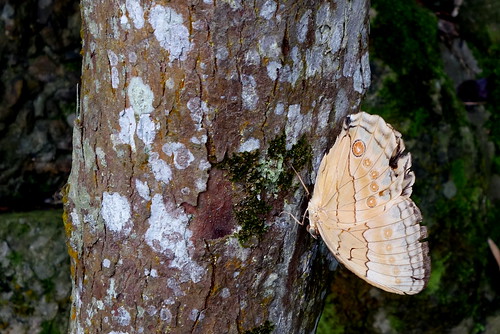
A lovely butterfly from a recent trip

The police captured the fugitives allegedly involved in NT$83 million heist from ATMs recently. According to local news reports, one of the men was in Dong-ao having a meal at a local restaurant when an off duty policeman came into the restaurant and spotted him. Apparently the majority, though not entirety, of the money has been recovered. Good news!

The Economist turns in another of its uniformly crappy articles on Taiwan, this one on Kawaii culture...
The craze is about more than infantile consumerism: Hello Kitty has become an unlikely token of Taiwanese identity. She is part of a wider embrace of Japan’s kawaii, or “cuteness”, culture. And this is a way for the Taiwanese to define themselves as different from China, which lays claim to their island, by cleaving to Japan, their former coloniser.
Yes, that's right, everything relates to China! The article wrong attributes the Hello Kitty craze to McDonald's in 1999, but that is incorrect. YM Ko, who wrote several articles on Hello Kitty culture in the early 2000s, has a good history and review from 2000 when Hello Kitty was already super popular, as I knew from having lived in Taiwan at that time (I have a running joke in all my classes about Hello Kitty since I started teaching at universities in the 1990s)...
Hello Kitty was released after W.W.II in Japan and has always been very popular. In Taiwan, it was expensive in the early days and could only be found in a few boutiques. Not until the 80s were the economical conditions of Taiwan able to afford Hello Kitty; in many department stores Hello Kitty became a popular commodity. In the 90s, counterfeits of Hello Kitty could be spotted in night markets and vendor stands. At first Hello Kitty targeted at the teenage girl market, only in recent years did its consumer age move onward to mid-aged females. Amongst the animation cartoon figures‘ products, Hello Kitty is the only one that successfully developed a mid-aged female market.
Since this is the second article you hit in Google Scholar if you search 'hello kitty culture taiwan' it is hard to see how The Economist could get everything so wrong. Well, it isn't hard, actually. The Ko piece concludes:
Hello Kitty has different roles: the popular culture, the night market counterfeit, the conspicuous consumption, the residue of colonialism, the elite and mass distinction, the sabotage of gender politics. Hello Kitty doesn't invent new cultural identity or meaning. The fact is, the latent social politics and relationships, antagonistic or not, seize Hello Kitty as their vehicle to surface. Various meanings are attached onto the object-sign Hello Kitty and thus consumed.
Yeah, nothing about China in that paper, because Hello Kitty has nothing to do with redefining Taiwan against China. *sigh*

Instead, Hello Kitty mania is related to the larger Japanese drive to market itself during the 1980s and 1990s across Asia...
Since the 1990s, Japan-mania has swept East and Southeast Asian countries and brought inbound tourism to the rescue of Japan’s stagnant economy. In 2003, guided by then-Prime Minister Junichiro Koizumi, Japan launched an international ‘Visit Japan’ campaign [Yokoso! JAPAN]. Except for some affluent Western countries, the campaign mainly targeted Korea, Taiwan, China and Hong Kong – markets heavily influenced by Japanese popular culture. Yoshino Kimura, a Japanese actress, was appointed as Goodwill Ambassador for Japan. The tourist initiative regards the ‘globalization of economy’ as a way to revitalize local regions in Japan (Ministry of Land, Infrastructure and Transport, Japan, 2005). Its goal of ‘making Japan more attractive’ evidences an attempt at nationbranding at a time when Japan seeks to reposition itself in the global economy. It also turns the spotlight of international tourism from modern Tokyo to other localities that have reinvented themselves as representatives of traditional Japan.
This marketing drive included pop music, TV, movies, food, and tourism. Taiwan is part of a regional context of Japanese success at marketing itself as a hybrid culture of modernity and tradition and Asian-ness, according to the Huang paper. But I guess under the Economist's rubric, Japan-mania in China is also an example of the Chinese wanting to differentiate themselves from the Chinese...

I needn't go into Taiwan's old Japan links, and the mutual love affair between the two nations. But the Huang piece referenced above points out that Japan-mania has been followed by Korean-mania, widely accepted across Asia for the same reason that Japanese culture was: it is a hybrid of modernity and Asian-ness, slickly marketed and tweaked for local conditions. Korean marketers, noting Japanese success, deliberately copied Japanese marketing approaches. Huang notes:
If strategic hybridism means adapting foreign cultures to the local context, Taiwanese hybridism makes the local culture look ‘foreign’ – that is, Japanese and Korean. There have been sporadic criticisms of Taiwan fawning on Japan and Korea, but calls for boycotts have been rare. Four mechanisms contribute to Taiwanese acceptance of all things Japanese and Korean: (1) the marketing of Japanese and Korean culture industries, (2) the promotion of Japanese and Korean popular cultures by local media, (3) business practice in Taiwan and (4) transnational tourism. These factors emphasize consumption, but they are also relevant to cultural production.
What? No China identity issue? Say it ain't so!

All this stuff is easily accessible on the Internet, which is why The Economist couldn't find it. Because it already knew the answer: China.
_______________
Daily Links:
_______________________
Don't miss the comments below! And check out my blog and its sidebars for events, links to previous posts and picture posts, and scores of links to other Taiwan blogs and forums!
Tuesday, April 26, 2016

Commentary Galore

Nets at Shiti Fishing Port

Elizabeth Economy writes on Taiwan and China for the CFR....
Beijing began the year by reversing its eight-year tacit understanding to not establish diplomatic relations with countries that recognize Taiwan (thereby giving the island nation a semblance of sovereign international status) and resuming ties with Gambia. Next, it successfully pressured Kenya to deport as many as forty-five Taiwanese (the number is in dispute) to the mainland as part of a larger set of arrests of suspects in a telecom fraud ring.
Economy has this history all wrong. The Chinese police were asking for the (alleged) Kenya scammers in December of 2014, long before Gambia switched sides. China has been waiting a year to collect the Taiwanese men. Obviously it is not about sovereignty or putting pressure on Tsai Ing-wen, yet that has become the dominant story in the international media and punditocracy. Beijing is signaling Taiwan on its lazy approach to crime, not because it elected Tsai Ing-wen.

Nevertheless, this is a Council on Foreign Relations piece, and the ending is wonderful: she rebuts the idiot brigade that wants to sell out Taiwan:
Finally, after falling off the American radar screen over the past eight years, Taiwan is quickly edging its way back on. The next administration needs to keep its eye on the final objective—“that cross-Strait differences be resolved peacefully and according to the wishes of the people on both sides of the Strait.” This means we don’t help stir the pot on Taiwan and we don’t sell-out Taiwan for some ephemeral grand bargain with Beijing. Taiwan may be small but it is not a small matter. At stake is not only our relationship with Beijing but also American values and principles, which are exemplified by Taiwan’s vibrant and determined democracy.
Excellent ending, another signal of the shift in the discourse over the last year or so toward a position which acknowledges that Beijing is a problem, and Taiwan, its victim. Hopefully Washington will come to view Tsai as an opportunity.

Interestingly, Bonnie Glaser wrote on what might happen between Taiwan and China for CSIS. Here are her recommendations:
*U.S. officials should make clear that while both sides have responsibility for avoiding disruption of the prevailing cross-Strait stability, in current circumstances Beijing needs to exhibit greater creativity and flexibility toward Taiwan, specifically to demand less clarity from Tsai and tolerate more ambiguity.

*Washington should encourage China to pay attention not only to Tsai Ing-wen's words but also to her actions.

*The United States should warn Beijing against taking actions that are harmful to Taiwan's economy and its participation in the international community. U.S. officials should emphasize that such actions would be counterproductive to China's goals of winning the hearts and minds of the people of Taiwan and its ultimate goal of reunification.

*U.S. officials should encourage Tsai Ing-wen to continue to exercise restraint, to avoid taking actions that could further incite Beijing's suspicions of her intentions, and to seek ways to provide additional reassurances that she does not plan to seek independence during her term in office.
The last one is boilerplate, but the first three are quite interesting. They all ask the US to ensure that Beijing gives Taiwan some space, and as sharp observer Aaron Wytze (@aaronwytze on Twitter) noted, none calls for Tsai Ing-wen to kow-tow to the fake 1992 Consensus.

John Bolton, neocon and Taiwan supporter (recall that many neocons began life as Asianists), wrote in FoxNews that ZOMG TENSIONS ARE RISING, which they are not (the impression I get is that Beijing does not know what to do and is searching for a policy) so THANKS OBAMA:
In January 2017, America’s new president will face Beijing’s ongoing efforts to run its own extortion campaign against Taiwan. If the Obama administration fails to support Taiwan in responding appropriately to China’s assertive, nearly belligerent actions on deportations and many other issues, the new president will have even graver problems to solve. This is not a case where America should simply tote up its investments in Taiwan and on the mainland and go with the bigger number. This is a matter of resisting Chinese efforts at establishing hegemony in East and Southeast Asia not only at the expense of its near neighbors, but of the United States as well
Bolton also accepts the Kenya case as a shot at Tsai Ing-wen, though it wasn't. *sigh*

Finally, no deluge of commentary is complete without Shelly Rigger checking in on surviving the long transition between the two presidents. It's her usual mix of solid observations and KMT propaganda. This part is quite solid and interesting:
Two statements made by PRC officials during the lame duck period are especially intriguing. PRC President Xi Jinping recently told delegates to China’s National People’s Congress, “If the historical fact of the ’92 consensus is recognized and if its core connotation is acknowledged, then the two sides of the Strait will have a common political basis and positive interaction can be preserved.” At a speech in Washington, Chinese Foreign Minister Wang Yi mentioned the “current constitution of Taiwan” as the basis of both the one-China claim and Tsai’s presidency.

Of course, when Xi mentions the “core connotation” of the ’92 consensus, he is referring to the part of the formula that states there is only one China, and Taiwan is part of it. This “core connotation” is far from Tsai’s position. Indeed, even Ma Ying-jeou has kept his distance from that connotation, preferring to emphasize the second element of the ’92 consensus, the two sides’ differing interpretations of “one China.” Nonetheless, Xi’s demand that Tsai must recognize the historical fact of the ’92 consensus (as opposed to endorsing it by name) may give Tsai more to work with.
But then she inverts reality:
[1] The ’92 Consensus was coined as a label for a tacit agreement made by Taipei and Beijing’s semi-official representatives at a meeting in Hong Kong in 1992. The representatives acknowledged that both sides believed Taiwan to be part of China, but they left unspecified exactly what they meant by “China.” This allowed the PRC to move forward with negotiations on the grounds that the Taiwanese were in line with Beijing’s one-China principle, and it allowed Taiwan to continue to define “China” as the Republic of China (the state on Taiwan). Beijing typically stresses the “one China” component of the consensus, while Taipei emphasizes the unspecified nature of “China,” by articulating the consensus as “One China, with each side having its own interpretation.” For the DPP, this whole concept is problematic, both because many in the DPP reject the idea that Taiwan is part of China in any sense, and because they believe the label “’92 Consensus” is a post hoc exaggeration of what actually happened at the ’92 meeting. For this reason, Tsai Ing-wen has avoided endorsing the phrase itself, although she has acknowledged the value and utility of the ’92 meeting.
In Riggerverse, unelected reps from the PRC met with unelected reps from the ROC and they reached a consensus. In this universe, they did not reach a consensus -- nothing was agreed on at the meeting except to be nice to each other. That ought to be obvious by now. The 1992 Consensus was invented in the run-up to the 2000 election as a cage to imprison a non-KMT president. Even the Wiki page has Su Chi's 2006 admission that the 1992 Consensus was made up. Why don't scholars?

The 1992 Consensus didn't "allow the PRC to move forward". LOL. As always, the basis for KMT-CCP cooperation isn't the 1992C but the desire of China to annex Taiwan. That is why Beijing has never accepted the 1992 Consensus, but insists that Taiwan politicians do.

It's the DPP position, not the KMT position, that corresponds to reality.

Rigger correctly observes that Ma's South China Sea gambit is his last vicious little gift to Beijing, creating new headaches for the incoming Tsai Administration. I thought it was wonderful that the Kenya mess blew up during the week he brought three foreign scholars to validate his position on Taiping Island. It totally vaporized their visit in the media.

Finally: tourism. Rigger takes the (absurdly wrong) conventional position that reduction of tourists = punishment, like Elizabeth Economy and many other commentators:
According to Taiwan’s Minister of Transportation and Communications, Beijing has cut the number of travel permits it is issuing to Taiwan-bound tourists, which may lead to a double-digit decline in the number of visitors. Taiwan has invested heavily in infrastructure for mainland tourists, so closing the spigot will be costly.
No, "closing the spigot" will be a net winner for Taiwan because tourism is a net money-loser (see my detailed discussion based on a recent paper). Chinese tourism is widely detested in Taiwan and most of us will be happy to see the tourists go so we can return to many wonderful tourist sites. Tourism also does not drive the development of human capital to increase living standards. Nope, we are better off without the endless lines of Chinese tourist buses crawling over the east coast like beetles on a rotting log.

If Beijing cuts tourism, it will only hurt Beijing. The tourism drive has resulted in the construction of new patronage and influence networks in local areas that are oriented on China and on the KMT. These will suffer. Moreover -- track this -- the new tourist infrastructure is often quietly financed by Chinese money brought in through offshore tax havens, which are key sources of FDI in Taiwan. China suffers again! Please, please cut tourism -- it is an important territorial strategy of Beijing, and Beijing will suffer the most.

Meanwhile, tourists from other countries are flowing in to replace these losses. They spend more too.

Many observers still have not caught on to this point: Beijing's expressed goal of annexing Taiwan peacefully requires that China interact with Taiwan. Beijing also seeks to plunder Taiwan's tech base so it can destroy the basis of Taiwan independence, our robust economy. Reduction in interactions between the Chinese empire and Taiwan correspondingly reduces Beijing's chances of accomplishing these goals.

Me? I'm looking forward to biking in areas free of obnoxious, stingy, Chinese tourist groups. Reclaiming Taiwan, as it were, from the invaders.
_______________________
Don't miss the comments below! And check out my blog and its sidebars for events, links to previous posts and picture posts, and scores of links to other Taiwan blogs and forums!

Saturday, March 05, 2016

Nelson Report on Taiwan

Nelson Report on Taiwan. The first piece included in the report is "Taiwan Giving China the Jitters". The slant will be recognizable to anyone: Poor Put-Upon China! If only Taiwan would quit threatening Beijing with democracy, everything would be ok. It's crazy: since the election the international media has produced a slew of pieces claiming that Taiwan somehow upsets China, yet not a single piece centered on how Taiwan feels about China, or how Chinese threats to maim and murder Taiwanese and take their land "give Taiwanese the jitters."

No, Beijing is not concerned about a possible push for independence -- it is concerned about painting Taiwan as the provocative, disruptive factor in cross-strait relations. It's a shame that the Straits Times simply forwards Beijing's claims with neither comment nor critique, and no balancing information.

The second piece is a conventional discussion of the "comfort women" issue originally in The Diplomat. The author does not understand the issue at all in its ROC context... more below

+++++++++++++++

TAIWAN ISSUES... US/CHINA/TAIWAN...we sent the following Straits Times piece to expert Loyal Readers for comment on whether it's pro-forma/par for the course, or cause for concern:

RICHARD BUSH, former president of AIT...speaking for the group:

No worry per se. This is the positioning that Beijing has been engaged in for about two years. Tsai is doing her own positioning. Whether a mutual accommodation will follow is an open question. This is the stage of a sumo match when the wrestlers stomp around the ring, throwing sand or whatever they throw.

Richard

Richard C. Bush
Director, Center for East Asia Policy Studies
Chen-Fu and Cecilia Yen Koo Chair in Taiwan Studies

BROOKINGS

Your Editor: we're pretty sure that's ritual salt the Lads are tossing around, but the point's the same
Taiwan Giving China The Jitters. Kor Kian Beng, The Straits Times. "China's top political advisory body has voiced its opposition to Taiwanese independence in its annual report for the first time since 2008, reflecting its concern about a breakaway as the island's pro-independence Democratic Progressive Party (DPP) prepares to take power. China's fourth-ranked leader Yu Zhengsheng, who chairs the Chinese People's Political Consultative Conference (CPPCC), said Beijing will uphold the "1992 Consensus" and oppose Taiwanese independence as its political foundation while seeking to advance cross-strait ties. Outlining its 2016 work as the CPPCC opened its annual session yesterday, Mr Yu said Beijing would be launching exchange programmes for Taiwan's youth "to experience the mainland first-hand" and also study the employment situation of Taiwanese students who have attended mainland schools. The last time the phrase Taiwanese independence - tai du in Mandarin - appeared in a CPPCC annual work report was in March 2008. That was just before the Beijing-friendly Kuomintang (KMT) regained power later that month, ushering in a balmy phase of ties over the next eight years. But now, Beijing is concerned over disruption in cross-strait cooperation and a possible push for independence after the KMT lost the legislative and presidential polls in January to the DPP, ...
Also on Taiwan issues:

HISTORY/THE COMFORT WOMEN TRAGEDY...Taiwan's ambassador to the United States, Loyal Reader and Representative Lyushun Shen, speaking Wed. night at Twin Oaks, called the matter of an Abe Administration apology to Taiwan for its comfort women victims "a matter of human decency"....from The Diplomat:
Will Taiwan's 'Comfort Women' Get an Apology From Japan?

After reaching a deal with South Korea over the "comfort women" issue, will Japan ignore Taiwanese victims?

By Mina Pollmann
March 04, 2016

....

However, even though Japan has made valiant efforts to find closure on the issue with South Korea, this deal has inspired survivors from other countries to step forward and press their claims - including survivors from Taiwan.

In Taiwan, which was then, like the Korean peninsula, under Japan's colonial domination, 2,000 women were abducted or cheated into becoming comfort women. Just as in South Korea, many of these women did not immediately share their stories due to the patriarchal culture that shamed and blamed the victims for what was done to them by the Japanese Army.

....

Taiwanese President Ma Ying-jeou has reiterated his government's pledge to seek justice and dignity, including requests for an apology and compensation from Japan to former Taiwanese comfort women. South Korea's success has spurred Ma to demand immediate negotiations with Japan on the issue. Speed is of the essence, as time is running out. Three of the survivors featured in the documentary have passed away since the project began in 2013.
+++++++++++++++

LOL. People often forget that in the 50s and 60s women found in public in Taiwan without residence cards would be rounded up and sent to Matsu and Kinmen and elsewhere as sex slaves for the KMT army. Indeed, women sold into prostitution in the cities in that era would typically have their residence cards seized and hidden by the brothels in order to control them, just as today women trafficked across national borders typically have their passports seized by their brokers and brothel owners, so they have no legal documents to escape. Of course the KMT has never apologized for this heinous policy or compensated the victims, but it demands that Japan do so.

The real function of the comfort women issue between the Ma Administration is the same as the Senkakus claim: an irritant to keep relations between Taiwan and Japan roiled, and -- less so -- a nationalist rallying cry that the mainlander ruling class hopes to use to spark Taiwanese hatred of the Japanese: look how the evil Japanese treated your women! You should hate them! 
_______________________
Don't miss the comments below! And check out my blog and its sidebars for events, links to previous posts and picture posts, and scores of links to other Taiwan blogs and forums!
Monday, June 08, 2015

Irritant Watch =UPDATED=


UPDATE: Read it: today's most important post on the business dealings of KMT Chairman Eric Chu's family. It's just business as usual....

I've often remarked on this blog that one of the Ma Administration's policies is to put forth issues that will keep relations with neighboring countries and the US irritated, in order to reduce their willingness to intervene on behalf of Taiwan against China and to make Taiwanese feel isolated and resigned to becoming annexed to China. Note the obsessive focus on China, Japan, and the US -- and the total neglect of Philippines, Malaysia, Indonesia, Vietnam, Sri Lanka, and Cambodia (a hearty dose of Han chauvinism is also a driver). The fishing disputes with Phils may cool, says an article in Forbes. Don't worry, they can always be revived... or something else stoked up.

For Japan, the usual irritant is the Senkakus, but another issue is the Comfort Women issue, which Ma has stoked several times. Ma announced last week that a new Comfort Women museum would open in Dec in Taipei:
Ma has shown strong interest in the comfort women issue, saying that the system of wartime prostitution was an abuse of human rights and a serious war crime.

Four Taiwanese victims of the Japanese system are alive, with their average age exceeding 90, according to a supporter group.

In July last year, Ma unveiled an idea of setting up museums on China’s war against Japan and the comfort women in 2015.
Fortunately, Taiwanese are completely indifferent to Ma's attempts to get them to hate on Japanese as stereotypical Chinese are supposed to.

Note that 200,000 Taiwanese served in the Japanese armed forces during the war, including thousands of aborigines. There is little official recognition of that in Taiwan. That generation is also nearly gone. It's high time they got a museum since they, like the Comfort Women, like everyone who fought and suffered in WII on both sides, were victims of imperial expansion and aggression.
________________________
Daily Links:
_______________________
Don't miss the comments below! And check out my blog and its sidebars for events, links to previous posts and picture posts, and scores of links to other Taiwan blogs and forums!
Thursday, March 05, 2015

Way Cool: Last Japanese Soldier Hideout in WWII was Amis

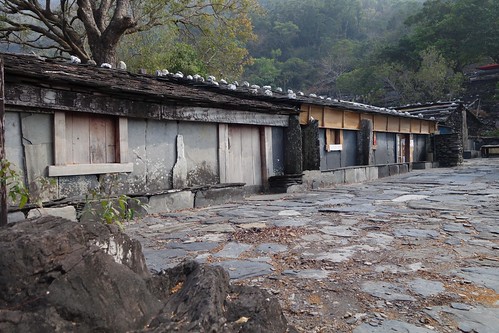
House in Laochijia.

This is very cool -- had to share it with you. From Wiki:
Private Teruo Nakamura (中村 輝夫 Nakamura Teruo?, October 8, 1919 − June 15, 1979) was a Taiwan-born soldier of the Imperial Japanese Army from the indigenous Amis tribe, who fought for Japan in World War II and did not surrender until 1974. He is the last known Japanese hold-out to surrender after the end of hostilities in 1945. His name in his native Amis language was Attun Palalin.[1] The Taiwanese press referred to him as Lee Guang-Hui (李光輝), a name of which he learned only after his repatriation in 1975.

........

Nakamura's repatriation and his perception in the Japanese public at the time differed considerably from that of earlier holdouts, such as Hiroo Onoda, who had been discovered only a few months earlier. One reason for this was the question of his nationality. Born on Taiwan, Nakamura was ethnically Amis and legally stateless; questions of nationality were of considerable importance in the Japanese public at the time, and while the Japanese embassy in Jakarta offered to repatriate him, there were also diplomatic questions over how to treat him in case he wanted to go back to Taiwan.[2] At the time of his capture, he spoke neither Japanese nor Chinese. Secondly, while Onoda had been an officer, Nakamura's rank as a private from a Japanese colony did not excite the public imagination and was likely to raise questions about the role of Japanese colonialism during the war instead. Another sensitive issue was the question of back pay of his soldier's pension. As a private of a colonial unit, Nakamura was not entitled to pensions after a 1953 change in the law on pensions, and thus received only a minimal sum of ¥68,000 (US $227.59 at the time, now US $1,100 in 2015).[1] This raised a considerable outcry in the press, motivating the government to donate over $100,000, similar to what had been offered to Onoda, which in turn generated questions by earlier Taiwanese holdouts and led to considerable public discussion of the differences in treatment of Japanese and Taiwanese holdouts by the government.

_______________________
Don't miss the comments below! And check out my blog and its sidebars for events, links to previous posts and picture posts, and scores of links to other Taiwan blogs and forums!
Tuesday, December 09, 2014

The Irritant Foreign Policy + Links

Had a great time banging around the hills of Miaoli on Sunday.Hope to get pics up tomorrow, but swamped.

I went to a conference on Saturday hosted by the Taiwan Brain Trust and Project 2049. Bruce Jacobs spoke, and remarked on how the Ma Administration's hysterical reaction to the Korean FTA was part of its strategy to isolate Taiwan from neighbors which might otherwise be in solidarity with it.

To that one could add so many other instances -- the Senkakus with Japan, the entire South China Sea, whose nations otherwise might be in solidarity with Taiwan, the poacher killed in the Philippines by the Coast Guard, and the beef issue with the US. Ma's whole foreign policy approach is based on isolating Taiwan in order to ensure the only answer to the foreign policy question of "Which nation is our friend?" is "China".
_______________
Daily Links:
_______________________
Don't miss the comments below! And check out my blog and its sidebars for events, links to previous posts and picture posts, and scores of links to other Taiwan blogs and forums!
Tuesday, October 21, 2014

Japan Didn't Cave

Earlier this week The Diplomat ran a piece entitled "Japan Caves to China on the Senkaku Islands Dispute". Citing reports in the Japanese media, it opened:
In order to secure a meeting with Chinese President Xi Jinping, Japanese Premier Shinzo Abe agreed to a significant concession in Tokyo’s ongoing dispute with China over the Senkaku Islands, according to Japanese media outlets.
I'd been sitting on it for a couple of days because I just couldn't believe even the Japanese, who have been notoriously incompetent in presenting the historical reality of the Senkakus, could do something that dumb. Looked like the usual depressing move by diplomats facing Chinese intransigence to make a permanent concession for a temporary gain. But fortunately the Nelson Report, the DC insider report, did some digging and concluded:
Hummm...but upon reading, it develops this is just a rehash of the original Tokyo media speculation which our GOJ sources then, and again today, reject in every particular. 
So it never happened.
_______________________
Don't miss the comments below! And check out my blog and its sidebars for events, links to previous posts and picture posts, and scores of links to other Taiwan blogs and forums!
Sunday, August 31, 2014

Ma finds new way to irritate Japan

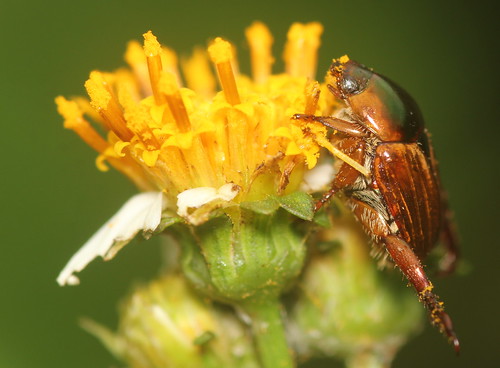
My new Sony DSC RX100 II has basically rendered my old Canon EOS 550D obsolete for most of the pics I take, but the Canon still takes excellent macro pics when coupled with the wonderful Tokina 100mm macro.

The Taipei Times comments on President Ma's latest drive to irritate relations with Japan...
President Ma Ying-jeou (馬英九) on Friday once again called for Japan to review what he considered an insufficient number of Japanese tourists visiting Taiwan in recent years, the third time he has aired such concerns in the past 15 days.

...

When receiving new Japanese Representative to Taiwan Mikio Numata on Aug. 22, Ma urged Japan to “reflect upon” why there were only 780,000 Japanese visitors to Taiwan in the first half of the year, against 1.46 million Taiwanese tourists to Japan during the same period, adding that Taiwan has surpassed South Korea to become the largest source of tourists to Japan.
The scolding language -- "reflect on" is a classic Chinese scolding trope that accuses the listener of a moral failure in behavior. But more importantly, it shows how the Ma Administration is continuing the policy of finding irritants to keep riling relations with Japan. Ma could just have easily have thanked Japan for being the largest source of tourists outside the China.....
________________
Daily Links:
_______________________
Don't miss the comments below! And check out my blog and its sidebars for events, links to previous posts and picture posts, and scores of links to other Taiwan blogs and forums!
Friday, June 20, 2014

Playing the Irritation Game

The central mountain range from the river far below.

It is my contention that one of the Ma Administration's central foreign policy tendencies is to irritate relations with Japan and the United States whenever possible. This policy was thrown into harsh relief this week by twin actions in Tokyo and Beijing. First, a misprinted name in a Tokyo National Palace Museum exhibition caused an uproar in the Presidential Office in Taiwan... (FocusTaiwan):
Controversy erupted when some posters advertising the exhibition were found to refer to the NPM as simply "Palace Museum, Taipei" an apparent violation of the agreement between Taiwan and Japan that the museum's full name must be used in all publicity materials.

According to the Presidential Office, President Ma Ying-jeou has instructed the NPM to demand the Tokyo museum correct the situation, and the government's stance has been conveyed to Tokyo by the Ministry of Foreign Affairs.
The Taiwan government said that there was no room for negotiation and the exhibition would be canceled if things weren't corrected. Petty politics at its best. Meanwhile last week Beijing forwarded a document to the UN claiming Taiwan and Penghu. The Taipei Times editorialized bluntly:
When Beijing, at a UN tribunal over tensions concerning sovereignty in the South China Sea, included Taiwan and Penghu as part of its territorial claims, nobody in the government reacted or uttered a single word in response. When pressed about this by the media, the Ministry of Foreign Affairs (MOFA) merely said: “We protested this 55 years ago.”
An exhibition leaves out a word, the Presidential Office goes on the warpath. China claims Taiwan and Penghu? Silence. No doubt the silence was one part agreement that Taiwan is part of China -- a stance which the Administration avoids reminding the public of and one part avoidance of reminding the public why Taiwan isn't a UN state. When the coming generation comes of age, the UN issue is going to be revisited, with a vengeance....

UPDATE FocusTaiwan latest...
Ben Goren of Letters from Taiwan observes in a private communication:
"The posters in question, which have been spotted at train stations and parks in Tokyo, were prepared by a media sponsor group comprising major media outlets including NHK, the Asahi Shimbun and other TV stations and newspapers. Meanwhile, official posters and brochures prepared by the Tokyo National Museum refer to the Taipei museum by its official name." - so why is the Ma govt complaining to Tokyo and not the media group in question? like you said, easy to pick a fight with a friend than stand up to a bully.
_______________________
Don't miss the comments below! And check out my blog and its sidebars for events, links to previous posts and picture posts, and scores of links to other Taiwan blogs and forums!
Friday, June 06, 2014

JapanFocus, forwarding Chinese propaganda again...

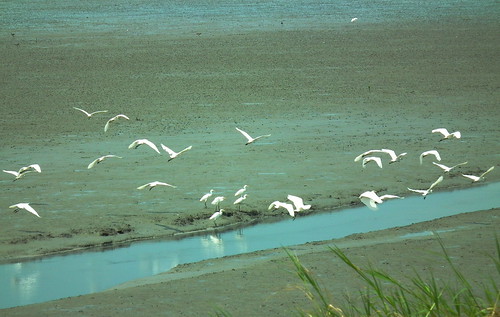
Wetlands in Changhua.

The other day JapanFocus posted another in the seemingly endless examples of Lefties forwarding the claims, language, and ideology of imperialism and expansionism -- apparently, so long as it is non-western imperialism, it is ok. This is Lin Man-houng's awful Taiwan and the Ryukyus (Okinawa) in Asia-Pacific Multilateral Relations – a Long-term Historical Perspective on Territorial Claims and Conflicts (アジア太平洋地域の多国間関係における台湾と琉球諸島(沖縄)領土権主張や紛争を長期的視野でとらえる), a turd so vast that, properly composted, it could fertilize California for a year. Ordinarily I'd just give this laugher a nod on my way by, but it contains new propaganda points that allow me to pass along some useful links and discussion. Onward and downward...

Early on, Lin observes:
Both areas [Taiwan and Ryukyus] were at one time central to the trading hub in East Asian waters (14th~17th Century): As the Ryukyus became the “Bridge to various countries” including China, Japan, Korea and South East Asia, it entered its “Golden Age” during the 14th~17th Century (Lin 2006b). In contrast, despite frequent trade between China and the South Seas during the 13th and 14th centuries, there were few contacts between China and Taiwan at this time. But between 1540 and 1700, the East Asian sea route became vibrant with trade pivoting on Japanese silver, Chinese silk and other commodities. At this time, three quarters of the silver China needed for its silver-based currency came from western Japan. Yet this vibrant trade was not conducted directly. Just as Hong Kong was a third party terminal for Taiwan and mainland China between 1988 and 2008, Korea, Hanoi, Macau, the Ryukyus and Taiwan were all important sites for this Japan-China silver-silk trade. (Lin 2006a: Chapter 1)

At the time, Taiwan had no substantial political organization or formal ties with the Chinese government, so Zheng Zhilong, the Fujian sea-trade businessman, followed by the Dutch, the Spanish and then the family of Zheng Chenggong, successively established trading entrepots on this island. The Zheng family’s wealth, rooted in Japanese silver, was an important means for establishing political power in Taiwan. With the Chinese silk—Japanese silver trade as the core, other goods from Europe, South East Asia, Japan, mainland China, and elsewhere were also traded in Taiwan, making it an Asia-Pacific commercial centre. This was also why in the 17th Century, Chinese people flocked to Taiwan, and from a minority group eventually became the majority population on Taiwan. However, by the second half of the 17th Century, Japan restricted silver to its domestic use. The result was that the Sino-Japanese silk and silver trade declined, and the Ryukyu kingdom also entered a period of decline. From 1609, while paying tribute to the Qing Dynasty, the Ryukyus also paid tribute to Japan, and the Qing replaced the Zheng family in ruling Taiwan between 1683 and 1895 (Lin 2006c).
I've bolded several of her claims. For those of you for whom these claims will be new (i.e., everyone not the author), you will probably nod when you realize that Lin has in fact cited herself for this set of claims.

Observe the second paragraph's first sentence with its telltale assumptive claims:
At the time, Taiwan had no substantial political organization or formal ties with the Chinese government, 
Why should it have formal ties with the Chinese government? And the aborigines had substantial political organizations, they just were not of the nature that the Chinese recognized, then or today. Next she says:
...Zheng Zhilong, the Fujian sea-trade businessman, followed by the Dutch, the Spanish and then the family of Zheng Chenggong, successively established trading entrepots on this island
Zheng was a pirate/trader, of course. Where does this claim come from? If you're feeling the tingle of right-wing Chinese expansionist propaganda because the Zhengs are conveniently re-located to the period before the Europeans, congrats, your spidey sense is dead-on. Tonio Andrade's excellent and eminently sensible How Taiwan Became Chinese is available for free on Gutenberg (note, I said FREE. Read it.). He writes in Chapter 6...read it most carefully:
Perhaps there were other Chinese organizations that sponsored Chinese colonization. Yang Yanjie, a historian from mainland China, argues that the pirates Yan Siqi and Zheng Zhilong established "political authority" (政權) on Taiwan before the arrival of the Dutch.11 His aim is to show that Chinese claims to Taiwan predate the Dutch, and he overstates his case (he also, perhaps intentionally, conflates Taiwan with the Penghu Islands, using the anachronistic term Tai-Peng, 台澎), but he does make an important point: Chinese pirate-merchant organizations may have contributed to the sinification of Taiwan. Still, it is difficult to determine the extent of the colonial involvement that these organizations had on Taiwan, because our evidence is scanty and indirect.8

For example, we know next to nothing about Yan Siqi. As we have seen, he did use Taiwan as a base before the Dutch arrived, and his organization is said to have been large and well structured, with ten "stockades" (寨), scores of ships, and hundreds of men, hierarchically organized.12 Did his people build actual stockades on Taiwan? If so, they were not in evidence when the Dutch arrived, and Chinese fortifications would have attracted Dutch mention in the voluminous and verbose records of the Dutch East India Company. More likely, his men lived among aborigines or in temporary camps near moored vessels. For the first twenty years of Dutch rule, the company struggled against Chinese "smuggling" organizations north of the Bay of Tayouan. It is possible that they were related to or descended from Yan Siqi. But there is no evidence of dedicated Chinese settlements in these areas, and the extent to which Yan Siqi encouraged colonization must remain in doubt.

We know far more about Zheng Zhilong, who, as we have seen, cruised the Taiwan straits under the Dutch flag. He likely had contacts with Chinese sojourners in the Bay of Tayouan and the deer- and pirate-rich areas northward, but the more interesting evidence for his role in Taiwan's colonization comes after he became a Chinese official in 1628. Chinese sources indicate that, during a severe drought in Fujian Province, he had a conversation with officials in Fujian and suggested moving drought victims to Taiwan, providing "for each person three taels of silver and for each three people one ox."13 This is a fascinating idea, but there seems to be no evidence that the plan was actually carried out. Until more sources are found, we must be careful not to overstate the role merchant-pirate organizations played in Taiwan's colonization. In any case, would-be settlers needed more stability and security than pirates probably would (or could) provide.
Reality: the claim that Zheng preceded the Dutch and Spanish is Chinese expansionist nonsense, deliberately constructed to create the false view that the Chinese were there first. An oft-overlooked aspect of this move is that it ignores prior aboriginal claims to Taiwan. Other scholars have also dismissed the (Chinese nationalist) claim that there were many Chinese on Taiwan before the Dutch, see also John Shepard's superb Statecraft and Political Economy on the Taiwan Frontier, 1600 to 1800 for an accounting.

Where Lin got the idea that there was some kind of massive silver trade bringing Chinese thronging into Taiwan I have no idea, but Andrade has a thorough discussion of Chinese colonization in the book (well worth reading, accessible and erudite). His Conclusion summarizes how Chinese settlers under Dutch administration carried out colonization and trade, and the Spanish pursued similar policies. Japanese traders could be found on Formosa in those days, until 1635, when the ruler of Japan issued edicts against leaving Japan and closed the ports in 1639, freeing the Dutch from Japanese competition. The silver trade fell off after that time because its value eroded on the world markets and other reasons (see this fascinating overview paper). Though the Dutch used the port of Taoyuan/Tainan as a transshipment point for goods from China going to Japan sold by the Dutch for Japanese silver, Taiwan was not any major part of this flow of wealth from the silver mines of Japan and Mexico. The trade in silver for Chinese luxury goods went directly and illegally between Japan and China, as well as through Portuguese Macau and the central Vietnam port of Hoi-an. The Spanish silver trade flowed through Manila (the "almighty dollar" originally was the Spanish silver dollar). While there was trade, Taiwan could hardly be described as an Asia-Pacific commercial center. Note that Lin's pro-China presentation studiously avoids saying that Taiwan was a Dutch colony during this period. Inconvenient facts? Evanesco!

I should add that one reason Chinese settlement fell off after 1670 because the fighting between Ming and Qing died off and people who had fled that now sought to return. Not because the massive trade of the "Asia-Pacific Commercial Center" fell off.

In sections 2 and 3 Lin subtly forwards another common Chinese expansionist claim, that Japan incorporated Okinawa in 1879. The Ryukyu kingdom actually became a vassal state of the southern Japanese kingdom of Satsuma in 1609 (Wiki). Lin repositions this as "From 1609, while paying tribute to the Qing Dynasty, the Ryukyus also paid tribute to Japan..." with the Qing at the forefront. Wiki observes:
The kingdom's royal governmental structures remained intact, along with its royal lineage. The Ryukyus remained nominally independent, a "foreign country" (異国, ikoku)[32] to the Japanese, and efforts were made to obscure Satsuma's domination of Ryukyu from the Chinese Court, in order to ensure the continuation of trade and diplomacy, since China refused to conduct formal relations or trade with Japan at the time. However, though the king retained considerable powers, he was only permitted to operate within a framework of strict guidelines set down by Satsuma, and was required to pay considerable amounts in tribute to Satsuma on a regular basis.
In Chinese expansionist presentations this period of Japanese control typically vanishes. Like in this piece, for instance, when the sovereignty over the Ryukuyus suddenly jumps into view in 1879 -- it had been incorporated into the Japanese central government in 1868, and under Japanese rule as a vassal state since 1609. This should also be a signal to readers of China's coming claim to Okinawa. Chinese expansionists quietly complain from time to time that China should have been consulted when Okinawa was returned to Japan. Longtime readers know the drill.

Further down Lin gives the standard rightist Chinese reading of the Treaty of Taipei:
The sovereignty Japan gained over Taiwan from the Treaty of Shimonoseki was renounced in Article 2 of the San Francisco Peace Treaty. Article 4 (b) of the San Francisco Peace Treaty stipulates that: “Japan recognizes the validity of dispositions of property of Japan and Japanese nationals made by or pursuant to directives of the United States Military Government in any of the areas referred to in Articles 2 and 3.” The US Military order relevant to Taiwan was General Order No.1 of 1945, specifying that, “the senior Japanese commanders … within … Formosa… shall surrender to Generalissimo Chiang Kai-shek.”  Article 26 of the San Francisco Peace Treaty provided that Japan shall conclude with any State which signed or adhered to the United Nations Declaration, and which is at war with Japan, which is not a signatory of the San Francisco Peace Treaty, a bilateral Treaty of Peace on the same or substantially the same terms as are provided for in the Peace Treaty. In terms of the conclusion of war between the Republic of China (“ROC”) and Japan, the Treaty of Peace between the Republic of China and Japan that was signed in Taipei on April 28, 1952 (Illustration 1), ratified by both the Showa Emperor of Japan and Chiang Kai-shek, the President of the Republic of China (Illustrations 2&3), and exchanged and became effective on August 5th of the same year, (hereafter “Taipei Treaty”), is one such international treaty specifying the transfer of sovereignty of Taiwan. The Taipei Treaty was registered in the United Nations in 1952 as Treaty Series, No. 1858 (United Nations, 1952). The Japanese Embassy in the ROC, which became the Interchange Association in 1972, has been based in Taipei since the Taipei Treaty became effective (Guoshiguan 1999, p.162). The articles in relation to the conclusion of war and transfer of Taiwan sovereignty in the Taipei Treaty were in the nature of having been executed, which is not comparable to articles providing for diplomatic relations that are executive in nature and were terminated in 1972 when Japan established diplomatic relations with the People’s Republic of China (“PRC”).3 This is akin to the termination of consular jurisdiction of the United Kingdom in China in 1943 without terminating the 99 year-lease of Hong Kong.
  1. General order number 1 is here. It should be noted that the Japanese troops on Formosa are surrendering to the Allies and that Chiang was acting as their representative. Chiang IS NOT accepting surrender of Formosa on behalf of China alone as Lin appears to be implying. 
  2. Treaty of Taipei: This is basic knowledge: nowhere in the Treaty of Taipei is the transfer of sovereignty over Taiwan from Japan to the ROC implied or stated. It is an article of faith that the Treaty of Taipei transfers sovereignty to Taiwan only among Chinese right-wingers, ritually re-iterated periodically to remind everyone how out of touch they are. The Treaty of Taipei is subordinate to the San Francisco Peace Treaty which in turn deliberately does not specify who the sovereignty of Taiwan belongs to. Moreover, the ROC knows this perfectly well. As I have noted several times in posts and comments:

    After signing the treaty [of Taipei], the ROC delegate, then ROC foreign minister George Yeh (葉公超), faced harsh questioning from legislators in a Legislative Yuan meeting regarding why the treaty between the ROC and Japan did not state unambiguously that Taiwan and Penghu were returned to the ROC.


    Yeh replied that "No provision has been made either in the San Francisco Treaty or the Sino-Japanese Treaty as to the future of Taiwan and Penghu." Yeh further explained: "In fact, we control them now, and undoubtedly they constitute a part of our territories. The delicate international situation, however, means that they do not belong to us. In these circumstances, Japan has no right to transfer Formosa (Taiwan) and the Pescadores (Penghu) to us. Nor could we accept such a transfer from Japan even if she wished to do so."
Lin finally moves on to the Diaoyutai/Senkakus. She calls her article a "long-term historical perspective" on the Senkakus, but focuses on the period after 1895 and in fact lectures us at length on undersea geology. She says the Senkakus/Diaoyutai are separated from Japan by the Okinawa Trench, a common Chinese expanionist claim. Judge for yourself, or Google Search. More importantly, the reason she doesn't give us the long list of documents showing Qing control over the Senkakus is that there aren't any, which is why her discussion focuses on what the Japanese were doing. There's no reason to review her comments since I've discussed that so many times elsewhere.

Please my fellow lefties, stop forwarding Other People's Imperialism.

Droned on long enough, enjoy the weekend...
_______________________
Don't miss the comments below! And check out my blog and its sidebars for events, links to previous posts and picture posts, and scores of links to other Taiwan blogs and forums!
Tuesday, June 03, 2014

Just a note on the Senkakus/Diaoyutai mess

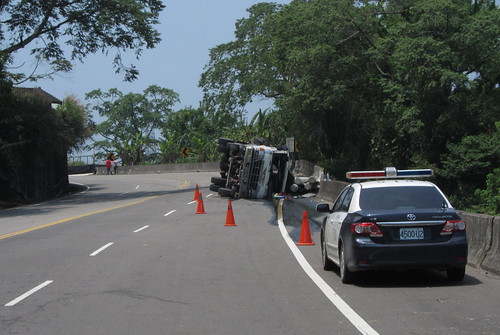
Oops.

Jon Sullivan over at the U of Nottingham tweeted round this paper on the Senkakus/Diaoyutai and western and eastern systems of international governance (the next paper in that file discusses Taiwanese netizen attitudes towards the Senkakus and sovereignty). It makes some interesting points and is constructed in a very articulate and smooth propagandistic way. However, it contains an interesting anecdote about the Senkakus that I hadn't heard before....
...when former US President Ulysses Simpson Grant was visiting China and Japan in mid-1879. Grant agreed to mediate the dispute at the request of Li Hongzhang and Prince Gong, and offered a proposal with American diplomats in Japan as a basis for negotiation. The proposal suggested dividing the Ryukyu Islands into three parts: the central part would belong to the residual Ryukyu Kingdom protected by Chinese and Japanese consuls, the southern part would belong to China, being close to Taiwan, and the northern part would belong to Japan, being close to Satsuma (Kagoshima).
Think about it for a second. If the Manchus thought the Senkakus were part of their colonial empire, they would have said "we already own that, the issue is the islands to the north." But no one did. Instead, Grant had to suggest that the southern islands of the Ryukyus be annexed to Taiwan... because they weren't at that time. D'oh.
_______________________
Don't miss the comments below! And check out my blog and its sidebars for events, links to previous posts and picture posts, and scores of links to other Taiwan blogs and forums!
Monday, April 07, 2014

The political role of "There is no consensus"

IMG_3605
Waiting for people to hang out.

Was reading up on some notes of the presentation of Taiwan Defense Minister Andrew Hsia at one of the conferences on the 35th anniversary of the TRA. Hsia said the government recognizes three security threats:
1. unconventional threats - climate change, natural disasters.
2. "problems with Japan over the Diaoyutai," issue with the Philippines
3. biggest threat still the other side with its increasing defense budget since 1985.
I thought it was cool that global warming was the number one threat, and thought it was really stupid that the second one was Japan and the Senkakus/Diaoyutai (and Manila. LOL). I doubt many ordinary people see Japan as a threat. It really shows the insanity of the ROC position on the Senkakus, and also their important function as an irritant in Japan-Taiwan relations, cooling and complicating Japanese support for Taiwan.

The notes observed that Hsia's next point was that the government wants a prosperous and stable Taiwan without being coerced by China, based on the 1992 consensus. But interestingly, Hsia then said that due to the lack of mutual trust and Taiwan being a democracy, there is no consensus on how to handle China. Hsia then went on to claim that the KMT move toward Beijing was apolitical and pragmatic (how they love that word!).

You can see the political function of the constant claim about how there is no consensus from the KMT side right in Hsia's comments. The reason they keep reiterating that is (1) to cover the fact that there is indeed a consensus and (2) it permits them to do whatever they want -- they're not defying the consensus, right? -- and claim that since there is no consensus, they aren't being "political."
_______________________
Don't miss the comments below! And check out my blog and its sidebars for events, links to previous posts and picture posts, and scores of links to other Taiwan blogs and forums!

Wednesday, February 05, 2014

JapanFocus: The (Wrong) Origins of the Senkaku Mess

JapanFocus, a progressive website that turns out lots of interesting stuff on Okinawa, on Japanese colonialism, and on Cold War and post-Cold War history and politics in NE Asia, put on a fine display this month of the way lefties often adopt the right-wing imperialism of non-western nations as their analytical stance, something that needs to stop. In The Origins of the Senkaku/Diaoyu Dispute between China, Taiwan and Japan, Mark Seldon and Yabuki Susumu write:
...While other important issues add to the gravity of the conflict, including enlarged territorial claims by China, Japan and Korea in the form of advancing and defending competing claims to ADIZ in the East China and South China Seas, Yabuki shows the long trajectory of competing claims over the Senkaku dispute and the evolving policies of China, Japan and the United States in shaping it. Since so much of the international discussion of the issues has focused on China-Japan conflict, a particularly important contribution of the present paper is its clear presentation of US recognition at the highest levels of the significance of the competing territorial claims, and its maneuvering in negotiations with Taipei, Tokyo, and Beijing to shape the outcome.

The story can, of course, be traced back to earlier claims to the islands, including historical interactions involving Taiwan and Okinawan fishermen and Chinese tributary missions, to Japanese claims to the islands, and to their disposition by the US in framing and implementing the San Francisco Peace Treaty...
The article then goes on to show how the US manipulated things to preserve the Chinese claims and how the Chinese manipulated the US, probably because Kissinger, who was running the show at the time (he would later go on to establish profitable business relations with China), was so irredeemably pro-China and because of the general historical ignorance and laziness of Americans: nobody on the US side appears to have researched the Chinese claims to see whether they were actually correct. For example, a memo from John Holdridge reproduces the Chinese nonsense claims without comment and says:
John H. Holdridge’s Comment reads as follows:

As you can imagine, the Japanese Government has a comparable list of apparently offsetting arguments and maintains simply that the Senkakus remain Japanese. State’s position is that in occupying the Ryukyus and the Senkakus in 1945, and in proposing to return them to Japan in 1972, the U.S. passes no judgment as to conflicting claims over any portion of them, which should be settled directly by the parties concerned.

After reading this memorandum, Kissinger immediately handwrote the following comment in the margin: “But that is nonsense since it gives islands to Japan. How can we get a more neutral position?”
Don't miss the conversation between Kissinger and the ROC representive reproduced in the article; it's high comedy.

Going back to the introduction, readers familiar with China's nonsensical claims to the Senkakus can see how in the introduction Seldon and Susumu have completely and uncritically swallowed them. I posted some comments there, but (naturally) they were nuked.

I should add that one of my projects for this vacation is translating and commenting on the great website 為什麼釣魚台是日本的. It has been taken down, but I have it in reserve and hopefully sometime in the next couple of months will be able to reproduce it in full and in English. It's stuffed with little gems that show that no rulers of China ever thought of the Senkakus as Chinese. A sample:
當時負責與日本交接的清國代表是李經方,李經方擔心福建沿海島嶼也被劃入割讓範圍希望日方提交臺灣附屬島嶼清冊.水野遵表示如果將島名逐一列舉,難免會出現疏漏或涉及無名島嶼問題,如此一來該島將不屬於日、中任何一方,從而帶來麻煩,而且臺灣與附屬島嶼已有公認的海圖與地圖鑒於日方的表態,李經方同意對台灣附屬各島嶼不逐一列名的處理,之後雙方簽署交接臺灣文據.

Qing representative Li Jing-fang was responsible for the handover to Japan. Li Jing-fang was concerned that the coastal islands of Fujian were also included in scope of things ceded and hoped that the Japanese side would submit an inventory of Taiwan affiliated islands. Mizuno Jun [head of administration of first Japan gov't of Taiwan and participant in 1874 invasion, pic here --MT] said that compliance meant that if the islands were listed by name, there will inevitably be omissions or problems involving nameless islands. Then there will be islands not belonging to either party, resulting in trouble. Moreover, the island of Taiwan and its affiliated islands were already recognized on the charts and maps of the Japanese side. Li agreed that the islands affiliated with Taiwan should not be listed individually by name and the two sides later signed the instrument of the transfer of Taiwan.
Note first that neither side mentioned the Senkakus as they worked out the handover of Taiwan to Tokyo. Had the Qing or the Japanese considered the Senkakus to be part of Taiwan, they certainly would have been mentioned, but of course neither side did. I linked to the LeGendre map yesterday. It is typical of all western maps of Taiwan in the 19th century -- none included the Senkakus as islands traditionally thought to be part of Taiwan, like Green Island or the Pescadores/Penghu. No one, Chinese or foreign, considered the Senkakus to be Chinese until after the possibility of oil under the sea floor was announced in the late 1960s. It's really that simple, and anyone who writes on the "origins" of the Senkakus mess is churning out ideologically-driven propaganda if they write or imply anything else.

UPDATE: See also this post.

_______________________
Don't miss the comments below! And check out my blog and its sidebars for events, links to previous posts and picture posts, and scores of links to other Taiwan blogs and forums!

Sunday, December 15, 2013

Hegemonic Warfare Watch: ADIZziness, while in Taiwan... *Sigh*

Well, well. The depressing global situation, which pits hegemonic powers against each other, when they need to be attacking global warming and the global economic downturn, just got a little more depressing this week with the US claim that a Chinese ship had attempted to ram a US ship (or create a collision -- take your pick) shadowing the task force around the Chinese carrier Liaoning (WashTimes, Reuters, WantChinaTimes). Such ramming actions are normal for the Chinese, as we have seen over the years, and the incident has the ring of truth.

Meanwhile, back in ADIZ land, the commentary on China's new ADIZ is like a signal of how provocative and threatening it is. James Holmes points out what so many of us have been saying, that China's policies are calculated.
Moltke the Elder maintained that the strongest form of warfare is strategic offense combined with tactical defense. In practice that means wresting something from an outmatched or unready opponent and daring that opponent to take it back. Since defense is stronger than offense according to Clausewitz, seizing a disputed object preemptively confers advantages. It compels the opponent to undertake a costly offensive; he might find himself cast as the aggressor, with all the political baggage that entails. In short, an enterprising power can obtain what business folk call a “first-mover advantage” (hat tip: Toshi Yoshihara), preempting competitors in a contested theater or other dispute.
The Diplomat also hosted a very nice piece on rationalist explanations for a war between Japan and China. The South Koreans responded to China's move by extending their ADIZ a week ago, a nice tit for tat move. The US has assured Japan it will not recognize Beijing's demands in the ADIZ.

Zach Keck argued in The Diplomat that the ADIZ threatens Taiwan more than Japan. The ADIZ itself has exactly zero effect on reinforcements to Taiwan from Japan by either the Japanese or the US, it is just dotted lines on a map and has no physical existence. If China attacks Taiwan it will have to interdict that area whether or not there is an ADIZ; if China attacks Japan it will have to interdict that area as well whether or not there is an ADIZ. More importantly, The Diplomat hosted a fine piece that explained China's need for the Su-35: its superior range. Range is a key strategic factor in a fighter aircraft, the famed Japanese ace Saburo Sakai once remarked that if German fighters had possessed better range the Germans would have won the Battle of Britain. Increased range is useful tactically since it enables longer periods in combat over the target area, but strategically, if your aircraft outrange the enemies, you can send planes over areas where he cannot. And that is a priceless advantage.

Keck's argument also depended on his claim that the Senkakus are part of Taiwan. How much longer do we have to see this silliness? They were never part of Taiwan.

At Bloggingheads Toshi Yoshihara discusses the ADIZ (video).

Meanwhile back in Taiwan President Ma met with AIT Chair Burghardt over the ADIZ. The Ma government's weak response -- the ADIZ is "unhelpful" was criticized at home and likely, in Washington, hence the appearance of Burghardt in Taipei. The director of AIT in Taipei issued a statement...
AIT Director Christopher J. Marut today commented on Taiwan’s response to China’s announcement of an air defense identification zone. Director Marut said, “The United States appreciates Taiwan’s constructive response to Beijing’s November 23 announcement of an East China Sea ADIZ. The U.S.-Taiwan unofficial relationship is in great shape. We are working well together.”
Just take all those sentences and convert them to negatives, and I suspect you'll get his actual meaning. Well, we all on the pro-Taiwan side warned them what Ma would mean. The US government supported Ma twice. Now they are getting what they deserve. Unfortunately it is we in Taiwan who are going to pay the price for the Administration's short-sightedness and venality. At least the government has acquired much needed Apache helicopters.
____________________
Daily Links:
_______________________
Don't miss the comments below! And check out my blog and its sidebars for events, links to previous posts and picture posts, and scores of links to other Taiwan blogs and forums!