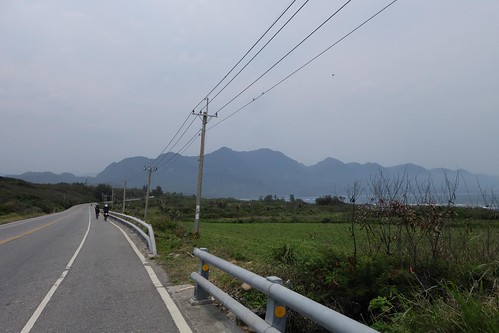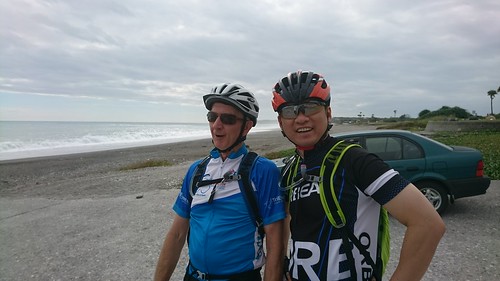
A few months ago, these fine gentlemen from Australia, Scott on the left and Nicklas on the right, got in touch with me via email. Could I suggest some routes for a bike trip? You betcha. In fact, I told them I'd come along. Thus, for the first time in months, I did an overnight bike trip. I brought along my friend Edouard Roquette, some of whose images I have shamelessly stolen for this post, since they are way better than mine. Click on READ MORE for more....
Showing posts with label Hualien. Show all posts
Thursday, October 26, 2017
Friday, May 27, 2016
Taroko people vs Asia Cement: the long twilight struggle
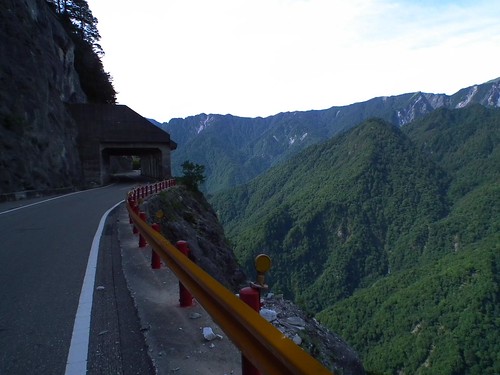
The amazing beauty of Taroko.
FocusTaiwan on the massive Asia Cement plant disaster outside Taroko Gorge...
History from the piece above....
Daily Links:
[Taiwan] Don't miss the comments below! And check out my blog and its sidebars for events, links to previous posts and picture posts, and scores of links to other Taiwan blogs and forums!
FocusTaiwan on the massive Asia Cement plant disaster outside Taroko Gorge...
Economics officials said Thursday that the Asia Cement Co.'s mining project inside the Taroko National Park can be terminated next year as new Environment Minister Lee Ying-yuan (李應元) hopes, but the company's operations in the 417 hectares outside the park cannot be suspended without new legislation banning such activities.If you're thinking that the cement company is in bed with the pan-Blue local government...
....
His new "vision" immediately alarmed the Hualien County government, which said the livelihoods of more than 1,000 families would be affected if the minister's new policy was carried through.
Kuomintang Legislator Hsu Chen-wei (徐榛蔚), wife of Hualien County Magistrate Fu Kun-chi, said Lee should have listened to local people and should give them some time to adapt before announcing his new policy.
History from the piece above....
The Ministry of Economic Affairs (MOEA) said Asia Cement obtained a license to develop a total of 442.7 hectares in Hualien in 1973. Some 25 hectares of the licensed mining district were zoned in the Taroko National Park when the park was established in 1986, but it did not affect Asia Cement's right to keep developing the land.The News Lens also picked up on this story, but also left out an important component of the issue. When the KMT legislator mentioned "local people" she meant the jobs dependent on the plant, not the livelihoods it wiped out. Those "local people"... who could they be? They've gone completely missing from the FocusTaiwan, News Lens, and Taipei Times report, which present the case in conventional environment vs big business terms. Let's restore their existence...
In 1994, Asia Cement requested government permission to continue using the mining district inside the park, a request that was granted the next year.
In 1974, the Siou-lin District administrative office, the Hua-lien County (花蓮縣) government, and the Asia Cement Company held several meetings for residents regarding Asia Cement's desire to develop a production site in Siou-lin District. However, as the Council’s judgment clearly points out, “The meeting only highlighted the benefits of the establishment of an Asia Cement factory during these “informational meetings,” never clearly stating to attendees that they would need to desist all cultivation and use of Truku Reserved Lands.” Furthermore, the Truku people's full understanding of the meetings' proceedings cannot be taken for granted when these meetings were conducted solely within the context of the laws and language of the Republic of China, which were alien and unfamiliar to the Truku people.Read the whole thing, it's a common story of what really goes on in these cases when indigenes face large government-backed resource extraction companies. The historical background is given in this piece here by the awesome Scott Simon:
Subsequently, the Siou-lin District administrative office proceeded to transfer the lease for large sections of Reserved Lands to the Asia Cement Company, soon afterward revoking the cultivation rights registrations for 146 hectares of land. Fortunately, because of errors in documentation, a few of these revocations were not completed and a few were able to retain their cultivation rights. Two of these comparatively lucky rights holders eventually became litigants in the aforementioned case. After the lease agreement between the Siou-lin District administrative office and Asia Cement was formed, the original Truku rights-holders were forced off their land. Many of the original cultivation rights’ registrants have since passed away, and the remaining few who are parties to this case are now quite elderly.
During the course of protracted litigation, the Siou-lin District administrative office and the Asia Cement Company have repeatedly produced a written document which they claim is an agreement to abandon cultivation rights to which the seals and signatures of the Truku cultivation rights-holders have been affixed as proof of the aboriginal people's voluntarily renouncing cultivation rights and receipt of compensatory payment. However, the two aboriginal plaintiffs in this case do not recall signing any such document, and the handwriting used on all the signatures appending the agreement is curiously identical.
In 1968, the KMT government began legal registration of Aboriginal land in Taiwan as Aboriginal Reserve Land. Although indigenous people had lived on Taiwan for 6,000 years before the first Chinese settlers arrived, Aboriginal families received only cultivation rights under the new legal system. Usage rights on the land, moreover, were granted only on the condition that crops be planted for 10 years. The stipulation effectively forced assimilation on Aboriginal people, as it made them abandon their traditional mix of hunting, gathering, and slash-and-burn agriculture. It required that they instead adopt Chinese customs of settled agriculture, presumably for the growth of cash crops. The law stipulated that land could not be sold or rented to Chinese people--it either had to be cultivated or ceded to the government as state property.In sum, Asia Cement did not have to compensate the aboriginal people for the value of the land (since the government "owned" it), just for the (far smaller sum of the) value of the crops it could have grown. Theft, backed by martial law, so protest was impossible. The article notes that few jobs were given to local aborigines out of the cornucopia promised, all grotty low paying work, which eventually was given to migrant workers, displacing even those few aborigines who got work at the cement company. It also tells the story of how the case was revived, with depressingly predictable responses....
Although Aboriginal Reserve Land was supposedly reserved for indigenous people, legal loopholes actually gave the Taiwanese government as well as Han Chinese individuals and corporations access to indigenous land. The government often "rented" indigenous land to outside commercial interests if indigenous people did not cultivate the land and sign "rental" agreements for the property in question. And indigenous people themselves often rented land to each other or outside Han Chinese. Han Chinese entrepreneurs were thus able to acquire space for villas, hotels, and factories on reserve land. The legacy of these problems remains. Indigenous people have no full legal ownership rights over the land, which means that they have no right to take out loans against it, a restriction that has prevented them from developing their own lands.
The policy of Aboriginal Reserve Land thus gave corporations adequate legal loopholes through which to seize Aboriginal land during a window of opportunity from 1968 to 1978. In 1973, the Taiwanese conglomerate Asia Cement applied to rent land from the Hsiulin Township Office and held its first consultative meeting with Taroko people. Township officials encouraged Taroko people to rent the land, saying it would give them employment opportunities, prevent out-migration of young people, and bring development to the community. The original landowners received compensation for displaced crops--a mere fraction of the land’s real estate value--and the promise that the land would be returned to them after 20 years.
One lucky day for the Taroko people, township officials left a hearing in anger, leaving behind a stack of documents. As Igung Shiban looked through them, she found that they were filled with irregularities. Some were missing dates or official seals. Most suspicious of all, the signatures of many former owners who had supposedly given up their property rights were all written in the same handwriting. In nearly a year of research, she pulled the agreements, one by one, from the township office files and showed them to the signatories to confirm whether or not they had actually signed them. It turned out that most of the signatures on the agreements to relinquish land rights were forgeries.This old report, preserved on the useful Taiwan First Nations website, describes:
Asia Cement resorted to intimidation to stop her research--Shiban and her husband were physically attacked twice, and her husband was burned on the leg—but they didn’t give up. Fortunately, local environmental activists and National Legislator Bayan Dalur, an indigenous representative given a seat through the opposition Democratic Progressive Party (DPP), helped them pursue the case by providing access to government documents.
"There will definitely be bloodshed next time. We'll kill you one by one," promised Chou Wei-kuen, a company spokesman, after the group stormed the gates.Activist Igung Shiban started an organization and took its case to the United Aborigines Working Program of the UN (here) where it didn't make much progress because you-know-who across the Strait suppressed it because it was Taiwanese. Packed with useful, fascinating details, Igung Shiban wrote in her 1997 report to the UN...
This dilemma of the Taroko people is the dilemma of all the indigenous people of Taiwan: Shimen Dam in Taoyuan County drowned the villages of the Taiyal. The military air base built into the mountain near Hwalien airport displaced the villages there. The Machia Dam in Taitung County forced the Lukai people out of their homes. The forced expropriation of indigenous reserved land by the government's Retired Servicemen's Association, Forestry Department, and National Parks Service, have each contributed their part to the loss the indigenous land and extinction of indigenous culture. If the campaign for return of land from Asia Cement were to succeed, it would be a crucial turning point. So we must persist in this campaign. This is not just our struggle; it is part of the hope for indigenous people throughout the world._____________
Daily Links:
- Awesome: Dynamic maps of the Taiwan Strait and its relations throughout history
- Tsai faces world's worst property market
- Latest issue of NCCU's Strategic Vision is out
- Legislature struggles over assets bill
- Ibises = problem
[Taiwan] Don't miss the comments below! And check out my blog and its sidebars for events, links to previous posts and picture posts, and scores of links to other Taiwan blogs and forums!
2
Comments
Labels:
aborigines,
gravel,
Hualien,
land,
Taroko Gorge
(Permalink)
8:15 PM
Wednesday, September 02, 2015
Funnel out to sea in Hualien
A friend of mine sent me this pic he took of a funnel forming out to sea off Hualien.
_______________________
[Taiwan] Don't miss the comments below! And check out my blog and its sidebars for events, links to previous posts and picture posts, and scores of links to other Taiwan blogs and forums!
_______________________
[Taiwan] Don't miss the comments below! And check out my blog and its sidebars for events, links to previous posts and picture posts, and scores of links to other Taiwan blogs and forums!
1 Comments
Labels:
Hualien,
weather
(Permalink)
9:19 PM
Monday, June 15, 2015
Sanity Break: Weekend in the Rift
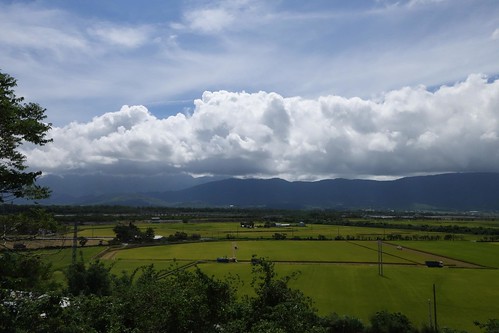
Rift time, a two day sanity break on the beautiful side roads of Hualien and Taitung, one of the best rides I've done. Click on READ MORE below for absolute acres of imagery.
3
Comments
Labels:
bicycling,
biking,
cycling,
Hualien,
rift valley,
Taitung
(Permalink)
9:22 AM
Tuesday, April 21, 2015
Coasting
Leaving Taitung city for Chenggong on Sunday.
Man. It's been months since I've done back to back days of 100 kms. I was terrified I'd never be able to ride like that again. I'm still among the walking wounded, but at least I was able to ride a couple of easy 100 km days across southern Taiwan. What a joy! As always, click READ MORE...
Monday, June 09, 2014
Truku aboriginals shut down Mugumuyu over excessive tourism, police vow to prosecute
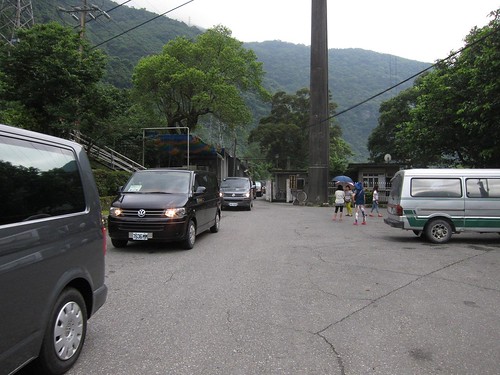
Vans pouring out of Mugumuyu.
UPDATE: Don't miss the comments below.
Mugumuyu is a stunning and rich river gorge southwest of Hualien city, just west of Liyu Lake. Last month I biked into Mugumuyu to enjoy its beauty, but got rained out. Nevertheless, I noted the number of small buses and vans flowing in and out, an appalling number of visitors, when supposedly the number was controlled. So I was dismayed, but unsurprised, to hear that the local aboriginal community had finally taken matters into its own hands and shut the road into their community down, to block the endless flow of vans in and out. TT observes:
_______________________
[Taiwan] Don't miss the comments below! And check out my blog and its sidebars for events, links to previous posts and picture posts, and scores of links to other Taiwan blogs and forums!
UPDATE: Don't miss the comments below.
Mugumuyu is a stunning and rich river gorge southwest of Hualien city, just west of Liyu Lake. Last month I biked into Mugumuyu to enjoy its beauty, but got rained out. Nevertheless, I noted the number of small buses and vans flowing in and out, an appalling number of visitors, when supposedly the number was controlled. So I was dismayed, but unsurprised, to hear that the local aboriginal community had finally taken matters into its own hands and shut the road into their community down, to block the endless flow of vans in and out. TT observes:
Prior to blocking the road, the residents performed a ritual at a monument erected in remembrance of 39 villagers who were buried by mudslides triggered by Typhoon Ofelia in 1990 by firing gunshots into the air and sending up smoke signals, declaring to their ancestral spirits their determination to defend their traditional territory.Now the local news is reporting that the police plan to prosecute the aborigines. Of course.
“It’s not that we do not welcome visitors, but since our village has been opened to outside visitors in 2006, there have been on average more than 100 minibuses bringing in about 3,000 visitors per day on holidays,” village council chairman Masaw said.
“The large number of vehicles has polluted the air, creates traffic jams on the roads and makes it difficult for us to go to work in the fields,” he added.
Rakaw Didi, a spokesman for the village, which is administratively known as Tongmen Village (銅門), said that to maintain the village’s ecology and quality of life, the village council passed resolutions at the end of last month to close off the village for a year and to ask future visitors to enter into the village on foot, not in cars.
_______________________
[Taiwan] Don't miss the comments below! And check out my blog and its sidebars for events, links to previous posts and picture posts, and scores of links to other Taiwan blogs and forums!
Friday, June 14, 2013
The Disappearing East Coast
A beetle takes wing.
I've blogged many times on the destruction of the East Coast by the forces of development, on the magical transmutation process by which local lands are seized and transformed into profits for big developers with the apparent connivance of local government officials. A very representative case is the disgusting Miramar Hotel development project just north of Taitung city, but Hualien is also being ravaged by "development". This week it was local Amis people complaining about the county government's surprise annexation of tribal lands...
The Taiwan Environmental Information Center put out some information on it:
The Taipei Times article said that the exact ownership is locally known but has not been formalized. The TEIR piece observed that a spokesman for the local people said that they have never given up their rights to the area. In 2008 they applied to receive protected status but the government has been delaying processing the application. Wonder why.....
Cases like these are only the ones that receive publicity; there are many others. See the East Coast now, over the next couple of decades, it's going to be concreted over....
_______________________
[Taiwan] Don't miss the comments below! And check out my blog and its sidebars for events, links to previous posts and picture posts, and scores of links to other Taiwan blogs and forums!
I've blogged many times on the destruction of the East Coast by the forces of development, on the magical transmutation process by which local lands are seized and transformed into profits for big developers with the apparent connivance of local government officials. A very representative case is the disgusting Miramar Hotel development project just north of Taitung city, but Hualien is also being ravaged by "development". This week it was local Amis people complaining about the county government's surprise annexation of tribal lands...
Karo said he and his neighbors have received a notice from the county government, asking them to tear demolish their homes and move away from a plot of land right on the border between Fenglin and Guangfu (光復) townships. The county wants to build a stray dog shelter on the site.A map of the area (source)(GoogleMaps link)
“I wonder if the county government considers dogs more important than people, so it wants to drive us away to make way for a dog shelter. But is not the government’s job to take good care of its people?” farmer Cunsing Rokateh said. “The problem is we do not have another place to move to even if we were willing to move.”
Namoh Nofu, an Aboriginal rights advocate who is from the area, said that in the past decade, the county government has planned development projects for about 1,400 hectares of land around the border area of Fenglin and Guangfu townships, which is the traditional domain of the Amis villages of Tafalong and Fata’an.
“The development projects include car-racing tracks, a camping park, golf courses, holiday resorts and an ‘eco-friendly industrial park,’” Namoh said. “However, the county government has never consulted local Amis villagers before coming up with the plans. It simply pretends that it does not know these are lands on which the Amis of Tafalong and Fata’an villages have lived for thousands of years.”
The Taiwan Environmental Information Center put out some information on it:
位於花蓮縣鳳林鎮,馬太鞍溪、花蓮溪、萬里溪之間的沖積扇(Cidihan),雖然目前標的為「花蓮縣鳳林綜合開發計畫-萬榮開發區」,但事實上,長久以來為鄰近的Tafalong(太巴塱)與Fata'an(馬太鞍)等部落傳統世耕地、放牧地和獵場,直到現在,兩部落仍有不少族人在此區域內的Palicanlican、Takomo兩地從事耕作。xAccording to the TEIR, the Hualien County government's stray dog shelter is merely the camel's nose in the tent. Once the land is actually seized, the government plans to put in -- please swallow what you're drinking so you don't spew it all over your keyboard -- an international Formula 1 race track (no, not kidding) taking up 70 hectares, a light airfield, a landfill, a high tech industrial park and an "international class love dog park" (國際級愛狗樂園). Man, you just can't make this shit up....
The alluvial fan known as Cidihan in Hualien County between Fenglin Town, the Mataian River, the Hualien River, and the Wanli, has been designated the "Fenglin, Hualien County Comprehensive Development Plan - Wanjung Devleopment Zone". However, for many years the area has been the traditional croplands, grazing lands, and hunting grounds of the neighboring Tafalong (Taibalang) and Fata'an (Mataian). Down to the present day the two communities still have many tribal people engaged in farming in the Palicanlican and Takomo areas.
The Taipei Times article said that the exact ownership is locally known but has not been formalized. The TEIR piece observed that a spokesman for the local people said that they have never given up their rights to the area. In 2008 they applied to receive protected status but the government has been delaying processing the application. Wonder why.....
Cases like these are only the ones that receive publicity; there are many others. See the East Coast now, over the next couple of decades, it's going to be concreted over....
_______________________
[Taiwan] Don't miss the comments below! And check out my blog and its sidebars for events, links to previous posts and picture posts, and scores of links to other Taiwan blogs and forums!
Monday, April 08, 2013
Riding: Taiwan east and south
Stephen Jack assembles his bike on the platform at the train station in Hualien.
The long weekend offered some great opportunities for cycling, though the weather sucked across the island. Friday my friend Stephen Jack and I took the crack'o'dawn express over to Hualien, had lunch with friends, then headed south. But before we get to the pix from the ride, I thought I'd set down some things I've discovered about taking a bike on the train in Taiwan....
If you want to take your bicycle on the train in Taiwan, here are a few tips.
1. Bagged bikes can go on all locals and jyu guang hau trains. They are not allowed on the Taroko specials. For the dz chiang trains, see the train listing in the schedule and check for the bicycle icon. They will accept a bike bagged on that train.
2. "Bagged" means in a bag, any bag, plastic bag, paper bag, whatever. Dedicated bike bag, of course. "Bagged" means that most of the bike must be in the bag. For road bikes like I ride, I just take the front wheels off. You don't need to take off the handlebars, rear wheels, etc. Again, just remove the front wheel and pop in bag. I know some riders who had big bags specially made, they just drop the bikes in whole and go. This means that....
3. ...for ease of handling, I always roll the bike around the station and carry it up and down stairs and then disassemble it on the platform. When I get off the train, I assemble it on the platform and roll it back out the station. This is because I feel it is easier to roll a bike than carry it unless you've got a really nice bike bag with straps, which I do not. This sometimes leads to arguments with train station staff, who appear to be deaf to the phrase "I have a bag".
4. On all trains but the dz chiang expresses, the bikes can go anywhere they fit -- you can put the bike behind the seats on a jyu guang or in the empty area at the front of some older cars. On the dz chiang designated bike trains, the bikes ALWAYS go in Car 12. Car 12 will be a hermaphrodite, half seats, half baggage. Sometimes they use an old dining car. On those trains, before you buy the tix, tell the cashier you have a bike. They are supposed to put you in car 12, though the system is set up wrongly so seats in car 12 are sometimes hard to come by (but there is always room for a bike). Once you set the bikes down in car 12, you can go to your seats in whatever car. PROTIP: seats 1, 2, 3, and 4 in Car 12 are almost never sold. Thus, they are always empty. You can sit in them and most of the time you will never be kicked out. I haven't been yet. Also, you can usually sit in the baggage car even though you are not supposed to. Just go in and sit down on the floor, the Taiwanese do it all the time. As have I. On the morning trains that car will fill with commuters.
5. HSR: You can take a bike in a bike bag on the HSR. There is usually room on the seats at the end of the car or by the luggage rack, but you can ensure that you get that space by being the first one in line to get aboard. If you tell them you have a bagged bike, they will try and give you the seat next to the luggage. In fact the best seat is at the end of the car, ask for that -- the space behind the last seat is almost always big enough for a bike.
On to the pictures! Click on READ MORE.
The long weekend offered some great opportunities for cycling, though the weather sucked across the island. Friday my friend Stephen Jack and I took the crack'o'dawn express over to Hualien, had lunch with friends, then headed south. But before we get to the pix from the ride, I thought I'd set down some things I've discovered about taking a bike on the train in Taiwan....
If you want to take your bicycle on the train in Taiwan, here are a few tips.
1. Bagged bikes can go on all locals and jyu guang hau trains. They are not allowed on the Taroko specials. For the dz chiang trains, see the train listing in the schedule and check for the bicycle icon. They will accept a bike bagged on that train.
2. "Bagged" means in a bag, any bag, plastic bag, paper bag, whatever. Dedicated bike bag, of course. "Bagged" means that most of the bike must be in the bag. For road bikes like I ride, I just take the front wheels off. You don't need to take off the handlebars, rear wheels, etc. Again, just remove the front wheel and pop in bag. I know some riders who had big bags specially made, they just drop the bikes in whole and go. This means that....
3. ...for ease of handling, I always roll the bike around the station and carry it up and down stairs and then disassemble it on the platform. When I get off the train, I assemble it on the platform and roll it back out the station. This is because I feel it is easier to roll a bike than carry it unless you've got a really nice bike bag with straps, which I do not. This sometimes leads to arguments with train station staff, who appear to be deaf to the phrase "I have a bag".
4. On all trains but the dz chiang expresses, the bikes can go anywhere they fit -- you can put the bike behind the seats on a jyu guang or in the empty area at the front of some older cars. On the dz chiang designated bike trains, the bikes ALWAYS go in Car 12. Car 12 will be a hermaphrodite, half seats, half baggage. Sometimes they use an old dining car. On those trains, before you buy the tix, tell the cashier you have a bike. They are supposed to put you in car 12, though the system is set up wrongly so seats in car 12 are sometimes hard to come by (but there is always room for a bike). Once you set the bikes down in car 12, you can go to your seats in whatever car. PROTIP: seats 1, 2, 3, and 4 in Car 12 are almost never sold. Thus, they are always empty. You can sit in them and most of the time you will never be kicked out. I haven't been yet. Also, you can usually sit in the baggage car even though you are not supposed to. Just go in and sit down on the floor, the Taiwanese do it all the time. As have I. On the morning trains that car will fill with commuters.
5. HSR: You can take a bike in a bike bag on the HSR. There is usually room on the seats at the end of the car or by the luggage rack, but you can ensure that you get that space by being the first one in line to get aboard. If you tell them you have a bagged bike, they will try and give you the seat next to the luggage. In fact the best seat is at the end of the car, ask for that -- the space behind the last seat is almost always big enough for a bike.
On to the pictures! Click on READ MORE.
Monday, August 20, 2012
Gorge-ous Riding on the East Coast: Hualien 64
This weekend my friends Kenji and Jeff, trailed by my slow but steady self, did a wonderful little loop out of Hualien. Leaving Hualien on Saturday morning, we rode down to the fishing port of Shiti and had lunch. After lunch we spun around the little headland to the Great Red Bridge and just before the bridge, got on Hualien 64, the Ruigang Rd. We took that to Rueisuei, and overnighted. On Sunday morning, with glorious weather, we sped back to Hualien and picked up the 1:03 express home to points north and west. Click on READ MORE for the rest of this gorgeous journey....
3
Comments
Labels:
bicycling,
Hualien
(Permalink)
8:06 PM
Monday, July 23, 2012
Big Skies in the Big Rift
This weekend did a lovely ride on Saturday and Sunday with my partner in climb Jeff Miller (blog). Rode from Taitung city on 197 to Luye, then to Guanshan for lunch, then took the 20 to the 20甲, then followed Wanchao Rd straight to Yuli, then took the 193 to Rueisuei. Highly recommend this route -- from the turn onto the 20甲 to Rueisuei is about 50kms of downhill incline. Absolutely gorgeous day of puffy blue clouds in the Rift Valley. Bonus: as I was leaving Taitung, I saw myself on TV in the breakfast shop. A map of the route on Saturday.
It was rainy on the opening section of 197, so I didn't get many pictures.
Foggy too. In the distance the mouth of the gorge can be seen.
Farms along a river.
Clouds and fog above Luye town.
A shrine by the side of the road.
Jeff crosses the bridge into Luye.
The 9 before Guanshan. The 9 is a detestable, truck-ridden wasteland. Avoid like plague.
Still, even on the crappy 9, there are good views across the Rift. The rice was just going in so farmers were out working....
We went into Guanshan for lunch. As we arrived, the skies cleared on the west side of the Rift Valley. A gorgeous clear day began.
The cloud formations were fantastic.
From Guanshan we turned onto the 20, the southern cross-island highway.
The 20 -- the line of trees on the left -- climbs gently up to 340 meters, with excellent views down the rift to the south before it disappears into the river gorge.
Approaching the big bridge that marks the turn onto the 20甲.
Jeff crosses the bridge at the beginning of the 20甲.
From the bridge there are gorgeous views north up the river gorge that the 20 follows...
...and southeast across the rift valley.
After crossing the bridge, we went a short distance and turned north onto Wanchao Rd, which quickly became Nanxing Rd. The opening is a long downhill.....
This road goes more or less straight to Yuli, gently downhill the whole way. There are a couple of short inclines but no serious uphills. On this day it was wonderful, for the air was clean and cool -- on a hot August day it might be painful, because for most of it there is no cover.
Jeff enjoys himself.
The weather on the west side of the Rift Valley was gorgeous.....
...but on the east side of the valley it was pouring.
We stopped in one of the many farming villages that line this road for drinks. Here some local Vietnamese wives pose for a photo after exchanging pleasantries with us. One of them narrated the tale of how her sister married an American. "I could have done that, but I was already engaged to a Taiwanese." "Why didn't you just break the engagement?" one of her counterparts asked her, incredulous. "You could have gone to America!" "Those words 'break the engagement' never occurred to me," she replied mournfully.
Big skies in the big rift.
Rain in the Rift. Ominously, we were headed over to that side.
The lovely ride finished at Yuli. We headed through town, got on the 30, and crossed the big bridge to the other side of the Rift. We stopped, as always, at the 7-11 before the entrance to the 193. Here dogs wait for scraps.
From Yuli to Rueisuei is another gentle downward incline. Lovely ride....
....and the rain switched sides and left us alone.
Beautiful views along both sides of the valley.
Rain over our destination.
Pulling into Rueisuei across the bridge from the south; the river here is the one they use for rafting. We found a great old-style hotel. On the phone the proprieter told us single rooms were $600, but when he met us and found that we were cyclists, they became $500.
Sunday morning it was pouring when we got up, so we hit the train station.....
....and found that the skies cleared. We got off in Guangfu and rode the remaining 45 kms on the 9 into Hualien town, hopped the train, and were back home for dinner. A great ride, a great weekend. Wish you had been with me!
_______________________
[Taiwan] Don't miss the comments below! And check out my blog and its sidebars for events, links to previous posts and picture posts, and scores of links to other Taiwan blogs and forums! Delenda est, baby.
It was rainy on the opening section of 197, so I didn't get many pictures.
Foggy too. In the distance the mouth of the gorge can be seen.
Farms along a river.
Clouds and fog above Luye town.
A shrine by the side of the road.
Jeff crosses the bridge into Luye.
The 9 before Guanshan. The 9 is a detestable, truck-ridden wasteland. Avoid like plague.
Still, even on the crappy 9, there are good views across the Rift. The rice was just going in so farmers were out working....
We went into Guanshan for lunch. As we arrived, the skies cleared on the west side of the Rift Valley. A gorgeous clear day began.
The cloud formations were fantastic.
From Guanshan we turned onto the 20, the southern cross-island highway.
The 20 -- the line of trees on the left -- climbs gently up to 340 meters, with excellent views down the rift to the south before it disappears into the river gorge.
Approaching the big bridge that marks the turn onto the 20甲.
Jeff crosses the bridge at the beginning of the 20甲.
From the bridge there are gorgeous views north up the river gorge that the 20 follows...
...and southeast across the rift valley.
After crossing the bridge, we went a short distance and turned north onto Wanchao Rd, which quickly became Nanxing Rd. The opening is a long downhill.....
This road goes more or less straight to Yuli, gently downhill the whole way. There are a couple of short inclines but no serious uphills. On this day it was wonderful, for the air was clean and cool -- on a hot August day it might be painful, because for most of it there is no cover.
Jeff enjoys himself.
The weather on the west side of the Rift Valley was gorgeous.....
...but on the east side of the valley it was pouring.
We stopped in one of the many farming villages that line this road for drinks. Here some local Vietnamese wives pose for a photo after exchanging pleasantries with us. One of them narrated the tale of how her sister married an American. "I could have done that, but I was already engaged to a Taiwanese." "Why didn't you just break the engagement?" one of her counterparts asked her, incredulous. "You could have gone to America!" "Those words 'break the engagement' never occurred to me," she replied mournfully.
Big skies in the big rift.
Rain in the Rift. Ominously, we were headed over to that side.
The lovely ride finished at Yuli. We headed through town, got on the 30, and crossed the big bridge to the other side of the Rift. We stopped, as always, at the 7-11 before the entrance to the 193. Here dogs wait for scraps.
From Yuli to Rueisuei is another gentle downward incline. Lovely ride....
....and the rain switched sides and left us alone.
Beautiful views along both sides of the valley.
Rain over our destination.
Pulling into Rueisuei across the bridge from the south; the river here is the one they use for rafting. We found a great old-style hotel. On the phone the proprieter told us single rooms were $600, but when he met us and found that we were cyclists, they became $500.
Sunday morning it was pouring when we got up, so we hit the train station.....
....and found that the skies cleared. We got off in Guangfu and rode the remaining 45 kms on the 9 into Hualien town, hopped the train, and were back home for dinner. A great ride, a great weekend. Wish you had been with me!
_______________________
[Taiwan] Don't miss the comments below! And check out my blog and its sidebars for events, links to previous posts and picture posts, and scores of links to other Taiwan blogs and forums! Delenda est, baby.
0
Comments
Labels:
bicycling,
Hualien,
rift valley,
Taitung
(Permalink)
6:37 AM
Wednesday, May 23, 2012
Four Day East Coast Loop
For the first time in a couple of months I took a little mini-vacation of four days of riding on the east coast. Arriving in Hualien on Friday night, on Saturday morning we rode 90 kms down Highway 11 to Changbin and overnighted there. On Sunday we did another 90 kms to Taitung. Our little group split up on Sunday, but on Sunday night I met up with my friend Andrew Bott. On Monday the two of us took the 197 over the low ridges on the east side of the Rift Valley from Taitung to Chihshang, then finished with a 50 km sprint to Rueisuei to pile up 120 kms on the day. On Tuesday we rolled back to Hualien, 75 kms. Just under 400 kms for the four days for me. Moving a bit slowly today at school...... click on READ MORE for pics and discussion...
Tuesday, March 20, 2012
My friend and longtime Hualien resident Ryan sent around this pic. Hualien County Chief Fu Kun-qi, an "independent" with longtime KMT ties, recently spent what appears to be county money on this empty bag which he handed out to county residents, labeling it a Tsunami Survival Kit. Naturally his name is prominent on it. Ryan helpfully translated the list of stuff you should put in it:
_______________________
[Taiwan] Don't miss the comments below! And check out my blog and its sidebars for events, links to previous posts and picture posts, and scores of links to other Taiwan blogs and forums! Delenda est, baby.
The list of things... 1. water 2. food 3. copies of your ID 4. cash 5. first aid 6. work gloves 7. flashlight 8. coat/underwear 9. blanket 10. light raincoat 11. heat pack 12. tissue/face mask 13. stationery 14. spare keys 15. swiss army knife/whistle...Ryan added:
"Hualien County Magistrate Fu Kun-qi cares about the safety of your family."
Notably absent: water purification tablets. Duct tape. Plastic bags. Can opener. Hygiene products (sanitizer). Tools. extra batteries. candles. flares. water-proof matches. lighter. rope.Fu's tale is told here.
_______________________
[Taiwan] Don't miss the comments below! And check out my blog and its sidebars for events, links to previous posts and picture posts, and scores of links to other Taiwan blogs and forums! Delenda est, baby.
5
Comments
Labels:
earthquakes,
Hualien
(Permalink)
10:45 AM
Wednesday, March 07, 2012
Biking the East Coast and Green Island
Yushan above the clouds from the ferry to Green Island
This week I spent four lovely days on the east coast with my friend Andrew Bott and the travel writer Joshua Samuel Brown, who co-authored the current Lonely Planet guide to Taiwan, which is why I haven't been posting here. Saturday we left Hualien and rolled down the coast to Chenggong. Sunday morning we split, Joshua heading over 23 to the Rift Valley, while we went another 60 kms to Fugang and got on the ferry to Green Island. Monday we returned on the ferry and then took the train from Taitung to Rueisuei. The next morning, Tuesday, we rolled back on 193 to Hualien and took the 1 pm express back to Fengyuan in Taichung. Click on read more for pics and narrative....
4
Comments
Labels:
bicycling,
biking,
east coast,
green island,
Hualien,
photos,
Taitung
(Permalink)
10:54 PM
Monday, November 14, 2011
"We are never gonna get to Donghe": East Coast Rift Riding
This weekend I took 193 out of Hualien and then turned east to ride over 23 to Donghe and back to Taitung. Come below the fold for a look at another glorious ride (WARNING: dozens of photos, may take some time to load up!!!!!)
7
Comments
Labels:
193,
23,
cycling,
east coast,
Hualien,
photos,
rift valley
(Permalink)
8:33 AM
Monday, May 09, 2011
Riding the East Coast: Rift Valley and Coastal Range
This weekend I met my friend Michael Cannon in Hualien for a ride down the rift valley and over to the coast. The plan was to go down 193 and over to the coast on day 1, and then down the coast to Donghe and then cut into the mountains on 23, then turn south and go down to 197 and to Taitung. In fact we didn't manage the second day (route map). But we had two excellent days along the gorgeous east coast. Come along for the pics and information, and don't miss Michael Cannon's excellent write-up with great pics.
We stayed here on Friday night, the French Jesuit mission hostel, which is open to the public. It was $300 NT for a room with an attached bath. The catch is, the main gate is closed at 10 pm so you have to be back at the hostel at ten. Not a problem if you are riding early like us.
We had breakfast at this popular steamed bun place on Chungshan Rd not far from the coast. Delicious and very filling.
It was clouded over but soon gave way to sun and white puffy clouds.
Then it was south out of Hualien through Jian and across the bridge on 11 where 193 splits off to the right. Entering the scenic area, we stopped for the obligatory Bike with Sign shot. For those of you from Taichung, we ran into the brother of Rocky from T-Mosaic bikes at the end of the bridge.
Michael takes in the views.
We ran into this fellow practicing his archery. The bow, Michael observed, was made of bamboo.
193, as the bike hanging there hints, is a major bike route and we encountered many cyclists on the road. It is rolling, but gently, and there are no serious hills. A very pleasant ride.
A farmer framed against the mountains on the far side of the rift. The route is totally scenic.
Lovely.
A moth rests on a leaf.
A bike rests by a farm.
We stopped at a junction to buy drinks and met these men enjoying conversation.
It was mother's day, and all along the route people were celebrating.
Gradually the day cleared into clouds and light.
The minimum security prison. You can get water here by the toilets in the parking lot. It is also the peak altitude of the ride; from here you roll downhill to Rueisuei. Just before this point the sun got so bad I became woozy and had to doze along the roadside for ten minutes before I could resume riding. It usually takes me a few weeks before I am used to the summer sun here in Taiwan.
Looking down the road to Rueisuei.
Michael grabs a drink on the bridge into Rueisuei town. Just before the bridge is the turn for Hualien County Road 64. We were headed there after lunch.
Rueisuei town, with food, places to stay, 7-11, bike rentals...civilization.
Michael grabbed a shaved ice dessert here, and then we headed back over the bridge to Hualien 64.
From this point, we go 22 kilometers through the hills to Dagangkou on the coast, where Highway 11 crosses the great red bridge.
Beautiful views on 64, and plenty of climbing. A road the Bike Gods made as a reward for the faithful.
The grades are not difficult.
The first climb is the highest, to over 200 meters and stunning views.
Michael inspects a drop.
64 follows a river gorge flanked by low peaks.
The further in you go, the more amazing it gets.
S-curves, steep descents, good climbs, scenery, 64 has it all.
We stopped in the little hamlet of Chimei to get a drink.
Finally, after two hours of riding, taking pictures, and resting, we reached Highway 11 and the coast at Dagangkou. The sea and sky offered lovely shades of green and blue.
Feeling like we accomplished something.
From Dagangkou we rolled down the coast to the small town of Changbin, staying at this minsu just before Changbin. It was $400 a person for a very large room, but you'll need your own towel, this place uses those hopeless paper disposables. We had done 122 kilometers and 1300 meters of climbing.
The next day was gorgeous but we were still pretty beat from yesterday's ride, so we decided to do the leisure ride down the coast.
The coast range was capped by clouds.....
...making for stirring shots.
We stopped by Donghe for the famous steamed meat buns and some 7-11 coffee, then rode down to Sanhsientai. Pretty place but overrun with Chinese tourists.
Michael climbs a hill.
Then it was down to Taitung.....
...and on the crowded train....
....through the mountains on the southern link line and back to Kaohsiung and home. 85 easy kilometers on the day. What a great weekend! Wish you had been with me.
_______________________
[Taiwan] Don't miss the comments below! And check out my blog and its sidebars for events, links to previous posts and picture posts, and scores of links to other Taiwan blogs and forums! Delenda est, baby.
We stayed here on Friday night, the French Jesuit mission hostel, which is open to the public. It was $300 NT for a room with an attached bath. The catch is, the main gate is closed at 10 pm so you have to be back at the hostel at ten. Not a problem if you are riding early like us.
We had breakfast at this popular steamed bun place on Chungshan Rd not far from the coast. Delicious and very filling.
It was clouded over but soon gave way to sun and white puffy clouds.
Then it was south out of Hualien through Jian and across the bridge on 11 where 193 splits off to the right. Entering the scenic area, we stopped for the obligatory Bike with Sign shot. For those of you from Taichung, we ran into the brother of Rocky from T-Mosaic bikes at the end of the bridge.
Michael takes in the views.
We ran into this fellow practicing his archery. The bow, Michael observed, was made of bamboo.
193, as the bike hanging there hints, is a major bike route and we encountered many cyclists on the road. It is rolling, but gently, and there are no serious hills. A very pleasant ride.
A farmer framed against the mountains on the far side of the rift. The route is totally scenic.
Lovely.
A moth rests on a leaf.
A bike rests by a farm.
We stopped at a junction to buy drinks and met these men enjoying conversation.
It was mother's day, and all along the route people were celebrating.
Gradually the day cleared into clouds and light.
The minimum security prison. You can get water here by the toilets in the parking lot. It is also the peak altitude of the ride; from here you roll downhill to Rueisuei. Just before this point the sun got so bad I became woozy and had to doze along the roadside for ten minutes before I could resume riding. It usually takes me a few weeks before I am used to the summer sun here in Taiwan.
Looking down the road to Rueisuei.
Michael grabs a drink on the bridge into Rueisuei town. Just before the bridge is the turn for Hualien County Road 64. We were headed there after lunch.
Rueisuei town, with food, places to stay, 7-11, bike rentals...civilization.
Michael grabbed a shaved ice dessert here, and then we headed back over the bridge to Hualien 64.
From this point, we go 22 kilometers through the hills to Dagangkou on the coast, where Highway 11 crosses the great red bridge.
Beautiful views on 64, and plenty of climbing. A road the Bike Gods made as a reward for the faithful.
The grades are not difficult.
The first climb is the highest, to over 200 meters and stunning views.
Michael inspects a drop.
64 follows a river gorge flanked by low peaks.
The further in you go, the more amazing it gets.
S-curves, steep descents, good climbs, scenery, 64 has it all.
We stopped in the little hamlet of Chimei to get a drink.
Finally, after two hours of riding, taking pictures, and resting, we reached Highway 11 and the coast at Dagangkou. The sea and sky offered lovely shades of green and blue.
Feeling like we accomplished something.
From Dagangkou we rolled down the coast to the small town of Changbin, staying at this minsu just before Changbin. It was $400 a person for a very large room, but you'll need your own towel, this place uses those hopeless paper disposables. We had done 122 kilometers and 1300 meters of climbing.
The next day was gorgeous but we were still pretty beat from yesterday's ride, so we decided to do the leisure ride down the coast.
The coast range was capped by clouds.....
...making for stirring shots.
We stopped by Donghe for the famous steamed meat buns and some 7-11 coffee, then rode down to Sanhsientai. Pretty place but overrun with Chinese tourists.
Michael climbs a hill.
Then it was down to Taitung.....
...and on the crowded train....
....through the mountains on the southern link line and back to Kaohsiung and home. 85 easy kilometers on the day. What a great weekend! Wish you had been with me.
_______________________
[Taiwan] Don't miss the comments below! And check out my blog and its sidebars for events, links to previous posts and picture posts, and scores of links to other Taiwan blogs and forums! Delenda est, baby.
7
Comments
Labels:
bicycling,
cycling,
east coast,
Hualien,
Taitung
(Permalink)
7:11 AM
Subscribe to:
Posts (Atom)