Showing posts with label construction-industrial state. Show all posts

Thursday, January 12, 2017

The Political Ecology of Land Subsidence: A Solar Energy Farm

DSC03836
Farms in Tainan

I found The Political Ecology of Land Subsidence: A Case Study of the Solar Energy-Farming Scheme, Pingtung County, Taiwan by Shew-Jiuan Su, which is Chapter 7 in the book Geomorphology and Society (Eds. Meadows and.Lin, Springer, 2016).

In 2009 typhoon Morakot absolutely wrecked southern Taiwan, flooding low-lying areas and sweeping away infrastructure. The governments both central and local put in place new policies to address some of the water issues, though the basic understanding that the construction-industrial state could wreck Taiwan continues. This article is about a solar energy project in Pingtung...
The solar energy-farming scheme, initiated by the Pingtung County government in 2009 following the devastation caused by Typhoon Morakot, is an illuminating case study in this regard. The scheme was established to convert low-lying land used for aquaculture into solar energy plants. The plan was not only expected to provide economic opportunities for the locals but also to prevent land subsidence.

Some interesting tidbits...
Both political economy and political ecology are crucial for understanding water pumping and
land subsidence. For example, in the late 1960s when the capital city of Taipei encountered land subsidence, investigations pointed to over-extraction of groundwater as the major cause. Discouraging water pumping and providing piped water thus became a priority during the 1970s–1980s. Only after 1987, when the Fei-tsui Dam was established to serve the Taipei metropolis, was groundwater pumping greatly reduced. The success in preventing Taipei land subsidence was partly due to abundant precipitation and the fact that regional geology and geomorphology facilitate the efficient infiltration of meteoric water into rock fissures.
At present Changhua (southwest coast), Yunlin (coast) and Pingtung (Linbian and Jiadong townships) are areas of Taiwan with severe land subsidence, though it affects much of the coastal plain. Along the south coast water withdrawn for aquaculture is a major cause of land subsidence, as southern Taiwan exports water in the form of fish to the rest of Taiwan, Japan, and elsewhere. The author offers some historical background on water rights...
Prior to the modern era of Taiwan, the Japanese colonial government exploited the country for its agricultural produce, in particular rice and sugar cane. Access to water at this time was strictly controlled by a highly organized and efficient bureaucracy (Tu 1993; Higashi 1944). The Society of Water Utility for Agricultural Fields, as it was then known, was the principal authority in this respect. Following the establishment of the republic in 1949, the bureaucratic system was retained, although the responsible authority was renamed as the Department of Irrigation and Engineering. The Department assumed all the water rights established by the colonial government and, because agriculture was the most important economic activity, the Department was very powerful and even influenced election outcomes. Even today, provision of water rights in most rural areas are controlled by this authority (Lin 1998).
The article points out that Taiwan's water policies have been driven by the Developmentalist State mentality. Although water rights were ostensibly about supporting agriculture, pumping became common for industrial uses and industry has had top priority for water in Taiwan. The result?
Nevertheless, when land subsidence was diagnosed as a consequence of groundwater pumping in the 1970s, it was politically conceptualized to be the result of pumping by agriculture and individual households. The misconception that agriculture is responsible for the heavy utilization of valuable water remains apparent today.
The state encouraged aquaculture and developed industrial districts in coastal regions, especially with the emergence of deep water wells that are draining freshwater aquifers at alarming rates. The footnotes contain gems:
Electricity is required to enable groundwater to be pumped from these individual wells. Thus the well owners have to apply for a utility permit and the installation needs to be done by the utility company on site. However, the utility company has no cause to investigate what the electricity is used for and whether or not the applicant has the right to extract groundwater. So-called “illegal pumping” has thus becomes prevalent, while well owners claim they are acting within the law because they pay the electricity bills.

Findings have indicated that primary and middle schools along the high-speed rail track may be held partially responsible for land subsidence. This points to the Ministry of Education’s olicy that encourages schools to obtain water via wells, rather than tap water, in order to become ‘green campuses’. Unfortunately most schools dug deep wells that inadvertantly contributed to the problem of land subsidence.
Why did the aquaculture industry become so dominant in Pingtung?
As a result of the high water table, abundant underground water and artesian wells, the percentage of tap water provision has always been relatively low in Pingtung County. Less than 50% of households in Pingtung are connected to a direct tap water supply provided by the utility company (Table 7.1). This again points to the lack of properly implemented water rights here, since the national average is 92 %. The low rate of water provision in Pingtung County has historical, economic, political and even ecological roots. First of all, the once state-owned utility company neglected to provide the necessary pipe infrastructure for Pingtung and so the county people developed their own water pumping system. Even to this day, the elected county government would debate whether direct water provision should be regarded as a priority and much of the population prefers to use spring water or groundwater that they consider to be of better quality than purified tap water.
The article covers the issues of the solar farm, but the project is still in its experimental state and the results are not in yet. Nevertheless, it does give a useful view of Why Things Are The Way They Are.
_______________________
Don't miss the comments below! And check out my blog and its sidebars for events, links to previous posts and picture posts, and scores of links to other Taiwan blogs and forums!

Monday, November 14, 2016

Map of all the historical sites in Taiwan that have been burned down

What's this a map of? Historical sites in Taiwan that have burned down. The fire icon represents a fire, the laughing ghost total destruction, the ghost facing you, arson (the Wiki site it is based on is here).

The latest in mysterious fires to historical sites in Taiwan occurred last week when a 1920s era Japanese government building in Taichung burned. LTN documents.

In 2013, after yet another mysterious fire, this time at a historical site at NTU, the Taipei Times observed:
Despite a denial from NTU secretary-general Chang Pei-jen (張培仁), the blaze, reported at 12:24am, has raised some eyebrows amid rumors that developers have been eyeing the plot for a development project.

While police, who have not ruled out arson, investigate the cause of the fire, relevant government agencies should take a more active role to better preserve and care for the nation’s many old buildings and landmarks that are rich in Taiwanese culture and history.

The public has good reason to be worried, considering the slew of news reports that suggest cultural and historical sites are being pushed aside to make way for development.

Last month, New Taipei City’s (新北市) Yingge District (鶯歌) — known as the birthplace of the nation’s pottery and ceramics industry — saw a 90-year-old oval-shaped kiln and its smokestack knocked down by a construction company, which owns the site, as well as another square-shaped kiln and its brick-built chimney that had stood for more than 50 years. The area, once dotted with more than 300 high-rise kiln smokestacks, is now left with fewer than a score of them.

Reports of similar demolitions of buildings and houses with historical value have also shocked and saddened many local residents, historians and cultural preservationists, as in the case of demolitions of Japanese colonial era kilns carried out by the Miaoli County Government for urban development projects and in Taichung, where a 114-year-old house was torn down by excavators in the middle of the night.

Sporadic cases of historical houses consumed by fire have also occurred, the causes of which remain unsolved to this day.
These fires appear to be linked to developers, who either want to force the site to go up for sale, or to force occupants out. This paper notes:
According to the statistics of fire occurrence, 52 fire events happened in Taiwan’s cultural heritages and historical buildings from the 1970s to 2014. Among them, the highest proportion of fire causes is arson (33%) and the second largest is electrical fire (27%), as shown in Figure 1.
Another source puts the arson count at 41%. Recall that it is not difficult for a skilled arsonist to make a fire seem like an electrical fire. Not all arson cases are developer-related, some are simply madmen or personal. In a few cases it is not the fire that destroys the buildings, but the firemen -- many older wooden structures can't take the force of water from fire hoses. Such fires not only destroy the historical sites, but in Taipei's cramped residential areas, they often take nearby buildings as well. Indeed, the tiny winding lanes surrounding them make it nearly impossible to save smaller historic sites in case of fire.

One such case was the Aug 4, 2005 arson attack on a temple site in Taipei, the Xi Ben Yuan. After the site burned down for the first time in 1975 (also thought to be arson), it was occupied by squatters and the usual collection of shops and vendors, quickly becoming a living community. The Taipei city government offered the site for sale but no one wanted it, then they rezoned it under "urban renewal" laws and tried again, to no avail. Finally they decided to treat it as a park and plaza and began removing the squatters. During this process, it was discovered that parts of the old temple had survived, and preservationists moved in. The site quickly became the topic of urban legends -- it had been an execution ground in 2-28 rumored some, and in another, it was the home of a Japanese treasure stash. Neither was true, but a mining company applied for a permit to excavate the site.

It was eventually designated a historical site. As scholars and preservationists worked to reconstruct the site, on Aug 4, 2005, it was struck by arson. The fire burned the lecture hall. At that point, it was -- probably not coincidentally -- mooted that the historical site designation be removed. Fortunately, the lecture hall had a solid brick structure and could be rebuilt. Incredibly, when the building burnt in 1975, someone had carried off the old bell from the bell tower to preserve it, and 30 years later, it was returned.

Many of these fires never make the news....
_______________________
Don't miss the comments below! And check out my blog and its sidebars for events, links to previous posts and picture posts, and scores of links to other Taiwan blogs and forums!

Saturday, September 05, 2015

TAO WOW: The most important thing you will read this month on Taiwan

Betel nut trees removed from a hillside in Taichung

For a long time I've been resistant to concluding that Beijing was inept and ignorant of Taiwan affairs as so many have asserted privately to me. It looks like I was wrong to give Beijing the benefit of the doubt....

Solidarity translated two reports from Storm Media about Beijing's Taiwan Affairs Office (TAO). Apparently the anti-corruption drive has now reached into the TAO and is going after Chen Yun-lin...
The Central Commission for Discipline Inspection (CCDI) has stationed itself inside the PRC Taiwan Affairs Office (TAO), serving notice to China’s Taiwan network and Taiwanese business community. An ROC (Taiwan) cross-strait official divulges that according to the information the office has gotten hold of, after Taiwan’s nine-in-one elections Chairman Xi Jinping in an internal meeting criticized former ARATS and TAO chief Chen Yunlin for his “erroneous methods” which had caused Taiwan policy to produce poor results. Hence, the CCDI’s investigation of Chen Yunlin [S.tw: more on that in the next report] is not just “wind blowing through an opening.” Our government source believes that the PRC anti-corruption campaign aside, the true purpose of the CCDI investigation is to put the nation’s Taiwan network on notice that policy work on Taiwan affairs will no longer run on mutual exchanges of benefits.
You have to read the entire thing, with its rumors, allegations, and descriptions of Beijing's leadership circles being unable to understand a thing about Taiwan even though media and social networks make things abundantly clear. Apparently, Beijing's spy network in Taiwan can't even read the newspapers. It is incredible how stupid things are...
A knowledgeable source says that the TAO’s reports had originally led Xi Jinping to believe that the KMT would hold onto Taipei City. When the TAO’s prediction was proven wrong, Xi was infuriated. He demanded the Taiwan network write a review report of what had happened. In the first report it submitted Xi, the Taiwan network repeated its past rhetoric by blaming the Democratic Progressive Party for “fanning the flames of the Taiwanese citizens.” Xi believed this report was unable to explain the real problem and demanded it be rewritten.
But wait, there's more...
However, last year as the anti-services pact controversy got hotter and hotter, there was word across the strait that Lai Xiaohua had embezzled at least US$10 million through different channels of the TAO and the Association of Taiwan Investment Enterprises on the Mainland. When it became clear later that the organizations’ books didn’t add up, the TAO was forced to ask Taiwanese businesspeople to use the accounts of Taiwan Associations and the Association of Taiwan Investment Enterprises on the Mainland to cover the hole. The Taiwanese businessmen were so infuriated by this request that they were speechless, but for the sake of their businesses they gave in and covered the loss.

According to a Taiwanese businessperson, when Chen Yunlin ran the TAO during Taiwan’s Lee and Chen administrations, Taiwanese investment in China was still not systematic, and cross-strait relations were not good, so most things were done through private channels. The line between personal investment and government Taiwan work was hazy. Hence, there have been many unproven rumors of beneficial relationships between China’s Taiwan hands and certain Taiwanese politicians and businessmen.
Such things have long been rumored, but there have been few articles on it. Solidarity and Ben from Letters from Taiwan talked about it on Twitter...
It's pretty obvious that the combination of authoritarian institutional arrangements -- where you can't speak truth to power because it will get you killed -- ideological blindness, faction politics, corruption, and incompetence have created a vast ignorance in Beijing. Cole notes:
For all his faults, Mr. Chen is being unfairly accused by a regime that, despite multiple occasions to learn from Taiwan’s open society, stubbornly refuses to acknowledge the drivers of Taiwan’s distinct identity. Beijing seems to regard the trend lines that indicate a rising self-identification as Taiwanese and single-digit support for unification as a sign that it — the TAO, ARATS — has failed to properly communicate with the Taiwanese people and explain why its Taiwan policy, which is largely influenced by a belief in economic determinism, should be embraced by its 23 million people. The problem is that Beijing appears to have become a victim of its own propaganda, a phenomenon that may have been exacerbated by the authoritarian nature of its political system which discourages officials from providing their superiors with information that doesn’t fit the accepted model.
Not just Beijing has bought into the economic determinism model. How many times has it been said since 2000 that annexation is inevitable and economics will make Taiwan just fall into Beijing's lap, ripe plumlike and all? Quite the opposite: the closer the two sides become economically, the more the Taiwanese reject China. Moreover, the golden age is over. A lot of people have yet to wrap their heads around that. No doubt in 2035 I'll wheeze into a bar in Taipei with my walker and IV drip, and some paleface will inform me with a patronizing sneer that close economic relations between Taiwan and China mean annexation is just around the corner...

Just envision, for a moment, Xi's alleged cluelessness on Taiwan and then extend this kind of information collection regime and response across all areas of China's government. Brr....
_______________________
Don't miss the comments below! And check out my blog and its sidebars for events, links to previous posts and picture posts, and scores of links to other Taiwan blogs and forums!

Monday, April 27, 2015

Paper on Parade: Yes, Chinese tourism is screwing over Taiwan

A major river in Miaoli, bone dry after three years of drought.

In case you were wondering about the effect of Chinese tourism on Taiwan, wonder no more. This edition of our regularly irregular feature, Paper on Parade, takes a look at The Economic, Carbon Emission, and Water Impacts of Chinese Visitors to Taiwan: Eco-efficiency and Impact Evaluation (Ya-Yen Sun  and Stephen Pratt, Journal of Travel Research 2014 53: 733). There are some findings that were pleasantly counterintuitive, but on the whole this paper justifies everything that I've been saying about the pernicious effects of Chinese tourism on Taiwan.

After some opening remarks on the growth of tourism in the region, the authors report:
The development of this Chinese market in Taiwan is highly significant; it accounts for the largest inbound visitor numbers in 2012, with rapid growth of an 86% annual rate from 2008 to 2012 for leisure visitors, and contributes high spending per person per trip (Taiwan Tourism Bureau 2012a). While expanding the Chinese inbound market is the long-term goal for Taiwan tourism, environmental resource requirements need to be considered alongside the economic impacts of international tourism receipts
This paper uses government figures for the spending of Chinese tourists. As you read the discussion, keep in mind that an AP report several years ago compared the receipts of travel agencies to the government claims, and called bullshit:
The government estimates that Chinese tourists spent an average of $246 a day on the island in 2010. That's made up of $142 for shopping and $104 for the services that are provided by tour package operators hotels, meals, local transportation, venue admission and incidentals.

But an examination of tour package prices shows they are much lower than the goverment's estimate and tour operators say that, at best, they get half of the money Chinese tourists pay to mainland tour agencies for these tours. That amounts to at least a $700 million hole in the government figure.

On top of that, it is likely that some of the money Chinese tourists spend on shopping is ending up in Hong Kong, where the owners of some of the major Taiwanese shopping outlets are based.

And at least until recently, a ruse involving special credit card readers that disguised the true location of purchases meant the government was cheated out of sales tax from Chinese tourists. Taiwanese authorities are now investigating this practice.
According to the 2013 Tourism Bureau numbers (download .doc file), Chinese tourists spend nearly as much as Japanese, and significantly outspend tourists from the US, Singapore, and Hong Kong, all of which are wealthier. Strange, eh? It may be because business visitors tend to get taken out by locals more, and more Americans are here on business...

Back to the Sun and Pratt study above...
The purpose of this study is to provide an evaluation of the economic impacts, the carbon footprint, and the water footprint of Chinese tourism consumption in Taiwan. Two objectives are proposed here. First, the eco-efficiency of Chinese visitors is compared against four other major source markets for Taiwan: Japan, Hong Kong/Macao, United States, and Malaysia. Eco-efficiency is measured via the per dollar CO2 emission and per dollar water consumption.
After a detailed discussion of tourism growth and Chinese tourism numbers in Taiwan, the authors point out two salient facts: first, tourism is less efficient carbon-wise than most other sectors of a given national economy, and second, a major culprit in the high CO2 footprint of tourism is air travel.

The idea of water footprint is relatively new in the literature, but has grown. I suspect it will become ever more important as the inevitable effects of human warming of the earth impact our water supply. They note:
In Gössling et al.’s (2012) extensive review of tourism and water usages across major countries, they concluded that the direct water usage per tourist per day ranges between 80 and 2,000 liters (L), and the indirect water consumption per day was tripped to 5,500 L. The tremendous indirect water requirement is mainly a result of the production process for food and fuel, each, on average, contributing more than 2,000 L per tourist per day. For food consumption, a greater amount of water is embedded in agricultural irrigation, which accounts for more than 70% of the total water withdrawn and 90% of water consumed (Bates et al. 2008).
The key point here is that tourism drives demand for foods, which drives increased agricultural water usage. As they note in the paper, Chinese delight in purchasing food souvenirs, which drives up their overall water demand.

Sun and Pratt then move on to present the methodology of the study. Overall emissions and water use are calculated via a generally accepted model, while travel emissions are calculated using airline route distance and number of seats.

The meat of the paper is of course the results of the calculations. The authors first introduce the background information. I've grabbed their table below:
Among five inbound source markets, Chinese visitors are one of the top spenders in Taiwan, averaging around US$260 (not including international airfare) per person per day or US$2050 per trip, only after the U.S. segment (Table 1). In terms of spending patterns, Chinese visitors report a greater proportion of their budget on shopping (57%), much higher than visitors from Malaysia (32%), Hong Kong/Macao (28%), and Japan (22%). This shopping spree phenomenon is consistent with observations from Chinese visits to Australia (Wang and Davidson 2010), United States (Jang, Yu, and Pearson 2003), and Hong Kong (Huang and Hsu 2005). Within the shopping component, Chinese visitors spent around 15% of the overall trip expenditure on “featured food, special products and tea” and 10% on “jewelry or jade.” In comparison, U.S. visitors spent two-thirds of their expenses on the lodging (65%) but were quite limited in other categories. This is in part due to a very high proportion of U.S. business and VFR tourists in Taiwan, so their itinerary either involves more with business activities or their local expenses have been covered by friends and relatives (Taiwan Tourism Bureau 2012b).

The authors conclude:
The eco-efficiency of Chinese visitors on both CO2 and water use in Taiwan is superior to the other four major markets, except for total water use intensity (Table 3). For direct and total CO2 intensity per dollar, Chinese visitors are around 21% and 10% more efficient than the second-best performing market. For the direct water use intensity, Chinese visitors also ranked number 1, 32% more efficient than their counterparts. However, after taking into account the indirect water use, Chinese visitors become water-intensive users, requiring 8.26 L of water per dollar, the worst among all five inbound markets.
Recall that the Tourism Bureau numbers for what Chinese tourists spend are probably inflated, meaning that if more realistic numbers were used, the effect of Chinese tourists would only worsen. Since that water is used in the form of foods taken out of Taiwan, our supplies take a  hit, especially groundwater, which is not so easily replenished. In the long-run it returns to the ocean, of course, and comes back. How long?

Based on the inflated Tourism Bureau numbers, the authors then calculate the raw economic effects:
The results from the CGE analysis show that an increase in Chinese visitors to Taiwan is overall beneficial to the economy: the Taiwanese household’s welfare would increase by US$145.1 million (0.06%); the Taiwanese household’s consumption would increase by US$160.7 million (0.07%), and their investment would increase by US$64.0 million (0.07%) (Table 5). Output is estimated to increase by US$8,706.8 million or 0.8% from 2011 to 2016 as a result of the increase in Chinese visitors with corresponding CO2 emissions estimated to increase by 6 million tons, or an additional 2.7% over 2011 figures. The Chinese visitors are estimated to use an additional 591 million tons of water (3.0%).
For a family with a household income of NT50,000 a month, that welfare increase is a couple of bus rides. Overall output increase is less than 1% over the five year estimated period of the study, again using the Tourism Bureau numbers. Never mind that the gains go to a small number of actors, and are not spread out across all the families of Taiwan. Most Taiwanese experience only the negatives of Chinese tourism, from crowding at desirable tourist sites to insults and threats from the sprinkling of idiots that populate those tours. Morever, that Chinese tourist "output" has other, extremely pernicious effects.

As the authors note, when tourists come in, they pull capital and resources from other sectors into tourism, and they drive up the exchange rate because they demand local currency. In Taiwan this pushes up the value of the NT dollar, which causes sales of local exports to fall since their products become more expensive on international markets.
The increase in tourism demand leads to an appreciation in the exchange rate, which leads to import substitution and the contraction of the traditional export sectors. Not surprisingly, the increase in tourism demand expands the tourism-oriented sectors as the increases in prices attract resources (capital and labor) to these sectors. The accommodation services sector (+40%) and the education and entertainment articles sector (+33%) as well as the industries supplying souvenirs such as the textile mill products (+15%), wearing apparel and clothing accessories (+13%), and cleaning preparations and cosmetics (+7%) experience increases in output and hence GHG emissions and water usage. Further,the sectors that will experience the largest growth due to an increase in tourists are not the most resource intensive.
Lucky, eh? Nope...
An interesting finding occurs with the computers, electronics, and optical products sector. Taiwan exports more than 70% of its production in this sector. In considering the economic impact of each visitor segment, this sector is expected to expand. For example, for the increase in VFR visitors, output is expected to increase by 17% in this sector as tourists and tourism-related businesses demand more computers and electronic goods. This increase in demand falls to 13% for both the business and FIT tourists segments and to 6% for the PT tourists segment. However, in estimating the total impact of 12,000 additional visitors per day in 2016, the large increase in visitor arrivals in this scenario results in this sector being “crowded out” by increases in other sectors. This, coupled with an expected appreciation in the Taiwanese dollar, means that Taiwanese computers and electrical goods become more expensive on the world market. The overall effect is a contraction of this sector with a high export component. This nonlinear nature of CGE models is able to take into account supply constraints and factor in the competition for limited resources.
The authors remark further down that the growth in total foreign tourist dollars, 16.8% between 2008 and 2011, has helped the economy in time of need (US$5.9 billion in 2008 to US$11.1 billion in 2011, accord to their citation of Tourism Bureau numbers).

Let's take a moment to take stock of the full effects here. First, the NT dollar is buoyed by inbound tourists from China buying NT dollars, driving up its value. This is not good for local exporters, but local consumers like it because it keeps the price of foreign goods down. It also makes the central bank governor's job easier, because it is easier to keep the currency stable if flows are reliable and predictable.

This means that it will not be easy to turn off the tap of Chinese tourist inflows because the central bank will correctly point out that the NT dollar will both weaken and become less stable. That will inhibit action by any future pro-Taiwan president. That effect will be independent of the way the KMT has managed the inflows to create new dependencies in local areas that support it.

Chinese tourism is, as I have claimed, hurting Taiwan by reducing its living standards while providing a false promise of economic growth. That is what this paper documents. The economic gains for local families simply don't exist, while tourism does nothing to increase their skills or raise local living standards. At the same time, it also reduces the electronics export sector, the one sector that does raise Taiwan's living standards.

Never mind the effects on territoriality and life quality for those of us who have to live with the traffic, construction messes, and general deterioration in living standards in areas where Chinese tourists appear in great numbers, as well as expanding the effect of Taiwan's parasitic construction-industrial state on local governments and on the national political economy.

The future? Not good. Sun and Pratt note:
Looking to the future, the current environmentally efficient characteristics of the Chinese tourists are expected to wane because of product diversification and repositioning as the propensity to consume luxury goods and services will increase while their average length of stay will shorten. With an intended policy to develop Chinese FIT, medical tourists, and business travelers while shrinking the market of discounted package tours, the share of high-end services, taxi, and car rental is expected to rise in their spending profiles. This type of tourism generally consumes more energy per unit (Becken, Frampton, and Simmons 2001), and the abovementioned transportation types are 25% to 75% more energy intensive per person-kilometer than coach (Huang 2011). Further, the Taiwan Tourism Bureau intends to encourage high-quality package tour itineraries which stay at star-credited hotels, involve fewer mandatory shopping stops, and offer diversified dining and recreational opportunities. In sum, Taiwan’s policy is gradually directing visitors to purchase a basket of goods and services that is more energy intensive in the future.
Taiwan is committed to reducing its global warming emissions, though it is not a signatory to any of the international protocols. Rising Chinese tourism, the authors note, could conflict with this goal.

This paper represents a first pass at the problem, as the authors observe, but nevertheless it is highly indicative. As in all other aspects of economic interaction with China in Taiwan, the claimed economic effects simply aren't there. This will not stop the international media from continuing to spread Chinese propaganda on that topic, but at least my readers will know what is really going on.
_______________________
Don't miss the comments below! And check out my blog and its sidebars for events, links to previous posts and picture posts, and scores of links to other Taiwan blogs and forums!

Saturday, March 21, 2015

Drought? What water policy?

Normally a flooded arm of the Liyu Reservoir in Miaoli

Yeh Chieh-ting of Ketagalan Media passed around this piece on the water shortage from Storm. It describes things quite succinctly: this is the worst drought in 67 years. In the last three years we've had only two typhoons, which we depend on to fill our reservoirs -- the usual figure is that 80% of our water arrives in the summer typhoons -- but it hasn't been arriving. Two weeks ago when I went down to Laochijia in Pingtung I was appalled and terrified to see the rivers running in trickles or dry completely. A friend of mine who took her family to Sun Moon Lake told me that the lake looks like it is surrounded by beaches as the reservoir exposes its banks. On Facebook people are passing around scary pictures of empty reservoirs.

Fortunately, the government has a comprehensive, well thought out water policy in response to this amazing drought, which is:

PLEASE GOD GIVE US RAIN

That's right, we've got a whole lot of nothing going on. I'd love to describe and comment on the government's policy, but there isn't one. The only move has been to lower the water pressure in certain cities. Meanwhile Taiwan's extravagant use of water continues unabated -- the government has a water conservation campaign out to curb use from 270 liters per person/day to 250. To put that in perspective, water consumption in Germany was 121 liters per person/day (Wiki) in 2010, in the UK, 150 (link). Water use in water rich US and Japan is rather more extravagant, and much higher than Taiwan levels, though published numbers vary widely. The government has threatened actual physical rationing of water in April if things don't improve... UPDATE: some tinkering around the edges, with early arrival of rationing: here and here.

Unfortunately water consumption is under the Ministry of Economic Affairs, which means that it is controlled by the construction-industrial state and the whole idea of conservation and ecologically-based management is ignored, except at private firms where there is conservation and recycling because water costs money. Taiwan should be going the way of other industrialized countries, installing toilets that conserve water, fixing its pipes, and putting in new water infrastructure for delivery and storage, as well as regenerating its aquifers and caring for its rivers and riverine ecologies. But just the opposite has occurred -- Taiwan's haphazard, exploitative depletion and destruction of its water ecology and water resources is just one of the many ways the construction-industrial state has reduced Taiwan's living standards and imperiled its future.

Plentiful cheap water is one of Taiwan's key resources and the foundation of its industrial and agricultural might -- almost all industrial processes require water in some way, as a solvent, a coolant, a raw material, or in waste handling. Moreover, unlike many countries, such as Iraq with the Euphrates or Vietnam with the Mekong, Taiwan is in complete control of the entire length of its rivers and thus of its water policy. Much could be done...

Sadly, nothing fundamental has changed as Taiwan lurches toward water armageddon. The basic problem is that the price of water is too low:
The average Taiwanese person uses 350 liters of water per day, while the average person in the US or Europe uses 150 liters per day. The price of one unit of water in the US and Europe is NT$40, while in Taipei City it is NT$7, and for Taiwan overall, NT$9.

Taiwan prides itself on being a developed country with a GDP of more than US$14,000. Water usage, however, stands at twice that of the US and Europe, and the price of water is equal to that of third-world developing countries. Even prices in China are twice as high as in Taiwan. Not everyone may know that the development cost for a new water reservoir currently stands at NT$22 for one unit of water, while the cost for sea water desalinization is NT$40. This comparison makes it even more obvious that Taiwan's water prices are unreasonable. The Water Resources Agency has on several occasions suggested to the Cabinet that water prices should be adjusted upwards, but all such suggestions have been waved off. The fact is that a reasonable rise in the cost of water would not be much of a burden for the general public.
As any first year econ major could tell you, if you want to change behavior, you must change cost. And the government for years has refused to change the cost of water use. Moreover, since prices are low, revenues are low. The local water company lacks the money to upgrade Taiwan's absurdly leaky pipe system and other urgently needed infrastructure. With the election coming up soon, nothing is likely to happen. Wouldn't it be great if both parties got together and issued a joint pledge to raise water prices no matter who won the election?

Meanwhile my neighbor, like hundreds of thousands of Taiwanese, was out washing his car today. The thousands of car washes, shrimp fishing ponds, and other extravagant businesses continue without restriction. Massive pumping of groundwater goes on unabated. We're due for a water reckoning, and the government is doing nothing to change the long term outcome.

Brrr.....

Also see: Jens Kastner reviews some of Taiwan's water problems in AmCham last month. And my old post on drought.
_______________________
Don't miss the comments below! And check out my blog and its sidebars for events, links to previous posts and picture posts, and scores of links to other Taiwan blogs and forums!

Sunday, March 08, 2015

Tzu Chi finally facing the heat? =UPDATED=

Tea farms in Nantou.

SETV has a report on complaints about Tzu Chi, showing their Tanzi operation, which is right by my house. I have long wondered when the Buddhist charitable foundation was going to face criticism from locals.

Criticism was sparked in Taipei over a land deal in Neihu. The Taipei Times reported:
Buddhist Compassion Relief Tzu Chi Foundation owns 29 plots of land in a geologically sensitive area in Taipei, and it might have exchanged benefits with a private firm during its acquisition of the land, an environmentalist said yesterday.

A dispute is raging between environmental groups, including Treasure Our Land, Taiwan — a nongovernmental organization — and Tzu Chi over the foundation’s request to set up a logistics center and a factory on a 4.4-hectare plot of land in Neihu District (內湖).
Ko Wen-je, Taipei's iconoclastic mayor, seems to have declared himself in opposition to the construction-industrial state in all its manifestations. Buddhist Master Shih Chao Wei, recently criticized for being seen being bused around in a massive Benz which she says is a friend's, sharply criticized Ko for his comments on the project, objecting to him describing it as a "development project." Others, however, pointed out...
Tree Party policy director Pan Han-shen (潘翰聲) said that environmental groups oppose the project because it would set a poor precedent, opening the door for large corporations or those with influence to expedite approval for use of land in environmentally protected zones.

He said the Tzu Chi Foundation had sought to have the project approved as an individual case, without considering the wider impact it would have and that it has refused to have the project undergo an environmental impact assessment.
Because I live next door to the hospital shown in the video, and the mother of the founder lives down the street from me, along with her adopted brother, and because my neighborhood is flooded with Tzu Chi volunteers every Sunday who cut the grass in the vast field shown in the video, I will not publicly comment on Tzu Chi.

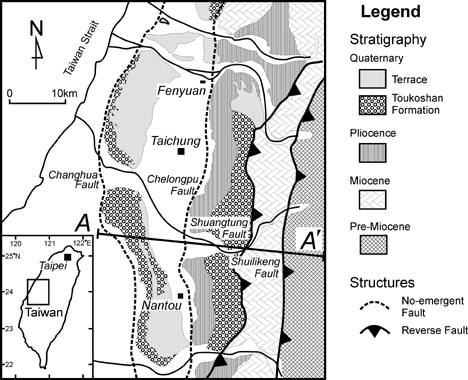
UPDATED: Another one out today asserting based on the EPA EIA that the Tanzih complex is located right on a major fault. This simple map shows the fault line running right next to the hospital complex on the NE side of Taichung.

UPDATED: Solidarity.tw with the translation of the SETV report (article) on Tzu Chi's land development issues.

UPDATED: Solidarity again with a translation of a dissection of Tzu Chi expenses.
_____________________
Daily Links:
_______________________
Don't miss the comments below! And check out my blog and its sidebars for events, links to previous posts and picture posts, and scores of links to other Taiwan blogs and forums!

Thursday, February 12, 2015

The Construction-Industrial State Eats Taiwan: Commonwealth on Housing Prices

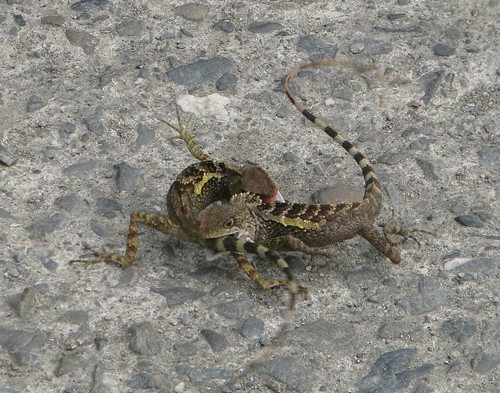
Caught these two fighting several years ago in Gukeng.

Commonwealth once again scores with a very good piece on how the legislature nuked reforms that protected consumers and instead chose to keep housing prices to stay high and help developers make money:
In December 2011, with the presidential election drawing near, the presidential candidates from both the Kuomintang (KMT) and Democratic Progressive Party (DPP) strongly supported the quick passage of five laws equated with "housing justice," including the registration of actual real estate transaction prices. The Executive Yuan's original version included the listing of actual pre-sale housing prices, which were required to be registered within 30 days of the transaction in the interest of transparency.

After the bill was sent for cross-party consultations, however, that portion of the bill quietly disappeared. Replacing it was a clause permitting sales agents to list the actual transaction price at the conclusion or termination (i.e. completion of sale) of the agent sales contract.

Often many years pass between the initiation of construction to completion of a pre-sale property transaction. During that interim period the buying and selling of pre-sale properties begins, and a given property can change hands among different investors several times by the time construction is completed. As long as the actual transaction price is not listed, sales agents and investors can team up to drive housing prices up. Meanwhile, consumers are kept in the dark, or treated as guinea pigs at the end of the line paying the highest price. "Listing prices only after the completion of sale means nothing at all," says Consumers' Foundation Housing Committee convener Lin Wan-ken, adding, "That is the biggest failure of actual sales price registration."
This paragraph refers to houses that are sold before the building is constructed. As the third paragraph makes clear, the real estate agents collude with the developer to jack up prices by flipping the house back and forth, then selling it to a mark buyer after the price has been inflated. The legislature provided legal cover for this travesty of a market by passing this law, since it shoves the final price far into the future:
In an interview with CommonWealth, [KMT legislator] Wu Yu-sheng says that he and legislator Lai Shyh-bao had been pushing for the registration of actual transaction prices, but that tremendous pressure applied by the construction industry lobby deterred legislators from backing it. "Some people didn't say anything. They only said at the end of the process that they'd go along if pre-sale housing was excluded."
According to the article, President Ma himself presided over the negotiations. But "a number of legislators" opposed the stricter wording and Speaker Wang feared "no common ground" could be found. Hence the giveaway passed. So although the Commonwealth piece says it will address who did this, it never really comes to a conclusion.

What a joke. As Commonwealth says, this needs to be fixed ASAP.
_______________________
Don't miss the comments below! And check out my blog and its sidebars for events, links to previous posts and picture posts, and scores of links to other Taiwan blogs and forums!
Thursday, January 22, 2015

Ko Wen-je VS the Construction-Industrial State: Ko wins one

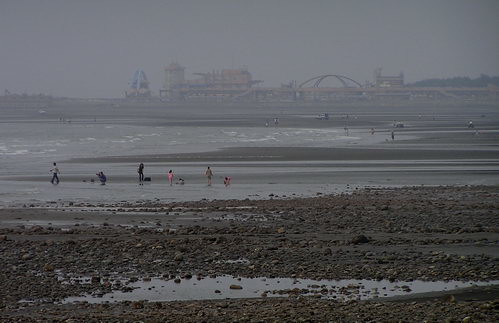
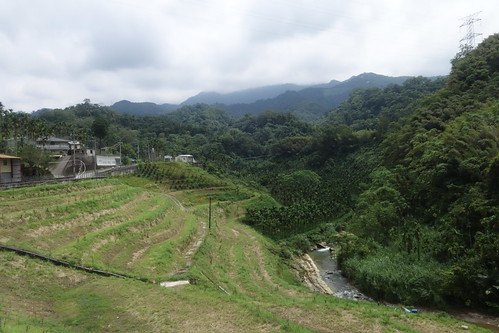
Beachcombing in Hsinchu.

Taipei mayor Ko Wen-je is rocking the construction-industrial state. The Taipei Times reports...
The Taipei Dome and Farglory’s contract had become a source of controversy in recent days as Ko and his administrative team began looking at several major projects either underway or in the proposal stage.

Prior to last night’s meeting, Ko had said the Dome contract would have to be revised to increase the penalties for failing to meet deadlines. He also said discrepancies between the initial contract terms during the bidding process and the firm’s final contract needed to be discussed.

“Farglory has already gone past the deadline for completing the project, in violation of the contract,” Ko said earlier yesterday, adding that the original contract’s penalty clauses “do not have any real impact,” because they only allow the city government to fine the firm a total of NT$3 million (US$95,300) for violations.
Hacking on the previous administration, Ko pointed out that Control Yuan asked that 39 articles in the contract be revised, but the previous KMT administration had not done so. Former KMT Mayor Hau had used the infamous you-do-not-understand attack to defend himself from Ko's exposure of his administration's apparent embrace of big companies...
Countering criticism leveled at several projects undertaken during his administration, former Taipei mayor Hau Lung-bin (郝龍斌) yesterday accused Taipei Mayor Ko Wen-je (柯文哲) and his team of using “defamatory” tactics to hide their “ignorance” of municipal issues.
Hau also defended himself by saying that everything had been done according to the law and passed the ethics commission. Such reviews in Taiwan are typically prima facie. KMT Chair Eric Chu has asked Hau to take over the National Policy Foundation, the KMT's internal think tank. Hau is a princeling, like Chu, another clue that "reform" under Chu is going to be limited to revamping and further locking down the Party's relationships with the local factions so they don't bolt. ADDED: Yam ripped him in an editorial solidarity.tw captured.

So far, this is my favorite Ko moment:
Taipei Mayor Ko Wen-je (柯文哲) yesterday said he has ordered all Taipei City Government departments to draft a complete list of all municipal property, after discovering that the controversial bus lane on Zhongxiao W Road includes a bus stop that is not listed as belonging to the city.
Ko also said he'd can the Taipei police chief if pro-PRC "protesters" in front of Taipei 101 continued their violent assaults on people; the chief subsequently retired, along with a fire department official. Ko is making everyone else administrating a county/city look bad. Commonwealth interviewed him in December shortly after his election victory.

BTW, some of you may recall that the Tax Bureau was pursuing Ko's family in a totally non-political case. Yesterday it dinged his parents for $31,200 NT. This is a symbolic figure -- once it was committed to the apparent harassment, it had to fine them, but if it had been a large amount, that would have called further attention to the fact that Ko's family was being pursued in a totally non-political case.

Mayor Lin Jia-long of Taichung killed the Taiwan Tower project in Taichung when its budget nearly doubled. Should that be read as a genuine commitment to curbing the construction-industrial state? Or just a one-off designed to make Lin look like he is doing a Ko Wen-je in Taichung, using a bad project with no great construction-industrial state support? For me the jury is still out on Lin. Another major project Lin has criticized, the BRT, saw an inevitable accident today.

Up and Coming for the KMT: As the TT reports, during the run up to the KMT Chairmanship election Chu hinted that he'd end the Party's assault on one of its most loyal servants, Legislative Speaker and longtime heavyweight Wang Jin-pyng (MaWangMess, MaWangMess). A group of legislators has proposed that the KMT withdraw its appeal of the court ruling that permitted Wang Jin-pyng to retain his position in the Party and in the legislature. Chu has delayed a response, but if he drops the appeal, it will be another declaration of Chu breaking with President and former KMT Chairman Ma Ying-jeou (like his elimination of Ma's Zhongshan Council and return of power to the Central Standing Committee), who has been doing his Saruman-in-Orthanc imitation since the crushing defeat of the KMT in November. In fact the China Post report has Chu specifically saying he "respects Ma's authority", showing that Chu also views this issue as one that puts himself and Ma in conflict. The Ma-Wang mess really harmed the KMT's relations with its legislators. Surely Chu must sense the urgent need to fix that, and will drop the appeal. If not, then we know something about him and his relations with the KMT.
_____________
Daily Links:
_______________________
Don't miss the comments below! And check out my blog and its sidebars for events, links to previous posts and picture posts, and scores of links to other Taiwan blogs and forums!

Saturday, January 17, 2015

Chu Voted New KMT Chair, but the real reformer is Ko Wen-je

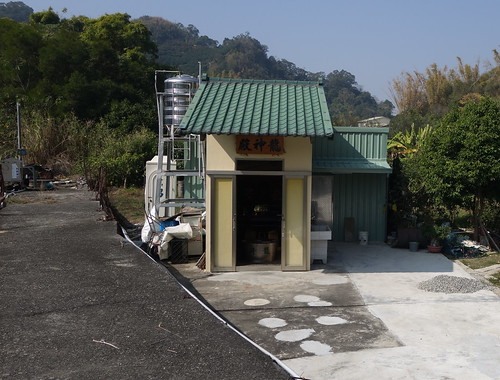
Dragon God Temple.

Reuters reports:
"China is comfortable with Chu taking charge of the KMT ... It has been trying to build mutual trust," said Tung Chen-yuan, a professor at the National Chengchi University and former vice chairman of Taiwan's China policy-making body.

Chu was the only top politician who two high-level visiting Chinese officials met in 2014, a sign China is betting he will be the island's leader.

"Xi Jinping is very happy to meet Chu and he is waiting," said a KMT source with knowledge of the situation, referring to China's president. Chu was not available for comment.
Chu, the princeling son of a powerful KMT insider, now head of the KMT. Same old KMT. Do not confuse Chu's youth with reform mindedness. The KMT is wedded to its China policy and the 1% in the world of finance and land development. They will never permit the KMT to change. The KMT's structural problems are too great.

Want to see a reformer? It's the new Taipei mayor Ko Wen-je, who is giving the construction-industrial state a beating. Solidarity.tw translates a viral blogpost of what Ko is taking on:
1. Taipei Dome (VS Farglory)
2. The New Horizon building (VS Fubon Bank)
3. Reducing city gov’t subscriptions (VS print media)
4. The city New Year’s Party (VS TVBS)
5. MeHAS City development project (VS Radium Life Tech)
6. A NT$2.6 billion cafeteria (VS Hwang Chang General Contractor)
7. Lobbying transparency (VS city councilors)
8. Independence of state-affiliated business chairs (VS Chao Shao-kang)
9. National education (VS the Ministry of Education)
10. Illegal structures (VS owners of illegal structures)
11. Bonuses for city police officers (VS the Ministry of the Interior)
12. Uber (VS the Ministry of Economic Affairs)
Ko is really making things move, making things go. The Hau Administration and Ma Administrations could have done this, but the KMT is closely aligned with the construction-industrial state. Think Chu could carry out a program like this? Don't make me laugh....

I did some riding today with an oldtimer and talked about this. Both of us are concerned. We've been in Taiwan long enough to remember what things were like over the years when the construction-industrial state has been crossed. In 1996 Taoyuan County Chief and 8 associates were whacked in an obvious gangland slaying (Wiki); he was involved in so many deals guessing which one got him killed was impossible. In 2000 the Kuangsan Sogo was shot up over debts, killing the unborn child of a pregnant woman (story). In 2007 PFP city councilor Wu Shan-jeou was executed in his office by a professional, presumably over illegal gravel operations he had threatened. One could list many others, most recently the strange death of Chang Sen-wen. Ko himself is obviously not involved with organized crime and bad debts like the others. But I worry about him still...
_______________________
Don't miss the comments below! And check out my blog and its sidebars for events, links to previous posts and picture posts, and scores of links to other Taiwan blogs and forums!

Friday, January 09, 2015

Friday nite lites

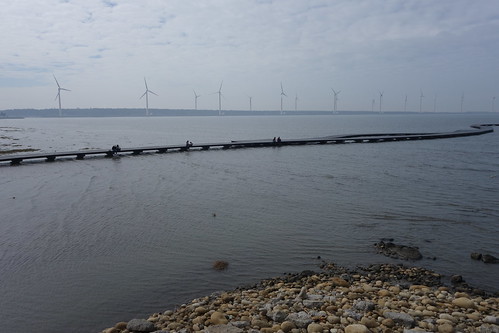
The government has made a wooden walkway in the Gaomei Wetlands. I hate it.

Construction-industrial state wins one: The new DPP mayor of Taoyuan municipality has done a 180 on the ridiculous aerotropolis project (Taipei Times)
The groups said that Cheng supporting the project made him seem “schizophrenic” toward the issue, because when he was running for mayor on the Democratic Progressive Party’s ticket, he had vowed to reconsider it.

The criticism was sparked by remarks Cheng made at a municipal meeting in Taoyuan on Wednesday, where he said he would refrain from “making any hasty modifications” to the Aerotropolis project, since the plan has already been approved and changing it would “affect land prices in the area.”

He said that the area designated for development would serve as a local commercial hub in the future, adding that the construction plans should be implemented according to the principles of democratic participation and transparency.
The Aerotropolis is the largest land expropriation in the democratic era. Cheng's turnaround, if it lasts, is likely due to central government pressure. The aerotropolis is a freeport that is a giveaway to land speculators and land developers, and with its suspension of many labor laws, is likely intended as a portal to let Chinese labor into Taiwan.

Stopping that aerotropolis is a key to the DPP's remaining a serious party in Taiwan. It can't just pretend to be the party of social justice and economic development for ordinary people. It actually has to be one. If Cheng flips on this, it will cost the DPP Taoyuan in 2018 and hurt its chances in the Presidential election.

KMT fracturing in Nantou and now Changhua: solidarity.tw posts on the delightful KMT split in the Changhua by-election, translating some news reports:
However, there are both pro-Chuo and anti-Chuo factions within the Changhua KMT. And the anti-Chuo faction had blamed the KMT’s miserable defeat in the magistrate election on his alleged ineffective campaigning, and even support for an independent candidate. Thus, there has been a strong anti-Chuo backlash, and the faction repeatedly expressed these views to party central, but it never received a response.

The KMT had originally thought it had a chance of winning the seat in a straight blue-green battle, but before candidate registration had concluded, Hung Li-na—the party’s failed candidate for Mayor of Tianchung, and a former member of the pro-Chuo faction—consolidated the support of the anti-Chuo forces and threw her hat in the ring, guaranteeing not only a split blue camp but also infighting within the pro-Chuo camp. Thus, Chuo is entering the battlefield already wounded, and it isn’t looking good for the KMT there.
The KMT splittist put out some high minded language about the party not listening to the lower ranks etc etc, you know, the "buy me off or I'll run" kinda thing. Should be fun!

Raising red flags: Latest in the flag raising saga: Taiwan apologizes for embarrassing the US.
"This is an isolated incident. We regret that it caused the US inconvenience," Taiwan's deputy foreign minister Andrew Kao told a parliamentary session Wednesday.

"We have an understanding (with the US) and we will continue to enhance communication."

De facto ambassador Shen Lyu-shun, who made the decision to raise the flag, was subject to fierce grilling in the session but defended the move.

"There is no setback in relations," Shen said.

"The US understood that we did not notify them in advance out of goodwill... so the US wouldn't be in a difficult position if China lodged a protest."
Haha. Embarrassing the US was the whole purpose of this charade. Just another one of those little irritations that are meant to keep relations with the US unsettled.

Business as usual for the KMT: Ben Goren points out that Eric Chu, the incoming KMT Chairman, has publicly supported embattled KMT city council speaker Lee, currently under suspicion of buying the speaker election. Chu appears to be following the Ma Ying-jeou pattern: yakking about being anti-corruption but always supporting individuals and candidates who give every appearance of being thoroughly corrupt.
_______________
Daily Links:
_______________________
Don't miss the comments below! And check out my blog and its sidebars for events, links to previous posts and picture posts, and scores of links to other Taiwan blogs and forums!

Tuesday, January 06, 2015

Chen Shui-bian out, Eric Chu moving in

DSC03843
Went out to Gaomei Wetlands today. Here my friend Eva flies past a long fishing net unrolled out of the back of a van in the distance.

President Chen Shui-bian, jailed on bribery charges, has been released on a one-month medical parole. This does not count against his prison time, and he will be returned to prison when his health improves. Everyone is in a tizzy....

Some are reading in the CSB release the consequences of the recent blowout election loss by the KMT, seeing it as the KMT fishing for votes in 2016. For example, see this CS Monitor piece.
“It’s a good sign Ma Ying-jeou is willing to heal the political polarization,” says Wu Chung-li, research fellow at Taipei-based institute Academia Sinica. “I think this measure might increase his popularity in the near future." But Mr. Wu doubts the gesture will aid the Nationalists in the coming presidential campaign.
It is not a sign that Ma is willing to heal the polarization; that polarization is one of the things that keeps the KMT in power. Taiwan's partisan divide will be healed over the dead body of the KMT, when the KMT no longer has much influence, and the leadership knows that.

No, I think what this release signals is the waning power of Ma Ying-jeou. Some in the KMT know what I've been saying for years, that Chen Shui-bian dead in jail is a problem for the KMT, while Chen Shui-bian alive and shooting off his mouth is a problem for the DPP, and with Ma hobbled by brutal election loss and isolated in his own party, the brains finally prevailed over the urge to arbitrarily punish. Once again, I'd like to thank Ma Ying-jeou and the KMT for putting Chen in jail in an obviously politically-motivated trial, thus keeping him out of Tsai Ing-wen's hair for the last several years and turning him into a martyr for the Taiwan cause.

Does the Chen Shui-bian parole signal a more pragmatic and less ideologically-driven KMT than the one under the hopelessly ideological and unpragmatic Ma Ying-jeou (cue my laughter at international media for ever using the word pragmatic to describe Ma)? The ascension of Eric Chu might augur that kind of possibility, if the Chen Shui-bian medical parole means anything. Dateline Taipei, the sometimes useful pro-KMT blog translated an editorial from UDN, the rabidly pro-KMT newspaper, on the kind of reforms the incoming KMT Chairman Eric will need to achieve that... key points.
....The KMT has suffered a serious defeat. Yet no one inside the KMT is demanding an accounting...

One... One of the main shortcomings of the KMT's political culture, is its preoccupation with bickering over internal resources, its inability to recruit outside talent, and cultivate new talent. Over the long term, this has led to inbreeding and cliquishness. Ambitious and creative talents are marginalized and the party is hollowed out. Between 2009 and today, KMT membership fell from 50,000 to 35,000. The speed of the fall surpassed all expectations.
Let's reiterate: the elites at the heart of the KMT ran Taiwan by controlling patronage networks that showered development cash on local factions. In return for the cash, the KMT did not permit the local factions to operate at the national level or form cross-regional networks, thus preventing any challenges to its power. But this means that there is no system for bringing local politicians into the national party level and grooming them for top leadership positions, and even if there was, it would still be difficult, because local politics in Taiwan is notoriously dirty. The talent issue can't be resolved until the KMT cleans up its relationship with the local factions. Good luck with that. Ma Ying-jeou attempted an end run around the problem by appointing lots of academics to government positions. But that did not solve the issue within the party, because that "talent" didn't enter the KMT and participate in politics, with a few exceptions like Jiang Yi-hwa, and because it still didn't institute a mechanism for connecting the national party with promising local politicians.
Two. Consider the matter of party assets. Despite repeated party asset reorganizations, the matter has yet to be put to rest. It has become an albatross around the KMT's neck. Eric Chu recently declared that the party must totally divest itself of improper assets. This is the proper approach. The party assets are held by only a few. Most party members never get even a whiff of them.
"The party assets are held by only a few." That's an interesting observation. It means that if Chu attacks the assets, he attacks the holdings of extremely powerful people. Hence, as I've already noted:
Chu promised to do something about the party assets -- well, so did Ma in 2009. In fact Ma did as early as 2006, and in 2000 none other than Honorary Chairman Pickled in Brine Lien Chan, when he ran for President in 2000, promised to do the same. In other words, making noises about getting rid of the Party's ill-gotten assets isn't something that one does when one is a reformer. It's part of the package of noises that anyone who assumes control over the KMT and aspires to higher positions must reproduce, because it is a widely supported centrist position, not because they actually mean it
The UDN complaints about assets only support my position that asset-cleaning claims are noises KMT politicians must make to sound centrist. Isn't gonna happen.
Consider the matter of party democratization. The KMT has a rigid seniority system. It is rife with pro forma ritual. Worse, this seriously affects the internal exchange of views. It makes it hard for subordinates to express views to superiors.
The classic example of this is picking Sean Lien to run in Taipei. LOL. Before you start thinking of Chu as a pragmatic reformer, remember that he is a princeling, married to the daughter of a longtime KMT central standing member and quiet KMT heavyweight. Democratizing the party might be a problem for such a person. And again, the KMT's style of rule, which separates the center from the factions on the periphery, stops democratization of the party by keeping out promising local politicians. If I were Chu, the first thing I'd do is institute mechanisms to wheel promising faction politicians up to the national level. That would attack the talent and democracy problems at the same time....
Four. Consider the matter of younger party members. The KMT has abundant resources. Yet it cannot attract young people. This is because the party's manner of operation is too old fashioned.
The party's lack of appeal to youth is not because its manner of operation is too old fashioned. So much of political participation rests on social identity. The problem for the KMT is that is has a Chinese identity and can no longer coerce/socialize the young into that identity via authoritarian control. Living in Taiwan, the young are developing a pro-Taiwan identity that ultimately is a denial of the KMT's identity. KMT rule has always depended on divide-and-rule ethnic politics to build a rickety ethnic coalition against the Hoklo majority, but as the growing sense of "Taiwanese" identity steadily subsumes old identities like Hakka and Hoklo and mainlander and aborigine, the KMT's ability to rule via ethnic division declines. Further, even where groups assert local identities, such as Hakka or Atayal or Paiwan, these identities are local and independent, and are more difficult to manipulate via traditional ethnic fear politics ("if the DPP wins the Hoklo will punish all the Hakka!").

Over the years many have suggested that the KMT become a Taiwanese party. I suspect its ultimate resting place is as a pro-corporate center-right Taiwanese party, but because -- again -- the big boys at the top are all doing business with China -- and pro-China credentials facilitate that -- the KMT can't come to rest in that spot.

Ironically, the services trade pact pointed to another problem the KMT has at the local level that has received little discussion because of the simple-minded media presentations. Recall that the Sunflowers occupied the legislature because the KMT committee head tried to do an end run around the review and the legislative vote and declare the services pact passed without a vote.

But why did he have to do that? Because the KMT's own legislators wouldn't vote for the services pact. It would have brought Chinese service firms into Taiwan and into direct competition with local service firms that support the KMT. No way are KMT legislators going to support the dissolution of their constituents' businesses. Boom! Do the math, folks -- this growing China pressure on local areas is also putting pressure on the links between the top and bottom of the KMT.

The run-up to the 2016 election is going to be a blast.

Meanwhile breath of fresh air Ko Wen-je, the new Taipei mayor, announced that he wouldn't attend weddings and funerals like most politicians do (and waste their time). He's really shaking things up -- he also announced that he is going after illegal rooftop construction, a staple of Taiwanese life. Yowza! Liking him muchly, I am. And new Mayor Cheng in Taoyuan is also moving against the construction-industrial state, as Solidarity.tw lets us know. If you are at all interested in Taiwan, you should be following Solidarity.tw.

Ok, off to play Settlers of Catan again.
_________________
Daily Links:
_______________________
Don't miss the comments below! And check out my blog and its sidebars for events, links to previous posts and picture posts, and scores of links to other Taiwan blogs and forums!

Friday, December 26, 2014

DPP, as always, 2 steps forward, 1.99 steps backwards

Stop the insanity: some loser brought three of these yapping pests -- I hesitate to dignify them with the good name of dog -- on the bike path on a crowded Saturday.

Sunflower leader Chen Wei-ting finally through in the towel (Taipei Times) and withdrew from the Miaoli legislative by-election over his molestation of women. In addition to the two cases mentioned before, apparently new ones were cropping up. Solidarity.tw has the PTT post that slew Chen's candidacy (in Taiwan young people get their news via old-fashioned bulletin boards, not newfangled PHP forums). I have said all I want to say on this.

Meanwhile, the KMT swept the local elections.   ジェームス@jmstwn (whom you should be following on Twitter) pointed out that while the national level KMT is in chaos, the local level party machines are ticking along. The Taipei Times reported:
While the Democratic Progressive Party (DPP) secured the speakers of the Greater Kaohsiung, Yilan County and Chiayi County councils, the Chinese Nationalist Party (KMT) picked up 15, with the remaining four — Hsinchu City, Lienchiang County, Pingtung County and Chiayi City — won by independent councilors.
The really hilarious one was Tainan. The DPP had a 29-16 seat advantage over the KMT, but the KMT secured the speakership 29-26, meaning that at least five councilors had switched sides. The nation cynically concluded that the five who switched had been bribed, and that many of the independents who sided with the KMT in elections across Taiwan had been bought. Note that I am not making an accusation, just reporting what others say. I certainly do not believe that the KMT could ever do a thing like that. The Speaker of the county/city councils has all sorts of agenda and other powers that enable them to direct patronage funding to key allies, but note that I would never say that the winning speakers had bribed the councilors with the expectation of getting kickbacks on lucrative construction contracts which they will award to their cronies. Because that just never happens in Taiwan.

Yes, it's deeply frustrating.

President Ma is involved in a lawsuit against Clara Chou, maker of public allegations that he took big bucks from Ting Hsin, the company in the black oil scandal. The Special Investigative Division of the Ministry of Justice is investigating the allegations. The Minister of Justice, always fair minded, said yesterday:
Minister of Justice Luo Ying-shay (羅瑩雪) yesterday accused Taiwanese media and political pundits of rampant abuse of the freedom of speech and making unsubstantiated accusations, amid widely reported allegations that President Ma Ying-jeou (馬英九) and his campaign team received an off-the-books political donation from Ting Hsin International Group (頂新集團).
So... let me get this straight. As the Minister's own agency is investigating the President over shady money allegations, the Minister holds a press conference to accuse the press of making stuff up, obviously alluding to the allegations his ministry is investigating. It's a good thing the Minister is impartial. I'm sure none of the prosecutors under him will take that as a signal.
__________________
Daily Links:
  • Ryan Scoville with excellent commentary on Japan's new/old position on the Senkakus, with stats.
  • New Taichung mayor Lin denounces the BRT as basically a scam.
  • NYTimes runs another of the ZOMG! The DPP could sour cross-strait relations! pieces we've been seeing since the KMT blowout loss in the recent elections. However, unlike most of those pieces, it provides several quotes from other-than-KMT viewpoints, and ends by noting that Washington probably should think about changing its policy to handle the new reality.
_______________________
Don't miss the comments below! And check out my blog and its sidebars for events, links to previous posts and picture posts, and scores of links to other Taiwan blogs and forums!
Thursday, December 18, 2014

Thursday stuff: our first joy from Eric Chu

Whatever you read today, don't miss this review of the disaster that is the Taoyuan Metropolis project. The project is going to be reviewed by the DPP County chief. It is a construction-industrial state giveaway, and will likely survive, slowed, but continue to move forward, eating good farmland, another example of Taiwan's most important form of alchemy, using public laws to convert private land into public projects that are private gold.

Todays news was the story of netizens busting New Taipei City mayor and incoming KMT Chairman Eric Chu for appointing the head of the KMT party investment organ to be the new legal affairs commissioner for New Taipei City. Solidarity.tw has the translation (Apple Daily in Chinese)...
The Kuomintang’s financial interests are massive and complex and pose a huge problem for the presumed future party chairman, New Taipei City Mayor Eric Chu. Having led off by saying the party needs more “Hiroki Kurodas” [low-key players who aren’t stars but work hard and contribute a lot to the team] he has quietly brought at least one such figure into his city Cabinet to help him out.

Among the Cabinet members announced by the city days ago was new Legal Affairs Department Commissioner Huang Yi-teng 黃怡騰, who has previously served as chairman of the board of the “Central Investment Company” 中央投資公司 [no official website or English name], the biggest KMT-run enterprise. New Taipei’s official announcement omitted this sensitive information, which was later exposed on Facebook by famous political commentator Chung Nien-huang 鍾年晃.

While attending an event for the publication of a book of inspirational true stories of New Taipei schoolchildren this morning, Chu stated that he at first didn’t know this about Huang, and only knew Huang had been a city government consultant for four years, a member of the Petitions and Appeals and the Legal Affairs committees, and former chief secretary of the Consumers’ Foundation. Chu explained that he has since asked about this issue and found out Huang’s law firm had been hired by the KMT’s asset holding company; Huang served in this post as a representative of his firm; and the management of party assets was not his chief work responsibility.
Chu didn't know that the guy he hired was the former Chairman of the Board of the KMT's investment organ? As S.tw said, "journalists are incredulous." Just an example of the heightened scrutiny that Chu is going to face every day, with the added joy of an army of netizens examining every move. Everyone I know was having a good laugh about his assertion that clean government is the foundation of the KMT -- I guess foundation in the sense of something you build your house on, and never see again.

Solidarity.tw observes of Eric Chu's "reformist" move toward a parliamentary system. Read it all, but note:
Though Chu says amendments “should not involve partisan biases and personal calculation,” it’s easy to see that this amendment is in the immediate interests of both him and all the legislators who are pushing it. It’s silly to ask legislators if they’d support a parliamentary system. Of course they would! Then they could be the clear foundation of political power and be able to make and bring down executives by themselves. And Eric Chu? This week has shown that the legislators are his power base in the KMT, and surely he’d love everyone to think he’s a creative reformer without having to first survive life-and-death battles with entrenched interests in the KMT over party assets, compradors, and so on.
Frozen Garlic figures out how a parties could game a mixed member system to produce majorities.
However, what if the KMT or DPP cynically set out to create overhang seats? Could they crash the system? Let’s go back to the first MMP example, where Party A won 76 district seats and only 4 list seats. What if Party A decided that 4 list seats wasn’t enough for their 40% list votes? What they could do is to form a fake party called Party A*. All of the district candidates would run under the Party A* label, and all of the list candidates would run under the Party A label. Now let’s look at the table...:
As Froze notes, this system already exists in embryo form with all the gangster and far right parties allied to the KMT. It would just require that the KMT support them. The Taiwan propensity for gaming any system of rules ("if it has rules, it must be gamed") which is responsible for so much of the bureaucratization and inefficiency of Taiwanese institutional governance, guarantees that if such a thing is possible, someone, most likely the KMT because it has the resources, will trash the system.

In some ways more important than the political moves was the news that the legislature had put off the capital gains taxes for a tiny proportion of traders until 2018. Note the numbers:
Minister of Finance Chang Sheng-ford (張盛和) and Financial Supervisory Commission Chairman William Tseng (曾銘宗) agreed on a three-year moratorium after some bargaining to save what Chang called “the last breath for fair taxation.”

The “active trader” clause is part of the income tax law under which individual investors who sell more than NT$1 billion of local shares a year have to pay either a 15 percent tax on stock gains or an extra 0.1 percent tax on transactions in excess of the threshold.

“Let time judge if the clause is really in need of revision... It is better to leave it intact for the time being,” Chang said.

According to the ministry, only 1,243 individual players would meet the threshold and 47 percent currently pay income taxes of less than NT$25,000 a year, accounting for a tiny 5 percent of gains.
Yeah, read that last paragraph again. Apparently nearly half the individuals who trade a billion NT worth of stock each year, pay less than $25,000 in income taxes. Why is there so much income inequality in Taiwan? Because the economy and tax system are arranged that way. And no one on top wants to change them. This is the challenge for the DPP -- it can't just play the social justice party every four years. It actually has to do something meaningful on this.
________________
Daily Links:
_______________________
Don't miss the comments below! And check out my blog and its sidebars for events, links to previous posts and picture posts, and scores of links to other Taiwan blogs and forums!