Showing posts with label China. Show all posts

Tuesday, June 13, 2017

....and another one bites the dust: Panama

Because sometimes one spout just isn't enough...

The news washed over Taiwan in the morning: we're losing Panama. Oh noes! Now we only have 20 unimportant countries recognizing the ROC, down all the way from 21. Reports the BBC (from their Latin American office, so slightly more balanced than their E Asian reporters):
China regards Taiwan as a breakaway province. A few countries maintain ties with Taipei instead of Beijing, and Panama is the latest to switch sides.

In December last year, the African island nation of Sao Tome and Principe made a similar move. Now only 20 countries have diplomatic relations with Taiwan.

In recent years China has intensified its economic investment into the Central American country - home of the economically vital Panama Canal.
The media will be delighted, no doubt, since it can report ZOMG CHINA IS CLOSING IN and TENSIONZ and TSAI IZ DOOOMMMMEEEDDD and lay it on real thick.

....my favorite of today's many comments was this Twitter comment from Financial Times' Ben Bland:
Panama just dropped Taiwan for China. @FT warned in January that Beijing was eyeing Taiwan's Central American allies
"FT warned in Jan?" Then they were months late (of course). Panama has been rumored to be on the brink for a year, as this AFP piece in the Hong Kong FP from June of last year notes (one of many). This switch was probably inevitable, the world being what it is.

My man Donovan speculated that the switch was about China dangling the prospect of making Panama irrelevant via the fantasy of building a canal through Nicaragua. Reports indicate that China is eyeing investment in the energy and port sectors. China is the third largest user of the canal, according to several reports.

MIA? Uncle Sam. Thought maybe the Yankee Menace might be interested in China expanding its power and influence in Panama, but the current Administration appears to be everything Putin thought it would be.

On Facebook, someone reiterated the Taiwanese position: "We're now 1/21 steps closer to independence". Outsiders see diplomatic links as important, but Taiwan, as the News Lens piece observes, depends on its rich informal and unofficial links to get things done. China has seldom threatened those. It's very unlikely that China will attempt to swallow all of Taiwan's allies, because that would leave Taiwan independent. There will be domestic criticism from the opposition party, and some small psychological effect. Since there is nothing Tsai could have done, and everyone knows it, life will go on as usual. As the China Post notes, many observe that Taiwan can get along without any "allies" so long as it has support of powerful nations.

More importantly, it is not Taiwan that is suffering, but the ROC. One of the props of its existence are the "diplomatic allies". Today it has become that much smaller...

Ironically, today in the Diplomat one of those silly articles came out arguing that Beijing needs to change its path in order to win Taiwanese hearts and minds. Then many complained that such actions as grabbing Panama don't win hearts and minds in Taiwan. The campaign of "niceness" isn't aimed at Taiwan, folks. It is aimed at domestic audiences in China, who do not want war over Taiwan. Beijing needs to be able to convince them it did everything in its power to get Taiwan peacefully. There is only one way Beijing could win hearts and minds here, and that is to give up its claim to Taiwan. Taiwan scolded China for oppressing and threatening it...

DON'T MISS: But if you wish to go placidly amid all the predictable squalling that is occupying the media, by all means feast your eyes on this wonderful collection of 55 black and white images of Taiwan taken in 1896.

ADDED: Ben Bland correctly observes in comments below...
On the question of Taiwan's informal bilateral relationships, China constantly tries to stymie and stifle them as well. Foreign officials receive stern protests from the local Chinese embassy every time they meet representatives from the Taiwan economic and trade offices in their countries. Many will not meet the Taiwanese officials in their offices, only in hotels etc. And the Chinese embassies also threaten commercial entities that work with the Taiwanese foreign ministry officials in too open a fashion. Even supposedly straightforward tasks like getting landing slots for Taiwanese airlines in third countries can be painfully difficult because of Chinese interference.
What I meant really was that so far while China has harassed Taiwan overseas, it hasn't attempted to shut down unofficial relations outright on an us or them basis like it has formal relations.
_______________________
Don't miss the comments below! And check out my blog and its sidebars for events, links to previous posts and picture posts, and scores of links to other Taiwan blogs and forums!
Sunday, May 21, 2017

With Reuters on the job, who needs Xinhua?

Just a lovely day in the hills around Taichung

Jenna ripped Reuters this week for publishing another hallucinogenic article on Taiwan. Jenna nailed two common problems...
Taiwan President Tsai Ing-wen is signaling she needs more give and take from China to rein in hardliners on an island China considers its own, officials say, but Beijing is unlikely to budge months before its five-yearly Communist Party Congress.

"Hardliners"?

Wanting your country which is already independent to continue to be that way without the threat of war is not a hard-line stance. Not that many of us want a formal declaration of independence right now (well, I do, but I know I can't have it and I've made my peace with that). We know it's impossible for the time being, but are working toward it happening, peacefully, someday. How does this equate to being a 'hardliner'?
It's amazing, as I often note, that you can lock up dissidents, implement massive national surveillance, carry out campaigns of terror and murder in occupied areas, threaten the nations around you with war and expand into their territories, but if you oppose that and want to live in a peaceful democracy... you're a hardliner. The real hardliners live in Beijing and threaten to plunge the region into war.

Jenna also puts her finger on another problem: the constant interrogation of and deconstruction of pro-Taiwan, pro-democracy language and positions, while nothing similar occurs with Chinese claims:
A spokesman for China's Taiwan Affairs Office said last week everything wrong with the current relations could be blamed on the DPP and its refusal to accept "one China".

"No matter what new flowery language the DPP comes up with, it can't shift its responsibility for this reality," spokesman An Fengshan said.


No attempt to critique this? None? Not even a few words to deconstruct what An Fengshan is saying? Tearing apart pro-Taiwan semtiment but silently accepting Chinese annexationism?
There's more to say, and Jenna says it (Go thou and read!) but I'd like to point out one additional thing: Reuters' "interpretation" of Tsai's posture is very close to a flat out lie -- indeed, the only thing that saves it from becoming a lie is that it is an interpretation. What did they say?
Taiwan President Tsai Ing-wen is signaling she needs more give and take from China to rein in hardliners on an island China considers its own, officials say, but Beijing is unlikely to budge months before its five-yearly Communist Party Congress.

As she marks one year in office on Saturday, Tsai, leader of the ruling independence-leaning Democratic Progressive Party (DPP), is facing a surge in anti-China[sic, should be pro-Taiwan] sentiment amid pressure from Beijing on the proudly democratic island to bow to its "one China" policy.

It is becoming more difficult to hold the line against independence-minded constituents and even tougher for Tsai to offer concessions to Beijing, one senior government official told Reuters on the condition of anonymity.
This is simply rank nonsense, from an anonymous source, of course. We will pass another year, and another, and the "hardliners" (pro-Taiwan types) will be fine. The idea that Tsai is bargaining with Beijing to "hold the line" against "hardline" independence types is pure fantasy. They are not a majority either in Taiwan or even within the DPP. Rather, as the AP article correctly notes, Tsai is focusing on domestic reforms, where she is receiving immense pressure.
Yet, the island's first female president seems focused on policy initiatives at home as well as maintaining robust relations with the United States, Taiwan's most important source of arms and political support.
Compare Reuters' nutcase description of Tsai's position with this great piece at Ketagalen Media on Tsai's difficult balancing act. (Note also that the AP piece forthrightly assigns to Beijing the blame for cutting off relations). Brookings also has a one-year review. The deeper reviews all missed Tsai begging for help with hardliners... how could have happened?

As for the "Tsai wants Beijing to help her with hardliners" interpretation of Reuters... lets see. I think everyone else reporting on this missed it...
  • Is that in the government media's report of Tsai's speech (FocusTw)? Nope. That's domestic focus. 
  • In the domestic private English language media (Taiwan News). Nope, again, the focus is on domestic issues. 
  • Is it in the longer and very good AP report on the speech? Nope -- in fact that clearly states "The only serious political pressure Tsai faces comes from the opposition Nationalist Party..." 
  • How about Bloomberg? Surely they would have noticed Tsai begging Beijing for help. Nope, lots of data, but apparently they missed Tsai begging Beijing for help with the hardliners pressuring her from below. 
  • Over at the European Council on Foreign Relations, they somehow missed Tsai begging Xi for help.
  • Taipei Times also fails to discover that Tsai is frantically signaling Xi
Wow... so brilliant of Reuters to notice what everyone else missed, eh? Not!

If you are using Reuters as an information source on Taiwan, you are being misled. Badly.
_______________________
Don't miss the comments below! And check out my blog and its sidebars for events, links to previous posts and picture posts, and scores of links to other Taiwan blogs and forums!

Monday, May 08, 2017

Everyone panic: Trump Administration becomes a normal US Presidential Administration

Searching for a way out....

Yeah. This has all happened before. Remember when Bush Lite declared...
President Bush, offering a more explicit commitment to Taiwan than his recent predecessors, said in a television interview broadcast today that if the island came under attack from China, he would order ''whatever it took'' to help Taiwan defend itself.
We all know what happened. By Bush's second term he was trying to suppress Taiwan on behalf of China, to accomplish some transient thing or other. Because traditional US policy on China is to make permanent concessions to address transient issues. Yay!

We begin this way with every Republican President.

So it is hardly surprising, in retrospect, that the arms deal for Taiwan, originally slated for an April announcement, is now waiting on the launch pad...
The relatively small sale to Taiwan — worth just more than $1 billion — was set to go in late 2016, but the Obama administration never pulled the trigger. After some early pro-Taiwan signals from President Trump, including a phone call with its president, most Taiwan watchers expected the new administration to move the package forward quickly. Now, administration and congressional officials say, the deal is stalled due to a lack of administration consensus and the fear that angering Beijing could complicate Trump’s top Asia priority: solving the North Korean crisis.
Once again, a classic of management of Washington by Beijing: fear of Beijing's anger makes Washington shrink from necessary action. Always, Washington must give up its freedom of action, lest Beijing react. *sigh*

It wouldn't be surprising to me to learn that China has fomented this trouble with N Korea because it knows it can get concessions from Washington for doing nothing while giving the appearance of doing something. It's pretty obvious to many of us watching that Beijing isn't going to help the US, partly because it doesn't want to, partly because it can't, and partly because Washington is dangling the possibility of Ultimate Stupidity in front of Beijing -- War with N Korea. That would complete the trifecta of Chinese victories in Iraq and Afghanistan.

“What is it? Is the king dead? Has an enemy landed in Narnia? Is it a flood? Or dragons?”

Peter Enav, ever pessimistic, asks: Can Taiwan Survive Donald Trump? To wit:
Today, however, ties between Washington and Taipei seem to be at their lowest ebb since 2006 or 2007. That was when President George W. Bush agreed to act as a Chinese sub-contractor in pushing back against Chen Shui-bian’s pro-independence policies. It’s not so much that President Trump has anything against Tsai personally; it’s more that he is so entranced by the authoritarian leadership of Chinese President Xi Jinping, so much so that he now appears to see Tsai as a dispensable nuisance on the road to a far bigger prize — the strategic neutralization of a nuclear-armed North Korea, which threatens the United States.

Unfortunately for Tsai and for Taiwan as a whole, it has taken her far too much time to pick up on this — if indeed she even has. The clearest indication of this came in late April when she told an interviewer from the Reuters news agency that she was, in theory, open to another telephone conversation with Trump. In doing so she irresponsibly opened herself up to a Trumpian rejection, which predictably came — in another Reuters interview — less than 48 hours later.
Tsai did not "open herself to a Trumpian rejection." There was nothing else she could say, as I've noted before. The problem was that she answered the question in good faith, when the whole thing was a set up by Reuters to create just this situation. Someone on her media team should have nixed that question as soon as it was asked.

The short answer to Enav's question is yes, of course. We survived Nixon's sell out, the switch in recognition, Clinton, Bush's about-face and rejection of needed weapons sales, and Obama's neglect and weakness. We will survive Trump as well.

The reasons are simple, and Enav in his call for closer relations with Japan puts his finger right on them: Taiwan is part of a web of issues, which includes Japan. Trump cannot give up Taiwan without also selling out Japan (and also Phils). Everyone who does geostrategy and of course, the DC foreign policy establishment, knows that. That is why Enav also recommends Tsai cultivate them. She should also be pursuing enhanced relations with key congressional leaders on foreign affairs.

So here we are, Trump is doing what Obama and Bush and Clinton did before him: sending people to nibble around the edges for Taiwan's "international space" while delaying and denying arms packages and other needed real and symbolic items. This is all very normal for a US president. It is disappointing because many people expected a bit more from a Republican Administration, including this writer.

Indeed, if it were not Trump, it would be ho-hum. It is only interesting because of the terrifying prospect of Jared Kushner's influence on foreign policy -- the Washington Post reported on his latest antics: hawking visas to Chinese investors, banana-republic style -- and because of Trump's bizarre failure to staff key positions in foreign policy as well as his apparent desire to cash in on his position by cozying up to China.

As Enav notes, another issue is Trump's supposedly unusual embrace of authoritarian leaders. This is also normal in an American president, see Reagan and Iraq, Bush/Obama and the Saudis, etc. The ominous thing for many observers is that current Sec of State Tillerson seems to have given up on human rights as an American value. Traditionally that was a source of support for Taiwan...

For the nonce, we will simply have to grin and bear it. Those weapons will find their way here eventually. The geostrategic situation isn't going to shift tectonically in the next couple of years.

For the long term? Well, we are heading towards war out here. That will wreck everyone's plans, and render moot pieces like this.

And on our current course, nothing will survive Trump's climate policies.

So no, Taiwan won't survive Trump.
_________________
Daily Links
____________
Don't miss the comments below! And check out my blog and its sidebars for events, links to previous posts and picture posts, and scores of links to other Taiwan blogs and forums!
Tuesday, April 25, 2017

MEDIAFAIL: Taiwanese are not "ethnic Chinese"

Namaxia_63
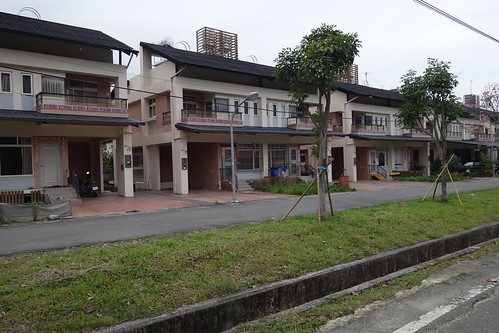
Housing for aboriginal people.

One of the ways the foreign media serves Beijing is by recapitulating its propaganda frameworks -- in this case, that the Taiwanese are "Chinese" and there is no such thing as "Taiwanese". This claim is a standard claim of those who would annex Taiwan to China. Indeed, China's claim on Arunachal Pradesh in India is supported by official claims that the area's Tibetan people are "Chinese" and thus the region is "China".

Local media worker Ralph Jennings is one of the chief purveyors of this nonsense. See for example, this transcendentally stupid article on Chinese tourists,
Tourists from China eagerly report that strangers politely stop to give directions and shopkeepers respond professionally to inquiries. This treatment compares to China where an annoying number of strangers are surly or vague when interrupted by a question. The level of courtesy found in Taiwan fosters an appreciation of the location itself as well as a reminder that ethnic Chinese on either side easily have it in them to be polite.
.... "ethnic Chinese on either side" is a pro-China frame, reductive and wrong. There are many other examples: here, here, here, and here.

Reuters seems to have picked this up as well. In an article on how Taiwan's economic policies are its own worst enemy, it claims....
The capital of Taipei shows what an advanced ethnically Chinese economy can achieve under a democracy: a comfortable, low-key lifestyle.
This may come as a shock to the media, but Taiwan does not exist so the media can make smug contrasts between democracy in "ethnic Chinese" cultures. We have democracy here in Taiwan precisely because locals resisted the Chinese culture brought over by the KMT, with its authoritarianism and authority-based values, fake family values, empty democratic values, Confucianism bereft of humanity, and violent suppression of dissent.

The basis of their resistance was, of course, Taiwaneseness.

This "culture iceberg" is a common image, with many variations. But note that when people talk about "culture" they are usually referring to the parts that are easy to see: language, food, holidays, dress (though even in Taiwan they are different). The parts that are below are difficult for the untrained to see or think about and so are never referenced in discussions like those in the media. Wouldn't it be awesome if the media consulted anthropologists the way they consult financiers?

For Taiwan, for example, one might add...
  • the experience of Dutch, Qing, Japanese, and KMT colonization, the experience of being settlers, being a settler region, and interactions with and resistance to the distant, different state
  • the existence of the frontier and the Other in the interactions between aboriginal peoples and the incoming Hoklo and Hakka settlers, and its shaping of culture, building forms, and landscapes in Taiwan, and the continued existence of aborigines as distinct Other in the present day
  • the ideal of democracy and its application in resistance to Japan and the KMT. Remember the first elections were held under the Japanese.
  • democratization and the lived experience of democracy
  • steady and rapid long-term capitalist economic growth and relative affluence
  • Pervasive Japanese influences in food, hygiene, expectations of social progress and order, and so forth
  • Pervasive US influence via increasing globalization and close economic, social, political, and military ties.
  • the experience of China's desire to annex Taiwan and suppress local identity via both KMT colonization and PRC aggression
...that is only a small sample of the vastness of the differences in Taiwan experience. I haven't even addressed defining "ethnic Chinese" since the constructs we generally use to discuss "Chineseness" are themselves the result of Beijing's propaganda as the Imperial Capital struggles to suppress local cultures and languages across its vast empire via the creation of a common "culture".

Hence, the categories ordinary people use to think about and define "what's Chinese?" are usually categories constructed by expansionist politicians in Beijing. While it might be entertaining to imagine international media workers struggling to define "ethnic Chinese", it would not be very enlightening (it is never defined in the text, of course).

The short form of this is: Taiwanese are "ethnic Chinese" to the extent that Americans are "ethnic United Kingdomers".


But another way to think about it is provided by Geert Hofstede's Cultural Dimensions, widely used in business and other research as a shorthand for describing cultural patterns. Hofstede has surveyed the world's nations to develop a crude way to compare them on several dimensions of deeper behavioral attitudes. Anthropologists laugh, but it is a useful shorthand for twenty years of fieldwork and does enable comparisons, since the surveys are the same for all people surveyed.

I compared China and Taiwan using his tool. Note the blindingly obvious differences in everything except "long term orientation" (definitions are onsite).

You want to claim Taiwanese are "ethnic Chinese?" Evidence please. Otherwise, stop saying what isn't true.

UPDATE: An anthropologist observed to me:
The idea that "Taiwan proves Chinese people can be X" (polite/democratic/etc.) is just racist. The use of the term "ethnic" in there just serves to hide the implicit racism.
_______________________
Don't miss the comments below! And check out my blog and its sidebars for events, links to previous posts and picture posts, and scores of links to other Taiwan blogs and forums!
Sunday, April 23, 2017

What Cross Strait Institutional Frameworks?


Jerome Cohen and Chen Yu-jie are online at ChinaFile with a widely circulated piece on the implications of the Lee Ming-che detention in China for cross-strait relations....
Although it would be wise as well as humane for Beijing to release Lee Ming-che now, his case may have just begun. Yet its lessons are already worth considering. It vividly illustrates Beijing’s continuing determination to suspend the operation of important cross-strait agreements in the current political circumstances. It also exposes not only how little respect the Chinese Government has for even the minimal human rights protections enshrined in the Judicial Assistance Agreement but also the need to provide effective means for their enforcement. Beijing has met its agenda for the short term, which is to signal non-cooperation with Tsai Ing-wen’s government. The long-term consequences of destroying the reliability and legitimacy of cross-strait institutions, however, are not in its interest. If cross-strait agreements can be brushed aside by Beijing when considered politically inconvenient, they will no longer be trusted in Taiwan. What will then be left in Beijing’s toolkit for cross-strait cooperation and stability?
This analysis is legalistic, imagining that cross-strait "stability" resides in agreements. The truth is that "cross strait institutions" are a fantasy of this type of analysis.

Whatever your theory of why Lee was abducted, this is hardly the first time that China has failed to honor cross-strait understandings, frameworks, and agreements. That is in fact China's normal practice. Anyone remember the April deportations last year, of scam suspects from Kenya to Malaysia? Taipei Times:
Officers immediately contacted their Malaysian counterparts and were told that all documents and evidence were in the hands of Chinese authorities, Tuan said, adding that when they contacted Chinese authorities, the Chinese Ministry of Public Security turned down the request.

Tuan said that according to an agreement reached by Taiwan and China in 2011, when Taiwanese or Chinese are deported for crimes committed in a third country, any evidence is to be sent with the suspects on deportation.
....but no evidence was sent. Remember when China simply threw a new air route over the Taiwan Strait even though negotiations on the issue hadn't been concluded?

It would be redundant to list the piles of agreements with many nations that Beijing has reneged on....

This tactic of honoring agreements when it feels like it is normal for Beijing. There is nothing to see here, move along folks. Arbitrary withholding or granting of privileges is one of the ways an authoritarian state retains its grip on the flow of events, be they individual behaviors in its own society, or the global political sphere. In this case not only does Beijing get to demonstrate who holds the whip hand, but it also signals that Taiwan activists take risks when they cross into China (and Hong Kong). That will help chill activist links.
No matter what the outcome, it has seriously worsened cross-strait relations and China’s chances for attaining “soft power.”
There was never any chance of "attaining 'soft power'". This whole reading of events is based on a framework of normal establishment politics that simply does not exist in Beijing.
_______________________
Don't miss the comments below! And check out my blog and its sidebars for events, links to previous posts and picture posts, and scores of links to other Taiwan blogs and forums!
Saturday, March 25, 2017

Nelson Report: Rumors of a 4th "Communique"

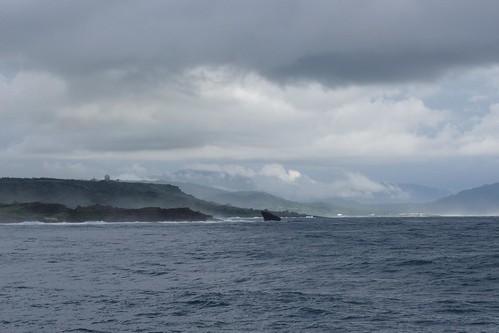
The coast off Kenting.

Rumors of the 4th Communique driven by Henry Kissinger under which the US sells out Taiwan are circulating in the local media... last week Randall Schriver, longtime Taiwan expert, said it was "unlikely". But the government put in a letter in the NYTimes pleading for the US not to sell out Taiwan for an agreement with China on N Korea. Some sort of agreement of this nature is always mooted whenever there is trouble with N Korea. As an expert explained to me, as Nork's nuke program develops the ability to put nukes on US western seaboard cities, pressure for a deal with China on N Korea will grow, and Taiwan is an obvious bargaining chip. What's amazing to me is that even after all these many years of dealing with China and N Korea, anyone can imagine that either party will keep a bargain....

+++++++++++++
US-CHINA/TRADE/TAIWAN...there's a rumor we're trying to track down that long-simmering dissatisfaction with the increasingly unwieldy US-China "S and ED" annual meetings (too many bureaucratic players leading to too much blah blah blah and consequently too little "deliverables") so the Trump folks may cancel the whole thing OR...this strikes us as the more plausible version...separate the "S" for security and "E" for economic into two more focused confabs.

Presumably a decision on this will be made in time for (and thus perhaps announced at) the early April Trump/Xi Jinping summit here in DC. No doubt you've also heard rumors that there will be a "4th Communique" resulting from this...and we frankly have to say we think there's a better chance of passing Trump/Ryan Care tomorrow morning...but perhaps you know better? For sure there are folks on Taiwan taking the rumor seriously:

Gov't concerned over reports US, China may sign 4th communique
The Taiwanese foreign minister says the government is worried the US and China will issue another communique that voices American support for the One China Principle. The Chinese language publication Liberty Times earlier carried a report that said former Secretary of State Kissinger was pushing for another communique that said that the US believed there is but one China and Taiwan is a part of China. This would overrule the last joint communique issued by the US and China, which said that while the US would not support either an independent Taiwan or "Two Chinas." Some reports have identified the upcoming visit to the US by Chinese President Xi Jinping as an occasion for the signing of such a document, possibly also limiting arms sales to Taiwan. Speaking to the legislature, Foreign Minister David Lee said, "We told them (the U.S.) that we don't want to see (the possible signing of a fourth communique) happen," and that the government has said that it hoped the US would stand by the Taiwan Relations Act and Six Assurances. He also mentioned that the Americans had spoken to their views of Taiwan, but FM Lee declined to specify what that meant.

Source: http://www.chinapost.com.tw/taiwan/intl-community/2017/03/23/494116/Govt-concerned.htm

Your Editor : never forget that one of Kissinger's hallmarks is self-aggrandizement, and while god knows the man has carved a legitimate role for himself in history, if he's pushing for Trump to completely trash the Shanghai Communique's real meaning (that is, the US takes no policy position on whether Taiwan is part of China) especially given what's behind the Trump/Tsai phone call...the strong support for Taiwan within his Administration and on Capitol Hill, not to mention the coming US arms sale package (?)...then we have to question the sanity of all involved.

But that leads us to a totally serious concern: Chinese officials have taken to declaring with a straight face that President Tsai is "moving toward declaring independence", and that proof of this is her "failure to endorse the '1992' consensus in language being demanded by Pres. Xi."

This risky, factually challenged demand thus puts Beijing in the position of deliberately risking the "status quo", since literally everything Tsai has said and done since declaring for the presidency a couple of years ago has been exquisitely calculated not to upset the existing Cross Strait status quo, despite pressures from her party's more extreme Pan Greens.

Worse, perhaps, to put "teeth" in this demand, political players in Beijing have taken to threatening a "unification law"...presumably to create the "lawful" threat of the use of force to "enforce the law"...as has been seen via China's armed Coast Guard in various maritime disputes with the neighbors.

If Kissinger wants to push a 4th Communique he might want to turn his talents to avoiding a deliberately set "crisis"...by Beijing?
_______________________
Don't miss the comments below! And check out my blog and its sidebars for events, links to previous posts and picture posts, and scores of links to other Taiwan blogs and forums!

Friday, March 17, 2017

America and Taiwan in the News

Only a  few months from my next Lanyu trip...

Another long analysis saying Donald Trump is No Friend of Taiwan of the Trump calls and "everything is negotiable" comments from Trump, this one from longtime Taiwan expert Shelly Rigger. She reviews the history of The Call, and then the Trump Administration's appointments, and discusses Trump's trolling...
In less than 200 words, Trump managed to shake the foundations of U.S.-China relations and cast Taiwan’s future into doubt. Even for a devotee of short-form writing like master-tweeter Donald Trump, this was an achievement.

The one China policy is a U.S. policy statement first articulated in the 1970s that has allowed the U.S. to pursue economic and political ties with Beijing while maintaining robust unofficial relations with Taipei. Every administration since Richard Nixon’s has affirmed the policy. Suggesting it might be open to revision cast the very basis – even the possibility – of economic and diplomatic interactions between the U.S. and China into serious doubt.
It might at some point pay analysts to consider that the "one China" policy from the 1970s and US Taiwan policy dating formally from Apr 28, 1952, are not the same thing, even though they refer to some of the same entities.

Note the words of Trump that Rigger gives in full:
I fully understand the One-China policy. But I don’t know why we have to be bound by a One-China policy unless we make a deal with China having to do with other things, including trade. I mean, look, we’re being hurt very badly by China with devaluation, with taxing us heavy at the borders when we don’t tax them, with building a massive fortress in the middle of the South China Sea, which they shouldn’t be doing. And, frankly, they’re not helping us at all with North Korea. You have North Korea, you have nuclear weapons, and China could solve that problem. And they’re not helping us at all.

So, I don’t want China dictating to me. And this was a call put into me. I didn’t make the call. And it was a call, very short call, saying, “Congratulations, sir, on the victory.” It was a very nice call. Short. And why should some other nation be able to say, I can’t take a call? I think it would have been very disrespectful, to be honest with you, not taking it.
Trump is not threatening Taiwan's status in US policy. He is threatening China's status. Taiwan's status is never mentioned and is obviously not the focus of Trump's thoughts -- China is. Let's imagine what "not being bound" by the one China policy could mean. Because the US could switch to a two-China policy (ROC and PRC are both China), a no-China policy (neither PRC nor ROC is China, we don't recognize either), switch recognition to the ROC (wouldn't the KMT swoon over that) or something else. In fact at some point some of these policies existed in the past, and under all of them, the US worked to preserve Taiwan's status. Even when the US recognized the ROC as China it never recognized Taiwan as part of the ROC.

Under current understandings the US could delete the one China policy under which we recognize the PRC as China, without affecting Taiwan's status, which exists because of a different policy. But no major change was ever in play, as many of us wrote at the time.

In any case, as I argued before, it was all meaningless trolling related to Trump's trademarks and so on. Nobody actually ever formally proposed seriously revising US China policy.

As I noted in January, many people who derive wealth and status from the current US position on China were quite unsettled by The Call, since it signaled them that things might change, and threatened their wealth and status. It is amusing that at the moment it is ok to criticize Trump's team for not knowing anything about China, while remaining silent on the deep links so many China commentators have with Beijing's status and money flows. The limits of the discourse, ya know....

Nevertheless, Rigger is often insightful and this comment is dead on and has had me worried as well
Taiwan’s leaders should also worry about the Trump administration’s overall approach to foreign policy – an approach that seems to abandon America’s long-standing commitment to democracy around the world. Trump’s speeches rarely mention democracy or human rights, and his proposed budget slashes funding for all sorts of values-oriented programs. For Taiwan, this is a very bad sign. As China’s political, military, and economic power increase, making a utilitarian argument as to why the U.S. should support Taiwan gets harder, leaving democracy as Taiwan’s signal virtue. When Navarro used the phrase in his July 2016 article, describing Taiwan as a “beacon of democracy” was a tired cliché. Today, it feels like an important moral statement.
Further down she says abandoning the TPP was a bad idea, but I don't see abandoning the TPP as a "devastating blow" since the TPP was a corporate giveaway that would have put Taiwan permanently under the sway of US corporate power, immiserating its people and further harming its economy and environment. Trump did all us who live on Taiwan a favor, even if you don't like the geopolitics of that decision.

Rigger notes that there will be an arms sale in April (more on that in a moment) and that the Administration might well upgrade official visits. She then concludes:
In sum, after a promising start and with the eager participation of many strong supporters of Taiwan in the transition, the Trump White House has managed to comprehensively botch its Taiwan policy, leaving Taiwan more vulnerable than ever to Beijing’s increasing pressure.
LOL. We're barely 90 days in, and she's claiming that Taiwan policy is botched. Umm.... no. It's way too early. Note that Rigger provides no concrete examples of botched policy and its consequences (quick, point some out). In fact Taiwan's status got a tiny upgrade, with US marines to be posted to the new AIT office.

Chinese pressure on Taiwan existed prior to Trump's call, and will go on in the future, as the recent decision to block cosmetic imports from Taiwan over the 1992C shows. A trial balloon? A local official's overreach? New policy? Only time will tell.

Contrast Rigger's claims with the reality of the Obama team's Taiwan policy, which got high marks from the Establishment commentariat. Yes -- those same people who are worried that Trump might sell out Taiwan said nothing when Obama actually did so. The Obama Administration blocked an arms deal for Taiwan out of fear of China (Rigger does not mention the arms sale she lauds as a "bright spot" was blocked by Obama, one wonders what the commentariat would have said if Obama had dumped $1 billion in arms on Taiwan -- would have excused it if Obama did it, will hate it when Trump does). On Twitter Rupert Hammond-Chambers said it was probably because the US needed China's cooperation on the climate deal (as if either Beijing or the Trump Administration was going to adhere to that). Indeed, recall that the Bush Administration also downgraded its support for Taipei for China's cooperation in some transient political thing or other. Bonnie Glaser remarked:
But it is also possible that the Obama administration did not want to approve an arms sale in its final days because it didn't want to offend China and undermine the President's legacy with Beijing. 
For Obama's legacy Taiwan can't get arms it desperately needs (Trump at least got trademarks!). But of course the really worrisome thing is that Trump might sell out Taiwan.

Finally, KMT legislator Jason Hsu wrote up his trip to the US to visit the Trump Administration. It is interesting reading, his takeaways...
Despite all this, I came away with clear and crucial promises regarding stability in the Taiwan Strait: the United States will continue to uphold her moral and legal responsibility toward Taiwan. She will continue to assist in our self-defense. In terms of upholding the Taiwan Relations Act and the Six Assurances, American good faith will endure.

President Trump, despite immense pressure from China, will still adhere to the One China Policy, the bedrock of strait relations. But China will also continue to demand adherence to the One China Principle. The danger then, lies in how the still-adapting Trump and an uncompromising China interpret these two differing frameworks, it has the potential to throw off the delicate balance of power in the Straits.

.....

Taiwan and the United States share more than thirty years of stalwart friendship. The Congressional Taiwan Caucus remains the second largest caucus in the United States Congress with more than 120 members. Despite the fragility of international relations, we remain unwavering in this partnership; we still believe in America’s good intent. Now is a time of uncertainty but it is also the time for opportunity and recognition. For years Taiwan has been America’s most loyal ally in the region, we are a young but flourishing democracy, an open and robust society with liberal values that mirror the U.S. We share the same resolve in promoting democratic ideals while ensuring peace, in fostering security while defending freedom, and in furthering trade and prosperity for all.
Kudos to Hsu for not only understanding the difference between the one China policy and the one China principle, but also for not conflating them in an attempt to mislead the reader as KMTers so often do.
_______________________
Don't miss the comments below! And check out my blog and its sidebars for events, links to previous posts and picture posts, and scores of links to other Taiwan blogs and forums!

Saturday, February 25, 2017

Econ crystal ball looks... cloudy

What's around the bend for the US economy? Absolutely nothing good.

Over at CNBC Benjamin Carlson argues that the loser in a China-US trade war will be Taiwan. Carlson quotes Blue academic Steve Tsang, as well as Gerrit van der Wees and J Michael Cole from the pro-Taiwan side, observing...
A trade war between the world's top two economies would "hurt Taiwan since so much of the Taiwan's tech-oriented consumer industries are tied to those in China, as part of the global value chain," said Steve Tsang, director of the SOAS China Institute, University of London.

Taiwan can little afford such a blow, as its economy is in the midst of a difficult transition. Growth rates have been sluggish, hovering around 1 percent per year, while exports have fallen, dropping 13 percent from their $320 billion peak in 2014.
It's really not that simple.

First, much depends on the shape of the trade war. If the Trump Administration sanctions are symbolic, then the effect will probably be low. But if they have teeth, and are directed only at China and not at Hong Kong, it is obvious what will happen: China's exports will simply be re-routed through Hong Kong and to a lesser extent, Taiwan. Will the Trump Administration distinguish between China and Hong Kong? I expect so...

If they are directed at China, Hong Kong, and Macau, Taiwan might well come out less damaged than many might think. China's firms will still want to export, and export to the US. The natural route will then be through Taiwan, which will show up as falling trade surplus with China followed by rising trade surplus with the US. This will give Taiwan firms added clout in selling stuff to Chinese firms. Even more complicated arrangements might arise, as China and Taiwan attempt to re-route goods through countries in Central America that have free trade agreements with the US. The mind boggles at how any of this will be enforced: "Excuse me sir, are you a Muslim? Are you carrying any electronic parts from China?"

As van der Wees pointed out in a Facebook discussion, it will force the US to further distinguish between Taiwan and China. van der Wees also noted that Taiwan might well get a bilateral trade treaty since the Trump Administration has killed the TPP. That would be an additional impetus for goods to travel through Taiwan from China. One can easily see Ma's free enterprise zones revived in some form to handle this trade. But let's not forget, smuggling from China, already rampant, will only increase under such a regime....

What about the big electronics makers? Many of them have already started shifting production to Vietnam and elsewhere as labor costs in China rise (Forbes, for example). Taiwan does about $18 billion in exports of electronics to China, which constitutes roughly 40% of its exports to China. The "red supply chain" is already starting to eat into Taiwan's position in the supply chain. How long Taiwan will maintain its place in China's supply chain is already a pressing question...

How things will work out depends on how quickly firms shift to other countries, how China retaliates, and so on. Many scenarios suggest themselves. Taiwan might get a short-term boost via re-exports, and then a long-term hit if Beijing decides to accelerate its attempts to replace Taiwan firms in the supply chain in response to a trade war, or Beijing becomes more autarkic.

The end result of trade limits is policies that attempt to create autarkic trade regimes for individual nations, and after that, generalized war. Or so the 1930s taught us. *sigh*

Another issue is that the Trump Administration's increasingly harsh border practices will make tourists think twice about the US, especially people from countries like India whom America's militant unwashed might consider Muslims and thus, fair game for a bullet from one of the hundreds of millions of guns keeping America safe. Luckily for Taiwan, the government has been promoting Taiwan as a tourist destination for Muslim tourists since late in the Ma Administration. Since tourists in general will probably shy away from the US in coming years, Taiwan's tourist boom will likely get a bump as tourists with money search for alternative destinations.

In any case, the really serious problem the Trump Administration is going to create for Taiwan isn't the trade issue, it's the Administration's Wall Street policies. The repeal of Dodd-Frank is a signal that the Administration is going to let Wall Street loot the US economy again. That will trigger another recession and economic crisis, with attendant effects on US purchasing power, the dollar, US power, and long-term economic growth. If it arrives in the midst of a global trade war...
_______________________
Don't miss the comments below! And check out my blog and its sidebars for events, links to previous posts and picture posts, and scores of links to other Taiwan blogs and forums!
Sunday, February 19, 2017

Who Caved?

A group of Vietnamese workers chill at 7-11 with Bar beer and a movie.

STATUS QUO ANTE: US has one China policy, which recognizes Beijing as the government of China but does not include Taiwan in China.

1. In Nov of 2016 Trump receives briefings and explanations about Taiwan-US-China triangle as call with President Tsai Ing-wen of Taiwan is set up. Trump becomes aware that Taiwan is sensitive topic and China is unduly sensitive to criticisms and attacks, and aware of importance of US one China policy.

2. Dec 2, 2016. Trump and Tsai talk by phone, earth veers from its orbit, sun rises in west, sea and land change places.

3. Week of Dec 5. Trump attacks China for its South China Sea policy and exchange rate manipulations in Twitter outburst. This is pure trolling, designed to test how sensitive China is, and confirms that it is indeed a sensitive state, to which much attention is paid. He learns how easy it is to troll China.

4. Jan 17: “Everything is under negotiation, including ‘one China’,” Trump says. TROLL.

5. Storm ensues. Media and commentariat: ZOMG THIS CAN'T HAPPEN!

6. Xi-Trump phone call on Feb 9th. Trump affirms "our one China" policy, indicating that he/advisors understand nuances. Media portrays this as caving to China, suggests Xi got better of Trump, etc.

7. Trump wins the trademark case in China in November. 90 days pass with no objection, meaning that the trademark becomes his. Feb 14th, days after phone call, trademark is formally awarded to Trump. Since negotiations must have been going on for a while, the China government certainly knew there would be a call. If there had been no call, would an objection have suddenly appeared? (Kevin Drum at Mojo). Many observers wondered why Trump had taken so long to call Xi... every day he waits is one day closer to that 90 day deadline, with China not wanting to tick him off by having an objection appear.

8. Return to STATUS QUO ANTE. US still has one China policy which recognizes Beijing as the government of China but does not include Taiwan in China. Cost to Trump: zero. Cost to US: zero.

Oh, but Trump now has unchallenged trademark.

Who caved?

UPDATE: China violated own law to give Trump trademark?
_______________________
Don't miss the comments below! And check out my blog and its sidebars for events, links to previous posts and picture posts, and scores of links to other Taiwan blogs and forums!
Friday, February 17, 2017

Trump concedes on "one China" + LINKS

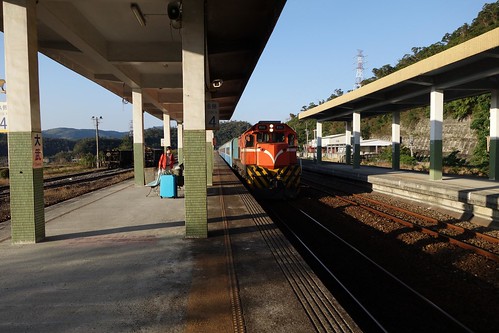
A train enters Dawu station in southeastern Taiwan.

Trump really needs to stop calling leaders in East Asia. I'd rather be biking than writing on this stuff. But just before I left for another sojourn on the east coast with a group of close friends, the news came that Trump had made an about-face on one China.

*sigh*

The NYTimes here says...
President Trump told President Xi Jinping of China on Thursday evening that the United States would honor the “One China” policy, reversing his earlier expressions of doubt about the longtime diplomatic understanding and removing a major source of tension between the United States and China since shortly after he was elected.
The NYT report does not make clear what Trump's statement said, that the US would honor "our" one China policy (not China's). That little word, as many people pointed out, was highly significant, since it shows that the US is going to maintain policy continuity. The US one China policy does not include Taiwan in China.

It was also important for another reason. It was rather painfully obvious that Trump would "cave" on one China. For example, J Michael Cole observed a while back:
But one thing is certain: the likelihood that the United States will scuttle “one China” is next to nil, as such a policy goes against even what the more creative (and pro-Taiwan) of Trump’s advisers on Taiwan and China, people like John Bolton, have argued over the years.
What that "our" signaled was that people who understand the policy were in charge, in the background, of maintaining it. I doubt very much Trump himself insisted on the "our" -- that had to be inserted by someone who knew what he was doing. The situation thus appears to be as I argued before...
....not much will change because Trump is surrounded by people who will keep policies that help Taiwan in place and expand around the edges where they can.
...wise hands steering Taiwan policy? Good to see.

The Economist observed that Trump's one China pleased Taiwan as well. The Xi-Trump call also raised another issue, as Trump materially benefited from it, apparently, in violation of the US Constitution.
__________________
Catching up links:
_______________________
Don't miss the comments below! And check out my blog and its sidebars for events, links to previous posts and picture posts, and scores of links to other Taiwan blogs and forums!
Thursday, February 09, 2017

Not The Onion: Beijing to commemorate 2-28

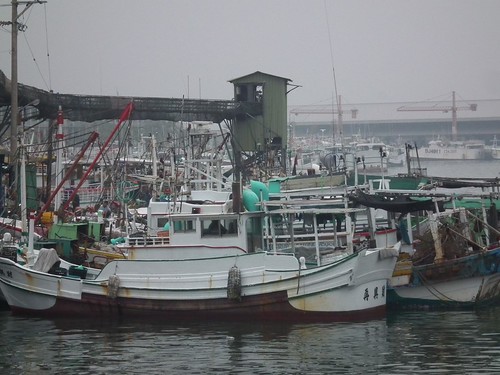
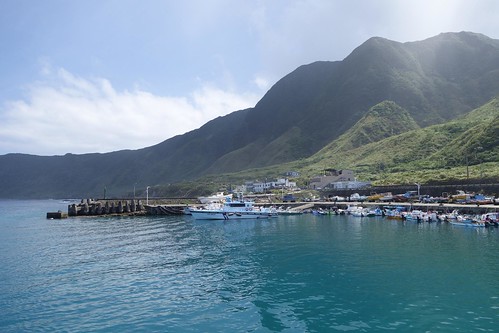
Fishing boats in Donggang

J Michael Cole has the news at Taiwan Sentinel:

Taiwan Affairs Office Spokesman An Fengshan told a regular press conference on Wednesday that China will hold a series of events to commemorate the 70th anniversary of the 228 Massacre in Taiwan.
That will be later this month... a previous conference was held on the 65th anniversary.
In his speech, Ji Bin said the 228 uprising was a “patriotic, democratic and autonomous movement of the Taiwan compatriots against the dictatorship of the KMT authorities at that time,” and “part of the struggle of the Chinese people for liberation and a glorious patriotism of Taiwan compatriots.”
Most observers in Taiwan are interpreting this in light of the Taiwan-China relationship. Many said, as Cole observed, that it represents direct appeals to the people of Taiwan, since the CPP has likely realized that the KMT can no longer deliver the island. Of course, as always, it attempts to subsume the island's independent history into the faux historical narrative of the CCP.

But I expect there is more than that. The CCP's biggest audience isn't Taiwan, but its own people. Remember that if China attacks Taiwan, the PRC is going to suffer economic, physical, and social harm. The people of China have to be psychologically and morally prepared for such privations. More than simply incorporating Taiwan history into fake CCP history, commemorating 2-28 shows the people of China that Beijing is striving in every way possible to bring Taiwan into the fold peacefully, so that it can present a "more in sorrow than anger" war to its own people, so it can say "every avenue has been exhausted, see?" Too many people think about Chinese government pronouncements about Taiwan as if they were solely foreign policy moves, in light of US and Taiwan policy. But Xi's Taiwan announcements are domestic political theatre as well....

This is even more urgent for Beijing because young Chinese are changing, as everyone I know who interacts with them is reporting. A recent poll said it was "surprising" to find that they are less nationalistic. This should not be surprising. Chinese youth are traveling more than ever before, both abroad and in their own country and its occupied territories. They are better educated, and many have been abroad for extended periods. Such experiences change people, and while making them love their nation more, make them more thoughtful about their national identity.

The reason it is "surprising" that Chinese youth are less nationalistic is because so much writing on China sources inflammatory quotes from the Chinese net, while making zero attempt to determine whether they are 50-centers planted on the net for the very purpose of managing this image of China abroad.

Speaking of managing the presentation...

...China is allegedly mulling changes to the Anti-Secession Law. Since the CCP can attack Taiwan any time it likes, for any reason it wants, the idea that this is a "law" is clearly something aimed at the international media (as well as a sort of reply to the Taiwan Relations Act). One change mulled is to make it part of the "law" explicitly that China will attack if Taiwan does not accept Beijing's One China principle. This change will probably never happen, because of the way it reduces the options Beijing has in dealing with Taiwan. Rather, a number of experts pointed out that Beijing is probably running a whisper campaign designed to put pressure on President Tsai Ing-wen.

Beijing is very good at this sort of media management. It was first reported in the Yomiuri Shimbun and will probably make the international media, especially the more pro-Beijing outlets. ZOMG TENZ!!But once again, it behooves me to point out what China is not doing: arresting Taiwanese businessmen, kicking Taiwanese out of China, cutting off exports from Taiwan, or any of hundreds of others moves it could make. Or any other move that might have costs for China. Talk is cheap, after all, and whispers even cheaper...
__________________
Daily Links:
_______________________
Don't miss the comments below! And check out my blog and its sidebars for events, links to previous posts and picture posts, and scores of links to other Taiwan blogs and forums!
Thursday, December 22, 2016

Qz.com: China Propagandize like Boss

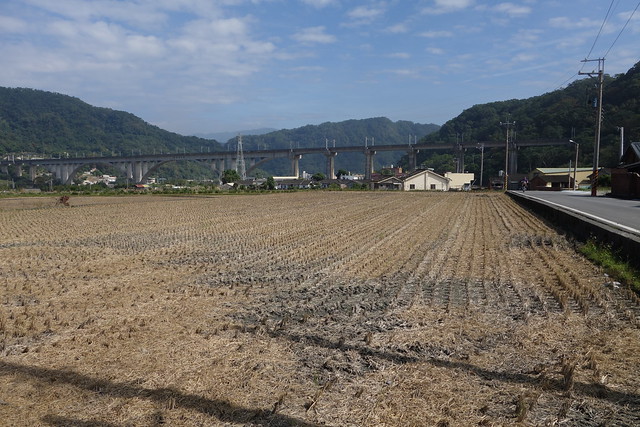
One of my favorite sights is this old railway viaduct.

If you are at all familiar with China anti-US propaganda, you'll instantly recognize familiar themes and seeming errors of this piece at qz.com on the people around Trump. It neatly dovetails with the emerging media consensus that writers can say whatever they want about Trump's China people, and no one in the media will question or factcheck it if it fits their ideological prejudices (as with Bloomberg earlier this week). The writer opens:
US president-elect Donald J. Trump said that he doesn’t want to be “bound by a ‘one China’ policy,” the US’s decades-long stance of treating Taiwan and China as the same country.  Instead, he plans to use the issue as a bargaining chip, he said Dec. 11, to “make a deal” with China on trade and other issues.
A major error: US policy is that Taiwan's status is unsettled. Hence, US does not "treat China and Taiwan as same country". It's a common error, but clearly the writer does not know what he is talking about. Check second sentence: Trump never said he planned to use Taiwan as a bargaining chip, but simply raised the possibility.

The writer then cites a PRC source as first quote to support his claim that Trump's "plan" to use Taiwan as a bargaining chip is because his advisers have an outdated Cold War approach:
Trump’s throwback approach comes because he has surrounded himself with outdated, Cold War-era advisors who have had little exposure to China since then, analysts including Shen Yi, an associate professor at the School of International Relations and Public Affairs of Shanghai’s Fudan University, say.
We all know that PRC people who permit themselves to be quoted in foreign media pieces on US foreign policy are putting out Party propaganda, or they will be punished by the State. They all know the drill because they have lived in an authoritarian security state their entire lives. Anything quoted from a PRC source should be contextualized and caveated, and none of these people should ever be treated as if they were academics simply talking out of expertise.

The next two paragraphs on the 1982 US-China Arms Sales to Taiwan Communique (text). The qz.com piece asserts:
On August 17, 1982, the US and China issued a joint communiqué that agreed the US will gradually reduce its arms sales to Taiwan. But earlier in July, Reagan also pledged to Taiwan that the US would not set a date to cut off the arms sales, and “would not formally recognize Chinese sovereignty over Taiwan,” among other promises together known as “the Six Assurances.” These guidelines have been confirmed by each successive US administration.

To complicate matters, Reagan issued a confidential presidential directive, on the same day of the communiqué, saying that the US’s willingness to reduce its arm sales to Taiwan only stands if China solves its differences with Taiwan by peaceful means. The very next day, the White House even announced the sale of 250 F-5 fighters to Taiwan.
This presentation is massively erroneous and appears to be a construct designed to slander the US by making it look hypocritical and duplicious. Note the term "the very next day" 250 F-5 fighters were sold to Taiwan. That is completely wrong.

The great site Taiwan Airpower.org has the info, easily found with a two second Google search:
On February 9, 1973, the ROC government and the US government reached an agreement for the co-production of 100 F-5E. This program was given the codename "Hu An" (Peace Tiger) and was to be undertaken jointly by Northrop and Taiwan's AIDC (then a branch of the ROCAF).

The first AIDC-built F-5E was rolled out on October 30, 1974, one day before the late President Chiang Kai Shek's 88th birthday, and was thus christened "Chung Chen", an alias of President Chiang. Production of all 100 aircraft was completed in November 1977.

Later 208 more aircraft were added to the production run in five batches, from "Peace Tiger 2" through "Peace Tiger 6". Complexity of the production work by AIDC also evolved in several phases. The whole "Peace Tiger" program was completed on December 9, 1986, when the final aircraft was rolled of the production line. In total, the ROCAF received 242 F-5E and 66 F-5F. Breakdown of the numbers of aircraft built in each Peace Tiger batch is as follows:
When the Reagan Administration announced the F-5 sale, it was not 250 fighters but 60, the tail end of co-production and sales under which Taiwan had already been producing F-5s for almost a decade. The last sentence is complete bullshit.

Worse, the writer omits the fact that the Reagan Administration withheld the sale of F-16s and F-20s to Taiwan because it didn't want to anger China, an early appearance of the successful policy of China managing US Taiwan policy via careful application of "anger". The 60 F-5s were a consolation prize. As I teach my students in my current events class, if you want to understand the political slant of a media piece, look at what it omits as well as what it says.

In other words, we are faced with the choice that the writer is either stupid and lazy or is deliberately misleading his readers by conflating and omitting key information. Your call, folks, but we'll be facing that often in this piece.

Consider also the source: in the next few paragraphs the writer repeatedly sources PRC propaganda from Shen, which may account for all the problems in the first section of this piece. Editors and writers need to take it to heart: everything on Taiwan from PRC "academics" should be regarded as lies and misdirection unless otherwise proven. For example:
The tensions didn’t stop with Bush Sr. In 1995, when Bill Clinton was president, Taiwan tensions almost sparked a war between China and the US, when he granted then-president Lee Teng-hui a visa for a “private trip” to the US, and Beijing objected angrily and physically. Between 1995 and 1996, Beijing conducted a series of missile tests in the waters near Taiwan. In response the US dispatched its biggest combat forces to Asia since the Vietnam War, including two aircraft carriers, to the area, forcing Beijing to soften its stance.
Again, this conflates two separate incidents. The US did not send carriers to the area in response to China's missile "tests" over the Lee visa. It sent them because China launched missiles in an attempt to intimidate Taiwan's electorate during a free election. Moreover, note how the paragraph shows the familiar problem of assigning agency to "tensions" rather than actors. The US and China clashed because China launched missiles, one policy choice out of many possible responses, not because of "tensions". Indeed, the only reason there are tensions is because China wants to annex Taiwan.

O yeah, did that paragraph mention the 1996 elections? Nope. It's almost... almost like someone didn't want to draw attention to Taiwan's democracy.

Indeed, note that all three of the academics quoted in the opening section are Chinese.

The piece next names 5 people as Trump's China advisers: Ed Feulner, Rance Priebus, Peter Navarro, Bob Dole, and Jeff Sessions, because they were involved in The Call. This is a strange list. Dole was linked to The Call in the media but I expect that was wildly overblown, and I have not heard in any source that Dole or Sessions (srsly?) are China advisers for Trump. Or Priebus, for that matter.

Once again: omissions. Check out the presentation on Feulner:
Edwin Feulner (age 75), former president of conservative think-tank The Heritage Foundation, who wrote a 1976 book about China and the country’s “turning point” that is no longer in print.
Yeah, reading that you might think Feulner is 40 years out of date. Yet here, from the Chinese embassy itsownself, is a little blurb on Feulner's meetings with Chinese officials during his 2008 trip there. The writer probably failed to find it since it takes almost two seconds with a Google search. Apparently Feulner does that periodically, since he speaks on China and N Korea in another such junket to S Korea recently. Such trips hardly make him an expert, but the impression left by the sentence on him is false.
Trump’s advisors “don’t have much to do with China,” HKU’s Han said. American scholars who do understand China better, including Johns Hopkins’ David Lampton, David Shambaugh of George Washington University, and Henry Kissinger, are not involved in Trump’s transition, Han said.
These three names will be familiar as pro-China people. Omitted are their ties to Chinese money: Kissinger's firm does a lucrative business with China, and Shambaugh runs the China Policy Program at GWU, which hosts a Confucius Institute funded by PRC government money (Lampton speaks at Confucius Institutes from time to time, indicating he is acceptable to the PRC). Similarly, when the article lists Obama's China advisers, it omits the China business ties of Jeff Bader (Stonebridge) and Evan Medeiros (Eurasia Group).

(most pieces from China also omit Trump's business ties to China -- I wonder if they are considered an embarrassment, or perhaps a tool China does not want to draw attention to yet).

There is another significant omission: John Bolton is often mentioned when China policy is named. Whatever you make think of him, his experience in government is extensive.

Moreover, you could play the same game with Obama's people. Remember when Obama appointed Max Baucus as ambassador to China (on the heels of the solid choices John Huntsman and Gary Locke)?

The article cites Richard Bush on the Trump Adminstration's "China experts". Bush is primarily known as a Taiwan expert. But never mind that, if he is being critical, it is ok to cite him.

In other words, the qz.com piece cites one Taiwan expert and three Chinese academics in this piece of "reporting" on Trump's China people. No US China experts are cited. Hookay.

No balance either: no voices supporting Trump's choices are provided.

There's one final reason this piece sucks: it is too early. Just yesterday Washington sources were reporting that Trump's NSC director for Asia will be Matt Pottinger, described in one report:
Former Edward R. Murrow Press Fellow. Mr. Pottinger covered China for the Wall Street Journal from 2001to 2005 and for Reuters News Agency from 1998 to 2001. His stories, including investigations into energy and environmental pollution, the impact of official corruption, and the 2003 SARS epidemic, won awards from the Society of Publishers in Asia.

In September 2005, he put his writing career on hold to serve five years as a U.S. Marine. He completed three combat deployments: to Iraq from April to November 2007 and to Afghanistan from November 2008 to May 2009 and from July 2009 to May 2010. While in Afghanistan in 2009, he cofounded and trained the Marine Corps' first Female Engagement Teams. On his second Afghanistan deployment, he spearheaded an investigation into problems with the U.S. intelligence effort, coauthoring with Major General Mike Flynn the critical 2010 report "Fixing Intel: A Blueprint for Making Intelligence Relevant in Afghanistan."
Pottinger's autobiographical tale is here.

Off to discuss the media with my class, where this piece will certainly be used as an example.
_______________________
Don't miss the comments below! And check out my blog and its sidebars for events, links to previous posts and picture posts, and scores of links to other Taiwan blogs and forums!

Thursday, November 03, 2016

Xi-Hung Meeting = Big Nada

Preparing for a neighborhood event...

Brian Hioe at New Bloom summed it up...
THE FACT THAT Hung Hsiu-Chu’s meeting with Xi Jinping in Beijing has largely been a non-event in Taiwan probably attests to its futility. Given that Hung is already known for outlandishly extreme pro-unification views, Hung’s meeting with Xi probably does not really surprise the Taiwanese public, in the way that Eric Chu’s or Ma Ying-Jeou’s meetings with Xi Jinping in 2015 provoked stronger reactions. Hence the lack of any real public response. But does the Hung-Xi meeting indicate anything new?
Brian and I had a good laugh about the Xi-Hung meeting over drinks last night. The only people who really cared about the meeting were the international media.Beijing well understands how this ritual of the Beneficent Emperor presiding over a visit from an eager vassal looks to the media, which loves a good TAIWAN IS TENZ! story. Bloomberg's hilarious headline was China’s Xi, Taiwan opposition leader voice concern over tensions. Voice concern over tensions... they themselves caused, as a friend pointed out on Twitter.

Prior to the meeting J Michael Cole had wondered aloud over at CPI what agreements Hung might make with Xi. But Xi, meeting in his capacity as Party Chairman rather than Emperor of China, was never going to make any agreements with the isolated head of a fading, split party whose members he undoubtedly plans to use and then have shot when China comes over.

The issue highlighted what many of us have said for a while now, some for over a decade now, that China has no Taiwan strategy (Cole wrote on that this week as well). It is simply following the well-worn grooves of its reflexive actions of the part, supplying ceremonies to satisfy its domestic audience. AP reported that...
Chinese President Xi Jinping met with Taiwan's opposition leader Tuesday, underscoring Beijing's message to the island's independence-leaning administration that it won't have access to the mainland's highest levels of power if it doesn't accept that Taiwan is part of China.
...but it could just as well written that Xi has no access to Taiwan's highest levels of power. Xi's refusal to deal with Tsai has not painted Tsai into a corner. Instead, it has forced the CCP to court a political party whose influence is fading, limiting the CCP's ability to affect Taiwan politics. Since it won't deal with DPP politicians it can't court, influence, or subvert them. It can't makes its case to pan-Green voters. As if to underscore that, the CCP even banned reporters from pro-Green papers from covering the meeting. This strategy could hardly be more self-defeating.

Fortunately the CCP is too ideologically blind to realize that. Indeed, the KMT once again reminded voters what its values are, which won't help it at the polls -- each kow-tow to the CCP reinforces the KMT's irrelevance for Taiwanese voters. As Brian H pointed out in his piece, even Ma Ying-jeou, whose China policy was one of the chief causes of the KMT's catastrophic 2014 and 2016 election losses, realizes this.

The pro-KMT China Post reported that the chief difference between Hung's trip was that the KMT itself is split....
Lawmakers banded together and called for assurances, revealing a divide between party headquarters and the KMT rank and file. The legislators called on Hung to be sensitive to the KMT's current image problem, pleading for her to make "certain statements" at "appropriate settings."

The internal strife was clear in reports that Hung and former President Ma Ying-jeou clashed over viewpoints on the "1992 Consensus."

Ma reportedly attempted to drive home the importance of its "different interpretations of one China" clause, while Hung showed a reluctance to be boxed in.

The ensuing public spats between Central Policy Committee Director Alex Tsai and the aides of former President Ma offered few reassurances that consensus within KMT existed before Hung left for China.

It was under these two sources of pressure that Hung promised a no-frills encounter with Chinese leader Xi Jinping. A perfunctory checklist would indicate that Hung did what was advised and has managed to stay out of trouble. Barring last-minute contingencies, her trip has not derailed the KMT in any dramatic fashion.
Behind closed doors, certain media reported Xi said Taiwan independence would destroy the CCP. Thanks for supplying another incentive for Taiwan independence.

The Cross-Strait Peace Agreement that Hung keeps touting is hugely vague on the details. It will never work -- if peace is institutionalized across the Strait Taiwan will move further towards independence -- only the CCP threat to murder Taiwanese keeps the island from declaring independence. Beijing understands this, which is why Xi was cold to the idea. Institutionalized peace institutionalizes Taiwan as a de facto independent state.

Surely the KMT must realize this. The Party is not pursuing it on behalf of Taiwan, but on behalf of the ROC, a virtual state which must, whether China comes over or Taiwan becomes independent, be swallowed up by history. Institutionalized peace institutionalizes the continued existence of the ROC and the KMT's umbilical connection to it -- it institutionalizes the possibility of a continued future for the KMT.
_______________
Daily Links:
_______________________
Don't miss the comments below! And check out my blog and its sidebars for events, links to previous posts and picture posts, and scores of links to other Taiwan blogs and forums!
Friday, October 21, 2016

A Hotel Occupancy Carol

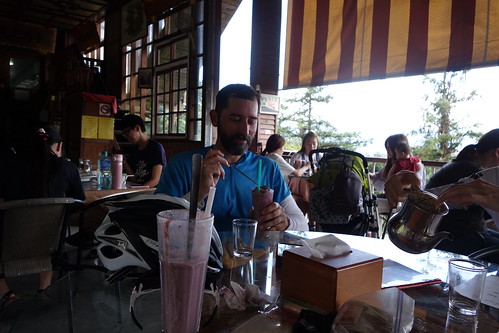
Slurping down slushies at one of the mountain bed and breakfasts where no tourists are going now.

I was going through a long dark night, listening to James Brown and Aretha Franklin in the bowels of my study. My second bottle of Laphroig had reached the halfway mark and I was despoiling my cupboard in search of a third bottle when I heard the faint scritch-scritch of scrawling on a notepad.

"Who is there?" I called, turning halfway.

A transparent figure appeared, filling my study with the stink of cheap beer and testosterone. It looked up from his notepad, and tucked in its shirt. A bottle of San Miguel slid down its trouser leg, and rolled out onto the floor, spilling beer everywhere. It peered balefully but uncertainly at the enormous collection of Taiwan history books and articles in my library, obviously unfamiliar objects to it. Then its horrible haunted face turned to me.

"I am the ghost of international journalists long gone!" it moaned, its eyes afire as it glared at me. "Tonight you will be visited by three ghosts! Pay attention and learrrrn, or you are dooooommmmeed!"

Then it vanished in a haze of sulfurous smoke.

I shrugged, and sat, addressing the bottle of whiskey once more. The clock on the wall would have ticked, but it was digital, so I was sitting in silence undisturbed when suddenly they were there, a horde of ghosts crowding into my study. Dressed in colorful shirts with flowers, baggy pants, and cheap black shoes that were little more than slippers, they flooded into my study, accompanied by the unmistakable smell of diesel fuel. Coins clanked in their pockets.

In an instant the room was full. I watched in horror as they scrawled their names on my paintings, urinated on my couch, defecated in my sink, and cut the leaves of my potted plants into the shape of the South China Sea. As they clustered around my chair, I realized they were trying to communicate with me. They made a eerily familiar noise, like someone trying to speak Chinese and swallow marbles at the same time. Finally, after loud argument and much gesticulation, they located a ghost who could speak English.

"Who are you!" I challenged.

"Weee are the ghoosts of Chinese Tour Groups paassssttt," the ghost hissed back.

"Why have you come to disturb my repose?" demanded I.

"To tell you of what has gone beforrre." He crooked a long-nailed pinky at me. "Tonight you will learn the errrrror of your wayssss, Obserrrrve the efffffect of our disssssappearance on your puny economy!"

Suddenly I was transported into a dark hallway. The pale shapes of bureaucrats wound their way past me in the halflight, knives sticking from their backs. Next to me the tour group ghosts pushed their way up to the front of the lines, their coins clanking loudly, moaning about the service. Statistics of monthly report of operations of tourist hotels flared before my eyes, from January of 2016:

Taiwan Total Scenic Areas
num of rooms occupied 553,869 45,977
occupancy rate 64.89% 58.39%
avg room rate 3760 5087
room revenue 2,082,643,603 233,894,481
F and B revenue 2,885,652,411 132,676,771
Total 5,574,301,748 400,903,796

"Remember! You will be visssssited by another beforrrre the clock sssstrikesss thirrrteeeeeen!!" The ghost warned as he faded. A final moan came from him... "Can't you give me a better deal on this statue of Chiang Kai-shek?" I heard him say.

I threw the empty bottle of whiskey at him as he disappeared.

I returned to my previous task, the ghosts already forgotten. The cupboard had just revealed itself to be bare of whiskey when I heard a giggling sound. I turned.

A girl half my age stood there, blinking in and out of existence. Short, she was dressed in the latest Japanese fashions, an American baseball cap turned backwards on her head, and a red Jack Wolfskin backpack slung over one shoulder. She grinned, revealing perfect white teeth, then strode over and punched me chummily on a bicep.

"Hello there! It's so great to be traveling in China's Taiwan!" she cried. "I am the ghost of Chinese individual travelers present!"

I searched my study for some means of escape, for I did not want to argue with a woman, but she was between me and the door. I noticed with alarm that she was growing visibly in front of me. Already she had reached my chin.

She punched me again, still grinning, and suddenly I found myself in Taipei Main Station. Travelers brushed past me, intent on catching a train. I looked up at the big brown board, and saw the statistics for Aug of 2016:

Taiwan Total Scenic Areas
num of rooms occupied 554,578 49,731
occupancy rate 64.44% 58.63%
avg room rate 3875 6411
room revenue 2,148,794,875 318,845,129
F and B revenue 1,853,805,182 138,810,765
Total 4,543,186,674 503,566,089

"See! she cried. "China has punished China's Taiwan province severely! Overall occupancy rates for tourist hotels have plummeted 0.45% in August!" A half a meter taller, she grinned down at me more broadly, continuing. "And in scenic areas occupancy rates have negatively declined compared to January, from 58.39% to 58.63%, with room rates negatively declining from $5087 NT to $6411 NT and revenues falling upward from $400 million to over $500 million!" Now a meter taller, she punched me again. "Can't you feel the pain?" she cried. I rubbed my shoulder, already swelling purple. I nodded, blinking back tears. I could indeed feel the pain.

Her head reached the ceiling, and she vanished. I rubbed the bruise again, then downed the last of the Laphroig, now righteously medicinal.

Suddenly I heard a faint jostling in the air.

"Who is there?" I mumbled.

Faint voices, echoing as if from a vast abyss. "Wee arre the ghosssts of Chinesssse tourrr groups in the futurrre..."

But they never appeared.
_______________________
Don't miss the comments below! And check out my blog and its sidebars for events, links to previous posts and picture posts, and scores of links to other Taiwan blogs and forums!