Showing posts with label Ma Ying-jeou. Show all posts

Friday, March 17, 2017

My Latest for Taiwan News: Yes the indictment of Ma is a good thing

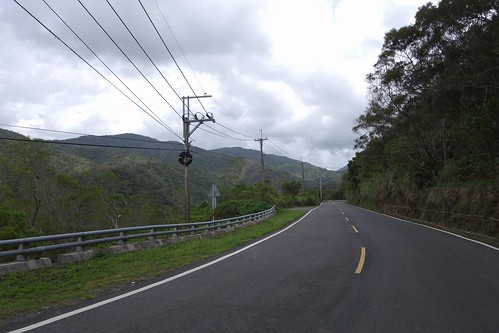
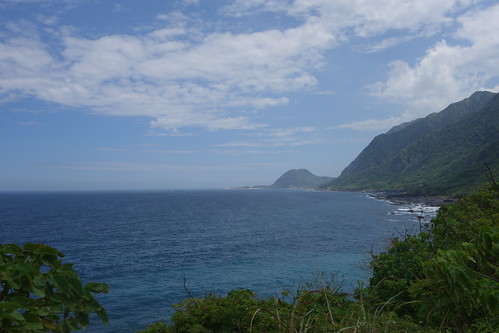
The east coast near Chenggong in Taitung. Heading out there for the Apr 1-4th holiday. Welcome to join, should be easy riding.

I wrote my latest Taiwan News piece in reply to J Michael Cole's piece over at the National Interest, and also in response to the many remarks at the pointless statistic that all three of Taiwan's elected presidents have been indicted. Hey no shit, because two of the presidents supported Taiwan independence, and were caught up in a general campaign during the Ma Administration. This time it is different.

Cole's piece worried me. He said:
Worryingly, the notion that it is “normal” for governments to engage in tit-for-tat behavior by targeting their predecessors from the opposite camp for investigation after gaining executive powers has propelled the nation into a vicious cycle that fosters division at a time when unity is sorely needed to face the immense challenge posed by authoritarian China, which regards Taiwan as part of its territory. Such views, which have surprising currency, point to weaknesses in Taiwan’s transition from authoritarian rule to democracy. The belief in the politicization of the judiciary, that those in power are merely using the court system to punish their opponents, bespeaks a deep cynicism about Taiwanese politics and indicates that much work needs to be done to secure the consolidation of Taiwan’s democracy and normalization of its electoral cycles. Therefore, rather than celebrate the indictment of a former head of state—as DPP supporters are doing this week and KMT supporters did before them—the Taiwanese public should regard such developments with concern and consternation: there is nothing to celebrate when evidence emerges that the system is failing them, whether through corruption or the irresponsible handling of classified material.
This is largely true as far as it goes. Yes, people are cynical about the system -- the authoritarian party wins if it wins votes, and it also wins if people become cynical about the system. Therefore it works to foster cynicism about the system.

But at the bottom Cole is wrong: this is something we should celebrate -- this indictment is not an act of political revenge, but the system functioning normally to check abuses of power by the executive which are also normal even in well functioning democracies.

That pervasive cynicism is why writers who have voices that are widely listened to also have a responsibility to take the next step, and provide their audiences with a contexts and language so that they can understand what is going on and communicate it to others, but especially to the global media which you know is going to be both lazy and sensationalist on this one. That cynicism about the system must be fought, constantly. I wrote:
The indictment of Ma, which had long been predicted, especially since SID Chief Huang was eventually convicted of leaking the investigation to Ma, lead to the usual complaints. Many locals cynically viewed the indictments as pan-Green revenge for the KMT prosecution of Chen Shui-bian. Foreign observers despaired over statistic that all three elected presidents had been indicted once out of office. "Can it be good for Taiwan's democracy?" all asked, implying a rhetorical "no". The answer is yes, of course, and we should be cheering, instead of jeering, Taiwan's democracy in action.
You can't connect the Chen and Lee indictments to the Ma indictment, because the DPP is not engaging in terrorizing the opposition party via indictments, unlike the KMT, as I note extensively in that piece above. I am betting, however, that not a single foreign media organ reports the fundamental differences between those two assaults on previous presidents, and this indictment of Ma, nor will any view this indictment as an indicator of forward progress. Instead, they will all piously report "all three elected presidents were indicted! ZOMG Taiwan's democracy is precarious." It makes better copy, and saves difficult explanations, and validates the cultural superiority of western democracies over non-western (our democracies are not so fragile and corrupt, see?).
_______________________
Don't miss the comments below! And check out my blog and its sidebars for events, links to previous posts and picture posts, and scores of links to other Taiwan blogs and forums!
Wednesday, March 15, 2017

Former President Ma Indicted

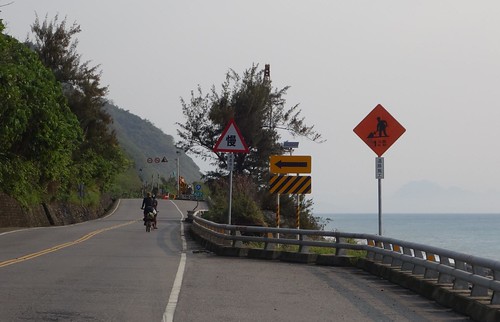
Stopping traffic for a procession

President Ma was indicted yesterday on charges of leaking state secrets (SCMP):
The Taipei District Prosecutors Office alleges Ma violated the Communication Security and Surveillance Act and the Personal Information Protection Act. The former president could face up to three years in jail on the charges. “Ma chose an improper way to deal with what he believed were political flaws and responsibilities involving cabinet members,” prosecutors office spokesman Chang Chieh-hsin said.
The Special Investigation Division (SID) was tapping the legislative phone system. I wrote at the time:
Readers may recall that Legislative Speaker Wang Jin-pyng had been publicly accused by the President of influence peddling by calling the Minister of Justice and having him tell the prosecutors not to appeal a not guilty verdict against Ker. The DPP politicians also said that the SID had been monitoring the prosecutor in the Ker case, which the SID admitted. They admitted that they monitored her 12 year old daughter, accidentally, since she was using her mom's phone (SCMP). They then switched to the husband's phone which Lin Hsiu-tao was using, musical phones being a common feature of busy families.

It is striking that no transcript of the alleged phone calls telling the prosecutor to lay off Ker has been produced by the SID, since it has leaked transcripts of Wang Jin-pyng's phone calls. Indeed, the lack of such leaks suggests that no such transcripts exist. This tends to support Wang's claims that he was just comforting Ker and hadn't done anything.
Allegedly Ker Chien-ming, the DPP whip, called Wang Jin-pyng, then the KMT speaker, and asked him to lobby the prosecutor and the Minister of Justice in a case involving Ker. Transcripts of Wang's words with Ker were leaked, but no transcript of Wang talking to either of the other two was leaked. Wang insisted that he had done nothing illegal, and no evidence was produced that he had.

This information was given to Ma by SID Chief Huang Shih-ming. The DPP had long been claiming that the SID, which began its career prosecuting Chen Shui-bian, was a political tool designed to be used by the President against his perceived political enemies, and in that moment, their claims were totally vindicated. Huang would later be indicted and convicted over that leak. That does not bode well for Ma.

But then President Ma Ying-jeou, who saw Wang as a rival and underling, and who had beaten Wang in a previous KMT Chairmanship election, completely lost it. He was apparently primarily angry at Wang because Wang would not shove that awful, unpopular services pact with China through the legislature. Wang, the unofficial leader of the Taiwanese KMT, knew that his people in the legislature would never vote for it.

Ma went public with the accusations that Wang had engaged in influence-peddling, saying that he had shamed Taiwan's democracy. He also attempted to have Wang kicked out of the party and removed as speaker. This lead to the situation described in the letter from THRAC, which really did threaten Taiwan's democracy:
By reporting to the president and then releasing the transcript at a press conference — without laying any charges — the SID grossly violated laws requiring nondisclosure of its investigations and has confirmed suspicions that it is a political tool of the KMT. There are also questions about the legality and propriety of the wiretap.

....

These actions constituted (to use his words) “improper influence at the highest level,” abuse of the office of president and violation of the separation of powers fundamental to a democracy. Ma then acted in his capacity as KMT chairman to have Wang’s party membership suspended and remove him as a legislator-at-large.

This confusion of Ma’s two roles as president and party chairman looks like a return to the old party-state practices of the KMT.

Third, contempt of the legislature. By using an internal KMT party process to remove its speaker, Ma has seriously violated the rights of the legislature. The speaker of the legislature is elected by its members. The legislature oversees the president. Now Ma has used his power as party chairman to become the overseer of the legislature. This has serious implications for KMT proportional vote legislators who must worry about a party chairman who can remove them so easily.
The KMT also had the Ministry of Foreign Affairs describe Wang as a "former speaker" on its website. Wrong.

The crisis devastated the KMT, and even caused the NT to fall in value. It also left Ma's reputation in tatters (fallout described in this post here and here). Ma and Wang went to court over Ma kicking Wang out of the KMT, and was beaten twice -- Eric Chu later dropped the suit to preserve KMT unity.

And it was, by all accounts, totally illegal for Ma to make that information public to attack Wang. Which is how we got to this indictment this week in the "September Strife". Taipei Times reported:
The Taipei District Prosectutors’ Office completed its investigation into the 2013 wiretapping case and alleged that Ma had abused his authority by divulging classified information, as well as breaching the separation of political and judicial powers, Deputy Chief Prosecutor Chang Chieh-chin (張介欽) said.

Chang said Ma has been charged with offenses related to public officials divulging state secrets that are unrelated to national defense, thereby contravening the Criminal Code; public officials divulging classified information obtained in the course of communications surveillance by the authorities, thereby contravening the Communication Security and Surveillance Act (通訊監察保護法); and unauthorized use of private information outside of a public official’s duties, thereby contravening the Personal Information Protection Act (個人資料保護法).

“The defendant called on then-prosecutor-general Huang Shih-ming (黃世銘) to visit the president’s official residence on Aug. 31, 2013, to report on the findings of the wiretapping. This breached the law on the use of personal information obtained under surveillance and the divulging of classified information,” he said. “The defendant instructed Huang, top aide Lo Chih-chiang (羅智強) and then-premier Jiang Yi-huah (江宜樺) on Sept. 4, 2013, in talks where classified information relating to the wiretapping case was discussed. This constitutes offenses of inciting others to divulge information obtained during telecommunications surveillance and violations of personal privacy.”
The prosecutor in this case is the same one who went after Ma before for his downloading of government funds into his private accounts. Ma did not dispute that he had done so, but his defense was that the special funds were intended for that purpose. He was found not guilty, of course.

Ma maintains he is innocent. He is facing a rain of lawsuits now that his presidential immunity ended, with Ker Chien-ming's lawsuit against him in its final stages after three years.

I consider it very unlikely he will ever do time. If he gets sentenced, it will be the kind of sentence that can be commuted to a fine.

But it is good to see the system working. All three former democratically elected presidents have been indicted, but the attacks on Chen Shui-bian and Lee Teng-hui were politically motivated. This long running case -- remember, before you claim this is some kind of pan-Green revenge on Ma, that SID Chief Huang was convicted during the Ma Administration -- represents the actual functioning of rule of law as a check on anti-democratic action by the chief executive.

Good!
_______________________
Don't miss the comments below! And check out my blog and its sidebars for events, links to previous posts and picture posts, and scores of links to other Taiwan blogs and forums!

Saturday, December 24, 2016

Taiwan News Number 5: KMT Chair election

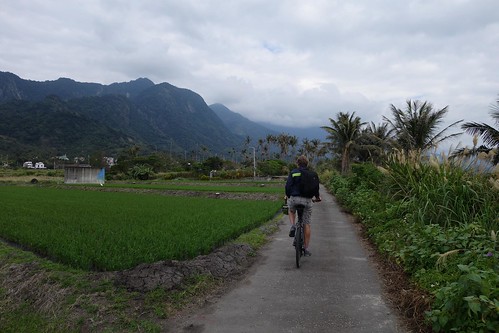
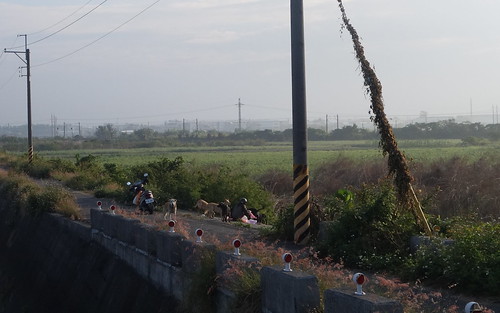
A woman feeds stray dogs.

This week my piece was on the KMT's Chairmanship election, which has been moved up from Aug to May of 2107.
Potential rivals are few, and all are wounded. The "princelings," the children of KMT elites, lack appeal. Eric Chu, the current Mayor of New Taipei City, the one municipality still controlled by the KMT, performed poorly in the Presidential election and worse, is half-Taiwanese and thus suspect to many staunch mainlander voters. Hau Long-bin, the son of reactionary old KMT heavyweight Hau Pei-tsun and the former mayor of Taipei, lost an easy legislative election in 2016 in Keelung, long a KMT stronghold. Other names frequently mentioned include princeling Sean Lien, the son of heavyweight Lien Chan, who lacks appeal outside the deep Blues, and former Vice President Wu Den-yi, whose power base is in sparsely populated Nantou and who is Taiwanese. Except for Wu, who is a formidable politician with deep links throughout the party, none are likely to pose a great challenge to Hung.
I consider Wu more of a threat, in the sense that Huang Min-hui was a threat, because he is Taiwanese and can appeal to that large and dissatisfied wing. I have heard it was Wu who helped keep the KMT in line in the second Administration of Ma, when grumbling was widespread. Hau is also revered by the Old Soldiers since he is the son of the reactionary politician and general Hau Pei-tsun. But that loss in Keelung really hurt him.

After I wrote this and sent it in, Hau came out against the recent moves to change the position of the Old Soldiers in the party, indicating he is probably courting their votes. Perhaps he will run in May. If the Old Soldier votes, which determine the outcome, are split, then someone like Wu may have a chance. But in the end I still expect Hung will win. Hau may be a princeling, but the Old Soldiers can see that Hung is one of them. Moreover, Hung is an authoritarian ideologue and more KMT than the KMT, while Hau had to govern in the real world and lacks those qualities... UPDATE: Hau and Wu are leagued against Hung.

KMT-sympathetic news orgs were reporting that Ma was considering a run too. Still no new blood...

2020? Whoever becomes Chairman is automatically the next presidential candidate. I doubt the KMT will become wise enough to separate the two; the DPP certainly hasn't. Want to know who the next KMT candidates will be? Watch who makes pilgrimages to China to receive the blessing of the CCP...
_______________________
Don't miss the comments below! And check out my blog and its sidebars for events, links to previous posts and picture posts, and scores of links to other Taiwan blogs and forums!
Monday, May 30, 2016

The Gambia, or I am so naive, I still believe in a reality outside journalism

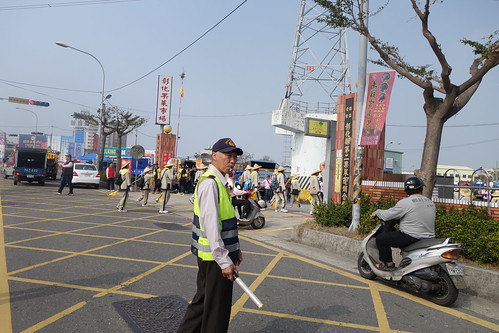
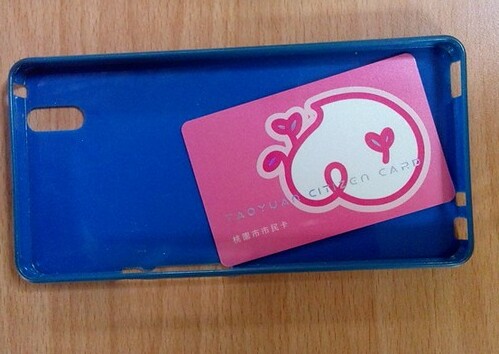
Local trick for using the Yoyo card/Easycard: keep it inside the cellphone case, and just swipe the phone....

The strange trifecta of Gambia, Kenya, and tourism in "punishing" Tsai has now become a Journalistic Fact: a claim widely shared among journalists, that is largely false. Indeed, one of the fascinating things about it is that it is a fact scrupulously honored by pro-Taiwan and pro-China writers. I wrote in The Diplomat a while ago:
The wide but erroneous evaluation of the affair of the Kenyan phone scammers as a move by Beijing to pressure Tsai Ing-wen simply shows how the frameworks the media uses to understand the China-Taiwan relationship conceal and distort the complexity of that relationship. They are easily hijacked by partisan commentators: in this case, pro-Taiwan commentators portraying it as a move against Tsai in order to heighten the sense of threat to the island nation, while their opponents used it to show how electing Tsai was a bad idea, since it angered China.
(Click on read more, it's a long one!)

Wednesday, May 25, 2016

Diplomat: Ma Ying-jeou's Legendary (Trade) Millions


In the Diplomat today:
When The Economist recently reported that Taiwan’s trade with China “ballooned” during the administration of outgoing President Ma Ying-jeou of the pro-China Kuomintang (KMT), it was repeating what has become a commonplace among writers on the cross-strait relationship. We are told that trade “boomed” under Ma (Washington PostInstitutional Investor), or “particularly since Ma” (East Asia ForumInternational Business Times), or that since Ma cross-strait trade has “climbed more than 50 percent” (New York Times) and even “soared” (Economist). Indeed it is possible to write that China is “showering” Taiwan with economic benefits (East Asian Forum), that booming cross-strait trade was “only a hope little more than a decade ago” (National Interest), and that Ma’s policies have resulted in “substantial material gain” (National Interest).
There is just one problem with these thoroughly conventional claims: they are thoroughly wrong...
_______________________
Don't miss the comments below! And check out my blog and its sidebars for events, links to previous posts and picture posts, and scores of links to other Taiwan blogs and forums!
Tuesday, May 03, 2016

DPP: 2 steps forward, 1.9 steps backward Redux

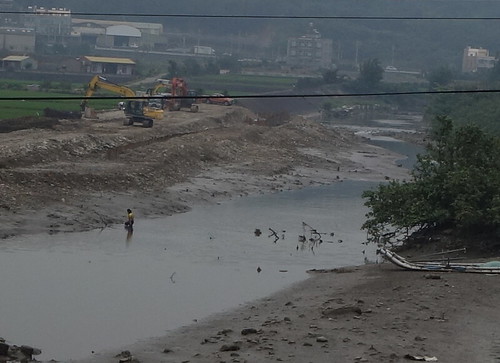
When you absolutely, positively, have to cross that river.
Many DPP leaders linked the goal of democratization directly to the issue of Taiwanese identity and the principle of self-determination (Hu and Chu 1992). Because this subethnic cleavage transcended socioeconomic strata, the DPP consider it an effective counterstrategy to the KMT's broadly based socioeconomic development program. It was also an issue that could unite tangwai members of different social and economic interests under a common cause. -- Bruce Dickson
Some of the cleavages within the DPP are starting to appear as the May 20 handover approaches... Tsai has done a wonderful job holding the party together, but...

President-elect Tsai Ing-wen finally had to tell her incoming cabinet members to shut up this week after a couple of embarrassing incidents....
President-elect Tsai Ing-wen on Saturday warned her prospective government members against wasting the team’s credit by making careless remarks.

She made the statement in an address to a “consensus camp” in Taipei City’s Yangmingshan area of her Premier-designate Lin Chuan with about 40 of the ministers and Cabinet members who will be sworn in on May 20.

Remarks by at least three of the members had to be countered by the prospective Cabinet leadership after they caused public unease.
Nothing demonstrated this necessity more than remarks of Chang Ching-sen, a Minister without Portfolio, on social activists and urban renewal. He had caused an uproar:
The controversy stemmed from a Facebook post by Chang on Monday about an ad advertising the Wenlin Yuan (文林苑) urban renewal project in Taipei’s Shilin District (士林) that in 2012 met resistance from the Wang (王) family who had refused to be relocated for the renewal and sparked a protest that was joined by scores of activists and students.

“[It was] the most kuso [a term in Taiwanese subculture meaning memed or parodied, but has evolved to indicate something nonsensically funny] activism in history. The Wang family that seemed to have been persecuted by the construction company and the government had a house that was 56.06 ping [185.2m2], but now has been distributed five apartments that total 175.02 ping with a value of more than NT$100 million [US$3.1 million],” Chang wrote.

“Fuck! How pathetic,” he wrote. “I meant those highbrow young people who howled for justice and staged candlelight vigils for the family.”

Chang soon deleted the Facebook post after it attracted a barrage of criticism.

However, Chang wrote another post saying he had no intention of making fun of the Wang family and the activists,” and added: “If the Wang family is still not satisfied with the five apartments they got, I can only say that they are unhappy billionaires. The [2012] protest, in my opinion, has stigmatized urban renewal and halted the city’s renewal projects.”
As an aside, it seems a widespread dodge among people who take things here in Taiwan that taking is ok, if something equal or greater than the thing taken is "returned." Recall that Ma Ying-jeou, when on trial for downloading government funds into private accounts, said that he had made donations greater than the amount of funds he took.

Chang's technocratic contempt for the activists was shown in his "standing firm" despite an apology for his words. The cabinet is made up largely of men and technocrats, and apparently its average age is just over 60. I expect that the social justice wing of the DPP and its supporters is going to become increasingly disenchanted with it over time. Though a commenter on my blog aptly termed it a suicide squad, here to take it on the chin for a period before it is replaced. [ADDED: Taiwan Law Blog just tweeted: Undeterred that the cabinet is only 10% women, Lin Chuan picks 6 more men to be deputy ministers (storm article)].

Ma Ying-jeou's last little vicious gift to Beijing, a fishing dispute with Japan, received a boost this week when the government sent patrol boats to Japan's claimed EEZ off Okinotori Atoll (contrary to media reports the Coast Guard said that the garrison on Taiping Island/Itu Aba was not increased). This is a small headache, fortunately, since Japan realizes that Ma too will pass. But Tsai will inherit this headache, which will put her at odds with the fishing lobby.

The incoming transportation minister also opined that maybe the new rail link to the east coast wasn't the best idea, a public statement that will likely cause the new administration further headaches. Transportation is THE issue for the east coast, whose residents have trouble getting train tickets because of the tourist crowds and the lack of trains. The east coast elected DPP legislators this year... it might not if the DPP does not give it the transportation infrastructure it demands. Because the DPP has been patiently cultivating the east coast -- Hsiao Bi-khim has done amazing work -- this decision could be even more important than the fight with the fishing and pork lobbies.

A larger headache is the looming fight over American pork. A legislative committee passed a motion demanding that imports of ractopork from the US be banned. Ractopork would cause large losses in the local pork industry, according to the article....
In a report to the committee, the Council of Agriculture (COA) yesterday said that allowing imports of US pork containing the feed additive ractopamine would cause about NT$14.3 billion (US$442.99 million) in losses a year to pork-related industries.

“There are about 5.5 million pigs bred by more than 8,000 farmers in Taiwan. Pork ranks No. 1 among all agricultural products,” COA Deputy Minister Huang Kwo-ching (黃國青) said. “The nation’s pork self-sufficiency rate is 91.1 percent, with an estimated total economic output of NT$71.74 billion per year.”
US pork is heavily subsidized by the US government. There is no way Taiwan can compete with that, and the ractopomine controversy exists simply to keep that subsidized pork out. Good. But the pork farming and fisherman are important lobbies... recognizing this, Changhua County Chief Wei Ming-ku, a DPP politician, has already come out in support of a ban on ractopork.

MEDIA FAIL: O be serious. WSJ says in an awful piece arguing that cross-strait relations are getting worse in the run up to the May 20 handover to Tsai (no, they are not, but it is sexier to maintain they are):
Perhaps like Richard Nixon, the only leader who can put relations on a new and more stable basis is a former firebrand like Ms. Tsai.
"A former firebrand?" 180 degrees wrong! Tsai is famous for not being a firebrand. What a total distortion of reality, and a disservice to the incoming President. But it doesn't end there....
...Kenyan judges acquitted the suspects, but China asserts it has jurisdiction and wants the suspects tried where the victims were affected. That Beijing offered Kenya some $600 million in loans one week prior to the deportation likely helped.
(1) Kenyan judges didn't acquit the suspects (8 were convicted of document forgery and did a year in jail). They were acquitted for charges relating to illegal telecom equipment and illegal business organization, but not tried on the fraud charges. Since China sought to try them on fraud charges, it is hard to avoid the conclusion that it was a deal China and Kenya had arranged long before, meaning that... (2) the $600 million in loans was probably not a driver of the affair; Chinese police had been asking for the suspects since Dec of 2014 and Kenya had probably agreed long before the loans (see #1 above). The loans are more likely to be related to China's long-term purchasing of influence in competition with the US -- Kenya used to be a major US ally in the region.

This editorial is like a stroll through the greatest hits of China-Taiwan myths:
Departing President Ma Ying-jeou established closer ties with China, including a free-trade agreement, by accepting the slogan of “one China, separate interpretations” as the basis for talks.
ECFA was not a free-trade agreement, but a managed trade agreement designed to let Chinese goods flow into Taiwan and gut Taiwan's industries. There was no 1992 Consensus of "one China, separate interpretations" and Beijing does not accept that formulation. The basis for CCP-KMT cooperation is China's desire to annex Taiwan. Everything else is noise.

WSJ also forwards the myth of China giving Taiwan "economic carrots." The stats don't lie: ECFA has been bad for Taiwan no matter how you slice it. It is, at this point, sheer stubborn laziness to keep writing sentences like this:
Despite the economic carrots offered by the mainland, Taiwan’s separate identity grew stronger during his eight-year term.
Substitute "BECAUSE OF" for "DESPITE" and you might be a bit closer to the truth. The purpose of ECFA was to tie Taiwan's economy to China's gut its industries, reduce its trade surplus (fallen every year since ECFA was inked), and pave the way for further agreements. Once the public experienced ECFA (which never had majority support) it promptly rejected the subsequent services pact. D'oh.

Why is it so hard to get people to stop writing as if they were taking psychic dictation from the Spirit of Inertia?

PS: WSJ, stop writing "the mainland." You're thinking of Hainan Island. This is Taiwan we're talking about. Just write "China".
____________________
Daily Links:
_______________________
Don't miss the comments below! And check out my blog and its sidebars for events, links to previous posts and picture posts, and scores of links to other Taiwan blogs and forums!
Saturday, April 30, 2016

Ma Ying-jeou's last little vicious gift to Beijing: roiling relations with Japan

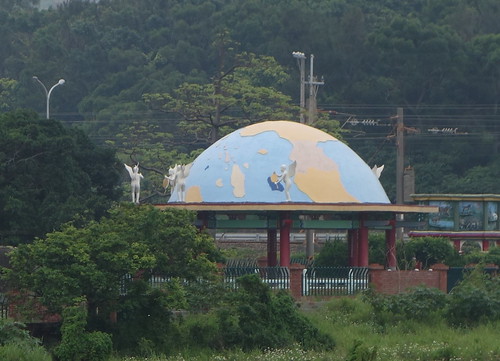
Dear reader: my apologies. After I saw this structure, my brain malfunctioned for several hours. I am completely unable to explain anything about this image.

Ma has spent the last couple of months trying to help Beijing by stirring up trouble in the South China Sea. This is a deliberate strategy, as I have noted for several years now, of irritating relations with Taiwan's key neighbors to the south and southeast, to help impede the formation of an anti-Beijing front -- even though Taiwan faces the same threat of expansion that they do. This is Ma doing what he can for China.

But China's expansion into the Senkakus and beyond to Okinawa, coupled with Taiwan's restless fishermen, offer countless possibilities for roiling relations with Japan. This week, in a word, Okinotori (Wiki). A few rocks that were rapidly eroding when Japan grabbed them, Wiki notes:
The waters around the reefs are potentially rich in oil and other resources and it lies in an area of potential military significance. At high tide, one area of the reefs is 1.58 square meters (17.0 square feet), roughly the size of a twin bed, and pokes just 7.4 centimetres (2.9 inches) out of the ocean. The other is 7.86 square meters (84.6 square feet), the size of a small bedroom, and rises 16 centimetres (6.3 inches), about twice as high. The entire reef consists of approximately 7.8 square kilometers (3.0 sq mi), most of which is submerged even at low tide.
According to UNCLOS these rocks, which cannot sustain human life or habitation on their own, cannot form an EEZ, although Japan has declared one based on these rocks. In 2004 China objected to the EEZ, and in the early 2000s it occasionally sent ships in to annoy the Japanese.

In case you missed that, Japan's position on Okinotori's ability to generate an EEZ is exactly the same as China's in the South China Sea, something that Chinese apologists frequently point out (of course, there's one tiny difference: Okinotori isn't someone else's territory). In fact, if you see a piece that begins by saying that China is behaving like everyone else, you're in all likelihood reading an apologetic for China.

This week Japan detained a Taiwanese fishing boat in the alleged EEZ...
Japan’s coast guard detained the captain and nine crew members aboard the Tung Sheng Chi No. 16 and towed the fishing boat to Iwo Jima. The captain and crew were released Monday afternoon once the vessel’s owner paid a $54,400 security deposit with the Taiwanese government’s help.
...and the Ma government pounced. Ma himself has a lifelong interest in island claims; his thesis is on China's claim to the Senkakus. The Ma government summoned the Japanese representative in Taiwan, and a few fishermen organized a pro forma protest outside the Japanese representative office in Taipei. The incident allowed Ma to pose as the protector of Taiwan's sovereignty, except that nobody in Taiwan cares about Ma. Tsai Ing-wen made the right noises in response. The China Times connected the incident with the banning of potentially radioactive food from Japan....
Japan is pressuring us to lift food import restrictions. Behind this pressure lies hidden weakness. Therefore we must drive a harder bargain to achieve the best results. Providing the government can stand the pressure, Japan will makes the final concession. Therefore the new government must be decisive and resolute.

The Dong Sheng Ji 16 incident is an opportunity to discuss lifting the ban on agricultural and marine products from the nuclear disaster area, and aggressively fight for Taiwan's fishing rights in the relevant waters. Regarding the Chong Zi Niao Reef EEZ, the new government must firmly reject the Japanese government's spurious claims. It must dispatch ships to protect our fishing vessels. Only that will provide us with the necessary bargaining chips.
Sure enough, the Ma Administration promised that Taiwan patrol boats will protect Taiwanese fishing boats in the area.
A coast guard vessel and a ship belonging to the Council of Agriculture will depart Sunday for waters near Okinotori atoll after a Taiwanese fishing boat operating some 150 nautical miles from the atoll was seized Monday by the Japanese coast guard.
The Japanese should have ignored the fishing boat, but instead, gave the Ma Administration the excuse to go all-out in irritating relations with Tokyo. Fortunately as the LA Times piece observed, Japan is merely waiting patiently for the Tsai Administration come onboard.

Meanwhile, Ma cranked up the rhetoric, doing absolutely everything to roil the waters...
President Ma Ying-jeou reiterated yesterday that “Okinotori is a reef,” so “the ROC government opposes Japan’s illegal expansion of jurisdiction in violation of international law.” Ma also announced that the ROC government would safeguard the freedom of its fishermen operating on the high seas in an effective way, and added that he had asked the Coast Guard Administration to send cutters to protect Taiwan fishing boats, saying “this is our fundamental right and we will not budge an inch.”
Compare that to Ma's studied silence on the illegality of China's illegal structures in the South China Sea. Like this last-minute dust up with Tokyo, that too is a vicious little gift to Beijing.

MEDIA NOTE: Kudos to Ralph Jennings for actually balancing China's desire to annex Taiwan with information on how Taiwanese feel about that:
Ma was elected in 2008 and must step down in May due to term limits. He made a name in office mostly for strengthening relations with China, expanding trade and tourism ties, but that effort met a public opinion backlash starting in 2014. China still hopes to unify with Taiwan despite opinion surveys in Taiwan that show a majority of people oppose that idea.
_______________________
Don't miss the comments below! And check out my blog and its sidebars for events, links to previous posts and picture posts, and scores of links to other Taiwan blogs and forums!
Thursday, January 28, 2016

Ma Raises Tensions: Just ask the State Dept!

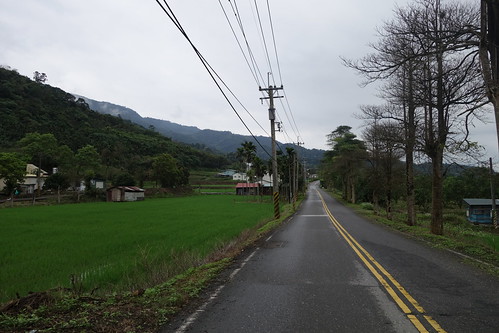
East coast

From the Daily Press Briefing of the State Department:

QUESTION: Yeah. The president of Taiwan, the President Ma, is going to travel to Taiping Island. And what’s the U.S. comment on it?

MR TONER: Sure. Hold on one second, please.

QUESTION: Sure.

MR TONER: You’re talking about – yeah, President Ma Ying-jeou’s plans to travel to Taiping Island, I think. Frankly, we’re disappointed. We view such an action as unhelpful, and it does not contribute to the peaceful resolution of disputes in the South China Sea. We urge Taiwan and all claimants to lower tensions and de-escalate tensions rather than taking actions that could possibly raise them.

QUESTION: Follow-up.

QUESTION: But even during the China build the rock, the U.S. don’t even use the wording like “disappointed” and “unhelpful.” Why this time the U.S. pick up these two wording on Taiwan? Is it fair enough for all the claimant? [MT: Love this reporter. May he have a long life with no back pain]

MR TONER: Well, look. I’m not going to – we’ve been very clear that we disagree with China’s actions in terms of manmade structures on the islands. We view them also as unhelpful and that they don’t lead to a peaceful resolution of the disputes over the South China Sea. We want to see a halt among all claimants to further land reclamation, construction of new facilities, militarization of outposts. All of that would help lower tensions and create space for a peaceful resolution.

QUESTION: (Inaudible.)

QUESTION: Will it further U.S.-Taiwan’s relation?

MR TONER: I’m not aware that we had a conversation with them. I just don’t know.

QUESTION: Will it affect the U.S. and Taiwan’s relation?

MR TONER: Will affect our --

QUESTION: Yeah. How will it affect --

QUESTION: We have very strong relations with Taiwan. Sometimes we disagree on their actions. We’re committed to a “one China” policy. [MT: recall this does not include Taiwan. Note use of "a" not "the" ] We look forward to the incoming president and building stronger relations with Taiwan. But we disagree on this particular act.

Please.

QUESTION: Yeah, Mark, the – you used some of the harsh words on President Ma’s trip to the Taiping Island. But Taiping is the largest natural island in the South China Sea the Republican of China has claimed since 1946 and has occupied since 1956. Why can’t he do that? Taiwan is probably the last party to want to raise tension in the South China Sea. But it has a voice that it wants the international community to hear. When you have – when you consult on the South China Sea, when you discuss the disputes in the South China Sea, Taiwan is never a party to be invited to the table. For instance, Secretary Kerry talked about a diplomatic approach to the disputes in the South China Sea in Beijing today. Would the United States make sure that Taiwan would be invited to the table as a party to the diplomatic approach? Thank you.

MR TONER: So – sure. I can’t speak to whether we would invite Taiwan to take part in any diplomatic conversations, except to say that – and to address your first part of your question, which is why not have its voice be heard by traveling to Taiping Island. Taiwan is – or rather, President Ma Ying-jeou has every right to make his position clear on the South China Sea. We just disagree with this particular action. We view it as – frankly, as raising tensions rather than what we want to see, which is de-escalation. We do want to see dialogue. We welcome all voices in the region weighing in in that dialogue. And it’s only through, as we’ve said many times, a diplomatic mechanism that we can successfully resolve the South China Sea.

Taiwan is a valued partner. We do have a strong dialogue with them and we’re going to continue to listen to their concerns and reflect their concerns in the various fora that address this issue.

QUESTION: Follow-up?

MR TONER: Please, follow up. Let’s finish this and then --

QUESTION: Last one.

MR TONER: Are you on this too?

QUESTION: In the region.

MR TONER: Okay. Cool.

QUESTION: Thanks. I mean, the point is Taiwan has long been excluded from the dialogue among the claimant of the South China Sea, and since the United States discourage President Ma from visiting the island, what would you encourage the Government of Taiwan to do as a claimant of the South China Sea?

MR TONER: Well again, I mean, I’m not going to list the steps that Taiwan or the Taiwanese Government should take and dictate to it in any way, shape, or form. I’m just saying that this particular action, we view as unhelpful.

*************
Obviously it was wise of the DPP not to participate in this mission of Ma's, which he has been nagging about for months now.

I'll be commenting elsewhere tomorrow... look for it.
_______________________
Don't miss the comments below! And check out my blog and its sidebars for events, links to previous posts and picture posts, and scores of links to other Taiwan blogs and forums!
Sunday, November 08, 2015

馬習團: Xi Dada meets Ma

Such a lovely day! Who wants to come home and write about the 馬習團 after ten hours riding in this?

l'll talk to this Humungus! He's a reasonable man, open to negotiation.

Well, it's all over but the commentary. Lots of good stuff all over, but I'd like to highlight this piece from Gwenyth Wang at Ketagalan Media:
As the world watches today’s “Ma-Xi Meeting,” I expect to see the results reinforce the significance of the 1992 Consensus. However, by holding such an unprecedented meeting under the international spotlight, Ma has opened up a Pandora’s Box, and unleashed Taiwan’s dynamic and strong civil society, which has taken root in a democratic soil. They will demand democratic scrutiny of the meeting and will not tolerate any unilateral decision to define the “status quo.” Welcome to democracy, Xi Dada.
A lot of people were wrong about the 1992 Consensus, thinking it would be front and center. This was a case of media stupidity -- there is no other word -- because most of the major media and internet outlets incorrectly asserted that the 1992 Consensus is an agreement between Taiwan and China. Wrong! China has never accepted it, and that was never made clearer than at "LegacyWhore in Singapore 2015", when Ma repeatedly raised the 1992C, and was repeatedly ignored by Xi Dada. Naturally all that was deleted from the official transcript. Naturally you won't see any corrections in the Establishment media, either.

Chieh-ting Yeh rammed this point home:
Right now, the attention is on the fact that Ma’s opening statement neglected to mention the second part of the 1992 Consensus that Taiwan had insisted on—that Taiwan can interpret “China” to mean the government in Taiwan. For Taiwan, that is the only part of the 1992 Consensus that keeps it palatable, that the government in Taiwan still has any leverage to claim its existence. Since the Chinese side made no comment on this line whatsoever, in effect China had just denied Taiwan’s political existence to Taiwan’s face.

As a tool of diplomatic ambiguity, the 1992 Consensus is now dead to the Taiwanese people. There is nothing ambiguous about it anymore. We have officially ended the era of the 1992 Consensus, and entered a new era—where China thinks there is no more room left for Taiwan.
I think Yeh underestimates the plodding insistence of the KMT, which will simply ignore the fact that China was silent, and continue to insist the 1992C governs relations.

Wang put her sharp, elegant finger on the most important point, the ghost in the machination: Taiwan's democracy. Even as the 馬習團 was launching from the MaXipad at the Shangri-La in Singapore, Taiwan's democracy was already clutching Ma in its eagle-clawed grip: he couldn't do anything because his party has to get elected, and Taiwan's civil society won't stand for his Big Man style of rule and secrecy. Lots of people didn't have faith in Taiwan's democracy, while I was wishing Ma and Xi could meet every day. In the end it was the party not present, our robust democracy, that won that meeting. Hands down. UPDATE: Don't miss Sullivan's remarks.

As DPP Presidential candidate Tsai Ing-wen observed....
"A president should represent and execute the will of the people. However, President Ma’s handling of yesterday’s Ma-Xi meeting left many disappointed, if not furious. In the eyes of the Taiwanese people, the only “historic record” set on the international arena by the Ma-Xi meeting was President Ma’s giddy handshake. Left out of the entire process were Taiwan’s democracy and any sign of the Republic of China’s existence.
Frozen Garlic tried to be positive for Ma:
I think Ma will probably experience a small bump in his popularity, but any positive effects in the legislative races will be offset by the negative effects of nationalizing the race. Ma and the KMT are still overwhelmingly unpopular, and the election has now been reframed in terms of high politics. Given that the KMT’s best chance of surviving January is the local popularity (based on things like intensive constituency service) of their 40 incumbents, forcing voters to think about national issues (ie: vote for the party, not the individual) is perhaps not the wisest strategy. In the presidential polls, Tsai is so far ahead that there is almost no chance that the Ma-Xi meeting will affect the outcome. (Before this all broke, most polls had her ahead by around 20%, and the gap was widening. Historically, a 20% gap in polls has usually meant something around a 20% margin in the final vote. So I wouldn’t be shocked if the roughly 45-23% gap ends up as a 58-36% victory.) Ma has tried to argue to voters that Tsai can’t conduct relations with China since she won’t accept the 92 Consensus. According to hundreds of polls, the voters haven’t bought that message so far. I didn’t see anything this weekend that would make them change their minds en masse.
Many of us observed that Ma's 1992 Consensus statements lacked the "two interpretations" part that KMT True Believers have always insisted on, which made them more or less equal to Hung's "One China, One interpretation" craziness. Hung herself treated the meeting as a vindication of her ideas.

There's really not much more to say. Ma said that Xi said the hundreds of missiles facing us aren't targeted at Taiwan. Of course that is absurd, and everyone will laugh. Everyone knows that Ma did this only for himself and for his personal legacy in history. The meeting was completely vapid, as I expected, and nothing concrete came out of it. If this does not hurt Ma and the KMT, it is only because their standing can't sink any lower.

There's lots of commentary out there... good luck hunting it down. This event will quickly pass into history, with KMT candidate Eric Chu off to the US to assure the US that the KMT isn't actually a party in rapid decline, and the election should move back to front and center here.
_______________________
Don't miss the comments below! And check out my blog and its sidebars for events, links to previous posts and picture posts, and scores of links to other Taiwan blogs and forums!
Thursday, November 05, 2015

馬習團: Evening Media Round Up

Fishing.

All the international media is entirely correct. This pony and dog show in Singapore does indeed herald a new era in China-Taiwan relations: the Tsai Ing-wen era, when China will have to adjust to dealing with a DPP administration which the US will, I expect, reluctantly come to support more and more as tensions grow between Beijing and Washington. Things are changing in Asia, and Xi is attempting to signal to neighboring states as well as to domestic audiences that he is flexible enough to change with them (see below).

NOTES FROM THE FIELD: Today a couple of my students said they were happy to think about Ma shaking hands with Xi. Apparently there was a legend running around the PTTs (internet bulletin boards widely used among students) last year which talked about Ma's Handshake of Death -- shaking hands with Ma was certain to be followed by bad luck. Apparently Ma shook the hands of the pilots of the Apache helicopter he rode in, which was the first one that crashed. Other examples were given, but I can't remember them.

A friend remarks: Ma and Xi splitting the dinner bill? So... they're going Dutch in homage to Taiwan's colonial roots..."

Straits Times: KMT hoping for Boost. Extensively quotes J Michael Cole, a "Taipei-based analyst".
To boost KMT's chances, cross-strait expert Chu Jingtao of the Chinese Academy of Social Sciences believes Mr Xi may promise more room for Taiwan in the global arena to counter the long-running grumbles among Taiwanese over the island's limited involvement in multilateral initiatives.

Asked if the meeting may have come too late, Dr Chu said: "It's hard to predict the election outcome. The Taiwanese people, and also the Americans, know that an unstable cross-strait situation is not good for anyone."

But some observers believe the CCP is already preparing for the event of a DPP win by trying to protect the progress in cross-strait cooperation since the Beijing-friendly KMT took power in 2008.
I love that last paragraph -- Beijing is "protecting" cross-strait cooperation as if the DPP were a threat. It is Beijing's threat to annex Taiwan, not DPP resistance, that threatens the China-Taiwan relationship. Beijing can have good relations any time, merely by ceasing to threaten to Taiwan.

FocusTaiwan: President hopes meetings will become regular.
Taipei, Nov. 5 (CNA) President Ma Ying-jeou (馬英九) said Thursday that his upcoming "historic landmark" talks with Chinese President Xi Jinping (習近平) will mark the first step toward making such meetings a regular occurrence between the leaders of the two sides and will help further improve cross-Taiwan Strait relations.
The Diplomat: Shannon Tiezzi rounds up What We Know So Far. It's ok until the end, where it suddenly veers into KMT/CCP propaganda territory:
While the KMT has refuted charges that the Ma-Xi meeting is an attempt to shore up support before the election, there’s little doubt that Beijing wants to use the meeting to showcase its vision for cross-strait relations. One of the points of the meeting, according to Zheng, is to solidify the 1992 consensus as the “common political foundation” of the relationship. The 1992 consensus, in which both sides agreed there is one China, while remaining ambiguous on which government represents “China,” has never been accepted by the DPP. Beijing had repeatedly painted acceptance of the 1992 consensus as its bottom line for cross-strait relations, and will look to use the Ma-Xi meeting to drive that point home.

Zhang also took a more overt swipe at the DPP, saying that years ago, when the cross-strait relationship was “on the verge of a crisis” thanks to the “provocations of ‘Taiwan independence’ splittist forces,” a meeting of the top leaders from both sides would have been hard to imagine. Zhang was referring to is the cross-strait tensions that came under the leadership of the only DPP president to date, Chen Shui-bian.
Again the tensions that occur without any cause. Wouldn't it be great if the sentence had read "the tensions ramped up by China during the Chen Administration." The 1992 Consensus never existed, it is merely a cage to imprison the DPP. That needs to be in there to properly contextualize the 1992C. The common political foundation of CCP-KMT talks is not the 1992C but China's desire to annex Taiwan.

New Bloom: Two Days of Empty Words
And in the roughly two days since news broke, we have largely seem empty words from the Ma administration in which the Ma government insisted that Taiwan’s rights would not be compromised through the meeting. Yet the Ma government as well as Ma himself have attempted to occlude any specifics of the complex diplomatic dance by which Ma and Xi are to meet as equals without acknowledging each other as sovereign heads of state, though the details that media has managed to pry from the Ma administration are quite ridiculous. Ma and Xi will address each other solely as “Mister,” for example, in order to avoid the complicated question of how Chinese and Taiwanese high government officials should address the other which has been an obstacle to holding cross-strait meetings in the past. Significantly, in all this, China has only ever been referred to by Ma as well as officials as “the mainland,” not as “China”, or as “mainland China.” Furthermore, attempts by Mainland Affairs Congress to obfuscate issues were quite borderline at times, insisting that the situation was perfectly clear where “the leader of Taiwan is the leader of Taiwan and the leader of China is the leader of China”—when, of course, what is not clear at all is what the relation of the leader of Taiwan to the leader of China would be in this meeting.
Frozen Garlic on the public reaction -- Frozen Garlic has turned out a string of excellent posts at a furious pace, wish he'd do that more often. Read the whole post, but his critique of the polls:
There is some fuzzy public opinion data that suggests the population is generally supportive of high level contact. The Mainland Affairs Council has been claiming that 80% of the population expressed approval to a meeting of leaders done with appropriate respect. I don’t know where that number comes from, but they do regular surveys. They could be cherry-picking a specific result and this concrete Ma-Xi meeting may or may not satisfy the hypothetical condition of mutual respect, but we probably shouldn’t dismiss this datum altogether. Apple Daily had an online poll yesterday that was running about 70% in favor of the meeting when I checked last night. (I can’t find a link.) However, voluntary online polls are always problematic since supporters or opponents can flood the poll with responses if they wish. Today Apple has a telephone poll up that shows the opposite result: 53% oppose the meeting while only 38% support it. Be careful with this number, though. The two options were, “I don’t support it. President Ma will leave office soon, so handling cross straits affairs should be left to the next president,” and “I support it. It will help cross straits relations.” The sample size is only 420, so this has a sampling error of about 5%. Apple’s polls are also voice-recorded, and they tend to be a little less consistent than polls from other organizations using human interviewers. The Pollcracy Lab run by the Election Study Center also did a quick internet survey yesterday and found that 64% of respondents supported the Ma-Xi meeting. Again, take this number with some reservations. The sample size was only 275, and this was a non-random sample. I have no idea what the margin of error is for this type of survey. However, unlike most media internet surveys, it would be very difficult for supporters or opponents to infiltrate and sway these results. The ESC gets email addresses from telephone respondents (in other surveys), and the Pollcracy Lab sends out invitations to participate in an internet survey to people on this list. Thus, while this is not a random sample, neither is it a self-selected sample. (Note: I am an adjunct faculty member at the Election Study Center at NCCU, but I am not involved in the Pollcracy Lab project. I learned of this survey on my Facebook feed.)
I polled a couple of my classes anonymously. My students were fairly divided with majority not in favor of this meeting, and a clear majority thinking it would not help the KMT, so I suspect Froze is right and there might well be majority support, though the reasons will vary across groups (lots of us support this meeting because we see it as bad for the KMT). Froze also spends much time talking about the excellent reaction of Tsai Ing-wen, which, as many observers have noted, is calm, prepared, and critical of Ma's action from the perspective of Taiwan's democratic development. One of the many sources of KMT failure is its objection to democracy, and to take democracy into its own identity. The KMT remains very much the party of a small circle of crony elites run by a Big Man. Meanwhile when Tsai speaks, she speaks from a robust and growing democratic identity shared across Taiwan -- no one in the KMT can do that at present.

Like many, Frozen Garlic noted that Tsai's calmness shows that the KMT claim that only it can handle cross-strait relations is hollow; Tsai obviously can (indeed, she has experience in that government department). Public opinion polls support her on this.

FocusTaiwan carries the government denial that the South China Sea will be touched on at the meeting. Many people fearing some kind of joint statement on it that aligns Taiwan with the China claims. Ma claimed he will ask for more space for Taiwan in international organizations. It seems that at best he will come home with another hollow gain, like observer status at WHO, which the public will laugh at, or ask why he couldn't have done that sooner.

Ralph Jennings in Forbes argues for three potential outcomes:
3. The two sides reach an invisible understanding. Ma will step down next year due to term limits. Per opinion polls, the next president will be Tsai Ing-wen, who advocates a rethink of today’s friendly dialogue with China. But Tsai’s party has poor relations with the Communists. Ma and Xi might set a course for informal party-to-party ties even when the Nationalists aren’t in power. Their back channel would sidestep Tsai’s government to give economic goodies to Taiwan’s skeptical public, giving the Nationalists a better chance at the presidency in 2020.
Of course they will have back channels. I sure hope they use them to give "economic goodies". Ma's economic arrangements have done nothing but damage Taiwan's interests for the sake of big business and of course, to help China, and we can expect more of the same, which would harm the KMT even further. China's leaders are not free traders but zero-sum mercantilists. China will never make concessions that meaningfully benefit Taiwan.

MAC suggests that cross-strait leader meetings be institutionalized. That would be great. It will be fun watching Tsai Ing-wen calmly deflecting slights from Beijing in an empty meeting, which all of Taiwan will feel as a slight to itself. Ma Ying-jeou will never have an affectionate nickname like 小英 ("little Ing"), a moniker widely used among her supporters.

A coup for Ketagalan Media which hosts a piece from the extremely sharp, extremely professional Gwenyth Wang: The Ma-Xi Summit Double Edged Sword. The last two paras rock:
Furthermore, China would like to create an atmosphere internationally that Taiwan is on China’s side, especially with tensions rising with the United States and Southeast Asia over the South China Sea. National Taiwan University Political Science Professor Tao Yi-feng commented in an op-ed that the KMT’s prospect in the 2016 election is not of Xi’s concern. Rather, Xi aims to portray China as a “peacemaker” in the region by having a historical Ma-Xi meeting while steering the direction of ties to be more aligned with China’s interests.

For President Ma, he vows to deliver cross-Strait peace and reduce the uncertainty in the relations between Taiwan and China. However, as Taiwan-China relations develop, no change can be single-handedly decided by the leaders. Rather, the people must have the final say. Ma and Xi might hope to “institutionalize” the 1992 Consensus by the historical meeting; however, what they really need do is to take into account the vibrant Taiwanese civil society and the growing Taiwan identity that is steering the island away from the bridge built by President Ma.
ChineseWhy did Xi meet Ma? Regional politics. Good point -- too much analysis is looking at this only from the cross-strait perspective.

REFS: SCMP Says Taiwan's MAC suggested timing of meeting. Times of India blog on the meeting. Video: J Michael Cole on Al Jazeera spanking a Beijing political warfare propagandist, with Jonathon Fenby. KMT argues that Xi has "virtually accepted" the One Country, Two governments formula.

FOR AMUSEMENT PURPOSES ONLYTIME is so freakishly stupid, it's no wonder everyone reads blogs and forums. "Taiwan's Founder?" Absolutely shameful. Precious space in a major media organ, and all they can do is urk up rank nonsense. I can name at least 50 locally-based writers who do 10X better work. Though saying nothing is rather appropriate, considering what's going to happen at the MaXiMeet. It's interesting to compare how thin and silly the listicles TIME produced (one here) even though they do cite the awesome Willy Lam, compared to the meaty stuff produced practically anywhere else.

A European Taiwan observer summed up the TIME piece on the Founder of Taiwan as well as how much the media has changed in the last decade, and especially since the Sunflowers: "Actually, most of the media reports were fairly good. This stupid above used to be norm."
____________________
MOAR Daily Links:
_______________________
Don't miss the comments below! And check out my blog and its sidebars for events, links to previous posts and picture posts, and scores of links to other Taiwan blogs and forums!

Wednesday, November 04, 2015

馬習團 Round Up

DSC07400
Somewhere on the East Coast, all is calm. But not anywhere else in Taiwan today.

Since this Ma-Xi circus stormed through late last night, I can't remember the last time I enjoyed my Twitter feed so much. For a politics junkie, Twitter is basically intravenous heroin.

As everyone not living in a rift valley on Pluto knows, Tuesday night the news leaked that President Ma of the Republic of China on Taiwan and President Xi of the People's Republic of China are meeting on Saturday in Singapore. The outside media has been all over the "historic" meeting of the two leaders of the two "rivals". BBC, which is likely to become even more pro-China now that the United Kingdom has become a Chinese state-owned enterprise, announces: Taiwan and China to hold historic summit in Singapore. Reuters did a much better job, with an article of some depth. The Guardian had a strong piece with good quotes from J Michael Cole.

No one in the international media is willing to say the truth, that this is a meeting between leaders of two expansionist Chinese parties, not between rival governments, and any "reconciliation" between them can only take place over the dead body of Taiwan's democracy.

While the world media was talking about a historic meeting, all us local observers were LMAO. My man from Seattle put it best in a laconic comment in my message box: "It's nice of Ma to stump for Tsai Ing-wen". But all of us, myself, Frozen Garlic, Solidarity.tw, and many others all had the same reaction: this will hurt the KMT. Frozen Garlic had an insta-reaction which was quoted in the international media...
What is more likely is that this trip will create a strong backlash in Taiwanese society. Many people will be very uneasy at the prospect of an unpopular lame duck president trying to fundamentally change the status quo in the last few months of his presidency. Ma simply does not have any popular mandate for cross-straits negotiations right now. The more he tries to accomplish, the larger the backlash will be. Ma might assume that a picture of him shaking hands with Xi will be a powerful image for KMT campaign ads, but I suspect he is misjudging the electorate. I would not be at all surprised if that photo does not show up more frequently in anti-KMT ads, facebook posts, youtube videos, and tweets. Instead of symbolizing the success of the KMT’s strategy for dealing with China, I believe that photo will come to symbolize Ma’s insistence on putting his personal interests (ie: his legacy) ahead of the national interests.
Another long time observer remarked on my Facebook:
We have to remember that this party has failed miserably for years and never learns from those mistakes. I see no reason not to believe that Ma believes this meeting will help the KMT in the coming elections. He lives in a bubble and knows in his heart he has done right by Taiwanese;only they just don't know it. There is no 3-dimensional chess strategy here. Neither Ma nor Xi understand the public but operate on opaque principles known mostly to themselves.
A longtime resident remarked to me that "Ma had single-handedly refocused the election on China" -- at a time when it was becoming increasingly local. Frozen Garlic called this Nationalizing the Elections and opined that it will hurt nationalist candidates in the elections, since the KMT had been working on localizing its legislative candidates to increase their chances of victory.

Ko Wen-je, the Mayor of Taipei, said that such a meeting should have been the result of a social consensus in all of Taiwan society. Ko has the entertaining habit of saying what many think, as he is in this case. What Ma's decision shows is a contempt for Taiwanese civil society and Taiwanese feelings, as well as democratic procedure -- the government is bound by its own laws to inform the legislature of major decisions like this, but the legislature was kept in the dark. Taiwanese have incorporated democracy into their social identity, and do not like it when their democracy is threatened or belittled. They won't like this.

The news has two other effects I'd like to highlight -- one is that it pushes news of KMT Chairman and Presidential candidate Eric Chu's visit to the US beginning Nov. 10th into the background. The other is that it has now wiped news of the KMT's increasingly nasty internal divisions, the latest news of which has Legislative Speaker and KMT heavyweight Wang Jin-pyng, unofficial leader of the Taiwanese KMT, promising to campaign only for his people in the legislatureThe Ma camp was allegedly upset with Eric Chu, who is looking increasingly Machiavellian. Was Chu informed that his president was meeting with Xi? I think not, for Wang Jin-pyng already said he heard it on the news.

Note that in certain sectors of the KMT, those most supportive of former KMT candidate Hung Hsiu-chu and thus currently disaffected, a Ma-Xi meeting would be strongly supported. Ensconced in his ideological bubble and eager for a legacy moment, Ma seems to have ignored the wider implications for the elections... From outsiders I often hear how incompetent KMT elites are because the choices they've made recently made little sense for the upcoming elections. But for the crowd at the top of the KMT, you can explain many of their seemingly inexplicable actions if you recall that the prize in this game of thrones isn't the Presidency or even the Legislature, but control of the KMT itself, the Church of the Mainlander Identity, in their eyes the real ROC.

The stock market rose and business groups were of course happy to see Ma and Xi in a dance. Everyone knows that the cross-strait agreements have been good for big firms (and organized crime), and immediately government spokespeople began making noises about the services pact, which is good for the DPP since the public hates it.

Meanwhile the internet is already filling with responses, some parodic, some serious. President Ma has been promising, since he was candidate Ma, that he would never meet the President of China -- the videos of him saying it again and again all went viral, as reported by the pro-KMT UDN (video of 2011 Candidate Ma making that promise, with subtitles). All promises now broken. The Presidential Office has promised it will make no joint statements or similar, but many are expecting that Ma and Xi will make some noise about the 1992 Consensus. Let's not forget -- because the media will never report it -- that the basis for KMT-CCP relations is not the 1992 Consensus but China's desire to annex Taiwan to China. The 1992C was invented to imprison the DPP. Longtime US Taiwan expert Shirley Kan explains how the differences over the 1992C can be reconciled here.

US State Department briefing on this is below, but it seems intuitively obvious that the US was caught by surprise and thus, made the usual noises -- which as a longtime observer noted, give the appearance of endorsing the meeting. Some on the net are saying this was actually initiated by Xi Jin-ping, not Ma, because Xi is concerned about the KMT's losing position in the elections. UPDATE: US was informed of whole process, not caught by surprise.

LINKS-N-STUFF ON THIS DEBACLE
STATE DEPARTMENT BRIEFING

QUESTION: Can I change the topic, Taiwan?

MS TRUDEAU: Of course I’ll go to Taiwan.

QUESTION: Yes, that the president of Taiwan, President Ma, and the Chinese president, President Xi, will have a meeting in Singapore this Saturday. Do you have any comment on it regarding the peace and stability in region?

MS TRUDEAU: Okay. We welcome the steps both sides of the Taiwan Strait have taken in recent years to reduce tensions and improve cross-strait relations. The United States has a deep and abiding interest in peace and stability in the Taiwan Strait. The benefits that stable and positive cross-strait ties have brought to both sides of the Taiwan Strait, the United States, and the region have been enormous. We encourage authorities in Beijing and Taipei to continue their constructive dialogue on the basis of dignity and respect.

QUESTION: Are you aware of it in advance?

MS TRUDEAU: I’m sorry?

QUESTION: Are you aware --

MS TRUDEAU: We’re aware of those reports. I’m not going to speak specifically of those reports, but I will say that we are – we welcome --

QUESTION: So, I mean, are you aware of it before the news release or you just --

MS TRUDEAU: I’m not going to discuss sort of our political dialogue on that.

QUESTION: So what are the expectations or concerns that United States might have out of the meeting?

MS TRUDEAU: We believe cross-strait issues should be resolved peacefully in a manner, pace, and scope acceptable to people on both sides of the strait. We have welcomed the steps both sides of the Taiwan Strait have taken in recent years. I’m not going to speculate in advance of this. We’ve seen the reports. We’d welcome all steps.

QUESTION: So is it good timing from U.S. perspect – is it good timing for --

MS TRUDEAU: Well, we welcome all steps, so it’s always good timing.

Go ahead.

QUESTION: Is it going to have any impact on the U.S. arms sales to Taiwan?

MS TRUDEAU: I’m not going to speak on that. The U.S. has a very strong unofficial relationship with Taiwan in terms of military matters. I’m going to refer you to the Department of Defense.

______________________
Daily Links:
_______________________
Don't miss the comments below! And check out my blog and its sidebars for events, links to previous posts and picture posts, and scores of links to other Taiwan blogs and forums!

Monday, June 08, 2015

Irritant Watch =UPDATED=


UPDATE: Read it: today's most important post on the business dealings of KMT Chairman Eric Chu's family. It's just business as usual....

I've often remarked on this blog that one of the Ma Administration's policies is to put forth issues that will keep relations with neighboring countries and the US irritated, in order to reduce their willingness to intervene on behalf of Taiwan against China and to make Taiwanese feel isolated and resigned to becoming annexed to China. Note the obsessive focus on China, Japan, and the US -- and the total neglect of Philippines, Malaysia, Indonesia, Vietnam, Sri Lanka, and Cambodia (a hearty dose of Han chauvinism is also a driver). The fishing disputes with Phils may cool, says an article in Forbes. Don't worry, they can always be revived... or something else stoked up.

For Japan, the usual irritant is the Senkakus, but another issue is the Comfort Women issue, which Ma has stoked several times. Ma announced last week that a new Comfort Women museum would open in Dec in Taipei:
Ma has shown strong interest in the comfort women issue, saying that the system of wartime prostitution was an abuse of human rights and a serious war crime.

Four Taiwanese victims of the Japanese system are alive, with their average age exceeding 90, according to a supporter group.

In July last year, Ma unveiled an idea of setting up museums on China’s war against Japan and the comfort women in 2015.
Fortunately, Taiwanese are completely indifferent to Ma's attempts to get them to hate on Japanese as stereotypical Chinese are supposed to.

Note that 200,000 Taiwanese served in the Japanese armed forces during the war, including thousands of aborigines. There is little official recognition of that in Taiwan. That generation is also nearly gone. It's high time they got a museum since they, like the Comfort Women, like everyone who fought and suffered in WII on both sides, were victims of imperial expansion and aggression.
________________________
Daily Links:
_______________________
Don't miss the comments below! And check out my blog and its sidebars for events, links to previous posts and picture posts, and scores of links to other Taiwan blogs and forums!
Friday, May 08, 2015

The We're China Correction Policy

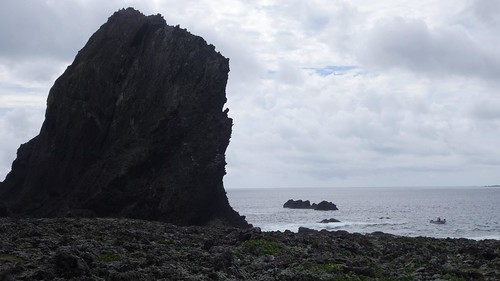
Enjoying an east coast ride.

Eric Chu's demand that AP correct its claim that he had agreed on eventual "unification" of Taiwan with China was not an isolated incident. It's policy.

Remember this from last year?
The Ministry of Foreign Affairs yesterday said it would demand a correction after a Chinese-language report by Deutsche Welle (DW) quoted President Ma Ying-jeou (馬英九) as saying he aims to learn from the experience of East Germany and West Germany in handling bilateral relations and “their ultimate unification.”
Ma had a habit that Chu appears to be recapitulating. He'd speak to some foreign newspaper or in a foreign location, and reaffirm that Taiwan is part of China awaiting "unification" with the motherland, which the reporter would dutifully paraphrase or quote. Then the following day, when the local public woke up to discover that Ma had declared them all Chinese, a deeply unpopular position, the President would demand a retraction.

Another example is this one from 2010:
The Presidential Office yesterday released audio recording of President Ma Ying-jeou's interview with the Associated Press in an attempt to set the record straight over a controversial interpretation by the news agency on Ma's readiness for cross-strait political talks.

Ma denied a report by AP Tuesday suggesting that he was ready for political dialogue with mainland China in his second term if he gets re-elected, stressing that he never made such a remark nor linked political talks with his second term in the interview.

The Presidential Office Tuesday demanded AP correct their story. AP did not make such a correction. Asked by Taiwanese media on the news agency's response, AP's Taiwanese correspondent, Peter Enav, said that AP stands by its report.
As the always insightful James Wang noted in the Taipei Times about this "correction":
His recent interview with The Associated Press (AP) was no exception. The more he spoke, the more pro-Chinese he sounded, and he showed that internationally he fears China, while at home he fears the voters. These two fears have one thing in common — fear of not being re-elected. This kowtowing and deception was at the center of his demand that AP “correct” its report about the interview.
Here, with Chu, we have the same situation: Chu in a foreign country, talking about Taiwan's status. Obviously, a correction had to be demanded.

It's policy, after all.
_______________________
Don't miss the comments below! And check out my blog and its sidebars for events, links to previous posts and picture posts, and scores of links to other Taiwan blogs and forums!
Saturday, April 25, 2015

KMT round up

The entrance to the Baonon bikeway. This is the old Japanese coastal highway. As I recall, there's no information anywhere along this road that gives this fact. One of the key effects, and probably, key functions, of the new tourism infrastructure in Taiwan is eliminating history by turning it into homogenized and identical leisure facilities with no location in time and no relation to the past. That is just as true of the so-called Old Streets. 

The Miaoli county government, long a KMT redoubt, isn't going to get a bailout from the central government:
The Finance Ministry (財政部) yesterday denied the Miaoli County Government's appeal for help with a NT$64.8 billion debt

Miaoli County Magistrate Hsu Yao-chang (徐耀昌) has appealed to the Ministry of Finance for financial support, saying his administration is in dire financial straits partly due to the central government's unfair allocation of tax revenues.

The public debt stands at approximately NT$64.8 billion and the county is behind on payments to government personnel and project contractors, Hsu said.
.
"...partly due..." That claim is correct -- we in central and southern Taiwan subsidize the lavish lifestyle of Taipei. A Miaoli resident remarked on Facebook that the government plans to eliminate many contract workers and reduce outlays for worker perks. Previous reports said that work on many larger projects may stop or slow. You'd think the KMT administration would be going all-out to save one of the few places where it still has strong control of the local government...

Solidarity.tw translated an Apple Daily piece on the previous KMT county chief:
Wu criticized former county magistrate Liu Cheng-hung 劉政鴻 (KMT) for squandering NT$1.2 billion (US$38m) at the very beginning of his term to renovate the county government building, planning a special High Speed Rail zone, and expropriating land for new development in large quantities. During Liu’s 8 years, it spent NT$218 million (US$7.0m) on fireworks and concerts, more than double the NT$100 million (US$3.2m) it spends annually on nutritious school lunches. Liu tripled the county’s debt while paying off NT$70 million (US$2.2m). He created wealth for himself while leaving debt for Miaoli’s future generations.

DPP Miaoli County Chapter Chairman Lee Kui-fu 李貴富 stated that when current magistrate Hsu Yao-chang 徐耀昌 (KMT) took office, he said he would lay off 443 staff from city hall, but to date he has only laid off 3. From January to April, the government has put out NT$850 million (US$27.2m) in new contractors, including NT$50 million (US$1.6m) for media buys and road greening and beautification. Lee said that changing potted plants every month for greening and beautification is an unnecessary waste and a case of Liu setting the example and Hsu following it.
Don't miss the Liberty Times piece on Liu's debts that Solidarity translated below. Miraculously, he paid off his massive debts in just a couple of years.

This will negatively impact the KMT's fortunes in Miaoli. Note also that Miaoli has many Hakkas, long a strongly pro-KMT group, driven by the KMT's ethnic politics ("OMG, if you don't vote KMT, the Hoklos will persecute you!"). Hakka problems in Miaoli may well reverberate beyond Miaoli.

The media announced that a meet up between KMT Chairman Eric Chu and Beijing President Xi Jin-ping was set for May 4, a claim that Chu tartly denied. Chu is off to perform the ritual KMT kowtow in early May, as AP and WSJ report.  The AP report, from Beijing gives an outsider's view but it is quite good -- while importantly, the WSJ article reports the DPP position (kudos for that):
The DPP’s presidential nominee, Tsai Ing-wen, has criticized the annual cross-party forum, saying cross-Strait affairs should be handled on a government-to-government, not a party-to-party, level.
Tsai's position that this KMT-CCP reconciliation (not Taiwan-China) is a kind of cronyism is important information, for while the outside world sees "growing reconciliation" or some such tripe, the locals don't have a positive view and correctly perceive it as an end-run around the legal and diplomatic framework. It is also indicative of how the KMT continues to view Taiwan as something it can dispose of at will, a bargaining chip for negotiations with the CCP. and how it views the government as an appendage of the KMT. The party-state mentality is not dead, sadly.

Mega-Kudos to AP for including this:
Beijing considers Taiwan to be Chinese territory to be brought under its control by force if necessary, although it ruled the island for just four of the past 110 years.
What's the support level for Chu? TVBS, the pro-Blue station, has a poll which Solidarity.tw posted:
1. Do you support KMT Chair Eric Chu 朱立倫 leading a delegation to Shanghai to participate in a KMT-CPC cross-strait economic and trade forum there?
Yes: 38% (12% Strongly, 26% Somewhat)
No: 19% (10% Somewhat, 9% Strongly)
No Opinion: 42%

2. If he had the opportunity, would you support KMT Chair Eric Chu meeting with mainland Chinese national chairman Xi Jinping 習近平?
Yes: 50% (17% Strongly, 33% Somewhat)
No: 27% (15% Somewhat, 12% Strongly)
No Opinion: 24%
Support for Chu's move is lukewarm at best, as Solidarity points out. If there is a Chu-Xi meet up in public, gleeful netizens will photoshop the heck out of it and in the end, it will be a negative for a Chu run for president.

Meanwhile, for President Ma, it's business as usual. Ma is nominating four justices to be grand justices, including one who found him innocent on corruption charges....
“Due to the Chinese Nationalist Party’s (KMT) boycott of the four nominees made by the previous president, Ma was able to nominate 11 grand justices in 2008,” Cheng said. “If he nominates four more, all 15 of them would be Ma’s nominees.”

........

Citizens’ Congress Watch executive director Chang Hung-lin (張宏林) urged legislators to reject the four nominees: lawyer Huang Horng-shya (黃虹霞), Deputy Minister of Justice Wu Chen-huan (吳陳鐶), National Taiwan University law professor Tsai Ming-cheng (蔡明誠) and Shilin District Court President Lin Jyun-yi (林俊益).

Aside from the constitutional issue, DPP Legislator Huang Wei-cher (黃偉哲) questioned Ma’s choice of Lin, a former Supreme Court judge who acquitted Ma of corruption charges in connection with the use of his special allowance during his stint as Taipei mayor.

“It is obvious that Ma is trying to pay Lin back by nominating him as a grand justice,” Huang said.
Ma has been under attack for corruption in recent months, though nothing seems to have stuck. But if he is tried for any of several potential crimes, including abuse of power in the Wang case, he'll have a friendly court of grand justices.

More importantly, a totally pro-KMT court will also act as a final redoubt of pro-China power if the KMT loses the legislature and the DPP puts forward a pro-Taiwan policy program. If any of Tsai Ing-wen's policies come up for review of the court...
________________
Daily Links:
_______________________
Don't miss the comments below! And check out my blog and its sidebars for events, links to previous posts and picture posts, and scores of links to other Taiwan blogs and forums!