Showing posts with label World War II. Show all posts

Sunday, August 23, 2015

Kongo and Taiwan

The battlecruiser Kongo in her WWI configuration, as she would have appeared in 1923. Some of my South African readers might recognize the port.

I've been a battleship nut since I was a kid, and as an adult, a Pacific War buff. Yamato may have been the mightiest of Japan's battleships, but to my mind there's no question that the greatest of them was the battleship Kongo (金剛). Kongo participated in perhaps the most effective Japanese battleship action of the war, the night bombardment of Henderson Field on Guadalcanal on Oct 13, 1942. Kongo also sank the legendary Samuel B. Roberts in the desperate Battle off Samar in Oct of 1944 and put the hurt on US carriers in that battle. And Kongo also had a long association with Taiwan.

Kongo was originally built in the UK as a battlecruiser, ordered by the Japanese navy. In 1923 Hirohito, then Crown Prince and Regent since the Emperor was incapacitated, decided to tour Taiwan. In April of 1923 he embarked aboard Kongo from Yokusaka and arrived in Keelung on April 16, 1923. The Takao Club, a fantastic website, has a detailed essay on his journey in Taiwan, with numerous photos. After a week, Hirohito boarded Kongo again, from Takao (Kaohsiung) to make an inspection tour of the naval base at Makung in Penghu. Hirohito left Keelung on the 26th and returned aboard Kongo on the 26th.

In 1929 and again in 1935 Kongo received an extensive upgrade (image), and was reclassified as a fast battleship. In 1927 Kongo stopped at Makung. In 1933 she visited Taiwan and Penghu, and again in 1938 on her way to and from operations in China, stopped at Keelung and Makung.

Makung (Mako in Japanese),was upgraded to Guard District status in November of 1941. When the war began, three minesweeper divisions, three patrol vessels, three D1A aircraft, and the cargo ship Kure Maru No. 5 were based there. The port was decommissioned in 1943 and the military district moved to Takao (Kaohsiung), though it was used as a port and attacked by US planes in 1944 and '45.

On Dec 2, 1941, Kongo was at Makung in Penghu when her fleet commander received the fateful order "Niitakayama nobore (Climb Mt. Niitaka) 1208" which notified the fleet that hostilities against the US would begin on Dec 8. Mt Niitaka is of course Yushan, then the highest peak in the Japanese Empire. Kongo then moved off to the South China Sea to support the offensive against the British Empire.

In January of 1942 Kongo stopped by Makung again on her way from Camranh Bay in Vietnam to Palau to support the Japanese offensive against the United States. In 1942 she participated in the terrible fighting in the Solomons, but though she sortied several times in 1943, she did no fighting.

After the catastrophic defeat at Leyte Gulf in October of 1944, Kongo returned to Brunei. In November of 1944 she was at port in Brunei after a pointless sortie around Pratas Island (now Dongsha and controlled by the ROC). After being attacked in port by US aircraft, Kongo, undamaged, left Brunei for Kure on November 16 in the company of several other ships, including the battleship Nagato.

On the night of November 20th the division of ships entered the Formosa Strait, and for some reason, ceased zig-zagging, a regular practice of ships in formation in waters where submarines may be encountered. In the wee hours of November 21 the convoy was sighted by the US submarine Sealion. At 2:56 am Sealion fired a spread of six torpedoes, two of which apparently hit Kongo. Her boiler rooms flooded, but she was still able to make 16 knots. The flooding, however, gradually became uncontrollable. At 4:50 the group was split into two formations, with Kongo sent to Keelung along with two destroyers. The ship continued to fill with water. Within 20 minutes she had a 45 degree list and at 5:18 she lost all power. The order was given to abandon ship. Sadly, at 5:24 the ammunition in the forward 14 inch gun magazine detonated, destroying the ship and killing nearly everyone on board. Over 1200 lives were lost, and only 237 men were rescued.

Today Kongo rests in 115 meters of water just 100 kms northeast of Keelung, the port to which she once ferried a Crown Prince.

ADDED: The Sealion's attack on Kongo was actually recorded, one of a tiny handful of audio recordings of attacks by submarines during WWII.
_______________________
Don't miss the comments below! And check out my blog and its sidebars for events, links to previous posts and picture posts, and scores of links to other Taiwan blogs and forums!

Friday, August 14, 2015

Japan-era Airplane ID chart

Issued in Taiwan by Japan during the war, an airplane ID chart.
_______________________
Don't miss the comments below! And check out my blog and its sidebars for events, links to previous posts and picture posts, and scores of links to other Taiwan blogs and forums!

Thursday, July 09, 2015

Joe Eaton is the Greatest Actor Ever: ROC won war over Japan


I am laughing too hard to blog today, because everyone is sending around this absolutely hilarious video from the Ministry of Foreign Affairs about how everyone owes a debt to the ROC for its victory in the War against Japan. Lucky they pulled the US' chestnuts out of the fire, eh? Take a five minute break, which will either render you LMAO at the hilarious boners in here, or fired up at the hypocrisy and lies. Either way, I'm sure you will admire Joe Eaton's ability to deliver these lines with a completely straight face.

The other videos on that channel TRENDING TAIWAN are pretty much the same: for amusement purposes only.

More seriously, it's pretty clear the ROC government is pushing hard on this WWII anniversary and on enlarging its role, as an important component of its perceived legitimacy -- perceived inside the ROC bubble world, that is. Academia Historica just hosted a symposium on it, where they found an American scholar -- another example of how foreigners validate in Taiwan -- to tell them about how it was really the ROC and not the Communists who saved China in WWII. Of course missing from all this narrative is the story of the Taiwanese who fought in the Japanese Army.

Against the ROC.

UPDATE: I should note that videos like this produced by MOFA are not aimed at outsiders. Their audience is quite specific: the Deep Blue bureaucrats above the bureaucrats who actually produced this video. This is merely the KMT praising itself. All the videos in that channel are awful, but this one is bad beyond belief.
_______________________
Don't miss the comments below! And check out my blog and its sidebars for events, links to previous posts and picture posts, and scores of links to other Taiwan blogs and forums!
Monday, June 08, 2015

Irritant Watch =UPDATED=


UPDATE: Read it: today's most important post on the business dealings of KMT Chairman Eric Chu's family. It's just business as usual....

I've often remarked on this blog that one of the Ma Administration's policies is to put forth issues that will keep relations with neighboring countries and the US irritated, in order to reduce their willingness to intervene on behalf of Taiwan against China and to make Taiwanese feel isolated and resigned to becoming annexed to China. Note the obsessive focus on China, Japan, and the US -- and the total neglect of Philippines, Malaysia, Indonesia, Vietnam, Sri Lanka, and Cambodia (a hearty dose of Han chauvinism is also a driver). The fishing disputes with Phils may cool, says an article in Forbes. Don't worry, they can always be revived... or something else stoked up.

For Japan, the usual irritant is the Senkakus, but another issue is the Comfort Women issue, which Ma has stoked several times. Ma announced last week that a new Comfort Women museum would open in Dec in Taipei:
Ma has shown strong interest in the comfort women issue, saying that the system of wartime prostitution was an abuse of human rights and a serious war crime.

Four Taiwanese victims of the Japanese system are alive, with their average age exceeding 90, according to a supporter group.

In July last year, Ma unveiled an idea of setting up museums on China’s war against Japan and the comfort women in 2015.
Fortunately, Taiwanese are completely indifferent to Ma's attempts to get them to hate on Japanese as stereotypical Chinese are supposed to.

Note that 200,000 Taiwanese served in the Japanese armed forces during the war, including thousands of aborigines. There is little official recognition of that in Taiwan. That generation is also nearly gone. It's high time they got a museum since they, like the Comfort Women, like everyone who fought and suffered in WII on both sides, were victims of imperial expansion and aggression.
________________________
Daily Links:
_______________________
Don't miss the comments below! And check out my blog and its sidebars for events, links to previous posts and picture posts, and scores of links to other Taiwan blogs and forums!

Thursday, March 12, 2015

1945 US maps of Japanese airfields in Taiwan

These were sent around Facebook. Originally posted by John Gong.
_______________________
Don't miss the comments below! And check out my blog and its sidebars for events, links to previous posts and picture posts, and scores of links to other Taiwan blogs and forums!

Thursday, March 05, 2015

Way Cool: Last Japanese Soldier Hideout in WWII was Amis

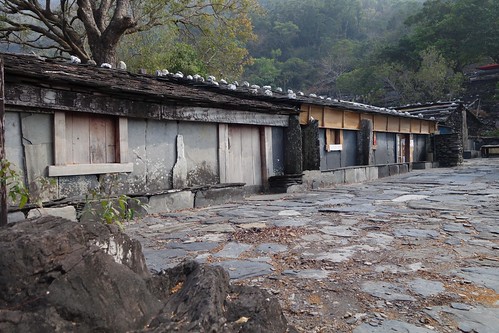
House in Laochijia.

This is very cool -- had to share it with you. From Wiki:
Private Teruo Nakamura (中村 輝夫 Nakamura Teruo?, October 8, 1919 − June 15, 1979) was a Taiwan-born soldier of the Imperial Japanese Army from the indigenous Amis tribe, who fought for Japan in World War II and did not surrender until 1974. He is the last known Japanese hold-out to surrender after the end of hostilities in 1945. His name in his native Amis language was Attun Palalin.[1] The Taiwanese press referred to him as Lee Guang-Hui (李光輝), a name of which he learned only after his repatriation in 1975.

........

Nakamura's repatriation and his perception in the Japanese public at the time differed considerably from that of earlier holdouts, such as Hiroo Onoda, who had been discovered only a few months earlier. One reason for this was the question of his nationality. Born on Taiwan, Nakamura was ethnically Amis and legally stateless; questions of nationality were of considerable importance in the Japanese public at the time, and while the Japanese embassy in Jakarta offered to repatriate him, there were also diplomatic questions over how to treat him in case he wanted to go back to Taiwan.[2] At the time of his capture, he spoke neither Japanese nor Chinese. Secondly, while Onoda had been an officer, Nakamura's rank as a private from a Japanese colony did not excite the public imagination and was likely to raise questions about the role of Japanese colonialism during the war instead. Another sensitive issue was the question of back pay of his soldier's pension. As a private of a colonial unit, Nakamura was not entitled to pensions after a 1953 change in the law on pensions, and thus received only a minimal sum of ¥68,000 (US $227.59 at the time, now US $1,100 in 2015).[1] This raised a considerable outcry in the press, motivating the government to donate over $100,000, similar to what had been offered to Onoda, which in turn generated questions by earlier Taiwanese holdouts and led to considerable public discussion of the differences in treatment of Japanese and Taiwanese holdouts by the government.

_______________________
Don't miss the comments below! And check out my blog and its sidebars for events, links to previous posts and picture posts, and scores of links to other Taiwan blogs and forums!