Showing posts with label governance. Show all posts

Friday, March 17, 2017

My Latest for Taiwan News: Yes the indictment of Ma is a good thing

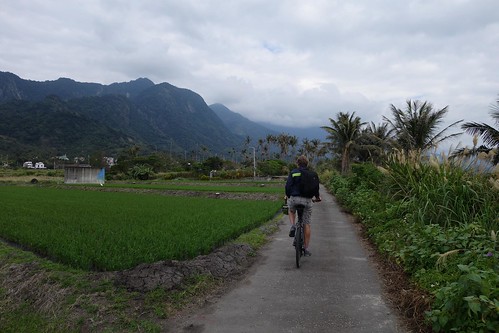
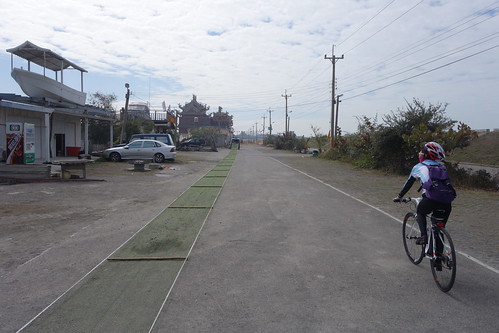
The east coast near Chenggong in Taitung. Heading out there for the Apr 1-4th holiday. Welcome to join, should be easy riding.

I wrote my latest Taiwan News piece in reply to J Michael Cole's piece over at the National Interest, and also in response to the many remarks at the pointless statistic that all three of Taiwan's elected presidents have been indicted. Hey no shit, because two of the presidents supported Taiwan independence, and were caught up in a general campaign during the Ma Administration. This time it is different.

Cole's piece worried me. He said:
Worryingly, the notion that it is “normal” for governments to engage in tit-for-tat behavior by targeting their predecessors from the opposite camp for investigation after gaining executive powers has propelled the nation into a vicious cycle that fosters division at a time when unity is sorely needed to face the immense challenge posed by authoritarian China, which regards Taiwan as part of its territory. Such views, which have surprising currency, point to weaknesses in Taiwan’s transition from authoritarian rule to democracy. The belief in the politicization of the judiciary, that those in power are merely using the court system to punish their opponents, bespeaks a deep cynicism about Taiwanese politics and indicates that much work needs to be done to secure the consolidation of Taiwan’s democracy and normalization of its electoral cycles. Therefore, rather than celebrate the indictment of a former head of state—as DPP supporters are doing this week and KMT supporters did before them—the Taiwanese public should regard such developments with concern and consternation: there is nothing to celebrate when evidence emerges that the system is failing them, whether through corruption or the irresponsible handling of classified material.
This is largely true as far as it goes. Yes, people are cynical about the system -- the authoritarian party wins if it wins votes, and it also wins if people become cynical about the system. Therefore it works to foster cynicism about the system.

But at the bottom Cole is wrong: this is something we should celebrate -- this indictment is not an act of political revenge, but the system functioning normally to check abuses of power by the executive which are also normal even in well functioning democracies.

That pervasive cynicism is why writers who have voices that are widely listened to also have a responsibility to take the next step, and provide their audiences with a contexts and language so that they can understand what is going on and communicate it to others, but especially to the global media which you know is going to be both lazy and sensationalist on this one. That cynicism about the system must be fought, constantly. I wrote:
The indictment of Ma, which had long been predicted, especially since SID Chief Huang was eventually convicted of leaking the investigation to Ma, lead to the usual complaints. Many locals cynically viewed the indictments as pan-Green revenge for the KMT prosecution of Chen Shui-bian. Foreign observers despaired over statistic that all three elected presidents had been indicted once out of office. "Can it be good for Taiwan's democracy?" all asked, implying a rhetorical "no". The answer is yes, of course, and we should be cheering, instead of jeering, Taiwan's democracy in action.
You can't connect the Chen and Lee indictments to the Ma indictment, because the DPP is not engaging in terrorizing the opposition party via indictments, unlike the KMT, as I note extensively in that piece above. I am betting, however, that not a single foreign media organ reports the fundamental differences between those two assaults on previous presidents, and this indictment of Ma, nor will any view this indictment as an indicator of forward progress. Instead, they will all piously report "all three elected presidents were indicted! ZOMG Taiwan's democracy is precarious." It makes better copy, and saves difficult explanations, and validates the cultural superiority of western democracies over non-western (our democracies are not so fragile and corrupt, see?).
_______________________
Don't miss the comments below! And check out my blog and its sidebars for events, links to previous posts and picture posts, and scores of links to other Taiwan blogs and forums!
Wednesday, March 15, 2017

Former President Ma Indicted

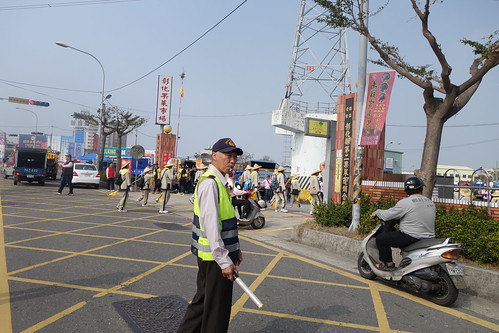
Stopping traffic for a procession

President Ma was indicted yesterday on charges of leaking state secrets (SCMP):
The Taipei District Prosecutors Office alleges Ma violated the Communication Security and Surveillance Act and the Personal Information Protection Act. The former president could face up to three years in jail on the charges. “Ma chose an improper way to deal with what he believed were political flaws and responsibilities involving cabinet members,” prosecutors office spokesman Chang Chieh-hsin said.
The Special Investigation Division (SID) was tapping the legislative phone system. I wrote at the time:
Readers may recall that Legislative Speaker Wang Jin-pyng had been publicly accused by the President of influence peddling by calling the Minister of Justice and having him tell the prosecutors not to appeal a not guilty verdict against Ker. The DPP politicians also said that the SID had been monitoring the prosecutor in the Ker case, which the SID admitted. They admitted that they monitored her 12 year old daughter, accidentally, since she was using her mom's phone (SCMP). They then switched to the husband's phone which Lin Hsiu-tao was using, musical phones being a common feature of busy families.

It is striking that no transcript of the alleged phone calls telling the prosecutor to lay off Ker has been produced by the SID, since it has leaked transcripts of Wang Jin-pyng's phone calls. Indeed, the lack of such leaks suggests that no such transcripts exist. This tends to support Wang's claims that he was just comforting Ker and hadn't done anything.
Allegedly Ker Chien-ming, the DPP whip, called Wang Jin-pyng, then the KMT speaker, and asked him to lobby the prosecutor and the Minister of Justice in a case involving Ker. Transcripts of Wang's words with Ker were leaked, but no transcript of Wang talking to either of the other two was leaked. Wang insisted that he had done nothing illegal, and no evidence was produced that he had.

This information was given to Ma by SID Chief Huang Shih-ming. The DPP had long been claiming that the SID, which began its career prosecuting Chen Shui-bian, was a political tool designed to be used by the President against his perceived political enemies, and in that moment, their claims were totally vindicated. Huang would later be indicted and convicted over that leak. That does not bode well for Ma.

But then President Ma Ying-jeou, who saw Wang as a rival and underling, and who had beaten Wang in a previous KMT Chairmanship election, completely lost it. He was apparently primarily angry at Wang because Wang would not shove that awful, unpopular services pact with China through the legislature. Wang, the unofficial leader of the Taiwanese KMT, knew that his people in the legislature would never vote for it.

Ma went public with the accusations that Wang had engaged in influence-peddling, saying that he had shamed Taiwan's democracy. He also attempted to have Wang kicked out of the party and removed as speaker. This lead to the situation described in the letter from THRAC, which really did threaten Taiwan's democracy:
By reporting to the president and then releasing the transcript at a press conference — without laying any charges — the SID grossly violated laws requiring nondisclosure of its investigations and has confirmed suspicions that it is a political tool of the KMT. There are also questions about the legality and propriety of the wiretap.

....

These actions constituted (to use his words) “improper influence at the highest level,” abuse of the office of president and violation of the separation of powers fundamental to a democracy. Ma then acted in his capacity as KMT chairman to have Wang’s party membership suspended and remove him as a legislator-at-large.

This confusion of Ma’s two roles as president and party chairman looks like a return to the old party-state practices of the KMT.

Third, contempt of the legislature. By using an internal KMT party process to remove its speaker, Ma has seriously violated the rights of the legislature. The speaker of the legislature is elected by its members. The legislature oversees the president. Now Ma has used his power as party chairman to become the overseer of the legislature. This has serious implications for KMT proportional vote legislators who must worry about a party chairman who can remove them so easily.
The KMT also had the Ministry of Foreign Affairs describe Wang as a "former speaker" on its website. Wrong.

The crisis devastated the KMT, and even caused the NT to fall in value. It also left Ma's reputation in tatters (fallout described in this post here and here). Ma and Wang went to court over Ma kicking Wang out of the KMT, and was beaten twice -- Eric Chu later dropped the suit to preserve KMT unity.

And it was, by all accounts, totally illegal for Ma to make that information public to attack Wang. Which is how we got to this indictment this week in the "September Strife". Taipei Times reported:
The Taipei District Prosectutors’ Office completed its investigation into the 2013 wiretapping case and alleged that Ma had abused his authority by divulging classified information, as well as breaching the separation of political and judicial powers, Deputy Chief Prosecutor Chang Chieh-chin (張介欽) said.

Chang said Ma has been charged with offenses related to public officials divulging state secrets that are unrelated to national defense, thereby contravening the Criminal Code; public officials divulging classified information obtained in the course of communications surveillance by the authorities, thereby contravening the Communication Security and Surveillance Act (通訊監察保護法); and unauthorized use of private information outside of a public official’s duties, thereby contravening the Personal Information Protection Act (個人資料保護法).

“The defendant called on then-prosecutor-general Huang Shih-ming (黃世銘) to visit the president’s official residence on Aug. 31, 2013, to report on the findings of the wiretapping. This breached the law on the use of personal information obtained under surveillance and the divulging of classified information,” he said. “The defendant instructed Huang, top aide Lo Chih-chiang (羅智強) and then-premier Jiang Yi-huah (江宜樺) on Sept. 4, 2013, in talks where classified information relating to the wiretapping case was discussed. This constitutes offenses of inciting others to divulge information obtained during telecommunications surveillance and violations of personal privacy.”
The prosecutor in this case is the same one who went after Ma before for his downloading of government funds into his private accounts. Ma did not dispute that he had done so, but his defense was that the special funds were intended for that purpose. He was found not guilty, of course.

Ma maintains he is innocent. He is facing a rain of lawsuits now that his presidential immunity ended, with Ker Chien-ming's lawsuit against him in its final stages after three years.

I consider it very unlikely he will ever do time. If he gets sentenced, it will be the kind of sentence that can be commuted to a fine.

But it is good to see the system working. All three former democratically elected presidents have been indicted, but the attacks on Chen Shui-bian and Lee Teng-hui were politically motivated. This long running case -- remember, before you claim this is some kind of pan-Green revenge on Ma, that SID Chief Huang was convicted during the Ma Administration -- represents the actual functioning of rule of law as a check on anti-democratic action by the chief executive.

Good!
_______________________
Don't miss the comments below! And check out my blog and its sidebars for events, links to previous posts and picture posts, and scores of links to other Taiwan blogs and forums!

Monday, February 06, 2017

Politics round-up

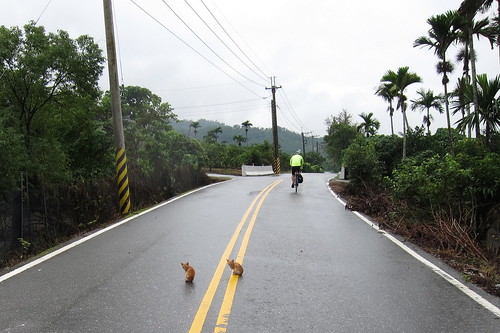
Little lost kitties.


Reverberating into local politics: Taiwan businesses in China are getting out as the China economy continues to slide. This will undercut the KMT argument, constantly made, that Taiwan needs to tie itself economically to China in order to survive. As each year passes, it is more and more clear that the golden age was under the Chen Administration, and the Ma Administration deeply impaired Taiwan's ability to engage China on Taiwan's terms.
"After the Lunar New Year holiday, we will likely see a large-scale shutdown of small to mid-sized businesses in China, including those run by Taiwanese people," said the Association of Taiwan Investment Enterprises on the Mainland (ATIEM), a corporate community made up of Taiwanese businesspeople in China.

The association said a wave of departures started around four years ago, adding that the current wave was different from before — in the past, while Taiwanese businesses would shut down factories in China, many kept their assets in the mainland as they maintained an optimistic outlook on the Chinese economy.

"They used to either keep their mainland savings in banks or invest in real estate, businesses ventures or the stock market. But what is different about the current wave of departures is that not only have the factories and assets left, people have stopped feeling any sort of sentimental attachment to the place altogether," an anonymous committee member of the association told local media.
Those Taiwanese businessmen remaining in China will be either too invested to leave, or true expats unwilling to return to the homeland, slowly becoming ever more out of touch with their homeland. Like all expats they have developed a set of elaborate rationalizations for their living outside of their homeland, which are often mistaken for meaningful political commentary.

Meanwhile the KMT continues to stumble. This week the news came out that the forms for new party membership application hilariously contains only places in China to be filled in as birthplace...
However, the party’s Web site for online membership application does not include most Taiwanese counties and cities as an option for the applicant’s place of birth.

Although it lists 59 locations for applicants to choose as their place of birth, no Taiwanese administrative division is included other than Taipei and Kaohsiung.
They probably bought it from a Chinese company. UPDATE: Nope. It was deliberately designed that way to comply with the Republic of China territorial boundaries.

KMT Chairmanship hopeful Steve Chan observed that the KMT might disappear if its internal splits continue. Report in English.

The big news this week was Tsai's cabinet reshuffle. As a commenter predicted here last year when this disappointing cabinet was picked, Tsai is moving out the technocrats, among whom are KMTers (Taipei Times report quotes observers noting that too many KMTers remain) and replacing them with politicians who can effectively run the ministries and campaign for the DPP. It's February, remember, and campaigning for the 2018 elections, which will be held in Jan Nov of 2018, will begin at the end of the year. I expect more cabinet members to be replaced. Tsai also reportedly plans a new cross-strait policy in time for the elections.

Also hilariously, Hau Long-bin, the KMT heavyweight, criticized the cabinet changes, accusing the DPP of nepotism since the new Minister of Labor is President Tsai's cousin, saying: “Nepotism is not good under any circumstances.”

Hau, readers will recall, is the son of KMT reactionary General and Premier Hau Pei-tsun, and owes his high position entirely to the fact that his father is a powerful KMT figure.

This habit of constantly replacing cabinet ministers is bad for Taiwan. Needs to stop... and Tsai's obliviousness to simple issues, such as appointing a family member to high posts in her administration, as well as appointing few women to positions in her cabinet, also needs to stop.
__________________
Daily Links:
  • Longtan Butokoden: photo and essay from Josh Ellis
  • Taiwan sees record high tourists in 2016. As expected. Excellent news for Taiwan. Nobody will even notice the loss of Chinese tourists, and as word gets around, tourists from more lucrative countries that aren't threatening to murder Taiwanese and take their island will come. And before you tell me something about soft power or people to people contacts or other nonsense, the Chinese group tourists were simply making China even more despised. The individual tourists are far more respectful and likable.
  • Thursday = COLD FRONT
  • Cambodia is rapidly turning into a protectorate of China (along with Laos). The PM this week banned the ROC national flag in deference to Beijing, but asked for Taiwanese investment to continue.
  • Joe Hung, the reactionary KMT commentator, with another round of comical spew in China Post. A good look into what the Deep Blues actually think.
  • NOT FAKE NEWS: Comically, after years of regurgitating Chinese propaganda about Taiwan in reports studded with errors and misunderstandings, BBC is producing a site dedicated to fighting fake news. Hint: look in the mirror, BBC. 
  • INTERNSHIP:  Winkler Partners, law firm in Taipei, great place to work full of great people. Apply for our paid international law student internship before 15 February and join us in Taipei, Taiwan! http://bit.ly/1NWwsdd
_______________________
Don't miss the comments below! And check out my blog and its sidebars for events, links to previous posts and picture posts, and scores of links to other Taiwan blogs and forums!
Friday, April 22, 2016

Hung digs in her reactionary heels

The Rift Valley

Is new KMT Chairman Hung Hsiu-chu bringing in young talent, technocrats, and practical politicians who can make the KMT powerful again? Is she going to Taiwanize the KMT? So far, things look grim if you're pro-China, and sweet if you're pro-Taiwan. This week she made far-right ideologue Alex Tsai head of the KMT's central policy committee (TT)....
Former Chinese Nationalist Party (KMT) legislator Alex Tsai (蔡正元) was yesterday appointed director of the KMT’s Central Policy Committee, becoming the first non-lawmaker to take up the key role of coordinator between the party’s central headquarters and its legislative caucus.

Tsai’s appointment was approved by the KMT Central Standing Committee at a closed-door meeting yesterday afternoon presided over by KMT Chairwoman Hung Hsiu-chu (洪秀柱), who said her decision to choose Tsai for the post was made in accordance with the needs of the party.

Traditionally, the director of the Central Policy Committee also doubles as the KMT’s caucus whip, to ensure that the stance of the caucus is aligned with that of the party leadership.

However, this will not be the case for Tsai, after the KMT caucus reached a consensus earlier this month to separate the two roles to increase the autonomy of the legislative caucus.
Tsai, readers may recall, ran the comical campaign of KMT princeling Sean Lien for mayor of Taipei. Lien was crushed by current Mayor Ko Wen-je. Solidarity's description of Tsai is dead on:
KMT Chairwoman Hung Hsiu-chu (洪秀柱) has chosen the most contentious candidate possible, oft-discredited sinophile troll Alex Tsai (蔡正元), as director of the KMT’s Central Policy Committee. With Tsai the putative chief strategist for the legislative and council caucuses and local governments alike, the party could become both more contentious and narrower in appeal.
No sooner had Tsai taken his new seat then he was on the warpath spewing nonsensical Chen Shui-bian era KMT propaganda:
An interview yesterday with POP Radio, Tsai accused the DPP of trying to launch “green terror,” saying the DPP’s draft transitional justice promotion act was part of its efforts to exert control over both the administrative and legislative branches of the government.

“The DPP is attempting to turn itself into a ‘constitutional monster,’ so it can conduct a political purge against the KMT. This is standard ‘green terror,’” Tsai said in the interview.

The draft act calls for the establishment of a transitional justice promotion committee under the Executive Yuan responsible for making political documents available to the public, removal of authoritarian symbols, redressing judicial injustice and management of the KMT’s ill-gotten party assets.

Turning to the DPP’s proposed bill on monitoring cross-strait agreements, Tsai said prominent Sunflower movement activist Lin Fei-fan (林飛帆) only verbally protested the proposed bill, which clings to the idea of “one country, two areas.”

“Lin should have occupied the Legislative Yuan… His failure to do so only underscores the fact that the ‘sunflower’ has withered,” Tsai said, adding that the ideals of the Sunflower movement could not withstand the test of time.
The "green terror" is a reference to the "white terror" period of martial law, in which thousands of people who ran afoul of the KMT were imprisoned, tortured, and even killed by the KMT government. There is a deep, visceral fear among many older Blues that someday they are going to be called to account for their crimes. Thus, this code language is brought out by Deep Blues like Tsai whenever their colonial symbols or powers are threatened. Tsai also took a swat at the Sunflowers, which was good, because if they KMT had any sense they'd be cultivating the Sunflowers as a possible weapon against the DPP, or at least, leaving them alone. But thanks for reminding them, Alex, where the KMT really stands.

The key point is actually in the last two paragraphs I've excerpted there: the greater "autonomy" of KMT legislators implies that they are distancing themselves from the center of the party, which is likely to continue on its reactionary course with Hung in charge. Because so many of the chairmanship voters are reactionary deep Blue voters, Hung is likely to get a five year term late next summer just before the Jan 2018 9-in-1 elections. She might be forced to resign then if the KMT is blown out. But until then, to keep their seats, KMT legislators might be forced into public disagreements with Chairman Hung because they are practical politicians engaged in assuring the flow of resources to their patronage networks, while Hung has other, more grandiose plans. Clearly they are struggling to wriggle out from under her control, clearly she will struggle to keep them under her thumb.

Watching the legislators of both major parties struggle against central control is going to be a major source of entertainment and frustration for Taiwan political junkies of all stripes...

Solidarity translated a UDN report that emphasized this point by noting Hung's desire to bring everything under control of the center.
Although Hung has stated she supports the caucus’s autonomy, party figures reveal that she has already privately approached experienced legislator Alex Fai (費鴻泰) and current de facto caucus whip Lin Teh-fu (林德福) about running for the new convener position. Fai politely declined Hung’s invitation, and Lin has fallen into deep thought after losing the big battle over approval of the transitional justice bill Tuesday.

Regarding Hung’s personnel appointments, an experienced legislator stated frankly that Hung’s method is to create a “Leninist party” by wiping out the remnants of “internal reconstruction” (內造化, a cause celebre of the Taiwanese faction) and implementing total “party leadership of the government.” In the future, the Central Policy Committee director will be like “the party secretary hanging over the head of the mayor” in communist countries. The committee director will be the true warlord, as can be inferred from the clues in Tsai’s remarks yesterday, the legislator said.

A KMT legislator said that the party is too far separated from public opinion, and in the future “each will choose his own path.” Even if the party mobilizes legislators through the caucus leadership in the future, party legislators will still keep the pros and cons in terms of managing their own districts in mind when making decisions on what to support.
The KMT, if it wants to come back into power, desperately needs to bring in Taiwanese and move them into positions of authority. Yet, there is Hung, still fighting to ensure that the non-mainstream (deep Blue reactionary) KMT wins over the mainstream (Taiwanese) KMT and fighting to impose top-down, centralized control on the Party.

One thing Ma Ying-jeou did to reduce the possibility of party elites quietly arraying themselves against him was to set up parallel internal KMT bodies like the Zhongshan Council which operated directly under him, and to reduce the authority of the central standing committee. When Eric Chu became Chair, he eliminated the Zhongshan Council and returned the central standing committee to power. Expect similar moves by either/both of (1) Hung in attempting to suppress elite opposition to her authority; (2) rival groups of bigwigs out to fight her authority; and (3) individual KMT heavyweights who are seeking to become Chairman and need some kind of quasi-institutional veneer for gathering support from the party ranks.
__________________
Daily Links
_______________________
Don't miss the comments below! And check out my blog and its sidebars for events, links to previous posts and picture posts, and scores of links to other Taiwan blogs and forums!
Tuesday, January 06, 2015

Chen Shui-bian out, Eric Chu moving in

DSC03843
Went out to Gaomei Wetlands today. Here my friend Eva flies past a long fishing net unrolled out of the back of a van in the distance.

President Chen Shui-bian, jailed on bribery charges, has been released on a one-month medical parole. This does not count against his prison time, and he will be returned to prison when his health improves. Everyone is in a tizzy....

Some are reading in the CSB release the consequences of the recent blowout election loss by the KMT, seeing it as the KMT fishing for votes in 2016. For example, see this CS Monitor piece.
“It’s a good sign Ma Ying-jeou is willing to heal the political polarization,” says Wu Chung-li, research fellow at Taipei-based institute Academia Sinica. “I think this measure might increase his popularity in the near future." But Mr. Wu doubts the gesture will aid the Nationalists in the coming presidential campaign.
It is not a sign that Ma is willing to heal the polarization; that polarization is one of the things that keeps the KMT in power. Taiwan's partisan divide will be healed over the dead body of the KMT, when the KMT no longer has much influence, and the leadership knows that.

No, I think what this release signals is the waning power of Ma Ying-jeou. Some in the KMT know what I've been saying for years, that Chen Shui-bian dead in jail is a problem for the KMT, while Chen Shui-bian alive and shooting off his mouth is a problem for the DPP, and with Ma hobbled by brutal election loss and isolated in his own party, the brains finally prevailed over the urge to arbitrarily punish. Once again, I'd like to thank Ma Ying-jeou and the KMT for putting Chen in jail in an obviously politically-motivated trial, thus keeping him out of Tsai Ing-wen's hair for the last several years and turning him into a martyr for the Taiwan cause.

Does the Chen Shui-bian parole signal a more pragmatic and less ideologically-driven KMT than the one under the hopelessly ideological and unpragmatic Ma Ying-jeou (cue my laughter at international media for ever using the word pragmatic to describe Ma)? The ascension of Eric Chu might augur that kind of possibility, if the Chen Shui-bian medical parole means anything. Dateline Taipei, the sometimes useful pro-KMT blog translated an editorial from UDN, the rabidly pro-KMT newspaper, on the kind of reforms the incoming KMT Chairman Eric will need to achieve that... key points.
....The KMT has suffered a serious defeat. Yet no one inside the KMT is demanding an accounting...

One... One of the main shortcomings of the KMT's political culture, is its preoccupation with bickering over internal resources, its inability to recruit outside talent, and cultivate new talent. Over the long term, this has led to inbreeding and cliquishness. Ambitious and creative talents are marginalized and the party is hollowed out. Between 2009 and today, KMT membership fell from 50,000 to 35,000. The speed of the fall surpassed all expectations.
Let's reiterate: the elites at the heart of the KMT ran Taiwan by controlling patronage networks that showered development cash on local factions. In return for the cash, the KMT did not permit the local factions to operate at the national level or form cross-regional networks, thus preventing any challenges to its power. But this means that there is no system for bringing local politicians into the national party level and grooming them for top leadership positions, and even if there was, it would still be difficult, because local politics in Taiwan is notoriously dirty. The talent issue can't be resolved until the KMT cleans up its relationship with the local factions. Good luck with that. Ma Ying-jeou attempted an end run around the problem by appointing lots of academics to government positions. But that did not solve the issue within the party, because that "talent" didn't enter the KMT and participate in politics, with a few exceptions like Jiang Yi-hwa, and because it still didn't institute a mechanism for connecting the national party with promising local politicians.
Two. Consider the matter of party assets. Despite repeated party asset reorganizations, the matter has yet to be put to rest. It has become an albatross around the KMT's neck. Eric Chu recently declared that the party must totally divest itself of improper assets. This is the proper approach. The party assets are held by only a few. Most party members never get even a whiff of them.
"The party assets are held by only a few." That's an interesting observation. It means that if Chu attacks the assets, he attacks the holdings of extremely powerful people. Hence, as I've already noted:
Chu promised to do something about the party assets -- well, so did Ma in 2009. In fact Ma did as early as 2006, and in 2000 none other than Honorary Chairman Pickled in Brine Lien Chan, when he ran for President in 2000, promised to do the same. In other words, making noises about getting rid of the Party's ill-gotten assets isn't something that one does when one is a reformer. It's part of the package of noises that anyone who assumes control over the KMT and aspires to higher positions must reproduce, because it is a widely supported centrist position, not because they actually mean it
The UDN complaints about assets only support my position that asset-cleaning claims are noises KMT politicians must make to sound centrist. Isn't gonna happen.
Consider the matter of party democratization. The KMT has a rigid seniority system. It is rife with pro forma ritual. Worse, this seriously affects the internal exchange of views. It makes it hard for subordinates to express views to superiors.
The classic example of this is picking Sean Lien to run in Taipei. LOL. Before you start thinking of Chu as a pragmatic reformer, remember that he is a princeling, married to the daughter of a longtime KMT central standing member and quiet KMT heavyweight. Democratizing the party might be a problem for such a person. And again, the KMT's style of rule, which separates the center from the factions on the periphery, stops democratization of the party by keeping out promising local politicians. If I were Chu, the first thing I'd do is institute mechanisms to wheel promising faction politicians up to the national level. That would attack the talent and democracy problems at the same time....
Four. Consider the matter of younger party members. The KMT has abundant resources. Yet it cannot attract young people. This is because the party's manner of operation is too old fashioned.
The party's lack of appeal to youth is not because its manner of operation is too old fashioned. So much of political participation rests on social identity. The problem for the KMT is that is has a Chinese identity and can no longer coerce/socialize the young into that identity via authoritarian control. Living in Taiwan, the young are developing a pro-Taiwan identity that ultimately is a denial of the KMT's identity. KMT rule has always depended on divide-and-rule ethnic politics to build a rickety ethnic coalition against the Hoklo majority, but as the growing sense of "Taiwanese" identity steadily subsumes old identities like Hakka and Hoklo and mainlander and aborigine, the KMT's ability to rule via ethnic division declines. Further, even where groups assert local identities, such as Hakka or Atayal or Paiwan, these identities are local and independent, and are more difficult to manipulate via traditional ethnic fear politics ("if the DPP wins the Hoklo will punish all the Hakka!").

Over the years many have suggested that the KMT become a Taiwanese party. I suspect its ultimate resting place is as a pro-corporate center-right Taiwanese party, but because -- again -- the big boys at the top are all doing business with China -- and pro-China credentials facilitate that -- the KMT can't come to rest in that spot.

Ironically, the services trade pact pointed to another problem the KMT has at the local level that has received little discussion because of the simple-minded media presentations. Recall that the Sunflowers occupied the legislature because the KMT committee head tried to do an end run around the review and the legislative vote and declare the services pact passed without a vote.

But why did he have to do that? Because the KMT's own legislators wouldn't vote for the services pact. It would have brought Chinese service firms into Taiwan and into direct competition with local service firms that support the KMT. No way are KMT legislators going to support the dissolution of their constituents' businesses. Boom! Do the math, folks -- this growing China pressure on local areas is also putting pressure on the links between the top and bottom of the KMT.

The run-up to the 2016 election is going to be a blast.

Meanwhile breath of fresh air Ko Wen-je, the new Taipei mayor, announced that he wouldn't attend weddings and funerals like most politicians do (and waste their time). He's really shaking things up -- he also announced that he is going after illegal rooftop construction, a staple of Taiwanese life. Yowza! Liking him muchly, I am. And new Mayor Cheng in Taoyuan is also moving against the construction-industrial state, as Solidarity.tw lets us know. If you are at all interested in Taiwan, you should be following Solidarity.tw.

Ok, off to play Settlers of Catan again.
_________________
Daily Links:
_______________________
Don't miss the comments below! And check out my blog and its sidebars for events, links to previous posts and picture posts, and scores of links to other Taiwan blogs and forums!
Saturday, October 05, 2013

MaWangMess: Weeklong Blowback Edition

Hengchun gate.

What a week for President Ma "Blowback" Ying-jeou. It opened on Monday with the KMT losing its second court case. The High Court affirmed the district court's decision to reinstate Legislative Speaker Wang Jin-pyng in the Party and in his position. The KMT then declared it would appeal to the Supremes. No matter how well Wang sings "Where did our love go?"  I have some trouble believing that Wang will win there.

I was saying last night how for years I was reading how totally out of touch Ma was said to be but never really believed it. But now... I believe. The revelations of dubiously legal wiretapping, the complete lack of political sense in attacking Wang the declarations of guilt without trial or evidence... surely someone could have foreseen this? Could everyone be so out of touch? I had always thought that even though Ma had been groomed for this position as head of KMT, President, and bearer of its return-to-ZionChina torch, that he had a modicum of flexibility and good political sense, or at least his handlers did --that POV was seriously shaken by his narcissistic behavior during the Morakot disaster three years ago. But looking at his take-no-prisoners, with-me-or-against-me position, I'm seriously wondering if his rise is due in part to his simply being more rigid, more inflexible Chinese bargainer* than everyone else.

And the week ended with the President called to testify. Yes, the Taipei District prosecutors office opened a case against Prosecutor-General Huang for leaking details of the investigation of Wang's alleged influence-peddling. They are processing all the testimony now:
The district prosecutors’ office summoned the four after several lawyers and citizens filed lawsuits against Huang, accusing him of leaking secrets in the Special Investigation Division’s (SID) probe when he briefed Ma on information gathered through wiretapping involving Wang and Democratic Progressive Party caucus whip Ker Chien-ming (柯建銘).

The prosecutors summoned Ma to clarify the details of meetings he had with Huang on Aug. 31 and Sept. 1, five days before Huang called a press conference to accuse Wang of misconduct.

The Taipei District Prosecutors’ Office said Ma was given plenty of time to answer prosecutors’ questions. After the questioning, which was conducted from 8pm to 9:30pm, Ma spent more than 10 minutes reading his testimony before signing it, the office said.
The KMT news organ was reporting that all the testimonies of Ma et al were consistent.

The indignity of the President having to testify on the matter was surely compounded by the fact that there is at the moment no similar humiliation being inflicted on Wang. There is little wiggle room here -- if Wang calling the Justice Minister to get the prosecutors to forego an appeal in a friend's case is influence peddling, then so is the President's listening to improperly leaked information and then acting on it, apparently while acting in concert with the prosecutor's office.

More urgently, Wang's influence peddling -- for which there is no good evidence -- is trivial compared to the democracy-threatening use of prosecutors to eliminate the President's political enemies within his own party. For it is hard to imagine why the prosecutor would come to the President and offer him information like this unless he expected him to use it. Logically, that implies that such an expectation could be formed only if Prosecutor Huang either (1) had never done so before but understood Ma well enough to risk presenting this information or (2) he and the President had danced together before. Readers will have to decide.....

The wiretapping issue isn't dying either. The Control Yuan is opening a long probe of it.

It should also be noted that this affair and its ever-ramifying effect on Ma's presidency was exactly the wrong move if Ma wanted to speed the passage of the destructive services agreement through the legislature. Now everyone is angry, his public support has taken a beating, and any public review of the legislation will be carried through in a thoroughly poisoned atmosphere in which many will be eager to punish the President. Great work, that.

As always in sprawling affairs of this nature, there were light moments this week. UDN, the fanatically pro-KMT paper, scribbled an editorial which hilariously wondered why everyone was focusing on the wiretapping and Ma's behavior when the real issue was Wang's alleged influence peddling. Ma Ying-jeou's sister sent around a nasty text message attacking KMT legislators for not publicly supporting President Ma and excoriating Wang Jin-pyng:
Ma Yi-nan said she wanted the seven to talk to other KMT lawmakers and ask them to come out in support of Ma, who doubles as KMT chairman, in his relentless fight for “matters of principle” in this case.

“I haven’t seen any KMT lawmaker express support [for Ma Ying-jeou] in front of the media, but I honestly believe that we can judge right from wrong in our hearts. The president cannot back out now,” Ma Yi-nan said.
On the serious side, this shows how little support there is for this move outside the Presidential office.  Legislators have to distance themselves from Ma with local elections coming up next year; their supporters at home may feel the impact of the President's ineptitude. I predict that few local political signs will have the President's image on them come next year.

So much more to write..... lots of people are comparing the government shutdown by the Republican Party lawmakers in the house to Ma's obdurate and insensitive behavior, but there is no comparison. Ma hasn't killed anyone and the government here is open for business and people are getting necessary services.

*Win-win bargaining, Chinese definition: "This way I win, and that way I win, and either way, you're an idiot."
_______________________
Don't miss the comments below! And check out my blog and its sidebars for events, links to previous posts and picture posts, and scores of links to other Taiwan blogs and forums!
Monday, September 16, 2013

Ma-Wang Tussle Round Up

Apple Daily has had some wonderful front page illustrations during this Ma-Wang disaster.

I need to go away for a vacation (post below) more often if President Ma is going to melt down like this. What fun!  Some observations, in no particular order:

Let's remember -- this affray is entirely the result of Ma's decisions. Nothing called for him to do anything but make his usual noises about resolving things by the law, the KMT is clean, he is against corruption, etc. He didn't have to go after Wang and spark a political and possibly even constitutional. This crisis is entirely of Ma's making.

The Washington Post reports on Taiwan from...Beijing. An island full of talented and perspicacious writers and observers, and their go-to guy is 3000 kms away. Why not just solicit stories from Moonbase Alpha? Think of the broad scope! Longtime Taiwan specialist John Tkacik pointed out the article's subtle pro-PRC spin in a comment below it:
I detect several pro-China spins in this report, including the subtle assumption that Taiwan Speaker Wang Jin-pyng, DPP Legislative Whip Ker and Justice Minister Tseng really are guilty of something. These are political figures that Beijing doesn't trust and would gleefully discredit. And when a Taiwan official tells a WPost reporter calling from Beijing "it's unsafe to talk, we're being monitored," he is probably referring to the Chinese security services' routine monitoring of Foreign Correspondents' telephone calls as much as anything else.
The article even terms the feeling of being watched "paranoia" though the piece is about -- what kind of case? Yes, a case in which the government wiretaps were used to discredit the President's perceived political enemies.

Poll plummet: UDN had Ma at 11% approval. As Ma fell to 9% in at least one poll, people were gleefully digging up Ma's words calling for Chen Shui-bian's resignation when Chen hit 18%, or twice as high as where Ma is now. Ma said back in 2006:
「民調掉到18%以下,人民可以把權力拿回來…」
and the bolded comment below was widely repeated:
當民意已經不支持你, 你的政治責任沒有辦法再承擔的時候, 你就應該知道自己下台, 不要等人來罷免你。一個人要有羞恥, 人家才會尊重

When the opinion of the people no longer supports you, and when you can no longer shoulder your political responsibilities, you should know that you need to step down. Don't wait until someone impeaches you. A person has to have a sense of shame for the people to respect him. - Ma Ying-jeou, June of 2006
Letters from Taiwan, always good, juxtaposed a poll that said the DPP's Tsai is now more trusted to carry out cross strait policies than Ma, and that Ma was at 9.2%

The news report for more than 30 scholars and law professors signing a document saying Ma has crossed a constitutional red line is here. I've placed the text under the READ MORE divider below. Thanks to Ketty Chen for sending it around Facebook. The Constitutionality of Ma's acts is starting to loom; what looked like Ma simply doing something fantastically stupid is slowly blowing up into a constitutional crisis. Civic groups pointed out that by listening to the prosecutor and removing Wang from his position in the legislature, Ma may have committed a constitutional violation.

The Court's reversal of the order expelling Wang from the KMT certainly makes it seem so. That was huge.... (Taipei Times):

The Taipei District Court yesterday ruled in favor of Legislative Speaker Wang Jin-pyng’s (王金平) provisional injunction seeking to retain his Chinese Nationalist Party (KMT) membership and position as head of the legislature.

The court ruled that Wang would be able to retain his membership and rights as a KMT member after submitting a guarantee of about NT$9.38 million (US$314,300), Taipei District Court spokesperson Lai Chien-yi (賴劍毅) told reporters.
The KMT plans to appeal, so stay tuned. FocusTW explains the Court's logic.
The panel of three judges granted Wang's request on the basis of avoiding "irreparable damages" that the plaintiff would suffer due to a loss of eligibility to serve in the Legislature while waiting for a court to rule on his other lawsuit.
Motives? Lots of people are pointing to simple hate. Lee Yuan-tseh, Taiwan's nobel prize-winning physicist, criticized Ma for constantly having his features distorted by hate. Nathan Batto over at the awesome Frozen Garlic has a marvelously informative blog post on the whole affair, well worth reading. He is leery of identifying a motive. All politics may be local in some places, but in East Asian Confucian societies, all politics is personal. I'm with the vendetta believers, though I am sure the politics of the moment, and of the future (particularly Ma's prized cross-strait peace plan) may have played a role. I don't think Ma is playing 11-dimensional chess or is all that impatient with what's going on in the legislature; I think he seized a chance to revenge himself on someone he really just totally hated. Like a sort of inept, out of control Michael Corleone, he's taking revenge on everyone who offended him by opposing him: the jailing of Chen Shui-bian, the investigation of Lee Teng-hui for embezzling (handled by the same prosecutor who went after Wang in this case), the investigation of Su Tseng-chang for his handling of government papers, the attack on Wang, the prosecutions of DPP politicians all over the island, etc etc etc.

The China Times says Ma sacrifices Taiwan's Future by Slaying Wang. The China Times also pointed out that Lin Yi-shih, the Ma associate who was recently given six years for corruption, is still a KMT party member.

Jonathon Manthorpe, longtime observer of things here, has a write-up of events here.

Lighter moment: some delegation went to Washington to complain to people there about Taiwan's Watergate -- illegal wiretapping! Bwahahaha. Don't they read the news? Complaining to Washington about someone engaged in illegal wiretapping is like complaining to the Mafia about what horrors illegal prostitution and gambling are.
________________
Daily Links:

Tuesday, September 10, 2013

Wang case roundup (formerly Tseng case)

Ma vs. Wang: who will be eaten?

Well...Ma Ying-jeou's hysterical attack on Legislator Wang Jin-pyng, with its condemnation of Wang as guilty of crimes he has not even been charged with, has blown up into an enormous political scandal with huge potential to damage the KMT and Ma Ying-jeou, all of it completely unnecessary, had Ma simply said nothing. It's also made it obvious that from the beginning this whole case was about getting Wang. Tseng's resignation was just the collateral damage.

Wang had been in Malaysia attending his daughter's wedding when the news "broke" that the SID had tapes of him allegedly telling a DPP legislator that he had arranged for the prosecutors to forego an appeal in a not guilty verdict. The reason I use "broke" is because it looks like Wang took off and then as soon as he was out the door, the SID convened a press conference with the sensational claims about Wang and Ker and Justice Minister Tseng. What a coincidence, eh?

Well, Wang has returned. FocusTaiwan reports that he is going to fight tooth and nail....
Legislative Speaker Wang Jin-pyng on Tuesday denied having engaged in influence peddling, saying he "would absolutely not accept illegal accusations."

...

Wang also accused the Special Investigation Division of violating the law and the Constitution by eavesdropping on the speaker of the Legislature and releasing a transcript of the wiretapped conversations.

Flanked by supporters and fellow legislators at the airport, Wang delivered his first response to allegations that he lobbied the minister and the prosecutor in June on behalf of a fellow lawmaker who was the defendant in a breach-of-trust trial.
Wang (here) also criticized the prosecutors for holding the press conference when he was out of the country (at his daughter's wedding, something sure to attract people's sympathy), saying that the Legislature must be respected and it is unacceptable for a small number of unscrupulous prosecutors to behave in such a manner.

Welcome to a certain Asian city-state? Despite the tidal wave of criticism from all quarters (more on that in a moment) the Presidential Office doubled down on its hacks on Wang Jin-pyng....
A day after President Ma Ying-jeou was accused of shaming Legislative Speaker Wang Jin-pyng in an influence peddling case, a presidential aide said Wednesday that it was Wang who showed no respect to the judicial system.

"The moment Wang used his influence to call (Democratic Progressive Party lawmaker) Ker Chien-ming, (Justice Minister) Tseng Yung-fu and Chen Shou-huang (head of the Taiwan High Prosecutors Office), the justice system was shamed," said Lo Chih-chiang, deputy secretary-general of the Presidential Office.

"It is not President Ma who has not shown Wang basic respect. It is Wang himself who has not accorded basic respect to the judicial system," Lo said.
Note that the President has openly said that Wang is guilty. No weasel words there, no ambiguity. No presidential behavior either. It's total vindictiveness and hate, trial by media, and of course, it is widely perceived as using the prosecutors to settle political scores. Remind you of anything?

Yeah, Ma's behavior in the Chen Shui-bian case. And also, all the other cases against DPP politicians under the Ma Administration. In fact, as a friend pointed out, in attacking Wang this way, Ma risks making the conviction of Chen Shui-bian look even more obviously political than it already does.

Recall that Ma has many times cited a certain Asian city-state as a political and social model. You know, that Asian city-state where critics say that the one-party government deploys the judicial system against its opponents. Note that I am not saying that. I am just repeating what the critics say. I would never criticize that totally great Asian city-state.

Note also Wang's legislative seat is a KMT party seat, an at-large seat and he was not elected by any district. Hence, his presence and position in the legislature are under the total control of the KMT. Ma as Chairman of the KMT has referred the matter to the disciplinary committee. If its internal disciplinary committee finds against him, he will be stripped of position and power (including, someone reminded me, his position as head of the Taiwan Democracy Foundation). Wang's case goes before the KMT disciplinary committee tomorrow, Wednesday.

Honorary KMT Chairman for Life Lien Chan, the twice-failed Presidential candidate and KMT heavyweight supreme, criticized Ma for conducting the campaign against Wang. "It is inappropriate to criticize Wang Jin-pyng that way." Recall that in 2005 when Wang ran against Ma, Lien backed Wang. The crisis -- stoked entirely by Ma's relentless assault on Wang and referral of the case to the KMT's disciplinary committee -- is falling out along the old political lines of the right-wingers like Ma who are diehard pro-ROC ideologues, and the more flexible, inclusive, Taiwanese-centric KMT associated with Lee Teng-hui. UDN, the rabidly pro-KMT paper, came out for Ma.

Gosh, do you think all the media yammerheads who wrote in 2008 what a pragmatic politician Ma is are going to write retractions? Nope.

Meanwhile the DPP is having a field day because Ma has apparently shot his entire foot off. A former DPP deputy justice minister filed criminal charges against Ma and the SID heads. Wang has extensive connections with DPP legislators and is well liked in and out of the legislature. The DPP has rallied around him. If Wang is forced out, whatever the reason for Ma's animus, it will have negative repercussions for Taiwanese support for the KMT....

It will be fascinating to see what happens tomorrow. Longtime observers were saying that the Speaker position will likely go to Hung Hsiu-chu, who is the deputy speaker and who apparently is far more hawkish than the conciliatory, consensus building Wang, who is a master politician.
_______________
Daily Links:
_______________________
Don't miss the comments below! And check out my blog and its sidebars for events, links to previous posts and picture posts, and scores of links to other Taiwan blogs and forums!

Friday, September 06, 2013

BREAKING: Minister of Justice to be indicted after SID investigation

Cutting a key.

Taiwan rocked and rolled to the news today that the Minister of Justice Tseng Yung-fu is going to be indicted by the SID, the special investigative unit. All day long Taiwan's multitude of news channels spoke as one, breathlessly discussing the case.

The basic claim is this: Kerr Chien-ming, a DPP politico, was on trial for something or other involving someone or something. He was found not guilty. Investigators were tapping his phones in conjunction with another case being built against him, when they allegedly recorded him asking Wang Jin-pyng, the dapper KMT Speaker and man-about-legislature, to ask Tseng to intervene with the prosecutors and have them drop any bid to seek an appeal of the not guilty verdict. If you're interested, UDN has some details in Chinese.

Tseng is already getting pressure to resign -- and is refusing (UPDATED: now has resigned) -- and is claiming that the head of the SID is pursuing a vendetta against him and making up charges. The two apparently dislike each other. There's just so much to savor about the awesomeness of the spectacle of the Minister of Justice claiming his own investigators are making up charges (cue Captain Renault) and the Ma Administration suffering another blow. President Ma even added bonus fun, intoning that "justice must never be politicized"

Stay tuned. This one will be endless fun.

In case you needed a score card, United Daily News has provided one:

_______________________
Don't miss the comments below! And check out my blog and its sidebars for events, links to previous posts and picture posts, and scores of links to other Taiwan blogs and forums!

Saturday, August 24, 2013

Government's repressive tactics against protesters

Over at Far Eastern Sweet Potato J Michael scribes on the government's ugly campaign of intimidation:
It gets worse. On Aug. 20, the Bureau of Energy, the Ministry of Economic Affairs and Presidential Human Rights Advisory Committee held a meeting in Taipei to discuss the matter of adequate distance for wind turbines and, we are told, to “maximize public participation.” However, there were so many procedural problems with the meeting, which was termed an “experimental hearing,” that it is difficult not to regard it as a joke — if only public money were not wasted on it.

For one thing, the “experimental hearing” had no authority to enforce anything; it was just people talking. While there is nothing intrinsically wrong with that (we’re all for all sides in a dispute to sit down and try to reach a consensus), here’s the catch: Before the hearing had begun, a large number of individuals associated with InfraVest had “signed up” for the event, which left precious few seats for Yuanli residents and environmental NGOs. In other words, opponents of the project were selected out even before the hearing was held. Oddly, many of the people who had registered never materialized during the meeting.

It gets better. Several police officers and members of the Criminal Investigation Department (CID) were inside the venue during the hearing, which in itself is an odd departure from protocol. Moreover, several law enforcement officers held video cameras; individuals who were present (I failed to attend it myself) told me the cops only filmed whenever the villagers were speaking or asking questions. The inevitable intimidation associated with this act, and the selectiveness of its targets, are evidently cause for worry. It made suspects of individuals who have done no wrong, while clearly telling them that the powers that be are clearly siding with the local government and the German firm.
J Michael describes the violence in the Dapu case in this post here. The tactics may vary, but this is always the way it has been: the government has never sided with the little guy. But recently the government's tactics have been especially brutal, especially at Huaguang:
To facilitate evictions, the Ministry of Justice (MOJ), which owns the land, filed lawsuits against residents for “illegally” occupying state properties, resulting in fines to residents that range from a few hundred thousand New Taiwan dollars to several million. Most inhabitants have been forced to leave. Others have died while fighting for their right to stay."
Residents of the Huaguang community said that the police conveyed threats to them. This Taipei Times article reports on the propaganda put out by the Miaoli county government over the Dapu case. Certainly 98% of those contacted permitted the gov't to demolish their homes, because they were not told they could say no. Let me note again the missing factor: the courts. People facing demolition have no recourse to an impartial judiciary with powers that have teeth. The judicial system is not a part of this process. Hence everyone faces the same sign-or-get-nothing choice, while the government can more or less dictate terms. What this really means is that your land is yours only until someone more powerful than you wants it, and the government will support them, not you.
_______________________
Don't miss the comments below! And check out my blog and its sidebars for events, links to previous posts and picture posts, and scores of links to other Taiwan blogs and forums!

Saturday, July 20, 2013

Land taxes and Dapu Demolitions

Awesome cyclist Nathan Miller rides the side roads of the side roads up Yangmingshan.

At the Far Eastern Sweet Potato, J Michael provides an excellent description of the police protests and the Dapu Demolition protests:
We all knew it was going to happen eventually, that efforts over three years by residents and their supporters, lawyers, journalists and academics to prevent a local government thug from destroying their homes would likely fail, but when the outrage was actually perpetrated on Thursday, the cold, hard reality hit home. On that day, as hundreds of people protested in front of the Presidential Office, the bulldozers rolled in and razed people’s homes in Dapu (大埔), Miaoli County, pulverizing wood, concrete, dreams, lives lived, memories — and faith in people’s ability to rectify government abuse through legal and peaceful processes.

More and more, Taiwanese are realizing that harsher, perhaps more extreme measures will be needed to unhinge a government that makes a travesty of democracy and rule of law while enriching itself and its cronies at the expense of ordinary citizens.
J Michael observes that the county government hacked on the activists and protesters, while taking out ads in major newspapers denigrating the protests and claiming a need to take the last 4 homes. He concludes:
It takes a lot to push Taiwanese to take non-peaceful measures, but from everything that has happened in recent months, and with the crime of Dapu perhaps serving as a catalyst, I believe we may soon cross a line where more direct — perhaps even violent — action will be taken. It’s always easy to regard individuals like the Rice Bomber as extremists, terrorists even, but how can we not agree with their tactics when years of rational efforts, abiding by legal and democratic rules, are simply ignored by those in power, by crooks who undo the very fabric of Taiwan’s democracy in the process of seizing valuable land to fatten their bank accounts, perhaps in expectation of the day when Taiwan will relax its regulations on Chinese purchase of land here?
Conclusions like that first sentence occur when history disappears from the discussion (and when you live in the Chinatown Bubble Taipei). The Taiwanese are not and have never been a peaceful people. In fact the 1990s and 2000s version of the "peaceful Taiwanese" is an illusion born of a rising economy and democratic legitimacy -- the last two decades have been totally anomalous. For all the rest of history, Taiwanese have been violent, ornery bastards much giving to redressing wrongs via group violence. Yea, verily, we still live on the island of "every three years a revolt...," where powerful individuals operated private armies, where villages were protected by sworn gangs of bravos, where aborigines fought against outside powers for two centuries...

Not only that, but these things go in cycles. Stay here long enough, and you'll hear again and again that such and such as case will catalyze a new movement. Anyone remember the DuPont case? Remember when the farmers locked up downtown Taipei for two days in 1988? When fisherman shut down the petroleum industry for three weeks over a pollution incident near the Linyuan Petrochemical Plant? How about them Wild Lilies? What's going on now is tame by comparison to what went on at the end of the 1980s. When Hau Pei-tsun became premier, he went after the social activists, farmers, anti-nuke activists, and others advocating progressive, human-centered values. He jailed many, but in the long run, he lost. Thankfully.

In the 1990s street protests "stopped" for a variety of reasons. The government acquired genuine legitimacy via real democracy. Activist groups became formal associations and organizations that gained traction, most illusory, within the system. And so on. We've been living in a period of relative calm for the last twenty years in which public protest is normalized and part of the System even while ostensibly opposed to it. Even though the total number of protests skyrocketed throughout the 1990s, everyone viewed this period as a calm one. This calm is totally anomalous in terms of Taiwan history.

Lurking in the background of why Dapu and these other cases probably won't catalyze anything is Taiwan's artificially low land tax. Had a long chat with an old friend and wise observer of Taiwan affairs who pointed out a couple of interesting things. First, the complete absence of the courts. They have no power to enforce injunctions and are not a meaningful part of the process of adjudicating cases like the Dapu Demolition mess. In the US the government would bring its land assessments, and the individuals whose land is being threatened with them, and compensation -- real compensation that took into account something like the actual market value of the land -- would occur. And both parties would comply.

In Taiwan, the government simply announces that it will take the land and it pays a pittance in compensation. Why does it pay a pittance? Because the assessed value of the land is used to determine how much is paid -- and as I have noted in several long posts (for example), that value hasn't changed since 1987. Landowners can delay this outcome via protests, but because there are no courts with the power to issue and enforce injunctions, they can't stop it. Hence when courts do step in, they are ignored by the government, which routinely breaks its own laws in pursuit of tracts of land for developers to make big bucks on.

Work it out: this low assessed value means that land-owners in Taiwan pay far lower taxes than they should, with all the pernicious effects of such a policy, ranging from broke local governments to real estate functioning as a tax shelter for the wealthy. Thus, the government gives land-owners a tax subsidy, until it comes time to take the land, and then it pays too low a figure.

For the compensation system to change, and land-owners to get fair value, the assessed value would probably have to rise. Given that low assessed values help the rich and help the government, and no one who owns land wants to pay higher taxes on it, how is that compensation scheme, which is at the heart of many of these protests, going to change? I suspect that most land-owners consider their risk of being punished by the System to be low, while they reap the benefits of low land taxes.....

The heartless savagery of the government towards those whose land it takes has overshadowed this key issue: no one protests because if the System changes then they will all have to pay higher taxes. The participation of a few high profile students in protests has overshadowed the fact that the vast majority of students aren't protesting -- they are too busy struggling to survive in the brutal economy their parents have created for them. People look at the Jhunan land seizures or the Dapu demolition, and say to themselves "whew, thank god it wasn't me."

Moreover, the land seized in Dapu was for (another needless) science park. Most residents of a place, upon being told that a science park was being bestowed on their area, would probably be quite happy. The Taiwanese retain their developmentist orientation: development = good, and buildings and factories and roads = development. Science parks mean business opportunities and rising land values for the vast majority of individuals around the park. No doubt local onlookers pity those who lose their homes (who wouldn't?), but this pity is tempered with the knowledge that wealth opportunities may arise. Once again, acting on their behalf means taking a hit in the pocket book. This is especially true because Taiwanese are part of extended families and there are usually family members getting benefits from local investments. That is why local government officials in cahoots with land development companies attack activists for hurting development, because that resonates with many locals whose incomes are, after all, a third of those in Taipei.

Yet another reason nobody wants the land laws looked at too closely is that Taiwan's weird, lax land laws permit powerful local groups with local political influence, like local temple organizations, to steal the land of others without compensation. Another friend of mine described to me about how his family is in the process of losing land to a local temple. The temple association simply occupied his family's land and began building on it, because it wasn't being "used." "Unused" land can be legally seized and then used (yes, there's a process for it), and then it becomes the user's land after a few years. When my friend's family attempted to get building permits so they could "use" their own land and stop the process, mysteriously, they couldn't get them from the local government. Again, social groups that might work to change the way land laws and land usage work in Taiwan benefit from the current system. Why should they change it?

Finally, the laws and land taxes aren't going to change because President Ma was installed precisely to prevent such change from occurring. The Ma Administration has been a total success, if you are not an ordinary mortal. Perhaps a DPP administration might be more amenable to progressive change, but I am pessimistic on that score.

I could go on, and talk about the problems of empathy with the Other in local society, but that's probably enough....

If you want an issue that might drive widespread public protests, look at the coming food prices problem. Rising food prices helped trigger the Arab Spring, for example. Taiwan is almost completely dependent on imported food. As humans heat the earth, warming-induced droughts are going to become normal, along with food scarcity, which means rising global food prices. At the moment, the cost of food relative to income is low in Taiwan, but that will change over the next couple of decades..... especially as incomes are failing to keep pace with economic growth.
_______________________
Don't miss the comments below! And check out my blog and its sidebars for events, links to previous posts and picture posts, and scores of links to other Taiwan blogs and forums!

Tuesday, July 16, 2013

Taipei Times Editorial on TI: Who has Egg on Face?

I went down to Lukang today and couldn't believe my eyes. Some prime loser erected this monstrosity right on the famous Mo Ru (lit: "rub breast") Lane, which has lots of historical houses, a couple of historical sites, and temples that date back to the 17th century. The lane is kept in that kitschy historical style so often seen in Taiwan. 

I was planning a longer post on how ridiculously stupid the Transparency International index for Taiwan in 2013 is, and lo and behold, the Taipei Times put out an editorial on the burgeoning mess with Transparency International's ridiculous conclusions on corruption in Taiwan, entitled "How to deal with egg on your face". Apparently the TT believes that the government has egg on its face. Actually, the editorial consists largely of remarkably silly and unconsidered claims. Thanks for the blogfodder, guys! It observes:
Last week, Transparency International (TI) released its 2013 Global Corruption Barometer report. The local media immediately picked up on the fact that the survey said 35 percent of Taiwanese respondents reported having paid bribes to the judiciary. The media then inferred from the various category results that the nation’s overall rating placed it third among the Asia-Pacific region’s most corrupt nations.
....

TI has an impeccable reputation: Few would question its integrity or the quality of its work. Ma has on several occasions even met members of the organization to express his support. The government should not paint TI as the enemy just because it is unhappy with this year’s findings. The way that the Presidential Office, the Cabinet, the Ministry of Justice and the Ministry of Foreign Affairs have reacted will do little to help the situation.

........

The government was keen to say that previous reports found corruption of less than 5 percent, so this year’s high figure must be incorrect. It was a ploy that was doomed to failure. If it had confidence in its own figures, and if these figures were to be believed both in Taiwan and abroad, the government would not concern itself with the report’s findings. However, the government is very concerned, and many people in Taiwan and overseas trust the findings. If the government wants to go on the offensive, it needs to choose its targets more carefully.

The focus of the criticism then moved to the fact that TI commissioned a Shanghai-based market research agency to carry out the Taiwanese part of the survey, which some believe casts doubt on the findings’ accuracy. Such politicized criticisms are unlikely to find sympathy or support abroad, as TI commissions local or regional agencies to carry out the surveys in each country, and it will naturally enforce consistent standards and regulations, without which international comparisons would be impossible. To say errors were caused because a Shanghai-based agency was responsible for Taiwan’s survey is simply not a persuasive argument.
There's much here to unpack... ;let's take the last paragraph first. TI believes that pointing out that the bizarre numbers are "politicized criticisms" which are unlikely to find support abroad is belied by a simple point: an article in The Diplomat. This article is written by, well, a foreigner, who lives in Washington DC. One of those the TT insists is unlikely to sympathize with Taiwan in this case.

The TT also claims that it is "simply not a persuasive argument" to claim that since a "Shanghai-based firm" conducted the polls, it must be erroneous. But TT is wrong. First, the argument is that the 36% figure who paid a bribe for government services in the last twelve months (not bribes to the judiciary) is absurd because no poll taken by various groups in the last decade has been anywhere near that number. According to the TI results, corruption has increased 18-fold since 2006, when the same survey reported just 2%. No one is claiming that the figure is absurd because a Chinese-based firm reported it. It's absurd because it is inconsistent with all previous findings.

The reference to the origin of the data -- in a Chinese organization -- exists to explain why the data is insane. In point of fact, it was not a "Shanghai-based firm" that conducted the survey, but the Chinese Academy of Social Sciences (CASS) based in Beijing, according to The Diplomat piece, which notes:
Although CASS is China’s oldest and one of its most respected social science research institutions, it is also directly under the direction of the People’s Republic of China’s (PRC) State Council (cabinet). It of course, therefore, also has strong ties to the Chinese Communist Party (CCP) itself.

For example, in announcing its new president last month, a CASS publication said, “The Central Committee of the Communist Party of China and the State Council of the Chinese Government recently announced Wang Weiguang as the new president of the Chinese Academy of Social Sciences (CASS).” It also said that in this position, Wang would also hold the title of “secretary of the Party Group of CASS.”

In listing the CRC as one of its affiliates, WIN/Gallup itself writes that “CRC cooperates closely with the Chinese government.”
Another interesting thing I saw in Lukang today: a homemade, gasoline-powered tricycle.

I got to thinking about what this number, 36%, means, on my 110 km ride down to Lukang and back over Dadu Shan today -- lots of time to think. According to TI, 36% of people in their poll answered that they had paid bribes for government services. Well, few children solicit services on their own; the payments must have been made by adults. Taiwan has over 18 million registered voters, so let's use the number 19 million for the total number of adults in Taiwan, just to be generous. Multiplying by .36 gives us 6.84 million bribe-paying Taiwanese. Anyone know any of these? Anyone paid a bribe themselves?

The absurdity only grows worse because for the vast majority of government service users, the routine payment for the service is sufficient. Such bribes would have to be paid for services that are less routine, most likely by businessmen seeking favors. By males, in other words. I would bet money that the bribe-paying population consists largely of males -- of which there must be around 10 million or so, meaning that, if we arbitrarily assign 3/4 of bribes to males, more or less half of all adult males in Taiwan have paid a bribe for government services. In the last twelve months. That is, on its face, insane. Especially since no other survey has come close to these results.

Of course all this playing with numbers is arbitrary, but you get my point: when you start thinking about the numbers -- which the Taipei Times apparently did not -- the outstanding silliness of the TI results becomes apparent.

Saw this really cool windscreen-equipped bike in Lukang today.

Or, you could look at some other methodology, a scholarly one, using that wonderful tool, Google. For example, you could look at comparative studies like this one which assess South Korea as consistently more corrupt than Taiwan. The percentage having paid a bribe in South Korea in 2013? 3% (BBC has a list of all nations). TI's results don't make sense in a comparative perspective either -- Taiwanese are paying bribes at 12 times the rate of South Koreans, according to TI. Heavens! Don't let the Taiwanese find out the Koreans are beating them there too!

Note that TI says Taiwan is more corrupt than Vietnam, and the same as Indonesia. LOL.

Or you could look at another methodology, such as the CCI developed by Kaufman. Here are numbers for Taiwan from 1996 through 2011 (last section, scroll to bottom). Note that they vary little over time. It is not difficult to find theses and papers that use the CCI to look at Taiwan. For example:
Estonia has been a “green country” since 2000. In the last decade, it has achieved the second highest score among Eastern European and post-Soviet Union countries, as it moved from the 71st to the 80th percentile. South Korea still remains in the “yellow area”, but has come closer to the 75th-percentile threshold. Taiwan ranks slightly above South Korea; according to the indicator, its score has somewhat deteriorated in the last years, but still remains among the best in East Asia, and therefore it is a case worth looking into. Finally, there is Ghana, which still ranks at the 60th percentile, but appears to have improved much in the last decade. It is considered as a good example in Sub-Saharan Africa, so it is an interesting case for analysis, even if it still needs further improvement to really become an achiever.
In fact, on the CCI Taiwan has consistently been among the best in Asia. Again, the TI numbers for 2013 don't make sense.

Finally, you can look at the simple fact that CASS is now attempting to distance itself from the TI mess, according to the South China Morning Post. You don't distance yourself from claims that you have confidence in. If you read between the lines, you can also see that The South China Morning Post also feels the TI claim is not defensible, for it also refers to previous scores by Taiwan on the TI index. Indeed, the mere running of such an article implies that as well.

Hey wait....isn't SCMP one of those foreign types who weren't going to be sympathetic?

It should be blindingly obvious to any rational human who bothers to look into it that there is something wrong with the methodology behind the TI numbers, if they are not simply made up outright.

Egg on whose face? The Taipei Times', of course. Shame to have run such an outstandingly unconsidered editorial when the information was out there to support the government's case, and easily found.

UPDATE: A friend suggested that the problem is actually simple. Somebody left off a decimal point, should be 3.6%.
_______________________
Don't miss the comments below! And check out my blog and its sidebars for events, links to previous posts and picture posts, and scores of links to other Taiwan blogs and forums!