Showing posts with label pork. Show all posts

Tuesday, May 03, 2016

DPP: 2 steps forward, 1.9 steps backward Redux

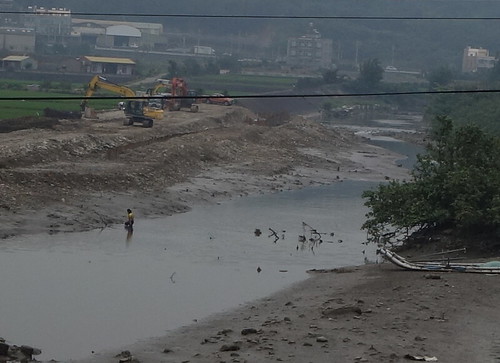
When you absolutely, positively, have to cross that river.
Many DPP leaders linked the goal of democratization directly to the issue of Taiwanese identity and the principle of self-determination (Hu and Chu 1992). Because this subethnic cleavage transcended socioeconomic strata, the DPP consider it an effective counterstrategy to the KMT's broadly based socioeconomic development program. It was also an issue that could unite tangwai members of different social and economic interests under a common cause. -- Bruce Dickson
Some of the cleavages within the DPP are starting to appear as the May 20 handover approaches... Tsai has done a wonderful job holding the party together, but...

President-elect Tsai Ing-wen finally had to tell her incoming cabinet members to shut up this week after a couple of embarrassing incidents....
President-elect Tsai Ing-wen on Saturday warned her prospective government members against wasting the team’s credit by making careless remarks.

She made the statement in an address to a “consensus camp” in Taipei City’s Yangmingshan area of her Premier-designate Lin Chuan with about 40 of the ministers and Cabinet members who will be sworn in on May 20.

Remarks by at least three of the members had to be countered by the prospective Cabinet leadership after they caused public unease.
Nothing demonstrated this necessity more than remarks of Chang Ching-sen, a Minister without Portfolio, on social activists and urban renewal. He had caused an uproar:
The controversy stemmed from a Facebook post by Chang on Monday about an ad advertising the Wenlin Yuan (文林苑) urban renewal project in Taipei’s Shilin District (士林) that in 2012 met resistance from the Wang (王) family who had refused to be relocated for the renewal and sparked a protest that was joined by scores of activists and students.

“[It was] the most kuso [a term in Taiwanese subculture meaning memed or parodied, but has evolved to indicate something nonsensically funny] activism in history. The Wang family that seemed to have been persecuted by the construction company and the government had a house that was 56.06 ping [185.2m2], but now has been distributed five apartments that total 175.02 ping with a value of more than NT$100 million [US$3.1 million],” Chang wrote.

“Fuck! How pathetic,” he wrote. “I meant those highbrow young people who howled for justice and staged candlelight vigils for the family.”

Chang soon deleted the Facebook post after it attracted a barrage of criticism.

However, Chang wrote another post saying he had no intention of making fun of the Wang family and the activists,” and added: “If the Wang family is still not satisfied with the five apartments they got, I can only say that they are unhappy billionaires. The [2012] protest, in my opinion, has stigmatized urban renewal and halted the city’s renewal projects.”
As an aside, it seems a widespread dodge among people who take things here in Taiwan that taking is ok, if something equal or greater than the thing taken is "returned." Recall that Ma Ying-jeou, when on trial for downloading government funds into private accounts, said that he had made donations greater than the amount of funds he took.

Chang's technocratic contempt for the activists was shown in his "standing firm" despite an apology for his words. The cabinet is made up largely of men and technocrats, and apparently its average age is just over 60. I expect that the social justice wing of the DPP and its supporters is going to become increasingly disenchanted with it over time. Though a commenter on my blog aptly termed it a suicide squad, here to take it on the chin for a period before it is replaced. [ADDED: Taiwan Law Blog just tweeted: Undeterred that the cabinet is only 10% women, Lin Chuan picks 6 more men to be deputy ministers (storm article)].

Ma Ying-jeou's last little vicious gift to Beijing, a fishing dispute with Japan, received a boost this week when the government sent patrol boats to Japan's claimed EEZ off Okinotori Atoll (contrary to media reports the Coast Guard said that the garrison on Taiping Island/Itu Aba was not increased). This is a small headache, fortunately, since Japan realizes that Ma too will pass. But Tsai will inherit this headache, which will put her at odds with the fishing lobby.

The incoming transportation minister also opined that maybe the new rail link to the east coast wasn't the best idea, a public statement that will likely cause the new administration further headaches. Transportation is THE issue for the east coast, whose residents have trouble getting train tickets because of the tourist crowds and the lack of trains. The east coast elected DPP legislators this year... it might not if the DPP does not give it the transportation infrastructure it demands. Because the DPP has been patiently cultivating the east coast -- Hsiao Bi-khim has done amazing work -- this decision could be even more important than the fight with the fishing and pork lobbies.

A larger headache is the looming fight over American pork. A legislative committee passed a motion demanding that imports of ractopork from the US be banned. Ractopork would cause large losses in the local pork industry, according to the article....
In a report to the committee, the Council of Agriculture (COA) yesterday said that allowing imports of US pork containing the feed additive ractopamine would cause about NT$14.3 billion (US$442.99 million) in losses a year to pork-related industries.

“There are about 5.5 million pigs bred by more than 8,000 farmers in Taiwan. Pork ranks No. 1 among all agricultural products,” COA Deputy Minister Huang Kwo-ching (黃國青) said. “The nation’s pork self-sufficiency rate is 91.1 percent, with an estimated total economic output of NT$71.74 billion per year.”
US pork is heavily subsidized by the US government. There is no way Taiwan can compete with that, and the ractopomine controversy exists simply to keep that subsidized pork out. Good. But the pork farming and fisherman are important lobbies... recognizing this, Changhua County Chief Wei Ming-ku, a DPP politician, has already come out in support of a ban on ractopork.

MEDIA FAIL: O be serious. WSJ says in an awful piece arguing that cross-strait relations are getting worse in the run up to the May 20 handover to Tsai (no, they are not, but it is sexier to maintain they are):
Perhaps like Richard Nixon, the only leader who can put relations on a new and more stable basis is a former firebrand like Ms. Tsai.
"A former firebrand?" 180 degrees wrong! Tsai is famous for not being a firebrand. What a total distortion of reality, and a disservice to the incoming President. But it doesn't end there....
...Kenyan judges acquitted the suspects, but China asserts it has jurisdiction and wants the suspects tried where the victims were affected. That Beijing offered Kenya some $600 million in loans one week prior to the deportation likely helped.
(1) Kenyan judges didn't acquit the suspects (8 were convicted of document forgery and did a year in jail). They were acquitted for charges relating to illegal telecom equipment and illegal business organization, but not tried on the fraud charges. Since China sought to try them on fraud charges, it is hard to avoid the conclusion that it was a deal China and Kenya had arranged long before, meaning that... (2) the $600 million in loans was probably not a driver of the affair; Chinese police had been asking for the suspects since Dec of 2014 and Kenya had probably agreed long before the loans (see #1 above). The loans are more likely to be related to China's long-term purchasing of influence in competition with the US -- Kenya used to be a major US ally in the region.

This editorial is like a stroll through the greatest hits of China-Taiwan myths:
Departing President Ma Ying-jeou established closer ties with China, including a free-trade agreement, by accepting the slogan of “one China, separate interpretations” as the basis for talks.
ECFA was not a free-trade agreement, but a managed trade agreement designed to let Chinese goods flow into Taiwan and gut Taiwan's industries. There was no 1992 Consensus of "one China, separate interpretations" and Beijing does not accept that formulation. The basis for CCP-KMT cooperation is China's desire to annex Taiwan. Everything else is noise.

WSJ also forwards the myth of China giving Taiwan "economic carrots." The stats don't lie: ECFA has been bad for Taiwan no matter how you slice it. It is, at this point, sheer stubborn laziness to keep writing sentences like this:
Despite the economic carrots offered by the mainland, Taiwan’s separate identity grew stronger during his eight-year term.
Substitute "BECAUSE OF" for "DESPITE" and you might be a bit closer to the truth. The purpose of ECFA was to tie Taiwan's economy to China's gut its industries, reduce its trade surplus (fallen every year since ECFA was inked), and pave the way for further agreements. Once the public experienced ECFA (which never had majority support) it promptly rejected the subsequent services pact. D'oh.

Why is it so hard to get people to stop writing as if they were taking psychic dictation from the Spirit of Inertia?

PS: WSJ, stop writing "the mainland." You're thinking of Hainan Island. This is Taiwan we're talking about. Just write "China".
____________________
Daily Links:
_______________________
Don't miss the comments below! And check out my blog and its sidebars for events, links to previous posts and picture posts, and scores of links to other Taiwan blogs and forums!

Monday, April 25, 2016

KMT to bash DPP with pork

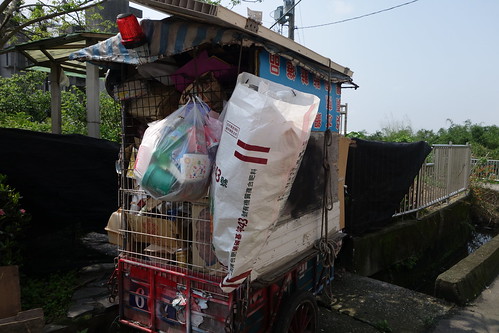
This is what Taiwan needs: more recycling bikes

The KMT has found the first major issue it can use to bash the DPP with, with the Veep warning the DPP that permitting US pork imports would land it in hot water:
Vice President Wu Den-yih (吳敦義) yesterday denounced President-elect Tsai Ing-wen (蔡英文) for not caring about citizens’ health. Wu noted that when Tsai was Deputy Premier, she failed to impose a ban on US beef when an outbreak of mad cow disease occurred in the US. According to Wu, it is now even more challenging for Tsai to lift the ban on US pork imports containing ractopamine residue as “people will hold her accountable.”

In response, the DPP retorted that when Wu was Premier, he was the one who allowed US beef to be imported from areas where mad cow disease had occurred without regard for the safety and health of people in Taiwan.
Pork and beef are contentious not because the government cares about the health of Taiwanese, but because both KMT and DPP patronage networks in farming communities are filled with pork farmers. Taiwan produces little beef, but under WTO regulations, if it imports beef with ractopamine, it must import all products containing that drug. Hence, if it imports US beef, it must accept US pork (before the beef mess began years ago, Taiwan took about one-eighth of US beef exports). However, if it takes in heavily subsidized US pork, local producers will scream (as will I, I hate rubbery US pork and prefer the fatty local stuff). Those producers will then blame whichever party lets in the pork.

The situation is even more complicated because the NPP is now bashing the DPP from the left on the pork issue even as the KMT bashes it from the right.

Note also that the KMT assigned this bashing to Wu Den-yi, a classic move -- it allows the Big Man (Ma Ying-jeou) to remain benevolent and distant while the right-hand man says what he really thinks. Moreover, Wu is a Taiwanese and presumably speaks to Taiwanese as one of their own...

Only the first of many such issues...
_________________
Daily Links
_______________________
Don't miss the comments below! And check out my blog and its sidebars for events, links to previous posts and picture posts, and scores of links to other Taiwan blogs and forums!
Tuesday, April 01, 2014

Irritant Time with the US

For pete's sake don't miss this excellent piece by William Pesek: Is China Losing Taiwan? on the protests. Except for its strange title -- China never had Taiwan -- it's awesome.

Chang An-le the longtime gangster who started a pro-annexation political party here showed up in front of the LY to harangue the students today. A comical moment occurred when he accused them, basically, of not being good enough to be Chinese. I'm sure that was a really effective comment. He left at 5 but promised to come back. Rumors flying around that the legislature will convene to pass the pact tomorrow.....

Recall that the Ma Administrations goal of putting Taiwan into China's orbit has two complementary parts. The first involves pushing the nation into Beijing's arms. The second involves distancing it from the US. Enter the irritants, issues used to keep relations with the US troubled. The ractobeef issue has risen from the grave, resurrected to once again vex US-Taiwan relations as the ractopork issue. FocusTaiwan reports:
Taiwan will insist on barring imports of U.S. pork containing the leanness-enhancing drug ractopamine, the Council of Agriculture (COA) said Tuesday.

The COA said that U.S. pork currently accounts for between 18 percent and 20 percent of the country's exports*, with the U.S. Department of Agriculture issuing certificates that particular batches do not contain ractopamine residue.

The official made the remarks as a U.S. report said that Washington is concerned about Taiwan's ban on beef offal and pork containing ractopamine and could pressure Taiwan to lift its ban on ractopamine-containing pork imports.

The official noted that hog raising is the highest-grossing aspect of Taiwan's agricultural sector, adding that Taiwan will continue to insist on no imports of pork containing traces of ractopamine, while its own hog industry will also not use the drug.
What a coincidence! Just as Taiwan is about to pass major trade treaty with China, it disturbs trade negotiations with the US over the ractopork issue.

Unlike beef, which isn't much produced in Taiwan, pork is a major product. Ma has wisely positioned this policy so it has a broad swathe of support. The whole issue with ractobeef was that under the international trade agreements, by letting in ractopamine-dosed beef, Taiwan had given up the right to let in anything else dosed with ractopamine. Since heavily subsidized US ractopork threatens Taiwan's pork producers -- no starry-eyed innocents themselves when it comes to dosing pigs with drugs -- the government objected to beef to protect the pork producers.

*I think they mean Taiwan pork imports
______________________________
Daily Links:
_______________________
Don't miss the comments below! And check out my blog and its sidebars for events, links to previous posts and picture posts, and scores of links to other Taiwan blogs and forums!
Tuesday, March 12, 2013

Irritant watch: Pork strikes the US-Taiwan relationship

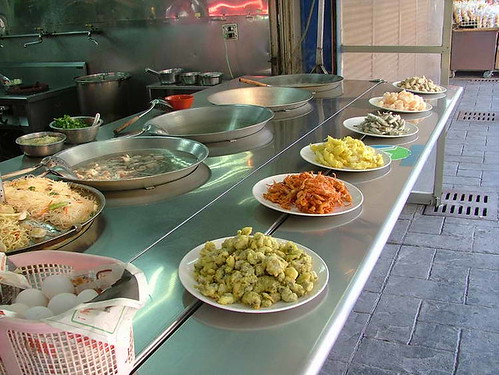
Lunch yesterday.

Well, as predicted by many, including this blog, US ractopork is now becoming an issue in US-Taiwan relations. Another useful irritant. The China Post reports:
The Ministry of Economic Affairs (MOEA) denied a request to approve ractopamine-containing pork imports during yesterday's bilateral trade talks with the United States, which said it will broach the topic again.

The seventh round of Trade and Investment Framework Agreement (TIFA) talks opened yesterday in Taipei after a six-year hiatus.

During the talks, U.S. negotiators pressured Taiwan to rethink its ban on pork imports containing ractopamine, a leanness-enhancing feed additive.

Deputy U.S. Trade Representative Demetrios Marantis, who headed an interagency U.S. delegation, “underscored his request that Taiwan's food safety measures — including those relating to meat exports — are based on science and consistent with international standards,” according to a statement released by the Office of the United States Trade Representative after the talks.

The MOEA turned down the request, saying that Taiwan will continue to “separate permits for importing beef and pork.”

Last year, the Cabinet removed a ban on U.S. beef containing ractopamine, after assuring the public that Taiwan's pork ban won't also be removed by default.
Lessee.... Taiwan wants US troops to die for Taiwanese if China invades Taiwan... but won't buy US pork.

US pork shipments to Taiwan were heavily impacted by the US use of ractopamine. The US wants to ship pork to Taiwan but wants to include toxic substances banned in over 100 countries. I've got a great idea -- stop producing pork with toxins in it and trying to ship it to Taiwan! Regain your markets, improve health. Win-win! Naw, that's too intelligent.

The hypocrisy never stops, because anyone who has ever studied the production of pork in Taiwan can only laugh at the idea that Taiwan is defending its food safety. The real problem is that production of pork in Taiwan is big business. This Canadian government report lays out some of the issues:
  • In 2009, Canada overtook the United States as the largest source of Taiwanese pork imports by weight, with 38.6 thousand tons worth of pork imported from Canada that year.
  • "Canadian packers provide better pork specifications and Canadian trimmings seem to be more competitive in quality than U.S. products. Canadian pork producers are benefiting in the wake of the U.S. pork ractopamine issue as they move to satisfy demand for pork in Taiwan" (U.S. Meat Export Federation, 2008).
  • Rising grain prices have negatively affected Taiwan's pork production and resulted in increased reliance on imports. This reliance on imports is expected to compound overtime (USDA, Exporter Guide, 2008; ,USDA Taiwan Livestock and Products, 2006).
  • ....recent troubles faced by domestic producers create opportunities for increased foreign imports. A number of Taiwanese hog operations have closed, following a surge in grain prices that began in 2007. A reported 756 farmers exited the industry and the number of pigs was reduced by 440,000 (U.S. Meat Export Federation, 2008).
  • Pork is a very important commodity in Taiwan's food supply and constitutes the largest portion of domestically produced meat, at 59% of the total.
  • Taiwan has a larger import market for poultry and beef than it does for pork, but not for lack of domestic demand. Rather, it is the larger capacity of domestic pork production that makes it less important as an import relative to poultry or beef.
  • Taiwan imports pork largely to offset shortfalls in its own domestic production. 
  • Pork is the largest single source of protein in the Taiwanese diet. It is also an important source of Vitamin A and Iron
It should be added that pork has important religious and cultural significance in Taiwan. Everyone has seen the offerings of pigs at temples or the God Pig competition. Pigs are also key symbols in local culture, and were used to represent the KMT in protests during the Martial Law era. When you mess with pork, you mess with the Taiwan identity.

Taiwan used to export pork, but the hoof and mouth disease outbreak here in the 1990s killed the export industry. Rising grain prices will probably continue to reduce output here in Taiwan. Rising grain prices... shudder... here's the outlook for 2013.
_______________________
Don't miss the comments below! And check out my blog and its sidebars for events, links to previous posts and picture posts, and scores of links to other Taiwan blogs and forums! Delenda est, baby.

Wednesday, February 13, 2013

Ractopork coming to a supermarket near you?

There's been much commentary on Taiwan this month from the Heritage and Brookings, both of which hosted Taiwan-related events. Rupert Hammond-Chambers, head of the US-Taiwan Business Council, opined that the Ma Administration should be announcing soon that FTA agreements with major trading partner Singapore and also with New Zealand should be finalized soon. Good news, if true.

He and other speakers at the Heritage Foundation mentioned that, in the context of the TIFA trade talks between the US and Taiwan, the issue of ractopork should be easily solved and the talks moved forward (remember, the TIFA talks are more like discussions about having talks). Hammond-Chambers said that the local papers are inflating the issues and are too parochial. I wonder if the US side really understands: (1) The beef issue was artfully used by the Ma Administration to irritate relations with the US. Pork is absolutely central to Taiwanese cooking -- the word meat in Chinese, by default, means pork. US ractopork imports may well be even more politically unpopular than ractobeef, which makes them a perfect tool for the Ma Administration to continue its policies of irritating Washington. (2) There are few local beef producers, but a myriad of local pig farmers and slaughterhouses. The political clout of the pork industry is great, and the local KMT patronage systems need those farmers to provide votes for its rural representatives.

Against this, as other writers noted, since The Racto Beef of Death© was admitted, US ractopork and other pork products should be admitted as well. Under the WTO agreements, once ractopamine containing products are admitted, all such products must be admitted. Perhaps the US side is counting on this to force the Ma Administration's hand when it says things should go smoothly.

In any case, whatever happens, the hilarious disconnect between the health claims in the expected public protests over incoming US ractopork and the abounding silence over the healthiness of local pork will no doubt provide much fodder for us post-starved bloggers.

More on Brookings tomorrow....
______________________
Daily Links:
_______________________
Don't miss the comments below! And check out my blog and its sidebars for events, links to previous posts and picture posts, and scores of links to other Taiwan blogs and forums! Delenda est, baby.

Thursday, March 08, 2012

Beef, Avian Flu: Vegetarianism, here I come

One wonders just what kind of pharmacopoeia went into creating this cornucopia of agricultural news this week. It's normal to add that you'd like a dose of whatever they are smoking, but I think I'll take a pass on that, thanks. It's obviously some kind of depressant....

I hardly know what to write, because this topic is like the poster child for the old saw that the more trivial the issue, the more bitter the fighting. Background first.....
The background is that the two governments signed a protocol in October 2009 lifting most of the remaining restrictions on U.S. beef products that Taiwan had put in place following the discovery of a case of mad cow disease in 2003. Just two months later, however, the Taiwan legislature – in which Ma’s Kuomintang controlled some three-quarters of the seats – enacted a law that reversed some of those very provisions. Despite resentment at what it regarded as Taiwan’s reneging on the protocol, the U.S. government by early 2011 was willing to start preparations to resume TIFA talks. Then another obstacle arose when Taiwan rejected some shipments of beef found to contain traces of the leanness-enhancing feed additive ractopamine. Though ractopamine, widely used by American ranchers, had long been a banned substance in Taiwan, inspectors had not previously tested for its presence. Random inspections, and the rejection of many shipments, have continued over the past year, and the uncertainty has caused some big buyers such as Costco to switch to other sources of supply.
As the TT noted in its review of a Wikileaks cable:
Taiwan did not allow US bone-in beef — a ban which had been in place since 2003 when the country outlawed all US beef imports shortly after the first case of mad cow disease was discovered — until a Ma administration protocol with the US in October 2009.

That protocol did not resolve the dispute after the legislature amended the Act Governing Food Sanitation (食品衛生管理法) to ban imports of beef offal and ground beef and the government began testing US beef for ractopamine in January, both hindering the resumption of bilateral talks under the Trade and Investment Framework Agreement, which had been suspended since 2007 because of the controversy.
Lessee... the beef issue is really two issues. First, it was Mad Cow disease. In 2003 the Chen Administration banned US beef imports over the discovery of a case of Mad Cow in the US. The restrictions were not lifted until 2009, and the legislature then reinstated them. Then in 2011 Taiwan began testing beef imports for ractopamine and the rest was misery....

It was actually only in 2006 the government banned ractopamine:
Following the decision, Taiwan, which prohibits the use of ractopamine, said that its ban, which was introduced in 2006, would remain in place.

“We have no plan to change our zero-tolerance policy against the use of ractopamine in meat products,” Minister Without Portfolio Yiin Chii-ming (尹啟銘) said by telephone.

President Ma Ying-jeou (馬英九) in March charged Yiin with the task of reopening negotiations with the US under the Trade and Investment Framework Agreement (TIFA) platform after the US unexpectedly put a hold on talks originally scheduled to resume in late January over the ractopamine issue.

The TIFA talks, which started in 1994, have been suspended since 2007, in response to Taiwan banning imports of US beef over fears of mad cow disease.
Beef might be a small thing in the overall US-Taiwan trade picture but for US producers Taiwan was an important market:
Taiwan purchased $128 million in beef products from the United States in 2008. In 2002 -- the last full year that the banned beef items were sold on the island -- they constituted about 13 percent of total U.S. beef imports.
The ractopamine ban was introduced in 2006 but no testing was done until years later. This means -- let's complete this circle -- that Taiwanese must have been eating ractopamine in US pork, for which it was introduced under the name Paylean in 2000, for years. Indeed...
After a 37 percent drop in 2007, U.S. pork (including variety meat) exports to Taiwan bounced back in 2008 with a 98 percent volume increase to 31,701 metric tons and a 115 percent rise in value to $52.9 million. The upward trend continued in 2009.
It did not reach US cattle until 2003, apparently after the Chen Administration ban went into effect (article on development of ractopamine). But US beef was entering the country in various guises between 2006 and 2011...

Ok, background done, now once again we should note that...

....the air is polluted, the veggies are coated with chemicals, the rivers are stinking open sewers, the pork is a testing ground for antibiotics, the roadways operate in Death Race 2000 mode, and the Taiwanese are as prone to eat junk food as any other people. But let the US want to bring in beef with traces of ractopamine....

The government this week pushed for a conditional lifting of the ban, triggering protests:
Sixteen civic groups took to the streets of Taipei yesterday to demand the resignation of Premier Sean Chen over the Cabinet’s decision to push for a conditional lifting of a ban on imports of US beef containing a controversial feed additive.
This led to the usual tussle between the KMT and the DPP. The latter is using the beef issue to bash the KMT. Ractopamine was banned under the DPP but no steps were taken to actually test for it (laws are made to be seen, not heard, in Taiwan). The danger for the pan-Greens should be obvious -- from the US perspective the KMT government has adopted the "reasonable" position and the DPP the "intransigent" position. A DPP legislator accused the KMT of making a political deal with the US on the issue in exchange for US support in the elections (but given the DPP position on this how could the US have dealt with that party? D'oh.) However, supporters of lifting the ban argue that it hurts Taiwan in its attempt to join the US-led TPP "free trade" initiative as well as in the talks on the Taiwan-US trade framework, TIFA, which, like fusion energy and a Cleveland Browns Super Bowl victory, is always just a few years away. Recall that the TIFA talks were suspended in 2007 and the US did blame the beef issue when it suspended them.

One of the keys to understanding the passionate silliness of the Taiwanese is identified in this TT article from the other day:
Throwing pieces of raw beef on signs with illustrations of President Ma Ying-jeou (馬英九) dressed as Uncle Sam, with the words: “I want you to eat US beef” written on them, the protesters said that the administration was neglecting the public’s health, while humiliating the nation and forfeiting its sovereignty.
Because Taiwan's sovereignty is always contested and always perceived as threatened, issues like this one that thrust themselves into that netherworld where the ROC virtual state meets the reality of global non-recognition are blown totally out of proportion. When it comes to sovereignty, the Taiwanese are like a cripple who pushes his wheelchair into a bar and then picks a fight with the biggest fellow present. There is also the underlying xenophobia, so non-obvious in everyday discourse and behavior, but always there lying under the surface, waiting to arise. The intersection of food, medicine, and The Other, who is tainted by his foreignness and cannot become One of Us is also explosive -- in this case, The Other is literally tainted with an uncertain drug. It's a shame that ractopamine-laden beef importers aren't visibly cruising nightclubs picking up Taiwanese girls, then every Taiwanese anti-foreigner button would be pressed. And this blogpost would be a lot more amusing too.

But enough of beef. The government will bull its way to getting acceptance of a conditional lifting of the ban, enough to satisfy appearances for the US. US beef will flow onto the island, consumers will eat it and this controversy will vanish like campaign promises on the day after the election.

The other interesting ag-related issue is the appearance of another round of avian flu on the island. There was an outbreak of avian flu in December in Changhua, which immediately led to claims that the outbreak had been covered up because of the upcoming election. I heard rumors of this in December but had no way to verify it. However, a group of activists claimed that the government had been covering up evidence of highly pathogenic avian flu for two years....
EAST disclosed two documents from 2010, dated March 1 and March 8, that the council’s Animal Health Research Institute sent to the Bureau of Animal and Plant Health Inspection and Quarantine. The documents showed that two technical group meetings held on Feb. 25 and March 5 that year had already received H5N2 Intravenous Pathogenicity Index [IVPI] lab results, which showed readings above 1.2 and 2.41, indicators that the strains were highly pathogenic.

Readings greater than 1.2 in an IVPI test on a six-week-old chicken indicate a highly pathogenic strain.

However, the council’s four reports to the OIE that year all said that the cases were “of a low pathogenic level,” EAST executive director Wu Hung (朱增宏) said, adding that the council should explain why it added “clinical high death rate” as a criteria for determining a virus strain’s severity.
According to the information supplied by the DPP, the Council on Agriculture had filed the report on the outbreak in Changhua on Jan 10, four days prior to the Jan 14 election. Prosecutors are looking into the issue even as we speak, and the director-general of the bureau of plant and animal health inspection and quarantine resigned on the 4th. Media reports (Focus Taiwan) say that a documentary filmmaker has been shooting film of bird flu on farms in central and southern Taiwan since 2006.

Vegetarianism sure is looking good.....
________________________
Daily Links:
_______________________
Don't miss the comments below! And check out my blog and its sidebars for events, links to previous posts and picture posts, and scores of links to other Taiwan blogs and forums! Delenda est, baby.