Sunday, June 05, 2016

The China Airlines Strike

A traditional food....

The strike began at the end of May...

This was posted to Facebook...
Around two thousand China Airline (A private sector company where the state of ROC, the bourgeois state that reigns in Taiwan, is the biggest shareholder, not to be confused with the Chinese state owned Air China) employees including pilots, flight attendants, and airport logistics workers have taken to the streets refusing the company's mandate for them to sign a waiver that forfeits their 8-hour days, normal working hours, and right for union involvement in negotiating work time as accorded to by the bourgeois state.

This is a heartening addition to the recent surge of labor demonstrations against the state, where the more militant sections of these demonstrations have been making increasingly political conclusions that understands neither of the establishment parties, be the dastardly KMT or the capricious DPP, can make any progress towards ending the oppression that the working class of Taiwan endures daily.
Over at New Bloom Brian Hoie had a piece on it:
As part of a waiver which workers are required to sign as part of Article 84-1 of the Labor Standards Law, according to workers, China Airlines is seeking to increase the work time of airline staff to 220 hours per month, more than the 174 hours which the act would stipulate. It is reported that China Airlines would also seek to redefine work hours for flight attendants, counting work hours as starting from 90 minutes from departure to 30 minutes after landing, a decrease from the previous policy of counting work hours from 140 minutes before departure and 60 minutes after landing.

Despite the shortening of work hours in which cabin crew would be paid, the amount of work cabin crew have to perform would remain the same, however. Workers would also be signing away their rights to overtime and negotiation of work hours through the waiver. Article 84-1 of the Labor Standards Law is aimed at reducing excessive overtime. Part of the issue at hand, however, is that international airline flights can last for over eight hours. There is concern that this would lead to flight attendants working on regional flights being deprived of their rights as compared to those working on international flights, as well as loss of rest time. As such, workers are refusing to sign off on the waiver.

In the demonstration, the Taoyuan Flight Attendant’s Union and Taoyuan Pilot’s Union was joined by the China Airlines Maintenance and Engineering Labor Union. There are calls from unions for a possible strike to occur from June 9 to June 11, during the Dragon Boat Festival, if negotiations are unable to be resolved by then. In joining with the cabin crew union’s call for a possible strike, the China Airlines Maintenance and Engineering Labor Union has cited the deteriorating conditions of airplane maintenances staff, with loss of job security, increased turnover rates, and outsourcing of work to dispatch companies. Maintenance staff have cited the importance of their work in ensuring airplane safety in spite of poor treatment by China Airlines. Likewise, pilots have expressed concerns that they will have their amount of leave cut.
The News Lens observed last month...
The Labor Standards Act stipulates a monthly maximum of 168 working hours, but an air crew member has to work 230 duty hours for 30 consecutive days and the in-flight resting hours do not count as duty hours.
_______________________
Don't miss the comments below! And check out my blog and its sidebars for events, links to previous posts and picture posts, and scores of links to other Taiwan blogs and forums!
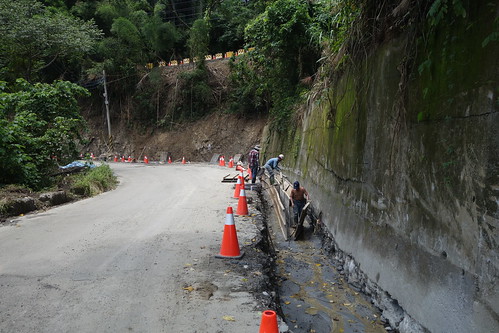
Hot one on the New Central Cross

DSC02132

A glorious day on the "New Central Cross", the new highway that connects the 124 in Miaoli to the Miaoli 62. Hard riding under a hot sun. Come below the READ MORE for more pics...

Saturday, June 04, 2016

Taiwan protests extralegal deportations from Kenya

These striking birds, juvenile Malaysian Night Herons, I think, tolerate humans getting quite close to them.

More accused Taiwanese scammers are facing deportation. AllAfrica.com has the latest on Taiwan's protests of Kenya's deportations of Taiwanese scammers to China...
'We recall that in April, despite a Kenyan court order requesting the police to return the Taiwanese nationals back, and regardless of numerous attempts and pleas to stop the illegal deportation, two groups of Taiwanese were forcibly deported from Kenya to China on April 8," the ambassador said at a press briefing in Nairobi.

The event sparked a diplomatic row and criticism from human rights organisations.

"We regard this as an extra-legal deportation to China," Mr Chen said.

He said two critical legal issues were lost in the event: that a court order that requires the police to return the Taiwanse was ignored and that "under international human rights law, governments have an obligation not to deport individuals without first giving them an opportunity to contest their removal before a competent authority."

'We urge the Kenyan authorities, when dealing with the Taiwan nationals, to follow international practice and principles and not repeat the error of the past," the ambassador said.
"Governments have an obligation not to deport individuals without first giving them an opportunity to contest their removal before a competent authority"...

Remember the Coffin Murder case? (Taipei Times, Hong Kong Standard):
Criminal Investigation Bureau deputy head Huang Chia-lu (黃嘉祿) said the three men, including the main suspect, a 26-year-old surnamed Tsang (曾), are scheduled to be deported today.

.......

Huang said police picked up the three suspects in Banqiao on Monday and detained them after revoking their entry permits.
Picked up Monday, deported on Tuesday. Because due process. Oh yeah, Taiwan and Hong Kong have no extradition treaty. Just like China and Kenya don't.

Remember the Korean workers who came to Taiwan to protest and were deported? Because due process.

Remember the Chinese bar girls picked up in Miaoli and deported?
Three Chinese women were arrested and deported from Taiwan after they were found to be working as bargirls at a popular scenic spot in Miaoli County on tourist visas, Taiwanese immigration officials said Wednesday.
That was because due process.

Remember the Sri Lankan national who was caught Saturday night and deported on Sunday? Because due process. That case revealed how Taiwan has become a transit point now for people sneaking into other countries.

Did you know Taiwan once deported a batch of 5,000 Filipino workers? I bet all 5,000 got court hearings, right?

24 Chinese deported before they even entered.

Remember that woman who had a baby on a plane to the US and was deported home without her baby. Yeah, MOFA didn't whip up a storm about that.

What do all these people have in common? They were all doing things their visas said they shouldn't be doing.

Just like those (alleged) scammers in Kenya. Once the government determines you have violated your visa, due process is the process by which the police escort you onto the first plane back to wherever you came from. The (alleged) scammers in Kenya were stupid. They entered Kenya from China, and so can be deported back there. That is in fact the default option in the immigration law.

PS: 8 of those deported in that batch of 45 were tried for having fake documents. That's what is called "due process". They were convicted, did a year, and were deported. Just like the two Hong Kong women in the apartment trashing case, who did a few months and were then deported. The other 37 were tried for telecom and business crimes, acquitted, and deported back to China because they entered the country illegally from China. Stupid of them...
_______________________
Don't miss the comments below! And check out my blog and its sidebars for events, links to previous posts and picture posts, and scores of links to other Taiwan blogs and forums!

Friday, June 03, 2016

China's soft power in the media, hard at work

Your patronage dollars at work.

Two pieces today in different ways illustrated the workings of China's soft power in the international media. The first was a tawdry Mediafail from Bloomberg entitled  Two Weeks Into Presidency, Taiwan Leader Pushes Away From China. As is usual in the media, the frame of reference for Taiwan is China. J Michael Cole raked this one over the coals at News Lens, observing, as many of us have...
Much of that stems from the notion that “one China” is a principle, a much-used and misused term that suggests a natural state when, in reality, it is very much a political construct used by Beijing to justify its unchanging policy vis-à-vis Taiwan. If the Taiwan-as-part-of-China trope is indeed a principle, then it follows that any position that argues otherwise involves a contradiction of some law.

The image of China as a gravitational force is reinforced whenever analysts and editorial writers describe President Tsai as “pushing away” from China, as Bloomberg did in an editorial published today.

There is flagrant bias in this way of describing the situation, which argues that Taiwan’s efforts to have normal ties with its neighbors—including Japan, which the author seems to regard as a worrying development—is somehow problematic. In reality, establishing constructive relations with other countries is the normal conduct of states and does not necessarily mean that this involves “pulling away” from other relationships. In other words, diplomacy isn’t a zero-sum game: it is perfectly possible for a country to diversify its interactions while simultaneously continuing to engage countries that exert a major influence on it, as no doubt China does with Taiwan.
As my son put it: no shit Bloomberg, Taiwan is acting like a country. Fundamentally, normal countries can move closer or farther from other countries as a matter of course. The frame of reference used is normal country behavior. For Taiwan the frame of reference is always China.

The writer of the Bloomberg piece, Ting shi, is on Twitter as @tshinflux, with a profile that says "In the business of manufacturing news | China and beyond". For once there's truth in advertising....

In addition to the pro-China framing, the Bloomberg piece also offers another common practice in the international media: treating the denizens of Beijing's various "Taiwan Studies Institutes" as if they were scholars and not political warfare specialists. The writer quotes one Xu Shiquan "a senior researcher at the Chinese Academy of Social Sciences’ Institute of Taiwan Studies" twice, ending:
"It would still be premature for Beijing to take harsh counter-measures because she’s not that provocative," said Xu. "However, the so-called cold peace would not last long and could turn into cold confrontation if this kind of status quo lingers."
Note that Beijing's measures are COUNTER-measures -- the agency is assigned to Tsai, poor put-upon Beijing only reacts with counter-measures. Then the speaker says the situation could "turn into" a colder war, again removing the agency from Beijing -- the situation spontaneously turns, Beijing doesn't make it go in a certain direction. Obviously these people are very well schooled and also, obviously, they should never be quoted in the international media.

The piece cites the TVBS poll and emphasizes how pessimistic it is. Solidarity answered that perfectly in the title for his post on the poll: TVBS: Taiwanese pessimistic about rest of year, as usual

Another media problem appears: the piece cites two human beings -- Xu for the China side, and Bonnie Glaser for some more balanced commentary, but, no human from Taiwan is cited. This piece provides only static from the Mainland Affairs Office in Taiwan, and that from an email. Apparently no individual humans in Taiwan have emails. It ends with the quote from Xu, of course.

The Bloomberg piece linked to the company's QuickTake explainer, which is studded with the usual errors and misinterpretations, including a reference to the Gambia. *sigh*. Of course, there are always the causeless tensions, the Aquinian First Cause of China-Taiwan relations...
Tensions erupted into Chinese military action twice — in the 1950s then again around a Taiwan election in the mid-1990s. 
"Tensions" caused Chinese military actions -- not decisions by Chinese leaders. Imagine that world...
PLA General: "Sir! Our missiles are launching into the Taiwan Strait! We didn't even press any buttons!"
Chinese President: "Don't worry about it. It happens whenever tensions wash over them. We don't have any control over it."
PLA General: "Then we need to do something about tensions, sir!"
Chinese President: "Sorry, we don't have any control over those either."
The Explainer also forwarded this tiresome LOL:
China passed a law in 2005 authorizing an attack if the island declares independence.
Whew! I bet the PLA must be relieved. I mean without that law, they wouldn't be able to attack. Imagine that world...
PLA: Taiwan has declared independence! Attack!
CCP: Sorry PLA, we don't have any law allowing an attack. We'll just have to let it go.
PLA: %@^#%$!!!
The second piece showing China's soft power in the media hard at work was this piece from the Christian Science Monitor on transitional justice. At first glance it seems pretty good, talking about the White Terror era and martial law... but then...
By uncovering the truth, she said, social wounds can be healed. Political consensus will be easier. Taiwan will be more united and become an active “communicator for peace” in Asia. To achieve that, she will need to make sure that the commission does not become a political tool to bash the current KMT, which lost power in a recent election.

If Taiwan can achieve a measure of reconciliation by this truth-telling process, it may be a model for China in coming to grips with the horrific past of the 1966-76 Cultural Revolution. In mid-May, the ruling Communist Party barely mentioned the 50th anniversary of the start of that social upheaval, which resulted in the persecution of more than 100 million citizens.
Yep. There's that China framing again: Taiwan could be a model for... the whole world? Countries that have similar dictatorial pasts? Nope, just China. Oh, and don't be too tough on the pro-China party, please, even though its the reason we're talking about transitional justice. CSM then descends into pure fatuousness:
As Tsai said in her speech, taking to heart the mistakes of the past can help propel Taiwan forward. If both nations can admit the errors of their darkest periods, they might be able to someday reconcile. The truth about past wrongs is a first step to restore the bonds that can ensure peace.
It's not their "dark past" that is the cause of the current tension and bringing it to light is not the first step in any path to peace. China and Taiwan are not separated at all and do not need to "reconcile." The truth is they can't "reconcile" because China threatens to maim and murder Taiwanese and annex their land. Until China drops its bogus claim to Taiwan, no "reconciliation" is possible, no matter how many inquiries into the Cultural Revolution Beijing hosts.

SPEECHIFYING: From Sen. McCain's speech in Singapore:
After the Shangri-la Dialogue, our delegation of seven Senators will fly together to Taipei to see President Tsai and her new team. I am encouraged to see yet another peaceful, democratic transition in Taiwan, and a new leader as capable as President Tsai. It was the Congress of the United States that passed the Taiwan Relations Act. And nearly forty years later, we stand firmly behind our commitments to Taiwan, and look forward to this new chapter in our relationship.
____________
Daily Links:
TO REVIEW LIST: Ong Iok-tek (Wang Yu-de) wrote a pioneering history of Taiwan, Taiwan: a history of agonies whose final version came out in Japanese in 1970. This work inspired two generations of Taiwan democracy and independence activists, including myself -- I first read it in Chinese years ago. I am delighted to report that I have a copy of a translation into English of the work, and am honored and deeply touched that it was shipped to me by his daughter. Will be reviewing it soon.

Richard Saunders shipped me copies of his Taiwan 101: Essential sights, hikes, and experiences on Ilha Formosa in two gorgeous volumes. Can't wait to review them.

Finally, I finished Shawna Yang Ryan's Green Island, which is brilliant. I will try to review it here soon, but it is more beautiful and moving than I will ever be able to convey.
_______________________
Don't miss the comments below! And check out my blog and its sidebars for events, links to previous posts and picture posts, and scores of links to other Taiwan blogs and forums!

Fujen Dorm issue: Can we have IQ tests for DPP officials, please?

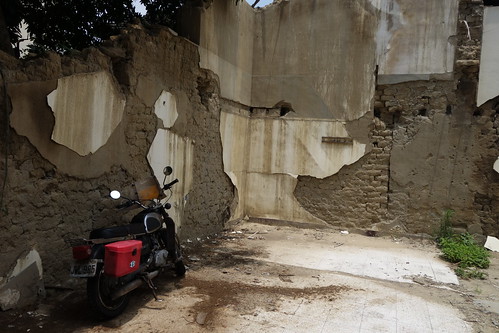
Old motorcycle, old house.

At Fujen University, the Catholic University outside of Taipei, the female students finally started a protest this week to put an end to the sexist and authoritarian practice of curfews for the female dorm. A group calling itself the FJU Cinderellas had staged the protest, which included one student going on a hunger strike -- nicely timed, since the end of the semester is only a couple of weeks away. The university agreed to stop the practice.

Regrettably, this urgent need to control female sexuality is not just a practice of the Catholic schools, but is widespread in Taiwan universities:
Ruling Democratic Progressive Party (DPP) Legislator Su Chiao-hui (蘇巧慧) cited a student survey as saying that 26 percent of universities and colleges in Taiwan have gender discrimination regulations in their dorm management, with Fu Jen being one of them.
The students highlighted an important issue that appeared to be missing in the legislative discussion:
Liao, a senior student studying public health, began the hunger strike May 30. She said one more person would join her for the strike each day until the school answered their calls, which include abolishing the curfew system for girls' dorms, installing electronic door control devices, and lifting a roll call at the beginning of the curfew.

Other demands are to clearly define the authority of the nuns and girls' dorm keepers, and holding elections to select students to be in charge of dorm affairs.

The student leader argued that the curfew is not just a problem of gender equality, but also affects the rights of dorm tenants, most of whom are from rural areas and financially disadvantaged, who cannot afford a privately rented room.
What she means is that people from money can afford to rent a room and come and go as they please. People from the working class must accept controls. Gender equity issues are frequently class issues as well.

Sadly, according to the Taipei Times, a DPP legislator urked up:
When asked by DPP Legislator Hsu Chih-chieh (許智傑) how he would respond to students if he were the dean of Fu Jen, Pan said that he would probably issue identification cards to female students, granting them unlimited access to their dormitories via a card reader, provided that the time at which the students leave and return to their dormitories is recorded and forwarded to their parents.
A longtime observer asked in an email discussion group a question that is already starting to occur to many minds: at what point will Tsai Ing-wen start being held accountable for the remarks of the slothful and regressive elements of the DPP, who are rolling along unchecked.
_______________________
Don't miss the comments below! And check out my blog and its sidebars for events, links to previous posts and picture posts, and scores of links to other Taiwan blogs and forums!

Tuesday, May 31, 2016

If China "slashes tourists" any further, we'll be overrun

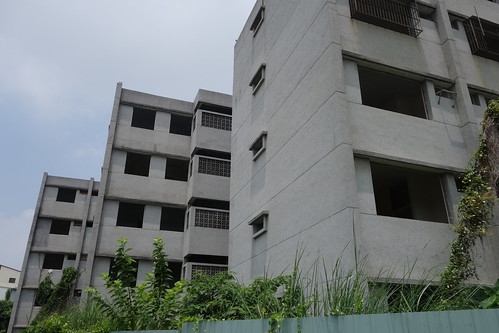
An abandoned housing project outside Taichung

So I've blown away the claim that the Kenya Deportations were aimed at Tsai Ing-wen, constructed an alternative and better fitting geopolitical scenario for the PRC's resumption of ties with Gambia, and already debunked the claim that tourists from China are falling. We will continue to hear this amusing ZOMG TSAI! narrative in the media, though...

Speaking of tourists, the April numbers are out. Let's look at the massive cuts in tourism that China imposed on Taiwan as "punishment" for Tsai Ing-wen...
MARCH: China: 363,878 up 30.09% year on year
APRIL: China: 375,567 up 4.67% year on year
Yeah, that's right. Tourism from China rose slightly in April. Can't wait to see the May numbers.

The dip took place in the Hong Kong/Macao numbers, for reasons I do not know:
APRIL: 110,716
MARCH: 164,894
FEB: 114,431
JAN: 93,448
Remember that quote from the Reuters piece I looked at:
"The National Tourism Administration told us in February and March to cut the number of tourists we send to Taiwan," an agent in the coastal city of Xiamen, which lies across the strait from Taiwan, told Reuters.
Obviously, being told to do something, and actually doing it, are two different things.
__________
Daily Links:
_______________________
Don't miss the comments below! And check out my blog and its sidebars for events, links to previous posts and picture posts, and scores of links to other Taiwan blogs and forums!
Monday, May 30, 2016

Monday Links

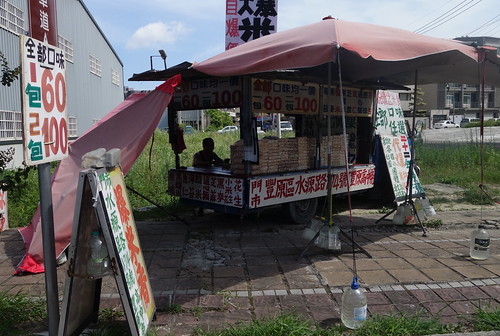
My first mango ice of the year, hopefully many to follow.
_______________________
Don't miss the comments below! And check out my blog and its sidebars for events, links to previous posts and picture posts, and scores of links to other Taiwan blogs and forums!

The Gambia, or I am so naive, I still believe in a reality outside journalism

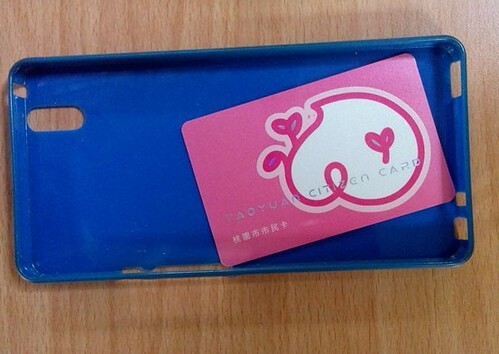
Local trick for using the Yoyo card/Easycard: keep it inside the cellphone case, and just swipe the phone....

The strange trifecta of Gambia, Kenya, and tourism in "punishing" Tsai has now become a Journalistic Fact: a claim widely shared among journalists, that is largely false. Indeed, one of the fascinating things about it is that it is a fact scrupulously honored by pro-Taiwan and pro-China writers. I wrote in The Diplomat a while ago:
The wide but erroneous evaluation of the affair of the Kenyan phone scammers as a move by Beijing to pressure Tsai Ing-wen simply shows how the frameworks the media uses to understand the China-Taiwan relationship conceal and distort the complexity of that relationship. They are easily hijacked by partisan commentators: in this case, pro-Taiwan commentators portraying it as a move against Tsai in order to heighten the sense of threat to the island nation, while their opponents used it to show how electing Tsai was a bad idea, since it angered China.
(Click on read more, it's a long one!)

Sunday, May 29, 2016

...and now for a lighter moment from the Economist: Taipei less safe than -- Wait? Wut?

....from the Economist Safe Cities Index White Paper 2015. That's right, Taipei is less safe that Sydney, Amsterdam, New York, and San Francisco. Talk about overthinking...
_______________________
Don't miss the comments below! And check out my blog and its sidebars for events, links to previous posts and picture posts, and scores of links to other Taiwan blogs and forums!
Asian Silicon Valley = DPP Collision with Student Movement

Lovely but hot weather this weekend. Here a friend poses by the wreck of an old suspension bridge near Dongshih.

Well well. Last year, shortly after getting into office, the new Taoyuan mayor saw the construction-industrial state light, and did a 180 on the Taoyuan Aerotropolis project (which he had opposed as a candidate, causing the government to begin expropriating the land before the review was complete), a ridiculous construction-industrial state giveaway. I wrote at the time:
The Aerotropolis is the largest land expropriation in the democratic era. Cheng's turnaround, if it lasts, is likely due to central government pressure. The aerotropolis is a freeport that is a giveaway to land speculators and land developers, and with its suspension of many labor laws, is likely intended as a portal to let Chinese labor into Taiwan.

Stopping that aerotropolis is a key to the DPP's remaining a serious party in Taiwan. It can't just pretend to be the party of social justice and economic development for ordinary people. It actually has to be one. If Cheng flips on this, it will cost the DPP Taoyuan in 2018 and hurt its chances in the Presidential election.
J Michael Cole's wonderful rant in 2013 is well worth revisiting (also my post on his). As originally envisioned (the draft bill is here) the project was going to let Chinese infrastructure firms bid on it, which would have been a disaster, one of the many pro-China decisions that cost the KMT in 2014 and 2016. The project would also have been governed by the free trade zone rules proposed by the KMT, which would turn the zone administrators into dictators administering miniature Uzbekistans. Indeed, there was some speculation that casino gambling would be permitted within the Aerotropolis as a free trade zone unrestricted by the rules applied to the rest of Taiwan.

The DPP has apparently learned little, for the new government has chosen the Aerotropolis as the site for its Asian Silicon Valley...
Premier Lin Chuan (林全) yesterday vowed to reduce land expropriation and enhance communication with the public as the government pushes forward with the Taoyuan Aerotropolis project, which is to be a key component of a larger “Asian Silicon Valley” project that President Tsai Ing-wen (蔡英文) proposed during her campaign [MT: 2015 article].

...

“Politically speaking, [the government] should reduce unnecessary land expropriation to avoid delays in the project’s progress due to protests by local residents,” Lin said in response to media queries for comments on the stalled project.

“The government should also do its best to communicate with the public. I believe that [Taoyuan Mayor] Cheng Wen-tsang (鄭文燦) would help negotiate and he should not only follow the rules and regulations, but also pay attention to things that have been overlooked.”

....

“Taipei and Hsinchu are the right and left hands of Taoyuan, with Taipei being an international metropolis and Hsinchu being an important research and development hub for the IT industry,” Lin said. “We have chosen Taoyuan as the base for the Asian Silicon Valley project to revive the economy in northern Taiwan.”
The Asian Silicon Valley is the island's industrial site for its internet-of-things operations, which everyone expects will be the Next Big Thing. China Post compares it to Ma's China-centric economic plans here, but in many ways it is just another in a long long long line of projects that are supposed to internationalize Taiwan's economy by linking airports and high-tech manufacturing and getting outsider firms to relocate here. Remember the chimerical APROC plan?

"To revive the economy in northern Taiwan". ROFL. The economy in northern Taiwan is just fine, thanks. It's the center and south that desperately need investment; occupancy rates in the southern science parks are below average. The real purpose of such announcements is to get local construction-industrial state patronage networks to re-orient on the DPP because it is now doling out construction dollars, expropriating land and handing it to developers, and keeping housing prices in Taoyuan up. Whatever happened to the DPP's commitment to spreading development from the north to other regions?

Note the presence of the strange phrase "unnecessary land expropriation". How can such a thing exist? Was land not in the project being expropriated? Isn't all expropriation "necessary expropriation"? Or what? "Unnecessary land expropriation" = {null}. Couple that with the "better communication" promise and you have full-blown Ma Ying-jeou Administration jive talkin' at its finest. This is the technocratic administration "communicating" and everyone should shut up and listen. Because the government's plans are never wrong, the problem can only be insufficient communication.

Now, recall that the land expropriations triggered protests before (student roughed up)

Recall that the student movement has promised to hold the DPP to account.

This seems, at some point, tailor-made for a collision between the students/Sunflowers and the DPP administration.
_____________
Daily Links:


_______________________
Don't miss the comments below! And check out my blog and its sidebars for events, links to previous posts and picture posts, and scores of links to other Taiwan blogs and forums!
Friday, May 27, 2016

Taroko people vs Asia Cement: the long twilight struggle

The amazing beauty of Taroko.

FocusTaiwan on the massive Asia Cement plant disaster outside Taroko Gorge...
Economics officials said Thursday that the Asia Cement Co.'s mining project inside the Taroko National Park can be terminated next year as new Environment Minister Lee Ying-yuan (李應元) hopes, but the company's operations in the 417 hectares outside the park cannot be suspended without new legislation banning such activities.

....

His new "vision" immediately alarmed the Hualien County government, which said the livelihoods of more than 1,000 families would be affected if the minister's new policy was carried through.

Kuomintang Legislator Hsu Chen-wei (徐榛蔚), wife of Hualien County Magistrate Fu Kun-chi, said Lee should have listened to local people and should give them some time to adapt before announcing his new policy.
If you're thinking that the cement company is in bed with the pan-Blue local government...

History from the piece above....
The Ministry of Economic Affairs (MOEA) said Asia Cement obtained a license to develop a total of 442.7 hectares in Hualien in 1973. Some 25 hectares of the licensed mining district were zoned in the Taroko National Park when the park was established in 1986, but it did not affect Asia Cement's right to keep developing the land.

In 1994, Asia Cement requested government permission to continue using the mining district inside the park, a request that was granted the next year.
The News Lens also picked up on this story, but also left out an important component of the issue. When the KMT legislator mentioned "local people" she meant the jobs dependent on the plant, not the livelihoods it wiped out. Those "local people"... who could they be? They've gone completely missing from the FocusTaiwan, News Lens, and Taipei Times report, which present the case in conventional environment vs big business terms. Let's restore their existence...
In 1974, the Siou-lin District administrative office, the Hua-lien County (花蓮縣) government, and the Asia Cement Company held several meetings for residents regarding Asia Cement's desire to develop a production site in Siou-lin District. However, as the Council’s judgment clearly points out, “The meeting only highlighted the benefits of the establishment of an Asia Cement factory during these “informational meetings,” never clearly stating to attendees that they would need to desist all cultivation and use of Truku Reserved Lands.” Furthermore, the Truku people's full understanding of the meetings' proceedings cannot be taken for granted when these meetings were conducted solely within the context of the laws and language of the Republic of China, which were alien and unfamiliar to the Truku people.

Subsequently, the Siou-lin District administrative office proceeded to transfer the lease for large sections of Reserved Lands to the Asia Cement Company, soon afterward revoking the cultivation rights registrations for 146 hectares of land. Fortunately, because of errors in documentation, a few of these revocations were not completed and a few were able to retain their cultivation rights. Two of these comparatively lucky rights holders eventually became litigants in the aforementioned case. After the lease agreement between the Siou-lin District administrative office and Asia Cement was formed, the original Truku rights-holders were forced off their land. Many of the original cultivation rights’ registrants have since passed away, and the remaining few who are parties to this case are now quite elderly.

During the course of protracted litigation, the Siou-lin District administrative office and the Asia Cement Company have repeatedly produced a written document which they claim is an agreement to abandon cultivation rights to which the seals and signatures of the Truku cultivation rights-holders have been affixed as proof of the aboriginal people's voluntarily renouncing cultivation rights and receipt of compensatory payment. However, the two aboriginal plaintiffs in this case do not recall signing any such document, and the handwriting used on all the signatures appending the agreement is curiously identical.
Read the whole thing, it's a common story of what really goes on in these cases when indigenes face large government-backed resource extraction companies. The historical background is given in this piece here by the awesome Scott Simon:
In 1968, the KMT government began legal registration of Aboriginal land in Taiwan as Aboriginal Reserve Land. Although indigenous people had lived on Taiwan for 6,000 years before the first Chinese settlers arrived, Aboriginal families received only cultivation rights under the new legal system. Usage rights on the land, moreover, were granted only on the condition that crops be planted for 10 years. The stipulation effectively forced assimilation on Aboriginal people, as it made them abandon their traditional mix of hunting, gathering, and slash-and-burn agriculture. It required that they instead adopt Chinese customs of settled agriculture, presumably for the growth of cash crops. The law stipulated that land could not be sold or rented to Chinese people--it either had to be cultivated or ceded to the government as state property.

Although Aboriginal Reserve Land was supposedly reserved for indigenous people, legal loopholes actually gave the Taiwanese government as well as Han Chinese individuals and corporations access to indigenous land. The government often "rented" indigenous land to outside commercial interests if indigenous people did not cultivate the land and sign "rental" agreements for the property in question. And indigenous people themselves often rented land to each other or outside Han Chinese. Han Chinese entrepreneurs were thus able to acquire space for villas, hotels, and factories on reserve land. The legacy of these problems remains. Indigenous people have no full legal ownership rights over the land, which means that they have no right to take out loans against it, a restriction that has prevented them from developing their own lands.

The policy of Aboriginal Reserve Land thus gave corporations adequate legal loopholes through which to seize Aboriginal land during a window of opportunity from 1968 to 1978. In 1973, the Taiwanese conglomerate Asia Cement applied to rent land from the Hsiulin Township Office and held its first consultative meeting with Taroko people. Township officials encouraged Taroko people to rent the land, saying it would give them employment opportunities, prevent out-migration of young people, and bring development to the community. The original landowners received compensation for displaced crops--a mere fraction of the land’s real estate value--and the promise that the land would be returned to them after 20 years.
In sum, Asia Cement did not have to compensate the aboriginal people for the value of the land (since the government "owned" it), just for the (far smaller sum of the) value of the crops it could have grown. Theft, backed by martial law, so protest was impossible. The article notes that few jobs were given to local aborigines out of the cornucopia promised, all grotty low paying work, which eventually was given to migrant workers, displacing even those few aborigines who got work at the cement company. It also tells the story of how the case was revived, with depressingly predictable responses....
One lucky day for the Taroko people, township officials left a hearing in anger, leaving behind a stack of documents. As Igung Shiban looked through them, she found that they were filled with irregularities. Some were missing dates or official seals. Most suspicious of all, the signatures of many former owners who had supposedly given up their property rights were all written in the same handwriting. In nearly a year of research, she pulled the agreements, one by one, from the township office files and showed them to the signatories to confirm whether or not they had actually signed them. It turned out that most of the signatures on the agreements to relinquish land rights were forgeries.

Asia Cement resorted to intimidation to stop her research--Shiban and her husband were physically attacked twice, and her husband was burned on the leg—but they didn’t give up. Fortunately, local environmental activists and National Legislator Bayan Dalur, an indigenous representative given a seat through the opposition Democratic Progressive Party (DPP), helped them pursue the case by providing access to government documents.
This old report, preserved on the useful Taiwan First Nations website, describes:
"There will definitely be bloodshed next time. We'll kill you one by one," promised Chou Wei-kuen, a company spokesman, after the group stormed the gates.
Activist Igung Shiban started an organization and took its case to the United Aborigines Working Program of the UN (here) where it didn't make much progress because you-know-who across the Strait suppressed it because it was Taiwanese. Packed with useful, fascinating details, Igung Shiban wrote in her 1997 report to the UN...
This dilemma of the Taroko people is the dilemma of all the indigenous people of Taiwan: Shimen Dam in Taoyuan County drowned the villages of the Taiyal. The military air base built into the mountain near Hwalien airport displaced the villages there. The Machia Dam in Taitung County forced the Lukai people out of their homes. The forced expropriation of indigenous reserved land by the government's Retired Servicemen's Association, Forestry Department, and National Parks Service, have each contributed their part to the loss the indigenous land and extinction of indigenous culture. If the campaign for return of land from Asia Cement were to succeed, it would be a crucial turning point. So we must persist in this campaign. This is not just our struggle; it is part of the hope for indigenous people throughout the world.
_____________
Daily Links:
_______________________
Don't miss the comments below! And check out my blog and its sidebars for events, links to previous posts and picture posts, and scores of links to other Taiwan blogs and forums!

Beijing official torches self in attempt to scorch Tsai

Bit rainy the other day in Miaoli, but Kerslake produced a fabulous write up with lovely pics of our ride. 

Solidarity translated the entire post of the Beijing official's remarks on Tsai, and observed....
Translation of the Sohu.com repost of a May 24(?) editorial (link) in the International Herald Leader, a Xinhua subsidiary, which has since been scrubbed from the Internet (link). See the Washington Post and New York Times reports on the vociferous reaction inside and outside China to this piece. As CDT noted, the commentary also appeared in some places under the headline “Tsai Ing-wen’s Extremist Political Style May Be Due to Singlehood.” The high position of the author makes one wonder the extent to which this article reflects the views of PRC leadership. Of interest is not only the sexism but also the repetition of numerous deep blue tropes about the green camp, like Tsai being the mastermind of all Taiwanese social movements. A favorite claim of mine was that Tsai manipulates public opinion by interacting with people at events.
In a tweet Solidarity also trenchantly observed that not only is the sexism of the piece shown in locating her behavior in her singlehood, but also, in ascribing her beliefs to the males around her. In Chinese nationalist theology among both KMTers and Beijingers, the independence movement was created by the Japanese to detach Taiwan from China and thus, Tsai's political behavior must have Japanese roots. Similar nonsense was emoted about Lee Teng-hui, who is alleged in KMT nutcase circles to be half-Japanese.

In this kind of thinking, in all cases social movements must have "black hands" -- the mastermind behind the scenes, Japan and later, the US, being the "black hand" behind Taiwan independence. Nothing ever happens organically or spontaneously in this world of conspiracies.

Beijing is being advised on Taiwan affairs by KMT people and Deep Blue businessmen in China. This editorial in the China Times gives a good example of the kind of nonsense it must constantly hear:
The KMT must insist that Taiwan is a pluralistic society with Chinese culture at its core, and not, as the DPP insists, a pluralistic society without any core culture. [MT: in Chinese/KMT theology there is no such thing as Taiwanese culture]. The Constitution of the Republic of China is a constitution that does not permit separatism. The new government has no right to propose Taiwan independence. It has a duty to ensure that the nation remains whole. Cross-Strait relations are not foreign relations. They are relations between two governments within China that are in a state of civil war. The 1992 Consensus is the political foundation for cross-Strait exchanges of administrative and business nature. The KMT must demand to oversee the new government that it continue to uphold these principles. It must tell the people that Taiwan cannot participate in regional economic organizations unless it does so in concert with the Mainland. The KMT must loudly proclaim that legally the civil war is not over. [MT: I hope so! That will marginalize it even further] It must tell the DPP that the more successful its campaign of de-Sinicization, the more people on the two sides are divided in identity, then the more elusive cross-Strait peace will become, and the greater the possibility of military conflict.[MT: De-sinicization is code language for the removal of markers of KMT colonialism in Taiwan.]

During the Mainland's 30 years of reform and opening-up, Taiwan made significant contributions to its economic development. Taiwan also preserved traditional Chinese culture. [MT: "...unlike the Communists who stamped it out." This propaganda claim used to be reproduced even by academics, but it has disappeared outside KMT circles]. This earned it the respect of the vast majority of people on the Mainland. While the DPP is eager to sever all cultural and economic links with the Mainland,[MT: Of course it doesn't want to sever "all" cultural and economic links with China] the KMT must continue to bear the heavy burden. Pessimistically speaking, it must not allow the Mainland to lose all room of imagination for reunification. Optimistically speaking, it must let the Mainland feel that Taiwan can play an important role in cooperation and promotion on road to the revitalization of the Chinese nation. Only then can Taiwan win hearts and minds on the Mainland. Only then, can it then win their respect.
As many of us have noted, and Solidarity again observed above, the preponderance of evidence suggests that Beijing does not understand Taiwan and does not know what to do. It appears to have talked itself into a corner. Even Banyan at the Economist wrote this week...
China’s approach to Ms Tsai suggests it has few new ideas, either, on how to handle Taiwan. She was elected in January despite China’s warnings. 
....saying what several of us have been saying aloud for months: Beijing is floundering. It doesn't know what to do, and this astonishing outburst from a high ranking official suggests that Beijing is so primitive in its thinking that even the gender of the new President has flummoxed them.

It's always good to see the international media catching up to my positions...

MEDIA NOTES: The Emily Rauhala piece at WaPo Solidarity links to above was widely praised. Don't miss it.

I couple of weeks ago I took the Economist to task for misreporting the failure of Ma's China policies. I then published a piece at the Diplomat that put up the numbers and linked to a cluster of nonsensical claims about Ma's China policies. I ended that latter piece:
With a new pro-Taiwan president and party in power in Taipei, Taiwan’s China policies are likely to change. Given what has gone before, readers may rest assured that this will trigger a new round of complaints in the international media: the new government is destroying the massive China trade successes of the Ma administration.
What did Banyan write about trade in that piece above?
Similarly, in Taiwan, a massive expansion of trade and tourism links with China under Ms Tsai’s predecessor, Ma Ying-jeou of the Kuomintang (KMT), caused huge protests in 2014.
...with no numbers, of course, documenting that "massive" expansion. Banyan dare not report the numbers or the critiques of them, because then the slant of her writing would become clear.

But there was a really great moment in that piece:
But in her speech Ms Tsai bent over backwards to keep to her promise not to upset the status quo. She even acknowledged the “historical fact” of the meeting in 1992 at which the alleged consensus was reached. But she did not repeat the “one China” fiction. Struggling to appease both her pro-independence supporters and Taiwan’s domineering neighbour, she gave neither quite what they wanted.
"'One China' fiction". That's beautiful. Thanks, Banyan.
_______________________
Don't miss the comments below! And check out my blog and its sidebars for events, links to previous posts and picture posts, and scores of links to other Taiwan blogs and forums!
Wednesday, May 25, 2016

Diplomat: Ma Ying-jeou's Legendary (Trade) Millions


In the Diplomat today:
When The Economist recently reported that Taiwan’s trade with China “ballooned” during the administration of outgoing President Ma Ying-jeou of the pro-China Kuomintang (KMT), it was repeating what has become a commonplace among writers on the cross-strait relationship. We are told that trade “boomed” under Ma (Washington Post, Institutional Investor), or “particularly since Ma” (East Asia Forum, International Business Times), or that since Ma cross-strait trade has “climbed more than 50 percent” (New York Times) and even “soared” (Economist). Indeed it is possible to write that China is “showering” Taiwan with economic benefits (East Asian Forum), that booming cross-strait trade was “only a hope little more than a decade ago” (National Interest), and that Ma’s policies have resulted in “substantial material gain” (National Interest).
There is just one problem with these thoroughly conventional claims: they are thoroughly wrong...
_______________________
Don't miss the comments below! And check out my blog and its sidebars for events, links to previous posts and picture posts, and scores of links to other Taiwan blogs and forums!

Tuesday, May 24, 2016

Tsai Speaks on Friday

April export orders: US is leader, but the making will happen in China. Over half of orders have been made there for several years now. 

Friday was a deeply emotional day for me. President-elect Tsai became President Tsai, a tremendously satisfying event. I managed to watch a bit of the ceremony. Then came home in the afternoon and found out our beloved Golden Retriever's kidneys had failed and he had to be euthanized. That was wretched. So I didn't post on Saturday. Kinda took the wind out of my blogging sails.

There is actually not that much to say, everyone already said it....

I was holding off posting this because I was waiting for my man Michal Thim's excellent piece to come out in SCMP. He noted, like everyone except a few people who weren't paying attention, that Tsai did not affirm or acknowledge the faux "1992 Consensus". Instead...
Instead, she referred to cross-strait arrangements using ambiguous wording. Primarily, she noted that in 1992, “the two institutions representing each side across the strait ... arrived at various joint acknowledgements and understandings”. “Since 1992, over 20 years of interactions and negotiations across the strait have enabled and accumulated outcomes which both sides must collectively cherish and sustain; and it is based on such existing realities and political foundations that the stable and peaceful development of the cross-strait relationship must be continuously promoted,” she said.

This may not be exactly what Beijing wants to hear but ambiguity in diplomatic speech is often of greater value than clarity. Tsai did not refer to “one China”, yet she also did not explicitly declare that cross-strait ties are relations between two sovereign states.
Tsai left Beijing "considerable room".  Thim noted what many of us have long said: because Chinese links in Taiwan are links to the KMT and its patronage networks and allies...
Whatever punishment Beijing may come up with to express its displeasure with the new administration, the first to suffer will be the KMT-linked local power holders and businesses.
Thim ends excellently:
Cross-strait relations could very well become full of conflict but, this time, Taiwan would not be seen as the troublemaker; it would be just another neighbour with strained relations. It does not have to be that way, though. Tsai’s speech offers enough space to step back and embrace the ambiguity. The ball is in Beijing’s court.
Many observers noted that Beijing's response that Tsai had turned in an "incomplete answer sheet" on the 1992 Consensus actually could be taken to mean that she at least had given some of the answers. The public, which knows that acceptance of the 1992 Consensus means acceptance that Taiwan is part of China, supports her position overwhelmingly, according to a poll from the Deep Blue TVBS.

Beijing gives every appearance of not having a Taiwan policy. Its first move was to threaten to "suspend talks".
Meanwhile, Beijing’s semi-official intermediary for discussing cross-strait relations, the Association for Relations Across the Taiwan Straits (ARATS), said that if Tsai wanted negotiations with its Taiwanese counterpart, the Straits Exchange Foundation (SEF) to continue, Taiwanese authorities needed to endorse the SEF to declare adherence to the 1992 consensus.
The international media spotted that for the clickbait it was, and ran with it. But of course, the talks it threatens to suspend are precisely those talks that have no material effect on things -- the least important of the many discourses Beijing has with Taiwan.

Beijing could say that Chen Shui-bian was "provocative" and break off talks. In those days Taiwanese built factories in China and shipped stuff out. The vast range of engagement Beijing now has with Taiwan didn't exist. Now it talks to Taipei about everything from crime to high finance (wait, those are the same thing, let me find another one)... from crime to education to tourism, you name it. The KMT and CCP have many links, and politicians from the DPP travel to China and engage with officials there, as well as quietly run businesses, so the story goes (shhhhh). Businessmen, artists, and tourists shuttle back and forth. Talks? They make great media copy....

Beijing does the same thing with the US -- it threatens to break off mil-mil relations, since those have zero cost to Beijing and the US for some comic, bizarre reason thinks they are really, really important. The US response to China's threats to cut off military relations reminds me of the alien from Men in Black at that moment when the alien is about to escape and suddenly Will Smith threatens a cockroach: "Is that your uncle?"

Meanwhile the really important costly punishments involving trade or finance are never meted out. Bejing does not want to pay those costs.

In case you wondering what Tsai actually said compared to Ma, Ben Goren at Letters from Taiwan did a statistical analysis. Very informative.

New Bloom had a fantastic run-down on the ceremony and the presentation of history, including the patronizing, offensive remarks of the emcee. From what I could see, the DPP apparently attempted to subsume the entire history of resistance to KMT rule into a narrative that located the tangwai politicians who became the DPP at the center, which rankled various groups. It has learned little, still presenting ethnic relations in conventional, Han chauvinist terms. In the long run this will cost it, unless it grows up quickly.

Richard Bush at Brookings argues that it could have been worse, and finishes...
The not-so-good news is that the situation between the two sides remains delicate. China has other actions it can take to convey its dissatisfaction. Beijing and Taipei have gotten past the milestone of Tsai’s inauguration without triggering an immediate deterioration, but they have not fully stabilized their relations. This is only a beginning, and what will be needed going forward is a process of incremental trust-building through reciprocal and positive words and deeds. A number of outstanding issues remain to be addressed, and unexpected events can very easily derail progress. As a start, however, this isn’t bad.
It is apparently indelicate to point this out, but as long as China holds a gun to Taiwan's head, trust will never be built and the situation will never be stabilized.

Additional Nelson Report commentary -- click on READ MORE:

Blast from the Past + Links

The image above shows US pilots strafing near the Confucius Temple in Changhua (Google maps). A close friend posted to Facebook:
American pilots strafing Changhua near the Confucius Temple in Changhua.
When I lived in Hemei, in Changhua County my boss' husband was a KMT politician, and he liked to take me out drinking with his constituents. One night we were drinking 蒸餾酒 (I'm guessing at the characters, I had no clue then. It was moonshine made from grapes from near Fengyuan I was told, and 60% or higher alcohol) with a guy who walked with a limp. Turns out the guy had been hit by an American bomb, and one of his legs was all torn up. He also had to drop out of school, so never finished his education. He didn't seem to bear any ill will towards Americans, though.
Lots of people around like that....
_____________
Daily Links:
_______________________
Don't miss the comments below! And check out my blog and its sidebars for events, links to previous posts and picture posts, and scores of links to other Taiwan blogs and forums!