Showing posts with label labor. Show all posts

Friday, August 25, 2017

Taiwan's low wage slow motion economic disaster

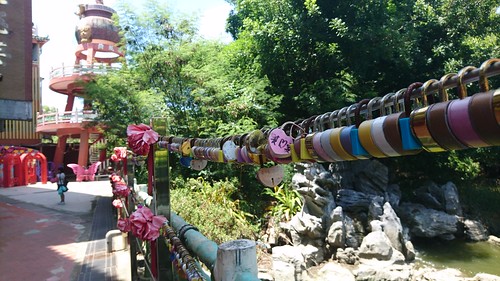
Locks hung by lovers to symbolize relationships never broken at a truly silly lovers' corner behind the big temple in Beimen, Tainan.

Thanks for all the kind thoughts for speedy healing, dear readers. I really appreciate that you took a moment to say that.

News Lens ran an excellent piece on the low wage + low productivity trap that is stifling Taiwan's economy. I'm excerpting it here but read the whole thing, it is devastating...
The Basic Wage Deliberation Committee has proposed to increase Taiwan’s minimum wage from NT$21,009 a month this year to only NT$22,000 (US$725) next year, after a meeting earlier this month.

The committee, which is made up of representatives from the government and businesses, as well as from the labor unions and academia, meets every year in the third quarter to discuss whether to raise the minimum wage for the following year. The committee comes under the Ministry of Labor (MOL).

..........

The Taiwan Confederation of Trade Unions Chairman Chuang Chueh-an (莊爵安), who is a member of the committee, had said last Wednesday that a consensus was reached with the committee on raising the minimum wage to NT$27,711 (US$931).

However, the committee has since made an about turn.

Even so, business leaders felt the need once again to come out against the proposed increment – even as it is small. Corporate representatives simply walked out of the meeting halfway through it.

As New Lens points out, the common saying in Taiwan is that minimum wage is 22K, but this bit of wisdom is wrong: the actual minimum is 21K. Note that labor wanted a large increment, but business groups simply walked out of the meeting when a much fairer minimum wage was proposed.

The problem is not that corporations are doing poorly. Quite the opposite, as the piece notes:
From 1992 to 2015, the profit share of Taiwan’s corporations, as a percentage of GDP, has kept growing, from 29.28 percent to 35.08 percent.

However, whereas the profits of Taiwan’s corporations have grown, the wage share of Taiwan’s workers has continuously dropped, from 51.04 percent to 43.97 percent.
Profits, productivity, and the economy are all growing. The only reason that wages are not keeping pace is because political decisions made by powerful elites are suppressing wage growth. The gap between wages and productivity represents money stolen from workers and handed to already incredibly wealthy corporate owners. Such a massive transfer of wealth could not be sustained over decades unless it was maintained by political choices at the top.

A paper out this year, Real Wage Stagnancy: Evidence from Taiwan (Huang and Huang, Singapore Econ. Rev., 2017) observes:
We empirically demonstrate that, despite the continued growth of labor productivity, the benefits from economic growth allocated to workers have been falling, and that this process has accelerated following the 2008–2009 financial crisis. The labor market institutional effect contributed partially to the problem. Workers’ purchasing power, measured by the real consumption wage rate, has been declining for a relatively long period, implying significant deterioration of terms-of-trade, and cutting real wage growth by as much as 2.23% per year. The terms-of-trade effect is particularly prominent in the manufacturing sector, which is highly export-oriented. Moreover, we found cash wages to be very sensitive to the rise in the rate of unemployment, and to the changes in output performance of the industry in which the workers are employed. The latter factor significantly reduced the cash wages paid to workers in the manufacturing sector, which highlighted the waning of workers’ bargaining power regarding wages, as well as the negative impact of globalization on the labor market. We therefore conclude that the deterioration of terms-of-trade, increases in the aggregate unemployment rate, the adverse globalization effect and the institutional effect might be the main driving forces for real wage stagnancy in Taiwan.
It's important to realize a couple of things. First, globalization is not to blame. Globalization is an external force, which locals must respond to. When typhoons come and some town floods, no one says "oh, that can't be helped, typhoons do that". Everyone instead asks why the government did not anticipate the flood.

Globalization is similar. If workers are pummeled by globalization, then the question that needs to be asked is why the government isn't doing anything about it. When people offer globalization as a "cause" of low wages they are engaging in a game of Three Card Monte with causation, hiding the reality of political suppression of wage growth behind "it can't be helped, it's globalization".

Second, this longtime productivity wage gap -- note that it began worsening severely at the beginning of the Ma years though it long predates that -- is pro-China. Whether Beijing's policies or Taiwan's corporate elites slowly erode Taiwan's economy is not relevant, because the outcome is the same. Want an independent Taiwan? We need a robust economy, with good wages and strong unions.

This paper also observes that expanded college access since 1990 has actually worsened the wage gap, since many more poorly trained grads are landing in the economy. We need to reinstate the vocational college system which produced so many SME owners and skilled laborers for the export economy.....

I do not expect anything to change under Tsai, partly because powerful corporate interests own one party and heavily influence the other, and because Tsai is a neoliberal, not a progressive.
______________________
Daily Links:
_______________________
Don't miss the comments below! And check out my blog and its sidebars for events, links to previous posts and picture posts, and scores of links to other Taiwan blogs and forums!

Thursday, March 02, 2017

Slavery: the way of the Taiwanese boss

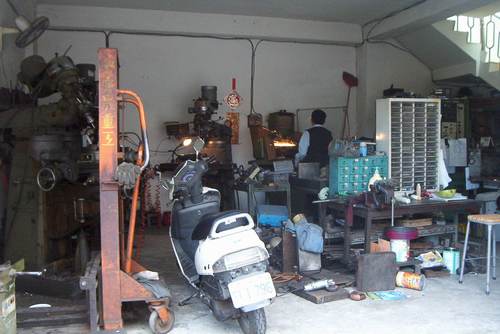
A home factory in Taichung

News came out early this week of a dried tofu factory that had held two migrant workers for 14 years...
Kaohsiung police raided a dried tofu factory and rescued four migrant workers who had been locked inside on the second floor of the factory for up to 14 years and forced to work 15 hours every day.
The factory was fined a massive $1.2 million NT, or about $40,000, for stealing nearly 30 years from two people. Outrageous. Nobody is going to do any jail time despite the gross violation of the law. The government vowed to step up inspections. Yeah, right.

If only we hadn't heard this tune before. 35 Indonesian women forced into factory and maid work via false marriages in 2007. 35 Filipinas forced into the sex trade in 2014. 2010 Filipino workers in a glass factory complain of abuse. State Department reports in 2008. There are just so many... last year an extensive report on the rampant slavery in Taiwan's fishing fleet. BBC in 2014 on same topic. Every year brings the same stories of exploited foreign workers.

But these are just extremes, produced by a brutal work environment with long hours, low salaries, and indifferent government enforcement of the labor laws. Taiwan News reported a while back...
Taiwan has long been criticized for its government's loose management of work hours and a prolonged period of low wage growth. Many employers were found to have failed to comply with all of the work hour regulations, including forcing laborers to work unpaid overtime. Attorney Chen You-xin of the Via Justice Law Office was quoted in the Apple Daily earlier as saying that many local workers in Taiwan either voluntarily or are forced to forgo their annual leave entitlements due to heavy workloads without any financial compensation.
Taiwanese even work longer hours than Japan...
_______________________
Don't miss the comments below! And check out my blog and its sidebars for events, links to previous posts and picture posts, and scores of links to other Taiwan blogs and forums!
Saturday, June 25, 2016

Flight Attendants Strike over + Some tourism notes

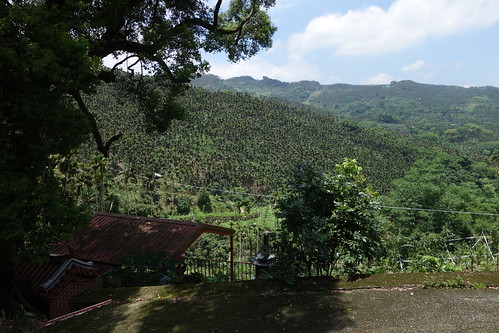
Nantou's betel nut covered slopes

The flight attendants strike is over, as the TT reports:
A preliminary agreement between China Airlines (CAL, 中華航空) and the Taoyuan Flight Attendants Union was reached last night to end the union’s strike, with the firm agreeing to demands for new holiday and working hour guarantees, along with extra pay for overseas stationing.
However, look for management to attempt a stealth rollback of these gains. The deal is only preliminary. But clearly Someone realized that having gorgeous young females out there militant and powerful would serve to inspire other labor unions. Like the nurses. At the bottom of this post below the READ MORE line I've placed a wonderful piece that was sent around Facebook:7 Must-knows to Support the Strike of China Airlines Flight Attendants. It explains what the strike is all about...

I sure hope this strike leads to more changes. Ordinary workers in Taiwan are suffering.

I ran into an expert on Chinese tourism in Taiwan, who told me why the group tourist count was down 31% in May but the individual tourist count rose 12%. He was in the arrival line with a Chinese tourist group at the airport and listened as they reached the Immigration Desk: they were all coming in on individual tourist visas, organized by their tour group. In other words, the quotas for group tourists were indeed slashed, so the tourist agencies simply switched to individual visas. "The figures don't mean very much. Don't forget, some of those 'tourists' are here on business," he reminded me. But overall arrivals are indeed down. These numbers should rise once the tour companies all switch to the new approach.

Beijing must be turning a blind eye because it doesn't want to disturb the networks it has built up in Taiwan and to preserve the profits of the tour firms in China, which Taiwan media claims are closely connected to the Taiwan Affairs Office there.

See also New Bloom on the CAL strike and its aftermath

REF7 Must-knows to Support the Strike of China Airlines Flight Attendants
YING-CHAO KAO·FRIDAY, JUNE 24, 2016

Flight attendants of China Airline (CAL) is starting their strike and the largest strike in Taiwan labor movement history. June 24 midnight, Taiwan time; noon of June 23 (EST)....

Friday, June 24, 2016

China Airlines Strike Begins!

The mountains from the 3.

UPDATESETV livestream

Thursday night the strike against China Airlines by its overworked, underpaid flight attendants began. New Bloom asks the question on everyone's lips: is this a historic moment for Taiwanese labor?
As news of the street occupation spread, Taiwanese youth activists made their presence increasingly felt. The size of the street occupation was comparable to—and probably larger than—the Ministry of Education occupation in August 2015. Usual suspects of Taiwanese activism made their appearance, including New Power Party politician Freddy Lim, Social Democratic Party politician, noted activist and show organizer Indie DaDee, Wu Cheng of Democracy Tautin fame and currently part of the New Power Party, as well the chairman of the Liberty Times executive council. It is reported that over fifty lawyers volunteered to aid the strike as well, and the striking workers prepared their legal teams beforehand.

KMT chairwoman Hung Hsiu-Chu, on the other side of the political aisle from Taiwanese youth activism, would also make a late night appearance around 2 AM, probably in imitation of Tsai’s late night visit to the Ministry of Education occupation in August 2015 and continuing the pattern of the KMT attempting to imitate past actions of the DPP. The crowd gathered had decidedly mixed reactions to Hung’s visit, given how bizarre it was when the KMT has had a long history as an antagonist of Taiwanese labor. A past KMT rally during election season which coincided somewhat strangely with a passing labor demonstration saw KMT supporters cursing out workers as they marched past. Hung would later release a statement on social media vaguely attempting to pin blame for the working conditions that led up to the strike on Tsai Ing-Wen, evidence that her visit was probably a strange, badly done attempt to try to co-opt Taiwanese youth activism.
Brian was down there among the strikers that evening. It could be a huge moment for labor in Taiwan -- many young girls dream of being flight attendants, traditionally one of the few escapes for women from working class lives in Taiwan, and also a validation of their beauty and elegance, since such women are often thought to be beautiful. UPDATE: Brian writes on the KMT's laughable attempt to co-op the strike.

In my experience masculinity in Taiwan society contains a strong element of submission to authority which women are entirely free of, thank all gods. Women in Taiwan are tougher and more militant than men. So don't expect these women to give up easily.

An acquaintance whose wife was among the strikers humorously observes:
No problem. Apparently the sit in demo will continue today. I have to say that photographing beautiful flight attendants on strike is way more pleasant than any other demos or riots I've covered.

____ told me that after the word went out on social media, Taipei's young men realised there were thousands of flight attendants demonstrating and they all rushed over to show support tongue emoticon

It gets better. One young man who displayed a signboard saying he'd missed his flight but didn't care because he supported the strike, suddenly became the hottest stud in Taiwan. The ribald on-line comments and what the girls offered him was fascinating. Quite an insight into the spiritedness of new gen Taiwanese women.
If these tough women can get the ball rolling on labor conditions in Taiwan it could be huge -- in Taiwan's patriarchal labor systems, females are at the bottom and do the scut work, and the males at the top collect the fruits of their labor. Family businesses especially are organized this way. Brian H has been following this closely and covered their demands in another post:
As part of a waiver which workers are required to sign as part of Article 84-1 of the Labor Standards Law, according to workers, China Airlines is seeking to increase the work time of airline staff to 220 hours per month, more than the 174 hours which the act would stipulate. It is reported that China Airlines would also seek to redefine work hours for flight attendants, counting work hours as starting from 90 minutes from departure to 30 minutes after landing, a decrease from the previous policy of counting work hours from 140 minutes before departure and 60 minutes after landing.

Despite the shortening of work hours in which cabin crew would be paid, the amount of work cabin crew have to perform would remain the same, however. Workers would also be signing away their rights to overtime and negotiation of work hours through the waiver. Article 84-1 of the Labor Standards Law is aimed at reducing excessive overtime. Part of the issue at hand, however, is that international airline flights can last for over eight hours. There is concern that this would lead to flight attendants working on regional flights being deprived of their rights as compared to those working on international flights, as well as loss of rest time. As such, workers are refusing to sign off on the waiver.
One group that may be inspired by these women on strike are nurses, whose hours and treatment are brutal. I sure hope so... on a couple of nurse discussion groups I am on the flight attendants strike is being closely watched. It is also the topic of intense discussion on PTT, the major discussion board.

This will be a major test of the Tsai Administration, which should come down hard on the part of the flight attendants and force the airline to roll back its demands. Let's see whether that "Progressive" in DPP really means something....
_______________________
Don't miss the comments below! And check out my blog and its sidebars for events, links to previous posts and picture posts, and scores of links to other Taiwan blogs and forums!
Sunday, June 05, 2016

The China Airlines Strike

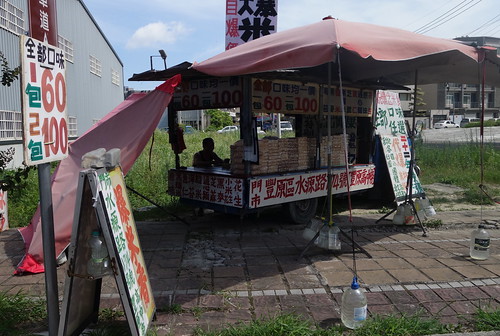
A traditional food....

The strike began at the end of May...

This was posted to Facebook...
Around two thousand China Airline (A private sector company where the state of ROC, the bourgeois state that reigns in Taiwan, is the biggest shareholder, not to be confused with the Chinese state owned Air China) employees including pilots, flight attendants, and airport logistics workers have taken to the streets refusing the company's mandate for them to sign a waiver that forfeits their 8-hour days, normal working hours, and right for union involvement in negotiating work time as accorded to by the bourgeois state.

This is a heartening addition to the recent surge of labor demonstrations against the state, where the more militant sections of these demonstrations have been making increasingly political conclusions that understands neither of the establishment parties, be the dastardly KMT or the capricious DPP, can make any progress towards ending the oppression that the working class of Taiwan endures daily.
Over at New Bloom Brian Hoie had a piece on it:
As part of a waiver which workers are required to sign as part of Article 84-1 of the Labor Standards Law, according to workers, China Airlines is seeking to increase the work time of airline staff to 220 hours per month, more than the 174 hours which the act would stipulate. It is reported that China Airlines would also seek to redefine work hours for flight attendants, counting work hours as starting from 90 minutes from departure to 30 minutes after landing, a decrease from the previous policy of counting work hours from 140 minutes before departure and 60 minutes after landing.

Despite the shortening of work hours in which cabin crew would be paid, the amount of work cabin crew have to perform would remain the same, however. Workers would also be signing away their rights to overtime and negotiation of work hours through the waiver. Article 84-1 of the Labor Standards Law is aimed at reducing excessive overtime. Part of the issue at hand, however, is that international airline flights can last for over eight hours. There is concern that this would lead to flight attendants working on regional flights being deprived of their rights as compared to those working on international flights, as well as loss of rest time. As such, workers are refusing to sign off on the waiver.

In the demonstration, the Taoyuan Flight Attendant’s Union and Taoyuan Pilot’s Union was joined by the China Airlines Maintenance and Engineering Labor Union. There are calls from unions for a possible strike to occur from June 9 to June 11, during the Dragon Boat Festival, if negotiations are unable to be resolved by then. In joining with the cabin crew union’s call for a possible strike, the China Airlines Maintenance and Engineering Labor Union has cited the deteriorating conditions of airplane maintenances staff, with loss of job security, increased turnover rates, and outsourcing of work to dispatch companies. Maintenance staff have cited the importance of their work in ensuring airplane safety in spite of poor treatment by China Airlines. Likewise, pilots have expressed concerns that they will have their amount of leave cut.
The News Lens observed last month...
The Labor Standards Act stipulates a monthly maximum of 168 working hours, but an air crew member has to work 230 duty hours for 30 consecutive days and the in-flight resting hours do not count as duty hours.
_______________________
Don't miss the comments below! And check out my blog and its sidebars for events, links to previous posts and picture posts, and scores of links to other Taiwan blogs and forums!
Tuesday, December 22, 2015

On the China Policy Institute blog...

Taipei.

Two things you should read today. First the awesome Courtney Donovan Smith and myself are on the CPI blog to provoke you with 7 Predictions for Tsai's first term. Also read this excellent Commonwealth piece on the human cost of Taiwan's labor migration to China -- its deeply saddening (the translators they use are top-notch. Kudos to them).
_______________________
Don't miss the comments below! And check out my blog and its sidebars for events, links to previous posts and picture posts, and scores of links to other Taiwan blogs and forums!
Thursday, June 19, 2014

Aussie Gov't Looking into Allegations of labor abuses against Taiwan working holiday backpackers

A reader alerted me to this story. Apparently Taiwanese backpackers on working holidays in Australia are being abused. From ABC:
The Fair Work Ombudsman is preparing to launch an investigation into claims backpackers employed as fruit pickers in one of the country's biggest food producing regions are being underpaid by labour hire contractors and forced to live in illegal budget accommodation.

The investigation will focus on the Queensland city of Bundaberg where, each year, thousands of travellers spend at least 88 days working on farms along the harvest trail in order to extend their 417 working holiday visas.

Taiwanese backpacker Claire, who goes by her Australian nickname, moved to the city last June to work on a tomato farm.

Speaking to 7.30, Claire claimed to have been significantly underpaid, forced to sleep in a living room with 25 other backpackers, mostly from Korea, and denied rest breaks despite working all day beneath the sun without shelter.

"We just got $7 a day and we needed to spend maybe six hours a day picking tomatoes," she said.

The wage was paid in cash by a labour hire contractor who then charged Claire $125 rent each week to sleep on a mattress on the floor
.
What horrible people these company owners are.
_______________________
Don't miss the comments below! And check out my blog and its sidebars for events, links to previous posts and picture posts, and scores of links to other Taiwan blogs and forums!
Thursday, September 26, 2013

The 1% Government

Taiwan is getting pummeled by several long-term trends  -- the financial liberalization of the late 1980s that brought in big global financial players, to Taiwan's detriment; the shift of factories and investment to China; and governance by the KMT. The trend is clear, as Commercial Times observed in another hard hitting editorial:
According to government statistics, the disposable annual income of people aged below 30 averaged only NT$366,000 (US$12,388) in 2012, lower than NT$380,000 in 1999.

In 2012, the starting monthly salaries for bachelor's degree holders averaged NT$26,000, down from NT$28,000 in 1999. The average starting salary of master's degree holders was NT$31,000, up only slightly from 13 years ago, when the average salary was NT$30,000.

There is an obvious trend in which wealth is concentrated in the hands of the older generations.

In 2010, 75 percent of residential properties in Taiwan were owned by people aged 45 or older, with homeowners younger than 35 accounting for only 8 percent. Many of these young homeowners are believed to have obtained financial support from their parents. In other words, the situation for young people is even worse than it appears.
This wealth gap between generations, as this Commercial Times points out, is cushioning the blow this brutal economy is giving the young. Meanwhile the KMT continues to serve the big money -- still no real stock tax, no change in the land tax (here), and now the premier wants to chain the minimum wage to the consumer price index (CPI), essentially freezing it at the current low level for the next few years:
Premier Jiang Yi-huah (江宜樺) yesterday decided that beginning next year, the minimum wage will be contingent on growth in the consumer price index (CPI), a policy drawing severe criticism from labor groups.

With a threshold of a cumulative CPI growth of 3 percent or higher needed before the minimum wage will be reviewed, “it is highly likely that the basic wage levels will remain stagnant in the remaining three years of President Ma Ying-jeou (馬英九) tenure,” Taiwan Labor Front secretary-general Son Yu-lian (孫友聯) said.
This means that the government can hold wages down without appearing to, simply by lowballing the CPI. Theoretically, wages will always remain the same relative to prices, which means that laborers will never be able to capture a larger share of the pie, at least while the Ma government is in office. Since 2007 and especially since the Ma Administration came to power, wages have regressed while productivity has boomed. Taiwan's gap between CPI changes and wage changes was the highest in the world in 2010. The Ma government wants to freeze this historically anomalous situation and treat it as the norm. The struggle for control of Taiwan between the pro-China and pro-Taiwan sides really masks the brutal and ongoing defeat of Taiwanese workers economically; it enables both parties to enlist workers on their side via their tribal social identities while screwing them out of their rightful livelihood.
_______________________
Don't miss the comments below! And check out my blog and its sidebars for events, links to previous posts and picture posts, and scores of links to other Taiwan blogs and forums!
Saturday, December 15, 2012

Wage Stagnation with Numbers

Cricket, 7 am

Huang Tien-lin published an excellent commentary in the Taipei Times on the problem of wage stagnation in Taiwan...lots of juicy numbers.
The first point is that, whereas Taiwanese manufacturers did 12.24 percent of their manufacturing overseas in 1999, that figure grew to 46.23 percent by 2007, with 90.9 percent of offshore production done in China. By last year, the figure had climbed to 50.52 percent, with 92.7 percent of production abroad concentrated in China. After Taiwan’s first handover of government power from the Chinese Nationalist Party (KMT) to the Democratic Progressive Party (DPP) in 2000, the administration of then-DPP president Chen Shui-bian (陳水扁) abandoned his KMT predecessor, former president Lee Teng-hui’s (李登輝) “no haste, be patient” policy with regard to investment in China, allowing Taiwanese manufacturers to quickly move their operations across the Taiwan Strait. This relaxation of Taiwan’s cross-strait policies led to an exodus of manufacturers on a scale that no other country has ever seen.
It's so nice to see this. Remember how the Establishment media abroad and the pan-Blue media at home  abused Chen Shui-bian for not "opening to China"??? It would be comical if it were a less urgent topic. Basically half of "Taiwan's" manufacturing is now done in China and the results are grim for the local populace. The number of working poor in Taiwan is high -- according to Huang, the DGBAS has 42% of the population making $30,000 NT or less, monthly.

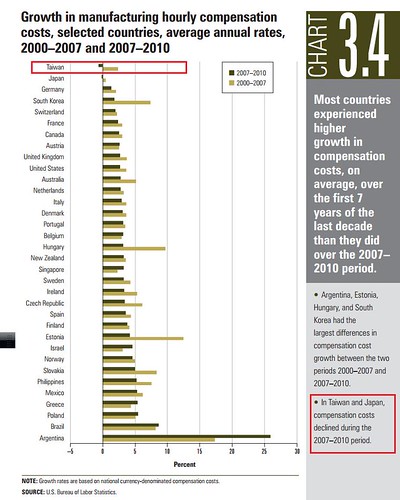
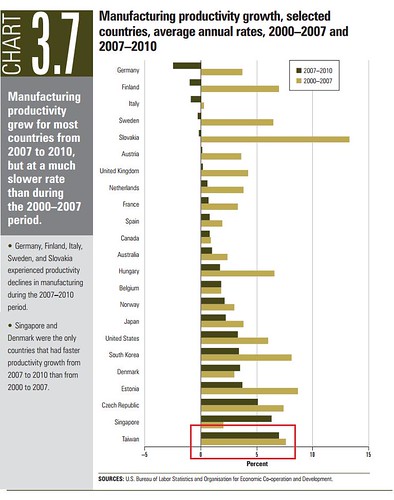
Huang then goes on to point out that the moves kept Taiwan's makers "competitive". Profits shot up. But labor's share of GDP has fallen over the last decade from 50% to 44.5% of GDP. Last month I posted some charts from the US Bureau of Labor Statistics which showed, starkly, what has happened in Taiwan, especially since 2007. If you look at this chart you can plainly see that in the period 2000-07 Taiwanese workers experienced very slow wage growth and then, between 2007-10 experienced negative wage growth even though the very next chart shows that productivity growth has slowed slightly but continues to rise. This gap between falling wages and rising productivity, ironically makes Taiwan very "competive" which is neoliberal slang for a place where capital can make tons of money while the workers get screwed. For the last decade, but especially the last three years of the data, gains from rising productivity have gone to the firms, not to the workers.

Huang's next point is even more brutal:
The third point is that while Taiwanese manufacturers have spent more than a decade chasing cheap labor in China, they have paid scant attention to research, development and innovation. The overall value-added rate for the Taiwanese manufacturing industry as a whole slid from 26.3 percent in 2000 to 21.3 percent in 2010 — the biggest drop in Asia.
This is a point I've been making for several years on this blog -- Taiwanese firms moved to China so that they could continue to pursue Taiwanese-style family firm management and avoid having to upgrade to professionally run firms. But also, as they moved to China, they cut themselves off from the flow of government produced R&D innovation that Taiwanese SMEs have traditionally relied on (bike industry example). Several years ago on this blog I posted on a speech from Lee Teng-hui in which he predicts that this would happen -- even then it was obvious that moving to China had dumbed down Taiwan's firms. As Huang observes, the fall in value-added offsets the advantages of lower wages, harming "competitiveness."

Lots of other things involved -- weak unions, feeble taxes on the wealthy and on large corporations, poor regulation of wages and hours... the list goes on.
_______________________
Don't miss the comments below! And check out my blog and its sidebars for events, links to previous posts and picture posts, and scores of links to other Taiwan blogs and forums! Delenda est, baby.

Friday, November 23, 2012

Economy and Economist

The Economist carried a letter from the diplomatic representative in the UK responding to its blundering Ma the Bumbler piece that stirred the nation last week. The letter actually put its finger on an excellent point:
It is not surprising that some of his initiatives have been unpopular during the downturn. The people of Taiwan have every right to use harsh words against their president, but when a foreign media organisation repeats the name calling it should at least use quotation marks.
Shen is right; The Economist article carries not a single quote of any speaker on the topic, from (wo)man on the street to expert in the office.

By contrast, the Intelligence Unit has a late but good review of the Administration's initiatives to increase foreign direct investment in Taiwan. It observed the same thing everyone else did a couple of months ago (like me), that there is a contradiction in the heart of the Ma Administration's plans to increase foreign direct investment (FDI) in Taiwan....
Such measures may help to lure some companies back to the island, and this would provide a boost to job creation and economic growth. However, they might not attract the kinds of firms that would be beneficial for Taiwan's longer-term development. Promises of low wages will appeal primarily to labour-intensive industries rather than innovative, capital-intensive manufacturers of high value added products. In its current formulation, the government's FDI strategy therefore appears to run contrary to its broader goal of modernising Taiwan's industrial structure and shifting away from the low-margin contract manufacturing in which the island has specialised. According to the MEA, the firms that have returned to Taiwan from mainland China in recent years operate primarily in sectors such as textiles and electronics, which is hardly an encouraging sign of restructuring.
It goes without saying that increased foreign direct investment was one of Ma's promises from ECFA. As the numbers in the figure in The Economist make clear, FDI is in the doldrums. Like everything else to with the world economy... as I noted in the post last month, the KMT's plan is simply a recapitulation of the 1950s and 1960s, using cheap labor and industrial districts.

...speaking of doldrums, former DPP Chair and presidential candidate Tsai Ing-wen came out and said that the government should delay implementation of the capital gains tax:
The stock market trading volume remains sluggish, causing concern over whether the capital gains tax on stock transactions should become effective as scheduled. Tsai Ing-wen stated that she thought it was not an appropriate time to impose the tax. Moreover, Tsai proposed that the government should either not implement the capital gains tax on stock transactions or implement the version of the tax proposed by former Finance Minister Lin Chuan's (林全), which was also the DPP's version.
The Finance Ministry, which apparently has more sense than most of the island's politicians, said bluntly that the tax would be implemented on schedule in Jan of 2013. Looks like the Mayans were off only by a month...

Finally, if you were wondering why Taiwanese are so angered with Ma, the US Bureau of Labor Statistics has an avalanche of stats and pretty graphs that show how the economy since 2007 has put thumbscrews on Taiwan workers....

Chart 3.4: Manufacturing compensation basically fell in the post-2007 period.

Chart 3.7: Manufacturing productivity, though not keeping pace with the pre-2007 period, still rose. This means that productivity gains are not going to workers in the form of increased wages, but to capital, which, as we know, pays relatively low taxes in Taiwan.

Chart 3.10: In local currency, manufacturing costs have fallen in Taiwan. More than anyone else on this list.

Chart 4.3: Note that gap between labor compensation and inflation. The BLS observes: "Compensation growth rates lagged inflation most notably in Hungary, Taiwan, and South Korea."

To sum up, workers are making less, far less, relative to productivity, than they did in the pre-2007 period. Inflation is running far ahead of labor compensation which is, as the last chart indicates, negative. Falling real compensation, rising inflation, and productivity gains going to ownership and labor robbed of its share. If the Ma Administration wanted to reduce wages to advance its plan to expand labor-intensive, low value manufacturing, things are certainly moving in the right direction.

Speaking of dirty ugly low value manufacturing, there is a petrochemical plant being mooted for Taichung harbor.
_______________________
Don't miss the comments below! And check out my blog and its sidebars for events, links to previous posts and picture posts, and scores of links to other Taiwan blogs and forums! Delenda est, baby.

Saturday, September 29, 2012

Round up: One Third of Taiwan firms in China Kaput?

Taipei rush hour traffic insanity.

China Post posts:
Taiwan's intelligence chief yesterday warned that one in every three Taiwanese companies based in China are facing closure this year due to rapidly decreasing profits, a media reports said.

Another 30 percent of Taiwanese firms are also “struggling” in China, Tsai Der-sheng, head of the National Security Bureau, told a parliamentary session without giving details, the United Evening News reported.

“There is both risk and opportunity to invest in China. However, we can not deny the benefits of economic exchanges between Taiwan and China despite the growing risks,” he was quoted by Taiwanese news radio BCC as saying.
Several articles were also pointing out that as China's demand falls, so will world commodity prices (for example). At home labor is furious that the minimum wage was not raised while this week 100,000 teachers also carried out a variety of protests aimed at the government for not carrying out its promises. At least some overseas firms are reinvesting back home. Fortunately and surprisingly manufacturing seems to in a cyclical upswing, reports the government. With firms like Apple and Amazon rolling out new products, Taiwan's makers could remain solid for the rest of the year, pulling the economy up a little. The ban on sales of government land will remain in force except for case by case decisions. Meaning that sweetheart deals can still be available....
____________________
Daily Links
_______________________
Don't miss the comments below! And check out my blog and its sidebars for events, links to previous posts and picture posts, and scores of links to other Taiwan blogs and forums! Delenda est, baby.

Saturday, July 28, 2012

News we don't hear: factory strike at Hualon, Miaoli

The silent struggle goes on all around us....
Three hundred textile workers in the Hualon Corporation’s factory in Miaoli County, Taiwan declared indefinite strike more than a month ago on 6 June. Since then they have occupied the factory for one month. They are fighting for money owed on their wages and pensions going back over a decade.

On 25 June, the 300 workers went to Taipei, the capital, to protest against the government for not intervening, but received no response. On 26 June, workers went to blockade the villa-home of the boss, who has claimed bankruptcy, but still lives in a luxurious house and has an expensive European sports car. Workers were brutally repressed by the police outside the villa, and some supporting students were also wounded. Workers are still occupying the factory to stop the machines from being moved out.

In the past 15 years, the bloody attacks from the owners of Hualon have never stopped. Since 1997 the company stopped making any increases in wages due to “bad management”. In 1999, the company stopped paying annual bonuses to the workers. Then in October 2001, the management started to cut wages. Workers then tried to organize, but were finally betrayed by scabs. A female worker and leader then committed suicide as a result of the pressure from the management. The suicide incident was a serious setback to the labor movement in local factories. “…after Chiu’s [worker leader] forced death, no one dared to stand out and fight back…” says a female textile worker.

It was not until the workers recently retook control of the union that they dared to fight. Three years later, in 2004, the company again cut wages by 30%. In 2008, the management attacked again, wanting the workers to increase production 130% in order to get the 100% wage. It turned out that 50% of workers could not reach the level of the minimum wage, which is their legal right....
_______________________
Don't miss the comments below! And check out my blog and its sidebars for events, links to previous posts and picture posts, and scores of links to other Taiwan blogs and forums! Delenda est, baby.

Monday, January 31, 2011

Egypt: could it happen in Taiwan?

Drew and I rode along Pinglin Road from Jhuolan to Dahu in Miaoli today. Lovely rolling hill country, an excellent workout. Highly recommended if you are in the area.

Jon Adams dispatches another excellent piece, this one on the tycoon buffoon handing out money to Taiwan's poor, observing:
Taiwan's per-person wealth may still be far higher than China's, at around $18,500 compared to some $4,300. But growth rates have sagged in Taiwan while soaring to double or high single digits in China. And in the last few decades, the island has seen a growing income gap. (Measured by the Gini coefficient, inequality rose from 0.28 in 1980 to 0.34 in 2006.)

Like other advanced economies, manufacturing jobs have shrunk as factories move to China and elsewhere. Lower-paying, non-unionized service sector jobs have taken their place. The service sector is now nearly 70 percent of the economy, compared to 50 percent 20 years ago. And since the global downturn, Taiwan firms have been increasingly relying on "dispatch" or temp workers, like Japan and South Korea.

The result has been a new legion of "working poor" or "new poor," as they're called here. They may not show up on unemployment statistics. But they struggle to make ends meet with two or even three low-paying jobs, but no job security.

"Those people cannot get help because they're not ill, or victims of a disaster, and they're not poor by the government's standards," said Taiwan sociologist Chiu Hei-yuan. "So they are just helpless — and they hope to get some unexpected help from people like Mr. Chen."

Twelve percent of the workforce now earns less than $700 per month, and average monthly wages are at 1998 levels, according to labor groups.

Meanwhile, highly-skilled workers in the technology and other sectors pull in ever-fatter paychecks, sharpening inequality between the haves and have-nots. "Taiwan's social welfare system cannot solve the problem of the gap between the rich and the poor — especially the 'new poor,'" said Chiu.
There is no capital gains tax and Taiwan's wealthiest can easily avoid taxation. Much of this income inequality is the result of the steady drip of accumulation by the wealthy over time -- in the 1980s the difference between top and bottom wasn't that great, but thirty years of accumulation later....

Since everyone is asking whether China could go the way of Egypt (not China, but I bet India has severe problems this year), I thought I'd have a little fun and ask about Taiwan. Taiwan's worsening inequality is a problem, but food prices will likely be more stable here -- as I posted a couple of months ago, Taiwan imports most of its grains and oils, but staples like eggs, vegetables, fruit and seafood are mostly produced locally. Incomes are high enough that food is affordable, unlike Egypt. Taiwan boasts excellent health insurance, a strong manufacturing sector, and relatively low unemployment by global standards. Moreover, its "inefficient" banking sector with strong state interference has minimized the damaged Wall Street has done here. The population has also become an active participant in the democratic process and is getting used to solving problems that way. Further, Taiwan does not suffer from the kind of right-wing religious insanity that Egypt does.

Still, the changes in the working population, income inequality, and so on are likely to have political effects as voters search for a party that can solve them. Political volatility in Taiwan may well translate into swings from one party to the other from election to election.

UPDATE: Anon writes:
Michael, need a correction/update: there's no capital gains tax, true, but the rich generally aren't very good at investing in stocks and the minimum tax law passed in 2006 requires that gains in shares of private companies be counted towards a minimum tax rate of 20%. In other words, investments in hedge funds, private equity funds, venture capital funds, private placement gains, are all taxed at 20%. There may be cheating, but it's exactly that--you're breaking the law, not just merely "avoiding" taxes.


_________
Daily Links:
_______________________
Don't miss the comments below! And check out my blog and its sidebars for events, links to previous posts and picture posts, and scores of links to other Taiwan blogs and forums! Delenda est, baby.

Friday, May 22, 2009

Two by Adams

Local reporter Jon Adams has two interesting pieces out this week in CSM and in Global Post. First, he highlights the problems that many of us have observed in Taiwan's judiciary, using Chen supporters in the south as a backdrop, in the Christian Science Monitor:
But a growing chorus of Taiwanese and foreign scholars are echoing – albeit in more measured tones – villagers' concerns about how the case is being handled. The criticisms have put this young democracy's judicial system in the spotlight, as it struggles to handle one of its most politically charged cases yet.

Chen – who irked Beijing and Washington with his loud trumpeting of Taiwan's autonomy – faces charges of accepting bribes, misusing state funds, and money laundering. If convicted, he could be jailed for life.

He says he's innocent. He acknowledged last year that his wife wired $21 million abroad, but said that money was leftover campaign contributions. He's been in on-and-off detention since Nov. 11, including a month without charge– a sore point for critics of Taiwan's judiciary.

Media leaks and detention without charge

Critics also object to the reassigning of Chen's case to a judge seen as less sympathetic to Chen; a skit by prosecutors mocking Chen, which they say reflected judicial bias; and persistent leaks about the case to the media. (Click here for open letters from a group of foreign scholars in November, December, and January).

The government insists it has not interfered with the case, and the justice minister and other officials have denied any political bias or influence. (Click here for the government's responses in November, January, and February.)

In a December poll conducted by Taiwan's Academia Sinica, 50 percent of Taiwanese said the island's judicial system was biased (compared with 38 percent who said it was impartial), while 59 percent said Taiwanese law did not sufficiently safeguard human rights.

At Taiwan's own Judicial Reform Foundation (a nonpartisan, independent nonprofit), executive director Lin Feng-jeng says Chen's case highlights broader problems. The most serious, he says, is loose lips.

"All the information in this case was leaked to the media – that's our biggest criticism," says Mr. Lin. "And they still haven't fixed the problem."

Lin's group also says Taiwan should emulate Japan, which only allows holding suspects without charge for 20 days – instead of four months, as permitted in Taiwan. "Sometimes you need to lock someone up because they might flee," says Lin. "But four months is too much."

Finally, the foundation has long criticized the practice of cops recording conversations between detained suspects and their lawyers, as happened with Chen. Lin says on this front there's progress: Taiwan's top court has ruled such recordings unconstitutional.

Taiwanese resent control by those who fled China

Here in Chen's hometown, villagers also voice such concerns, flavored with a strong dash of partisanship. The village sits in Taiwan's breadbasket, a land of flat, expansive rice and sugar-cane fields, lingjiao (water caltrop) paddies, and banana trees. Older residents are often illiterate and don't speak Mandarin (they use Taiwanese, which is derived from a southern Chinese dialect).

When they talk, they lay bare the scars of Taiwan's defining communal division between Taiwanese like them, who have lived and farmed here for centuries (84 percent of the population), and Mainlanders who came to Taiwan with the Kuomintang and announced martial law in 1949 (now 14 percent).

For younger, urban Taiwanese, that communal divide is less and less significant. But for the older generation in Hsichuang, it's still very much alive. And it clearly colors their view of Chen's trial.
As I recall, the Supreme Court decision calling taping of lawyer-client meetings in prison unconstitutional does not apply to the Chen case. Hence taping may still be going on. Adams' piece is especially timely because yesterday another letter from concerned international scholars was published in the Taipei Times:
We raise these issues as international supporters of Taiwan’s democracy who care deeply about the country and its future as a free and democratic nation-state. As you recall, we voiced concerns on three previous occasions, most recently in a letter to you, Mr President, dated Jan. 17, 2009, in which we expressed our concern regarding the fairness of the judicial system in Taiwan.

These concerns have not been alleviated by either the response from Government Information Office Minister Su Jun-pin (蘇俊賓) or the cessation of troubling, flawed and partial judicial proceedings, in particular involving the case of former president Chen Shui-bian (陳水扁).

We reiterate that any alleged corruption must be investigated, but emphasize that the judicial process needs to be scrupulously fair and impartial. In the case of the former president, it is evident that the prosecution is heavily tainted by political bias, and that the former president is being treated badly out of spite for the political views and the positions he took during his presidency. Such retribution does not bode well for a young and fragile democracy, as Taiwan is.

The second issue that we feel we need to highlight is press freedom. In spite of earlier expressions of concern by international organizations such as the Committee to Protect Journalists and Freedom House, there continue to be reports of impingement on press freedom by your administration. A case in point is the recent disturbing report that Central News Agency staff were instructed to write only “positive” stories about the policies of your administration, and that reports containing criticism of your administration or China were excised.
It is evident from stuff I've read on the seminar at GWU the other day that the community of Taiwan scholars is becoming aware that Taiwan's democracy is not as secure as it was thought to be. As I've noted in the past, the anschluss with China cannot go forward without significant damage to Taiwan's democracy, since nobody here wants to be part of the PRC. That is why the KMT has been careful to insulate the ECFA agreements and the negotiations from oversight by the legislature -- the legislature it controls! -- and from democratic oversight by the public in the form of referendums, and to have those negotiations carried out by KMT party officials Lien Chan and Wu Po-hsiung, and not appointtees of the Administration accountable to the public.

Adams' also has a nifty piece over at Global Post on strikes at an Apple contract manufacturer, Wintek, in China and Taiwan:
The current labor action is unusual in that it's being taken on behalf of both Taiwanese and Chinese workers. It's supported by labor groups in Hong Kong, mainland China, Japan and South Korea, according to a press release about Thursday's protest.

On Thursday morning, about 30 protesters from local labor rights groups and trade unions held signs and chanted slogans, including "black-heart business" (heixin qiye), in front of Apple's Taipei office.

One protester held up an Apple laptop with the Chinese characters for "responsibility" on the screen. Behind, some 25 police officers stood by.

Some 15 laid-off Wintek workers joined the protesters later. Many wore surgical masks to prevent being identified, because they still hope to be re-hired at the firm's central Taiwan factory.

"If the company finds out you came here to protest at Apple, they will put you on a blacklist," explained Liu Wan-ling, of the Taiwan Labor Information and Education Association.

Read and enjoy.

_______________________
Don't miss the comments below! And check out my blog and its sidebars for events, links to previous posts and picture posts, and scores of links to other Taiwan blogs and forums!

Sunday, October 19, 2008

The Labors of Hu Coolies

More attempted movement on the Chinese labor front this week. As readers are aware, President Ma promised at his swearing-in that there would be no Chinese permitted to labor in Taiwan. Little by little he is nibbling away at that promise -- the latest being Chinese labor being permitted to work in fishing ports in restricted areas (previous post). In fact, what i going on looks a lot like a sustained campaign, and after seeing the last six months, it should be apparent that whatever Ma said in his speech he wouldn't do, he is going to do. Just take his promises as a road map in reverse...

Yesterday (18th) the Liberty Times had a headline that marked another milestone....

民進黨立院黨團昨強烈質疑,行政院公共工程委員會在「外國廠商參與非條約協定採購處理辦法」新增的第七條之一的修正條文指出,「大陸地區廠商依我國法令得參與之採購,準用本辦法之規定」,就是對中國廠商來台承包公共建設的規定從禁止朝向鬆綁。未來中國廠商不但可據以承包我政府工程,甚至可能低價和台灣廠商「搶標」,嚴重損害台廠及勞工權益,低劣工程品質並會危害台灣工程安全及人民生命。


DPP legislative caucus yesterday strongly questioned the Executive Yuan Public Works Committee, "foreign companies to participate in non-treaty agreements procurement approach," added the amendment to Article VII, one of the provisions of the "Mainland companies have to act according to our participation Procurement, permitted the provisions of this approach, "China is on Taiwan's contract manufacturers to provisions from the public towards the prohibition of restrictions. Chinese manufacturers not only in the future, according to government contract work, and even low-cost manufacturers from Taiwan and the "panic marked" serious harm to the factory and the rights and interests of workers, poor quality of the project and will harm Taiwan people's lives and safety engineering.

Love that Google translation! What it says is that the Executive Yuan added a clause to the procurement laws which permits Chinese firms to bid on Taiwan government procurement. The DPP was up in arms about both the well-known quality of Chinese firms, and the labor threat...

綠營質疑,上述辦法第四條修正進口貨品原產地認定標準名稱,則中國廠商在承包台灣的公共建設工程後,「頭過身就過」,未來將會逐步開放引進中國的技術勞工來台,明顯違背馬總統不引進中國勞工的政治承諾

The Green camp objected....in the future it will gradually enable Chinese skilled labor to be brought into Taiwan, clearly violating the Ma administration's political commitment not to bring in Chinese labor.

The construction industry association head cautiously chose not to comment on the rules since he hadn't seen them, but observed that he couldn't understand why the Ma government would do such a thing with the construction industry on the verge of death. The Public Construction Commission Chair said, when questioned by reporters, that it was impossible that Chinese firms would be permitted to bid on public construction in Taiwan, pointing out that not only would they have to qualify under existing public tender rules, but that they would also have to abide by the agreements made by Taiwan and China. It should also be noted that a process for enabling skilled Chinese labor to work in Taiwan already exists, erected by the DPP, but it is not much used...

Whether or not this law has any real effect its symbolic effect had many up in arms, including Ma supporters. Many local level KMTers are fed and watered by public construction contracts, and would be quite unable to compete with cut-rate Chinese firms. Hence there were complaints from KMT legislators as well. The DPP stressed that by breaking through previous restrictions with the new rule, the Ma administration need simply issue an executive order and Taiwan's public construction would now be open to Chinese firms.

Meanwhile, this week the Ma Administration returned to a old front to push further: the free trade zone at the airport. At first it looked like it would almost be a country unto itself, but the legislature shrank its size and removed some of the more odious clauses. Now the Ministry of Transport and Communications (MOTC) is asking that the ban on foreign laborers be lifted for the airport free trade zone...

The Ministry of Transportation and Communications (MOTC) said on Friday that regulations governing the introduction of foreign laborers in free trade zones should be eased for one of the government’s 12 major infrastructure projects.

The ministry official was referring to the Taoyuan International Air City, which will include a free trade zone.

The ministry said it hoped that existing labor regulations in local free trade zones — such as a minimum wage, requirements that foreign laborers be limited to 40 percent of a company’s workforce and that Aborigines make up at least 5 percent — would not apply to the airport zone.

The official said the ministry had sent two versions of a draft statute governing the development of Taoyuan International Airport Park to the Executive Yuan for approval.

The first follows existing regulations and would enforce the cap on foreign workers and the payment of a minimum wage. The second said that in special cases companies could apply for exemptions and that the ministry and the Council of Labor Affairs (CLA) would jointly screen their applications.

The idea was that the "foreign labor exemption" would be a trojan horse for the entry of Chinese labor into Taiwan. Note in the last two paragraphs how the application for exemptions is screened by MOTC and the CLA. If this goes the way screening processes in Taiwan usually go, then the vast majority of cases will be permitted.

Any way you slice it, it appears only a matter of time before Chinese labor is invited into Taiwan in quantity.

Saturday, May 03, 2008

Our Extraterritorial "Free Trade" Zones

Taiwan News has a nifty editorial on the growing momentum towards the One Country, Two Systems approach in the KMT. The editorial also calls into question the new "free trade" zones, which are being used, as many of us feared, as extraterritorial trojan horses in many different ways. Because the zones are exempt from many sensible laws and regulations, and because they are more or less cabinet-level administrative districts with no independent oversight, their potential for harm is vast. The editorial comments:

The most recent and worrying example concerns draft bills submitted by KMT lawmakers to revise the "Statute on the Management of Free Port Zones" to "delink" the wages of foreign migrant labor from the monthly basic wage of NT$17,280 mandated under the Labor Standards Act and to introduce a similar clause is included in the draft "Special Statute for Taoyuan Airport."

Such self-interested call by short-sighted business leaders are hardly novel. For example, business associations pressed the Democratic Progressive Party-led government to delink foreign labor wages from the basic wage beginning in the Economic Development Advisory Conference held in August 2001.

Spurred by objections by labor groups, then Council for Labor Affairs chairwoman and current Kaohsiung City Mayor Chen Chu opposed business proposals to delink compensation for foreign workers from the then basic wage of NT$15,840 both for human rights considerations and because the DPP government aimed to promote high-value added manufacturing and compete with advanced economies.

Besides aiming to secure extra-exploitative profits for selected multinational and Taiwan firms, the legislation of such "one country, multiple system" labor regulations would undermine labor conditions for all workers and take Taiwan's industry and economic development in the opposite direction from which it needs.

Bad for rights and economy

Instead of upgrading toward higher innovation, productivity and quality, delinking foreign labor wages from the basic wage and thereby putting downward pressure on domestic wages will reinforce the backward obsession with "cost down" business strategies which have obstructed the upgrading of Taiwan's industry and economy and also impeded the expansion of our domestic consumer market.

The question of human rights is also a major concern since allowing compensation of foreign labor to fall below national standards as represented by the basic wage would violate convents of the International Labor Office and invite censure from the ILO and global labor and human rights activists for "superexploitation" and blatant violations of human rights.

Moreover, we can anticipate the establishment of "special zones" for "one country, multiple systems" labor rules will become a precedent for moves to try to attract "low-wage" operations of Taiwan firms back from China through schemes such as setting up special zones which "delink" labor conditions from the rest of Taiwan and even allow the importation of PRC labor into such zones.

In sum, such delinking would benefit only a handful of backward looking business enterprises and would inflict heavy costs on Taiwan society and all of our people.

To her credit, CLA chairwoman-designate Wang Ju-hsuan openly opposed the call for "delinking" and correctly noted that the linkage provides a "minimum guarantee" for the rights of Taiwan's over 300,000 foreign laborers and warned that abolishing the linkage would cause innumerable problems with management of foreign labor as victims of "de-linking" will naturally try to find better paid employment.

After initial discussion on these bills this week in the Legislature, some KMT lawmakers want to directly revise the LSL itself and make delinking general to all of Taiwan.

Such a action would inflict an even greater and direct blow against the human rights of foreign migrant workers, the working conditions of all wage and salaried employees in Taiwan and the long-term prospects for Taiwan's industrial upgrading, social order and economic prosperity and Taiwan's international reputation as a democratic society.

As the editorial points out, the obsessing with reducing cost by lowering wages is a technological dead end -- there are no gains to labor productivity, which is the real driver of rising living standards. In addition to the bass-ackwards economic policy, the political danger of the FTZs should be clear: the KMT is attempting to refashion the FTZs into funnels for pushing Chinese labor into Taiwan.

For more insight into the FTZs, see this discussion with urban planning prof Dr. Thomas Liou.

Monday, August 06, 2007

Chunghwa Telecom Union to Launch Worker's Party?

The China Post is reporting that workers at Chunghwa Telecom may form a new workers' party....

The Chunghwa Telecom Workers' Union (CTWU) may team up with other industrial workers unions to organize a new political party and field its own candidates in the next legislative election, CTWU Chairman Chang Hsu-chung said yesterday.

In a recent CTWU board of directors meeting, Chang was appointed to establish a new political party for the purpose of representing members of all workers' unions around the country, including teachers' unions, in the legislature.

According to Chang, members of national federations of different industries from around the island, as well as the CTWU and the Formosa Plastics Workers' Union, met July 19 for a preparatory meeting to form what is tentatively called the "Workers Solidarity Union." Chang stressed that it is still too early to confirm whether the current party name will hold. Another possibility is the "Third Force Reform Union."

Representatives from each union are expected to meet again on August 21 when the party might be formally established, said Chang.

Regardless of the name, the workers' party will make it easier for workers to advance and protect their rights and interests. Once established, the party will campaign for a nationwide referendum to add a workers' version of the annuity policy to Executive Yuan's current annuity policy, ban dispatch workers, and guarantee stabilized employment opportunities, Chang remarked.

Chang confirmed that the workers party has received NT$10 million in funding, which is enough for the party to field 10 of its members in the next legislative election slated for Jan. 12, 2008.

Political analysts said the prospective workers' party could potentially control substantial political sway if Taiwan's 8.6 million workers join its ranks.

Chen Jie, a Changhua County legislator, said that establishing a party "is no easy task and will take some time." He added that he welcomed and encouraged its establishment if the party is to be formed in the interest of workers by increasing their rights and benefits.

A letter about the profitability of CHT, layoffs, and other issues from the CWTU Director Chang is online here; it will give you a feel for.....something.. A-gu notes that the new party is already sending feelers to the Farmer's Party -- but the Farmer's Party is run by a longtime pro-Blue hack. I'm curious to see where this goes....

The Taiwan Review has a great article on the whole unions vs. privatization issue. The government's policy is frankly anti-union (emphasis mine):

Tung and his members are worried that such uncertainty will have an adverse effect on staff morale, which in turn could blight the island's power supply, thus slowing economic development. The TPWU is accordingly looking for ways to per suade the government to put the program on hold, pending a review of the results of previous privatizations. "We hope to provide government authorities with practical analyses, based on our years of experience," Tung says. "We are also pushing for the right to participate in the CEPD's screening process, which will determine the ultimate content of the privatization package."

So far, however, the union is not having much luck. Instead, the CEPD has commissioned academics and consultants to map out what Tung describes as an impractical plan riddled with problems. He says flatly that he does not hold out much hope for the future of Taipower after it is privatized. "The result will be a mixture of layoffs and wage cuts."

Again, this is hardly how CEPD Vice Chairman Chi Schive sees it. He is frankly dismissive of the notion that union leaders should be invited to participate in the CEPD-organized screening process. "Unions ought to be talking about privati zation with management on the company's premises, where company policy is formulated," he contends. "But when dealing with the outside world, it's the directors of the company who have to represent its interests and those of its employees."

In accordance with this policy, the CEPD invites only presidents and chief executive officers to attend its planning meetings. "The council is in no position to debate privatization policy with union leaders, because the government has already laid down what that policy is to be," Schive says. "The relevant debates will take place in the legislature and will involve both the executive and the legislative branches. We have to go by the standard procedures. The alternative is chaos."

What the CEPD is prepared to do is continue its existing dialogue with union leaders and the employees they represent as a means of educating them about the ways in which privatization can benefit the work force. The relevant statutory framework actually entitles them to preferential treatment, rather than the reverse, and with a view to emphasizing this, the council has organized several seminars in recent months at which union leaders and SOE employees have been urged to express their concerns. Despite opposition from some labor unions, Schive believes that many employees support privatization, because they recognize that it is for the good of Taiwan's industrial environment as a whole, quite apart from benefiting individual enterprises.

Despite this, Tung is resolute in his hostility to privatization. Any union in the power-generation industry has a number of tricks up its sleeve, and the TPWU is no exception. "We have about 30,000 mem-bers, or 97.8 percent of the Taipower work force," he points out. "We don't rule out the possibility of large-scale protests."

Chi Schive is a local establishment academic with a long history of writing on Taiwan's industrialization and foreign direct investment.

Many of the island's government workers, in addition to being concerned about layoffs, and about the employment situation and stagnant incomes, are also upset about the loss of preferential 18% interest rates on their savings. One reason the bureaucracy supported the KMT is that they received enormous bribes in the form of unreal interest rates (as well as those special funds that got Ma Ying-jeou and Chen Shui-bian in so much trouble) -- interests rates that taxpayers outside the government regarded as theft. Because unions in Taiwan are so weak, one viable solution is a political party that would look out for their interests. If it is really such a party, and not just another faction supporting someone's dreams of power, or Blue or Green sham, it would be an important step forward for the island.