Thursday, September 03, 2015

Hung Takes a Breather

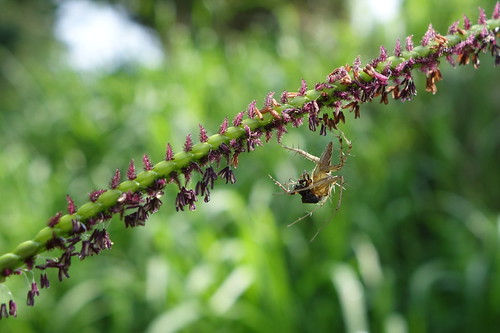
A spider with breakfast. This was shot with my Sony DSC RX-100 Mk II.

Late last night the news flew around the intertubes... The KMT news organ has the interesting news that Hung Hsiu-chu, KMT candidate extraordinaire, is "temporarily suspending" her campaign for second place President.
Hung stated on her Facebook page, “To my dear friends: Thank you all for the support and encouragement you have given me over the past months. You have given me strength and made me fearless. This election is about how to find the correct path for Taiwan, and many serious issues must be tackled concerning the country’s destiny. Therefore, I have decided to temporarily suspend my hectic daily campaign activities in order to think about the future steps to take in the campaign. In doing so, I shall fearlessly move forward to accept responsibility to lead the country and not let down people’s expectations in me. I will issue a full report to everyone after a short break. Thank you all and good night!”

Wang Hong-wei (王鴻薇), spokeswoman of the Hung campaign office, stressed in a press conference this morning that “Hung will absolutely run in the race to the end.” As Hung is in good health, she would resume her campaign schedule next week, added Wang.

Asked whether Hung would run her campaign as a “Presidential candidate,” Wang replied, “There is no doubt about it,” adding that Hung’s determination would not be shaken, and all rumors about Hung’s withdrawal from the race were groundless.
The KMT hastened to assure us that Hung is still the candidate. Some of the local papers linked the break to the re-appearance of Ma advisor and hatchet man King Pu-tsun, the Piter de Vries of House Ma.

However, in my opinion, it is more likely that she's simply exhausted. She's 67 years old and has not led a life rich in physical activity, like Ma has. National campaigns are physically and mentally draining, and she has no experience of them. I hope she gets a good rest and comes back as her old self again, bursting with the desire to ideologically cleanse us. Meanwhile, WantChinaTimes parrots a certain sketch: Hung Hsiu-chu campaign not dead, just resting.

Oh yeah, wanted to add -- kudos to the DPP, because you know what we're not hearing any news about? That's right, the DPP.

Added: Solidarity with translations and comments
_______________________
Don't miss the comments below! And check out my blog and its sidebars for events, links to previous posts and picture posts, and scores of links to other Taiwan blogs and forums!

Wednesday, September 02, 2015

Lien Chan goes to China

Incredibly beautiful and amazing light on the trip back from Lanyu last weekend.

A couple of years ago I wrote some posts on the chickenshit society. KMT heavyweight, former Premier, and twice failed KMT Presidential candidate Lien Chan offered a wonderful example during his trip to China this week... (China Post):
Ex-Kuomintang (KMT) Chairman Lien Chan on Tuesday echoed the idea raised recently by Chinese communist party General Secretary Xi Jinping that both sides of the Taiwan Strait should jointly write history to boost mutual understanding and cooperation.

"Using the same materials and writing history books together will not only open the way for future collaboration between historians on both sides, but it will also help promote understanding and harmony between the people," Lien said while giving a speech ahead of his meeting with Xi in Beijing -- the third between the two men.
Consider the context: just this summer were the curriculum protests, which resulted in a student suicide. These protests were in response to pro-China/KMT alterations of the curriculum. Why even bring up history curriculum? Of course it can only be to torment those kids. And Lien says: let's make the curriculum even more pro-China! That's a classic chickenshit response to a dead kid. Hey kid, we're trampling on your grave...

Lien sucked up to the PRC, and was criticized by the Presidential Office as "inappropriate" and by the Ministry of National Defense... (FocusTw)
During a meeting with Communist Party of China (CPC) General Secretary Xi Jinping (習近平) in Beijing Tuesday, Lien said ROC troops, led by Generalissimo Chiang Kai-shek (蔣介石), engaged directly with Japanese troops in major battles, handing the Japanese major setbacks.

But he also contended that CPC troops, led by Mao Zedong (毛澤東), tied down the Japanese enemy behind its lines.

The Defense Ministry disagreed.

"Whether on the front lines or behind enemy lines, the ROC government led the campaign," Luo said at an event celebrating Armed Forces Day, which falls on Thursday.
My man Ben of Letters from Taiwan observed in 2005 Lien Chan went to China (there's actually a Wiki page of Pan Blue Visits to China) to conduct diplomacy which was not sanctioned by the government, but Ma said nothing. The US said it welcomed the visit, but asked that the DPP government be included in talks. The EU said nothing about the DPP but lauded the visit. According to the Wiki site, some compared it to the meeting of Rabin and Arafat, which showed that those commentators know exactly nothing about Taiwan. In fact Lien promised during the 2004 campaign to visit China as the elected President but fortunately for Taiwan, he lost.

Crucially, the two Leninist parties re-affirmed the 1992 Consensus, that cage by which they hope to imprison the DPP.

Note that Lien talked about a "Taiwan-centric identity", an interesting admission. The KMT and CCP both fear the Taiwanese identity, and the two Leninist parties are groping for a discourse framework, which, like the 1992 Consensus, can somehow imprison it. President Ma has repeatedly attempted to locate Taiwaneseness as a subculture of Chineseness, the discourse/identity strategy that Chinese expansionists have used with the Manchus, the Tibetans, and other cultures that China has overrun. But unlike those unfortunates who share a land border with the PRC, Taiwan has a Strait to keep the PRC off...
_______________________
Don't miss the comments below! And check out my blog and its sidebars for events, links to previous posts and picture posts, and scores of links to other Taiwan blogs and forums!
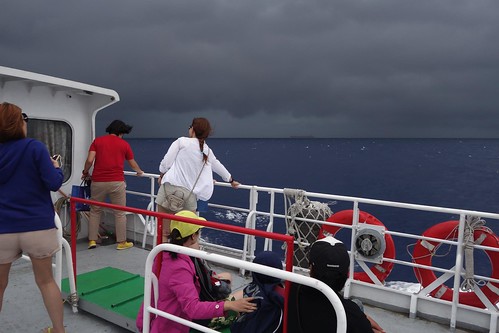
Funnel out to sea in Hualien

A friend of mine sent me this pic he took of a funnel forming out to sea off Hualien.
_______________________
Don't miss the comments below! And check out my blog and its sidebars for events, links to previous posts and picture posts, and scores of links to other Taiwan blogs and forums!

Monday, August 31, 2015

Election, Polls, Links

We'll be back...

And so, after all the noise and complaints, KMT heavyweight Lien Chan went off to China for the 70th anniversary of WWII festivities there. Taipei Times reported:
Regarding President Ma Ying-jeou’s (馬英九) warning that Lien’s participation in Beijing’s military parade would not be “appropriate,” Chang said they could arrive at the same end by different means and that historical interpretations should be open to exchanges of opinions and reconciliation.

Despite Chang’s sugarcoating of Lien’s widely criticized China visit, a group of young Taiwan Solidarity Union (TSU) members and a number of pro-independence advocates staged a protest at the airport, accusing Lien of humiliating and selling out Taiwan.
The Lien clan has its business interests to look after, so grandpa Lien is heading off to Beijing. Solidarity translated some Storm media pieces on Ma's anger.

The Journalist published a piece saying that Ma had blocked Wang Jin-pyng from the Presidential candidacy and wrested the KMT from current Chairman Eric Chu, forcing ideologue Hung Hsiu-chu on the KMT as his candidate, as many of us had deduced. Solidarity translated:
But Chu’s envisioned KMT was completely at odds with the party-state framework established by Ma Ying-jeou, where the party is an auxiliary organ of the government. Because Chu’s party and Ma’s government were at odds, Chu never had the last word. The true power was still behind the scenes, in the hands of “the party member with the greatest political authority,” President Ma. Policy was still decided by the Presidential Office and Executive Yuan, so it was unsynchronized with Chu’s party’s proposals. Although Chu was the chairman, he did not have the slightest influence over policymaking. It was just too difficult for the KMT to turn over a new leaf. There was no chance for “Chu’s path” to be taken.
That's good news, because with Ma running things the KMT will fade that much faster...

Speaking of fading, Solidarity also had some poll numbers out of TISR. Recall that TISR was originally the Global Views polling center, which allegedly the KMT forced to shut down when its polls found that Tsai Ing-wen was leading Ma in the fall of 2011 in the run-up to the 2012 election. TISR, which is not a pro-Green organization, has the KMT's Hung Hsiu-chu with a mere 12.7% support among voters, with Tsai at 37% and Soong at 19%. This is in line with other polls. For example, a KMT internal poll had her at 18%, while the Liberty Times had Hung at 12.7%, with Tsai at 45%.

Hung's fade into irrelevance is leading to constant rumors that the KMT is going to replace her. But with Ma in charge, that isn't going to happen. FTV English News reports on this (video). Hung responded to the rumors of her imminent political demise with her trademarked China-flavored ideological bombast:
“Do you know how many times Sun launched insurrections against the Qing Dynasty before he finally succeeded? How could the ROC have been established if he had given up after just a single failure?” she said.
Solidarity also highlighted that the TISR poll said 50% of the people want independence "no matter what." Note also that only 17.6% support annexing Taiwan to China -- just 3.8% strongly support. That's Hung's diehard base: 3.8% of the population.

A candidate can be changed and registered in time for the election until the last week in November.

More telling is the data breakout, where Tsai is actually up 3% among independent voters, while Soong fell and Hung barely has any independent support. Soong also fell among Green voters, meaning that his ability to draw centrist voters is collapsing as everyone is reminded who he really is (note the slide from 24% support in June to below 20% now). I expect that his support will continue to gently glide downward. Again, Soong polled as high as 10% in the 2012 election before crashing at below 3%. In the party favorability index the DPP is also trending slightly upward. Back in June the NCCU election studies center was showing falling KMT party identification coupled with rising DPP. Can't wait to see their Sept numbers.

All signs are green at the moment...
____________________
Daily Links:
_______________________
Don't miss the comments below! And check out my blog and its sidebars for events, links to previous posts and picture posts, and scores of links to other Taiwan blogs and forums!
Lanyu: Days of Steel, Days of Sun

LanyuDanno_2015_127
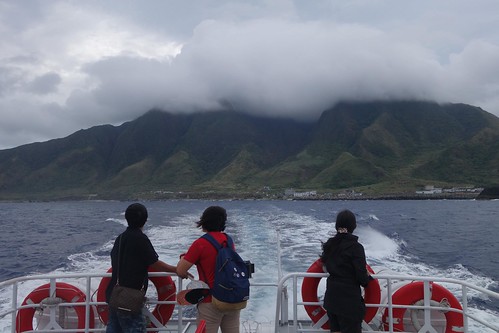
Another August, another trip to Lanyu (Orchid Island) off Taitung, Taiwan. This time I brought my daughter, Sheridan, who took everything in with wide-eyed appreciation and good humor. A rewarding trip for both of us. Click on READ MORE if you can stand another dose of Lanyu pics (slogan: "A goat with every picture").

History and the Economist *sigh* Banyan can't get anything right

LanyuDanno_2015_359
Another trip to Lanyu last week, which is why I've not been blogging....

Banyan at The Economist wrote on former President Lee Teng-hui's epic trolling of the KMT the last couple of weeks... let's take a look....
A 92-YEAR-OLD politician may be inured to insults, however outrageous his alleged transgression. Even so Lee Teng-hui, Taiwan’s president from 1988 to 2000, may have been taken aback by the hostility to comments he made to a Japanese magazine this month. [A total misreading -- Lee was trolling and well aware of how the KMT would react: in a way that put them outside Taiwan's mainstream.] He criticised efforts by Taiwan’s present government to mark the 70th anniversary this year of Japan’s second-world-war surrender as meant to “harass Japan and curry favour with China”. Taiwan, he argued [Lee "argues" but Lee was not arguing, he was stating historical fact], had been part of Japan: its young men had fought not against the Japanese empire, but for it (the “motherland”, he called it). Ma Ying-jeou, the current president, led a chorus of outrage in Taiwan. [Note the pro-KMT construction: Ma did not lead a chorus of outrage in Taiwan -- he led a chorus of outrage from the KMT] In China the press heaped scorn on his “absurd remarks”. The angry derision was perhaps all the more intense because, historically, Mr Lee had a point.[Note that no one from the pro-Taiwan side or a historian is permitted to speak on this issue, excepting Lee. Note also how cleverly the article fails to concretely state that the historical fact tens of thousands of Taiwanese loyally and willingly served the Japanese war effort. Instead, Banyan merely says Lee "had a point" as if there was something arguable about Lee's statements. What was that point again? Say it, Banyan.]

Although China insists Taiwan has always been an “inalienable” part of China, it has not been governed from the mainland since 1895, when it was ceded to Japan.[
That is almost correct, technically, since from 1945-1949 Taiwan was administrated by the KMT under the Allied occupation of what was still Japanese sovereign territory until 1952. It's astonishing to read this in the Economist, let alone in a piece by Banyan. Kudos!] When Taiwan returned to China in 1945,[Taiwan was never "returned to China." This is shameful.] it became the last redoubt of the Nationalist or Kuomintang party, the KMT, as it lost mainland China in its civil war with the Chinese Communist Party. Mr Lee was later the KMT’s leader. But after he left the presidency, the party expelled him for his support of Taiwan’s formal independence from China.[Note the misleading "from China" which implies incorrectly that Taiwan is part of China. Independence supporters want independence, period.] Since then the KMT has tended to regard him as an embarrassment—like a gaga elderly relation given to relieving himself in public [What a vile and unnecessary comment.]. Mr Lee’s fondness for Japan is well-known. His elder brother is among those honoured at Yasukuni, a controversial shrine in Tokyo for Japan’s war dead, including some convicted of war crimes. Mr Lee’s views, however, though baldly expressed, are not uncommon in Taiwan. Nor, across Asia, is Mr Lee so unusual in his ambivalent feelings about Japan’s colonial past.
As everyone knows, Taiwanese love Japan, and many in Lee's generation still identify as Japanese in some way, speaking and reading Japanese amongst themselves. Several old men I know can still sing the Japanese national anthem and explain what the words mean. Lee correctly noted that while a few locals headed over to China to oppose Japan (though many more immigrated here during the interwar period, and many who headed to China were looking for work opportunities in the Empire or in China), tens of thousands of Taiwanese troops served in the Imperial Japanese Army as soldiers, laborers, prison guards, or in other capacities. For example, there was a corps of Taiwanese "military farmers" sent to central China to engage in farming in devastated areas under Japanese control, while others were sent as instructors to south China. Still other Taiwanese served as semi-skilled workers in government. For males, the pay was several times what they could make in Taiwan. The enslaving of women for sex began in Taiwan in 1938, and some Taiwanese girls were conscripted as nurses. The draw was so great that labor shortages began occurring in Taiwan after 1941 (for more, see this book).

The erasure of these veterans -- their absence from public discourse, their lack of public notice on the ubiquitous and vile "Martyrs' Shrines" and other memorials, is deliberate, of course, part of the KMT's overall goal of erasing Japan from Taiwan's historical memory. The KMT wishes Japan exists only as a caricature of evil, the "wretched colony" of current presidential candidate Hung Hsiu-chu's fantasies, and like any colonizer, to substitute its own identities for existing identities.

Another key function of this public denial of their existence was that there was no formal recognized body of Taiwanese veterans with a distinct identity who might take political action against the Chinese colonizers in the formative period of KMT rule. Recall that in the 1947 uprising Tang Shouren of the Tsou people led 100 former Japanese soldiers in an assault on Chiayi, which participants reported, decades later in recounting this incident for oral histories, was apparently part of a larger vision of uniting with local Han to drive out the incoming Chinese. During the 1947 Han people across Taiwan put on Japanese clothing and uniforms and sang Japanese songs -- to this day this Japanese identity is often asserted against the faux Chinese identity of the KMT. The KMT feared Taiwanese uprisings and expended much effort in the early 1950s to eliminate weapons caches, especially in the mountains, where the aborigines made superb soldiers, and where some had even been trained as pilots. It was still executing 1947 leaders well into the 1950s -- Tang Shouren was finally arrested and murdered in 1954.
_______________________
Don't miss the comments below! And check out my blog and its sidebars for events, links to previous posts and picture posts, and scores of links to other Taiwan blogs and forums!
Wednesday, August 26, 2015

Amazon.com annexes us to China

Good News! You can now buy Kindle eBooks directly from Amazon.cn.


Searching for books on Amazon.com from my desk in Taichung, Taiwan, when I got this crap. Bottom pick shows HELP with a help line in China, in simplified characters.
_______________________
Don't miss the comments below! And check out my blog and its sidebars for events, links to previous posts and picture posts, and scores of links to other Taiwan blogs and forums!
Sunday, August 23, 2015

Kongo and Taiwan

The battlecruiser Kongo in her WWI configuration, as she would have appeared in 1923. Some of my South African readers might recognize the port.

I've been a battleship nut since I was a kid, and as an adult, a Pacific War buff. Yamato may have been the mightiest of Japan's battleships, but to my mind there's no question that the greatest of them was the battleship Kongo (金剛). Kongo participated in perhaps the most effective Japanese battleship action of the war, the night bombardment of Henderson Field on Guadalcanal on Oct 13, 1942. Kongo also sank the legendary Samuel B. Roberts in the desperate Battle off Samar in Oct of 1944 and put the hurt on US carriers in that battle. And Kongo also had a long association with Taiwan.

Kongo was originally built in the UK as a battlecruiser, ordered by the Japanese navy. In 1923 Hirohito, then Crown Prince and Regent since the Emperor was incapacitated, decided to tour Taiwan. In April of 1923 he embarked aboard Kongo from Yokusaka and arrived in Keelung on April 16, 1923. The Takao Club, a fantastic website, has a detailed essay on his journey in Taiwan, with numerous photos. After a week, Hirohito boarded Kongo again, from Takao (Kaohsiung) to make an inspection tour of the naval base at Makung in Penghu. Hirohito left Keelung on the 26th and returned aboard Kongo on the 26th.

In 1929 and again in 1935 Kongo received an extensive upgrade (image), and was reclassified as a fast battleship. In 1927 Kongo stopped at Makung. In 1933 she visited Taiwan and Penghu, and again in 1938 on her way to and from operations in China, stopped at Keelung and Makung.

Makung (Mako in Japanese),was upgraded to Guard District status in November of 1941. When the war began, three minesweeper divisions, three patrol vessels, three D1A aircraft, and the cargo ship Kure Maru No. 5 were based there. The port was decommissioned in 1943 and the military district moved to Takao (Kaohsiung), though it was used as a port and attacked by US planes in 1944 and '45.

On Dec 2, 1941, Kongo was at Makung in Penghu when her fleet commander received the fateful order "Niitakayama nobore (Climb Mt. Niitaka) 1208" which notified the fleet that hostilities against the US would begin on Dec 8. Mt Niitaka is of course Yushan, then the highest peak in the Japanese Empire. Kongo then moved off to the South China Sea to support the offensive against the British Empire.

In January of 1942 Kongo stopped by Makung again on her way from Camranh Bay in Vietnam to Palau to support the Japanese offensive against the United States. In 1942 she participated in the terrible fighting in the Solomons, but though she sortied several times in 1943, she did no fighting.

After the catastrophic defeat at Leyte Gulf in October of 1944, Kongo returned to Brunei. In November of 1944 she was at port in Brunei after a pointless sortie around Pratas Island (now Dongsha and controlled by the ROC). After being attacked in port by US aircraft, Kongo, undamaged, left Brunei for Kure on November 16 in the company of several other ships, including the battleship Nagato.

On the night of November 20th the division of ships entered the Formosa Strait, and for some reason, ceased zig-zagging, a regular practice of ships in formation in waters where submarines may be encountered. In the wee hours of November 21 the convoy was sighted by the US submarine Sealion. At 2:56 am Sealion fired a spread of six torpedoes, two of which apparently hit Kongo. Her boiler rooms flooded, but she was still able to make 16 knots. The flooding, however, gradually became uncontrollable. At 4:50 the group was split into two formations, with Kongo sent to Keelung along with two destroyers. The ship continued to fill with water. Within 20 minutes she had a 45 degree list and at 5:18 she lost all power. The order was given to abandon ship. Sadly, at 5:24 the ammunition in the forward 14 inch gun magazine detonated, destroying the ship and killing nearly everyone on board. Over 1200 lives were lost, and only 237 men were rescued.

Today Kongo rests in 115 meters of water just 100 kms northeast of Keelung, the port to which she once ferried a Crown Prince.

ADDED: The Sealion's attack on Kongo was actually recorded, one of a tiny handful of audio recordings of attacks by submarines during WWII.
_______________________
Don't miss the comments below! And check out my blog and its sidebars for events, links to previous posts and picture posts, and scores of links to other Taiwan blogs and forums!

Saturday, August 22, 2015

Things to read

I have to admit, the election has grown boring. I don't even feel like bothering to mention all the silly things KMT candidate Hung Hsiu-chu has been saying, because no poll has her above 20% at the moment. PFP candidate Soong, who must get faction politicians to switch to him from the KMT, hasn't gotten many. And Wang Jin-pyng, the heavyweight KMTer and informal leader of the KMT Taiwanese factions, is remaining... silent. Tsai Ing-wen isn't saying much because she doesn't need to. Kinda a lull at the moment... before things start to heat up.

So read Cole at China Policy Institute on China's propaganda campaign against the DPP in the United States. Thim at Thinking Taiwan on what the candidates should say about defense. New Bloom with an interview with a third party leader.
_______________________
Don't miss the comments below! And check out my blog and its sidebars for events, links to previous posts and picture posts, and scores of links to other Taiwan blogs and forums!

Friday, August 21, 2015

On Abortion and Sex selection

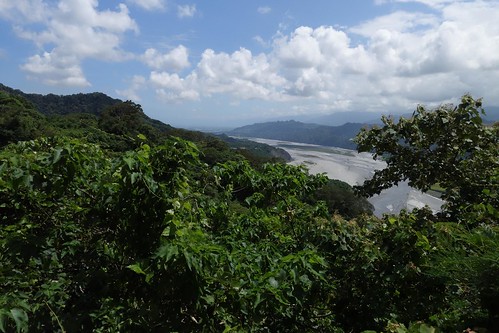
River valley in eastern Taiwan.

Was trolling Google scholar and this caught my eye: from this 2008 paper on using abortion as a sex selection device after the laws were relaxed in 1985-6 period:
Using an individual level dataset constructed from birth and death registries for all individuals born in Taiwan during 1982-89, we find that the legalization of abortion significantly increased the fraction of males born. The effect comes entirely from third and higher-parity births and children born to mothers over the age of 28. For those groups, abortion increased the fraction of males born by 0.7 percentage-points for post-reform cohorts on average (from 51.5 percentage-points in 1982-84 to 53.5 percentage-points by 1989), accounting for nearly 100% of the observed increase in sex imbalance during this period. The results on sex-differential mortality show that legalizing abortion decreased EFM by 25%. Our results suggest that approximately 15% of parents selecting post-natally before the reform would have substituted to abortion as a method of sex-selection. Taken literally, this suggests that for every 100 abortion of female fetuses, 15 lives of girls born are saved.
What they mean by the last is this: when sex-selection abortion is forbidden, the sex ratio at birth moves back toward the natural norm. But then a large number of unwanted female children are born. What happens to them? One way or another, all over the world, a portion are killed via stealthy or open infanticide. Because fewer females are born in Taiwan, there is less infanticide of female children...
_______________________
Don't miss the comments below! And check out my blog and its sidebars for events, links to previous posts and picture posts, and scores of links to other Taiwan blogs and forums!

DOD #TaiwanFail

According to the US DoD, Taiwan has no navy. This chart from this report being passed around Twitter as a "good" chart. Nope.
_______________________
Don't miss the comments below! And check out my blog and its sidebars for events, links to previous posts and picture posts, and scores of links to other Taiwan blogs and forums!
Thursday, August 20, 2015

Bits n Bites

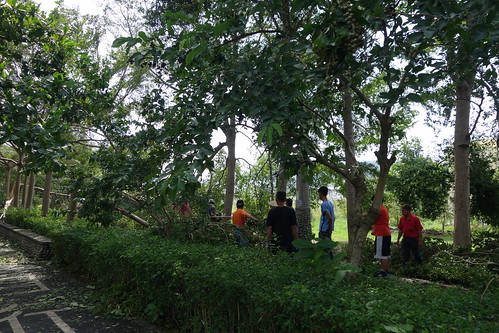
Work crews out last week after the typhoon.

Taipei Mayor Ko Wen-je went to the Shanghai Forum this week and announced...
“This is an ever-changing world. Seven years ago, who would have thought that the iPhone would change the world? A year ago, who would have thought that I would become the mayor of Taipei? Just a month ago, who would have thought that I would be standing here in front of you today?” he said. “However, one thing remains unchanged, and that is the long-lasting friendship that Taipei and Shanghai have established.”

Ko said that his stance on cross-strait relations and the forum can be summarized as “one family across the Strait” and four “reciprocal” actions: to know each other, to understand each other, to respect each other and to work with each other.
Ko said: “兩岸一家親” whose "family" meaning is a bit broader, more like "we're all relatives together". Ko did not say "兩岸一家" the straight up "(one household) family" that Beijing always uses. Ko reminds me of Lee Teng-hui and Chen Shui-bian, who understood the importance of discourse and were always seeking ways to push it and rework it in a pro-Taiwan way. Now Ko has added a new and weaker form of "family" to the range acceptable discourse, widening it in baby steps. Ko is pro-independence, so it's not like we have anything to worry about anyway...

Lowy Interpreter on Wargaming Conflict in the South China Sea... whole thing is interesting, but the players are way too rational.
A new Pacific war would look an awful lot like...the last Pacific war? In nearly all simulations the front becomes the first island chain. Taiwan is 'the cork in the bottle', but only for as long as it resists reunification. The Philippines is prime real estate. Although a small economy, it's a vast archipelagic space of 100 million people, thousands of islands, and airports and harbours galore.
Taiwan is resisting annexation, not "reunification" -- one China's most important forms of soft power is this kind of lazy vocabulary choice. But the analysis of Philippines is quite interesting...
________________
Daily Links:
_______________________
Don't miss the comments below! And check out my blog and its sidebars for events, links to previous posts and picture posts, and scores of links to other Taiwan blogs and forums!
LOLz: Taiwan Hunts Terrorist Bomber

...and you thought all those stories about Taiwan/Thailand confusion were apocryphal... from San Jose Mercury News...
_______________________
Don't miss the comments below! And check out my blog and its sidebars for events, links to previous posts and picture posts, and scores of links to other Taiwan blogs and forums!

Tuesday, August 18, 2015

Mid-week links

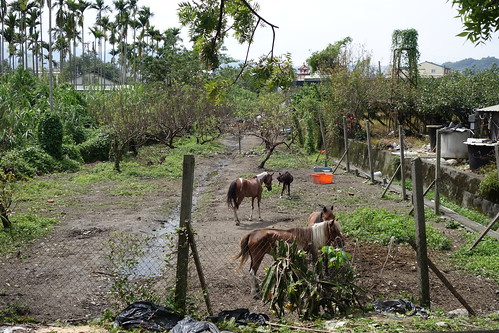
Ponies for bringing in the crowds on weekends.They park them in front of a local restaurant/cafe.

Too lazy to blog, too rainy to ride. I think I'll just go sink some battleships in World of Warships. Meanwhile, enjoy some links...
_______________________
Don't miss the comments below! And check out my blog and its sidebars for events, links to previous posts and picture posts, and scores of links to other Taiwan blogs and forums!
Sunday, August 16, 2015

The Once and Future Soong

random20.jpg
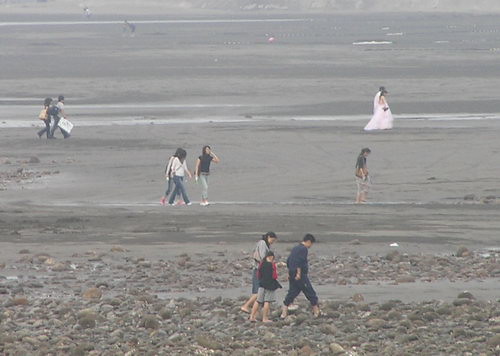
Wherever you are, there are wedding photos.

The latest Taiwan Indicators Survey Research (TISR) poll shows that Hung is now at 13.9% support, consistent with other polls. With Hung fading and unlikely to recover, the race is shaping up to be a two-way contest between Tsai Ing-wen and James Soong, a mainlander and KMT heavyweight who left the KMT to found the PFP and run on his own in the 2000 election, which he nearly won. How well Soong does will depend on his ability to attract faction politicians out of the KMT and into his party. To do that, he is remaking himself once again...

Frozen Garlic describes how Soong, who had until his appointment as Provincial Governor been little more than a standard KMT party insider, changed himself into a real politician....
However, as governor, Soong completely reinvented himself. He claims that he followed the example of his mentor, CCK, by getting out of his office and meeting with ordinary people. In fact, Soong did travel all over the island, meeting with regular people. Less obviously but more critically, he also met with lots of local politicians. In fact, this was the key to Soong’s governance model. Instead of sitting in an office, letting other people make financial decisions, and approving the paperwork, Soong went to township mayors, asked them what they wanted, and personally approved the funds. In doing so, he created an image of a compassionate leader who would do whatever was needed to solve problems. He also created a group of local politicians who were politically in debt to him personally. Township mayors are nothing to sneeze at. They control the local mobilization networks and distribute quite a bit of patronage. Back in those days, people who had descended from the central bureaucracy simply didn’t engage local people as an equal, but Soong actually wanted to listen to their problems and work with them to get things done.
Better than any other mainlander politician, Soong understands that the colonial rule of the KMT depends on its ability to manage and placate its Taiwanese support networks, and he is a master at positioning himself as a speaker for the Taiwanese KMT. Like Chiang Ching-Kuo, he cultivates a Taiwanese power base as an alternative power base to the cliques among the high-ranking mainlander politicians.

 In 1994 the Provincial Governor position became elected, says Frozen, and Soong again showed masterful political skills. Attacked by the DPP for not speaking Taiwanese, Soong learned it, then picked up a little Hakka and some phrases in aboriginal tongues. He won the election handily. His recovery was amazing -- he'd resigned in 1992 as KMT Sec-Gen to take responsibility for the KMT's poor showing in the Legislative Elections that year and initially no one thought Soong would win. The Provincial Governorship transformed his political career.

When Lee Teng-hui became president, Soong was one of the men who'd supported him against the KMT bitter-end authoritarians led by Hau Pei-tsun, the "non-mainstream" faction. But as the 1990s drew to a close, Lee turned against Soong and began to promote Lien Chan. To me the reason for this is clear: Lee knew that the popular Soong could lead a resurgent KMT to victory and maintain that party's grip on power, a grip Lee was committed to destroying. So he promoted the ungainly, unpopular Lien Chan over Soong to ensure the KMT's defeat. That is a common conspiracy theory among KMTers, and I see no reason to doubt it.

Although initially, as Froze recounts, Soong was more popular than the DPP's Chen Shui-bian or the KMT's Lien Chan, the Chunghsing Bills Scandal hurt him, and Chen squeaked through with a 3% victory in 2000, with the KMT candidates collecting 60% of the vote in total. Lien and Soong eventually mailed in their campaign in 2004 and blew that collective 20%  advantage. How has Taiwan's electorate shifted? Together the two mainlander candidates at the moment are polling at 35% of the electorate.

The 2000 election also featured Soong attempting to remake himself. This classic 1999 interview in the Washington Post with "democratic reformer" Soong is another milestone in the awfulness of Beijing reporters working on Taiwan:
At the center of a preelection brawl is James Soong, a 57-year-old powerhouse in the ruling Nationalist Party, whose businesses have made it the world's richest. He is also an architect of Taiwan's democratic reforms.
Frozen notes that Soong was a hardline unification supporter in the Chen era. He was always that way. In the WaPo interview Soong shows a deep understanding of the usefulness of democracy, and also says that Taiwan should have a plebiscite on any agreements with China (note how many of his positions were DPP policies). Unlike most mainlander politicians, Soong has mastered the knack of invoking democracy without sounding insincere; indeed, his ability to project sincerity and interest in others is one of his greatest political strengths. In 2000 Soong also positioned himself as a champion of Taiwanese:
Despite the fact that both the KMT's Lien Chan (連戰) and the DPP's Chen Shui-bian (陳水扁) have expressed their willingness to visit China if elected, Soong voiced a decidedly conservative opinion.

"If China refuses to respect the dignity of the Taiwanese, I would not visit China if I am elected. If Taiwan's people fail to iron out their differences, what subject can we talk to the Chinese about?" he said.
Recall his 50 year peace proposal? He said that it should be signed as the "Republic of China", a position similar to that of Hung Hsiu-chu's peace treaty today. It was similarly panned by critics.

Soong has always made democratic noises, but a wonderful piece at Thinking Taiwan by the always awesome Anonymous observes....
As professor Jim Lee (李筱峰) has written in 1994 and 2003 essays (which have recently gone viral on the PTT board and make up the source material for this article), Soong played a major role in suppressing freedom of the press and freedom to use the Taiwanese language during his five-year-and-seven-month tenure as director-general of the Government Information Office (GIO) from 1979-1984. At the GIO, Soong played a major role in suppressing democratic publications and free journalism in an era that included the Formosa Incident, pressure on emerging dangwai (黨外, “outside the KMT”) and democratic movements, and apparent secret police murders of “enemies of the state” like Professor Chen Wen-chen (陳文成) and the family of Lin I-hsiung (林義雄). He also helped implement the elimination of the Taiwanese language from broadcast media.
Until his election to the Provincial Governorship, Soong had always been a loyal servant of the KMT ruling class. Indeed, he was one of 60 individuals selected by Lee Huan at the direction of Chiang Ching-kuo in 1976 for the high level training course at the elite party school, an indication that quite early he was seen as being ideologically sound enough to be groomed for higher things. That class also included Lien Chan and Wu Po-hsiung.

In 1999 I was teaching at a private university in a small southern town. The university was owned by a deeply pro-Soong family, and the staff was also strongly pro-Soong. "Why do you support him?" I asked a group of them once. "Because he is a gentleman." I read that as "he is of the class we perceive as being proper to rule over us." Things are different today. The Taipei Times noted:
In addition to post-Sunflower movement (and possibly post-anti-curriculum movement) younger people more willing and eager than ever to learn about the nation’s intentionally buried history, along with the fact that the PFP and its leader are more likely than ever to crowd out the KMT’s support in the coming elections, it is not surprising that the questioning is more vociferous.
The internet has made Soong's long history of repression and ardent pro-unification positions easy for anyone to access. And you know they will.

It's probably too late for Soong to win the presidency, but it will certainly be fun to watch whether and how faction politicians realign themselves between the KMT, the PFP, and independent runs as Hung's support continues to slowly dwindle to the Deep Blue core. Break out your popcorn! The fall election seasons promises to be full of KMT rancor and desperate attempts to replace Hung, along with the sincerity and laughter of the once and future James Soong.

REF: Don't miss this fine article on Soong from longtime Taiwan observer Bo Tedards. 15 years old, but still great.
_______________________
Don't miss the comments below! And check out my blog and its sidebars for events, links to previous posts and picture posts, and scores of links to other Taiwan blogs and forums!