Showing posts with label health. Show all posts

Friday, August 21, 2015

On Abortion and Sex selection

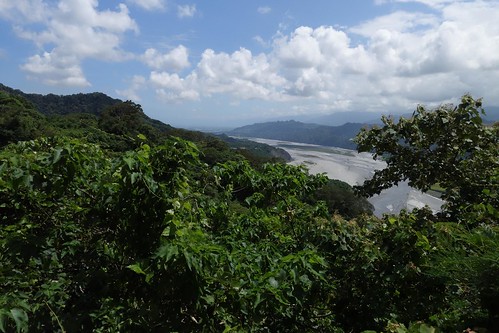
River valley in eastern Taiwan.

Was trolling Google scholar and this caught my eye: from this 2008 paper on using abortion as a sex selection device after the laws were relaxed in 1985-6 period:
Using an individual level dataset constructed from birth and death registries for all individuals born in Taiwan during 1982-89, we find that the legalization of abortion significantly increased the fraction of males born. The effect comes entirely from third and higher-parity births and children born to mothers over the age of 28. For those groups, abortion increased the fraction of males born by 0.7 percentage-points for post-reform cohorts on average (from 51.5 percentage-points in 1982-84 to 53.5 percentage-points by 1989), accounting for nearly 100% of the observed increase in sex imbalance during this period. The results on sex-differential mortality show that legalizing abortion decreased EFM by 25%. Our results suggest that approximately 15% of parents selecting post-natally before the reform would have substituted to abortion as a method of sex-selection. Taken literally, this suggests that for every 100 abortion of female fetuses, 15 lives of girls born are saved.
What they mean by the last is this: when sex-selection abortion is forbidden, the sex ratio at birth moves back toward the natural norm. But then a large number of unwanted female children are born. What happens to them? One way or another, all over the world, a portion are killed via stealthy or open infanticide. Because fewer females are born in Taiwan, there is less infanticide of female children...
_______________________
Don't miss the comments below! And check out my blog and its sidebars for events, links to previous posts and picture posts, and scores of links to other Taiwan blogs and forums!
Tuesday, December 23, 2014

Cancer in East Asia, Health in Taiwan

DSC03673
A petting zoo near my house has an ostrich. Must be tough on the kids.

Pfizer has a very interesting report on Cancer in Asia which a friend of mine flipped me.
This report presents cancer statistics for fifteen South Asian and Southeast Asian countries: Japan, Taiwan, Singapore, South Korea, Malaysia, Thailand, China, Philippines, Sri Lanka, Vietnam, Indonesia, Mongolia, India, Laos, and Cambodia. For purposes of comparison, statistics are also presented for the United States.
Among its findings:
  • Among the 15 Asian countries the highest incidence rates (age-standardized) for total cancer (all sites) in males are in Taiwan, Korea, and Japan; female total cancer incidence rates are highest in Taiwan, Singapore, and Philippines.
  • Lung cancer is the most common or second-most common cancer among males in all Asian countries but for India, Japan, Mongolia, and Taiwan.
  • Stomach cancer is the highest incident-rate cancer among both males and females in Korea; it is the most common among females in China, and the most common among males in Japan.
  • Among females, breast cancer is the highest incident cancer in 7 countries— Indonesia, Japan, Malaysia, Philippines, Singapore, Sri Lanka, and Taiwan.
  • 41% of all new cancers diagnosed in males, and 37% of cancers diagnosed in females are in the fifteen Asian countries—about 3 times as many cases as that in the United States.
The data are taken from a 2005 report for Taiwan, and are probably out of date.

A couple of friends of mine have also raised the problem of arsenic and other toxins in the air Taiwan. Groundwater arsenic is a well-recognized problem and there are numerous studies of it, including of the famous blackfoot disease in southern Taiwan. Groundwater arsenic is not caused by the IT industry and thus is safe to investigate. But there seems to be little on arsenic and other airborne toxin exposure from power plants and factories. It's long been recognized that the dominance of the IT industry (and here and here) means that the government has looked the other way when those industries pollute downwind and downstream. This is true of all industries. Paul Jobin's piece entitled Hazards and Protests in the "Green Silicon Island" in 2010 notes:
Between 1988 and 1991, along with their opposition to the construction of the fourth nuclear plant, environmental activists and intellectuals joined in solidarity with the Dawu aboriginal people to protest the storage of nuclear wastes in Lanyu (Orchid Island). (16) Around the same time, the magazine Renjian reported on the sudden deaths of temporary workers employed in the maintenance of the existing three nuclear plants.(17) Ten years later, the situation has not improved: despite Taipower’s denial, most workers, though exposed to high levels of radiation, did not have the appropriate regular health checks. (18) An epidemiological survey found that the population living between the two nuclear plants near Jinshan, 20 kilometres north of Taipei, had elevated blood cell counts that could induce hazardous consequences for health. (19) Another survey near the research reactor of the Institute of Nuclear Energy Research based in Taoyuan, south of Taipei, revealed abnormal levels of Cesium 137, a highly radioactive isotope. (20) Around 1992, the fear of nuclear power became even more palpable for the urban middle-class with the scandal of 200 buildings containing steel bars contaminated by cobalt 60, which put at risk more than 10,000 citizens and students.(21)
After a review of the early protests against poisonous factories in Lukang and in Linyuan, against which the government deployed the full martial law apparatus, including death sentences for the protesters (suspended), he observes that the famous RCA factory ushered in the chemical and technology industries that are poisoning Taiwan today, and observes:
But RCA and the launch of the electronics industry in Taiwan share another legacy, as RCA’s Taoyuan plant is the likely cause of at least 1,200 known cases of cancers among its former workers, mostly women, as well as permanent pollution in the vicinity of the plants. (37) The RCA plants were shut down in 1991, but other cases remain hidden, as all electronics plants continue to use massive quantities of chemical products. (38) Many of those products have known toxicity for humans, and many are carcinogens. Given the complexity of carcinogenesis, especially when many different forms are at stake, and due to the long latency between exposure to the products and the appearance of cancer, there is reason to focus now on conditions at other electronics companies and science parks, and not to wait for the next RCA-type issue to emerge. But the task is daunting, mainly because of the direct economic benefit of the electronics industry to the nearby cities of Hsinchu, Chupei, Taichung, Tainan, and Kaohsiung, and because of its strategic importance to the Taiwanese economy. The epidemiologist Chen Pau-chung, who has conducted one of the few retrospective cohort studies on semiconductor fabrication at the Hsinchu Science-based industrial Park (HSP), found that female workers who were exposed to chlorinated organic solvents during pregnancy might show increased risk of cancer among their children—especially leukaemia—while the offspring of male workers might have an increased risk of infant mortality and congenital cardiac malformation. (39) So far there has been no equivalent survey concerning the population living near the science parks.
You live near a science park? Only the gods know what you're breathing... few people have the courage of Chan Chang-chuan, who was involved in the epidemiological survey work for the Linyuan naptha cracker, and then went on to look at the Mailiao complex in 2009. His results have been attacked by the company and by other scientists and politicians. Two years ago Tsuang Ben-jei of NCHU was sued by the Formosa Plastics Group for a study opposing the construction of the new naptha cracker in Changhua, which thankfully was not built. It's not a surprise there's so little work out there.

There is one long-term study out there, which Chan participated in. It is open access: "Our findings suggested that life expectancy lengthening was slowed and income growth was stalled for residents living in the industrial communities."
_______________________
Don't miss the comments below! And check out my blog and its sidebars for events, links to previous posts and picture posts, and scores of links to other Taiwan blogs and forums!

Saturday, November 01, 2014

Health Care in Taiwan: a note on nurses

This chart from The Telegraph is making the rounds in the expat community here. It shows how Taiwan manages to have some of the world's cheapest, most affordable health care. We have a wonderful health care and health insurance system here. It is backed by a large research establishment that churns out paper after paper, along with numerous innovations, and excellent training programs for medical professionals that have a global reputation. I teach at one of the island's leading medical universities, and I also publish scholarly papers on nursing in Taiwan, so I have some small professional contact with the system. As a user, I can only say: it's wonderful.

However, like so many surprisingly affordable systems, it is based on exploitation. In Taiwan nurses must work overtime, but they only clock in eight hours at major hospitals around the nation. This abuse is winked at by regulators; without it the "system would collapse" (read: investors would extract fewer profits from the government subsidy program"). This abuse leads to many other abuses, which I plan to publish on someday when I no longer need employment at my university.

One of the most pernicious problems is the persistent shortage of nurses thanks to the crappy workloads and stagnant pay. The nursing situation is not different from other industries in this respect; Taiwanese bosses often treat workers like slaves, especially when their skin is too dark or they are of the wrong gender. This too is Taiwanese in another way: the success of the system depends on the exploitation and transmission of the fruits of female labor upward to the patriarch at the top. In any case this shortage dumps even more work on existing nurses, exacerbating turnover and leading to poorer patient care. The poorer patient care is partly masked because it is routine for families to move members into hospitals to care for their loved ones. This also holds health care costs down, a factor often missed when foreigners enthuse about the system.

Because of the brutality of this exploitation, many of my nursing students do not plan to become nurses. I have had innumerable conversations with my nursing students on the topic of "what to do now that I don't plan to become a nurse."

This situation lead eventually to public protests by nurses in recent years. I blogged on them in 2012...

After protests the government earmarked funds for increased nursing pay and to ease staff shortages and upgrade treatment. The Taipei Times reports on the totally predictable outcome...
Citing statistics compiled by the National Health Insurance Administration (NHIA), Taiwan Healthcare Reform Foundation researcher Lee Yun-ting (李芸婷) said that since 2009, the government has appropriated a total of NT$9.1 billion sourced from NHI income to hospitals nationwide in an effort to address the ever-worsening nurse shortage and nurse-patient ratios, including NT$2.5 billion last year and NT$2 billion this year.

“However, of the 492 hospitals and medical centers that received funding last year, only 49 percent actually used the money to hire more nurses or increase their incentives and overtime pay, with 14 percent failing to do so and 34 percent even reducing their nursing workforce,” Lee said.
Many hospitals also spent the money on items unrelated to nursing, like banquets, trips, and clothing. It's sick.

Hence, the next time you're in a Taiwan hospital, be kind to the nurse. She's had a hard day.
_______________________
Don't miss the comments below! And check out my blog and its sidebars for events, links to previous posts and picture posts, and scores of links to other Taiwan blogs and forums!

Tuesday, October 28, 2014

The Slaughter: An excerpt

Below is an excerpt from Ethan Gutmann's The Slaughter: Mass Killings, Organ Harvesting, and China's Secret Solution to Its Dissident Problem. It mentions Ko Wen-je, who is now a candidate for mayor of Taipei. I couldn't find an image in my Flickr account for this post, so I have left it bare. It was originally posted to Facebook. I have reproduced it in full except for the photo of the page from Gutmann's book.

童文薰 added 3 new photos.
第258,259,260頁 (pages 258-260

Less explicit versions of Dr. Ko’s testimony have surfaced; Dr. Francis Navarro, director of transplantation in France’s Montpelier Hospital was invited to demonstrate his liver transplantation technique at Chengdu University in 2006. The Chinese organizers hospitably informed Navarro that they would have a liver ready for him on the day of arrival. If this was a sign that they were killing to order, Navarro’s suspicions were confirmed by the director of a military hospital who mentioned that he was hurrying to finish his executions before the Chinese New Year. Navarro duly reported on these incidents, but the French government has shown scant interest in curbing or restricting French organ tourism to China.
比柯醫生的證詞較不明確的版本浮出水面。弗朗西斯.納瓦羅醫生,法國蒙彼利埃醫院移植主任在2006年應邀前往成都理工大學展示他的的肝移植技術。中國主辦方盛情通知納瓦羅醫生,在他抵達的當天他們準備好一個肝臟。如果這是他們按訂單殺人的訊號,那麼納瓦羅的懷疑,在一家軍隊醫院主任表示他急匆匆地趕在中國春節前完成處決案時,得到了證實。納瓦羅向法國政府正式報告了這些事件,但法國政府卻明示他們對於遏制或限制法國人前往中國進行器官移植旅遊的行為,缺乏興趣。(click read more to continue)

Thursday, April 15, 2010

Taiwan's Awesome Health Care System


My wife just finished a round of surgery. The problem was serious, but it appears to be taken care of.

We are grateful beyond words for Taiwan's incredible health care system. Here in Taiwan the cost of this complex care for my wife appears unlikely to exceed several hundred US dollars for surgery, pre-surgery tests, and ten days of post-surgical care. A third of that charge is a $6000 NT charge for the morphine drip (I got the expensive version) which the patient must pay for. Heaven knows what would have happened had we faced this problem in the crapshoot that Americans call a health insurance system.

I can't say enough good things about everyone involved -- the nurses were great, the doc totally professional and talented -- and caring, he works 14 hour days yet still spends the time to talk with each patient. We did spend months prior with misdiagnoses, but that occurs in all systems. I don't really think it is a doctor issue so much as a specialist issue; misdiagnoses are common in all professions. The difference is that when a car mechanic or a computer repairman misdiagnoses your car or computer, it doesn't scream at you in pain or wake up in the middle of the night bleeding all over the sheets.

An interesting wrinkle we discovered is that when you have a serious illness the government gives you a special health insurance card, the Serious illness Card, which means that you get lower health fees forever after. Shouldn't we have to pay slightly more, to help amortize system costs? No wonder the system is suffering funding problems.

In Taiwan patients' families must stay with them in the hospital to help out with the care. This saves the NHI a bundle of money on patient care, since fewer nurses, assistants, and volunteers are required as a result. A whole system has evolved for this. In the hospital we stayed at the chairs in each ward folded out to become beds for family members, and the nurses are used to cooperating. If the patient has no family available, there are people who hang out around the hospital and hire themselves out as patient caregivers. So my kids and I took turns sleeping at the hospital to care for my wife.

I was here in Taiwan before this system was implemented. After using it for more than a decade, all I can say is that single payer is the only rational choice.
_______________________
Don't miss the comments below! And check out my blog and its sidebars for events, links to previous posts and picture posts, and scores of links to other Taiwan blogs and forums!

Tuesday, February 12, 2008

Ian Williams on Taiwan's Health Care System as a Model

Many of us expats enjoy living here because unlike the dog-eat-dog US where I hail from, Taiwan has is civilized and has a national health care system that is both excellent and affordable. Reporter Ian Williams runs it down, and discusses it in comparison, in a long article in Dissent, featured on his blog. Some of it is a bit off, but on the whole it is good. More importantly, it is yet another example of Taiwan's many success stories, something that the barrage of criticism Taiwanese direct at their own society often misses. Williams opens:

Some years ago in New York I went to hear the Taiwanese health minister describe the country’s new National Health Service. He had just been to visit George W. Bush’s first secretary of health, Tommy Thompson. I could not resist and asked, “While you were in Washington, did you explain to the Republican secretary of health that you’ve introduced a socialized health system?” He looked me squarely in the eyes and said, “You know, it completely slipped my mind!” And well it might. We have heard much tendentious information about the alleged success of Chile’s privatization of social security, but little of the unchallenged efficacy of Taiwan’s health service.

I'd be blogging a bit more today, but chipping the frost off my keyboard takes forever. Brrr.....

Wednesday, October 17, 2007

Confucius Says: Pinkeye is YOUR fault

You might notice that this post alone among the avalanche of posts on this blog, has no picture. Why? Because I FORGOT MY CAMERA this week when I went off to school. I LEFT IT AT HOME. It's been a living hell these three days, walking around without a camera, missing all those shots, and feeling the terrible pangs of withdrawal. Fortunately alcohol is widely available in Tainan.

* * * *

The director of Taiwan's CDC said yesterday that the pinkeye outbreak in northern Taiwan was the result of poor local hygiene:

The outbreak of pinkeye syndrome reveals that the personal hygiene habits of Taiwanese people are not up to the standards of advanced countries like America and Japan, Steve Kuo, director-general of the Centres for Disease Control (CDC) under the Department of Health said Monday.

One thing I've noticed about Taiwanese is that they are apt to be more critical of Taiwan than is necessary, and here's a splendid example: epidemic disease as a moral failure, very Confucian. If you're diseased, it's because you don't wash your hands enough. All failings are individual moral failings.... Reality? Consider the point of view given here about the pinkeye outbreak at 2 Ivy league universities a while back:

Perlotto said this type of outbreak of pink eye is very unusual.

"Pink eye usually is a random infection that just strikes people relatively randomly," Perlotto said. "It doesn't occur in a cluster outbreak of hundreds of people at a time. We see it [at Yale] throughout the year, but more commonly in winter. -- We think that's because people are inside more in the winter, around each other more in an enclosed space."

Pink eye can be spread through hand contact, sharing utensils and towels, Perlotto said. It can be prevented through frequent hand-washing.

"What's unusual about the outbreak at Dartmouth and Princeton is that it was shown to be caused by a bacteria," Perlotto said. "Most commonly, conjunctivitis is caused by a virus."

He said that bacterial conjunctivitis can be treated with antibiotic eye drops.

Though the outbreak is unusual, Stavis said pink eye is not a serious illness.

"I think the important thing to remember is that this is a really mild illness, and even without treatment it tends to resolve itself within a few days," Stavis said.

Think those students at Princeton and Dartmouth have poor personal hygiene? "Pinkeye is a random infection that strikes people randomly." What's happening in northern Taiwan is not a moral breakdown but a statistical fluctuation. Outbreaks happen from time to time, and they happen for no reason. As this article notes of the outbreak:

"First of all, in the past, big conjunctivitis outbreaks were assumed mostly likely viral," says Turco, "this was bacterial. Second, the CDC determined that the bacterial strain we had was identical to one that caused outbreaks in 1980 and 1981, more than 20 years ago. Third, it's a wonderful example of private doctors, the state health officials and a federal agency working together so productively." Turco also notes that Dartmouth's e-mail system, called Blitzmail, was an extremely effective communications tool.

"Big conjunctivitis outbreaks...." Clearly infections occur in large numbers in the US from time to time. Too, if the lack of good personal hygeine is the cause, why was the last big outbreak here in the 1970s?

Taiwanese tend to frame the behavior of themselves and others in terms of the Confucian moral script -- just yesterday I was informed by a local OEM firm owner that the reason a friend of hers, the CEO of a major sporting goods firm, was getting a PHD is because she was afraid of falling behind others, and because she wanted to challenge herself to find her limits -- not like Americans, whose culture teaches them not to push themselves. And this from a woman who got her BA and MA in the US!

In other science news, a local observatory has named an asteroid after Chiayi.