Showing posts sorted by date for query world health organization. Sort by relevance Show all posts

Wednesday, May 30, 2018

Foreign Correspondents Club of Japan Press Freedom Committee on WHO Exclusion

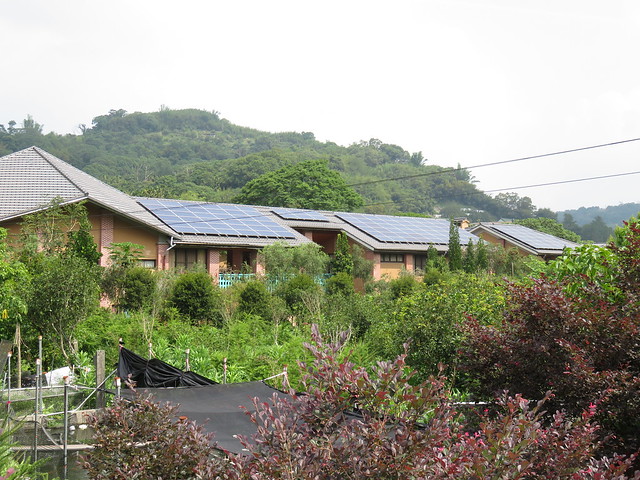
A solarized school. Wish they'd do that to all public buildings...

In mid-May the UN excluded Taiwanese journalists from attending the meeting of the World Health Assembly, which overseas the WHO (FocusTaiwan). Many international organizations and individuals spoke out in support of Taiwan. This week the Press Freedom Committee of the  Foreign Correspondents Club of Japan sent around this statement of support:
Press Freedom Committee Statement on Taiwanese Journalists, WHO

The Foreign Correspondents Club of Japan's Press Freedom Committee objects to the World Health Organization's decision to deny Taiwanese Journalists press accreditation to cover the World Health Assembly, which started May 21.

Although Taiwan is not a member state of the WHO, its journalists had been allowed to attend and report on the annual meeting prior to 2017. Denial of their accreditation is an infringement on press freedom. Accurate health reporting is critical to a safe and informed citizenry and health crises do not stop at political borders. We therefore call on the WHO to resume issuing press credentials to Taiwanese journalists because no journalist should be barred from reporting solely because of their nationality.

Freedom of Press Committee
One of many insults from China....
_______________________
Don't miss the comments below! And check out my blog and its sidebars for events, links to previous posts and picture posts, and scores of links to other Taiwan blogs and forums!
Monday, April 30, 2018

The Week in Chinese Belligerence with bonus CNN moment

What happens when the machines stop?

Russell Hsiao at TNI asks What Would Taiwan Do If China Invaded? Hsiao notes:
As one analyst observed in 2003:

… it is not clear how high a price Taiwan is willing to pay to oppose China. Taiwan’s people have generally resisted the sacrifices that go with a high degree of military readiness. Mandatory military service for young men is unpopular, and the government has already cut the length of service several times. Some high-ranking Taiwan military officers admit that the civilian population’s willingness to fight is not beyond question. Opinion polls commonly indicate that a significant proportion of Taiwan’s trained reservists would be reluctant to answer the call to arms in the event of a war with China.
Hsaio then lists polls that show people are willing to fight. I think many analysts are confused on this point. Most people will fight, and that number will rise when China attacks the island and people see their loved ones killed around them.

Taiwanese do not rejecting sacrificing to defend their island. Rather, they abhor the military. The problem is that the military treats its recruits like crap. In a society that runs on chickenshit, the military is the ultimate realization of the chickenshit culture. For the conscripts, who are under the absolute, unchecked authority of the officers, life can be hell. Naturally young males dread joining the organization...

Military service in the old days was a mandatory two years so that males could be constantly indoctrinated with KMT propaganda and so that they would be off the streets and unable to take part in protests, and to keep them under surveillance for their politics and the pro-democracy types identified and perhaps imprisoned. China had no navy in the old days and there was never any threat to take Taiwan back then. It was all about domestic political control.

It would be better if foreign commentators focused on pressuring the military to reform its  culture rather than claiming (falsely) that Taiwanese don't want to defend Taiwan.

This week Chinese belligerence was the theme. CNN "reported" with a fine piece of stenography on China's noisemaking via imagery, propaganda, and air force flights around Taiwan, with the stupidly wrong title:
China's release of images reinforces vow to keep Taiwan as a territory
Yes, that's right, for CNN Taiwan is already part of China, which it is trying to "keep". Thus does a great American news organization align itself with authoritarian power rather than international law, under which Taiwan's status is undetermined. It would be sick but frankly the media's failure to advocate for democracy in Asia is so awful I accept this as par for the course.

Sometimes I don't even understand why the CCP bothers to waste money on Xinhua.

CNN remains mystified by Taiwan's actual status in US policy. After a long piece with many quotes from Chinese sources, CNN ends with a confusing comment on US policy:
While Washington does not challenge Communist China's claim over Taiwan, the official US policy simply states that people on both sides of the Taiwan Strait recognize there is but one China and Taiwan is part of China.
Very confusing and wrong, twice now. The US acknowledges but does not recognize that people on both sides of the Strait say Taiwan is part of China. US policy is that Taiwan's status is undetermined. Apparently CNN has never heard of Google.

Again the same crap as last time. Quote after quote from China sources, but none from Taiwan or Washington. Even when CNN mentions Washington and Taiwan, as if to apologize for having the temerity to suggest there were places in the world where Beijing's writ did not run, it quickly listed the Chinese reaction:
But under US President Donald Trump, the United States' has appeared enthusiastic to move closer to Taiwan, a move which has caused deep concern in Beijing.

"Every inch of our great motherland's territory cannot be separated from China," President Xi said during a nationalistic speech at the National People's Congress in March, drawing huge applause.

The Trump administration has sought closer ties to President Tsai's government, angering Beijing by recently signing two deals to tighten ties with the island, including a travel act which will allow more official visits between the US and Taipei.
CNN doesn't bother to present any information or quotes on why the US might have this policy and what Taiwan's position is, except to say that the ruling DPP is pro-independence (so is the whole island, CNN). We get lots of Beijing reaction, but no US reaction to Beijing's posturing. This is not a short piece, so CNN cannot plead lack of space.

Is CNN simply pro-Beijing, or censoring itself?

Meanwhile, the US responded with B-52 flights to Pratas Island off China. Someone is paying attention. Jason Diehl's WaPo piece contains a rare tidbit: scuttlebutt is that Trump was angry that Alex Wong visited Taipei. The Administration is complex and Trump is hardly the whole of it.

A lighter moment: China "discovered" a map from 1951. O so conveniently, it addresses some issues with the infamous Nine Dash Line. I expect that ancient texts and modern documents both are going to be undergoing continuous alteration to support PRC expansion, and we are all going to be like Winston Smith watching O'Brien send a photo the memory hole...
________________
Daily Links:

_______________________
Don't miss the comments below! And check out my blog and its sidebars for events, links to previous posts and picture posts, and scores of links to other Taiwan blogs and forums!

Friday, April 28, 2017

Latest Nelson Report

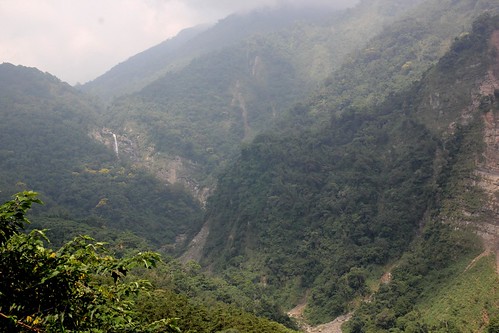
A waterfall feeds a river gorge below Caoling.

The Latest Nelson Report with some comments on Taiwan (bold emphasis mine, red in original). Click on Read more...

++++++++++++++++++++++

LINES ON MAPS...remember a week or so ago when Japan issued a map showing a couple of hundred islands with Japanese names? Beijing today took it a potentially dangerous step further, defining into "law" some enforcement rights:


Wednesday, March 16, 2016

Crackling like electricity prices and other meandering discussions

IMG_1208
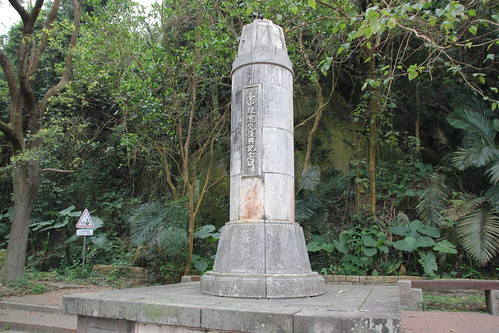
The strange, bullet shaped monument to the 1935 earthquake at Tai-an station.

FocusTaiwan reports that electricity rates are going to receive the largest cut ever: 9.5%.
It was decided at the meeting that electricity rates will be cut by 9.56 percent, the biggest cut in the country's history, with every kilowatt hour cut to NT$2.5488 from NT$2.8181 on average.

Shen noted that the rate reduction mainly reflects a marked drop in international fuel prices.

Electricity rates after the cut will be even lower than the NT$2.6001 per kWh in 2011, one year before double hikes of fuel and electricity rates that pushed up commodity prices and invited complaints from the general public.
The awesome Kharis Templeman, always policy-oriented, immediately pointed out that this will create demand for nukes, which Taipower loves, since cheaper electricity will drive up demand. Taiwan needs a new energy policy, he observed. I should add that by driving up demand, lower prices will also drive down demand for conservation and renewables, which Taipower hates. It will also create profits for large KMT-connected firms in energy-intensive industries like steel and aluminum whose bottom line rests heavily on electricity prices.

But to my mind this move is political. It's the biggest cut ever, and it comes right before Tsai Ing-wen assumes power. This means that at some point the DPP Administration will have to raise electricity prices, having the effects noted in the third paragraph there -- creating public discontent with the government. That was one of the factors which drove Ma's drop-off between 2008 and 2012.

Note also that Taipower has large debt problems. Not eight months ago the China Post reported:
Taiwan Power Company (Taipower, 台灣電力公司) said yesterday that if the scheduled price hike does not occur in October, the company will lose an additional NT$13.7 billion, totaling a NT$70 billion loss for the year, said Taipower spokesman Roger Lee (李鴻洲),.

If the price hike is not implemented in October, Taipower will accumulate a total deficit of NT$263.2 billion, which is more than two thirds of its NT$330 billion equity, according to Taipower.

In an effort to rationalize electricity prices, the government rolled out a three-phase price hike plan in 2012. The second-phase price hike was set to start in October in 2012, but was then postponed and scheduled to resume in October, 2013. Given lower-than-expected first quarter GDP growth, some have suggested the price hike may be postponed.

.....

Taipower incurred a loss of NT$62.1 billion in 2012, and accumulated a total loss of 193.6 billion. Taipower incurred a loss of NT$20.3 billion from January to April, and has accumulated a total deficit of NT$213.9 billion.
Nevertheless, when October came, the government actually cut prices. Anyone think all those massive debts have been cleared up? Eventually, even if fuel prices stay low, the DPP Administration may feel the pressure to raise electricity prices to service that debt. Certainly, if it does not, it may open itself to accusations of mismanagement... which is, I submit, the whole purpose of this price lowering charade. This suggests that the first thing the DPP Administration should do when it comes to power is reverse this decision so that the impact isn't felt so strongly in subsequent elections, and start getting money into Taipower to put in all the renewable systems that Taiwan needs.

Ketagalan Media is constantly adding new writers. Today another sharp pen premiered: Calin Brown, on racism in Taiwan. The nice thing about this was that it focused not on the experiences of westerners, but on the Han-Aborigine relationship.
Chinese expansion made aborigines subject to heavy-handed, sometimes brutal, assimilation practices. In the 1940s, the Chinese Nationalist Party took away centuries-old aboriginal ancestral lands – the aborigine communities’ main source of income. Now, they’re still more likely to be unemployed, more likely to hold lower-paid or riskier jobs, and less likely to graduate from college. According to the Council of Aboriginal Affairs at the Executive Yuan, the average wage of aboriginal workers in 2014 was 75 percent of the average wage earned by a Han-Chinese counterpart.
It reminded me of Martin William's classic 1999 article on the Pingquanhui, a KKK-like organization of Han to suppress and expel aborigines. Do not miss that article. It is hosted on the useful First Nations website. Vice.com hosts a nice piece on Taiwan's changing relationship with its aborigines.
President-elect Tsai Ing-wen, the first woman to serve in the post, has already vowed to apologize for the past suffering of Taiwan's natives, and to press for reforms in policies towards the island's roughly 500,000 indigenous people.

"Why apologize? Well, looking back through history, Aborigines gradually lost their lands while under the rule of different governments and foreign powers," Tsai said last year. "Even today, they continue to be at a disadvantage in areas including economy, education and health."
Speaking of Tsai, the new administration formally announced that its premier will be finance and econ expert Lin Chuan.
Lin, born in Kaohsiung on Dec. 13, 1951, was chief of the Directorate-General of Budget, Accounting and Statistics of the Executive Yuan between 2000 and 2002, and minister of finance between late 2002 and early 2006 under then-president Chen Shui-bian (陳水扁). He has no party affiliation.

Lin is now the chief executive officer of the New Frontier Foundation, a think tank chaired by Tsai. He played a major role in her presidential campaign.

Although Lin worked exclusively on financial matters when in government, Tsai said: “I promise everyone that Lin Chuan’s Cabinet will not be one focused on economics and finance,” but one of reform, and one that is good at communicating and getting things done.
This is a neat signal to local and foreign markets, and also to China, since Lin is hardly a firebrand on independence. But the Tsai Administration, at least based on the media speculation, is recycling lots of Chen Administration people (on the other hand, who else is there?), as the Taiwan Law Blog opined the other day (if you're not following him on the blog and twitter, you should be). Hey, don't miss his discussion of Mongoia and the ROC Constitution.

The Hong Kong Economic Journal has a discussion of the fantasy proposal of a rail link under the Taiwan Strait between Fujian and Hsinchu. It's a non-starter, but fun to think about, like Harry Harrison's classic SF novel of the tunnel under the Atlantic Ocean between the UK and its North American colonies. Some people regard it as a threat, but it's fanciful to imagine that the PRC could rush troops through it to take Taiwan.

Some new polls out this week. TISR, the staid establishment poll group, found that people are rejecting One China in all its forms:
Asked about their opinions on the statement that “one China” refers to the PRC, an overwhelming majority, or 81.6 percent, of respondents opposed the concept, with only 9.2 percent accepting the notion.

Even if “one China” refers to the ROC, 60 percent of those polled still disliked the idea that both sides belong to “one China,” but the percentage of people willing to embrace the notion rose to 28.8 percent.
The poll observes that the fake 1992 Consensus, invented in 2000 to cage a future non-KMT president, is not strongly supported:
About 38 percent of respondents believed Tsai should not acknowledge the “1992 consensus” under such a condition, while 33.4 percent urged the incoming president to do so, the poll showed. Nearly 29 percent declined to express their opinions.

.....

Respondents aged between 20 and 39 tended to aspire to see Tsai shrug off the “1992 consensus,” while those in the 40 to 59 age group generally believed she should welcome the consensus, the survey indicated.

The “1992 consensus” refers to a tacit understanding between the Chinese Nationalist Party (KMT) and the Chinese Communist Party (CCP) that both sides of the Taiwan Strait acknowledge there is “one China,” with each side having its own interpretation of what “China” means.

Former Mainland Affairs Council Chairman Su Chi (蘇起) has admitted that he made up the term in 2000.
Tsai's position of evading acknowledgement of the 1992 Consensus has strong support from the young. Several other polls show that support for kowtowing to China on this is under 35%. A UDN poll noted that over 70% identify as Taiwanese, and like a couple of other polls, found that a stubborn minority would declare independence even if it meant war.

Thus, Tsai can point to considerable domestic support for her position, and further, Beijing currently does not consider her to be a "radical". J Michael Cole today points out in SCMP that Beijing will likely not turn the screws on Tsai:
If we believed many of the article headlines that have appeared in international media since the January 16 election of Tsai Ing-wen of Taiwan’s Democratic Progressive Party, we would think the roof was about to come crashing down on the Taiwan Strait. Time and again, articles and editorials have warned that if Tsai refuses to recognise “one China” or the 1992 consensus, Beijing could – or should – punish Taiwan by, among other things, severing all official and unofficial contact. Such alarmism, however, doesn’t pass the reality check.
Indeed. The total failure of China to take any concrete action against Taiwan during the Chen Administration never seems to make the media and commentariat pause for thought in its predictions that the sky is imminently falling in the Taiwan Strait. I am sure that one day when China finally goes to war, this crowd will blithely pat each other on the back for being so right. And blame Taiwan, of course. The claim that "Taiwan provokes tension!" serves the PRC, not peace. It's the PRC that creates and determines the level of tension in the Taiwan Strait, which it uses to influence US policy and US commentators. Very successfully, I might add.

VISITING SCHOOLERS: The local media is in a tizzy as longtime US government Taiwan expert Richard Bush III, Denny Roy, and Bonnie Glaser are coming to Taiwan, allegedly to convey the US position on Taiwan and how it should behave to Tsai Ing-wen, who apparently is not aware of it, although it has been in the news since roughly 1990 or so. That is, they are supposed to be telling Tsai to be a good girl and not rock the boat, according to media reports, by announcing independence or behaving like the awful Chen Shui-bian, who riled relations with China so much that Taiwanese investment in China reached around $200 billion, tens of thousands of Taiwanese went to work there, and the Hong Kong-Taipei air route was the busiest in the world. As you can see, China totally punished Taiwan by cutting off relations. O wait...

Anyway, hopefully they will convey sympathy and support, and not dial back the clock to 2005. With Chinese expansionism on the rise, the US should be seeking ways to bring Taiwan and Japan together under the US umbrella. Taiwan can be a powerful asset, if only they US has the imagination to use it. Hopefully also they will help Tsai find ways to delink ROC claims in the South China Sea from China's, and deprecate them, so that Taiwan can build much-neglected relationships with the nations bordering that region. Need US help there!

Let's also recall that the bit of theater may not even by aimed at Tsai, but at Beijing, to show it that the US is doing everything it can to keep the lid on the DPP. Though, as a someone noted in a conversation about this today, PRC analysts don't see Tsai as very willing to rock the boat.

MEDIA: Shout out to Reuters for its excellent background on Taiwan's historical relationship with China and its various rulers...
China considers self-ruled Taiwan a wayward province, to be brought under its control by force if necessary. Defeated Nationalist forces fled to Taiwan in 1949 after the Chinese civil war.

......

Japan ruled Taiwan as a colony for about five decades until the end of World War Two. China’s last dynasty, the Qing, had ceded Taiwan to Japan in 1895 after losing the first Sino-Japanese war.
How many times have you seen a reference to 1895? That's great. Now if could just get them to start writing that it is problematic whether the Qing were Chinese...

Once again, note the way the tone of the reporting has changed since Tsai won the election.

FOR AMUSEMENT PURPOSES ONLY: Ted Galen Carpenter continues to party like its 2005, with (yet) another recommendation that Taiwan be sold out to China, this time in the guise of Finlandization, complete with PRC bases on Taiwan, just to make China feel safe. Poor, put upon China! As is typical with Carpenter, he simply ignores the effect of such an agreement on neighboring states -- Japan is mentioned only twice and not at all in the context of Chinese expansionism, for example. And what about the islands in the South China Sea, and the Senkakus, claimed by the Republic of China? Rather like a dumb but enthusiastic golden retriever who always wants to play ball with you, Carpenter, bless his heart, never ceases to entertain.

PS: If you haven't bought A Pail of Oysters, Vern Sneider's searing novel of Taiwan in the early 1950s, read the reviews below and get it for Kindle or epub. It's a steal at $2.99.
_______________________
Don't miss the comments below! And check out my blog and its sidebars for events, links to previous posts and picture posts, and scores of links to other Taiwan blogs and forums!

Friday, May 22, 2015

Remarks from State: Taiwan: A Vital Partner in Asia

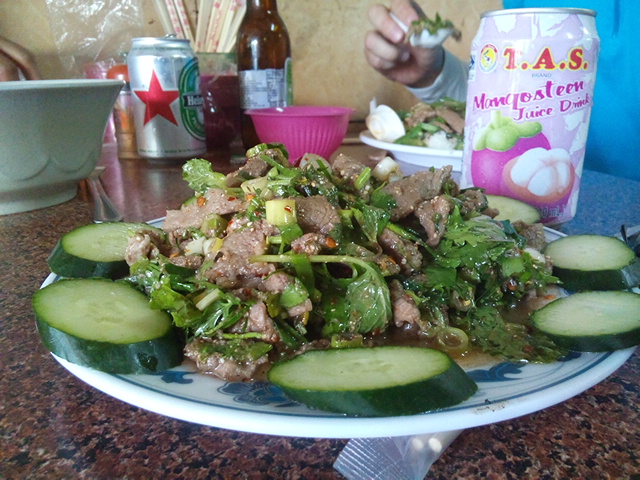
Lunch at a Thai restaurant on the road.

Taiwan: A Vital Partner in East Asia
Remarks
Susan Thornton
Deputy Assistant Secretary, Bureau of East Asian and Pacific Affairs
Remarks at the Brookings Institution
Washington, DC
May 21, 2015

As Prepared for Delivery

Thank you, Jeff, for having me here today and for that wonderful introduction. I really appreciate all your support, advice and insight and it's appropriate, of course, to have you here, since much of our good work with Taiwan is built on the foundation you laid.... (READ MORE)

Tuesday, October 28, 2014

The Slaughter: An excerpt

Below is an excerpt from Ethan Gutmann's The Slaughter: Mass Killings, Organ Harvesting, and China's Secret Solution to Its Dissident Problem. It mentions Ko Wen-je, who is now a candidate for mayor of Taipei. I couldn't find an image in my Flickr account for this post, so I have left it bare. It was originally posted to Facebook. I have reproduced it in full except for the photo of the page from Gutmann's book.

童文薰 added 3 new photos.
第258,259,260頁 (pages 258-260

Less explicit versions of Dr. Ko’s testimony have surfaced; Dr. Francis Navarro, director of transplantation in France’s Montpelier Hospital was invited to demonstrate his liver transplantation technique at Chengdu University in 2006. The Chinese organizers hospitably informed Navarro that they would have a liver ready for him on the day of arrival. If this was a sign that they were killing to order, Navarro’s suspicions were confirmed by the director of a military hospital who mentioned that he was hurrying to finish his executions before the Chinese New Year. Navarro duly reported on these incidents, but the French government has shown scant interest in curbing or restricting French organ tourism to China.
比柯醫生的證詞較不明確的版本浮出水面。弗朗西斯.納瓦羅醫生,法國蒙彼利埃醫院移植主任在2006年應邀前往成都理工大學展示他的的肝移植技術。中國主辦方盛情通知納瓦羅醫生,在他抵達的當天他們準備好一個肝臟。如果這是他們按訂單殺人的訊號,那麼納瓦羅的懷疑,在一家軍隊醫院主任表示他急匆匆地趕在中國春節前完成處決案時,得到了證實。納瓦羅向法國政府正式報告了這些事件,但法國政府卻明示他們對於遏制或限制法國人前往中國進行器官移植旅遊的行為,缺乏興趣。(click read more to continue)

Monday, September 22, 2014

They Hate Us for Our Freedom

The view from the lovely Chiayi 149.

My friend Faye writes up her story on Facebook of trying to get US citizenship for her child. Most of this is not due to AIT, but rather to Congress. Note how the law punishes you if you're a single mother...

++++++++++++++++

How I proved that Zephyr had the right to US Citizenship -- Or How the West Wind was (Not?) Won -- Or Why Being an American is Nothing But Stress

The American Institute in Taiwan is the organization that acts as an "embassy" in Taiwan, since Taiwan has no status as a nation in the world. They force me to make an appointment on the website, but the first time I go to the website, it is broken. I have to take a US$50 40 minute taxi ride to get there with the baby. When I get there, I have to go through security checks that I have never seen visiting any public office in Taiwan, but which are all too familiar to Americans. Metal detectors, leave your phone and your laptop downstairs in their custody. I get inside and there are no elevators, but the office where I have to get papers for Zephyr is on the third floor. I proceed to carry Zephyr up and down these stairs in his stroller at least four times, as I try to collect all the things I need to get this done.

They have no one to take a photo for you in the building, so you have to go across the street to a private vendor. The Taiwanese photographer was so nice, he made extra copies for me and gave me the originals on a flash drive. When he heard that I don't get many photos with the baby, he took some extras just so I could have more happy photos with Zephyr, no charge.

First, I was told over email that I would need to have his birth certificate translated, and that I can do it myself, so I did. When I got there, they didn't like it. They wanted me to write on it that I had translated it myself, like they didn't trust me. Later, they insisted that I needed to get a special English version of the birth certificate from the Taiwanese government... pushing their paperwork onto the Taiwanese government. I didn't see what the point was, since everything on the form was then provided by me and translated by me anyway. But I did it, I went back to the clinic where I got my original birth certificate, and I wrote down on the form exactly the same information I had written in my own translation... Paid someone else to type it up. Took extra time.

Second, their website said that they could accept cash or credit card, but it turned out that their credit card machine was down that day, so it was back to only cash. I only find this out at the end of the process, so I have to carry the stroller up and down again to find an ATM to pay the exorbitant US$100 fee for Consular Report of Birth Abroad and US$105 fee for passport (US$205 total). Taiwanese birth certificate costs negative money, in fact, they gave me a gift of US$300 for having a baby, and a Taiwanese 10-year passport costs US$45 and has a turnaround time of FOUR DAYS, standard, not rushed!

Third, they informed me only after I got to the office that according to the US government, if the mother of the child is presenting her identification as an American citizen when a child is born out of wedlock in another country, I have to prove that I was ever in the United States without leaving the country for an entire year. Ever, in my entire lifetime. This would seem like a simple thing, since I have been in the United States since I was six years old and now I am 40. There are thousands of such year stints that I could point to. However, if you look into this, there is actually no way to prove this. This law really needs to be scrubbed from the books, because it is meaningless and a total stupid run around, but there's no one who will ever accomplish this task. Anyone who runs into this law will be too busy being a single mom to ever get this changed, and no one else cares about us.

In order to prove this strange requirement, I am told the only thing that would work is a transcript from either high school or college, plus summer school, or prove that I was working during the summer between semesters, or pay stubs from a year of work, or IRS records showing that I was working for a full year. I found all of these things to have no relevance to whether I was in the country without leaving, since I lived in lots of places where I could easily take a day trip to Mexico or Canada, and it wouldn't leave any trace anywhere or matter if I was in school or at work. However, that is what the AIT wanted, so I went off to find these things.

The high school was very kind about transcript, but they had to go dig up microfiche from some basement for me, I'm THAT old. UC Berkeley transcript office cost money to send transcripts, AND if you ask for one online, there's no way to get it sent to Taiwan because there was an error in the website form. The AIT agent kept insisting that it was easy to do, just click the link, but after she took the time to click it herself, it turned out that I was right, of course. I didn't have any paystubs with me... who travels with a year of paystubs, are you kidding me??

I called the IRS for my full tax transcript, and they could offer me some, but none were available for the years when I was in college, because I was a student worker, and it was too long ago. Besides, it wouldn't say "what month" or days I worked, only that I filed a form and paid some taxes. There was a whole series of calls to the IRS. The first one, I waited for an hour while listening to hold music, then they told me I would have to be standing next to a fax machine when they fax me the transcript. The second one, I went down to the 7-11 where I could receive faxes, and I waited for an hour, only to find out after all the explaining that their computer system was down. The third one, I went down to the 7-11 and waited for an hour, where my phone gradually ran out of batteries down to the last second, when they said, we hit send, but sometimes it takes the system 20 minutes to actually send it... and I kept having to keep the fax machine turned on by pushing buttons to prevent it from auto-shut down every few minutes. AND I never got the fax. Mind you, I did all this with baby Zephyr in tow, when he was only about 5 months old.

I explained the problems trying to get information to the people at the AIT, and after much discussion they said... we know what you have to do to meet the burden of proof. You have to go to the Taiwanese government and get a full record of all the times you entered and exited Taiwan. Good grief, so they push their own paperwork onto the Taiwanese government, and then what exactly does that prove? It proves when I was in Taiwan, but it says nothing about all the times I went to Jamaica, Canada, Mexico, France, Italy, Germany, Denmark?!? What the hell are they really getting at? It's just a huge stress for no benefit to anyone. How is it protecting or serving anybody in the US to give Zephyr and I a hard time?

I went to the Taiwanese government office and got this record in fifteen minutes, US$3, using both of my passports (Taiwanese and US), and I made one more trip to AIT to submit my papers. I asked the Taiwanese agents, do you get a lot of people from AIT? and he growled and said, yes, ever since 9/11, the Americans have lost their minds and treat everyone like terrorists. Phew! And that's how Zephyr got his US Citizenship papers, and the start of completely irrational, unreasonable control and danger to him. No terrorists are out to get Taiwanese people.
_______________
Daily Links:
_______________________
Don't miss the comments below! And check out my blog and its sidebars for events, links to previous posts and picture posts, and scores of links to other Taiwan blogs and forums!

Wednesday, July 17, 2013

Rabies is back

A fly friends a slug.

The KMT news organ reports important news.
Rabies has reappeared in Taiwan for the first time in five decades. The Council of Agriculture (COA) yesterday morning convened a meeting of experts and confirmed three cases of rabies-induced deaths in wild ferret-badgers (Melogale Moschata Subaurantiaca). One of the three dead ferret-badgers was found in Yulin County’s Gukeng Rural Township (古坑鄉), and the other two in Nantou County’s Yuchih (魚池鄉) and Chitou ( 溪頭 ) Rural Townships. The COA would inform the World Organization for Animal Health of the confirmed rabies infections. Taiwan will now be listed as a rabies-infected area after five decades on the rabies-free list.
We have to be rabies-free for two years before we go back on the rabies-free list. One of the best things about Taiwan is that the stray animals are safe from that disease. I am seriously phobic about rabies: maybe someday I will tell the story of How I got Rabies in Kenya.
_______________________
Don't miss the comments below! And check out my blog and its sidebars for events, links to previous posts and picture posts, and scores of links to other Taiwan blogs and forums!
Wednesday, April 10, 2013

Let the Panic Begin!

Wood chips, drying in Hengchun.

New cases suspected.... it's spreading!!!!!
Test results have cleared three suspected cases of H7N9 avian influenza infection, as 10 new suspected cases were reported, the Central Epidemic Disease Surveillance Command Center said yesterday.
Virus uncovered in poultry markets in Shanghai. Meanwhile, in Taiwan....

Six suspected cases of H7N9 virus found in Taiwan, but four cleared.....
CDC Deputy Director-General Chou Chih-hau (周志浩) said on Thursday that six people reported fever symptoms after arriving in Taiwan from China recently. Two of them were infected with the H1N1 influenza, two people had bacterial infections, while diagnoses for two people was yet be confirmed.
Changhua County to reinforce blood tests for poultry.

Taiwan's travel industry is taking its time to size up the bird flu threat.
Taiwan's travel industry is apprehensive about the uncertainty and public anxiety being caused by the H7N9 bird-flu virus and has shown a rare reluctance to gauge the potential impact of the outbreak of the disease in China. Usually quick to openly assess the effect of global incidents on the travel market -- including during the latest tensions on the Korean Peninsula and the 2011 earthquake in Japan -- industry insiders said they would need time to digest the situation in China.
DOH says vaccines can be produced in as little as two months:
The task force convened its first meeting yesterday. Lin said that two Taiwan experts currently in Shanghai were expected to obtain the H7N9 virus strain from the Mainland, which would be used to produce the rapid screening reagent. Lin also noted that a cross-Strait agreement on disease control cooperation had been signed in 2010, but this was not the only channel for the DOH to obtain the virus strain. He said that Taiwan had obtained virus strains from the World Health Organization (WHO) when an outbreak of SARS (Severe Acute Respiratory Syndrome) occurred in Asia in 2002-3.
The DOH also said it would develop its own vaccine rather than work with Beijing. CDC staff on way to China to gather information, samples. In Taichung monitoring measures are being stepped up to handle the outbreak. Nantou has prepared 44 isolation rooms for patients if H7N9 appears in Taiwan. Health officials have been calling on hot pot restaurants telling them not to serve raw eggs.

Some reality from a commentary in the TT:
There have been no reports of birds infected with this virus strain in Taiwan, nor of any human-to-human transmission. We cannot keep people from the areas in which the outbreak has occurred from coming to Taiwan, but if they do, they will not cause an outbreak here.
_________________________
Daily Links:
_______________________
Don't miss the comments below! And check out my blog and its sidebars for events, links to previous posts and picture posts, and scores of links to other Taiwan blogs and forums!
Monday, September 03, 2012

Republican Platforms on Taiwan/East Asia: 2004-2012

A friend passed this around, look at the advances for 2012.

+++++++++++++

Republican Party platform, 2004

Across the Pacific
Republicans believe that, as in every region of the world, America's foreign policy in Asia starts with its allies: Australia, Japan, the Republic of Korea, Thailand, and the Philippines. In the Asia-Pacific region, these alliances are bolstered by strong relationships with American friends such as Singapore, India, Indonesia, Taiwan, and New Zealand.
......
There are, however, other areas in which we have profound disagreements, including human rights, China's observance of its nonproliferation commitments, and America's commitment to the self-defense of Taiwan under the Taiwan Relations Act.

We support President Bush's efforts to narrow differences where they exist but not to allow them to preclude cooperation where there is agreement.

The United States government's policy is that there is one China, as reflected in the three communiqués and the Taiwan Relations Act. America opposes any unilateral decision by either China or Taiwan to change the status quo. Republicans recognize that America's policy is based on the principle that there must be no use of force by China against Taiwan. We deny the right of Beijing to impose its rule on the free Taiwanese people. All issues regarding Taiwan's future must be resolved peacefully and must be agreeable to the people of Taiwan. If China violates these principles and attacks Taiwan, then the United States will respond appropriately in accordance with the Taiwan Relations Act. America will help Taiwan defend itself.

Republicans applaud President Bush and the Republican Congress for honoring our nation's promises to the people of Taiwan, a longstanding friend of the United States and a genuine democracy. Taiwan deserves America's strong support, including the timely sale of defensive arms to enhance Taiwan's security. In recognition of its growing importance in the global economy, Republicans applaud Taiwan's membership in the World Trade Organization and support its participation in the World Health Organization and other multilateral institutions.

Republican Party platform, 2008

Partnerships across the Asia-Pacific Region
-----

Taiwan
Our policy toward Taiwan, a sound democracy and economic model for mainland China, must continue to be based upon the provisions of the Taiwan Relations Act. We oppose any unilateral steps by either side to alter the status quo in the Taiwan straits on the principle that all issues regarding the island's future must be resolved peacefully, through dialogue, and be agreeable to the people of Taiwan. If China were to violate these principles, the U.S., in accord with the Taiwan Relations Act, will help Taiwan defend itself. As a loyal friend of America, the democracy of Taiwan has merited our strong support, including the timely sale of defensive arms and full participation in the World Health Organization and other multilateral institutions.

Republican Party platform, 2012

Taiwan
We salute the people of Taiwan, a sound democracy and economic model for mainland China. Our relations must continue to be based upon the provisions of the Taiwan Relations Act. America and Taiwan are united in our shared belief in fair elections, personal liberty, and free enterprise. We oppose any unilateral steps by either side to alter the status quo in the Taiwan Straits on the principle that all issues regarding the island’s future must be resolved peacefully, through dialogue, and be agreeable to the people of Taiwan. If China were to violate those principles, the U.S., in accord with the Taiwan Relations Act, will help Taiwan defend itself. We praise steps taken by both sides of the Taiwan Strait to reduce tension and strengthen economic ties. As a loyal friend of America, Taiwan has merited our strong support, including free trade agreements status, as well as the timely sale of defensive arms and full participation in the World Health Organization, International Civil Aviation Organization, and other multilateral institutions.

2012: China
We will welcome the emergence of a peaceful and prosperous China, and we will welcome even more the development of a democratic China. Its rulers have discovered that economic freedom leads to national wealth. The next lesson is that political and religious freedom leads to national greatness. The exposure of the Chinese people to our way of life can be the greatest force for change in their country. We should make it easier for the people of China to experience our vibrant democracy and to see for themselves how freedom works. We welcome the increase in trade and education alliances with the U.S. and the opening of Chinese markets to American companies.

The Chinese government has engaged in a number of activities that we condemn: China’s pursuit of advanced military capabilities without any apparent need; suppression of human rights in Tibet, Xinjiang, and other areas; religious persecution; a barbaric one-child policy involving forced abortion; the erosion of democracy in Hong Kong; and its destabilizing claims in the South China Sea. Our serious trade disputes, especially China’s failure to enforce international standards for the protection of intellectual property and copyrights, as well as its manipulation of its currency, call for a firm response from a new Republican Administration.

_______________________
Don't miss the comments below! And check out my blog and its sidebars for events, links to previous posts and picture posts, and scores of links to other Taiwan blogs and forums! Delenda est, baby.
Wednesday, April 11, 2012

Persistent Vegetative State (PVS) in Taiwan

A few posts down from this one I posted part of a conversation I had with a young nurses in the health system here. She had spoken of the lawsuit from the family of an accident victim against a team of neurosurgeons. Sure enough, today the Taipei Times hosted a piece  on the Increasing Cost of Saving Lives:
Seven years ago, surgeons at Tung’s Taichung MetroHarbor Hospital operated on a man who had suffered a head injury in a traffic accident, but the outcome was that the man ended up totally paralyzed and blind. At the end of last month, the -Taichung branch of the Taiwan High Court ruled that the hospital and the three doctors who performed the operation must pay the man’s family more than NT$33 million (US$1.1 million) in compensation.

One of the doctors is neurosurgeon Lee Ming-chung (李明鍾), who is famous for his valiant, though ultimately unsuccessfu, efforts to save the life of another brain trauma patient, a little girl surnamed named Chiu (邱), who had been turned away by several other hospitals.
The Chiu case was quite sad. Readers probably recall it. The girl had been beaten unconscious by her father and then refused at hospitals all over Taiwan claiming they had their quota of neurosurgical cases. She finally wound up at a hospital in Taichung, where she died.

Tung's is the big building with the rotating restaurant easily visible from almost anywhere between the slopes of Tatu Mountain and Taichung Harbor west of Taichung city. Despite its unusual name it is a first-rate and extremely well run hospital, where foreigners from ships in the harbor are taken for medical help. The sons of the founder ran for legislator posts in the recent election, some Blue, some Green.

The Taipei Times piece observes that one reason health care is cheap in Taiwan is because doctors are often not insured. Because litigation is so common -- it is not even more common because of the undersupply of lawyers -- doctors are becoming shy about entering professional specialties where the likelihood of lawsuits increases. The writer goes on:
Taiwan has the highest rate of PVS [persistent vegetative state] in the world. The number of PVS patients in the US is estimated to be somewhere between 15,000 and 40,000. According to available information, Taiwan had a total of 4,792 PVS patients as of 2008, and 6,000 PVS patients are now registered for care with the Genesis Social Welfare Foundation, a charity that specializes in this field. These figures suggest that not only does Taiwan have a very high rate of PVS, but the number of cases is increasing very fast. As to why people end up in this condition, the most common cause is scooter accidents, followed by overmedication.
I found this paragraph astonishing, since I'd never heard this distressing claim. The author notes that rates of PVS in Taiwan are 60% higher than in the US. In Taiwan PVS patients cannot be taken off life support at the request of the family; who must also help pay for the upkeep. This probably increases the number of  PVS cases. Another cause is likely the enormous number of scooters in Taiwan. Maintaining such patients is presented by the MOI as a "pro-life" position. Taiwan Panorama had an article on the local hospice system a while back, with some comparisons to similar systems in Japan:
The costs, in terms both of money and manpower, of the Japanese model are huge-monthly care for the average patient costs roughly NT$380,000, a world apart from the NT$50,000 spent by CSWF. As the majority of PVS patients in Japan entered their states through automobile accidents, much of the funding for their care comes from fees levied on vehicles for that very purpose. CSWF, on the other hand, receives only 10% of its funding from the government, with the remaining 90% coming from public donations.

After starting initial work on the hospice in 1980, Cao was finally able to open the hospice six years later, taking on patients from poorer families free of charge. To date, CSWF has cared for nearly 500 such patients.

Patients in vegetative states are cared for by professional caregivers at CSWF, with nurses providing care 24 hours a day over three shifts. Every two hours the patients are rolled over, patted on the back to help clear their airways, and have their linen changed, and they are fed once every four hours. They are washed every two days, to help maintain their cleanliness and hygiene, as well as their dignity.

Over the past 18 years, CSWF has opened branch hospices around the country. The goal is to have 23 locations in cities and counties throughout Taiwan, Cao says. Thus far they have completed 13, with another four in the planning stage, and the organization hopes to meet its goal within the next five years.
The GSWF home page is here.

UPDATE: A nursing professor explained to me that in cases of terminal disease, if the entire immediate family and the succeeding generation signs a DNR and the hospital ethics committee approves, then the tubes can be removed by doctor. This change was made last year. But for a coma patient whose prognosis is uncertain, that is still not possible.
_______________________
Don't miss the comments below! And check out my blog and its sidebars for events, links to previous posts and picture posts, and scores of links to other Taiwan blogs and forums! Delenda est, baby.

Saturday, February 18, 2012

Beef Bull

Don Shapiro of the American Chamber of Commerce writes at Brookings on The Beef Beef that is impairing progress in US-Taiwan relations, with background:
Although it considered itself well-versed on the beef issue, an American Chamber of Commerce in Taipei delegation that visited Washington last autumn was still surprised by the vehemence of the criticism of Taiwan it heard from American officials on the subject. One high-level official described Taiwan flatly as “an unreliable trading partner,” for example, while another said the disagreement over beef had “cast a pall” over the entire bilateral relationship. Beef had taken on a symbolic importance far out of proportion to its monetary value of less than 1 percent of U.S. exports to Taiwan.

The background is that the two governments signed a protocol in October 2009 lifting most of the remaining restrictions on U.S. beef products that Taiwan had put in place following the discovery of a case of mad cow disease in 2003. Just two months later, however, the Taiwan legislature – in which Ma’s Kuomintang controlled some three-quarters of the seats – enacted a law that reversed some of those very provisions. Despite resentment at what it regarded as Taiwan’s reneging on the protocol, the U.S. government by early 2011 was willing to start preparations to resume TIFA talks. Then another obstacle arose when Taiwan rejected some shipments of beef found to contain traces of the leanness-enhancing feed additive ractopamine. Though ractopamine, widely used by American ranchers, had long been a banned substance in Taiwan, inspectors had not previously tested for its presence. Random inspections, and the rejection of many shipments, have continued over the past year, and the uncertainty has caused some big buyers such as Costco to switch to other sources of supply.

Whenever questions were raised last year about finding a solution to the impasse, Taiwan officials responded that nothing could be done before this January’s elections, for fear of sparking protests from consumer and farming groups that could escalate into a campaign issue. Although no promises were made about what might happen after the election, this month has seen a flurry of public comments from government officials and scholars that appear to be preparing the groundwork for a change in policy. Inter-agency discussions are currently taking place among the Council of Agriculture, Department of Health, and Ministry of Economic Affairs.

The likely way forward would be to replace the current zero tolerance of ractopamine with a defined limit on the amount permitted. In fact, in 2007 Taiwan had notified the World Trade Organization (WTO) of its intention to set such a Maximum Residue Level (MRL), though it never followed through. But a major question mark would be whether Taiwan would propose – and the United States agree to – a compromise in which an MRL would be set for beef but not pork. Taiwan has no beef industry to speak of, but hog-raising is big business, and the pig farmers, who are politically well organized, are adamantly opposed to opening the door to competition from American pork.

Although the U.S. government and meat industry insist there is no scientific basis for a total ban on ractopamine, the Taiwan public may not be so easily persuaded, especially after several major food-safety scares in recent years. And the political delicacy of the whole issue was driven home two years ago when Su Chi, one of Ma’s most trusted lieutenants, was forced to resign as head of the National Security Council after his efforts to resolve the matter through the protocol with the U.S. were undercut by the legislature. It would therefore require a measure of political will and some skillful maneuvering to reach a solution, though acting four years before the next presidential election is perhaps the best time to risk taking a political hit.
The reason the public may not be so easily persuaded is that ractopamine is banned in 150 countries, including the EU. This suggests that there is no reason the US couldn't fall in line with the world and ban the stuff, thus improving the healthiness of its food products, opening up new markets, and removing a potential trade issue, but that would be too intelligent.

As Shapiro notes, the use of ractopamine also makes it easy for local pork producers to argue that US pork should be kept out of the market. This means that a proposed compromise, setting a defined limit on ractopamine exposure, may fail because pork producers would demand zero tolerance (not that local pork producers mind inundating locals with their untreated pig waste but god forbid we have trace amounts of ractopamine), meaning that the beef issue would simply be replayed over pork.

Fortunately the US has not held the beef issue against Taiwan in other areas. Arms, for example. Taiwan was nominated for the visa waiver program, but an extradition treaty has stalled since it would mean that Taiwan would have to hand over criminals residing in Taiwan with US citizenship -- who might also have Taiwan citizenship.

Shapiro lists some of the areas where the US and Taiwan could make progress, one of which is IP protection, where China once again rears its mercantilist head: apparently US business secrets are stolen by Chinese firms by poaching Taiwan employees of US firms in Taiwan.
__________________
Daily Links
_______________________
Don't miss the comments below! And check out my blog and its sidebars for events, links to previous posts and picture posts, and scores of links to other Taiwan blogs and forums! Delenda est, baby.

Friday, December 23, 2011

Pollution: It's here, it's worsening

chungscape01.JPG
A friend of mine passed these four stories to me, outraged. The EPA is obviously doing a terrible job; indeed, it frequently sides with developers against the environment (for example). What can be done about these stories? She wrote:

"The following news stories, all recent, are extremely worrisome. You can buy organic fruit and vegetables or grow your own to avoid some of the exposure to toxins, but you cannot avoid breathing. How is it in anyone's best interest to encourage highly polluting and energy-intensive industries on a small island? Taiwan's power generation from coal-fired plants and nuclear power plants is killing us."

The translations are hers; the issues, everyone's.

++++++++++

Doctors rally after pollution survey - The China Post
http://www.chinapost.com.tw/taiwan/2011/12/23/326751/Doctors-rally.htm
TAIPEI, Taiwan --Taiwan's air quality ranked an abysmal 35 out of 38 countries surveyed by the World Health Organization (WHO), with Taipei at number 551 out of the 565 cities profiled, boasting an air quality on par with “smoker's paradise” Lebanon.

++++++++++

Taiwan uses too much pesticide, 5.5 times higher than that in the U.S. Pesticide residues are also too high. There are 541 types of approved pesticides in Taiwan. For every hectare of farmland Taiwan uses an average of 11 kilograms of pesticide. The average in the U.S. is 2 kilograms. These figures were published in a report from Taiwan's Control Yuan yesterday.
http://www.epochtimes.com/b5/1/2/13/n46958.htm
台灣使用農藥過量 高出美國5。5倍 蔬菜水果農藥殘留過多
台灣監察院昨天公布的「農藥濫用影響國人健康及生態環境」報告中指出,台灣核准使用的農藥有541种,台灣單位耕地面積農藥使用量為每公頃十一公斤,而美國為二公斤,台灣比美國高出五.五倍。台灣農民使用農藥已明顯過量,對生態環境造成了嚴重衝擊。

++++++++++

Full report on the Orchid Island nuclear waste radiation issue
  http://www.youtube.com/watch?v=H8-mCqMRHgw

++++++++++

And this report from Taiwan's Environmental Information Center on the growing nuclear waste issue just at the No. 1 Nuclear Power Plant.
http://e-info.org.tw/node/72556
環保署今(21)日召開「核能一廠用過核燃料中期貯存計畫第二次變更內容對照表專案小組審查會議」,北海岸在地居民與環保團體於會前召開記者會,反對核能一廠繼續興建乾式貯存設施,並呼籲將使用年限的問題納入本次變更內容的討論。
The EPA today (Dec. 21) organized a task force meeting to review a second set of changes to the spent nuclear fuel medium-term storage plan for the first No. 1 Nuclear Power Plant. At a press conferences held immediately before the review meeting, north coast residents living near the nuclear power plant and environmental groups voiced their opposition to the continued dry storage facility of the No. 1 Nuclear Power Plant and called for the issue of setting a deadline for the spent nuclear storage to be included for discussion in this review meeting.
核一廠用過核燃料中期貯存計畫在2008年8月27日的環評會議中決議,開發單位應依承諾將用過核燃料於設施使用40年後移出,且貯存設施不得轉作最終處置場所。但環團表示,去(2010)年12月,原能會放射性物料管理局長邱賜聰直言核一廠乾式貯存場使用年限屆滿後不排除再繼續使用,而今年11月28日的核廢料政策環評中的資料更證實了邱賜聰的說法;既然當初環評條件的承諾已經無法得到保證,環評的效力令人質疑,而這一次的變更內容對照表中對使用年限的問題卻依舊隻字不提。
The plan for medium-term storage of spent nuclear fuel from the No. 1 Nuclear Power Plant was decided upon at the August 27, 2008 environmental impact assessment (EIA) meeting, the terms of which stipulates the removal of the spent fuel from the facility after 40 years of use and that the facility not become the long-term storage site. Environmental groups pointed out, however, that in December of last year (2010), the Radioactive Materials Management Bureau Chief of the Atomic Energy Commission, Chiu Hsi-tsung, directly said that he does not rule out the continued use of the facility after the 40-year period, which was confirmed at last month's November 28th nuclear waste policy EIA meeting. If the conditions stipulated in the first EIA cannot be guaranteed, the effectiveness of the environmental impact assessment process will come under doubt. Moreover, the current EIA review meeting does not even include an agenda item for discussing the time limit issue.
環團質疑,最早,政府告訴北海岸居民,40年後核電廠就會走;後來,核一廠乾式貯存環評會議,環評結論告訴北海岸居民,40年後核廢料就會走;現在,核電廠還沒走、核廢料又會逾期擺放。政府「只求現在過關,不管未來問題」的態度,讓北海岸居民要等幾個40年?
Environmental groups point out that from the start the government told the north coast residents that the nuclear power plant would be gone after 40 years. Later, the EIA concluding report on the No. 1 Nuclear Power Plant Dry Storage Facility for the spent fuel told the residents that the nuclear waste would be gone after 40 years. And now, the nuclear power plant is not gone and the nuclear waste will continue to be stored on-site past the deadline for removing it. The government's attitude of "just getting things approved without any regard for the future problems" - is this to say that the north coast residents have to wait perhaps several more 40-year periods?
北海岸居民則擔心,核一廠乾式貯存未完工,原能會官員就坦誠將逾期使用,而在政府對核廢料最終去處毫無頭緒的狀況看,很可能直接就讓「中」期貯存變成最「終」處置。
The north coast residents now worry that the dry storage facility for the No. 1 nuclear power plant waste has not been completed and that the AEC has already admitted that it will continue to be used for storage past the deadline. Also, as the government does not appear to have solution to the final storage site problem, they are also worried that the medium-term storage site will become the final storage site for the spent nuclear fuel.
++++++++++

To this list she sent, I'd like to add another, the Alangyi Trail, pristine coast to be destroyed for a highway.
The Alangyi Trail, a 12km hiking trail along the Pacific coastline between Taitung County’s Nantian Village (南田) and Pingtung County’s Syuhai Village (旭海), is being threatened by the planned construction of Provincial Highway No. 26. A section of the planned highway would run alongside the trail.
Taiwan's construction-industrial state has metastasized into a giant tumor that is slowly killing its host by polluting land, water, and sky. The question is, when will the people of Taiwan say, enough!
_______________________
Don't miss the comments below! And check out my blog and its sidebars for events, links to previous posts and picture posts, and scores of links to other Taiwan blogs and forums! Delenda est, baby.

Wednesday, September 21, 2011

State Dept: 145 = 145 + 66

Here is the transcript. Note the strange math there:
SENIOR ADMINISTRATION OFFICIAL:

I do not, but it's before the end of the week. Assuming -- so let me start this again.

Assuming the reports leaked about the proposal to refurbish F-16s are true -- and that obviously can't be confirmed even on background until a formal congressional notification later this week -- weapons sales to Taiwan since 2009 will be greater than in the previous four years, and they will be double the sales that occurred between 2004 and 2008.

And assuming the decision is to upgrade F-16 A/B, they will provide essentially the same quality as new F-16 C/D aircraft at a far cheaper price. And Taiwan would stand to get 145 A/Bs versus only 66 C/Ds. And we're obviously prepared to consider further sales in the future.

In addition, the Administration has taken strong steps to deepen relations with Taiwan» in concrete ways beyond this dossier, including Visa Waiver Program, education initiatives, «trade» and energy initiatives, and helping «Taiwan to have more access to international fora like the World Health Organization.
Yes, that's right, 145 upgraded planes is equal to 145 planes plus 66 new and better planes (nothing stops the US from selling upgrade packages along with new aircraft). Sure.... But it is clear what the decision is, though they piously did not rule out selling planes to Taiwan in the future. The official also awarded the Administration credit for the old arms package that was finally delivered a couple of years ago. Puh-lease.

As Josh Rogin at The Cable noted in his remarks today, the Administration is taking a lot of heat for this decision. Sen. Coryn of Texas continued his legislative push for F-16 sales, helpful to his constituents and Lockheed, a major donor.

UPDATE: Reuters has a list of the electronics and equipment for the upgrade, which actually does make the A/B models far better weapons platforms.
A U.S.-based expert on Taiwan's military who asked not to be named said the air-to-air hardware included "basically everything" Taipei had sought, including the latest version of heat-seeking Raytheon Co AIM-9X Sidewinder missiles and all-weather-capable AIM-120C7 Advanced Medium-Range Air-to-Air missiles, or AMRAAM.


The deal also includes state-of-the-art active, electronically scanned array, or AESA, radar, said the expert who spoke anonymously to protect access to sensitive information.
But numbers count too. 145 better aircraft are not the same as 211 better aircraft.

COMMENT: dragged up from the depths of the comment stream: HaHa
Michael, you have a typo in your title. The State Department appears to be saying that 145 > 145 + 66, not equals. After all, it's cheaper! By that logic, 0 upgrades and no new planes would be best of all.
_______________________
Don't miss the comments below! And check out my blog and its sidebars for events, links to previous posts and picture posts, and scores of links to other Taiwan blogs and forums! Delenda est, baby.

Thursday, July 07, 2011

Taiwan, Statehood, International Organizations

Saw this heavily armed and brightly painted fellow on 130 in Miaoli yesterday.

I was going to respond to John Copper's latest outburst in the Taipei Times with its bizarre opening sentence: "Liberals don’t like Asians." but the more I read it, the more distressed I got. It was not so bad it was stupid; it was so bad it was painful. How could anyone intelligent publish a piece that stupid? But having done that very thing myself before, I ended up feeling sorry for him rather than angered.

Far different is this piece by Jacques deLisle on Taiwan, statehood, and participation in international organizations. Most of it is quite good. I just want to comment a bit on this part:
There is the strong assertion, prevalent among some Taiwan independence supporters, that China may never have held sovereignty over Taiwan. The exercise of the powers of rule, according to this view, was very thin through the late nineteenth century—perhaps so thin that China never established sovereignty or, at least, that its weak and perhaps merely inchoate claim could be relatively easily extinguished. Assuming Taiwan initially was under Chinese sovereignty, a common view is that it left, coming under the sovereignty of the Japanese Empire with the Treaty of Shimonoseki that ended the war between China and Japan near the close of the nineteenth century. Following the period of Japanese rule, Taiwan was only very briefly and controversially (in light of the repression of a nascent independence movement) ruled by a central Chinese government from 1945 (when the Japanese forces on the island surrendered) to 1949 (when the ROC government lost the Civil War on the Mainland and decamped to Taiwan). According to this line of analysis, there has been no need for Taiwan to secede or otherwise take action to separate from a larger China in the years since.
Lots of TIers hold the view that "China" never had sovereignty over Taiwan, not merely because Qing sovereignty over Taiwan was weak but because the Qing were Manchus who were non-Chinese, foreign rulers who incorporated Taiwan into an empire which included China. Thus, arguing that Taiwan should be part of China because it was partly owned by the Qing is like arguing that Kenya is part of India because both were part of the British empire. No Han emperor ever owned Taiwan, and for all of Chinese history down to the late 1930s, Taiwan was considered to lie outside China.

deLisle's position also risks legitimating Chinese control over Qing holdings, something which should be fiercely resisted since it is a direct source of legitimacy for the current phase of Chinese expansionism. Beijing no more owns Qing colonies than Ankara should control Jordan and Bulgaria because they were part of the Ottoman Empire.

Another argument I've often heard and read: the Qing never controlled the whole island. Until the 1870s the Manchus denied that they had control of the "savage" mountain areas and resistance to Qing rule in those areas, as well as the constant flow of revolts among the local "Han" population, meant that they never owned it.

The piece gets stronger as it explores the consequences for international participation for Taiwan:
The second aspect of the question of what “type” of international organization concerns the entity’s substantive focus. Subject matter matters. It matters in at least three ways. First, is Taiwan an important player in the regulated field such that it can claim that it serves the global interest to allow the ROC to participate in the regime in question? The answer clearly is yes for the WTO, given Taiwan’s stature in international trade. The answer would seem to be a strong yes for the WHA and WHO, especially after SARS and amid recurring fears of pandemics starting in the Chinese mainland and spreading via Taiwan. And affirmative answers would seem at least defensible for international organs that regulate financial institutions and other economic behavior, shipping, fishing, civil aviation, nuclear energy, potential dual-use technology—all areas in which Taiwan is a significant actor whose actions have substantial international consequences.

Second, is the regulated field particularly important to Taiwan? This is a fairness argument: Where Taiwan is being hurt by being excluded for no reason beyond Beijing’s political opposition, this can be attacked as fundamentally unjust. The rest of the world may be hurt as well, but, from this perspective, what matters is the unwarranted harm or risk to Taiwan in an area that really matters for Taiwan. SARS / public health, international trade and international regimes for cooperation on criminal law matters are areas where the answer to this second question is yes and where Taiwan authorities have so argued.

Third, has China wrong-footed it in seeking to exclude Taiwan, given the nature of the substantive issue and the character of China’s response? In other words, has China misplayed this situation in a way that has created sympathy for Taiwan and Taiwan’s position? This is, as events played out, very much the story with SARS and Taiwan’s pursuit of engagement with the WHA / WHO. It may turn out to be part of the story with human rights and Taiwan’s Beijing-enforced exclusion from participation in the relevant U.N. organs—especially if we juxtapose Liu Xiaobo's Nobel Prize and Beijing's reaction with Taiwan's strong human rights record and recent ratification of the long-ago-signed U.N. human rights covenants.

These developments concerning human rights also illustrate one further strategy available to Taiwan to pursue greater engagement with international organizations, including especially those of the difficult-to-reach U.N. system. Taiwan can, and sometimes does, pursue not membership, and not participation, but what I call “as-if participation.” Taiwan commits unilaterally but publicly and solemnly to acting as if it is (or as if it were) a member of an international organization or regime, pledging to live up to all relevant standards.

A high level of functional performance of the obligations that go with membership can strengthen Taiwan’s case for greater access to institutions and regimes from which it has been excluded. But much of the point of “as if” participation is about the question of Taiwan’s international status—the issue with which this discussion began: the more Taiwan can walk and talk and act like a member of a regime that is open primarily or exclusively to states, the more hope it has of securing the benefits of state (or nearly state-like) status in the international system.
Several things to take away here -- our democracy is a crucial selling point of the island's participation in international organizations, as is our importance as a trading state. Taiwan's foreign policy is right here in this sentence:
the more Taiwan can walk and talk and act like a member of a regime that is open primarily or exclusively to states, the more hope it has of securing the benefits of state (or nearly state-like) status in the international system.
The next president of Taiwan needs to be working on that, not on circumscribing our independent foreign policy like the current president.
_________________
Daily Links:
  • Massive corruption scandal in customs exposed. This kind of thing has been going on for years.....
  • Blumenthal and Mazza argue for larger US defense budget for Asia. Actually we could reduce the defense budget but increase resources to Asia merely by stopping our stupid wars in the Middle East and focusing on what's really important: Asia. Fighting for oil is making the same error that the UK did when it traded the sugar islands for North America in the 18th century. 
  • The Diplomat with an excellent piece on China's local government debt. 
  • Hahahaha. KMT election ad numbers among the Ma Administration's accomplishments the Voucher program. Hahahaha.
  • Excellent Taipei Times piece on the way the KMT killed and imprisoned among its own people. This little holocaust has largely gone unnoticed as a vast impenetrable silence encysts it. Hopefully more people will speak out on this sad chapter in Taiwan's history.
_______________________ 
Don't miss the comments below! And check out my blog and its sidebars for events, links to previous posts and picture posts, and scores of links to other Taiwan blogs and forums! Delenda est, baby.

Wednesday, May 18, 2011

WHO Farce Reaches Next Level

Letter from Taiwan to WHO, Chi/Eng comparison
Letter from Minister of Health, ROC, to WHO, about the name mess. Click on them to go to Flickr to see larger version.

The Ma Administration's response to the WHO flap reached a new low as the Minister of Health -- well, I'd like to say fired off a letter but I really don't know what verb phrase to reach for here. Anyway, somehow this marvelous communication was forwarded to its proper recipient, and was duly made public, where it immediately became the target of widespread laughter.

For it shows, more brilliantly than a PhD-length piece ever could, the Ma gov'ts contortions in trying to serve Beijing and get elected at the same time.

In the English translation, whenever the term "the nation", "our country", etc appears in the Chinese, the Minister substitutes "my" and "I" and "our". For example, the opening sentence in Chinese expresses the nation's utmost dissatisfaction with a policy that was no doubt negotiated by the KMT in the first place, in the English version, "I" am expressing utmost dissatisfaction. Similarly, down in paragraph six, "our nation's delegation" becomes "my delegation."

In paragraph two there is an interesting moment -- the term ROC is never used and the sovereignty of that nation is never insisted upon -- indeed, the author never names what nation he represents -- in English the writer refers to "the Department of Health of Chinese Taipei" but in Chinese the mysterious, never to be named nation appears as "Our nation's Department of Health". Taiwan appears a couple of times in the stock phrase "23 million people of Taiwan," as well as "Taiwan and its adjacent waterways and islands" and of course in the complaint itself. His signature says he is an official of "Chinese Taipei."

It is hard to imagine what the government was thinking -- did they not realize that anyone could compare the two letters to see how they handled the issue of ROC/Taiwan sovereignty and how they represented themselves to the WHO? Didn't any of the political appointees think of the coming election? Because it sure looks like they were stumbling over themselves to appease Beijing. Indeed, Ma himself, and his administration, often appear weak and floundering -- here was an opportunity to act tough at no cost, since the WHO isn't going to change its policy on Taiwan. Instead, they weaseled, and confirmed everyone's worst opinions.

Lost in this attempt to fog over what Taiwan is, the Minister is dead right on one point: the WHO is in violation of its own regulations in placing responsibility for the health of the Taiwanese with Beijing rather than with the Taiwan government (see paragraph 2). The WHO looks even worse for the wear.

Amazingly, a US official actually weighed in on the debate, even with a gaggle of Chinese brass in the US to re-establish mil-mil ties. Yes, the US Secretary of Health and Human Services, Kathleen Sebelius, had a few words for the WHO:
US Secretary of Health and Human Services Kathleen Sebelius said yesterday that no UN agency has the right to unilaterally determine Taiwan’s status. Sebelius’ remarks came amid ongoing controversy over Taiwan’s designation in the WHO.


“We have made it very clear to the WHO and I think the United States’ position is that no organization of the UN has a right to unilaterally determine the position of Taiwan,” Sebelius said on the sidelines of the World Health Assembly (WHA) in Geneva when asked by press about the matter. “It needs to be a resolution that includes China and Taiwan in a discussion and we would very much welcome that road forward.”
We made it clear to the UN appears to be an oblique reference to the flap in 2008 when then-President Chen Shui-bian sent a letter to UN Sec-Gen Ban Ki-moon indicating Taiwan's interest in joining the world body and Ban erroneously responded that Taiwan was considered part of China by the UN. The US warned Ban that this was not the position of the United States nor other powers. Note that Sebelius' remarks are a version of the US position that the status of Taiwan is undetermined and that the issue must be settled peacefully -- kudos either to her for understanding this or to whoever briefed her. And thanks to whoever decided to permit her to say something.
_______________________ 
Don't miss the comments below! And check out my blog and its sidebars for events, links to previous posts and picture posts, and scores of links to other Taiwan blogs and forums! Delenda est, baby.