Showing posts with label energy. Show all posts

Wednesday, March 16, 2016

Crackling like electricity prices and other meandering discussions

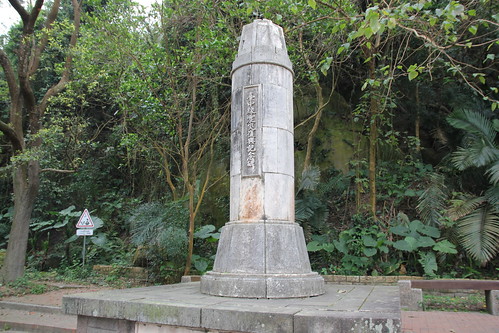
IMG_1208
The strange, bullet shaped monument to the 1935 earthquake at Tai-an station.

FocusTaiwan reports that electricity rates are going to receive the largest cut ever: 9.5%.
It was decided at the meeting that electricity rates will be cut by 9.56 percent, the biggest cut in the country's history, with every kilowatt hour cut to NT$2.5488 from NT$2.8181 on average.

Shen noted that the rate reduction mainly reflects a marked drop in international fuel prices.

Electricity rates after the cut will be even lower than the NT$2.6001 per kWh in 2011, one year before double hikes of fuel and electricity rates that pushed up commodity prices and invited complaints from the general public.
The awesome Kharis Templeman, always policy-oriented, immediately pointed out that this will create demand for nukes, which Taipower loves, since cheaper electricity will drive up demand. Taiwan needs a new energy policy, he observed. I should add that by driving up demand, lower prices will also drive down demand for conservation and renewables, which Taipower hates. It will also create profits for large KMT-connected firms in energy-intensive industries like steel and aluminum whose bottom line rests heavily on electricity prices.

But to my mind this move is political. It's the biggest cut ever, and it comes right before Tsai Ing-wen assumes power. This means that at some point the DPP Administration will have to raise electricity prices, having the effects noted in the third paragraph there -- creating public discontent with the government. That was one of the factors which drove Ma's drop-off between 2008 and 2012.

Note also that Taipower has large debt problems. Not eight months ago the China Post reported:
Taiwan Power Company (Taipower, 台灣電力公司) said yesterday that if the scheduled price hike does not occur in October, the company will lose an additional NT$13.7 billion, totaling a NT$70 billion loss for the year, said Taipower spokesman Roger Lee (李鴻洲),.

If the price hike is not implemented in October, Taipower will accumulate a total deficit of NT$263.2 billion, which is more than two thirds of its NT$330 billion equity, according to Taipower.

In an effort to rationalize electricity prices, the government rolled out a three-phase price hike plan in 2012. The second-phase price hike was set to start in October in 2012, but was then postponed and scheduled to resume in October, 2013. Given lower-than-expected first quarter GDP growth, some have suggested the price hike may be postponed.

.....

Taipower incurred a loss of NT$62.1 billion in 2012, and accumulated a total loss of 193.6 billion. Taipower incurred a loss of NT$20.3 billion from January to April, and has accumulated a total deficit of NT$213.9 billion.
Nevertheless, when October came, the government actually cut prices. Anyone think all those massive debts have been cleared up? Eventually, even if fuel prices stay low, the DPP Administration may feel the pressure to raise electricity prices to service that debt. Certainly, if it does not, it may open itself to accusations of mismanagement... which is, I submit, the whole purpose of this price lowering charade. This suggests that the first thing the DPP Administration should do when it comes to power is reverse this decision so that the impact isn't felt so strongly in subsequent elections, and start getting money into Taipower to put in all the renewable systems that Taiwan needs.

Ketagalan Media is constantly adding new writers. Today another sharp pen premiered: Calin Brown, on racism in Taiwan. The nice thing about this was that it focused not on the experiences of westerners, but on the Han-Aborigine relationship.
Chinese expansion made aborigines subject to heavy-handed, sometimes brutal, assimilation practices. In the 1940s, the Chinese Nationalist Party took away centuries-old aboriginal ancestral lands – the aborigine communities’ main source of income. Now, they’re still more likely to be unemployed, more likely to hold lower-paid or riskier jobs, and less likely to graduate from college. According to the Council of Aboriginal Affairs at the Executive Yuan, the average wage of aboriginal workers in 2014 was 75 percent of the average wage earned by a Han-Chinese counterpart.
It reminded me of Martin William's classic 1999 article on the Pingquanhui, a KKK-like organization of Han to suppress and expel aborigines. Do not miss that article. It is hosted on the useful First Nations website. Vice.com hosts a nice piece on Taiwan's changing relationship with its aborigines.
President-elect Tsai Ing-wen, the first woman to serve in the post, has already vowed to apologize for the past suffering of Taiwan's natives, and to press for reforms in policies towards the island's roughly 500,000 indigenous people.

"Why apologize? Well, looking back through history, Aborigines gradually lost their lands while under the rule of different governments and foreign powers," Tsai said last year. "Even today, they continue to be at a disadvantage in areas including economy, education and health."
Speaking of Tsai, the new administration formally announced that its premier will be finance and econ expert Lin Chuan.
Lin, born in Kaohsiung on Dec. 13, 1951, was chief of the Directorate-General of Budget, Accounting and Statistics of the Executive Yuan between 2000 and 2002, and minister of finance between late 2002 and early 2006 under then-president Chen Shui-bian (陳水扁). He has no party affiliation.

Lin is now the chief executive officer of the New Frontier Foundation, a think tank chaired by Tsai. He played a major role in her presidential campaign.

Although Lin worked exclusively on financial matters when in government, Tsai said: “I promise everyone that Lin Chuan’s Cabinet will not be one focused on economics and finance,” but one of reform, and one that is good at communicating and getting things done.
This is a neat signal to local and foreign markets, and also to China, since Lin is hardly a firebrand on independence. But the Tsai Administration, at least based on the media speculation, is recycling lots of Chen Administration people (on the other hand, who else is there?), as the Taiwan Law Blog opined the other day (if you're not following him on the blog and twitter, you should be). Hey, don't miss his discussion of Mongoia and the ROC Constitution.

The Hong Kong Economic Journal has a discussion of the fantasy proposal of a rail link under the Taiwan Strait between Fujian and Hsinchu. It's a non-starter, but fun to think about, like Harry Harrison's classic SF novel of the tunnel under the Atlantic Ocean between the UK and its North American colonies. Some people regard it as a threat, but it's fanciful to imagine that the PRC could rush troops through it to take Taiwan.

Some new polls out this week. TISR, the staid establishment poll group, found that people are rejecting One China in all its forms:
Asked about their opinions on the statement that “one China” refers to the PRC, an overwhelming majority, or 81.6 percent, of respondents opposed the concept, with only 9.2 percent accepting the notion.

Even if “one China” refers to the ROC, 60 percent of those polled still disliked the idea that both sides belong to “one China,” but the percentage of people willing to embrace the notion rose to 28.8 percent.
The poll observes that the fake 1992 Consensus, invented in 2000 to cage a future non-KMT president, is not strongly supported:
About 38 percent of respondents believed Tsai should not acknowledge the “1992 consensus” under such a condition, while 33.4 percent urged the incoming president to do so, the poll showed. Nearly 29 percent declined to express their opinions.

.....

Respondents aged between 20 and 39 tended to aspire to see Tsai shrug off the “1992 consensus,” while those in the 40 to 59 age group generally believed she should welcome the consensus, the survey indicated.

The “1992 consensus” refers to a tacit understanding between the Chinese Nationalist Party (KMT) and the Chinese Communist Party (CCP) that both sides of the Taiwan Strait acknowledge there is “one China,” with each side having its own interpretation of what “China” means.

Former Mainland Affairs Council Chairman Su Chi (蘇起) has admitted that he made up the term in 2000.
Tsai's position of evading acknowledgement of the 1992 Consensus has strong support from the young. Several other polls show that support for kowtowing to China on this is under 35%. A UDN poll noted that over 70% identify as Taiwanese, and like a couple of other polls, found that a stubborn minority would declare independence even if it meant war.

Thus, Tsai can point to considerable domestic support for her position, and further, Beijing currently does not consider her to be a "radical". J Michael Cole today points out in SCMP that Beijing will likely not turn the screws on Tsai:
If we believed many of the article headlines that have appeared in international media since the January 16 election of Tsai Ing-wen of Taiwan’s Democratic Progressive Party, we would think the roof was about to come crashing down on the Taiwan Strait. Time and again, articles and editorials have warned that if Tsai refuses to recognise “one China” or the 1992 consensus, Beijing could – or should – punish Taiwan by, among other things, severing all official and unofficial contact. Such alarmism, however, doesn’t pass the reality check.
Indeed. The total failure of China to take any concrete action against Taiwan during the Chen Administration never seems to make the media and commentariat pause for thought in its predictions that the sky is imminently falling in the Taiwan Strait. I am sure that one day when China finally goes to war, this crowd will blithely pat each other on the back for being so right. And blame Taiwan, of course. The claim that "Taiwan provokes tension!" serves the PRC, not peace. It's the PRC that creates and determines the level of tension in the Taiwan Strait, which it uses to influence US policy and US commentators. Very successfully, I might add.

VISITING SCHOOLERS: The local media is in a tizzy as longtime US government Taiwan expert Richard Bush III, Denny Roy, and Bonnie Glaser are coming to Taiwan, allegedly to convey the US position on Taiwan and how it should behave to Tsai Ing-wen, who apparently is not aware of it, although it has been in the news since roughly 1990 or so. That is, they are supposed to be telling Tsai to be a good girl and not rock the boat, according to media reports, by announcing independence or behaving like the awful Chen Shui-bian, who riled relations with China so much that Taiwanese investment in China reached around $200 billion, tens of thousands of Taiwanese went to work there, and the Hong Kong-Taipei air route was the busiest in the world. As you can see, China totally punished Taiwan by cutting off relations. O wait...

Anyway, hopefully they will convey sympathy and support, and not dial back the clock to 2005. With Chinese expansionism on the rise, the US should be seeking ways to bring Taiwan and Japan together under the US umbrella. Taiwan can be a powerful asset, if only they US has the imagination to use it. Hopefully also they will help Tsai find ways to delink ROC claims in the South China Sea from China's, and deprecate them, so that Taiwan can build much-neglected relationships with the nations bordering that region. Need US help there!

Let's also recall that the bit of theater may not even by aimed at Tsai, but at Beijing, to show it that the US is doing everything it can to keep the lid on the DPP. Though, as a someone noted in a conversation about this today, PRC analysts don't see Tsai as very willing to rock the boat.

MEDIA: Shout out to Reuters for its excellent background on Taiwan's historical relationship with China and its various rulers...
China considers self-ruled Taiwan a wayward province, to be brought under its control by force if necessary. Defeated Nationalist forces fled to Taiwan in 1949 after the Chinese civil war.

......

Japan ruled Taiwan as a colony for about five decades until the end of World War Two. China’s last dynasty, the Qing, had ceded Taiwan to Japan in 1895 after losing the first Sino-Japanese war.
How many times have you seen a reference to 1895? That's great. Now if could just get them to start writing that it is problematic whether the Qing were Chinese...

Once again, note the way the tone of the reporting has changed since Tsai won the election.

FOR AMUSEMENT PURPOSES ONLY: Ted Galen Carpenter continues to party like its 2005, with (yet) another recommendation that Taiwan be sold out to China, this time in the guise of Finlandization, complete with PRC bases on Taiwan, just to make China feel safe. Poor, put upon China! As is typical with Carpenter, he simply ignores the effect of such an agreement on neighboring states -- Japan is mentioned only twice and not at all in the context of Chinese expansionism, for example. And what about the islands in the South China Sea, and the Senkakus, claimed by the Republic of China? Rather like a dumb but enthusiastic golden retriever who always wants to play ball with you, Carpenter, bless his heart, never ceases to entertain.

PS: If you haven't bought A Pail of Oysters, Vern Sneider's searing novel of Taiwan in the early 1950s, read the reviews below and get it for Kindle or epub. It's a steal at $2.99.
_______________________
Don't miss the comments below! And check out my blog and its sidebars for events, links to previous posts and picture posts, and scores of links to other Taiwan blogs and forums!

Monday, May 05, 2014

Enjoy some links....

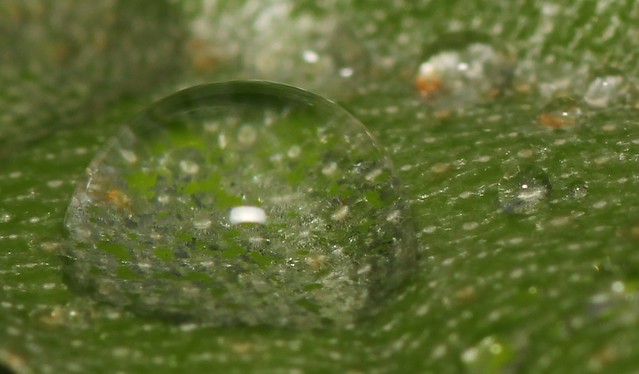
Water drops on a leaf.

Too busy, too tired to blog today....
_________________
Daily Links:
  • Taiwan is growing immigration destination for Hong Kongers (first segment in this video)
  • Irony is dead: President's Ma sisters show up at New May Fourth rally with Chang An-lo, the White Wolf, longtime gangster, at a rally to, among other things, "support" the police and rule of law. The government announced that it is charging one of the underlings for the illegal assembly of gangsters led by Chang An-lo to attack the students a few weeks ago. It has to punish someone from its own side  in order to jail the students, and they lack the stones to punish the White Wolf. 
  • DPP's Lin up on Hu in Taichung by 18 points in early Apple poll for mayor election.
  • The US-China Economic and Security Review Commission Report on Taiwan-China Relations, April 29, 2014
  • Photo-Essay on the Sunflower Movement from American student of Taiwanese descent who was "present at the creation." Good pics, astute discussion. 
  • Taiwan to sue short seller Glaucus Research
  • Jens Kastner: Taiwan as a western Pacific Cargo hub?
  • Taiwan's Clam Heartland
  • Bluesplainin'
  • The transformation of Taiwan's Sunflower Movement. Laskai, in The Diplomat
  • Cool: Strava bike riding heat map for Taiwan
  • More on the purblind stupidity of building Nuke 4:
    The Fourth Nuclear Power Plant is actually the last of its kind in the world, and its designer, General Electric (GE) Co, is unlikely to sell this kind of nuclear unit again. Since the basic design of the Taiwanese unit is similar to that of the Japanese Fukushima Dai-ichi plant, nobody dares purchase such a unit. Today, the GE’s two existing units of this kind are in Japan and are the only such units in the world. They are functioning well so far. When a massive earthquake hit Japan on March 11, 2011, authorities stopped the operations of the two units temporarily, for safety checks and quickly resumed the operations when no damage was reported.

    However, the original GE design of the two units was altered by Hitachi, Toshiba Corp and other Japanese companies, and even GE is unaware of all the changes. That being so, the Fourth Nuclear Power Plant is a guinea pig with no framework to follow
_______________________
Don't miss the comments below! And check out my blog and its sidebars for events, links to previous posts and picture posts, and scores of links to other Taiwan blogs and forums!
Wednesday, June 26, 2013

Taiwan and Renewables at JapanFocus

JapanFocus has an excellent piece on Taiwan's energy situation in int'l comparison.... and some good points about the silliness of objections to renewables:
To illustrate our proposition, let us suppose that the Taiwan government said today that the entire nuclear power fleet would be phased out over five years, and would be replaced by a series of concentrated solar power (CSP) plants, rooftop solar PV, and wind power. The scare stories are that this would cover Taiwan in photovoltaic cells and wind turbines; that it would be prohibitively expensive; and that it would be unreliable since power could be generated only when the sun shines or the wind blows. All these claims are false. The reality is that just a few mirror farms using molten salt technology as heat sink would be needed, taking advantage of the fact that China is now committed to CSP and will be driving down the costs. (See our article on CSP (co-authored with Ching-Yan Wu) at Japan Focus here) The land area needed in Taiwan would be no more than 62.5 square km (a square of sides less than 8 km) – which is as nothing when compared with Taiwan’s land area of 32,260 km2, and comparable to the land currently devoted to Taiwan’s advanced science and technology parks. The Hsinchu park totals 650 hectares; the Central Taiwan park 1400 hectares; the southern Taiwan park 1608 hectares – totalling 3900 ha or 39 km2. CSP plants generating half the entire nuclear output would occupy an area only marginally larger than this – and generate power 24/7 in a way that is infinitely more reliable and safer than the current nuclear facilities. And – this is the central point – this would catapult Taiwan into a world-leading position as supplier of CSP key technologies and equipment while creating domestic job opportunities as well. Such a strategy would also facilitate Taiwan’s urgent need for industrial transformation from a lower to higher value-added innovator. 
The world needs to get down to zero carbon within the next two decades, especially major polluters like the US, China, and Taiwan, if we're to have any hope of containing the coming climate disaster.
_______________________
Don't miss the comments below! And check out my blog and its sidebars for events, links to previous posts and picture posts, and scores of links to other Taiwan blogs and forums!

Wednesday, January 02, 2013

Taiwan: Renewable Energy Reserves

I saw this piece on how Scotland and Taiwan are working on a wave power system for the Beautiful Island and was reminded of Chen et al's Assessment of renewable energy reserves in Taiwan (2010)... the authors write:
According to the estimation of this paper, the reserve of wind energy, up to 29.9 kWh/d/p (i.e., kWh per day per person), is the largest one among seven kinds of renewable energies in Taiwan, followed by 24.27 kWh/d/p of solar energy, 4.55 kWh/d/p of biomass, 4.58 kWh/d/p of ocean energy, 0.67 kWh/d/p of geothermal energy and 16.79 kWh/d/p of hydropower. If regarding biomass as a primary energy, and assuming 40% being the average efficiency to convert primary energy into electricity, the total power of the seven kinds of renewable energy reserves is about 78.03 kWh/d/p, which is equal to 2.75 times of 28.35 kWh/d/p of national power generation in 2008. If the reserves of 54.93 kWh/d/p estimated from other four kinds of renewable energies that have not technically matured yet are also taken into account, it will result that the reserves of renewable energy in Taiwan can be quite abundant.
Our nuclear and coal plants could easily be shut down. The article breaks out each form of power and discusses potential locations. Quite informative.
___________________
Daily Links:
_______________________
Don't miss the comments below! And check out my blog and its sidebars for events, links to previous posts and picture posts, and scores of links to other Taiwan blogs and forums! Delenda est, baby.

Friday, July 22, 2011

DPP Nuclear Power Policy Paper

Spent this week in Dasi. The town still has many buildings from the 1920s and 30s lying around; here is the facade from one. The stylized lions are really great.

Here is a short policy paper the DPP sent around outlining their Nuke-free Homeland Policy. Hope they realize the coal and oil plants will also all have to go over the next decade or so as well.

++++++++++++

2025 Nuclear Free Homeland Initiative
Democratic Progressive Party of Taiwan
Policy Paper 2011

What is the "2025 Nuclear-Free Homeland Initiative"?
The "2025 Nuclear-Free Homeland Initiative" aims to decommission the First, Second and Third Nuclear Power Plant in Taiwan and to prevent the commercial operation of the Fourth Nuclear Power Plant. Taiwan will be able to reach its goal of obviating the need for nuclear energy by using other alternative energy sources, improving the power generation efficiency, energy conservation, industrial restructuring, and the liberalization of the electricity industry.

Why 2025?
It’s difficult to give up nuclear energy immediately since it requires the consensus of the whole society. 2025 is the deadline for decommissioning the Third Nuclear Power Plant, but Taiwan has to strive to change the power structure so as to stop using nuclear power by 2025.

How could Taiwan replace nuclear power?
(A) Increase the proportion of renewable energy: the DPP’s initiative calls for increasing renewable energy by about 6.5% of total electricity generation by 2025.
(B) Improve the efficiency of thermal power: In addition to increasing power generation efficiency, invest in thermal power plants in order to reduce the amount of carbon emissions.
(C) Construction of natural gas power plants as priority because natural gas is a cleaner energy, and future power plants should give priority to using natural gas.

What are other methods to reduce power consumption in the long-term?
(A) Energy Conservation: the Government can encourage people to use energy-saving products.
(B) Adjust industrial structure: instead of just focusing on economic growth, we should encourage green policies among energy-intensive industries.
(C) Liberalization of the electricity industry: the government should liberalize the electricity market, which not only alters the issue of Tai-Power’s monopoly, but it also encourages the development of the renewable energy industry

Why should Taiwan completely give up using nuclear power?
Of all the world's 564 nuclear power plants in operation, six of them have experienced accidents, and the probability of more accidents is approximately more than 1%. Japan and Taiwan are both in earthquake-prone areas. For this reason, what happened in Fukushima may also occur in Taiwan. If a severe damage happens in one of the three nuclear power plants near Taipei, tens of millions of people will have to be evacuated, which is a plan that cannot be implemented. Also, it may result in the paralysis of state capital. The cost of shutting down the government and rebuilding the damaged area and the risk of trade and economic loss is too high a price to pay for Taiwan.

_______________________
Don't miss the comments below! And check out my blog and its sidebars for events, links to previous posts and picture posts, and scores of links to other Taiwan blogs and forums! Delenda est, baby.

Monday, April 19, 2010

Carbon Emissions Contextualization

EPA Minister Shen promoted a new campaign to get locals to reduce their carbon emissions (Liberty Times via Taiwan Today):
Organized by the nongovernmental Taiwan Institute for Sustainable Energy, the event captured the attentions of commuters with a giant balloon display.

“Our balloon represents monthly emissions produced by one person in Taiwan,” a TISE staffer said. “The population of Taiwan generates enough emissions to fill 270 million such inflatables, which strung together could cover the distance between the earth and the moon four times.”

The TISE said Taiwan’s population is responsible for per capita emissions 2.76 times the world average, which is about 12 metric tons a year. “If a balloon were filled with this amount, it would be 10 meters in diameter, or about three-floors high,” the staffer said.

While acknowledging that people need to cut their own emissions, TISE Chairman Eugene Chien said industry must play a greater role in effecting the country’s low-carbon transformation.

Chien said the corporate sector produced almost half of Taiwan’s total emissions in 2007. “The government must place stricter regulations on high energy-consuming industries and help them transform.”

The chairman believes this measure is necessary if the Cabinet-level EPA’s goal of slashing emissions by 210 million metric tons is to be achieved by 2020.
A friend, Tammy Turner, notes (emphasis mine):
With reference to emissions targets and climate change, according to 綠盟能源與氣候變遷小組 (Energy and Climate Change working group of the Environmental Protection Union - Taiwan), there is a very big gap between what the government is doing and saying. Here's a quick translation of their Facebook post on the topic (original Chinese below):

"The enemy at the gate to a low-carbon future (in Taiwan): According to calculations, the total CO2 emissions derived from the development projects that have already been passed by the EIA commission and will go online within the next 5 years will amount to 36 million tons. Then add to this the three projects that are currently under EIA review,the Kuoguang Petrochemical Plant, fifth-stage expansion of Formosa Plastics Sixth Naptha Cracker Plant, and the Changhwa Coal-fired Power Plant, the total emissions for these projects will reach 31.34 million tons. Once these projects are passed, even if every person in Taiwan were to stop using electricity and stop driving it would be impossible to offset the increased emissions from these projects. And although the current government administration (in Taiwan) has announced emissions reduction targets of bringing emissions back down to 2000 levels by the year 2025, a gap of 100 million tons currently exists."
台灣低碳道路的大敵當前。根據統計,已經經由環境影響評
估審查通過,將在未來五年內開始營運的開發案總計溫室氣體排放量已達近3600萬公噸。而目前於審議中的國光石化廠、台塑六輕五期、以及彰化火力發電廠,三者的溫室氣體總排放量亦已達3134萬公噸。雖然開發案一但均通過,既使全台灣民眾均不用電、不開車也無法抵銷這些開發案的增量。而目前的政府喊出的減量目標,2025年回歸到2000年的排放量,則有搞達一億噸的落差。

Is the government serious? It almost looks like they are hoping they can offset the massive emissions from Taiwan's coal plants -- the one in Taichung is the world leader and the one in Mailiao is number 5, with the one coming online in Changhua number 4 -- with reductions in household emissions. Good luck with that.
_______________________
Don't miss the comments below! And check out my blog and its sidebars for events, links to previous posts and picture posts, and scores of links to other Taiwan blogs and forums!

Monday, May 19, 2008

Japan Focus on Indonesia, China, Japan, and LNG markets

Japan Focus has a couple of good articles this week. For WWII buffs, Herbert Bix has a great article on Hirohito's role in WWII. But of interest for Taiwan is an article on natural gas exports from Indonesia to Japan and China. The article focuses on Japan's complex relations with Indonesia in acquiring resources and secondarily, on its weakening position with respect to resource acquisition vis-a-vis China...

As Japanese rules permit individual utilities and natural gas distribution firms to sign LNG supply contracts with overseas suppliers, these firms exert a strong influence on the LNG market. However, these LNG procuring companies face increasing competition for resources. Whilst in 1996 Japan imported 62% of available world supplies, that proportion had fallen to 41% in 2005 and is under continuing assault as other countries respond to the attractiveness of LNG. [6] In particular, China’s imports of LNG, which began in 2006, are expected to increase rapidly. Although China has two LNG receiving terminals at present, it has plans to build as many as seven LNG terminals in six provinces and municipalities. This scenario poses such a strategic security and economic risk that Japan’s Ministry of Economy, Trade and Industry cautioned in May 2006 that: “Japan's bargaining power (in the international gas market) may be weakened.” [7] Facing the imperative to secure as much LNG as possible for the longest term possible, the JIEPA negotiations opened in 2005.

...and....

Like almost all major Indonesian corporations, Sinar Mas is Chinese-Indonesian owned and has substantial holdings in mainland China. Particularly since a 1974 change in the foreign investment law required joint ventures, it has usually been the policy of Japanese investors to partner with local ethnic Chinese businesses in Indonesia. It has been long pondered whether the dominance of the Chinese Diaspora in most Southeast Asian economies would eventually give China an advantage over Japan in terms of economic influence in the region. The deal for the Tangguh gas seems to indicate that this might be becoming a reality.

It seems intuitively obvious that Taiwan's position with respect to resource acquisition and Chinese competition is weaker than Japan's. Time to heavily invest in wind and other renewables....

Friday, September 28, 2007

Taiwan to make massive wind power investments

Great news for the environment...Taiwan plans to spend $3 billion on wind power installation over the next few years.

Offshore turbine capacity may total 360 megawatts by 2010, according to a report from the bureau, distributed at an industry conference yesterday. That may eventually rise to 1,200 megawatts, Wang said, without giving a time frame.

Wind farms, both those built on land and in the sea, may account for about 5 percent of Taiwan's total installed capacity by 2010, he said. That compares with 0.4 percent as of July, according to Taiwan Power's Web site.

This month the government started accepting applications from private companies for building the island's first offshore wind farm, citing difficulties in finding onshore sites. Permission for a total of 300 megawatts will be granted within three years.

The government is promoting wind power, because ``we have plentiful wind resources,'' Wang said. The island's turbines are productive for as much as 35 percent of the time, compared with 20 percent in Germany, he said.

Teco, Formosa Plastics

Waters along the island's western coast have ``suitable'' sites for offshore wind farms, Wang said. Taiwan also has companies that produce components for turbines, including Formosa Heavy Industries Corp. and Teco Electric & Machinery Co., he said.

Teco, based in Taipei, makes household appliances. Formosa Heavy, also in Taipei, is a unit of Formosa Plastics Group.

Wind power of 300 megawatts can replace the equivalent of 250,000 kiloliters (1.57 million barrels) of oil and cut emissions of more than 620,000 metric tons of greenhouse gases a year, according to the bureau. Taiwan accounted for 1 percent of the world's carbon dioxide emissions in 2004.

Another reason for the government to push for wind power is to improve ``energy security,'' Wang said.

Taiwan Power, the state-run utility that produces about 75 percent of the island's electricity and monopolizes transmission in Taiwan, suspended a plan to build a coal-fired station in June after a government panel recommended dropping the project because concerns the plant will boost carbon dioxide emissions.

Without new coal plants the island may see its back-up capacity slip to almost zero by 2015, Tu Yueh-yuan, Taiwan Power's chief engineer, said in April.


There's been some complaints about the offshore wind program in the environmental community, because planning has been haphazard and hasn't take into account its impact on local marine ecologies. But any way you slice it, this needs to be done, or we are all going to fry.

Friday, July 20, 2007

Venezuela and Taiwan Trouble

The international media has been reporting on the emerging trouble between Taiwan and Venezuela over oil and China ties. For example:

Taiwan's CPC has a 7 per cent stake each in two sites, Paria East Block and Paria West Block, which are vital to Taiwan's energy needs.

CPC won the right to explore Paria East Block in 2003 where test drilling for oil continues. Conoco Philipps of the US owns majority state in Paria East Block and CPC owns 7.5 per cent stake.

CPC was allowed to drill for oil in Paria West Block in 1998 which has just begun to produce oil. Conoco Philipps owns a majority stake in it, while CPC has a 10 per cent stake.

Besides Paria East and West blocks, Conoco Philipps also has stake in other oil fields in Venezuela.

Taiwan imports 99.7 per cent of all the oil it consumes. The crude comes from long-term oil suppliers as well as oil from CPC's overseas oil fields.

CPC imports 220 million barrels of oil each year, averaging 602,000 barrels per day.

Venezuela, the world's fifth-largest oil exporting nation, is only one of the countries where CPC is drilling for oil. Others include Chad, Ecuador, Indonesia and Australia.

Taiwan press said CPC's talks to defend its oil fields in Venezuela will be difficult because Taiwan does not have diplomatic ties with Venezuela and President Hugo Chavez is determined to nationalize all oil companies and oil fields to assert greater control over his country's economy.


Taiwan's problems date back to China's move into Latin America as the Bush Administration obsessively pursues its defeats in Iraq and Afghanistan. In the future, if China takes Taiwan, the defeat in Iraq will be widely identified as the turning point.

This issue has been building for some time. In 2004 and 2005 Chavez and China exchanged visits. After the 2005 visit, the Chinese Foreign Ministry said that:

On the same day, China and Venezuela issued the joint press communiqué. The communiqué indicated: both sides are pleased to see that on President Chavez's visit to China in 2004, Venezuela declared its decision to recognize China's complete market economy status; in order to create long-term stable and equitable trade environment, both sides commit to further develop and strengthen bilateral economic cooperation; Venezuela reaffirms its adherence to one-China position, opposes "Taiwan Independence", and supports China to enact "Anti-Secession Law" and realize national unity through the policy of "peaceful reunification and one country, two systems".

Oil industry publications are pointing out that China is set to replace the US as Venezuela's biggest oil buyer in a few years. However, some analysts are skeptical, observing that Venezuelan production is on the decline.

An unattributed China Times report on the Taiwan-Venezuela situation has been widely circulated in the world media. Here AP says:

The report on Taiwanese diplomats appeared in the electronic edition of the mass circulation China Times.

The report, which was unattributed, said that Venezuela would not renew visas for Taiwanese diplomats in the country, forcing them to leave the country.

Foreign Ministry spokesman David Wang did not comment directly on the China Times story, but acknowledged that Venezuelan President Hugo Chavez was making it difficult for Taiwan to operate in the South American country.

"As soon as Hugo Chavez came to power, Taiwan has been facing a new, unfriendly environment in Venezuela," he said.

Wang said that the visa of one of Taiwan's five diplomats in Venezuela had already expired and it was not clear if it would be renewed.

The pressure on the Taiwanese diplomats comes amid rapidly improving relations between Venezuela and China.

In March the two countries created a US$6 billion (4.5 billion) fund to boost energy cooperation and finance joint development projects, and Li Changchun, a top-ranking member of China's ruling Communist Party visited Caracas.

Meanwhile, CPC said the Venezuelan government was pressing it to sell back the 7.5 percent shares it holds in two Venezuelan oil fields.

Taiwan News has a similar report:

It would be an "over-exaggerated claim" to say Taiwan is ready to shut down its trade office in Venezuela in the near future, said the Ministry of Foreign Affairs yesterday while admitting that Caracas has said it will not renew Taiwanese officials' diplomatic visas once they expire.

MOFA spokesman David Wang also said that since the end of March, Venezuela has canceled the 90-day visa waiver option for Taiwanese passport holders. However, the ministry is still investigating whether the recently tightened visa policy was a general rule for all foreigners or if it was targeted against Taiwan.

'A dark cloud'

"We still need to get to the bottom of the sudden attitude change by the Venezuelan government. There has been a dark cloud hovering over Taiwan-Venezuela relations since Hugo Chavez came to power," Wang said.


The problems between Venezuela and Taiwan have been building for quite a while, according to all serious commentators. Fortunately, our favorite anti-Taiwan blogger, Roland Soong over at ESWN, supplies some comic relief:

Ah, no, that was not what was being said. The break was dated back to the inauguration of Nicaragua president Daniel Ortega in January 2007. At the time, Venezuelan president Hugo Chavez arrived late and hurried over to the venue. As he walked through, Taiwan president Chen Shui-bian rushed up to shake his hand.

According to reports, Chavez had no idea who this person was but he was polite to reciprocate. The international media (especially the Taiwan media) published this handshake as if this was a big deal and thereby mainland China to complain. Chavez was very displeased and all those resulting actions are now taking place. This photograph may be good for internal political consumption in Taiwan to show President Chen working hard on foreign diplomacy, but it was bad in terms of practical diplomatic relationsihp. It can be argued whether the handshake created the hostile environment now. During the ongoing problems about visa extension, the Venezuelan government refused to provide any formal documentation about their intent. When the China Times reporter went to inquire, the official response was: "What documentation? We don't even recognize this government!"

Yes, you read that correctly -- Taiwan-Venezuela trouble has nothing to do with the geopolitics of oil, Hugo Chavez' politics, and the faltering US presence in Latin America. It's all Chen Shui-bian's fault. Up next: Roland's explanation of how East Asian typhoons are caused by Chen Shui-bian's educational policies.