Showing posts with label TIFA. Show all posts

Tuesday, October 11, 2016

Nelson Report on TIFA

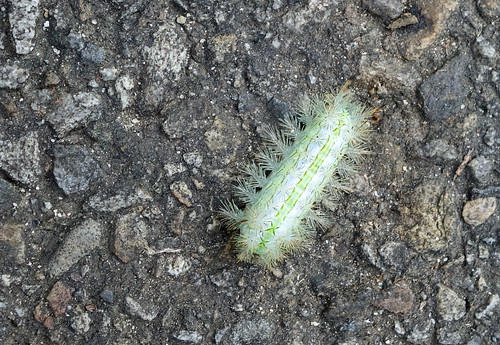
Cucumber-like caterpillar

Below is from the Nelson Report:

+++++++++++++

United States and Taiwan Hold Dialogue on Trade and Investment Priorities

Washington, D.C. - U.S. and Taiwan trade authorities concluded the tenth Trade and Investment Framework Agreement (TIFA) Council meeting under the auspices of the American Institute in Taiwan (AIT) and the Taipei Economic and Cultural Representative Office in the United States (TECRO). Ambassador Robert Holleyman, Deputy United States Trade Representative, and Wang Mei-hua, Taiwan's Vice Minister of Economic Affairs, co-led the discussions to enhance the longstanding trade and investment relationship between the United States and Taiwan. Other participants and contributors included AIT and the U.S. Departments of State, Agriculture, Commerce and the Copyright Office.

The TIFA is the key forum for trade dialogue between the United States and Taiwan authorities and covers the broad range of trade and investment issues important to U.S. and Taiwan stakeholders. The U.S. authorities welcomed the concrete steps taken by Taiwan after the conclusion of the 2015 TIFA Council meeting to follow through on important commitments related to intellectual property (IP) protection and enforcement. Taiwan authorities also highlighted progress in addressing technical barriers to trade and fostering transparency in matters related to trade and investment.

At the meeting, the U.S. authorities pressed Taiwan for expeditious resolution of agricultural trade issues, including removal of longstanding and unwarranted barriers to U.S. beef and pork, which is necessary for any deepening of our trade relationship. In the area of IP protection and enforcement, the TIFA talks took stock of progress on pharmaceutical IP protection and committed to strengthen engagement on Taiwan's intellectual property rights legislation, promoting the use of legitimate educational materials, and on enforcement cooperation.

Both sides welcomed the strong exchanges already conducted between the two patent offices and look forward to deepening this cooperation for the benefit of U.S. and Taiwan rights holders and patent applicants. The two sides also pledged to deepen dialogue to streamline time-to-market of medical devices and to improve transparency and procedural fairness in trade and investment matters. The Taiwan authorities provided updates on its regional and multilateral initiatives and highlighted its close cooperation with the United States on various initiatives in the WTO.

Background

The United States and Taiwan have a long-standing and vibrant trade relationship. Taiwan is our 9th largest goods trading partner and a top-10 destination for U.S. agricultural and food exports. U.S. goods and services trade with Taiwan totaled an estimated $86.7 billion in 2015. The TIFA, signed in 1994 under the auspices of AIT and TECRO, provides the principal mechanism for trade dialogue between the United States and Taiwan authorities to expand trade and investment links and deepen cooperation.

MIKE FONTE [DPP'S WASHINGTON DIRECTOR] COMMENTS:

Chris, thanks for the opportunity to discuss:

As noted by USTR, much progress to report on IPR protection and enforcement, addressing technical barriers to trade and fostering transparency in matters related to trade and investment etc. All good.

Ag trade issues remain a stubborn impediment at this point, particularly pork. The Tsai Administration has put together a food safety committee to discuss all food safety issues, issues which have been a significant problem with imports from China, Taiwan products, and the ractopamine problem. US officials have rolled their eyes a bit over this committee's announcement,
but the reality that ractopamine has been publicly touted, by many in Taiwan, as "poison" is one tough issue.

I believe this committee reflects President Tsai's overall governance approach - deal with problems a step at a time striving to be as transparent and communicative as possible. Bring the public along to a consensus position and then move.

The pubic in Taiwan is now feeling its oats on a variety of issues. A slow process, to be sure, but that's democracy. As our friend Winston Churchill noted, "Worst government in the world, except for all the others."

At the recent US-Taiwan Defense Conference, one US participant jokingly said, as we were discussing the decision making process in Taiwan, "Before we used to just pick up the phone and call Hau Pei-tsun and he'd get things done." Yeah, old Hau got things done alright, but with an iron fist. No more, thank Buddha.
_______________________
Don't miss the comments below! And check out my blog and its sidebars for events, links to previous posts and picture posts, and scores of links to other Taiwan blogs and forums!

Tuesday, April 01, 2014

Irritant Time with the US

For pete's sake don't miss this excellent piece by William Pesek: Is China Losing Taiwan? on the protests. Except for its strange title -- China never had Taiwan -- it's awesome.

Chang An-le the longtime gangster who started a pro-annexation political party here showed up in front of the LY to harangue the students today. A comical moment occurred when he accused them, basically, of not being good enough to be Chinese. I'm sure that was a really effective comment. He left at 5 but promised to come back. Rumors flying around that the legislature will convene to pass the pact tomorrow.....

Recall that the Ma Administrations goal of putting Taiwan into China's orbit has two complementary parts. The first involves pushing the nation into Beijing's arms. The second involves distancing it from the US. Enter the irritants, issues used to keep relations with the US troubled. The ractobeef issue has risen from the grave, resurrected to once again vex US-Taiwan relations as the ractopork issue. FocusTaiwan reports:
Taiwan will insist on barring imports of U.S. pork containing the leanness-enhancing drug ractopamine, the Council of Agriculture (COA) said Tuesday.

The COA said that U.S. pork currently accounts for between 18 percent and 20 percent of the country's exports*, with the U.S. Department of Agriculture issuing certificates that particular batches do not contain ractopamine residue.

The official made the remarks as a U.S. report said that Washington is concerned about Taiwan's ban on beef offal and pork containing ractopamine and could pressure Taiwan to lift its ban on ractopamine-containing pork imports.

The official noted that hog raising is the highest-grossing aspect of Taiwan's agricultural sector, adding that Taiwan will continue to insist on no imports of pork containing traces of ractopamine, while its own hog industry will also not use the drug.
What a coincidence! Just as Taiwan is about to pass major trade treaty with China, it disturbs trade negotiations with the US over the ractopork issue.

Unlike beef, which isn't much produced in Taiwan, pork is a major product. Ma has wisely positioned this policy so it has a broad swathe of support. The whole issue with ractobeef was that under the international trade agreements, by letting in ractopamine-dosed beef, Taiwan had given up the right to let in anything else dosed with ractopamine. Since heavily subsidized US ractopork threatens Taiwan's pork producers -- no starry-eyed innocents themselves when it comes to dosing pigs with drugs -- the government objected to beef to protect the pork producers.

*I think they mean Taiwan pork imports
______________________________
Daily Links:
_______________________
Don't miss the comments below! And check out my blog and its sidebars for events, links to previous posts and picture posts, and scores of links to other Taiwan blogs and forums!

Thursday, March 08, 2012

Beef, Avian Flu: Vegetarianism, here I come

One wonders just what kind of pharmacopoeia went into creating this cornucopia of agricultural news this week. It's normal to add that you'd like a dose of whatever they are smoking, but I think I'll take a pass on that, thanks. It's obviously some kind of depressant....

I hardly know what to write, because this topic is like the poster child for the old saw that the more trivial the issue, the more bitter the fighting. Background first.....
The background is that the two governments signed a protocol in October 2009 lifting most of the remaining restrictions on U.S. beef products that Taiwan had put in place following the discovery of a case of mad cow disease in 2003. Just two months later, however, the Taiwan legislature – in which Ma’s Kuomintang controlled some three-quarters of the seats – enacted a law that reversed some of those very provisions. Despite resentment at what it regarded as Taiwan’s reneging on the protocol, the U.S. government by early 2011 was willing to start preparations to resume TIFA talks. Then another obstacle arose when Taiwan rejected some shipments of beef found to contain traces of the leanness-enhancing feed additive ractopamine. Though ractopamine, widely used by American ranchers, had long been a banned substance in Taiwan, inspectors had not previously tested for its presence. Random inspections, and the rejection of many shipments, have continued over the past year, and the uncertainty has caused some big buyers such as Costco to switch to other sources of supply.
As the TT noted in its review of a Wikileaks cable:
Taiwan did not allow US bone-in beef — a ban which had been in place since 2003 when the country outlawed all US beef imports shortly after the first case of mad cow disease was discovered — until a Ma administration protocol with the US in October 2009.

That protocol did not resolve the dispute after the legislature amended the Act Governing Food Sanitation (食品衛生管理法) to ban imports of beef offal and ground beef and the government began testing US beef for ractopamine in January, both hindering the resumption of bilateral talks under the Trade and Investment Framework Agreement, which had been suspended since 2007 because of the controversy.
Lessee... the beef issue is really two issues. First, it was Mad Cow disease. In 2003 the Chen Administration banned US beef imports over the discovery of a case of Mad Cow in the US. The restrictions were not lifted until 2009, and the legislature then reinstated them. Then in 2011 Taiwan began testing beef imports for ractopamine and the rest was misery....

It was actually only in 2006 the government banned ractopamine:
Following the decision, Taiwan, which prohibits the use of ractopamine, said that its ban, which was introduced in 2006, would remain in place.

“We have no plan to change our zero-tolerance policy against the use of ractopamine in meat products,” Minister Without Portfolio Yiin Chii-ming (尹啟銘) said by telephone.

President Ma Ying-jeou (馬英九) in March charged Yiin with the task of reopening negotiations with the US under the Trade and Investment Framework Agreement (TIFA) platform after the US unexpectedly put a hold on talks originally scheduled to resume in late January over the ractopamine issue.

The TIFA talks, which started in 1994, have been suspended since 2007, in response to Taiwan banning imports of US beef over fears of mad cow disease.
Beef might be a small thing in the overall US-Taiwan trade picture but for US producers Taiwan was an important market:
Taiwan purchased $128 million in beef products from the United States in 2008. In 2002 -- the last full year that the banned beef items were sold on the island -- they constituted about 13 percent of total U.S. beef imports.
The ractopamine ban was introduced in 2006 but no testing was done until years later. This means -- let's complete this circle -- that Taiwanese must have been eating ractopamine in US pork, for which it was introduced under the name Paylean in 2000, for years. Indeed...
After a 37 percent drop in 2007, U.S. pork (including variety meat) exports to Taiwan bounced back in 2008 with a 98 percent volume increase to 31,701 metric tons and a 115 percent rise in value to $52.9 million. The upward trend continued in 2009.
It did not reach US cattle until 2003, apparently after the Chen Administration ban went into effect (article on development of ractopamine). But US beef was entering the country in various guises between 2006 and 2011...

Ok, background done, now once again we should note that...

....the air is polluted, the veggies are coated with chemicals, the rivers are stinking open sewers, the pork is a testing ground for antibiotics, the roadways operate in Death Race 2000 mode, and the Taiwanese are as prone to eat junk food as any other people. But let the US want to bring in beef with traces of ractopamine....

The government this week pushed for a conditional lifting of the ban, triggering protests:
Sixteen civic groups took to the streets of Taipei yesterday to demand the resignation of Premier Sean Chen over the Cabinet’s decision to push for a conditional lifting of a ban on imports of US beef containing a controversial feed additive.
This led to the usual tussle between the KMT and the DPP. The latter is using the beef issue to bash the KMT. Ractopamine was banned under the DPP but no steps were taken to actually test for it (laws are made to be seen, not heard, in Taiwan). The danger for the pan-Greens should be obvious -- from the US perspective the KMT government has adopted the "reasonable" position and the DPP the "intransigent" position. A DPP legislator accused the KMT of making a political deal with the US on the issue in exchange for US support in the elections (but given the DPP position on this how could the US have dealt with that party? D'oh.) However, supporters of lifting the ban argue that it hurts Taiwan in its attempt to join the US-led TPP "free trade" initiative as well as in the talks on the Taiwan-US trade framework, TIFA, which, like fusion energy and a Cleveland Browns Super Bowl victory, is always just a few years away. Recall that the TIFA talks were suspended in 2007 and the US did blame the beef issue when it suspended them.

One of the keys to understanding the passionate silliness of the Taiwanese is identified in this TT article from the other day:
Throwing pieces of raw beef on signs with illustrations of President Ma Ying-jeou (馬英九) dressed as Uncle Sam, with the words: “I want you to eat US beef” written on them, the protesters said that the administration was neglecting the public’s health, while humiliating the nation and forfeiting its sovereignty.
Because Taiwan's sovereignty is always contested and always perceived as threatened, issues like this one that thrust themselves into that netherworld where the ROC virtual state meets the reality of global non-recognition are blown totally out of proportion. When it comes to sovereignty, the Taiwanese are like a cripple who pushes his wheelchair into a bar and then picks a fight with the biggest fellow present. There is also the underlying xenophobia, so non-obvious in everyday discourse and behavior, but always there lying under the surface, waiting to arise. The intersection of food, medicine, and The Other, who is tainted by his foreignness and cannot become One of Us is also explosive -- in this case, The Other is literally tainted with an uncertain drug. It's a shame that ractopamine-laden beef importers aren't visibly cruising nightclubs picking up Taiwanese girls, then every Taiwanese anti-foreigner button would be pressed. And this blogpost would be a lot more amusing too.

But enough of beef. The government will bull its way to getting acceptance of a conditional lifting of the ban, enough to satisfy appearances for the US. US beef will flow onto the island, consumers will eat it and this controversy will vanish like campaign promises on the day after the election.

The other interesting ag-related issue is the appearance of another round of avian flu on the island. There was an outbreak of avian flu in December in Changhua, which immediately led to claims that the outbreak had been covered up because of the upcoming election. I heard rumors of this in December but had no way to verify it. However, a group of activists claimed that the government had been covering up evidence of highly pathogenic avian flu for two years....
EAST disclosed two documents from 2010, dated March 1 and March 8, that the council’s Animal Health Research Institute sent to the Bureau of Animal and Plant Health Inspection and Quarantine. The documents showed that two technical group meetings held on Feb. 25 and March 5 that year had already received H5N2 Intravenous Pathogenicity Index [IVPI] lab results, which showed readings above 1.2 and 2.41, indicators that the strains were highly pathogenic.

Readings greater than 1.2 in an IVPI test on a six-week-old chicken indicate a highly pathogenic strain.

However, the council’s four reports to the OIE that year all said that the cases were “of a low pathogenic level,” EAST executive director Wu Hung (朱增宏) said, adding that the council should explain why it added “clinical high death rate” as a criteria for determining a virus strain’s severity.
According to the information supplied by the DPP, the Council on Agriculture had filed the report on the outbreak in Changhua on Jan 10, four days prior to the Jan 14 election. Prosecutors are looking into the issue even as we speak, and the director-general of the bureau of plant and animal health inspection and quarantine resigned on the 4th. Media reports (Focus Taiwan) say that a documentary filmmaker has been shooting film of bird flu on farms in central and southern Taiwan since 2006.

Vegetarianism sure is looking good.....
________________________
Daily Links:
_______________________
Don't miss the comments below! And check out my blog and its sidebars for events, links to previous posts and picture posts, and scores of links to other Taiwan blogs and forums! Delenda est, baby.
Saturday, February 18, 2012

Beef Bull

Don Shapiro of the American Chamber of Commerce writes at Brookings on The Beef Beef that is impairing progress in US-Taiwan relations, with background:
Although it considered itself well-versed on the beef issue, an American Chamber of Commerce in Taipei delegation that visited Washington last autumn was still surprised by the vehemence of the criticism of Taiwan it heard from American officials on the subject. One high-level official described Taiwan flatly as “an unreliable trading partner,” for example, while another said the disagreement over beef had “cast a pall” over the entire bilateral relationship. Beef had taken on a symbolic importance far out of proportion to its monetary value of less than 1 percent of U.S. exports to Taiwan.

The background is that the two governments signed a protocol in October 2009 lifting most of the remaining restrictions on U.S. beef products that Taiwan had put in place following the discovery of a case of mad cow disease in 2003. Just two months later, however, the Taiwan legislature – in which Ma’s Kuomintang controlled some three-quarters of the seats – enacted a law that reversed some of those very provisions. Despite resentment at what it regarded as Taiwan’s reneging on the protocol, the U.S. government by early 2011 was willing to start preparations to resume TIFA talks. Then another obstacle arose when Taiwan rejected some shipments of beef found to contain traces of the leanness-enhancing feed additive ractopamine. Though ractopamine, widely used by American ranchers, had long been a banned substance in Taiwan, inspectors had not previously tested for its presence. Random inspections, and the rejection of many shipments, have continued over the past year, and the uncertainty has caused some big buyers such as Costco to switch to other sources of supply.

Whenever questions were raised last year about finding a solution to the impasse, Taiwan officials responded that nothing could be done before this January’s elections, for fear of sparking protests from consumer and farming groups that could escalate into a campaign issue. Although no promises were made about what might happen after the election, this month has seen a flurry of public comments from government officials and scholars that appear to be preparing the groundwork for a change in policy. Inter-agency discussions are currently taking place among the Council of Agriculture, Department of Health, and Ministry of Economic Affairs.

The likely way forward would be to replace the current zero tolerance of ractopamine with a defined limit on the amount permitted. In fact, in 2007 Taiwan had notified the World Trade Organization (WTO) of its intention to set such a Maximum Residue Level (MRL), though it never followed through. But a major question mark would be whether Taiwan would propose – and the United States agree to – a compromise in which an MRL would be set for beef but not pork. Taiwan has no beef industry to speak of, but hog-raising is big business, and the pig farmers, who are politically well organized, are adamantly opposed to opening the door to competition from American pork.

Although the U.S. government and meat industry insist there is no scientific basis for a total ban on ractopamine, the Taiwan public may not be so easily persuaded, especially after several major food-safety scares in recent years. And the political delicacy of the whole issue was driven home two years ago when Su Chi, one of Ma’s most trusted lieutenants, was forced to resign as head of the National Security Council after his efforts to resolve the matter through the protocol with the U.S. were undercut by the legislature. It would therefore require a measure of political will and some skillful maneuvering to reach a solution, though acting four years before the next presidential election is perhaps the best time to risk taking a political hit.
The reason the public may not be so easily persuaded is that ractopamine is banned in 150 countries, including the EU. This suggests that there is no reason the US couldn't fall in line with the world and ban the stuff, thus improving the healthiness of its food products, opening up new markets, and removing a potential trade issue, but that would be too intelligent.

As Shapiro notes, the use of ractopamine also makes it easy for local pork producers to argue that US pork should be kept out of the market. This means that a proposed compromise, setting a defined limit on ractopamine exposure, may fail because pork producers would demand zero tolerance (not that local pork producers mind inundating locals with their untreated pig waste but god forbid we have trace amounts of ractopamine), meaning that the beef issue would simply be replayed over pork.

Fortunately the US has not held the beef issue against Taiwan in other areas. Arms, for example. Taiwan was nominated for the visa waiver program, but an extradition treaty has stalled since it would mean that Taiwan would have to hand over criminals residing in Taiwan with US citizenship -- who might also have Taiwan citizenship.

Shapiro lists some of the areas where the US and Taiwan could make progress, one of which is IP protection, where China once again rears its mercantilist head: apparently US business secrets are stolen by Chinese firms by poaching Taiwan employees of US firms in Taiwan.
__________________
Daily Links
_______________________
Don't miss the comments below! And check out my blog and its sidebars for events, links to previous posts and picture posts, and scores of links to other Taiwan blogs and forums! Delenda est, baby.

Thursday, July 08, 2010

Uncle Sam Demurs as the EU Advances =UPDATED=

As in Taiwan the legislature brawled over the pact, there were some interesting (non)-developments on FTAs and ECFA. First, upon hearing that ECFA had been signed, the United States eagerly rushed to support democracy, enhance its own trade interests, expand its influence in East Asia, and drive peaceful economic growth in the region by offering Taiwan a US-Taiwan FTA.

Nope, I lied. Uncle Sam doesn't need trade or economic growth or East Asian influence because the US economy is booming right now and our foreign policy has made us the envy of the world, while China is in rapid decline.

Oh wait, that's not right either. I'll try again.

Ok, what actually happened is nothing. David Shear, US State Department Official, speaking at a seminar in Washington, announced that the US thought that Taiwan had the right to enter into FTAs.
"Under WTO rules, any WTO member is free to negotiate trade agreements with other members as long as WTO standards are met, and we believe Taiwan should be able to do that," he said at a seminar in Washington, D.C. on relations across the Taiwan Strait.
This was the first time that US officials had expressed that thought, precisely, but I doubt anyone was much worried, since Taiwan already has FTAs with several countries.
Shear said, however, that "the United States has no plans to begin talks with Taiwan about an FTA at this time."

.....

Shear said the U.S. would reinforce bilateral trade and economic cooperation through the existing Taiwan-U.S. Trade and Investment Framework Agreement (TIFA).
FTAs sure are nice when other people do them, but let's not and say we did, offers The Greatest Nation on Earth. The US official once again announced that ECFA was A Good Thing (he could hardly do otherwise) but left this little tidbit at the end:
As to whether any ministerial-level U.S. officials are likely to visit Taiwan, Shear said the U.S. does not have any such plan at the moment. The issue should be considered in a larger framework guiding U.S.-China relations, he said.
In other words, whether US cabinet-level officials visit Taiwan is contigent on whether it pisses Beijing off. Pssst...maybe that's why you should do it, guys! It would be great if the next official said that such visits were part of a larger framework guiding US-China-Taiwan relations.

About the only good thing in all this is that when I was off searching to see when exactly it was the TIFA talks stalled I got this hit first, which almost made up for the fact that it turns out that TIFA has been dead in the water since 2007 over the beef fracas. Plans are to restart at the end of 2010. So congratulations Taiwan, ECFA changes nothing between the US and Taiwan.

Meanwhile, across the Atlantic, an ECIPE paper argued that the time had come for an EU-Taiwan FTA under the WTO framework:
This paper discusses the economics and geopolitics of EU Taiwan commercial relations and weighs the case for a free trade agreement (FTA) between them. There is a widespread belief that China will oppose an EU-Taiwan FTA. The recent cross-Straits rapprochement, recently crowned by a trade agreement, could provide a window for Taiwan to sign trade deals with other partners. An FTA with Taiwan would boost some of Europe’s most competitive sectors in ICT, automotives, pharmaceutical products, and telecommunications, financial, business, transport and environmental services. Taiwan needs to position itself as a production platform for global markets. Taiwan is member of the World Trade Organisation - legal obstacles to an EU Taiwan FTA are minimal. But China needs to be reassured that the agreement does not involve recognition of Taiwan’s formal statehood.
Love that last sentence. Poor China, always in need of reassurance.

An EU-Taiwan FTA would be great, always provided that it didn't claim that Taiwan was part of China. Done under the WTO framework it need not do that. But this is all pie in the sky at this point.

Today's light humor is provided by this Mainland Affairs Council (MAC) poll on ECFA, which found, not surprisingly, that the good people of Taiwan are swooning over the pact. I'll let Taiwan Today carry the ball:
The poll found that nearly 61 percent support the ECFA negotiation results. A resounding 79.3 percent endorsed the government’s handling of cross-strait affairs via the institutionalized negotiations. Only 15.9 percent disapproved of the government’s conduct.
What a success! The polls have swiveled round overnight!

Stop the presses! KNN was kind enough to publish the whole poll. Many of the questions are loaded (and others notable chiefly for their absence), but number 3 is a keeper:
The former DPP government allowed 17 items of Mainland products, including towels, bedding products, clothes, and shoes, to enter the Taiwan market, to the detriment of these local industries. In the latest ECFA negotiation, the current KMT government neither decreased the tariffs on these 17 items nor allowed any additional items from Taiwan’s disadvantaged industries to be imported to Taiwan. Do you think the current government has protected Taiwan’s disadvantaged industries?
No leading the respondent there! This was conducted by the China Credit Information Service, which has old connections to...well, never mind, you can figure that one out from the name.

UPDATE: It took me a while to find it, but while MAC claims 79% support for the SEF-ARATS mechanism, this March Global Views poll found....7.4%. While 65% said that ECFA should be signed under the WTO framework.
___________
Daily Links:
_______________________
Don't miss the comments below! And check out my blog and its sidebars for events, links to previous posts and picture posts, and scores of links to other Taiwan blogs and forums!