Showing posts with label India. Show all posts

Sunday, April 30, 2017

Madhav Nalapat on Taiwan issues....

AugCoast36
I don't have time to blog today, but an Indian academic, Prof. Madhav Nalapat, who recently visited Taiwan put his thoughts on the web....

The Taiwan Effect On Sinic Civilisation
https://blog.mdnalapat.com/the-taiwan-effect-on-sinic-civilisation-dab824309805
[Keynote address delivered by Prof. Madhav Nalapat at the Bangalore University Conference on “Taiwan in the 21st Century" on April 25th, 2008.]

Taiwan’s Centrality in Asian Geopolitics
https://blog.mdnalapat.com/taiwans-centrality-in-asian-geopolitics-583cdd2996c3
[This paper was presented at the “2014 International Conference on New Asian Dynamics and the Role of Taiwan” organised by the Taiwan Brain Trust at The Westin Taipei, Taipei on 6 December, 2014.]

Mindwar vs. Bodywar: The cases of India, Pakistan, China and Taiwan
https://blog.mdnalapat.com/mindwar-vs-bodywar-the-cases-of-india-pakistan-china-and-taiwan-ae8560e5bb3a
[An abridged version of this paper was presented at the "International Conference on Converting Confrontation into Cooperation: In Search of Working Peace across the Taiwan Strait", held at Ambassador Hotel, Taipei on December 9, 2003.]
_______________________
Don't miss the comments below! And check out my blog and its sidebars for events, links to previous posts and picture posts, and scores of links to other Taiwan blogs and forums!

Friday, January 08, 2016

Bu Dai Xi: Origins?

Politics_68
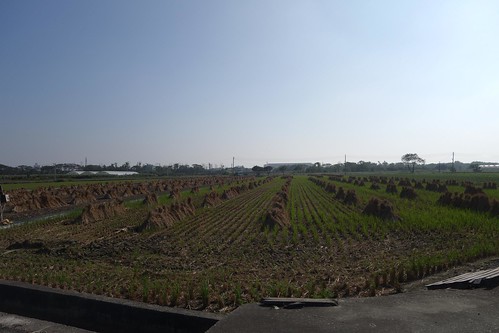
Haystacks in Chiayi

From "Puppets and Cultural Identity in Taiwan", Jean-Luc Penso, pp 169-178. In Objects, Heritage, and Cultural Identity, edited by Muyard, Frank, Chou Liang-kai, and Dreyer, Serge. Taiwan Historica, 2009:
The first use of puppets was for divinatory purposes but their use became more secular over the centuries. Puppets played an essential role in the creation of the most respected and secular Chinese opera, since the art of puppets actually initiated opera. Many facts corroborate this argument. For example, the actors' gestures and particularly, the way they walk are not natural, but copy a puppet's movements. Another example is to be found in the way actors call puppeteers "Master", while a puppeteer would not have to show this form of respect to an actor.

According to Jacques Pampaneau, a specialist in Chinese theater, the glove puppets called "po-te-hi" in Taiwanese or "budaixi" (布岱戲) in Mandarin are believed to have come from India by the maritime route (Pimpaneau 1977). The name for glove puppets in Sanskrit is "pu ta li", close to "po-te-hi" and "budaixi", but once again, nothing is certain regarding this possible influence.
_______________________
Don't miss the comments below! And check out my blog and its sidebars for events, links to previous posts and picture posts, and scores of links to other Taiwan blogs and forums!

Monday, April 14, 2014

Taiwan/India/Modi

Taiwan wants Modi in the election, according to the Economic Times, from whence this came.
_______________________
Don't miss the comments below! And check out my blog and its sidebars for events, links to previous posts and picture posts, and scores of links to other Taiwan blogs and forums!

Monday, July 15, 2013

Daily Links, Monday, July 13, 2013

In the aftermath of typhoon Soulik, the roads are covered with mud and debris. This is Miaoli 55, Pinglin Road, out of Jhuolan in Miaoli, one of the area's most enjoyable roads. Highly recommended.

Some Daily Links for you to enjoy.... links have become much harder since Google terminated Reader.
_______________________
Don't miss the comments below! And check out my blog and its sidebars for events, links to previous posts and picture posts, and scores of links to other Taiwan blogs and forums!

Monday, January 09, 2012

Foreign Policy Follies

Hello, Mr Caterpillar!

Well, I've been using Kindle for over a month now. Let me put it this way: if you want my Kindle, you will have to pry it from my cold, dead hands. The whole family has one -- so far only one problem: bathroom stays have lengthened considerably.....

Zbigniew Brzezinski writes in Foreign Policy, managing to concentrate an amazing variety of error and Beijing-flavored misunderstanding in just a small space:
Since 1972, the United States has formally accepted the mainland's "one China" formula while maintaining that neither side shall alter the status quo by force.1Beijing, however, reserves the right to use force, which allows Washington to justify its continued arms sales to Taiwan. In recent years, Taiwan and China have been improving their relationship.2 America's decline, however, would increase Taiwan's vulnerability, leaving decision-makers in Taipei more susceptible to direct Chinese pressure and the sheer attraction of an economically successful China. That, at the least, could speed up the timetable for cross-strait reunification, but on unequal terms favoring the mainland.3
1 - US policy is that Taiwan's status is undetermined. As the CRS writes:
The United States has its own position on Taiwan’s status. Not recognizing the PRC’s claim over Taiwan nor Taiwan as a sovereign state, U.S. policy has considered Taiwan’s status as unsettled.
In the 1972 Communique the US acknowledges but does not recognize China's claim to Taiwan. How could someone who once had a major influence over US policy be so ignorant of what that policy is? On the other hand, why am I not surprised?

2 - The CCP and the KMT, not China and Taiwan, have been improving their relationship, using Taiwan as a bargaining chip.

3 - Who on earth could imagine that China would ever annex Taiwan on terms unfavorable to itself? All forms of annexation are inherently favorable to China since it has no valid claim to Taiwan! Nor is "reunification" taking place, since Taiwan has never been part of any Chinese emperor's domain. It is sad that Brzenzski adopts the language and attitude of Beijing throughout this little paragraph.

Speaking of our expansionist counterparts from across the Strait, The Times of India reports that China is once again playing visa games with the Indian state of Arunachal Pradesh:
India has put "on hold" the visit of a 30-strong military delegation to China next week after Beijing refused to issue a visa to one member, a colonel-rank IAF officer who hails from Arunachal Pradesh.
This comes at a time of cooling tensions, too. China says Arunachal Pradesh is part of China because it contains many ethnic Tibetans, who are "Chinese" because China has annexed Tibet, so all Tibetans are "Chinese." It calls Arunachal Pradesh "South Tibet" and has done other things, such as attempting to block international loans for development in the region, to enforce its completely bogus claim.

The implications of this are scary. How many more years until China starts playing similar visa games with other areas on its radar, like Okinawa? It also shows how one acquisition, Tibet, has lead inexorably to a new claim.

LOVE THE FRAMING: Bloomberg Businessweek reports:
The Philippines protested a new “intrusion” by China in waters it claims to be Philippine territory, a move that threatens to revive tensions over areas of the South China Sea that may contain energy reserves.
LOL. The cause of tension isn't China's increasing aggressiveness, but protests of that aggressiveness.
_______________________
Don't miss the comments below! And check out my blog and its sidebars for events, links to previous posts and picture posts, and scores of links to other Taiwan blogs and forums! Delenda est, baby.
Wednesday, May 18, 2011

China Stuff

The China Reform Monitor passed along some interesting stories in this week's edition:
Russian state news agency RIA Novosti reports that the strengthening of Chinese competition in the global arms and military equipment market is the most serious threat facing the Russia’s military-industrial complex. “In the field of military-technical cooperation, Russia and China are focused on the same regional markets, large emerging countries keen to pursue a military-political line that is relatively independent of Western countries,” the report noted. On the other hand, however, “Chinese policy is giving rise to increasing fears among neighboring states in Southeast Asia, which provides Russian exporters with new opportunities.” 
The article noted that Myanmar had surprisingly chosen Russian fighters over Chinese jets, even though the junta and Beijing are reputed to be close. Meanwhile it noted that India and China are still confronting each other over the disputed Himal region:
In response to China’s rapid development of road and rail networks in Tibet, India will complete a network of military roads on its side of the border by 2013, India’s Border Roads Organization (BRO) Director, General S. Ravi Shankar said in comments carried by India’s Economic Times. About 63 percent of work has been completed on 27 roads in the northeastern Indian state of Arunachal Pradesh and 12 more in Ladakh are already complete, he said. In response to China the BRO has undergone a restructuring process since 2007 and has purchased equipment that will allow it to build 5 km of roads per day in the inhospitable mountainous environment.
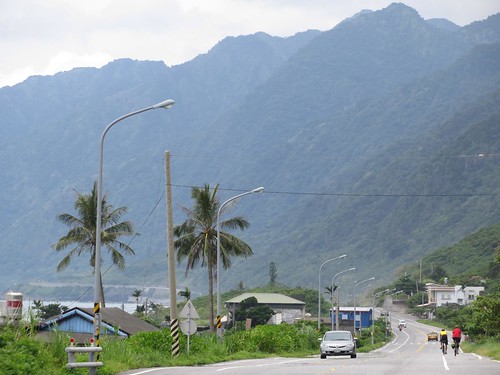
Hopefully they will have the courage to connect the roads so that trade and travel can take place, and my intrepid friend Michael Fahey, longtime local cyclist now currently cycling at a few thousand meters in northern India, can enjoy another interesting route.

Finally, this report on Kazakhstan from the CRM:
In Kazakhstan the opposition political party co-chairman Azat, Bulat Abilov, has called on the Kazakh authorities “to suspend all the contracts currently in force with China, make them public and make all the loans attracted during the past two years - almost $20 billion - the property of the public.” Abilov said that the party would submit to the city mayor's administration a request to hold an anti-Chinese rally in Almaty on May 28 to oppose the “influence of China on the country's economy.” In comments carried by the privately-owned Interfax-Kazakhstan news agency, he said: “Chinese expansion, Chinese influence, Chinese capital and investments are increasingly penetrating the economy of Kazakhstan and over the past five years Chinese companies have virtually become owners of Kazakh oil resources.”
Lessee.....look at the region -- China is the leading foreign investor in Iran and Afghanistan and is forging close links with Pakistan, to whom it is the leading supplier of military equipment (a move with obvious implications for India). With China busy expanding all across central Asia, the criminal stupidity of our Afghan policy should by now be clear: Washington is killing Americans and Afghans to make Afghanistan safe for Chinese expansion. It has to stop. Now.
____________
Daily Links:
  • Mark Valencia has a piece at NBR entitled: Foreign Military Activities in Asian EEZs. Its language and construction is severely pro-Beijing: "Indeed China's increasing assertiveness and expanding spatial perception of its security needs conflict with ever more aggressive and intrusive U.S. military intelligence probes." The US is aggressive and intrusive, China is merely assertive. The euphemism there for territorial expansion, "expanding spatial perception of its security needs", is priceless. I've discussed Valencia's pro-Beijing constructions before here.
  • At CSIS, Dave Brown has a sturdy Establishment summary of China-Taiwan relations, informative with a useful timeline at the end.
  • Latest issue of Taiwan What's Up out.
  • James Holmes on how maps of the PRC's missiles pointed at Taiwan can be misleading.
  • With all the focus on Taiwan's drought and the Mississippi floods, extreme weather is whacking Columbia (11 months of rain), Alberta (drought + wildfires), China ("a severe drought along the Yangtze River region in central China has rendered nearly 1,400 reservoirs in Hubei Province temporary unusable") and other areas. No April before 2005 was as hot as this one. 
  • Jens Kastner in AsiaTimes on how Beijing might use a tourist boycott against a DPP Administration. I sure hope they do; it is exactly the kind of move that backfires. 
_______________________ 
Don't miss the comments below! And check out my blog and its sidebars for events, links to previous posts and picture posts, and scores of links to other Taiwan blogs and forums! Delenda est, baby.

Friday, April 22, 2011

Ted Galen Carpenter Strikes Again: Sell out Taiwan for Peace

So there I was, sitting around, thinking about what to blog on, when someone flipped me a link to another glurge on the joys of selling out Taiwan to China, this one by Ted Galen Carpenter. It's so great because (1) I have something to blog on and (2) a piece by Carpenter is guaranteed to be awful enough that no thought will be required to completely debunk him.

You all remember Carpenter, right? He used to turn out misinformed pieces on Taiwan's "failure" to take care of its own defense. Since time has revealed that much of the problem of Taiwan's "failure" to purchase weapons lay in Washington's refusal to sell it what it needs, Carpenter has gone strangely silent on that issue.

These commentaries arguing that the US should sell out Taiwan, cropping up lately like brightly-colored fungus on the rotting log of failure and shortsightedness, all present the same slanted and highly decontextualized picture of Taiwan. Carpenter's is a by-the-numbers example of this genre. It is entirely predictable in the fraudulent logic of its discourse: democratic leaders are "provocative", the problem is Taiwan -- not China, no China, never China -- and Japan, India, and other cases of current Chinese expansionism, which might shed light on the issue, are ignored. Like Bruce Gilley's inane piece on Finlandizing Taiwan that appeared to spawn this latest wave of Taiwan Sell Out Zombies, it succeeds only because it refers the reader to a world that doesn't exist.

As I am fond of pointing out, the "Taiwan issue" isn't a Taiwan issue at all; it's a China issue. The issue with Taiwan, as it is with India's Arunachal Pradesh, Tibet, Xinjiang, the South China Sea, the Senkakus and several other places, is Chinese territorial expansionism, all of it postwar. If annexing Taiwan to China would solve that problem, then it might be a permissable solution. But of course, selling out Taiwan to China doesn't address the issue of Chinese territorial expansion.

Recall that Taiwan is linked in Chinese minds to two at least other claims, to the Japanese Senkaku Islands, and beyond that, to the island of Okinawa. President Ma of Taiwan, an ardent Chinese nationalist ideologue, more or less said that several times in his AP interview last year and he is hardly the only one. Indeed, anyone who has discussed this topic with a Chinese right-winger has heard the lecture on how China owns Okinawa. From time to time it crops out in the Chinese media. But sooner or later as China feels its power growing, it will begin to be an issue between Japan and China. Can't wait until the first visa for Okinawa residents to China is denied, on the grounds that Okinawa is part of China and its citizens don't need visas. You laugh? China is already doing that with Arunachal Pradesh of India....

Thus, selling out Taiwan to China will not even address, let alone solve, the problem. Instead, it will merely move the problem forward to the next rung on the ladder, the territorial claims on Japanese (and other) territory. Right now the Okinawan problem is dormant: how long, with Taiwan annexed, before Beijing breathes new life into it?

Which brings us to a second major missing component of Carpenter's presentation: Japan. Anyone who wants to argue that Taiwan should be sold out must remove Japan from their discussion (note that it is not present in Carpenter's) precisely because Taiwan is bound up with territorial claims and Japanese security issues.

First, even if we won't intervene in an invasion, offensive operations against Taiwan are very likely to take place in Japanese air and sea space, meaning that Japan will be dragged in. Recall that Japan has a defense treaty with the US. Further, the longer resistance goes on, the more likely it is that violations of other US allied nation air and sea space will take place (how far is the Philippines?). The fact that the US does not immediately intervene does not mean that at some point it won't have to.

Of course, even if China annexes Taiwan without bringing in Japan, it is obvious that the next step is the Senkakus, which are covered under the US-Japan security treaty. The two nations have even conducted military exercises in the islands for just that purpose. Beyond that is Okinawa, and the gods alone know what other claims China might invent once Chinese officials stand in Hualien and look out to sea.

In other words, the proper context -- entirely missing in Carpenter's short piece -- is the entanglement of Taiwan and Japan with overlapping Chinese territorial claims. Once that context is restored, it is easy to see that selling out Taiwan won't solve the problem of US involvement in East Asian security issues. Indeed, it will merely increase our headaches, leading to intensified pressure on Japan and to even greater claims on the South China Sea, with the bonus of ceding to Beijing control of the airfield and other facilities on Dongsha Island in the Spratlys. I'm sure Malaysia and the Philippines will be delighted by that.

Carpenter follows that standard Beltway line that Ma has "reduced tensions" with Beijing. Naturally, Ma's party is allied to Beijing and he himself is ardently pro-China. But as I have noted before, because his party is quietly selling out the island to China, Beijing is now free to ramp up tensions elsewhere along its border. Less "tension" over Taiwan -- and remember that increasing "tension" is a policy choice of Beijing designed to gain it leverage over the minds of observers like Carpenter -- means that tensions have merely been redistributed to other areas of the Chinese borders, not lessened. In other words: Ma's policies are actually enabling Chinese territorial expansion.

This points to a hidden psychological strategic value of Taiwan: it rivets Chinese strategic attention (consider the vast expenditure of resources required merely to maintain the threat level against an island Beijing does not need and did not begin to consider part of China until WWII was underway). An adroit foreign policy would make use of that. A maladroit one would, well, hand that advantage back to China. D'oh.

Another issue in any piece on selling out is the possible consequences for the peace. Would Beijing refrain from further territorial expansion if it annexed Taiwan?

Consider Tibet. In the 1950s China annexed Tibet. Using Sellout Logic, this should have resulted in a quiet Himalayan frontier with no further territorial expansion by China. But of course the exact opposite has happened: the world has acquiesced in the annexation of Tibet, yet China has moved on to claim the entire Indian State of Arunachal Pradesh, on the grounds that it contains lots of ethnic Tibetans who are now "Chinese" (consider how it might view islands containing Taiwan-descended indigenes once Taiwanese aborigines become "Chinese"). It is using the same battery of techniques against Arunachal Pradesh that it has used against Taiwan, redefining visas and attempting to suppress international attention to the state -- it tried to kill an Asian Development Bank loan to the state, for example. Beijing has also ramped up its military presence in the Himal. Those of us who are wont to see Taiwan as an East Asian Czechoslovakia are one nation behind -- we are the East Asian version of Poland in that progression.

There's not much more to say. Suffice to say that with The Blight now resident in Beijing, war looks to be inevitable. What pieces like Carpenter's really teach is that our choice is increasingly looking like not war or no war, but instead: what war shall we have?

Sorry, wanted to end on a snarky note, but couldn't think of anything to say. Have a good weekend. The Bike Gods are sending rain tomorrow, says the CWB. Maybe I could sacrifice Taiwan to them instead. I'm sure that will be just as effective as sacrificing the island to Beijing.....
_______________
Daily Links:
  • Hsichih trio found guilty again. As a friend pointed out, apparently these men will be on trial for the rest of their lives, since the system will not admit it made a mistake. 
  • Pics like this are why I love the Taiwan bird photos of John and Fish so much. 
  • Frozen Garlic on KMT primary telephone rules
  • The Kuokuang Petrochemical Plant -- stupid, expensive, unnecessary, unpopular -- but it ain't dead dead dead yet. Even though President Ma said it won't be built in Changhua, it could well be built somewhere else. What a patronage network plum that will be! And in an election year too!
_______________________ 
Don't miss the comments below! And check out my blog and its sidebars for events, links to previous posts and picture posts, and scores of links to other Taiwan blogs and forums! Delenda est, baby.
Thursday, January 06, 2011

War wares and China Round Up

First off, the EU has rejected an attempt to end the EU arms embargo against China.
"There remains a broad consensus within the EU that the time is not right to lift the arms embargo. We need to see clear progress on the issues that necessitated the embargo in the first place, namely on civil liberties and political rights," a British diplomat told EUobserver on Tuesday (4 January) in response to speculation on a potential shift in EU policy, which would require agreement by all 27 EU members.

A diplomat from a former Communist EU country added: "There is simply no talk of it in the run-up to the EU foreign ministers' meeting [on 31 January]. After the Nobel Peace Prize and China's reaction to that, it is politically unimaginable to make any move for the time being."
The move came down in the latest EU foreign policy blueprint by Catherine Ashton, the High Rep for Foreign Affairs and Security Policy. Wiki has some quite nasty criticisms of her:
For example, on her appointment, the associate editor of The Spectator, and former editor of BBC Radio 4's Today programme, Rod Liddle, wrote: "Never elected by anyone, anywhere, totally unqualified for almost every job she has done, she has risen to her current position presumably through a combination of down-the-line Stalinist political correctness and the fact that she has the charisma of a caravan site on the Isle of Sheppey."[30] According to one Whitehall source[who?]: "Cathy just got lucky...The appointment of her and Herman Van Rompuy [as European Council president] was a complete disgrace. They are no more than garden gnomes."
The motion to end the embargo was supported by France (slogan "not quite as venal as the US in foreign policy, but we're trying hard!") and Spain, and objected to by Washington. I heard privately that Ashton had not consulted any senior officials around the EU countries before making this recommendation.

China's boorish objections to the Liu Xiaobo Nobel make a nifty reason not to lift the embargo, and a reminder of how the CCP actually stays in power.

WSJ has an article on the sighting of an alleged stealth fighter, designated the J-20, in China.
But many more experts say they believe the pictures and the aircraft are authentic, giving the strongest indication yet that Beijing is making faster-than-expected progress in developing a rival to the U.S. F-22—the world's only fully operational stealth fighter.

China's defense ministry and air force couldn't be reached to comment on the latest photos. Even without official confirmation, however, the photographs are likely to bolster concerns among U.S. officials and politicians about China's military modernization, which also includes the imminent deployment of its first aircraft carrier and "carrier-killer" antiship ballistic missiles.
More details on the fighter are in this Washington Times piece. Meanwhile the US navy says the effectiveness of those famous Chinese anti-ship ballistic missiles is as yet unknown [thanks for the correction].
While the Chinese have deployed an early version of the world’s first anti-ship ballistic missile system, U.S. naval intelligence officials downplay the near-term impact, since China’s military hasn’t conducted a full-scale test or established an operational unit for the missiles.

China has a “workable design” for an anti-ship missile but “it is unknown to us and probably the Chinese as to how effective the missile will be without a full-scale test,” the Navy’s Office of Naval Operations for Information Dominance, which includes Navy intelligence, said in a statement yesterday to Bloomberg News.
On a related note, a columnist at Foreign Policy says there will be reshuffling in the Obama Asia team. Jeff Bader will likely be stepping down from his post as essentially Obama's Asia man.
The leading candidate to replace Bader, according to several administration sources, is the NSC's Daniel Russel, one of the directors who currently works under Bader. Russell is a Japan hand, having served as the head of State's Japan Desk after being consul general in the Japanese cities of Osaka and Kobe. Russell's selection might give Japan watchers hope that the White House would reinvigorate the stagnant U.S.-Japan relationship, but the likelihood is that China will continue to dominate the administration's Asia agenda going forward.
Similarly India, in a bid to become independent of its Russian military supplier for naval hardware, is launching a design center for naval shipbuilding. Alarmed by China's moves in the Indian Ocean region, India is responding by moving to guarantee control over that vital area.
_______________________
Don't miss the comments below! And check out my blog and its sidebars for events, links to previous posts and picture posts, and scores of links to other Taiwan blogs and forums! Delenda est, baby.

Thursday, May 06, 2010

China Reform Monitor twofer

China Reform Monitor, a publication of the American Foreign Policy Council, sent along these stories in its regular update. The Peaceful Rise is creating great problems for those nations unfortunate enough to be in its way.

+++++++++

April 3:

The day after Vietnam’s President Nguyen Minh Triet visited one of the country’s installations on the Spratly Islands and vowed that Hanoi will protect its sovereign territory, China sent ships to patrol the archipelago. Two Chinese patrol vessels will accompany fishing vessels in the South China Sea for at least a month. The decision, taken just after the departure of Vietnam's deputy foreign minister from China, marks the first time patrol boats will protect fishing boats in the contested waters. Hanoi is still demanding the "immediate and unconditional release" of a Vietnamese fishing boat and its 12-man crew captured by China on March 22, the South China Morning Post reports.

April 7:

A year after it was first discovered that a China-based cyber espionage network compromised Indian embassies investigators have uncovered the full extent of the espionage, the India Times reports. Indian embassies in nine countries including the U.S., UK, Germany, Afghanistan, Russia, the UAE, and Nigeria were infected. But it is now known that for years the spy ring mined over 35 computers belonging to the India’s National Security Council Secretariat, Air Force, and the Army's Military Intelligence. While there is no conclusive proof linking the hack to China’s government, Canadian researchers have traced the attack to Chengdu, Sichuan; where a People's Liberation Army technical reconnaissance bureau responsible for monitoring signals intelligence collection is located.

+++++++++

_______________________
Don't miss the comments below! And check out my blog and its sidebars for events, links to previous posts and picture posts, and scores of links to other Taiwan blogs and forums!

Wednesday, October 14, 2009

Mirror, Mirror: If they treated India like Taiwan

I was reading this BBC article on how China is making noises about the Indian territory of Arunachal Pradesh because the Prime Minister of India, Manmohan Singh, visited the state earlier in October. Suddenly, as I read, a random transporter beam caused by a failure in the neutrino displacement grid due to a flux distortion storm bouncing off a resonating FTL damper, flung me into an alternate universe where every nation around China was treated like Taiwan. Ignoring the scantily clad paan girls in brighty-lit glass booths lining the streets, I made my way to the nearest सात-ग्यारह where a clerk with a neatly-trimmed goatee sold me a paper with this story....

China ire over India border visit

China has strongly criticised a visit by Indian Prime Minister Manmohan Singh to the north-east Indian state of Arunachal Pradesh, currently administered by India, saying that India had ignored its concerns and that Singh was "gambling with the interests of his compatriots."

China claims Arunachal Pradesh, which split from China in 1951 following China's liberation of Tibet. The territory has been governed separately ever since.

On Tuesday US State Department officials warned India that it was "unnecessarily" provoking China. The US remained silent on what India claimed was a large-scale military buildup across the border.

Trade between India and China has reached all time highs amid warming relations, but tensions remain. Longtime Asian affairs commentator Tom Plate observed that for China, "Arunachal Pradesh is the last piece of the puzzle" and praised Hu Jin-tao for being a "suave, gentlemanly leader." A leading business association in New Delhi said that Manmohan Singh was a "radical" whose failure to pursue closer business links with China had led the economy to crash in the last few years. "It's time to shelve these senseless disputes over sovereignty, which everyone knows Singh only does to get elected, because if we only move closer to China, our economy will boom."

Chinese officials said that the government was mulling an Ante Succession law, which would give it the legal right to attack any government of any territory which at any time status quo ante, may have succeeded to ownership of a territory now governed by a state that once sent a mission to Beijing. Stocks were mixed in reaction to the proposed law.
_______________________
Don't miss the comments below! And check out my blog and its sidebars for events, links to previous posts and picture posts, and scores of links to other Taiwan blogs and forums!

Wednesday, August 12, 2009

China voice says break up India

The typhoon may have cut a swath of destruction across southern Taiwan, but the geopolitics goes on. Up today is this interesting article showing how some thinkers in China regard India:
Almost coinciding with the 13th round of Sino-Indian border talks (New Delhi [ Images ], August 7-8, 2009), an article (in the Chinese language) has appeared in China captioned 'If China takes a little action, the so-called Great Indian Federation can be broken up' (Zhong Guo Zhan Lue Gang, www.iiss.cn, Chinese, August 8, 2009).

Interestingly, it has been reproduced in several other strategic and military Web sites of the country and by all means, targets the domestic audience. The authoritative host site is located in Beijing [ Images ] and is the new edition of one, which so far represented the China International Institute for Strategic Studies (www.chinaiiss.org).

Claiming that Beijing's 'China-Centric' Asian strategy, provides for splitting India, the writer of the article, Zhan Lue (strategy), has found that New Delhi's corresponding 'India-Centric' policy in Asia, is in reality a 'Hindustan centric' one. Stating that on the other hand 'local centres' exist in several of the country's provinces (excepting for the UP and certain northern regions), Zhan Lue has felt that in the face of such local characteristics, the 'so-called' Indian nation cannot be considered as one having existed in history.

According to the article, if India today relies on any thing for unity, it is the Hindu religion. The partition of the country was based on religion. Stating that today nation states are the main current in the world, it has said that India could only be termed now as a 'Hindu religious state'. Adding that Hinduism is a decadent religion as it allows caste exploitation and is unhelpful to the country's modernisation, it described the Indian government as one in a dilemma with regard to eradication of the caste system as it realises that the process to do away with castes may shake the foundation of the consciousness of the Indian nation.

The writer has argued that in view of the above, China in its own interest and the progress of Asia, should join forces with different nationalities like the Assamese, Tamils, and Kashmiris and support the latter in establishing independent nation-States of their own, out of India. In particular, the ULFA (United Liberation Front of Asom) in Assam, a territory neighboring China, can be helped by China so that Assam realises its national independence.
There's more in that vein. The article gives a sort of mirror-image insight into how Beijing views its own ethnic nationalists -- as a source of potential dismemberment of the nation. You'd never catch any Chinese claiming that regional prosperity would advance if China were broken up into many states, but apparently it is ok to make such claims about other multiethnic states. The analysis of India is shallow and not very intelligent, but it does show how many in China think -- and how deeply concerned China is with India.

_______________________
Don't miss the comments below! And check out my blog and its sidebars for events, links to previous posts and picture posts, and scores of links to other Taiwan blogs and forums!

Saturday, August 08, 2009

Typhoon Day Short Shorts

Happy Father's Day! Hope the dreary weather hasn't damped your enthusiasm for a little light reading....

Wendell Minnick has a long piece in Defense News on the insertion of a requirement for the President to report on Taiwan's Air Force status by pro-Taiwan Congressmen in the 2010 Defense Authoritization act. The language targets the sale of F-16s to the island.

Also on the global front, the Taipei Times also had a piece on two interesting developments in Cross-Himalayan politics. Beijing and New Delhi resume talks:
“The outlook of this round [of talks] is certainly not good,” New Delhi-based strategic analyst Brahma Chellaney said. “The atmosphere has deteriorated in the recent months, plus there’s been escalation of tensions along the Himalayan border.”

Feathers were ruffled two months ago when China objected to a US$60 million Asian Development Bank loan for a project in northeast India in territory that is claimed by Beijing.

Indian officials say China also tried to block its efforts to get the UN to designate a Pakistan-based militant leader a terrorist, as well as privately lobbied against a nuclear deal between India and the US last year.
It's not really widely understood in the West what a flashpoint the Himal region is, with advanced aircraft and tens of thousands of troops poised for war, and Chinese claims on India to provide the tension. The Taipei Times paired that story with another India-China story on China's water strategy, which essentially involves the ecological catastrophe of diverting Tibet's fresh water to China, rather than letting it flow into India. That will essentially be an act of war. India has claimed before that China plans to dam the Brahmaputra River, but China has denied such plans.

Note that all of this is backed by a Chinese geostrategy to surround India with Chinese allies, ports, and bases. Here is a link again to the burgeoning China-Bangladesh relationship, which is aimed at severing the neck that connects India with its states in the east, according to the article.

It goes without saying that for the media, the cause of tensions along 90% of the Chinese border is China, but when it comes to Taiwan, it's Chen Shui-bian. Thank heaven they put A-bian in jail and saved us from a China-India War.

The Peaceful Rise is going to be neither.

Turning to the local front, mayors and County Chiefs to serve five years under new rules proposed by the Ministry of the Interior. Much money will be saved that way. This means that the next round of local elections will be in 2014. The last paragraph of the article is interesting:
It was also decided at the meeting that district administrative consultant committees would be established in the new special municipalities to allow local elected representatives who are poised to lose their jobs after the upgrade and mergers access to public office work.
A jobs program for elected representatives. You could understand if it was for government workers eliminated by the upgrades. This way the party that has the majority control will be able to insert its supporters into local government positions. *sigh*
_________
Daily Links
EVENT: FREE BEER!!! at Forumosa's August Happy Hour at Alleycat's Huashan - their newest location! Thursday, August 13 at 8:00pm at Alleycat's Huashan
_______________________
Don't miss the comments below! And check out my blog and its sidebars for events, links to previous posts and picture posts, and scores of links to other Taiwan blogs and forums!

Thursday, June 25, 2009

Displaced Tensions

"Eight, sir; seven, sir;
Six, sir; five, sir;
Four, sir; Three, sir;
Two, sir; one!
Tenser, said the Tensor.
Tension, apprehension,
And dissention have begun. "
— Alfred Bester (The Demolished Man)


Ma save us! While US analysts appear to be enamored of the Beijing line about tensions in the Cross-strait relationship (hilariously, some see Ma as a savior), there's no better way to hold up to the light the double standard Taiwan's democracy gets slammed with than to take a gander at China and India, as well as at the continuing saga of China's expansion into Pacific Ocean islands it has never owned (like Taiwan, for example).

Let's start with India. WSJ this week hosts Jeff Smith with a nifty review of China's spidery encirclement of the subcontinental state. Apparently New Delhi announced it was increasing its troop presence in the Himal in response to Chinese expansionism, provoking the usual tantrums from Beijing. That region of the world doesn't get all the sexy media coverage that the Taiwan Strait gets, but it is a powder keg in its own height-challenged, oxygen-deprived way....
In recent years however China has been raising the temperature at the border. Chinese claims to Arunachal Pradesh and frequent Chinese "incursions" into the nearby Indian state of Sikkim have begun to multiply in line with Beijing's rising economic and political influence. Moreover, unlike India, China has methodically developed its infrastructure along the disputed border, littering the barren terrain with highways and railways capable of moving large numbers of goods and troops.

For its part, New Delhi has become both increasingly aware of its disadvantage and exceedingly suspicious of China's intentions. India's June 8 announcement that it will deploy two additional army mountain divisions to the northeastern state of Assam will bring India's troop levels in the region to more than 100,000. The Indian Air Force, meanwhile, announced it will station two squadrons of advanced Sukhoi-30 MKI aircraft in Tezpur, also in Assam. They will be complemented by three Airborne Warning and Control Systems and the addition or upgrade of airstrips and advanced landing stations. This is part of a broader effort to bolster India's military and transportation infrastructure in its neglected northeast.
When it comes to India it is possible for writers to state seriously that China is heating things up. These are the same tactics it uses with Taiwan, but the curious fact is that in the Taiwan case, the island takes the blame. Probably because it is more difficult to find Indians willing to carry water for Beijing than Americans.....
Upon hearing India's plans, Beijing became irate. The People's Daily, a Communist Party mouthpiece that serves as a window into the thinking of Beijing's insular leadership, published an exceptional broadside against New Delhi on June 11. It described India's "tough posture" as "dangerous," and asked India to "consider whether or not it can afford the consequences of a potential confrontation with China." China is not afraid of India, the editorial taunted, while mocking India for failing to keep pace with China's economic growth. The editorial reminded New Delhi that Beijing had friends in Pakistan, Sri Lanka and Nepal but most importantly, it left no doubt about Beijing's future position on Arunachal Pradesh: "China won't make any compromises in its border disputes with India."
This is exactly the same tone that China takes with Taiwan: the Peaceful Riser(tm) erupts with threats and taunts. You could replace "India" with "Taiwan" in that paragraph and not miss a beat... right down to the same stupid visa and status games:
This is not the first time China has lost its cool over the border issue. Back in 2006, China's Ambassador to India ignited a political firestorm when he declared the "whole state of Arunachal Pradesh is Chinese territory... we are claiming all of that. That is our position." Later, on two separate occasions, China denied visas to Indian officials from Arunachal Pradesh, explaining Chinese citizens didn't require visas to travel to their own country.

.......

China has been applying pressures as well. This March, China broke with Asian tradition and tried to block a $2.9 billion loan to India at the Asian Development Bank, furious that the loan would fund a $60 million flood-management program in Arunachal Pradesh. (Last week China was overruled with help from the U.S., and the loan went through.) Before that, Beijing clumsily attempted to torpedo the U.S.-India nuclear deal from its seat at the Nuclear Suppliers Group. And of course, China remains an opponent of India's bid to join the United Nations Security Council and a staunch ally of India's nemesis, Pakistan.
Thank all gods China is a Peaceful Riser(tm) and not a belligerent, expansionist power intent on grabbing pieces of its neighbor's territories, eh? Smith also notes:
But what riles India most is China's incursion into its backyard and the belief China is surrounding the subcontinent with its "string of pearls" -- Chinese "investments" in naval bases, commercial ports and listening posts along the southern coast of Asia. There are port facilities in Bangladesh and radar and refueling stations in Burma. Thailand, Cambodia and Pakistan now all host Chinese "projects;" China's crown jewel is the Pakistani deepwater port of Gwadar.

Then there are Sri Lanka and Nepal, India's immediate neighbors, where civil wars have opened space for Beijing to peddle influence. A bloody insurgency by Maoist rebels in Nepal gave way in 2006 to power-sharing agreement now on the brink of collapse. China has openly supported the Maoists against the royalist establishment backed by India. In Sri Lanka, meanwhile, the decades-long civil war between the Hindu Tamil minority and the Buddhist Sinhalese majority was decisively ended by the latter May, but not before Beijing could gain a foothold in the island-nation. Appalled by the brutality of the fighting, India had scaled back its arms sales to Colombo in recent years. China happily filled the vacuum, in return gaining access to the port at Hambontota on the island's southern coast.
In addition to all this, Smith also says that China supports Maoist rebels in India. Note that India does none of these things to China -- there are no Indian bases on the Senkakus or in Korea. Maybe New Delhi ought to expand its contacts with Japan, including joint defense exercises...

Meanwhile a PLA general has publicly suggested that China build bases in the South China Sea, and China's moves there are causing tensions to rise with Vietnam "in recent months":
In recent months, tensions flared between China and Vietnam, which is one of the claimants contesting sovereignty over the islands, and Hanoi reportedly signed a $1.8 billion deal with Russia for six Kilo-class submarines in what analysts say appears to be the strongest response sent by Hanoi toward Beijing for what it increasingly sees as China's encroachment on the South China Sea islands (Ria Novosti, April 27). The submarines, which are designed for anti-sub and anti-ship warfare, could help protect Vietnamese claims in the South China Sea by denying access to its more than 2,000 miles of coastline.
In addition to heating up things with India and Vietnam, China is also putting pressure on the Philippines. In case you thought that the Smith article was just another right-wing assault by neocons intent on fomenting a Cold War with China, note that both Left (Japan Focus) and Right (Jamestown Foundation) hosted Ian Storey's article on increased Chinese pressure on the Philippines over China's nonsense claims to local islands:
Developments in the South China Sea during the first quarter of 2009 reinforced several trends that have been apparent over the past two years. First, the Spratly Islands dispute has once again come to dominate Sino-Philippine relations, despite attempts by Beijing and Manila to move beyond it. Second, China has adopted a more assertive posture toward its territorial and maritime boundary claims in the South China Sea than at any time since the late 1990s. Third, the 2002 breakthrough agreement between the 10 members of the Association of Southeast Asian Nations (ASEAN) and China to manage tensions in the South China Sea is in danger of becoming irrelevant. Fourth, the USNS Impeccable incident on March 8 highlighted the growing strategic importance of the South China Sea for the United States and China, and reawakened concerns in ASEAN capitals that the region may one day become the principal theater wherein Sino-U.S. maritime rivalry is played out.
See? Anyplace else along the China border, rational observers point to the problem of increased Chinese pressure on neighboring states. But when it comes to Taiwan, the problem is that Taiwan provokes China. Can't wait until our analyst class starts shouting at New Delhi to stop provoking China over Arunachal Pradesh the way Chen Shui-bian "provoked" China.

The other lesson to be learned here is the failure to make the cross-regional connections between Beijing's expansionist policies in the Strait and elsewhere. The election of Ma Ying-jeou did not 'reduce tension.' Rather, the KMT's move to put Taiwan into China's orbit, thus 'reducing Taiwan-China tensions', has given China the confidence and opportunity to ramp up tension elsewhere.

Tensions are not reduced. They are merely displaced. And the more tension is 'reduced' here in the Beijing-Taipei, the more it will appear elsewhere. Because the cause of "tension" isn't Taiwan's democracy, but China's expansionism.

_________
Daily Links:
_______________________
Don't miss the comments below! And check out my blog and its sidebars for events, links to previous posts and picture posts, and scores of links to other Taiwan blogs and forums!

Thursday, August 07, 2008

Diplomacy Lunacy

Ma Ying-jeou continues to reduce the island's visibility. First, as many of you are aware, his upcoming trip with a transit through the US will be done as quietly as possible. No meeting cheering crowds of Taiwanese, no visits to ballgames with prominent congress critters like Chen Shui-bian did. In fact, the Ma team apparently instructed the press not to report on the transit through the US, but later clarified and said that they meant there wouldn't be anything to report.

One of the Chen Administration's diplomatic successes was maintaining its relations with smaller Pacific Islands. But as the Taipei Times reports, Ma is downgrading those as well:

Ma announced last night during a state banquet held for Nauruan President Marcus Stephen that the third Taiwan-South Pacific Allies leaders’ summit will be canceled.

Citing “time constraints,” Ma said the event, scheduled to take place in Kaohsiung this year, will be held in the Solomon Islands next year.

The summit, established by former president Chen Shui-bian (陳水扁), was first held in Palau in 2006.

When Ma came in he announced that the "dollar diplomacy" game in the South Pacific was over, and it looks like he is sticking to that. That same article announced Taiwan's new "flexibility" on the WHO and WHA application:

Hong Kong’s Wen Wei Po newspaper reported that China’s Taiwan Affairs Office Chairman Wang Yi (王毅) had said that although China would continue to block Taiwan’s applications to the WHO, it would look into setting up an international network that would be a “new framework” independent of the WHO to include Taiwan in information on disease outbreaks.

Many commentators and pundits argued that China should/would give Taiwan more international space in return for a "conciliatory" attitude from Taiwan. Wrong again, guys. Nor does the public care: while everyone I talk to expresses dissatisfaction with the KMT's domestic policies, few spontaneously raise the issue of Taiwan's foreign relations. Taiwan News commented cogently on Ma's striking lack of diplomatic derring-do (emphasis mine):

During a dinner with former foreign ministers Sunday evening at the Taipei Guest House and a seminar with senior diplomatic officials held at the Ministry of Foreign Affairs Monday, Ma discussed at length his concept of "viable diplomacy" or, more precisely, a "modus vivendi" diplomacy, a term which is a Latin phrase for a "a mode of living " arranged between arrangement between two parties to coexist despite deep differences.

For Ma, the phrase clearly refers to his government's strategy of improving relations with the authoritarian People's Republic of China and building his government's external relations on the platform of "diplomatic truce" and "reconciliation" with the Chinese Communist Party regime.

Under this roof, Ma elaborated "overall goals" such as the preservation of existing diplomatic partnerships, the rebuilding of "trust" with the United States, Japan and other informal partners by promising not to be a "trouble-maker" and cultivating "surprise free" ties, refraining from "foreign assistance" diplomacy and avoiding "cutthroat competition" with the PRC over diplomatic allies.

In fact, none of these priorities are proper "goals" but only tactics or methods to achieve diplomatic goals. Indeed, the tone of Ma's "goals" points not to any autonomous notion of diplomacy to uphold the interests of Taiwan's 23 million people but the adoption of a mentality of habitual self-censorship and self-abnegation.

Moreover, Ma's exposition offered no analysis whatsoever of the goals and priorities of the other actors affecting Taiwan's diplomacy, such as the United States, Japan, our 23 official diplomatic allies and, incredibly, the PRC itself.

Even though Ma's notion of "a mode of living" diplomacy implicitly elevates the cross-strait relationship over all other external ties, Ma failed to take account of the PRC's open adoption of a diplomatic strategy aimed at isolating Taiwan internationally and even pressing for Taiwan's annexation, as mandated by Beijing's March 2005 "Anti-Secession Law."

Moreover, even though Ma stated that "diplomatic truce and reconciliation" means that "we do not need to engage in meaningless cutthroat fighting overseas" over diplomatic allies, senior PRC diplomats from Foreign Minister Yang Jie-chi down declare that Beijing will never abandon its "one China principle" which claims Taiwan as part of the PRC and are persisting without any signs of relent or "taking a breath" numerous "cutthroat struggles" to denigrate or even eliminate Taiwan's participation in governmental and non-governmental international organizations.

Moreover, information from U.S. "track two" exercises indicate that the PRC diplomatic establishment rejects the possibility of substantive oncessions that would, for example, allow Taiwan a truly autonomous, dignified and meaningful method of participation in major sovereignty-based international organizations, such as the World Health Organization.

Bluntly put, China's expansion, in the 'death by a thousand cuts' mode, continues apace. As this Asia Times article points out, Taiwan is not the only victim:

And yet, history and national identity are notorious for trumping raw economic interests in Asia. Consider the most fundamental of inter-state relations: a shared border. China and India's has been under dispute for nearly a century, and China has been testing New Delhi this year with a wave of abrupt but underreported incursions into Indian territory. Beijing still claims tens of thousands of square miles of Indian territory in the Indian states of Sikkim and Arunachal Pradesh, the subject of a 1962 border war.

China's incursions, in some ways routine by now, have become more numerous (anywhere between 60 and several hundred) and brazen (one crossing having driven a kilometer into Indian territory) in the past six months - an unusual provocation, given China's sensitivity to world opinion ahead of the August Summer Olympic Games in Beijing.

Were the border incursions an isolated incident, they would likely be swallowed by the mounting ties that bind China and India. But isolated they are not, and in 2006 a warning by China's ambassador to India put in question the warmth generated by a dozen of rehearsed summits: "[T]he whole of the state of Arunachal Pradesh is Chinese territory ... we are claiming all of that. That is our position." The point was not lost on the 1.1 million Indians living in a state the size of Maine. Indian diplomats from the state have even been denied visas by Beijing, which reminds them documentation is not required to travel their own country.

The reason China cannot be permitted to have Taiwan is right there: because it will only encourage them to discover that more of their neighbors' lands are the sacred territory of China, Chinese for every minute of the last 5,000 years.....

Thursday, July 03, 2008

Good Taiwan-India-China article

From the Taiwan Journal: our booming cram schools.

Taiwan Journal has a long, excellent article on Taiwan-India relations, one of the many subthemes of this blog, along with India-China relations. Sad that just as Taiwan is starting to explore the strategic possibilities of outreach to India, we get saddled with a President whose foreign policy consists of placating America while appeasing China. The article observes:

India has long sought a closer relationship with mainland China, but disputes over territory, trade and politics remain a stumbling block between two of the world's fastest growing economies. Taiwan Journal regular contributor Manik Mehta writes that India may feel the time is right to ignore mainland Chinese sensitivities and look to increase trade and cooperation with one of the Four Asian Tigers: Taiwan.

Indian critics were vocal in their assessment that Indian Foreign Minister Pranab Mukherjee failed to produce any tangible results during his June 4-7 visit to the Chinese mainland. Mukherjee, they lamented, cut a sorry figure as he tried in vain to court his hosts with innovative but impractical proposals. But the foreign minister's failure to secure a stronger relationship with Beijing, vexing as it might be for New Delhi, may yet lead to a stronger trade relationship with Taiwan....
KMT foreign policy simply lacks the motivation and imagination to deal with the possibilities offered by India.

Monday, April 28, 2008

On Tap on Taiwan Around the World....

The International Affairs Forum offers two pieces that touch on Taiwan this week. The first is a long address by an Indian scholar on Taiwan. It offers a good example, I think, of how Taiwan is understood elsewhere.....an excerpt:

In like manner,although much smaller in area, Taiwan has a much higher level of technological sophistication than the PRC, and does significantly more cutting-edge research than its neighbor. It is not accidental that Taiwan has become a democracy since the system was introduced by President Chiang Ching-kuo in 1987. Since then,especially with the election to office of the native-born Lee Teng-hui the next year, democracy has become a much more powerful weapon in the creation of international resonance for Taiwan than (for example) "pocketbook diplomacy". Moving to the present,the reality of the PRC remaining within an authoritarian straitjacket is substantially behind the international unease over conditions in Tibet,a landlocked territory with a unique culture. It is the view of this analyst that whether in 1919 or 1949 or indeed next year in 2009, democracy would be a much more beneficial system to the people of the PRC than an authoritarian state structure that denies those rights enjoyed by citizens in countries across the world. It is an insult to the civilizational depths and excellence of the people of the PRC to say that they would not be able to "manage" a democratic state structure. These are copies of the reasoning adopted by then British Prime Minister Winston S Churchill in 1944 to Generalissimo Chiang Kai-Shek, that the people of India lacked the maturity needed to exercise democratic freedoms,and that consequently,an indefinite extension of British colonial rule was inevitable. The example of India since 1947 shows that democracy is as natural to the human spirit in India as it is in Europe or,indeed,in Taiwan,and that the population of the PRC would benefit rather than suffer from a system where they had the right to choose their leaders.

If the people of Taiwan have shown a much lower propensity to accept authoritarian rule as a part of the PRC than the people of Hong Kong, it is because that former British colony never enjoyed the freedoms of a democracy. It was only after it became clear that Paramount Leader Deng Xiao-ping would not agree to anything short of complete accession of the whole of Hong Kong to the PRC in 1997 did Whitehall begin to see the "light of democracy" shining in its sights, sending Christopher Patten to the colony as its 28th (and last) Governor in 1992. Over the next five years,Patten oversaw a series of pseudo-reforms that essentially transferred some peripheral powers to local elites and away from London, where they had been concentrated till then. Had Whitehall the vision to implement democracy in Hong Kong after the takeover of power by the Chinese Communist Party in 1949 on the mainland, or even after Taiwan switched to a democratic system four decades later, by 1997, the population of Hong Kong may have been active enough to ensure a preservation of much greater freedoms than were agreed to between London and Beijing till the handover. The fact that Taiwan has evolved into a full democracy has been the major reason behind the unwillingness of the local population to agree to a union with the PRC, even though the majority are in favor of a pragmatic accommodation that both preserves the autonomy from external control of Taiwan and the business links between the PRC and Taiwan. As is usual in democracies, the Taiwanese electorate opted for the "Middle Way" ( as distinct from the Middle Kingdom) during the parliamentary and presidential elections held this year.

This is followed by an interview with the same scholar about the elections here and other international issues.

....Another foreign professor down for sexual harassment -- this time of a stewardess on China Air. Yesterday's Liberty Times reported him as "Noel Kaylor" who is a real professor but of medieval philosophy and appears never to have been to Taiwan, but today's papers have him as "Noel Harold Kaylo" and a prof at National Sun-Yat Sen University. It's kind of funny-sad to handcuff a man for patting a flight attendant's butt, in a country where it is legal to pay for sex but illegal to be a prostitute. David on Formosa has the Taiwan links for Monday. What's not out there? At CommonDreams, the big progressive website, no mention of the Taiwan election that I can see.

Tuesday, November 27, 2007

Guangdong vs Gujarat

Hot special economic zones. Booming industries. Busy ports. Rapid economic growth. Massive inflows of foreign direct investment. Yup, that's Guangdong Gujarat.

This week's Asia Times has a long study of the success of the Indian state of Gujarat (Wiki Gujarat):

The northwestern state of Gujarat - notorious for horrific communal violence in 2002 in which over a thousand people, mainly Muslims, were killed - has emerged as India's favored destination for investments. Its dazzling economic success is being highlighted by Chief Minister Narendra Modi in his election campaign as he makes a bid for a third straight term in office in upcoming assembly elections in the state.

According to a recent study by the Reserve Bank of India, the country's central bank, Gujarat stood first in the country with investments of US$17.8 billion in 2006-07 or 25.8% of India's total investment of $69 billion during the year.


The article is well worth a read, for it gives a glimpse of India, clicking along at 8-9% annually growthwise....

"Gujarat has emerged as India's special economic zone [SEZ]," Modi boasted in his speech at a recent meeting of the World Economic Forum at Dalian in China, referring to huge success that Gujarat has experienced in attracting domestic and foreign investment.

Gujarat's experience with setting up SEZs has been pretty smooth. Unlike in other parts of the country where land acquisition for SEZs has encountered massive protests, in Gujarat where 33 SEZ proposals have been approved since the state's SEZ Act was passed in 2004, the process has been largely trouble-free. Barring the case of Reliance's SEZ near Jamnagar, where farmers went to court, and some protest in Por near Vadodara, Gujarat has seen little protest over land acquisition.

This is because Gujarat's port-led development of SEZs involves setting up SEZs along its 1,600-kilometer-long coastline. SEZs are located on large tracts of fallow and saline land in Kutch and Saurashtra. This is arid land that had no takers earlier; but the SEZs now hold out the promise of economic activity and are welcomed by the locals.

The Mundra SEZ, for instance, is being built on land virtually unfit for human habitation and it has brightened economic prospects immensely. A plot here which might have fetched a price of $2,500-$5,000 a few years ago now sells at $250,000. Farmers are eager to sell their land. This is not the case in other parts of India where SEZ developers are eyeing rich agricultural land that farmers are reluctant to sell.

At the same time, Asia Times also reports that across the Strait, Guangdong is close to realizing its long-cherished goal of overtaking the Four Little Dragons, according to Chinese officials:

Guangdong Governor Huang Huahua declared last week at a public function that the province could overtake Taiwan this year and would continue to strive to catch up with South Korea.

Chinese media quoted Huang as saying that Guangdong's GDP was expected to reach more than US$390 billion for the whole of 2007, after registering a year-on-year growth of 14.7% from January to October.

According to official estimates, Taiwan's economy is expected to grow 5 % to more than $380 billion this year. In 1998, Guangdong's economy reached $103 billion and that of Singapore generated $82.8 billion. In 2003, the province's economy hit $191.4 billion, surpassing Hong Kong's $158.5 billion.

"From 1991 to 2006, Guangdong registered an average annual economic growth of 14.4%, which was not only more than four times the average annual growth in the world, but also higher than the average annual growth of 'the four little dragons' in the 1970s when they experienced rapid growth," Huang said.

"Guangdong generated an economy of 2.6 trillion yuan [US$351 billion] last year, increasing by 14.1% when compared with 2005. The figure doubled that in 2001 and accounted for one-eighth of the country's total," he said.

However, experts say it may not be easy for Guangdong to catch up with South Korea in a few years. In South Korea, the Ministry of Finance and Economy in July revised its GDP growth estimate for the whole of 2007 to 4.6% from 4.5%, due to strong export and domestic demand. In 2006, South Korea's GDP grew by 5% to $897.4 billion, due to popular demand for key export products such as mobile phones.

As readers of this blog know, I've long advocated closer Taiwan-India ties. China is not the only country in the world growing at booming rates, and there is no reason why Taiwan should not be trying to cash in on Indian growth as well. The government has recently been working to develop India ties -- as evidenced by the Taitronics expo there in September and the signing of trade agreements between the two nations.

Wednesday, October 31, 2007

Investment Medley

Asia Times has a long study of India's growing strategic and financial engagement with East Asia. A highlight:

India needs to add as much as US$500 billion in investment into its infrastructure and Japan, Singapore, South Korea and Taiwan have expressed interest in diversifying their investment beyond China. South Korea is India's ninth-largest source of foreign investment, with Korean companies such as Daewoo, Hyundai, Samsung and LG having a significant presence in India. POSCO is investing $12 billion to construct an integrated steel plant in Orissa in India's single-largest inward investment. Meanwhile, Singapore has emerged as India's seventh-largest source of foreign investment with Temasek Holdings making significant investments in India's financial, pharmaceutical, logistics and information technology sectors.

There have also been a number of Japanese investments in India, most notably in New Delhi's metro subway system and Maruti. The Japanese government and corporate sector will also provide one-third of the funding for the $100 billion, 1,500 kilometer Delhi-Mumbai freight and industrial corridor, which is to begin construction in 2008 and be completed by 2012. Discussions are also proceeding on reaching a bilateral currency swap agreement between India and Japan. India is already the leading recipient of Japanese aid, receiving over $1 billion in 2005.

Numerous infrastructure projects also serve to tie India closer to East Asia. India is participating in the UN Economic and Social Commission for Asia and the Pacific initiatives for an Asian Highway Network and the Trans-Asian Railway Network. Discussions are also proceeding on reopening the World War II-era Stilwell Road linking India's Assam state with China's Yunnan province through Myanmar. This follows the reopening of a direct overland trade route along the Nathu La Pass on the border between Sikkim and Tibet in July 2006 after 44 years.

Meanwhile, Taiwan's diversification from China to Vietnam and elsewhere is continuing apace. The China Post notes:

E-United Group, one of Taiwan's leading conglomerates, is planning to build a town in Vietnam for one billion U.S. dollars that will include hospitals, schools, golf courses and business, the Economic Daily News reported Monday.

The group is targeting about 500 hectares of land (1,235 acres) near Hanoi for the investment which will use the company's experience deployed at a similar project in Kaohsiung, southern Taiwan, the report said.

The Kaohsing-based group, whose core business is steel making, also runs a university, a high school and an elementary school and manages property development businesses. Vietnamese authorities hold a positive attitude towards the planned investment, the report said.


Taiwan is Vietnam's largest foreign investor, according to a Taipei Times report from earlier this year:

Ke, who led institute officials to Vietnam for a fact-finding trip in January, said that Vietnam has witnessed ever-expanding economic growth over the past several years, averaging 7 percent to 8 percent annually.

He also cited International Telecommunications Union data that shows Vietnam registered the world's second-highest growth in the telecommunications industry in recent years, behind only China.

He attributed Vietnam's success mainly to the country's abundant human resources.

Taiwan, which remains the largest investor in Vietnam, will benefit by continuing to increase its investment, Ke said.

Pham said that Vietnam, a relative "newcomer" to high-tech manufacturing, hopes to strengthen exchanges with Taiwan in this regard.

As of the end of last November, Taiwanese firms had channeled US$8.13 billion into Vietnam, constituting 13.74 percent of all foreign investment in Vietnam, the institute's data showed.


Onward to India!

Friday, August 17, 2007

Media Round-up: Ma Ying-jeou Cleared, UN Entry, China in the region

Closing time at the betel nut stand.

Local commentator Michael Fahey had an article in SCMP yesterday on the Ma Ying-jeou situation with some excellent insight into the local political culture (no link, requires subscription):

His acquittal means that his formidable DPP opponent Frank Hsieh Chang-ting, another DPP lawyer, will have to win fair and square. There will be no legal knockout to ensure that an ethnic Taiwanese (Mr Ma was born in Hong Kong) will stay in power, as has been the case for the past 20 years.

Mr Ma's flagging candidacy has unquestionably been revived by the verdict. In the eyes of his supporters, who desperately want to win, he has been confirmed as a victim of DPP legal persecution. But, at the same time, his weak response to his legal crisis has left him open to growing doubts that he has the strength to lead Taiwan at a time when the island's people feel they are being pushed into a corner.

Michael was kind enough to send me the original draft, which had some great comments on the culture of machismo in Taiwan that were excised in the SCMP version. Ma looks weak, whereas Hsieh exudes confidence, Michael noted, adding that Hsieh has already suggested that Ma lacks the spine to run the island. In any culture, a widespread perception that a candidate is a wimp is difficult to overcome.

The piece alluded to an interesting possibility created by the referendum: voters may well decide to split the difference between the two parties -- voting for Ma Ying-jeou but approving the DPP's UN referendum to send Ma a signal that he can't hand the island over to China.

Michael's essay also discussed the growing politicization of the prosecutors on the island:

For Mr Chen and the Democratic Progressive Party, Mr Ma must have been a tempting target. There is no question that Mr Ma should have never allowed public funds to slip into his personal bank accounts. The DPP leadership, made up entirely of lawyers, has run legal circles around the KMT for the past eight years – winning lawsuits and Supreme Court decisions on issues ranging from the 2004 presidential election to the constitutionality of Taiwan's National Communications Council.

At the same time, Taiwan's powerful prosecutors have become dangerously politicised – it is widely believed that two-thirds are pro-KMT and one-third is pro-DPP. Taiwan's legal system is an inquisitorial one, based on German and Japanese models. Prosecutors see themselves as avenging angels of justice and they have sweeping powers to tap phones, raid the homes of suspects and detain them for months before trial. In a telling example of prosecutorial power, just one day before the Ma verdict, media and construction tycoon Gary Wang Ling-lin was indicted on charges of massive corporate fraud after spending months incommunicado in jail. The prosecutors asked for a sentence of 28 years; the public rejoiced.

In Mr Ma's case, the prosecutors waited until the last moment to tack on the serious criminal charge of breach of trust. Fortunately, the ridiculously young panel of judges courageously recognised that Mr Ma was on trial for essentially political reasons, and found him innocent.

Yep. I think we've reached the stage where there are going to be public calls for reining in the prosecutors, first in the news media under the rubric of Are Prosecutors Too Powerful? and then from legislators supporting "reform" of the prosecutors. Everyone in power can look at the Gary Wang case and say to themselves: "There but for fortune...."

The bike path bridge over Chengde Road. Although it is supposed to only be for bicyclists, it is frequently used by motorcycles. Very annoying when taking pictures from it at night.

As lacking in insight as Michael Fahey's piece is rich in it, is Tom Plate's recent essay in the Japan Times.

Sure, its accomplishments merit admission — in fact, it used to be a member — but in 1971 it was kicked out as the mainland was installed as China's sole legitimate representative.

A dramatic reversal of fortune is not going to happen now. No matter how many times Taiwan applies, it is going to be hit on its glass jaw by China as its application will be rebuffed.

The latter regards the former as a runaway teenager that must be captured, corralled and brought back into the family, as Hong Kong was in 1997 after more than 150 years in the wilderness of British imperialism. But that's another story.

The bottom line for this story is that Taiwan has about as little chance of being admitted to the U.N. as your humble columnist has of getting a serious date with the talented actress Salma Hayek — not to mention with Zhang Ziyi, another drop-dead great. No matter how many times I ask either Salma or Ziyi, the answer is always going to be the same: NO!

So how many times am I going to knock my head against the proverbial brick wall? And if I continue to do it, at what point do I start going for therapy sessions at Masochists Anonymous?

The fact of the matter is that I know I am bound to be rejected, just as the Taiwan government of President Chen Shui-bian knows that it's not ever going to get to first base with China on the U.N. membership issue. For that matter, it can't even get to first base on a much more obvious injustice: China's brutal blocking of Taiwan's membership into the World Health Organization.


Boy, those Taiwanese sure are dumb, wanting to enter when they know they can't get in. Silly people! Why would they do that? The UN entry campaign, and the hu-ha surrounding it, are part of the DPP strategy of bringing out voters. That might have been mentioned in Plate's article, for surely Mr. Plate is aware of the campaign's domestic political ramifications. So why aren't they mentioned here? Nor does Plate discuss the ominous possibility that China might pursue a motion in the General Assembly. This essay appears to have no point, other than to make jokes about Taiwan's inability to enter the UN. A sad waste of precious space in the media.

Cheap food + cheap booze = good times. Cafes next to the Sungching supermarket just off the corner of Henan Rd and Chinghai Rd in Taichung.

William Hawkins comments in the Asia Times yesterday on the US nuke deal with India and China's attempt to suppress India's rising military power -- rising partly in response to China's deals with India's enemy, Pakistan.

India already has a small nuclear arsenal and an expanding atomic-energy program. India's nuclear test was in 1974, prompted by China's deployment of nuclear arms. India then renounced nuclear weapons, and as late as 1988 was calling for their global elimination. But the rapid rise of China, and the increased militancy of Beijing's ally Pakistan in supporting terrorism in Afghanistan and Kashmir, heightened tensions. India and Pakistan conducted nuclear tests in 1998, bringing US sanctions against both. The sanctions on New Delhi were lifted in 2001, as Bush gave priority to improving US-India relations.

India was quick to show its willingness to cooperate. When the Bush administration pulled out of the Anti-Ballistic Missile Treaty in 2001, India's reaction was to endorse part of the US missile-defense initiative. India has a similar concern about the spread of ballistic missiles in its part of the world, a region whose unstable regimes may not be contained by a posture of deterrence only. Cooperation has continued to increase. The largest joint US-India naval exercises ever conducted are set for September 4-9 in the Bay of Bengal, involving two US and one Indian aircraft carriers. Warships from Japan, Singapore and Australia will also participate as a demonstration of the "arc of democracy" along the rim of Asia.

................

China understands the significance of the US-India deal and has been lobbying against it at the United Nations and within the NSG. It wants India barred from the group, and to sign the NPT as a non-nuclear state, meaning it would have to disarm. Beijing, of course, has no intention of curbing its growing nuclear arsenal. It has an advantage and wants to keep it. But it is not in the interests of the United States to see democratic India kept in an inferior position to the Chinese dictatorship.

Taiwan too needs to be cultivating India as a strategic counterweight to the growing power of Beijing. And as a fellow democracy -- Taiwan needs to leverage its democratic status even more.