Showing posts with label Taiwan Relations Act. Show all posts

Saturday, March 25, 2017

Nelson Report: Rumors of a 4th "Communique"

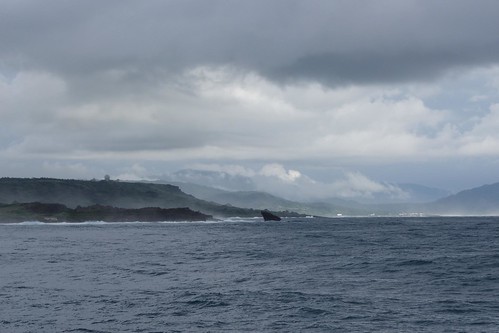
The coast off Kenting.

Rumors of the 4th Communique driven by Henry Kissinger under which the US sells out Taiwan are circulating in the local media... last week Randall Schriver, longtime Taiwan expert, said it was "unlikely". But the government put in a letter in the NYTimes pleading for the US not to sell out Taiwan for an agreement with China on N Korea. Some sort of agreement of this nature is always mooted whenever there is trouble with N Korea. As an expert explained to me, as Nork's nuke program develops the ability to put nukes on US western seaboard cities, pressure for a deal with China on N Korea will grow, and Taiwan is an obvious bargaining chip. What's amazing to me is that even after all these many years of dealing with China and N Korea, anyone can imagine that either party will keep a bargain....

+++++++++++++
US-CHINA/TRADE/TAIWAN...there's a rumor we're trying to track down that long-simmering dissatisfaction with the increasingly unwieldy US-China "S and ED" annual meetings (too many bureaucratic players leading to too much blah blah blah and consequently too little "deliverables") so the Trump folks may cancel the whole thing OR...this strikes us as the more plausible version...separate the "S" for security and "E" for economic into two more focused confabs.

Presumably a decision on this will be made in time for (and thus perhaps announced at) the early April Trump/Xi Jinping summit here in DC. No doubt you've also heard rumors that there will be a "4th Communique" resulting from this...and we frankly have to say we think there's a better chance of passing Trump/Ryan Care tomorrow morning...but perhaps you know better? For sure there are folks on Taiwan taking the rumor seriously:

Gov't concerned over reports US, China may sign 4th communique
The Taiwanese foreign minister says the government is worried the US and China will issue another communique that voices American support for the One China Principle. The Chinese language publication Liberty Times earlier carried a report that said former Secretary of State Kissinger was pushing for another communique that said that the US believed there is but one China and Taiwan is a part of China. This would overrule the last joint communique issued by the US and China, which said that while the US would not support either an independent Taiwan or "Two Chinas." Some reports have identified the upcoming visit to the US by Chinese President Xi Jinping as an occasion for the signing of such a document, possibly also limiting arms sales to Taiwan. Speaking to the legislature, Foreign Minister David Lee said, "We told them (the U.S.) that we don't want to see (the possible signing of a fourth communique) happen," and that the government has said that it hoped the US would stand by the Taiwan Relations Act and Six Assurances. He also mentioned that the Americans had spoken to their views of Taiwan, but FM Lee declined to specify what that meant.

Source: http://www.chinapost.com.tw/taiwan/intl-community/2017/03/23/494116/Govt-concerned.htm

Your Editor : never forget that one of Kissinger's hallmarks is self-aggrandizement, and while god knows the man has carved a legitimate role for himself in history, if he's pushing for Trump to completely trash the Shanghai Communique's real meaning (that is, the US takes no policy position on whether Taiwan is part of China) especially given what's behind the Trump/Tsai phone call...the strong support for Taiwan within his Administration and on Capitol Hill, not to mention the coming US arms sale package (?)...then we have to question the sanity of all involved.

But that leads us to a totally serious concern: Chinese officials have taken to declaring with a straight face that President Tsai is "moving toward declaring independence", and that proof of this is her "failure to endorse the '1992' consensus in language being demanded by Pres. Xi."

This risky, factually challenged demand thus puts Beijing in the position of deliberately risking the "status quo", since literally everything Tsai has said and done since declaring for the presidency a couple of years ago has been exquisitely calculated not to upset the existing Cross Strait status quo, despite pressures from her party's more extreme Pan Greens.

Worse, perhaps, to put "teeth" in this demand, political players in Beijing have taken to threatening a "unification law"...presumably to create the "lawful" threat of the use of force to "enforce the law"...as has been seen via China's armed Coast Guard in various maritime disputes with the neighbors.

If Kissinger wants to push a 4th Communique he might want to turn his talents to avoiding a deliberately set "crisis"...by Beijing?
_______________________
Don't miss the comments below! And check out my blog and its sidebars for events, links to previous posts and picture posts, and scores of links to other Taiwan blogs and forums!

Monday, October 14, 2013

Silly Comments from Academic make headlines

The Taipei Times gave this fellow front page headlines:
President Ma Ying-jeou’s (馬英九) statement that cross-strait relations are “not international relations” during his Double Ten National Day speech has further weakened Taiwan’s sovereignty and was meant as a hint for the US and Japan not to interfere in cross-strait issues, a local academic said.

“If by including such words in the National Day address Ma intends to make the cross-strait issue an internal matter and not open to international interference, it would cause serious repercussions in the days to come,” said Wong Ming-hsien (翁明賢), director of Tamkang University’s Graduate Institute of International Affairs and Strategic Studies.

Pointing to the fact that Taiwan is not a part of the UN, and the Ma administration’s inclination to make the cross-strait issue an internal issue rather than international, Wong said that in the event of a military conflict over the Taiwan Strait, neither Japan nor the US would have grounds to intervene.
Actually, no. The glory and the hell of the Taiwan Relations Act is that Taiwan has no role in the decision to defend Taiwan. China already defines Taiwan as an "internal matter". Any decision to not defend Taiwan will be entirely the result of a political calculus that occurs in Washington (and Tokyo). If Washington so desires, it will intervene no matter what Ma or anyone else says. It's bad enough that these irresponsible words are said in a public forum, but let's not add to the silliness by giving them front page status.

The scholar also said that the stall in arms shows the US is holding back and observing, implying it is because of Ma. Alas, the stall predates Ma...
_____________________
Daily Links:
_______________________
Don't miss the comments below! And check out my blog and its sidebars for events, links to previous posts and picture posts, and scores of links to other Taiwan blogs and forums!

Thursday, September 15, 2011

Washington on the move: The Taiwan Policy Act of 2011

Sept_random05_18
A view of the Beinan Cultural Park outside Taitung city. The mock-up house was used by young boys of the Beinan people, I think. They were sent to live there for three years as part of an initiation rite. 

Important legislative actions afoot in Congress. In addition to the Taiwan Airpower Modernization Act introduced by Sens. Coryn and Menendez (text of bill), this week Cong. Ros-Lethinen has introduced the Taiwan Policy Act of 2011. According to the Formosa Foundation, which hosts the text of the bill here, it represents an attempt to significantly upgrade US relations with Taiwan. Terri Giles, the Executive Director of the Foundation, sent this around:
The Chair of the U.S. House Committee on Foreign Affairs, Ileana Ros-Lethinen (R-FL), today introduced a significant piece of legislation that clarifies the United States policy toward Taiwan and enhances its oversight in the implementation of the Taiwan Relations Act. The Taiwan Policy Act of 2011 is cosponsored by Congressman Ed Royce (R-CA), Steve Chabot (R-OH), Mario Diaz Balart (R-FL), Robert Andrews (D-NJ) and Dan Burton (R-IN).

The Taiwan Policy Act of 2011 aims to “strengthen and clarify the commercial, cultural and other relations between the people of the United States and the people of Taiwan, as codified in the Taiwan Relations Act, and for other purposes.” The bill underscores the policy of the United States is to “support Taiwan, Taiwan’s democracy, and the human rights of its people.” Notably, the bill states that it shall be the policy of the United States to strengthen the Defense of Taiwan, to revitalize trade and investment ties with Taiwan, to support Taiwan’s meaningful participation in the international organization, and to encourage visits by cabinet level officials between both countries.

Taiwan is strategically essential to the United States and this piece of legislation is a vital step in reinforcing our commitment to our democratic partner and ally.

The Formosa Foundation has worked closely with Congresswoman Ros-Lethinen and other members of Congress to bring the important issues of Taiwan policy to the top of the agenda in Washington and to the attention of the American people. In June, Ros-Lehtinen assured over two hundred participants at a Formosa Foundation community event that “it is strongly in America’s national interest to re-energize and upgrade relations between our two peoples and our two great democracies. In my capacity as chairperson of the Foreign Affairs Committee, I hope to do just that in the weeks and months ahead.” Today she put her words into action.

We are extremely grateful that Congresswoman Ros-Lehtinen has introduced this historical bill to call attention to Taiwan’s important to the United States. We urge you to contact your House representative asking for their support of the Taiwan Policy Act of 2011.
DPP presidential candidate Tsai Ing-wen spoke at AEI the other day (video). I heard that Sen Inouye, Chair of the Senate Defense Appropriations Committee, showed up to greet Tsai at a reception in the Rayburn Room that evening. Could bode well for Congressional movement on the F-16s, and on Taiwan in general. Remember that though it is highly probable no F-16s will be sold, merely working on the issue helps raise Taiwan's profile.

The news of growing pro-Taiwan momentum in Congress was given new urgency by yet another F-5 crash in Taiwan yesterday. This time two of the ancient aircraft were lost. Taiwan's entire fleet of 60 F-5s was grounded as a result.

Apropo: Dean Cheng at Heritage observes the gap between DOD and the Obama Administration in assessing and responding to China's rise. Regrettably, Cheng does not put his finger on the real, urgent problem: ending our wasteful, stupid wars in the Middle East that are literally making the US trade a losing war in Afghanistan for Taiwan. Criminally stupid.
_______________________
Don't miss the comments below! And check out my blog and its sidebars for events, links to previous posts and picture posts, and scores of links to other Taiwan blogs and forums! Delenda est, baby.

Saturday, June 04, 2011

Gates Hands China Major Victory, Ignores TRA

The Taipei Times headlined the comments of Sec of Defense Robert Gates as saying that "Chinese sensitivities" will be taken into account when the US considers the F-16 sale. The comments look innocuous but his idea that the US must "thread the needle" -- take Chinese sensitivities into account when determining Taiwan's defense needs -- indicates that the Taipei Times has the story correct:
Gates is expected to discuss the potential sale in talks with Chinese Minister of National Defense Liang Guanglie (梁光烈) at the Shangri-La security dialogue in Singapore this weekend.

During a meeting with US reporters on the way to Singapore, Gates was asked if — in view of pressure building in Congress to let Taipei have the planes — the benefits to Taiwan’s security would outweigh the costs that would be incurred to the relationship with China.

He replied: “We do have obligations under the Taiwan Relations Act [TRA] and we have this discussion in virtually every meeting that we have with the Chinese.”

“I would say that I think under both the [former US president George W.] Bush and Obama administrations, we have tried to thread the needle pretty carefully in terms of Taiwan’s defensive capabilities, but at the same time being aware of China’s sensitivities,” Gates said. “I think both administrations have done this very thoughtfully and very carefully. By the same token, just as the Chinese are very open with us about their concerns, we are also open with them about our obligations.”
The Taipei Times article goes on to Richard Fisher, a strongly conservative US and China military and defense analyst, who points out that (1) Gates has essentially handed China influence over American diplomatic and military strategy; and (2) our allies in Asia have to be wondering what other aspect of US policy China is acquiring ownership of. If the US is really 'threading the needle' between Taiwan's needs and China's calculated policy of expressing anger, then China has just won a major victory over the US.

In addition to Fisher's points, it should also be noted that nowhere in the Taiwan Relations Act (TRA) does it say that outsiders should be consulted in weapons sales; in fact the language of the TRA specifically excludes that (from taiwandocuments.org):
Sec 3302(b) Determination of Taiwan's defense needs
The President and the Congress shall determine the nature and quantity of such defense articles and services based solely upon their judgment of the needs of Taiwan, in accordance with procedures established by law. Such determination of Taiwan's defense needs shall include review by United States military authorities in connection with recommendations to the President and the Congress
.
Note that word there "solely". It rules out input by outsiders (including Taiwan) into the weapons sales process.

Let's hope that there is a "clarification" with significant backpedaling by Gates. It's absolutely disgusting that a major US official is paying attention to the totally calculated and wholly fake "sensitivities" of Beijing on the Taiwan issue.
_______________________ 
Don't miss the comments below! And check out my blog and its sidebars for events, links to previous posts and picture posts, and scores of links to other Taiwan blogs and forums! Delenda est, baby.

Tuesday, February 15, 2011

Bike For Taiwan in Japan

My friend Sean Su and a crew of pro-Taiwan folks are off to Japan to cycle for two weeks in support of Taiwan. They will meet with local government officials and politicians on their journey, and are carrying a list of signatures from prominent Taiwanese to show Japan that even though the Ma Administration does not appear to care about relations with Japan, the people of Taiwan do. Their crew consists of 4 cyclists, a local support van driver, and others. They plan to cycle south from Tokyo, and raise awareness of a bill that some legislators there are contemplating which would create a law similar to the US Taiwan Relations Act (TRA) for Japan. Check ’em out at bikefortaiwan.org. Sean tells me that the next trip will be to India, so stay tuned. I know many people want to participate.
_______________________
Don't miss the comments below! And check out my blog and its sidebars for events, links to previous posts and picture posts, and scores of links to other Taiwan blogs and forums! Delenda est, baby.

Thursday, October 07, 2010

Links

_____________
Daily Links:
_______________________
Don't miss the comments below! And check out my blog and its sidebars for events, links to previous posts and picture posts, and scores of links to other Taiwan blogs and forums!

Saturday, June 12, 2010

China-US Military Ties (FAIL)ing

John Pomfret, one of the best Beijing correspondents, had a great piece in the Washington Post the other day on the strain between the US and China "caused" by China's imperialism and expansionism US weapons sales to Taiwan. Pomfret narrates:
On May 24 in a vast meeting room inside the grounds of the state guesthouse at Diaoyutai in Beijing, Rear Adm. Guan Youfei of the People's Liberation Army rose to speak.

Known among U.S. officials as a senior "barbarian handler," which means that his job is to deal with foreigners, not lead troops, Guan faced about 65 American officials, part of the biggest delegation the U.S. government has ever sent to China.

Everything, Guan said, that is going right in U.S. relations with China is because of China. Everything, he continued, that is going wrong is the fault of the United States. Guan accused the United States of being a "hegemon" and of plotting to encircle China with strategic alliances. The official saved the bulk of his bile for U.S. arms sales to China's nemesis, Taiwan -- Guan said these prove that the United States views China as an enemy.

U.S. officials have since depicted Guan's three-minute jeremiad as an anomaly. A senior U.S. official traveling on Secretary of State Hillary Rodham Clinton's plane back to the United States dismissed it, saying it was "out of step" with the rest of the two-day Strategic and Economic Dialogue. And last week in Singapore, Defense Secretary Robert M. Gates sought to portray not just Guan, but the whole of the People's Liberation Army, as an outlier intent on blocking better ties with Washington while the rest of China's government moves ahead.

But interviews in China with a wide range of experts, Chinese officials and military officers indicate that Guan's rant -- for all its discomfiting bluster -- actually represents the mainstream views of the Chinese Communist Party, and that perhaps the real outliers might be those in China's government who want to side with the United States.
As one of the sources later in the article commented, the Army follows the Party. Guan is not isolated in his thinking, but rather, mainstream. A neat equation is manifest here: victimization + expansion + nationalism + paranoia = war. That's where we're headed. It should be obvious that the path the US is heading down is delusional, though I suspect also that much of the "delusion" is due to the fact that so many policy-shapers are doing business with China. What we should be doing is pulling out of Iraq and Afghanistan, and refocusing on building our Asian trade, military, and diplomatic relationships, and pumping money into rebuilding the US infrastructure and industrial base. But Bush and Obama have us doing what's really important: spending hundreds of billions to make Central Asia safe for Chinese expansionism.

Hilariously, it is now 2010, we're on our second Administration attempting to work with Beijing on North Korea, Iran, and other issues, and yet observers are still writing phrases like U.S. officials have also expressed the hope that China would work harder to press Iran. You could change the date to 2005 and still be writing exactly the same line. For example, here's a WaPo piece from 2004....
"We are engaged in a continuous dialogue with China about what I think is a commitment at the top levels of the Chinese government to prevent the spread of weapons of mass destruction," Bolton said at a news conference here after the first of two days of talks with Chinese officials.
2004! And the continuing dialogue....continues. Result? China is still happily shipping nuke parts to Iran, a cheap and profitable way to rivet US attention on a region of the world that is less important than Asia. And the US is still pushing China to come on board. When will US officialdom wake up?

Trivia question: which nation is the largest source of foreign investment in Iran? (answer and here too.)

Bonus Question: what year was this written:
US State Department Spokesman Nicholas Burns ("STATE DEPARTMENT NOON BRIEFING) responded to a question.... "I don't have a particular comment to make on that," Burns said, although he added that "we've had a variety of discussions with the Chinese on that particular issue." Burns said that Assistant Secretary Lynn Davis, on her recent trip to the PRC, had "good discussions" that "focused on proliferation concerns." "We believe that China has made important commitments to the United States concerning missile non-proliferation. In the coming year, we would like to build on the commitments that China has made, and that is why we'll continue to raise the specific concerns we have and look for ways to resolve these issues through negotiations and discussions," Burns said. "Secretary Christopher, I'm sure, will be raising some of these issues when he sees Vice Premier Qian Qichen during his trip to Beijing."
The answer is 1996. Plus ca change....

Longtime Taiwan stalwart, John Tkacik, writing in the Washington Times, has additional information on the Pomfret piece:
The problem, according to officials close to the program, is that the United States sees the exchanges as a way to develop friendly relations, while China's military has used the exchanges for intelligence-gathering and technology identification for its major military buildup.

"The Pentagon is totally naive about this relationship," said a defense official involved in the program.

An annual Pentagon report to Congress on military exchanges with China's People's Liberation Army reveals that the Chinese military has been granted access to U.S. military expertise despite a legal prohibition on exchanges that could bolster Beijing's power projection capabilities.

The exchanges also provided Chinese military visitors with a look at key strategic communications, logistics and supply capabilities, management methods and tactical combat operations, as well as nuclear policy and strategy, according to a review of the programs.
It's just a classic case of the Chinese willingness to use the American desire for a "relationship" as leverage to make concrete gains. While they derive concrete benefits, we have a "relationship." Lucky us.

It should also be noted that the recent weapons sales were proposed a decade ago. The media never mentions that China is peeved about weapons that have taken nearly ten years ago arrive, delayed for years by the KMT in the Taiwan legislature, by the Bush Administration, and by the bureaucracy in both countries. Omissions like this make the Chinese reaction seem more "reasonable" than it actually is. Reality? The Chinese complaints about weapons sales to Taiwan are pure theatre designed to separate the US from Taiwan -- an excellent example, as Pomfret clearly describes, of China's long-term plan is to sever that relationship.

The reaction to the decade-old weapons sales also shows how China consistently moves to transfer the tensions it creates with Taiwan to the US-Taiwan relationship. Chinese "anger" is a policy it uses to manage its relationship with the US. People who write that "tensions have eased" between China and Taiwan are simply missing how they've been transferred to the China-US and the US-Taiwan relationships. Tension with China is never eased; because China uses tension to manage its relations with other nations.

One other point to make. Pomfret writes:
More broadly, many Chinese security experts and officials view the Obama administration's policy of encouraging Chinese participation in solving the world's problems -- including climate change, the global financial crisis and the security challenges in Iran and North Korea -- not as attempts to elevate China into the ranks of global leadership but rather as a scheme to enmesh it in a paralyzing web of commitments.
It can't be said enough: as this paragraph makes clear, China doesn't want in. It doesn't want to play in the world system that Washington organizes, and it is simply going to ignore it except where it can derive benefits. US policymakers who continue to push this mad dream that China can be brought into a global system run by the US are delusional. Period.

UPDATE: Gordon Chang makes the same point in a good piece in the Jamestown Brief.
Yet Beijing has moved in the opposite direction in the last two years. American “engagement” policy, however, has remained unchanged. Washington officials talk to their Chinese counterparts almost every day, conducting dozens of bilateral forums each and every year. The two nations, however, are moving further apart on the issues that count. And as disputes between them arise and worsen, Washington will have to consider the possibility that no amount of dialogue, however structured, will convince Chinese leaders to calculate their interests in the way we think they should.
MEDIA: A point to make with the Pomfret article. The narrative framework uses the usual unthinking formulaic phrases to add drama. These are invariably Beijing-centric: China's nemesis, Taiwan: Taiwan is not China's nemesis. Nothing Taiwan does threatens China. The threats all run from Beijing toward Taipei. Time to stop writing like this, folks.
_______________________
Don't miss the comments below! And check out my blog and its sidebars for events, links to previous posts and picture posts, and scores of links to other Taiwan blogs and forums!

Wednesday, December 02, 2009

Japan and Taiwan: Eastern Rift Parley

As the Ma Administration prepares to place Taiwan firmly in China's orbit, it appears to be adopting remarkably different strategies toward the island's traditional patrons, Japan and the US. The US is treated as the wife who must be given all due proprieties in order to placate her even as Ma conducts a torrid affair with China, while Japan is being tossed aside, the occasional one-night stand whose association is now an embarrassment to the new order.

The latest sign of the apparent distancing of Japan is the resignation of Tokyo's man in Taiwan, Makoto Saito. Japan Times has the call:
Japan's top envoy to Taiwan, Makoto Saito, resigned as director of the Interchange Association, Tokyo's de facto embassy in Taipei, association officials said Tuesday.

Saito quit for "personal reasons," the officials said on condition of anonymity. They did not elaborate.

Saito's resignation comes amid a tiff with Taiwanese President Ma Ying-jeou, who has been reluctant to meet with Saito or allow him to meet with senior administration officials for some eight months over a comment the envoy made earlier this year.

On May 1, Saito angered the Ma administration by referring to Taiwan's status in the international community as "unresolved" in remarks at a Taiwanese academic symposium.
The paper also notes:
Besides virtually freezing out Saito from high-level contacts, Taiwan has been tough with Japan under Ma's leadership.

Shortly after Ma took office last year, Taiwan's then prime minister even threatened war with Japan over a collision between a Taiwanese fishing boat and a Japan Coast Guard vessel in disputed waters claimed by the two sides but controlled by Japan.
At the time, right after Ma's election, the affray over the incursion into the Senkakus even then seemed artificial.....the Senkakus, after all, had been the subject of Ma's thesis.

The faltering relations between the two sides also sparked a sharp letter from the Ministry of Foreign Affairs directed at a piece by Max Hirsch in the Japan Times. The Hirsch piece stated:
But where the movie appeals to the Taiwanese administration, the reality of bilateral relations misses the mark, as gaffes and hurt feelings have abounded between Taipei and Tokyo since Ma took office last year — a reality spurring him to bring into play his vision through politically charged sites, figures — and even cartoons.
This drew a sharp rebuke from the TECRO office in Tokyo, which stated:
Hirsch's statement that "while Ma has wooed China, restarted formal negotiations across the Taiwan Strait and signed trade agreements with Beijing, Taipei's relations with Tokyo have mostly stagnated" is also groundless. President Ma has always insisted on a "three-no's" policy on China: no unification, no independence and no use of force. His current negotiations with China are based not on political but rather economic objectives. Taiwan's signing of trade agreements with Beijing will not affect Taiwan's intentions to improve relations with Japan.

Furthermore, Hirsch's mention that the delay in opening a new office in Hokkaido is "a sign that the Ma administration's interest in Japan is flagging" is totally inaccurate. Taiwan and Japan share fundamental values such as democracy, a free market and rule of law.

TECRO did indeed open the office Dec 1, in Sapporo, which KMT Legislative Speaker Wang Jin-pyng attributed to Saito's hard work at improving Japan-Taiwan relations. Note the presence of the tiresome party line that politics is not part of the trade agreements with China. Does anyone out there actually buy that?

In any case, now compare the US and Japan. In May Japan's Saito pointedly tells Taipei that Japan does not recognize China's claim to Taiwan and that the island's status remains unresolved. This caused a massive ruckus between Japan and Taiwan. Yet after Obama's visit to Beijing in November, AIT Chairman Raymond Burghardt said exactly the same thing in his prepared remarks to clarify what went on (and very reassuring remarks they were, thank you, Mr. Burghardt). To wit:
For 37 years we have made clear that "acknowledges" does not mean recognize, does not mean accept, does not mean anything else except acknowledges. On a number of occasions in the past 37 years there have been efforts to press the United States to take a more specific position regarding sovereignty over Taiwan, or to define Taiwan in political terms. We have never agreed to do so.
Public reiteration of the US position, which is identical to Japan's, that the status of Taiwan remains unresolved, yet nary a whimper from the bloviators in the current ruling party.

Sure looks like the problems with Japan are artificially flavored.
______________
Daily Links:
EVENTS: Dr Dafydd Fell, Taiwan specialist at SOAS, will be giving a talk on party politics in Taiwan on Dec 3 at 2 pm at the Academia Sinica.

2009-12-03 (thursday)
主講人 Dr. Dafydd Fell (Senior Lecturer, Department of Political and International Studies, School of Oriental and African Studies)
講題Party Politics in Taiwan Revisited
地點中央研究院政治所籌備處會議室B(人文社會科學大樓北棟五樓)
時間2:00pm


_______________________
Don't miss the comments below! And check out my blog and its sidebars for events, links to previous posts and picture posts, and scores of links to other Taiwan blogs and forums!

Wednesday, November 25, 2009

Nelson Report on Adm Owens

The Nelson Report, the Washington insider report, carries news of that awful piece by Admiral Bill Owens in the Financial Times I blogged on a few days ago. Onward....

++++++++++++++++

"PERSPECTIVE"...as noted in the Summary, a Financial Times OpEd last week by retired Amb. Bill Owens caused some heartburn throughout the China/Taiwan watching community, timed as it was to coincide with President Obama's trip to Asia.

Many in Taipei, and here, wondered if the former Vice Chief of the Joint Chiefs' recommendation to scrap the Taiwan Relations Act in favor of something more suited to his view of current US-PRC relations might be a "covert" message of some kind from DOD, the White House, or perhaps both.

As we read it, the gist of Owens' argument is that because the PRC's military build-up is already so overwhelming, continuing US arms sales to Taiwan in effect feeds an already pointless arms race.

Here's a key section:

It is often politically expedient to paint China as an adversary, or worse, a future enemy. Our national security apparatus is aiming to continue the present level of defence spending and emphasising 30-year-old legislation that is doing more harm than good.

The Taiwan Relations Act was passed in 1979 after the establishment of relations with the People's Republic of China and the breaking of relations with the Republic of China. It is the basis on which we continue to sell arms to Taiwan, an act that is not in our best interest.

A thoughtful review of this outdated legislation is warranted and would be viewed by China as a genuine attempt to set a new course for a relationship that can develop into openness, trust and even friendship.

The first step to halting arms sales might be to observe that the Chinese have stopped the short range missile build-up across the Taiwan Straits (I believe this is true). The US could then stop selling arms to Taiwan unless that build-up was renewed. We must always protect the democracy and freedoms Taiwan has developed - but weapons sales do not do this.

We must consider the facts. China will continue to grow four to five times faster than the US. In less than 30 years China's GDP will equal that of the US and we will live in a world of two great and equal powers. Importantly, if China funds its military at a global standard of 3-4 per cent of GDP, it will have the capacity for a military equal to or greater than that of the US (they get more from the yuan than we from the dollar, manpower costs are less, and production is cheaper because of its scale).

At that time, friends and allies such as Japan, Korea, India and Indonesia will be faced with a difficult choice (and yes, it will be a choice) between China, a rapidly growing and influential regional power, which is continuing to grow and trade in much larger quantities, or stick with the US (a 12-hour flight away). Is that the scenario we would set for the future? I believe not.

The solution is to approach the US/China relationship not with hedging, competition or watchfulness, but with co-operation, openness and trust.

-0-

In fact, Owens' piece horrified former colleagues we contacted, on several grounds, including a concern that his long-standing affiliation with a PRC-sponsored talk-shop might be clouding both his political and strategic judgment. [MT: this is probably a reference to the Sanya Initiative held at CSIS last year, which basically resembled the dinner party in The Remains of the Day, with the Chinese for Nazis and retired US military officers for their British sympathizers. See the anonymous comment on my previous post on this topic.]

Our checks make it emphatically clear that Owen's OpEd of Nov. 17 was poorly received for substantive reasons, including his incomprehensible decision not to reference the very deep concerns still unresolved over the USS Impeccable incident earlier this year.

So we asked Loyal Reader and regular adult supervisor on all such matters, Rear Admiral Eric McVadon (Ret.) for his commentary on the Owen's suggerstions...

ON IMPROVING US-PRC RELATIONS AND SCRAPPING THE TRA
Commentary for The Nelson Report by Eric McVadon

Admiral Bill Owens has boldly suggested stopping arms sales to Taiwan and embracing China. Yes, the U.S. and China should be better friends, just as Admiral Owens suggests. They are, of course, friendly to a far greater degree than they were for much of the last half of the last century. Indeed, I advocate a goal of partnership in the first half of this century--a path the two countries have arguably taken with respect to North Korea, the global economic crisis, maybe global warming, etc. Progress has been made even with respect to Taiwan, but caution is warranted in what is arguably the most complex problem of this sort that the world faces today--including the Taiwan Relations Act, which addresses U.S. support of Taiwan's defensive capability.

As to specifics, I hope Admiral Owens is right about a cessation of the Chinese ballistic missile buildup against Taiwan. Even if so, there are already deployed against Taiwan roughly a thousand short- and medium-range ballistic missiles (many very accurate) and probably hundreds of land-attack cruise missiles (very accurate)--an unprecedented, overwhelming missile threat against which there is no effective defense. Beijing's saying it has stopped now is not very comforting to the mother's of Taiwan.

Moreover, China has made no move toward renouncing the use of force against Taiwan--and it has built an impressive and modernized military capability focused on the "Taiwan problem." A minor part of this is the amphibious and airborne capabilities that could cap a campaign by missiles and air that had driven Taiwan to its knees. China has modern, capable, and numerous aircraft, ships, submarines, anti-ship cruise missiles, anti-C4ISR systems, fifth column and special forces, and much more that, if used effectively, could defeat Taiwan and that stand a chance of deterring, slowing, and complicating timely and effective U.S. intervention. Tensions across the Taiwan Strait have recently eased; an attack is highly unlikely. Nevertheless, Taiwan needs to have some role in deterring China from using this force and in defending itself, if things go the wrong way in the future.

Taiwan does not need offensive weapons to attack China. Those would be pin pricks to a dragon, which has overwhelming military superiority, favorable geography, strategic depth, vast comprehensive national power, sense of purpose, and obsessive motivation.

Taiwan does need weapons to deter an attack by making Beijing realize that the outcome would be uncertain, an attack would be costly, and that Taiwan would not be immediately defenseless and helpless--forced to accept Beijing's terms. Taiwan cannot defend itself against today's China and PLA without U.S. intervention. The Chinese will attempt to deter or delay a U.S. response with military, technical, and political means. Taiwan needs weapon systems that will help it hold on until the Americans can achieve effective intervention. Beijing must recognize that factor, or it will be emboldened or tempted to use military force in some arising crisis, perceived or real, concerning Taiwan's future direction.

It is, therefore, premature to abandon the Taiwan Relations Act. It is not premature to build greater trust and confidence with China. We need the right balance of engagement and cooperation on the one hand and U.S. and Taiwan military readiness on the other. Neither of these goals is easily achieved. Much intellectual energy and sound thinking and leadership are required. There could soon come a day when Beijing will take a more enlightened position (there are hopeful hints of that) or that a solution is achieved otherwise (probably based on economic interdependence). But, for the moment, a bold stroke to fell the TRA won't do the trick.

Eric A. McVadon
Rear Admiral, U.S. Navy (Retired)
Consultant on East Asia Security Affairs
Director, Asia-Pacific Studies, Institute for Foreign Policy Analysis

++++++++++++++

Owen must have known how poorly his strategically shortsighted and ethically challenged opinion on the TRA would be received in Washington. It's pretty clear who it was written to please.

Nelson, a former Dem staffer who was in on the drafting of the Taiwan Relations Act, also refers to the USS Impeccable incident, in which Chinese boats hassled a US surveillance vessel going about its lawful business in local waters. He says that deep issues regarding that incident remain unresolved. Readers may want to reflect on that: of all the US government arms that do business with China, the Navy has gone out of its way to work with Beijing more than most.
_______________________
Don't miss the comments below! And check out my blog and its sidebars for events, links to previous posts and picture posts, and scores of links to other Taiwan blogs and forums!

Tuesday, October 20, 2009

Of Missiles and Men

With President Ma Ying-jeou making (yet another) appeal to the Thugclan Demesnes across the Strait to reduce the missiles facing Taiwan, the local military released its National Security Report yesterday, the 19th. Taiwan Today reports via the pro-KMT UDN:
In terms of establishing effective communications, the report suggests creating a hot line between high-ranking officials. It advocates the implementation of a code of conduct for both sides to follow when fighter jets or submarines come into contact in the Taiwan Strait, and describes the need to limit the deployment of special troops and military activity, as well as for troop reductions.

.....

The newly published NSR does not include extensive coverage of the military threats posed by the People’s Liberation Army. Instead, the paper emphasizes the importance of being prepared for danger in times of peace. It notes that the Chinese mainland has been wielding carrot-and-stick tactics after the United States’ announcement of a major arms sale to Taiwan in October 2008.

In addition to increasing their military threat to Taiwan, Chinese communist leaders have been covering up their political intent with the proposed signing of a peace accord, hoping to lower the island’s resistance and induce Taiwan to surrender without the use of force, the report says.
AP also reported on this, emphasizing the information in the final paragraph:
In its biennial defense report issued Tuesday, the defense ministry said the confidence-building measures have failed to materialize due to unabated Chinese hostility toward Taiwan.

"We have not been able to make progress in the confidence building measures because China has not given up ... the notion of using force against Taiwan," the ministry said.

The ministry identified possible confidence-building measures as the establishment of a hot line between Taipei and Beijing, and signing a pact to limit the deployment of military personnel and equipment against each other.

It said China has continued holding exercises aimed at preparing its troops to invade the island, and that it is working to prevent outside forces from coming to Taiwan's aid if attacked.

This is a clear reference to the U.S., which has left open the possibility of coming to Taiwan's aid in the event of a Chinese attack.

"China has increased the frequency of its military exercises to pressure us since October 2008 when the U.S. government announced the sale of an arms package to us," the report said. "At this stage, (China) has developed the strategic capabilities to stop foreign forces from intervening in cross-strait conflicts."

The U.S. is required by its own laws to provide Taiwan with weapons of a defensive character.

The ministry added that the number of Chinese missiles aimed at Taiwan continues to grow. Taiwanese officials now puts the number at 1,500.

The ministry also referred to the possibility of a formal China peace accord, saying Beijing could use it to "soften (Taiwan's) will to defend itself."

China's Defense Ministry did not immediately respond to faxed questions about the Taiwanese statement.
There is no legal requirement in the Taiwan Relations Act (TRA) to supply Taiwan with weapons, though many commentators continue to believe there is. Chris Nelson, a former Dem staffer who was in on the drafting of the TRA, had this to say in 2007:
In fact, the US is not obligated to defend Taiwan by law, and in the post-9/11 world, senior Republican offcials and military brass have cast considerable doubt on the US moral obligation, if President Bush were to conclude that hostilities were the result of actions by Taiwan.

In fact, although the TRA includes language designed to discourage the use of force by the PRC against Taiwan, the TRA only obligates the US to consider arms sales under certain circumstances, period.

Take our word for it, as a junior staff-participant, even this language was extracted very reluctantly from the State Department at the cost of considerable blood on both sides.

The strongest language Congressional friends of Taiwan were able to add talks about a "grave threat" to US interests in the event of an upset in the peaceful status quo. That's it...not exactly a mutual defense treaty.

So you add it all up, and not even at the beginning did the TRA mandate that the US defend Taiwan under any circumstance, nor that arms must be sold, simply because of requests by Taiwan.

Every aspect of this is subject to US political will, judgement and discretion...the everlasting frustration of both China and Taiwan, duly noted.
It's high time this error that the TRA requires weapons sales was stamped out of the world. Recall that Beijing's Anti-Secession law which "obligates" China to attack Taiwan was invented to echo the erroneous perception that the Taiwan Relations Act obligates the US to sell weapons to Taiwan -- the way orcs were created in mockery of elves. Each time the media repeats that false claim about the TRA, it provides a frisson of equivalency for the Anti-Secession Law.

It is fascinating that the ROC military has issued a report that essentially undermines the basis for Ma's "reconciliation" with the CCP and also puts a spike in claims that China is treating Taiwan better. On the other hand, the report does provide support for the military's claim that it needs lots of bright shiny new toys to fight China with.

Will China take down the 1,500 missiles it has facing Taiwan? Ma has repeatedly asked, and US analysts have repeatedly hinted, that it should do so. One wonders why on earth Beijing would ever do that: the build-up has paid huge dividends. Those missiles are aimed not only at military targets in Taiwan, but also at the hearts of US military and political analysts.

Observe also that because Ma has hitched his future economic policy to closer PRC links, and that he has carried out this policy irrespective of the increasing PRC threat. Hence, China has no incentive to reduce the missile build up -- what can they get out of the KMT that they haven't got already? Recall too that senior KMT officials made Ma retract his demand that the missiles be reduced several years ago -- those selfsame officials now effectively running cross-strait negotiations. They could care less how many missiles face Taiwan.

Further: the missiles are useful in the economic and political negotiations -- they help convince both locals and foreigners of the "inevitability" of annexation as well as the uselessness of resistance ("You will be assimilated," says Borgjing). The idea of "inevitability" is one of the chief lubricants for public acceptance of ECFA and other agreements that subordinate Taiwan to China. Not only that, but by making any war over Taiwan uglier for whoever faces China, they deter military support for Taiwan -- and give aid and comfort to those in the West who would sell it out.

Useful missiles indeed. Take them down? What does Beijing stand to gain?
____________
Daily Links:
_______________________
Don't miss the comments below! And check out my blog and its sidebars for events, links to previous posts and picture posts, and scores of links to other Taiwan blogs and forums!

Sunday, April 12, 2009

Taiwan Relations Act at 30

Yes, it has been 30 years since Carter switched recognition from Taipei to Beijing and Congress responding by putting together the Taiwan Relations Act (TRA) (Text of the Act). A few articles out there on it today. Reuters observed that pro-Taiwan groups in the US are worried that improving relations between the US and China mean Taiwan will soon be sold out:
Taiwan lobby groups, suspicious of China and fearful of fast improving Sino-U.S. relations, urged U.S. President Barack Obama on Friday to stop Beijing's "growing military threat" against the island it claims as its own.

The United States switched diplomatic recognition from Taiwan to China in 1979, recognising Beijing's "one China" policy, but is obliged by the 30-year-old Taiwan Relations Act to help defend the island and is its biggest arms supplier.

Advocacy groups, including the World Federation of Taiwan Organisations and a U.S.-based group representing 700,000 people, sent Obama and the U.S. Congress letters asking for stronger ties with Taipei, one of the signatories said in a statement.
Second paragraph there contains two problematic statements. First, the US is not obligated to sell weapons to Taiwan. Sec 3302 is pretty clear on who makes the determination: the President and Congress. Taiwan is not involved anywhere in the process, and there is nothing to stop the US from washing its hands of Taiwan by declaring the island has "sufficient" arms. Whether Taiwan gets weapons is the result of a political calculus -- and Congress has tended to place foreign policy decisions in the hands of the Executive. Chris Nelson, a former Dem staffer who was in on its drafting, had this to say in 2007:
In fact, the US is not obligated to defend Taiwan by law, and in the post-9/11 world, senior Republican offcials and military brass have cast considerable doubt on the US moral obligation, if President Bush were to conclude that hostilities were the result of actions by Taiwan.

In fact, although the TRA includes language designed to discourage the use of force by the PRC against Taiwan, the TRA only obligates the US to consider arms sales under certain circumstances, period.

Take our word for it, as a junior staff-participant, even this language was extracted very reluctantly from the State Department at the cost of considerable blood on both sides.

The strongest language Congressional friends of Taiwan were able to add talks about a "grave threat" to US interests in the event of an upset in the peaceful status quo. That's it...not exactly a mutual defense treaty.

So you add it all up, and not even at the beginning did the TRA mandate that the US defend Taiwan under any circumstance, nor that arms must be sold, simply because of requests by Taiwan.

Every aspect of this is subject to US political will, judgement and discretion...the everlasting frustration of both China and Taiwan, duly noted.
The second problem is....
"The United States switched diplomatic recognition from Taiwan to China in 1979, recognising Beijing's "one China" policy,"
....but in fact we never recognized it. We merely acknowledged that it exists, and to this day Washington and Beijing have different One China policies. Hopefully we can get a correction on that wording.

The Taipei Times offered a scary piece from trusty correspondent William Lowther, commemorating the 30th anniversary of the TRA with bad news:
Mark Kao (高龍榮), an official with the Formosan Association for Human Rights, told one gathering that Taiwanese students in the US are now often frightened to give their names if they say anything critical of President Ma Ying-jeou’s (馬英九) administration.

“We are deeply concerned about this situation,” Kao said. “There has been an erosion of human rights in Taiwan and it is getting worse since Ma took over last year.”

“I am often on university campuses and I find that students from Taiwan will not reveal their true identity when they speak critically of the Ma administration because they fear they will be harassed or made to suffer in some way when they go home,” he said.

Kao said that many Taiwanese students he had met in the US over the last few weeks believed that the government at home would take action against them if they were critical or complained about Ma’s pro-China policies. “It is a common concern,” he said.
Unlike with weapons, the TRA contains a strong statement supporting human rights in Taiwan.

There's a short Q&A on the TRA with Julian Chang of Harvard, which offers little. Jon Adams, though, over at Global Post had yet another good piece, this time a background on the TRA past and present:
Since it took power a year ago, a new KMT administration has sidled up to Beijing to forge closer economic links. The next round of talks, due next month or June, will address banking ties and crime-fighting.

Some optimists are even talking peace deal.

"Because of the new situation, Taiwan-China relations are quite different from 30 years ago," said Lin Cheng-yi, from Taiwan's Academia Sinica. "Some might argue that the current government is pursuing a policy of 'creeping unification.'"

All of which leads to the question: Is it time to rewrite — even scrap — the Taiwan Relations Act, to fit new realities?

A growing number of experts think so. One is Robert Sutter, formerly with the CIA and State Department, and one of America's top Asia hands. In a recent paper, Sutter argues that U.S. policy is obsolete, as China ups its diplomatic, economic and military edge over Taiwan.

"Recent developments suggest that the longstanding notion of U.S.-supported balance in the Taiwan Strait is no longer viable in the face of ever-increasing Chinese influence over Taiwan," he wrote.

Still, there are several reasons why the Taiwan Relations Act probably won't be eighty-sixed anytime soon.

For one, Taiwan would strongly object. As friendly as Taipei may be getting with China, it still craves global recognition. The Taiwan Relations Act is the next best thing to formal recognition from America — so any tinkering would be viewed with alarm.

"Does the TRA in practice imply statehood for Taiwan?" asked Andrew Hsia, Taiwan's vice foreign minister, at the forum. "We believe so."

Other experts note that although the Taiwan Relations Act may be outdated, Taiwan is so far down Obama's priority list that it's unlikely to be changed.

Wang, the AIT official, took an "If it ain't broke, don't fix it" approach at the forum. "[U.S.] policy has worked for the past 30 years," Wang said. "So there's no urgency in Washington or elsewhere in wanting to change this."
...like so many of us at 30, the TRA faces an uncertain future.

_______________________
Don't miss the comments below! And check out my blog and its sidebars for events, links to previous posts and picture posts, and scores of links to other Taiwan blogs and forums!

Saturday, April 11, 2009

Joint Statement on the TRA

FAPA passed around this joint statement on the Taiwan Relations Act:

+++++++++++++

Joint Statement of the Taiwanese-American Organizations
on the occasion of the 30th Anniversary of the Taiwan Relations Act

As Taiwanese-American organizations we hereby express our appreciation to the U.S. Government and Congress, as well as to our fellow Americans for the passage of the Taiwan Relations Act on April 10th 1979.

The TRA has provided the legal basis for the U.S. commitment to Taiwan's defense against an authoritarian China through its clauses on the provision of defensive arms to Taiwan, and maintenance of U.S. capacity to resist any resort to force or other forms of coercion that would jeopardize the security, or the social or economic system, of the people of Taiwan.

The TRA also contains an important human rights clause, reaffirming "the preservation and enhancement of the human rights of all the people on Taiwan" as objectives of the United States. This clause was particularly important in 1979, when the Taiwanese still languished under the KMT's martial law, but equally relevant today, when we are witnessing an erosion of human rights and justice on the island.

Furthermore, the TRA states that it is U.S. policy that the future of Taiwan be determined by peaceful means. In the age of democracy this means that the people on the island should be able to determine their own future, free of coercion and threats, in particular from neighboring China. In the present situation, the U.S. needs to stand up more firmly, and prevent China from bullying Taiwan into submission.

Since the enactment of the TRA, thirty long years have elapsed. During this period, Taiwan transformed itself into a vibrant democracy, successfully conducting four direct presidential elections. Moreover, the great majority of the island nation’s inhabitants have come to identify themselves as Taiwanese rather than Chinese. Therefore, as we applaud the role of TRA in maintaining peace and security of the Western Pacific, benefiting both the U.S. and Taiwan, we make the following appeal:

We call upon the Obama Administration and US Congress to break out of the stranglehold of the outdated "One China" policy, and move towards normalization of relations with Taiwan, and help Taiwan become a full and equal member of the international community.

_______________________
Don't miss the comments below! And check out my blog and its sidebars for events, links to previous posts and picture posts, and scores of links to other Taiwan blogs and forums!

Friday, March 27, 2009

Senatorial Letter to Obama on Taiwan

Thirty Senators recently sent a letter on the TRA and Taiwan to President Obama. Note that the language of the letter stresses the positive relationship with The Beautiful Island, and that it mentions human rights. Signatories include Republicans and Democrats: Inhofe, Johnson, Wyden, Brownback, Fester, Dorgan, Kyl, Coburn, Lieberman, Isakson, Collins, Hatch, Brown, Chambliss, Graham, Martinez, Sessions, Vitter, Risch, Menendez, Johannes, Roberts, Bunning, Wicker, Spector, Murkowski, Cochran, Rockefeller, Cardin, and Snowe. According to what I heard, a major force behind this was Sherrod Brown. Kudos to all the hardworking Taiwan organizations that made this happen, and to the Senators who signed this letter.

_______________________
Don't miss the comments below! And check out my blog and its sidebars for events, links to previous posts and picture posts, and scores of links to other Taiwan blogs and forums!

Wednesday, January 07, 2009

Glaser: 8 predictions for Hu on US-Taiwan Relations

Bonnie Glaser of CSIS, a longtime East Asia observer, has penned her thoughts on What Hu Jintao should expect on Obama Administration Policy Toward Taiwan. The entire piece is online.

PacNet #1 -- What Hu Jintao Should Expect: Predictions about Obama Administration Policy toward Taiwan by Bonnie S. Glaser

Bonnie S. Glaser (bglaser@csis.org) is a resident senior associate at CSIS and a senior associate of the Pacific Forum.

Taiwan remains one of the most sensitive and divisive issues between the United States and China. What should Chinese President Hu Jintao expect from President Obama on this critically important issue? Until the new president is sworn in and key personnel are confirmed, the new administration’s policy will remain uncertain. Moreover, the overall framework as well as detailed policies will emerge gradually; a comprehensive policy statement on Taiwan is unlikely to be issued. Nevertheless, it may be useful to make some predictions. Below are eight policy objectives that are likely to be pursued by the Obama administration. They represent the musings of an independent scholar and interested observer with no special inside knowledge or access to the president-elect.

Glaser's observations, while probably on-target for some other world where the KMT is not annexing Taiwan to China and bringing it into China's political orbit, are wildly out of date for the current cross-strait realities. Among the highlights:

Look for the resumption of visits to Taiwan by U.S. Cabinet officials responsible for such issues as trade, agriculture, transportation, and energy, which were suspended during Chen Shui-bian’s tenure due to friction between Taipei and Washington.

The U.S. will continue to encourage cross-Strait negotiations that seek solutions to problems and peaceful settlement of differences. No steps will be taken to undermine the improvement in cross-Strait ties. On the contrary, the Obama administration will be cautious in making policy decisions so as not to derail cross-Strait progress.

U.S. opposition to any unilateral change in the status quo by either side of the Taiwan Strait – another component of the mantra that comprises the current "one China" policy – may be dropped. This formulation was added by the Bush administration to warn Chen Shui-bian to avoid provoking the Mainland and dragging the U.S. into a war in the Strait. Ma Ying-jeou's pragmatic approach to Beijing and his policy of easing cross-Strait tensions make this statement no longer necessary.

While China cannot be expected to relinquish its deterrent against Taiwan independence prior to the signing of a peace accord, Beijing can nevertheless make goodwill gestures now such as freezing short-range ballistic missile deployments, pulling back a number of missiles so they cannot be fired unless redeployed forward, and modifying its military exercises in a way that signals intent to lower the threat.

Under Ma Ying-jeou, Taipei has adopted a more realistic approach that seeks meaningful participation for the Republic of China in the United Nations and observer status in the World Health Assembly, the executive arm of the WHO. The Obama administration can be expected to fully back Taiwan in these efforts, as they are consistent with the U.S. policy of supporting Taiwan's involvement, but not membership, in state-based international organizations.

The Obama administration will support a healthy democratic system in Taiwan that reflects the aspirations of the Taiwanese people. President Obama may not refer explicitly to Taiwan as a beacon of democracy as did President Bush, but he will undoubtedly find ways to signal his hope that Taiwan, as well as other regional democracies, will serve as examples that encourage the development of greater democracy on the Mainland.

Glaser's piece is a typically blinkered example of Establishment mentality:

*Everyone talks about "progress" in cross-strait relations but no one ever answers the question "towards what" although that is perfectly obvious to everyone here: annexation.

*She refers to a "peace acord" (while linking it to a rhetorical opposite: Taiwan independence!) but what can "peace" mean in the Taiwan context, other than annexation to China? We're not at war with China, and it is not Taiwan that is the aggressor. Any "peace accord" is thus a submission, since China will insist on its One China framework.

*Her position on Chen Shui-bian remains the Establishment position: Chen provoked China, Ma does not. There is no recognition that Ma does not provoke China because he supports annexation, not democracy and independence, and there is no recognition that Ma is not running China policy, other KMT heavyweights are.

*She also hews to the line that Taiwan is going to make China more democratic -- although the reality is that as we move closer to China here, Taiwan becomes less democratic. In the real world, distance from China = democracy.

*It should also be noted that she positions Taiwan policy with respect to China (What Hu....) -- Taiwan is always the passive recipient of decisions adults in Beijing and Washington make. Why not "What Hu and Ma can expect...."

You only have to compare Glaser's weirdly out-of-touch writings with today's Taiwan News editorial, written by someone who is informed and understands what is going on very well.

It appears that the leadership of the CCP, together with many KMT leaders and pro-KMT media, mistakenly believe that the March 22 presidential election marked a total and irreversible defeat of "Taiwan - centric" and democratic political forces led by the DPP.

Hu and Ma may have been surprised by the results of a new opinion poll of 1,087 Taiwan adults which indicated that public support for Taiwan independence has continued to rise during the past year while interest in unification has plunged and that "freedom and democracy" top the Taiwan people`s list of "core Taiwan values."

Instead, Beijing has taken full advantage of the Ma administration's urgency to secure a breakthrough in cross-strait relations by portraying an international image that both sides of the Taiwan Strait are moving unification when what is actually happening can be more accurately described as a reconciliation of two authoritarian parties.

If decision-makers in the future Obama administration believe that this course is inevitably leading to "stability," they would be risking a grave political "blowback," especially if Taiwan - centric political and social forces unite against the resurfacing KMT party - state for its excessive tilting toward Beijing and its regression in domestic civic, human and judicial rights.

Washington's foreign policy establishment may have disliked Chen`s brash assertion of Taiwan`s identity, but they should keep in mind the dangers involved in the fact that Ma's KMT administration has adopted radical measures based on partisan ideology without careful and integrated calculation of external and internal risks and without any serious effort to gain domestic consent or consensus.

As I noted before, for the US foreign policy establishment, "progress in cross-strait relations" is The New Status Quo. Thus anyone who attempts to put the brakes on what is clearly intended as the peaceful annexation of Taiwan to China will be draw the ire of the foreign policy establishment in the US as "violating the status quo" even if the Administration itself does not use those terms.

Thursday, August 28, 2008

Biden: Not Good for Taiwan? -- UPDATED --

This got passed around the FAPA lists the other day. It is from a prominent Taiwanese-American commentator with many years of political experience in the US:

++++++++++

.....Joe Biden is not friendly towards Taiwan. There is a Chinese American by the name of Wu Sian-piau who has been active in Delaware politics. His wife has served as Biden's secretary for some 20 years in his Delaware office. Biden's pro-China views are presumably the result of his long association with the Wu's.

The Taiwanese American community in Delaware has tried for many years to talk to Biden about Taiwan, without success. Around 1999-2000 when FAPA and many others were pushing for the passage of the Taiwan Security Enhancement Act, Alice Yang finally secured an appointment to see Biden's foreign affairs aide Frank Jannuzi, through the help of then Delaware Governor Tom Carper (now Senator). So I joined a group of several Delaware Taiwanese Americans at the Senate Foreign Relations (FRC) office to talk to Jannuzi for about 75 minutes, trying to get Biden's support for TSEA. Finally Frank said I really sympathize with your view but there is just no way I can persuade my boss to support the Act. Biden was then the ranking Democratic member of the FRC.

I remember as we took our leave Frank shook my hand and said loudly "It is a pleasure to meet you, sir." I suppose he was surprised that a Taiwanese American could engage him in an in depth discussion of Taiwan's security issues.

Shortly after this visit to the Senate, I had an opportunity to engage Joe Biden himself in a mini-debate on TSEA. Again, Alice Yang invited Helen and I, together with Timmy and Sue Chiu to attend a breakfast meeting of a Wilmington chamber of commerce, where Biden was the main speaker. So during Q&A, I briefly described TSEA and asked Biden what his position was on the Act. But even before I finished talking, Biden turned away from me and asked the audience if China were to attack Taiwan, would anyone be willing to put his son or daughter in harm's way to defend Taiwan. His implication was clear: Taiwan was not important enough to risk the shedding of American blood.

After his long-winded screed, Biden finally turned back to me so I said, "Senator, you didn't let me finish my question." Then I explained that according to the Taiwan Relations Act (TRA), it is the US objective to protect the human rights of the Taiwanese and any Chinese threat to Taiwan's security is a matter of grave concern to the US, which is obligated to sell defense arms to Taiwan.

Biden then changed his tune, went into his own elaboration of the TRA provisions and finally proclaimed he was a proud sponsor of the TRA. Afterward he was very friendly when I asked to have a picture taken with him. But it seems clear to me Biden's pro-China view is deeply rooted.

So Biden's selection as VP candidate does not augur well for Taiwan, especially if Obama gets elected. So prudence will require Taiwanese Americans to support McCain. Nevertheless, I believe FAPA should try to approach Obama's Asian experts and convey our view that the survival of democratic Taiwan is indispensable to the maintenance of the US-Japan military alliance and to the peace and stability of East Asia.

++++++++++


As Veep, Biden will be a statutory member of the National Security Council (NSC) and will have a strong influence over foreign policy and security policy. The remaining members of Obama's East Asian policy team are Establishment and/or pro-China (they have business interests there). Biden had possessed the inside track on the Sec. of State job.

However, another longtime Washington worker for Taiwan I have interacted with recently viewed Biden with equanimity, saying that Biden is a strong TRA supporter, knowledgeable, and mainstream. Obama, BTW, is a member of the Senate Foreign Relations Committee.

UPDATE: A longtime Taiwan advocate on the Hill observed on an email list:

On Biden-specific issues: while he never stuck his neck out for Taiwan or was very friendly to Taiwan, he did stick closely to the TRA end emphasized that Taiwan should not be bullied by China. One of his aides told us a few months ago that the Chinese tried to get him to condemn the UN referendum of the DPP, but he decided against it and remained silent in spite of a lot of pressure – unlike the Bush Administration which lambasted the CSB Administration at every turn. His voting record is actually quite good: he voted in favor of most of the Taiwan-related resolutions in the past decade.

Tuesday, June 10, 2008

Appeasement of China Reaches Unprecedented Heights as Bush Capitulates on Arms

Had a lot of trouble titling this one.... Wendell Minnick reports from Taipei for Defense News that the Bush Administration has frozen arms sales to Taiwan.

As China and Taiwan prepare for their first official talks in more than a decade, sources in both Taipei and Washington say the U.S. State Department has decided to freeze all congressional notifications for $12 billion worth of arms sales to Taiwan.

Sources are mixed on whether the freeze will extend through the remainder of the Bush administration or only until after the August Beijing Olympics. Fears in Taipei are the freeze could become permanent with a new U.S. president in January.

The freeze is part of an effort not to derail Beijing-Taipei negotiations, scheduled to begin June 11, or disturb plans by U.S. President George W. Bush to attend the opening ceremony of the Beijing Olympics.

The freeze covers about $12 billion worth of weapon sales now being processed under the Pentagon's Foreign Military Sales (FMS) program and items still awaiting approval, including 30 Boeing AH-64D Apache Longbow attack helicopters, 60 Sikorsky UH-60 Black Hawk helicopters, eight diesel electric submarines, four Raytheon Patriot PAC-3 air defense missile batteries and 66 Lockheed Martin F-16C/D Block 50/52 fighters. The freeze does not include 12 Lockheed Martin P-3C Orion maritime patrol aircraft, which have already been approved.

Sources are saying the State Department, along with heavy lobbying by officials assigned to the U.S. Embassy in Beijing, has been pushing hard to freeze arms sales to Taiwan to placate China. The freeze comes at a bad time for the U.S. defense industry, with expected cuts in defense spending and recent problems in the U.S. economy.

Beijing also has been successful at curtailing U.S. defense company activities in Taiwan. Boeing closed its Taipei office two years ago after threats that Beijing would curtail future sales of commercial aircraft.

There's really nothing to say. Heritage analyst John Tkacik, quoted in the article further down, notes:

"Here, the word is the White House won't move forward unless Ma asks, and Ma isn't asking," Tkacik said. "KMT people blame the delay on the U.S., and the U.S. smiles its Cheshire-Cat smile and says, 'Taiwan hasn't asked.' It seems there's a decision in Washington to shove Taipei into Beijing's warm embrace, and Taipei's leadership is too divided on the issue to make a decision."

Mark Stokes also notes that the Administration's move is in violation of the spirit, if not the letter, of the Taiwan Relations Act:

Mark Stokes, former country director for China and Taiwan in the Office of the Secretary of Defense from 1997-2004, and described by many in the defense community as the "staff coordinator" of the 2001 decision to offer Taiwan submarines, PAC-3s and P-3 Orions by the Bush administration, said the freeze violates the Taiwan Relations Act (TRA).

"I would argue that the holding of these notifications, and refusal to accept and act upon the LOR for price and availability constitutes a freeze on arms sales to Taiwan. Nothing more and nothing less," he said. "This assertion is based upon more than a decade of direct and intimate involvement in the process. It also violates the spirit, if not the letter, of the Taiwan Relations Act, a legal document that seems to be getting less and less attention these days."

It is obvious that the Bush Administration has quietly frozen arms to Taiwan for several years now, making hollow the claims that Taiwan doesn't care about its own defense -- with $12 billion in orders awaiting US fulfillment. $12 billion for US workers. $12 billion to keep our defense companies in business and lower our own prices (remember, when we produce more weapons, their prices falls). The international ramifications are vast -- how will India and Japan respond when they see the capitulationist positions of the State Department and the Bush Administration? How will this affect the current European embargo of arms to China?

There is really nothing more to say about this gross betrayal of a longtime ally to curry favor with China, done so that the President can attend the Olympics. Just another example of how China is adept at obtaining permanent results from the US in exchange for temporary favors from China.

Time for Congress to step in and force the sale.

Sunday, February 24, 2008

Report: US Should Enhance Ties With Taiwan

A new report out from the Taiwan Policy Working Group, a joint project of the right-wing American Enterprise Institute (AEI) and Armitage International, argues that the US needs upgrade and expand its ties with Taiwan and stop enabling Beijing's suppression of Taipei. Taiwan News describes:

The report argues that the issue is urgent now that U.S.-Taiwan relations are "dangerously drifting, " with Beijing using diplomatic isolation and the threat of military force to pressure Taiwan into an unfavorable settlement and Taiwan reacting by forcing intractable disputes to the front of the debate.

Describing Taiwan's democracy as a beacon to other societies seeking peaceful political liberalization, the report warns that if Taiwan is coerced by China into a settlement against the wishes of the Taiwanese people, the United States will lose a valuable international partner and suffer a severe blow to its interests and regional position.

In case readers were afflicted with doubt about whether the Bush Administration really does intend to sell Taiwan out to Beijing, the Taiwan News report summarizes:

While admitting that it will be difficult for China to accept a Taiwan with a higher international profile, the report says Washington should nevertheless end Beijing's expectations that it can "deliver" Taiwan.

"Beijing should talk directly to Taipei about its disagreements and not pressure Washington to pressure the Taiwanese government," the report says. "America should make clear to Beijing that it has interests in the continued freedom of the Taiwanese people to decide their own fate and the peaceful resolution of cross-strait differences."

Reuters' Paul Eckert observes in a short article on the issue:

The study said Communist China's growing military power and efforts to isolate Taiwan internationally, combined with efforts by frustrated Taipei leaders to counter this isolation, have created a dangerous cycle.

The United States has responded increasingly by criticizing or pressuring Taiwan at China's behest, but will endanger its interests in Asia if it fails to change course, warned the group

"This dynamic is not sustainable," said the group of analysts and former U.S. government officials, led by Asia security experts Dan Blumenthal of the American Enterprise Institute and Randall Schriver of Armitage International.

"Taiwan will either cave in to pressure in ways that harm long-term U.S. interests or embark on a more dangerous course. Beijing will continue to pressure both Washington and Taipei and miscalculate that the United States has abandoned Taiwan," said the report.

As the Taipei Times describes the report's view, these guys could be writing my blog, calling for greater defense cooperation, more US arms sales, and enhanced ties:

They also call for more US arms sales to Taiwan and greater interoperability between the US and Taiwanese militaries to help combat a Chinese military action against Taiwan.

Citing the US refusal to sell advanced F-16 fighters to Taiwan, the report says: "Washington has thus become culpable in an eroding military balance across the Strait, sacrificing long-term interests to short-term emotion."

Other recommendations include a free trade agreement between the two, more US arms sales to Taiwan focusing on better homeland defense cooperation, anti-submarine warfare, air and missile defense and disaster and humanitarian aid coordination.

The report urges Taiwan to boost defense spending, implement economic reforms including the opening of investment opportunities for Chinese and other foreign firms, promote Taiwanese industries' technological and market advances in international economic relationships, export its democratic model to the rest of the world and use its public health expertise more effectively on the global scene.

Taiwan should also improve the quality of its official congressional relations staff in Washington, in view of ebbing US congressional support for Taiwan in recent years because of changes to new congressional leaders and staffers with "diminished knowledge" about Taiwan and China.

I was just blogging yesterday on the coming disaster that is Bush Administration Taiwan policy + a Ma Ying-jeou victory in the elections, and here AEI makes my exact point. It's not too late for the Bush Administration to back the actual US ally here in the Taiwan elections, and make choices that will result in a stable East Asia whose overall strategic situation favors the US. The entire report is available in English and wisely, in Chinese as well. Good work, guys.

MEDIA NOTE: Reuters' Paul Eckert summarizes in his article on the issue:
The United States switched diplomatic relations to the communist government in China in 1978 after decades of recognizing Taiwan. Taiwan has been ruled separately since the Nationalists fled there after losing a civil war in 1949.

China claims Taiwan as a renegade province that needs to be reunified eventually, by force if necessary. U.S. law requires Washington to provide Taiwan with armaments needed for its defense, but direct official contacts are circumscribed -- often in ways seen by democratic Taiwan as demeaning.
The second paragraph is quite interesting. First, it contains an error: US law does not require Washington to provide Taiwan with armaments. That is a common but erroneous interpretation of the Taiwan Relations Act (TRA). Note the first sentence of that paragraph: China claims Taiwan as a renegade province....a huge improvement over the usual China sees Taiwan.... claims is an accurate description of China's drive to annex the island. sees, by contrast, imputes more reality to the Chinese position and a kind of reasonableness to the Chinese side. The paragraph also mentions that Taiwan is democratic, and hints that the US position sucks. Nice work....now if we could only get rid of the Taiwan has been ruled separately formula, which falsely implies that priorly Taiwan was part of China. Unfortunately Taiwan's sovereignty issue is too complex for neat little media formulas. Readers want to suggest one?