Showing posts with label North Korea. Show all posts

Saturday, March 25, 2017

Nelson Report: Rumors of a 4th "Communique"

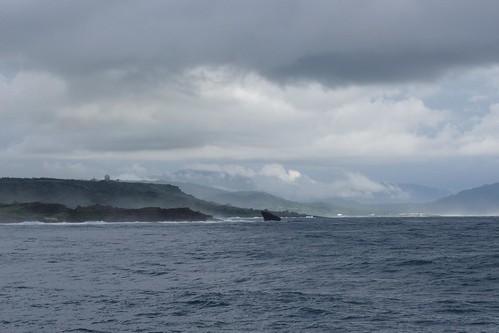
The coast off Kenting.

Rumors of the 4th Communique driven by Henry Kissinger under which the US sells out Taiwan are circulating in the local media... last week Randall Schriver, longtime Taiwan expert, said it was "unlikely". But the government put in a letter in the NYTimes pleading for the US not to sell out Taiwan for an agreement with China on N Korea. Some sort of agreement of this nature is always mooted whenever there is trouble with N Korea. As an expert explained to me, as Nork's nuke program develops the ability to put nukes on US western seaboard cities, pressure for a deal with China on N Korea will grow, and Taiwan is an obvious bargaining chip. What's amazing to me is that even after all these many years of dealing with China and N Korea, anyone can imagine that either party will keep a bargain....

+++++++++++++
US-CHINA/TRADE/TAIWAN...there's a rumor we're trying to track down that long-simmering dissatisfaction with the increasingly unwieldy US-China "S and ED" annual meetings (too many bureaucratic players leading to too much blah blah blah and consequently too little "deliverables") so the Trump folks may cancel the whole thing OR...this strikes us as the more plausible version...separate the "S" for security and "E" for economic into two more focused confabs.

Presumably a decision on this will be made in time for (and thus perhaps announced at) the early April Trump/Xi Jinping summit here in DC. No doubt you've also heard rumors that there will be a "4th Communique" resulting from this...and we frankly have to say we think there's a better chance of passing Trump/Ryan Care tomorrow morning...but perhaps you know better? For sure there are folks on Taiwan taking the rumor seriously:

Gov't concerned over reports US, China may sign 4th communique
The Taiwanese foreign minister says the government is worried the US and China will issue another communique that voices American support for the One China Principle. The Chinese language publication Liberty Times earlier carried a report that said former Secretary of State Kissinger was pushing for another communique that said that the US believed there is but one China and Taiwan is a part of China. This would overrule the last joint communique issued by the US and China, which said that while the US would not support either an independent Taiwan or "Two Chinas." Some reports have identified the upcoming visit to the US by Chinese President Xi Jinping as an occasion for the signing of such a document, possibly also limiting arms sales to Taiwan. Speaking to the legislature, Foreign Minister David Lee said, "We told them (the U.S.) that we don't want to see (the possible signing of a fourth communique) happen," and that the government has said that it hoped the US would stand by the Taiwan Relations Act and Six Assurances. He also mentioned that the Americans had spoken to their views of Taiwan, but FM Lee declined to specify what that meant.

Source: http://www.chinapost.com.tw/taiwan/intl-community/2017/03/23/494116/Govt-concerned.htm

Your Editor : never forget that one of Kissinger's hallmarks is self-aggrandizement, and while god knows the man has carved a legitimate role for himself in history, if he's pushing for Trump to completely trash the Shanghai Communique's real meaning (that is, the US takes no policy position on whether Taiwan is part of China) especially given what's behind the Trump/Tsai phone call...the strong support for Taiwan within his Administration and on Capitol Hill, not to mention the coming US arms sale package (?)...then we have to question the sanity of all involved.

But that leads us to a totally serious concern: Chinese officials have taken to declaring with a straight face that President Tsai is "moving toward declaring independence", and that proof of this is her "failure to endorse the '1992' consensus in language being demanded by Pres. Xi."

This risky, factually challenged demand thus puts Beijing in the position of deliberately risking the "status quo", since literally everything Tsai has said and done since declaring for the presidency a couple of years ago has been exquisitely calculated not to upset the existing Cross Strait status quo, despite pressures from her party's more extreme Pan Greens.

Worse, perhaps, to put "teeth" in this demand, political players in Beijing have taken to threatening a "unification law"...presumably to create the "lawful" threat of the use of force to "enforce the law"...as has been seen via China's armed Coast Guard in various maritime disputes with the neighbors.

If Kissinger wants to push a 4th Communique he might want to turn his talents to avoiding a deliberately set "crisis"...by Beijing?
_______________________
Don't miss the comments below! And check out my blog and its sidebars for events, links to previous posts and picture posts, and scores of links to other Taiwan blogs and forums!

Sunday, March 28, 2010

S Korean naval vessel sinking triggers Taiwan alert.

A South Korean naval vessel blew up and sank a couple of days ago. At present there is no reason to think that North Korea was involved, or that there is any threat to Taiwan. Nevertheless President Ma declared an alert (?) ("activated a national security mechanism"), as the Taipei Times reported:
Yu said military officials would stay on “high” alert, while the ­military would maintain ­regular ­operations and make adjustments when new information is received.

The ministry said that Chief of General Staff Lin Chen-yi (林鎮夷) and three deputy chiefs of general staff have been at the military’s Hengshan Headquarters — the nation’s emergency military command center — monitoring developments.
The Taipei Times then printed the government's reasoning in the context of DPP hacks on it for overreacting, in which Premier Wu appears to deny that there really was an alert:
Some Democratic Progressive Party (DPP) lawmakers yesterday said Ma’s activation of the national security mechanism was an over-reaction, with DPP Legislator William Lai (賴清德) chiding Ma for largely ignoring the more serious threat in the Taiwan Strait with China targeting more than 1,000 missiles at Taiwan.

At a separate setting yesterday, Premier Wu Den-yih (吳敦義) said the government’s response to the South Korean incident was “appropriate,” dismissing DPP allegations of over-reaction.

“It’s an appropriate reaction as the military did not increase the alert level. If we had not reacted then that would have been irresponsible,” Wu said.
It does seem like a bit of an overreaction. In June of 2002 the two Koreas fought a ull-blown naval battle. Taiwan, then under the Chen Administration, does not appear to have taken any unusual military preparedness steps (2002 Taipei Times story). Nor do events in Korea appear to threaten Taiwan in any way.
_______________________
Don't miss the comments below! And check out my blog and its sidebars for events, links to previous posts and picture posts, and scores of links to other Taiwan blogs and forums!

Monday, July 23, 2007

Beijing Controls the Maps

The Shanghaiist reports on illegal maps in China:

Among the many things one can do to make China "lose face" in the international eye:

1. Distribute toxic playthings to small children the world around
2. Kidnap and enslave hundreds of your countrymen and their children and force them to work in subhuman conditions
3. Crop the edges off a map

All three offensives have been committed in the last year, and all three were met with swift punishment. Granted, the map offenders have it a little easier than Zheng Xiaoyu (former director of the State Food and Drug Administration who will be executed for his role in the this year's tainted export debacle).

Six hotel chains have been found in violation of map standards regulated by the Shanghai's Mapping and Survey Management Office for failing to show the entirety of China -- in all its island-speckled, Taiwan-including glory -- on maps purporting to depict the nation. And by "purporting to depict the nation," we mean anything that is not clearly labeled to explain what it lacks. The Shanghai Daily gives on example:

What's interesting in these maps is what's not there. For example, China's claims to a whole Indian state, as well as the disputed areas that straddle the India-China frontier.

In fact, despite the 1996 agreement, several incidents of Chinese intrusions at Asaphi La and elsewhere in Arunachal Pradesh have been periodically reported in the press and discussed in the Indian Parliament. While no violent incident has taken place in the recent past, there have been occasions when Indian and Chinese patrols have met face-to-face in areas like the two "fish-tail" shaped protrusions in the north-east corner of Arunachal Pradesh. Such meetings have an element of tension and despite the best operating procedures, the possibility of an armed clash can never be ruled out.

In the western sector in Ladakh, the LAC is even more ambiguous as the lack of easily recognizable terrain features on the Aksai Chin makes it difficult to accurately co-relate ground and map. Both sides habitually send patrols up to the point where they assume the LAC runs. These patrols leave tell-tale signs behind in the form of burjis (piles of stones), biscuit and cigarette packets and other similar markers in a sort of primitive ritual to lay stake to territory and assert their claim.

In this light, the Chinese government's unwillingness to exchange maps showing the alignment of the LAC in western and eastern sectors, while at the same time talking of lofty guiding principles and parameters to resolve the territorial and boundary dispute, is neither understandable or condonable.

It can only be classified as another attempt to put off resolution of the dispute "for future generations to resolve", as Deng Xiao Ping had reportedly told Rajiv Gandhi in 1988.

The military gap between Indian and China is growing steadily. It would not be far-fetched to assume that China's strategy is to resolve the dispute when it is in a much stronger position in terms of comprehensive national strength so as to dictate terms at best, and maintain the status quo at worst.


China has settled some of its border disputes, but apparently they sometimes come unstuck:

The Qing emperor Kangxi (1662-1723) forced Korea, which at the time was a vassal state of China, to accept that the border separating the two countries should pass through the Paektusan peak. The region in which the volcano is situated is regarded as the cradle of the Manchu people. The squabble over Mount Paektu resurfaced under King Kojong (1864-1907), from the Korean Yi dynasty, but the Japanese occupation of the Korean peninsula put an end to any possibility of compromise.

The zone surrounding the volcano is inhospitable and uninhabited, and neither the Koreans nor the Chinese have tried to develop the region economically. The territory claimed by Pyongyang concerns 33 square kilometres around the Paektusan summit. In the case of Lake Chongji, the 1963 agreement established that three-fifths would be under North Korea’s control with the remaining two-fifths belonging to China.

In 1965, the standoff between China and the Soviet Union put North Korea in a very tight situation. Pyongyang needed the help of both countries: owing its existence to the former and its survival to the latter. Kim Il-Sung’s criticism of any deviation in the international communist movement was very badly received by Peking and tensions mounted between Kim and Mao. In order to punish the North Korean regime for its lack of support, China is thought to have demanded that the 160 square kilometres around Paektusan be conceded to it as compensation for the economic and military aid provided by Peking during the Korean War (1950-53)6. China abandoned its claim in November 1970 in order to improve relations with Pyongyang7. Between March 1968 and March 1969, various military skirmishes took place in the Paektusan region between the North Korean and Chinese armed forces. These were consequences of the tensions caused by the Cultural Revolution and the savage criticisms made of Kim Il-Sung by the Red Guards. During these years of unrest, Peking closed its border with its neighbour.

For the Koreans, Mount Paektu is entwined with their earliest history. According to legend, the God Hwanung (“the king come from the sky”) landed on the volcano to couple with a woman who then conceived a son, Tangun (“the king of the birch-tree”), who in 2333 B.C. founded the kingdom of Choson, regarded as being the first Korean state.

Furthermore, for the communist authorities of North Korea, Mount Paektu is the "sacred mountain of the revolution", the place of the most important guerrilla exploits in the 1930s under the command of Kim Il-Sung. After Mangyongdae, the village in which Kim was born, the volcano is without doubt the most venerated place in the DPRK. One of the best-known photographs of the former leader shows him at the summit of Paektusan contemplating Lake Chongji. This is proof of the North Korean desire to affirm its pre-eminence over this territory. An image of Mount Paektu also decorates the main fac,ade of the Korean Museum of the Revolution in Pyongyang, an enormous building that was constructed to the glory of the Great Leader’s revolutionary past.

The volcano's importance for the regime is such that North Korean propaganda affirms that Kim Jong-Il was born in a guerrilla camp on the Korean face of Mount Paektusan in February 1942. In actual fact, the present North Korean leader was born in the military camp of Vyatsk, near the city of Khabarovsk in the Russian Far-East, where his father was an officer in the Red Army. The goal of this manipulation is clear: to situate the birth of the communist dictator on Korean soil and in a symbolic place that is representative of the consciousness of the Korean people8. The DPRK’s leaders even invented the exact spot of his birth that has since become a place of worship and pilgrimage.

To justify its control over a part of Paektusan, Peking talks about compensation for its military support of North Korea during the 1950-53 conflict. For some time now Peking has been constantly referring to its concern for the protection of the region’s natural environment and for the development of the volcano as a tourist attraction10. China has a final argument to justify its control over Paektusan, which is that while the volcano may be sacred for Koreans, it is also sacred for Manchus11. Hiding behind the defence of the interests of Manchus, Peking rules out any negotiations that could lead to territorial loss in the area.

One success of Chinese propaganda on the Taiwan issue is that Taiwan is usually viewed separately from these other disputes. Yet it is linked to them by the drive of the current leadership to re-occupy, to the extent possible, the old Qing dynasty borders. Taiwan should be placed in the context of this larger drive of China for territorial expansion. And of course, against the modern race for resources in the South China Sea. Consider the Natunas, a decade ago. From this 1996 article in the IHT:

China told Indonesia last year that it had no claim to the Natunas but failed to give such an assurance for the gas field, which is situated 225 kilometers northeast of the main island in the Natuna group. Official Chinese maps show the gas field falling well within a line marking China's maritime jurisdiction.
.
The Indonesian military spokesman said that the armed forces had "no intention of provoking other countries by holding the joint exercise" from Sept. 2 to 18. But analysts said that Jakarta was increasingly concerned about Beijing's intentions in the South China Sea.

Frequently China's grab of Taiwan is presented as the "final piece of the puzzle." The reality is that it is only one of the first steps.

Friday, April 27, 2007

IHT: Taiwan Refuses Olympic Torch

It's all over the news, so go see it for yourself: Taiwan has become the first nation to ever refuse the Olympic Torch:

Within hours of Beijing's announcement Thursday of what would be the longest torch relay in Olympic history — a 137,000-kilometer (85,000-mile), 130-day route that would cross five continents and scale Mount Everest — Taiwan rejected being included.

"It is something that the government and people cannot accept," Tsai Chen-wei, the head of Taiwan's Olympic Committee, said in the Taiwanese capital, Taipei.

The episode underscores the deep mistrust between Beijing and Taipei, antagonists in an unresolved civil war, and how entwined the Olympics become with politics.

Aside from Taiwan, the torch is also supposed to pass through another political hotspot, the Himalayan region of Tibet which China has controlled for 57 years, often with heavy-handed rule. Four American activists were detained by Chinese authorities Wednesday on Mount Everest after they unfurled a banner calling for Tibet's independence.


So what's interesting? Well, everyone knows that China seeks to annex Taiwan, so naturally, they sent the torch through Taiwan and thence to Hong Kong and into China, a "domestic" route. More interesting than that, though, are the two stops prior to that, Vietnam and North Korea. The Taiwan News reported yesterday:

Wu Ching-kuo (吳經國), Taiwan's sole IOC member, urged the public not to link the torch to politics, stressing that the torch relay should be a purely athletic event.

Speaking to reporters in Beijing, Wu said that he thought the route proposed by Beijing was reasonable. He said that because the land of North Korea and the land of Vietnam are both connected to mainland China, Wu said, Beijing decided that the torch should pass through Pyongyang and Ho Chi Minh City before entering Taipei.


Korea and Vietnam are both places that China has traditionally viewed as culturally subordinate to China. In recent years China and Vietnam have been adjudicating a new boundary, one that activists in Hanoi claim gives too much land to China. There was also a flap a couple of years ago about Chinese claims to Korea via slanted claims about Korea history.

It is clear that Beijing considers this route between Taiwan and Hong Kong a domestic one. The question is, what other parts of the route are seen as domestic in Beijing?

Sunday, April 22, 2007

North Korea as future ally of US?

My friend John alerted me to this interview on NPR with New Mexico governor Bill Richardson on his recent trip to North Korea. The money quote:

Does the U.S. at this point approach North Korea from a weakened state since that country knows full well that this country's military is stretched rather thin?

Well, they know that we still have huge resources, and they are always complaining about U.S. military exercises. Interestingly, North Korea sees themselves eventually as an ally of the United States; in other words, as an ally against China. They see themselves as playing a strategic role as a buffer between the United States and China. I'm not sure how realistic that is, but it's interesting that they see themselves, first, as a major power, and secondly, as having the same interests in Asia as the United States and other countries — which is basically to contain China a bit.


Probably just a case of the N. Koreans telling the US what it wants to hear. But it is interesting in light of right-wing attacks on the South Korean government and their dreams of attacking North Korea. A writer at the left-wing publication Zmag notes:

Washington assumed that China and North Korea were indeed as "close as lips and teeth" as the two countries liked to say. This was not, however, correct. First of all, Pyongyang skillfully played Beijing and Moscow off one another to get the best economic and political deals. Second, North Korea patterned its entire philosophy of self-sufficiency - juche - as a repudiation of what it termed the "flunkeyism" of Korea's previous position in the Chinese tributary system. Third, China's embrace of market reforms after 1979 raised not a few eyebrows among the North Korean leadership, not because the latter was rigidly opposed to economic experimentation but rather because it thought Beijing naïve about the political ramifications of the reforms.

He also observes:

The underlying challenge for the United States has been to ensure, if not a divided Korea, then at least one that is aligned with Washington. But what would happen if anti-American sentiment in South Korea (which is, more accurately, anti-Bush administration sentiment) combines with more deeply engrained anti-American sentiment in the North? Korean nationalism is a potent force, and many South Koreans have been secretly pleased at North Korea's missile launches and nuclear program for these don't pose a threat to the South and are, ultimately, Korean missiles and nukes.

Bill Richardson is currently a candidate for President for the Dems. His official site is here.