Showing posts with label Reuters. Show all posts

Tuesday, June 06, 2017

Reuters is... still Reuters

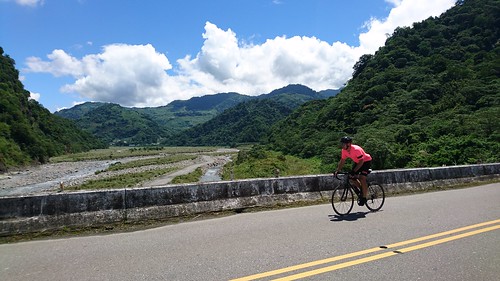
Rivers in full bore this week.

Salieri: How... Did my work please you?
Mozart: I never knew that music like that was possible!
Salieri: You flatter me.
Mozart: No, no! One hears such sounds, and what can one say but... Salieri!

The strongest spring rains in decades have caused agricultural losses over $2 million US, with thousands of households affected by flooding and water shortages. Unfortunately that is not enough, human scum are preying on the unsuspecting with a new variation on an old scam. Scammers are calling people, telling them their houses have been destroyed in a flood, and then demanding they deposit money in a certain account. My family members and friends have been trawled for cash this way. The scammers are hoping that they can take advantage of panic to extract some cash. These people are vermin. I hope they all end up doing time in Chinese jails...

The mention of scams, of course, leads me to contemplate the beauty of Reuters this week. As usual, Reuters inserts anti-Taiwan editorializing into its "reporting", and then appears to deliberately mistranslate China's response to President Tsai this week, so that the reader misses its import, and omits the amused reaction in Taiwan which properly contextualized the Chinese spokesman's remarks.

First, the Reuters "report" of Tsai's remarks:
Tsai said that the biggest gap between Taiwan and China was democracy and freedom, needling Beijing at a time when relations between China and the self-ruled island are at a low point.

"For democracy: some are early, others are late, but we all get there in the end," Tsai said, writing in Chinese on her Facebook page and tweeting some of her comments in English on Twitter.

"Borrowing on Taiwan's experience, I believe that China can shorten the pain of democratic reform."
Reuters childishly characterized Tsai's remarks as "needling" Beijing and then added a particular context: relations are "at a low point".

This structure is built out of three common media tropes: (1) that Taiwan "provokes" Beijing; (2) that tensions occur mysteriously for no reason, and are never assigned an identifiable cause; and (3) Taiwan's pro-democracy side is always interrogated, deconstructed, and negatively presented.

First, let's reimagine Reuters' editorializing as an actual, neutral news report:
Tsai said that the biggest gap between Taiwan and China was democracy and freedom, an argument made by many analysts of the differing cultures of the two sides. Since Tsai became president, Beijing has chilled relations between China and Taiwan.
The failure of the western establishment media to simply report, never mind resolutely protect democratic values and democratic governance, is one of the great failures of our age.

The next paragraph then gives the Beijing-centric view of things:
Beijing distrusts Tsai and her ruling Democratic Progressive Party because it traditionally advocates independence for Taiwan. Beijing says the island is part of China and has never renounced the use of force to bring it under its control.
Another common trope, in which Beijing's expansionist POV is presented with no mention of what Taiwan thinks. Why not add that polls show the majority of Taiwanese do not want to be part of China? Why not say, equally truthfully, that based on history, the majority of Taiwanese "distrust" Beijing?

Note that the word "distrust" is used to characterize Beijing. Seriously: is there anything that Beijing trusts? The word is simply an editorial insertion intended to create more negativity around the idea of independence and the DPP.

But that was only the beginning for Reuters this week. It then (apparently deliberately) mistranslated the response of China's Taiwan Affairs Office to Tsai...
China's Taiwan Affairs Office said only mainland Chinese had the right to speak on mainland affairs, while suggesting Tsai could better spend her time reflecting on "the widespread discontent" in Taiwan and the "reasons behind why cross-strait relations had reached an impasse".
However, "only Mainland Chinese" was not what the TAO official actually said, and Reuters must know this, which is why they have paraphrased, and not directly quoted that particular section of the officials remarks. The original remarks caused hilarity in Taiwan....
中國國台辦發言人馬曉光表示,「只有中國人民最有發言權」,並指讓兩岸關係陷入僵局的台灣當局和民進黨,應該進行深刻的反思。
The bolded part is the actual remark: "only Chinese people have the right to speak". The term "mainland" was nowhere used. Taiwanese were ROFL when they heard these remarks, reading them to unconsciously reveal the feeling that Tsai herself pointed to in her speech the previous day: that Taiwanese are different from Chinese. A connection Reuters could have made...

Speaking of revealing, how about yet another hidden slant? Chinese officials are quoted in the two Reuters reports:
On Friday, Chinese Foreign Ministry spokeswoman Hua Chunying said China had long ago reached a conclusion about June 4.

"I hope you can pay more attention to the positive changes happening in all levels of Chinese society," she said without elaborating.

China's Taiwan Affairs Office said only mainland Chinese had the right to speak on mainland affairs, while suggesting Tsai could better spend her time reflecting on "the widespread discontent" in Taiwan and the "reasons behind why cross-strait relations had reached an impasse".

"We are closer than any other point in history to the goal of the great rejuvenation of the Chinese people," office spokesman Ma Xiaoguang said in a statement sent to Reuters.

"(Taiwan authorities) should not divert attention and shirk responsibility while further inflaming cross-strait antagonism."
Note that while Tsai is described as "needling" Beijing, no Beijing official is described in a similar way. The TAO official "suggests" even though he is obviously abusing Tsai. Neutral language such as the word said is used to describe statements by Beijing's blowhards, which are not contextualized in any negative way -- they are not said to occur during a period of low relations between the two sides.

Tsai is thus a victim of a third common media trope, in which statements from Taiwan (run by a pro-democracy party allied to the west!) are constantly interrogated, deconstructed, and negatively contextualized, while statements from Beijing are presented without comment.

The anti-Taiwan slant is painfully obvious. And painfully sad.

Meanwhile, with lips firmly curled in a patronizing upper class sneer, the Economist discussed Tsai's economic policies this week.
...Less noticed is that Ms Tsai has, for now, won over one important group: investors. Cash inflows from abroad have made Taiwan’s stockmarket and currency among Asia’s best performers. Foreign direct investment in the electronics industry has also surged.
The Economist was obviously hoping to gleefully report that Tsai had ruined the economy, since it had spent so many years cheerleading for Ma Ying-jeou (who did vast harm to the economy and Taiwan, all unreported by the Economist). It must have been painful to them to contemplate LSE graduate and neoliberal Tsai doing well, so they hurriedly added:
The government, to be sure, cannot take too much credit...
But then, with patrician fairness, they conceded...
Nevertheless, without a deft touch from Ms Tsai, things could have been worse. It is easy to forget that, a year ago, the odds seemed stacked against Taiwan’s economy. Falling exports had tipped it into a recession. Slowing smartphone sales pointed to little relief ahead. Most worrying was the political backdrop, with Ms Tsai caught between her supporters, many of whom crave independence, and China, which demands that she acknowledge Taiwan to be part of “one China”.

Ms Tsai has, so far at least, steered a middle course, neither ceding ground to China nor taking actions that might provoke a harsh response. Investors, judging that cross-strait relations are frosty but generally stable, have felt confident enough to scoop up Taiwanese assets. The $8.3bn in foreign direct investment in Taiwan last year was more than triple the 2015 amount and the highest on record. If exports remain strong, the economy has a good chance of beating the government’s forecast of 2% growth this year.
They then discuss the good news from the economy, and close with editorializing reporting:
Ms Tsai’s economic strategy has three main prongs. First is an NT$882.4bn ($29.3bn) infrastructure stimulus, covering projects from the railways to renewable energy. Second, she wants to lessen Taiwan’s reliance on China with a “New Southbound Policy”, of closer ties with countries in South-East and South Asia. Finally, Ms Tsai is crafting an industrial policy to promote innovation, talking, for instance, about creating an “Asian Silicon Valley”.

All sensible enough, but each prong, on closer inspection, looks flimsy. The stimulus will be spread over eight years, providing a smaller boost than advertised. Variations of the southbound policy have been tried for decades: the smaller economies of South-East Asia are no substitute for the Chinese giant next door. And just about every country aspires to foster innovation; few succeed.
Note that none of the second paragraph is supported by any evidence, fact, or argument. It is pure negativity. One could just as well as have editorialized:
All sensible enough, and each prong, on closer inspection, looks intelligent. The stimulus will be spread over eight years, offering a steady boost to local governments and local economies, as well as re-orienting local patronage networks on the DPP. Variations of the southbound policy have been tried for decades: the smaller economies of South-East Asia have in recent years been better trade partners for Taiwan than the Chinese giant next door, And just about every country aspires to foster innovation; yet Taiwan has a track record of successful innovation in firms of all sizes.
But just to be certain that the reader is left with a negative feeling, the Economist concludes with a decontextualized negative quote from Gordon Sun, and then negatively again, with the worry that things might not work out. Because god forbid the western media say something positive about hoi polloi from the democracy side in Taiwan's politics. My god, do those people even know how to use a salad fork?

Oh yeah, about that Southbound policy? Taiwan News reported on the flimsy-looking Southbound policy this week:
Citing statistics compiled by the Ministry of Finance, the DGBAS said exports to the regions totaled US$21.14 billion between January and April for a gain of 15.6 percent, compared to the 13.6-percent increase in the nation’s global exports over the same period.
It's too early to say anything for certain, and the Economist could have taken that uncertain, more neutral position.

But didn't.
_______________
Daily Links:
______________________
Don't miss the comments below! And check out my blog and its sidebars for events, links to previous posts and picture posts, and scores of links to other Taiwan blogs and forums!

Sunday, May 21, 2017

With Reuters on the job, who needs Xinhua?

Just a lovely day in the hills around Taichung

Jenna ripped Reuters this week for publishing another hallucinogenic article on Taiwan. Jenna nailed two common problems...
Taiwan President Tsai Ing-wen is signaling she needs more give and take from China to rein in hardliners on an island China considers its own, officials say, but Beijing is unlikely to budge months before its five-yearly Communist Party Congress.

"Hardliners"?

Wanting your country which is already independent to continue to be that way without the threat of war is not a hard-line stance. Not that many of us want a formal declaration of independence right now (well, I do, but I know I can't have it and I've made my peace with that). We know it's impossible for the time being, but are working toward it happening, peacefully, someday. How does this equate to being a 'hardliner'?
It's amazing, as I often note, that you can lock up dissidents, implement massive national surveillance, carry out campaigns of terror and murder in occupied areas, threaten the nations around you with war and expand into their territories, but if you oppose that and want to live in a peaceful democracy... you're a hardliner. The real hardliners live in Beijing and threaten to plunge the region into war.

Jenna also puts her finger on another problem: the constant interrogation of and deconstruction of pro-Taiwan, pro-democracy language and positions, while nothing similar occurs with Chinese claims:
A spokesman for China's Taiwan Affairs Office said last week everything wrong with the current relations could be blamed on the DPP and its refusal to accept "one China".

"No matter what new flowery language the DPP comes up with, it can't shift its responsibility for this reality," spokesman An Fengshan said.


No attempt to critique this? None? Not even a few words to deconstruct what An Fengshan is saying? Tearing apart pro-Taiwan semtiment but silently accepting Chinese annexationism?
There's more to say, and Jenna says it (Go thou and read!) but I'd like to point out one additional thing: Reuters' "interpretation" of Tsai's posture is very close to a flat out lie -- indeed, the only thing that saves it from becoming a lie is that it is an interpretation. What did they say?
Taiwan President Tsai Ing-wen is signaling she needs more give and take from China to rein in hardliners on an island China considers its own, officials say, but Beijing is unlikely to budge months before its five-yearly Communist Party Congress.

As she marks one year in office on Saturday, Tsai, leader of the ruling independence-leaning Democratic Progressive Party (DPP), is facing a surge in anti-China[sic, should be pro-Taiwan] sentiment amid pressure from Beijing on the proudly democratic island to bow to its "one China" policy.

It is becoming more difficult to hold the line against independence-minded constituents and even tougher for Tsai to offer concessions to Beijing, one senior government official told Reuters on the condition of anonymity.
This is simply rank nonsense, from an anonymous source, of course. We will pass another year, and another, and the "hardliners" (pro-Taiwan types) will be fine. The idea that Tsai is bargaining with Beijing to "hold the line" against "hardline" independence types is pure fantasy. They are not a majority either in Taiwan or even within the DPP. Rather, as the AP article correctly notes, Tsai is focusing on domestic reforms, where she is receiving immense pressure.
Yet, the island's first female president seems focused on policy initiatives at home as well as maintaining robust relations with the United States, Taiwan's most important source of arms and political support.
Compare Reuters' nutcase description of Tsai's position with this great piece at Ketagalen Media on Tsai's difficult balancing act. (Note also that the AP piece forthrightly assigns to Beijing the blame for cutting off relations). Brookings also has a one-year review. The deeper reviews all missed Tsai begging for help with hardliners... how could have happened?

As for the "Tsai wants Beijing to help her with hardliners" interpretation of Reuters... lets see. I think everyone else reporting on this missed it...
  • Is that in the government media's report of Tsai's speech (FocusTw)? Nope. That's domestic focus. 
  • In the domestic private English language media (Taiwan News). Nope, again, the focus is on domestic issues. 
  • Is it in the longer and very good AP report on the speech? Nope -- in fact that clearly states "The only serious political pressure Tsai faces comes from the opposition Nationalist Party..." 
  • How about Bloomberg? Surely they would have noticed Tsai begging Beijing for help. Nope, lots of data, but apparently they missed Tsai begging Beijing for help with the hardliners pressuring her from below. 
  • Over at the European Council on Foreign Relations, they somehow missed Tsai begging Xi for help.
  • Taipei Times also fails to discover that Tsai is frantically signaling Xi
Wow... so brilliant of Reuters to notice what everyone else missed, eh? Not!

If you are using Reuters as an information source on Taiwan, you are being misled. Badly.
_______________________
Don't miss the comments below! And check out my blog and its sidebars for events, links to previous posts and picture posts, and scores of links to other Taiwan blogs and forums!
Saturday, June 25, 2016

Oh Noes China stops communication with Taiwan = UPDATED=

A driveway in the mountains

Reuters reports that China has stopped talking to Taiwan via the "communication mechanism" because Tsai won't recognize the faux "1992 Consensus"....
But China has insisted she recognize something called the "1992 consensus" reached between China's Communists and Taiwan's then-ruling Nationalists, under which both agreed there is only one China, with each having their own interpretation of what that means.

In a brief statement carried by the official Xinhua news agency, China's Taiwan Affairs Office said that since May 20, when Tsai took office, Taiwan has not affirmed this consensus.

"Because the Taiwan side has not acknowledged the 1992 consensus, this joint political basis for showing the one China principle, the cross Taiwan Strait contact and communication mechanism has already stopped," spokesman An Fengshan said.
Note first that Reuters, knowing the 1992C is faux, shies away from concretely reporting on it. No time or place of agreement is mentioned, all is vagueness. Moreover, this presentation is wrong: China has never recognized the codocil "each having their own interpretation", which was invented and promoted by KMT politicians.

If you think about it logically, it appears that Tsai could totally agree, with Taiwan's "own interpretation" being that Taiwan is not part of China. Once you realize how absurd that is, it is easy to see that what China wants to say is that Taiwan is part of China -- the 1992 Consensus is just an old whine in a new blargle.

As I've always said, the 1992C exists only to put the pro-Taiwan forces in a box.

China is really engaging in media management: making China look more fierce than it is (cue the ZOMG TAIWAN IS TENZ! articles). China knows that the media will report "tensions" which in turn will cause people in Washington to argue that Taiwan ought to be suppressed. But this is 2016, not 2006, and China is causing trouble all along its borders. The case that Taiwan is the problem is difficult to make in the face of China's omnibelligerent posture.

In fact Taiwan and China will continue to talk to each other across a range of actors and organizations. This is just another one of those non-punishment punishments, that cost China nothing -- like reducing group tourist quotas while ignoring the travel agencies shifting to individual tourist visas.

ADDED: Ben Goren of Letters from Taiwan pointed out on Twitter that this news is being released now because Tsai is transiting the US... typical petty Chinese hogwash...

UPDATED: The NY Times has an otherwise good piece on it that cites Cabestan and Sullivan, two serious experts on Taiwan, but apparently there is no Google in their office....
China has several methods by which it could further constrain Ms. Tsai. It could seek to lure away Taiwan’s few remaining diplomatic allies with promises of lucrative infrastructure investments. It could also place restrictions on Chinese tourism to the island, which has increased significantly in recent years, becoming a bright spot for the otherwise struggling Taiwanese economy.
Tourists are a net loser for Taiwan, and exist only because China hopes to establish patronage links within the Taiwan economy, and to help the KMT further its patronage links in local areas. It seems that the alleged "positive effect" of Chinese tourism is now a Journalistic Fact and journalists will never discover that reality is the opposite.

Of course, the NYT reports the cut-off as "a sign of growing friction". Wrong. The friction is always there, and always the same. It just manifests itself variously. But sexy headlines about tension attract clicks and sell papers.

UPDATED: The international media is as predictable as the sunrise. Here is Reuters imaginatively writing: Tensions between China and Taiwan rise again over 'One China' policy.

UPDATED: A commenter observes:
Has Reuters slipped up and actually acknowledged the fact that only the KMT were in on this so-called deal, and that it has nothing to do with public opinion, there was no mandate from the people, and no space in which such a deal could have been discussed. This is the closest I've seen in the international media to a tacit admission that the talks were merely party to party.
Almost looks that way. Though Reuters couldn't note that both were dictatorships and no democratic process intervened in this "Consensus" on either side.

REF: AIT Burghardt on the 1992 Consensus just today.
_______________________
Don't miss the comments below! And check out my blog and its sidebars for events, links to previous posts and picture posts, and scores of links to other Taiwan blogs and forums!

Sunday, June 03, 2012

Reuters Interviews President Ma: Human rights gone astray?

Reuters published an article on its interview with the President....
Asked about blind activist Chen Guangcheng, whom China recently allowed to travel to the United States to study after a diplomatic row between Beijing and Washington, Ma said Taiwan was concerned about rights in China, particularly in light of there being a million people from Taiwan on the mainland.

"We hope the mainland can face some of the issues that have happened in the past and can treat dissidents well. We are looking at this from the point of view of kindness, not based on Western human rights values, but traditional Chinese values."
There is a transcript up now in Chinese at the President's Office.
我們長期以來關心中國大陸的人權問題,並不是刻意要干預他們的內政,而是目前有100多萬的臺灣人在大陸工作、就學及經商,因此他們的權益也要受到保障,例如最近我們與中國大陸談判的「投資保障協議」,其中就包含一些有關個人安全及自由的保障,這是不可避免的,我們當然會關心。我認為兩岸在這方面還有一些差距,如果能夠縮短,就能有效縮短兩岸人民的心理距離。在過去幾年中我經常提到這一點,我們會持續關心這個議題,希望大陸能夠務實面對過去所發生的一些問題,同時善待異議人士,我們的出發點是善意的,而我們的依據不是西方價值,而是傳統中國價值。
Note that in the transcript currently online, there is no mention of "human rights" here. Hence interpretation of the President's meaning is complicated by the issue of what he actually said. The text in Chinese simply says "...but what we are basing this on is not western values, but traditional Chinese values." Has "human rights" been dropped from the transcript? Such editing of transcripts is hardly abnormal.

Since the questions here were probably scripted -- indeed during Ma's first term there was much 'criticism' of the President's speaking to reporters in English, which appeared to actually be support for a move to exert greater control over the questions that reporters ask.

Judging from the other comments made in that paragraph, it looks like Ma is searching for common ground with China, as he always does. This probably should not be read as something anti-western so much as it is his normal pro-China boilerplate about "reducing differences" between the two sides and appealing to shared Confucian values. These are favorite themes, the locals just shrug them off.

There is plenty of stuff on economics, which is Reuter's primary focus, after all. The report notes that Ma is attempting to get FTAs with other trading states. Very curious to see whether Beijing will let that occur. Ma also mentioned the talks with the US, which got hung up on the beef issue. Also very curious to see whether both sides are genuinely interested, or are merely playing the same kind of game as Taipei and Washington have been playing with the F-16 purchase.
_______________________
Don't miss the comments below! And check out my blog and its sidebars for events, links to previous posts and picture posts, and scores of links to other Taiwan blogs and forums! Delenda est, baby.

Monday, February 05, 2007

Daily Links, Feb 5, 2007

Lots of really great stuff the last couple of days.

  • First, congratulations to local English blogger David Reid, whose spot of the Kiss-n-ride signs at the HSR station sparked an article by Reuters, which also featured Dan Bloom, a local expat.
  • Prince Roy's thoughtful post on his trip to Guguan sparked a number of comments. Should he blog in Anglais or Chine? You make the call...
  • Graeme at Taoyuan Nights has an absolutely fantastic post on how to get a little more interest on your hard earned cash.
  • When you're done puzzling out Graeme's post, you can deal with Scott Sommers' massive essay on English teaching here. Another fantastic post.
  • Jerome gives us bloggers a standing ovation.
  • Battlepanda discovers that the java at McDee's is better than Starbucks.
  • YouTube monster Mordeth13, who posts on his travels around Taiwan, had his account closed by YouTube, according to the emKid.
  • Joseph Chen travels around Taiwan by GPS.