Wednesday, March 15, 2017

Former President Ma Indicted

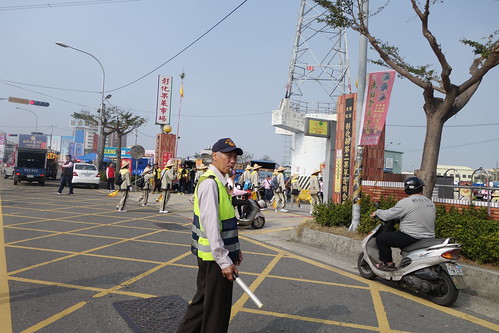
Stopping traffic for a procession

President Ma was indicted yesterday on charges of leaking state secrets (SCMP):
The Taipei District Prosecutors Office alleges Ma violated the Communication Security and Surveillance Act and the Personal Information Protection Act. The former president could face up to three years in jail on the charges. “Ma chose an improper way to deal with what he believed were political flaws and responsibilities involving cabinet members,” prosecutors office spokesman Chang Chieh-hsin said.
The Special Investigation Division (SID) was tapping the legislative phone system. I wrote at the time:
Readers may recall that Legislative Speaker Wang Jin-pyng had been publicly accused by the President of influence peddling by calling the Minister of Justice and having him tell the prosecutors not to appeal a not guilty verdict against Ker. The DPP politicians also said that the SID had been monitoring the prosecutor in the Ker case, which the SID admitted. They admitted that they monitored her 12 year old daughter, accidentally, since she was using her mom's phone (SCMP). They then switched to the husband's phone which Lin Hsiu-tao was using, musical phones being a common feature of busy families.

It is striking that no transcript of the alleged phone calls telling the prosecutor to lay off Ker has been produced by the SID, since it has leaked transcripts of Wang Jin-pyng's phone calls. Indeed, the lack of such leaks suggests that no such transcripts exist. This tends to support Wang's claims that he was just comforting Ker and hadn't done anything.
Allegedly Ker Chien-ming, the DPP whip, called Wang Jin-pyng, then the KMT speaker, and asked him to lobby the prosecutor and the Minister of Justice in a case involving Ker. Transcripts of Wang's words with Ker were leaked, but no transcript of Wang talking to either of the other two was leaked. Wang insisted that he had done nothing illegal, and no evidence was produced that he had.

This information was given to Ma by SID Chief Huang Shih-ming. The DPP had long been claiming that the SID, which began its career prosecuting Chen Shui-bian, was a political tool designed to be used by the President against his perceived political enemies, and in that moment, their claims were totally vindicated. Huang would later be indicted and convicted over that leak. That does not bode well for Ma.

But then President Ma Ying-jeou, who saw Wang as a rival and underling, and who had beaten Wang in a previous KMT Chairmanship election, completely lost it. He was apparently primarily angry at Wang because Wang would not shove that awful, unpopular services pact with China through the legislature. Wang, the unofficial leader of the Taiwanese KMT, knew that his people in the legislature would never vote for it.

Ma went public with the accusations that Wang had engaged in influence-peddling, saying that he had shamed Taiwan's democracy. He also attempted to have Wang kicked out of the party and removed as speaker. This lead to the situation described in the letter from THRAC, which really did threaten Taiwan's democracy:
By reporting to the president and then releasing the transcript at a press conference — without laying any charges — the SID grossly violated laws requiring nondisclosure of its investigations and has confirmed suspicions that it is a political tool of the KMT. There are also questions about the legality and propriety of the wiretap.

....

These actions constituted (to use his words) “improper influence at the highest level,” abuse of the office of president and violation of the separation of powers fundamental to a democracy. Ma then acted in his capacity as KMT chairman to have Wang’s party membership suspended and remove him as a legislator-at-large.

This confusion of Ma’s two roles as president and party chairman looks like a return to the old party-state practices of the KMT.

Third, contempt of the legislature. By using an internal KMT party process to remove its speaker, Ma has seriously violated the rights of the legislature. The speaker of the legislature is elected by its members. The legislature oversees the president. Now Ma has used his power as party chairman to become the overseer of the legislature. This has serious implications for KMT proportional vote legislators who must worry about a party chairman who can remove them so easily.
The KMT also had the Ministry of Foreign Affairs describe Wang as a "former speaker" on its website. Wrong.

The crisis devastated the KMT, and even caused the NT to fall in value. It also left Ma's reputation in tatters (fallout described in this post here and here). Ma and Wang went to court over Ma kicking Wang out of the KMT, and was beaten twice -- Eric Chu later dropped the suit to preserve KMT unity.

And it was, by all accounts, totally illegal for Ma to make that information public to attack Wang. Which is how we got to this indictment this week in the "September Strife". Taipei Times reported:
The Taipei District Prosectutors’ Office completed its investigation into the 2013 wiretapping case and alleged that Ma had abused his authority by divulging classified information, as well as breaching the separation of political and judicial powers, Deputy Chief Prosecutor Chang Chieh-chin (張介欽) said.

Chang said Ma has been charged with offenses related to public officials divulging state secrets that are unrelated to national defense, thereby contravening the Criminal Code; public officials divulging classified information obtained in the course of communications surveillance by the authorities, thereby contravening the Communication Security and Surveillance Act (通訊監察保護法); and unauthorized use of private information outside of a public official’s duties, thereby contravening the Personal Information Protection Act (個人資料保護法).

“The defendant called on then-prosecutor-general Huang Shih-ming (黃世銘) to visit the president’s official residence on Aug. 31, 2013, to report on the findings of the wiretapping. This breached the law on the use of personal information obtained under surveillance and the divulging of classified information,” he said. “The defendant instructed Huang, top aide Lo Chih-chiang (羅智強) and then-premier Jiang Yi-huah (江宜樺) on Sept. 4, 2013, in talks where classified information relating to the wiretapping case was discussed. This constitutes offenses of inciting others to divulge information obtained during telecommunications surveillance and violations of personal privacy.”
The prosecutor in this case is the same one who went after Ma before for his downloading of government funds into his private accounts. Ma did not dispute that he had done so, but his defense was that the special funds were intended for that purpose. He was found not guilty, of course.

Ma maintains he is innocent. He is facing a rain of lawsuits now that his presidential immunity ended, with Ker Chien-ming's lawsuit against him in its final stages after three years.

I consider it very unlikely he will ever do time. If he gets sentenced, it will be the kind of sentence that can be commuted to a fine.

But it is good to see the system working. All three former democratically elected presidents have been indicted, but the attacks on Chen Shui-bian and Lee Teng-hui were politically motivated. This long running case -- remember, before you claim this is some kind of pan-Green revenge on Ma, that SID Chief Huang was convicted during the Ma Administration -- represents the actual functioning of rule of law as a check on anti-democratic action by the chief executive.

Good!
_______________________
Don't miss the comments below! And check out my blog and its sidebars for events, links to previous posts and picture posts, and scores of links to other Taiwan blogs and forums!

Me on Bill Sharp's show

The very kind Bill Sharp was kind enough to give me a few minutes on his show to talk about the KMT.
_______________________
Don't miss the comments below! And check out my blog and its sidebars for events, links to previous posts and picture posts, and scores of links to other Taiwan blogs and forums!
Wash Times: Trump Administration to give arms Obama Admin blocked

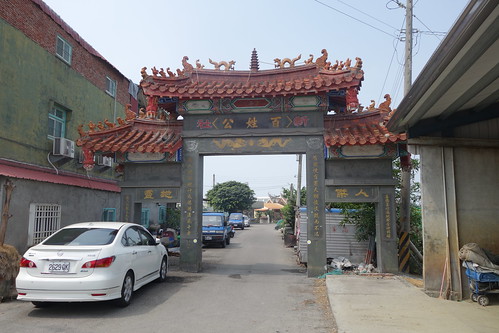
The red letters of this temple gate say "new village".

From the Nelson Report. A good example of how the Chinese shaped Obama Administration China policy via the threat of China's "anger." *sigh*. ADDED:  Rupert Hammond-Chambers said on Twitter that the Obama Administration was concerned about the climate deal with China. LOL. As if either the Trump Administration or Beijing would adhere to it.....

+++++++++++++++

A COMING TRUMP DECISION...REVISE AND EXTEND THE OBAMA ARMS SALE PACKAGE TO TAIWAN...Loyal Reader Bill Gertz has an interesting piece in The Free Beacon with a headline accusing President Obama of a last-minute cave-in to China, cancelling a $1-bil arms sale package. But Your Editor's reading of the piece is it seems to report that on balance, the cancellation is really just a "postponement", since Obama assumed the Trump folks will certainly come up with their own.

And the Gertz argument also encompasses the possibility that Obama was spooked by the Tsai-Trump phone call and didn't want to add to Beijing's angst, and thus prompt a dangerous over-reaction from Xi...surely a legitimate concern?

CSIS's Bonnie Glaser agrees with some of that, followed by Bill's original piece:

Chris,
I think Gertz is right that State and Defense approved the package and the White House killed it. It is possible that the decision was made after the Tsai-Trump phone call not to notify Congress of the pending sale. But it is also possible that the Obama administration did not want to approve an arms sale in its final days because it didn't want to offend China and undermine the President's legacy with Beijing. It doesn't make sense to me that Obama officials would have wanted to leave the package on the table for the next administration. The Obama team anticipated that there would be a lot of friction with China under Trump. It would have made more sense to approve the package in December so there would be less pressure on the Trump administration to make an early arms sale, which would further exacerbate tensions.

Obama White House Blocked Needed U.S. Arms Sale to Taiwan
Trump set to sell more arms

BY: Bill Gertz
March 14, 2017 5:00 am

The Obama administration blocked a $1 billion arms sale to Taiwan in December that was needed to improve the island's defenses despite approval from the State Department and Pentagon, according to Trump administration officials. The scuttling of the arms package was a set back for U.S. and Taiwanese efforts to bolster defenses against a growing array of Chinese missiles and other advanced weaponry deployed across the 100-mile Taiwan Strait.

The action coincided with a controversial pre-inaugural phone call Dec. 2 between then-President-elect Trump and Taiwan's President Tsai Ing-wen. It could not be learned if the arms package, which was ready to be announced publicly in December was derailed by the Obama administration because of the phone call.

The new Trump administration is now preparing to provide more and better defensive arms to Taiwan, said administration officials familiar with internal discussions of the arms sale. The new arms package, however, is not expected to be made public until after Trump meets with Chinese leader Xi Jinping next month. White House officials said the meeting is set for early April at Trump's Mar-a-Lago estate in South Florida.

Secretary of State Rex Tillerson also will visit China later this month. Taiwan is expected to be a major topic of discussion for both the summit and Tillerson's visit. "There's a process for these things that's being followed," a White House official said of the arms package. "The Trump administration takes America's commitment to Taiwan's security very seriously."

Other officials said the arms package was set for release to Taiwan and formal notification to Congress in December. But National Security Council staff officials blocked it, setting back the process of supporting Taiwan with defensive arms considerably. The approximately $1 billion included parts and equipment needed for the Taiwan military's ongoing modernization of its arsenal of 1980s-era F-16 jet fighters along with additional missiles.

The approved package was held up by Avril D. Haines, the Obama White House deputy national security adviser. Haines did not return an email seeking comment. Former Obama administration spokesman Ned Price confirmed that the administration held up the arms package. He told the Washington Free Beacon that neither Haines nor others in the Obama White House "unilaterally blocked the package that was under discussions, which was relatively modest."

"In consultation with State and DoD, the Obama administration decided not to move forward with it in the final days of the administration," Price said, adding that one factor was that "we thought it would be a useful package for the next administration to pursue in their time because it was well-calibrated to strike the balance we typically try to achieve consistent with our commitments under the Taiwan Relations Act." One administration official said the package also included communications, intelligence surveillance, and reconnaissance gear that would bolster the Taiwan military's command and control systems.

This official said one positive aspect of the failure to send the latest arms is that pro-China officials in the U.S. government who oppose helping Taiwan will no longer be able to argue internally that the United States had fulfilled its obligations under the 1979 Taiwan Relations Act with the package. The act requires the United States to provide Taiwan with defensive weapons. "Now we can start from scratch with a truly useful arms package once the assistant secretaries are in place," the official said, referring to working-level political appointees at the Pentagon and State Department.

State Department spokesman Mark Toner had no immediate comment. pentagon spokesman Cmdr. Gary Ross said he does not discuss "pre-decisional matters."

"The objective of our defense engagement with Taiwan is to ensure that Taiwan remains secure, confident, free from coercion and able to engage in a peaceful, productive dialogue to resolve differences in a manner acceptable to people on both sides of the Taiwan Strait," Ross said, noting U.S. arms sales support that goal. "We strongly believe that our policy has contributed to stability in the Taiwan Strait by providing Taipei with the confidence needed to pursue constructive interactions with Beijing."

The official Taiwan government office in Washington had no comment on the arms package. Taiwan officials are looking forward to working closely with the Trump administration in upgrading defenses. The Taiwanese are considering the development of indigenous fighter aircraft and submarines and are hoping the United States can provide technology for the arms.

Former State Department official John Tkacik said the failure to release the arms package in December was a mistake. "It is truly alarming that the White House, in its last month, would ignore a defense transfer recommendation endorsed by both the State and Defense Departments, especially after the incoming president had already signaled his support of a strengthened security relationship with Taiwan," Tkacik said.

Tkacik said it is likely that Obama administration officials in charge of Asia policy, after eight years of giving the Chinese free rein in Asia, were unhappy with Trump's tough posture toward Beijing. "If the new National Security Council can't move forward afresh with strengthened defense supplies to Taiwan, given State and Pentagon recommendations to do it, I'm afraid the new administration will lose its momentum, like Obama's people did, and simply resign itself to letting Beijing take over in Asia," he assed.

Randall Schriver, a former assistant secretary of state and assistant secretary of defense, said the Trump administration should increase arms transfers to Taiwan. "China's growing capabilities combined with an intent to put greater pressure on Taiwan should compel us take a serious look at increasing our security assistance to Taiwan including support for its indigenous submarine program and making available a [vertical, short-take off and landing] fighter aircraft," he said.

Rick Fisher, an expert on Asian military affairs, also voiced concern. "It is extremely disappointing that the Obama administration would not release this final arms sales package before leaving office, but at a deeper level, that it did not exercise the leadership to accelerate this F-16 upgrade package first approved in 2011," said Fisher, senior fellow at International Assessment and Strategy Center. The delay in upgrading the jets means China has gained six years on deploying advanced fighters jets and next generation short and medium range ballistic missiles that threaten Taiwan.

Fisher warned that China is preparing for a possible invasion of Taiwan in early 2020 and the Trump administration should provide new military capabilities for the island to help deter any Chinese attack. "We are really up against the wall; if we cannot devise the right package of fifth generation capabilities, be it new F-35 fighters, submarine technologies, new, cheap, long range anti-ship cruise missiles and energy weapons, then we will face the threat of Chinese invasion of Taiwan perhaps as soon as the early 2020s," Fisher said.

Taiwan in January began upgrading its force of 144 F-16s. The jets will be outfitted with active electronically scanned array fire-control radar that analysts say can detect radar-evading stealth aircraft. New avionics equipment also is being added along with advanced AIM-9X Sidewinder air-to-air missiles. The last arms package for Taiwan was announced in December 2015 and was worth $1.83 billion. It included two Perry-class Frigates, Javelin anti-tank missiles, TOW anti-tank missiles, and amphibious assault vehicles. Command and control hardware, F-16 gear, Phalanx Close-In Weapons Systems and Stinger surface-to-air missiles were also part of that package.

In December, China's military conducted a show of force with a squadron of jet fighters and a bomber that circled Taiwan Dec. 10. U.S. EP-3 and RC-135 reconnaissance aircraft shadowed the Chinese jets during the incident, along with a long-range RQ-4 Global Hawk drone aircraft. The Chinese saber rattling against Taiwan coincided with Trump's phone call with Tsai.

China also protested a provision of the fiscal 2017 defense authorization bill that was signed into law in December. The new law contains language calling on the Pentagon to conduct a program of senior military exchanges with Taiwan. Current policy has limited military exchanges between U.S. and Taiwanese officers despite a requirement under the Taiwan Relations Act for the United States to defend Taiwan against a Chinese attack.

The phone call between Trump and Tsai in December was the first time an American president had spoken directly to Taiwan's president in decades and prompted protests from Beijing, which views Taiwan as a break away province. The United States does not accept China's interpretation of the so-called One-China policy and regards the Beijing-Taipei dispute over Taiwan's status as unresolved.

"Interesting how the U.S. sells Taiwan billions of dollars of military equipment but I should not accept a congratulatory call," Trump tweeted Dec. 2. Trump has taken a hard line against China, mainly over unfair trade and currency practices. After the Dec. 2 call, he also suggested the United States might abandon the One China policy and adopt more favorable Taiwan policies. However, Trump later reiterated U.S. support for the American interpretation of the One China Policy.
_______________________
Don't miss the comments below! And check out my blog and its sidebars for events, links to previous posts and picture posts, and scores of links to other Taiwan blogs and forums!
Tuesday, March 14, 2017

Breaking: Ma indicted over Wang case leaks

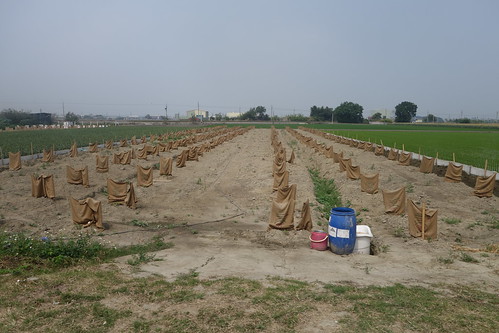
Baby papaya plants protected from the wind.

UPDATE: Taiwan News report in English
UPDATE: Solidarity with English translation of UDN report

Former President Ma indicted for leaking state secrets during the MaWang mess (old post). Apple Daily in Chinese. Will update as more news rolls in...
_______________________
Don't miss the comments below! And check out my blog and its sidebars for events, links to previous posts and picture posts, and scores of links to other Taiwan blogs and forums!
Monday, March 13, 2017

Final comments on whether Chiang set up 2-28


In Formosa Betrayed, George Kerr’s foundational work on the 2-28 massacre, he describes the provision of intelligence on Taiwan to the US government by the Republic of China (ROC) government in Chungking during WWII, saying:
"In addition to these reports on subversion potential, and on specific communications and industrial objectives, we also received from Chungking a long report on Formosan-Chinese leaders, and on Formosans who were exiles in China."(p14)
The report had been prepared by an exiled Formosan whom Kerr identifies as a notorious schemer, but this brief remark is a window into a world generally neglected in historical writing on 2-28. After opening that window, we can ask: did Chiang Kai-shek and the KMT set up the massacre so they could murder the local leadership, which otherwise might oppose KMT rule?

The problem of historiography
Formosa Betrayed opens with a discussion of US policy toward Formosa during the war, then presents the background of Chen Yi, who would become governor of Formosa in 1945, and then briefly covers the expectations of Formosan leaders in 1945. Kerr then moves on to the arrival of the US and ROC leaders in Taiwan, and from there to a narrative of the development of the revolt.

Similarly, in A Tragic Beginning: The Taiwan Uprising of February 28, 1947, another commonly cited work on 2-28, Ramon Myers and Lai Zehan, after setting the stage in the first chapter, move on to a detailed discussion of the people of Taiwan under Japanese rule, followed by a chapter describing the establishment of KMT rule in Taiwan.

This pattern of presenting the Taiwan experience of Japanese rule, followed by the beginning of KMT rule on the island, is true of almost all presentations of 2-28’s history, long or short. Even the Wiki page on the event offers a Background that briefly describes the experiences of Taiwan and its people under Japanese rule, followed by a somewhat longer explication of KMT rule. It then presents the revolt.

There’s a key element missing: this discourse emphasizes the continuity of the Taiwanese experience with Japanese Formosa while ignoring the continuity of KMT experience with Japanese Formosa.

Instead, the KMT in Taiwan in 1945 is always presented as if it had simply parachuted in from China with little or no prior knowledge of Taiwan. Chen Yi’s trip to Taiwan and background is often mentioned, but the KMT’s extensive knowledge of Taiwan and Taiwanese in the prewar era typically draws no attention. Kerr, for example, writes:
“Chiang's personal power within China derived from his consummate skill in playing off one powerful Party or Army faction against another and his family alliance with the leading industrialists and financiers. In mid-year 1945, the so-called Political Science Group was the faction momentarily in the ascendant at Chungking. When a temporary committee was established to plan for the "Provisional Government of Taiwan Province," a member of this group became the Chairman.

This was Chiang's friend General Chen Yi.”(p47)
Kerr provides detailed information on the relationship between Chen Yi, the Soong family, and Chiang Kai-shek, yet tells us nothing about this committee or of the KMT’s knowledge of Formosa. What was its understanding of Formosa? What were its information sources?

Instead of presenting a chapter on the extensive and detailed knowledge the KMT had of Taiwanese and their politics on Formosa, most writers simply give Chen Yi’s background in Fujian and his trip to Taiwan. This unconsciously signals the reader that no other knowledge exists or is necessary. Thus, Chen Yi’s Taiwan-related background comes to stand in for the KMT’s background on Taiwan.

This neglect of the KMT’s connections to Formosans and its knowledge of their political positions functions as an apologetic for Chiang and the KMT in its own right. If the reader never learns of prior deep KMT knowledge of Taiwan, the reader will never make the connection to possibility that Chiang planned it all. Indeed, that possibility is disallowed by the discourse.

It also underpins further apologetic positions, such as the oft-heard “Chen Yi misled Chiang” or “Chiang was too distracted by events in China” and so forth. Such comments only make sense if the analytical context is that the KMT and Chiang were completely ignorant of Formosa prior to the KMT's arrival there in 1945, and Chen Yi was the Party's sole major connection to Taiwan. But that is totally untrue.

As we have seen in my two other posts (here and here), the KMT had deep knowledge of Taiwan’s politics and its major leaders. But there’s another issue with Chen Yi I’d like to highlight.

2-28 was a reprise. When Chen Yi was governor of Fukien province, he imprisoned and killed students protesting for stronger anti-Japanese members, along with members of the People’s Political Councils. According to Kerr, Chen Yi brought in the big state monopolies and Japanese businesses, and drove thousands of small traders into bankruptcy.
“In the period of Chen Yi's governorship the Province of Fukien was systematically looted. Hot-headed students demonstrated, rioting broke out again and again, and Chen Yi reacted without mercy. The brutality with which students were tortured and killed in Fukien set something of a record even for China”(p55).
The province was “systematically looted” according to Kerr. Sound familiar?

When Chen Yi was posted to Taiwan, there were protests from both Chinese and from expatriate Formosans living in China. Indeed, it was Formosans who were familiar with Chen Yi’s record from Fujian who were among his biggest critics after he took over Taiwan. These vociferous criticisms and predictions were of course known to the KMT and to Chiang.

Did Chiang set up 2-28? Either Chiang understood the consequences of Chen Yi’s appointment and meant for something like the revolts in Fujian to happen so that a generation of Formosan leadership could be wiped out, or he was completely indifferent to the fate of Taiwan, or he was stupid beyond belief.

Yet remember, when you pick, that whatever his innumerable faults, one strength Chiang had was strong political skills...

UPDATE:
Great comment

Anonymous Anonymous said...
Actually quite some research has been done on the preparation committee you mention (especially by Taiwanese historians and published in Chinese). [mt: yeah, so its influence on the construction of the discourse on KMT entry into Taiwan is limited]. Among other things, the committee did not have any Taiwanese members when it was founded in April 1944. CKS insisted on putting some Taiwanese on only after the first few months, but even then their influence remained restricted. The whole thing was more for show and to appease the few voices within the KMT, who argued for Taiwan's incorporation into China, most of whom were banshan.

The committee eventually did publish a report and made all kinds of suggestions about the future rule of Taiwan, it even mentioned the possibility of some kind of self-rule. Of course, all those suggestions remained non-binding in the end and the government opted for what was in fact a military occupation. One of the main reasons being that the KMT didn't even know if the Taiwanese, in particular the soldiers, were actually going to welcome them (remember that Taiwanese in general were still despised by the KMT high echelons during the war and seen as collaborators and/or slaves of the Japanese [sound familiar?]).

I think it's also important to remember the larger historical context here, namely that the KMT had never considered "getting back" Taiwan before the Cairo Conference in late 1943, when the allies winning the war had already become an increasingly realistic scenario. However, they were surely not prepared for the rather sudden end of the Pacific War. This is easily forgotten, but by August 1945 there was just no internal consensus among KMTers of how to rule Taiwan after the war, which was another reason CKS opted for the military occupation. The military occupation had nothing to do whatsoever with what the committee had been working on.

Nothing of this exculpates CKS of course, quite to the contrary. He might have not really been able to anticipate the situation in Taiwan, but as you said, he did know Chen Yi and he gave him all the powers to do as he wanted.
_______________________
Don't miss the comments below! And check out my blog and its sidebars for events, links to previous posts and picture posts, and scores of links to other Taiwan blogs and forums!
Sunday, March 12, 2017

Links and Short Shorts for Sunday

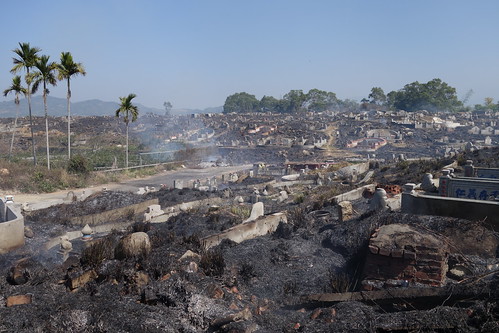
They called out the fire trucks for this one. Someone's ritual burning at a tomb started a fire that swept the cemetery and then started burning the trash and structures closer.

Some links....

_______________________
Don't miss the comments below! And check out my blog and its sidebars for events, links to previous posts and picture posts, and scores of links to other Taiwan blogs and forums!

Some sugar for you

Today I rode my familiar route from Taichung down to the Chiayi HSR. It's a flat 120 km ride. I hadn't ridden in a while, and wanted a workout.

It's not a particularly pleasant ride, but I have a sneaking fondness for it, because I have done it so many times. The ride traverses a large swath of central and southern Taiwan, and you can get a good sense of what is going on with new restaurants, signs, politics, and so on.

Occasionally this: in Huwei the old sugar line is still in use, still transporting sugar cane to the sugar refinery...
_______________________
Don't miss the comments below! And check out my blog and its sidebars for events, links to previous posts and picture posts, and scores of links to other Taiwan blogs and forums!

This is why I keep this blog going

Milo Thornberry passed this week. He was an amazing human being. Sad that I never knew him. Dan Bloom, whom many of you are familiar with, sent me this story.
"Well, to make a long story short. I never told anyone this before except for Milo a few years ago, actually when the book was published.

As I think you know I arranged for the English edition of his memoir to be published with Sunbury Press in Philadelphia. I knew the publisher and I knew he could publish a book like Milo's memoir quickly, so I called Milo on the phone and said "Milo, I can set up your book for publication. Want to do it?" Because Milo at that point had given up trying to get a book published, all he got was rejections from publishers in the USA,

But....I had never heard of Milo before. I didn't know him. I had never heard of him...But one day, while reading your website, I came across a link you hotlinked to "a blog by Milo Thornberry about his work in Taiwan during the Martial law period"...so curious, I clicked on the link and found Milo's blog. In which he lamented that he had written a book length memoir about his life in Taiwan in the 1970s but could not find a publisher. Having a direct line to God, I emailed Milo and asked for his phone number. He gave it to me. I called him. I said Milo, I can get your book published. As a paperback, no fees or payments on your part. Want to try it? He said Yes! and Larry Knorr at Sunbury published the book.....so now you know the rest of story.

Without your link that day when i just happened to have chanced upon his blog link from you... I never would have made his acquaintance
That's why I run this blog...
_______________________
Don't miss the comments below! And check out my blog and its sidebars for events, links to previous posts and picture posts, and scores of links to other Taiwan blogs and forums!
Saturday, March 11, 2017

Taiwan News Latest: DPP on Drugs, don't worry, be happy

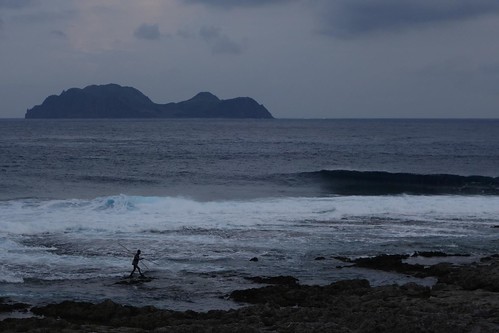
Net fishing on Lanyu

“They wanted to have a good time, but they were like children playing in the street; they could see one after another of them being killed--run over, maimed, destroyed--but they continued to play anyhow.”

Taiwan's anti-drug regime has a dual nature: it is absolutely brutal, yet has a strong rehabilitative element. I look at it in my latest piece for Taiwan News...
Although it is not often remarked on, side by side with the loud regime of strict punishment to restore society’s moral order by scapegoating an outcast is a quiet regime of rehabilitation, forced rehab in the case of repeat offenders. It is important to note that the DPP Administration did not advocate disturbing any of this. Although DPP politicians have from time to time joined the call to punish drug use more severely, by and large the DPP has avoided the KMT’s harsher approaches.
The "War on Drugs" was announced in 1993 by then-premier Lien Chan. Drugs suck twice over: first they destroy you, then the government steps in and destroys you again. Lien's order destroyed the lives of many people only harming themselves. Fortunately, as I note in the piece above, in 1994 the government also moved to impose a rehabilitation regime. This means that in Taiwan drug users have the twin status of patients and criminals.

According to one of the papers I read in preparation for this, the reason for the KMT administration's decision to make war on victims was simple: the US was also promoting its own costly and destructive War on Drugs, and the KMT wanted to curry favor with the US. It also saw participation in international "anti-drug" efforts as a way to align itself with the international community and raise the ROC's profile, in the KMT's never ending religious quest to become a recognized state.
_______________________
Don't miss the comments below! And check out my blog and its sidebars for events, links to previous posts and picture posts, and scores of links to other Taiwan blogs and forums!

Friday, March 10, 2017

Nelson Report: Mike Fonte sets Former President Ma straight

Can't wait to get back out to the east coast when the weather is good.

At Brookings (and often elsewhere) Ma probably deliberately conflated the one China principle with the one China policy. Not many people can sort out the difference, especially with our incompetent media out there screwing it up all the time. But of course Fonte does...

+++++++++++++++++++++

US-CHINA-TAIWAN...Loyal Reader and valued adult supervisor Mike Fonte, the official DPP rep here in DC, sends this:

DPP U.S. Mission Response to comments on cross-strait relations by former President Ma

Following remarks by former Taiwan president Ma Ying-jeou in a public address at The Brookings Institution in Washington, D.C., this afternoon, the DPP U.S. Mission issued the following response from Mission Director, Michael J. Fonte:

In his 3/7/17 Brookings speech, former President Ma Ying-jeou consistently and wrongly conflated the "one China principle" with the "one China policy."

The US does not recognize China's "one China principle," which claims the PRC's territory and sovereignty include Taiwan. Former President Ma stated that President-elect Trump, talking about his call with Taiwan's President Tsai Ing-wen, "complained about the one China principle and why the US has to abide by that." Trump did not use "one China principle."

In his Fox News interview, Trump said, ""I fully understand the 'one China' policy, but I don't know why we have to be bound by a 'one China' policy unless we make a deal with China having to do with other things, including trade."

Ma also said that President Obama, asked about the Trump statement in his Dec. 16, 2016 press conference, also used "one China principle." Not so. Obama noted how important "the idea of one China" is to the Chinese and why one must approach the Taiwan issue with care, but he never used "one China principle."

The US's "one China policy" is quite clear regarding Taiwan's sovereignty - the US acknowledges, but does not recognize, the Chinese position regarding Taiwan as part of China. For the US' one China policy, the Taiwan sovereignty question is undetermined and it is up to both sides to peacefully and mutually agree to a resolution.

Ma's long discourse on the "92 consensus" left out one vital fact: for the PRC, the 1992 consensus means "one China"-the PRC. Full stop. There are no "different interpretations" in the PRC articulation. In response to a question, former President Ma said the "92 consensus" is the "traffic regulation" one must follow if one is to cross the bridge between China and Taiwan. Given that China has rejected "different interpretations," this is a slap in the face to the Taiwanese people.

Ma should have learned long ago: foreign policy critique ought to stop at the water's edge.

Michael J. Fonte
Washington Director
Taiwan DPP Mission in the US
_______________________
Don't miss the comments below! And check out my blog and its sidebars for events, links to previous posts and picture posts, and scores of links to other Taiwan blogs and forums!

Tuesday, March 07, 2017

Links-n-Stuff

A view to a hill.

The tragic but humorous story of the man who returned home only to find it torn down by a construction company engaged in "urban renewal".
Chang, who lived on the fourth floor, said the building had collapsed and accused SWJ of tearing down his home.

Chang said that after he left the meeting, in which the two sides failed to reach an agreement, he was hit by a scooter and had to go to a police station to give an account of the accident, which he said was a ploy by the firm to stall him.

SWJ president Cheng Ko-shi (鄭可熙) said the company did not mean to tear down Chang’s home, but only the first three floors, whose owners had agreed to the renewal project.
I guess they expected the fourth floor to just hang in the air...
_______________
Daily Links:
_______________________
Don't miss the comments below! And check out my blog and its sidebars for events, links to previous posts and picture posts, and scores of links to other Taiwan blogs and forums!
Sunday, March 05, 2017

Latest Taiwan news piece: Did Chiang plan for 2-28 to happen?

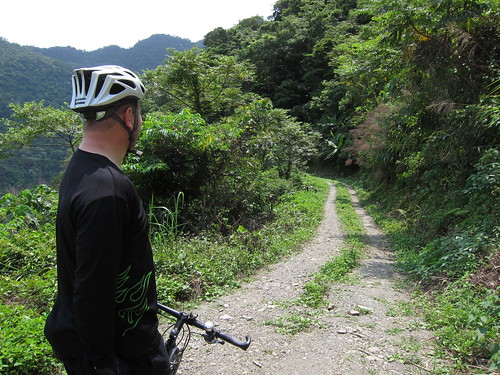
Downhill on gravel: not fun

Interesting news: a Chinese official said that China needs to have more contact with Taiwan's elected officials. Apparently some in China are coming to the conclusion that its policy of ignoring the DPP is hurting its ability to influence Taiwan...

Taiwan Sentinel hosted a good piece on Ma's discussion with Jerome Cohen, which basically consisted of Ma spouting nonsense about history and Cohen nodding indulgently and letting the former president say whatever he wanted, unchallenged. Cohen was asked by the local China people to address Ma as "Mr Ma" and not president, etc. Ma's twisting of history is the normal KMT practice...

...speaking of KMT history twisting, I am exploring the idea that Chiang Kai Shek probably planned for 2-28 to occur. I looked at it in a previous post. But I developed the idea further in my most recent Taiwan News column:
The KMT had abundant information on Japanese Taiwan, including lists of prominent leaders and their political positions, the Home Rule movement, and extensive information on the island's political and industrial infrastructure. In Formosa Betrayed George Kerr avers that "In addition to these reports on subversion potential, and on specific communications and industrial objectives, we also received from Chungking a long report on Formosan-Chinese leaders, and on Formosans who were exiles in China."

Moreover, Taiwanese in KMT China were closely watched by the KMT, especially after the war began in 1937. Arbitrary arrest and detention of Taiwanese in China was common, and many, even those working for the KMT, concealed their Taiwanese origins. In Fujian the local government set up internment camps for Taiwanese and hundreds were arrested, interned, and had their property confiscated.
The highest echelons of the KMT handed down the KMT's Japan-war policy of identifying Taiwanese as Japanese empire subjects like Koreans and Okinawans. It's hard to imagine how decision-makers in KMT could be aware of Taiwanese and could possess lists of who and what was important in Taiwan, including the Home Rule movement, and yet not know what would happen when it oppressed Taiwan.

The KMT was well aware of the home rule movement in Taiwan. These contacts began quite early, right after the KMT was formed. Years ago a Taipei Times editorial on the perennial topic of KMT historical revisionism observed:
It is also worth noting that when Lin Hsien-tang (林獻堂), the father of the Formosan home-rule movement, met Tai Chi-tao (戴季陶), a close associate of Sun Yat-sen, in Tokyo in 1913, Tai told him that the KMT was too busy in China to provide any assistance in Taiwan and that if the Taiwanese wanted to remedy the harshness of Japanese colonial rule they should look to Japanese liberals for help.
...that was in 1913. In fact Lin had also talked to prominent Chinese intellectual Liang Qiqiao, who had fled to Japan and remained there until 1912, and Liang had told him the same thing.

But let's not forget, during the entire Japanese period Taiwan was a political issue in Japan's domestic politics, and the KMT could hardly have failed to be aware of this. For example, in the early 1920s one of the domestic political parties was a champion of the Home Rule movement. Moreover, Taiwanese student organizations formed in major cities in China after 1922, hoping to garner KMT support by advocating a Han-based nationalism. This movement opposed the Taiwanese home rule movement, but still saw Taiwan as a nation separate from China, and incorporated strains of Leninist and Communist thinking.

The KMT would also have been aware of Japanese repression and Taiwanese resistance, of the revolts the island had suffered. They would have known that Taiwan was revolt-prone...

There is no question: the Chiang and his KMT would have had minute, extensive knowledge of the Taiwan's politics...

Of interest: Ma was criticized this week by deep Blue KMT ideologue Alex Tsai for saying that Chiang should be held accountable for 2-28. LOL.
_______________________
Don't miss the comments below! And check out my blog and its sidebars for events, links to previous posts and picture posts, and scores of links to other Taiwan blogs and forums!

China demands its students tender ears don't hear any political truths at Taiwan Unis

An idyllic fishing spot.

Wow, did this story ever embarrass the MoE and the university system. When it first broke three days ago, the story was six universities had signed contracts with universities in China, known as the 'one China' contracts...
Five more universities in Taiwan are confirmed to have signed controversial agreements to exclude politically sensitive topics or activities in textbooks or courses offered to Chinese students studying at their schools following Shih Hsin University in Taipei City.
Then Liberty Times reported that it was more like half the universities in Taiwan, including most of the major government-run public universities. This brought out the Education Ministry to deny the claim, saying...
Deputy Education Minister Tsai Ching-hwa denied the claim, as well as a second claim that the Education Ministry's own investigation found that "at least 30" universities had signed such agreements.

Tsai said the ministry was still waiting for local universities and colleges to respond to its inquiries and therefore could not have provided such numbers.
This is probably part of some standard contract, which basically all universities in Taiwan sign as part of the student exchange program, and it includes the standard clauses that China always enforces when it makes agreements anywhere, not just in Taiwan. Shamefully, many places accept them. The Taipei Times reported that pressure had risen since Tsai came into office:
National Taiwan University secretary-general Lin Ta-te (林達德) said demands by Chinese institutions that the university sign a “letter of agreement” as a precondition for academic exchanges soared after President Tsai Ing-wen (蔡英文) assumed the presidency in May last year.
The universities pointed out that Chinese students need the signed agreement so they can pass vetting at home.

Like I always say, to get closer to China is to get farther from democracy.

Students from China have been coming to Taiwan universities for a decade, and I have never heard anyone say privately or publicly to me that we should shy from political topics. I have worked at several universities in that period and none have sent down orders to me. These appear to be pro forma. I have many Chinese students in my classes and no one has taken me aside to warn me not to say anything, which could easily happen since my politics are public. Indeed, Chinese students have discussed them with me on many occasions, invariably warmly and politely. They are good students, and I look forward to seeing them in my classes and clubs...
_______________________
Don't miss the comments below! And check out my blog and its sidebars for events, links to previous posts and picture posts, and scores of links to other Taiwan blogs and forums!
Thursday, March 02, 2017

Slavery: the way of the Taiwanese boss

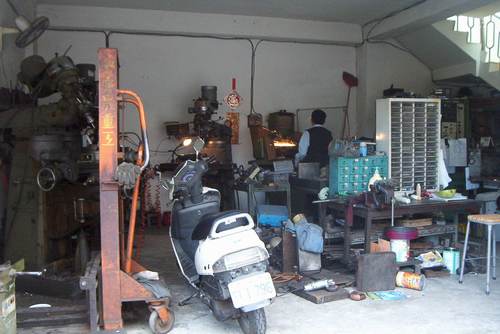
A home factory in Taichung

News came out early this week of a dried tofu factory that had held two migrant workers for 14 years...
Kaohsiung police raided a dried tofu factory and rescued four migrant workers who had been locked inside on the second floor of the factory for up to 14 years and forced to work 15 hours every day.
The factory was fined a massive $1.2 million NT, or about $40,000, for stealing nearly 30 years from two people. Outrageous. Nobody is going to do any jail time despite the gross violation of the law. The government vowed to step up inspections. Yeah, right.

If only we hadn't heard this tune before. 35 Indonesian women forced into factory and maid work via false marriages in 2007. 35 Filipinas forced into the sex trade in 2014. 2010 Filipino workers in a glass factory complain of abuse. State Department reports in 2008. There are just so many... last year an extensive report on the rampant slavery in Taiwan's fishing fleet. BBC in 2014 on same topic. Every year brings the same stories of exploited foreign workers.

But these are just extremes, produced by a brutal work environment with long hours, low salaries, and indifferent government enforcement of the labor laws. Taiwan News reported a while back...
Taiwan has long been criticized for its government's loose management of work hours and a prolonged period of low wage growth. Many employers were found to have failed to comply with all of the work hour regulations, including forcing laborers to work unpaid overtime. Attorney Chen You-xin of the Via Justice Law Office was quoted in the Apple Daily earlier as saying that many local workers in Taiwan either voluntarily or are forced to forgo their annual leave entitlements due to heavy workloads without any financial compensation.
Taiwanese even work longer hours than Japan...
_______________________
Don't miss the comments below! And check out my blog and its sidebars for events, links to previous posts and picture posts, and scores of links to other Taiwan blogs and forums!

Taiwanese in China and their Multiple Identities, 1895-1945


From "Taiwanese in China and their Multiple Identities, 1895-1945", Chap. 4 in Multicultural Challenges and Redefining Identity in East Asia by Nam-Kook Kim (Google Books). In the initial years, the Chinese called the Taiwanese "scoundrels" and viewed them as rogues and criminals...

But who were these people? "Taiwan-registered" people in China were largely not from Taiwan. Most of them were Chinese who had acquired Taiwan registration and legal immunity. The various Chinese governments, including the governments of Amoy and Fujian, made repeated protests to the Japanese government over the problem of Chinese falsely assuming Taiwanese registration. But the Japanese, while agreeing to do something, actually did nothing, since such individuals served their interests. The author observes that if you look at the issue, you actually find that it was the Chinese who had bogus Taiwan registration who constituted the majority of the bad'uns...
Chinese used several approaches to gain Taiwanese registration, including joint ventures with Taiwanese, and "renting" Taiwanese IDs, a time-honored approach. Of course, many Taiwanese were involved in the opium trade themselves.

According to the writer, the dislike of Chinese for Taiwanese shifted in the 1930s. As China and Japan began to clash, Taiwanese became the objects for intense hatred for being Japanese. As a result, Taiwanese began concealing their identities when working in China. Some took on fake provincial identities as Fujian or Guangdong people so they could register for school.Others pretended to be Chinese who had lived in Taiwan. In addition to treating Taiwanese as Japanese, the Chinese also treated them as barbarians who lay outside civilization, shengfan ("raw savages").

During the KMT era and the war with Japan, things worsened... but I will discuss that tomorrow...
_______________________
Don't miss the comments below! And check out my blog and its sidebars for events, links to previous posts and picture posts, and scores of links to other Taiwan blogs and forums!