Thursday, September 24, 2015

Nelson Report: Additional Responses to Richard Bush =UPDATE=

I love these curves.

The Nelson Report sent this around, responses to Bush as well as other comments.

+++++++++++++++

UPDATE: Bush responded to the comments below in a subsequent issue of the Nelson Report:

BUSH:

To suggest that Tsai is misreading her adversary is not to "lament" (as some of your correspondents seem to feel); it's to suggest the need for realism. At that CSIS conference, I think Mike Green referred to "coercion", not "force". One could expand the list of issues (e.g. adding Hong Kong) by saying that in many/most cases, Xi has taken a hard line and expected the other side to back down and make concessions.

As to requests that I say what Obama should do...here's the last part of my essay on the Brookings blog:

+++++++++++++++

THE TAIWAN DEBATE...following on our Report last week on the excellent CSIS conference with keynote speaker Shelly Rigger, and our quoting former AIT president (and Cap Hill colleague) Richard Bush this week, two notes from the "green" side of the equation, bearing in mind that Formosan Association of Public Affairs, home of the first correspondent, is not the DPP, the political party now seen as a mortal lock to return to the presidency in January, which follows.

Richard is on travel and may get back to us on this later in the week:

GERRIT VAN DER WEES:

Dear Chris,

I saw you posted Richard Bush's piece on the return of the Taiwan issue to US-China relations. I would agree with the main point that Bush seems to be making through this article: for Beijing to exercise restraint, and "watch the walk, not the talk."

Where I have a problem with this piece is on the one hand the tone and tenor, where he explains/describes the Beijing position as a principled given fact, and on the other hand the quite often not so helpful description of events / positions on the Taiwan side, giving the impression that it is Taiwan / Tsai Ing-wen that will have to adjust their position.

In particular the phrase "Beijing isn't buying the vagueness" and his description of "radical populist groups" are setting the tone in a very wrong fashion: with Taiwan's blue-imbued press this can easily lead to distorted headlines such as "American academic says DPP policies are vague" or "US analyst says third parties are radical." Precisely because Richard is in such a prominent / sensitive / delicate position he should know to avoid statements like that.

Tsai Ing-wen has been as clear as she can be: she is for "a consistent, predictable, and sustainable relationship with China" (her CSIS speech in June). The ball is now in China's court: Xi needs to show he is a responsible stakeholder and is willing and able to maintain peace and stability in the Taiwan Strait. Relations would indeed improve significantly if he accepts Taiwan as a friendly neighbor. Clinging to vague anachronistic concepts such as the "92 Consensus" is not helpful. Even Lee Teng-hui who was president in 1992 has stated repeatedly there was never a consensus in 1992. So one needs to move to new concepts that are more sustainable.

And the description of Taiwan's third force groups as "radical populist" is not very helpful either. They are about as "radical" as the Brookings Institution itself is ... in the views of those on the right fringe of the US political spectrum.

So, Richard has correctly described that there is a new political landscape in Taiwan, but it would be good if main thrust of the argument would be more in the direction that this newly democratic Taiwan presents an opportunity for China to elevate X-Strait ties and work towards normalization of relations, instead of the gloomy specter of souring relations across the Strait that pervades so much of the "thinking" in the thinktanks in Washington.

Best regards,

Gerrit
Gerrit van der Wees
Editor Taiwan Communiqué www.taiwandc.org

MIKE FONTE, DPP rep here, brings in yesterday's NSC brief, which we sent out in full last night:

Chris:
Thanks for your reporting on conversations re. Taiwan and the possible DPP presidential and legislative victories in January. The CSIS/Brookings event provided much to chew on. In his Brookings post, Richard Bush, as always, did as well.

In front of the Xi Jinping visit, the Administration has reiterated its position re Taiwan and the upcoming elections. NSC Adviser Susan Rice was straightforward, as is her wont, on 9/21 at Georgetown: "Our fundamental interest is in peaceful and stable cross-Strait relations, and we oppose unilateral changes to the status quo by either side."

Dan Krittenbrink (9/22) expanded a shade on his boss' words:

First of all, we respect Taiwan's democratic process; we will not interfere in it. And as Ambassador Rice made clear yesterday, our longstanding position on cross-strait issues remains unchanged. The U.S. One-China policy based on both three joint communiqués and the Taiwan Relations Act remains unchanged. Our fundamental interest is in cross-strait stability. Those key elements there, those are our bottom lines. Those will not change. And any discussion on Taiwan cross-strait issues between our two presidents will take place along those lines.

Assistant Secretary of State Danny Russel added this note:

And we will always make clear when the issue arises that we place great importance on the maintenance of stability across the strait, that we respect, as Dan said, the right of the people on Taiwan to exercise democratic rights, and we'll continue to counsel restraint on the part of Beijing in order to maintain and to build trust and stability there.

The DPP presidential candidate, Tsai Ing-wen, made clear in her CSIS June speech that she is fully committed to a consistent, predictable, and sustainable relationship with China. She will push for the peaceful and stable development of cross-strait relations in accordance with the will of the Taiwanese people, based on the existing ROC constitutional order and the accumulated outcomes of more than twenty years of negotiations and exchanges.

Her finely wrought phrases show as much diplomatic finesse as the US position in the Communiqués where the US "acknowledges" but does not "recognize" the Chinese position that Taiwan is part of China.

Restraint is her middle name and she will not make any unilateral changes, all the while striving to build trust with China and its leaders.

I do not think much credence should be given to Ho Syu-yin's CSIS note that Tsai might be swept up in the "momentum toward Taiwanese independence" which he discerns or in Richard's worry that "small radical populist groups motivated by anti-establishment and anti-China sentiments" might move Tsai into a dramatic response to punitive treatment by Beijing.

As Shelley Rigger noted at CSIS, while there is massive public sentiment against unification with the PRC under any current political circumstances, the great majority of Taiwanese are well aware that pushing for legal independence would be futile, and so counter-productive to everyone interests.

The Taiwanese body politic and Tsai Ing-wen as DPP presidential hopeful are well aware of the potential dangers ahead but determined, at the same time, to keep their cool and explore the opportunities as well.

Mike
Michael J. Fonte
Washington Director
Taiwan DPP Mission in the US

On direct US-China policy regarding Taiwan, Loyal Reader Joe Bosco in Real Clear World
Hi Chris:

One more item for the president's agenda--I'm sure he'll welcome it.

Best,

Joe

http://www.realclearworld.com/articles/2015/09/23/obama_taiwan_deter_china_111455.html


...When Chinese President Xi Jinping comes to Washington next week, will U.S. President Barack Obama again miss an opportunity to permanently deter conflict with China over Taiwan, as he and his predecessors have repeatedly done?

Obama is proud of accomplishing things no other president could achieve: health care reform, recognizing the Communist government of Cuba, and negotiating the Iran nuclear deal.

A Landmark Decision
During Xi's visit, the president can unilaterally announce a landmark decision that won't require either the concurrence of the U.S. Congress (which would support him on this issue in any event) or reciprocal action by the government of China. On his own, Obama could declare publicly that the United States will defend Taiwan against aggression or coercion from China...

+++++++++++++++++

Just a reminder on the claim of Richard Bush about "small radical populist groups motivated by anti-establishment and anti-China sentiments" -- those "small" groups had massive public support, not only in polls which showed support for the services pact hovering around 20%, but in the enormous public protest which was at least 400,000 by very conservative estimates, probably over 500K, and may have reached 700K. Word choice and framing are always interesting: the Sunflowers were neither anti-establishment nor anti-China, but pro-democracy and pro-Taiwan, so mainstream it was almost dull. With massive public support and peaceful methods, they were neither small nor radical -- radical is an interesting word choice, considering that they were opposed by individuals whose rise to power was aided by their party's use of state violence and coercion against pro-democracy groups. Those are never described using the term radical...
_______________________
Don't miss the comments below! And check out my blog and its sidebars for events, links to previous posts and picture posts, and scores of links to other Taiwan blogs and forums!

Tuesday, September 22, 2015

Foreign Policy Talk-talk Rises With Xi in US

Driving out to work in the fields.

This year is the 29th anniversary of the founding of the DPP, and Presidential Candidate and Chairman Tsai Ing-wen made a speech in front of numerous foreign dignitaries. It's in Anglais here. All those dignitaries were a positive sign for Tsai: clearly they expect her to win. A few excerpts:
As we closely monitor international events, including the Syrian refugee crisis, we believe there is a clear need to establish a domestic legal mechanism that will enable Taiwan to join international efforts to assist refugees.

Furthermore, we plan to expand operations at our rescue training center in central Taiwan, where we will share Taiwan’s valuable experiences in responding to natural disasters at a regional level. We will also actively work to reduce tensions in regional flashpoints, such as the South China Sea, where confrontation is threatening to roll-back decades of peaceful relations in the region.

While being mindful of our strategic interests in the area, we are ready to engage in dialogue with different parties with the purpose of finding a diplomatic solution.

....


To achieve this, a future DPP administration will be committed to following both international law, the United Nations Convention on the Law of the Sea, and respecting the freedom of navigation. We also see great potential for Taiwan to play a more valuable role globally.

.....

Another one of our international priorities is to build up our relations with our neighbors in Southeast Asia and the Indian subcontinent. I am pleased to announce that a future DPP administration will pursue a ‘New Southbound Policy’ in the years ahead.
The New Southbound Policy is old DPP wine in new bottles; the DPP has long advocated southward investment. Hung Hsiu-chu, the KMT Presidential candidate, immediately complained that Tsai should be affirming ROC sovereignty over the South China Sea, a position that no doubt pleased her bitter-end nationalist supporter base, but which placed her far outside the mainstream. As usual...

Note that Tsai's comments on Freedom of Navigation -- a term she actually used, not implied, and one beloved of US policymakers -- align her squarely with the US. A southbound turn would be great -- the Ma Administration has done its best to ensure relations with SE Asia and India are not good, yet those are areas where Taiwan will be investing and conducting diplomacy in the future, natural allies against Chinese expansion. Good work, DPP -- I've said for years that Taiwan needs to deepen its relations with India. If China peeves India, a good move might be a state visit by Tsai to India.

Speaking of foreign policy, Peter Enav, once the chief reporter here for AP, now living retirement outside Taiwan, responded to Richard Bush III's blogpost at Brookings. Bush is a longtime Taiwan expert for the US government. Enav lambastes Bush's reticence and misconceptions:
Unfortunately, however, Bush’s article goes rapidly south from there — far south in fact — creating the impression that the “blame” for what might happen in cross-strait relations after Tsai’s election is a direct result of her personal shortcomings and those of the DPP in general. In the main he does this through the deliberate use of misleading and distorted language. Thus, for example, he says, Tsai has made only a “modest effort” to reassure China and the U.S. about her cross-strait policies when in fact she has gone out of her way to proclaim her fealty to maintaining the “status quo” in the area. Similarly, he says “the policies of a DPP government might cause a reversal in cross-strait relations,” rather than “the policies of the PRC [People’s Republic of China] might cause a reversal in cross-strait relations,” which given the fact that it is China that is making all the running on cross-strait pressure seems to be a far more accurate characterization of the facts on the ground.

And that is only the start. Also included in Bush’s article is his unfounded description of the Sunflower Movement as a radical fringe, when in fact it enjoyed widespread popular support and help set the stage for the devastating Chinese Nationalist Party (KMT) defeat in last year’s nine-in-one local elections. Beyond that it also features his identification of the Hung Hsiu-chu (洪秀柱) candidacy as the main reason from Ma’s low approval rating (actually this began in 2012) and his signal failure to point out that support for Taiwan’s eventual unification with the mainland has traditionally been so low as to hardly bear mentioning. For someone of Bush’s deep-seated knowledge, this is a perplexing lapse.
Enav is right in many ways, and these are all things I've said. Yet...

One thing Bush didn't mention was the 1992 Consensus. This is interesting. Although Bush's essay is carefully positioned to align it self with the Establishment interpretive framework that the DPP disrupts China-Taiwan-Washington relations, he refrains from ordering the DPP into the 1992 Consensus cage. Kudos for that. Also, much of the essay is devoted to telling China what it should be doing, very gently. I'd like to read this as a hopeful sign that Washington is beginning to rethink the script on Taiwan...

Finally, William Stanton, former AIT director, has an outstanding piece at Thinking Taiwan on US China policy... read it all, but here's a chunk:
This strengthening Sino-Russian military cooperation is a deeply ironic refutation of the traditional U.S. geostrategic justification for improved Sino-U.S. relations. It is even more ironic when we consider that it was during the Administration of arguably America’s staunchest anti-Communist President — Ronald Reagan — that the United States decided on June 12, 1984 to allow China to make government-to-government purchases of U.S. military equipment, subsequently including avionics for the Chinese F-8 fighter jet and Sikorsky transport helicopters. In 1985 the United States even agreed to renovate Chinese ships to counter the growing Soviet fleet. In January 1989 the United States went further and decided to sell four of its then-most current anti-submarine torpedoes to China. It was only events in and around Tiananmen Square some five months later that halted all of these plans.
Yup. US China policy is heading in the wrong direction, and has been for years.

WantWant reports that Xi's policy towards the pre-1949 population is changing. Don't miss this article, which also has a good bit of interesting history. Years too late, and misled by the KMT, told nonsense by its own spies. and misled by Taiwanese businessmen in China -- probably on purpose to keep Xi on his current course, and to save their own skins -- China's Taiwan policy is seriously out of whack with the island's own popular identities.
__________________
Daily Links:
_______________________
Don't miss the comments below! And check out my blog and its sidebars for events, links to previous posts and picture posts, and scores of links to other Taiwan blogs and forums!
Soong Campaign Strikes A Blow for Feminism

The Soong campaign released and then quickly pulled this ad that asked: can two single women really understand family? (note the "In God We Trust") in English at the bottom. After it was pilloried by netizens and the public at large, it was yanked from the internet. Soong scheduled a press conference to apologize, and blamed a staffer.

Looks like Soong is going to fade even faster than I thought...
_______________________
Don't miss the comments below! And check out my blog and its sidebars for events, links to previous posts and picture posts, and scores of links to other Taiwan blogs and forums!

Saturday, September 19, 2015

Tung Chen-yuan's presentation at SAIS on the upcoming Taiwan election

Here is a data-rich presentation on the upcoming election. 65 slides, posted with permission. Click on...

Friday, September 18, 2015

Accents and other challenges


The KMT News Organ has a translation and background on KMT Presidential Candidate Hung Hsiu-chu's words, which created a stir:
KMT Presidential candidate Hung Hsiu-chu (洪秀柱) delivered a campaign speech yesterday at the Hsin-chu Allied Association for Science Park Industries (新竹科學園區同業公會). After her speech, Pan Wen-huei (潘文輝), general manager of Gintech Energy Corporation (昱晶能源), remarked that according to a Key Performance Indicator (KPI) assessment of the Legislative Yuan's (LY) performance, the LY should be regarded as a failure.

Pan asked, "Since you come from the LY, can you explain to me why many KMT proposed bills failed to pass in spite of the fact that the KMT has a majority in the LY? Why is so much time spent in party-to-party consultations, but there are absolutely no accomplishments? If a private company made no profits, it would change course. If it couldn't do so successfully, it would go out of business."

In response, Hung Hsiu-chu said she agreed, adding "If the LY cannot improve its performance, it should close its doors!"
The translation here softens what she actually says, which was "It should be closed!" Gintech is one of the firms that has been screwed by KMT energy policy, which has favored fossil fuels and nukes: it makes solar energy products.

Wang Jin-pyng, still currently the speaker of the legislature, came out today with another one of his bewildered defenses of the Legislative Yuan, asking how there could be a democracy without a legislature. But of course Hung is her usual briskly authoritarian self, staying beautifully in character as the Great Schoolmarm. Soong and Tsai would both have said that you don't shut the LY down, you change the people in it at the next election: Soong because he is a good politician, and Tsai because she is a democracy supporter.

The interesting thing about this speech to me was Hung's strong Chinese accent with that hideous dose of unnecessary R-s that make the speaker sound like they are trying to force out the words between large marbles located in their cheeks. That accent curdles sentiment among hearers in Taiwan (unless a foreigner sports it, then it gets kudos) and I doubt it is helping Hung. So I checked James Soong, a wily fellow who is sensitive to the importance of language. This video from August of this year shows his Mandarin has a Chinese accent, but nowhere near as strong as Hung's. I can't find anything from the period before he ran for provincial governor on Youtube, but he said once in talking about his school life his scores in Chinese were high as a high school student, and I wonder if once had a stronger Chinese accent. Would love to know, if anyone has an old video of him.

With Soong fading -- as a highly observant friend pointed out, since his initial media blitz with the much balleyhooed but empty apology, and the image of Soong rising from the mud, Soong has done nada -- and Hung a lousy candidate, Tsai faces little challenge.

Tainan mayor and once rising DPP star William Lai is now under investigation for land deals in Tainan (Solidarity with the translation). This may hurt his prospects for the Presidency or Veep post -- recall that KMT Chairman Eric Chu won't run, in part, many suspect, because his powerful and wealthy father in law has allegedly been involved in shady land deals in areas Chu has run. Lai has also been hurt by the dengue fever issue -- the central government waited until there were thousands of cases before establishing a center to combat dengue, whereas in earlier outbreaks, it moved quickly. Playing politics with lives? You make the call.

Who will Tsai pick for Veep? Good question, lots of speculation, little light.

I'd also like to point out that Tsai facing little challenge is a problem. The DPP would probably be much better off if the KMT had fielded a real candidate rather than a parody like Hung. Then there would be less threat of complacency. I'm not getting into specifics, but what I hear about Tsai and the campaign scares me. Not so much for the Presidential election, which at this point looks like even the DPP can't blow (though I still worry, I'll worry until she's sworn in), but for her coming presidency. Another issue with her powerful lead is that people might not bother to donate money since there is little threat of defeat -- the DPP is currently behind on its money goals.

Note that people blamed the DPP/KMT conflict for the impasse between the LY and the Chen Administration, but the LY has been more or less as worthless under the Ma Administration as it has under the Chen Administration. Ma couldn't get it to do anything either, which was one reason he attacked Speaker and KMT stalwart Wang Jin-pyng. Democracy has made it uncooperative yet spineless. For it to work for Tsai, she has to have a DPP-controlled legislature which will support her. Does she seem like the kind who can work a room composed in equal parts of faction politicians and idealists?

Taiwan Brain Trust, the pro-Green thinktank, has a new poll out. This is a massive data set with questions on satisfaction with parties, government, and the coming election. Solidarity is likely to translate it soon, so I will refrain, but it contains some interesting nuggets, like 54.9% support for allowing Kinmen and Matsu to have a referendum on being returned to China. Again, as in other polls, Tsai is at 46% vs 17 and 16 for Hung and Soong, respectively. The LY numbers look good for the DPP too.
__________________
Daily Links:

_______________________
Don't miss the comments below! And check out my blog and its sidebars for events, links to previous posts and picture posts, and scores of links to other Taiwan blogs and forums!

Wednesday, September 16, 2015

Nelson Report on the Brookings Conference

Picking tea in Nantou.

Section from Nelson Report on the CSIS/Brookings conference:

Thank you, KMT, for letting Hung have unscripted Press Conferences


Hung and the cheerleaders, with English subtitles. The blurb by Solidarity has it perfect:
KMT presidential candidate Hung Hsiu-chu (洪秀柱) today held a press conference to highlight the plight of 3 young women, Chloe (董梓甯), Chen Yi (陳伊), and Fan (小帆), former Lamigo Monkeys cheerleaders who were fired by the team soon after netizens pointed out they'd appeared in a young-people-for-Hung calendar. According to a team press release (http://www.lamigo-monkeys.com.tw/e_ne...), the three had repeatedly violated team rules by appearing in baseball-related outside promotions (under the name "Pro Baseball Goddess Group" 職棒女神團體) without first informing the club. However, in Hung's mind this situation was a perfect setup to make what's been the core argument of her campaign: That she and her supporters (such as these 3 women) are being oppressed and bullied by unscrupulous populists. But things took a memorable turn when the MC asked the women if they would continue to appear at Hung's events...they just appeared in her ads for the money didn't they?
Even more amazingly, her campaign team agreed to do an obviously unscripted press conference. The ideological bubble here is double: not only Hung trying to get people to support her claim that evil populists abuse her righteous cause, but apparently everyone on her campaign team shared that ideological judgment, because nobody appears to have done the sane thing and made sure it would work. Controlling the presentation is basic to campaigning, no? LMAO.
_______________________
Don't miss the comments below! And check out my blog and its sidebars for events, links to previous posts and picture posts, and scores of links to other Taiwan blogs and forums!
Monday, September 14, 2015

Catching Up Summaries and Links

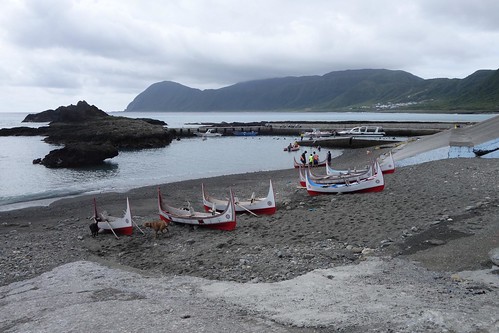
LanyuDanno_2015_197
Lanyu. Because boats.

People are always asking me, "How did you beat schizophrenia?" and I'm like, "Shut up! You're not real!"

Ok, couldn't resist leading with a joke. Happy to be blogging again.  At last a brutal run of work is over. And so we can revisit last week...

Hung says Populism will lead to Nazism: This was another classic moment for Hung Hsiu-chu, the KMT's Presidential candidate [WARNING: MAY CONTAIN MAKE TRAINS RUN ON TIME-LIKE SUBSTANCE]. She posted on Facebook (translated by Solidarity)
Governing the country through populism: The final, most extreme example of this is obviously the Nazis. The Nazis ceaselessly created enemies within the country to control the entire society. Think about it: Although Taiwan isn’t that extreme, isn’t our situation like that? It’s like that classic saying: “When the Nazis were killing the Communist Party, I wasn’t in the Communist Party, so I said nothing. When Nazis killed the Jews, I wasn’t a Jew, so I said nothing. When the Nazis killed the Catholics, I was a Protestant, so I said nothing. When the Nazis arrested me, there was no one there to speak for me.” Isn’t this kind of scene a little familiar to us?

When soldiers are bullied by populism, we aren’t soldiers, so we don’t speak. When teachers are bullied by populism, we’re not teachers, so we don’t speak for them, either. When civil servants are bullied by populism, we aren’t civil servants, so we don’t speak for them, either. But don’t you worry that on the day when you’re bullied, there will be no one to speak for you?

There’s no shortcut to resisting populism. The people in society who are willing to listen to reason can only choose to stop being a silent majority...
Note the opposing sides of her speech -- on one side, "populism", on the other, soldiers, teachers, and civil servants. These are all traditional KMT support groups, where the mainlanders who aren't elites can find jobs and pensions for themselves and their children. Obviously, by "populism" she means the majority Taiwan identity, and its various disorders, such as critical thinking, opposition to authority, and preference for democracy. This commentary reeks of colonialist fear of majority rule, as a longtime observer pointed out to me. This fear haunts the mainlander colonial class, since it is losing its privileges to this populist insurgency. Indeed, KMTers often claim that if the DPP ever gets the upper hand, they will all be kicked out of Taiwan, rank nonsense, but one of the ways the KMT keeps its people in line is through constantly feeding them a diet of fear and victimization.

Nazism, in this case, has no meaning, except to be a handy signifier of ultimate evil, since few Taiwanese have any real understanding of it. But, there's a bit of pleasing sound association in Chinese: the word for Nazi is 納粹 while the word for populism is 民粹. The second character, cui4, is the same in both. Thus, it has the same pleasing childish appeal of saying something like "Trump is a chump!" in English (sorry, can't remember who pointed that out to me).

The Glaser Mess: UDN carries its statement kinda sorta admitting it might not have been exactly right [WARNING: MAY CONTAIN APOLOGY-LIKE SUBSTANCE] (via KMT):
In an article carried in the September 11 issue of this newspaper, it was reported that Glaser thought Xi hoped that the US could play an active role in stabilizing cross-Strait relations and that the next President of Taiwan must accept the “1992 Consensus.” Glaser reportedly said “I would guess” to predict what Xi might bring up in his meeting with President Obama.

The correspondent’s report from Washington D.C. contained no error, nor was it misleading. However, the headline was less than precise. The United Daily News apologizes for its imprecise headline in the above-mentioned article.
J Michael Cole at Thinking Taiwan describes the situation: the headline wasn't imprecise -- it was 100% wrong, and hard to believe it wasn't deliberate:
This is what happened today with the UDN article, which was headlined 美智庫學者:下任台灣總統 須接受九二共識, or “American think tank: The next president must accept the ‘1992 consensus.’” The problem with this headline is that nowhere in the article does the American academic in question — Dr. Bonnie Glaser of the Center for Strategic and International Studies, whose comments during the Q and A are the basis for the article — make such a statement.

It would be tempting to blame the reporter for the mistake, and they often are. But in this case, doing so would be invidious, as Alex Lai (賴昭穎), the Washington correspondent for UDN, got it right. Twice in the article, the author makes it clear that Dr. Glaser is speculating on what Chinese President Xi Jinping (習近平) is likely to say during his visit to the U.S. The report says: 葛來儀表示,中方沒提出台灣問題才會讓她訝異,她推測習近平要傳達的訊息會是美國在確保兩岸穩定上扮演更積極的角色;而為了兩岸穩定,下任台灣總統必須接受九二共識,更重要的是一個中國。不過,兩人討論台灣問題的時間應該不會太長。From the original transcript: “… I would guess that Xi Jinping’s message will be that the United States should try to play a more proactive role to ensure that cross-strait stability exists, and in order to have cross-strait stability, that there must be an acceptance by Taiwan’s next president of the 1992 Consensus, and more importantly, One China, and that the US should play a role in ensuring that that happens.”
Glaser was upset to be misquoted like that and said so on Facebook:

...since she's a major commentator on Taiwan in DC, UDN had to beat a tactical retreat.

Of course, Glaser set herself up for this by explaining what Xi would do, instead of analyzing and deconstructing the situation. Academics, media people, and commentators need to stop talking for Beijing -- stop saying what Xi will or will not do, as if they means anything. I've been complaining about that for ages, and here's a good example of why. It's a terribly shallow and misleading level of information supply -- hardly can be dignified with the word "analysis." It always risks sounding as if the speaker is simply playing stenographer for Beijing.

Next time Glaser should sterilize the question by saying the truth: "The 1992 Consensus never existed. It's just a cage that the CCP and the KMT constructed when Chen came to power to imprison the DPP". Or just say "We'll have to see what Xi will do."

The problem is that if she spoke that truth, she'd never be invited to one of those shindigs again.

But once again, I thank Brookings and CSIS and all these other groups for always inviting the same people to say the same thing, Washington talking to Washington about Washington's constructions of Washington's world (doesn't it get terribly boring?). It means that people who want to know what's really happening will continue to visit my blog and all the other great blogs and websites in our Taiwan blogoverse. Thanks, guys!

Wang Jin-pyng: KMT, desperate, begins to consider revising its "rulz" [WARNING: MAY CONTAIN RULES-LIKE SUBSTANCE] to let KMT heavyweight and Speaker of the Legislature Wang Jin-pyng be an at-large legislator again.
Voices supporting Wang to become an at-large legislator had gained traction since the KMT's new Central Standing Committee (CSC) was elected in August. Liao Kuo-tung (廖國棟), a pro-Wang legislator and KMT CSC member, stated on September 12 that this seemed to be the trend, adding that he would exchange views with Speaker Wang on whether it was appropriate for him to propose revising the party rules at the CSC so as to allow Wang to serve another term as an at-large legislator.

Another pro-Wang legislator stated that a great deal of criticism of Wang was meant "to please deep Blue supporters." However, the same legislator stated that the KMT might only secure 45 seats in next year's legislative elections given the KMT's current low support ratings. Therefore, many KMT members hoped that Wang Jin-pyng could be renominated on the party list, so that he could stump for other KMT legislative candidates and help reverse the tide, leading the KMT to secure a minimum of 50 seats in the 2016 legislative elections, the same legislator concluded.
As readers know, Wang is the informal head of the Taiwanese KMT and especially of southern faction legislators. He is also hated by President Ma Ying-jeou, who at the moment has an iron grip on the KMT. Hence the comment I've bolded above. If Wang is not pleased, he might not campaign -- and that will cost the KMT.

But, as a friend commented, putting Wang in the Legislature implies that he will become the Speaker. But recall that up and coming KMT mainlander elite politician Hau Lung-bin, the former mayor of Taipei and the son of die-hard far right "unificationist" Hau Pei-tsun, is running for a legislative seat in Keelung. Will he be willing to step aside for Wang? Or does he want to be speaker -- doubtful if he can't get the support of the Taiwanese KMT.

The latest TISR poll is out over and Solidarity has the translation. Both the TSIR and a DPP internal poll discussed in another article have Soong and Hung below 20% and Tsai in mid-40s. Soong is fading and will continue to face, which he knows. Few KMTers have come over to him. The KMT is stringing Wang along, keeping him from moving over to Soong, and the Taiwanese KMT will take their cue from him.

And through it all, Tsai Ing-wen, DPP Chair and Presidential candidate, keeps gently talking. So far, a good ball control campaign, letting Hung do the talking.
_________________
Daily Links:
_______________________
Don't miss the comments below! And check out my blog and its sidebars for events, links to previous posts and picture posts, and scores of links to other Taiwan blogs and forums!
Friday, September 11, 2015

Light Blogging Forecast

Swamped with work, probably not able to blog until wednesday or thursday next week. Stop by Solidaritytw, Letters from Taiwan, the beautiful blog Synapticism, Thinking Taiwan, Taiwan in Perspective, and the China Policy Institute Blog. Argh!
_______________________
Don't miss the comments below! And check out my blog and its sidebars for events, links to previous posts and picture posts, and scores of links to other Taiwan blogs and forums!

Thursday, September 10, 2015

Mosquito problem in Japanese era, in one photo

It was that bad before the Japanese cleaned up things. And now we have like 7000 cases of Dengue in Tainan. That's the first wave of the new return of these diseases as humans boil the earth to death...
_______________________
Don't miss the comments below! And check out my blog and its sidebars for events, links to previous posts and picture posts, and scores of links to other Taiwan blogs and forums!
Monday, September 07, 2015

FDI and Taiwan

In her rambling manifesto (see post below), KMT presidential candidate Hung Hsiu-chu says Taiwan needs to be a better foreign direct investment (FDI) environment. Above data show FDI for Taiwan from 2006 to the present (source). If Hung plans to follow Ma policies for attracting FDI, then we'll have the same success we've had for the last seven years. As I noted two years ago, much of that FDI isn't really FDI -- it comes from the Carribean, Hong Kong, and Samoa. Probably much of it is recycled local money posing as "foreign money", and another big chunk is from China. This site notes that greenfield investments have fallen the last three years....
_______________________
Don't miss the comments below! And check out my blog and its sidebars for events, links to previous posts and picture posts, and scores of links to other Taiwan blogs and forums!

Hung Brings a Sword

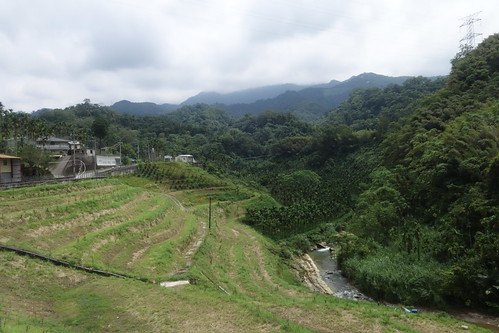
A rain squall over the town of Dongshih.

Do not assume that I have come to bring peace to the earth; I have not come to bring peace, but a sword.

She's back! KMT presidential candidate Hung Hsiu-chu is back from her time off to reflect. Apparently the only reflecting she did was to look in a mirror... which told her she was the fairest candidate of them all...

My man Solidarity.tw pointed out on Twitter that Hung's three-day retreat was to a Buddhist temple deep in the throbbing Deep Blue heart of Zhonghe in the City Formerly Known as Taipei County, where from nearly 500 meters up she could look down on Taiwan. To reset the campaign, she simply withdrew even more deeply into her Deep Blue ideological bubble, emerging with renewed delusional ideological ferocity. As a catastrophically witty friend of mine put it on FB: "I see she's had a rewarding weekend with the Analects of Confucius."

Hung quickly hit campaign trail, and the DPP dismissed her remarks. The KMT news organ reported the words of the Great Schoolmarm:
Hung stated that she had thoroughly thought over all important issues in the last three days, and decided to “take the necessary path.” She noted that our country had become “sick,” and “the cause of the illness was not government policies, but politicians like us.”
....

Hung vowed to consolidate and deepen the “1992 Consensus: one China, different interpretations” while lauding President Ma Ying-jeou’s great contributions to cross-Strait relations. She noted that both sides of the Taiwan Strait should engage in political consultations. She advocated that both sides should sign a peace accord under three principles: respecting the Constitution of the Republic of China, upholding Taiwan’s parity and dignity, and following public opinion.

Hung argued that everyone in Taiwan clearly realized that the unsolved cross-Strait issues had made the Mainland the scapegoat for all the problems Taiwan was currently facing. Furthermore, Taiwan failed to accurately evaluate significant changes on the Mainland, which in turn became a breeding ground for populist politics in Taiwan, Hung said, adding, “If this is the foundation for all of Taiwan's problems, I would first tackle it to create real peace across the Taiwan Strait.”

Hung noted that when a group of students launched a protest against the cross-Strait Services Trade Agreement in March 2014, dubbed the “Sunflower Student Movement,” developments in cross-Strait relations began to face a deadlock. She asked whether Taiwan had to continue avoiding political issues or choose the DPP’s tactics to confront the Mainland.
Nothing has changed since her June speech to the KMT Central Standing Committee. The focus is still on China and the DPP is still the Great Satan which is creating chaos and disorder in society. Her 8,000 word manifesto -- the perfect length for our 144 character age -- contains little mention of anything concrete afflicting the people of Taiwan -- income inequality, wages and employment, energy, environmentalism, regional issues, highways, harbors, airports -- simply nothing. Instead, it froths over with existential frustration about the hysterical rumor-mongering press, populism, and the like. When she comes into office, all that will change! Discipline is what this nation needs! You can almost hear her slapping her open palm with a ruler as she gazes, eyes narrowed in suspicion, around the classroom...

Solidarity lived-tweeted it on Twitter, and observed that the final third was about her. A well-structured triparte sample from that section:
靜思期間,我反覆與自己對話。我的參選,在眾人眼中或許是個偶然,但何嘗不是否極泰來,正面力量必會湧現的必然?我會堅持參選的初衷,高舉「真誠、理性、和平」的大旗,用真誠來揚棄虛假,用理性來擊潰民粹,用和平來開啟大道,這樣我才對得起自己,也才對得起支持我的每一個人。因此我將視這次選舉意義為:這是國家領導人人格上「真誠與偽善」的抉擇;這是國家決策上「理性與民粹」的抉擇;這是國家方向上「和平與逃避」的抉擇。

During meditation, I repeatedly engaged in self-dialogue. My candidacy, in the public's eyes, may be unexpected, but out of it may come good fortune -- is it inevitable that a positive force appears? [rhetorical question -- mt] I will stick to the original intention of my candidacy, holding up the banner of "sincere, rational, peaceful": "sincerity" to eliminate the false, "rationality" to defeat populism, and "peace" to open the road. In this way, I will be able to face myself, yet also be worthy of everyone's support. Thus, I will treat the meaning of this election as: among the personalities of the national leaders, there is a choice between "sincerity and hypocrisy". This is also a choice between "rationalism and populism" in national decision-making. Finally, this election is a choice between the directions of "peace and escape" in national decision making.
Such paragraphs show how Hung views herself as a leader in the Confucian tradition -- leadership is a moral act, the election is a moral cockpit offering moral choices, and all depends on the righteousness of the leader. Of course, for Hung, it is axiomatic that this righteousness is defined and legitimated by its coherence with KMT ideology...

...Whereas Tsai is a leader in the modern tradition, a policymaker and thinker who talks about things like housing, energy, and income, yet is also capable of calls for progressive, human-centered moral action. Tsai's pragmatism and kindness represent the best of the Taiwanese spirit.

Hopefully Hung will come out with more papers on specific policies. There's not much more to say.  SDP leader Fan Yun put it best (TT), growling:
"Governing the nation is not a composition contest."
_______________________
Don't miss the comments below! And check out my blog and its sidebars for events, links to previous posts and picture posts, and scores of links to other Taiwan blogs and forums!

Saturday, September 05, 2015

TAO WOW: The most important thing you will read this month on Taiwan

Betel nut trees removed from a hillside in Taichung

For a long time I've been resistant to concluding that Beijing was inept and ignorant of Taiwan affairs as so many have asserted privately to me. It looks like I was wrong to give Beijing the benefit of the doubt....

Solidarity translated two reports from Storm Media about Beijing's Taiwan Affairs Office (TAO). Apparently the anti-corruption drive has now reached into the TAO and is going after Chen Yun-lin...
The Central Commission for Discipline Inspection (CCDI) has stationed itself inside the PRC Taiwan Affairs Office (TAO), serving notice to China’s Taiwan network and Taiwanese business community. An ROC (Taiwan) cross-strait official divulges that according to the information the office has gotten hold of, after Taiwan’s nine-in-one elections Chairman Xi Jinping in an internal meeting criticized former ARATS and TAO chief Chen Yunlin for his “erroneous methods” which had caused Taiwan policy to produce poor results. Hence, the CCDI’s investigation of Chen Yunlin [S.tw: more on that in the next report] is not just “wind blowing through an opening.” Our government source believes that the PRC anti-corruption campaign aside, the true purpose of the CCDI investigation is to put the nation’s Taiwan network on notice that policy work on Taiwan affairs will no longer run on mutual exchanges of benefits.
You have to read the entire thing, with its rumors, allegations, and descriptions of Beijing's leadership circles being unable to understand a thing about Taiwan even though media and social networks make things abundantly clear. Apparently, Beijing's spy network in Taiwan can't even read the newspapers. It is incredible how stupid things are...
A knowledgeable source says that the TAO’s reports had originally led Xi Jinping to believe that the KMT would hold onto Taipei City. When the TAO’s prediction was proven wrong, Xi was infuriated. He demanded the Taiwan network write a review report of what had happened. In the first report it submitted Xi, the Taiwan network repeated its past rhetoric by blaming the Democratic Progressive Party for “fanning the flames of the Taiwanese citizens.” Xi believed this report was unable to explain the real problem and demanded it be rewritten.
But wait, there's more...
However, last year as the anti-services pact controversy got hotter and hotter, there was word across the strait that Lai Xiaohua had embezzled at least US$10 million through different channels of the TAO and the Association of Taiwan Investment Enterprises on the Mainland. When it became clear later that the organizations’ books didn’t add up, the TAO was forced to ask Taiwanese businesspeople to use the accounts of Taiwan Associations and the Association of Taiwan Investment Enterprises on the Mainland to cover the hole. The Taiwanese businessmen were so infuriated by this request that they were speechless, but for the sake of their businesses they gave in and covered the loss.

According to a Taiwanese businessperson, when Chen Yunlin ran the TAO during Taiwan’s Lee and Chen administrations, Taiwanese investment in China was still not systematic, and cross-strait relations were not good, so most things were done through private channels. The line between personal investment and government Taiwan work was hazy. Hence, there have been many unproven rumors of beneficial relationships between China’s Taiwan hands and certain Taiwanese politicians and businessmen.
Such things have long been rumored, but there have been few articles on it. Solidarity and Ben from Letters from Taiwan talked about it on Twitter...
It's pretty obvious that the combination of authoritarian institutional arrangements -- where you can't speak truth to power because it will get you killed -- ideological blindness, faction politics, corruption, and incompetence have created a vast ignorance in Beijing. Cole notes:
For all his faults, Mr. Chen is being unfairly accused by a regime that, despite multiple occasions to learn from Taiwan’s open society, stubbornly refuses to acknowledge the drivers of Taiwan’s distinct identity. Beijing seems to regard the trend lines that indicate a rising self-identification as Taiwanese and single-digit support for unification as a sign that it — the TAO, ARATS — has failed to properly communicate with the Taiwanese people and explain why its Taiwan policy, which is largely influenced by a belief in economic determinism, should be embraced by its 23 million people. The problem is that Beijing appears to have become a victim of its own propaganda, a phenomenon that may have been exacerbated by the authoritarian nature of its political system which discourages officials from providing their superiors with information that doesn’t fit the accepted model.
Not just Beijing has bought into the economic determinism model. How many times has it been said since 2000 that annexation is inevitable and economics will make Taiwan just fall into Beijing's lap, ripe plumlike and all? Quite the opposite: the closer the two sides become economically, the more the Taiwanese reject China. Moreover, the golden age is over. A lot of people have yet to wrap their heads around that. No doubt in 2035 I'll wheeze into a bar in Taipei with my walker and IV drip, and some paleface will inform me with a patronizing sneer that close economic relations between Taiwan and China mean annexation is just around the corner...

Just envision, for a moment, Xi's alleged cluelessness on Taiwan and then extend this kind of information collection regime and response across all areas of China's government. Brr....
_______________________
Don't miss the comments below! And check out my blog and its sidebars for events, links to previous posts and picture posts, and scores of links to other Taiwan blogs and forums!
Some charts....

This bottom chart shows Taiwanese businesses in China. The red line represents firms with positive growth. The blue represents firms with negative growth. The study from which this is drawn is, alas, no longer on the internet.
_______________________
Don't miss the comments below! And check out my blog and its sidebars for events, links to previous posts and picture posts, and scores of links to other Taiwan blogs and forums!
Lien Chan keeps the anti-KMT flames going...

Probably not the best choice for a brand name in Taiwan.

Friday night I went downtown to have dinner with an old student. She's apolitical, she said, but her face took on a fierce look as she mentioned Lien Chan's visit to China "He's... he's... betrayed us!" she cursed.

She's hardly the only one. There's a lot of that going around this week, and plenty of it is being expressed by people who ordinarily don't say much about politics. None of my circle of observing friends expected quite this level of anger -- public anger is so great that no one dare speak up in support of Lien. Indeed, the anger forced the KMT to discuss disciplining Lien...
Chinese Nationalist Party (KMT) Chairman Eric Chu (朱立倫) yesterday said that former vice president Lien Chan’s (連戰) attendance at a Chinese military parade would be referred to the party’s disciplinary committee “for discussion.”

Responding to some KMT members’ call for disciplinary actions against Lien, who attended the military parade marking the end of World War II in Beijing on Thursday against the party’s wishes, Chu reiterated that the party was committed to upholding the truth about the Republic of China government’s role in the war and had instructed party officials not to attend the parade.
It was all political theatre, of course, and Lien, a KMT heavyweight and Chairman for Life etc, isn't going to be sanctioned. It was just another example of the usual KMT rules-are-for-others behavior, but this time it is in the context of national outrage. Annette Lu, Chen Shui-bian's Vice President, and the TSU, one of the pro-Taiwan parties, even brought charges against Lien. Her statement put public anger into words:
“At the military parade, Lien saluted and applauded the Chinese People’s Liberation Army troops and their weapons, many of which are killing machines meant to be used against Taiwanese,” she said. “This is an outrage to our armed forces and Lien will be repudiated by people of all political stripes and ethnic groups here in Taiwan.”
Lu asked that Lien return his pension, echoing the KMT's rhetorical moves to strip former President Lee Teng-hui of his pension after he stated historical facts a couple of weeks ago. People are so angry somebody painted a statue of Lien's grandfather red.

Lien's visit created another propaganda mess for the KMT, in September five months before the election. The public isn't going to forget this, and many are going to want to punish the party -- recall that the KMT twice put forward Lien for President, in 2000 and 2004, and remains one of the most despised major politicians in Taiwan. This is just another issue that will "highlight the weakness and division in the Blue camp" as an acquaintance put it on Facebook.

Oh, and in case you thought this might fade away, next month is Double Ten, the national holiday, with parades and public appearances by political heavyweights. Imagine what will be said if Lien is there saluting ROC troops... and parades alone will remind everyone of Lien's behavior in Beijing.

Hung Hsiu-chu, the rigid ideologue who is KMT Presidential candidate and the source of much depression amongst KMTers, was in the news for her Facebook posts in which she accused the Party of "defeatism" thus highlighting the weakness and division in the Blue camp. For the DPP, Hung is basically the gift that keeps on giving...
“It is not that the public does not see the problems, [such as] the [mess] of domestic politics and the prevailing sense of defeatism within the party, but it seems that anxiety, instead of countermeasures, is what all we have. I am deeply apprehensive about this ‘frog slowly being cooked in warm water’ situation. Bodhisattva, can you bestow on me the needed wisdom to attain peace of mind?” she wrote.
....once again confirming the wisdom of DPP candidate Tsai Ing-wen's low-key campaign in which she simply lets the KMT talk and demonstrate how hopelessly out of touch with the mainstream it is, while she talks about public policy.

Meanwhile, James Soong, PFP candidate, mainlander, and former KMT heavyweight, has also given his campaign a few days rest. Lots of pundits were wondering if the breaks might be related to Lien's appearance in Beijing -- they went and hid so that they wouldn't have to comment on the festivities in China.
___________
Daily Links:
_______________________
Don't miss the comments below! And check out my blog and its sidebars for events, links to previous posts and picture posts, and scores of links to other Taiwan blogs and forums!