Showing posts with label Free trade zones. Show all posts

Friday, September 12, 2014

Read it: FEPZs = Suicide Pact for Taiwan's Farmers

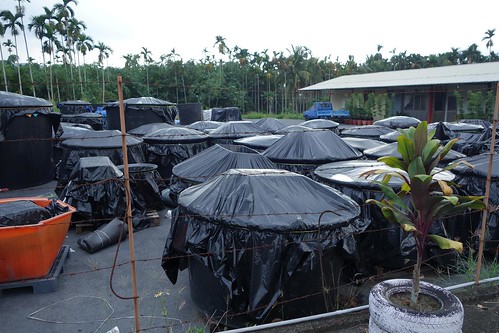
Industrial storage?

If you read one thing today, you need to read this piece by Dennis Engbarth at IPS on the effect of the FEPZs on Taiwan's agriculture and agricultural processing industries: utter destruction.
However, the most controversial segment is a so-called value-added agriculture plan promoted by Council of Agriculture Minister Chen Pao-chi.

Chen Chi-chung, a professor at the National Chung Hsing University Agricultural Policy Center, stated, “Taiwan may become the first producer of agricultural goods that will permit agricultural produce from all over the world, including China, to be used for processing in its own factories free of tariffs or business taxes.”

Article 42 of the draft special act would fully lift the current ban on import from China of 2,186 types of raw materials, including 830 types of agricultural commodities, while Article 38 would exempt FEPZ enterprises from tariffs, cargo levies and business income taxes. Article 41 would exempt most such commodities from customs or health inspections.
Smuggling is going to skyrocket. Importing firms will be able to set up an office in an FEPZ, import raw materials, and then ship them out of the FEPZ for processing or sale elsewhere. The obvious function of this program is to help out Chinese producers with value-added sales to Taiwan, help out big processers in Taiwan, gut Taiwan's agriculture and increase dependency on China, and destroy the authenticity of the Made in Taiwan label.
_______________________
Don't miss the comments below! And check out my blog and its sidebars for events, links to previous posts and picture posts, and scores of links to other Taiwan blogs and forums!

Friday, July 11, 2014

Pilot Zones: Does Ma government plan to destroy Taiwan agricultural products?

As you can see, the number of people identifying as "Taiwanese" is reaching record highs, just as the number of people identifying as Taiwanese-Chinese and Chinese is reaching record lows. This is from the former political warfare university, but my experience is that it is pretty close to reality. Among the young even more would identify as Taiwanese. 

The free economic zones are looking more and more like a plot to flood Taiwan with cheap China crap and destroy its agriculture. A few days ago, after noting that the government is attempting to focus the discussion on trivia, a piece in the Taipei Times observed that Taiwan's competitiveness lies in its ability to distinguish itself from other places:
The heart of Taiwan’s agricultural competitiveness lies in technology, management and certification, because this is what allows it to produce the high-quality agricultural products that make Made in Taiwan (MIT) products so popular overseas. It took many people many years of hard work to achieve these results, and it is the only thing that allows Taiwan to resist competition from cheaper agricultural products from other countries in face of ever-increasing market liberalization.
So what's the current KMT government proposal? To destroy all that has been carefully built up:
Under the proposed project, which is stalled in the legislature, 830 agricultural products from China banned from being imported to Taiwan would be allowed to enter the pilot zones to be processed as food products.

[Council of Agriculture head] Chen rejected the idea that food products made of agricultural materials imported from China should bear labels indicating the origin of the material to distinguish them from those made of Taiwan-grown agricultural ingredients.
Chen even said that "People should not view liberalization as a scheme to destroy the nation’s agricultural sector" which is basically a giant neon sign pointing out what the pilot zone scheme is.

I've talked before about how the Ma Administration deploys neoliberal rhetoric to advance the annexation of Taiwan to China politically and economically. Here is a good example. The government terms this policy of letting in Chinese agricultural products into the pilot zones and not labeling their origin "liberalization." But that "liberalization" is a policy that can only benefit China, not Taiwan. Taiwan's agricultural reputation comes from its ability to distinguish itself from its neighboring nations -- but this proposal obliterates that crucial competitive edge of Taiwan. The only reason for not clearly labeling the origin of ingredients is to obscure it and benefit China -- no other reason exists. Thus, in the rhetoric of the Ma Administration, subordination of Taiwan to China's interests = liberalization.

Let's hope the DPP can really run with this in November.

TT has run some good pieces on the pilot zones recently. Here's a comparative discussion of the mixed results from such zones.
________________
Daily Links:
_______________________
Don't miss the comments below! And check out my blog and its sidebars for events, links to previous posts and picture posts, and scores of links to other Taiwan blogs and forums!

Thursday, October 11, 2012

Looking Backward: Free Economic Zones in Taiwan

Anyone remember the promises? 6-6-3? The Golden Decade? All that good stuff? Yeah, they foundered somewhere off the Diaoyutai. President Ma's ROC National Day Address offered a kind of apology for ignoring the economy in the form of still more promises...
In his National Day address titled “Forging Ahead Together with Composure in the Face of Adversity,” Ma sought to tackle economic issues and said his administration would focus its efforts on boosting the development of service industries, raising salaries and eliminating investment barriers to create more job opportunities.

“To bolster of national security and Taiwan’s interests, we will relax regulations on foreign investments to create a friendlier and more convenient investment environment. In the future, liberalization will become the norm and barriers the exception,” Ma said at a National Day ceremony in front of the Presidential Office.

Ma said relaxing regulations on foreign investment would create a better investment environment and more jobs, and he promised that the government would strike a balance between labor rights and foreign investment.
Why the need to strike a balance between labor rights and foreign investment? It seems an unsubtle hint that the government is going to make another half-hearted attempt to bring in Chinese workers via some kind of increased foreign labor plan, something that keeps being proposed by KMTers (over the last two decades) and opposed by everyone else, including many in the KMT. The government has already relaxed the rules on foreign labor to allow another 80,000 workers on top of the record-high 440,000 foreign workers already present in Taiwan. The new rules say that any business that relocates from China to Taiwan will be able to recruit additional foreign labor. Moreover, overseas firms that establish an enterprise in Taiwan will be able to recruit 5-10% of their labor force from overseas. Wonder how that would work with Chinese firms? Would they be able to bring in labor from China?

In any case there already is a loophole through which Chinese labor is entering Taiwan in a trickle -- a business can open an associated school and hand out "scholarships" and "internships", then bring in Chinese "students" (read: workers) via that route. I've heard this is already happening. Would like more confirmation.....

The Ma Administration also plans to erect "Free Economic Demonstration Zones" around Taiwan. The first one is slated for K-town, already under development. WantWant ChinaTimes has some simply penetrating commentary:
Taiwan's Council for Economic Planning and Development announced recently that a draft plan for showcase free economic zones will be presented in November before its scheduled introduction next year, aimed at attracting investment to boost exports.

The free economic zones, which are part of President Ma Ying-jeou's policies formulated to achieve his Golden Decade vision, are based on the traditional model that ensures rapid economic development through free trade.
The Ma Administration's policies are the policies of the 1960s: low-cost labor and economic development zones.

The FEDZ plan, according to another WantWant piece, offers foreign investors terms more favorable than the WTO mandates, while offering China "only" what the WTO mandates.

A Taipei times commentary observed that in many cases, FTAs forbid labor payment discrimination systems. This means that the FEDZ policy may hamper Taiwan's ability to sign FTAs -- another broken Ma promise, recall -- as outgoing labor minister Jennifer Wang observed as she went out the door. Both that commentary and the WantWant commentary make exactly the same point: if low-wage labor in Taiwan grows, it will only bring in dirty, labor-intensive industries....from the TT commentary:
If a policy of decoupling the wages paid to foreign workers from those paid to native workers is to have the desired effect of increasing job opportunities for Taiwanese workers, it will have to be a nationwide policy, not one limited to certain special zones. Furthermore, if special zones were to promote differential wages for foreign migrant workers as an attraction, it is very likely that most of the investors it would attract would be labor-intensive manufacturers, and that is not in keeping with the original purpose for which special zones were set up.
The whole purpose of the original export zones was to get foreign makers to invest, bring in expertise, and upgrade the skills of Taiwan workers. The wave of science parks help foster growth in tech industries. Now it's 1960 again....

...worse, we all know what those industries will want: free land in the zone, subsidized labor (foreign workers at low cost), subsidized water, and subsidized electricity. The profits of such firms will come, essentially from the pockets of taxpayers in the form of government subsidies.
__________________
Daily Links:
_______________________
Don't miss the comments below! And check out my blog and its sidebars for events, links to previous posts and picture posts, and scores of links to other Taiwan blogs and forums! Delenda est, baby.

Tuesday, November 11, 2008

Tuesday Round-up

Well, the Special Investigation Unit has detained Chen Shui-bian. Interesting move, the latest in a number of DPP politicians swept up in corruption probes. Let loose, Chen might have caused all sorts of trouble for the DPP, but now he has been removed from the political scene, and may well be transformed into a folk hero to boot.

Meanwhile lots of other things are happening in Taiwan, despite all eyes being on the news about Chen Yunlin's visit (complained about in this letter to FT), the protests, the violence, the student protests, and the spate of arrests and detentions. Jon Adams has a nifty piece in the IHT about the way shamans in Taiwan are changing to meet the exigencies of the current era...

Consulting a jitong is a case in point. The practice has not been totally abandoned, just updated. Chang Yin, for example, regularly sends out text messages via mobile phone to about 300 clients. That virtual network has replaced the tightly knit village setting of old.

One Sunday a month, she invites those contacts to her office for an open spirit medium session.

On this particular day, as she answered petitioners' questions, several elderly men lounged nearby on pillows and chairs, watching the proceedings. Children ran in and out of the room. Chang's assistants bustled around in the office and attached kitchen, lighting joss sticks, washing dishes, tending to accounts.

The scorekeeping also continues, with the government's obsession with restoring Kaohsiung to its former rank among the world's ports reaching new heights of absurdity:

Kaohsiung Harbor chief was urged Monday to be tough enough to rev up the performance of Taiwan's largest international harbor so that it could recover the appeal and status it had a decade ago.

Kaohsiung Harbor Administrator Hsieh Ming-hui was urged at a budget-screening meeting at the Legislative Yuan to show his muscle and not to dodge his responsibility as chief of the harbor to do whatever is needed to improve the seaport's performance.

Ruling Kuomintang Legislator Huang Chao-shun, from Kaohsiung, said it is unbelievable that Kaohsiung Harbor, the world's third largest container seaport in the 90s, might be ranked 12th this year, behind even China's Qingdao Port.
Apparently the rise of China is supposed to have no effect on Kaohsiung's position in the rankings (as if the rankings meant anything), nor are the new ports the government has put in supposed to have any effect either, nor is the fact that so many of Taiwan's factories have moved to China supposed to affect our export volume. *sigh*

Neocon Paul Wolfowitz is head of the US-Taiwan Business Council and has a piece in FEER this week on Taiwan and what it should be doing, basically hitting on stuff foreign businessmen would like it to hit on:

Taiwan's energy market is just one example of a sector needing reform. Foreign investors do not look favorably on an environment where there are major questions about the reliability and diversity of electricity supply. Sectors like energy are going to require a significant reduction in the heavy hand of the state.

A second example is the restrictions on technology investments in China. While the Ma administration has moved forward to modernize its semiconductor investment guidelines, Taipei still needs to move away from restrictions that are focused on outdated technology and base future investment guidelines on an efficient export control regime.

A third example concerns the Agreement on Government Procurement under the WTO. Taiwan's participation in that agreement at the earliest possible date is likely to make execution of a number of initiatives more successful, including the i-Taiwan initiative. There are some challenges in shepherding Taiwan's accession, but the Taiwan government should place a high priority on this effort so that Taiwan can accede as soon as possible.

Also in the area of trade, a fourth example concerns an FTA with the U.S. The atmosphere in the United States for any further free trade agreements is bleak and it is likely that the American elections will produce a Congress that is even less friendly to free trade agreements than the present one. While Taiwan should continue to advocate for an FTA, Taipei should also work on advancing the Trade and Investment Framework Agreement, and try to resolve outstanding trade issues—including those surrounding American beef.

Perhaps the most important thing Taiwan could do to become more competitive is tax reform. President Ma seems to understand the importance of reducing Taiwan's tax burden, even despite—or perhaps because of—the slowdown in the global economy. Recently his administration proposed cuts in the inheritance tax that should encourage savings and investment, as well as an increase in the standard deduction on personal income taxes that will help ordinary taxpayers. Another thing his administration could do would be to reduce Taiwan's corporate income tax rate; at 25% it is twice the rate of Ireland, a small island on the other side of the world which managed to make itself a financial center for Europe.

Speaking of the economy, Taiwan Journal has a piece on the "aerotropolis", the free trade zone that the government is erecting around Taoyuan airport.

The draft bill has been submitted to the Legislative Yuan for approval. MOTC officials said the ministry hoped the bill will be passed by the end of this year, so that the planned state-run airport firm can begin operation in 2010.

The bill contains 46 articles divided into nine chapters covering general operation guidelines, program planning and revisions, airport park management, aviation city development and construction.

Under the proposal, the airport park will be granted privileges similar to free trade ports, which enjoy greater flexibility than regular businesses in hiring foreign laborers and local workers.

According to MOTC, the new airport company would be exempt from business tax on airport service charges and other revenues, while airport buildings and airport lots would be exempt from housing tax and land tax, respectively. The airport company, however, will be required to remit part of its profits to the Taoyuan County government to promote local ventures and help finance the nation's airports that are suffering losses.


Conservative columnist Richard Halloran rounds up skeptical commentary on the US election from around the Pacific...

Singapore Prime Minister Lee Hsien Loong said he had written to Obama: "Many issues will claim your attention. May I make a case for the importance of Southeast Asia to the U.S., a region which is not unfamiliar to you?" referring to Obama's childhood in neighboring Indonesia. A writer for the Straits Times, Joanna Lee, however, was skeptical of Obama's emphasis on hope: "Alas, I'm not sure hope is enough."

In New Delhi, the Times of India commented: "Obama will be a breath of fresh air in almost every part of the world ... Why, then, is India keeping her fingers crossed?" The paper said: "There is little clarity on how the chips will fall on several issues ... Pakistan, China, terrorism, nuclear issues, trade, all issues on which India has had a prickly relationship with the Democratic Party."

A columnist for The Australian, Greg Sheridan, wrote: "For Australia, Obama is a very mixed bag. Despite a couple of years in Indonesia as a kid, Obama has little knowledge of, or interest, in Asia." Pointing to President Bush's support for Australia, Sheridan concluded: "Don't expect Obama to be anywhere near as mindful of Australia."


QUOTE OF THE DAY
: From the New Republic blog:

People inside China have no choice but to accept this distortion of language [anti-China]. People outside do have a choice, but we often fail to exercise it. For example, our country's small contingent of "China policy managers" (officials and academics who have kept relations with China's rulers "on track" ever since Jimmy Carter) routinely use the word "China" to refer only to the views, attitudes, and "sensitivities" of the Chinese political-economic super-elite with whom they directly deal. The policy managers speak of "Chinese" sensitivities toward Falungong as if Falungong believers were not themselves Chinese; of "Chinese" views on Tibet, as if forgetting that the Chinese government itself claims that Tibetans, too, are Chinese; and of U.S. congressional critics of the Chinese government not as bashers of authoritarianism but as "China" bashers.

Saturday, May 03, 2008

Our Extraterritorial "Free Trade" Zones

Taiwan News has a nifty editorial on the growing momentum towards the One Country, Two Systems approach in the KMT. The editorial also calls into question the new "free trade" zones, which are being used, as many of us feared, as extraterritorial trojan horses in many different ways. Because the zones are exempt from many sensible laws and regulations, and because they are more or less cabinet-level administrative districts with no independent oversight, their potential for harm is vast. The editorial comments:

The most recent and worrying example concerns draft bills submitted by KMT lawmakers to revise the "Statute on the Management of Free Port Zones" to "delink" the wages of foreign migrant labor from the monthly basic wage of NT$17,280 mandated under the Labor Standards Act and to introduce a similar clause is included in the draft "Special Statute for Taoyuan Airport."

Such self-interested call by short-sighted business leaders are hardly novel. For example, business associations pressed the Democratic Progressive Party-led government to delink foreign labor wages from the basic wage beginning in the Economic Development Advisory Conference held in August 2001.

Spurred by objections by labor groups, then Council for Labor Affairs chairwoman and current Kaohsiung City Mayor Chen Chu opposed business proposals to delink compensation for foreign workers from the then basic wage of NT$15,840 both for human rights considerations and because the DPP government aimed to promote high-value added manufacturing and compete with advanced economies.

Besides aiming to secure extra-exploitative profits for selected multinational and Taiwan firms, the legislation of such "one country, multiple system" labor regulations would undermine labor conditions for all workers and take Taiwan's industry and economic development in the opposite direction from which it needs.

Bad for rights and economy

Instead of upgrading toward higher innovation, productivity and quality, delinking foreign labor wages from the basic wage and thereby putting downward pressure on domestic wages will reinforce the backward obsession with "cost down" business strategies which have obstructed the upgrading of Taiwan's industry and economy and also impeded the expansion of our domestic consumer market.

The question of human rights is also a major concern since allowing compensation of foreign labor to fall below national standards as represented by the basic wage would violate convents of the International Labor Office and invite censure from the ILO and global labor and human rights activists for "superexploitation" and blatant violations of human rights.

Moreover, we can anticipate the establishment of "special zones" for "one country, multiple systems" labor rules will become a precedent for moves to try to attract "low-wage" operations of Taiwan firms back from China through schemes such as setting up special zones which "delink" labor conditions from the rest of Taiwan and even allow the importation of PRC labor into such zones.

In sum, such delinking would benefit only a handful of backward looking business enterprises and would inflict heavy costs on Taiwan society and all of our people.

To her credit, CLA chairwoman-designate Wang Ju-hsuan openly opposed the call for "delinking" and correctly noted that the linkage provides a "minimum guarantee" for the rights of Taiwan's over 300,000 foreign laborers and warned that abolishing the linkage would cause innumerable problems with management of foreign labor as victims of "de-linking" will naturally try to find better paid employment.

After initial discussion on these bills this week in the Legislature, some KMT lawmakers want to directly revise the LSL itself and make delinking general to all of Taiwan.

Such a action would inflict an even greater and direct blow against the human rights of foreign migrant workers, the working conditions of all wage and salaried employees in Taiwan and the long-term prospects for Taiwan's industrial upgrading, social order and economic prosperity and Taiwan's international reputation as a democratic society.

As the editorial points out, the obsessing with reducing cost by lowering wages is a technological dead end -- there are no gains to labor productivity, which is the real driver of rising living standards. In addition to the bass-ackwards economic policy, the political danger of the FTZs should be clear: the KMT is attempting to refashion the FTZs into funnels for pushing Chinese labor into Taiwan.

For more insight into the FTZs, see this discussion with urban planning prof Dr. Thomas Liou.