Showing posts with label travel. Show all posts

Thursday, June 19, 2014

Aussie Gov't Looking into Allegations of labor abuses against Taiwan working holiday backpackers

A reader alerted me to this story. Apparently Taiwanese backpackers on working holidays in Australia are being abused. From ABC:
The Fair Work Ombudsman is preparing to launch an investigation into claims backpackers employed as fruit pickers in one of the country's biggest food producing regions are being underpaid by labour hire contractors and forced to live in illegal budget accommodation.

The investigation will focus on the Queensland city of Bundaberg where, each year, thousands of travellers spend at least 88 days working on farms along the harvest trail in order to extend their 417 working holiday visas.

Taiwanese backpacker Claire, who goes by her Australian nickname, moved to the city last June to work on a tomato farm.

Speaking to 7.30, Claire claimed to have been significantly underpaid, forced to sleep in a living room with 25 other backpackers, mostly from Korea, and denied rest breaks despite working all day beneath the sun without shelter.

"We just got $7 a day and we needed to spend maybe six hours a day picking tomatoes," she said.

The wage was paid in cash by a labour hire contractor who then charged Claire $125 rent each week to sleep on a mattress on the floor
.
What horrible people these company owners are.
_______________________
Don't miss the comments below! And check out my blog and its sidebars for events, links to previous posts and picture posts, and scores of links to other Taiwan blogs and forums!

Friday, August 24, 2012

Book Review: A Foreigner's Travel Guide To Taiwan's Indigenous Areas: Central and Southern Taiwan, by Cheryl Robbins

A Foreigner's Travel Guide To Taiwan's Indigenous Areas: Central and Southern Taiwan
Cheryl Robbins
http://www.tipi.com.tw
211 pages

Cheryl Robbins gave me a copy of this volume, the latest in her series of books on travel in Taiwan's indigenous areas. It looks extremely useful. Written in clear, accessible English and chock full of maps, photos, and cultural and historical information, this book has a special bonus: it is a bilingual text, written in both Chinese and English.

Robbins is a longtime expatriate on the island. She has a passion for local indigenous culture and a deep knowledge and love of Taiwan's mountains and the peoples who call them home. For several years she has operated Tribe-Asia, a social business project specializing in local indigenous art and handicrafts. Using her extensive network of contacts within local indigenous communities, Robbins, a locally licensed guide, is currently putting together a set of travel packages for tours in indigenous communities in conjunction with a local travel agency. I look forward to traveling with her early next year when everything comes together. This book is an outgrowth of her rich experience of local indigenous communities.

The book presents specific locations and their interesting aspects, such as monuments, trails, foods, museums, artist workshops, and so forth. Navigation is presented in typical travel book style -- Getting There by bus or car, contact phone numbers and website links, clear maps, and similar. This book is focuses on supplying useful information in accessible formats. Local eateries are presenting in a friendly style:
This is a great place for a late, leisurely breakfast as it does not open until 9:30 a.m. Try a thick piece of toast with chocolate, ham and egg, tuna, butter, jam, or peanut butter (NT$20-55). There are also a range of coffees and teas available (NT.....
"Address boxes" set off addresses from the text making them easy to find. Text boxes present historical discussions or descriptions of things such as local artists or cultural artifacts.

A especially appealing aspect of this book is the photographs. Far from the usual useless manner of travel books that put 16 color plates in the center of the book which are gorgeous but unreal and nowhere near the pages that discuss them, most of the photos were taken by Robbins herself with a simple point-and-shoot camera. These photos present the experience as the traveler herself might encounter it, right where it is being discussed, a useful and practical perspective. They enhance the text by giving it an appealing reality.

This book will be an extremely useful introduction for travelers who are interested in a deeper experience of the island of Taiwan and its peoples. It lacks only one thing: bike routes! Next edition?
_______________________
Don't miss the comments below! And check out my blog and its sidebars for events, links to previous posts and picture posts, and scores of links to other Taiwan blogs and forums! Delenda est, baby.
Friday, June 29, 2012

On the road with FTV and Michella

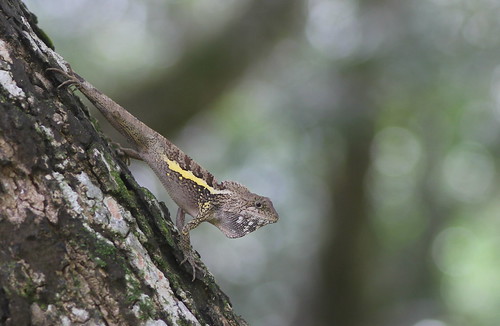
What a great week I've had traveling in Jiji in Nantou, Jingguashi and Jiufen, and Wanhua in Taipei this week with Michella Jade Weng and the FTV crew shooting segments for a travel show. I also tried out my new Canon 550D DLSR, but unfortunately I only have the 18-55 kit lens. I took a few nice shots like the dragonfly above but viewed from the bottom, the learning curve sure is looking steep.

Our first stop was the tourist town of Jiji, in Nantou, with its famous Japanese-era railroad station. One of our goals was to try banana-themed food, like this plate of fried rice with bananas (bits of dried banana inside, banana chips on top). This shot also shows the concentration and effort that goes into preparing and presenting the items on the show, something I hadn't really realized until I had the chance to tag along.

This shot at the military equipment park just outside the main town area manages to convey a tithe of Michella's boundless energy, positive attitude, and attractiveness.

As part of the banana theme we visited this vendor near the famous collapsed temple outside town, who had a dozen or so different local varieties of banana on display. Michella checks her mic while Zhi-hong the cameraman checks the shots.

Day 2 saw us riding the famous Green Tunnel on 152 west of Jiji, the old route 16. After that I had to give my impressions in Chinese and English of travel in Jiji. Speaking Chinese on camera makes my mind go blank and my Chinese revert to kindergarten level, but I managed to struggle through it without a nervous breakdown. After doing Jiji we drove to the other side of Taiwan to do the Ruifang/Jiufen/Jinguashi tourist area.

We took in the night views but all my shots were awful, so I won't subject you to them. Here is the town of Jinguashi, where we overnighted. Quaint, and far from any useful services. Like the internet, for example.

Early in the morning we headed over to the famous Old Street in Jinguashi town, which apparently rivaled Jiufen during the period when the copper and gold mines were booming. On a Wednesday morning in this era it's totally dead.

My favorite of the shots from this trip, Michella and Zhi-hong check the light and plan the shot. I was constantly amazed by their energy. I'd be wearing down by the end of the day, and they'd be plotting still more shooting.

Then it was over to the abandoned copper processing and mining facilities. This shot shows an old rail line for moving ore down the mountainside to the processing facility below.

Sections of the world's longest smokestacks. They moved toxic fumes from processing the ore up the mountainside and into the valley on the other side. Well worth a visit, tons of infrastructure is just rotting away in the harsh sun, waiting for you to image it.

And me? Here I am paralyzed by vertigo atop the processing facility, wearing a dorky folding hat someone gave me in Nantou. The show appears in a shorter English version and a longer Chinese one, so we shot introductions and comments in each language, along with plenty of food shots, shots in temples, biking, and similar. It was tons of fun. When the show goes up on Youtube, I'll post the links here.

Great time, great learning experience. Hope I get a chance to do it again!
_______________________
Don't miss the comments below! And check out my blog and its sidebars for events, links to previous posts and picture posts, and scores of links to other Taiwan blogs and forums! Delenda est, baby.

Saturday, November 26, 2011

Taiwan: Lonely Planet Guide

Taiwan
Robert Kelly
Lonely Planet; 8th edition (April 1, 2011)
392 pages

Robert Kelly and Joshua Samuel Brown's redevelopment of the Lonely Planet Taiwan guide is 400 pages of excellence packed with beautiful maps, useful information, sidebars of historical and cultural information, and (not enough!) lovely pictures.

Kelly sent me the book for review as I was heading out the door for trips down south to Tainan and Pingtung. It proved a highly reliable and useful companion for the trip. The Tainan section alone is worth the price of the book. The detail map of the temple area has a very clear map with many major sites and a recommended walking route. Good thumbnails of history are provided for many of the city's innumerable temples. A sample:
Medicine God Temple
Just south of Anping Road on Gubao Street, this small temple boasts a lovely example of a swallowtail eave roof, and two small lion statues with an interesting tale (not tail) behind them. Long ago in the days of the Qing Dynasty, a young scholar prayed to the Medicine God to help him pass an imperial exam. Since Chinese religion is largely based on quid pro quo, he promised that if successful he would reward the god by paying for two stone temple lions to be carved and placed out front. Well, the scholar did pass the exam, but poor man that he was, could only afford the two diminutive felines you see outside the temple today.
The rich detail of this book, as well as its great scope, means that it makes for great pleasure reading in addition to its effectiveness as a guidebook. This guide also features copious amounts of information on Taiwan's excellent cycling and hiking. There is also an extensive section on the offshore islands, and discussions of culture, history, and the future of the island at the end of the book. You'll find this blog there too. Thanks, guys.

The sole truly annoying feature of the book is its constant reference to the "Japanese Occupation Period", a time that exists solely in the minds of Chinese Nationalist propagandists. Japan did not "occupy" Taiwan -- the term is used in an attempt to create unbroken Chinese "sovereignty" over Taiwan. Japan had full and legitimate sovereignty over the island and the book should simply refer to the "Japanese colonial period" instead.

If you are traveling or moving to Taiwan, this book should be considered mandatory. It is the most comprehensive guidebook now available on Taiwan. A labor of love from an author who loves Taiwan and knows it intimately, it should be on every Taiwanophile's bookshelf.
______________________ 
Don't miss the comments below! And check out my blog and its sidebars for events, links to previous posts and picture posts, and scores of links to other Taiwan blogs and forums! Delenda est, baby.

Monday, July 18, 2011

Book Review: Bradt Travel Guide, Taiwan

Taiwan
Bradt Travel Guide
by Steven Crook
344 pages
www.bradtguides.com

Steven sent me this book for review a few months ago, and I set it aside to use on my trip to Pingtung in March and April so that I could test it under genuine travel conditions. I am happy to report that it passed beautifully: it's useful, informative, beautiful, and comprehensive, an excellent companion for anywhere in Taiwan.

The book is well organized. It is divided into two major sections, one an overall guide to Taiwan's history, culture, food, religion, and similar. This section also provides basic travel information, and suggests itineraries and budgets. The discussion of Taiwan's history and culture is well-balanced and properly nuanced; the information provided in the travel section is comprehensive and useful. It is aimed at travelers in the brackets above the budget travel that the Lonely Planet guides are focused on. Thus, it seldom lists the myriad el cheapo flophouses available all over the island, but instead lists places to stay that have some unique feature to recommend them, such as a good view or interesting architecture. For example, in Kenting it lists the Chateau Beach Resort, Mykonos, Bossa Nova, and Moon Shy Boutique Lodge, among others.

The sections devoted to individual towns and regions do a good job of including anything an outsider might reasonably want to visit, mostly major tourist spots. For example, for Keelung it points visitors to the Miakow Night Market, the Qingan and Dianji Temples, the French cemetary, and Heping Island. Around Keelung it sends you to Jinguashi, the Gold Ecological Park, and Jiufen. It also gives a good rundown on Keelung's history, including its mini-civil war in the 19th century between rival immigrant groups and its long interaction with outsiders that make Keelung such an interesting place to hang out, hike, and photograph.

Similarly, the section on Tainan not only offers a rich view of history, but concise and informative descriptions of its many historical sites, divided by period: Han settlement, Koxinga, and Japanese. The guide gives information in English and pinyin (with tone marks which I have omitted) so the non-Chinese reader can at least take a stab at the placenames. A typical entry:
Wind God Temple (Fengshen Miao) (8 Lane, 143 Minquan Rd, Sec 3, 0700-2100 daily) This is the only temple devoted to the wind god in Taiwan, which is perhaps surprising given the frequency of typhoons. The Wind God is believed to have influence over all the give elements: earth, fire, metal, water and wood. Smaller icons depict the Thunder God, who holds a hammer in one hand and a nail in the other, and his wife the Lightning Mother, who carries a pair of circular mirrors. At the time of the temple's founding in 1739, the ocean was a stone's throw away (the walking maps posted on street corners show the old waterfront) and the Government Reception Archway (Jie Guanting) was where VIPs arriving from the mainland would disembark. Take a close look at this stone archway and you'll find carvings of dragons, lions, and sages.
Although all aspects of this book are outstanding, including its luscious color photography sections stuffed with gorgeous color imagery of Taiwan, but as a Taiwan history buff, I most enjoyed its rich and detailed presentation of local history. I highly recommend this useful and informative text; both first-time travelers and long-time expats will find this a rewarding addition to their library on Taiwan.
_______________________
Don't miss the comments below! And check out my blog and its sidebars for events, links to previous posts and picture posts, and scores of links to other Taiwan blogs and forums! Delenda est, baby.