Showing posts with label gambling. Show all posts

Sunday, October 16, 2016

LOLz from Reuters on the defeat of Gambling referendum in the Penghu

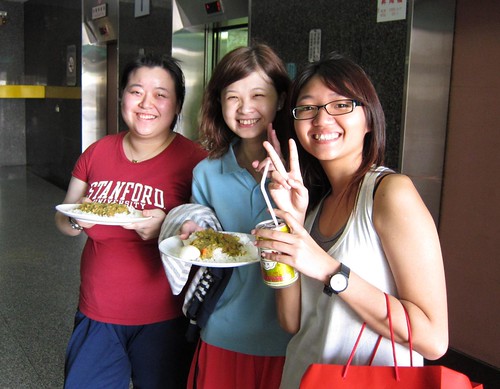
Three former students I miss very much show off curry cooked by Indian students for one of the campus festivals.

With the sound of that train wreck that is the US election crescendoing across the Pacific, it's always fun to explore what our unbiased international media is feeding us. Reuters reports on the crushing defeat of casino gambling in the Penghu referendum on Saturday...
Taiwanese residents in Penghu on Saturday shut the door to casino development in a referendum that proponents had said would bring jobs to the isolated, tiny, offshore archipelago. [no presention of case of opponents of gambling]

The referendum to allow gaming, open only to residents of the outlying county just west of the main Taiwan island, was opposed to by the ruling independence-leaning Democratic Progressive Party (DPP). [...just so you know that the DPP is opposed to "development"]
.....

"The focus is not gaming, it is our dissatisfaction. We have a small population, few votes, no influence," a voter who gave his surname as Hsiao told Reuters. [no comments from opponents provided. No explanation of why the referendum was defeated is ever given, let alone why it was defeated so crushingly]

.....

The concerns of Penghu, with a population of around 100,000 against the 23 million national total, are part of the bigger economic divide that has seen Taiwan's second-tier cities and its offshore counties lag in resources and development compared to the wealthier metropolis areas of the north, including the capital Taipei. [no mention that this divide is the result of the deliberate policies of the former ruling party, the KMT, nor that the DPP has pledged to address this divide. Why is this paragraph here and not further reporting on the casino referendum and gambling in Taiwan? The answer is below...]

Last month, local government officials representing eight Taiwanese cities and counties, mainly ruled by the opposition China-friendly Nationalists, visited China and met with its top Taiwan policymaker in a bid to continue economic and cultural exchanges.[We segue directly to the local official kowtow to Beijing... what on earth do these visits have to do with a casino gambling referendum in the Penghu...? Nothing at all! Their inclusion, rather than more robust and detailed reporting on gambling in Taiwan, shows how the piece attempts to be a hit piece on the Tsai Administration. Gambling in Penghu was/is a long-term plan unrelated to this recent event.
]
.....

China has frozen official communication with Taiwan since President and DPP leader Tsai Ing-wen took power in May because she refuses to acknowledge the "one China" principle, agreed to with the previous China-friendly Nationalists that allows both sides to interpret who rules a single China that includes Taiwan.[a plain error, Beijing has never agreed to that -- the "two interpretations" claim is merely KMT propaganda, and one the ruling party has been debating. However, 1C2I has become a Media Fact, existing only in the media bubble world, and there is no stopping its constant repetition, like so many Hail Marys on the geopolitical rosary.]

China deems Taiwan a wayward province to be taken back by force if necessary and deeply distrusts the DPP, which traditionally advocates independence.[Look how far we have strayed from gambling, into geopolitics, though no concrete connection to the Penghu was ever offered -- now we are told that China distrusts the DPP -- of course never how Taiwan feels about the CCP, though there is copious polling on many angles of that. But why are we even given this information?]
If anyone wants information on the referendum, consider Matt Fulco's report in Nikkei Asian Review:
Yan plans to vote "no." In his view: "Casino resorts will drive up land prices, making housing unaffordable for many residents. Besides, most people in Penghu can get by on their earnings from the high season and tourism has been growing."
Those three sentences contain more useful information than the entire Reuters report. The Taipei Times report, which notes that gaming legislation would not have passed the legislature, observes:
Chen Kuang-fu [Penghu county chief] said the county is moving forward and he hopes the central government would amend flaws in the Offshore Islands Development Act (離島建設條例), which he said is an ongoing point of contention between Taipei and the local government that arises every three years to the detriment of the county.
The China Post report is actually clearer: Chen was complaining that because changes to the Offshore Islands Development Act were made to enable the gambling referendum, every three years there is a divisive vote on the issue that is bad for public unity. The gaming industry's local promoters have promised not to have another referendum in three years' time.

It is also important to note that the groups behind these projects are the same groups that at various times have pushed for the Penghu to become some kind of cross-strait transshipment center for people and goods, and similar. China has indicated that it will not tolerate a Taiwan-based competitor to Macao, so this casino would have been aimed at other tourists, though most likely it would have become just another heavily subsidized way for elites to transfer wealth from Taiwanese to themselves.

In 2009 I observed, fearing that the gambling would pass...
Just as an example of what's happening, AMZ Holdings, a property development firm, holds the largest single plot of land in the Penghu, a 27 acre property that it hopes to develop into a gaming resort. Their website about it is hereThis discussion of the value of the firm notes that the land is worth $46 million even without the resort, and that the acreage was assembled by purchases from over 280 landowners over eight years. That's $46 million dollars of irresistible pressure on local governments... another news report says that Lawrence Ho, the son of Macau kingpin Stanley Ho, is looking to expand into the Penghu if the Beijing government gives the ok signal.
Despite savage repression of anti-gambling arguments in the media and in public meetings by the local government and KMT officialdom, that referendum was shockingly defeated. Looking back, that may have been the inflection point in growing opposition to the KMT by social movements and their supporters.

Thanks, Penghu, for that vote, and for this one.
_______________________
Don't miss the comments below! And check out my blog and its sidebars for events, links to previous posts and picture posts, and scores of links to other Taiwan blogs and forums!

Saturday, October 15, 2016

Gambling referendum in Penghu

A 1930s house outside Shihgang

Gambling referendum: Matt Fulco gives the background on the Penghu gambling referendum in Nikkei Asian ReviewPresident Tsai opposes gambling in the Penghu. Opponents note that the wording of the referendum is misleading (who could have imagined that in a referendum involving gambling?). Early returns suggest that it is being crushingly rejected. UPDATE: Yup. Crushingly rejected.

KMT lawmakers are concerned about the purported meeting of KMT Chairman Hung Hsiu-chu and Xi Jin-ping, the president of China, as the KMT continues its internal squabble over the direction of the party. New Bloom talks about the proposed meeting here.

IMPORTANT: JapanFocus on Taiwan's energy situation and prospects for renewables, but it doesn't matter because the DPP totally screwed up the power reforms. Damn.
Academics yesterday criticized the Executive Yuan’s policy stance on a draft amendment to the Electricity Act (電業法) as a “great” setback for the government’s policy to liberalize the nation’s electricity industry.

“The government’s stance represents a policy U-turn, because Taipower [Taiwan Power Co (台電)] would still monopolize the industry,” said Kimmie Wang (王京明), research fellow at the Chung-Hua Institution for Economic Research’s (中華經濟研究院) Center for Energy and Environmental Research.

The proposed amendment would make no difference to liberalizing the industry, because non-renewable energy firms are still not allowed to enter the market to compete with Taipower, he said.
Taipower hates renewables, so this change has basically killed renewable energy-oriented reform.

IMPORTANT: On the other hand, AmCham lauds the Tsai Administration for changing the rules to make government more open.
In an executive order likely to have far-reaching implications in improving the transparency and effectiveness of Taiwan’s regulatory process, the Executive Yuan in early September issued a directive extending the notice and comment period for proposed regulations from the current 14 days to 60 days.
_______________
Daily Links:
_______________________
Don't miss the comments below! And check out my blog and its sidebars for events, links to previous posts and picture posts, and scores of links to other Taiwan blogs and forums!
Saturday, May 30, 2015

Our Real Future of Integration with China: China warns Kinmen not to compete with Macao

Another glorious day of cycling in the mountains near my home.

Fortunately I have the text of the article, which I quote from... the key point is this:
China’s top official on Taiwan affairs has warned that Beijing will sever valuable transport and other ties with Taiwan’s outlying island county of Kinmen if it moves to develop an integrated resort.

Taiwan Affairs Office director Zhang Zhijun issued the extraordinary threat on Sunday as he toured Kinmen after talks with his Taiwanese counterpart, Mainland Affairs Council minister Andrew Hsia.

Kinmen business leaders cited Zhang as saying that Kinmen’s development “must follow the correct path” and warned the island against establishing a casino industry, “otherwise the small three links will most definitely be shut down”.

The “small three links” refer to direct transport, trade and postal connections between Taiwan-controlled Kinmen and Lienchiang (Matsu) counties and nearby Chinese port cities.
Getting gambling established on Kinmen is often mentioned as the end goal of the referendum on Matsu enabling casino gambling, since Matsu is unsuitable for a variety of reasons. The article observed:
However, since Sunday a number of DPP legislators have attacked Zhang’s comments as a slur on Taiwan’s autonomy, pointing out that China tolerates gaming facilities not only in its own territory of Macau, but also just across its borders with other countries.
How do you think Beijing will behave when it has actual control of Taiwan?

Isn't it good that ECFA has enhanced Chinese goodwill and favorable attitude towards Taiwan?
_______________________
Don't miss the comments below! And check out my blog and its sidebars for events, links to previous posts and picture posts, and scores of links to other Taiwan blogs and forums!
Friday, May 03, 2013

Draft Gambling Legislation Passed by Cabinet

Trash row.

With the residents of Matsu approving gambling on their island via referendum, the Cabinet has passed a draft bill. The Matsu gambling referendum, as I noted in a blog post last year, is the camel's nose in the tent....
In my previous post on this topic I collected the following information.....
The AmCham article notes that infrastructure on Matsu is primitive and bad weather often shuts down transportation, making it the less preferable of the two islands. It seems intuitively obvious that a referendum for Kinmen is in the cards at some point.
This suggests also that this whole Matsu casino thing is vapor and no casinos are ever going to appear on the island -- the real point is to have the referendum in a place where it can't lose, get the necessary gambling laws passed, and then put pressure on Kinmen to allow casino gambling. The AmCham article also makes the comical claim that casinos in Taiwan can be kept free of gangsterism. Kinda like the way professional baseball in Taiwan is, eh? I also observed that those casinos are covered under the offshore islands act, which frees businesses on the island of taxation. Meaning that those casinos will pay no taxes to the government, as far as I can see. Does anyone know different?
The legislation has been duly drafted and has some nice social welfare touches (KMT news):
The draft bill clearly specifies a list of gambling regulations. Anyone who is a recipient of government assistance, has been declared bankrupt, or who has a bad credit card debt record, shall be prohibited from entering casino premises. Furthermore, the draft bill also rigorously stipulates an anti-addiction clause allowing members of the extended-family within the fourth degree of blood relations, or partners in a common-law marriage, to apply for a ban prohibiting people who are addicted to gambling from entering casino premises.
The bill also allows the government to collect "royalties" on casinos:
According to the draft bill, the Ministry of Transportation and Communication would collect monthly royalty payments on casinos of 7% in the first 15 years and 9% afterwards. The local government may also impose a special tax as high as 7%. The combination of the two shall not exceed 17%.
It will be interesting to see how far that gets watered down when the bill goes through the legislature. By comparison, here is the tax information for Macao (UNLV):
Taxation: Effective tax rate: 38 to 39%.There is a 35% tax on gross gaming revenue, and a 1.6% contribution to the Macao Foundation, as well as a 1.4% (for SJM) or 2.4% (for everyone else) contribution to the Infrastructure/Tourism/Social Security Fund (source).
According to the Taiwan Today piece, under the draft bill, patrons of the casinos will not have their winnings taxed for the first twenty years. The government said that the casinos will not go in until 2019 at the earliest. Thus, expect pressure to land on Kinmen and eventually, Penghu again. The referendum was held in Sept of 2009, and eight years must pass before the public can have another referendum on the same issue. So around 2016 we should start looking for a new media push for gambling in the Penghu -- unless by then they have it on the main island of Taiwan....

REF: Marcus Clinch's excellent overview of gambling issues in Taiwan.
_________________
Daily Links:
  • 13 year search for Cloud Leopard ends
  • NBR: H7N9 Flu in the Asia-Pacific: Risks, Responses, and the Consequences of Better Surveillance
  • Difference between Right and Left on Taiwan? Right-wing mags show sympathy for and understanding of Taiwan's predicament this week (National Review). Meanwhile over at The Nation the rare mention of Taiwan in a lefty publication last year is of course a criticism of the horrible "Taiwan lobby" using Beijing-colored POV. Sucks.
  • Freedom House on Taiwan's media situation: not as good as it could be, still better than most. Also on the media: China Policy Institute blog post on the anti-media monopoly movement from movement inside.
_______________________
Don't miss the comments below! And check out my blog and its sidebars for events, links to previous posts and picture posts, and scores of links to other Taiwan blogs and forums!

Sunday, July 08, 2012

Matsu Votes for Casinos

A 200mm telephoto is great for portraits. She was shy and wouldn't face the camera.

“Honestly, I don’t believe that the future casino operator would be able to give us the NT$80,000 per month subsidy, I don’t even care if the casino goes out of business in a few years,” she said. “When the casino closes, the bridge and the airport that they built would still be around, right?” -- Woman quoted in Taipei Times

The Taipei Times reports:
According to final figures announced by the Lienchiang County Government, 56 percent voted in favor of the initiative, against 42 percent who opposed it. A total of 3,162 of 7,762 eligible voters cast ballots, for a voter turnout of 40.7 percent. Among those who voted, 1,795 supported the casino plan, while 1,341 were against it. There were 28 invalid ballots.
Turnout of 40%... the legislature had changed the referendum law for gambling for the previous referendum on gambling in the Penghu. The law had previously required that 50% of the electorate had to vote on a referendum to make it valid. After held two votes on referenda for gambling, perhaps it will become more difficult for the KMT gov't to avoid a referendum if it attempts to annex the island to China in some meaningful way. Despite the alleged importance of the vote to the island's economy, 60% of the electorate of this totally pro-KMT island couldn't be bothered to come out and vote, likely because it was inevitable that it would win.

The developer made all sorts of promises: an international airport (which must be built if the casino is going to operate), a college town, a causeway linking the two islands in the area, and buckets of money, $18,000 a month after the first year (basically minimum wage) rising to $80,000 a month in the fifth year if profits reach a certain level.  A legislator pointed out in the Taipei Times piece that things might not be so easy:
“Before a casino resort can be built, the legislature first needs to pass the proposed Gambling Act [博奕法],” he said. “Besides, most of the land in Matsu is either government or military property. Some is even restricted military zones — so there is a long and complicated administrative procedure to go through.”

He also questioned Weidner Resorts Taiwan’s willingness to make such a huge investment to improve or build transportation and tourism facilities in Matsu.

“I’m personally opposed to the casino plan, but I respect the opinion of the majority,” Chen said.
I think the history of developmentalist state projects in Taiwan suggests three things (1) the KMT-controlled legislature will pass the gambling law; (2) the developer is going to renege on most of the promises except the airport; and (3) if the developer wants to build on government land, they will just go ahead and do it and worry about the permits later if ever -- the usual practice for developers in Taiwan. That will not be so easy for military land.... however, I don't think that any great casino development will ever occur on Matsu, because....

Reuters reported:
Analysts say a casino in Matsu would have minimal impact on gambling revenues in Macau which is located on China's southern coast. It is also not clear how easy it would be for Chinese citizens to get visas to travel to the Taiwanese islands.

"Five percent of overall visitation to Macau is from Taiwan, and Matsu is less conveniently located from Taipei than Macau," Macau and Las Vegas-based Union Gaming said in a note.

Weidner Resorts Taiwan, a company run by former Las Vegas Sands executive Bill Weidner, has unveiled plans to build a casino resort that includes luxury hotels, professional sports venues and convention halls.
"Professional sports venues"?? On Matsu?

The putative casinos are obviously aimed at punters from neighboring Fujian province in China, not Taiwanese.....

In my previous post on this topic I collected the following information.....
The AmCham article notes that infrastructure on Matsu is primitive and bad weather often shuts down transportation, making it the less preferable of the two islands. It seems intuitively obvious that a referendum for Kinmen is in the cards at some point.
This suggests also that this whole Matsu casino thing is vapor and no casinos are ever going to appear on the island -- the real point is to have the referendum in a place where it can't lose, get the necessary gambling laws passed, and then put pressure on Kinmen to allow casino gambling.

The AmCham article also makes the comical claim that casinos in Taiwan can be kept free of gangsterism. Kinda like the way professional baseball in Taiwan is, eh? I also observed that those casinos are covered under the offshore islands act, which frees businesses on the island of taxation. Meaning that those casinos will pay no taxes to the government, as far as I can see. Does anyone know different?

UPDATE: Comments are great.

_______________________
Don't miss the comments below! And check out my blog and its sidebars for events, links to previous posts and picture posts, and scores of links to other Taiwan blogs and forums! Delenda est, baby.

Tuesday, June 05, 2012

Islands Gambling, Round 2,

Cutting leaves to wrap betel nut in Dashan, Miaoli.

Since President Ma assumed the Dragon Wyvern Throne in 2008, the KMT has been pushing for casinos on one of the islands under its jurisdiction. Ma himself is often said to personally favor this policy. However, since being surprisingly spanked in a referendum on the gambling in the Penghu in 2009 despite using the usual tactics, the Ma Administration has been quiet on the issue of gambling.

As a commentary in today's Taipei Times by Green Party spokesman Pan Han-shen observes, we are right now in a similar run up to a referendum July 7 on gambling on Matsu, an island off the coast of China. Matsu is a reliably pro-KMT district and residents can be expected to vote for gambling. The KMT made this easier, as the TT noted in 2009 just prior to the Penghu vote, by amending the referendum law specifically for offshore island gambling referendums:
TN goes on to observe that the KMT built an impossibly high barrier to the passage of the referendum with the infamous "double majority" law that requires that the vote consist of a majority with at least 50% of voters having voted. What they did was cheat: in January the KMT rammed through a clause in the offshore gambling statute deleting the requirement that 50% of voters must vote in the referendum for it be valid. An article on it in Gambling Compliance describes:
But the amended law only requires that more than half of the voter turnout vote yea for the referendum to pass - a much lower threshold than that stipulated in Taiwan's Referendum Act. That law requires that at least half of all eligible voters participate in a plebiscite, with more than half of that turnout voting yea for it to pass.
As someone commented in the Taipei Times piece, the KMT's streamlining of the referendum law means that if 3 people vote and 2 favor it, it will pass. This time the KMT has moved the gambling initiative to the even more reliably pro-KMT island of Matsu to ensure passage. Why Matsu? AmCham hosted a one-sided article on the gambling issue last year that explains. Of the two islands off of China, Kinmen and Matsu, the latter was seen as more welcoming...
Enactment of the law would set the stage for another round of local referendums in the two jurisdictions considered to be main candidates for casino development: Kinmen and Matsu. Approval of the referendum in Matsu is thought to be a shoo-in, as the island group, home to only a few thousand residents, is “desperate” for casino gambling, says Anita Chen of Park Strategies. Matsu reportedly wanted to hold its referendum as soon as possible to get a foot in the door, but was widely seen as responding to KMT pressure to hold off until after the presidential election in January.
Park Strategies is a US lobbying firm close to the Ma Administration. The AmCham article notes that infrastructure on Matsu is primitive and bad weather often shuts down transportation, making it the less preferable of the two islands. It seems intuitively obvious that a referendum for Kinmen is in the cards at some point.

The AmCham article makes the claim that casinos can be kept free of money-laundering and gangsters. No doubt this is because it's so common for vice-related businesses in Taiwan to be free of such activities that I am sure they will have no trouble. In related news, this weekend I am leading a hunting expedition looking for flying pigs.

Pan writes that....
In 2009, President Ma Ying-jeou (馬英九) and the Chinese Nationalist Party (KMT) promoted a referendum on gambling in Penghu on the condition that gambling would not be legalized on Taiwan proper under Ma’s watch. [Taichung mayor] Hu, however, thinks that “we should not look upon ‘gaming’ as some kind of ‘compensation’ and only allow the establishment of special zones in more slowly developing areas,” and is thus promoting the establishment of a special gambling district in Greater Taichung. The intent behind the text which would allow gambling in the Offshore Islands Development Act (離島建設條例) is finally revealed.
There are no real islands off of Taichung, but no doubt one could easily be made out of reclaimed land, or simply magicked into existence by creative definition ("for the purposes of the law, an island is defined as an area bounded by land on four sides but selected by Mayor Hu"). The Offshore Islands Development Act "encourages" development on islands by relieving businesses there of the burden of tax....
2. Goods sold, delivered and used locally on offshore islands, or services provided locally on offshore islands by business entities to which the Act applies, are exempt from business tax starting from the date the Act is implemented, except for business entities in Lyudao, Lanyu, Liouciou, which are exempt from business tax as of 25th January, 2009.
That means that -- you guessed it -- all those casino businesses will have taxpayer-funded roads, water, police, fire, and other services -- without paying any tax themselves. They will return nothing to the society, while putting tremendous strain on local resources. The Matsu page of the National Tax Administration confirms that businesses there pay no taxes. Pan adds that DPP Mayor Chen Chu of Kaohsiung supports gambling; Kaohsiung hosts right offshore the already popular tourist destination of Cijin Island, famed for its seafood. One wonders if it will fall under the Offshore Islands Act.

The casino drive is using the same kind of ZOMG we're missing out! shock-doctrine tactics common to KMT-approved construction-industrial state projects and China-related policies:
Anita Chen of Park Strategies says that casino-resorts could represent the next big wave of infrastructure development in Taiwan – but only if Taiwan acts quickly. She notes that Japan, Vietnam, and the Philippines are considering their own plans for casino development, so that long delays might cause investors to look elsewhere. “We’re not only competing for Chinese customers,” she notes. “We’re competing for investors.”
Fortunately, casino proponents are handicapped by a lack of coordination. So stay tuned -- what might fly in Matsu might sink in Kinmen. I think at that point the Administration will start looking for a site on the main island of Taiwan.

If we are going to have useless, parasitical casinos -- and I see no reason that sooner or later we won't, given who backs the Ma Administration and why -- then they really ought to be heavily taxed and a clause inserted in the law to make sure that they source their machines and personnel locally. Taiwan has a large, and largely unknown, gaming machine industry, which could certainly use a boost onto the world stage. But we both know, dear reader, that pigs will fly.....
_____________
Daily Links:
_______________________
Don't miss the comments below! And check out my blog and its sidebars for events, links to previous posts and picture posts, and scores of links to other Taiwan blogs and forums! Delenda est, baby.

Saturday, November 19, 2011

Frozen Garlic Twofer

Frozen Garlic heats up the blogosphere with two good posts that you should peruse. The first looks at potential splits in the Blue vote in key areas.. .
Yesterday, there was a story about Lo Fu-chu 羅福助, who may be considering a run in New Taipei 12. (New Taipei 12 is centered on the Xizhi district.) Lo is one of Taiwan’s most infamous citizens. He is widely considered to be one of the top figures, perhaps THE top figure, in Taiwan’s organized crime landscape. Lo previously sat in the legislature, winning in 1998 and 2001. His tenure in the legislature was marked by controversy, to say the least. He was often verbally attacked by other legislators who wished to grandstand as being against organized crime. Lo did not always react with restraint. In one case, Liao Hsueh-kuang 廖學廣, a colorful legislator in his own right, locked horns with Lo. A few days later, Liao was abducted. He reappeared naked inside a dog cage next to a road a few days later. Maybe this was just coincidence; maybe it wasn’t.
Oldtimers will remember Lo when he was at one point co-chair of the legislature's -- hold for it -- judiciary committee. Yes, the man who used to brag that he was "spiritual leader" of what was then one of the island's three most powerful organized crime gangs, the Celestial Alliance, was head of the judiciary committee and questioned the minister of justice. While in the legislature Lo, nominally independent, acted as a KMT enforcer. Fabulously wealthy, allegedly from illegal gambling, loan sharking, and the sex trade, Lo was imprisoned for a couple years in one of the anti-gangster sweeps two decades ago. Lo is a sharp operator, generous to his local area through his charities. As Frozen Garlic points out, he could well mount a strong challenge based on his ability to organize locals and toss money around. The whole post is good, be sure to read it.

Speaking of the KMT and organized crime, Frozen Garlic also blogs on Ma Ying-jeou and his alleged secret meeting with an underground gambler/bookie kingpin in the wilds of Chiayi. From FocusTaiwan, which reported on the President's denial that such a thing occurred:
The KMT's presidential election campaign headquarters also voiced a strong protest and asked Next Magazine, which published the report in its latest issue Wednesday, to clarify the facts and issue an apology.

Under the headline "Meeting Underground Gambling Tycoon, Stepping on Black Gold Mine," the report said Ma and Chen Ying-chu, a local businessman, had a closed-door meeting at Chiayi Mayor Huang Hui-min's home Sept. 10. It hinted that Ma had received a donation for his reelection campaign.

KMT spokesman Chuang Po-chung said the entire report was a a mare's nest. It is "untruthful reporting" based on rumors and it violates media professionalism, he said.

Meanwhile, Presidential Office spokesman Fan Chiang Tai-chi said Huang did in fact introduce Chiayi residents to Ma on two separate occasions at the old mayoral residence which has consistently been used as a reception hall -- one in 2008 and the other in 2009. However, they were routine greetings, he said.
Ma has never been shy about cavorting with organized crime figures -- recall that he showed up at the wedding of powerful legislator and longtime alleged organized crime heavyweight Yen Ching-piao's son several years ago, along with other major KMT politicos. According to eTaiwan News:
Chen is reportedly involved in international online gambling and in betting on Taiwanese elections. He also has a criminal record, Next wrote.
(Note that the nation's gambling establishment thinks Ma will win). Chen Ying-chu is not just any gambler, btw. This 2006 China Post article identifies him as a gambler with vast international connections:
In the process of investigating Lu’s account books in the following six months, Chiayi prosecutors found that Chen Ying-chu, the largest banker for online betting operations in Chinese communities around the world, and deputy city council speaker Chiu Fang-chin, were also involved in the case.

Chen Ying-chu operates two general gambling Web sites abroad to handle all kinds of betting operations from Chinese gamblers, with Chiu Fang-chin serving as Chen’s general agent in Taiwan. If the stakes were for Hong Kong’s “Mark Six” lottery ticket numbers, the stakes were usually switched to Lu Po-hsien.
If anyone wanted to funnel donations from sources overseas, the banker for Chinese communities all over the world would be just the ticket. But I'm sure nothing like that is happening.

In any case, as Frozen Garlic pointed out, the brush with organized crime occurred just as Ma was raising the farmers subsidy after reversing himself when it was pointed out the pittance he had originally proposed would cost him thousands of votes. In other words, a double dose of bad news for Ma this week. Chip, chip, chip, the lead erodes.

ADDED: Oh, and CCA minister and longtime KMTer Emile Sheng stepped down today over the ridiculous bill for the musical staged on ROC national day... chip chip chip
__________________
Daily Links:
_______________________ 
Don't miss the comments below! And check out my blog and its sidebars for events, links to previous posts and picture posts, and scores of links to other Taiwan blogs and forums! Delenda est, baby.

Saturday, September 26, 2009

DPP Set to Win in Yunlin, Penghu Voters Reject Referendum

w00t! Good news breaks out all over Taiwan today. Yesterday I blogged on the imminent arrival of gambling in the Penghu, which everyone was saying was a foregone conclusion. After all -- Penghu was a KMT stronghold, and the KMT strongly supported gambling. The KMT-controlled legislature had loosened the restrictions on referendum, relaxing the rule that 50% of eligible voters must vote, just to get it passed. There had been a media blitz, and the big money was waiting for the opportunity to "develop" the island as a gaming mecca. It looked like a sure thing.

Incredibly, the KMT could not even get the vote it wanted in the place that it controls. As the Liberty Times reported today:
針對「澎湖要不要設置國際觀光度假區附設觀光賭場」所進行的全民公投,最後票數為,反對票17359票;贊成13397票票,反對票數大幅超過贊成票。這次公投全縣分設112個投票所,共有7萬3651名投票權人,其中男性3萬7796人,女性3萬5855人。結果出爐,開票現場反賭聯盟的工作人員相擁而泣。
...which is to say that the referendum to allow international standard hotels with gaming (gambling) was defeated 17,359 to 13,397, in an area of 73,651 eligible voters. 112 polling stations were erected. The referendum was defeated 56%-44%. Remember, Ma won the election 58-41 in a "landslide."

It is easy to see why the Ma Administration has been fighting so strongly to keep the ECFA economic agreement with the CCP China from being submitted to a public referendum.

My wife asked the $64,000 question -- "But do you think they will honor the outcome?"

Meanwhile, in the Yunlin legislative by-election, in the Second District of Yunlin County, the DPP candidate is apparently on the way to a crushing victory. Last I heard the vote was over 70K for the DPP, and less than 25K for either of the other two candidates. The by-election was held because KMT Legislator Chang Suo-wen was convicted of vote-buying by the Taiwan High court June 30 and the election was annulled. The Taiwan News said yesterday:
The poll is a three way race between 40-year-old social activist DPP Yunlin County Councilman Liu Chien-kuo, who was defeated by the vote-buying KMT candidate, the official KMT nominee Yunlin Technology University Professor Chang Keng-hui and Yunlin Water Conservancy Society President Chang Kui-yuan, the father of the errant ex-KMT lawmaker.

As Chang Keng-hui's campaign manager is none other than ex-KMT Yunlin County mayor and "boss" Chang Jung-wei, who recently served a prison term for vote buying himself, the campaign constitutes a direct face-off between two KMT candidates directly linked with convicted vote-buyers and a direct victim of "black and gold" money politics running for the DPP.
A glorious day.
_______________________
Don't miss the comments below! And check out my blog and its sidebars for events, links to previous posts and picture posts, and scores of links to other Taiwan blogs and forums!

Tuesday, January 13, 2009

Tuesday Odds and Ends

How about that smoking ban? Draconian, and citizens can turn each other in for a few extra bucks! I'd like to thank the government for saving us from indoor smoke, the last health threat since illegal trash burning, factory toxic emissions, oversized automotive engines, and coal-fired electric plants have all been eliminated here.

Speaking of the environment, the EPA is insisting that people take seriously its proposed rule that scooters turn off their engines at stop lights, then start them up again when the light turns green. This brilliant idea is actually up for expert review, despite overwhelming objections to it.

Fun fun fun as once again, our longtime anti-democracy President Ma Ying-jeou and mass murdering authoritarian Chinese President Hu Jintao are linked to a Nobel Peace Prize. The idea is parodic, but Taiwan News points to the hollowness at the core of the claim to cross-strait "peace" in the making:

Where a genuinely cross-strait peace process would end could be an open question, but any process that would have legitimacy in today's democratic Taiwan must begin with recognition that the majority of the Taiwan people still want peace with assent and without coercion, with democracy and without repression and with creativity and without preconditions or predetermined conclusions.

Indeed, any "peace" arranged by the KMT and CCP behind the backs of the 23 million Taiwan people will not "end hostilities" but is likely to trigger considerable domestic unrest within Taiwan and could even pave the way for genuine and drawn-out conflict throughout East Asia in the future.

Such a "peace" will not be "honorable" and Hu and Ma will be no more deserving of Nobel Peace Prizes than would have been Hitler or Prime Minister Neville Chamberlain and French Premier Edouard Daladier, whom as leaders of "democratic" nations, reached agreement with the "rising" Germany's dictator over the heads of the democratic Czechoslovakian government and its president Eduard Benes to expedite annexation disguised as "peace with honor."

In our view, if Hu truly wishes to be known as a "peacemaker," he should first dismantle the 1,400 missiles and other offensive weaponry deployed across from Taiwan, revoke the belligerent Anti-Secession Law, cease opposing Taiwan's membership in all international organizations and drop the "one China principle" as the precondition to talks.

For his part, Ma should consult with opposition parties and civil society representatives to formulate a domestic consensus strategy for formal talks with the PRC, affirm that the result of any talks must be ratified by national citizen referendum in Taiwan and reaffirm his opposition to the coercive Anti-Secession Law, cease the illegal KMT-CCP "dialogue" and halt unilateral "deregulation" measures that would lock Taiwan into the PRC economy and hollow out the Taiwan people's right of free choice.

Submission is not "peace." When they gave away the Czechs to Hitler in '39, they engendered there broken treaties, burning cities, and 50 million dead -- all the result of "peace with honor" -- and China has territorial claims on all the nations around it, some relatively legit, some completely fanciful. But today's fancies are tomorrow's headlines....

On Jan 9 last week, FAPA sent this around:
"...during the first week of the new 111th Congress, long-time Taiwan supporter Rep. John Linder (R-GA) introduced a resolution urging the Administration to establish diplomatic relations with Taiwan. Similar resolutions were introduced in 2005 and 2007 by then Rep. Tom Tancredo (R-CO), who has since retired from Congress. Additionally, the resolution calls for end to the U.S. One China Policy and Taiwan's full membership in international organizations.
Ah, we can dream. But as a dream it makes a nice antidote to the unreality that has pervaded the Bush Administration's self-congratulatory horse manure on the Loch Ness Monster Bigfoot Status Quo.

Two legislative moves: first, the Taipei Times headline said today that our legislature stirred from its lethargy long enough to pass a bill legalizing gambling in the offshore islands.
The amendment stipulated that local governments must hold a referendum before building casinos.

The referendums would only need to win support from more than half of the voters participating in the referendum.

The bill stipulated that casinos be located within international resorts that include an international hotel, tourism facilities, international conference halls and shopping malls.
It also called for the government to create a US$900 million fund for island development (read: spraying concrete across precious natural resources while supplying central government funds to local patronage networks). The usual suspects protested, including the Catholic Church, busy protesting against other people's gambling while operating Bingo halls. Gambling in the Penghu is just more of the Cargo Cult dream that uncountable hordes of Chinese are simply standing there in Fukien in long lines from the coast, holding wads of cash just waiting to invest here and "save Taiwan." The legislature also approved the free trade zone at the airport. The new law allows foreign labor but prohibits Chinese labor, something that many feared it might permit. Aborigines, staunch supporters of the KMT, took it on the chin, of course. UPDATE: Penghu, longtime KMT country, has already scheduled a referendum for mid-year.

Two links you should be looking at. First, the redoubtable and always excellent Brian Kennedy has a long piece in this month's AmCham Topics mag on the prosecutors. It appears to be a direct response to the recent letters that scholars have published condemning the apparent politicization of the prosecutors here. It is useful and informative, but does not directly grapple with the issue of politicization of the prosecutorial function in a substantive way. For example, anyone remember the press conference called by eight prosecutors to claim that they would follow the Chen case to the end, as good as a promise to prosecute Chen Shui-bian no matter what the evidence? UPDATE: Speaking of politicizing the prosecutors -- this is unbelievable -- for the 63rd annual law day, the prosecutors' office staged a skit that looks an awful lot like it was slyly aimed at Chen Shui-bian, with prosecutors playing the parts. My man Taiwan Echo has a description and vids on his blog. Words fail me. UPDATE 2: News report is here (Chinese) UPDATE 3: Taipei Times article.

Also, in case you haven't heard of it, the Reed Institute at the U of Oregon has a fantastic collection of 19th C Taiwan imagery and writing.

Finally, the Taipei Times had a piece on the revival here of Democrats Abroad. If you are not yet a member, sign up for the Taiwan Group at Dems Abroad and come to the organizational meeting on Jan 17 at Larry's Pizza (2 pm). Only registered members at Dems Abroad will be allowed to vote in the organizational elections. We have a fantastic slate of candidates for supervisory positions, although I may be biased, since I am one of them. Once you register at the website and log-in, you can get info on all the candidates.

Friday, August 01, 2008

Stevan Harrell Interviewed in Blogging Beijing, and other tales

Dr. Stevan Harrell, longtime Taiwan and China scholar who used to live in Taiwan and has produced some wonderful work on it, was interviewed on his work in China and on the Beijing Olympics, on Blogging Beijing. A sample:
How were you drawn into studying minority people in southwest China?

After the Mosher affair , it was impossible for foreigners to do field research in Han areas. My student Dru Gladney had done research with Hui in various areas, and encouraged me to give minorities a try.

For readers who know little about Chinese minorities, what are three essential kernels of information?

1. There are as many minority people in China as there are people in Japan, and way more than there are in any one European country.
2. Not all Chinese minorities have active independence movements. In fact, only two of them do: Tibetans and Uighurs.
3. Minority people participate actively in incorporating themselves into the Chinese state, even when they have resentments against the state and against the Han.

What do the 2008 Games mean for China - Chinese people, Chinese government, Chinese minorities, and Chinese academics?

More than anything else, the Games are a chance to show the world that China is a grownup country. That's really about all.

I've long followed the issue of casinos here in Taiwan, partly because I suspect they will be involved in my PhD thesis. Taiwan Journal has a piece out on the Penghu's desire to get gambling:

Penghu has good reason to look for a financial boost from casinos as the gambling industry is expanding rapidly in Asia. According to a survey released by the American Gaming Association in June, gambling revenues in the region could surpass those generated in the United States by 2012.

Booming gambling meccas in Macau as well as new casinos in Singapore were expected to drive this growth, the AGA predicted. The association reported that U.S. casinos raked in US$34.1 billion in 2007, while Asia's casino gambling market was estimated to have made between US$15 billion and US$20 billion during the same period.

The industry's potential has reignited the debate on whether casinos should be legalized in Taiwan. With neighboring countries such as Japan, South Korea, Thailand, Malaysia and Singapore either preparing to or having already lifted gambling bans, there is a growing sense that Taiwan should jump on the bandwagon before it is too late.

In order for that to happen, the Legislature would have to pass the so-called "casino article" in the Offshore Islands Development Act. Legislators have already rejected the article twice: in January 2002 by a 51-vote margin and in December last year, by 27 votes.

An aide to Lin Pin-kuan, a fourth-term independent legislator from Penghu County, suggested it might be a case of third time lucky. While the previous Democratic Progressive Party government was firmly opposed to gambling, the aide said the ruling Kuomintang's position on this issue had softened in recent years.

"Lawmakers have long blocked the article because many Taiwanese people consider gambling immoral, but the enormous successes of the casino industry in other Asian countries made for a powerful argument," said Lin's aide. "Taiwan has legalized lotteries. People should be able to discuss casinos more reasonably now," he added.

The water issue is a severe one, but a friend pointed out that casinos might actually be a benefit on that front, since the government might at last put in pipes to bring H2O over from Taiwan instead of straining the delicate local ecosystem.

++++++++

Lastly, the arms freeze. To complement the Senators who wrote to King George on the arms freeze, 25 members of the House Taiwan caucus have also sent a letter to the President asking about it. Below:

The Honorable George W. Bush July 31, 2008
President
The White House Washington , DC 20500

Dear President Bush:

For decades, the United States and Taiwan have maintained a mutually beneficial economic and political relationship. Taiwan is one of our strongest allies in the Asia Pacific region and we believe it is essential that there be a peaceful environment in the Taiwan Strait . The U.S. has a long history of making available to Taiwan defense articles and services that are essential in the goal of enabling Taiwan to maintain a sufficient self-defense capability.

In 2006, Taiwan ranked 5th among worldwide recipients of U.S. foreign military sales, receiving $970 million in defense articles and services. In December 2007, Taiwan approved their 2008 Defense budget which included a significant package of weapons to further its military modernization efforts. Among those requests were 12 P3-C planes and 3 PAC-II missile upgrades which you approved in April, 2001. Other requests that are still pending include 8 diesel submarines, 30 Apache helicopters, E-2 aircraft upgrades, sea-launched Harpoon 20 missiles, precision attack missiles and 66 F-16 fighter aircraft.

We welcome Taiwan 's request of support for its security and growth of its defense capabilities. Upon reception of Congressional Notifications, we look forward to the opportunity to work with the Administration in completing these sales as soon as possible. Recently, we have been aware of a possible freeze on all foreign military sales to Taiwan . We believe that a freeze on foreign military sales to Taiwan violates the spirit of the Taiwan Relations Act. We request a briefing on the status of these sales from all appropriate agencies, and urge the Administration to expeditiously execute consideration of these requests.

In March 2007, China announced that their 2007 defense budget would total $46 billion, although Secretary of Defense Gates estimated that China 's total defense spending for 2007 could be as high as $139 billion. The military and strategic imperatives for Taiwan are real and urgent, and if we fail to show the necessary resolve it would mean missing a significant opportunity to improve cross-strait peace and security - a vital U.S. interest.

We would like to echo your statement on March 22 regarding Taiwan 's recent election, stating that you are "confident that the election and the democratic process it represents will advance Taiwan as a prosperous, secure and well-governed society." We understand our administration' s "One China" policy and all agree that a strong, defendable Taiwan is in our nation's best interests.

In our view, a secure and prosperous Taiwan requires the means to provide for its own self defense and the ability to engage its neighbors without fear of military intimidation. Taiwan 's ability to maintain its defense rests heavily upon its ability to acquire defense articles that are capable of deterring aggressive neighbors. As your statement also points out, Taiwan has a right to be "secure," and that can only be guaranteed by an unambiguous and non-negotiable commitment from the United States to provide Taiwan with weapons systems consistent with the Taiwan Relations Act.

Sincerely,

SHELLEY BERKLEY D-NV STEVE CHABOT R-OH GENE GREEN D-TX VIRGINIA FOXX R-NC ELLIOT ENGEL D-NY 05 THADDEUS MCCOTTER R-MI MICHAEL MCNULTY D-NY TOM TANCREDO R-CO MAURICE HINCHEY D-NY DAN BURTON R-IN ROBERT ANDREWS D-NJ MARK SOUDER R-IN SHEILA JACKSON-LEE D-TX ILEANA ROS-LEHTINEN R-FL BARNEY FRANK D-MA 15 DOUG LAMBORN R-CO STEVE ROTHMAN D-NJ JOHN CULBERSON R-TX G.K. BUTTERFIELD D-NC JOE BARTON R-TX 20 DONNA CHRISTENSEN D-VI SCOTT GARRETT R-NJ DAVID WU D-OR
GUS BILIRAKIS R-FL DENNIS CARDOZA D-CA 25

The Taipei Times had several pieces on the arms issue today. Dennis Wilder of the US NSC says there's no arms freeze. Legislators say there is no realistic possibility of arms sales this year. J Michael Cole says that US arms freeze is example of US hegemony at work.

Thursday, March 22, 2007

Raising and Napping the Racers


A gigantic pigeon coop in southern Taiwan

Though aloft on turf or perch or poor low stage,

Both sing sometímes the sweetest, sweetest spells,
Yet both droop deadly sómetimes in their cells
Or wring their barriers in bursts of fear or rage.

One of Taiwan's most ubiquitous sights is that of the pigeon coop that sits atop many a home and factory. Each one is a glimpse of a world foreigners seldom see: pigeon racing in Taiwan. Today the China Post reported on the successful police action against a pigeon-napping ring:

Agents of the Criminal Investigation Bureau identified Lu Kuo-sheng, 43, of Kaohsiung, as the head of the "pigeon-napping" ring, that had extorted at least NT$5 million from over 500 owners over the past five months.

They identified the two women suspects as Shih Wei-ya, 28, and Weng Hsiu-ching, 32, both of Tainan.

The other suspects, arrested in Pingtung, were Piao Chin-cheng, 43; Pan Chien-cheng, 38; Chen Chien-liang, 49; Lin Hsun-ti, 50; and Chen Seng-yu, 33.

Lu had his ring members set up net traps in hills in the two southern Taiwan counties to catch racing pigeons, whose leg rings helped them to track down the owners.

Ransoms, ranging from NT$5,000 to NT$50,000, were demanded. When owners refused to pay, the pigeon-nappers would kill the birds and eat them up, CIB agents said.

Pigeon kidnapping is very common in Taiwan, where pigeon racing is a national passion. This excellent article by Brent Hannon explains why gangsters might be attracted to the sport:

When the Japanese introduced pigeon racing to Taiwan early last century, they probably had no idea what an impression it would make. This curious combination of sport, gambling, and animal husbandry was an instant hit - it seized the hearts and minds of the people in Taiwan, and it never let go.

The pigeons eat birdseed and grit, but the racing itself is fueled by cash. “Money is what makes pigeon racing so popular,” says Tsai Tung-bao, president of the Chinese Taipei Racing Pigeon Association. “If you get lucky, you can make a lot of money, and that’s why Taiwanese are so crazy about pigeon races.”

The stakes are the highest in the world: prize money for Taiwan’s biggest races can reach US$3 million, and any bird that does well in a seven-race season is automatically worth more than US$20,000. The sport also has a Confucian ethic: some pigeon pedigrees are longer than the sage’s beard. More than 30,000 Taiwanese race pigeons, and another 50,000 are involved in raising or training the birds.


A man, barely visible behind the coop on the right, trains his pigeons to fly to the sound of his clap.

Hannon goes on to narrate how the races work:

As Cheng notes, pigeons are measured by a simple yardstick: race results. It’s a strict meritocracy. The birds all start at the same level, and as fledglings they are treated like kings, well fed and carefully tended. They are given vitamins, food supplements, and regular exercise, and they live in comfortable coops. Then, at five months of age, the life of luxury comes to a crashing halt, when the little racers are taken out to sea and set loose hundreds of kilometres from home.

That’s when the life of a racing pigeon gets exciting. Storms throw them off course, often diverting them to China or the Philippines. Thieves throw up nets to snare the little aviators and hold them for ransom. Dishonest owners set up multiple coops, confusing them, and hawks and other predators hunt them down. Airplanes take their toll as well: in 1998, a wayward pigeon brought down one of Taiwan’s US$50 million Mirage 2000 fighter jets. The Mirage crashed into the sea after a pigeon, and its metal leg band, were sucked into the engine. Both pilots survived, but the pigeon did not.

A handsome reward awaits the lucky winners. Battle-hardened birds that survive a single seven-week season never compete again. They become breeders, enjoying early retirement and the proverbial 72 virgins. Now that’s a sinecure: race seven times, and eat grain and breed for another 20 years, the average lifespan of a pigeon.

Yet only a fortunate few survive, let alone win. It takes four to seven hours to fly a 200-kilometre race, and some races stretch to 350km. Thousands of birds are released, and in bad weather, about half come back. Of 200,000 pigeons that begin training, just 200 tough racers remain at the end of a normal seven-race season. In one memorable sea race, only two bedraggled birds made it home: the now-immortal Xing Xing and Fu Xing. “The rest got lost, and flew away,” says Tsai. Flew where? “Maybe the Philippines, maybe China, I really don’t know,” he says.

The big money, the gambling, and a lack of regulation have caused many gangsters and crooks to become involved in pigeon racing in Taiwan. “There’s a lot of pressure,” says Tsai. “And I would say it’s getting worse.” Sometimes losers don’t pay. Sometimes racers cheat. And sometimes, bookies disappear with the money, although Tsai scoffs at a recent article that says NT$1 billion (US$30 million) was stolen at a recent race. “NT$100 million, maybe, but not a billion,” he says.


A pigeon owner watches his birds.

The Taipei Times described how pigeon napping works:

Yeh, who estimates the value of his own racing flock in hundreds of thousands of NT dollars, says owners sustain significant losses during the races.

"Three thousand birds started our recent fall meet," he says. "Only 20 or 30 returned at the end of the event."

Yeh says most of the dropouts lose their way along the route, but some are trapped by criminals eager to exact ransoms.

"Gangsters erect these huge nets in valleys and other places the birds have to cross. Then they call the owner and offer to return the bird for what seems like a pretty reasonable price -- about NT$3,000," he says.


With the rise of the sport, specialized services have developed, including hospitals:

With the growth of racing, well-maintained bird hospitals have spread across the country.

The oldest is Taipei's Versele-Laga, established in 1985 by its current director, Li Jaw-yang, a graduate of Taiwan National University.

Li says about half of his clinic's patients are pigeons, nearly all of which are racers.

"Some are suffering from parasites, the kind of malady that any bird is prone to," he says. "But by far the most frequent problem involves injuries they sustain while racing. It's a very difficult sport."

World pigeon racers consider Taiwan the ultimate pigeon race market. A pigeon racing consultant had this to say about his own dream:

What is the master plan? To compete and succeed in the most demanding pigeon races in the world, Taiwan!


Another large pigeon coop in a Kaohsiung suburb.

He also posted an article that discussed in detail how the gambling and prize money system works.....

The prize money comes from band sales and pooling. A club offers different denominations of bands for members to choose. They are the equivalent in USAdollars of $30, $60, $100, $150, and $300 apiece, respectively. A flyer can buy any combination of bands depending on his/her budget and the number of young birds that he/she will breed. Usually, it is required to purchase 12–15 bands and you can buy up to 60 bands. Some clubs do not set a limit on how many bands one can buy.

Assume that there are 100 members of a club, and each member buys 15 bands at an average of $150 a band. The band sales would be $225,000 ($150 x 100 x 15). Some readers may think that this figure is inflated. As a matter of fact, this figure is quite typical in any given race in Taiwan. Some big clubs have much larger band capital than the one I just mentioned above.

Now, let's talk about the pool money. Unlike in America, where flyers pool birds mostly on the shipping night, pigeon clubs in Taiwan, in addition to pooling the birds on the shipping night, also conduct two to three sessions of pooling three to four weeks before the race. The good thing about this is that the club can deposit this pooling money into the bank, accruing interest, which produces income for the club.

Traditionally, the club takes 4–5% of the total prize money and the interest income to run the club. These two incomes are sufficient to pay salaries for two full-time club employees, rents, utilities, etc. The bad news is that flyers are forced to commit a lot of money up front. If a pooled bird is lost before the race starts, the pooled money is lost.

The pooling system is quite complicated—too complicated to discuss it here. The pool money is usually three to four times more than the band sales capital. It is the so-called "Where's the Beef?" If you add the band sales and pool money, the total prize money is approaching one million dollars.


...and goes into great detail about how the races are handled and how the pigeons are raised and raced....

In terms of the racing system, Taiwan has developed a unique system in itself. All pigeons must pass three or four qualification races before being allowed to enter into real races. A qualification race is a race where birds must maintain a minimum speed of 600 to 800 yards per minute (ypm). You must ship the pigeons just like regular races, and clock the birds. If a pigeon does not clock minimum speed, this pigeon is out for the rest of the races regardless of how expensive this pigeon is banded. The distance of the qualification race is not all that great, ranging from 95–180 miles. But it runs three or four weeks in a row. It could be rough for young birds that are just two months old.

The real race is five successive weeks of racing, called the Five-Race Championship. A Five-Race Championship is equivalent to young birds or old birds season here in America, except each club in Taiwan runs an average of three series of Five-Race Championship races a year. The minimum speed of 800 ypm is imposed, and the club training on Wednesdays of 700 ypm is also required. In any of the races during the five weeks, if a bird does not maintain minimum speed, this bird is automatically disqualified for the rest of the contest.

For example, even a great young bird that has won four races and does not make minimum speed in the fifth race is disqualified. There is no mercy at all. The idea is to find out the toughest birds, which can endure this kind of brutal contest. Speed is desired, but consistency is more important.


The system is so lucrative and so highly developed that it has evolved from a hobby into a big business, and many clubs now lack the funds to compete. A demanding investment of time, money, and specialized knowledge, a pigeon coop is much more than a noisy, smelly addendum to so many structures around the island.

LINK: Taiwan's Pigeon Racing Union.