Showing posts with label income inequality. Show all posts

Friday, December 11, 2015

Ma government repays its supporters

DSC08405
Contemplating lunch?

The fearsome concentration of wealth in Taiwan has grown faster than most places....
The number of people whose liquid assets are worth US$1 million or more in Taiwan increased 11.8 percent last year to 125,000 — the biggest growth among the four economies known as the Asian Tigers, according to a wealth report published by Aspire Lifestyles.
Note that this is occurring as the economy lurches to a halt and income remains stagnant. The Ma Administration has rewarded its 1% supporters with delays and obfuscations on the stock transaction tax (finally imposed this year), the real estate assessment, capital gains tax, and other policies which hinder the transfer wealth from the middle and lower classes to the rich. Oh, and in 2009 the Ma Administration lowered the inheritance tax from 50% to 10%. Current KMT Presidential Candidate, Eric Chu, knowing on which side the KMT mian bao gets its 1% butter, is pandering to this crowd with calls saying the capital gains tax had been a mistake. The public knows this, one reason why Chu's numbers are well below 20% now.

The resulting housing bubble is devouring Taiwan, but it is also devouring the KMT. Keelung and Taoyuan are both becoming more pan-Green as young people -- overwhelmingly Green -- move out to those areas to find less expensive housing, changing the demographics of once solidly blue areas...
________________
Daily Links:
_______________________
Don't miss the comments below! And check out my blog and its sidebars for events, links to previous posts and picture posts, and scores of links to other Taiwan blogs and forums!

Thursday, December 18, 2014

Thursday stuff: our first joy from Eric Chu

Whatever you read today, don't miss this review of the disaster that is the Taoyuan Metropolis project. The project is going to be reviewed by the DPP County chief. It is a construction-industrial state giveaway, and will likely survive, slowed, but continue to move forward, eating good farmland, another example of Taiwan's most important form of alchemy, using public laws to convert private land into public projects that are private gold.

Todays news was the story of netizens busting New Taipei City mayor and incoming KMT Chairman Eric Chu for appointing the head of the KMT party investment organ to be the new legal affairs commissioner for New Taipei City. Solidarity.tw has the translation (Apple Daily in Chinese)...
The Kuomintang’s financial interests are massive and complex and pose a huge problem for the presumed future party chairman, New Taipei City Mayor Eric Chu. Having led off by saying the party needs more “Hiroki Kurodas” [low-key players who aren’t stars but work hard and contribute a lot to the team] he has quietly brought at least one such figure into his city Cabinet to help him out.

Among the Cabinet members announced by the city days ago was new Legal Affairs Department Commissioner Huang Yi-teng 黃怡騰, who has previously served as chairman of the board of the “Central Investment Company” 中央投資公司 [no official website or English name], the biggest KMT-run enterprise. New Taipei’s official announcement omitted this sensitive information, which was later exposed on Facebook by famous political commentator Chung Nien-huang 鍾年晃.

While attending an event for the publication of a book of inspirational true stories of New Taipei schoolchildren this morning, Chu stated that he at first didn’t know this about Huang, and only knew Huang had been a city government consultant for four years, a member of the Petitions and Appeals and the Legal Affairs committees, and former chief secretary of the Consumers’ Foundation. Chu explained that he has since asked about this issue and found out Huang’s law firm had been hired by the KMT’s asset holding company; Huang served in this post as a representative of his firm; and the management of party assets was not his chief work responsibility.
Chu didn't know that the guy he hired was the former Chairman of the Board of the KMT's investment organ? As S.tw said, "journalists are incredulous." Just an example of the heightened scrutiny that Chu is going to face every day, with the added joy of an army of netizens examining every move. Everyone I know was having a good laugh about his assertion that clean government is the foundation of the KMT -- I guess foundation in the sense of something you build your house on, and never see again.

Solidarity.tw observes of Eric Chu's "reformist" move toward a parliamentary system. Read it all, but note:
Though Chu says amendments “should not involve partisan biases and personal calculation,” it’s easy to see that this amendment is in the immediate interests of both him and all the legislators who are pushing it. It’s silly to ask legislators if they’d support a parliamentary system. Of course they would! Then they could be the clear foundation of political power and be able to make and bring down executives by themselves. And Eric Chu? This week has shown that the legislators are his power base in the KMT, and surely he’d love everyone to think he’s a creative reformer without having to first survive life-and-death battles with entrenched interests in the KMT over party assets, compradors, and so on.
Frozen Garlic figures out how a parties could game a mixed member system to produce majorities.
However, what if the KMT or DPP cynically set out to create overhang seats? Could they crash the system? Let’s go back to the first MMP example, where Party A won 76 district seats and only 4 list seats. What if Party A decided that 4 list seats wasn’t enough for their 40% list votes? What they could do is to form a fake party called Party A*. All of the district candidates would run under the Party A* label, and all of the list candidates would run under the Party A label. Now let’s look at the table...:
As Froze notes, this system already exists in embryo form with all the gangster and far right parties allied to the KMT. It would just require that the KMT support them. The Taiwan propensity for gaming any system of rules ("if it has rules, it must be gamed") which is responsible for so much of the bureaucratization and inefficiency of Taiwanese institutional governance, guarantees that if such a thing is possible, someone, most likely the KMT because it has the resources, will trash the system.

In some ways more important than the political moves was the news that the legislature had put off the capital gains taxes for a tiny proportion of traders until 2018. Note the numbers:
Minister of Finance Chang Sheng-ford (張盛和) and Financial Supervisory Commission Chairman William Tseng (曾銘宗) agreed on a three-year moratorium after some bargaining to save what Chang called “the last breath for fair taxation.

The “active trader” clause is part of the income tax law under which individual investors who sell more than NT$1 billion of local shares a year have to pay either a 15 percent tax on stock gains or an extra 0.1 percent tax on transactions in excess of the threshold.

“Let time judge if the clause is really in need of revision... It is better to leave it intact for the time being,” Chang said.

According to the ministry, only 1,243 individual players would meet the threshold and 47 percent currently pay income taxes of less than NT$25,000 a year, accounting for a tiny 5 percent of gains.
Yeah, read that last paragraph again. Apparently nearly half the individuals who trade a billion NT worth of stock each year, pay less than $25,000 in income taxes. Why is there so much income inequality in Taiwan? Because the economy and tax system are arranged that way. And no one on top wants to change them. This is the challenge for the DPP -- it can't just play the social justice party every four years. It actually has to do something meaningful on this.
________________
Daily Links:
_______________________
Don't miss the comments below! And check out my blog and its sidebars for events, links to previous posts and picture posts, and scores of links to other Taiwan blogs and forums!

Tuesday, May 27, 2014

Why doesn't Taiwan have more rage killings?

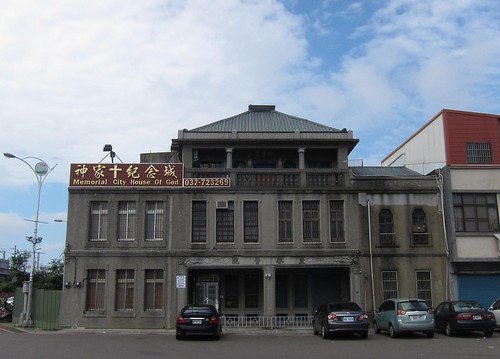
The Memorial City House of God, next to the train station in Houlong, which apparently was a hospital once.

Metro killer: 19 arrested for threatening copycat attacks...*sigh* Many people complaining that the present of police on the Metro, some with assault weapons, is not making them feel safer. One man's action has cast a long shadow over one of the world's best, safest metro systems, and now everyone must suffer.

After deploring the leap to blame various things, Daniel Lin at Thinking Taiwan observes:
Mass random killings are a form an extreme violence. Although we have yet to identify any strong predictors to explain such complex behavior, we can reasonably assume that it is driven by multiple biological, psychological, and social factors. Witch-hunts and the facile categorization they engender can discourage efforts to establish a systemic approach to identifying high-risk individuals.
In simply the best work on rage killings of the last couple of decades, Going Postal, Mark Ames did in fact identify the source of the problem: America's toxic work culture. Jeff Sparrow at Counterpunch ("Rage Killings in a Neoliberal World") brings it together...Sparrow is talking about the recent killings in California, but he could well be talking about the ones in Taiwan.
As I’ve argued before, the most interesting attempt to historicise the rage massacre comes from Mark Ames’ book Going Postal. Ames’ title reminds us that, in the US, such killings were once synonymous with postal workers (a historical fact that now seems almost quaint). That’s why he identifies the rise of rage massacres with Reaganomics: he suggests that neoliberal reforms to the postal service reduced job satisfaction, placed employees under unbearable stress and transformed workplaces into cesspits of toxic bullying.

Signfiicantly, when Ames’ interviewed massacre survivors, some expressed a remarkable sympathy for the shooters, while very few surprises at the crimes. They’d expected something to give, they said, even if they hadn’t known quite what.

Ames notes the migration of rage massacres from the workplace (in the 80s) to the school (during the 1990s), a trajectory that followed the generalization of neoliberal principles into the US education system. In their suicide notes, school shooters also referenced prolonged bullying, as the entrepreneurial values of mainstream American culture found schoolyard expression in concentrated form, and the gulf between the school’s winners and its losers became more pronounced and more significant.

Like the workplace gunman, the teenage killer embraced mass murder as a brutal and incoherent expression of social despair.
The really interesting question for Taiwan is not that we have rage killings, but why we don't have more of them here, given the long working hours, stagnant incomes, and relentlessly competitive educational and work environments. There's no single factor, but many working in tandem. Some might be....
  • the lack of guns and sociocultural identification of guns with manliness and manhood
  • the ruthless ability of Taiwanese to exploit themselves ever more strongly. My Facebook feeds are filled with posts from my former students, now drones at the bottom of the corporate ladder, admonishing themselves to work harder, and the general cultural belief in the efficacy of hard work
  • Taiwan is still in the first generation of the class revolution that has redistributed America's wealth away from its working and middle classes upwards for the last 30 years, and the young are still to a certain extent supported by the enormous wealth gained during the Miracle Economy years.
  • the educational system trains the young to accept long hours of work under arbitrary authority as normal.
  • outlets: Taiwanese can relocate to China or remain in masters degree programs, since so many have four year degrees.
More could be said. I wondered if Taiwanese were more prone to suicide than mass murder, but if you look up the numbers, Taiwan and the US are pretty comparable....
_____________
Daily Links:
_______________________
Don't miss the comments below! And check out my blog and its sidebars for events, links to previous posts and picture posts, and scores of links to other Taiwan blogs and forums!

Thursday, May 22, 2014

Income tax PR move

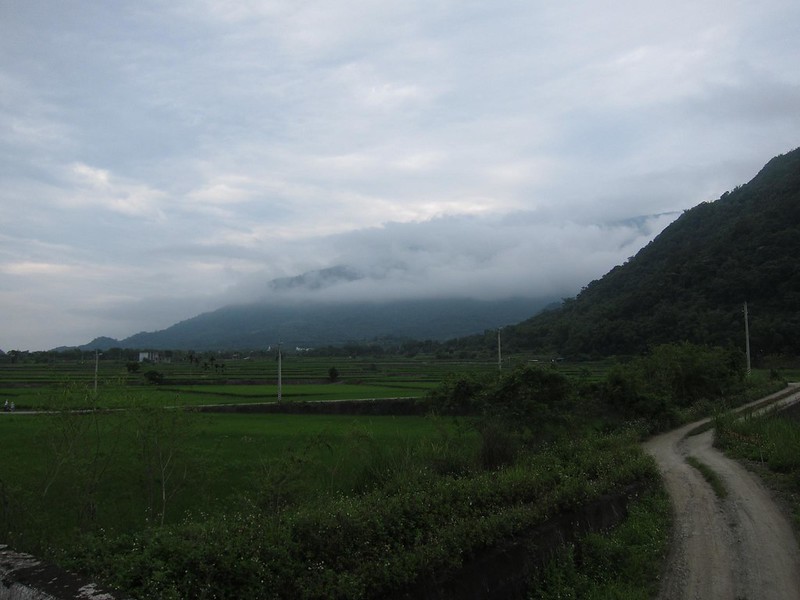
The rift valley near Yuli.

Earlier this month the government "raised taxes" on "the wealthy" (FocusTaiwan)...
Based on the concept, the tax reform package includes the creation of a new individual income tax bracket with a marginal income tax rate of 45 percent for people reporting annual taxable income of over NT$10 million (US$329,446) a year.

Under the current tax code, the 40 percent rate bracket kicks in at a taxable income of more than NT$4.4 million.

The revision, if put through, is expected to affect around 9,500 people and generate an additional NT$9.9 billion in tax revenues.

In addition, the business tax for banking and insurance institutions will return to the previous 5 percent from the present 2 percent, which is expected to generate an additional NT$21 billion in tax revenues.

Also, the current tax credit afforded to individual shareholders receiving dividends would be cut by 50 percent and would generate more than NT$50 billion in tax revenues. All told, the increases will inject an additional NT$80 billion into national coffers.
This move taxes income, not capital gains, and only affects a tiny number of taxpayers who suffer an insignificant increase in their overall taxes. It is merely a PR move. Except for the reduction in the credit, capital income is not affected. Major tax dodges, such as the assessed value on real estate, remain unchanged. The minister claimed this will help income inequality -- probably in some tiny way, it will. But read your Picketty (I just finished it, fabulous book): as long as returns to capital exceed the overall rate of economic growth, then income inequality will worsen. Unless the government meaningfully tackles the pernicious problem of untaxed accumulated wealth, income inequality will continue to worsen.
_______________________
Don't miss the comments below! And check out my blog and its sidebars for events, links to previous posts and picture posts, and scores of links to other Taiwan blogs and forums!

Tuesday, April 29, 2014

Another Overwhelming Wave of ECFA Successes

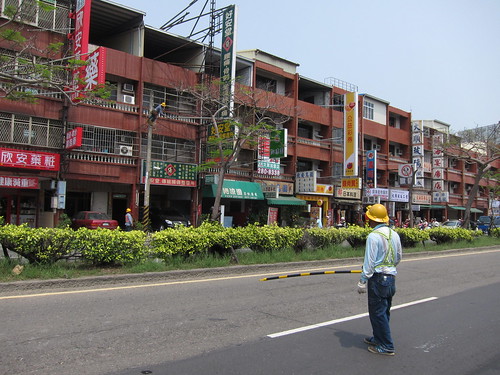
Putting in cables in Kaoshiung.

The Taipei Times reports on the amazing increases decreases in Chinese investment in Taiwan:
Chinese investment in Taiwan in the first quarter plummeted 90.83 percent to US$12.75 million from a year earlier, and investments from other foreign countries also fell in the first quarter by 33.82 percent to US$833.7 million, the Ministry of Economic Affairs’ Investment Commission said on Monday. Meanwhile, Taiwanese investment in China grew 28.97 percent in the first quarter from a year ago to top US$2.8 billion, the commission said.
Yes! Chinese investment has reached $12.75 million, or about what my in-laws spent on liquor at the last wedding in the family. Meanwhile capital that could be growing Taiwan is still flowing into China as China continues to be the abyss into which Taiwan's future is poured.

Both ECFA and the current services pact are projects that benefit the 1%: big finance, big corporations, and organized crime. As if in acknowledgement of this, I heard that the DGBAS, the official stats bureau, announced this week that it is going to stop publishing the ratio between the top and bottom of Taiwan's income groups. It will now become more difficult to discuss income inequality in Taiwan. That ratio of top/bottom incomes is a powerful indicator of the level of income inequality in Taiwan, a worsening problem which is linked to two major trends since 1990: financial liberalization, and closeness to China, both of which have been massively beneficial to the 1%.

News from the construction-industrial state: a friend who purchased land on the east coast wants to build a house. In order to do that he needs to grow crops on that land. The local gov't people have to come out to image the crops and verify that the land is planted, which it is, beautifully. Only they are slow in coming. Why? Well, one reason bouncing about the local community is that big hotel developers want a go-slow in the area so nobody opens bed and breakfasts that might compete with them.

See J Michael's latest in The Diplomat on the Anti-Nuke protests. Premier Jiang said that the government will never shutter the nuke plant. Stay tuned. The KMT's probable presidential candidates are all involved in this: Eric Chu, the New Taipei City chief in whose district the plant will function has called for revising the referendum law to bring it up to international standards. Hau Long-bin, the Taipei mayor, has played it close to the vest. Premier Jiang, whom I consider Ma's hand-picked successor, has been the President's attack dog, in the time-honored style of the lower level official saying things the Benevolent Great Leader wants said but cannot because they interfere with his appearance of benevolence. With everyone positioning for 2016, things could get interesting inside the KMT....
_______________________
Don't miss the comments below! And check out my blog and its sidebars for events, links to previous posts and picture posts, and scores of links to other Taiwan blogs and forums!

Thursday, April 24, 2014

Taxes and our fading economy


From the link below...

The Taipei Times wrote up a short piece on potential changes to the property tax laws to "curb property speculation"...
Taipei Deputy Mayor Chang Chin-oh (張金鶚) yesterday met with Minister of Finance Chang Sheng-ford (張盛和) to discuss the high housing prices, after Premier Jiang Yi-huah (江宜樺) vowed to reduce the home price to income ratio in the Greater Taipei area from 15.01:1 to 10:1 in two years.

“Under the cooperation established between the central and local governments, we are confident that the average cost of a housing unit [in the region] could be reduced by one-third in two years,” Chang Chin-oh told a press conference after leaving the ministry.

The two sides have agreed to expand the interval of the home tax rate on non-residential properties up to 3.6 percent and stipulate a more accurate definition of what constitutes self-use residences (properties not occupied by the owner).

Currently, local governments determine their own housing tax rate and all of them have adopted a rate of between 1.2 and 2 percent of a residential property’s value, which is the range set by the central government.
Note in that third paragraph the two salient points: (1) tax rate to jump up to 3.6% and (2) accurately defining what it means to self-use a residence. The skill lies in the second; it will be relatively easy for homeowners to evade this milequetoast tax rise simply by redefining their own residency.

The real issue, as always, is that the assessed value has remained the same since 1987. Recall this piece from the excellent mag Commonwealth:
Land in Taiwan has four different values. Aside from the actual market price, there is the "publicly announced land value," which is adjusted once every three years, the "reported current land value," which is the value reported by landowners used to calculate the land tax and can be up to 20 percent higher or lower than the publicly announced land value, and finally the "assessed present land value" on which land value increment taxes (similar to capital gains taxes) are based.

Taiwan's houses also have two prices -- the actual market price and a "standard unit price for housing construction" set by the tax revenue offices of each local government for residential units under their jurisdiction. This publicly assessed price has not been adjusted for 27 years. Legislator Lai Shyh-bao estimates that the current "standard unit price" is roughly only one-fifth of the actual market value.
and of course...
"Taiwan is the only country in the world that uses an assessed present value to calculate housing and land taxes," says the economist Ma Kai. The publicly assessed land and house value usually seriously understates actual market values. "The Palace's apartments are publicly valued at only NT$3 million to NT$4 million," Ma says of the luxury property that reportedly has sold its units for up to NT$ 70 million.

Another Commonwealth piece observed:
On a profit that was in fact NT$82 million but assessed by the government at NT$15.25 million, the investor paid a land value increment tax of NT$3.05 million, an effective tax rate of 3.71 percent. Even when deed taxes and other fees are added, the investor's tax liability was still under NT$4 million, or lower than 5 percent, the lowest marginal rate on personal income taxes.
You can see the problem. The additional tax on non-occupied residences is a fleabite because it doesn't address the real issue, the disparity between the assessed value and the actual value that has remained unchanged since 1987. That disparity is driving the enormous housing bubble in Taipei, an alternate universe of unreal values, spinning off still further alternate universes of housing price bubbles like a bad SF horror movie in other locations in Taiwan.

Still, that bubble of construction and "investment" is probably driving a large part of GDP and thus, no government can afford to prick that bubble. If Ma really wanted to screw the DPP, he'd raise the assessed value on real estate to current levels as his last act in office, but his Administration is owned and operated by the 1%, so don't look for that to happen.

Commonwealth also takes a look at the proposed tax reforms to make up the government's fiscal shortfall. I have a lot of respect for that mag: they produce a ton of useful articles on taxes and on economic growth and economic and finance policy. And they don't subscribe to the fiscal and economic insanity that lowering taxes on the wealthy produces economic growth.

Finally, a couple of weeks ago the 104 Job Bank, Taiwan's most important, produced data showing that average wages for first time job seekers fell below $30,000 NT a month. Other reports set the sum even lower, at 22K, a sum that was the butt of sardonic jokes during the occupation of the legislature. The 104 Job Bank also showed that average real wage is $44,739 for 2013, lower than the real average wage of $44,798 for 1998. Yet prices, the article notes, have risen 10% since then.
______________
Daily Links:
_______________________
Don't miss the comments below! And check out my blog and its sidebars for events, links to previous posts and picture posts, and scores of links to other Taiwan blogs and forums!

Saturday, March 15, 2014

Commonwealth: Good news on taxes

Commonwealth notes that taxes in Taiwan are being truly reformed....
Subsequently, Chang announced the details of tax reform. The corporate income tax on financial industry companies will be raised back to 5 percent from the present tax rate of 2 percent. The amount of corporate income tax that shareholders can claim as tax credits to be deducted from their personal income tax, under Taiwan's integrated tax system, will be halved. A tax rate of 45 percent will be applied to the portion of rich people's net income that exceeds NT$10 million per year. If all these changes are implemented, the state will raise an additional NT$80 billion in tax revenue.

Together with the proposed tax hikes, which are supposed to help fill the budget gap, the reforms also include tax cuts for the average wage earner. The 6.47 million wage earners and the some 510,000 people with disabilities will have their tax-deductible quota raised by NT$20,000 to lessen their income tax burden. In terms of corporate taxes, the government is for the first time using tax measures to encourage employment. Small and medium enterprises can claim additional salary expenses multiplied by 1.3 as costs. The government also encourages companies to invest in R&D to boost their competitiveness.
The article frankly states that the idea that subsidizing the rich as America does will help the nation is absurd and untenable. Kudos to the writers. Taiwan's ratio of taxes to GDP is among the lowest in the developed world, the article points out.

Kudos also to the Ma government for setting out to do this in an election year.
______________
Daily Links:
  • If a foreigner like me lead a political protest in Taiwan, I'd certainly be arrested. But when Chinese lead protests.... the police do nada.
  • Ma said it was "undemocratic" but note that prominent pro-Unification gangster Chang An-le appeared to shout slogans and generally criticized the pulling down of the state of Sun Yat-sen. How long before his cohorts start showing up to break up rallies and election activities?
_______________________
Don't miss the comments below! And check out my blog and its sidebars for events, links to previous posts and picture posts, and scores of links to other Taiwan blogs and forums!

Sunday, January 26, 2014

Taiwan Offshoring

FTV_Jan_2014_133
No time for blogging for a couple more days...

Commonwealth strikes again with two great pieces on offshoring Taiwan's wealth here and here.

Oh, and J Michael Cole on the truck driver who crashed into the presidential office
_______________________
Don't miss the comments below! And check out my blog and its sidebars for events, links to previous posts and picture posts, and scores of links to other Taiwan blogs and forums!

Wednesday, January 22, 2014

China's Offshored Wealth

There is only one story you should be reading today: This ICIJ account of China's offshored wealth. Much too long and no point in excerpting here. Over 10,000 Taiwanese names in the ICIJ's records as well, and they worked with Commonwealth Magazine. Can't wait to see Commonwealth's report on it. They have a survey on Taiwan's widening rich-poor gap here.
_______________________
Don't miss the comments below! And check out my blog and its sidebars for events, links to previous posts and picture posts, and scores of links to other Taiwan blogs and forums!

Thursday, March 14, 2013

Taiwan's Income Inequality Disappearing in the Media

random_10
Gravel trucks ceaselessly feeding the maw of the construction-industrial state.

A couple of related pieces out tonight. First Jennifer Chen in WSJ offers a paean to the greatness of Taipei, which actually has a connection to a truly silly article from Bloomberg that sent waves of amused contempt rolling through the intertubes. The WSJ piece on Taipei says:
Since the late 1990s, the municipal government has focused on improving the quality of life in this city of 2.6 million. “Taipei is a city known for its friendliness and rapid development of technology,” Mayor Hau Lung-pin said in 2010 during the launch of a beautification campaign. “We want to turn it into a beautiful city.”

“Everyone knows that Taipei is a city with a good lifestyle, but that’s not enough,” Lin Chong-jie, the director of Taipei’s Urban Redevelopment Office, said. “We want to make Taipei’s place in Asia clearer, and one of the ways of doing so is becoming a creative city.”
What a coincidence! The article conveniently begins with the KMT administration of the city, which resumed in the late 1990s after Chen Shui-bian's single term as mayor. I'm sure there is no politics there.

And another, deeper coincidence. In the piece are featured a couple of cafes and design locations, and note how the piece has a focus on creativity and design. Can you guess? The city of Taipei is currently submitting a bid to the World Design Capital competition for 2016 (here). The bid application of course emphasizes the design and creativity infrastructure and organizations of the city. I'd bet money that the cafes and other places mentioned by name in the article will be in the city's bid. Nice to get a little free advertising in a global news organ about your city's awesome design and creativity facilities and atmosphere.

One comment in the piece really struck me:
Welcome to the new Taipei. Other Asian cities might compete on building the flashiest skyscrapers or glitziest shopping center. But the Taiwanese capital, once a typical ’80s Asian Tiger boomtown, is forging a different path.
Most of the piece is excellent and on point (and a pleasure to read, obviously well-written and edited), but this remark shows a lack of understanding. Taipei in the go-go days was a boomtown, but it was never a typical Asian boomtown. The high rises and slums of other Asian boomtowns passed Taipei by, because in the 1970s and 1980s income inequality in Taiwan was shockingly low. In Governing the Market at the end of the 1980s Robert Wade observed that Taipei was crowded with low buildings and mostly free of skyscrapers, so that anyone looking at Seoul with its steel-and-glass symphonies might suppose that South Koreans were rich and Taipei'ns poor. But the opposite was true at that time: Taiwanese had a lot more money. In reality, skyscrapers are not a symbol of wealth, but of rampant wealth inequality. Just look at how much more unequal income is in Hong Kong, and how much taller its buildings are....

Now in fact Taipei is becoming a boomtown, with new apartment buildings going up and older, historic, and traditional structures being eradicated. Taipei's high-rise boom is a symptom of growing wealth inequality. This boom is driven by the ongoing property bubble which in turn is fueled by Taiwan's growing wealth inequality. Always unmentioned in pieces like this is another aspect of income inequality: regional inequalities. Taipei lives well because the rest of Taiwan has been starved for development funding to feed Taipei.

Taipei's reflection of the growing wealth divide in Taiwan linked the WSJ piece in my mind to the Bloomberg piece, which is titled: Taiwan Shrinks Wealth Gap as Xi’s China Communists Struggle. Bloomberg usually turns out center-right Establishment political analysis which is fairly reliable within its agenda, and occasionally a really good piece, but seldom do they publish outright comedy gold like this comparison of Taiwan and China. It's like a primer in how to craft an obvious political attack that looks like a news report, while failing to meaningfully comment on the host of problems stemming from Taiwan's failure to tax its wealth properly, as well as totally misunderstanding Taiwan. It's not often the media serves up its propaganda so artlessly. Why O why can't we have a better press corps?

The title is absurd on its face; income inequality in Taiwan has been on the increase for three decades. But Bloomberg says:
As Chinese President Xi Jinping completes his nation’s leadership succession this week, Taiwan may offer a model for his campaign to bridge a wealth gap that threatens to undermine Communist Party legitimacy. Taiwan’s Gini coefficient, a measure of inequality, was 0.342 in 2011 compared with China’s 0.477 and the 0.4 level used as a predictor for social unrest.
...and further down....
In Taiwan, the Gini coefficient hit 0.350 in 2001 and has since hovered around its current level of 0.342. Its income gap is now lower than Hong Kong’s, which reached 0.537 in 2011, and Singapore’s figure of 0.482 that same year. In January, the head of China’s statistics bureau said the Chinese income gap narrowed for the fourth straight year in 2012, to 0.474 from 0.491 in 2008.
Anyone can download the Excel file from Taiwan's stats agency and look. The gini has risen steadily since the early 1980s after falling steadily during the 60s and 70s, reaching its lowest point in 1980. The .350 in 2001 was an outlier, probably due to the recession at the time. I discussed this before here. Here is the data....

1981 0.281
1982 0.283
1983 0.287
1984 0.287
1985 0.291
1986 0.296
1987 0.299
1988 0.303
1989 0.303
1990 0.312
1991 0.308
1992 0.312
1993 0.315
1994 0.318
1995 0.317
1996 0.317
1997 0.320
1998 0.324
1999 0.325
2000 0.326
2001 0.350
2002 0.345
2003 0.343
2004 0.338
2005 0.340
2006 0.339
2007 0.340
2008 0.341
2009 0.345
2010 0.342
2011 0.342

If you mentally remove the .350, you can see how the gini climbs from around .32 in the 1990s to around 3.4 a decade later, .02 a decade -- just as it did from the 1980s to the 1990s. Bloomberg has selected the most useful year for its discussion of Taiwan's income inequality. 2001 is the only year it could have selected that would show income inequality to be meaningfully lower now than a decade ago. It's all coincidence, I'm sure.

Never mind that the numbers for China are even more contestable; several knowledgeable friends pointed out that recent work shows the gini in China to be above .60, though I do not know what studies they refer to. Or that China's gini was probably excellent, since everyone was poor, until the boom days began in the 1990s.

Bloomberg then goes on to praise Taiwan's health insurance system, which truly is one of the world's best and deserving of praise. It then contrasts that with China's, to make its crude political point. At which point everyone started laughing at the irony, because we all know what the business interests in the US that Bloomberg writes for think of national health insurance. Ditto for the commentary on the social safety net, which elites in the US are busily attempting to gut. And ditto for the massive US income inequality (Bloomberg's editors on that).

The article does mention Taiwan's income tax situation, but without any reference to the problem of the rich being woefully undertaxed, something which drives other things they mention, underfunded pensions, the underfunded health insurance system, and housing prices. *Sigh*

Finally I had to love the way that the article mentioned that two pro-independence leaders were prosecuted for corruption....
In Taiwan, former President Chen Shui-bian is serving a 20- year jail term for bribery. Another former leader, Lee Teng-hui, faced embezzlement charges in 2011. Taiwan also introduced a luxury tax in 2011 that imposed a 10 percent sales levy on goods such as yachts and furs.
....no mention that the current KMT President was also prosecuted for corruption and that no one disputed government funds from public accounts found their way into his private accounts. But can't have everything, I suppose.

One outstanding kudo to them -- Bloomberg mentions the political affiliation of one of the groups they cite. Great work; not every news agency bothers to do that. But on the whole, I hope we don't see any more transparently political editorializing like this.

ADDED: An anonymous commenter further noted on the WSJ piece:
In the WSJ piece, note that Monocle magazine gets a mention.

Monocle's editor in chief is Tyler Brûlé, who also runs Winkreative, the PR agency that runs the American and European campaigns of Taiwan's tourism bureau. (Quite pleasant to see on the side of a London double-decker, I must admit.) The article looks like a real win for both of Brûlé's businesses.
________________________
Daily Links:
_______________________
Don't miss the comments below! And check out my blog and its sidebars for events, links to previous posts and picture posts, and scores of links to other Taiwan blogs and forums! Delenda est, baby.