Showing posts with label CCP. Show all posts

Friday, February 24, 2017

Taiwan News Latest: Incorporating 2-28 into PRC history

DSC04769
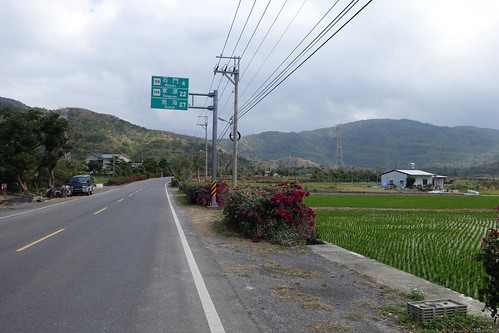
The 199 outside Checheng.

The PRC's incorporation of 2-28 into the CCP historical narrative drew lots of attention this week, including in my latest piece for Taiwan News. Because of the western media habit of lengthy quoting of CCP agents without comment or fact check, I wonder if...
Sooner or later it will begin to find its way into articles, interviews, and similar, sometimes given the same weight as robust scholarly history from "the other side." Readers are invited to imagine what PRC state actors like Shen, often quoted at length in the western media, will be permitted to say because of this new narrative.
With the absurd claims to the Senkakus, PRC clout has created a situation where western media avoid comment on the PRC claim, and repeat and repeat and repeat it, legitimizing it. Any marketer can tell you the key to getting ideas accepted is to repeat them. They don't have to have any particular content or to be truthful, they just have to be repeated. That is a key to effective propaganda.

Taiwan Sentinel commented here. Brian Hioe has a great review of the PRC's assimilationist historical narratives at New Bloom. Brian notes:
Commemoration of the 228 Massacre still remains a sore spot for the KMT, who act as China’s proxies in Taiwan and continue to largely deny historical wrongdoing during the 228 Massacre or in the White Terror which followed. As such, Chinese commemoration of the 228 Massacre may perhaps represent China distancing itself from the KMT. Seeing as commemoration of the 228 Massacre was historically pushed for by the DPP, which emerged out of Taiwan’s democracy movement, this may represent the CCP backing away from the KMT and shifting towards attempting to co-opt the DPP, given the generally floundering political fortunes of the KMT in recent times. This remains to be seen.
...and....
Attempts to create a similar figure to Wencheng have been attempted with the historical figure of the “Fragrant Concubine,” a Uighur concubine of the Qianlong emperor. Similarly, in many contemporary historical depictions of Genghis Khan in China, Genghis Khan is treated as though he were a Chinese and not a Mongolian emperor, not only to absorb the historical fame of Genghis Khan into Chinese history, but to justify Chinese claims over inner Mongolia. There exist similar attempts in many filmic depictions of Chinese ethnic minorities, propaganda efforts that the Chinese government plans to step up with the announcement of plans to produce fifty-five films featuring China’s ethnic minorities in the near future, with one film for each ethnic minority.
The observation that the CCP is possibly attempting to distance itself from the KMT is probably not right, though Hioe is quite right to point it out, and the 2-28 commemoration narrative may eventually be used that way. However, scholar Kharis Templeman pointed out that the PRC's incorporation of 2-28 into its historical fantasies is much older than I had realized, meaning that it is probably not targeted at the KMT at present. He dug up these stamps from 1977 (the 2007 commemoration a few years ago was mentioned in the local media).
Much depends on what historical events the CCP targets and how hard it targets them...
_______________________
Don't miss the comments below! And check out my blog and its sidebars for events, links to previous posts and picture posts, and scores of links to other Taiwan blogs and forums!
Wednesday, May 06, 2015

Chu goes there?

To some, those red polka dot balls are "art." I must be getting old...

Well well. The meeting of Eric Chu, KMT Chairman, and Xi Jin-ping, President of China was on May 4th, a day fraught with symbolism in Chinese history. Yeah, remember when Chu denied May 4 was the meeting day?

Since nothing important happened or was agreed on (Cole at Thinking Taiwan) at this utterly routine meeting, one more in roughly two decades of contact between the two longtime anti-democracy foes, the big news was the spat between Eric Chu, the KMT, and the CCP on one side, and poor AP on the other. Chu had said
"兩岸同屬一中"
...which means that both sides belong to one China. This is boilerplate. The Taipei Times then reported on the ensuing storm, which was as artificial as snow at a California ski resort:
Chu also said the KMT has “expressed a stern protest against and demanded the retraction of” a report by The Associated Press (AP) that said Chu “reaffirmed the party’s support for eventual unification with the mainland” when meeting Xi.

In the article, which AP ran under the headline: “In China, Taiwan party leader calls for more global access,” Chu was reported to have “affirmed his party’s support for eventual unification with the mainland,” according to the KMT.
WantWant described:
Describing the report on Chu's comments as non-factual and fabricated, Lin Yi-hua, head of the KMT's Culture and Communications Committee, said Chu did not broach the topic of unification with China during his recent visit to China.
AP of course retracted. The reason AP retracted is simple: the writer of the piece was Chris Bodeen and Bodeen is based in Beijing. Moreover, unlike a long line of Beijing-based reporters I could name, Bodeen seems to dedicated to getting things right on Taiwan, which surely must have pissed off two anti-democracy parties I'm familiar with. Since Beijing had leverage -- goodbye, Bodeen's visa -- AP had no choice but to take it down.

One takeaway: Taiwanese are so anti-annexation that Chu's apparent affirmation of it had to be swiftly obfuscated clarified lest it hurt the KMT's (and perhaps Chu's) election prospects any further. Chu even got the nice bonus of playing the victim. Ben Goren of the Letters from Taiwan and I were chatting that evening before about the cataract of clarifications the KMT was going to issue on the morrow, and Ben neatly nailed the actual text of the "clarification" the KMT. It was all very predictable. Too bad AP got blindsided.

Hau Lung-bin, the former mayor of Taipei who is now in charge of much of the day-to-day running of the KMT, did his kow-tow to Beijing quietly in April. This means that both the major mainlander princes have now given fealty to the Emperor and received his blessings.

China again promised political talks with Taiwan as an equal, provided the One China principle was accepted. Typical.

 NYTimes' Austin Ramzy, in otherwise excellent piece on the Chu-Xi lovefest, says:
Taiwan’s opposition Democratic Progressive Party has been critical of the consensus and denies the two sides reached any such understanding.
Su Chi, the KMT heavyweight publicly stated that there was no 1992 Consensus (in 2006, almost a decade ago), and so has Lee Teng-hui, who was president at the time and who ought to know. As the Wiki page notes, which I had forgotten, so has AIT head Burghardt. Indeed, on this topic, 1992 Ma Ying-jeou says 2015 Ma Ying-jeou is wrong. The 1992 Consensus as we know it today was coinage of later date as a cage for future DPP cross-strait policy-making, legitimated by casting it back into the past, like Chinese claims to South Sea Islands (here's a google search on the term in English for 1993-1999: no hits). A key point is that China has never accepted the 1992 Consensus, it merely insists that Taiwan politicians do so. Frozen Garlic harrumphed on the 1992 Consensus today:
I’m pretty fed up with claims that the 92 Consensus is historically based and claims that it is a fiction invented a decade later. Personally, I think the important point is that the KMT and CCP have found an idea they can agree on; whether or not it is based on something that happened in 1992 is not that critical. They could call it the “Super Awesome Neato Arrangement Sponsored by Samsung and Coca-Cola” for all I care. Diplomatic-speak makes me yearn for the relatively straightforward and honest rhetoric of election campaigns.
Froze's idea of "the important point" is incomplete. The KMT and CCP do not need an idea they can agree on to talk, they can talk any time they like and do. It's not like Chu and Xi sit down and an aged cleric walks out with a copy of the Lun Yu and then Xi and Chu both take an oath on it to adhere to the 1992 Consensus before they talk. Neither gives a flying f@ck in a rolling donut about the 1992 Consensus. Like all legal ideas put forth by Leninist authority organizations like the KMT or CCP, the rules cage others; they don't apply to the Party itself. It's always important to keep in mind when thinking about the KMT that it is not a political party but the political organization of a colonial ruling class. Hence, the key point from the KMT-CCP view is that it is a cage that both Chinese parties can use to imprison the DPP's policy makers, since each insist the DPP must adhere to it if it wants to talk to China. Wiki has a review of the history.

And yes, each time it is mentioned, I will note that it never occurred and that its importance lies in the way it is used to cage the DPP.

At Forbes Ralph Jennings correctly identifies one real goal of the talk -- Chu is probably seeking some practical help against the pro-Taiwan side, which looks like it is going to do well in the 2016 election.

Kerry Brown's magnificent tweet boner....
...is a reminder of another media problem: inability of the media to use "Chinese" when referring to the KMT. Not to pick on anyone, since the problem is widespread, but in this UPI piece, for example, the fact that the party regards itself as Chinese and that its ideology of Chineseness is a driver of its goal of annexing Taiwan to China, simply vanishes. Instead, Chu is the head of Taiwanese party.

More ominous than the entirely predictable moves of Chu was the Chinese decision to punish a Taiwan scholar for taking a stance Beijing didn't like. Solidarity.tw reports and translates:
Today’s edition of Hong Kong’s China Review 中評社 contained a column called “Talking with Beijing” in which the author stated that several scholars in Taiwan are coming out to help the Democratic Progressive Party by libeling KMT chair Eric Chu 朱立倫 and labeling him red, and these scholars provide “seemingly objective and neutral” analysis that misreads policy and misleads the electorate, said the author.

More directly, the author called out National Chengchi University Professor Tung Chen-yuan 童振源, saying that because of his twisted words, mainland China has stopped him from leading a delegation to visit there.
"Looks like the DPP's strongest election opponent this cycle will be the Communist Party," he concludes.

And watch out for the self-[CENSORED].

UPDATE: Commenter below says 1992 Consensus appears in two late 1999 pieces behind paywall. Re-searched adding the term Taiwan. Only five hits, none before 2000. The 1992 Consensus only became important with the first Chen Administration. See the opening paragraph of Cabestan's 2002 piece at Jamestown. May give fuller treatment later if I have time.

UPDATE 2: As this sarcastic image observes, although Chu insisted AP change its reporting that Chu accepted eventual annexation of Taiwan to China, there is no similar insistence that Chinese media change theirs.
_________________
Daily Links:
  • Newsweek piece on CFR report calling for new China policy. A bonus: this is the first time I've seen a major mainstream article refer to the pro-China crowd in the State Department, which all sides in the Taiwan debate assures me is a major problem for Taiwan. The CFR report also said that the US needs to fix its economy. It can do that very simply: (1) raise minimum wage to $20 to help restore US consumption so we can help out our friends by importing their goods -- of course they seek other markets since our elites have destroyed our middle class; (2) institute universal health insurance; and (3) terminate our stupid, wasteful, fossil fuel driven wars in the Middle East. But none of that will happen....
  • Taiwan This Week podcast from ICRT featuring central Taiwan's Courtney Donovan Smith and Jane Rickards, who writes on Taiwan for the Economist.
  • Ben on how Ma poisoned the well
  • Taiwan government urged to investigate when it is discovered that Taiwanese backpackers on work holidays in Australia are treated just like foreign laborers in Taiwan.
  • Scholars from Soochow U and other universities say that if young people in Taiwan don't have culture, Taiwan will become like the Philippines. Yes, you can really say stuff that stupid in public in Taiwan. 
  • Central bank intervening to slow the Taiwan dollar's rise.
  • Lessons for the Gulf states from... Taiwan.

_______________________
Don't miss the comments below! And check out my blog and its sidebars for events, links to previous posts and picture posts, and scores of links to other Taiwan blogs and forums!

Tuesday, May 05, 2015

Nelson Report: Taiwan Bid to join AIIB = TPP leverage?

Coast_April_8
An abandoned strongpoint keeps watch over the coast.

Two interesting items here. First, the Nelson Report, the Washington Insider report, observes that the KMT may be attempting to use AIIB entry as leverage to enter the TPP. At the bottom, a reporter tries to get the State Department to comment on the 1992 Consensus, claiming absurdly that the 1992 Consensus was the basis for the CCP-KMT lovefest. China loves that 1992 Consensus and insists Taiwanese politicians hew to it even though Beijing itself has never accepted it. The US State Department is generally considered pro-China by many observers on all sides of the debates (wow to Newsweek). Thus, it is interesting that the State Department didn't make a statement saying Taiwan should adhere to the 1992 Consensus, which was invented in the 2000s to form a cage for the DPP's future cross-strait policies. Kudos to them. Instead, the State Department said that was something for the participants to worry about...
TAIWAN PLAYING THE AIIB CARD? Taiwan clearly wants to join the next round of TPP negotiations, if/when they get going, and while that obviously would require Taipei finally undertaking ag policy and other reforms its long been aware of and unwilling politically to do...from today's State Dept. brief it would appear that the KMT may think it can dangle possible AIIB membership in front of US policy-makers as a form of "incentive":

QUESTION: The secretary general of the Chinese communist party, Xi Jinping, just had a meeting with Kuomintang's chairman, Chu Li-luan. I'm just curious about the reaction of the U.S. Government to this highest-levels talks between cross-strait political parties.

MR RATHKE: Well, we welcome steps on both sides of the Taiwan Strait to reduce tensions and improve cross-strait relations. We encourage authorities in Beijing and Taipei to continue their constructive dialogue which we believe has led to significant improvements in the cross-strait relationship. And of course, as to the content and the pace and the scope of those interactions, that should be - it should be acceptable to people on both sides of the strait, but we'll leave those details to the people participating in those talks...

...QUESTION: Yeah. Also Chu Li-luan said he hoped Taiwan can take part in the AIIB, and Xi Jinping welcomes that. So will the U.S. support Taiwan's bid to join AIIB?

MR RATHKE: Well, I don't have any comment about the decisions of anyone to participate in the AIIB. The U.S. view on the AIIB has been made quite clear. We consider it important that high standards of transparency be part of the AIIB's approach. I think the President also commented on this just last week, so I don't have anything to add to that...

...QUESTION: And Xi Jinping also mentioned that he has seen some new and important point in cross-strait, and which has impacted Chinese nation and the country's future. I just wonder: Does U.S. have the same point of view?

MR RATHKE: Well, again, we welcome improved cross-strait relations. I'm not going to get into kind of characterizing them further than that. We've seen progress and we welcome that and we encourage continued dialogue.
Yes.

QUESTION: Thank you, Jeff. The '92 Consensus seemed to be the basis for the two sides to actually make the meeting possible. Would the United States think that this may serve as a point of reference for Taiwan's opposition party, the DPP, so that it would be able to open its own dialogue with the mainland some way, particularly when the DPP chair is about to visit the United States? Thank you.

MR RATHKE: Well, I'm not going to comment about how internally these issues are approached. Again, I think our support for improved cross-strait relations is clear.
_______________________
Don't miss the comments below! And check out my blog and its sidebars for events, links to previous posts and picture posts, and scores of links to other Taiwan blogs and forums!

Tuesday, February 11, 2014

The Pro-China team gets the attention of the locals

The 145A in Yunlin.

The pro-China forces were sprinkling the land this week with little reminders of just how life will be when China annexes Taiwan. First, the ongoing controversy over the changes to the high school textbooks showed the full colonial thrust of the Deep Blue pro-China academics who drafted them: aborigines in Taiwan are referred to as China's 56th minority, the "high mountain people" (高山族). Hey, way to go! And this an election year too. This controversy couldn't have happened at a better time.

Meanwhile this week China refused visas to journalists from Apple Daily and Radio Free Asia for the historic government to government talks, an action condemned by the International Federation of Journalists and Freedom House. Thus giving a very public demonstration to Taiwanese of what rule by China will mean. Hey, way to go! And this an election year too. This couldn't have happened at a better time.

Speaking of the "historic" talks, the awesome Jon Sullivan is everywhere these days since opening the China Policy Institute blog. See what a blog can do Jon?*  His latest was a cautiously hopeful piece in WSJ this week on the historic Taiwan-China government to government talks, and he has a piece similar in tone in The Diplomat with my friend Michal Thim. In the strong WSJ piece, the first public mention I've seen of the fact that meetings between the two parties go back to the 1990s, Sullivan observes:
Suspecting that President Ma might be tempted to authorize such concessions, regardless of public opinion, the legislature last week imposed restrictions on the scale of the MAC mission. In an extraordinary move, it passed a resolution barring the MAC chairman from speaking about, negotiating or signing any documents relating to sovereignty. In response he pledged to reiterate Taipei's commitment to the "1992 consensus."

In the early 1990s when representatives from the KMT and CCP met for the first time in an unofficial capacity, there were genuine fears in Taiwan that the two would come to a clandestine arrangement about the island's future. Such fears are unrealistic in democratic Taiwan, but the legislative resolution is testament to Taiwan's lack of trust in Mr. Ma, even within his own party.

While some have speculated that Mr. Ma is motivated by the glories history will bestow on the man who helps "unify China," a more prosaic explanation is that he and the KMT are operating with different time horizons. The president has two years left to cement any sort of legacy, while the party is looking ahead to mid-term elections later this year and national elections early in 2016. Heeding the public's opposition to quick or irrevocable decisions on changing the status quo is not the priority for Mr. Ma that it is for his colleagues who will stand in upcoming elections.
I don't think it is unrealistic to fear that the KMT and CCP will make clandestine agreements about the future of Taiwan since that is the nature of the two parties and open public agreements are not on the table. It is hard to imagine that whatever they are doing in formal meetings, in private settings they are not mapping out the fate of the island in fits of mutual fantasizing about the greatness of China, before they discuss which American university is the best one to send the kids to.

The stalled services pact and the legislature's restrictions on the meeting show how little influence Ma has over the legislature despite his status as Chairman of the KMT. I suspect it portends another local election in which Ma's face disappears from election posters since no one wants to be associated with Mr Unpopular.

Although the foreign media has been all a tizzy about the "historic meeting" of "two governments" it is, and always has been, the two parties, the KMT and CCP, dickering about the fate of Taiwan over brandy and cigars...

* It bringeth fame, yet increaseth not wealth. 
_______________________
Don't miss the comments below! And check out my blog and its sidebars for events, links to previous posts and picture posts, and scores of links to other Taiwan blogs and forums!

Friday, March 23, 2012

Oceania not at War with Eastasia: One Country, Two Areas

Champagne corks were flying all over the Taiwan media today as former KMT Chair Wu Po-hsiung hacked up a new formula for cross-strait relations: "One country, two areas" in a meeting with the ruler of China and mass murderer Hu Jin-tao. Thank all gods! Now we can relegate beef to the back pages since we can report on something that looks and tastes like actual news but has only half the calories.

As my friend Andrew K wittily parsed this, Wu meant Taiwan north and south of the Choshui River.

The BBC reported:
Mr Hu told Mr Wu that Taiwan and mainland China should push for a peaceful development of cross-strait relations "hand in hand like a family", reports the People's Daily Overseas Edition.

The Global Times says Mr Wu has proposed a new concept of "one country, two areas" as the "legal base" for handling relations between the two sides.
Wu also informed Hu that relations between the two allied, centrally-organized, Party-State political organizations  the KMT and CCP the two governments were "special" but were not "special state-to-state" (FocusTaiwan). Premier Sean Chen then officiously stepped in to remind everyone that this was perfectly in accordance with the ROC Constitution which specifies that China is one nation and the ROC is its ruler. Mutual Non-Denial? Down the memory hole, where it nestles comfortably beside APROC, 6-3-3, and FTAs.

Wu also said that exchanges with China and with other parties and interest groups will expand mutual understanding, benefiting "the softening of internal biases in Taiwan and aids in establishing a consensus." In other words, China is the club that will beat the DPP and those pesky pro-democracy types back into their place.

Yes, now that the election is over, the Ma Administration is suddenly not Taiwanese anymore. On the net there was much wearing of sackcloth and ashes at this, as if anything else were to be expected of this government.

It is interesting to contrast the KMT and DPP on this issue -- in 2009 Chen Chu went off to China and referred to President Ma as "the President of our central government." Apparently the earth remained in its orbit and China still signed ECFA.

Really, when Wu talks about "One country, two areas" he means that outside of Taiwan the KMT talks about Taiwan in a completely different way than it does when Party officials are speaking to home audiences. It doesn't really matter what Wu actually says since whatever happens in public is as scripted as a pro wrestling bout, and of even less import. The key is that he signals the continued willingness of the KMT to ally itself with the CCP and garner the benefits of cross-strait agreements for the KMT, big business, cross-strait organized crime, and other interested parties.

More pertinent in its way was the less touted report from the Taiwanese General Contractor Association that shows what "one country, two areas" actually means in practice for Beijing: relentless suppression of Taiwan. For Beijing's bid to join an international general contractor association, Beijing sent a memo....
In the memo, China listed as a prerequisite before it applied for membership that, in any activity and meetings of the international association, there be no presence of the “so-called ROC [Republic of China] national flag, national emblem or national anthem.”

It also said that Taiwanese officials could not attend in any capacity.

The Chinese association also demanded that the international group remove the Taiwanese association from all lists of nations in all meetings, events, documents, Web sites and paperwork to avoid creating the impression that there are “two Chinas,” or one Taiwan and one China.
Even more importantly, the article also recognizes one of the important conflicts that will shape the KMT's internal politics in the coming years:
Though China has yet to apply for membership, after the Ma administration announced that public infrastructure construction would be opened to Chinese investment, Chinese influence in Taiwan’s economy and politics would increase, the sources said.

At that time, the international association would inevitably be forced to agree to China’s strict demands, the sources said.

The sources said that the public sector is worried that further opening up of infrastructure construction to Chinese investors would enable China to control local factions through construction benefits and the contracting of subcontractors, and that such control would be able to influence elections.
There's no reason to think that CCP won't be as savvy as the KMT in playing off local factions against each for benefits from China, and there's no reason to think that the local factions won't be happy to play off Beijing against the KMT to extort greater benefits. Local contractors may also revolt against the KMT leadership when firms from China make off with plum projects. Managing its local patronage networks, historically a challenge muted by flows of central government money for public construction patronage in local areas, will become even more complex once giant firms from China muscle into the Taiwan public works market.

And wait til they want to import Chinese workers to do it....
_________________
Daily Links:
_______________________
Don't miss the comments below! And check out my blog and its sidebars for events, links to previous posts and picture posts, and scores of links to other Taiwan blogs and forums! Delenda est, baby.

Monday, September 26, 2011

AP: Second term, Ma may go for political talks. Also: sky blue, earth round

I remain both fascinated and amused by the way both journalists and the public seem to regard Wikileaks trove of US diplomatic cables as a kind of glimpse of the sordid but real truth that the shiny surfaces of diplomacy is hiding, a sort of modern version of Procopius' Secret History but without all the juicy sexual allegations. Sadly. It would probably be much more entertaining to see who Ma was sleeping with, than what pap his people are feeding the Americans. AIT, get on it!

The latest version of this reliance on the truthiness of Wikileaks is AP's stentorian piece on the Wikileaks reports that Ma's vice president Vincent Siew told then AIT head Stephen Young that Ma might go for political talks in Ma's second term. AP says:
The WikiLeaks cable, dated June 30, 2009, quoted Siew as saying that political talks during a possible Ma second term would address key issues including "a peace treaty, a formal end to hostilities, and development of bilateral military confidence mechanisms" with China.

In the past, Ma has conditioned the opening of political discussions with Beijing on China's removal of the estimated 1,300 missiles it has aimed at Taiwanese targets. However, there was no mention of this condition in the cable
If you read the entire cable (here) you'll find that it is full of the standard bullshit the KMT always feeds its US listeners. I'm sure Stephen Young, a veteran of several years here, knew perfectly well what he was reporting. For example, Siew says that the beef issue would be resolved soon (hahahhaha -- if only). The Veep also promised to dialogue with the DPP (hahahahahaha). What does the Wikileaks report actually say?
If Ma is re-elected in 2012, observed the Vice President, the administration will confront the more difficult challenge of resolving outstanding cross-Strait political issues, including a peace treaty, a formal end to hostilities, and development of bilateral military confidence mechanisms. These "highly political" issues will be controversial in Taiwan, said Siew, but should be able to build on four years of cooperative engagement on economic issues.
This is about as vague as vague can be. Make up your own mind -- did Siew actually say it as AP says he did? Then look at what it is sandwiched between -- BS about beef above, BS about the DPP below. Siew is just talking; he probably didn't mention the missile condition because, as Young notes, he was fresh out of surgery and not at his best. Not because of some secret nefarious plot -- anyone following events knows that Ma doesn't give a fig for Chinese missiles one way or another; the "condition" is purely for public consumption.

I have two other objections to the AP report. First, any fool could have seen that if political talks were to be held, they were going to held in Ma's second term since if public talks began in the first term Ma would never get re-elected. Pure logic, no Wikileaks needed. Indeed, Ma's KMT underlings still will need to be elected in his second term, and public displeasure at open political talks would definitely hurt their changes.  Political talks will no doubt be held out of public sight, as.....

....as they are now. Second, and more importantly, political talks are already being held, privately and constantly. Does anyone believe that when Lien Chan visited in 2005, the discussion wasn't about politics? Don't the KMT and CCP communicate regularly to update each other about what's going on? When Washington, Taipei, and Beijing coordinated their approach to the F-16 sale, d'ya think the talks weren't political?

Indeed, the extent to which the KMT and CCP cooperate is largely kept out of the foreign media, enabling foreign journalists to pretend that a Chinese Wall separates them, bridged only by salvos of businessmen and tourists -- and thus, any bid to cross that wall is Real News. But it is a media construct, not reality.

Think AP will report on any of that truly important story?
_______________________
Don't miss the comments below! And check out my blog and its sidebars for events, links to previous posts and picture posts, and scores of links to other Taiwan blogs and forums! Delenda est, baby.

Thursday, October 14, 2010

Taiwan: so useful if it didn't exist it would have to be invented

A friend of mine sent me this tale in an email the other day. He is an American married to a Taiwanese and living in southern China....
....I would expect that China's history books have reamed Japan pretty well because of their nasty behavior in China in WW2, so public support of China policy (like they care about support) is going to be high. However, I am still reeling from a conversation with my two hip, 27 y.o. colleagues, who I hang with and who have had dinner with my wife and I.

The subject of Taiwan and Japan came up obliquely, I mentioned that Taiwan people have an affinity for Japanese culture that developed during their "benevolent occupation". Ding! Wrong fact to bring up. They jumped on top of me and robotically stated "Taiwan is a part of China and China was never occupied by Japan". Along with various statements about hating Japanese.

After collecting my senses, I asked how they could explain how my parents-in-law both speak Japanese if they were not educated by Japanese. They accused me of stating that their history books are wrong. Of course, I explained how every country's history books are wrong, that they are a tool for whoever is in power.

College educated (maybe that makes it worse), one has worked for 3 foreign companies and is a sparkling personality. That's why it is so disturbing, it means perhaps 99% of the people are misinformed about such a significant and recent fact of history. Hearing about propaganda and seeing the effect of it, are different things.
Jim Mann argued in The China Fantasy that the urban middle classes would ally with the State to enable them to maintain their position and assets and lifestyle against the masses below.

The State also connects to the educated urban middle classes in another way -- many of these hip, educated types are in service businesses that are dependent on the state flows of credit to local construction and land development -- real estate, law, accounting, engineering, consulting, interior design, architecture, and similar, or on foreign firms which are there on the sufferance of the State and buy and sell to and from its firms and projects. Westerners, especially Americans, have weird dramatized ideas that Leninist states like China or the KMT state on Taiwan succeed by a kind of coarse and obvious repression, but the reality is that they succeed by getting buy-in into the System from constituencies whose support they need. If you see past the surface, the KMT and CCP govern in the same manner: both Chinese Leninist parties co-opt their needed constituencies using flows of money and credit out of the central government to the construction-industrial state and those it feeds.

I suspect this is why so often you hear about educated urban middle-class professionals in China who are savvy analysts of Chinese government domestic politics and who are often properly and creatively skeptical about what they are fed about the domestic situation, but who immediately become mindless authoritarian blusterers if Tibet or Taiwan is mentioned. Such hollow nationalism represents a safe area in which hip urban types can display agreement with the State. While ignorance at the domestic level can be perilous for the assets of the rising middle class, bombastic nationalism is cost-free. Taiwan is thus all too useful.
_______________________
Don't miss the comments below! And check out my blog and its sidebars for events, links to previous posts and picture posts, and scores of links to other Taiwan blogs and forums!

Sunday, April 04, 2010

China, Taiwan Defense Cooperation?

Unredacted has a great post on a State Dept analysis of how US plans to nuke China would precipitate a general nuclear war over the islands that Chiang held in just off China, Jinmen and Matsu.
According to today’s hot doc, the US Air Force was ready and willing to drop nuclear bombs on Communist China at the outset of the 1958 Taiwan Strait Crisis. This 13 August 1958 State Department memo describes blow-by-blow how a dispute over two islands in the Taiwan Strait could have evolved into “general nuclear war between the US and the USSR.”

This memo, sent to President Eisenhower’s Under Secretary of State, Christian Herter, depicts how nuclear war between the USA and USSR could have evolved from a dispute between Taiwan and the People’s Republic of China over the islands of Quemoy and Matsu. Taiwan held these two strategically important islands, but the PRC also claimed (and shelled) them. America’s “existing contingent war plans,” derived from its 1954 security agreement with Taiwan, “call[ed] for the defense of Quemoy and Matsu by nuclear strikes deep into Communist China, including military targets in the Shanghai-Hangchow-Nanking and Canton complexes where population density is extremely high.“
It reads like a computer game player's fantasy of global destruction.... and it also shows how far things have come since those horrible days. Recently the China Reform Monitor offered a couple of paragraphs from the Chinese papers on possible KMT-CCP military cooperation over "Chinese territory".
The Beijing-owned Ta Kung Pao that People’s Liberation Army Major General Luo Yuan, deputy secretary general of the Chinese Military Science Society, has called “for military cooperation between China and Taiwan under the ‘One China’ principle.” He blamed U.S. arms sales for damaging cross-Strait relations and advocated the development of “a cross-Strait military trust and security mechanism.”

[Editor’s Note: Four days later the Wen Wei Po, another Beijing-owned Hong Kong daily, published a similar report claiming “there is vast space for defense cooperation in the South China Sea between the two sides of the Taiwan Strait.” The article said “the basic foundation for cross-strait cooperation in the South China Sea is that neither side is willing to cede Chinese territory to other countries” and it could include the joint exploitation of oil resources.]
Cross-Strait military cooperation. What a nightmare of complications that would present. Both Taiwan and China have, since 1969, claimed the Senkaku Islands, which had previously been undisputed Japanese territory. The US bound by Treaty to defend Japan. What if China moves on that once it has settled the Taiwan Question?

More interesting is whether such cooperation would call upon KMT military authorities in Taiwan to suppress independence activists if the PRC demands it.

A longtime observer of Taiwan defense affairs noted that a military pact is probably in the cards for Ma, especially if gets elected to a second term. Or sooner, if it looks like Ma will lose.
__________
Daily Links I:
_______________________
Don't miss the comments below! And check out my blog and its sidebars for events, links to previous posts and picture posts, and scores of links to other Taiwan blogs and forums!

Tuesday, September 15, 2009

New Premier meets rising pro-CCP politician in Hong Kong

One of the most annoying aspects of the communication between the Chinese Nationalist Party (KMT) in Taiwan and the Chinese Communist Party (CCP) is that it remains below the radar in the international media. Even though the international media discusses formal meetings between the two parties, such as Lien Chan's visit to China a few years ago, or the recent Cross-Strait Forum, most of the time the relationship between the CCP and the KMT is presented as if they were a pair of deaf-mutes desperately gesticulating to each other across the vast and unreadable Taiwan Strait. For example, the Economist wrote of President Ma's response to the Dalai Lama's visit:
Mr Ma was well aware that he was taking a risk when he decided on August 27th to approve the Dalai Lama’s request to visit the island.
Of course, Mr. Ma was well aware there was no risk, for everyone in the Chinese cultural world knows that the KMT and the CCP hold regular chats. In fact, it was widely rumored in Taiwan that an envoy had been dispatched to Beijing to discuss the matter and the response was negotiated. Naturally the KMT served Beijing's interests in the Dalai Lama's visit.

The most recent example of this cooperation was that of new Premier, who just prior to taking over the premiership, whisked off to Hong Kong to report to visit with a rising Hong Kong politician who has close connections to the CCP...
The Executive Yuan yesterday said Premier Wu Den-yih (吳敦義) met Hong Kong politician Leung Chun-ying (梁振英) during his visit to Hong Kong on Sept. 5.

Leung is the convenor of the non-official members of the Executive Council of Hong Kong and has been mentioned in Hong Kong media as a likely successor to Donald Tsang (曾蔭權) as the territory’s chief executive in 2012.

Citing the timing of the trip — two days before the announcement that Wu would become premier — the Democratic Progressive Party (DPP) accused Wu of meeting Chinese officials to discuss his premiership.

Executive Yuan Spokesman Su Jun-pin (蘇俊賓) yesterday rebutted the claim as “ridiculous.”

“The Republic of China is a sovereign independent country. Saying that Premier Wu had to report to [Chinese authorities] concerning his appointment was a ridiculous allegation,” Su said.

“Premier Wu has been consistent regarding the purpose of his visit to Hong Kong, which was to exchange ideas on disaster prevention measures,” Su said yesterday. “His accusers have to show proof.”
You have to admit, in light of the Chen Shui-bian verdict, that it is refreshing to hear KMT representatives demand proof. Apple Daily commented (translated from the CNA):
What's more bizarre is that one of the officials Wu met was Leung Chun-ying, who is tapped to be the next chief executive of Hong Kong.

We wonder if Taiwan was seeking Beijing's consent through Leung for Wu's appointment.
The Standard of Hong Kong observed:
The Democratic Progressive Party quickly accused Wu of "kowtowing" to Leung, who is tipped to be a candidate in the race for the chief executive. Within five days Wu took over as Taiwan's premier.

"I didn't know Wu would become premier at that time," Leung insisted.

"Such condemnation sounds meaningless. The Taiwan authorities can communicate with the mainland directly and they don't need a middleman," added Leung, who is also a member of the Chinese People's Political Consultative Conference Standing Committee.

Make up your own minds.
Good advice, that last line. And good question raised here -- since the CCP and the KMT can communicate directly, why send Wu to Hong Kong to "kow-tow"?

_______________________
Don't miss the comments below! And check out my blog and its sidebars for events, links to previous posts and picture posts, and scores of links to other Taiwan blogs and forums!

Thursday, April 30, 2009

Thoughts on WHA Observer Status and the Nanjing Talks

WHA observer status....Taiwan News reports on DPP Chairman Tsai Ing-wen's comments:
Opposition Democratic Progressive Party Chairwoman Tsai Ing-wen stated that the invitation issued by the World Health Organization (WHO) to Taiwan under the name of "Chinese Taipei" to attend the annual World Health Assembly meeting in Geneva this May "as an observor" had "abandoned" Taiwan's sovereignty and "lacks substantive meaning."

Speaking with reporters after the weekly meeting of the DPP Central Standing Committee, Tsai said that the letter sent by World Health Organization Director-General Margaret Chan to "Chinese Taipei" Department of Health Minister Yeh Ching-chuan on Tuesday "appears to be a one-time invitation and the basis in WHO regulations for the invitation to attend the WHA as an observer is unclear."

Moreover, Tsai noted that Yeh was only referred as a "doctor" and that Taiwan is to be referred only as "Chinese Taipei," not as Taiwan or the Republic of China. The DPP chairwoman also observed that the letter did not mention the May 2005 secret memorandum of understanding (MOU) signed between the WHO Secretariat and the People's Republic of China which requires all WHO contacts with Taiwan to take place through Beijing's Ministry of Health under a "one China framework."

Tsai stated that if Chan's letter represented an "one time invitation and if the question of sovereignty remained darkly clouded, this invitation will lack substantial meaning."

"Any claim by the Ma government that takes this event as a diplomatic victory due to its policy of diplomatic truce will be a grave exaggeration and extremely inappropriate," said the DPP chairwoman, who added that "we do not yet know what was traded to gain this invitation."
Short version (1) it's only for this year, a one-time invite easily rescinded if a pro-Taiwan government comes to power (and the meeting begins on May 18, two days before the first anniversary of Ma's inauguration... lucky coincidence for the Prez); (2) we're "Chinese Taipei"; (3) obviously secret deals were made -- adamantly denied of course -- what were they?

That's the official negative reaction. Let's look at perhaps some positives. The Taipei Times says:
Participating in the WHA ­meeting as an observer means Taiwan would have no voting rights in the assembly or at the WHO. Observers are granted speaking rights at the WHA meeting, but can only attend the meetings and committee sessions held during the annual two-week assembly.

Yeh said that WHA observer status would ensure Taiwan has direct contact with the WHO in exchanging information to protect public safety and would enable Taiwan to share its expertise in public sanitation and disease prevention with other countries.
A very perspicacious friend of mine noted that this is incredibly important for Taiwan. Being able to network will enable Taiwan to set up exchanges with developing nations that want its medical expertise. In South America some nations have been asking for this for a decade, putting quiet pressure on Beijing to tamp down its irrational and provocative anti-Taiwan policies so that other nations can get the benefits of networking with our world class health professionals. Many of the health workers in these nations have been cultivated through programs erected by MOFA to bring professionals from less developed nations to Taiwan for cooperation, efforts that have paid off in increased profile for Taiwan in the world. WHA observer status means little as far as clout in the world, but could mean much in increased support for The Beautiful Island.

A concession here: Dr. Chan, head of the WHO, invited the "Department of Health", an entity that the PRC has long denied has any existence. So it is progress of sorts. "Chinese Taipei" is no big deal, we participate in many organizations under that moniker. It isn't ideal, but it could have been worse. It would be better if we had a pro-Taiwan government in power, one we could trust not to sell out the island, but that's life....

Let's not forget -- there is strong public support for participation in international organizations. The DPP did much to foster this while in office, some of it frankly manipulative, but some of it in response to the authentic yearning for international recognition alive in the public here. This public support put the KMT into a corner, a corner constructed for it partly by previous pro-Taiwan DPP policies. The DPP may be down, but not all of its successes can be reversed or rendered hollow.

One interesting thing about WHA observer status: Ma is playing it up, as Tsai predicted, as a great triumph of his "diplomatic truce" policy and of course, as evidence of China's "goodwill." The reality is that the announcement, which has been in the works for some time, was probably timed to cover up the fact that the CCP pwned the KMT at the recent cross-strait Nanjing talks. Taiwan News has the call -- every word is chewy good:
The talks began last Saturday with an unseemly embrace by SEF Chairman and KMT vice chairman Chiang Ping-kun of ARATS Chairman Chen Yunlin, but the real atmosphere was actually set by the purposeful "coincidence" of the SEF-ARATS talks, held in Nanjing at Beijing's suggestion, of massive celebrations marking the 60th anniversary of the liberation of the former Republic of China capital by the Chinese Communist Party's People's Liberation Army on April 22, 1949.

Although downplayed by pro-KMT media, this transparent political humiliation was followed by a diplomatically cordial drubbing by the Beijing side.

For example, ARATS turned down various requests by the SEF side, such as Taipei's plea to increase the flights for Taiwan airlines in "golden routes" such as between Taipei and Shanghai and instead graciously expanded flights between Taipei and "hot spots" like Nanchang and Hefei instead and added northward routes that passed only through PRC air control zones to emphasize the "domestic" character of cross-strait air routes.

Moreover, in response to the KMT government's urgency to initiate talks on a cross-strait economic cooperation framework agreement (ECFA), the Beijing side excluded the ECFA from discussion for the fourth Chiang-Chen "negotiations," evidently pending the offer of further concessions by the Taipei side.

Last but not least, the PRC side showed that it treated the SEF-ARATS talks as "normal negotiations" by leaking a draft but unsigned set of agreements to the official Xinhua News Agency and thus forcing the Taiwan negotiators to sign Beijing's version or threaten not to sign the agreements, a risk that the KMT side lacked the political courage to take.

As noted in a previous editorial, the underlying strategy of the CCP toward the KMT is reminiscent of the declaration made by the late Soviet Union dictator Joseph Stalin on April 5, 1927 in the midst of the Chinese "national revolution" that Chiang Kai-shek and the KMT "have to be utilized to the end, squeezed out like a lemon, and then flung away."
The other day Taiwan News similarly noted:
For example, the touted "breakthrough" agreements that opened direct cross-strait commercial marine and air links both denigrated Taiwan's status by treating such routes as "domestic" through the exclusion of foreign carriers and thus also harmed Taiwan commercial interests by excluding the vast majority of Taiwan-owned ships which fly foreign flags of convenience and by refusing to extend "fifth freedom" or onward passage rights for even Taiwan airlines.

....

For example, the failure to include onward flight rights in the new pact will reduce Taiwan into a "commercial air dependency" of the PRC, whose airports will gain control over the lion's share of lucrative "hub" onward connections. Given the widespread claim that Taiwan is rich in capital but short on "investment opportunities" (at least for myopic Taiwan investors), the influx of PRC state-owned companies, with the assistance of local proxies, will be able to use the maximum of 30 percent ownership to secure effective managerial control over Taiwan companies and their technology or knowhow in most economic fields, including telecommunications and news media, snare public works contracts and channels for patronage, and, with investments in hotels and travel companies, secure control over the bulk of renminbi spent in Taiwan by Chinese tourists.

The imminent financial services memorandum of understanding (MOU), which even KMT lawmakers have warned will result in "Money Out" of Taiwan, will offer the PRC's giant state banks channels to control over even more Taiwan capital and access to up-to-date inside financial information on Taiwan companies and any citizen who has a credit or finance card, access which will undoubtedly be utilized for political as well as commercial purposes.

Moreover, the obvious "quid pro quo" that Beijing will overtly or covertly demand for an agreement to "fight cross-strait crime" and any grudging assistance in sending "economic criminals" back to Taiwan will be "reciprocal" assistance in securing the "return," expulsion from Taiwan or control of political dissidents, perhaps painted as "terrorists," such as advocates of Tibetan independence or Chinese democracy.

Last but not least, the insistence by Ma and the KMT government that these agreements have nothing to do with "politics" or Taiwan's sovereignty means that no "firewalls" will be set in place to prevent PRC interests from expanding political influence in Taiwan in the pattern of the China Resources Group and the Xinhua News Agency in Hong Kong.
Far from showing the strength of Ma's diplomacy, the recent WHA and Nanjing talks displayed the utter dependency of the KMT on the CCP. The agreements give China control over key cross-strait markets, ratified by the KMT because it desperately needs something, anything, to show its cross-strait policies are a success. Foreigners who trumpeted the advent of the KMT should take note at their exclusion -- these markets belong neither to them nor to Taiwan, but solely to China. Asian nations may give lip service to the free market religion, but at heart they are atheists. When state-backed Chinese firms come calling for Taiwan companies -- is a telecom deal imminent? -- foreign firms will be out in the cold too. But at least they will be able to fly conveniently from the Taiwan SAR directly to China on their way out of here.....

Much praise to Taiwan News for its great run of editorials lately. You can almost measure the political status of the island by the quality of Taiwan New's editorials -- as the threat to Taiwan rises, so does the asskicking quotient of their work. Good work, guys.

_______________________
Don't miss the comments below! And check out my blog and its sidebars for events, links to previous posts and picture posts, and scores of links to other Taiwan blogs and forums!

Thursday, April 12, 2007

KMT Chairman to visit mainland, Missiles to visit Taiwan

It's so obvious that it almost doesn't need blogging on, but the new KMT Chairman, Wu Po-hsiung, is going to visit China at the end of the month.

"It is extremely likely that he will visit in late April," Kuan told The Associated Press during a visit to the eastern resort city of Hangzhou.

Wu, 67, won easily after the former chairman of the party, Ma Ying-jeou, resigned following his indictment on corruption charges. But Wu's election was also seen as a sign of support for Ma, who is still expected to be the party's candidate in next year's presidential race.

Kuan said Wu would hope to hold "substantive talks" with his Communist counterparts when he visits.

He said the Nationalists would like to hammer out a more concrete version of an agreement that paved the way for 1992 talks that were the first formal contact between Taiwan and China since they separated amid civil war in 1949.

Substantive talks! I get arguments that the KMT isn't cooperating with China because they used to be enemies, because "so many have died." Yet the first thing Wu does as Chairman is visit China for "substantive talks." The symbolism of the leader from abroad who visits China after being selected leader isn't lost on anyone here or in China: he goes to pay tribute to the masters in Beijing. If it isn't blindingly obvious that the KMT and the CCP are cooperating......no need to finish that sentence.

Media moment: note that the article still repeats the error that China and Taiwan were "separated" amid civil war ( formal sovereignty over the island in 1949 was actualy held by Japan, not China). The KMT and the CCP were separated, not Taiwan and China. The AP reporter's name is misspelled in article as Boodeen, not Boden.

Meanwhile the recent Council on Foreign Relations report says that the antisatellite missile test actually increased the threat to our fair island.

The antisatellite missile test China conducted in January increased the country's military threat to Taiwan by demonstrating a limited ability to blind U.S. satellites that would be deployed in defense of the island, according to a report released Tuesday.

"The test is a vivid example of how China's emerging military capabilities will complicate the strategic environment confronting U.S. forces for decades to come," the study said.

The report was sponsored by the Council on Foreign Relations, an independent private research group based in New York. It is titled "U.S.-China Relations: An Affirmative Agenda, A Responsible Course."


The CFR is a hugely important elite US Establishment think tank, and its commentary reflects what US elites would like to see.