Showing posts with label Richard Bush. Show all posts

Saturday, December 19, 2015

Richard Bush on the Sunflowers

ddscho07.JPG
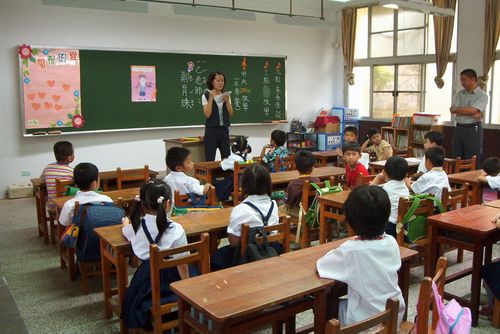
A teacher prepares an elementary school class for an outing.

Longtime US government Taiwan expert Richard Bush's latest paper from Brookings is insightful, informed, knowledgeable and well written: perfect for 2007. I'm not going to bother to fisk the whole thing, since it constructs understandings and assumptions about the future and the strategic situation that are out of date, but one claim in this paper caught my eye:
The public has apparently preferred the KMT’s approach to China (economic engagement) over that of the DPP, about 55 percent to 45 percent (in a favored Mainland expression, “the Blue camp is larger than the Green camp”). For example, a poll conducted in late February 2014, right before the Sunflower Movement students seized the Legislative Yuan, found that 45.7 percent of those surveyed favored the KMT’s approach to engagement with China, while 31.4 percent preferred the DPP’s (the rest did not know or had no opinion). This result was all the more interesting because the poll was conducted by the DPP and suggested that the Sunflower Movement did not in fact reflect a majority opinion.12
Of course, it is basically absurd for anyone to claim, even using weasel words ("suggested"), that the Sunflower Movement "did not in fact reflect a majority opinion", since all polls at the time and since show that it did. You have to work really hard to find this one poll (it's here) that is obviously incompetent, out of all the myriad polls, and then cite it as if no other polls existed at the time or after it (Dave Brown used that poll in his uninformed letter to the Nelson Report on the Sunflowers). This approach is misleading in two ways.

First, the issue was not Ma's China policy (however construed) but the Services Pact and Taiwan's democracy. The Sunflowers opposed the Services Pact and the undemocratic way the KMT attempted to slip it through the legislature. They were not opposed to China trade and repeatedly said they would welcome a fair trade agreement. Was this position out of whack with the public mind? Heck no. In a Businessweek poll, the pact had 22% support. In this poll from the pro-KMT TVBS the pact has 32% support. The pact never had public support.

Second, what was the real public perspective on the Sunflowers? Well, over 500,000 came out in support of them and the island's democracy in one of the largest protests in the island's history. The pro-KMT TVBS poll above on Letters from Taiwan found that 65% thought the Sunflowers had helped Taiwan's democracy. Similarly, 63% saw the students as protecting Taiwan's democracy in this staidly pro-KMT TISR poll from March of 2014. In that same poll 54% saw the KMT as going against democratic procedures. In this TVBS poll from March 31, 59% supported the student demands (61% supported a public referendum on the Services Pact). This March 24 TVBS poll had 51% support for student occupation of the Legislature, with 38% against, while this March 20th poll from TVBS had 48% supporting the occupation, 40% opposing (support for the students actually rose over time), and just 21% supporting the Services Pact.

Taiwanese have incorporated democracy into the Taiwanese identity; threats to it are dealt with harshly.

What was public support for the Sunflowers? One need only look at subsequent events in which the public had the opportunity to repudiate the Sunflowers at the ballot box. The KMT was crushed in the Nov 2014 election and it is going to be beaten again this January. The public has had ample opportunity to repudiate the Sunflowers; it hasn't. The Services Pact is DOA, and the KMT is heading in that direction.

If the public supports Ma's China policy, why are his approval ratings so low? If Ma's China policy is strongly supported, why is Eric Chu's support as low as Ma's? The answer is simple: Ma's China policy is not popular, and since Eric Chu is basically Ma 2.0, his support tracks Ma's approval ratings.

Of course, Bush's characterization of Ma's China policy as "economic engagement" simply removes the political thrust of Ma's policies from view...
________________
Daily Links:
_______________________
Don't miss the comments below! And check out my blog and its sidebars for events, links to previous posts and picture posts, and scores of links to other Taiwan blogs and forums!
Saturday, February 16, 2013

Richard Bush catches up

On cycling vacation in Borneo with my man Michael C. That's him above on his recumbent somewhere between Kota Kinabalu and Papar last week.

My how things change. Last week former AIT head and longtime US gov't Taiwan expert Richard Bush observed (TT):
The returns on cross-strait economic exchanges may be diminishing because the Chinese economic model is changing, former chairman of the American Institute in Taiwan Richard Bush said on Wednesday.

“Taiwan was a real beneficiary of export-led growth relying on essentially cheap labor, abuse of the environment and local corruption,” he said.

However, China was moving away from that model, and Taiwanese companies aiming to position themselves in the middle of the global supply chain had better move with it, he said.

At the same time, Chinese companies that would like to displace their Taiwanese partners are coming to prominence, he added.

Under these circumstances, Taiwan’s economic future cannot rest solely on liberalizing the nation’s relationship with China.

Taipei should beware of “putting all of its eggs in that basket,” he said.
Those of us who watch Taiwan's affairs and love this place all had a good laugh, for of course these were the DPP and pro-Taiwan critiques of four years ago that so many of us put forth. It was courageous of Bush to say this; unfortunately it was already out of date four years ago. What was Bush saying two years ago? From a wonderfully titled speech at Brookings:
The first area is economic policy. A big challenge to maintaining Taiwan’s competitiveness is the economic regionalization occurring in East Asia. If Taiwan is kept outside the circle of regionalization and liberalization, its companies will be increasingly marginalized. Concluding ECFA is important because it holds promise for getting Taiwan inside the circle. Otherwise, Taiwan’s growth will decline.

But it is important to understand how ECFA will benefit Taiwan. It is not just because Taiwan exporters will benefit from reduced tariffs. More importantly, it will force a structural readjustment within Taiwan. Uncompetitive, previously protected firms will go out of business. Opportunities will blossom for the most advanced sectors.
It is obvious that the "structural readjustment" (an ideological construct of neoliberal religion with pretty much the same function in economics as penance has in Catholicism, basically self-administered punishment for being a bad bad economy) Bush refers to has not occurred. Such moves into advanced sectors as are taking place began long before ECFA. Instead, the adjustment to ECFA has been a government move, under the guise of "bringing Taiwan firms back", to subsidize big makers rather than to let them die while it implements 1960s-era development policies again.

Bush also claimed, as most supporters of the ECFA Cargo Cult did, that ECFA would enable Taiwan to get around the problem of regional trade blocs in Asia by... more deeply connecting itself to China. As I have pointed out countless times, this claim essentially argued that the way to make Taiwan more international was to marginalize it. Naturally FTAs with other nations have not been forthcoming (WSJ from 2011). Hopefully one with Singapore will materialize; it had already been negotiated under the Chen Administration but blocked by Beijing. There is also one with New Zealand coming down the pike. Beijing never really forthrightly stated that it would permit Taiwan to have FTAs (past hilarity), so it will be interesting to see what Beijing does.

In any case, a couple of years have gone by, and the trend is clear: trade with China is declining over time, Taiwan's share of the China market has declined since ECFA, and its trade with ASEAN is rising (example). Of course, this was all predictable based on the experience of other trade blocs with China (example)(and here too). The Legislative Budget Committee report from last year also said that Taiwan has by and large not benefited from ECFA.

One good thing contained in Bush's talk of last week was the identification of China's behavior in the Senakakus as 'worrisome'. Kudos to him for that, at least.
_______________
Daily Links:
_______________________
Don't miss the comments below! And check out my blog and its sidebars for events, links to previous posts and picture posts, and scores of links to other Taiwan blogs and forums! Delenda est, baby.

Sunday, January 27, 2013

Richard Bush on ROC 100th, Sept 2012

Richard Bush's speech to the Academia Historica in Taipei last September, up at Brookings this month. Bush is a major US government expert on Taiwan. The speech is studded with errors and omissions, most likely the result of a need to play to its audience. I'd like to isolate a couple of points. Bush writes:
Civic nationalism, I would suggest, is becoming the dominant type for a majority of Taiwan people. It is an attachment to the island’s democratic system and its norms of popular sovereignty and majority rule. To put it simply, it is an attachment to today’s ROC and all it stands for.
The last sentence has everything backwards. Taiwanese are attached to their democracy and link it to the ROC only to the extent that the ROC equates itself to Taiwan. The Taiwanese are hardly attached to the ROC's grandiose territorial goals and do not see themselves as the rulers of China. Moreover, as I have noted here many times, prominent ROC symbols, such as the flag are increasingly being reinterpreted by the locals as symbols of Taiwan. Of course, the attachment to democracy is not an attachment to the ROC and all it stands for -- to get democracy, the locals had to fight the ROC and all it stood for. But Bush can't say that to a bunch of crusty old deep blues at a national nostalgia fest, I suppose.
These differences between ethnic nationalism and civic nationalism and between territory and the state are not simply an abstract academic matter. They have significant consequences for cross-Strait relations. A Taiwan that cannot agree on these issues is a Taiwan that is in a weaker position visà-vis the PRC.
Skipping over his remarkably bass-akwards construction of ethnic and civic nationalism, Bush has been making this point about Taiwan's lack of internal consensus for a while (for example). This point is often made, but it is never made concretely. For example, Bush has never identified what would count as "consensus" or explained how such a "consensus" would help Taiwan concretely.

Indeed, does Bush really want Taiwan to internally resolve the issue of whether it is a territory or a state? Fact is, Washington analysts like Bush would be buying ulcer medicine by the case if Taiwan ever actually came to a consensus and formally resolved the issue of whether it is a territory or a state. Because everyone who has ever lived here for twenty minutes knows which outcome the Taiwanese would prefer. The actual consensus on that issue -- do nothing, hope we can muddle through somehow -- is what keeps Washington happy.

Ironically Bush already named some of the elements of the Taiwan consensus in another piece of his, a response to Bob Sutter he co-wrote with Alan Romberg (here with my responses). The actual, real consensus in Taiwan rests on the bedrock of Taiwan's democracy and is quite clear. So is the consensus about dealing with China -- everyone wants the economic benefits, nobody wants political talks. And nobody wants to pay to clean up the mess.

Further, it is hard to see how this alleged lack of consensus makes Taiwan any weaker than it already is in talks with China. Taiwan's problems are caused by China's rampant military buildup and growing economic might. There is little Taiwan can do about that. This situation is compounded by the fact that Washington has burned trillions of dollars and tens of thousands of lives over the last decade making central Asia and the Middle East safe for Chinese investment and expansion, instead of having its eye on the ball in Asia and investing in its people at home.

The truth is that Taiwan's divisions over China mirror the Beltway's own schizophrenic behavior -- it formally defines Taiwan's status as undecided but breaks out in hives if the I-word is mentioned. It lauds democracy, human rights, rule of law, and social consensus, but then supports the KMT, the party that benefits the most from ruling a divided society with a rough, imperfect democracy. It worries about China's growing power and influence, yet trades with it, transfers new technologies to China, trains its engineers and technologists, and invites its state-run economy to play in capitalist markets. Even Washington's China experts and punditocracy fill the airwaves with China commentary and advice to the government, while quietly doing lucrative consulting deals with Beijing. In fact, it seems to me that the real division and lack of consensus lies in Washington, and that as soon as the Beltway starts providing real leadership on Asia and displays a consistent, forward-looking, and concrete policy attitude on China, Taiwan will respond.

Lead, Washington.

REF: Bush once wondered aloud why China continued with the military build up since Ma was playing ball. Washington amazes me sometimes.
_______________________
Don't miss the comments below! And check out my blog and its sidebars for events, links to previous posts and picture posts, and scores of links to other Taiwan blogs and forums! Delenda est, baby.

Monday, June 27, 2011

Does Washington get it?

A gaggle of motorcycle enthusiasts converges on 7-11 outside of Dahu.

Justin Logan writes in "Would China Really Just Shrug At US-Sponsored Taiwan Independence":
I didn’t want to get too far outside my lane at the event, but now that there’s a writeup in the public record, I wanted to comment on one suggestion that Joe Bosco made in his remarks: that the United States should make a formal commitment to defend Taiwan.

Bosco argued that Washington should do so and could simply wave off the PRC, informing them that “prudent choice for China” would be to “learn to get along with its neighbors and respect the international norm.” (It was not clear from his remarks whether there would be any limit to that commitment or whether Bosco would use the U.S. military to defend Taiwan even if conflict was precipitated by, say, a formal declaration of independence in Taipei.)
One hears this bogeyman again and again: Taiwan might declare formal independence. I am moved to wonder at the concrete mechanics of how such a thing could occur. Half the nation is pro-KMT; the military, police and bureaucratic officialdom are pro-KMT; the recent changes to the referendum and constitutional change laws make changes all but impossible; the legislature is run by the KMT and will be for the forseeable future; the President lacks the power, etc etc etc. Of the events likely to perturb things in the Taiwan Strait, a formal declaration of independence is the least likely. Does Washington really get that? Or does being a Taiwan expert mean only having to understand what other Beltway insiders think?

In addition to its impossible political mechanics, it is unlikely for another reason, and that is the Taiwanese consensus on the status of Taiwan: we're independent. The DPP has defined Taiwan as a sovereign independent state since the 1996 democratic elections. The KMT says Taiwan is the seat of an independent government. The public doesn't think about the legal niceties too clearly, it merely rests content with the idea that Taiwan is independent. Whatever that means.

Former AIT Chairman Richard Bush also raised this bogeyman, in another context, in a much discussed report (Bush's remarks are pored over like Sybilline Oracles; it must be hard for him to resist making jokes).
Regarding de jure independence, Bush said he has found that this choice for Taiwan’s future might possibly still exist, but it has been constrained.

“My conclusion is very simple: That 15 years after the 1996 Taiwan Strait crisis, China effectively deters Taiwan from making this choice — de jure independence. It builds up its military power in a significant way and is able when necessary to stimulate the United States to get involved in this issue,” he said.
China's military threat raises the issue of how a "declaration of independence" is defined. It is not difficult to imagine a situation where a DPP President simply reiterates the formulaic independence of an ROC-administered Taiwan and China using that as a pretext for an attack that was already long-planned. There's lots of wiggle room for interpretations about independence, and Washington is focusing on only the lowest probability outcome. Ultimately, it is Beijing that will decide whether Taiwan has declared independence.

Bush also said:
“I would like to say that political leaders need to work together to foster a better consensus on Taiwan’s core interests and how to protect them. As long as the political system remaines polarized and divided, that consensus cannot be built, and Taiwan cannot face the challenges of the cross-strait relations in an appropriate way,” Bush said.
The problem is the public's own view above: "we're independent" appears to me to be a major cause of the political divide. The Taiwan identity takes in the Blue-Green divide as part of itself; because people feel that they are somehow, hazily, independent, they feel safe voting for the pro-China party even when they are pro-independence, as most locals are. The real issue is getting Taiwanese to understand that the rest of the world does not share this breezy, undefined, not clearly explored assurance, something longtime Taiwan observer Robert Sutter noted in his most recent remarks on growing weakness of Taiwan relative to China, and the startling fact that the Taiwan public remains, at least on the surface, largely undisturbed by this phenomenon.

Other structural aspects interfere as well -- for some reason the public appears unable to connect its local voting with its international status -- KMT politicians get elected all the time in what should be pan-Green districts, and the legislature is abysmal, yet the public returns the same legislators to office year after year. Then it complains that the political system is paralyzed and outsiders complain no consensus is possible. The political system itself needs reform; the disastrous "reform" supported by the DPP several years ago has only made the problem worse.

Finally, there is the outside interference. If the US and observers like Bush want to see change, then it needs to stop. supporting. the. anti-consensus. side. The DPP and the pro-Taiwan side are the only team with an interest in consensus; division favors the KMT. And Beijing.

Longtime commentator Li Thian-hok outlined the nightmare scenario for the four month interregnum between a Ma defeat and a Tsai swearing-in:
Many Taiwanese who favor preserving Taiwan’s democracy and its de facto independence from China hang their hope on a victory by the Democratic Progressive Party (DPP) in January’s presidential election. A DPP victory is indispensable to Taiwan’s freedom, because a defeat would be regarded as an endorsement from a majority of voters of the KMT’s unification agenda. However, a victory by the DPP, while necessary, would not be sufficient to preserve the “status quo.” The KMT could still sign a peace accord with Beijing between January and May next year, thus formally surrendering to the PRC. If a victorious DPP refuses to honor the accord China could launch a military assault on Taiwan to coerce capitulation.
Brrrr..... this isn't very likely, but what would the US do? Especially if the DPP could be painted as disturbing the peace, changing the status quo (notice how that term has completely dropped out of cross-strait analysis since Ma came to power?) or declaring independence?
_______________________
Don't miss the comments below! And check out my blog and its sidebars for events, links to previous posts and picture posts, and scores of links to other Taiwan blogs and forums! Delenda est, baby.

Thursday, February 11, 2010

Strong Richard Bush Piece in LATimes

First, huge shift in the government today as NSC head Su Chi, who had become deeply unpopular both within the KMT and in Washington, has stepped down. J Michael at Far Eastern Sweet Potato has a long and useful analysis of it you should be reading.

Richard Bush, the longtime US government Taiwan expert, once again hits some high notes in describing the US-Taiwan-China triangle.... the title, which appears to assign blame for the problems to Taiwan, is probably not Bush's... but note that summary which correctly assigns the blame for the current spate of problems to China.
Taiwan comes between the U.S. and China again
Washington's decision to OK a $6-billion arms deal has upset Beijing. But Chinese policies are mostly to blame for the tension.
The meat, with my emphasis:
Before we panic over the high-pitched Chinese reaction, it is worth remembering the reasons for the Obama administration's decision. What drives the U.S. defense support of Taiwan, including arms sales, is how the island's civilian and military leaders assess their security needs. That assessment, in turn, is shaped by China's military buildup as it affects Taiwan. In fact, that buildup has continued even though the threat that China has perceived from Taiwan has receded since Ma Ying-jeou became the island's president in May 2008.

So the logic behind the sale is simple: China has increased the island's vulnerability even when it did not need to do so; at the request of Taiwan, the Obama administration seeks to reduce the island's insecurity.

Some context is in order. Since the mid-1990s, relations across the Taiwan Strait deteriorated as each side feared that the other was preparing to challenge its fundamental interests. China feared that Taiwan's former leaders would go for full, legal independence. Taipei feared that Beijing would use its growing power to subordinate Taiwan. Each sought to counter the perceived plans of the other, which only intensified the mutual suspicion. As this vicious circle widened, Washington worried about the danger of a clash.

Tensions have declined since Ma has chosen to address Taiwan's China challenge through engagement, and thereby improved China's strategic position. Oddly, the People's Liberation Army continues to procure and deploy equipment that puts Taiwan at risk. According to the annual Pentagon report on China's military power, Beijing each year probably adds 100 short- and medium-range missiles, which target Taiwan.

Why China has not adjusted to the new, positive reality is puzzling. Is it because of rigid procurement schedules? Is it because civilian leaders cannot impose a change even when it makes policy sense? Or is it because China wishes to create the capacity to coerce and intimidate Taiwan? The answer is not clear.
I think the paragraph on context rather misstates the "deteriorating relations" problem since the 1990s; there was never any question that Lee Teng-hui or Chen Shui-bian would go for full legal independence, as China well knew. China was merely using that "fear" (and what does Beijing have to fear from a non-territory becoming a formal state? Nothing at all) as a pretext to bluster and threaten.

The answer to the questions in that last paragraph, as I've stated before, are quite clear, actually. The military build up continues not only because China wants that capacity to bully Taiwan into submission, but also because of its effect on US policymakers -- as China's military build up grows, more and more US foreign policy thinkers move toward the position that Taiwan must be quietly sold out.

The build up also continues apace because as the recent comments from PLA hardliners suggests, China is preparing for a war in the region. From this writer's perspective, things are looking more and more like we will be facing another round of sprawling hegemonic wars. Although it is tempting to reach for the Nazi analogy when looking at the combination of victim consciousness, superiority complex, concentration camps, one-party rule, expansionism, land power strategic thinking, and so on, I believe a better historical analogy for China struggling to move from Empire to State is 17th century France.... and look how that ended in the guillotine and the Napoleonic Wars....

It should also be noted that the "weapons sale" is part of a package long predating the Obama Administration, and does not contain the much-needed F-16s. Perhaps Washington is retaining its decision on those depending on how China behaves after this sale of secondary items.

Consider the commentary on China being able to punish Taiwan, but instead foregoing that to punish the US-Taiwan relationship, as read.

Bush's concluding paragraph is, for a man given to reserve and subtlety in his public comments, a stinging critique:
Chinese critics of U.S. arms sales tend to assume that Washington is using arms to block China's unification with Taiwan. Nothing could be further from the truth. U.S. support for Taiwan's defense is and should be a function of the island's sense of insecurity, which in turn is the result of China's policies. Chinese critics should examine how their government's own actions have fostered the very outcome they oppose.
Bingo. As China's military builds, so does support for Taiwan independence in Taiwan. What's great about this piece is that it forthrightly identifies the problem as China, something that US commentators seldom do when discussing Taiwan, though they are happy to blame China for its expansionist nonsense elsewhere in Asia.

My friend Tom Patterson and I were discussing the piece (linked below) on Beijing's possible cancellation of the Nimitz visit to Hong Kong. After I suggested that allowing the visit might well be a signal to the regime's critics in the PLA who advocate tough anti-US policies, Tom wrote:

"About whether the anger is pro-forma or not, it did cross my mind that the words may sound a little more harsh, but that those at the top may have no intention of acting seriously unless Washington makes a much stronger commitment. The pieces are all there for those who care to look for them.

Consider a Reuters piece from today or yesterday that noted that voices from the military (three top generals) once again trying to pressure the CCP leadership for a stronger response. They hope that China's military expenditures will increase this year, want new troop deployments to areas near Taiwan, and think that China should respond through a mega-stupid move of selling US treasuries.

The expenditures might rise anyways, but the leadership wouldn't dare touch the treasuries now, and they would know that redeployment of troops to the Taiwan area would shock Taiwanese right in the middle of the ECFA negotiations.

So I am increasingly feeling that media outlets, and many journalists, indeed DONT understand China, but not for the reasons that the 50-cent crowd claims. The Chinese anger is not only a policy choice. The leadership may think it is necessary to save their own heads and be simultaneously unable to admit this.

The media fails to consider the balancing act that arms sales and Dalai Lama visits force the leadership to undertake. While Hu and Wen are solidly entrenched at the head of the party right now, things like ethnic riots, slowing exports, arms sales to Taiwan, etc, all invite internal criticism of their efforts. If China doesn't react with "anger", Hu, Wen and their allies lose credibility. Because the system doesn't have an in-built peaceful method of factional change, those on the top have to constantly show that they are pushing the hardest to defend China's interests. And since the nationalist population increasingly believes that China doesn't have to be flexible in its dealings with other countries, the leadership has to push harder. Can this possibly end well? :-(

Hu and Wen might not have to worry about being thrown out of power. But Xi and Li might. My former Chinese teacher, who is a follower of Chinese politics, told me once that he was concerned about the prospects of the next generation. Hu had the advantage of being hand-picked by Deng to succeed Jiang. Wen was already widely known as a good official at the time of his appointment. Yet my teacher noted that Xi was not chosen by one of the revolutionary luminaries. And neither Xi nor Li have records that have made them really stand out across the country in the past. Xi also appears to be gaffe prone. He is the one who said in Mexico, "China does not export revolution, hunger, poverty, nor does China cause you any headaches. Just what else do you want?" and whose staff forgot about protocol when meeting the Japanese emperor and had to request that the Japanese PM step in to arrange a rush visit. So if the current leadership is perceived as being too soft on any issue, opponents might choose to take it out on less experienced successors down the road.

Wouldn't it be refreshing if a media outlet said, just once: 'The Obama administration has notified Congress of a major arms sale to Taiwan, invoking an angry reaction from China's leadership, which often uses its outbursts to placate the increasingly nationalistic views of the party apparatus and the public. Such weapons sales are unpopular in China, where the US' commitments for maintaining Taiwan's self-defense capability under the Taiwan Relations Act are perceived as helping to maintain the de-facto independence that the island has enjoyed for decades.'"

As Tom asked: Can this possibly end well?

I'm off to play Europa Universalis III.....
______
Daily Links:
_______________________
Don't miss the comments below! And check out my blog and its sidebars for events, links to previous posts and picture posts, and scores of links to other Taiwan blogs and forums!