Showing posts with label religion. Show all posts

Friday, July 22, 2016

Politics is the Way of the Gods

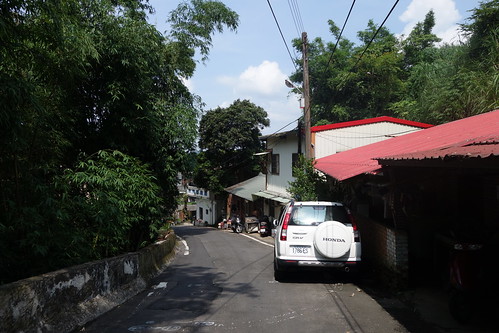
A hilly street.

Jules Quartly over at the News Lens offers a conventional and oft-written piece on religion in Taiwan (originally for AmCham)...
To an outsider, this religious practice might seem at odds with Taiwan’s status as a decidedly modern and technologically advanced society. Yet the past and present coexist without contradiction in the minds of most of its citizens. The reason is partly historical. While the Communist Party repressed traditional culture, including folk religion, following its takeover of China in 1949, these practices thrived under the Kuomintang (KMT) government in Taiwan.
Actually, the KMT attempted to suppress and reshape local religious practice well into the 1970s, because in many cases it was a source of resistance to the regime and to KMT rule. Folk religion eventually thrived because unlike Communist China, the locals were able to draw on great resources to defeat the Leninist authoritarian party's commitment to suppressing and co-opting local religious practice.

These policies are documented in several scholarly works over the years. They ranged from outright bans on certain songs, to pressure to reduce the size of religious festivals as "waste" (for example to reduce sacrifices or to combine festivals) under the slogan of "Simplify Customs and Save Waste", to taxes on the performances of folk opera for the gods in certain areas. Sometimes county governments would withhold subsidies to local governments hosting festivals felt to be too "wasteful" by the KMT. Thus, religious festivals became acts of resistance to KMT rule and modes of communication between rulers and ruled, and ways to recapitulate and experience the Taiwanese identity of the day (also true of the Japanese period). These attempts by the KMT to suppress local religion eventually died off. After that the KMT adopted a new line, one repeated by Quartly here, that the vibrant local religious scene demonstrated the superiority of KMT rule. What it really demonstrated was KMT failure...

Quartly's piece also demonstrates the very common failure of journalists marveling at the world-famous Matsu procession. He scribes:
One of Taiwan’s liveliest festivals is the Matsu Holy Pilgrimage, which recreates the journey of 19th century devotees who traveled every 12 years from Taiwan to the goddess’ temple in Meizhou Island, off the coast of Fujian in China. The now eight-day pilgrimage from Zhenlan Temple in Taichung to Fengtian Temple in Chiayi is internationally famous and recognized by UNESCO as a world intangible cultural heritage.
...without mentioning its close connection to the KMT and the fact that it has long been run by Yen Ching-piao, widely reputed to be the island's biggest gangster, and his temple association. Years ago I took BBC to task for neglecting this aspect of the pilgrimage. In addition to its local political function and its pro-KMT political functions, the Matsu cult is a key nexus of pro-China annexation efforts (read that post on BBC above). Longtimers here may recall that one of the first direct sailings from Taiwan to China in the modern era was a Matsu ship in May of 2009, heading up by one of Yen's right-hand men. Remember also that one of Jason Hu's projects as mayor of Taichung was to build an enormous Matsu statue facing across the Strait.

Quartly's neglect of the rich political associations of the Matsu cult is all the more strange since he briefly discusses the connection between religion and politics at the end of the article.

This widespread conventional presentation needs to stop...
To an outsider, this religious practice might seem at odds with Taiwan’s status as a decidedly modern and technologically advanced society. Yet the past and present coexist without contradiction in the minds of most of its citizens.
"Past and present coexist without contradiction" is true of any society. I don't know why folk religion would seem at odds with Taiwan's status as a modern and technologically advanced society, since religious practice in every society coexists with what is considered modernity. It should be taken for granted that all societies are like that, and no explanation or mention is necessary. We do not write like that about our own societies, let's not do so about others...
____________________
Daily Links:
_______________________
Don't miss the comments below! And check out my blog and its sidebars for events, links to previous posts and picture posts, and scores of links to other Taiwan blogs and forums!

Friday, January 25, 2013

Big By-election in Taichung Area...not really

A K-town street.

UPDATE: Low turnout leads to close victory for KMT by a mere 1200 votes after Yen Sr. won by 39,000 the last time. Much better than I expected the DPP to do. But it also goes to show how Taiwanese bitch about political corruption, and then, when given the clear choice....

By-election in Taichung District 2 looks to be an easy KMT win though the DPP is pushing hard for votes..... the Taipei Times reports:
The Democratic Progressive Party (DPP) appears to be hoping that a conflict between Chinese Nationalist Party (KMT) candidate Yen Kuan-hen (顏寬恆) and President Ma Ying-jeou (馬英九) could help it win tomorrow’s legislative by-election in Greater Taichung’s second electoral district.
Wait...what is the conflict the DPP hopes to exploit?
“Ma, who is the KMT’s chairman, has not campaigned for Yen, and Yen has not used the KMT’s logo during his campaign, nor has he emphasized that he represents the KMT,” DPP Chairman Su Tseng-chang (蘇貞昌) said at a campaign stop in Greater Taichung.
...and the situation?
The DPP has promoted the by-election as a vote of no confidence in Ma’s governance in an apparent effort to neutralize the Yen family’s strong political presence in the electoral district, a traditional KMT stronghold which includes the districts of Shalu (沙鹿), Longjing (龍井), Wurih (烏日), Dadu (大肚), Wufeng (霧峰) and part of Dali (大里).
The Yen family is the family that runs the big Matsu procession that terminates at the Dajia temple (Check out this informative post from two years ago). Its patriarch Yen Ching-piao himself is a former KMTer who parted ways with the KMT because he was... umm.... too colorful. In reality he's independent of the KMT in the sense that the Byelorussian SSR was independent of the USSR, as I noted before. Yen Sr. is reliably pro-KMT and pan-Blue and Yen Jr. is running as a KMT politician. Yen is probably the most representative local politician in Taiwan, making a fortune from gravel operations, running a powerful political patronage empire, with tight links to the ruling party, and also cultivating links to China through religious and business links. I've noted on several occasions that one of the most important beneficiaries of the burgeoning cross-strait relationship is cross-strait organized crime. Actually I don't even know why I wrote that last sentence. It has nothing to do with the rest of the paragraph. Did I mention that Ma hilariously appointed Yen Sr. the Administration's ECFA spokesman?

But anyway, the Yen family comprises one of the most powerful political patronage networks on the island. They are solidly behind the son. The dearth of Ma and other senior figures is probably not indicative of any split, but rather is more likely a wish to avoid calling undue attention to the KMT's deep and abiding involvement with...colorful local figures (like Ma's secretary planning major gangster funerals here or the massive wedding of Yen Ching-piao's son attended by KMT bigshots here/here), or even more likely, the Yen family's lock on Taichung 2 is so strong that bringing out the big guns isn't necessary. As Frozen Garlic noted a while back:
There are two interesting stories.  Most of the attention will be on the contest to fill the empty Taichung 2 seat, so let’s start with that one.  The Taichung 2 district boundaries were drawn specifically for Yen Ching-piao.  His best town, Shalu, was put into Taichung 2 with the rest of his base instead of Taichung 1.  This created a bit of a population imbalance as well as a political imbalance, since the blue camp is quite a bit stronger in Taichung 2 than Taichung 1 and Shalu, where the KMT is particularly strong, exacerbates the difference.[1]  In fact, Taichung 2 is easily the blue camp’s strongest district in the old Taichung County.
I don't give the DPP much of a shot here to win. I think they can best hope to play the better-than-expected card when it's all over.
_______________
Daily Links:
_______________________
Don't miss the comments below! And check out my blog and its sidebars for events, links to previous posts and picture posts, and scores of links to other Taiwan blogs and forums! Delenda est, baby.

Monday, March 28, 2011

Pingtung II: Magical History Tour

Here is the second installment of my continuing saga of travel in Pingtung County, courtesy of the county government. Yes, four more days under the pineapple sun of southern Taiwan. This time I focused on history as the weather in the mountains refused to cooperate.

Friday and Saturday night I stayed at this excellent little B&B in Jiayi Village just down 185 from Shuimen town (清廬民宿, 屏東縣瑪家鄉佳義村1鄰泰平巷5-28號 08-799-0311/ 0921-586-661). The owners consisted of a Paiwan matriarch and her Hakka husband, retired principal of the local elementary school. The house above can sleep six in comfort and is done up in aboriginal stone plate style. It is surrounded by grass and flowers. The owner told me that the stones have to be turned over annually, which is troublesome and expensive, so they concreted it over. The inside is full of atmospheric knick-knacks, an eclectic collection of artifacts, very enjoyable. $1500 NT a night. Incredibly nice people too.

Grandma owner and grandchild.

Saturday morning I blazed down 185 to enjoy a magical history tour of Pingtung with Catholic churches, Hakka culture, and Japanese military infrastructure as my goals (map of Saturday's route).

185 is entirely flat and an easy ride.

The road runs N-S along the mountains and offers enjoyable views of the mountains right over your shoulder, and access to the rising tourism culture of the area, including the local coffee.

In front of a local military base I turned towards the Basilica in Wanjin, a famous local landmark. Cars are lined up to pick up sons at the base on a Saturday morning.

Some locals, waiting. Seeing that I stopped, they came over to have a chat. Taiwanese are always super friendly to people on bikes.

This and the Hakka village I was aiming for are located in Wanluan township. As you can see from the signs, the township does a wonderful job of guiding you to its many sites of interest.

The Basilica in Wanjin.

Local tourists.

The amazing mural in Wanjin.

Next to the Basilica is Art Coffee, with decent coffee and good food. Have the bagels with cheese and tomato, or the beef rolls.

The melange of iconography in the area offers moments like this, where a Mary statue and an earth god shrine are found opposite each other.

Next, I sped down one of the many long flat roads of the area....

...past the statue of Mary....

....to the Hakka village of Wugou. Wugou was designated an official historic village in 2008 and many of its buildings are old. A number are under renovation.

This interesting old building used to be a school.

I was so taken with Wugou that on Monday I returned to grab some more pictures.

It was then that I met Mr Jhou, recently retired after being a factory manager in Nigeria. He spoke excellent English, and told me that he had settled in the town to learn about it. We had a walking tour together.

They still give old school haircuts in Wugou.

An old house in the village.

Interesting tiles and paintings.

Some of the altars in these buildings appeared to be quite historical.

One of the houses being renovated.

More interesting tile.

A carved dragon supports the roof.

A small factory in the town.

Mr. Jhou took me out to the Half Moon Pond. Here are nearby irrigation works.

The pond is strongly defended by geese. They can insult me all they want; someday I will eat them.

Back on Saturday, I stopped to confirm my destination with a friendly policeman.

Then it was back to 185.

Past the pineapple fields to Fangliao along the ocean. Fangliao has an old American connection to the Rover Incident of 1867.

185 stretches into the distance. It is a truck route and the pavement is only in fair condition. It is especially bad on the southbound side.

A common sight: pineapple pickers.

I arrived in Fangliao in that twilight period after 10 between breakfast and lunch, and thus resolved to eat lunch in Jiadong.

In Jiadong I passed this statue of Mary Guanyin on my way to the famous Hsaio family residence, a large, restored 19th century house.

Posing in front of the Hsaio House.

The house contains numerous rooms with displays, antiques and photographs. Well worth a visit if you are in the area ($50). The town also contains many old houses.

The kitchen.

Another view of the entrance. Note the building next door, which appears to date from before WWII. Alas, it is not being restored.

Lunch. $59.

My next project was to find Yuguang elementary school, on whose grounds reside two Japanese period air raid shelters. They would have been cramped in a real air raid, and couldn't possibly have withstood a direct hit.

From there I took Ping115-1 past the airbase. It was a fascinating moment: it is so rare in Taiwan to face an infinity of flat space as desolate as this. Nothing but pineapple plants and fruit trees in every direction, as far as the eye could see.

I emerged into a four way intersection and saw down one road was this enigmatic tower. I decided to check it out.

Unfortunately, just as I neared the tower, The Call of the Wild and His Baying Hounds burst from under a fence and gave chase. Each hound was the size of a lion and sported eight inch fangs, combat armor, javelins, and a giant warhammer in each paw. Or so it seems when they are chasing you. I immediately broke the sound barrier and, pumping away, soon found myself biking on cobbled ruts, while the dogs, too sensible to chase me over rocks, stopped to watch, laughing, shaking their fists and deprecating my manhood. I am sure that they took one look at my bike and said to themselves: Hmmm, fat guy on 700 x 25 slicks. No way he can ride on those stones. He has to come back to the pavement. Lads! We’ve done treed this boy!

Fortunately I did manage to wend my way back to pavement after hiking along the rocky road for a short bit, but I missed my chance to inspect the tower.

I commented on the awesome Taiwan Airpower blog, and its owner, Wei-bin, got back to me with the skinny on the tower, informing me that it was once probably part of Kato Airfield in Pingtung, which no longer exists. Kato was bombed by the US in WWII, like most airfields in the area. After WWII it was used as a bombing range, he said. So as it worked out, I saw another bit of history, unintentionally....

After getting directions at a local temple, I returned to 185 and turned north, back to the B&B. Along the way I hit this aboriginal wedding, with guests resplendent in aboriginal clothing (video).

Wedding guests planning for their future wedding?

Snacks. Pork rolled in sticky rice and steamed. Delicious.

As I snacked, she took out some ceramics that were gorgeous. Seeing how much I loved them (too bad I can't show you all the pics), she immediately offered to take me up to the artist's ceramics workshop in nearby Jiayi village.

The workshop of the artist, Lageay Mavaliv, in Jiayi village (0927073630; vuvu5316 AT yahoo.com.tw)

He also paints.

We ended the day with my fourth cup of coffee at this little coffee shop that specializes in coffee grown in Pingtung (blog). It is right where 104 crosses 185 (0919975299).

On day 2 I stopped at Art Coffee again. Then it was up to Taiwu Township and the mountains. I was really hoping to get in some mountain riding, but the bike gods were surly this week.

Climbing up into the hills.

My target was Dawushan B&B (大武山民宿屏東縣泰武鄉武潭村老潭巷40號 886-8- 7920332). It is run by a retired couple. Perched on a ridge at 500 meters, it has wonderful views. The road up is a favorite of local cyclists and it was crowded on Sunday morning.

Dinner. The soup was superb. The owner will take you hiking into the mountains if you have time.

The view from my window in the morning, alas, included rain. I shifted gears and decided to cross Pingtung County to visit Donggang and another Pingtung playground, Dapengwan Scenic area.

Along the way I crossed this railroad line in several places, sometimes converted into a bike path. It is a bit of history: the old Taiwan sugar line through the sugar fields of Pingtung.

I hadn't been in Dapengwan in a dozen years and so was totally unprepared for the way the area has been transformed.

The local government has put in a large educational and administrative center and 16.8 kms of bike paths encircling the lagoon, along with new roads and other facilities. The goal is to create a water playground, according to the brochure I got at the administrative center. It is still in the larval stages at the moment.

Fishermen and farmers are still hard at work in the area.

Outside the administrative center there is a Fuji bike shop that acts as the rental and repair center for cyclists on the bike paths.

Cyclists gear up for a lagoon adventure.

From Dapengwan I headed over to Donggang, a hardworking port city with a rich history. Featured here is the imposing gate to the Donglung Temple, one of the numerous temples that crowd the area around the port. Donggang is the site of the famous boat burning festival that occurs every three years. Thanks to Robert Kelly of Pashan for suggesting Donggang.

Gaming in front of the Donglung temple.

Old friends meet on the bridge.

It is a working port crowded with boats of every description.

On the way to the Huachiao Fishing Port.

Unlike the faux tourist fishing ports in Taichung and elsewhere that I have been to, Huachiao is a working port and tons of fish are sold every day there....

...and processed too.

Indonesian crewmembers greet me.

I went north to Chaojhou to locate lunch and internet and perhaps visit some local historical sites. Alas, no luck with all three. Along the way I passed the Ba Da Forest Theme Park, whose gate is shown in this image. Words fail me, so I will let the picture tell the story.

I returned to Wanjin and the Art Coffee....

...and grabbed another pic of the Basilica. Tomorrow the CWB says the weather will improve. Looking forward to more biking!
_______________________
Don't miss the comments below! And check out my blog and its sidebars for events, links to previous posts and picture posts, and scores of links to other Taiwan blogs and forums! Delenda est, baby.