Showing posts with label independence. Show all posts

Sunday, June 12, 2016

The Diplomat on The Evolution of the New Taiwan Identity: Plus ca change

DSC02335
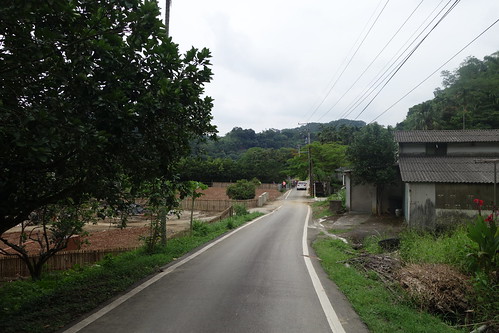
The marvelous Miaoli 16, which runs along the south side of the Mingde Reservoir.

The Diplomat ran a piece on the evolution of the Taiwanese Identity by Linda van der Horst, a nice echo of my post on Albert Axelbank's piece from the 1960s. It was well meaning, but wrong in several particulars and I think in its overall interpretation of the situation. Some small errors:
The KMT was established on the mainland in 1911 and retreated to Taiwan after its defeat by Mao Zedong’s Communists.
The KMT was established in 1912, disbanded, and then reformed in 1919. I think the writer means to say the Republic of China, not KMT [UPDATE: Linda van der Horst says the mistake was caught but not corrected in time for publication]. The next error is far more serious...[MT: and is now corrected]
An overwhelming majority of Taiwanese do indeed share blood with the Chinese across the strait. Chinese migration to the island started in the 17th century, when the Dutch arrived on “Formosa” (Portuguese for beautiful) and needed farmers to cultivate the land. The indigenous tribes that they found were hunter-gatherers and not farmers, so the Dutch sailed across the strait and in some cases literally captured Chinese farmers that they brought back to farm the island.
Nope. The indigenous tribes were accomplished farmers operating resource rich societies plugged into trading networks that crossed southeast Asia, not hunter-gatherers, a fact easily learned (for example). The Chinese were imported because the Dutch colonialists needed a tractable population dependent on the Dutch, that would produce a surplus, farming that land in a way the Dutch could count and tax. Unlike the aborigines, who would happily trade but would not consider themselves taxable subjects, and resisted Dutch rule.

Massive kudos to her for using the phrase "pro-Taiwan" to describe Lee Teng-hui. One beer on me if we ever meet....

Those are minor issues. The piece itself presents what has become the conventional view of the "rising Taiwan identity", especially in the media. Being Taiwanese means having aboriginal ancestors...
“If your ancestors have been in Taiwan long enough [pre-1949], then there is a big chance you will have indigenous blood,” said Chun-chieh Chi, professor in ethnic relations at the National Dong-Hwa University in Taiwan. Every era – indigenous, Dutch, Spanish, Hokkien Chinese, Japanese, Nationalists – left its own imprint on Taiwan’s inter-marrying population.
...this search for aboriginal ancestors is a way to assert a non-Chinese identity through nostalgic search for an alternative ancestry, but the truth is that a huge chunk of the post-1949 population also carries Austronesian gene markers, because the peoples of South China from which many in that population come, prior to the Han in-migration that began in the last quarter of the first millenium CE, were Austronesian peoples just like the Taiwan aborigines. The various Boat People of southern China, as in Hong Kong, for example, are thought by some scholars to be remnant populations of these peoples.

The interesting point here, as the writer observes, is not so much Taiwanese are finding such ancestors but that they feel a need to. Foreigners often assert that aboriginal "blood" heritage makes the Taiwanese different, but the reality is that the deep and pervasive aboriginal cultural influence on Taiwanese culture is the key inheritance of the Taiwanese. These ideas about differences of "blood", updated with the term "genes", remain a form of primitive nationalist essentialism that should have no place in modern discourse. Though in fairness, ideas about "aboriginal blood" are generally asserted against the Chinese claim of "Chinese blood" for Taiwanese...

van der Horst couples a cite of Gerrit van der Wees of FAPA, the pro-Taiwan association in Washington DC, and polls...
The percentage of people identifying as Taiwanese has hit another record high, according to a poll released in late May by the Taiwanese Public Opinion Foundation – 80 percent of respondents said they identified as Taiwanese, whereas only 8.1 percent identified as Chinese, and 7.6 percent as both. This has been gradually on the rise since the 1990s, when a majority of people identified as Chinese or both Chinese and Taiwanese.

This rise in Taiwanese identity has gone hand in hand with the democratization of Taiwan after martial law was lifted in the late 1980s, because “people were able to openly express themselves and discover their identity under the new democratic period,” says Gerrit van der Wees, a former Dutch diplomat and lecturer in the history of Taiwan at George Mason University in Virginia.
The explanation of van der Wees (it is related to democracy), coupled with polls showing how it emerges in the 1990s, makes a neat narrative about the development of the "rising Taiwan identity" (bear in mind that people do not discover identities; they construct them). Never mind that the poll van der Horst uses is probably not reliable.

But what has gone before? What did the "rising Taiwan identity" rise from?

Note this paragraph, because it displays the function of the "rising Taiwan identity" as a media catchphrase/trope:
Chinese and Taiwanese national identity can co-exist, argues Dr. Shiao-chi Shen in his doctorate at Columbia University. “The decline of Chinese national identity is hence not the result of the rise of Taiwanese identity, but of the rise of China,” Shen argues. Its dominance and the “one China” principle “removed the important component of the Republic of China (ROC) from the Chinese national identity in Taiwan.”
van der Horst appears to be using this quote to argue that prior to the "rising Taiwan identity" the locals had an ROC Chinese identity. Which is totally bogus pro-KMT nonsense.

What occurred in the 1990s was not "rising Taiwan identity" but a shift in the nature of the Taiwan identity itself. Prior to democratization the people perceived themselves as Taiwanese and asserted this identity not against China, but against the KMT. Taiwaneseness was how you fought the KMT: the point of reference for the construction of the pre-democracy identity was KMT authoritarianism and exploitation, as recounted in countless works of the period. Indeed, politicians fighting the KMT were known as tangwai, "outside the party", a term which still relates them to the Party. The KMT attempted to control all expressions of Taiwaneseness, from religious festivals to language, to subsume Taiwaneseness into Chinese culture, and to suppress independence. This massive apparatus of state control testifies to the broadness and strength of that identity.

In the 1990s democratization opened up new avenues for exploring the idea of Taiwaneseness and what it means. Several things happened in the 1990s. First, the DPP established itself as a legitimate and legal alternative to the KMT and standard bearer of Taiwan-centered politics. The rise of democratic politics meant that the Taiwan identity could no longer by defined as resistance to the System: the tangwai were now part of the system in the form of the DPP and its allies. Further, the KMT under Lee Tung-hui, who was president throughout the entire decade, co-opted many DPP programs and positions, and thus, appeared to be Taiwanizing. That made it difficult to oppose the KMT as an anti-Taiwanese party.

The reason polls from the early 1990s show a strong proportion of "Chinese" is because the old Taiwanese identity had learned long before to lie to the State and how to safely discuss their identity. With democratization, people started telling the truth to pollsters. Let me shamelessly steal Frank Muyard's compilation of polls...


The 1989 numbers are from a UDN poll, which appears maybe to have flipped the dual identity/Chinese columns, but the high number is indicative -- nobody was sure they could speak out about their Taiwan identity in safety. In 1989 Lee Teng-hui and diehard mainlander rightiest Hau Pei-tsun were still tussling for control of the KMT and the government. The non-mainstream (rightist) faction lost key struggles within the Party and in 1993 many exited to form the New Party. Observe that in the numbers collected by Muyard the Chinese identity collapses quickly -- between 1992 (recall that there was still a national security law under which dissidents were kept in jail) and 1996 it falls by a third and by 2000 has completely disappeared except among old mainlanders. People don't give up complex nationalist social identities within a single short decade. The shift occurred because people lied to pollsters and then stopped lying. Another sign of that is the fall in the "no response" answer...

The "dual" identity remains relatively stable, testimony not to some confusion about identity but to the many meanings of the term "Chinese". Polls do not ask people to define "hua ren" or "Chunghua mintzu" as they relate to themselves, probably deliberately, to avoid providing evidence that "We're Chinese" for Taiwanese means something like what "We're Europeans" or "We're Westerners" means for Frenchmen. Muyard points out, however, that over time, when you give those polled the choice of "Taiwanese" or "Chinese", the number who choose "Taiwanese" has rising past 70%.

The second thing that occurred in the 1990s was the rise of China -- here the good doctor Shen is half-right, bless his deep Blue heart. The new identity is not centered on resistance to the KMT anymore, but on resistance to and experience of China and "Chineseness". Old school Taiwanese independence activists are full of hate for the KMT and constantly ask when Taiwan will be independent. New style Taiwan identity types regard the KMT as yesterday's failed politics, tainted with China and Chineseness, and the independence question as settled: everyone in Taiwan is pro-independence and Taiwan is already independent. Scholar Frank Muyard identifies a key moment: in Nov 1987 people in Taiwan were finally legally allowed to visit China. From that point on, Taiwan people began to experience how different they were from Chinese, a process only accelerated by the arrival of millions of Chinese tourists on Taiwan, and the movement of hundreds of thousands of Taiwanese to China.

This difference between the old and new Taiwanese identities is also seen in the most recent generation of aborigines embracing the new Taiwanese identity and more slowly, the DPP, which is beginning to make inroads in aboriginal areas. The new Taiwan identity is not an anti-KMT identity but a pro-Taiwan identity, and the previous generation of aborigines was solidly pro-KMT.

I've already talked too much, but let's make one last point: what is the function of the "rising Taiwanese identity" as a media trope? Anthropologist Scott Simon pointed it out to me in a conversation on Facebook: the trope de-legitimates this Taiwan identity by rendering it as a "new" thing, recently emerged. Newness is bad for political legitimacy. Humans have a near-universal drive to locate legitimacy in something old, one reason Taiwanese are working out their new identity by searching for aboriginal ancestors: "look, we're old in the land." The antiquity of aborigines in Taiwan is thus pressed into service as a source of legitimacy for the new Taiwan identity. But the Sunflowers, that concrete manifestation of the "new identity", themselves recognized its connection to the old anti-KMT identity when they ceremonially welcomed the previous generation of activists to the Legislative Yuan during the occupation. They know their roots, even if the international press is either ignorant or ignoring.

Of course, that idea of "newness" for the Taiwan identity also helps legitimate the old days of the old governing party. What? New media tropes helping the pro-China party? Plus ca change...

REF: My thanks to Robert Kelly, whose long comment on the post on Axelbank's article inspired this piece.
____________
Daily Links:
_______________________
Don't miss the comments below! And check out my blog and its sidebars for events, links to previous posts and picture posts, and scores of links to other Taiwan blogs and forums!

Saturday, November 14, 2015

MaXi Mess: Unintended Consequences in the Media

A Taiwan ad on a trolley in San Francisco. Used by permission.

Although the real catalyst for change was the Sunflowers, the change in the media reporting on Taiwan was accelerated, expanded, and deepened by the Ma-Xi meeting. For the first time the media is reporting something like the actual situation on Taiwan, a situation obvious in polls since nearly the turn of the century... consider this from WSJ:
The people of Taiwan, writes the China scholar Donald Rodgers, a professor at Austin College, “have no desire to unify with China—ever.” For them, relations with the mainland have reached a turning point. Increasingly, they reject the assumption that the “Taiwan question” is a family squabble among the Chinese. Instead, they see it as a political tug of war between two sovereign equals.
Unfortunately, this stupid anti-democracy crap continues to appear in the media in various guises. Again from the WSJ piece...
Democracy has handcuffed the ability of any Taiwan leader to bargain with Beijing, although the Taiwanese certainly want friendly relations. If Ms. Tsai refuses to embrace “One China,” it is hard to see any future Kuomintang leader doing so either
You can see that the underlying assumption of this kind of thinking is that democracy prevents leaders from selling out their people for the profit of their leaders. Nothing better illustrates the anti-democracy, elite-driven sociopathology that modern news commentary has become. Democracy in Taiwan ensures that the wishes of the people are included in the political process -- indeed, it ensures that there is a process. [UPDATE: the writer emailed me and said that democracy means the process is handcuffed to the popular will, so I've misread. If so, I apologize]

Even Banyan at the Economist, a longtime fan of the KMT, observes:
Mr Xi and—even more so—Mr Ma emphasised their people’s ethnic and cultural links. “Brothers connected by flesh even if our bones are broken”, as Mr Xi put it; “descendants of the Yellow Emperor”, in Mr Ma’s words. But growing numbers of people in Taiwan see themselves as primarily “Taiwanese”, rather than Chinese. Most people in Taiwan come from families that lived on the island for generations before 1949. A small aboriginal population is not Chinese at all. Apart from during the chaos of the civil war China has not even pretended to rule Taiwan since 1895, when it ceded the island to Japan. China says a declaration of independence could provoke it to use force, so few Taiwanese support formal independence. But even fewer want unification.
Variations in this "growing numbers" trope is gradually supplanting variations of the "wary" trope. Actually, the majority pro-independence position was passed in polls over a decade ago. The media has taken a dozen years to get around to reporting what is going on. It will probably be another decade before "the vast majority of Taiwanese" becomes normalized. Change is slooowwww.....

Mark Harrison makes all this clear responding to the way Ma and Xi distorted history:
There is another way of telling this history however. Taiwan was ceded to Japan by the Qing empire in 1895, years before the founding of the Republic. Taiwan modernised and militarised under the Japanese empire, and also resisted colonial authority. In the 1910s and 1920s, Taiwanese intellectuals and activists at the centre of flows of modern ideas from the Chinese and Japanese worlds turned the disparate political aspirations of the Taiwanese into a unique syncretic liberalism. In 1945, Taiwan became part of the Republic of China under the KMT. But in 1947 the Taiwanese rose up in an anti-Chinese Nationalist uprising that was crushed by the KMT at the cost of tens of thousands of Taiwanese lives. The violence of 1947 forged colonial liberalism into Taiwanese nationalism. Then, in 1949, the national government of the Republic of China relocated to Taiwan. The long and violent struggle for Taiwanese democracy was realised in the 1990s, marking a step forward in the hopes of a century of political struggle. This history is mobilised by the DPP. The principles and practices of Taiwanese liberalism were renewed by the Sunflower activists in 2014, who made their debt to the generations of activists from the 1910s to the 1990s explicitly clear.
This liberalism is reflected in the way Taiwanese have incorporated democracy into their way of life. Kevin Hsu at the always excellent Ketagalan Media observes that Taiwan's democracy is actually quite healthy. And the Taipei Times has a good commentary observing that Ma and Xi's "kinship" arguments are nothing compared to democracy and local identity.
_______________
Daily Links:
_______________________
Don't miss the comments below! And check out my blog and its sidebars for events, links to previous posts and picture posts, and scores of links to other Taiwan blogs and forums!

Friday, April 17, 2015

Hugh White in Straits Times issues primer on how not to write about the Taiwan Issue

Indonesian maids with their charges

I'm off biking for a few days this weekend. So expect light blogging....

Hugh White in the Straits Times gives a primer in how not to write about the Taiwan issue. Usually when someone flatpeters like this in the international media, I serve it up John-the-Baptist style, as with Bruce Gilley or Charles Glaser. Its tiresome to keep ripping stuff for the same transcendentally obvious mistakes, as naive as if the writer has just discovered that Taiwan exists. But what else can one do? Onward!

Problem 1: Decontextualizing Taiwan
A common approach to wrongly analyzing the Taiwan problem is ripping Taiwan from its larger context of current Chinese expansionism. Observe how, in White's essay, no other nation but China, the US, and Taiwan appear. The closest White gets to mentioning another state is a vague comment about Taiwan seeking support from regional countries (except that it is not, of course, the Ma Administration has not built closer links to any regional power. It's an utter failure in that regard). There's no mention of Japan, for example, though as anyone who actually knows how to think about the problem knows, Japan is intimately related to Taiwan's problems with Chinese expansionism. Hence White's essay only "succeeds" because it proposes a timeless bubble universe that doesn't exist in reality.

The truth is that if geography is the mother of strategy, then Hugh White is an orphan sitting in the street with a begging bowl and a mewling whine. Taiwan in its ROC identity is part of the South China Sea claims. The ROC also claims the Senkakus, which are actually owned by Japan. Eventually China will begin claiming Okinawa, though it is usually silent on this dream (truly fanatical ROCers also speak wistfully about Chinese ownership of Okinawa). The key point is that in Chinese minds the claims to the Senkakus, Taiwan, and Okinawa are all interconnected. Should Taiwan actually sell out to China, this will only increase the pressure on Japan while giving China a far more advantageous position. No doubt China will begin eyeing Yoniguni and Ishigaki to the east of Taiwan, and islands off Philippines as well. And of course, China will pick up Dongsha and Taiping Island. What will that do for stability in the South China Sea?

Thus, as I always point out, selling Taiwan to China won't solve the problem, because the problem is Chinese expansionism, which Taiwan has no control over. Indeed, it will increase the chance of war between China and the US and Japan. Never mind what it would do to the Philippines, which also faces territorial threats from China. The US is committed by treaty to defending Philippines and Japan, it can't hide behind ambiguity. Annexing Taiwan to China thus simply pushes the sellout or fight choice back one level, to the Senkakus and Okinawa on the north and to Philippines on the south. If White seeks to avoid a general war between China and the US, he is going about it precisely the wrong way.

Anyone who looked at a map could figure this out. Why couldn't White?

Problem 2: Patronizing Taiwan
That is why Taiwan and its friends and admirers everywhere have to think very carefully about how to handle the dangerous period that lies ahead and to consider what is ultimately in the best interest of the Taiwanese people, as well as the rest of us. The conclusions will be uncomfortable, but inescapable.
One hears this silliness from time to time: advice to us poor foolish denizens of Taiwan to think carefully. Think! Because god knows we've never thought about the China problem before.

Gosh, thanks Hugh! Without this sage advice, we might never have realized there is a China threat which could result in a general war.

Problem 3: Directly incorporating Chinese propaganda tropes
In the 1990s, after Taiwan became a vigorous democracy, presidents Lee Teng-hui and Chen Shui-bian started to push the boundaries of this status quo, seeking a more normal place for Taiwan in the international community. This infuriated Beijing and escalated tensions between China and America.
Two interrelated tropes -- Taiwan provokes China and it escalates tensions. As I've remarked countless times, tensions are caused by China, which manipulates tensions as a foreign policy tool to influence Washington's foreign policymaking and to transfer tension from the Beijing-DC relationship to the Taipei-DC relationship. Understanding this is basic to understanding the deployment of "tensions" in the Taiwan Strait. Or elsewhere.

What's disappearing? Oh yeah, China "pushing the boundaries of this status quo" via a military buildup and forging links with the pro-China parties in Taiwan. Lee and Chen were pushing back against this move, against China's attempts to reduce Taiwan's international space.
 President Xi Jinping seems increasingly impatient to resolve what it sees as the last vestige of China's centuries of humiliation 
No shit. White seems to think China has endured absolute centuries of humiliation. Even the PRC claims only a modest century of humiliation, which as we all know, is an expansionist reconstruction of history (here). The whole idea of "humiliation" in its modern form is Chinese propaganda. Writers should stop regurgitating it.

More subtle is the common pro-China trope in which the writer speaks for Beijing and informs us that Beijing's motivation is avenging humiliation, as if China and its leaders were unaware it is engaging in a naked territorial grab. Beijing knows perfectly well what it is doing. The common people, deluded by decades of propaganda, may understand things that way, but elites know they are engaging in territorial expansion.
And China was happy to replace sticks with carrots in dealing with Taipei, apparently expecting that economic integration would eventually pave the way to political reunification
would lead inexorably to precisely the political reunification that Beijing so clearly wants and expects.
But of course, what is happening is not reunification but annexation. "Reunification" is pro-Beijing propaganda.

Academics should adopt more neutral language -- which even the international media has done. "Reunification" seldom appears in the international media now, "unification" is more typical. I don't expect him to use an accurate description of the actual state of affairs such as "annexation". I suppose it's too much to hope that poli sci and strategy types speak truth. Otherwise, how could they find employment in the government?

Problem 4: Seduced by the allure of the "hard" choice
No one visiting Taipei can fail to be impressed by what the Taiwanese have achieved in recent decades, not just economically but also politically, socially and culturally. But the harsh reality is that no country is going to sacrifice its relations with China in order to help Taiwan preserve the status quo. 
Pieces like White's which advocate that Taiwan sell out to China are often presented with a kind of wistful this-hurts-me-more-than-you regret. The writer presents himself (always a male, of course, females seem to be less afflicted with such testosterone delusions) as making the tough choice, the manly choice, the hard choice. Because, as we all know, the greatness of a realpolitik policy is measured by the number of one's friends its betrays.

The "hard" choice appeals to one's sense of one's own toughness. "Hey, I can make the tough call! Look how manly I am! I can betray millions of my own friends and allies!" The reality is that the sell-out is the easy choice. The hard choice is the quiet, long-term effort at alliance building, at awareness raising, at humble day-to-day slogging on behalf of a worthy ally. At changing the world, one mind at a time, one policy at a time, one administration at a time.

Resistance is the real hard choice, Hugh.

Problem 5: Errors of fact and interpretation
But the stark reality is that these days, there is not much the US can realistically do to help Taipei stand up to serious pressure from Beijing.

Back in 1996 when they last went toe-to-toe over Taiwan, the US could simply send a couple of aircraft carriers into the area to force China to back off. Today the balance of power is vastly different: China can sink the carriers, and their economies are so intertwined that trade sanctions of the kind the US used against Russia recently are simply unthinkable.
Writers producing this frequently resort to rhetorical tropes like "harsh" and "stark" to describe reality and choices. They present the writer as one able to make tough choices, unlike those squishy-soft Taiwanese (you know, the ones who, unlike White, resist rather than accommodate Chinese expansionism, require all their sons to enter the military, and occupy legislatures when they are pissed off). This acts as a petri dish for breeding false dichotomies, which of course is its rhetorical function.

Note that White says that there is little the US could do. LOL. There are many things the US can do short of the military intervention he actually presents (which was not toe-to-toe in any case, the carriers loitered far from the island, just a gentle reminder). It's not only a choice between military intervention and not intervening in support of Taiwan, except in the case of a hot war.

If "serious pressure" -- whatever that is -- is put on Taiwan, the US can respond by upgrading weapons sales and military contacts. By arranging the sale of Japanese subs to Taiwan. By upgrading its treaty and legal situation with respect to Taiwan. By moving military assets closer to the island. By sending cabinet officials to visit. By making loans and other commercial engagements. By organizing support from and for other regional actors. By a wide range of gestures both symbolic and real. Even by landing two F-18s in Tainan...

The US may or may not choose to do such things. But it always has the ability to.

Rhetorical constructions above and below are examples of how White's essay creates a bubble universe with no relation to reality.
In the past few years, [Taiwan] has slipped quietly into the background as tensions in the East China Sea and South China Sea have posed more urgent threats to regional peace and stability. 
White has failed to connect all the dots with this opening comment -- an outcome of his relentless construction of a bubble world. Taiwan is intimately connected to both these areas (d'oh!). One reason the Senkakus and the South China Sea have become more urgent in recent years is that the election of Ma Ying-jeou has enabled Beijing to reduce its tension-mongering with Taiwan and ramp up tensions elsewhere. Tensions have not fallen, they have merely shifted, and increased.
In the 1990s, after Taiwan became a vigorous democracy, presidents Lee Teng-hui and Chen Shui-bian started to push the boundaries of this status quo, seeking a more normal place for Taiwan in the international community. This infuriated Beijing and escalated tensions between China and America.

These tensions eased when, in 2003, then US President George W. Bush made it clear that the US would not support any Taiwanese push to change the status quo.
Hahaha. This is simply wrong, more of the same bubble universe that views tension through the lens of what Washington is doing. Here, I'll quote the awesome Mark Harrison in 2005:
The months since the re-election of Taiwanese president Chen Shui-bian have seen a rise in tensions across the Taiwan Straits. The softer line which the Chinese government had adopted during Chen’s previous term has been seen to fail with the election result, and there has been a noticible shift in policy and much stronger rhetoric coming out of China.
Anyone could find this out using Google or searching tension on my blog.
This reality does not yet seem to have been understood in Taiwan. The overwhelming desire on the island is to preserve its democracy and avoid reunification by preserving the status quo.
Read the piece carefully: White's essay contains many claims, not a single one which is sourced, evidenced, or given concrete information. What is his source for "this reality does not seem to have been understood in Taiwan?" It's rather strange to think that the military and economic balance between China and the US is not "understood" by millions of people who live inside it everyday, and in a society where every male has to serve in the Army and hundreds of thousands work in China and export to the US. This may come as a shock for White, but perhaps the people who live this problem every day might actually know something about it.

What is the "overwhelming desire" of Taiwanese? It's for independence and international recognition, as poll after poll shows. People support the status quo precisely because it is a watered-down form of independence. They are not avoiding "reunification" but "annexation". White's claim is not wrong on its face, but it certainly requires explanation.

Problem 6: It's Taiwan's fault.
But now old questions about Taiwan's longer-term future are re-emerging, and so are old fears that differences over Taiwan could rupture United States-China relations and drive Asia into a major crisis.
Taiwan could rupture US-China relations? Taiwan is one actor -- this may seem incredible, you might want to sit down for this: all the actors in these relationships have their own agency. Poor put-upon Beijing is not the helpless victim of Taiwan's desire to remain free and independent. If relations between China and the US rupture, it is because Beijing or Washington has chosen for them to rupture. Taiwan is not the cause of the problem, because the problem is Chinese expansionism, not Taiwanese resistance. Note that this observation totally vanishes from White's piece. This is another example how people like White who assign agency to China in all other areas of its territorial expansion (for example) take a totally different view of Chinese expansionism when it concerns Taiwan. This attitude hinders both understanding and policy-making.

There's not much more one can say except: see ya on Tuesday.

UPDATE: Michal Thim continues the roasting of White
ALSO: Hugh White rebutted by J Michael Cole in the National Interest
AND THIS: In NASDAQ
_______________
Daily Links:
_______________________
Don't miss the comments below! And check out my blog and its sidebars for events, links to previous posts and picture posts, and scores of links to other Taiwan blogs and forums!
Saturday, October 04, 2014

Beijing Blows up US' Taiwan Policy in Hong Kong

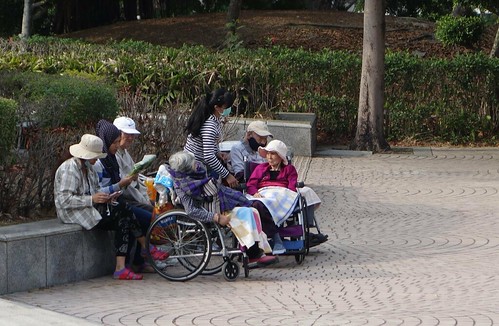
A hearty east coast greeting at a mantou shop.

A couple of commentators are out in front advocating that US Taiwan policy needs to change. Denny Roy in The Diplomat observes that Taiwan: a status upgrade is now available:
Such an upgrade of U.S.-Taiwan relations is overdue. Now is a good time to implement it. Not only is the usual worry about hurting U.S.-China relations dormant, but additionally an improvement in U.S.-Taiwan relations, one of Beijing’s biggest fears, would signal to the Chinese government that outlaw behavior will not serve China’s interests.
Roy noted that the Ma government has begun distancing itself from Beijing's policies in the South China Sea. This week Ma issued a clarification of the ROC's claims, wholly invented in the 20th century, to the South China Sea islands.
Mr Ma was clear that the claim was limited to islands and 3 to 12 nautical miles of their adjacent waters. There were, he said, “no other so-called claims to sea regions”.
The claims are absurd to begin with, and this sort of backing down is very welcome. Meanwhile Gary Schmitt of AEI scribes in the Weekly Standard:
The reality is that Taiwan’s underlying skepticism about unification with China under any model has been readily apparent for anyone who took the time to keep track of what the Taiwanese people were saying as opposed to focusing on some imaginary diplomatic breakthrough that the acolytes of Henry Kissinger and Zbigniew Brzezinski were dreaming of, hoping for. Washington needs to come to terms with the point that democratic Taiwan is not headed toward some form of association with the PRC and should build policies that reflects that point.
Both Schmitt and Roy contend it is time for a change. Always nice to see the pundits catch up with this blog....

Beijing's deployment of proxies/gangsters to smash the protesters in Hong Kong has hardened Taiwan's resolve to remain out of Beijing's clutches. In doing so, it has made obvious how obsolete the US policy urge to sell out Taiwan in order to please Beijing is now. Although those of us who watch Taiwan have always known that. You can look back into the polling as long as you want -- here is a 2000 poll in which over 70% reject one country, two systems even if Taiwan gets a better deal than Hong Kong....

Indeed, it also highlights a couple of other issues. When the Sunflowers occupied the Legislature, Ma could not send in the gangsters, even though they did show up and there were some isolated attacks on protesters. The reason was simple: his party has to win elections. But the Hong Kong government doesn't.

The strong negative response here in Taiwan also shows how empty the pro forma references to the "status quo" are. In the recent essay by your trusty writer and my man Brian B, The Coming Taiwan Independence Surge, we referred to this poll from the pro-China TV station TVBS last year, which said...
Asked about their position on cross-strait relations, 66 percent of respondents supported the “status quo,” 24 percent wanted independence and 7 percent supported unification with China, according to the survey conducted by cable news channel TVBS between Thursday last week and Monday.

However, the poll found that most respondents favored independence over unification if they were asked to choose between just those two options, with 71 percent supporting independence and only 18 percent supporting unification with China.
When they are not forced to make a choice, everyone makes the same choice: status quo. But when forced to make a choice, independence is strongly preferred. What this really means is that on that terrible day when Beijing nixes the possibility of the status quo, everyone is going to opt for independence.

US policy really ought to reflect that fact.
_______________________
Don't miss the comments below! And check out my blog and its sidebars for events, links to previous posts and picture posts, and scores of links to other Taiwan blogs and forums!
Tuesday, September 02, 2014

Suddenly everyone discovers the Taiwan-Hong Kong Link

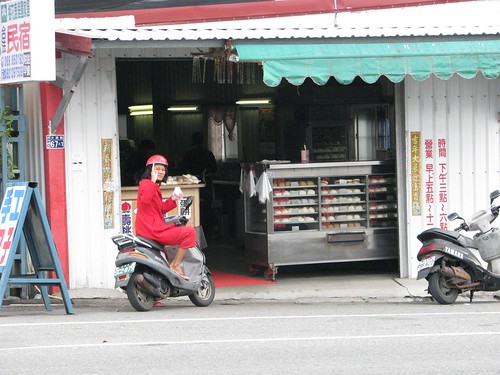
Nothing like the mountains of Chiayi.

Kinda comical to watch the web suddenly come alive with the realization that Hong Kong's fate will influence Taiwan's response to Beijing's annexation drive. Oxford Analytica says Hong Kong's fate will drive Taiwanese to resist China. Even Fox News notices. What do they think we've been doing over here? All of us watching Hong Kong from here have been saying this for years. On this blog, for example, post of October 28, 2012:
Taiwan's future?: Hong Kongers fed up with Chinese, lack of control over their own fate, identifying more strongly as Hong Kongers than ever before. Still look down on Taiwanese, though. Unfortunately the snobbishness of HKKers prevents them from forming solidarity with the pro-Taiwan side. But I suspect in a couple more years we may see some serious movement in that direction.
Of course, Beijing's strategy is the same in both places, as I noted a while back -- the CEPA with Hong Kong, the ECFA with Taiwan. Both places were flooded with tourists. Most critically, Beijing has used pro-China billionaires to monopolize the media.

I suspect the ugliness has only begun. Beijing and the KMT are going to coordinate against pro-democracy activists in Hong Kong and Taiwan. Deployment of gangsters -- recall the attacks on media figures in Hong Kong, include Jimmy Lai himself. That hasn't started here, but I am very worried.
________________
Daily Links:
_______________________
Don't miss the comments below! And check out my blog and its sidebars for events, links to previous posts and picture posts, and scores of links to other Taiwan blogs and forums!
Saturday, March 23, 2013

Twofer from Commonwealth: rice and nukes

Went to the bike show in Taipei this friday to drop in on friends and ogle the gear. Great time. Expecting full report on the show from Taiwan in Cycles tomorrow!

Commonwealth Magazine has two excellent articles this week, one on political rice buying by China that explains why ECFA has neither benefited the south nor changed hearts and minds, the other on the fourth nuclear power plant. On rice, discussing how China early on adopted a two pronged strategy, one to win the hearts and minds via purchases, the other to strip mine Taiwan's agricultural know-how.....
This January, Wang Zhizhong twice visited Houbi District – the major rice producing area in the Jianan Plain – accompanied by Taiwan's former Minister of Justice, Liao Cheng-hao. Also in Wang's entourage were high-ranking officials from the Cuxiong Yi Autonomous Prefecture in Yunnan Province.

....

During each of his four visits over the past two years, Wang went directly to Taiwan's agricultural areas, meeting with representatives of production and marketing teams, farmers' cooperatives, as well as fruit and vegetable wholesalers. He also visited farming families in Jiayi, Tainan, Kaohsiung and Pingtung.

"These were special fact-finding itineraries to get the real picture of Taiwan's agricultural industry," explains ex-minister Liao, who accompanied Wang on all his visits to Taiwan.

Chinese officials not only want to understand the industry, they also want to import knowledge in the form of farming advisors and farming technology. Wang, who commands a vast interpersonal network in China, is planning to develop a plot of land of 4,300 hectares – roughly 165 times the area of Da-an Forest Park in Taipei – in Chuxiong Prefecture's Yuanmou County into a model zone for cooperation in high altitude organic agriculture between Yunnan and Taiwan. The project is explicitly defined as a cross-strait agricultural cooperation zone.
The piece also gives some numbers on the "hearts and minds" campaign...
Council of Agriculture (COA) statistics show that in June last year, after China gave the green light for rice imports, Taiwan exported a total of 773 tons of rice to China, about 25 percent of the island's total rice exports. This made China the largest buyer of Taiwanese rice alongside Hong Kong.

Taiwanese rice is not exactly an export hit. Although officials pride themselves on exports to 27 countries, total exports reached just 1,900 tons in 2011. With China added as a new buyer, rice exports soared to 3,100 tons last year. But this is still a far cry from 140,000-ton rice quota that the Taiwanese government has approved for export per year. Clearly Taiwanese rice could use more overseas buyers.
More.... the amounts....
COA statistics show that Taiwan exported rice worth US$1.32 million (about NT$39.6 million) to China last year. But local rice farmers feel that they do not reap any tangible benefits from exporting to China.
To put that tiny number in perspective, from my post on how the government is trying to encourage the hearts and minds switching to support of closer relations with China, the Council on Agriculture observes:
Of these, items on the ECFA early harvest list such as bananas, hami melons, lemons, oranges and red dragon fruits accounted for US$1.38 million,
Miscellaneous fruits are a bigger seller in China than rice politically purchased! The sum is simply too tiny to have any political effect.

The problems of China's approach are further laid out: the purchase and distribution system ensures that profits don't return to the farmers or even the local rice mills, but rather come to distant middleman, as we have already seen with other aspects of this trade:
This can be attributed to the way in which Taiwanese rice is distributed and marketed. Normally, farmers sell their entire harvest to rice mills, which process and sell it on to distributors. Rice destined for export to China is usually sold to the rice mills at the same price as rice for domestic sale; the farmers themselves do not earn a single penny more.

At the same time, the rice mills sell to Chinese distributors at the same price as domestic rice dealers. Therefore, the rice mills also do not earn more from selling to China.
How the system really works, and a hint of one of its real purposes, is laid out in these paragraphs....
"Chinese officials mostly come here to buy rice to build connections with Taiwanese county and city governments or local communities," observes Wu Yuan-chang, head of the Taiwan Province Rice and Cereals Association. He believes that Chinese rice importers only want to make their higher-ups happy and that after reaching China the Taiwanese rice will not find its way onto supermarket shelves due to a lack of distributors.

.....

This past January, Liu Gui-miao, a former Tainan County councilor for the ruling Kuomintang and now marketing manager of the farmers' cooperative selling Chamuying Rice, sold 1,632 2-kg. bags of rice to the Foshan City government, a deal facilitated by the Tainan City Straits Economics and Trade Cultural Development. Upon import into China, the bags of rice were used as official gift packs or hand-outs to low-income families.

"They repackaged the rice into 289 gift packs and gave them to government officials. The rest was used as food aid for distribution to low-income households," association secretary general Lu Ai-hua, who formerly served as the chairman of the now abolished Yongkang City Council. In March, Lu will visit China again, hoping to land bigger orders in Luohu, the gateway between China and Hong Kong on the China side.
While much of the hype focuses on alleged benefits Taiwan receives from more closely aligning itself with China, one more important aspect of the drive, never discussed in the international media, is the way closer China links are parlayed into greater support for the KMT at the local level. Stronger links to China means, essentially, more links between Chinese money and KMT officials at the local level. People often assume the south is Green but it is more like a checkerboard -- the local level officialdom is often KMT, and more importantly, the local institutions of agriculture -- mill ownership, ag and irrigation cooperative officials, marketing firms, and so on, are more likely to be KMT. China's cooperation with such individuals helps increase the strength of their local patronage networks and improve their political prospects. Just as the Taiwanese moving their small factories to China was a way to preserve the system of family ownership and competition on price and avoid upgrading to modern management methods, so the KMT's move toward China is a way to avoid political change and preserve KMT power. China is the Vishnu of the Taiwanese sociopolitical world, ruling by preserving.

The Commonwealth piece also points out that the political rice is not distributed in China where it would cause trouble for China's powerful grain interests. Such Taiwanese rice as is sold on actual store shelves in China gets there via private marketing arrangements, and is largely a niche market, as the last page of the piece discusses. The political rice has neither stability nor order volume, two keys to maintaining and expanding markets. As Commonwealth observes...
Two years ago China began purchasing milkfish from Taiwan under contract, a move also intended to win the support of local fishermen. But in the end prices and order volume proved difficult to maintain.
The rice campaign was focused on Tainan; so was the milkfish campaign. The actual amount ordered for last year was US$4.45 million (source). Here's a piece from Dec 2012 full of promise, but I can't find anything on subsequent milkfish orders. Surely FocusTaiwan would be bragging...

The nuke piece is also quite good. It's full of interesting claims:
Dealing with nuclear waste has even become a hot-button diplomatic issue. A report published in the American journal New Scientist noted that there are 437 nuclear power reactors in 31 countries around the world, but not one repository for high-level radioactive waste.
Spend some time with it.
_______________________
Don't miss the comments below! And check out my blog and its sidebars for events, links to previous posts and picture posts, and scores of links to other Taiwan blogs and forums! Delenda est, baby.

Friday, March 22, 2013

What Diplomatic Truce?

Students sell popsicles to raise money for clubs.

China continues to try to squeeze Taiwan's international space:
A Taiwanese delegation was forced to withdraw from the third Jakarta International Defense Dialogue (JIDD) without being given an explanation, Ministry of Foreign Affairs deputy spokesman Calvin Ho (何震寰) said yesterday.

Ho said that the ministry has already instructed the Taipei Economic and Trade Office in Jakarta to demand an explanation from the Indonesian government, which was hosting the conference, soon after the four-member delegation was informed that it could not attend the summit.

The ministry made the comments following a report yesterday in the British newspapaer the Financial Times, which said that China was behind the abrupt cancellation of Taiwan’s invitation to attend the summit that began yesterday and revolved around the theme: “Defense and Diplomacy in the Asia-Pacific Region.”
Ma's "diplomatic truce" has done nothing for this aspect of Taiwan's diplomacy. The event was not without a certain irony....
Representative to Indonesia Andrew Hsia (夏立言) said Taipei was “not pleased” with the incident.

“This [conference] is about security in the region [and] certainly we are one of the major players in the region,” Hsia was quoted as saying by the newspaper.
A friend pointed out in an internet discussion that Andrew Hsia, Taiwan's current rep to Indonesia, was Ma's point man for explaining the "flexible diplomacy" that underpinned the "diplomatic truce". Hsia was one of the casualties of the Ma government's incompetent and malicious approach to handling the Morakot disaster.
_______________________
Don't miss the comments below! And check out my blog and its sidebars for events, links to previous posts and picture posts, and scores of links to other Taiwan blogs and forums! Delenda est, baby.

Saturday, March 16, 2013

Stanton's Speech at World Taiwanese Congress, Complete

Dusk over Taichung.

The Taipei Times ran an article today on former AIT head William Stanton's speech at the World Taiwanese Congress in Taipei: Taiwan increasingly leaning towards China.
Taiwan is actually increasingly leaning toward China, he said, and the “status quo,” as perceived by Taiwanese, was “problematic” and “an illusion,” given that China is growing ever stronger and Taiwan is increasingly dependent on China economically.

Taiwanese cannot unilaterally decide the development of cross-strait ties, Stanton said at the annual meeting of the World Taiwanese Congress in Taipei, adding that how much patience China shows toward maintaining the “status quo” remains a question if bilateral relations do not proceed the way China sees fit.
Stanton was kind enough to permit several of us to post it on the web. Below the READ MORE link is the speech in its entirety. Great job, sir.