Showing posts with label Australia. Show all posts

Wednesday, May 03, 2017

Australia bows to the Dragon Throne

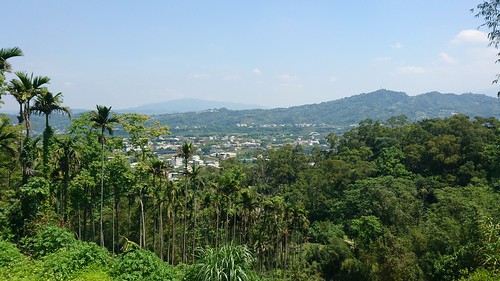
A view of Dongshih.

What happened at a meeting devoted to stopping the trade in blood diamonds? Focus Taiwan reports:
Participants at the Kimberley Process meeting hosted by Julie Bishop described "disgusting" and "extraordinary" scenes involving Chinese delegates, who "shouted over the welcome to country ceremony and forced the suspension of proceedings," The Sydney Morning Herald reported Wednesday.

The Taiwanese delegation was later ejected from the intergovernmental meeting at the request of the Chinese delegates who objected to their attendance, the report said.

The Chinese delegation noisily disrupted the official welcome ceremony and forced the suspension of at least one session on Monday, the report said.
J Michael Cole explained:
The four-day Kimberley Process intersessional meeting is chaired by Australian foreign minister Julie Bishop. This is the first time Australia hosts the intergovernmental meeting. Taiwan joined the Kimberley Process, which seeks to end the global trade in “blood,” or conflict, diamonds, as an observer in 2007.
Apparently later on African delegations with links to China also joined the "chorus".
Danielle Cave pointed out at the Lowy Interpreter:
Official rhetoric was completely disconnected from the facts on the ground and gave no hint that an international incident was unfolding. The Australian Government does not have a history of giving into heavy-handed tactics. But it, along with other countries, arguably self-censors to cater for how we think China will react to certain policies (for example, Australia's stalled negotiations for a free trade agreement with Taiwan). Despite their appalling behaviour, the Chinese delegation was rewarded with a diplomatic win – they achieved their intended outcome. Will the Australian Government self-censor next time they face a similar dilemma involving China? Will other governments, universities and NGOs self-censor to avoid such an embarrassing public spat?
Apparently the incident, in which Bishop's speech was repeatedly interrupted by the Chinese delegation shouting because Taiwan's representatives were in attendance, was actually broken in the news by a Zimbabwean paper. Only later did Australian media reports follow. Cave wonders what this means for the media in Australia.

It is deeply concerning. The Chinese should have been removed instantly. Not only has Australia, a democratic and US-allied state, shown it is spineless, but it has suggested that this tactic -- which cost China nothing to deploy -- can be effectively used at future meetings in other nations. The fact that it can use its African allies as mercenaries to support this tactic is even more disturbing. In the future I expect China may simply send them first into the breach, and remain outside the proceedings...

Foreign Policy reports on the event here.
_______________________
Don't miss the comments below! And check out my blog and its sidebars for events, links to previous posts and picture posts, and scores of links to other Taiwan blogs and forums!
Sunday, July 17, 2011

China's soft power hard at work

IMG_2182
A brilliant day in Miaoli today. Even the butterflies wanted to be photographed.

I've blogged on those disgusting intelligence and propaganda organs of the Chinese, the Confucius Institutes, several times before (most recently and in-depth). From Australia comes heartening news this week:
A petition with more than 4000 signatures tabled in the upper house of the NSW Parliament calls for the government to remove the Confucius Classroom Program from the schools where it operates: Chatswood Public, Fort Street High, Mosman High, Kensington Public, St Marys Senior High, Kingsgrove North High School and Coffs Harbour High.

The government has confirmed that controversial topics, including the Tiananmen Square massacre and China's human rights record, will not be discussed in the program, raising questions about China's influence over content.
The article also notes how little spending was necessary for China to reap propaganda and intelligence gains:
China pays NSW schools more than $200,000 to promote its language and culture through the Confucius Institute, based at the Education Department's Ryde office.
There's not much more you can say about this.
___________________
Daily Links:
_______________________
Don't miss the comments below! And check out my blog and its sidebars for events, links to previous posts and picture posts, and scores of links to other Taiwan blogs and forums! Delenda est, baby.

Wednesday, October 28, 2009

The Australian with Three on Taiwan

The Aussie paper The Australian had three articles in the last couple of days on the island, including two pieces containing an interview with President Ma, and a piece on the upcoming ECFA agreement with China.

The piece on the trade agreement appears to have been compiled largely from Chinese sources. Consider this comment:
"It should be (signed) in the first half of 2010 since later will be the elections for special municipalities heads, and the opposition Democratic Progressive Party will try to draw attention by setting obstacles and repeating its stance that the ECFA hurts Taiwan's 'sovereignty'," Wu Nengyuan, director of the Institute of Taiwan Studies at the Fujian Academy of Social Sciences, told the China Daily.
A quote of a Chinese Communist Party mouthpiece about a DPP position. Now there's an objective and insightful source. Why not just ask the DPP what it thinks about the pact? I don't see much point in going over the piece; it contains no real discussion of the pact, nothing negative is said about it. More interesting is the last paragraph:
China's official line remains that Taiwan is a renegade province. But since Mr Ma's election last May, the tensions that had raised fears of armed conflict only a few years ago have dissipated. For the first time since Chinese Nationalists took control of the island after losing the civil war with the Communists, direct mail, sea and air links have been opened. Still, many Taiwanese worry that trade and financial deals are just the first step in a process of political integration.
That last sentence is the only negative information given about ECFA in the piece. Note that it is presented in the traditional "balanced" format -- saying many Taiwanese worry and thus reporting the sovereignty problem as if it were a matter of perception.

But the sovereignty issue is not a "perception" of "many Taiwanese" but rather, something that Beijing has said in many different ways -- ECFA is the first step in annexation. That's a fact -- to report it as mere perception is to err.

For an antidote to this piece, see Taiwan News with another epic editorial: Taiwan Citizens are not ECFA Pavlovian Dogs which opens... Faced with declining public support for its blind rush to negotiate and sign an "economic cooperation framework agreement" with the People's Republic of China...

The two Rowan Callick interview articles on Ma are more or less puff pieces. Callick has done good work in the past so I am going to assume that the interview was controlled by Ma as a prerequisite for permitting the reporter to speak to him. Recall that earlier this year the Ma Administration demanded that foreign reporters submit their questions in writing for the post-Morakot press conference, before backing out of that position as a "misunderstanding." The first Callick piece has Ma asking why Australia-Taiwan relations haven't improved. The second is an extensive interview with a number of howlers.
AFTER only 18 months as President of Taiwan, Harvard-educated lawyer Ma Ying-jeou has become a hero figure across Asia, in the wider Chinese world and in Washington and Tokyo, for defusing tensions that for decades threatened war with China across the Taiwan strait.
Damn! Haven't seen that "Harvard-educated lawyer" crap in months. Ma has never passed the bar and was never a lawyer -- when he was selected for the Ministry of Justice position his lack of lawyering was held against him. Can we stop repeating this complete error with its obvious he's-one-of-us class implications? Please?

The "hero figure" is a wild exaggeration -- especially in the same week when the Administration has come under fire for declining press freedom here in Taiwan. There's no need to write such fawning crap. Surely there is a more restrained way of referring to Ma's popularity in the Chinese world.

Savor these two sentences:
For instance, Taiwan is an almost obsessively hygienic society. And almost uniquely in Asia, motorcyclists in Taiwan all wear crash helmets.
I think I am going to laugh for a month at those two lines. Mr. Callick, you need to get out of Taipei. Really.

Callick laudably presents two contrasting views of Ma in quotes from locals. After that the interview then turns into pure unadulterated propaganda shit.

He works in the same airy, cloistered building that he did 25 years ago, as secretary to reformist president Chiang Ching-guo, who succeeded his father Chiang Kai-shek, who had fled to Taiwan following the 1949 defeat of the nationalists by Mao Zedong's communists.

"I was able to participate in the lifting of martial law and parliamentary reforms. It was a rewarding experience, but I didn't expect to come back here as president," Ma says.

First the minor error -- "25 years ago" was 1984 and Ma was not CCK's secretary but had gone on to become Deputy Secretary-General of the KMT after a stint as RDEC head. As I recall he left the secretary position to the dictator in 1981, but don't quote me on that.

The real problem here is that second paragraph. As everyone who knows anything about Taiwan politics knows, Ma "participated" in democratic reform by opposing it -- opposing the lifting of martial law, opposing the repeal of the notorious Article 100 used against dissidents, and in general, in both public and private interactions, claiming that the Taiwanese were not ready for democracy (a trivial example). Basically Ma just stands reality on its head, and Callick doesn't call him on it. I'm hoping this is because Callick had no choice.

UPDATE: Corrected paper from The Age to the Australian.

UPDATE II: Gerrit van der Wees wrote on Ma's commitment to the security state in the 1980s just before the 2008 election.
Let us examine what his position was during the crucial moments in Taiwan's transition to democracy: In 1985-1986, when Taiwan was still under martial law, he was an ardent defender of martial law, arguing that it enhanced "stability" on the island. He also defended the long prison sentences given to proponents of democracy and human rights.

In lengthy letters to foreign governments and political parties which expressed concern about the lack of democracy in Taiwan, Ma waxed eloquently in defense of the indefensible.

Finally, after many hearings and resolutions in the US Congress by senators such as Ted Kennedy and Claiborne Pell and representatives Jim Leach and Steven Solarz, and after increasing pressure from the bottom up in Taiwan, Chiang Ching-kuo relented and lifted martial law in 1987. Ma had been on the wrong side of history.

Almost the same thing happened in 1991 and 1992, when the democratic movement started to push for abolishment of the "eternal" legislators who had been elected in China in 1947, and who were in their 80s and 90s still representing "China" in the legislature and National Assembly. Again, Ma came out against such changes and wanted to maintain a semblance of "China" representation in the legislature.

Fortunately, Lee Teng-hui had vision and pushed through the legislative reforms. Again, Ma was on the wrong side of history.

Fascinatingly, three years later, the same pattern occurred: Lee started to push for direct presidential elections -- to replace the anachronistic system in which the KMT-controlled National Assembly had rubberstamped the KMT choice for president.

Ma was one of the KMT opponents of this move toward full-fledged democracy. Again, his instincts had been to preserve an outdated status quo, and oppose democratic change.
______________
Daily Links
  • Pashan with awesome hike report of hiking among the 3000 meter peaks of central Taiwan with stunning pics (including one cute weasel): one, two, three. Read every one, the hike is amazing.
  • No really: another KMT legislator's election annulled for bribery, in Taoyuan.
  • Michael Cannon's blog post on the bike ride up Taroko Gorge and over Hehuan Shan (I went down to Lishan, Hehuan Shan was beyond my abilities). Many lovely pictures.
  • AsiaPacific Films website has 00s of films from around the region.
  • Nathan Novak's wonderful commentary in the Taipei Times on the CCP's rejection of a DPP comeback.
_______________________
Don't miss the comments below! And check out my blog and its sidebars for events, links to previous posts and picture posts, and scores of links to other Taiwan blogs and forums!

Sunday, August 02, 2009

AFP(!) reports Taipei Trade Office in Canberra Supports PRC Film Festival Boycott

AFP reports on the Chinese toddler temper tantrum at Canberra over a film festival because an Uighur leader opposed to PRC colonialism in Xinjiang is visiting Australia....
Chinese hackers crashed the website of Australia's biggest film festival, organisers said on Saturday, escalating tensions over a visit here by the exiled leader of the Uighur minority.

Online bookings for the Melbourne International Film Festival had to be shut down after the site was bombarded with phony purchases which resulted in the entire program being sold out, said festival spokeswoman Asha Holmes.

A Chinese citizen living in the United States had alerted organisers to the viral campaign, which originated from a website in China titled "A Call to Action to All Chinese People", said Holmes.

The site explained how to set up a fake profile to buy tickets, and aimed to crash the festival's site in protest against its screening of "Ten Conditions of Love" and its hosting of the documentary's subject, Uighur leader Rebiya Kadeer.
Stay classy, Chinese people!

However, from the Taiwan perspective, this is the kicker:
China has labelled the US-based Muslim minority leader a "criminal" and accuses her of masterminding the July 5 Xinjiang riots that left at least 197 people dead and 1,600 injured.

Canberra has rebuffed Chinese objections to the visit by Kadeer, saying she is not a "terrorist" and there is no reason to exclude her.

All Chinese language films were withdrawn from the festival in protest, and Hong Kong and Taipei's trade offices both pulled their sponsorship.
What? Taipei pulled out of the festival? This is not in other news reports of the attacks and the boycott (see WaPo and The Age). Moreover, a Taiwan Trade and Economic Office (TECO) in Australia press release dated the 28th (Tuesday) says:

The Taipei Economic and Cultural Office in Australia (TECO) is very surprised and regretful to hear that the distributing company of the film entitled “Miao Miao”, namely Fortissimo Films, which is based in Hong Kong, has decided to withdraw the screening of “Miao Miao”, directed by Taiwanese Cheng Hsiao-Tse.

The withdrawal is due to the recent boycott made by the authorities of the Chinese People’s Republic which controls Hong Kong, against the Melbourne International Film Festival. This has nothing to do with Taiwan which is in support of the continuous participation of the film and the freedom of expression and human rights.

The TECO regards that the arts is a special medium that should be above politics and free from political dictation. The TECO firmly believes that it is wrong to boycott this international cultural event because of political differences. The TECO feels very disappointed that the Australian public will be unable to have the opportunity to enjoy viewing “Miao Miao”.

However, there are two Taiwan short films, namely “Joyce Agape” and “The Pursuit of What Was”, that will still be participating in the Melbourne International Film Festival.

The TECO will continue to give their full support to the Melbourne International Film Festival, and hopes to introduce more Taiwan films to this event in the future.

As far as I can see, there have been no updates at the TECO site on this issue since Tuesday. Hence the AFP report appears to be false.

A Hong Kong distributor withdrew a Taiwanese film as part of the PRC's classy boycott of a film festival, is what happened. The TECO announcement says it is wrong to boycott a film festival. Hard to imagine they turned around and boycotted it after saying that.

UPDATE: TECO sent this around to people it had invited to screen the film:
We regret to inform that the film "Miao Miao" has been forced to cancel on 29 July at 12:30 pm for the complaint from China. As China claims that part of the fund of the film "Miao Miao" was from Hongkong P/L, so it could not join the Melbourne film festival as a Taiwanese film.

We apologize for any of the inconvience it causes and thank you for your support in this matter.
Nope. Doesn't look like AFP got that right. Those of you who support the "one country, two systems" hogwash might want to examine the role of Hong Kong in all this. Is that really what you want for Taiwan?
_______________________
Don't miss the comments below! And check out my blog and its sidebars for events, links to previous posts and picture posts, and scores of links to other Taiwan blogs and forums!

Friday, July 24, 2009

Businessman connected to Chen in Scandal with Rudd of Oz

The Age reports on a Taiwan businessman close to Chen who paid for Rudd to fly to London and donated megabucks to the Australian Labor Party.
Kung Chin Yuan, a long-standing friend of former Taiwanese president Chen Shui-bian, flew Mr Rudd to London for two weeks in June and July of 2005 when Mr Rudd was Labor's shadow foreign minister.

The sponsorship of Mr Rudd came at a time when Taiwan was making efforts to boost its influence with Australia and other countries in the region.

Mr Kung, who is based in Brisbane, has been linked to a secret fund that helped bankroll unofficial Taiwanese diplomatic operations in Australia and the South Pacific.

At the time of Mr Rudd's trip, there was concern in Taiwan about contacts between senior Labor figures and mainland Chinese business interests. There was also concern about "pro-Beijing" comments made by Mr Rudd in mid-2004.

The Prime Minister's office has declined to answer questions about how long Mr Rudd has known Mr Kung, why he accepted the sponsored trip, who he met in London and whether Mr Kung had contributed to his fund-raising efforts. "Mr Rudd's interactions with Mr Kung have been entirely appropriate," a spokesman said.

Australian Electoral Commission records also show Mr Kung donated $120,000 to the Queensland ALP branch between 1998 and 2006.

In 2007-08, when Mr Rudd led Labor to power, Mr Kung contributed a further $100,000 to the federal ALP using the name Lawrence Kung.

The secret fund to which Mr Kung has been linked was, according to former president Chen, used to support Taiwan's efforts to secure diplomatic recognition in the South Pacific and gain influence in Australia.
The secret fund is what the prosecutors are accusing Chen of stealing. If Chen stole it, where did this money come from? Another charge against Chen is that they falsified receipts. Do you think that the Australian Labor Party gave receipts for the secret fund for the two donations? And do you think Kevin Rudd gave a proper receipt for his business class trip to London? In any case, as I have noted numerous times, the whole receipt thing was an obvious set up, since the rules were changed in '02 and no previous president had to give receipts for expenditures from the secret fund. Only Chen Shui-bian had to give receipts.

Last year I observed that it is rumored that one of the reasons the KMT is so interested in peering into Chen's funding flows is that Beijing wants to know where Taiwan's money is going. Take that, Beijing.

Onward....

In 2006, a senior politician from the then Taiwanese opposition KMT party told a parliamentary committee that the Queensland-based Mr Kung had received $US625,000 ($A764,000) from Chen's special fund.

The KMT politician alleged the money sent to Mr Kung was used on Mr Chen's behalf to invest in Chinese real estate, not to carry out secret diplomatic work. But Mr Chen rejected the claim, insisting the fund was used to pay for secret diplomatic missions.

His denials were not enough to deter government prosecutors who have since 2006 pursued Mr Chen, his wife and aides over the alleged embezzlement of funds from the secret diplomatic account.

In his initial interviews with prosecutors, Mr Kung refused to disclose the identities of the "secret agents" receiving money from the fund for fear their lives would be at risk.

Taiwanese newspapers say Mr Chen later told prosecutors Mr Kung had received money to undertake secret diplomatic work at his request.

Mr Kung, who owns an exclusive property on Brisbane's riverfront and is a member of the Queensland branch of the Taiwan Australia Business Council, could not be contacted for comment. He has previously denied receiving money from Mr Chen's fund.

Mr Kung has reportedly refused six summonses from prosecutors to return to Taiwan to testify in Mr Chen's case. Instead, he has faxed a statement in which he said he had never received money from the fund for secret diplomatic work.

Taiwan prosecutors have obtained invoices that allegedly bore Mr Kung's name and were used by Mr Chen's family to claim money from the presidential fund.

Let's see... a KMT legislator claims that Chen gave the money to Kung to invest in Chinese real estate. That legislator was Lee Ching-hua, brother of Diane Lee, the legislator with the US citizenship. The Taipei Times reported on this in 2006...

Chinese Nationalist Party (KMT) Legislator Lee Ching-hua (李慶華) told the legislature's Organic Laws and Statutes Committee yesterday morning that a reliable source told him that the president had wired NT$20 million (US$625,000) to China-based businessman Kung Chin-yuan (龔金源).

The legislator claimed that the money came from President Chen's special allowance fund and was actually used to invest in real estate in China.

Lee Ching-hua said he'd resign if he was wrong. Yeah, right. Needless to say, Lee's anonymously sourced claim has been shown to be fiction. The money was spent where Kung said it was spent.

The donations to Labor came at a time when Australia was following the shortsighted policy of opposing the dollar diplomacy between Taiwan and China in the South Pacific. Now that Taiwan has essentially halted its diplomatic programs, China is consolidating its position in the South Pacific island states. And everyone knows that Chinese money is not corrupting, and China always supports clean, democratic politics in the states in moves close to.

The reality is that Taipei was suppressing Chinese influence in the Pacific at no cost to Australia itself. Stupid.
_______________________
Don't miss the comments below! And check out my blog and its sidebars for events, links to previous posts and picture posts, and scores of links to other Taiwan blogs and forums!

Monday, December 15, 2008

Australian Post Office recognizes China's claim to Taiwan

In the photo at left (click to enlarge) is shown an image of the Australia Post Office's package tracking system, which clearly says "Taiwan, Province of China" and also does not display the national flag. Kudos to this blog for spotting the error. Email Ozpost to express your polite suggestion that this should be changed.

Saturday, May 10, 2008

Non-support is Support for Beijing

It's WHO time again...and AFP reports on Taiwan's frustration with "friendly" nations...


Taiwan said it expected the United States to lead a push for observer status for the island at the World Health Organization (WHO) despite China's persistent opposition.

Joseph Wu, Taiwan's de facto envoy in Washington, said he expected "very clear support" from the United States, Japan and Canada for Taiwan's observer status with European nations, Australia and New Zealand pushing for "meaningful participation" in the organization.

But none of the countries support Taiwan's membership in WHO, he told reporters ahead of the May 19-24 annual meeting of the World Health Assembly, the highest decision-making body of the WHO, whose 192 member countries meet once a year to agree on policies and appoint a director-general.
In recent years Australia has been trying to put an end to Taiwan's dollar diplomacy, claiming it is corrupting governments in the region. This may well be true. But by putting pressure on Taiwan, the Aussies essentially cede the region to Beijing, since Beijing isn't going to stop. Apparently Aussie foreign policy analysts believe it is better to have Beijing's influence in their backyard than Taiwan's. Be careful what you wish for.....

But addressing "chequebook diplomacy" is treating the symptom. Taiwan engages in dollar diplomacy because it has no other choice if it wants some kind of recognition in the world. If Australia was really interested in putting an end to Taiwan's behavior in the South Seas, it could take positive steps to support Taiwan into the WHO -- treating the cause, not the symptom. Ditto for the US. If more nations gave Taiwan their support in reasonable causes like the WHO, Taiwan would have less incentive to engage in cowboy diplomacy.

Note that the WHO meeting is May 19-24. The new President, Ma Ying-jeou, is sworn in on the 20th. Will China display benevolence? Or will they remind Ma who is really in the saddle?

UPDATE: No sooner do I get this one out, then the student paper at St. Olaf's has a piece arguing for greater US support for our democracy and for Taiwan's participation in international organizations.

UPDATE II: As several people reminded me, Chen applied under the name "Taiwan" which means that China and Ma have a ready-made excuse -- can't let "Taiwan" in. So we'll have to wait until next year, again...

Friday, April 25, 2008

Torch in Oz: Priceless Commentary

A classic piece on the Torch in Oz. The whole thing must be read, from the Chinese guards in a shoving match with Aussie police, to Beijing's busing in protesters to drown out the pro-democracy voices:

If I hadn't seen the circus with my own eyes, I'd think the $2 million we spent running a torch around Canberra yesterday was wasted.

But I watched almost every comical minute of that three-hour relay of the Beijing Olympic torch and thought - hallelujah! - money well spent.

Far from blowing yet more cash on the most overhyped sports day in history, we'd been given a lesson on truth and politics that's worth even Kevan Gosper's head in gold.

I don't think we'll soon forget seeing Australian police wrestling the Chinese "flame attendants" - actually members of China's People's Armed Police - in a confrontation over who had the right to guard the torch.

Priceless! Here was a rehearsal for the first Australia-China war, live on television. How I laughed.

I loved in particular how our nervous police tried repeatedly to shove those blue-tracksuited Chinese ones out of camera shot so at least viewers wouldn't
see they'd been conned by their politicians. I mean, weren't we promised by our Prime Minister those Chinese guards wouldn't be there?

Don't miss the rest.... It's too bad the Torch didn't come here. It would have been an awesome experience.

UPDATES: More on the situation in Australia from The Age and The Daily Telegraph. UPDATE II: Maddog has video in the comments below.

Thursday, March 27, 2008

Not Being Careful What You Wish For

The Pacific islands' relationship with Taiwan is back in the news. Last January I discussed several articles on Taiwan's diplomatic initiatives in the South Seas. I cited one piece which said:

Following destructive riots in the Solomons capital Honiara in April, the Australian and New Zealand governments criticised the Taiwanese government for engaging in chequebook diplomacy in the Pacific to win diplomatic recognition from small island nations.

Other articles often gave the same impression -- this long blog post, for example, Mary-Anne Toy's piece on Taiwan....

Taiwan and China's influence-buying in the region can undermine governance and encourage corruption and instability. Australia and New Zealand have told the rivals to stop the chequebook diplomacy to buy the allegiance of countries. Rioting in the Solomon Islands last year, which sparked Australia's billion-dollar RAMSI intervention, was blamed on Taiwan and China backing rival political factions in a tussle over whether the tiny nation continued to recognise Taiwan or to switch allegiance to China.

...and so, the complainers got their wish this week when President-Elect Ma promised to end chequebook diplomacy in the Pacific -- and immediately there were dark warnings (Oh yeah, it means cash for the region....):

Associate Professor Bill Hodge, a Pacific specialist at the University of Auckland, on Thursday said a pledge by Taiwan's president-elect Ma Ying-jeou to immediately end chequebook diplomacy could harm fragile Pacific countries that rely on the money.

"It is an ominous sign for the economies and on government spending in these countries. In some, 80 to 90 per cent of the GDP is some sort of government spending," he said.

However, Australia's official position has not changed. Former Aussie FM Downer said that all that bribery is undermining efforts to stamp out corruption in the region. I guess it was kinda like the way that paying kickbacks to Saddam Hussein in the oil-for-food/Iraq scandal at the Australian Wheat Board undermined anti-corruption efforts in the Middle East. The article noted:

Foreign Affairs Minister Stephen Smith this week said chequebook diplomacy was not a sensible way to proceed, and Australia's position had been made clear to a number of governments.

A US Congressional report last year said Taiwan gave about $US10 million ($A10.9 million) in aid to the Marshall Islands annually, and since 1999 had given about $US100 million ($A108.7 million) in aid to Palau.

In 2006, Chinese Premier Wen Jiabao pledged $US375 million ($A407.7 million) in development assistance and low interest loans to Pacific countries.

This week, it was alleged that Fiji offered support to China's crackdown in Tibet because it recently secured a $F170 million ($A125 million) loan from the Chinese government to develop roads.

The Marianas paper offers another view, including a promotion of our President-Elect to PhD status:

Former Australian Foreign Affairs Minister Alexander Downer says the election of a new president in Taiwan could benefit the Australia-led assistance mission in Solomon Islands.

Downer is in Taipei as part of an international parliamentary delegation to observe the island nation’s presidential election.

Taiwan maintains direct diplomatic ties with Solomon Islands but its aid and grant programs have come under strong criticism from Canberra.

Radio Australia quotes Downer as saying that president elect Dr. Ma Ying-Jeou has told him he wants to deal with Taipei’s “checkbook” diplomacy.

Downer said under the Chen Shui-bian administration, there had been a lot of Taiwanese checkbook diplomacy in the Solomon Islands.

A Solomons paper was far more blunt:

Former Foreign Minister of Australia Alexander Downer’s comments that Taiwan deals with Solomon Islands on the basis of cheque book diplomacy are very unfortunate, says Prime Minister Dr Derek Sikua.

Dr Sikua said Mr Downer’s comments demonstrated his continued lack of respect for the sovereign affairs of island conuntries in the region including Solomon Islands.

“The bilateral relations between the Republic of China on Taiwan and Solomon Islands are based on mutual respect, understanding and genuine partnership and not cheque book diplomacy,” he said.

He said Taiwan’s funding assistance to Solomon Islands is geared towards the development aspirations of the government and people of Solomon Islands.

Of course, the reason The Beautiful Island has to engage in such noxious diplomatic practices is because we don't get the public support we need from the democracies like Australia.

Sunday, August 26, 2007

Aaarrgh! to the Sydney Morning Herald

Sydney Morning Herald reporter Mary-Anne Toy just got back from a Taiwan government-supported trip to Taiwan and produced a very uneven article that at times offers an excellent review of affairs, but at others, remains within the conventions that govern journalistic writing on Taiwan. Consider this:

Beijing has claimed sovereignty over the island democracy since their split in 1949 at the end of the Chinese civil war. It has threatened to use the 1000 or so missiles aimed at the island if Taiwan tries to formalise its de facto independence by, for example, calling a referendum on the subject, as Taiwan's retiring President, Chen Shui-bian, has threatened. So behind the razzamatazz in April when China unveiled the route for the torch relay for next year's Beijing Olympics was yet another chapter in the continuing war.
It's wonderful that Toy refers to the missiles, as many commentators are wont to ignore them, but at the same time she repeats the formula that China and Taiwan split in 1949. But in 1949 sovereignty over Taiwan belonged to Japan, and it was the KMT and the CCP that split, not China and Taiwan.

More fundamentally, she regards the Torch issue and the Panda issue as battlegrounds in a "proxy war" between China and Taiwan. In fact the real battle ground is the media. China's "anger" is something that takes place only in the media reality -- it almost never intrudes on our reality. Despite "anger" the flow of Taiwanese money, businessmen, and tourists continues unabated, and China never makes a move against Taiwan that results in concrete costs for its side, the way Russia signaled its displeasure with US policy in the Balkans by tearing up a treaty, or the UK recently signaled "anger" at Russia by expelling its diplomats. The debate is largely symbolic, and aimed at the media. Thus, Toy's presentation on the "proxy war" misses the point that she herself is the object of the campaign.

Taiwan is not the first time Beijing has used such tactics. During the return of Hong Kong there was a steady drumbeat of attacks on Chris Patten, the last governor, so vitriolic that UK commentators frequently admonished Patten out of fear that Beijing would restrict the UK's trade with China. Naturally, nothing ever happened. Beijing was simply attempting to use the UK media to control Patten, transferring the cost of control to the UK rather than itself, just as it does today with the Taiwan case.

In addition to remaining with the parameters of Beijing's use of the media to advance its cause, Toy also makes other errors. She writes:
Taiwan and China's influence-buying in the region can undermine governance and encourage corruption and instability. Australia and New Zealand have told the rivals to stop the chequebook diplomacy to buy the allegiance of countries. Rioting in the Solomon Islands last year, which sparked Australia's billion-dollar RAMSI intervention, was blamed on Taiwan and China backing rival political factions in a tussle over whether the tiny nation continued to recognise Taiwan or to switch allegiance to China.
I've written before on the hypocrisy of the New Zealand and Australian positions, kowtowing to Beijing and then demanding that Taipei stop its diplomatic struggle to survive -- if democracies like New Zealand and Australia supported Taiwan, Taiwan wouldn't have to buy support elsewhere. But more importantly, Toy didn't do her homework, and simply repeats a factually incorrect slur about the riots. As the China Post reported earlier this year, the Solomons Riots had nothing to do with Taiwan or China:
The commission, headed by former Papua New Guinea judge Brian Brunton, said that while there was animosity toward Chinese in the community, it was not the cause of the riots.

"The assertions that the riot was a spontaneous outburst because of the corruption of the previous government and its links with the Chinese ... does not ring true," he said in the report.

"The evidence suggests that a group of persons planned events and decided that if their candidate was not elected prime minister ... they would cause such trouble so as to force a regime-change," he said.

He did not name any suspected orchestrators of the violence.

The report said police should have known tensions would be high during the "king-making period" immediately after the elections, when the government would be formed through intense political horse trading.

But police were caught off guard and had no plan to deal with a riot.

"The Solomon Islands Police Force were, in effect, unprepared without riot gear, or a riot trained capability on that morning," the report said.

The report said local police were at the time effectively under the control of the Regional Assistance Mission to the Solomon Islands, the Australia led force deployed to the country in 2003 to quell a long-running tribal conflict.
Toy's article also regards China's drive to annex the island as "taking it back" although the PRC has never ruled Taiwan, nor did any previous government of China ever control the whole island.
It's not a bad article in many ways, but it reflects, rather than reflects on, the media's presentation of the Taiwan-China issue.