Showing posts with label tourism. Show all posts

Sunday, February 19, 2017

Taiwan News #10 + East Coast pix

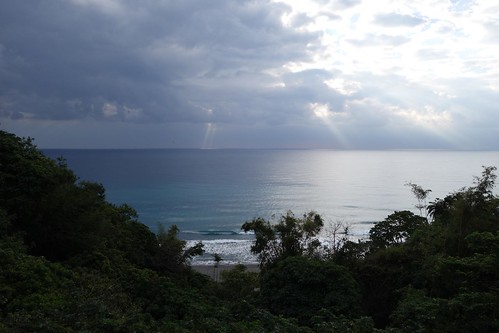
Morning on the coast.

I went out to Chris Gunson from Dubai, whom I met through our respective blogs. Chris turned out to be excellent company. This trip inspired my latest piece for Taiwan News.
The owner of the hostel explained that they weren't entirely legal. "It's difficult to get a license here, the government is reluctant to give them out. So I just say I am having a few friends stay." Why was there a problem? He said that the big hotels are putting pressure on the government to limit Bed and breakfasts.
...enjoy some pics below.

Thursday, October 20, 2016

Surveying the cratered landscape of Taiwan's tourism industry

DSC_0025
My friend Dom peers out over the ruins of bed and breakfasts strewn across the hills of Miaoli

It's said in the media, so it must be true. A recent iteration:
Since the May inauguration of the new president Tsai Ing-wen from the anti-mainland side of Taiwanese politics, China has turned off the tap. Chinese group tours are down 40 per cent, hitting the central and southern regions of the island hard.
Skipping over the extremely stupid formulation "anti-mainland", let's see how hard hit our island has been.

Although they are not used by the international media in reporting on Taiwan tourism, the government does collect piles of stats on what is happening in the industry on the BuTourism website. The Sept tourist arrivals stats are not out yet, but the number of hotels/room data is out. Let's look at the devastation wrought by the loss of the stingiest, most unremunerative, most widely disliked tourists in Taiwan, Chinese group tourists.

The government collects data on legal and illegal hotels and rooms across Taiwan. Yes, that's right, it knows where all the illegal ones are, it just does nothing. Here are the overall data for January of 2016:

Estblmnts rooms operators
Legal 6153 24840 6805
Illegal 428 2499 462
Total 6581 27339 7267

You know what happened, of course. Catastrophe occurred, we know that because the media has assured us. Here are the September numbers:

Est Rooms Operators
Legal 6863 27743 7881
Illegal 440 2531 468
Total 7303 30274 8349

As anyone can see, the total number of establishments plummeted from 6581 to 7303, the total number of rooms collapsed from 27,339 to 30,274, and the total number of operators fell from 7267 to 8349.

O wait, did I write plummeted, collapsed, fell? Sorry, writing under the influence... of the international media.

I meant, grew, increased, rose. These tour establishment operators are so stupid, they didn't even know that they were in a state of alarming decline and expanded their facilities. These Taiwanese, don't they know their own country?

But... but... surely the rate of increase fell off... Total numbers for the same period from 2015:

Jan '15 5722 23814 5897
Sept '15 6263 25997 6787

Yup, the nine month period ending in September, 2016 saw a greater rise in total number of establishments and rooms than did the same period in September, 2015. The devastation was immense, clearly.

But... but... tourist areas were hard hit, right? Nantou, 2016:

est rooms ops
Jan 642 3120 673
Sept 675 3242 728

Nantou, 2015:

est rooms ops
Jan 615 3012 619
Sept 627 3050 648

This is so... heartbreaking. In 2015 in this period, Nantou added 12 establishments and 38 rooms. In 2016 in the same period it added just 33 establishments and 122 rooms. 

Sorry, I have to stop writing now. It's too painful to keep exploring this swath of destruction any further.

_______________________
Don't miss the comments below! And check out my blog and its sidebars for events, links to previous posts and picture posts, and scores of links to other Taiwan blogs and forums!
Monday, September 19, 2016

Local government heads kowtow in Beijing =UPDATED=

DSC03270
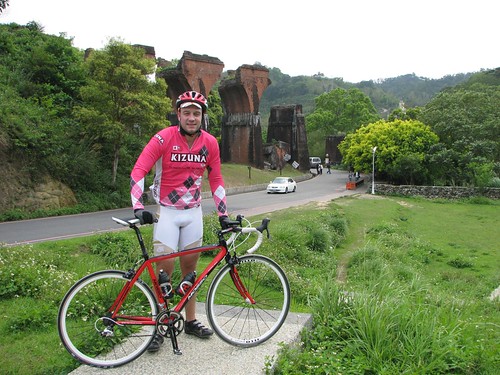
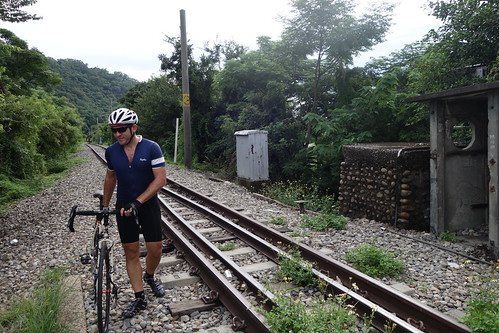
Exploring the old rail line near Tai-an

News Lens on the news of eight city/county government heads heading off to China to offer their heads:
Besides belonging to the same camp — six of the eight city and county government heads belong to the Kuomintang (KMT) and two others are blue-leaning independents — all eight representatives have stated they recognize the “1992 consensus,” which an inflexible Beijing has set as a precondition for cross-Strait exchanges.

Having frozen most (albeit not all) the official communication mechanisms between the central governments on both sides of the Taiwan Strait, Beijing is now accelerating its efforts to bypass the central government in Taipei and rewarding local governments that agree to say what it wants. In return, the heads of those eight municipalities hope to reap the benefits of Chinese tourism and better market access for their produce. In other words, they are agreeing to form a clientelistic relationship with China.
As Cole points out in the article, this is not the first time that China has attempted to form patron-client relationships with local trade associations, aboriginal leaders, and local politicians. These attempts have uniformly failed, because the support for China is based on patronage, and such loyalty as is generated will last as long as the money flows do. Few of these localities have any great political clout. Most Taiwanese don't benefit from the money flows, which will simply travel further down the patronage networks of those same politicians -- which are already KMT. Beijing does not build any new connections here (fortunately). UPDATE: Solidarity has the list of what China has offered.

What can Beijing do? Hualien, Nantou, and Taitung are strong destinations for Chinese group tourists, and I pray they don't add Miaoli to that list -- a few group tours are already going there. But the other places are less attractive. Beijing has already tried preferential purchasing, for fruit, which failed to -- wait for it -- bear fruit. This policy has been tried before, and is another example of how Beijing does not know what it is doing. It has no brilliant plan for Taiwan, because there isn't one. It is simply revisiting old ideas, the way a squirrel checks old hiding places to see if there are any nuts there.

A couple of interesting wrinkles -- this may look like, as Cole notes, Beijing is bypassing the central government. But it is also bypassing the KMT center and dealing directly with politicians representing local Taiwan interests. Perhaps Beijing means to bind them more directly to the KMT, or to itself, setting up independent patronage networks in the event the KMT continues to fade. I doubt they plan so presciently, though.

No tourism numbers out yet. Very interested to see what they are....

REFS: KMT rebuts accusations, tries to handle negative publicity from the Beijing Kowtow. What did the 1992 8 say in Beijing? This site in simplified has it. h/t to @aaronwytze
_____________
Daily Links:
_______________________
Don't miss the comments below! And check out my blog and its sidebars for events, links to previous posts and picture posts, and scores of links to other Taiwan blogs and forums!

Saturday, September 10, 2016

Big loans for "tourism": Tour groups "working as intended"

Manzhou Township.

The Cabinet approved big payoffs loans for the tourism industry, since the entirely political bubble of group tours from China has popped...
The Executive Yuan has approved a plan to extend NT$30 billion (US$952 million) in loans to the tourism sector, which has felt the pinch after a fall in the number of Chinese visitors this year.

The Cabinet said that the loans are aimed at helping domestic tourism businesses upgrade their hardware and software in a bid to improve the quality of the industry and eventually attract more visitors to the nation.

Since the Democratic Progressive Party government took office on May 20, there has been a 30 percent year-on-year decline in the number of Chinese tourists taking part in group tours amid cooling cross-strait ties.
The Mainland Affairs Council announced that overall Chinese tourism had fallen 22.3% year on year, with the biggest drop (38.9%) in group tours. News Lens added:
Jessica Yu (尤敏華), secretary of the Hotel Association of the Republic of China, notes that the hotel occupancy rate across Taiwan has dropped 50 percent. Meanwhile, Chang Tien-tsai (張天財), secretary-general of the National Joint Association of Buses for Tourists of the Republic of China, said that about 80 percent of the 16,000 tourist buses around the nation are currently idle due to the drop in Chinese tourists.
All this was entirely predictable, so one has to ask why the various Tourism Associations screaming at the Tsai Administration that they have no Chinese tourists, nevertheless made investments that they must have known would fail. It has been known since November of 2014 at least, that Tsai would win in Jan of 2016... The News Lens article observed that Chinese tourism is also down in Hong Kong and Macao as well, Chinese economic problems are well known, and it is also well known that the corruption drive is pushing down tourism by officials... apparently everyone knew except the tourism industry...

Perhaps China has pulled out its tourists because of the Sunflowers. Remember? One of the goals of the services pact was to put Taiwan's tourism businesses in Chinese hands. Then the whole thing would be Chinese: Chinese tourists would board Chinese planes to Taiwan where they would stay in Chinese-owned hotels and ride in Chinese-owned buses. But that didn't happen. The Sunflowers killed the services pact, many of the local tourism businesses remained in Taiwanese hands, and now China has screwed its allies in Taiwan by pulling out its group tours -- knowing they would scream at the Tsai Administration, a bonus. It was simply waiting for the Tsai government to take power, so she would take the blame for the pullout.

Other notes: in August I began to suspect that the tourism numbers weren't bad because at the beginning of the month when the gov't talked about China tourism, it didn't give any numbers and made some noises about money. Then the numbers were a week late coming out, another signal that reality was straying from the government line. Sure enough, the number of Chinese tourists rose in July. Very curious to see what the drop looks like in August -- and it is that bad, why doesn't MAC simply release the numbers? Yet it never does.

Last August we had 367,736 tourists from China plus another 160,829 from Hong Kong and Macao, for a total of 528,565, one of the highest months ever for the combined total. A 22% drop year on year in China tourists would mean roughly 288,000 visitors. The Hong Kong/Macao number from last August is unusually large. It's likely that has fallen as well -- a double whammy, if so.

Still, 288,000 is a few thousand less than July. You don't think the tourism associations are lying about their situation to put pressure on the government, do you?
___________________
Daily Links:
_______________________
Don't miss the comments below! And check out my blog and its sidebars for events, links to previous posts and picture posts, and scores of links to other Taiwan blogs and forums!
Wednesday, August 24, 2016

ROFLMAO at Tourism numbers

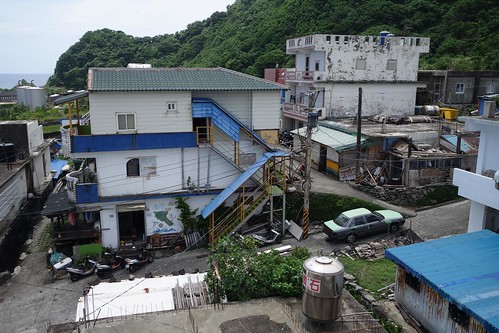
Village on Lanyu

Lets get those numbers from the Tourism Bureau, MOTC. Clicking on the .XLS links for June 2016 and July 2016, we find...

June 2016
HKK/Macao 143,276
China 271,478

July 2016
Hkk/Macao 149,361
China 299,642

As my readers can see, Beijing once again slashed tourism arrivals in an upward direction, resulting in a total negative deficit of roughly 28,000 for China.

Or, as normal people might put it: tourism from China rose from June to July, by 34,000 for China + HKK/Macao, and roughly 28,000 for China. The total for HKK/Macao/China is nearly as high as it was in May...

May 2016
HKK/Macao 125,302
China 327,254

April 2016
HKK/Macao 110,716
China 375,567

The Feb and March totals for both places exceeded 500K. But we are just 30,000 under the April total for both. Tourism overall also rose, from 817K to 848K.

Can't wait to read more brilliant media analysis like this...
That, in turn, has hurt large hotels, mid-level restaurants and tour bus operators, said Kuo Tzu-yi, director of the Pingtung Tourism Assn. in southern Taiwan. His association covers Kenting National Park, a strip of beaches popular with mainland Chinese tourists. Crowds there had visibly thinned by mid-July.
...yes, I can easily see how those crowds thinned with the addition of 28,000 more tourists. I mean, they were probably thin compared to the well-fed Taiwanese...
_______________________
Don't miss the comments below! And check out my blog and its sidebars for events, links to previous posts and picture posts, and scores of links to other Taiwan blogs and forums!
Saturday, July 30, 2016

China tourism query: Taiwanese are so dumb, they don't even understand their own island

One thing I like about Taiwan: dogs and cats go everywhere with their people.

A while back I was having some tests done at the hospital. I'm lying there on the table (biking bonus: resting pulse is 61) and the tech is having a chat with me while we wait for the meds to kick in: where are you from, how do you feel about Taiwan? etc. "Oh, I love Taiwan. People are so friendly." "Yes," he agreed, "we are friendly to everyone except to those..." his voice drops "mainland Chinese."

It should be obvious by now to anyone who has spent at least twenty minutes on Taiwan that (1) Taiwanese do not like their Chinese counterparts and (2) the drop in Chinese tourists is widely welcomed in Taiwan because (3) Chinese tourism, especially tour groups, is a net negative for the island.

Nevertheless, surprisingly, this got posted to ChinaPol by a leading Taiwan scholar and was leaked to me with knowing winks by several people, and crossed over to other discussion groups which I am on (this frequently happens with ChinaPol posts, it's so cute that they think they can keep stuff on the internet secret). ChinaPol has never let me join, because god knows what would happen if bloggers and other riff-raff were permitted to join. Here's the comment. After the author is surprised to find unconcern about the tour groups vanishing during a recent visit to Taiwan, the author writes:

To be honest, I’m skeptical. I heard the same thing last summer in Greece (about German tourists: who cares whether they come or not? They just stay at German-owned hotels anyway), and it sounds a lot like a rationalization. I also don’t know how pervasive these views are.

However, if what we care about here is the politics, if people believe the benefits of Chinese tourism are limited, that’s what matters. If Taiwanese have persuaded themselves that PRC tourists are not really helping the economy, reducing their numbers is not going to put pressure on Taiwan in the way Beijing might hope.

I would be interested to know if anyone is asking about this in surveys.

"Surprisingly unconcerned!" I don't know how anyone who knows anything about Taiwan could find the Taiwanese attitude "surprising". More like, inevitable...

First of all, let's look at some survey data, and then we will take the Scholar's remarks. Here is survey data from Taiwan ThinkTank on this issue from Oct 2015:
9. There is word that China will greatly reduce the number of Chinese tourists visiting Taiwan. Some believe that to avoid injury to Taiwan’s tourism industry, the new government should accede to the demand to accept the 1992 Consensus. Some others believe that the new government should use this opportunity to expand tourism from other countries and lower dependence on China. Which stance do you agree with?
Increase Tourism from Other Countries: 78.1%
Accept 1992 Consensus: 13.5%
Undecided: 8.4%

10. If the number of tourists were to increase, would you prefer more tourists from China or more tourists from other countries?
More from Elsewhere: 85.1%
More from China: 6.6%
Undecided: 8.3%
More from Elsewhere = 85%. Nobody wants more tourists from China. Taiwanese know China tourists suck. They know that Chinese tourism is part of a larger strategy to hollow out Taiwan's industries and to annex the island. They know that places where Chinese go in great numbers soon become inhospitable and bereft of locals. Many hotels don't accept Chinese tour groups -- they evade censure by having a "no tour groups" policy, which everyone understands is aimed at Chinese tour groups. Many hotels routinely place them on floors of their own, since they wreck whatever rooms they are placed in with their incessant smoking, noise, constant eating, and fights with management. They behave horribly, and why shouldn't they? They are treated like cattle, like crap, like money trees (I've had nothing but uniformly pleasant experiences with individual Chinese travelers). I know this myself, because I sometimes am stuck on those floors when I travel (management has sometimes apologized to me for that). These facts are widely reported in the media, on blogs, on Facebook, Twitter, and other social media. It's 2016, and these things should be known to people who regularly comment on Taiwan and its politics.

But what is this massive economic effect that those dumb Taiwanese who don't know their own country are missing and cover with noise that "sounds a lot like rationalization" and against which they "persuade themselves".

Taiwan's GDP in 2015 was ~$528 billion US (source) or 523 billion US (source). So around $520 billion. Let's take $500 billion as a rough GDP figure for the recent period, because it's smaller.

Tourism as a whole is 2.1% of the Taiwan economy (WTTC). In 2014, Taiwan's international tourism receipts were $14 billion dollars, according to AmCham. Looking at AmCham, in 2014 3.98 million Chinese (~40% of all tourist arrivals) visited Taiwan, spending -- according to inflated government figures -- $241.98 each a day. In our $500 billion economy, that's over $6 billion or right around 1% of the economy. Not very much [update: $242 is a daily figure. Assuming a 7 day stay, multiply accordingly to ~$7 billion. Still tiny compared to the economy as a whole. Thanks for pointing out this error, Kenneth. Remember, the government figures are inflated.]

Now let's imagine that Beijing in its fury at Tsai Ing-wen slashes tourism in half. That means the tourism sector will miss about $3.5 billion, using the inflated government numbers. In our $500 billion economy, that's... not much.

Nobody will miss the Chinese tourists except a few businesses deliberately built to exploit those always political flows. They will be featured prominently in the media, especially the pan-Blue media. But the vast majority of Taiwanese won't miss them and won't even notice they are gone. This is especially true because other inbound tourism from Korea, Japan, and SE Asia is on the rise.

Further, as AP showed years ago, the government numbers are inflated. Those billions aren't really billions. Moreover, as has been repeatedly reported in the English and local language media, tourist companies from China are slow to pay, or don't pay their debts to Taiwan firms. The recent slashes in tourism have resulted in a wave of bankruptcies here in Taiwan. Chinese tourists don't pay their medical debts either. Because this non-payment will disappear, the net effect of Chinese group tourism declines will not be very great.

But there's more. A while back I found this excellent paper looking at the overall effect of Chinese tourism even using those inflated numbers. And it was found to be tiny once you factor in everything. The paper observes, using the inflated numbers:
The results from the CGE analysis show that an increase in Chinese visitors to Taiwan is overall beneficial to the economy: the Taiwanese household’s welfare would increase by US$145.1 million (0.06%).
The benefit per household is pocket change. Again, no one will miss it -- most of it doesn't trickle down anyway, but is captured by a few firms, largely China or Hong Kong based.

But wait. What is the net benefit? Relying on the literature on the effect of tourism, there are two separate negative effects:
This, coupled with an expected appreciation in the Taiwanese dollar, means that Taiwanese computers and electrical goods become more expensive on the world market. The overall effect is a contraction of this sector with a high export component.
The first negative effect occurs because Taiwan has X capital and labor resources to put into its different markets. If lots of resources, such as investment capital and trainable labor, are going into the tourism sector because returns are suddenly good, that means they are not going into the technology export sector. That hurts that sector. The CCP and the KMT both know this -- that is why they are pushing tourism: it hurts Taiwan's real export industries. Moreover, if tourists are suddenly cut, all that investment is sunk and not easily transferred to other industries. That hurts Taiwan.

The other effect is the value of the NT dollar. When Chinese tourists enter Taiwan, in order to engage in economic transactions, they purchase NT dollars. Like any other good, when demand for money rises, the price of money rises. This pushes the NT up. That rise in the NT pushes down exports. When those tourists stop coming, the upward pressure on the NT relaxes. The NT falls slightly, helping our real exports.

Thus -- let's savor this for a moment -- when Chinese tourists fall, our tech export sector rises. And that export sector drives increased knowledge externalities, production skills, and rises in standard of living -- the tourist sector has no comparable effect.

I don't know what the numbers are, so it I don't know whether the effect of the investment shift and currency fall offsets the effect of the fall in tourists. But there is a definite upside to the drop in Chinese tourists that has nothing to with the positive effect of the tour groups vanishing from our roads and scenic areas.

The Taiwanese may or may not be aware of this, but it is abundantly clear that certain sectors of the scholarly world need to install Google in their computers.

But let's address one final point. Is Beijing "putting pressure on Taiwan?" Well, maybe...

Outbound tourism is, by definition, an import. Like any import, you send money out, and something comes back -- refrigerators, clothing, food, or, in the case of tourism, experiences.

As everyone not living in a cave knows, China's economy hasn't been performing well of late. Suppose you were Beijing and wanted to cut imports to maintain your export surplus in a time of struggling economic performance? Well, you can't really cut certain imports like oil or food or electronic parts or minerals, because you need them to make stuff that you export. But outbound tourism? That's easy. It doesn't hurt Beijing at all if tourists spend money in Szechwan instead of Suao. The overall effect is tiny, but it doesn't hurt.

Taiwan is usually one of China's top markets for outbound tourists. For example, in the second half of 2015, Taiwan was number 2. By cutting outbound tourism to Taiwan, which has always been political anyway, Beijing not only plays to the international media and academic worlds, which love a good ZOMG TAIWAN IS TENZ! story and are always happy to spread Beijing propaganda by noting that Beijing is "punishing" Taiwan, but also reduces its imports.

So what's the real driver of the tourism cut to Taiwan? You tell me.
_______________________
Don't miss the comments below! And check out my blog and its sidebars for events, links to previous posts and picture posts, and scores of links to other Taiwan blogs and forums!
Thursday, July 21, 2016

The politics of delusion: Tourism Gains from China

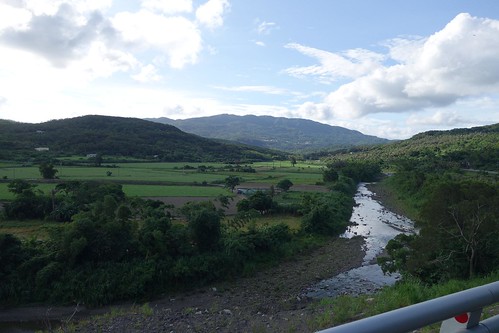
Getting an oil change.

Tourists from China fell month to month and year on year again in June...

May 327,254
June 271,478

Hong Kong and Macao tourists rose, however...

May 125,302
June 143,276

Overall tourists fell as well, from 882K in May to 817K in June. That's more serious, than the always political and always transient flow of territorial imperatives from China. Note that the fall in Chinese tourists has made Hong Kong tourism equal to more than half of all China.

The dramatic news of a bus fire that killed 24 tourists from China and two Taiwanese overshadowed another reminder that Chinese tourism is a massive loser for Taiwan. The Taipei Times reported that one Kenting restaurant has banned Chinese tour groups:
As a growing number of travel agencies that cater to Chinese tourists find themselves in debt, restaurant owner Wu Po-min (吳柏旻) said he hopes to draw individual foreign and Taiwanese tourists, rather than undercutting offerings for tour groups and lowering standards.

“Bringing annual losses of nearly NT$1 million [US$31,260], Chinese tourists are poison wrapped in honey,” Wu said. “When Taiwan was first opened up to Chinese tourists, business appeared to be great. Every day there would be bus after bus of tourists parked outside. It was an endless stream of traffic and, for a time, lots of money was made.”

“However, in recent years travel agencies have been settling bills on a monthly basis — the nightmare has begun for many restaurants that depend on tourism,” he added.

Large travel agencies often transport busloads of tourists to restaurants for a commission, but in the past couple of years, as these agencies have started going bankrupt, they have been leaving as much as NT$1 million in unpaid restaurant bills, Wu said.

Bankruptcies have been occurring all over Taiwan, with proprietors generally forced to absorb unpaid bills themselves, he said.
This problem has been ongoing for years, with the media reporting that Chinese travel firms are not remanding monies to local firms. The "gains" that the media reports come from the Ma government's surveys of tourists at airports, asking them what they spent. Not reliable data, as the media has shown many times over the years. The numbers are inflated, and even the lower and more rational numbers were still too high, because of the unpaid debts to local businesses: the alleged money never actually arrives. Chinese tourists also do not pay their medical debts -- up to US$31 million worth.

Luckily some netizens gave us some comic relief, posting mocking ads that said that advertized that Taiwan's famous tourism sites were once again enjoyable as Chinese tour groups were no longer visiting...
The online ads, with Mandarin, English and Japanese headlines, say that the quality of tourism at popular scenic spots such as Sun Moon Lake (日月潭) in Nantou County and Alishan (阿里山) in Chiayi County has improved as a result of a decline in the number of Chinese tourists.
The drop in Chinese tourists will benefit Taiwan in the long run.

Beijing's cut in tourists is a tactic that benefits Beijing, since outbound tourism is an import. Beijing could be hurting Taiwan businessmen in China, or refusing to trade, or doing something serious. Instead, it has chosen harmless symbolic actions that are good for China -- and probably for Taiwan as well.
_______________________
Don't miss the comments below! And check out my blog and its sidebars for events, links to previous posts and picture posts, and scores of links to other Taiwan blogs and forums!
Saturday, June 18, 2016

A Weak End Review

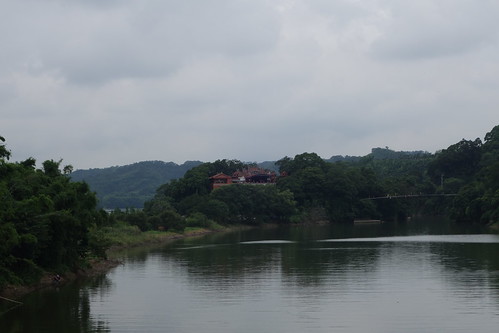
Mingde Reservoir, Miaoli

AND THE INTERNET LAFFED OUT LOUD: Big shout out to the international media here. The international media has been claiming for months that tourists from the Middle Kingdom have been slashed/will be slashed/could be slashed/are being slashed/ any moment now, but as my readers know, that was laughably wrong. Arrivals from China rose in February and again in April. But in the finest stopped clock fashion, the international media was finally right: the number of tourists from China indeed fell in May. Numbers were posted by Solidarity.

Why am I thanking the media? By writing nonsense about our collapsing supply of tourists from China when it was actually rising (remember, these shrill notes date from the October announcement by the Tourism Bureau of a 95% cut), it provided free advertising for more desirable tourists for other countries, signaling them that Taiwan was a place less overrun with Chinese tour groups (while tourism from China declined in Dec, we got massive spikes in Japan tourism). Thus, despite the drop in obnoxious miserly tour groups from China, we still managed to show 1.87% overall tourism growth in May. A much lower number than previous months, but evidence that we don't need those Chinese tourists. Tourism from Japan, Korea, and SE Asia is rising long-term, and with Tsai in power and the Go-South policy in full swing (the Tsai gov't is mulling easy entry for citizens of ASEAN nations) expect tourism from those areas to continue to increase. Even as I write this, some Malaysian friends of mine are climbing over Wuling on bikes...

What declined? Group tours fell by 31%, according to the government. But solo travelers were up 12%, according to spokesmen.
But the number of travelers from China visiting Taiwan on their own rather than as part of a tour group rose by 12 percent in May from the year-earlier period, the sources said Friday.
Airlines suspended flights between Taichung and China...
Chang said that since March, flights between Taichung Airport and Changsha, Zhengzhou, Jinan, Qingdao, Tiangin and Chengdo in China have been discontinued because of a low passenger load factor that resulted from an 8 percent drop in group tourists from China.

He was responding to a local media report that said airlines operating between Taichung Airport and Hangzhou, Nanjing and Ningpo had canceled 10 routes since March.
Although some media have been reporting that Chinese students will also be banned, the Min of Ed said a week or so ago that it had no such information.

Perhaps the most enjoyable thing about the whole affair was the number of expat netizens tracking China tourism. Think anyone in the international media will write about how wrong the media was? No, they will crow about how awesomely insightful and correct they were. I can't wait.

How low was the cut? China tourists in May reached 327K, or the same as in Dec of 2015, also a low supposedly in response to the election (it rose again in January to 366K)(source). It is much too soon to say whether this is seasonal variation or a real cut, although tour group numbers started falling in April (2.9%) according to one of the articles above. Nevertheless, it could simply be that tour companies themselves were nervous about the new president, and so stayed away. We will simply have to wait for the June numbers to come out.

PIXELS FORMING THE SHAPE OF MA YING-JEOU VISIT HONG KONG: this week also saw the big controversy over Ma Ying-jeou's visit to Hong Kong. New Bloom reviewed the whole thing here:
This was the first time a former Taiwanese head of state had applied to leave the country during the three years after their term ended. Ma did not actually file the application twenty days beforehand, having planned to deliver a speech at the Society of Publishers in Asia’s Awards for Editorial Excellence on June 15th, but only having filed his application on June 1st. But the reasons cited for the rejection of his applications by government spokesmen revolved around Ma’s previous access to classified information and security concerns from Ma visiting as politically sensitive an area as Hong Kong. Likewise, Ma has outstanding lawsuits against him and the fear that he may flee the country in order to avoid lawsuits has been raised in the past. Nevertheless, with respect to that, the Taipei District Court later refused to approve of a court proceedings filed by DPP caucus whip Ker Chien-ming attempting to restrict Ma’s travel based on standing lawsuits filed against him.

.....

The KMT has seized upon Ma’s denial of travel in order to claim political persecution by the DPP, citing freedom of speech concerns and linking this to that former president Chen Shui-Bian was allowed to attend a banquet in Taipei earlier this month, despite that Chen is currently on medical parole for his jail term. Critics have also seized on the event to call Tsai hypocritical for claiming to value democracy and freedom of speech but denying this to Ma, as well as claiming that though Tsai claimed during her presidential campaign that she will heal political divisions in Taiwan, she is carrying out actions completely the opposite. It bears pointing out that much of the criticisms on such grounds disguise rather obvious pro-Beijing bias, however.
While the criticism from the KMT tended to focus on Tsai Ing-wen as the dastardly overmind of the decision, scholar Jon Sullivan at the U of Nottingham pointedly pointed out:
Former President Ma Ying-jeou’s application to travel to Hong Kong for a brief speaking engagement has been turned down by the new Tsai administration. It was a decision based on consultation with government security agencies and wasn’t Tsai’s unilateral decision. Technically Ma’s application did not meet the rules regarding the 20 day advance notice for former presidents within 3 years of leaving office. Lee Teng-hui was allowed to travel to the UK one month after stepping down in 2000 (by a DPP government); but the UK does not have the symbolism that HK does (it was where the meeting between KMT-CCP took place in 1992 that gives its name to the ‘1992 consensus’), and after all, HK is quasi governed by China. Ma is in possession of huge amounts of “classified knowledge” and the potential for either purposeful or accidental disclosure of information is much higher in HK than almost anywhere else in the world. This is not to imply that Ma has or had any intention whatsoever of disclosing classified information, but given that for 8 years Ma has espoused pro-China preferences it is no surprise that most Taiwanese are suspicious of a visit so soon after he stepped down to a location that has been used as a (often clandestine) meeting place for ROC/KMT PRC/CCP officials.

A further aspect is that the KMT has demonstrated before that it is happy to bypass the duly elected government to conduct “diplomacy” with China. ... But overall, there are genuine security issues and particular sensitivities with Hong Kong–and Ma would presumably have been aware of this when putting in his application.
The whole thing was a clever set up: Ma wins either way. If they let him go, he sucks up to China and disparages Tsai and Taiwan. If they don't let him go, they whine and and say Tsai hurt Taiwan's democracy. As they actually did...
Ma’s office expressed regret over the decision. A spokeswoman said it showed “not only disrespect to the former leader, but damages Taiwan’s democratic image in the world”.

KMT vice-chairman Hau Lung-bin said the decision showed “a lack of self-confidence and goodwill” from Tsai.
Ma was his usual tone-deaf self when he appeared over the internet at the event. Even as a Hong Kong bookseller was back in Hong Kong describing his months of torture at Chinese hands, he laughed at the Tsai government's security concerns and said that Hong Kong was a safe place. Joshua Wong, the Hong Kong democracy leader, blasted him for the remarks. J Michael Cole, now editor of the News Lens, pointed out that Ma blew an opportunity to support embattled publishing and journalism in Taiwan. Naturally....

AND THE INTERNET LAFFED OUT LOUD II: Another one of those ZOMG TAIWAN IS TENZ! PLS NERF! articles came out last week in the National Interest to general laughter. It was straight out of 2006:
Even though President Tsai espouses a more moderate approach to cross-Strait relations than her DPP predecessor, her policies and especially the actions of her party threaten cross-Strait relations. For example, after her swearing in last month, President Tsai established a mechanism to resolve maritime disputes with Japan. ROC Premier Lin Chuan also dropped charges against anti-Beijing protesters and described his newly appointed representative to the United States as an “ambassador,” suggesting that Taiwan is a sovereign country with all the attendant diplomatic privileges. While not constituting a regime shift in government policy, moves such as these undermine Beijing’s confidence in its ability to work with the newly elected government. Both sides enjoyed closer relations during the previous KMT administration of President Ma Ying-jeou from 2008 to 2016, and the PRC will do what it can to precipitate a return to KMT rule. There is some indication that Beijing will aggressively pressure the new president and explore how far it can go in imposing its own terms on the relationship. It has already begun to limit cross-Strait travel and renewed diplomatic relations with Gambia, ending a tacit truce against further diminishing the ROC’s small list of diplomatic partners.
Oh noes! Tsai established a mechanism to resolve maritime disputes with Japan! Do you think Beijing will invade immediately, or will they just blockade us? You know you've gone round the bend when you think Taipei and Tokyo agreeing on a dispute mechanism is "provocative". The writer is a grad student in the Elliot School at GWU, where I am sad to say I graduated from, and which was made of sterner stuff in my day (yes, you know you're old when you can use the phrase "in my day"). Michal Thim and I wrote a response, which I hope the National Interest runs...
______________
Daily Links:
_______________________
Don't miss the comments below! And check out my blog and its sidebars for events, links to previous posts and picture posts, and scores of links to other Taiwan blogs and forums!

Tuesday, May 31, 2016

If China "slashes tourists" any further, we'll be overrun

An abandoned housing project outside Taichung

So I've blown away the claim that the Kenya Deportations were aimed at Tsai Ing-wen, constructed an alternative and better fitting geopolitical scenario for the PRC's resumption of ties with Gambia, and already debunked the claim that tourists from China are falling. We will continue to hear this amusing ZOMG TSAI! narrative in the media, though...

Speaking of tourists, the April numbers are out. Let's look at the massive cuts in tourism that China imposed on Taiwan as "punishment" for Tsai Ing-wen...
MARCH: China: 363,878 up 30.09% year on year
APRIL: China: 375,567 up 4.67% year on year
Yeah, that's right. Tourism from China rose slightly in April. Can't wait to see the May numbers.

The dip took place in the Hong Kong/Macao numbers, for reasons I do not know:
APRIL: 110,716
MARCH: 164,894
FEB: 114,431
JAN: 93,448
Remember that quote from the Reuters piece I looked at:
"The National Tourism Administration told us in February and March to cut the number of tourists we send to Taiwan," an agent in the coastal city of Xiamen, which lies across the strait from Taiwan, told Reuters.
Obviously, being told to do something, and actually doing it, are two different things.
__________
Daily Links:
_______________________
Don't miss the comments below! And check out my blog and its sidebars for events, links to previous posts and picture posts, and scores of links to other Taiwan blogs and forums!

Friday, May 13, 2016

The Tourism Numbers: Do they tell Reuters' story?

Cyclists on the ocean in Miaoli.

Reuters, currently vying with BBC and AFP for the top spot in the Xinhua 2.0 sweepstakes, says ZOMG TOURISTS ARE BEING CUT:
Now the Chinese tourists who visit Taiwan - 4.2 million last year - have become the focus of discord.

The number fell 10 percent on month to 363,878 in March, according to Taiwan's Tourism Bureau.

That is still up on a year ago, but those who service the visitors, including the bus companies that shuttle tour groups around, say they are feeling the pinch.

"Chinese tourists took about 4,000 tour buses a month this time around last year, but now it's only 2,800," said Lu Shiao-ya, chief of the National Joint Association of Tourist Buses.

"China is using its tourists as a bargaining chip against Taiwan's new government," he added.
I wondered about this, because I checked the numbers the other day. Here are the numbers for Jan-Mar from the English site (Chinese here, says same thing 中國大陸36萬3,878人次(30.09%)):
MAR: 1. Mainland China accounted for 363,878 or 35.17% of the total, up 30.09%, consisting of 3,552 foreign visitors, up 13.99%, and 360,326 Overseas Chinese, up 30.28%.
FEB: 1. Mainland China accounted for 405,307 or 44.05% of the total, down 0.23%, consisting of 3,385 foreign visitors, down 12.89%, and 401,922 Overseas Chinese, down 0.11%.
JAN 1. Mainland China accounted for 366,409 or 42.31% of the total, up 13.98%, consisting of 2,731 foreign visitors, up 6.72%, and 363,678 Overseas Chinese, up 14.04%.
Note that after the election of the horrible tension inducing democracy supporting Tsai Ing-wen,  who provokes poor helpless China by her mere existence, tourist numbers rose more than 10% from Jan to Feb of 2016.  Moreover, compared to last year, the tourist masses from China continue unabated, with a 30% rise YOY.

Oh yeah, Hong Kong and Macao:
MARCH 2016 3.Hong Kong and Macao, 164,894 or 15.94%, up 44.05%, consisting of 12,191 foreign visitors, up 28.08%, and 152,703 Overseas Chinese, up 45.49%.

FEB 2016: 3. Hong Kong and Macao, 114,431 or 12.44%, up 17.71%, consisting of 8,560 foreign visitors, down 8.5%, and 105,871 Overseas Chinese, up 20.5%.

JAN 2016: 3.Hong Kong and Macao, 93,448 or 10.79%, up 25.77%, consisting of 8,198 foreign visitors, down 4.44%, and 85,250 Overseas Chinese, up 29.71%.
Yup: Hong Kong and Macao tourism rise actually offset the China proper fall. That fact didn't fit Reuters' narrative, I guess...

Moreover, it's not difficult to find similar variation in last year's numbers:
APR 2015: 1.Mainland China accounted for 358,798 or 40.4% of the total, down 4.88%, consisting of 3,351 foreign visitors, down 6.79%, and 355,447 Overseas Chinese, down 4.86%.

MAY 2015: 1. Mainland China accounted for 372,766 or 43.03% of the total, up 11.66%, consisting of 3,091 foreign visitors, down 2.37%, and 369,675 Overseas Chinese, up 11.79%.

JUN: 2015: Mainland China accounted for 308,087 or 38.5% of the total, down 2.25%, consisting of 3,497 foreign visitors, up 2.01%, and 304,590 Overseas Chinese, down 2.29%.

JUL 2015: 1. Mainland China accounted for 352,625 or 42.32% of the total, up 2.59%, consisting of 3,092 foreign visitors, up 2.86%, and 349,533 Overseas Chinese, up 2.59%.

AUG 2015: Mainland China accounted for 367,736 or 41.12% of the total, up 17.66%, consisting of 3,438 foreign visitors, down 0.2%, and 364,298 Overseas Chinese, up 17.86%.

SEPT 2015: 1.Mainland China accounted for 345,243 or 41.23% of the total, up 1.03%, consisting of 3,252 foreign visitors, up 4.06%, and 341,991 Overseas Chinese, up 1%.

OCT 2015: 1. Mainland China accounted for 386,663 or 41.71% of the total, up 11.18%, consisting of 3,078 foreign visitors, up 1.89%, and 383,585 Overseas Chinese, up 11.26%.

NOV 2015: 1. Mainland China accounted for 357,655 or 38.07% of the total, up 7.56%, consisting of 3,035 foreign visitors, up 4.51%, and 354,620 Overseas Chinese, up 7.59%.
There was a huge drop from May to June, and a nearly 10% fall from October to November. Despite the quotes, this may simply be seasonal/market variation.

Note that while Reuters has this quote:
"The National Tourism Administration told us in February and March to cut the number of tourists we send to Taiwan," an agent in the coastal city of Xiamen, which lies across the strait from Taiwan, told Reuters.
...in reality, the number of tourists rose from Jan to Feb and fell only 0.23% YOY.

As always, it should be noted that (1) Taiwan loses money on stingy Chinese tourists; (2) most people would be delighted to see a drop in their numbers; and (3) overall tourism is rising, something Reuters omits. For Jan-Mar the Tourism Bureau observes:
I. A total of 2,820,815 visitors arrived in the Republic of China from January through March this year, up 389,769 or 16.03% from the 2,431,046 in the same period last year. The arrivals included 1,345,993 foreign visitors and 1,474,822 Overseas Chinese. Compared with last year, the number of foreign visitors increased by 176,207 or 15.06%, and the number of Overseas Chinese visitors increased by 213,562 or 16.93%.
We don't even need those Chinese tourists, and the only people suffering are the fools who geared themselves to service that market.
_______________________
Don't miss the comments below! And check out my blog and its sidebars for events, links to previous posts and picture posts, and scores of links to other Taiwan blogs and forums!
Friday, April 29, 2016

藤坪溪Bridge: Then and Now

This famous bridge was completed in 1907 and carried trains across a valley in Miaoli until destroyed in the great 1935 earthquake.


Today it is the famous Longteng Broken Bridge, a tourist trap on one of the area's many pretty roads. Don't miss the ride there if you're biking in Miaoli.
_______________________
Don't miss the comments below! And check out my blog and its sidebars for events, links to previous posts and picture posts, and scores of links to other Taiwan blogs and forums!
Tuesday, April 26, 2016

Commentary Galore

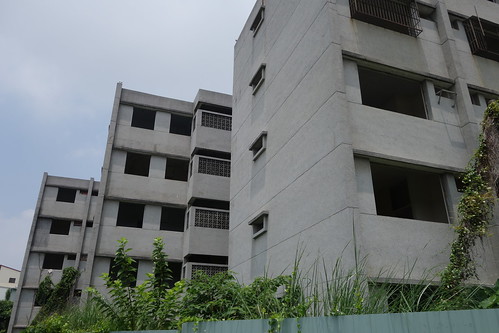
Nets at Shiti Fishing Port

Elizabeth Economy writes on Taiwan and China for the CFR....
Beijing began the year by reversing its eight-year tacit understanding to not establish diplomatic relations with countries that recognize Taiwan (thereby giving the island nation a semblance of sovereign international status) and resuming ties with Gambia. Next, it successfully pressured Kenya to deport as many as forty-five Taiwanese (the number is in dispute) to the mainland as part of a larger set of arrests of suspects in a telecom fraud ring.
Economy has this history all wrong. The Chinese police were asking for the (alleged) Kenya scammers in December of 2014, long before Gambia switched sides. China has been waiting a year to collect the Taiwanese men. Obviously it is not about sovereignty or putting pressure on Tsai Ing-wen, yet that has become the dominant story in the international media and punditocracy. Beijing is signaling Taiwan on its lazy approach to crime, not because it elected Tsai Ing-wen.

Nevertheless, this is a Council on Foreign Relations piece, and the ending is wonderful: she rebuts the idiot brigade that wants to sell out Taiwan:
Finally, after falling off the American radar screen over the past eight years, Taiwan is quickly edging its way back on. The next administration needs to keep its eye on the final objective—“that cross-Strait differences be resolved peacefully and according to the wishes of the people on both sides of the Strait.” This means we don’t help stir the pot on Taiwan and we don’t sell-out Taiwan for some ephemeral grand bargain with Beijing. Taiwan may be small but it is not a small matter. At stake is not only our relationship with Beijing but also American values and principles, which are exemplified by Taiwan’s vibrant and determined democracy.
Excellent ending, another signal of the shift in the discourse over the last year or so toward a position which acknowledges that Beijing is a problem, and Taiwan, its victim. Hopefully Washington will come to view Tsai as an opportunity.

Interestingly, Bonnie Glaser wrote on what might happen between Taiwan and China for CSIS. Here are her recommendations:
*U.S. officials should make clear that while both sides have responsibility for avoiding disruption of the prevailing cross-Strait stability, in current circumstances Beijing needs to exhibit greater creativity and flexibility toward Taiwan, specifically to demand less clarity from Tsai and tolerate more ambiguity.

*Washington should encourage China to pay attention not only to Tsai Ing-wen's words but also to her actions.

*The United States should warn Beijing against taking actions that are harmful to Taiwan's economy and its participation in the international community. U.S. officials should emphasize that such actions would be counterproductive to China's goals of winning the hearts and minds of the people of Taiwan and its ultimate goal of reunification.

*U.S. officials should encourage Tsai Ing-wen to continue to exercise restraint, to avoid taking actions that could further incite Beijing's suspicions of her intentions, and to seek ways to provide additional reassurances that she does not plan to seek independence during her term in office.
The last one is boilerplate, but the first three are quite interesting. They all ask the US to ensure that Beijing gives Taiwan some space, and as sharp observer Aaron Wytze (@aaronwytze on Twitter) noted, none calls for Tsai Ing-wen to kow-tow to the fake 1992 Consensus.

John Bolton, neocon and Taiwan supporter (recall that many neocons began life as Asianists), wrote in FoxNews that ZOMG TENSIONS ARE RISING, which they are not (the impression I get is that Beijing does not know what to do and is searching for a policy) so THANKS OBAMA:
In January 2017, America’s new president will face Beijing’s ongoing efforts to run its own extortion campaign against Taiwan. If the Obama administration fails to support Taiwan in responding appropriately to China’s assertive, nearly belligerent actions on deportations and many other issues, the new president will have even graver problems to solve. This is not a case where America should simply tote up its investments in Taiwan and on the mainland and go with the bigger number. This is a matter of resisting Chinese efforts at establishing hegemony in East and Southeast Asia not only at the expense of its near neighbors, but of the United States as well
Bolton also accepts the Kenya case as a shot at Tsai Ing-wen, though it wasn't. *sigh*

Finally, no deluge of commentary is complete without Shelly Rigger checking in on surviving the long transition between the two presidents. It's her usual mix of solid observations and KMT propaganda. This part is quite solid and interesting:
Two statements made by PRC officials during the lame duck period are especially intriguing. PRC President Xi Jinping recently told delegates to China’s National People’s Congress, “If the historical fact of the ’92 consensus is recognized and if its core connotation is acknowledged, then the two sides of the Strait will have a common political basis and positive interaction can be preserved.” At a speech in Washington, Chinese Foreign Minister Wang Yi mentioned the “current constitution of Taiwan” as the basis of both the one-China claim and Tsai’s presidency.

Of course, when Xi mentions the “core connotation” of the ’92 consensus, he is referring to the part of the formula that states there is only one China, and Taiwan is part of it. This “core connotation” is far from Tsai’s position. Indeed, even Ma Ying-jeou has kept his distance from that connotation, preferring to emphasize the second element of the ’92 consensus, the two sides’ differing interpretations of “one China.” Nonetheless, Xi’s demand that Tsai must recognize the historical fact of the ’92 consensus (as opposed to endorsing it by name) may give Tsai more to work with.
But then she inverts reality:
[1] The ’92 Consensus was coined as a label for a tacit agreement made by Taipei and Beijing’s semi-official representatives at a meeting in Hong Kong in 1992. The representatives acknowledged that both sides believed Taiwan to be part of China, but they left unspecified exactly what they meant by “China.” This allowed the PRC to move forward with negotiations on the grounds that the Taiwanese were in line with Beijing’s one-China principle, and it allowed Taiwan to continue to define “China” as the Republic of China (the state on Taiwan). Beijing typically stresses the “one China” component of the consensus, while Taipei emphasizes the unspecified nature of “China,” by articulating the consensus as “One China, with each side having its own interpretation.” For the DPP, this whole concept is problematic, both because many in the DPP reject the idea that Taiwan is part of China in any sense, and because they believe the label “’92 Consensus” is a post hoc exaggeration of what actually happened at the ’92 meeting. For this reason, Tsai Ing-wen has avoided endorsing the phrase itself, although she has acknowledged the value and utility of the ’92 meeting.
In Riggerverse, unelected reps from the PRC met with unelected reps from the ROC and they reached a consensus. In this universe, they did not reach a consensus -- nothing was agreed on at the meeting except to be nice to each other. That ought to be obvious by now. The 1992 Consensus was invented in the run-up to the 2000 election as a cage to imprison a non-KMT president. Even the Wiki page has Su Chi's 2006 admission that the 1992 Consensus was made up. Why don't scholars?

The 1992 Consensus didn't "allow the PRC to move forward". LOL. As always, the basis for KMT-CCP cooperation isn't the 1992C but the desire of China to annex Taiwan. That is why Beijing has never accepted the 1992 Consensus, but insists that Taiwan politicians do.

It's the DPP position, not the KMT position, that corresponds to reality.

Rigger correctly observes that Ma's South China Sea gambit is his last vicious little gift to Beijing, creating new headaches for the incoming Tsai Administration. I thought it was wonderful that the Kenya mess blew up during the week he brought three foreign scholars to validate his position on Taiping Island. It totally vaporized their visit in the media.

Finally: tourism. Rigger takes the (absurdly wrong) conventional position that reduction of tourists = punishment, like Elizabeth Economy and many other commentators:
According to Taiwan’s Minister of Transportation and Communications, Beijing has cut the number of travel permits it is issuing to Taiwan-bound tourists, which may lead to a double-digit decline in the number of visitors. Taiwan has invested heavily in infrastructure for mainland tourists, so closing the spigot will be costly.
No, "closing the spigot" will be a net winner for Taiwan because tourism is a net money-loser (see my detailed discussion based on a recent paper). Chinese tourism is widely detested in Taiwan and most of us will be happy to see the tourists go so we can return to many wonderful tourist sites. Tourism also does not drive the development of human capital to increase living standards. Nope, we are better off without the endless lines of Chinese tourist buses crawling over the east coast like beetles on a rotting log.

If Beijing cuts tourism, it will only hurt Beijing. The tourism drive has resulted in the construction of new patronage and influence networks in local areas that are oriented on China and on the KMT. These will suffer. Moreover -- track this -- the new tourist infrastructure is often quietly financed by Chinese money brought in through offshore tax havens, which are key sources of FDI in Taiwan. China suffers again! Please, please cut tourism -- it is an important territorial strategy of Beijing, and Beijing will suffer the most.

Meanwhile, tourists from other countries are flowing in to replace these losses. They spend more too.

Many observers still have not caught on to this point: Beijing's expressed goal of annexing Taiwan peacefully requires that China interact with Taiwan. Beijing also seeks to plunder Taiwan's tech base so it can destroy the basis of Taiwan independence, our robust economy. Reduction in interactions between the Chinese empire and Taiwan correspondingly reduces Beijing's chances of accomplishing these goals.

Me? I'm looking forward to biking in areas free of obnoxious, stingy, Chinese tourist groups. Reclaiming Taiwan, as it were, from the invaders.
_______________________
Don't miss the comments below! And check out my blog and its sidebars for events, links to previous posts and picture posts, and scores of links to other Taiwan blogs and forums!
Wednesday, January 27, 2016

Ketagalan Travel and the Taiwanese Identity

I am in Ketagalan Media today:
The international media, always fifteen years behind events, has discovered the rising Taiwanese identity among the young. Commentators variously attribute it to the rise of democracy, the Chen Shui-bian era reforms to education, student activism, and other causes. But there is one element they miss: travel...
Go to Travel, and the Taiwanese Identity to see the rest....
_______________________
Don't miss the comments below! And check out my blog and its sidebars for events, links to previous posts and picture posts, and scores of links to other Taiwan blogs and forums!

Monday, April 27, 2015

Paper on Parade: Yes, Chinese tourism is screwing over Taiwan

A major river in Miaoli, bone dry after three years of drought.

In case you were wondering about the effect of Chinese tourism on Taiwan, wonder no more. This edition of our regularly irregular feature, Paper on Parade, takes a look at The Economic, Carbon Emission, and Water Impacts of Chinese Visitors to Taiwan: Eco-efficiency and Impact Evaluation (Ya-Yen Sun  and Stephen Pratt, Journal of Travel Research 2014 53: 733). There are some findings that were pleasantly counterintuitive, but on the whole this paper justifies everything that I've been saying about the pernicious effects of Chinese tourism on Taiwan.

After some opening remarks on the growth of tourism in the region, the authors report:
The development of this Chinese market in Taiwan is highly significant; it accounts for the largest inbound visitor numbers in 2012, with rapid growth of an 86% annual rate from 2008 to 2012 for leisure visitors, and contributes high spending per person per trip (Taiwan Tourism Bureau 2012a). While expanding the Chinese inbound market is the long-term goal for Taiwan tourism, environmental resource requirements need to be considered alongside the economic impacts of international tourism receipts
This paper uses government figures for the spending of Chinese tourists. As you read the discussion, keep in mind that an AP report several years ago compared the receipts of travel agencies to the government claims, and called bullshit:
The government estimates that Chinese tourists spent an average of $246 a day on the island in 2010. That's made up of $142 for shopping and $104 for the services that are provided by tour package operators hotels, meals, local transportation, venue admission and incidentals.

But an examination of tour package prices shows they are much lower than the goverment's estimate and tour operators say that, at best, they get half of the money Chinese tourists pay to mainland tour agencies for these tours. That amounts to at least a $700 million hole in the government figure.

On top of that, it is likely that some of the money Chinese tourists spend on shopping is ending up in Hong Kong, where the owners of some of the major Taiwanese shopping outlets are based.

And at least until recently, a ruse involving special credit card readers that disguised the true location of purchases meant the government was cheated out of sales tax from Chinese tourists. Taiwanese authorities are now investigating this practice.
According to the 2013 Tourism Bureau numbers (download .doc file), Chinese tourists spend nearly as much as Japanese, and significantly outspend tourists from the US, Singapore, and Hong Kong, all of which are wealthier. Strange, eh? It may be because business visitors tend to get taken out by locals more, and more Americans are here on business...

Back to the Sun and Pratt study above...
The purpose of this study is to provide an evaluation of the economic impacts, the carbon footprint, and the water footprint of Chinese tourism consumption in Taiwan. Two objectives are proposed here. First, the eco-efficiency of Chinese visitors is compared against four other major source markets for Taiwan: Japan, Hong Kong/Macao, United States, and Malaysia. Eco-efficiency is measured via the per dollar CO2 emission and per dollar water consumption.
After a detailed discussion of tourism growth and Chinese tourism numbers in Taiwan, the authors point out two salient facts: first, tourism is less efficient carbon-wise than most other sectors of a given national economy, and second, a major culprit in the high CO2 footprint of tourism is air travel.

The idea of water footprint is relatively new in the literature, but has grown. I suspect it will become ever more important as the inevitable effects of human warming of the earth impact our water supply. They note:
In Gössling et al.’s (2012) extensive review of tourism and water usages across major countries, they concluded that the direct water usage per tourist per day ranges between 80 and 2,000 liters (L), and the indirect water consumption per day was tripped to 5,500 L. The tremendous indirect water requirement is mainly a result of the production process for food and fuel, each, on average, contributing more than 2,000 L per tourist per day. For food consumption, a greater amount of water is embedded in agricultural irrigation, which accounts for more than 70% of the total water withdrawn and 90% of water consumed (Bates et al. 2008).
The key point here is that tourism drives demand for foods, which drives increased agricultural water usage. As they note in the paper, Chinese delight in purchasing food souvenirs, which drives up their overall water demand.

Sun and Pratt then move on to present the methodology of the study. Overall emissions and water use are calculated via a generally accepted model, while travel emissions are calculated using airline route distance and number of seats.

The meat of the paper is of course the results of the calculations. The authors first introduce the background information. I've grabbed their table below:
Among five inbound source markets, Chinese visitors are one of the top spenders in Taiwan, averaging around US$260 (not including international airfare) per person per day or US$2050 per trip, only after the U.S. segment (Table 1). In terms of spending patterns, Chinese visitors report a greater proportion of their budget on shopping (57%), much higher than visitors from Malaysia (32%), Hong Kong/Macao (28%), and Japan (22%). This shopping spree phenomenon is consistent with observations from Chinese visits to Australia (Wang and Davidson 2010), United States (Jang, Yu, and Pearson 2003), and Hong Kong (Huang and Hsu 2005). Within the shopping component, Chinese visitors spent around 15% of the overall trip expenditure on “featured food, special products and tea” and 10% on “jewelry or jade.” In comparison, U.S. visitors spent two-thirds of their expenses on the lodging (65%) but were quite limited in other categories. This is in part due to a very high proportion of U.S. business and VFR tourists in Taiwan, so their itinerary either involves more with business activities or their local expenses have been covered by friends and relatives (Taiwan Tourism Bureau 2012b).

The authors conclude:
The eco-efficiency of Chinese visitors on both CO2 and water use in Taiwan is superior to the other four major markets, except for total water use intensity (Table 3). For direct and total CO2 intensity per dollar, Chinese visitors are around 21% and 10% more efficient than the second-best performing market. For the direct water use intensity, Chinese visitors also ranked number 1, 32% more efficient than their counterparts. However, after taking into account the indirect water use, Chinese visitors become water-intensive users, requiring 8.26 L of water per dollar, the worst among all five inbound markets.
Recall that the Tourism Bureau numbers for what Chinese tourists spend are probably inflated, meaning that if more realistic numbers were used, the effect of Chinese tourists would only worsen. Since that water is used in the form of foods taken out of Taiwan, our supplies take a  hit, especially groundwater, which is not so easily replenished. In the long-run it returns to the ocean, of course, and comes back. How long?

Based on the inflated Tourism Bureau numbers, the authors then calculate the raw economic effects:
The results from the CGE analysis show that an increase in Chinese visitors to Taiwan is overall beneficial to the economy: the Taiwanese household’s welfare would increase by US$145.1 million (0.06%); the Taiwanese household’s consumption would increase by US$160.7 million (0.07%), and their investment would increase by US$64.0 million (0.07%) (Table 5). Output is estimated to increase by US$8,706.8 million or 0.8% from 2011 to 2016 as a result of the increase in Chinese visitors with corresponding CO2 emissions estimated to increase by 6 million tons, or an additional 2.7% over 2011 figures. The Chinese visitors are estimated to use an additional 591 million tons of water (3.0%).
For a family with a household income of NT50,000 a month, that welfare increase is a couple of bus rides. Overall output increase is less than 1% over the five year estimated period of the study, again using the Tourism Bureau numbers. Never mind that the gains go to a small number of actors, and are not spread out across all the families of Taiwan. Most Taiwanese experience only the negatives of Chinese tourism, from crowding at desirable tourist sites to insults and threats from the sprinkling of idiots that populate those tours. Morever, that Chinese tourist "output" has other, extremely pernicious effects.

As the authors note, when tourists come in, they pull capital and resources from other sectors into tourism, and they drive up the exchange rate because they demand local currency. In Taiwan this pushes up the value of the NT dollar, which causes sales of local exports to fall since their products become more expensive on international markets.
The increase in tourism demand leads to an appreciation in the exchange rate, which leads to import substitution and the contraction of the traditional export sectors. Not surprisingly, the increase in tourism demand expands the tourism-oriented sectors as the increases in prices attract resources (capital and labor) to these sectors. The accommodation services sector (+40%) and the education and entertainment articles sector (+33%) as well as the industries supplying souvenirs such as the textile mill products (+15%), wearing apparel and clothing accessories (+13%), and cleaning preparations and cosmetics (+7%) experience increases in output and hence GHG emissions and water usage. Further,the sectors that will experience the largest growth due to an increase in tourists are not the most resource intensive.
Lucky, eh? Nope...
An interesting finding occurs with the computers, electronics, and optical products sector. Taiwan exports more than 70% of its production in this sector. In considering the economic impact of each visitor segment, this sector is expected to expand. For example, for the increase in VFR visitors, output is expected to increase by 17% in this sector as tourists and tourism-related businesses demand more computers and electronic goods. This increase in demand falls to 13% for both the business and FIT tourists segments and to 6% for the PT tourists segment. However, in estimating the total impact of 12,000 additional visitors per day in 2016, the large increase in visitor arrivals in this scenario results in this sector being “crowded out” by increases in other sectors. This, coupled with an expected appreciation in the Taiwanese dollar, means that Taiwanese computers and electrical goods become more expensive on the world market. The overall effect is a contraction of this sector with a high export component. This nonlinear nature of CGE models is able to take into account supply constraints and factor in the competition for limited resources.
The authors remark further down that the growth in total foreign tourist dollars, 16.8% between 2008 and 2011, has helped the economy in time of need (US$5.9 billion in 2008 to US$11.1 billion in 2011, accord to their citation of Tourism Bureau numbers).

Let's take a moment to take stock of the full effects here. First, the NT dollar is buoyed by inbound tourists from China buying NT dollars, driving up its value. This is not good for local exporters, but local consumers like it because it keeps the price of foreign goods down. It also makes the central bank governor's job easier, because it is easier to keep the currency stable if flows are reliable and predictable.

This means that it will not be easy to turn off the tap of Chinese tourist inflows because the central bank will correctly point out that the NT dollar will both weaken and become less stable. That will inhibit action by any future pro-Taiwan president. That effect will be independent of the way the KMT has managed the inflows to create new dependencies in local areas that support it.

Chinese tourism is, as I have claimed, hurting Taiwan by reducing its living standards while providing a false promise of economic growth. That is what this paper documents. The economic gains for local families simply don't exist, while tourism does nothing to increase their skills or raise local living standards. At the same time, it also reduces the electronics export sector, the one sector that does raise Taiwan's living standards.

Never mind the effects on territoriality and life quality for those of us who have to live with the traffic, construction messes, and general deterioration in living standards in areas where Chinese tourists appear in great numbers, as well as expanding the effect of Taiwan's parasitic construction-industrial state on local governments and on the national political economy.

The future? Not good. Sun and Pratt note:
Looking to the future, the current environmentally efficient characteristics of the Chinese tourists are expected to wane because of product diversification and repositioning as the propensity to consume luxury goods and services will increase while their average length of stay will shorten. With an intended policy to develop Chinese FIT, medical tourists, and business travelers while shrinking the market of discounted package tours, the share of high-end services, taxi, and car rental is expected to rise in their spending profiles. This type of tourism generally consumes more energy per unit (Becken, Frampton, and Simmons 2001), and the abovementioned transportation types are 25% to 75% more energy intensive per person-kilometer than coach (Huang 2011). Further, the Taiwan Tourism Bureau intends to encourage high-quality package tour itineraries which stay at star-credited hotels, involve fewer mandatory shopping stops, and offer diversified dining and recreational opportunities. In sum, Taiwan’s policy is gradually directing visitors to purchase a basket of goods and services that is more energy intensive in the future.
Taiwan is committed to reducing its global warming emissions, though it is not a signatory to any of the international protocols. Rising Chinese tourism, the authors note, could conflict with this goal.

This paper represents a first pass at the problem, as the authors observe, but nevertheless it is highly indicative. As in all other aspects of economic interaction with China in Taiwan, the claimed economic effects simply aren't there. This will not stop the international media from continuing to spread Chinese propaganda on that topic, but at least my readers will know what is really going on.
_______________________
Don't miss the comments below! And check out my blog and its sidebars for events, links to previous posts and picture posts, and scores of links to other Taiwan blogs and forums!