Showing posts with label tensions. Show all posts

Wednesday, December 21, 2016

China Buys Sao Tome, saves Taiwan taxpayers millions

Look! A free meme for you!

The big news is that Sao Tome switched from the ROC to the PRC today. Reuters reports. This is another symbolic act with no concrete costs, which will generate media hysteria but probably benefits Taiwan. China cannot knock out too many allies, because it needs the ROC to exist and support its territorial claims, as well as maintain that Taiwan is part of China and someday deliver Taiwan to China. One of the props of the ROC are its "diplomatic allies", countries which recognize it, and not the PRC, as China. Gaining allies is always paid for by the sweat of Taiwanese taxpayers, just one of the many colonial taxes Taiwanese continue to pay to the ROC. The Taiwan government said, quite rightly:
In its diplomatic relations the ROC has consistently maintained the principles of integrity and mutual benefit, contributing to its allies’ development to the full extent of its abilities. The government of São Tomé and Príncipe, however, with excessive financial difficulties, and demands beyond those the ROC could meet, has ignored 20 years of friendly diplomatic relations, playing both sides of the Taiwan Strait while holding out for the highest bidder. The ROC regrets the São Tomé and Príncipe government’s abrupt and unfriendly decision, and condemns this action.

The media will have plenty to write about. Thanks, China, for keep Taiwan in the media churn so we can get more people to read about it and recognize its existence.

...but the big thing for me is this piece from Keith Richburg, who has been reporting out here for years, going against the mainstream "ZOMG CHINA MIGHT..." policies that have governed US relations with China...
Loath as I am to agree with Trump about almost anything, on this one, he may have a point. Since the start of the U.S.-China detente with President Richard Nixon's groundbreaking visit in 1972, America has been content to allow Beijing to set the parameters, even the lexicon, of the relationship, with the U.S. often getting little or nothing in return. It may be time to start treating China like any other country -- and that may mean talking tough when needed, and ignoring the fabled thin-skinned sensibilities of Beijing's Communist rulers.
Whoa. Happy to see this from a longtime mainstream media reporter. Years late, but nice to see all the same.
_____________
Daily Links:
_______________________
Don't miss the comments below! And check out my blog and its sidebars for events, links to previous posts and picture posts, and scores of links to other Taiwan blogs and forums!

Saturday, September 13, 2014

Richard Bush: US will stick hand in 2016 presidential election in Taiwan UPDATE X 2

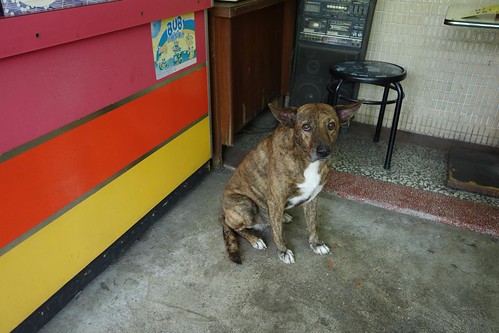
This dog is not to happy about it either.

UPDATE: Taipei Times report
UPDATE: AIT distances US from Richard Bushs' remarks. Expecting State Department to make similar comment soon.

Media reports about longtime Taiwan expert Richard Bush's insistence that the US will have a voice in the Taiwan election have sparked a controversy here in Taiwan. FocusTaiwan notes:
Speaking at a conference on "Relations across the Taiwan Strait" at the Brookings Institution on Friday, Bush said he was confident that the United States will express its views some time or in some way on how American interests "will be affected by Taiwan's elections."

He said the U.S. faces a dilemma. On one hand, it believes that voters of a friendly and democratic country have the right to decide their leader, and Washington should not express a preference for specific candidates to sway the outcome of the election.
The article then refers to the infamous US attack on Tsai Ing-wen during the 2011-2012 presidential campaign. This stupid, shortsighted move materially hurt both Taiwan and the United States, though I have no doubt the people who delivered that blow felt mighty for doing it, felt like realpolitik gods, since everyone knows that the greatness of a realpolitik policy is measured by the number of one's friends it betrays.

Reality: no US interest is served by having a pro-China government installed in Taipei. Ma's policies have not served "peace and security" but have merely enabled China to raise tensions elsewhere, while reducing Taiwan's ability to resist Chinese aggression and partner with the US in doing so. Nothing exhibits the mind-numbing contradictions of US Taiwan policy more starkly than US policymakers' support for the KMT, a desperate expedient that involves trading concrete harm for avoidance of vapor, and one that links the US to a pro-China government -- whereas everywhere else around China's littoral, the US is supporting anti-Beijing policies. Time for a graphic illustration, oldie but goodie:

In truth, Bush's remarks beautifully illustrate well-worn themes of this blog: the way Beijing uses "tension" to gain leverage over US policymakers, and the way it works to transfer tension in the Beijing-US relationship to the Taipei-Washington relationship. Because of fear of "tension" (note: not concrete actions) -- caused entirely by Beijing as a deliberate policy, and used by Beijing to influence US policy towards Taiwan, US policymakers are going to stick their hand into the Taiwan election. Again.

Congratulations, guys, every time you stick your hand into a local election in Taiwan to support the KMT, you're not serving US interests.

You're serving Beijing's.
_________________
Daily Links:
_______________________
Don't miss the comments below! And check out my blog and its sidebars for events, links to previous posts and picture posts, and scores of links to other Taiwan blogs and forums!
Sunday, June 22, 2014

US Experts Throw Beijing a Helping Hand

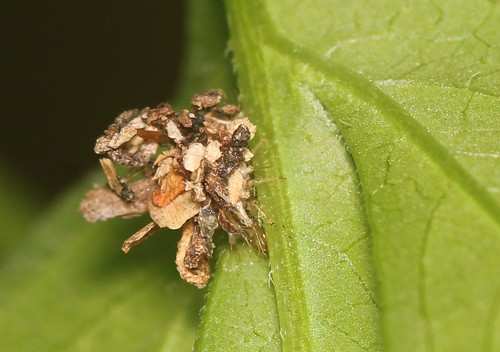
Camouflage expert.

In the Washington-Tokyo-Taipei-Beijing quadrangle, one of Beijing's most important strategic goals is to transfer tension from the Washington-Beijing relationship to the Washington-Taipei relationship. Not only does that occur often, in each case to the detriment of Taiwan, but one also sees, sadly, that US experts frequently incorporate this idea "tension" into their analyses of the Washington-Taipei relationship. As in this piece the other day that Ben Goren ripped (link below). The writers of the report, Michael O'Hanlon and Jim Steinberg, note:
Beijing should make its stated intention of seeking a peaceful path to unification credible by putting some limits on its military modernization and stopping military exercises focused on intimidating Taiwan through missile barrages or blockades, they added.

“For Washington, it means making sure that the arms it sells [to] Taipei are in fact defensive and demonstrating a willingness to scale back such arms sales in response to meaningful, observable, and hard-to-reverse reductions in China’s threatening stance toward Taiwan,” they added. “Fortunately, both sides are already pursuing key elements of such an agenda.”
What a lame piece of analysis which incorporates a pair of ugly American analytical habits. First, they demand that the US put a crimp in arms sales. In exchange -- no, I kid you not -- they ask Beijing to stop military exercises that might intimidate Taiwan and stop some arms buildup. This is the classic US vs China negotiating stance, in which the US gives up some permanent interest in exchange for limited and temporary gains. No point in even commenting on how silly it is to ask Beijing to give up exercises in exchange for not selling weapons.

Exercises might even be useful -- they remind the Taiwanese that things are not well. Useful, since other US experts want Taiwan to spend more on defense. Reducing exercises might well lead everyone to the false conclusion that things are better than they actually are... creating complacency among the Taiwan (and US) public.

The writers also identify two sets of tension. The first is Beijing's desire to annex Taiwan which causes Beijing to threaten it, leading to tension. The other is US arms sales to Taiwan, which causes tension.

LOL.

In both cases the tension is caused by Beijing's desire to annex Taiwan. Beijing objects to arms because they complicate its desire to annex Taiwan. Arms sales do not "cause" tensions -- to make that claim is to deny that Beijing has agency, as if Beijing were a coin bank that makes a noise every time you toss a quarter into it. Beijing chooses to ratchet up "tensions". Beijing employs "tension" against arms sales as a way to shape the way policymakers think about the relationship with China -- "tension" is a policy, not a visceral reaction. A very successful one, in this case. The correct response to such artificial tensions is to ignore them, politely.

And definitely, not to incorporate them into your own analyses. That just legitimates the "tension" tactic of Beijing and encourages it to deploy "tensions" more often. Argh. Way to go, O'Hanlon and Steinberg.
______________
Daily Links:
_______________________
Don't miss the comments below! And check out my blog and its sidebars for events, links to previous posts and picture posts, and scores of links to other Taiwan blogs and forums!