Showing posts with label business. Show all posts

Sunday, September 18, 2016

Articles of Business Overflowing

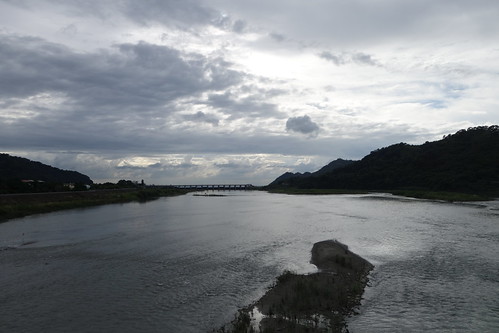
The Shigang Dam against a steel typhoon sky. The dam's north abutment (right) was destroyed when the 921 quake lifted the entire dam 12 meters but left the north abutment in its original location.

Rupert Hammond-Chambers writes in the WSJ under the title Taiwan's President Must Prove She Can Lead:
In fact, Ms. Tsai’s primary external challenge so far has been Chinese intransigence to her election. Along with the constant drumbeat of Chinese military modernization, China has poached a diplomatic ally, had Taiwan citizens deported from third countries to China and reduced by up to one-third the number of Chinese tourist groups visiting Taiwan.

Yet China’s provocative behavior has been calibrated to avoid a downward spiral of exchanges with Taiwan from which it would be difficult to recover without losing face, while at the same time to avoid rousing the U.S. into making a show of support for its longtime ally. Ms. Tsai has been careful to refuse China’s “one China” policy, but she has also stated that no outcome is off the table so long as Taiwan gets to determine its own future. This new normal in cross-Strait relations is unlikely to change in the next six to 12 months, with both sides focusing on higher priorities.
In the top paragraph, two of the assertions are just plain wrong. China did not poach a diplomatic ally in Gambia -- it had nothing to do with Taiwan at all -- and the deportation policy was settled on long before Tsai came into office. It is one of the conventional double standards of media and commentators to attribute all perceived negative moves by China to the desire to punish the DPP, never the KMT. *sigh*

The second paragraph shows that Hammond-Chambers, like many who watch Tsai, doesn't get her style. The leadership style of Tsai Ing-wen is characterized by a complete lack of drama. Tsai is quietly effective. Many observers confuse this lack of drama with a lack of leadership. False. Tsai does not need to demonstrate leadership. She simply leads. Part of this also is that leadership in the two societies is different -- simply put, in Taiwan a leader is the one who gives orders that others must obey, in the US a leader is one who proposes ideas that others choose to follow. Fundamentally, Tsai is leading, according to her cultural practices.

One thing that's really sharp is H-C's observation that China is constrained by the US -- if it harms the Taiwan relationship too much, it might make the US more active in supporting Taiwan.

Hammond-Chambers argues that Taiwan needs the TPP, but hopefully Congress will kill that corporate power grab, which will be a disaster for Taiwan's exports, environment, economy, and national health insurance system. What Tsai should be doing is negotiating with the intention of never joining. I am not of the school that trade treaties are absolute goods, and this one is a destructive stinker.

Tricky Taipei publishes the 5 Least Business-Friendly Practices in Taiwan, in response to another one of Ralph Jennings' Forbes laughers. Tricky discusses things that many of us have seen over the years, though I can't understand why anyone thinks Gogoro scooter is so great. You just have to look at the pictures and it's obvious: Taipei. Heavy on the styling and light on the substance -- can you put 3 sacks of bamboo shoots and tie six large lead pipes across the rear? Can it carry four natural gas tanks? Doesn't look like it. At present it is an overpriced toy redolent of the Taipei moneyed mentality -- if you are looking for the real thing, IMHO try something like a Kymco Queen 3.0, which I drove a couple of years ago on Green Island. Why not support that? But then -- it lacks the kind of status associations that brands attempt to create. To me Gogoro is what happens when things are designed as brands from the start: they are but overpriced status markers with little real worth, which describes essentially the entire world that branding creates.

Speaking of that, Mark Stocker, who works to create the branded world that created the OEM system in Taiwan by offshoring jobs from developed countries, writes in an irony-free post on how Taiwan doesn't know what it wants to be when it grows up (foreigners who write in these tropes of Taiwan's immaturity really set me off, brace yourself). Stocker's been peddling this stuff for ages (here), and his answer is, of course, positive thinking and branded firms (in an astonishing coincidence, Stocker sells branding advice). Stocker attacks the "pessimism" over Taiwan's future -- a future that itself is the creation of the sick surfaces-are-everything branded world in which "things are constantly asserted that smart people know are false" that Stocker has fought to build, and writes:
It surprises me that instead of supporting the world’s first fully-automated toll collection system (ETC), we attack the system for minor technical issues on launch day. Meanwhile, few people recognized that what Taiwan had achieved was a world’s first that could lead to interest in the technology from countries around the world.
The world's first? Wiki says it was Norway in the 1980s, while the tech itself was first proposed in the 1950s. "Minor technical issues on launch day" was not why the ETC was attacked. This kind of misrepresentation is why so many of us despise the branded world. Stocker simply ignores over all the problems with the ETC, especially when it was first implemented -- so obviously a rip-off designed to line someone's pockets. Initially the cost to drivers was high, and the bidding process on it stank. Who on earth could support that? In fact it was boycotted by consumer groups and carriage firms, who were furious that the MOTC slashed their subsidies via ETC. Then came the accusation that Far Eastern Transportation Corp had gotten the bid through bid-rigging and leaked documents, with the usual indictments. No wonder consumers are pessimists! Sure, after a decade, ETC kinda works. Stocker writes:
Anyone of these companies might have achieved what Sony achieved for the nation of Japan, but they were never given a chance because we the public didn’t support them. To the converse, we slowed and worse yet stopped their ascent. By jumping on the ‘criticize’ bandwagon, we have collectively crushed the very ideas and opportunities that could have driven the next generation of economic opportunities for this nation.
No Mark, it was not our criticism and lack of support that stopped them from becoming the next Sony. Rather, it was their corruption, their preference for surfaces over reality, and their indifference to the needs of Taiwan that has kept so many big firms from emulating the success of Sony for Taiwan.

I don't want to end this post on a negative note, so let me guide you to Martin Hiesboeck's excellent open letter to Tsai Ing-wen on 5 Bold Steps for Taiwan's future, including:
5) Last but certainly not least, swing open the gates and welcome international talent. Everyone with a science degree, some achievement in business, or money to invest, should be given free work permits and unlimited visas. Perhaps it's time to abolish work permits altogether. Why do 'foreigners' need separate ID cards? If they have worked and paid taxes for 5 years, they should automatically be eligible to apply for a Taiwanese passport. It is a farce that 90-year-old retired professors have to leave the country in which they have spent their entire lives every 3 months just because of antiquated immigration laws. Taiwan is not a Han-Chinese nation. It has one of the lowest birth rates in the world. The only way to keep up with your neighbors economically is by building the most diverse workforce in Asia. Taiwan's leading companies are stifled by lack of international talent, just ask their marketing teams. Foreigners meet unnecessary obstacles every step of the way, from work permits to ID cards to access to bank credit. Taiwan's universities cannot find good teaching staff, because salaries are ridiculously low and restrictions on hiring foreigners extremely cumbersome. Learn from Sweden, which welcomes talented people from around the world with open arms and therefore has the most vibrant tech sector outside the US.
To all those I would add that Taiwan needs to re-open its voc-ed institutions, which supplied so many of its small- and medium-sized business entrepreneurs in the heyday of the Miracle Economy.

Many other things could be said, but this post is already too long... back to work tomorrow *groan*.
_____________
Daily Link:
_______________________
Don't miss the comments below! And check out my blog and its sidebars for events, links to previous posts and picture posts, and scores of links to other Taiwan blogs and forums!

Tuesday, February 23, 2016

Succession Crisis among the firms

EastCoast_Andrew_176
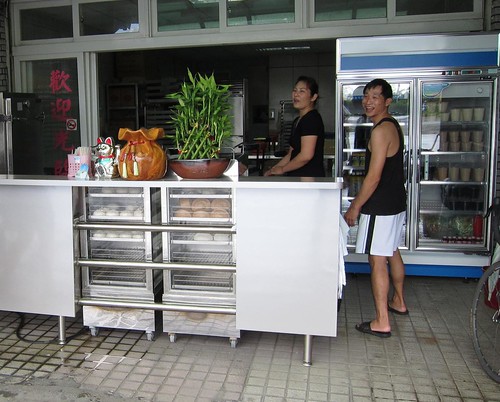
An old mantou place in Chenggong on the east coast.

Not a secession crisis, as is usually the case in Taiwan, but a succession crisis as the founders of Taiwan's family owned firms age. The latest case is the Evergreen group (Taipei Times):
The dramatic shift came two months after Evergreen Group founder Chang Yung-fa (張榮發) died on Jan. 20 and left a December 2014 will that named his youngest son, Chang Kuo-wei, (張國煒), chairman of Eva Airways (長榮航空) and the only son of his second wife, as his successor and the sole inheritor of his estate worth billions of New Taiwan dollars.

Chang Yung-fa’s eldest son, Chang Kuo-hua (張國華), led his two brothers by his father’s first wife in moving to dissolve the group’s top management team during an extraordinary board meeting, effectively stripping Chang Kuo-wei of the chairmanship, local media said, without naming sources.
Economist chart from 2011

In an editorial, the Taipei Times observed more generally:
The court battle over the inheritance of late Formosa Plastics Group chairman Wang Yung-ching (王永慶) is still unresolved and the fight among four brothers over the division of Mayfull Group resulted in the shooting deaths of three of the brothers. The fight over Evergreen once again makes it clear that the operation of family businesses has become the biggest problem of domestic business groups and is turning into a nightmare in terms of the sustainable operation of publicly traded companies.

Three-quarters of publicly traded Taiwanese companies are controlled by families and 10 families control one-quarter of the value of the TAIEX. The death of a company’s founder can jeopardize the existence of that company: Only one-third of family businesses survive the second generation of family operations, and a mere one-10th survive the third generation. Businesses owned and run by ethnic Chinese families remain in the hands of the family even when they are publicly traded. Infighting among heirs is one of the main reasons for fluctuation in these companies’ market value.
BBC was among the many media reporting on this over the years, this one from 2014....
But some analysts estimate that just one-third of these family-run firms - which account for up to 90% of the island's businesses - have a succession plan.

Further still, Yeh Yin-hua, a professor at National Chiao Tung University's Institute of Finance, says that some 60% of Taiwan's publicly listed companies are still being managed by their original and ageing founders.

About 20% are being run by second or third-generation family members, Prof Yeh says, with a remaining 20% having hired leaders from outside their founding families.
The BBC article observes that many of these founders are workaholics, instancing Terry Gou, the head of Foxconn, who works 16 hours a day and micromanages every detail, from prices to expenditures in excess of $100,000. It is difficult to make such individuals give up.

Although big firms get the most publicity, this is a problem throughout Taiwanese industry at all levels, part of the still more fundamental problem of getting smaller and family run Taiwanese firms, where granddad still runs everything by the seat of the pants, to adopt modern methods of management and operation (one reason so many firms moved to China was to continue to do avoid such upgrades). Things just become more critical when the business is a global multinational rather than a tool and die maker in Taiping.
_______________________
Don't miss the comments below! And check out my blog and its sidebars for events, links to previous posts and picture posts, and scores of links to other Taiwan blogs and forums!
Tuesday, May 25, 2010

US China Policy: Opposite Poles

My hat is off to Greg Torode over at SCMP, who performed a public service with an excellent piece on retired US Admiral Bill Owens and the Sanya Initiative.

I blogged on Bill Owens before, when FT failed to supply the right context for Owens (don't miss the comments on that post, they are very informative). Torode, by contrast, gives a complete picture of Owens' backers.
As someone who has experienced the most frigid extremes of the cold war between the US and Soviet Union, Admiral Bill Owens has made it his life's mission to try to prevent a similar chill freezing the emerging relationship between Beijing and Washington.

Talking to the veteran nuclear submarine commander and former vice-chairman of the US Joint Chiefs of Staff in his Hong Kong office, it is clear he is far from sure whether he will succeed. He speaks repeatedly of mutual suspicions haunting both capitals as well as the march of time that threatens the "enormous leadership" required to turn things around.

Already his fledgling Sanya Initiative - a private effort to foster trust and communication between retired military leaders from both countries - must struggle against those suspicions. He is not afraid, he says, to be branded a "panda hugger" back in Washington - a phrase long used as a pejorative in pockets of America's military-industrial complex.

If not exactly a precise return to cold war paranoia, Owens fears China and the US becoming locked in a military, political and economic competition from which only the rivalry of great nations, not the partnership, will be allowed to thrive.

"I think time tends to run out on these things as the attitudes on both sides harden ... as the Chinese military grows, the US will react to it in a competitive way," he explains. "We have only a limited amount of time remaining to find ways to ... become more like friends than competitors and genuinely engage in addressing the issues that the world faces.

....


He does cast himself, however, as someone who believes US behaviour and actions - Taiwan arms sales, for example - can shape China's responses by building trust. Increasingly, that puts him at odds with many military and security analysts who sense China is already determined to present a bi-polar challenge to US primacy.
Why perhaps does Owens hold these positions? Torode deftly informs us of Owens' longtime business connections to the PRC:
After retiring in 1996 as vice-chairman of the Joint Chiefs of Staff - the second-highest ranking military official in the US - Owens became chief executive of telecoms giant Nortel and the attempted satellite start-up Teledesic. Both gave fresh insight into China's future as he dealt with dynamic mainland firms such as Shenzhen giant Huawei Technologies.
In other words, as discussed in the previous post, Owens is a businessman with longtime connections to the PRC. What is the Sanya initiative? It's basically The Remains of the Day with Chinese characteristics. Torode supplies more detail....
Within the administration there is also an unease about the involvement in the Sanya Initiative of General Xiong Guangkai , the former deputy chief of the PLA General Staff and military intelligence supremo. Other generals include General Yu Zhenwu and Vice Admiral Zhao Guojun, former commander of the PLA Air Force and commander of the East Sea Fleet, respectively. The US side includes Admiral Joseph Prueher, former US ambassador to Beijing and head of the Pacific Command, and General Dennis Reimer, former US Army chief of staff. As well as formal discussions, the group have held banquets, fishing trips and met together with their wives.

Funding comes from former chief executive Tung Chee-hwa's China-US Exchange Foundation, Singapore's state investment fund Temasek as well as individuals including former AIG Insurance chief Maurice Greenberg, Owens himself and Vincent Mai, the chairman of AEA Investors, the boutique US private equity firm that employs him.
Note the interconnections -- AIG is an old Shanghai insurance firm, and Greenberg also wrote a similar piece about China for CSIS a while back. It's the emerging global financial nexus of US financial firms and Greater China, fronted by US businessmen who use the titles of yesterday to legitimate their business activities of today. Really, about the only surprising thing is not finding Goldman Sachs' name here.

It would be far easier to buy Owen's piety if his backers were not who they were. As I noted before:
I suppose at this point I should be ranting, but instead I'll simply confine myself to noting, as Ken Silverstein did in Harper's last year, and Carsten Holtz did in FEER two years ago, that the class that shapes our China policy is populated with individuals who also do business with China. The sad sickening Charles Freeman "debate" simply failed to address this urgent problem.
A counterpoint to Owen's views appeared in the UK Prospect this week. It pointed out, basically, that the emerging cold war between China and the US is not merely driven by Chinese expansionism, but also by the nationalism that defines China's economic behavior:

The signs of decoupling are all around us. In January, Google claimed that its proprietary source code and the Gmail accounts of human rights activists had been targeted in a sophisticated cyber-attack from inside China. In response, the company threatened to quit the Chinese market. It remains unclear whether the Chinese government played a direct role in the attacks, condones them, or is simply unable to stop them. The government promotes “indigenous innovation,” a vaguely articulated plan to encourage homegrown intellectual property and the companies that develop it. Some of that innovation has been stolen. Google’s charges placed the issue of Chinese cyber-espionage in the headlines, but the problem has been building for years. Following the Gulf war in 1991, the Chinese government saw the need to invest in the information warfare capabilities of the People’s Liberation Army. At first, cyber-espionage was mainly confined to the military realm, but in the past three years it seems to have expanded into the corporate world.

Beyond the espionage problem, China’s ambitions have provoked a sharp response from high-tech companies in the US and Europe. They charge that China’s policy of favouring products made with domestically created intellectual property proves that Beijing is no longer even pretending to observe international intellectual property rules. That’s why the Google story is not really about censorship or state persecution of dissidents. It is mainly about Baidu, Google’s main Chinese rival. Baidu already holds the dominant market share within China, and if Google leaves or is forced out, Baidu will benefit the most. Companies such as Baidu have growing influence within China’s state bureaucracy and have also become symbols of pride for the government and public.

In January, the US government announced a plan to sell $6.4bn in weaponry to Taiwan. This kind of deal was sure to provoke an angry response from the mainland, and it did. But this time Beijing added an extraordinary threat: the imposition of sanctions on US aircraft manufacturer Boeing, which dominates China’s airline market, worth $400bn over the next 20 years. Were Boeing to lose this business, some of it would surely fall to European aircraft-maker Airbus. But over time, more of it would move to emerging Chinese companies.

The predicaments of Boeing and Google illustrate how the US and Chinese brands of capitalism are pushing Washington and Beijing towards conflict. For the moment, the governments’ incentives for co-operation outweigh any advantage that either can find in direct confrontation. But the forces that divide them are too large for either side to fully control.

Even if Owens is sincere in his views, the tragedy of Adm Owens is that bringing the two nations closer economically is precisely what is driving them apart. Complaints about China's economic nationalism are now commonplace among western businessmen in China. Economic integration does not necessarily bring peace -- just look at the world prior to the first world war. In that context, the problem of China is more like the problem of Germany and the UK at the end of the 19th century, with the rising power of Germany, a declining UK, widespread economic nationalism, trading blocs and colonies.... As Twain said, history does not repeat itself, but it does rhyme.

When nations start spouting rhetoric like "assuming our rightful place" and engaging in exuberant displays of nationalism, take cover. The result is usually piles of corpses.
_______________________
Don't miss the comments below! And check out my blog and its sidebars for events, links to previous posts and picture posts, and scores of links to other Taiwan blogs and forums!

Sunday, April 12, 2009

Moody's Pulls Out of Taiwan

Lots of interesting economic stuff out there this week. First, those of you who are tracking the story of Chinese drywall poisoning the US, well it has now gone national -- from Florida, to post-Katrina New Orleans, and now all over the US during the housing boom. My wife and I avoid stuff from China like, well, the plague.

Big story this week was pull-out of Moody's Investor's Service firm, of which the Taipei Times editorialized:
The untold story is the lack of interest foreign investors have in corporate bonds and securitized debts from Taiwanese companies, which has long limited the scale of global ratings agencies’ business in Taiwan and is now forcing Moody’s to close its Taipei office. Moody’s pulling out of the local market is a warning sign for Taiwanese capital markets.

In the face of the global financial crisis, it makes sense that the New York-based company itself is undertaking business restructuring to maximize resource allocation. The question is: Why is Taiwan under the spotlight this time?

Many market watchers said that the Moody’s move reflected the fact that the company was facing a saturated market dominated by rivals Fitch Ratings Ltd and Standard & Poor’s Ratings Service.

But that’s a short-sighted assessment. What these market watchers seemed to miss — as suggested by Polaris Research Institute president Liang Kuo-yuan (梁國源) in an interview with the Central News Agency on Friday — is that the Moody’s withdrawal is indicative of Taiwan’s slower pace in internationalizing its capital markets.

Efforts to internationalize the nation’s capital markets are the best way to develop Taiwan into a regional fundraising hub as the government planned. Therefore, the Moody’s closure rings a warning bell in a country where the government is slow to revise outdated financial regulations and its companies are not interested in developing their global visibility in terms of bond issues.

Another statistic released by S&P’s local partner, Taiwan Ratings Corp, showed how few Taiwanese companies have contracted international ratings agencies to evaluate their corporate credit ratings. It said only around 50 of some 1,200 listed companies in Taiwan have their credit reviews published by ratings agencies on a regular basis.

This figure suggests that nearly 96 percent of Taiwan’s listed companies didn’t feel the need to hire ratings agencies to conduct a credit review of their corporate bonds or securitized debts. There are many reasons behind this, but the simple answer is these companies are just too locally focused and cost-sensitive to do so.
The "slow pace" of internationalizing Taiwan's capital markets.... upgrading our financial markets is like fusion research in the states: success is always just a few years away. I was reflecting on this the other day when someone overseas wanted to do a wire transfer into my local account, and found out that our bank, authorized to handle foreign currency, lacks the routing codes that international banks routinely use.

APROC, ah, sweet nostalgia...

The Taipei Times was too kind to invoke "cost sensitivity" as the reason local corporations don't want bond rating firms like Moody's looking at their books. The real reasons are probably more prosaic -- the routine use of multiple sets of books for businesses at all levels -- one for the taxman, one for the investors, and one for the owners -- the complex cross-ownership systems that actually put firms in the hands of relatives and descendants, with funds flowing freely from one corporation to another (see the Rebar Scandal) must have made it difficult for auditors to understand the financial status of individual firms -- there was even a major semiconductor firm here that used to advertise that its ownership was not composed of relatives (they were all school buddies, just as bad). And imagine when someone tried to explain to the Moody's people that, well, they couldn't make any decisions because the boss' wife has all the chops.....

Investors' lack of interest in the bond markets has long been a problem for Taiwan. Back in 2005 the Taipei Times ran a piece that noted that prior to that year, foreign investors had shown little interest in bonds from Taiwan companies.

_______________________
Don't miss the comments below! And check out my blog and its sidebars for events, links to previous posts and picture posts, and scores of links to other Taiwan blogs and forums!

Wednesday, October 15, 2008

Hi-tech Taiwan: Upgrading and Innovation

A couple of interesting pieces out this week on the problems Taiwan is facing in the global economy. First Businessweek has an article discussing the problems Taiwanese makers in branding and innovation...

"If you look at the semiconductor industry in Taiwan, it is very competitive globally with a gross margin of between 30% and 50%," says Peter Tsao, vice chairman of Deutsche Bank's global technology group. Taiwanese semiconductor design is so effective, he says, that it has allowed Taiwan to take away market share from the US, reversing the direction of business migration: whereas US companies would set up their manufacturing centres in Taiwan, it is now the case that Taiwanese semiconductor companies are establishing their own design centres in Silicon Valley.

The situation is tougher when it comes to electronics assembly, or original equipment manufacturing (OEM), which comes with a gross margin of only around 10% – the vast majority of the value-added going to the owner of the finished-branded product, rather than to the manufacturer.

Companies that operate in this area – such as mobile phone manufacturer Foxconn – have not only faced a slowdown in demand, but also a less favourable environment in their main manufacturing base, China. Wages have crept up thanks to a new labour law and tax concessions have been removed, putting Taiwanese companies on a more level playing field with their Chinese competitors.

One thing that makes Taiwan stick out from its technological neighbours is the lack of big brands – Japan has Sony, Korea has Samsung and China has Lenovo. Taiwan does however have some companies that have gone beyond assembly to target the consumer directly.

Computer-maker Asustek Computers has recently gained some success with its Eee PC, a scaled-down notebook computer that was popular in the US last Christmas. Acer has been focusing on developing its own brand. But even though it is one of the world's biggest notebook companies, it is not obvious how much of that is due to the brand rather than the company's low prices.

"Acer is one of the only Taiwanese brands that has been recognised. But does it have brand equity? Are you willing to pay more for an Acer than for another computer? No!" says one Taiwanese tech specialist.

The article is quite interesting, and one expert cited opines that the best route to take is for Taiwanese firms to be bought up by Chinese firms interested in globalizing themselves.

Meanwhile the always excellent Jon Adams writes on Taiwan's manufacturers as they fight falling exports (Ma save us!) with small PCS:

An upstart Taiwanese company blazed the trail. Now, the world's top three computer makers are hot on its heels. The prize: dominance of the emerging market for low-end, mini-laptop computers.

The big three — the American companies Hewlett-Packard and Dell, and Acer of Taiwan — are betting that such products will have broad appeal. They are offering these laptops, also known as netbooks, in the developing world as an affordable alternative to desktops and high-price laptops, and advertising them in the United States and other advanced markets as a second or third computer used mostly with the Internet.

And in belt-tightening times like now, they are hoping consumers in mature markets will also snatch them up as a more affordable option.

"It's a potentially exciting area, particularly when people worry about the U.S. economic outlook, in which people might want to cut spending," said Steven Tseng, an analyst at ABN AMRO in Taipei. "So it fits into the macro trends quite well."

There is no clear-cut definition for the segment, and analysts say the lines get blurry. But most of the new crop of minicomputers have screens that are less than 10 inches, or 25 centimeters, across diagonally and priced from about $300 to $600, but still have full operating systems like Windows XP or Linux that can support third-party applications.

The new market reflects a broad shift toward mobile devices and away from desktop computers, and changing tastes in mature markets like the United States and Europe, analysts say.

"Three or four years ago, this kind of product couldn't have had such a big success, because people were still purchasing their first laptop," said Eszter Morvay, a researcher at the technology consulting company IDC in London. "Now, their needs are becoming more sophisticated — the consumer has evolved. They might just need an Internet device, or a second or third laptop for work, or for mom or the kids. So this is giving a boost to the market."

Until recently, the big computer makers paid scant attention to this niche. They had built mini-laptops — like Toshiba's Libretto — but they were either too expensive (the Libretto costs about $2,000) or poorly designed to catch on in the mass market.

Then, about a year ago, Asustek, a Taiwanese computer maker little known outside the country, introduced the Eee PC. Priced under $300, the first version featured a seven-inch screen and used the Linux operating system. The idea was simple: Consumers are increasingly using laptops for surfing the web, checking e-mail messages and viewing photographs, and do not need all the bells and whistles of a full-blown computer. The Eee PC was also an attempt to offer a commercial version of the XO laptop, the product of the nonprofit One Laptop Per Child project, which aims to distribute computers in the developing world.

The Eee PC was a surprise success. Last year, it hit the top of the "most wished for" laptop list on Amazon.com. That got the industry's attention. Now, the three leading computer makers have released mini-laptops.

Actually, Taiwan's firms are very innovative in technology, but the problem is that many of the small and medium sized firms that drive Taiwan's economy lack similar innovativeness in financing, management, and administrative practices. Though I hear they are quite clever in the accounting department....

Friday, December 28, 2007

New China Labor Law to Gobsmack Taiwan Businesses There?

In the last few weeks the media has been chronicling a swelling anxiety among Taiwanese firms in China that a new Chinese labor law is going to make it extremely difficult for Taiwan firms to do business there. Taiwan Journal recently offered a piece on the issue:

Many Taiwanese businesses in the Pearl River Delta area of China may soon shut up shop, in order to dodge surging labor costs brought on by China's new Employment Contract Law. The new law is widely believed to contain the world's most complete regulations governing labor-related issues, and is scheduled to take effect on Jan. 1, 2008.

"The situation will be miserable," predicted a Taiwanese businessman on condition of anonymity. "Big firms will take the lead in calling it quits, followed by their suppliers of raw materials and other supporting factories," he added Dec. 20.

An unofficial survey shows that one third of the Taiwanese firms in the area either have halted their operations or plan to do so in the near future. The area of the Pearl River Delta includes such regions as Dongguan, Shenzhen, Guangzhou and Zhuhai.

With the implementation of the new law on the horizon, businesses in the area are worried about the impact on their bottom lines. Taiwanese firms already have to bear various welfare costs, including pension allocation and medical insurance.

Industry insiders estimate the new law will boost manufacturers' labor costs by an extra 20 percent. In addition, the new law stipulates that employers must offer open-ended labor contracts to employees with over 10 years of service. Employers must also provide severance pay in case of mass layoffs.

The article is also one of several recently to claim that Taiwan firms in China may be returning to the island. According to the article, there has been an increase in demand for land in Taiwan's industrial districts. The Financial Express had a more detailed report earlier this month:

“To be frank, in the processing trade here, the biggest advantage was cheap labour. But now that’s going to change,” said Hsieh Ching-yuan, vice-president of the Taiwan Businessmen’s Association in Dongguan, an industrial hub in the Pearl River Delta in southern China. Calvin Chang, general manager of Jinghua China Investment Consulting in Shenzhen, said the law could increase labour costs by 8% next year. He expects many firms to shift to inland provinces like Jiangxi and Hunan or countries such as Vietnam. “Hundreds of small-sized Taiwan-invested firms in Dongguan and Shenzhen will be dead next year due to the new law,” he said.

The results have been predictable:

Companies from IT equipment makers to liquor producers have been playing a “fire and hire” game, rushing to terminate existing contracts and rehire staff on new contracts to start the clock ticking anew on their length of service.

Huawei Technologies Co Ltd made headlines by requiring some 7,000 employees with more than eight years’ service to “voluntarily resign” and reapply for their jobs.


According to reporters, the purpose of the new law is to force companies to upgrade production technology, and stimulate domestic demand by putting more money in workers' pockets, as well as give labor a greater share of the disproportion of returns that are currently going to capital. Given the status of "law" in China, I'm skeptical that the new law will be widely applied. More likely that a few chickens will be executed to scare the monkeys, and it will business as usual for most firms.

Monday, September 10, 2007

Gaming Industry Exhibition

Evening traffic on Fuhsing N. Rd. in Taipei.

On Friday morning I took the wife and kids over to the gaming industry exhibition at the Taipei World Trade Center, Building 2.

In Taiwan, this industry, building off synergies from Taiwan's electronics and machinery industries, makes everything from those coin pusher machines seen in night markets, to complex electronic Baccarat machines with robot dealers. Many of the machines more familiar from night markets, such as crane machines, do not generate high revenues, while demand is stagnant. Hence, many makers are seeking to upgrade into electronic gambling machines and gaming machines. Other firms have sought R&D partnerships with foreign makers and with local academic institutions.

A robot dealer.

According to the industry's magazine, there are 4,228 legally registered arcades in Taiwan. The legal framework is by far the biggest issue faced by arcade managers. By administrative district, Tainan county leads with over 700 arcades and climbing. In Tainan city, by contrast, the city will not re-issue permits for arcades when they expire, meaning that the number of arcades is on the decline. Similarly, Pingtung is rewriting its regulations and at the moment, applications for new arcades are being suspended. Taipei City has only 11 legal arcades -- the price of land being so great that no one can make money, even though the city is still accepting applications. In all jurisdictions legal arcades are frequently sites of illegal gambling, meaning that they are often shut down in crackdowns.

Kiddie rides.

My son tests his manhood.

Testing a dancing machine.

This machine randomly tosses balls in the air.

Electronic gambling machines.

My son in the tank simulator.

The fortune telling machine. My fortune is here -- they have the usual quality control problems with the English. *sigh*

No booth babes at this show. Just some pretty salesgirls.

The kids enjoyed themselves, and the industry itself is a good example of how small Taiwan firms have leveraged their skills and connections to move into new markets -- most of these firms have less than 15 years experience in the industry, and none is very big. Amusement is big business, fiercely competitive, and highly R&D intensive; nearly every firm emphasized its commitment to new product R&D.


Tuesday, August 14, 2007

Gary Wang: 28 years

Prosecutors have asked for 28 years in the case of Gary Wang, yet another in a long line of businessmen who allegedly regarded their companies as personal playgrounds, wrecking the lives of thousands in the process. Wang's father, head of the once-powerful Rebar group, is on the run in the US as a result of that group's collapse (my loong article on the Rebar case)(another long post on financial regulation). Taiwan News has the call:

Taipei prosecutors indicted Eastern Multimedia Group Chairman Gary Wang (王令麟) and 31 others yesterday on charges of committing financial crimes that allegedly netted Wang and his family NT$41.2 billion in illegal gains from 1998 to 2006.

Wang, suspected to have masterminded the high profile crimes, should be put behind bars for 28 years and fined NT$1 billion, prosecutors suggested in a written indictment.

"Prosecutors specified the 28-year imprisonment for Wang based on clear evidence they have in hand proving Wang and his accomplices premeditated the crime," said Fred Lin (林錦村), spokesman for the Taipei Prosecutors Office.

Once the most successful media tycoon in Taiwan, Wang's indictment yesterday made Taiwan judicial history for the number of crimes Wang was accused of committing.

Wang, who was taken into custody June 17, has violated nine laws, prosecutors said: the Securities Exchange Act; the Banking Act; the Law Against Accepting Bribes; the Companies and Corporations Act; the Government Procurement Law; the Insurance Law; the Act Governing Bills Financing Business, and the Commercial Account Law.

They added that Wang also violated criminal laws by committing fraud, forgery and breach of trust when he collaborated with family members, relatives and subordinates to embezzle funds of companies under his group and the Rebar Group, which was founded by his fugitive father Wang You-theng (王又曾).

The senior Wang was one of the most powerful businessmen in Taiwan, a former member of the Central Standing Committee of the KMT, with family members sitting on the boards of over thirty companies. Eastern Multimedia, Taiwan's largest media group, was a reliably pro-Blue media outlet. The major issue with the indictment, according to AP, was a sale to the Carlyle Group in the US:

Taipei Prosecutors' Office spokesman Lin Ching-tsun said Gary Wang, chairman of the Eastern Multimedia Group, made illegal profits from the sale of a majority stake of a cable operator under the group to the U.S.-based Carlyle Group.

Taiwanese conglomerates are run by families, and Wang's wife and children were also indicted as well. Although the article doesn't really mention it, sadly, thousands of ordinary workers lost pensions and investments when Rebar crumbled.

Wednesday, April 18, 2007

Q-Shops: Wave of the Future?

Even more convenient convenience stores....

Taiwan's first two Q-Shops were set up by the OK convenience chain store last November under a promotion program for intelligent stores presented by the Commerce Department under the Ministry of Economic Affairs.

Customers can buy groceries, snacks and drinks from vending machines at the unmanned Q-Shops, using cash or credit cards. Clients can talk to clerks or security guards via intercom at each vending machine if they have any problems with the machines.

According to the statistics, more than 35,000 people made purchases at the two Q-Shops for total transactions of NT$580,000 (US$17,575) since their opening November 28 last year. Only 5 percent of the customers used credit cards.

Yang Hui-wen, a section chief of the Innovative Digitech-Enabled Applications and Services Institute (IDEAS) under the Institute for Information Industry, which offers software assistance to the project, noted that with the unmanned convenience stores reducing significantly their costs in personnel and rent, the Q-Shops had good profit margins, although the transactions were small.


Plans are to expand unmanned shops into various other businesses such as gas stations and digital photo printing.