Showing posts with label Shanghai Communique. Show all posts

Saturday, March 25, 2017

Nelson Report: Rumors of a 4th "Communique"

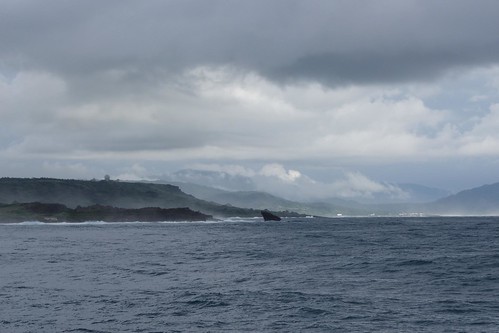
The coast off Kenting.

Rumors of the 4th Communique driven by Henry Kissinger under which the US sells out Taiwan are circulating in the local media... last week Randall Schriver, longtime Taiwan expert, said it was "unlikely". But the government put in a letter in the NYTimes pleading for the US not to sell out Taiwan for an agreement with China on N Korea. Some sort of agreement of this nature is always mooted whenever there is trouble with N Korea. As an expert explained to me, as Nork's nuke program develops the ability to put nukes on US western seaboard cities, pressure for a deal with China on N Korea will grow, and Taiwan is an obvious bargaining chip. What's amazing to me is that even after all these many years of dealing with China and N Korea, anyone can imagine that either party will keep a bargain....

+++++++++++++
US-CHINA/TRADE/TAIWAN...there's a rumor we're trying to track down that long-simmering dissatisfaction with the increasingly unwieldy US-China "S and ED" annual meetings (too many bureaucratic players leading to too much blah blah blah and consequently too little "deliverables") so the Trump folks may cancel the whole thing OR...this strikes us as the more plausible version...separate the "S" for security and "E" for economic into two more focused confabs.

Presumably a decision on this will be made in time for (and thus perhaps announced at) the early April Trump/Xi Jinping summit here in DC. No doubt you've also heard rumors that there will be a "4th Communique" resulting from this...and we frankly have to say we think there's a better chance of passing Trump/Ryan Care tomorrow morning...but perhaps you know better? For sure there are folks on Taiwan taking the rumor seriously:

Gov't concerned over reports US, China may sign 4th communique
The Taiwanese foreign minister says the government is worried the US and China will issue another communique that voices American support for the One China Principle. The Chinese language publication Liberty Times earlier carried a report that said former Secretary of State Kissinger was pushing for another communique that said that the US believed there is but one China and Taiwan is a part of China. This would overrule the last joint communique issued by the US and China, which said that while the US would not support either an independent Taiwan or "Two Chinas." Some reports have identified the upcoming visit to the US by Chinese President Xi Jinping as an occasion for the signing of such a document, possibly also limiting arms sales to Taiwan. Speaking to the legislature, Foreign Minister David Lee said, "We told them (the U.S.) that we don't want to see (the possible signing of a fourth communique) happen," and that the government has said that it hoped the US would stand by the Taiwan Relations Act and Six Assurances. He also mentioned that the Americans had spoken to their views of Taiwan, but FM Lee declined to specify what that meant.

Source: http://www.chinapost.com.tw/taiwan/intl-community/2017/03/23/494116/Govt-concerned.htm

Your Editor : never forget that one of Kissinger's hallmarks is self-aggrandizement, and while god knows the man has carved a legitimate role for himself in history, if he's pushing for Trump to completely trash the Shanghai Communique's real meaning (that is, the US takes no policy position on whether Taiwan is part of China) especially given what's behind the Trump/Tsai phone call...the strong support for Taiwan within his Administration and on Capitol Hill, not to mention the coming US arms sale package (?)...then we have to question the sanity of all involved.

But that leads us to a totally serious concern: Chinese officials have taken to declaring with a straight face that President Tsai is "moving toward declaring independence", and that proof of this is her "failure to endorse the '1992' consensus in language being demanded by Pres. Xi."

This risky, factually challenged demand thus puts Beijing in the position of deliberately risking the "status quo", since literally everything Tsai has said and done since declaring for the presidency a couple of years ago has been exquisitely calculated not to upset the existing Cross Strait status quo, despite pressures from her party's more extreme Pan Greens.

Worse, perhaps, to put "teeth" in this demand, political players in Beijing have taken to threatening a "unification law"...presumably to create the "lawful" threat of the use of force to "enforce the law"...as has been seen via China's armed Coast Guard in various maritime disputes with the neighbors.

If Kissinger wants to push a 4th Communique he might want to turn his talents to avoiding a deliberately set "crisis"...by Beijing?
_______________________
Don't miss the comments below! And check out my blog and its sidebars for events, links to previous posts and picture posts, and scores of links to other Taiwan blogs and forums!

Friday, November 06, 2009

The Once and Future US Retreat on China's Colonial Expansion?

Apologies for the light blogging; just swamped with work this week.

The US State Department's latest version of its background notes on Taiwan are out, so it is appropriate that we glance at US-Taiwan-China relations....

The Taipei Times hosted a commentary today from former Japanese diplomat Hisahiko Okazaki. Its major point:
Through the 37-year history of US-China engagement, the US has consistently retreated in the war of semantics about Taiwan. The US has been unable to muster points against the steel wall of one-party dictatorship. It lost inch-by-inch every time. Each time, however, Washington reassured the US public that its position hadn’t changed.

How deceptively the US position had eroded can be seen in the comments made by Clinton. He began his remarks on the “three nos” by stating that he was reiterating US policy on Taiwan but not specifying the time of the previous remarks, whether it was during his meetings in Beijing or much earlier. Then national security adviser Sandy Berger said the US had simply repeated its basic position.

In fact, the US has consistently shifted its position. It started with an admirably objective statement by then national security adviser Henry Kissinger in 1972: “The US acknowledges that all Chinese on either side of the Taiwan Strait maintain there is but one China and that Taiwan is a part of China.”
The piece isn't bad in its intent, but that last paragraph is completely wrong. The Kissinger statement marks the beginning of the retreat, not the last outpost of sanity, for Nixon had agreed to throw Taiwan under a large public transportation vehicle (see here, here for fascinating Nixon/Kissinger exchange on Taiwan independence movement)....
However, accounts of President Nixon's secret talks with PRC Premier Zhou Enlai in China in 1972 reported that Nixon made promises on the question of Taiwan in return for diplomatic normalization that went beyond the communique issued at the end. The Carter Administration later called the promises: "Nixon's Five Points." Also, according to Assistant Secretary of State Stanley Roth's March 1999 testimony, Nixon pledged no U.S. support for Taiwan independence (second time after Kissinger's 1971 promise): "We have not and will not support any Taiwan independence movement." With the release on December 11, 2003, of declassified memoranda of conversation of the secret talks between Nixon and Zhou, there was confirmation that Nixon stated as first of Five Principles that "there is one China, and Taiwan is a part of China. There will be no more statements made -- if I can control our bureaucracy — to the effect that the status of Taiwan is undetermined." (source)
The Nixon-Kissinger dialogue linked above highlights another ridiculous aspect of the Shanghai Communique: nobody consulted the people of Taiwan. If you don't consult the people whose fates you are deciding, you can't blame them for refusing to go along. In fact Washington's position hasn't changed: the status of Taiwan is undetermined, as it most recently reiterated in 2007 when UN Sec-Gen Ban Ki-moon rejected Chen Shui-bian's letter. What has changed is the obfuscation that swirls around that position, as well as the strategic calculus in Asia, and of course, the effectiveness of PRC propaganda.

Meanwhile SCMP reported today that the Chinese want Obama to sell out Tibet:
Diplomats from the world's two most influential nations are still negotiating details of the summit between Obama and his Chinese counterpart, Hu Jintao. The Chinese side has suggested Obama state that "Tibet is part of China's territory and the US opposes Tibetan independence", the Chinese envoys say.

Obama will visit Shanghai and Beijing between November 15 and 18. An agreement on this most sensitive political issue would be a triumph for Beijing and could help end deadlock on strategic issues, though human rights campaigners and the US Congress would be bound to criticise it.
The article says that while it is not likely Obama will make a public declaration, a behind-closed-doors agreement is not out of the question. Brrr.....
_______________
Daily Links
_______________________
Don't miss the comments below! And check out my blog and its sidebars for events, links to previous posts and picture posts, and scores of links to other Taiwan blogs and forums!

Tuesday, September 16, 2008

Nixon-Kissinger Exchange on Taiwan

Some fascinating stuff is out there now. Here is an exchange that gives an interpretation of the Shanghai Communique that is wildly at variance with how that Kissinger is typically portrayed on Taiwan:

+++++++++++

Nixon: I noticed in the Washington daily news summary, the editorial, they made it to be critical of the fact that there was no mention of the Taiwan Independence Movement [in the Shanghai Communiqué].2 Let me ask, is the Taiwan—that source is interesting because that’s a more conservative paper. But is the Taiwan Independence Movement, is violently opposed to Chiang Kai-shek; violently opposed by the Chinese; and violently opposed to the Japanese, isn’t it? Am I wrong? Or the Japanese—

Kissinger: Well the Japanese haven’t taken a position on it, but it’s—

Nixon: What in the hell is the Taiwanese Independence Movement all about?

Kissinger: It’s not a significant movement now. It’s violently opposed by both the Chinese Governments. Chiang Kai-shek had locked up the leader of the Taiwanese Independence Movement, and he’s now in this country as an exile.3

Nixon: I know.

Kissinger: And we had major problems with Chiang Kai-shek when we let him in here.

Nixon: That’s right.

Kissinger: So—

Nixon: And with the Chinese in the PRC.

Kissinger: And with the PRC. But I noticed somebody must be feeding that because The New York Times, which never used to give a damn about Taiwan, had an editorial about that last week too.4

Nixon: On the independence movement . . .

Kissinger: Yeah.

Nixon: Do you think it’s out of State? Or could there be somebody pushing the Taiwan Independence Movement? That’s so goddamn—have you ever heard of the Taiwan Independence Movement?

Kissinger: No.

Haldeman: No. Not enough to matter.

Kissinger: I can’t speculate.

Nixon: But we haven’t, the other thing, I didn’t see anything in the State Department papers indicating that we ought to support the Taiwan Independence Movement.

Kissinger: Absolutely not.

Nixon: Did we?

Kissinger: No.

Nixon: There’s some kind of flap on it. Did Rogers raise that in his—

Kissinger: No. Well, they raised it at—

Nixon: At the end?

Kissinger: Well, they raised it at the end. At the end he raised it.

Nixon: He raised it at the end? What did he say—you ought to take note of this?

Kissinger: But he never raised it in the preparatory papers they gave us, never. At the end he did raise it among 500 other nit-picks.

Nixon: What 500?

Kissinger: Well, 18, 15. But in this catalog of nit-picks there was the Taiwan Independence Movement. But our formulation doesn’t even preclude, it states it has to be settled by the Chinese themselves. Naturally the Taiwanese are Chinese.

Nixon: Are Chinese.

Kissinger: If they want to secede, that’s their business.


Nixon: Well—

China, March–December 1972 849
848 Foreign Relations, 1969–1976, Volume XVII
1 Source: National Archives, Nixon Presidential Materials, White House Tapes, Oval Office, Conversation No. 532–17. No classification marking. The editor transcribed the portion of the conversation printed here specifically for this volume.
2 Possible reference to Milton Viorst, “Has Anyone Asked the Taiwanese?”, Washington Evening Star, March 11, 1972, p. A–5.
3 Reference is to Peng Ming-min. See Documents 65, 91, and 178.