Showing posts with label 2016 Election. Show all posts

Wednesday, February 03, 2016

Paper on Parade: Political Economy of Cross-Strait Relations: is Beijing’s patronage policy on Taiwanese business sustainable?

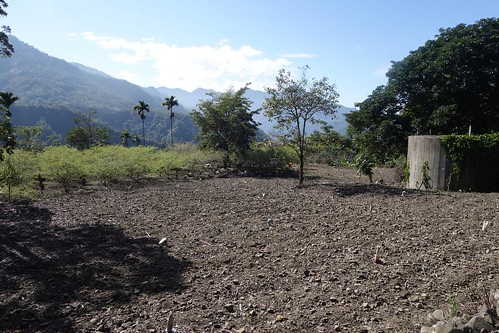
A farm above Namaxia.

Bloomberg ran a story this week on Taiwanese businessmen who had been speculating in Yuan derivatives and got burned when the Chinese economy slumped. So many years of articles explaining that derivatives are a bad idea, and people are still buying them. But the loss was like a metaphor for dealing with China: initial gains, followed by steep costs...

Time again for this blog's regularly irregular feature, Paper on Parade. A friend flipped me this article on Taiwanese businessmen in China: Yi-Wen Yu, Ko-Chia Yu and Tse-Chun Lin (2016): Political Economy of Cross Strait Relations: is Beijing’s patronage policy on Taiwanese business sustainable?, Journal of Contemporary China, Feb 2016. It discusses the failure of Beijing's policies for Taiwanese business and to use business as a pathway to annexing Taiwan, a failure thrown into stark relief by the refusal of Taiwanese businessmen in China to come home to vote for the pro-China party. The authors write:
Via quantitative analysis and interviews, this article has found that things have been moving in a different direction: the rise of economic nationalism and local protectionism is undermining and constraining the credibility and sustainability of Beijing’s patronage policy. The new story is that with the growth of Chinese state-owned enterprises (SOE) and local private firms, Taiwanese businesses are being crowded out of China’s market. As a result, cross-Strait economic integration seems to have entered a period of stasis with regard to both direct investment and trade. Meanwhile, with the growth of nationalism, opposition to the patronage policy from China’s hawks and society has been emerging. Lastly, Taiwanese business, as a strategic linkage community targeted by Beijing, is losing its clout on both sides of the Strait, as well as its role as leverage in cross-Strait relations.
The article reviews two basic models of the Cross-Strait dynamic, and shows that both assume that Beijing has absolute control over its own domestic actions. They then point out three assumptions that many of us have attempted to refute over the years, especially the inevitability thesis:
In summary, most of the existing literature is based on three assumptions: firstly, domestic constraint on Beijing’s Taiwan policy is limited or meaningless; secondly, the growing economic integration is inevitable; and thirdly, Taiwanese business groups could be a leverage in cross-Strait relations.
What are the domestic constraints?
since the rise of economic nationalism and local protectionism in mainland China, local governments and economic departments have selectively ignored Beijing’s political patronage policy towards Taiwanese business and turned to favor SOEs and local firms. As a result, Taiwanese business has been crowded out of the Chinese market.
The article points out that economic nationalism in China has made it difficult to sell the idea of economic privileges for Taiwanese to Chinese actors. The authors also observe that the same process is happening in Taiwan -- the cooperation between Taiwanese big business and the CCP has been met with economic nationalist resistance in Taiwan, and Big Businessmen were unable to create a victory for the KMT in 2014 (and as we have seen, in 2016). Parallel domestic constraints affect both Chinese expansionist parties in their respective domains.

This same protectionism is occurring at the local level in China. In the 1990s Taiwanese businessmen were courted and could get tax breaks, land, and favors from local governments. But that "golden age" is long gone. Local governments now favor local state owned enterprises and local businesses over Taiwanese.

This development is important, because it swamped the effects of Ma Ying-jeou's alliance with the CCP after 2008. The authors note:
Yet, an interesting finding is that prior to the enforcement of the New Corporate Income Tax Law to all companies in 2008, Taiwan businesses’ tax payments had already been going up since 2005.14

This finding coincides with the story that the authors learned from respondents: the golden age of Taiwanese businesses in mainland China began to fade at the very beginning of this century because of China’s industry policy (腾笼换鸟政策) and local protectionist sentiment.
The authors compare Chinese firms, SOEs, and Taiwanese firms by subsidies, taxes, and performance, and the same trends are evident across all data sets: until 2002, Taiwan firms outperformed local firms and SOEs. By 2007, Taiwan firms were only outperforming SOEs. The article collects data from several sources, and summarizes:
Due to limits of the database, this article only can do panel data analysis until 2009. To trace TDI’s performance in the following years, this article employs China Credit Information Service, Ltd’s ‘Annual Report of Taiwan Business 2012, 2013 and 2014’.18 The reports indicate that the performance of Taiwanese businesses in mainland China has been going down, consistent with the trend presented in the panel data analysis above. They reveal that 649 Taiwanese listed companies (their investment in China) saw their profits plunge by 22.72% in 2012 compared to 2011. Moreover, 40.5% of non-listed companies were running a deficit on their investment in the mainland. In the 2013 report, the editor uses ‘The collapse of Taiwanese business in China’ to describe the tough situation: 55% of Taiwanese listed companies in mainland China had a deficit; over 70% of small–medium size Taiwanese companies in the mainland had losses. In 2014, over 60% of listed companies had losses in the Chinese market. Such lasting deficits in the Chinese market have led many Taiwanese businesses to shut down, shrink or relocate their investment to other countries. According to a report by the Chung-Hua Institution for Economic Research,19 over 60% of Taiwanese businesses had no plans to inject new investment into mainland China during 2011–2015 (the duration of China’s 12th Five-Year Plan).
The rise of Chinese business has meant that the old pattern of Taiwanese firms importing intermediate goods into China for final assembly is dead: the business model has shifted from vertical integration of Chinese firms in Taiwanese supply chains to direct competition, because China has introduced policies to cause this shift, and its SOEs have been reformed. The authors write:
Meanwhile, the growth of cross-Strait trade also has been slowing down. Figure 6 shows that the contribution rate (to Taiwan’s GDP) of exports to China has seen a dramatic drop during 2011–2013 compared to 2003–2007.
Yes, that's right -- after ECFA, exports to China had dramatically less effect on Taiwan's GDP even as cross-strait trade allegedly increased. And if your businesses are contributing less to GDP, you have less political clout. It's no wonder most Taiwanese businessmen in China stayed there this election.

In China the Taiwan Affairs Office (TAO) coordinates the policies under which Taiwanese businessmen are supposed to get patronage, but in reality its power is weak and it can do little against regional and local government preferences for new investors, local businesses, and local SOEs. Taiwanese businessmen can do little to compete with these alliances. The authors review local discussion forums and collect remarks on the patronage policy towards Taiwan businesses. They are critical and negative for the most part, and the policies are not popular.

The paper then turns to discussing what many of us have observed over the years: big businesses invested in China helped the KMT in the 2008-2012 election cycle, but since then the public has turned against these economic arrangements, seeing the KMT's China policy as a sellout of the island that helps only big business. As a result, "Beijing is now reviewing its patronage policy and alliance with Taiwanese business, as one respondent, a Chinese expert in Taiwan affairs, said."

In addition to competition and favoritism, Taiwanese businesses are finding it difficult to operate for other reasons:
‘The Observation of Taiwanese Business’s Human Rights in China’ indicates that in most cases of conflicts between Taiwan businesses and local firms, Chinese local governments and judiciary favor local firms significantly. Even worse, local governments have begun infringing on Taiwanese business’s property. As Taiwan businesses entered the mainland at a very early stage, with this advantage they were able to locate their factories in prime real estate areas within cities at that time. With rising land prices, in order to gain profit from reselling the land, local governments frequently force the relocation of Taiwanese businesses occupying these prime locations without reasonable compensation.
The TAO can do little, of course.

The authors conclude with a series of questions that boil down to: what will the future bring? As the 2016 elections show, Taiwanese reject annexation to China and reject economic integration, which is not, in any case, under favorable terms. The Taiwanese have always seen economic engagement with China as a straightforward exchange to receive economic benefits, to be terminated when benefits no longer flowed. Now they are finished flowing.

How will Beijing respond?

The CCP is not the only Chinese political party that this changing economic situation has impacted. This article confirms that the KMT's policy of selling Taiwan to China via economic integration has no political future. Without this economic foundation, the KMT's entire China policy has become, like the ROC itself, a zombie waiting for a bullet to the head.

What will the KMT do?
_______________________
Don't miss the comments below! And check out my blog and its sidebars for events, links to previous posts and picture posts, and scores of links to other Taiwan blogs and forums!

Friday, January 15, 2016

Rounding up the Election: OH HELL YES Thank you Scott Harold Sea Change Edition

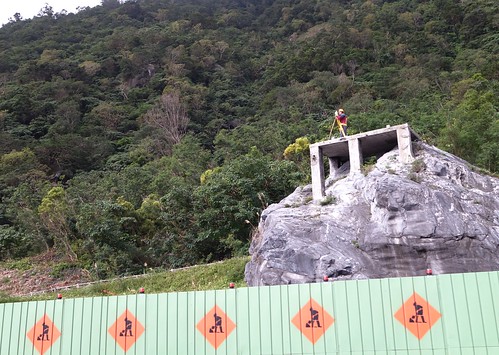
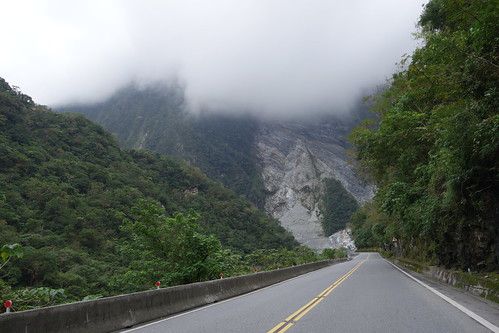
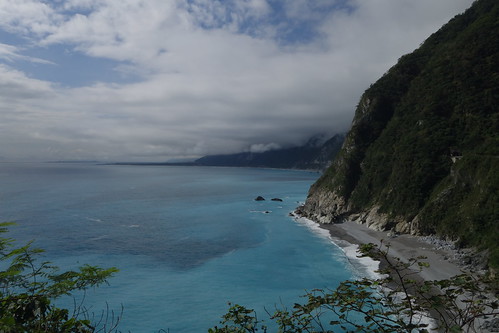
A lovely Suhua Highway shot. Just because.

MEDIA SEA CHANGE: DPP and Third Force success is scrambling the old media narrative, forcing the international media to confront the necessity of explaining why Taiwanese support the DPP and their desire to be independent, since DPP success is so obvious the media can't ignore it. Just think: if the KMT were doing well, none of this would be out there for the international public to read. But TIME was right out there yesterday with a great quote from Scott Harold at RAND:
According to Scott Harold, a China expert at think tank RAND Corp., a DPP victory could mean “a very substantial change in the tenor, tone and prospects for cross-strait relations.” Washington’s priority, he adds, will be to “convince the Taiwanese not to take steps that are deliberately provocative, or unnecessarily highlight their differences with China.” Of course, “none of this is directly caused by the DPP,” Harold says. “It’s China’s reaction and not the fault of the people of Taiwan for democratically electing whom they choose to govern them.”
When was the last time anyone cited in the international media so forthrightly stated the obvious? I'm lovin' it. I met Scott Harold years ago, and I'd like to say I remember him, but the truth is that my wife has to reintroduce me to my kids whenever I am away for a few days, because I've forgotten their names. Thanks Scott...

The other marker of the tremendous sea change taking place in the international commentariat is the latest piece at Foreign Affairs. For years Foreign Affairs has run uninformed anti-Taiwan, anti-democracy, pro-China pieces about Taiwan (like Chas Glaser's nonsense), really sad stuff. Suddenly they ran this wunderbar piece, which ends...

The real revolution of a DPP victory in Taiwan will be a revolution in identity. There is already a pitched battle in Taiwan over the teaching of history. In the old textbooks, the history of the Chinese people began in the fertile valley of the Yellow River and ended in exile on the rocky island of Taiwan. In the new textbooks, the lush island of Taiwan was buffeted by historical forces beyond its control but ultimately found its way to democracy, prosperity, and independence.

The emergence of a distinctively Taiwanese identity is bitterly resisted by the old guard of the KMT, but the people of Taiwan overwhelmingly identify either as Taiwanese or as a mix of Taiwanese and Chinese. Nearly 90 percent of Taiwanese want equal status for their country in the international community. While these numbers are somewhat suspect—the questions seem designed in such a way as to elicit a positive response—the overall trend is clear. Although most can trace a Chinese heritage, very few people in Taiwan want to be Chinese.

American pundits often discuss whether the United States should accommodate China through the Finlandization of Taiwan or even abandon Taiwan to China. Such analyses are at least 30 years too late. Taiwan will never again be part of China. That train has left the station. Taiwan is a highly successful country of more than 23 million people with its own politics and its own place in the world. Admittedly, that place may fall short of what many Taiwanese people want for their country, but it is nonetheless secure. January’s election won’t change that.
This last week has been like waking up in an alternate universe.... EJINSIGHT observes that Beijing is to blame for Taiwan's political choices by providing no benefits for ordinary Taiwanese, while showing in Hong Kong that One Country, Two Systems is a hollow promise. Blaming Beijing? *swoon*

Over at ChinaFile Anna Beth Keim has been turning out some superb stuff recently. This latest piece is on the young Blues and how they've become Green. A detailed look, don't miss it. And over at Quartz.com a great piece details with numbers how the election is about way more than China.

KMT INTRIGUES: Next Media reported wednesday that President Ma Ying-jeou was interested in becoming Chairman of the KMT when Eric Chu steps down to take responsibility for this election loss. A Ma spokesman came out wed night saying there was no possibility of that occurring [translation: it's not a possibility but a certainty] and Ma was not interested [translation: he really wants it]. Former KMT presidential candidate and reactionary dominatrix Hung Hsiu-chu has already expressed interest in taking over as Chairman after the loss. Interestingly, Jason Hu, the former mayor of Taichung, the smart politician who took over as campaign manager for Eric Chu, said he had no plans for run for the job [translation: he's planning to]. It means that I am not the only one thinking Hu was plotting a return to some position inside the KMT (he'd make an excellent chairman but is often seen as a Ma rival).

I expect Ma at some point to announce that he has been reluctantly persuaded to run for Chairman. No doubt the Danshui grandmother who persuaded Eric Chu to run for President has a sister somewhere...

Note that unlike some other KMT campaigns, the Chu campaign has not suffered a full-blown meltdown... instead it's sending around resentment-filled videos of middle class people in their 50s. The latest...

The meltdown I have in mind is of course the Taipei legislative race between heavy metal rocker and smart politician Freddy Lim and longtime Deep Blue politico Lin Yu-fang. As Solidarity pointed out, this race was actually getting less local coverage than international, until KMT candidate Lin Yu-fang melted down. Frozen Garlic has the call, short and funny, while Solidarity has the longer analysis at CPI. But on the serious side, many of the New Taipei City and Taipei City politicians have been running on "iron votes" so long they don't actually know how to run a campaign -- how to press the flesh, how to speak well of the opposing candidate, how to win votes. For the last two decades their "campaigns" have consisted of voter mobilization activities since all they had to do was ensure that their iron votes came out -- making sure the precinct captains are doing their job to get people to vote, etc. Much "vote-buying" was actually payments to get these iron votes out. Now these losers used to having their way must actually win votes, and they are at sea. Lin's claim that people with long hair like Freddy have psychological problems crossed the boundary of decorum and decency for local people and will have consequences at the ballot box.

Another long-term problem facing the KMT is the loss of the Hakka belt. Solidarity found a great piece from Wealth magazine on the changes there:
“The Little Hakka Sister supports the Hakka!” This slogan of Democratic Progressive Party (DPP) presidential candidate Tsai Ing-wen (蔡英文) is an inversion of the slogan from her 2012 campaign, “The Hakka support their Hakka little sister.” A high-spirited Tsai strongly advertised her support for the Hakka during her recently concluded campaign whirlwind tour of Taoyuan, Hsinchu, and Miaoli Hakka communities where she rolled out her “Highway 3 romantic road” proposal [national government development of Hakka cultural and tourism industries in the Hakka geographic zone parallel to Highway 3]. As her political tides have turned she’s gone from pleading with Hakkas for support several years ago to promising to look out for them now.

Hakka voters’ rejection of her in the 2012 election was most painful. She lost by close to 200,000 votes in Taoyuan and by about 100,000 votes each in Hsinchu County and Miaoli County. In the smallest constituency of the region, Hsinchu City, she lost by over 40,000. These combined deficits made up about 40% of her total margin of defeat of some 800,000 votes. Moreover, the DPP put up a goose egg in the races for the 10 legislative seats allotted to these areas. With the exception of the “Heavenly Dragon County” of Taipei, the strongly Hakka Taoyuan-Hsinchu-Miaoli area has been the DPP’s toughest nut to crack on the road back to the central government.
The article is a detailed look, and very indicative, don't miss it. Most of us think that Miaoli will roll over completely in the next election cycle, though the legislative races in this one will likely remain Blue. But sooner or later people in Miaoli are going to look at how well run Taoyuan and Tainan and Kaohsiung and Yilan are, and judge accordingly (sorry, but I have low expectations for Lin Jia-long in Taichung, and so has everyone else I've talked to. I'll discuss that another time). The Hakka belt is a Taiwanese belt -- there's long been a fringe of Hakka nationalism that looks on Taiwan as a potential Hakka homeland/nation (see Clyde Jiang's strange The Hakka Odyssey and Their Taiwan Homeland) and a deep pride in Hakka antiquity in Taiwan (Hakka historians locate the first migrations to southern Taiwan in the 14-15th century), meaning that there is a powerful latent connection between the Hakkas and Taiwan, if only the DPP can strike the right note.

Courtney Donovan Smith has been collecting predictions and thoughts on the legislative election, and has 10 Bold Predictions for it. Maybe I should do it Facebook style: Donovan predicts and You Won't Believe What Happens Next!

Some old soldiers have actually switched parties...

IN THE ALTERNATE MEDIA UNIVERSE MA YING-JEOU WAS NEVER PRESIDENT AND EVERYONE HAS A GOATEE: Reuters hasn't emerged from 2008 yet. Consider this one from James Pomfret, which is like a mini-primer on how not to write about Taiwan. He interviews individuals from fringe parties, writes from a China-centric viewpoint, doesn't connect the China issue to bread and butter issues (see for example, this strong J Michael Cole piece at Huffpost) or to KMT behavior, and spews pro-China trope after pro-China trope. The first two paragraphs:
In a gritty suburb of Tainan in southern Taiwan, a city known for its fierce anti-China sentiment, Huang Hsien-ching was stacking election flyers and inspecting campaign trucks rigged up with megaphones before Saturday's islandwide elections.

As a rookie candidate for the fledgling Free Taiwan Party - one of a number of smaller, radical groups advocating independence from China - Huang, a family doctor, says he's put $30,000 of his savings and his career on the line to try to fight back against what he sees as an increasingly assertive China
The fringe candidate is "anti-China" not pro-Taiwan, and because he wants to live in a democratic, independent state, is a "radical". Meanwhile, China, which is has repeatedly threatened to kill Taiwanese and take their land, is just being "assertive" (boys will be boys, ya know). Pomfret even puts the pejorative descriptions in the same sentence further down:
"More radical, anti-China voices like Huang's persist even with the independence-leaning Democratic Progressive Party (DPP)..."
Radical anti-China voices "even" in the DPP? O the humanity! Just contrast this with the excellent pieces from Anna Beth Keim above and you can see how completely out of touch it is. Independence is mainstream -- it is the radicals who threaten Taiwanese with war from China if Taiwan is assertive in its democratic ways...

ERROR: Taiwan wants independence period, not independence FROM CHINA since we're not part of China. Under international law and US policy, the status of Taiwan is remains undecided. If only US writers internalized and reflected that fact, how the discourse would change...

Reuters also offered this gem straight out of 2008 on the potential horrors of having a democratic, Washington-aligned government in power in Taipei...
On Wednesday, Obama's deputy national security adviser Ben Rhodes called on Taiwan and China to avoid an escalation of tension.

He said the United States did not take sides in the poll and wanted Taiwan-China issues dealt with peacefully, whoever won.

"What we want to see is calm and dialogue," he said adding that Washington would want to be supportive of this as it had been in the past.

"We will think through what are the best ways to support that effort when we have greater clarify about both the election results and how that's playing out," he said.

On Tuesday, the chief of the U.S. Navy, Admiral John Richardson, whose force is on the front line in the U.S. effort to maintain stability in Asia, agreed that a DPP win could bring heightened tension with China.

"We’ll just have to see how it plays out,” Richardson told Reuters. "It’s going to be a factor in that theatre for sure."


While Tsai's party has historically favoured Taiwan's formal independence, and says it believes only Taiwan's people can decide its future, she has trodden carefully recently in discussing how she will engage China.

That was not the case when she visited the United States before Taiwan's 2012 election and the Obama administration was sufficiently alarmed for a senior U.S. official to air doubts about whether she was willing and able to maintain a stable relationship with China.
The US official "aired doubts" (crapped all over Tsai) in the notorious interview with FT. Then later his boss got a job with the Eurasia group working on China/Asia. I'm sure it was not a case of a US government official serving China because he expected to do business with Beijing in the future, and was in fact just a coincidence that he later got such a job.

But word out of Washington has it that the US is unhappy with Ma and willing to work with Tsai. It's really time a US official pointed out that tensions in the Taiwan Strait are caused by China and its desire to annex Taiwan, and stop pretending that there is some equivalence between the two sides. (Pomfret et al churn out another ZOMG TSAI! piece here, longer and slightly better)(WSJ in the same vein *sigh*). We'll just have to give them the Justin Trudeau answer: "It's 2015."

Compare the Reuters piece above with this Emily Rauhala piece on Tsai Ing-wen in WaPo that is a notable improvement over her interview with Tsai earlier this year. Instead of interviewing pro-KMTers and sourcing comments from people living far from Taiwan, she talks to pro-Taiwan people actually living in Taiwan, J Michael Cole and William Stanton, and shows how Tsai and the context in which she operates have changed...
When Tsai visited Washington in the run-up to the 2012 polls, she got burned. An unnamed Obama administration source took concerns about her to the Financial Times, telling the paper there were “distinct doubts about whether she is both willing and able to continue the stability in cross-Strait relations.”

She has since made a major effort to improve her standing stateside. In a six-city tour last summer, she explained her platform in private meetings, a commentary in the Wall Street Journal and a closely watched foreign policy speech. “People in Washington, D.C., had more time to sit down with me this time,” she said.

It helps that the White House is more ready to listen.

“Back in 2012, most people in Washington were willing to give China the benefit of the doubt,” said J. Michael Cole, a Taipei-based senior fellow with the University of Nottingham’s China Policy Institute and a senior officer at Tsai’s Thinking Taiwan Foundation.

“Fast-forward four years, you’ve got the South China Sea, a crackdown on civil liberties, publishers going missing, the tone in Washington has changed and that inevitably makes them much more receptive to a Taiwan that wants to position itself as distinct,” he said.
Great work...

At New Bloom, the left-oriented magazine, Brian H examines Tsai's attitudes towards "free trade agreements". These agreements are going to be a disaster for any nation that signs onto them. It's because of the negative effects of these corporate-dominated agreements on the environment, economic growth, national sovereignty, and working people that I expect the Third Force parties to eventually break with the DPP and the DPP itself shift to the right as the KMT fades over time, and politicians from the DPP to leave to join/form leftish parties.

If the DPP legislature returns to some kind of proportional representation system, expect it to feed this process. That will also impact the KMT -- faction politicians will have less incentive to support the KMT if they can gain seats via independent routes, and it will also encourage the formation of faction-parties that are regional or even national, something the KMT has always forbidden in exchange for its support, a phenomenon already stirring to life with the MKT party. But everything depends on what kind of reforms the DPP adopts...

Finally, for hilarity's sake only, a net-friend passed around this conspiratastic piece from a far right Chinese nationalist, thinking it offered words of wisdom. It contains some wonderful stuff, but this gem takes the cake...
Lee could be a tip of the iceberg that could seed the coming freeze. After WWII, faced with returning to an uncertain future in a devastated Japan, around 300,000 Japanese elected to remain in Taiwan. They took on Chinese surnames and merged into the local community.

My friend in Taiwan tells me that this group of ethnic Japanese has multiplied into an estimated group of 2 million descendants. It would be natural to assume that most of the nearly 10% of Taiwan’s population would not share any feeling of fealty to being a Chinese. Harder to know is the actual fraction that has actually become anti China/ pro Japan/ pro Taiwan independence agitators following Lee’s lead.
Somewhere among us, they hide, these Japanese, and they look JUST LIKE TAIWANESE. But all is not lost! Look carefully at your significant other. Do they like Hello Kitty? Do they use chopsticks? Are they extremely polite? YOU MIGHT BE SLEEPING WITH A JAPANESE! Take the appropriate steps, but be sure to use a condom.
_______________
Daily Links:
_______________________
Don't miss the comments below! And check out my blog and its sidebars for events, links to previous posts and picture posts, and scores of links to other Taiwan blogs and forums!
Tuesday, January 12, 2016

Chu Campaign's latest


Eric Chu's latest ad. The color scheme is interesting -- there's almost no bright green, the color associated with Taiwaneseness, and few rich KMT reds. Instead, blue, aqua, and orangish tones predominate. After viewing this I finally noticed that the ONE TAIWAN rainbow contains... no bright greens.

A still from a few seconds in, showing the conventional four major cultural groups -- mainlanders, Hoklo (Minnan), Hakka, and Aborigines. The mainlanders are represented by a suit wearing male white collar worker, while the Minnan are farmers (not factory/shop owners). No prejudices there, of course. Females are used to represent Hakkas and Aborigines. Divisive ethnic appeals based on this four-group model have been a key component of KMT power in Taiwan.

Note that in the next frame the mainlanders speak "Guoyu" (Mandarin). One urgent need of KMT rule was creating a shared "Mainlander" identity out of the diverse ethnic groups which followed the KMT elites in their retreat to Taiwan. None of the mainlanders speaks Zhejiangese, Shanghaiese, or Cantonese. One of the many ironies of KMT rule is that the mainlander identity is an identity that is totally Taiwan in origin. The same thing happens to the Aborigines, who are said to speak Aboriginese, and not Amis, Atayal, Rukai, etc.

Further on in the ad come the classic KMT representations of Taiwan culture: food, religion, festivals, the Economic Miracle, democracy. These are compatible with the KMT construction of Chinese culture as local expressions of the common Chinese identity. Missing as a component of culture: local history, which the KMT has diligently worked to suppress. This political lecture is given in animation, because photography would evoke the landscape and thus, the local feeling of connection to it, obviating the effect of the ad.

In fact, if you look at the KMT ads on the One Campaign site, many of them show the candidate in a white background and/or using animation. The landscape of Taiwan is often completely omitted. The preposterous ad I linked to several posts below, which shows the man in his 50s complaining about how he built Taiwan and is ignored, shows real scenes but only interiors. This is not always true -- this ad has some lovely shots of the land and people -- but for the most part it appears to be.

Of course, all this Taiwan-centeredness is only for election time. After that, the KMT will return to China...

ADDED: A friend on Facebook observed that even the ROC flag at the end has the red changed to the puke pink color. Drew Kerslake noted that "Using the female to diminutize indigenous peoples is a well established meme for colonial powers."
_______________________
Don't miss the comments below! And check out my blog and its sidebars for events, links to previous posts and picture posts, and scores of links to other Taiwan blogs and forums!

Monday, January 11, 2016

Monday Round up: It's the Economy, stupid!

Gary Rawnsley (@GDRaber sent around this Taipei Times cartoon from 2000, still applicable today.

WIDELY SEEN ON THE TAIWAN INTERNET: Ko Wen-je biked from Taipei to Kaohsiung this weekend. And all over the Taiwan net, netizens are saying: "if an old man can do that in a day, what's your excuse for not going home to vote this weekend?" The young are pushing each other out to vote. Young people are standing up for Taiwan, according to Channel News Asia. Want to see how the young are thinking? Reflections from a first time voter at The News Lens.

EAST ASIA FORUM STILL NOT ADMITTING ECFA IS A FAILURE WHILE CLAIMING ECONOMY IS DRIVING THE ELECTION: Several years ago the East Asia Forum cheer-led the push for the stupid ECFA agreement with China, which has done little for Taiwan's trade with China while flooding Taiwan with legal and illegal Chinese imports, pushing down our trade surplus with China almost every year since its signing, and of course, putting the kibosh on the KMT's chances in this election. Apparently, EAF can't tell the difference between a good trade agreement and a sell-out, though thankfully the locals can. This week EAF hosts a couple of good pieces on the election, including Mark Harrison's excellent and insightful piece:
The distance between the domestic and international viewpoints on Taiwan is one of its enduring challenges. Should Tsai be elected president, managing these two very different perspectives will be a key task for an incoming Tsai administration. As president, she will need to take heed of the international view of Taiwan and communicate the reasons why the electorate have voted for a more circumspect relationship with Beijing.
Yes, and local youth activists and third force supporters will have to come to terms with this reality as well.

Also at EAF is Economics with Determine the Taiwan Election, which notes:
But Ma’s economic policies have failed over the past eight years and he has broken many campaign promises. Ordinary people in Taiwan have not seen significant economic benefits from improved cross-Strait relations. The so-called ‘cross-Strait peace dividends’ have not spilled over to the general public but have primarily benefited the upper socio-economic class.

The general public has consequently become increasingly sceptical about the value of deeper integration with mainland China. Debates over integration have become dominated by concerns about Taiwan’s national security with little attention given to the potential boost greater economic ties could give Taiwan’s troubled economy. These accumulated concerns were reflected in the Sunflower Movement in March 2014, which saw students occupy Taiwan’s legislative assembly to protest, among other things, the KMT’s handling of a new trade deal with China.

Polls suggest that disappointed economic voters will likely replace the KMT with the opposition DPP. The DPP is considered a driving force of Taiwanese independence. The biggest challenge for a DPP government in the future would therefore be to gain Beijing’s trust — without it, instability associated with poor cross-Strait relations may lead to an economic downturn.
By supporting the failed ECFA, EAF helped slow the pace of the East Asian integration it loves so much. Yes, I am lovin' the irony. The above quote is fine for the most part, but paragraph three has the "biggest challenge" wrong, one problem that China-focused discourse about Taiwan has. Tsai is facing several massive challenges -- reshaping Taiwan's government from the KMT's colonial system to a robust democratic one, reviving the economy whose overdependence on China is a massive problem, upgrading and expanding defense spending, closing old heavily subsidized KMT-connected primary input businesses like steel and PVC production whose profits depend on government money flows and imports of subsidized suppressed labor from abroad, and reshaping the energy system, among others. KMT rule has left Taiwan a mess; which challenge is the biggest depends on the taste of the observer, and all are interrelated, since the KMT is China's hand in Taiwan's domestic politics. Obviously keeping Beijing in a stupor while we unplug our economy from China's is important, though Beijing will never "trust" anyone, it doesn't even trust its own people. You can have trust, or power, but you can't have both...

The economy is a huge concern, and KMT Presidential candidate Eric Chu promises to "turn things around":
Kuomintang (KMT) presidential candidate and Chairman Eric Chu has pledged to "turn Taiwan around" via three strategies — raising the minimum wage, narrowing the rich-poor gap, and achieving consensus on efforts to strive for Taiwan's international space, if he wins the Jan. 16 election.

Chu promised to raise the minimum wage from the current NT$20,008 (US$606) to NT$30,000 per month within four years, narrow the rich-poor gap by raising taxes on the wealthy, and pump up economic growth through wage hikes and seeking cooperation and a win-win situation between the two sides of the Taiwan Strait.
What's interesting is not Chu addressing the economy, but the fact that he is implicitly criticizing KMT President Ma Ying-jeou. Yet, he is not running against Ma, since he embraces almost all of Ma's major policies. Awkward...

Ben Goren of Letters from Taiwan sent around this image from Hau Long-bin's legislative bid in Keelung.  The English translates only right-hand string of Chinese. The left-hand side echoes the language of the third parties in saying "Positive Power." Recall that the NPP in Chinese is literally "New Era Power". No doubt it's just another coincidence...

Hau is the son of General Hau Pei-tsun, the die-hard reactionary politician who fought a rear-guard action against democracy, and left the KMT to run for the New Party as a Veep candidate in 1996. Thus Hau, a scion of an elite and a princeling himself, is fighting for his life in a four-way tussle. Ketagalan Media's wonderful 10 Legislative Races to Watch in Taiwan's Elections observes:
After flirting with a southern run to rally the troops, former Taipei Mayor Hau Lung-bin 郝龍斌 (KMT) pushed aside local politicians to seize the party’s nomination in this historically blue city this spring. A victory in this “safe” district would be his springboard to becoming the next KMT chairman. However, the blue camp has split, with the PFP’s Liu Wen-hsiung (劉文雄) and the MKT’s Yang Shih-cheng (楊石城) (a city councilor) running credible campaigns against Hau, and he is in real danger of an embarrassing defeat by young DPP challenger Tsai Shih-ying (蔡適應).
I don't think a victory in this election matters much for Hau's bid for the Chairmanship (assuming he wants it). Rather, it's his bloodlines that count. One need only look at Lien Chan, loser twice for the presidency, but he retains his clout in the KMT. Not being a legislator might even give Hau renewed interest in being Chair, to give himself a real position of power somewhere.

But of the north in general, the China Post had an excellent piece on the changes there and the competitive races:
Nowhere will the likely redrawing of Taiwan's political landscape be more apparent than in the nation's capital and the Greater Taipei metropolitan area as a whole (Taipei, New Taipei and Keelung) accounting for 21 of the 73 island's regional legislative seats. This breakdown of the legislative field will flesh out the race's key themes and highlight emblematic contests that encapsulate them.
The north merely awaits the 2018 mayor elections. Then New Taipei City will go as well, and everything will be under control of Taiwan-centered politicians for a few years. At present I expect Ko Wen-je to be re-elected, and in another six years the demographic shift in Taipei will be even further along, and another swath of old KMT voters will have passed away. It will be interesting to see who the KMT runs against Ko next time.

Ben Goren also is interviewing legislative candidates. He has two up now in his Taiwan Democracy Uncut series (here is the second). A little taste of what's going on.

WE ARE SPARED CHINA TOURISTS: Tour groups decline sharply, thankfully. I noticed that when I was on the coast last weekend. The KMT news organ reports:
The number of Mainland tourist groups to Taiwan has declined sharply in the run-up to Taiwan’s January 16 Presidential Election.   Hotels in Taitung, Eastern Taiwan, have reported that occupancy rates have declined by 40% to 50%.  The number of Mainland tourist groups the Shilin Night Market (士林夜市) in Taipei has also declined by 50% compared to last month. 
Taiwan rejoices. Was wonderful without the tourist buses on the east coast...

DSC09147
I photographed this Chinese tourist on the east coast last week.

Kharis Templeman offers 5 data driven points on what to watch for on election night. For some reason drunken exuberant bloggers didn't make the list, though I am sure we'll constitute at least 32% of the electorate on Saturday night. Templeman argues that the KMT isn't finished; it's just a downturn...
All this is a long way of saying our default assumption should be that the 2016 election will be a low-water mark for the KMT. Everything that could go wrong, has. As a result, a lot of pan-blue supporters are going to abandon it this election (emphasis on this election): in the presidential race, Soong is going to get a lot of protest votes if the polls are at all accurate, and the PFP, MKT, and NP will probably peel away a significant chunk of its LY support and throw some seats to the DPP. The KMT is facing renegade pan-blue candidates in many districts it should win easily, and it may well suffer embarrassing defeats in some of them (such as Hau Lung-bin in Keelung). But it's misleading to conflate the KMT's fate in this election with a collapse in pan-blue partisanship, which remains significant.

The latent electoral support for the combined pan-blue camp is both the hardest to measure and the most important for the future direction of Taiwan's party system. But two indicators should give us at least a rough idea of this level: the combined pan-blue (Chu + Soong) vote in the presidential race, and the combined pan-blue vote (KMT+PFP+pan-blue renegades) in the district races.

My expectation: both the combined pan-blue presidential and LY district vote shares will be well above 40%. (For reference, in 2008, the DPP's presidential candidate got less than 42% of the popular vote, and the party's district candidates carried only 38%.) If the pan-blue vote falls much below those benchmarks, then the case that this election represents the start of permanent KMT decline becomes considerably stronger.
Templeman approaches the problem as if the KMT were an actual political party and not the political organization of a colonial ruling class. Once you adopt the latter point of view, you can see the problems that the KMT isn't going to overcome. I like Kharis and don't want to argue with him, and since both myself and Donovan have written on this elsewhere, I won't repeat. Suffice to say that the DPP in 2008 was a political party in a downturn, while in 2016 the KMT is a colonial regime in crisis.

One thing Donovan Smith likes to emphasize in his writing and in private alcohol-fueled conversation with me is that many Blue voters, especially outside of Taipei, can't bring themselves to vote DPP, but are looking for non-KMT alternatives to vote for. Hence, pan-Blue partisanship is more loosely connected to the KMT than many observers think. Local politicians are aware of this, and positioning themselves accordingly. Over time it is likely that more faction politicians will take the local independent route, especially if the DPP legislature creates some sort of proportional representation system.

DSC09231
Surveying on the east coast

In 1991 Chen Chi-li, one of the gangsters connected to the murder of writer Henry Liu in 1984, was given clemency by the KMT government, released from jail, and deported. He made his way, like many KMT mobsters over time, to Cambodia, where ran a construction company. The KMT has old connections in the area, with the Lost Army in the Golden Triangle, and KMT-supporting Chinese gangsters like the United Bamboo and the Four Seas gang have extensive networks trafficking weapons, drugs, laborers, and sex slaves through their overseas gang connections out of Cambodia to Taiwan, among many destinations. The women were delivered to brothels in Taiwan, which often had connections to A Certain Political Party. The trade in Southeast Asian women for brides overlapped this trade, and of course the brokers supported A Certain Political Party. the Party of Han Chauvinism which looks down on brown people from Southeast Asia.

In the Taiwan election, a Cambodian immigrant woman is on the KMT party list and will likely be given a legislative seat. Japan Times notes:
“I had never thought about going into politics. In Cambodia, democracy was not a familiar concept,” Lin said in an interview. “It’s unbelievable how life turns out.”

Now 38 and a Taiwanese citizen, she was set up by her mother with a Taiwanese husband via a profit-making brokerage at the age of 20.

She moved from the Cambodian capital of Phnom Penh to become one of Taiwan’s tens of thousands of immigrant spouses, mainly from Southeast Asia and China.

Their vulnerability has been highlighted by abuse cases in recent years, and Lin wants to draw on her own experiences to improve that.
She got a masters degree and has worked as an activist on the issue of immigrant wives.

This is an area where the DPP has its work cut out for it.

IN  TEARS: I seldom get worked up over the death of a celebrity, but David Bowie was a giant whom I knew my whole life. He'll be... missed.

EVENTS: Sunday Ketagalan Media is hosting a webcast from their forum in Taipei. You can watch this on Saturday in the US.
_________________
Daily Links:
_______________________
Don't miss the comments below! And check out my blog and its sidebars for events, links to previous posts and picture posts, and scores of links to other Taiwan blogs and forums!

Saturday, January 09, 2016

Rounding up again: Post Coloniality on the way!

A pro-KMT concert here in Taichung. Billed as a nostalgic visit to the past through song, nothing describes the KMT better than a bunch old singers crooning tunes from the 70s and 80s. Many thanks to Drew K for sending this around, as he noted, looking backward to the glorious and idealized past is very Confucian. 

THINGS TO COMEThis piece from a Canadian academic on the elections is first class. It correctly describes the DPP as pro-Taiwan and ends...
But while the KMT (and the Pan Blue camp) has weathered several political crises in the past, it has never faced the very likely prospect of losing control of the Legislative Yuan and the presidency. Simply put, the party is on its heels. Though the party’s organizational basis endures and its financial assets remain more or less intact, the fact of the matter is that the leadership is deeply split, the rank-and-file are defecting, and its historical claims to economic development and cross-Strait stability are increasingly untenable and unbelievable among Taiwanese voters. How the KMT will react to its defeat in the 2016 elections and how it rebuilds afterwards are crucial developments in Taiwan’s democratic evolution.
Notably it outlines the bleak outlook for the KMT, one of the few pieces that forthrightly explains that development. The KMT probably won't be able to rebuild, which will be very good for the evolution of democracy in Taiwan. The party's financial assets are going to be hit by DPP legislation and the KMT has already started to sell them off. But the infighting over the Chairmanship and the direction of the party is going to be fierce. Former Presidential Candidate Hung Hsiu-chu has already indicated she is thinking about a bid...
Deputy Legislative Speaker Hung Hsiu-chu (洪秀柱) yesterday said that she is still seriously pondering whether to vie for the Chinese Nationalist Party’s (KMT) chair, a post that would likely be left vacant by KMT presidential candidate Eric Chu (朱立倫) should he lose the election on Saturday next week.

....

“First, it depends on whether Chu, the KMT’s incumbent chairman, would step down following the race,” Hung said.

In the event that Chu loses by only 200,000 votes or the KMT manages to maintain a satisfactory number of legislative seats, some party comrades might think that Chu should remain on the post,” Hung said.

“After all, Chu has only led the KMT for a relatively short period of time and has yet to have enough chances to reform the party,” Hung said.

.....

Hung said the KMT’s charters favors a KMT president doubling as party chair.

“That means Ma could assume the party chairmanship after Chu’s customary resignation and hold a chairmanship election after the new president is sworn in on May 20. By then, Chu could also compete for the post if he wants to,” Hung said.
Hung is the darling of the Deep Blues. Note the scenario she posits in the last paragraph: Chu steps down after losing, Ma becomes chair since the Party rulz say the president must be the chairman (har dee har har), restores grip on the party, then there is an election in May after he gives up the Presidency. With that kind of control, the likely outcome is a Ma-backed ideologue like Hung herself versus a "centrist reformer" like Chu or former Taipei Mayor Hau Long-bin, themselves both conservatives and rightists. Whatever happens, it's going to be brutal internecine combat over a shrinking resource base of money and voters.

Jon Sullivan at U of Nottingham, who puts out a steady stream of top-notch writing on Taiwan, observes how the Old Guard struggles with today's youth in SCMP. Since the November 2014 election there's been quite a bit of media notice given to the identity issue...
There is no democratic tradition in Chinese culture. Some have argued that many Taiwanese came to understand democracy via the idea of minben (民本 ) “guardianship democracy”. The attitudes towards authority that support for this notion of government are not widespread among young Taiwanese.

Those aged 19-35 are more supportive of democracy as a political system, and accepting of the noise and contention that accompanies it. And while they are more likely to call themselves Taiwanese, identification with democracy is a crucial part of this trend.

Those who have grown up under a democratic system take for granted liberal democratic norms like freedom of speech, accountability and transparency to a much greater extent than their elders, who had to “learn” them. This attitude change represents a significant challenge to the foundations of “guardian democracy”, which is magnified by the popularisation of digital and social media.
Democracy is a key part of the Taiwanese identity, and one of the important differences between Taiwanese and Chinese. Most of the discussion of differences in culture between Chinese and Taiwanese focuses on things like food and language, and fails to take into account the differing historical experience of Taiwanese, especially colonialism and democracy...

Workers were out there demonstrating against the major parties, because they've been comprehensively betrayed, as Brian at New Bloom writes:
Though mostly members of labor unions, notably also a number of students also demonstrated despite the fact that this was finals week. On stage, before the start of the march, students at performed a skit about the dilemma of overworked, underpaid laborers now denied their holidays. Amusingly, at its starting point at Freedom Plaza, the march strangely coexisted with a KMT rally. Shortly after the start of the march, the author remembers seeing a woman from the KMT rally shout, “I’ll show them!" and then wave the ROC flag at passing labor demonstrators. That much may evince the KMT’s view of labor, lip service aside.
Let's see what the Third Force does when it is in office...

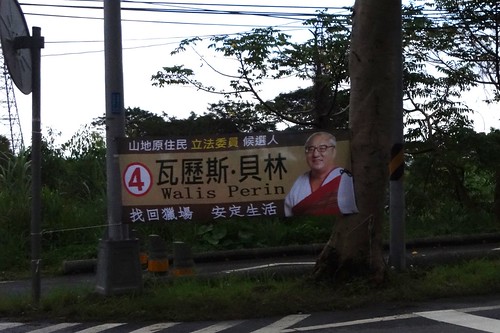
CHINA DOLLARS: Walis Perin, the aboriginal candidate (photo above shows an ad for him in Hualien), alleged that China money was going to aboriginal candidates...
Democratic Progressive Party (DPP) legislative candidate Walis Pelin yesterday said that some Aboriginal lawmakers seeking re-election in the polls on Saturday next week have committed vote-buying offenses by resorting to Chinese influence, presenting Aboriginal township mayors with vehicles and offering voters favors in China.

Speaking at a televised policy event organized by the Central Election Commission (CEC), Pelin said that a number of candidates apparently secured cars from China and distributed them to township heads for their personal use in an attempt to win their support.

Some of them also took voters to China to accept favors there, Pelin said, calling on Aborigines to vote for candidates like himself, who are challengers to “incumbents” and do not have access to improper influence in China.
China has put much effort into cultivating connections with aboriginal politicians in Taiwan, perhaps the most famous example being Kao Chin Su-mei, who believed herself to be Chinese until she reinvented herself as an aborigine when she found out she was half-aborigine, and got in trouble a few years back for taking Chinese money. It just goes to show that people talking about China's influence on the election often can't find where it really is...

A KMT campaign ad.

IDENTIFYING THE PROBLEM: At the CPI blog Consolidating Taiwan identity and its impact on cross-strait relations says:
The result of Taiwan’s popular elections and multiparty political system has created a unique social experience that is different from the social experience of mainland Chinese. The consequence of the formation of the democratic social experience in Taiwan is the creation of a unique Taiwanese identity that is different from the dominant Han Chinese identity in mainland China. This perhaps explains why an increasingly dominant number of people in Taiwan think of themselves as Taiwanese instead of Chinese despite the future prosperity of Taiwan being highly dependent on mainland China. Although the current KMT President Ma Ying-jeou has helped create an unprecedented level of peace and cooperation across the Taiwan Strait, including a historic direct meeting with Chinese President Xi Jinping on November 7th, 2015, the majority of Taiwanese voters may still choose the pro-independence DPP candidate Tsai Ing-wen as the next president.

It seems that people in Taiwan have consolidated their unique Taiwanese identity. No matter who wins the election on January 16th, policy makers in mainland China must rethink how to deal with this new Taiwanese identity as part of their overall Taiwan policy.
...and not just China, but also, the United States, where many commentators are evaluting this election as if they are stuck in 2004. I think many foreign observers are treating the KMT as if it were a western conservative party that people will switch to when they get older and have money. Not gonna happen -- the KMT's base ideology is a pro-China ideology and identity that no one in Taiwan will subscribe to in a decade except a few very old people and younger weirdos. The KMT might be able to remake itself as a Taiwanese party that is the KMT only in name, but the immense power of the Old Soldiers will likely prevent that for some time to come.

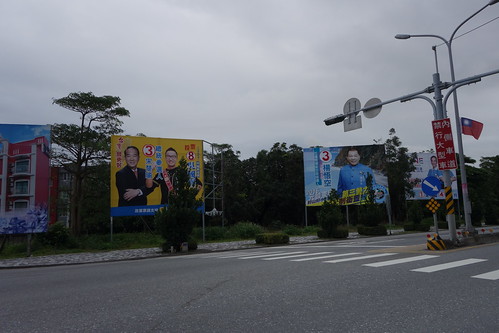
Candidate signs outside the Hualien Airport

FOR AMUSEMENT PURPOSES ONLY: Ted Galen Carpenter at CATO has learned nothing from years of "writing" and "thinking" about Taiwan. Still singing the same TAIWAN OMG WAR tune, still the same misunderstandings from a decade ago...
Just how futile Beijing’s strategy is of trying to neutralize pro-independence sentiment on Taiwan by increasing economic links between the island and the mainland can be gauged from recent polling data. Support for the DPP—and for a more assertive policy toward China—is strongest among young Taiwanese. We need to ask what happens when Chinese officials figure out that their entire Taiwan strategy is based on a faulty assumption and that there is almost no chance that they will ever get the island back peacefully.

It is more than a matter of academic interest to the United States. Under the 1979 Taiwan Relations Act, Washington is pledged to regard any coercive moves by Beijing against Taiwan as a grave breach of the peace of East Asia. We need to reexamine that commitment now, when there is not yet an acute crisis, and ask ourselves if, given the long-term geopolitical dynamics, it is a wise commitment in terms of America’s best interests. Mounting evidence suggests that being caught in the middle of a potentially bloody fight between Taiwan and the mainland is a growing danger. And it is a prospect that is definitely not in America’s best interests.
Carpenter, like others in the sellout crowd, writes as if Earth was planet where only China, Taiwan, and the US existed. But Japan has already signaled its quite happy with Tsai Ing-wen and Taiwan will likely move closer to Japan after Tsai becomes president, further enabling its incorporation into US strategic policy in Northeast Asia. Every Japanese thinker knows that after Beijing eats Taiwan, Okinawa is next. Hence, Taiwan is potentially important in Japan's defense -- and the US has a treaty with Japan (interesting how the CATO loon brigade never recommends selling out Japan). Fundamentally, when someone writes on Taiwan but does not mention Japan (or the Philippines or the South China Sea) they are writing nonsense and should be ignored.

Not that worried. I expect CATO will discover the joys of foreign involvement when its owners, the Kochs, ramp up their defense industry investments...

PS: Support for the DPP is not support for "a more assertive policy towards China". It's support for a more Taiwan-centered policy. Nice try there, Ted.

SERIOUS: Meanwhile, for those who crave understanding rather than amusement, David Gitter and Robert Sutter at NBR have long paper on Taiwan's National Power. There's a precis at The Diplomat. It's solid up to the end, where it veers into misunderstanding...
Notwithstanding all of the above, the greatest threat to Taiwan’s survival comes not from without, but instead lies in the deeply rooted political divide within. Despite the fact that both the KMT and DPP seek to avoid military conflict with China and to sustain the Taiwan government’s sovereignty, partisan wrangling has hobbled a consistent policy to address the island’s precarious position. During President Chen Shui-bian’s tenure, Chen’s ability to gain legislative approval for billions of dollars of offered U.S. arms met protracted opposition from KMT leaders controlling the legislature. Similarly, during Ma Ying-jeou’s presidency, Ma’s de-emphasis of military preparedness in favor of effective accommodation of China to ensure Taiwan’s security has encountered strong disapproval from the DPP, which instead favored greater defensive preparations to bolster the island against the growing Chinese threat. Such gridlock along party lines on sensitive issues of national defense are emblematic of a larger weakness in Taiwan’s infrastructure capacity — specifically the ability of the governing authority to set goals supported by elites and consolidate enough power to see those goals through. Because intense political competition has been viewed in zero-sum terms, neither the DPP government of Chen nor the KMT government of Ma has been effective in reaching consensus about what should be done to strengthen Taiwan, and each side continues to seek political advantage by focusing on the perceived shortcomings of the other’s policy proposals. Should a DPP government that is unwilling to accommodate and reassure Beijing come to power, it is not at all clear that a united ROC response would be mustered to deal with increased dangers from across the strait. Taiwan can ill afford to muddle through another four years, with bold policymaking addressing Taiwan’s demographic trends, international position, and national defense being sabotaged by fractious partisan debate.
There are two problems here. First, the greatest threat to Taiwan is not the "divided" politics, but China. The "divided" politics are part of the China threat: it's the pro-China party, a party of Chinese colonialism and Chinese colonists, that is preventing progress, blocking arms acquisition and meaningful defense moves, attempting to deliver the economy into Chinese hands, and disrupting Taiwan's relations with its neighbors. The KMT is merely the major manifestation of the China threat in Taiwan's domestic politics.

Note that while Gitter and Sutter assign the blame to the "partisan divide" the two examples they give are both those of the KMT blocking meaningful defense moves. Since both writers are very far from stupid, this is likely deliberate, a message for insiders. Someone needs to start pointing out that if the US wants to position Taiwan in its defense network in Asia, it needs to back the DPP, not the pro-China KMT. There's no point in having a defense treaty with Japan if your policy is to hand Taiwan over to China as a forward base.

Second, there is no "partisan divide" in the sense that we've known it since 1990. That era is drawing to a close. Instead, the Taiwanese national identity is steadily taking form, and those locals who identify as Chinese nationality are disappearing. The fact that some people identify as "Chinese" is reflects not the identities of locals but the manifold meanings of the word "Chinese". A new politics is emerging as the old "partisan divide" is dying.

This means that the post-2016 period is going to be the first true post-colonial period in Taiwan's history. Taiwan's politics since 1945 have been the politics of 20th century nationalist modernity. Now what we'll have going forward is the politics of post-coloniality.

Haven't been to Taroko Gorge? You're missing out.

MEANWHILE, THE ECONOMIST STILL LOVES THE WRONG SIDE: From the longtime cheerleader for Beijing and the KMT:
The last time Taiwan chose a DPP president, Chen Shui-bian, in 2000, cross-strait tensions escalated. Given China’s increasing assertiveness in the region under Mr Xi, things could be even more dangerous now. China has been piling pressure on Ms Tsai. Mr Xi says he wants a “final resolution” of differences over Taiwan, adding that this is not something to leave for the next generation. China is demanding that Ms Tsai approve the “1992 consensus”, a formula by which China and the KMT agreed there was only one China—but disagreed about what that meant in practice. Ms Tsai has long said no such consensus exists, though when asked about it in a presidential debate, she called it “one option”.
That's hilarious. "Cross-strait tensions escalated". You know, because tensions just escalate, without human agency. All the Economist had to say was "China ramped up tensions" -- sad, because some of the other reporting in the article is pretty good, especially on identity issues, but this paragraph is just one long cri de coeur of KMT propaganda, right down to asserting that the 1992 Consensus, which Beijing has never accepted, actually exists, instead of being a merely a rhetorical cage to imprison the DPP.

The Economist added:
Taiwanese politics is famously raucous, and the DPP’s radicals seeking formal independence might yet cause problems.
Yes, if you want to live peacefully in an independent state, you're a radical. Indeed, such individuals "cause problems". But if you're Mr Xi, a mass murderer and dictator who has threatened almost every country bordering China, including Taiwan, with territorial expansion and war, you're "assertive" and the problems are caused by those resisting you. Occupy two neighboring states, claim the territory of others, threaten war, seize fishing vessels, and play potentially lethal games across borders -- hey, you're just being assertive. Want to live in a democratic and independent state? Shut up, you radical! Nothing better illustrates the banality of failure in our mainstream media discourse.

The tragicomic part of the Economist's "analysis" is that it supports the territorial dreams of two Leninist Socialist/Communist parties that nationalized their economies and retained a large state sector even after permitting private capitalism, despise the West (except as a place to retire to once they get their rake-off), and would never let a magazine like The Economist be published freely in a state they controlled.

"But... I'm not good-looking!" she said. I thought she was.

SHORT SHORTS: Frozen Garlic says rally culture is declining, but the Tsai campaign plans a week of rallies, after Frozen Garlic comes down to a rally in my district. The New Party Chairman said Tsai was dangerous because she was single. Meanwhile an association of pro-China Chinese wives lashed out at the KMT for not making it easier to become a fifth column naturalized:
Chang said: “The KMT has lost its party soul; [the people of] the KMT do not dare acknowledge that they are Chinese. The party’s soul is with Hung.”

“The KMT wants our support, that is fine, but it has to promise that after we send its candidates to the legislature, the party would grant Chinese spouses equal rights to the four-year requirement for obtaining national identity,” Chang added.

“With the KMT in office, the requirement for the Chinese spouses has been lowered from eight to six years,” Hung said, adding that the two additional years is “discriminatory” and “unequal.”
I remember years ago when many of us warned that the spouses would become Beijing's little operatives in Taiwan we were dismissed as paranoid or racist. Well, there it is: which party are they rooting for? What identity do they hold? Note the first paragraph I've bolded there: "The party's soul is with Hung". Like I said, she's the darling of the bitter-enders and those who consider themselves the True Chinese tm.

TWEETED:
_______________
Daily Links:
_______________________
Don't miss the comments below! And check out my blog and its sidebars for events, links to previous posts and picture posts, and scores of links to other Taiwan blogs and forums!

Friday, January 01, 2016

Compiling a Week

A traditional house in Miaoli.

So much out there this week, and me bogged down with work...

CHINA EXPERTS DON'T GET TAIWAN, CASE #39056: Lyle Goldstein, the China expert whose work on China's military is unexcelled, had a piece this week in the always-good National Interest titled How China Sees the Risky Path Ahead with Taiwan. Michal Thim has already taken a good look at it on his blog. But the paragraph below shows that, like so many China experts, Goldstein's understanding of Taiwan is through China lenses...
Taiwan has been an extraordinary issue in US-China relations since 1949 when Chiang Kaishek’s Nationalists fled to the island after defeat in China’s civil war. The only reason that Taiwan has been, by and large, out of the headlines since 2008 is that the island’s leader Ma Yingjeou quite radically shifted course from his two predecessors and bravely pursued a rapprochement with the mainland. That far-sighted policy has made for eight quiet years. Only readers unfamiliar with the very dicey situation across the Taiwan Strait from 1997-2007 could fail to appreciate the welcome and prosperous calm that has characterized the Taiwan issue over the last several years.
If you live in an intellectual world where a pro-China ideologue who wants to put the island in China's orbit like Ma is "brave" and the policy of selling out Taiwan to China is "far-sighted" and the situation in 1999 was "dicey" and where the media is quiet because of Ma's policies, you are living in a fantasy world. Prosperous! Our trade surplus has fallen every year since the inception of ECFA, and the stagnating local economy is a major election issue. This habitual internalization and re-presentation of Beijing's propaganda and thinking patterns by China scholars and China-based international media is one of Beijing's most important forms of soft power.

Apparently it never occurred to Goldstein that one reason Taiwan wasn't "in the news" is because the news is not in Taiwan: several major media orgs, including AP and WSJ, have axed their Taipei branches in recent years. Moreover, the news only reports sexy stuff from Taiwan like cross-strait tensions, which it hypes in a permanent OMG WAR IMMINENT mode, probably accounting for his strange idea that the situation in 1997 was "dicey". Many of the key trends in Taiwan politics don't appear in the international media -- for example, the relentless refusal of the Ma Administration to expand the defense budget and purchase weapons from the US, which stretches back to the KMT's refusal to let the special weapons budget leave committee and be debated on the floor of the legislature during the Chen Administration. Most of my readers will recall the "soft blackout" of the Sunflower occupation of the legislature, which was frustratingly underreported in the US media. And we all know how difficult it has been to get the international media to report that most Taiwanese want independence, while the rising Taiwanese consciousness remains unrisen for a large swath of the international media. Goldstein even reproduces several media tropes, such as the mysterious tensions which arise without an agent causing them. *sigh*

Japan is missing from Goldstein's thinking in this piece as is any idea of Taiwan's possible place in a defense of Japan. Whereas the Ma Ying-jeou government attempted to move Taiwan into China's orbit, Tsai is already busy aligning Taiwan with Japan and the US, facts actually noted in one of the pieces Goldstein cites. Does it serve US interests to align Taiwan with China instead of Japan? As an American strategist, would you rather have a leader who sees himself as Chinese, wants to annex Taiwan to China, despises the US, and irritates Japan, or one that Japan heartily approves of and can work with? The question answers itself.

Meanwhile, Tsai continues to lead massively in every poll.

OMG SOMEONE MADE ME THE HAPPIEST MAN IN THE WORLD: The media finally grew up this year. From CS Monitor:
Taiwan will hold elections on Jan. 16 that – if polls are correct – are likely to usher in a government that is far more pro-Taiwan than Beijing is used to, and could for the first time in 70 years oust the Nationalist Party from power.
*wipes tears of joy from eyes*. Someone in the media actually used the term "pro-Taiwan". Let's hope it's the start of a trend...

TWITTER WIT:
This was nicely put by TaiwanTalk on Twitter:
Taiwan Talk ‏@1taiwantalk: For nearly a century, KMT's cause is revive China under KMT. Last 20 years, KMT's cause is to be leverage broker. KMT treats Taiwan as chips

DON'T MISSSolidarity's excellent take on the debates
Most of Chu’s criticisms of Tsai—that the DPP is obstructionist, that so many members of her team served in the Chen Shui-bian (陳水扁) administration, that she opposes the 18-percent civil servant interest rate though she benefited from it, that her cross-strait policy doctrine is unclear, that she equivocates on policies, that she wants to close off the country and send cross-strait relations back 20 years—were taken verbatim from Ma’s 2012 debate statements. The attack on her past property transactions replaced Ma’s references to Su Jia-chyuan’s (蘇嘉全) farmhouse and the Yu Chang case. The sneering smile Chu gave whenever Tsai rebutted him, meanwhile, called to mind the less exaggerated faces Ma Ying-jeou made at Frank Hsieh (謝長廷) in 2008.

Most importantly, Chu based his own candidacy on Ma’s cross-strait policies of bilateral economic liberalization and the 1992 Consensus, as has his campaign. His biggest innovation has actually been to dumb the Ma platform down, as demonstrated by his main-theme ad One Taiwan (https://www.youtube.com/watch?v=gjvMHNX2GJs). Chu’s arguments are bereft of the numeracy and attention to detail that made Ma compelling, perhaps by conscious choice, perhaps due to a difference in ability. Though Ma’s statistics and details sometimes belied correlation-causation errors, on the surface they gave the impression he really knew what he was talking about. He managed to make all the same criticisms of Tsai much more concisely than Chu, giving him time to present a positive and comprehensive policy platform of his own.
DON'T MISS: Kharis Templeman, whose stuff is consistently strong, explains Why the KMT is going to lose -- it's the economy:
Bad Economy = Bad Polls. At about the same point that the economy started to sour over the last six months, Taiwan's presidential election turned from a competitive race into a rout. As the Taiwan Indicators Survey Research survey reproduced above shows, at the beginning of June, one could at least imagine a combined pan-blue effort that would give Tsai Ing-wen a real race: support for Hung Hsiu-chu and James Soong together was at 44.8%, above Tsai's 37.1%. But then what happened? Support for both cratered.

Part of that was Hung's own shortcomings as a candidate, but once she was replaced by Eric Chu, the KMT should have seen a real bounce. It hasn't. Chu is now down around 20% in the polls. That's likely to go up somewhat as pan-blue voters come back to the fold, and there are other polls showing him getting up to 30%. But even if pan-blue voters coordinated on a single candidate, the combined Chu-Soong support is nowhere near enough to make this a race anymore. It's all but over now.
The piece was thick with numbers and links, and it's a very good explanation as far as it goes. Solidarity linked to a recent Thinking Taiwan poll which showed that voters cared far more about the economy than cross-strait relations. However, the economy in the last six months is only part of the explanation, since Tsai was the anointed winner beginning with the November 2014 elections. Indeed, in Feb the pro-KMT TVBS already had the bad news -- 36% of those polled wanted the DPP to win the presidency in 2016, while just 19% supported the KMT. In this Feb poll Tsai was already 47-33 over Chu. Those ratios have basically held over time. The economy perhaps tells you why Chu's support refuses to rise -- though I expect part of that is the betrayal of Hung Hsiu-chu -- but explains why the KMT brand has suffered for the last several years.

On Twitter Templeman correctly pointed out that if the economy was at 6% then the KMT would be fine. Except that in 2008 the economy was at 6% and Hsieh was destroyed in the election.

Like the image above, @FormosaNation sent this around. DPP leads in all major regions: north, Hsinchu/Taoyuan/Miaoli, center, south, and Kaohsiung and Pingtung.

DON'T MISS: Gwenyth Wang, another of many consistently excellent commentators to appear since the Nov 2014 elections, writes on the rise of the Taiwanese identity:
Those polls and movements not only reflect the rising Taiwan identity, but also the muddled central cleavage line. After the Sunflower Movement and independent Ko Wen-je’s victory of winning Taipei City, the capital which was only under the DPP’s rule for four years in the 90s, we have seen the spontaneous rise of collaborative actions by young Taiwanese. The sea of information and the power of the Internet are corroding the government’s ability to “correct” the view of Taiwanese on the island’s history and their identity.

You only find this new dimension of Taiwanese society if you look hard for it. For instance, four young Taiwanese born in the 90s used crowd funding to produce a documentary of Su Beng (史明), a Taiwanese historian and independence revolutionary. They raised 40 per cent more than their original target and received NT$7 million in the end. At this year’s Expo Milan 2015, a group of Taiwanese with an average age of 27, with ten month’s preparation, opened the Taiwan Pavilion in downtown Milan. When Taiwan’s Ministry of Foreign Affairs chose to walk away from the international event, it was those youthful Taiwanese people who chose to persevere and bring Taiwan back on the stage.
Indeed, sometimes you can't find this even if you look hard for it. For most foreigners in Taiwan the major arena of political talk among the young, college PTT systems, are terra incognita. On Facebook many young Taiwanese don't express their politics since they don't know who they will offend. But the bulletin boards are anonymous and simple to use.

Note also that this Taiwanese identity is a post-independence identity -- support for independence is assumed, not shouted. The young have more urgent things on their minds, like jobs and housing.

OF NOTE: Gwen Wang ‏@GwenythWR 30 Dec 2015
Apply Daily interview with White Wolf: democracy is for cheaters and liars. #taiwan http://youtu.be/qsA_uU6CSns
WHAT EVERYONE HERE KNOWS, BUT OUTSIDE TAIWAN FEW GET: J Michael Cole observes that Taiwan-Beijing relations can only break down if Beijing wants them to:
Given Ms. Tsai’s repeated vows to maintain the “status quo” in the Taiwan Strait, as well as her commitment to engaging China constructively and “with sincerity,” Beijing would be shooting itself in the foot if, come May 20, it suddenly “collapsed” dialogue with Taipei, a decision that could only succeed in propelling Taiwan away from China and undo eight years of normalization that, by almost every yardstick, were politically beneficial to Beijing. Notwithstanding the TAO’s rhetoric and the more extremist elements in the CCP who would choose to act on its threats, we can therefore expect that Beijing will act pragmatically in the initial phase of a Tsai administration, during which it would assess her commitment to dialogue and continuity (keen on improving Taiwan’s moribund economy, Ms. Tsai knows all too well that unduly alienating the world’s second-largest economy and Taiwan’s No. trading partner is not a viable policy).

Another problem that could undermine Beijing’s ability to coerce Taiwan using the “1992 consensus” is the fact that the definition of “one China” appears to have been shifting. Over the years, the KMT was able to get away with its adherence to “one China” by insisting that both sides had a different interpretation of what “China” means, fuzziness that allowed both sides to claim victory. For Beijing, “one China” meant the People’s Republic of China (PRC), whereas in Taipei it stood for the Republic of China (ROC). Increasingly, however, it has become clear that “one China” is one thing and one thing alone: the PRC. It didn’t help, either, when President Ma, meeting President Xi in Singapore last month, “forgot” to mention the crucial “different interpretations” in his address. If, as seems to be the case, “one China” loses its ambiguity and comes to mean the PRC, it’s not just the DPP that Beijing will have to worry about, but a large number of supporters of the KMT as well, who certainly do not agree with becoming part of the PRC.
One of the cruelest attacks on Taiwan is when commenters assign agency for tensions to Taiwan, but not to Beijing. Yet, it is Beijing that determines the level of tensions in the Taiwan Strait. Kudos to J Michael for laying this out.

A visualization of the likely legislative election outcome. Sent around by the always awesome @FormosaNation

RESOURCES: An excellent compilation of useful links for the election at the China Policy Institute Blog.

OOOHHHH THE PAIN: Douglas Paal, the longtime ardent KMT supporter who has had various US government posts and was also in the usual revolving door fashion a JP Morgan V-P for Asia, whjo comes over to support the KMT in elections (here) struggles to cope with the reality that the KMT is gonna get creamed in the Diplomat. Note how Paal argues against the strategic opportunity of having a pro-Japan, pro-US government in Taipei...
Some in U.S. and other circles, including in Japan and Taiwan, argue that Washington should seize the change in Taipei to raise the level of official dealings in U.S.-Taiwan relations, embed Taiwan in the “rebalance” to Asia, and promote closer security cooperation among Japan, the U.S., and Taiwan. That is an option, but in light of the increasingly interdependent agendas of the U.S. and Chinese leaderships, and the extreme sensitivity of issues involving sovereignty for the Chinese, pursuing such an option would be fraught with costs difficult to predict or control. For the Obama administration, on its way out and in search of a positive legacy, this seems an unlikely choice.
The Obama Administration needs to be laying the groundwork for closer cooperation between Taipei, Washington, and Tokyo during that last six months of 2016, so that the momentum carries over into the next Administration.

COMING UP.... OKINAWA: Gordon Chang points out in The Daily Beast that China is now signaling more strongly that it wants Okinawa.
Chinese authorities in the spring of 2013 brazenly challenged Japan’s sovereignty of the islands with a concerted campaign that included an article in a magazine associated with the Ministry of Foreign Affairs; a widely publicized commentary in People’s Daily, the Communist Party’s flagship newspaper and therefore China’s most authoritative publication; two pieces in the Global Times, the tabloid controlled by People’s Daily; an interview of Maj. Gen. Luo Yuan in the state-run China News Service; and a seminar held at prestigious Renmin University in Beijing.

At the same time, the Ministry of Foreign Affairs refused to affirm that China recognized Okinawa and the Ryukyus as Japanese.

The close timing of events indicated these efforts had been directed from the top of the Chinese political system.
In the evolving catechism of Chinese expansion, the Senkakus, Okinawa, and Taiwan are all stitched together.

Netizens have had a field day parodying KMT Presidential Candidate Eric Chu's bizarre claim that an old grandmother in Danshui convinced him to run for President. Here displaced presidential candidate Hung Hsiu-chu brandishes a knife and says 'Danshui grandmother! Come out!'

TWITTER WIT: Solidarity observed:
I thought Eric Chu was Ma 2.0, but he's turned out to be the shareware version of Ma: less features, slower, even a 90-day trial period (before returning to the mayor's office).
IT'S A GOOD THING THE KMT IS THE RATIONAL PARTY:


The ad above might be absurd, but this ad is much better, showing different ethnic groups and languages. Reflect back to the debates where the candidates greeted everyone in several languages, and you can see how politicians are responding to our constantly changing multicultural society. Note again the extensive use of white, and the way that Chu is hit with strong light to make him look really really white. One of the latent problems the Deep Deep Blues have with him is that he's half-Taiwanese and thus, ethnically impure...

CHEN SHUI-BIAN IS A ZOMBIE: Brian H at New Bloom on Tsai Ing-wen and the long shadow of Chen Shui-bian:
But the perception that Tsai is dangerously pro-independence is widespread, not only among international media but among Washington policymakers. Close to two decades ago, during Lee Teng-Hui’s presidency, Tsai was leader of secret study group organized by Lee to search out means for Taiwan to establish a legal basis for Taiwanese independence. This was a study group that not even Lien Chan, Lee’s vice president, was aware of. It remains on the basis of such past precedents that Tsai is perceived as dangerously pro-independence. [1]

Despite retrenchment on the issue of independence under her leadership of the DPP, it is interesting to note that as a presidential candidate Tsai had won over the loyalty of the old Taiwanese independence faction within the DPP as its best hope against the KMT. Some take this as indicating Tsai’s real political position, in the manner of the critics who claim that Tsai’s claim that she will maintain the status quo hides a pro-independence position. But, really, who can say as to what Tsai’s true views are, outside of the needs of political posturing? Does it actually matter? Tsai will conduct her policy on the basis of what seem to be the needs of the moment.
_______________
Daily Links:
_______________________
Don't miss the comments below! And check out my blog and its sidebars for events, links to previous posts and picture posts, and scores of links to other Taiwan blogs and forums!