Tuesday, April 12, 2016

Deportations from Kenya to China: you're asking the wrong question

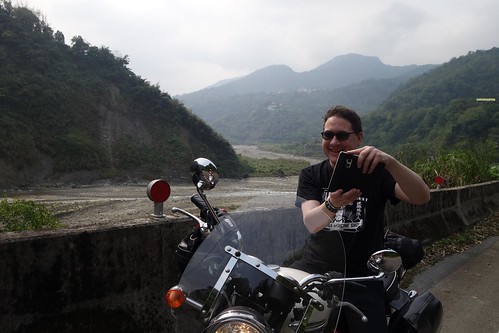
Longtime and well known expat Donovan Smith, who is part of the Compass Magazine team and is also the ICRT central Taiwan news man, enjoys the 149A below Caoling. 

LOL. Concerns were raised among Taiwan observers when eight Taiwanese acquitted of fraud in a trial in Kenya were handed over to Chinese authorities this week. In 2011 Philippines sent a group of fraudsters off to China. It took months of negotiation to get them back.

Most of the discussion has focused on the sovereignty issue, and warning that this is ZOMG A BIG DEAL with REPERCUSSIONS for the incoming Administration. But note how the outline of the two cases, Philippines and Kenya, are the same: a mixed group of Chinese and Taiwanese accused of fraud, and Beijing gets the Taiwanese deported back to China.

Taiwanese are regularly involved in crimes abroad, but deportations back to China are rare. In fact, one never hears that China has asked for Taiwanese criminals to be returned to it rather than Taiwan. People asking about the effect this kidnapping on Taiwan's place in the world or sovereignty or cross-strait relations are asking the wrong question, probably because they are permanently trapped in the media matrix where everything Taiwan is related to China by refracting it through the lens of cross-strait politics, and no other meanings are possible.

I love Kenya but honesty compels me to admit that Kenya is a major transit state for money laundering, drugs, and other illicit activities. It is the "single easiest place in the world" to carry out illicit financial activities, in fact. I suspect that those Taiwanese were deported back to China because they knew something about illicit activities of China in Kenya, and Beijing wanted to have a little chat with them before they were handed back to Taiwanese authorities.

UPDATE: Another 37 forced on plane to China, bringing total to 45. If this is a sovereignty thing aimed at Tsai Ing-wen or Ma Ying-jeou, why do they need them all? Completeness is only necessary if you want to make a clean sweep of something. Like if you want to make sure of how much a group of people knows about something...  Also it's fan-feces time, as some news media reporting that at least one abductee has a US passport.
_______________
Daily Links:
_______________________
Don't miss the comments below! And check out my blog and its sidebars for events, links to previous posts and picture posts, and scores of links to other Taiwan blogs and forums!

Monday, April 11, 2016

Call of the East: A Romance of Far Formosa (1914)

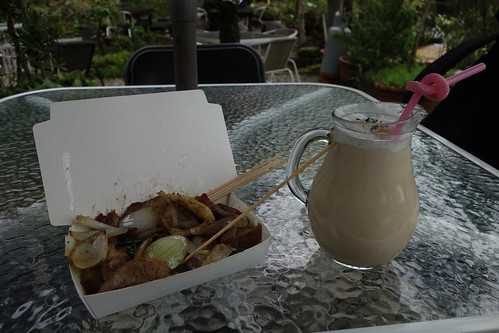
A lifegiving meal of fatty pork with onions and milk tea, which has genuine healing powers. 

Jonathon Benda alerted me to the existence of this book. The full text is on the net in the Internet Archive and at Project Gutenberg. The story is set in the Sino-French war of 1884-5, and one of the background characters is Dr Mackay, the famous missionary.
"Then Keelung is in the hands of the French?"

"Yes. That is if by Keelung you mean a strip of a few hundred feet wide around the harbour. But the hills all around that again are occupied by the Chinese."

"Little difference that will make," said Carteret. "The Celestials have had all they want. At the first sign of a French advance they'll run, and never stop running till they reach Taipeh."

"I'm not so sure about that," replied Gardenier, a trifle coldly. "In the first place, the French have no land forces with which to make an advance. In the second place, the Chinese are better fighters than you give them credit for, Mr. Carteret. All they need is a good leader, and I believe that they have such a man in Liu Ming-chuan."

"And in the third place," said Beauchamp, "the Keelung climate is enough to defeat the French if there were no Chinese. By the time their transports arrive the northeast monsoon will be about due. Then the Lord help them! One of the wettest spots on earth. Boville, what is the annual rainfall over there?"
Of course, it is a romance...
Miss MacAllister did not wait to be urged, but responded at once. Her voice was a rich, strong soprano. With a verve and fire worthy of her choice, she sang Lady Nairn's stirring war-song, "The Hundred Pipers." To the insistent demand for another song she replied with "The March of the Cameron Men." With her stately figure at its full height, head thrown back, and eyes which seemed to look away beyond her tropic surroundings to the hills of old Scotland, she sang as if possessed by the spirit of generations of Highland ancestors.

Sinclair, from his place over by the mantel-piece, was looking at her with undisguised admiration.

"Isn't she magnificent ? Yon's a prize for some man! ... Sinclair, man, why don't you go in and win? If you don't try, I'll be ashamed of you, whatever."

It was McLeod. He was speaking in a low tone, only for his friend's ear. But he who had been the personification of coolness during the typhoon was now fairly quivering with excitement. The songs of his people had fired his blood.

"You needn't be ashamed of me, Mac. I'm going to try."

"Good for you ! I'll back you to win."

"Don't stake too much on me, Mac. I'm new to this game. You might lose heavily. Carteret is ahead of me."

"That dirty snob ! " exclaimed McLeod in a tone of disgust. "He wants her in just the' same way as he wants every pretty woman he sees. And then her money would help to repair the Carteret fortunes."
_______________________
Don't miss the comments below! And check out my blog and its sidebars for events, links to previous posts and picture posts, and scores of links to other Taiwan blogs and forums!
NTU summer Asian arts program

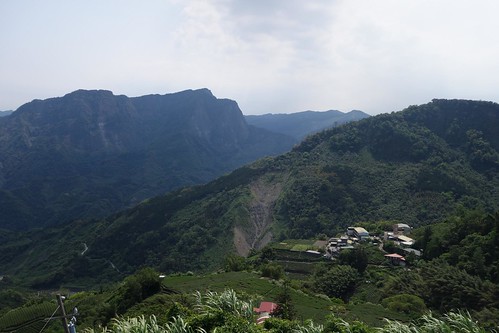
Scooter trippin' on the 169 this weekend.

NTU sent this around:

Dear Colleagues in East Asian Studies,

National Taiwan University is offering a unique "East Asian Performing Arts" summer program this July. We would be most grateful if you could encourage your students to apply at this link: http://goo.gl/JCyM7A

For more information, please see below:

This program offers an introduction to key forms of performing arts across East Asia. Over the course of two weeks, students will attend a series of lectures focusing on two intimately connected art forms—theater and music—to be given by notable scholars and specialists in the fields from some of the most prestigious research institutes in Taiwan.

The lectures will introduce the history and practice of performing arts in pre-modern and contemporary China, Taiwan, Japan, Korea, and Southeast Asia. Live demonstrations by actual performers, visitations of sites or collections featuring related artifacts, and screenings of films on performing arts will be incorporated whenever possible to give students a taste of theater and music in action.

Sample courses include (NTU reserves the right to slightly modify the program with advance notice):

♦ Introduction to East Asian Performing Arts: Mapping the Field
♦ China Theater: History of Theater in China + Kunqu Opera
♦ China Music: History of Music in China + Nanguan Music
♦ Taiwan Theater: Taiwanese Opera
♦ Taiwan Music: Aborigine Music
♦ Japan Theater: Noh Drama / Kabuki Theater in the Visual Arts
♦ Korea Music: 20th Century Colonial Period Music
♦ Southeast Asia Music: Myanmar Classical Music
♦ Asian Theater in Films: “Farewell My Concubine”
♦ Concluding Lecture
_______________________
Don't miss the comments below! And check out my blog and its sidebars for events, links to previous posts and picture posts, and scores of links to other Taiwan blogs and forums!
Friday, April 08, 2016

Tax evasion: A man, a plan, Panama!

DSC01571
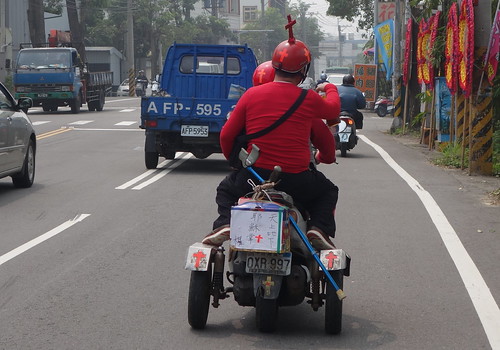
The Jesus helmet, for when Jesus placards on your scooter aren't enough.

Lots of comments on the Panama Papers and Taiwan, but the key one is here:
When news of the leaks broke on Sunday, some local media initially linked several prominent Taiwanese to the latest tranche of leaked documents. The names included President-elect’s brother, Tsai Ying-yang, and the heads of several companies such as Ting Hsin International Group, Taiwan Semiconductor Manufacturing Company (TSMC) and Advanced Micro Devices (AMD).

Chen, however, said such information was exposed by ICIJ in 2013.

While the ICIJ on its website notes that there are“legitimate uses for offshore companies, foundations and trusts,” the Panama Papers leak points to widespread illegal or unethical operation of offshore accounts and companies to evade taxes. The latest release of data has sparked tax evasion investigations into possible tax havens, causing the Prime Minister of Iceland to resign.
There are indeed legitimate uses. Many people have offshore companies for a wide variety of reasons. Taiwan's laws, it was explained to me by a corporate law office employee the other day, are hugely restrictive. For example, let's suppose a group of investors wants to form a company. Under Taiwan law, they have to have face to face meetings once a month (this has been changed to virtual meetings in recent years). They can't conduct things via email or snail mail. In many jurisdictions shareholders and founders regularly and normally make contracts among themselves about how the company is going to be conducted, defining who might run the firm and what percentage of profits or shares they might get. Such contracts are iffy under Taiwan law. And so on. In order to run companies the way they want, it's perfectly normal for people to offshore their firms. So let's wait and see what comes out...

...though as he noted, the legit activity tends to take place in the British Virgin Islands and similar. Panama is for illicit stuff since it isn't party to many international agreements on laundering, etc.

FOARP passes along a theory that many have been theorizing since this news broke -- the PRC hasn't made Panama switch recognition because so many corrupt officials have money there:
Interestingly, the Panamanian government even sought to switch recognition to the PRC as recently as 2009, only to be rebuffed by the PRC government out of an apparent desire not to breach the diplomatic truce between the two sides of the Taiwan strait. Funnily enough, despite the end of the "truce" with the recent establishment of diplomatic relations between the Gambia and the PRC after their 2013 breach with Taipei, there has not been any sign, yet, of movement in the Panamanian case despite the long-expressed desire to switch recognition.

The suspiciously-minded might suspect that the PRC leadership are purposefully delaying the switch as the "Panama Route" is rumoured to have proved useful for them and their families. However, there is not nearly enough evidence at the moment to draw this conclusion - but if Panama's diplomatic switch from Taipei to Beijing is significantly delayed, you might be forgiven for thinking that their motive in doing so may have something to do with keeping the "Panama Route" open.
_______________________
Don't miss the comments below! And check out my blog and its sidebars for events, links to previous posts and picture posts, and scores of links to other Taiwan blogs and forums!
Thursday, April 07, 2016

The slowly growing marriage "crisis" in Taiwan

DSC01589
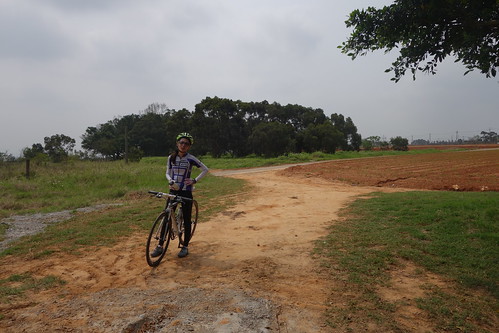
My good friend Eva, one of Taiwan's many attractive, accomplished unmarried 30-somethings.

Apple Daily ran a short piece on stats from the Ministry of Interior on marriage in Taiwan, noting that the reason for the falling rate of marriage, which matches Taiwan's falling birth rates, is commonly known as "2 Low 4 High"...
根據《好房網》報導,截至2014年底為止,內政部統計30至34歲人口有將近5成未婚,25至29歲的未婚比例更高達8成。統整出結果後發現,就是這以下「2低4高」的因素讓七年級生、甚至八年級生遲遲不敢成家生子。

According to a report from HouseFun News, as of the end of 2014, statistics from the Ministry of the Interior showed that 50% of those aged 30-34 remain unmarried, while for the 25-29 group the figure was 80%. Overall statistics show that the "2 Low, 4 High" keep those born in the 80s and 90s from forming a family and having children.
The two lows are the low salaries and low social welfare benefits for having children. The four highs are long work hours, high cost of children, high price of housing, and the high hidden costs (such as the health effects on the woman). Housing is an especial obstacle since custom requires that the man have purchased a house.

To which I would add that many females aren't getting married because of social factors not included here. Intelligent and accomplished females have great trouble finding mates in most places, but in Taiwan especially, where there is a widespread preference among males for women less intelligent than they are. I bump into this problem again and again in my interactions with older male grad students: "Why don't you ask X out? She's good looking, and super smart." "She is too smart" comes the unvarying answer. Females, especially those living alone and employed, come to treasure their personal freedom and dread the terrible family obligations that local culture places on them -- weekends wasted visiting the in-laws, the necessary service to the mother-in-law, the fulfilling of expected roles and behaviors on a constant basis. Consequently many choose to remain unmarried. Males can live with mom without stigma. Society also has become more relaxed about couples living together and about homosexuality.

Recall too that at the bottom of the social pyramid, many Taiwanese working class females can't find husbands because those men have imported a wife from China or Vietnam. Our picture of the single woman as a self-aware independent unmarried Taipei office girl is unrepresentative. There is also a group of females who are kept home to take care of mom and dad and who are told that marriage would be leaving the family and thus, betraying it. I have met several such females, and I suspect the pressure must be subtle and widespread.

As people enter their 30s their friends start going through divorces, and their picture of marriage becomes less and less positive. Why get married?
_______________________
Don't miss the comments below! And check out my blog and its sidebars for events, links to previous posts and picture posts, and scores of links to other Taiwan blogs and forums!
New KMT Chair Hung makes a classic move

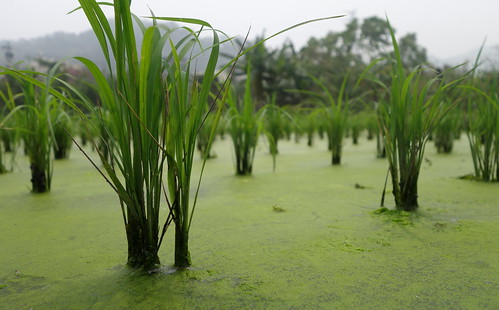
Rice.

Solidarity.tw translated a UDN article on new KMT Chairwoman Hung Hsiu-chu's appointments to positions within the KMT:
Days after naming members of her campaign team to party posts (S.tw: see below), new KMT Chairwoman Hung Hsiu-chu (洪秀柱) tonight announced a second round of personnel appointments. She named a record seven people as KMT deputy secretaries-general:
-Legislator Lin Teh-fu (林德福) (S.tw: KMT legislative caucus secretary-general, and deep-blue representative of Hung’s home district of Yonghe),
-Taitung County Council Speaker Rao Ching-ling (饒慶齡)
-Chiayi City Council Speaker Hsiao Shu-li (蕭淑麗)
-Former Legislator Lin Kuo-cheng (林國正) (Kaohsiung 9)
-Former Legislator Yang Chiung-ying (楊瓊瓔) (Taichung 3)
-Former Pingtung City Mayor Yeh Shou-shan (葉壽山)
-Former Pingtung County Chapter Chair Chang Ya-ping (張雅屏)
What kind of list is this? It's a list of local KMT Taiwanese faction politicians. Chiayi City Council Speaker Hsaio Shu-li is from the (in)famous Hsiao faction in Chiayi, whose members have scrawled their names as graffiti on many a jail cell. Yang Chiung-ying is a local faction politician from Tanzih where I live -- she was the politician Hung Tz-yung defeated in the last election. Lin Guo-cheng is a former city councilman from Kaohsiung. Etc. The Taipei Times has a list here of other appointments.

The KMT news organ observed:
A Hung staffer went on to say that Hung had short-listed candidates for KMT Vice Chairman, KMT secretary-general, and other senior party executives. However, some of the candidates were professors who had to consider whether they could take an extended sabbatical in the middle of an academic year. Some were also political appointees of the outgoing Ma administration, who would be available only after leaving office on May 20. The staffer commented that “the entire personnel line-up would be determined no later than May 20.”
These are classic Old KMT moves: appoint local faction politicians to party positions lower down in the organizational list, to help bind the factions to the leadership -- note how the list is mostly people from the center and south. Several were council speakers, highly desired positions for their ability to dole out government patronage to cronies. Bringing in KMTers temporarily parked at universities for party and political positions is a classic Old KMT move -- the problem is that they go back to universities when they are done, which doesn't help the party. She is also going to bring in people from the Ma Administration.

What's not being brought in? Young people bristling with energy and ideas. Outsiders. This is management by formula, not reform. Note that none of these people can challenge Hung because they are Taiwanese and do not possess a national following, they are just being put on ice until they run again in 2018 and 2020. She is merely re-affirming KMT control of its local networks. Moreover, anyone she appoints now will have little time to effect change, because Hung is going to face election again late next summer. These are smart moves, however, and obviously someone is giving her good advice.
______________
Daily Links:
_______________________
Don't miss the comments below! And check out my blog and its sidebars for events, links to previous posts and picture posts, and scores of links to other Taiwan blogs and forums!
Wednesday, April 06, 2016

Scott Simon: Dogs and their humans in the world of Gaya

Japanese era photo of Saisiyat hunters and their hunting dogs

As a lifelong dog lover, I was absolutely delighted, and then deeply moved, to read this article by anthropologist Scott Simon in American Anthropologist: Real People, Real Dogs, and Pigs for the Ancestors: The Moral Universe of "Domestication" in Indigenous Taiwan (Nov 2015) (link).

This paper discusses the relationship between the Truku, dogs and pigs, and how state power in the form of colonial regimes and colonial modernity has impacted those relationships and the relationships between these three types of sapient beings and Gaya, the "sacred ancestral law". It's not just deeply insightful, it's moving and beautiful. Just a couple of paragraphs:
Like Amazonian hunter-gatherers (Kohn 2007), Seejiq describe dogs as sentient and intentional beings with whom humans can communicate. They know the names of dogs, identify their companion humans, and relate stories about their hunting exploits. They observe that dogs exhibit individual preferences in selecting friends or mates. Gaya demands hunters to be modest about their own abilities, yet they brag about the abilities of their dogs. When people eat outside, perhaps around a fire on winter evenings (Figure 4), they allow dogs to approach and eat with them. This relationship has not changed much since the Japanese colonial period, when ethnographers expressed surprise about sharing tables and even bowls with dogs. Kim (1980:189), three decades later, likewise considered sharing a table with dogs to be among the “unpleasant experiences” of fieldwork. Yet excess sentimentality attached to dogs is not appreciated. Contrary to Yi-Fu Tuan’s definition of pets that includes bringing them into the house (Mullin 2007:293), the norm is to keep dogs outside. It is considered cruel to tie up dogs, even if many people still feel the need to do so.

.......

The Seejiq affirm sovereignty when they say that their Gaya is efficacious, even better than state law, in managing multispecies relations. In one story, a police officer stopped an elderly Seejiq hunter, confiscated the serow (a mountain goat) he had caught, and took it home to eat. A few days later, the brakes on his brand-new motorcycle failed and he careened off a cliff to his death, an unlikely accident that people explained by saying Seejiq ancestors had punished him. Indigenous people everywhere seem to delight in revealing differences in the way they relate to animals as compared to the dominant groups. These conversations are prompted by conflicts over both material and abstract issues, such as hunting regulations and sovereignty, but also by relatively mundane conflicts, such as garbage collectors poisoning dogs. When indigenous people talk with anthropologists about cultivating trust with prey animals or affirm ontological difference in their relationships to animals, they assert moral superiority over colonial and postcolonial power. For peoples whose life projects are endangered by outside forces, calling attention to different ways of relating to animals is a means of positioning themselves as sovereign peoples.
Track down a copy of this paper. Well worth reading for the lovely prose, the beautiful stories it tells, and the deep insights it offers. The final paragraph hits like a sledgehammer.
_______________________
Don't miss the comments below! And check out my blog and its sidebars for events, links to previous posts and picture posts, and scores of links to other Taiwan blogs and forums!

Tuesday, April 05, 2016

Nantou: 101 + 56 = Staggering

DSC01676
Drew on the 56

Slow news week and I haven't felt much like blogging. But with the excellent weather, it's time for some serious riding. Monday Drew took Eva and myself down to Nantou to do the awesome 56, 20 kms of desolate hills, via the 101 through the tea districts above and east of Lugu. Gorgeous. As always, click on read more to see more... UPDATE: Drew's write up is pure poetry.

Saturday, April 02, 2016

Sunday Linkfest

Hualien mountain roads: there isn't much there...

_________________
Daily Links:
_______________________
Don't miss the comments below! And check out my blog and its sidebars for events, links to previous posts and picture posts, and scores of links to other Taiwan blogs and forums!

Wednesday, March 30, 2016

Eels in Myth and Solar cycles

Chung_46_29
Looking forward to roads like this soooonnnnn...

From Eels and Humans, Tsukamoto and Kuroki (Eds.)

Freshwater eels (Anguilla spp.) are an important food resource and support large-scale aquaculture in some oriental countries. Taiwan’s climate is ideal for eel stocks living in the wild and for aquaculture. Indeed, the country’s aquaculture industry, which was initiated in the 1960s and peaked in the early 1990s, contributed greatly to Taiwan’s economic development at the time, though much of that production has since been transferred to mainland China. Despite their economic importance to humans, however, many people are not that familiar with eels, so this chapter supplements material presented elsewhere in this book by documenting aspects of eel distribution and biology, mythology, cuisine, etc, in Taiwan.

....

The recent decline in the population of wild Japanese eels has resulted in there being an insufficient supply of glass eels for aquaculture in Taiwan and elsewhere. The reason for the decline is not absolutely clear, but as speculated elsewhere in this book and for other species of eel too, it may be related inter alia to overfi shing, habitat degradation and/or global climate change (see below). Whatever the cause of the decline, though, and in an attempt to stimulate recovery of Japanese eels in the wild and concomitantly to increase glass eel production for aquaculture, the Taiwanese government ordered the release of hormone-induced mature eels (silver eels) into the open ocean from 1976 to 2002. Since the millennium, however, that programme has shifted its focus to releasing young eels into rivers.

In addition to the five species of eel found naturally in Taiwan, some exotic species of anguillid eel have also been found in the wild. Succinctly, faced with a reducing inflow of Japanese glass eels and a heavy demand for glass eels generally for aquaculture in the country, glass eels of non-endemic species such as the American eel A. rostrata were introduced from North America; some escaped from the aquaculture ponds into the wild and have since been caught occasionally during their spawning migration as adults (Han et al. 2002; Tzeng et al. 2009). Additionally, the Australian speckled longfin eel A. reinhardtii has been caught in Sun-Moon Lake in central Taiwan, having originally been imported from Australia for cuisine purposes because of its similarity to the A. marmorata eaten preferentially by Taiwanese (Chang et al. 2008).

....

Long-term catch data (1972–2011) have indicated a significant decadal change in peak catches of Japanese glass eels coinciding with solar activity reflected in an 11.2 year periodic change in sunspot number (Fig. 9.3a; Tzeng et al. 2012a). The catch of glass eels seems to increase with a concomitant increase in the number of sunspots, and although the cause−effect relationship between glass eel numbers and sunspots is not a direct one, the climate change index WPO (Western Pacific Oscillation) that influences the two currents (NEC and Kuroshio) that transport eel larvae from the spawning grounds to the coasts and subsequently affects the Taiwanese glass eel catch is clearly a link (Tzeng et al. 2012a). After peaking in 1979, the Taiwanese glass eel catch gradually declined to a lower peak in 2001, since when it declined further until the most recent lower peak in 2011, mirroring similar decreases in the population size of the Japanese, American and European eels (Fig. 9.3b ). All this is taken as evidence that fluctuations in the catches of glass eels in Taiwan refl ect not only the overall population size of A. japonica but also ocean–atmosphere interactions exemplified by the climate change indices of sunspots and WPO.

...

The eel is an important religious icon in Taiwanese folklore. The Japanese eel and the giant mottled eel are regarded, respectively, as river and sea gods, and this can be seen in the design and paintings of gate god statues commonly placed at the entrance to traditional Taiwanese village dwellings. Many villagers believe that the gate gods protect them against the devil and evil spirits, and protect the security of their family (Fig. 9.13a ). Additionally, eels appear in the design of “ong-bao” (Fig. 9.13b ), the red bags containing money that parents give children to seek good fortune during the Chinese Lunar New Year. Eels are important also for Taiwanese native (aboriginal) peoples, but those people do not kill and eat the eels because they believe that they are the embodiment of celestial beings.
_____________
Daily Links
_______________________
Don't miss the comments below! And check out my blog and its sidebars for events, links to previous posts and picture posts, and scores of links to other Taiwan blogs and forums!
Xi's visit to Czech Republic: protests and positives

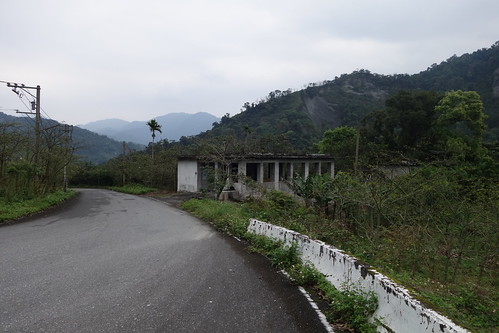
The First Foundation is thataway.

Czech Taiwan and China security expert Michal Thim just posted this to Facebook

++++++++++++

Toward the end of the video (on Youtube), a Chinese woman (I will leave her possible affiliations to everyone's own considerations) tells a Czech citizen that he is not "welcome here". Here means Prague, and she is a part of large group of Chinese "volunteers" who moved around in a buses, ostensibly to welcome Chinese President in Prague, and confronted protesters, especially those who were holding Tibetan flags. In some places they obstructed view with huge PRC flags they carried, or using the buses they rented.

On related note, one of online news sites reported that the Chinese embassy instructed (although it was careful enough not to be direct coordinator, some shady Czech-Chinese Commerce Association was) "volunteers" to tear down undesirable flags, make noise, not to openly provoke, but not to be afraid to confront either. Source is one of the Chinese students who spoke on condition of anonymity. The "volunteers" consisted of people who work in the Czech Republic for Chinese companies like Huawei, students, and also "tourists".

Of course, there was no need to mobilize Chinese citizens who reside in the Czech Republic, Chinese Embassy could just let the protesters protest and deal with the official business. But none of this is exactly new. We have seen it prior to 2008 Olympics in places like Paris or in London last year. I actually have hard times to understand it because in the end of the day, it is counter-productive. I can see in online discussions that many people who otherwise would not care are outraged with the spectacle, by apparent disinterest of Czech police to protect constitutional rights of Czech citizens, and by the kowtow approach the Czech President demonstrates.

On a positive note, the treaty on partnership that was signed yesterday is a standard text that other EU countries signed with China, which means it does not contain any concessions on Taiwan or Tibet. Chinese side tried, the Czech government did not concede.

_______________________
Don't miss the comments below! And check out my blog and its sidebars for events, links to previous posts and picture posts, and scores of links to other Taiwan blogs and forums!
Tuesday, March 29, 2016

Party of the Death Penalty

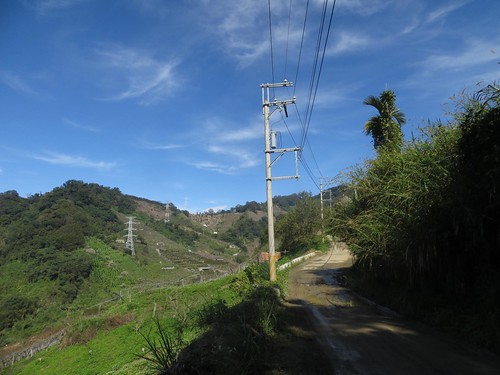
The Ruiguang Industry road, one of the prettiest in Taiwan.

The horrific murder of a four year old girl in front of her mother two days ago has once again brought the death penalty to the fore. The poor child was beheaded in a senseless, entirely random act of violence by a mentally ill man. This was followed by two more apparently random attacks (FocusTw). The media sadly jumped on the attack of the little girl, sensationalizing it as clickbait and a ratings driver, a feeding frenzy that probably helped create the atmosphere for the two other random attacks. A vigilante mob beat up the killer, as well (Apple in Chinese).

In Taiwan the death penalty has wide and deeply visceral support. Taiwanese seem to feel that only a life can expiate a life, and it is difficult to move them off that position. As Ben Goren observed on Twitter after the deputy mayor of Taipei idiotically blamed the parents of the killer and called for an apology from them, events like this bring out Taiwan's feudalistic culture of collective guilt and punishment. J Michael Cole meditates on the issue here, pointing out that the death penalty has no deterrent effect, but more importantly noting that Taiwan's judicial system cannot be trusted, and that its mental health system is lacking.

The mother of the murdered child has asked that the case not be used by death penalty advocates in a moving Facebook post, and said that the killer was irrational and the case should be treated as a mental health issue.

Too late, not merely death penalty advocates, but the KMT itself is exploiting the case. FocusTaiwan reported:
The newly elected chairwoman of the KMT, Hung Hsiu-chu (洪秀柱), questioned those opposed to capital punishment, asking "Are you still in favor of abolishing the death penalty?" while expressing her support for the bill proposed by Wang.
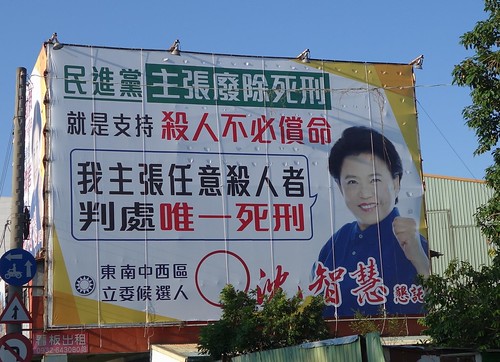
"those opposed to capital punishment" of course means many politicians on the pro-Taiwan side. In the recent election many KMTers made a campaign issue out of it...

Politics_10

I wrote on the CPI blog in December about this picture:
This KMT candidate, Shen Jih-hui, was the only one in Taichung to have a poster of herself with former KMT Presidential Candidate Hung Hsiu-chu (sorely missed by this blogger). This sign boldly states that the DPP will scrap the death penalty, thus “not supporting a life for a life” which is a principle with deep roots in the local culture. The death penalty is popular in Taiwan, and she proudly proclaims her support for this ancient principle.
Some of her other signs called for the death penalty for drug dealers.

The KMT is attempting to make this an issue that it owns, one of the few in which it is aligned with the public, which it can bash the DPP with. The Taiwan Law blog commented on KMT legislators arguing for a referendum to make abolition of the death penalty illegal...
Taiwan Law Blog ‏@TaiwanLawBlog o
Taiwan Law Blog Retweeted 中時電子報
KMT legislators mull referendum against abolition of death penalty. Do they realize death penalty is still the law?
....never mind that the referendum law is badly in need of revision. NPP Legislator Freddy Lim (the lead singer for Chthonic), who spoke out against the death penalty, saw his Facebook page flooded with angry comments from netizens demanding that the killer be put to death. I am proud to say that my legislator, the NPP's Hung Tz-yung, also spoke out against the death penalty. Other legislators from the NPP with a history of opposition to the death penalty were also publicly abused. The Chairman weakly temporized, saying that his party has never advocated against the death penalty.

This debate is merely the latest example of the KMT exploiting the death penalty discussion for political gain. In 2010, readers may recall, the Justice Minister was forced to resign after giving a newspaper interview which stirred up a public debate on the topic. The result was that a few weeks executions, which had quietly been on hold since 2005, were resumed and four more humans were killed, while KMT politicians called for more executions.

The KMT looks like it will be the party of the death penalty. Nothing new there...
_______________________
Don't miss the comments below! And check out my blog and its sidebars for events, links to previous posts and picture posts, and scores of links to other Taiwan blogs and forums!
Monday, March 28, 2016

Hung Hsiu-chu ascends to the KMT Throne

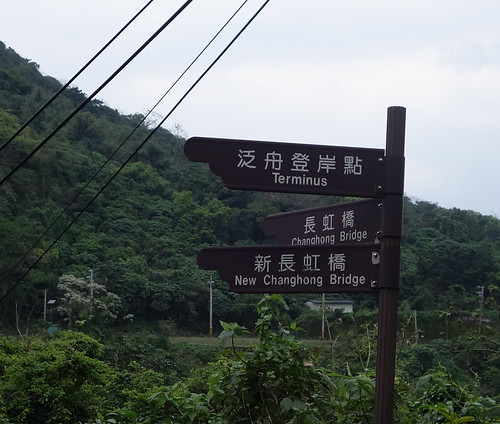
Collage (which appears to consist of pictures of herself) Hung sent around after her victory.

As was easily predictable, reactionary mainlander former presidential candidate Hung Hsiu-chu was elected to the KMT Chairmanship with 56% of the vote, defeating her Taiwanese rival from Chiayi, Huang Min-hui, who had the backing of party elites. The election was a by-election held to fill the seat left vacant when former Chairman Eric Chu stepped down after the KMT's devastating defeat in the 2016 Presidential election.

Hung won because she had the support of the "iron votes", the Deep Blue old KMT voters, even though party elites had all arrayed themselves against her. One longtime observer pointed out that the Deep Blue voters felt Hung was owed something since she had supported the party even after it betrayed her. J Michael Cole described:
More significantly, her political resurrection also completes the process of New Party-ization of the KMT, signs of which had first appeared when Hung was selected as presidential candidate in mid-2015. Hung tends to attract ultraconservative “deep blue” (and generally older) KMT members, as well as pro-unification types from the marginal New Party and even more insignificant China Unification Promotion Party headed by ex-gangster and Beijing agent Chang An-le (張安樂). Those groups rallied around Hung last year and protested outside KMT headquarters when it looked like she was about to be replaced.

What this development means is that at a time when the KMT should have taken note of the factors that contributed to its demise in the January elections and opted for rejuvenation (in other words, to become more moderate or “mainstream”), it has instead regressed to an ideology that has very little appeal among the majority of voters in Taiwan.
Cole observes, very rightly, that Hung has considerable assets at her disposal to resist progressive forces in Taiwan politics, and that she might be more willing to cooperate with Beijing than a more progressive leader. He also says her election is very bad for Taiwanese democracy, and warns that she might not do as much damage as some of us had hoped for, since people within the KMT will be reluctant to leave.

My own view is that KMT hardening was inevitable irrespective of whoever sits in the chair. The party is composed of authoritarians at all levels desperate to protect their fading power, influence, and assets, and Hung is perfect for them...

On the one hand, she represents the old ideology, which she fiercely subscribes to, rallying the troops against the onslaught of Taiwanese identity and democracy. On the other, she makes a perfect foil for when the KMT takes hits on assets and transitional justice. If she succeeds in stopping the DPP, all good, if not, she's a good fall guy: "If only we had picked someone more moderate." They will then pick another "moderate" who will adopt the exact same policies, and just express them in a nicer way.

There are likely several areas where Hung's reactionary politics may well cause immediate hurt outside of the highly public ones of KMT assets and transitional justice. One is energy, where she continues to push for nuclear power even though more moderate figures such as Eric Chu and Hau Long-bin have questioned the idea, at least publicly. Today the horrible news broke that a man had randomly beheaded a little girl in the street, right in front of her mother. Pointedly abusing the DPP's anti-death penalty stance, Hung essentially called for the poor sick killer's execution (Taiwanese are overwhelmingly in favor of the death penalty). Hung also responded to congratulations from Chinese dictator Xi Jin-ping by reiterating the 1992 Consensus.

In China netizens love her; which is probably good since they will imagine all sorts of impossible things about her, and perhaps stop pushing impatiently for Xi to invade Taiwan, at least for a while. We need a KMT so that Beijing continues to hope and need not formally confront the failure of its policies...

The KMT is set for a slow fade, not a collapse, death throes that will last for years and continue to spew out harm like a dying scorpion stinging everything within reach. The only way it could collapse is if there is a large revolt of its disgruntled Taiwanese followers. Wang Jin-pyng, long the unofficial head of the Taiwanese KMT, who might have led such a revolt, is out of power and this week even had to deny that Tsai Ing-wen had offered him a position as head of the Straits Exchange Foundation (SEF). He was always a broker, never a leader. Huang Min-hui, who might have taken his place, has aligned herself with the Party leadership (as Wang once did) and isn't going to lead a revolt. There might be isolated instances of people leaving, but the Taiwanese factions won't bolt because they are too weak and fearful. They will remain, and simply not be replaced as locals look for other parties for power and influence.

Key point: there's another election next summer. If she can win that, she gets another four years. That means that the KMT will likely never Taiwanize as so many had hoped, and never be a Taiwanese party. Instead it will shrink to a rump of Deep Blue Han Chauvinists and authoritarians.* That will be very good thing for Taiwan, if a truly democratic party rises to fill the space it leaves behind.

*See the work of Li-li Huang: “M Shape vs. Bell Shape: The Ideology of National Identity and Its Psychological Basis in Taiwan.” (in Chinese) Chinese Journal of Psychology 49(4): 451-470 (2007) and “Taiwanese consciousness vs. Chinese consciousness: The national identity and the dilemma of polarizing society in Taiwan.” Societal and Political Psychology International Studies 1(1). (2010)
_______________________
Don't miss the comments below! And check out my blog and its sidebars for events, links to previous posts and picture posts, and scores of links to other Taiwan blogs and forums!
Catching up: Huadu + links =UPDATED=

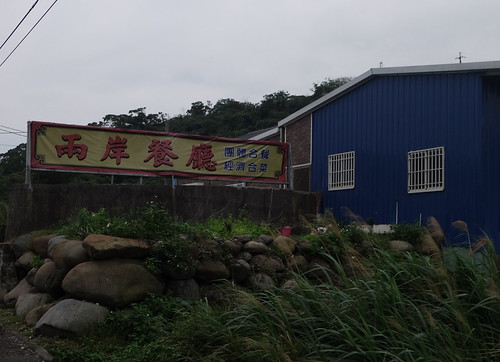
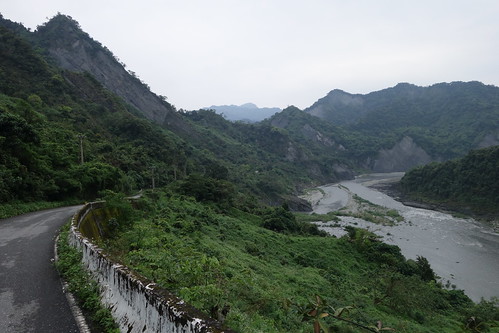
The Cross-Strait restaurant outside Changbin, where Taiwan is served on a platter daily.

Last week spokesman extraordinaire J Michael Cole wrote a rather odd piece for the China Policy Institute claiming that Beijing now faces 2 independence camps in Taiwan. The piece blew up a dismissive term used by some Taiwan independence types (=Taidu) for independence types who are willing to accept independence under the ROC label (=Huadu) into a full blown political camp. Ben Goren and I pointed out Cole's error in a follow on piece at CPI.
Although the piece is creative, it posits a false dichotomy based on a misunderstanding of the etymology of the term ‘Huadu’. Although the term has become more popular in recent years, it originated as a dismissive phrase coined by Taidu supporters to refer to other Taiwanese who they see as weak-willed appeasers of the ongoing ROC colonial occupation of Taiwan. Outside of this tiny subset of active citizens who are politically engaged on the issue of Taiwan’s independence, the term Huadu remains largely unknown.
Persual of BBS systems where people discuss such things shows that the term remains a mystery even to those might use it; outside of a few young people engaging in discussions on the internet, there is no camp, no ideology, no political demands, no philosophy for the "huadu". It exists as no more than a feeling that it might be ok to be independent under the ROC label, though it is obvious that people who think that way have never thought much about what the means. Some random remarks from users on a BBS:
華獨派除了憲法跟國名外,跟台獨根本一樣啊XD
Huadu faction [note: not "camp"], except for the Constitution and the nation's name, are Taidu
華獨是希望隨著時間對岸可以逐漸的變成正常國家
Huadu hopes that over time the opposite side will gradually become a normal country
國號根本不重要 某些台獨派太狹隘
What we call the nation is not important. Some Taidu people are too narrow-minded
Taidu and Huadu are just labels that are used to divvy up the independence movement into purist and moderate factions, largely for discussion purposes among a few aficionados. Outside of this discussion among Taidu types about other Taidu types, there is no Huadu camp. As Ben and I note in the piece at CPI, if China ever permitted Taiwan to be independent, this "difference" would vanish in a heartbeat.

Brian Hoie at New Bloom riffed on Cole's piece to speculate on how the DPP might treat ROC independence. He also observes of Cole's error:
If terms such as “ROC independence” or “Taiwanese independence” are terms commonly used in Taiwanese discourse about unification/independence politics to frame specific political positions, such terms are not used in English. Discussion of political positions about independence/unification politics are framed in different terms in English.

In writing about the use of such terms in Taiwanese discourse about unification/independence politics, one hopes to bridge the sometimes vast gap between Taiwanese political discourse within Taiwan and Anglophone discourse about Taiwan—even if others may arrive at different political conclusions than one’s own. But that leaves open the possibility that individual seeks to appropriate a term from its original meaning in Taiwanese discourse to create a different meaning for it in English, which creates misleading perceptions about political discourse within Taiwan.
This does not mean that at some point in time this discourse might spill outside its current existence on the BBS and become a full blown camp with advocates, a program, an ideological system, and so on. Perhaps Cole was just trying to get the jump on such a process as a couple of people observed: "I saw it first!". But at present, there is nothing like that in the offing, and Beijing contends with the Taiwanese and their democracy, as Cole rightly noted in his piece.

ADDED: Jenna responds to Ben and I
Where, however, it seems to me - again in my totally non-scientific observation - that they are wrong is in dismissing it as existing at all simply because it is not an organized or semi-organized political force or a self-identifying label
...except, we never denied that such people existed. *sigh* What we denied was that they represented a "camp" that Beijing had to contend with, or that the terms used in a tiny subset of the political discourse could be blown up that way. To wit:
The only evidence of Huadu’s existence surfaces intermittently in polls that ask whether Taiwanese want independence, the status-quo, or annexation. Those polls provide too little information on the identity of respondents to conclude that those who favour the status-quo have a unique and consciously shared political identity
Taidu is a real political identity conscious of itself, with an ideology and program. "Huadu" is a term used by Taidu people to describe other Taidu types who are less purist. It's really that simple. Everything else is just blowing the whole discussion out of proportion.
_____________
Daily Links:
_______________________
Don't miss the comments below! And check out my blog and its sidebars for events, links to previous posts and picture posts, and scores of links to other Taiwan blogs and forums!
Drone Footage of Oil Spilling Wreck off N Taiwan


Excellent work, whoever did this.
_______________________
Don't miss the comments below! And check out my blog and its sidebars for events, links to previous posts and picture posts, and scores of links to other Taiwan blogs and forums!