Monday, November 09, 2015

An Error-studded AP Failpiece + Polls

Lot of fun stuff when around the net...

It's scary how much better the commentary on the Ma-Xi meeting has been than the reporting. And again, Beijing correspondents completely fail when confronted with Taiwan (for contrast see former Taiwan resident Austin Ramzy's report for the NYTimes). Chris Bodeen for AP provides the latest example of this...
While it isn't yet clear what the impact will be, or whether and when it will happen again, on a rainy Saturday in Singapore, the possibility of a fundamental shift in relations between the feuding neighbors suddenly seemed possible.
Note that the nature of this "fundamental shift" was left unexplained, precisely because the writer would then have to observe that any "fundamental shift" would take place over the dead body of Taiwan's democracy.

The actual fundamental shift  is that the new DPP era is commencing soon and the KMT is now in a long decline. But Bodeen presents that democratic moment as a problem below...
The meeting was the first between the leaders since China and Taiwan split amid the still unresolved civil war in 1949. Although preparations spread out across two years, it wasn't announced until Wednesday, catching almost everyone by surprise.
As always, China and Taiwan didn't split in 1949, because in 1949 Taiwan was still formally part of Japan. What split in 1949 were the two Leninist authoritarian parties, the KMT and the CCP.
"From the mainland perspective, Xi Jinping's decision to meet with Ma demonstrates that he is willing to take some degree of risk in order to change the dynamics of the relationship," said Mary E. Gallagher, a political scientist who studies China at the University of Michigan. "Xi's move further solidifies his image as a strong and confident leader."
Note that (1) Bodeen cites only China scholars and (2) this scholar refers to China as "the mainland". Yes, it is -- for Hainan Island. Not for Taiwan. This "Xi is taking a risk!" position is explained in a Foreign Policy piece by Andrew Nathan which also sourced quotes from Jerome Cohen without mentioning that he's close to President Ma and has business offices in China. (Interestingly, in the FP piece, Nathan refers to "anti-Mainland" sentiment in Taiwan. Let's call that what it is: pro-Taiwan sentiment. Again note how pro-China propaganda is internalized in the FP presentation -- Nathan refers to China as "the mainland" and objections to annexation as "anti-Mainland sentiment".)

Continuing...
Ma "wants to drive home the point that cooperation with the mainland is possible and that it is better for Taiwan's residents than the alternative," Columbia University China expert Andrew Nathan wrote on the Asia Society blog ChinaFile.
Again Andrew Nathan is a China scholar. Was that the point Ma wanted to drive home? How could Ma want to drive that home when he had already agreed that nothing would come out of the meeting long beforehand?
The biggest obstacle to future talks could be Taiwan's ferociously democratic system — new elections for the presidency and legislature are scheduled for January. The main opposition Democratic Progressive Party, which advocates Taiwan's formal independence from China, is favored to win one or both elections and its presidential candidate Tsai Ing-wen has refused to endorse the so-called "92 Consensus," under which China has allowed negotiations between the sides to proceed.
Three errors.

First sentence: Catastrophically wrong -- Tsai Ing-wen has repeatedly said she'd be happy to meet with Xi with legislative and popular support, and polls overwhelmingly support this. This was said prior to Ma-Xi mess. Hence, democracy is not an "obstacle" to a Tsai-Xi meet up.

But note how democracy is presented as an "obstacle". That's an obscenity. Let's say what it's really an obstacle to: China's annexation of Taiwan. The problem isn't Taiwan, it's that Xi Jin-ping heads a nation that has repeatedly threatened to murder Taiwanese and take their island.

Second sentence: The DPP does not advocate formal independence "from China" (you can't advocate formal independence "from China" because Taiwan is not part of China). Apparently Bodeen never bothered to look up the actual DPP position. Let's just quote a DPP politics expert:
The DPP passed the "1999 Resolution on Taiwan's Future" which states that Taiwan is already an independent sovereign nation with its formal name the "Republic of China". Any change in the independent status quo must be decided by all the residents of Taiwan by means of plebiscite. In 2001, the DPP passed a resolution elevating the status of the 1999 resolution, making this resolution supersedes the "Independence Clause".
The DPP's position is that Taiwan is already independent.

The problem with the second sentence's assertion on the 1992 Consensus is more subtle, for it presents Tsai Ing-wen as refusing to recognize the 1992 Consensus, which never existed, but never clearly states that China does not recognize it, either. A totally one-sided presentation. China merely insists that the DPP hew to it -- proof positive that it exists only to cage a DPP president.
"The big question going forward is whether this meeting will change how Taiwanese view the mainland. Will this meeting improve the chance of further rapprochement under the next administration, which is almost surely to be under the DPP?" Gallagher said.
...and the piece ends with a quote from a China expert. Nobody from the Taiwan side speaks, so AP readers go home unaware that the public does not want "further rapproachment" with China with the implication that annexation will follow, which is what Gallagher appears to mean. Nor was the "big question going forward" whether the meeting will change how Taiwanese view China. That was never in play, nobody in Taiwan believes Xi Jin-ping. See Mayor Ko of Taipei's remarks, though I think the translation is overwrought.

Fortunately poll data was out today. Solidarity has the translation of the pro-KMT Cross-Strait Policy association -- 80% think there are two countries on each side of the Strait, 48% dissatisfied with Ma's performance. Note also that 49% of the respondents think Tsai will handle relations between China and Taiwan just fine. Other polls in Chinese are here and here. I expect that the pro-Ma numbers will decline once the transcript of Ma's talk with Xi MAC released today starts to circulate.

As J Michael Cole remarked, the second biggest obstacle facing Taiwan is ignorance. But I might add that the third biggest obstacle is the astounding lack of sympathy in the international media for Taiwan, though demand for J Michael in the media shows that there is some hope of change. If only Taiwan were a small Baltic Republic...
_______________________
Don't miss the comments below! And check out my blog and its sidebars for events, links to previous posts and picture posts, and scores of links to other Taiwan blogs and forums!

Sunday, November 08, 2015

馬習團: Xi Dada meets Ma

Such a lovely day! Who wants to come home and write about the 馬習團 after ten hours riding in this?

l'll talk to this Humungus! He's a reasonable man, open to negotiation.

Well, it's all over but the commentary. Lots of good stuff all over, but I'd like to highlight this piece from Gwenyth Wang at Ketagalan Media:
As the world watches today’s “Ma-Xi Meeting,” I expect to see the results reinforce the significance of the 1992 Consensus. However, by holding such an unprecedented meeting under the international spotlight, Ma has opened up a Pandora’s Box, and unleashed Taiwan’s dynamic and strong civil society, which has taken root in a democratic soil. They will demand democratic scrutiny of the meeting and will not tolerate any unilateral decision to define the “status quo.” Welcome to democracy, Xi Dada.
A lot of people were wrong about the 1992 Consensus, thinking it would be front and center. This was a case of media stupidity -- there is no other word -- because most of the major media and internet outlets incorrectly asserted that the 1992 Consensus is an agreement between Taiwan and China. Wrong! China has never accepted it, and that was never made clearer than at "LegacyWhore in Singapore 2015", when Ma repeatedly raised the 1992C, and was repeatedly ignored by Xi Dada. Naturally all that was deleted from the official transcript. Naturally you won't see any corrections in the Establishment media, either.

Chieh-ting Yeh rammed this point home:
Right now, the attention is on the fact that Ma’s opening statement neglected to mention the second part of the 1992 Consensus that Taiwan had insisted on—that Taiwan can interpret “China” to mean the government in Taiwan. For Taiwan, that is the only part of the 1992 Consensus that keeps it palatable, that the government in Taiwan still has any leverage to claim its existence. Since the Chinese side made no comment on this line whatsoever, in effect China had just denied Taiwan’s political existence to Taiwan’s face.

As a tool of diplomatic ambiguity, the 1992 Consensus is now dead to the Taiwanese people. There is nothing ambiguous about it anymore. We have officially ended the era of the 1992 Consensus, and entered a new era—where China thinks there is no more room left for Taiwan.
I think Yeh underestimates the plodding insistence of the KMT, which will simply ignore the fact that China was silent, and continue to insist the 1992C governs relations.

Wang put her sharp, elegant finger on the most important point, the ghost in the machination: Taiwan's democracy. Even as the 馬習團 was launching from the MaXipad at the Shangri-La in Singapore, Taiwan's democracy was already clutching Ma in its eagle-clawed grip: he couldn't do anything because his party has to get elected, and Taiwan's civil society won't stand for his Big Man style of rule and secrecy. Lots of people didn't have faith in Taiwan's democracy, while I was wishing Ma and Xi could meet every day. In the end it was the party not present, our robust democracy, that won that meeting. Hands down. UPDATE: Don't miss Sullivan's remarks.

As DPP Presidential candidate Tsai Ing-wen observed....
"A president should represent and execute the will of the people. However, President Ma’s handling of yesterday’s Ma-Xi meeting left many disappointed, if not furious. In the eyes of the Taiwanese people, the only “historic record” set on the international arena by the Ma-Xi meeting was President Ma’s giddy handshake. Left out of the entire process were Taiwan’s democracy and any sign of the Republic of China’s existence.
Frozen Garlic tried to be positive for Ma:
I think Ma will probably experience a small bump in his popularity, but any positive effects in the legislative races will be offset by the negative effects of nationalizing the race. Ma and the KMT are still overwhelmingly unpopular, and the election has now been reframed in terms of high politics. Given that the KMT’s best chance of surviving January is the local popularity (based on things like intensive constituency service) of their 40 incumbents, forcing voters to think about national issues (ie: vote for the party, not the individual) is perhaps not the wisest strategy. In the presidential polls, Tsai is so far ahead that there is almost no chance that the Ma-Xi meeting will affect the outcome. (Before this all broke, most polls had her ahead by around 20%, and the gap was widening. Historically, a 20% gap in polls has usually meant something around a 20% margin in the final vote. So I wouldn’t be shocked if the roughly 45-23% gap ends up as a 58-36% victory.) Ma has tried to argue to voters that Tsai can’t conduct relations with China since she won’t accept the 92 Consensus. According to hundreds of polls, the voters haven’t bought that message so far. I didn’t see anything this weekend that would make them change their minds en masse.
Many of us observed that Ma's 1992 Consensus statements lacked the "two interpretations" part that KMT True Believers have always insisted on, which made them more or less equal to Hung's "One China, One interpretation" craziness. Hung herself treated the meeting as a vindication of her ideas.

There's really not much more to say. Ma said that Xi said the hundreds of missiles facing us aren't targeted at Taiwan. Of course that is absurd, and everyone will laugh. Everyone knows that Ma did this only for himself and for his personal legacy in history. The meeting was completely vapid, as I expected, and nothing concrete came out of it. If this does not hurt Ma and the KMT, it is only because their standing can't sink any lower.

There's lots of commentary out there... good luck hunting it down. This event will quickly pass into history, with KMT candidate Eric Chu off to the US to assure the US that the KMT isn't actually a party in rapid decline, and the election should move back to front and center here.
_______________________
Don't miss the comments below! And check out my blog and its sidebars for events, links to previous posts and picture posts, and scores of links to other Taiwan blogs and forums!

Thursday, November 05, 2015

馬習團: Evening Media Round Up

Fishing.

All the international media is entirely correct. This pony and dog show in Singapore does indeed herald a new era in China-Taiwan relations: the Tsai Ing-wen era, when China will have to adjust to dealing with a DPP administration which the US will, I expect, reluctantly come to support more and more as tensions grow between Beijing and Washington. Things are changing in Asia, and Xi is attempting to signal to neighboring states as well as to domestic audiences that he is flexible enough to change with them (see below).

NOTES FROM THE FIELD: Today a couple of my students said they were happy to think about Ma shaking hands with Xi. Apparently there was a legend running around the PTTs (internet bulletin boards widely used among students) last year which talked about Ma's Handshake of Death -- shaking hands with Ma was certain to be followed by bad luck. Apparently Ma shook the hands of the pilots of the Apache helicopter he rode in, which was the first one that crashed. Other examples were given, but I can't remember them.

A friend remarks: Ma and Xi splitting the dinner bill? So... they're going Dutch in homage to Taiwan's colonial roots..."

Straits Times: KMT hoping for Boost. Extensively quotes J Michael Cole, a "Taipei-based analyst".
To boost KMT's chances, cross-strait expert Chu Jingtao of the Chinese Academy of Social Sciences believes Mr Xi may promise more room for Taiwan in the global arena to counter the long-running grumbles among Taiwanese over the island's limited involvement in multilateral initiatives.

Asked if the meeting may have come too late, Dr Chu said: "It's hard to predict the election outcome. The Taiwanese people, and also the Americans, know that an unstable cross-strait situation is not good for anyone."

But some observers believe the CCP is already preparing for the event of a DPP win by trying to protect the progress in cross-strait cooperation since the Beijing-friendly KMT took power in 2008.
I love that last paragraph -- Beijing is "protecting" cross-strait cooperation as if the DPP were a threat. It is Beijing's threat to annex Taiwan, not DPP resistance, that threatens the China-Taiwan relationship. Beijing can have good relations any time, merely by ceasing to threaten to Taiwan.

FocusTaiwan: President hopes meetings will become regular.
Taipei, Nov. 5 (CNA) President Ma Ying-jeou (馬英九) said Thursday that his upcoming "historic landmark" talks with Chinese President Xi Jinping (習近平) will mark the first step toward making such meetings a regular occurrence between the leaders of the two sides and will help further improve cross-Taiwan Strait relations.
The Diplomat: Shannon Tiezzi rounds up What We Know So Far. It's ok until the end, where it suddenly veers into KMT/CCP propaganda territory:
While the KMT has refuted charges that the Ma-Xi meeting is an attempt to shore up support before the election, there’s little doubt that Beijing wants to use the meeting to showcase its vision for cross-strait relations. One of the points of the meeting, according to Zheng, is to solidify the 1992 consensus as the “common political foundation” of the relationship. The 1992 consensus, in which both sides agreed there is one China, while remaining ambiguous on which government represents “China,” has never been accepted by the DPP. Beijing had repeatedly painted acceptance of the 1992 consensus as its bottom line for cross-strait relations, and will look to use the Ma-Xi meeting to drive that point home.

Zhang also took a more overt swipe at the DPP, saying that years ago, when the cross-strait relationship was “on the verge of a crisis” thanks to the “provocations of ‘Taiwan independence’ splittist forces,” a meeting of the top leaders from both sides would have been hard to imagine. Zhang was referring to is the cross-strait tensions that came under the leadership of the only DPP president to date, Chen Shui-bian.
Again the tensions that occur without any cause. Wouldn't it be great if the sentence had read "the tensions ramped up by China during the Chen Administration." The 1992 Consensus never existed, it is merely a cage to imprison the DPP. That needs to be in there to properly contextualize the 1992C. The common political foundation of CCP-KMT talks is not the 1992C but China's desire to annex Taiwan.

New Bloom: Two Days of Empty Words
And in the roughly two days since news broke, we have largely seem empty words from the Ma administration in which the Ma government insisted that Taiwan’s rights would not be compromised through the meeting. Yet the Ma government as well as Ma himself have attempted to occlude any specifics of the complex diplomatic dance by which Ma and Xi are to meet as equals without acknowledging each other as sovereign heads of state, though the details that media has managed to pry from the Ma administration are quite ridiculous. Ma and Xi will address each other solely as “Mister,” for example, in order to avoid the complicated question of how Chinese and Taiwanese high government officials should address the other which has been an obstacle to holding cross-strait meetings in the past. Significantly, in all this, China has only ever been referred to by Ma as well as officials as “the mainland,” not as “China”, or as “mainland China.” Furthermore, attempts by Mainland Affairs Congress to obfuscate issues were quite borderline at times, insisting that the situation was perfectly clear where “the leader of Taiwan is the leader of Taiwan and the leader of China is the leader of China”—when, of course, what is not clear at all is what the relation of the leader of Taiwan to the leader of China would be in this meeting.
Frozen Garlic on the public reaction -- Frozen Garlic has turned out a string of excellent posts at a furious pace, wish he'd do that more often. Read the whole post, but his critique of the polls:
There is some fuzzy public opinion data that suggests the population is generally supportive of high level contact. The Mainland Affairs Council has been claiming that 80% of the population expressed approval to a meeting of leaders done with appropriate respect. I don’t know where that number comes from, but they do regular surveys. They could be cherry-picking a specific result and this concrete Ma-Xi meeting may or may not satisfy the hypothetical condition of mutual respect, but we probably shouldn’t dismiss this datum altogether. Apple Daily had an online poll yesterday that was running about 70% in favor of the meeting when I checked last night. (I can’t find a link.) However, voluntary online polls are always problematic since supporters or opponents can flood the poll with responses if they wish. Today Apple has a telephone poll up that shows the opposite result: 53% oppose the meeting while only 38% support it. Be careful with this number, though. The two options were, “I don’t support it. President Ma will leave office soon, so handling cross straits affairs should be left to the next president,” and “I support it. It will help cross straits relations.” The sample size is only 420, so this has a sampling error of about 5%. Apple’s polls are also voice-recorded, and they tend to be a little less consistent than polls from other organizations using human interviewers. The Pollcracy Lab run by the Election Study Center also did a quick internet survey yesterday and found that 64% of respondents supported the Ma-Xi meeting. Again, take this number with some reservations. The sample size was only 275, and this was a non-random sample. I have no idea what the margin of error is for this type of survey. However, unlike most media internet surveys, it would be very difficult for supporters or opponents to infiltrate and sway these results. The ESC gets email addresses from telephone respondents (in other surveys), and the Pollcracy Lab sends out invitations to participate in an internet survey to people on this list. Thus, while this is not a random sample, neither is it a self-selected sample. (Note: I am an adjunct faculty member at the Election Study Center at NCCU, but I am not involved in the Pollcracy Lab project. I learned of this survey on my Facebook feed.)
I polled a couple of my classes anonymously. My students were fairly divided with majority not in favor of this meeting, and a clear majority thinking it would not help the KMT, so I suspect Froze is right and there might well be majority support, though the reasons will vary across groups (lots of us support this meeting because we see it as bad for the KMT). Froze also spends much time talking about the excellent reaction of Tsai Ing-wen, which, as many observers have noted, is calm, prepared, and critical of Ma's action from the perspective of Taiwan's democratic development. One of the many sources of KMT failure is its objection to democracy, and to take democracy into its own identity. The KMT remains very much the party of a small circle of crony elites run by a Big Man. Meanwhile when Tsai speaks, she speaks from a robust and growing democratic identity shared across Taiwan -- no one in the KMT can do that at present.

Like many, Frozen Garlic noted that Tsai's calmness shows that the KMT claim that only it can handle cross-strait relations is hollow; Tsai obviously can (indeed, she has experience in that government department). Public opinion polls support her on this.

FocusTaiwan carries the government denial that the South China Sea will be touched on at the meeting. Many people fearing some kind of joint statement on it that aligns Taiwan with the China claims. Ma claimed he will ask for more space for Taiwan in international organizations. It seems that at best he will come home with another hollow gain, like observer status at WHO, which the public will laugh at, or ask why he couldn't have done that sooner.

Ralph Jennings in Forbes argues for three potential outcomes:
3. The two sides reach an invisible understanding. Ma will step down next year due to term limits. Per opinion polls, the next president will be Tsai Ing-wen, who advocates a rethink of today’s friendly dialogue with China. But Tsai’s party has poor relations with the Communists. Ma and Xi might set a course for informal party-to-party ties even when the Nationalists aren’t in power. Their back channel would sidestep Tsai’s government to give economic goodies to Taiwan’s skeptical public, giving the Nationalists a better chance at the presidency in 2020.
Of course they will have back channels. I sure hope they use them to give "economic goodies". Ma's economic arrangements have done nothing but damage Taiwan's interests for the sake of big business and of course, to help China, and we can expect more of the same, which would harm the KMT even further. China's leaders are not free traders but zero-sum mercantilists. China will never make concessions that meaningfully benefit Taiwan.

MAC suggests that cross-strait leader meetings be institutionalized. That would be great. It will be fun watching Tsai Ing-wen calmly deflecting slights from Beijing in an empty meeting, which all of Taiwan will feel as a slight to itself. Ma Ying-jeou will never have an affectionate nickname like 小英 ("little Ing"), a moniker widely used among her supporters.

A coup for Ketagalan Media which hosts a piece from the extremely sharp, extremely professional Gwenyth Wang: The Ma-Xi Summit Double Edged Sword. The last two paras rock:
Furthermore, China would like to create an atmosphere internationally that Taiwan is on China’s side, especially with tensions rising with the United States and Southeast Asia over the South China Sea. National Taiwan University Political Science Professor Tao Yi-feng commented in an op-ed that the KMT’s prospect in the 2016 election is not of Xi’s concern. Rather, Xi aims to portray China as a “peacemaker” in the region by having a historical Ma-Xi meeting while steering the direction of ties to be more aligned with China’s interests.

For President Ma, he vows to deliver cross-Strait peace and reduce the uncertainty in the relations between Taiwan and China. However, as Taiwan-China relations develop, no change can be single-handedly decided by the leaders. Rather, the people must have the final say. Ma and Xi might hope to “institutionalize” the 1992 Consensus by the historical meeting; however, what they really need do is to take into account the vibrant Taiwanese civil society and the growing Taiwan identity that is steering the island away from the bridge built by President Ma.
ChineseWhy did Xi meet Ma? Regional politics. Good point -- too much analysis is looking at this only from the cross-strait perspective.

REFS: SCMP Says Taiwan's MAC suggested timing of meeting. Times of India blog on the meeting. Video: J Michael Cole on Al Jazeera spanking a Beijing political warfare propagandist, with Jonathon Fenby. KMT argues that Xi has "virtually accepted" the One Country, Two governments formula.

FOR AMUSEMENT PURPOSES ONLYTIME is so freakishly stupid, it's no wonder everyone reads blogs and forums. "Taiwan's Founder?" Absolutely shameful. Precious space in a major media organ, and all they can do is urk up rank nonsense. I can name at least 50 locally-based writers who do 10X better work. Though saying nothing is rather appropriate, considering what's going to happen at the MaXiMeet. It's interesting to compare how thin and silly the listicles TIME produced (one here) even though they do cite the awesome Willy Lam, compared to the meaty stuff produced practically anywhere else.

A European Taiwan observer summed up the TIME piece on the Founder of Taiwan as well as how much the media has changed in the last decade, and especially since the Sunflowers: "Actually, most of the media reports were fairly good. This stupid above used to be norm."
____________________
MOAR Daily Links:
_______________________
Don't miss the comments below! And check out my blog and its sidebars for events, links to previous posts and picture posts, and scores of links to other Taiwan blogs and forums!
馬習團 Morning Media Round Up

Apple Daily Poll out this morning has 53.1% against, 38% for the meeting.

China Post: Details emerge on the meeting
TAIPEI, Taiwan -- As more details emerge about the upcoming meeting between President Ma Ying-jeou and mainland Chinese leader Xi Jinping in Singapore this Saturday, the government spent yesterday justifying the timing, legitimacy and reasoning behind the most historic development in cross-strait relations since 1949. Chinese officials confirmed that Ma and Xi will address each other as "mister" and that both were participating in their capacity as "leaders" of Taiwan and mainland China respectively.

Rebutting arguments from the opposition that the historic meeting comes abruptly and coincidentally months before Taiwan's presidential election, which finds the ruling party lagging in popularity, the Presidential Office stated yesterday that laying the groundwork for a high-level meeting had been underway for two years.

Presidential Office spokesman Charles Chen (陳以信) stated that Ma's intention was to "consolidate peace and maintain the status quo," which was in line with his administration's seven-year track record for creating new inroads to solve practical issues in cross-strait ties


Ma will be joined by Secretary-General of the Presidential Office Tseng Yung-chuan (曾永權), Deputy Secretary-General Hsiao Hsu-tsen (蕭旭岑), National Security Council (NSC) Secretary-General Kao Hua-chu (高華柱), NSC advisor Chiu Kun-Shuan (邱坤玄), Chairman of the Mainland Affairs Council (MAC) Andrew Hsia (夏立言) and MAC Deputy Chairwoman Wu Mei-hung (吳美紅).
Jon Sullivan of U of Nottingham, whose commentaries are consistently the most robust in the mainstream media, in the National Interest (read the whole thing, it's excellent):
Ma needed concessions from China several years ago, when he was still positioned to make a positive case for closer relations. Today, the majority of Taiwanese are disillusioned by the failure of Ma’s economic integration policies, and many are suspicious of his motives. I do not subscribe to the widely held idea that Ma is hell-bent on “selling Taiwan out,” but the strength of Ma’s emphasis on Chinese culture and the Chinese nation, to the exclusion of Taiwanese culture and the Taiwanese nation, has been remarkable and is quite of out of sync with mainstream public attitudes.

Ma is also symptomatic of a major problem in the upper levels of the ruling party, where powerful gerontocrats and their princelings hold sway. Their business interests in China make their preferences vastly different to regular people. This is a 1-percent problem, multiplied by the China factor: being a president and party associated with the 1 percent and unification is not the way to win over Taiwanese voters.
DPP Statement from Chairman and Presidential Candidate Tsai Ing-wen. This part is excellent:
However, since last night we have been hearing the voicing of many doubts and skepticism. The people’s voice is something President Ma Ying-jeou needs to face. The people have lost confidence in the government’s ability to facilitate cross-strait relations in recent years, and they will not wish to see yet another black-box decision. I will also point out that President Ma is near the end of his term. The people will never accept that an outgoing president bargains away Taiwan’s future to maximize his personal political legacy, or makes promises he cannot be responsible for. In addition, with elections approaching in Taiwan, choosing to hold a meeting between President Ma and President Xi under such sensitive timing is bound to invoke serious doubts from society, raising questions about whether the meeting was intentionally arranged to influence electoral outcomes. If the KMT always utilizes cross-strait issues as a tool of political manipulation during election time, it in fact negatively affects the cross-strait relationship in the long run, and it will not gain the consensus of the Taiwanese people.
WSJ:
Meanwhile, Mr. Ma’s policy of engagement with Beijing has contributed to the ruling Kuomintang’s sinking popularity among Taiwanese, and while the meeting gives Mr. Ma political prominence in his final months as president, it could sink his party further in January elections.
NYTimes:
“There are very good economic relations between China and Taiwan, but we cannot expect any breakthrough on politics,” said Shi Yinhong, professor of international relations at Renmin University. “If they had met two years ago it would have been quite important politically, but now I don’t think this can produce any substantial political impact.
Gerrit van der Wees (FAPA) in Taipei Times:
A third reason is that Ma wants to nail Democratic Progressive Party (DPP) presidential candidate Tsai Ing-wen (蔡英文) down on cross-strait relations. Ma has been trumpeting that cross-strait “stability” cannot be guaranteed unless Tsai agrees to embrace the so-called “1992 consensus.”

He wants to reinforce this point by meeting with Xi and thus restrict Tsai’s room for maneuver once she becomes president. However, for Tsai and the DPP, the “1992 consensus” is a slippery slope toward unification, and she wants to keep all options open for Taiwan, providing Taiwanese the opportunity to choose their future freely in an open and democratic process.

Contrary to popular perception, the present “peace and stability” is only artificial, as it is predicated on the fact that Ma has given China the impression that Taiwan is inexorably drifting in its direction. As is very clear from opinion polls, that is simply not the case: Taiwanese prefer their democracy and freedom.

.....

A truly fruitful and productive meeting between the leaders from the two sides can only be held in due time, after Taiwan itself has reached a broad consensus on future cross-strait relations in a transparent and open political process. What Ma is doing now is playing poker with the future of the country.
Taipei Times: KMT Caucus Upbeat on Ma Xi Meeting:
The Chinese Nationalist Party (KMT) legislative caucus yesterday said it has a positive view of President Ma Ying-jeou’s (馬英九) planned meeting with Chinese President Xi Jinping (習近平), adding that China has made a concession by agreeing to meet Ma in a third country.

KMT caucus whip Lai Shyh-bao (賴士葆) said there is no chance that Taiwan will be belittled at the meeting, as it is to take place in Singapore, rather than in Taiwan or China.

“Former president Lee Teng-hui (李登輝) had hoped to meet with [the Chinese leader] during his term and so did former president Chen Shui-bian (陳水扁). That Ma could now meet with the Chinese president is actually a breakthrough in the cross-strait relationship,” Lai said. “That the meeting is to take place in a third country rules out possible controversies and ensures mutual respect will be upheld.”
Taipei Times: Ma's Sly Effort to Slip into history
Under normal circumstances, there would be nothing wrong with the nation’s president meeting the leader of China; it could reasonably be construed as the extension of an olive branch. However, it is a different matter when the design of the meeting has been carried out in an underhand manner, with decisions taken behind closed doors, in open defiance of the legislature and the public.

The Ma-Xi meeting directly contradicts a promise Ma made during his re-election campaign. In case he needs a reminder, on Nov. 18, 2011, Ma said: “I absolutely will not meet with the Chinese leader if I am re-elected.”

Ma also promised that a meeting between him and Xi would only occur “when the nation needs it, the public supports it and the legislature supervises the process.”


Therefore, it must be asked: Has he won the consent of Taiwanese for this meeting with Xi? That is to say nothing of Ma’s pledge to gain legislative supervision: Legislative Speaker Wang Jin-pyng (王金平) said he only learned about the meeting on Tuesday evening when he received calls from media outlets requesting a response.

The nation is in a dire economic situation, with soaring housing prices, a deteriorating labor market, weakening household incomes and plunging exports. Ministry of Labor statistics show the number of furloughed workers last month was at its highest level since February last year, and Directorate-General of Budget, Accounting and Statistics data show that the unemployment rate climbed from 3.82 percent in July to 3.9 percent in August.

Central bank Governor Perng Fai-nan (彭淮南) on Monday said it would be hard for the nation to record GDP growth of more than 1 percent this year.

Rather than finding remedies to tackle the sluggish economy and declining competitiveness, Ma is focusing on fulfilling his desire to leave a legacy — by having a chance to shake hands with Xi.
Taipei Times: [Potential Legal] Cases prompted meeting:
One legal adviser said that upon leaving office, Ma would likely face some major lawsuits.

These include litigation related to last year’s conviction of then-prosecutor-general Huang Shih-ming (黃世銘) for illegally leaking confidential information to Ma and then-premier Jiang Yi-huah (江宜樺) during a judicial probe in 2013 on alleged use of improper influence by Legislative Speaker Wang Jin-pyng (王金平).
WaPo with good quotes from J Michael Cole, who is now being widely quoted in the international media. The report erroneously states that the US sent carriers through the Taiwan Strait in the missile crisis in the 1990s. We didn't go near the Strait.
Ma, who steps down as Taiwan’s president next year, has made improving relations with China one of his top policies, with his signing landmark investment and tourism deals. But the expected economic benefits from his pro-China stance have largely failed to arrive, experts said, with wages and growth stagnant in Taiwan.

Now his KMT faces a stinging defeat in the elections at the hands of the DPP, opinion polls show. That has not gone down well in Beijing: The DPP has traditionally been much less favorable toward Communist China.
Vox with a surprisingly thorough review.
In many ways, what makes this such a big deal is the fact that it's extremely politically difficult for either leader to meet with the other. Both are risking real backlashes at home — Xi, because he risks appearing to legitimize Taiwan's government, which Beijing considers a bunch of illegitimate rebels; and Ma, because this is so unpopular among Taiwan's voters and has really hurt his party's political support.

Tellingly, according to the New York Times, Ma has been requesting a meeting with Xi for some time, and was at first told no. "Mr. Xi must be looking to do Mr. Ma a favor, he has been asking for this for a long time," an unnamed Asian diplomat told the Times. So maybe it's possible that this is about Xi rewarding Ma for his pro-China policies.
Richard Bush, longtime US Taiwan expert, at Brookings:
The Xi-Ma encounter will have three parts: a private meeting, separate press conferences, and a dinner. For the purposes of this meeting, Ma and Xi are referred to as the “leader of the Mainland and the leader of Taiwan.” This is good for Ma, because it creates some equivalence between the two sides of the Taiwan Strait. The nomenclature is also artful because it avoids the fraught issue of the political and legal status of Taiwan and its government.

It appears that the meeting itself will be the event’s principal achievement. Expectations for any other breakthroughs are being set very low. A senior PRC official said that Ma and Xi will “exchange views on promoting peaceful development of cross-Strait relations, discuss major issues on deepening cross-Strait relations in various areas and improving the people’s welfare.” The ROC government has declared that the meeting will result in no agreements and no joint declaration, and that no political talks will occur. This is appropriate since the work of concluding agreements between the two sides has ground to a halt, not least because of politics in Taiwan.
Tea Leaf Nation: the always excellent Chieh-Ting Yeh: The Meeting Between Ma and Xi: Just What the World Doesn’t Need
Since then, President Ma has attempted to fashion himself as a statesman working on one of the most serious geopolitical conundrums in the world today. This can be seen from what he touts as his achievements in office: concluding a long list of agreements with Beijing, most notably including the Economic Cooperation Framework Agreement (ECFA), signed in 2010; opening up Taiwan for Chinese tourists and exchange students from China; and direct flights between the two sides over the Taiwan Strait. President Ma sees only one piece missing from his presidential legacy: a meeting with the leader of the People’s Republic.

Alas for Ma, the moment for him and his party has already passed. Now, the meeting with Xi will only further weaken an already reeling KMT and polarize Taiwanese society even more. Precisely because Ma followed through on his promise to bring Taiwan closer to China — but did so ways widely seen as dodging needed public scrutiny and oversight — he is now a deeply unpopular president, with approval ratings that in October registered at an anemic 16.3 percent. Ma will soon be termed out, but his party has only about two months until the next national election, where it is almost certain to lose the presidency, and quite possibly its legislative majority .
Radio France International on the meeting, with Dr. Ketty Chen, J Michael Cole, and Dr Jean-Pierre Cabestan, all good people (audio).

SPECULATION: SETV was saying/speculating that Ma would hand over Taiping Island in the Spratlys to the PRC. I hope so, it would cause a massive backlash both from within the KMT and across Taiwan society. The US just warned Eric Chu about going there, perhaps there's a connection.

MOREEric Chu calls on DPP not to oppose meeting. Third force parties rally against it. Government defends Ma-Xi meetup. Ma-Xi to split dinner bill: "one bill, two interpretations" a witty friend remarked.

There's an article in FT. I won't link to it -- it cites two pro-KMT people without saying they are pro-KMT, while identifying Gerrit van der Wees as pro-independence when they quote him. Why O Why can't we have a better media?

This is for the morning, I'll do another one tonight if I have time. Remember for Xi a side benefit is that this diverts the international media exposure from the truly important historical event of the US challenge to Chinese expansionism in the South China Sea, to this vapid meeting of two leaders of Leninist, authoritarian parties that slaughtered millions of Chinese.
_____________________
Daily Links:
PUBLICATION: Taiwan Communique Issue 152 is hot off the press
To: Taiwanese friends in the USA, Europe and Taiwan
From: Formosan Association for Public Affairs

We are pleased to let you know that the new issue of Taiwan Communiqué is hot off the press (attached). This issue starts with an overview of the Kuomintang’s Comic Opera that took place in the past few weeks, with KMT Chairman Eric Chu suddenly replacing presidential candidate Ms. Hung Hsiu-chu, who was rather unceremoniously ditched...

Nelson Report on the Ma-Xi Meeting

Pingtung_Tokina_2
Two of my favorite fruits.

The Washington Insider Nelson Report on the 馬習團. Doug Paal, who is quoted below, has long served the KMT. Richard Bush is a former AIT head and a longtime US Taiwan expert.

+++++++++++++++

First-up, we can confirm the Nikkei report of plans for the first head of states meeting between the leaders of China and Taiwan since the KMT lost the civil war in 1949...obviously we need some perspective on this, so pls don't be shy.

We'd see it as an indicator of Beijing's rising angst about the likely return of the DPP to the presidency in January.

But Loyal Readers pulsed see it more as a KMT-move. We're going first with a senior DPP observer who must remain anonymous, as we suspect this reflects the atmosphere in Taipei:

Chris, It's true. The boy president needs to fulfill his father's dying wish to see China unified...at least he call tell his old man that he tried. His disloyal subjects, however, will be raising lots of hell. Look for major demos in Taiwan through the rest of the week.

Obama Administration reaction, in public, has been the obvious...anything that can help keep stability in the Taiwan Strait is a good thing:

White House spokesman Josh Earnest said we welcome the actions that both sides of the strait of taken to lower tensions. But we need to wait to see the actual results of this meeting. Our one China policy has not changed.

State Dept. spokesman Elizabeth Trudeau:
Welcomes the actions taken in recent years to lower tensions. the cross-strait interactions should proceed at a pace and scope acceptable to the people on both sides.

One immediate concern...has this violated the long-standing "no surprises please" US-Taiwan conversation, shading back to the often contentious Chen Administration.

More on that, below.

Loyal Readers are a bit more open about their concerns...

Richard Bush: Hope the meeting will proceed in a manner completely acceptable to both sides, and will help have a stabilizing effect on cross-strait relations. Like everyone else, he feels very surprised to see the news. In order to evaluate the importance of the meeting, like "the people of the ROC" (他和中華民國民眾一樣) he urgently wants to understand the direction and details of the discussion.

Doug Paal: The Ma-Xi meeting has a great strategic importance to the U.S. This also shows the importance of some degree of recognition of the one China principle for maintaining cross-strait stability.

Taiwan's Ma to Meet China's Xi Saturday in Singapore -Nikkei

Date: November 03, 2015
TAIPEI -- Taiwanese President Ma Ying-jeou will meet with Chinese counterpart Xi Jinping in Singapore this Saturday, the presidential spokesman said in a statement issued Tuesday, The Nikkei reported in its Wednesday morning edition.

This would be the first summit between the leaders of Taiwan and China since their split in 1949.

Ma and Xi will discuss cross-strait peace and stability but not sign any agreement, said presidential spokesman Charles Chen. Premier Mao Chi-kuo and Presidential Office Secretary-General Tseng Yung-chuan are expected to brief lawmakers on the meeting Tuesday, Chen said.

Ma has been forging closer cross-strait ties since taking office in 2008. But over the past year, the majority of Taiwanese voters have come to reject his efforts in the belief that they have only hurt Taiwan's independence and economy.

Ma's Nationalist Party, or commonly known as the Kuomintang, is widely expected to lose the presidential election to the pro-independence Democratic Progressive Party in January.

MORE DETAILED DPP REACTION....from an observer who must be protected:

Chris,

The "green" Liberty Times broke the story and then all hell broke loose. The Ma folks were apparently trying to keep it all quiet and had not told the Legislative Speaker Wang Jinping. Forced to acknowledge the trip thanks to the Liberty Times story, the Presidential Office confirmed the trip.

A key question you should pulse people over: did the Ma Administration tell the US Administration or was this the surprise of surprises?

Another key question: what "title" does Ma bear when he meets with Xi? What title will Xi be wearing? From the DPP's point of view, anything less than "president" for Ma would be demeaning. Ma is no longer KMT Chair, so he cannot claim that title. "Mister" will probably be the term of art, but that's pretty wimpy for a president.

Finally, what will the "deal" be? DPP fears - there will be an announcement that unless the 92 consensus is agreed to by Tsai (or some "one China" formula) then disaster (at least economic) will be in the offing for the people of Taiwan. Clearly Ma wants this to be his legacy gift to his old man - one China uber alles.
_______________________
Don't miss the comments below! And check out my blog and its sidebars for events, links to previous posts and picture posts, and scores of links to other Taiwan blogs and forums!

Wednesday, November 04, 2015

馬習團 Round Up

DSC07400
Somewhere on the East Coast, all is calm. But not anywhere else in Taiwan today.

Since this Ma-Xi circus stormed through late last night, I can't remember the last time I enjoyed my Twitter feed so much. For a politics junkie, Twitter is basically intravenous heroin.

As everyone not living in a rift valley on Pluto knows, Tuesday night the news leaked that President Ma of the Republic of China on Taiwan and President Xi of the People's Republic of China are meeting on Saturday in Singapore. The outside media has been all over the "historic" meeting of the two leaders of the two "rivals". BBC, which is likely to become even more pro-China now that the United Kingdom has become a Chinese state-owned enterprise, announces: Taiwan and China to hold historic summit in Singapore. Reuters did a much better job, with an article of some depth. The Guardian had a strong piece with good quotes from J Michael Cole.

No one in the international media is willing to say the truth, that this is a meeting between leaders of two expansionist Chinese parties, not between rival governments, and any "reconciliation" between them can only take place over the dead body of Taiwan's democracy.

While the world media was talking about a historic meeting, all us local observers were LMAO. My man from Seattle put it best in a laconic comment in my message box: "It's nice of Ma to stump for Tsai Ing-wen". But all of us, myself, Frozen Garlic, Solidarity.tw, and many others all had the same reaction: this will hurt the KMT. Frozen Garlic had an insta-reaction which was quoted in the international media...
What is more likely is that this trip will create a strong backlash in Taiwanese society. Many people will be very uneasy at the prospect of an unpopular lame duck president trying to fundamentally change the status quo in the last few months of his presidency. Ma simply does not have any popular mandate for cross-straits negotiations right now. The more he tries to accomplish, the larger the backlash will be. Ma might assume that a picture of him shaking hands with Xi will be a powerful image for KMT campaign ads, but I suspect he is misjudging the electorate. I would not be at all surprised if that photo does not show up more frequently in anti-KMT ads, facebook posts, youtube videos, and tweets. Instead of symbolizing the success of the KMT’s strategy for dealing with China, I believe that photo will come to symbolize Ma’s insistence on putting his personal interests (ie: his legacy) ahead of the national interests.
Another long time observer remarked on my Facebook:
We have to remember that this party has failed miserably for years and never learns from those mistakes. I see no reason not to believe that Ma believes this meeting will help the KMT in the coming elections. He lives in a bubble and knows in his heart he has done right by Taiwanese;only they just don't know it. There is no 3-dimensional chess strategy here. Neither Ma nor Xi understand the public but operate on opaque principles known mostly to themselves.
A longtime resident remarked to me that "Ma had single-handedly refocused the election on China" -- at a time when it was becoming increasingly local. Frozen Garlic called this Nationalizing the Elections and opined that it will hurt nationalist candidates in the elections, since the KMT had been working on localizing its legislative candidates to increase their chances of victory.

Ko Wen-je, the Mayor of Taipei, said that such a meeting should have been the result of a social consensus in all of Taiwan society. Ko has the entertaining habit of saying what many think, as he is in this case. What Ma's decision shows is a contempt for Taiwanese civil society and Taiwanese feelings, as well as democratic procedure -- the government is bound by its own laws to inform the legislature of major decisions like this, but the legislature was kept in the dark. Taiwanese have incorporated democracy into their social identity, and do not like it when their democracy is threatened or belittled. They won't like this.

The news has two other effects I'd like to highlight -- one is that it pushes news of KMT Chairman and Presidential candidate Eric Chu's visit to the US beginning Nov. 10th into the background. The other is that it has now wiped news of the KMT's increasingly nasty internal divisions, the latest news of which has Legislative Speaker and KMT heavyweight Wang Jin-pyng, unofficial leader of the Taiwanese KMT, promising to campaign only for his people in the legislatureThe Ma camp was allegedly upset with Eric Chu, who is looking increasingly Machiavellian. Was Chu informed that his president was meeting with Xi? I think not, for Wang Jin-pyng already said he heard it on the news.

Note that in certain sectors of the KMT, those most supportive of former KMT candidate Hung Hsiu-chu and thus currently disaffected, a Ma-Xi meeting would be strongly supported. Ensconced in his ideological bubble and eager for a legacy moment, Ma seems to have ignored the wider implications for the elections... From outsiders I often hear how incompetent KMT elites are because the choices they've made recently made little sense for the upcoming elections. But for the crowd at the top of the KMT, you can explain many of their seemingly inexplicable actions if you recall that the prize in this game of thrones isn't the Presidency or even the Legislature, but control of the KMT itself, the Church of the Mainlander Identity, in their eyes the real ROC.

The stock market rose and business groups were of course happy to see Ma and Xi in a dance. Everyone knows that the cross-strait agreements have been good for big firms (and organized crime), and immediately government spokespeople began making noises about the services pact, which is good for the DPP since the public hates it.

Meanwhile the internet is already filling with responses, some parodic, some serious. President Ma has been promising, since he was candidate Ma, that he would never meet the President of China -- the videos of him saying it again and again all went viral, as reported by the pro-KMT UDN (video of 2011 Candidate Ma making that promise, with subtitles). All promises now broken. The Presidential Office has promised it will make no joint statements or similar, but many are expecting that Ma and Xi will make some noise about the 1992 Consensus. Let's not forget -- because the media will never report it -- that the basis for KMT-CCP relations is not the 1992 Consensus but China's desire to annex Taiwan to China. The 1992C was invented to imprison the DPP. Longtime US Taiwan expert Shirley Kan explains how the differences over the 1992C can be reconciled here.

US State Department briefing on this is below, but it seems intuitively obvious that the US was caught by surprise and thus, made the usual noises -- which as a longtime observer noted, give the appearance of endorsing the meeting. Some on the net are saying this was actually initiated by Xi Jin-ping, not Ma, because Xi is concerned about the KMT's losing position in the elections. UPDATE: US was informed of whole process, not caught by surprise.

LINKS-N-STUFF ON THIS DEBACLE
STATE DEPARTMENT BRIEFING

QUESTION: Can I change the topic, Taiwan?

MS TRUDEAU: Of course I’ll go to Taiwan.

QUESTION: Yes, that the president of Taiwan, President Ma, and the Chinese president, President Xi, will have a meeting in Singapore this Saturday. Do you have any comment on it regarding the peace and stability in region?

MS TRUDEAU: Okay. We welcome the steps both sides of the Taiwan Strait have taken in recent years to reduce tensions and improve cross-strait relations. The United States has a deep and abiding interest in peace and stability in the Taiwan Strait. The benefits that stable and positive cross-strait ties have brought to both sides of the Taiwan Strait, the United States, and the region have been enormous. We encourage authorities in Beijing and Taipei to continue their constructive dialogue on the basis of dignity and respect.

QUESTION: Are you aware of it in advance?

MS TRUDEAU: I’m sorry?

QUESTION: Are you aware --

MS TRUDEAU: We’re aware of those reports. I’m not going to speak specifically of those reports, but I will say that we are – we welcome --

QUESTION: So, I mean, are you aware of it before the news release or you just --

MS TRUDEAU: I’m not going to discuss sort of our political dialogue on that.

QUESTION: So what are the expectations or concerns that United States might have out of the meeting?

MS TRUDEAU: We believe cross-strait issues should be resolved peacefully in a manner, pace, and scope acceptable to people on both sides of the strait. We have welcomed the steps both sides of the Taiwan Strait have taken in recent years. I’m not going to speculate in advance of this. We’ve seen the reports. We’d welcome all steps.

QUESTION: So is it good timing from U.S. perspect – is it good timing for --

MS TRUDEAU: Well, we welcome all steps, so it’s always good timing.

Go ahead.

QUESTION: Is it going to have any impact on the U.S. arms sales to Taiwan?

MS TRUDEAU: I’m not going to speak on that. The U.S. has a very strong unofficial relationship with Taiwan in terms of military matters. I’m going to refer you to the Department of Defense.

______________________
Daily Links:
_______________________
Don't miss the comments below! And check out my blog and its sidebars for events, links to previous posts and picture posts, and scores of links to other Taiwan blogs and forums!
Tuesday, November 03, 2015

Videos: North and South, Two Festivals


The top video, from Chris Nelson, is on the Wang Yeh boat burning festival in Donggang, Pingtung, a place I highly recommend for its working class, working port, Taiwanese feel. The festival draws thousands from all over to photograph its dramatic finish.

The bottom vid is the Pride Parade 2015, in Taipei. Check'em out!
_______________________
Don't miss the comments below! And check out my blog and its sidebars for events, links to previous posts and picture posts, and scores of links to other Taiwan blogs and forums!
Monday, November 02, 2015

Chu in Ma 2.0 Mode


The top image is the actual logo of the KMT Presidential campaign: "One Taiwan: Taiwan is power!" As the bottom image shows, the logo is already getting extensively parodied. The older generation may consider such things unseemly or even dangerous -- it's hard to get out of the mindset of living in a security state when you've incorporated it into your social identity -- but the younger generation pounces on easy meat like this with gleeful abandon. They weren't socialized during the security state era.

Not only is the logo strange, but it sounds awful in Taiwanese. An acquaintance announced on FB:
Taiwanese wordplay! The new KMT presidential slogan is "One Taiwan". Or in Taiwanese, "Ùan Tâi-ûan", which means "Blame (怨) Taiwan".
UPDATE: could also be read as "hate Taiwan," see comments.

As the pro-KMT China Post reported, the new KMT logo was immediately called out for its resemblance to the DPP's logo:
Chu also unveiled his campaign logo in a separate post: a tie-dyed "ONE" in his slogan "ONE Taiwan," but local media began to speculate that is had been plagiarized, saying it bears a resemblance to the logo of Democratic Progressive Party (DPP) Chairwoman Tsai Ing-wen's (蔡英文) campaign.

Tsai's uses a green circle as her campaign logo, its colors varying according to the issue at hand.

KMT Culture and Communications Committee Chairman Lin Yi-hua (林奕華) told the local news media that Chu's logo showed a "varied but united" Taiwan through its rainbow coloring.
The rainbow color also recalls the LGBT movement for full civil rights. Tsai has already come out in favor of gay marriage, but for both parties and many prominent politicians, commitment to gay rights is not so much a move out of some human-centered moral or social commitment but a signal that one is modern. That is not true of Tsai herself, in my view: here she is on video saying she supports marriage equality.

More serious than the meaning of Logos is the irruption of the Wang-Chu rivalry into the KMT presidential campaign. KMT Chairman and Presidential candidate Eric Chu needs Ma's support and also needs to cut down any rivals, a common practice in authoritarian systems. Wang Jin-pyng, speaker of the legislature and unofficial leader of the Taiwanese KMTers, is a potential rival. Hence, the three new proposed changes to the KMT rulz* are aimed at lopping off Wang's power, as Frozen Garlic noted in an excellent post:
The first proposal, efficiency, is vague and practically meaningless. The second and third, however, can easily be interpreted as direct attacks on Wang’s power as speaker. What people in Taiwan seem to have in mind when they call for the speaker to be neutral is that he or she should not participate in party caucus activities. The speaker would not be the one trying to pass the majority party’s agenda. Instead, he or she would be more of a neutral referee.

.... In the Ma Ying-jeou vision of hollowing out Wang’s power, the KMT would like to make Wang the irrelevant speaker, while the real power migrates to the majority party leader – who can be chosen by the party chair. (Of course, this all still assumes the KMT will be running the legislature in the future, which seems rather optimistic at this point.)

The third idea is to increase the transparency of party negotiations, something that has widespread appeal. Nevertheless, the current system of party negotiations is closely associated with Wang Jin-pyng. He became speaker in 1999, and the current system was put into place in 1999 and 2000. Wang likes the current system of back-room, closed-door negotiations because it fits his style perfectly. He gets along with almost everyone and is ideologically flexible, so he is fantastic at negotiating. Without the media to mess things up, he has much more space to encourage different sides to make opaque trades. Most importantly, the speaker always chairs the negotiation meetings, so Wang is always in position to guide or even control the bargaining. Transparency would mess all this up, so Chu’s proposed reform would be a major blow to Wang’s power.
Wang has been skipping KMT events, which has led to much press speculation about his position and the feud with Chu. Solidarity translated some of this media frenzy. Indeed, today Chu denied the party had internal problemsA sample with Solidarity's notes....

Speaking of who will be on the Party List, legislators who are at-large and need not be elected, Chu said:
Regarding the order of names on the party list, Chu said he can’t personally direct the chess pieces as everything must follow party procedures. He emphasized that Wang is the KMT’s legislative leader and will be treated with the greatest respect, and the name order will be reached by consensus.
Remember, when the KMT piously cites the rulz for saying it can't help someone, it means someone is getting screwed. More:
A source said Wang is upset for three reasons: (1) He believes statements by Huang Fu-hsing (retired veterans) chapter head Dai Po-teh 戴伯特 represents the views of party central [S.tw: much more on that below; btw Chu appointed Dai]; (2) Chu didn’t accede to Wang’s demand for a public declaration he’d be No. 1 on the party list; (3) Chu is demanding Wang lead the way for legislative reform, and there have been rumors party central will attach conditions to party-list nominations, leading Wang to worry “his feet will be bound.”
The situation with the clash between the veterans, who are the KMT's return-to-China base, and the Party center, reflects the struggle going on within the KMT now for two decades: is the KMT a Chinese colonial political organization in which benefits and power flow only to people with the right ethnicity, or a party run by Chinese elites in concert with local Taiwanese? The "red" (more KMT than the KMT) faction believes that the Taiwanese must inevitably localize, Taiwanize, and destroy the "real" KMT if they get power in the KMT, and because at the sick heart of the KMT is a colonial state run on ethnic chauvinism. Hence the veterans object to Wang because he is Taiwanese...
Dai had stated at the central committee meeting that the KMT is a party with an organization and system and should not create new party-list rules for the sake of “one person.” Elsewhere that day, he stated that the grassroots strongly oppose changing the rules and doing so would absolutely have an effect on the presidential and legislative elections [S.tw: the Huang Fu-hsing can tell military veterans to stay home and not vote KMT]. He recommended that Wang Jin-pyng “voluntarily” take a party-list position of No. 10 or lower [S.tw: where he’d have a much higher chance of losing his seat].
"Not create rules for the sake of one person." Remember when Ma Ying-jeou was indicted and the KMT quickly changed the rules so that an indicted person could run for President? Ma was strongly supported by the veterans. Note that Dai -- whom Chu appointed -- threatened the KMT that the veterans would stay home if they didn't get their way. Solidarity notes that within the KMT the military networks are at war with each other over the nominations as well.

The KMT won't do well, though it does seem to be getting a legislative boost from the Chu nomination of 8-16% in this poll, Solidarity tweeted. But there are fewer seats for the KMT, withal. Why? One reason was the idiotic reform that reduced the number of seats, which the two major parties agreed to in order to shut out the smaller parties. Now the seats simply are not out there -- had the KMT not agreed and preserved the old strange proportional system, it would gain a certain portion of seats in the south, where there are military communities and longstanding faction networks.

The legislative reform hurt the faction networks by reducing their ability to gain seats, and thus, hurt their relations with the KMT and their relevance locally. Add to that the fact that the DPP is in control of municipal positions across Taiwan now, and the KMT factions are facing long-term starvation. Chu himself observed that he couldn't step down from New Taipei City mayor position because over 100 people would lose their jobs. What will happen to the factions when they don't have seats and their only alternative to starvation is the DPP?

In any case, all this is internal debate just another way of asking: what is the position of Taiwanese in the KMT colonial system? Spartans or helots? In fact, the answer to the position of the Taiwanese is "helots":
A friend of Wang says that Ma uses “this gang” who “wants to hold the grassroots hostage,” doesn’t know right from wrong, doesn’t know how to introspect, and goes on hurting people. To these people, it seems Taiwanese can only be the slaves of a few powerful people in the KMT. This clique wants only power, and there is no true democracy in the KMT, Wang’s friend said.
As I've noted before, Wang must have heard many remarks about the inferiority of Taiwanese to the "real Chinese" during his tenure in the KMT. How much more of this can he take? A longtime observer speculates that Wang will move after the election. I can't bring myself to believe it. Letters from Taiwan with much speculation on Wang's future.

In addition to coming out as "Taiwanese" -- a Ma specialty was gritting his teeth and saying he was Taiwanese -- and suppressing Wang Jin-pyng -- another Ma goal, Chu also came out this week with a proposal that the government institute a program of tourism to Taiping Island in the Spratlys. From Solidarity with his laconic reminder:
Chu said it wouldn’t take much to develop the island, and with its beautiful scenery and basic infrastructure a weekly flight could be established to allow people to travel there for tourism and see their country’s territory. (S.tw: Reminder: The island is 46 hectares / 110 acres in size.)
It's pretty obvious that Chu is going to follow the Ma Administration policy of using the South China Sea, the Senkakus, and other issues as irritants to keep relations with surrounding states roiled. US policymakers should ask themselves whether this is the person they want in power in Taipei: does the US really want a pro-China government in Taipei during the coming decade of increasing confrontation with China?

*Warning: may contain rules-like substance. Use with caution. 
_____________
Daily Links:
_______________________
Don't miss the comments below! And check out my blog and its sidebars for events, links to previous posts and picture posts, and scores of links to other Taiwan blogs and forums!

Sunday, November 01, 2015

Sunday links

Out walking with the DSLR for the first time in a while. The electronics don't work. Need a new Canon body. And a new human body, come to think of it.

Slow one today... felled by sickness, not out riding my bike. Home working and reading. Enjoy a few links.
_______________
Daily Links:
_______________________
Don't miss the comments below! And check out my blog and its sidebars for events, links to previous posts and picture posts, and scores of links to other Taiwan blogs and forums!

Evangelizing Formosa, 1938

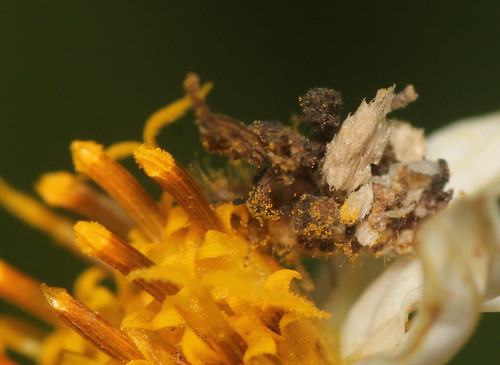
A shot of a lacewing larva, which conceals itself by affixing debris to its body.

From the Japan Christian Yearbook for 1938. Interesting for many reasons, from the remark that Hakka is a dialect of Cantonese to the problems missionaries faced in communicating, to the veiled allusions to political issues -- their congregations and meetings were watched by security police, they were forbidden to engage in street preaching, and in certain kinds of gatherings. Many of these missionaries came over from Japan and spoke Japanese and later, learned Hoklo/Taiwanese.

++++++++++++

Chapter XXIV
EVANGELISM IN FORMOSA
Hugh MacMillan


A missionary in Formosa, visiting a country congregation, was taken by the , minister of the church in that locality for a walk and to call on some of the Christian homes. Before they had gone far they met a farmer, whom after he had curiously eyed the foreigner, they engaged in conversation. "Have you ever heard the gospel?" the minister asked soon after the opening greetings, with apparent evangelistic fervour. "Oh, yes," answered the farmer with much assurance. "Well, to-night at seven-thirty this foreign missionary is going to speak in the church at Market street; come along and you ll hear him preach the gospel in our own language." The farmer grunted the usual assent and passed on his way.

Friday, October 30, 2015

To be wrong is glorious: Chu's numbers in Hung Territory

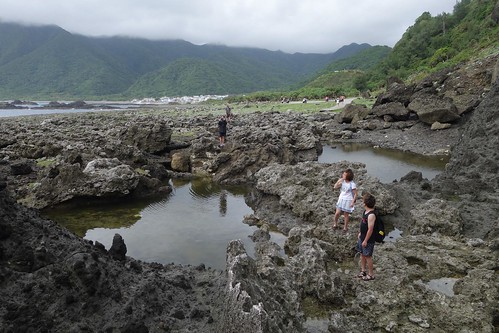
Orchid Island sightseers

So the Taiwan ThinkTank poll gets passed around on Tuesday. It has the DPP's Tsai Ing-wen up 48-16 over KMT candidate Eric Chu with Soong at 10%. Wednesday I crash at my friend NewDad's place. In the midst of oohing and ahhing at his lovely new baby daughter, who fortunately for the rest of us resembles his very attractive wife, I remark that the poll is deep Green and probably deprecates Chu. "I'd give him another five points," I said.

Wrong!

The poll from the staidly establishment TISR came out a couple of days later. With nigh-on identical numbers (Solidarity): Tsai at 47, Chu at 16, Soong at 10. Tsai is crushing Chu around the nation, and by huge margins in New Taipei City. The Taiwan Thinktank poll observed that...
Voters appeared to strongly disapprove of Chu’s decision to run in the presidential election without first resigning from his post as New Taipei City mayor, as the poll showed that 63.5 percent of respondents said that Chu should quit as mayor, and 24.3 percent said he should not.
The CSPA poll earlier in the month (Solidarity) had 64% wanting Chu to resign as mayor.

Interestingly, Chu's stock has risen 7 points while Tsai's has fallen 9 points in the crucial central Taiwan battleground, but the poll doesn't give information as to why. Tsai continues to lead in all age groups and also in crucial middle voters.

I had a wonderful opportunity to talk politics on Thursday morning with a couple of attractive and intelligent young people. One of things I observed was that if the Deep Blues constitute 9% of the population -- judging from the support for eventual annexation to China in the polls -- and KMT voters comprise half the voters, then Deep Blues are probably around 20% of KMT votes. If half those voters stay home, then the KMT will lose 10% of its votes. This has happened before. In the 2004 legislative elections a huge chunk of the pan-Blue electorate, about 10%, stayed home. Here are the vote totals for the PFP and KMT in the legislative election:
2001 Blue vote: 5,136,827
2004 Blue vote: 4,552,831
Had Chen Shui-bian, then the DPP Chairman, not screwed up the elections, the DPP would have had an outright majority in the legislature and we might have been spared the vicious, vacuous incompetence of the last 7 years.

Hey, how about that 3Q economic growth? Worst since 2009, falling 1.01%. Another glorious victory for ECFA.

The Soong campaign? Is there one? He's been so quiet, not criticizing anyone. I wonder if he is hoping he can get the Veep slot in the Chu campaign.

Former candidate Hung Hsiu-chu was heavily scapegoated by the KMT, with articles in the international media reporting, without a trace of self-awareness, that Hung was thought to be too close to China. But the CSPA poll from earlier this month identified the problem: the public is sick of the KMT.
Who should take the responsibility for the KMT’s low election prospects, the KMT or Hung?
KMT: 75.8%
Hung: 5.8%
Chu's decline into Hung territory in the polls is more evidence of that.

This week the KMT took steps to retain the only remaining popular heavyweight, Speaker of the Legislature Wang Jin-pyng, by altering its rulz, which bear an eerie resemblance to actual rules, to permit him to stay on for another term. However, the alterations only affect the speaker of the legislature. They don't help Hung Hsiu-chu, who won't be on the party list for the deputy speaker slot since she has reached her term limit. When the KMT wants to betray you, it does a thorough job.

How different is Chu going to be than Ma? He's Ma 2.0: listen to him talk, defending his criticisms of Ma:
For instance, the direction of the government’s cross-strait policy is, without doubt, on target, but its 12-year national education program has been a magnet for criticism,” Chu said.

Chu, who is also KMT chairman, acknowledged during a radio interview on Wednesday afternoon with Sisy Chen (陳文茜) that the perceived poor performance of the Ma administration was the biggest impediment to his election prospects.

He cited Ma’s controversial proposal to levy a capital gains tax, 12-year national education program and raising of electricity and fuel prices as examples of the mistakes that the KMT government had made in the past seven years.
I said a long time ago that the KMT's only possibly move was to run against Ma, but that isn't going to work with Chu firmly supporting one of the things that has peeved voters: Ma is too close to China. The 12 year education program is widely hated, as were the necessary raises in electricity and fuel prices. But they wouldn't have cost the KMT the election were it not for Ma's additional sellouts such as ECFA, the services pact, and the free enterprise zones.

Someone needs to ask whether Chu supports the free enterprise zones...
____________
Daily Links:
_______________________
Don't miss the comments below! And check out my blog and its sidebars for events, links to previous posts and picture posts, and scores of links to other Taiwan blogs and forums!