Showing posts with label protests. Show all posts

Tuesday, August 04, 2015

Rounding up the Student Protests

DSC07512
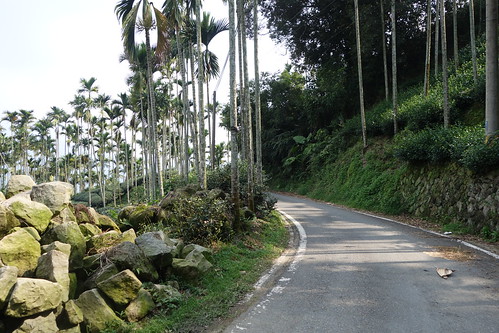
Small roads through the tea farms in Nantou: a pleasure.

The big confrontation occurred yesterday afternoon. TT reported:
Talks between Minister of Education Wu Se-hwa (吳思華) and students over the curriculum controversy fell apart yesterday, with students storming out of a Ministry of Education (MOE)-sponsored forum in tears.

“What in the world are these talks supposed to be?” Northern Taiwan Anti-Curriculum Changes Alliance convener Chu Chen (朱震) said. “What I see is a failure of education and a policy that has gradually moved away from the masses.
The KMT had been split on whether to hold special legislative session on curriculum guidelines, but then voted unanimously not to hold a special session. Chairman Chu, always positioning himself as a moderate, said he'd have to respect the will of the KMT. Note that Hung is on the side that doesn't want a session, and affirms control of executive over education. One can only imagine what her educational changes are going to look like. Solidarity wrote of the "unanimous vote":
Do the math. KMT legislators do not actually unanimously support this bold decision. The KMT caucus has 64 members (usually 65 but Chi Kuo-tung 紀國棟 was expelled for criticizing the party and his replacement hasn’t arrived yet). One of these 64 has openly called for abolishing the new curriculum. Another, the speaker, used political capital to try to get this session called. The party chairman himself wants such a session to be held, but with other bills included. The 15+ sitting legislators who absented themselves from this meeting (a quarter of the caucus) did so intentionally, having seen what was coming. I’d bet they are Wang, the representatives in swing districts, and the rest of Wang Jin-pyng’s 王金平 Taiwanese faction. Anyway, this goes to show that Ma and his acolyte Hung are running this party now.
Solidarity pointed out on Twitter that the KMT legislators leading the "no special session" push are from deep Blue districts. His excellent piece at Ketagalan, which summarized the protester-Minister Wu dialogue, observed:
From the beginning, this felt like the Taiwanese reincarnation of the dialogue between the Umbrella Movement students and the pro-Beijing government of Hong Kong. The fundamental problem with both discussions was that the government negotiators had no authority to compromise, and they couldn’t admit it. For Chinese nationalists like President Ma, this round of textbook revisions is a matter of long-term political life and death, as they believe the Taiwan-centered history taught since President Lee’s time is the root cause of the strong opposition the current generation of youth have against them. They feel they can’t afford to give in. In a way, the Sunflowers had it easier: They just had to block something that hadn’t happened yet, but these high schoolers need an actual reversal, and one that would lose the KMT face and quite possibly the votes of their strongest supporters.
That's basically it. The function of the Ministers, as Solidarity observed, is to hand down Party decisions. Recall that the KMT regards the government as both an extension of itself, and subordinate to itself. Since the Party is always right, the rules are for governing others. Hence the Minister's repeated bizarre claim that the process is not important since the outcome is acceptable (to the Party). For people raised on democratic ideas of rule of law and democratic process, like these students, such claims are incredible.

Indeed, the KMT news organ carried the KMT Chairman Eric Chu's assertion that the Executive was a higher power than the Legislature:
In response, KMT Chairman Eric Chu (朱立倫) stated yesterday that the power to adjust textbook guidelines belonged to the executive branch rather than legislative branch, so any extraordinary Legislative session should not solely deal with the textbook revisions, adding that bread and butter bills should also be discussed. KMT Presidential candidate Hung Hsiu-Chu (洪秀柱) pointed out that she supported the KMT caucus's decision. The Presidential Office and the Cabinet reiterated the support for Minister Wu's decision, adding that the bottomline was that the legislative power should not be higher than executive power.
The KMT Chairman pronounces, then everyone follows suit. The Word actually came down from Ma, but it is interesting that the leader who pronounces is not the Executive, but a Party head, who has nothing to with the balance of powers in the government.

Brian Hoie of New Bloom, who was with the students in the Occupation, wrote a summary of Day Five:
During the press conference students did not press that one of their demands had been for Wu to resign but Wu, for his part, stressed that textbook revisions were legal even if perhaps flawed. Wu has become an object of popularly mockery on the Internet since the meeting, however, because of a piece of footage from the meeting in which rolled his eyes in response to being questioned by a teacher, then attempting to quickly mask this through quickly smiling. We might also note that Wu was unwilling to reveal the names of those who were in the textbook revision committee. Nevertheless, the meeting ultimately came to nothing.
Minister Wu's eye-rolling quickly went viral; he said he was exercising his eyes because they were tired (h/t Solidarity). View the gif here.

The KMT attacks on the students basically involve claiming that they are DPP tools. When your ideology says you are the Party of Right, all opposition can only stem from a conspiracy of Satan, AKA the DPP. Frozen Garlic, the cynical political scientist at Academia Sinica, rebuts:
[This] charge can be dismissed relatively straightforwardly. After all, almost all accounts of Taiwan’s current student movement (except for those coming from the KMT) indicate that the students are acting on their own initiative. This has been true of all the recent protest movements, from the Wild Strawberries to the Dapu protests to the Sunflower movement. In all cases, the youth have been thoroughly disappointed by the tepid DPP opposition and have sought to take matters into their own hands. The DPP has generally voiced support more in an effort to avoid appearing totally out of touch with activists’ concerns than in an effort to guide them in any particular direction. The notion that the DPP is the guiding hand behind the students is simply at odds with almost all accounts of the factual events.
Dai Lin, whose suicide riveted the nation and inspired the young activists, is portrayed in KMT propaganda as troubled and depressed, and his suicide is explained as having nothing to do with the protests. If you can stomach it, see this CNN iReport on the Student Protests, with KMT-slanted reporting. It's vile.

These protesting students have grown up entirely within the curriculum changes since the post Lee Teng-hui era. Liu and Hung (2002) describe the changes of that era:
In the 1993 Social Studies syllabus, the historical content was outlined in a concentric pattern: Taiwan-China-world. The scope of ‘the native place’ (xiangtu) was confined to county, town, and city. Taiwan itself was no longer defined as a mere ‘local community’. The affiliated islands, Kinmen and Matsu, were also included in the textbooks. The coverage of Taiwanese history was expanded to a whole book. Chinese identity and Taiwanese identity coexisted in the curriculum, and the distinction between the two was made clearer than it had previously been. For example, the title ‘the Chinese living environment’ was replaced by ‘the living environment in Mainland China’, thus distinguishing political China from geographical China—or ‘mainland China’ from Taiwan.

In addition, as already mentioned, the rise of Taiwanese identity has led to the establishment of two new subjects. One is ‘Native Place Teaching Activities’ for Grade 3, and the other is ‘Understanding Taiwan’ (Renshi Taiwan) for junior high level, both subjects focusing on the history, geography, and society of Taiwan. The goals of ‘Understanding Taiwan—Society’ are defined as ‘reinforcing the understanding of the social environment of Taiwan, Penghu, Kinmen and Matsu’, ‘cultivating the sentiment of love for the community and the nation,’ and ‘developing a consciousness of the ‘living community’ (sheng ming gong tong ti).’3 The goals of ‘Understanding Taiwan—History’ include ‘understanding the history of the ancestors of each of the ethnic groups in Taiwan, Penghu, Kinmen and Matsu’, although the teaching materials studiously avoid references to past conflicts between Han settlers and aboriginal tribes, instead painting a highly misleading picture of harmonious and peaceful co-existence. In the appendix to the syllabus, the significance of this new subject is emphasized: this is the first time that Taiwanese history has ever been taught as a formal subject at junior high school level.
Note that the rise of the Taiwanese identity was already in place prior to the new curriculum. As an acquaintance observed, when he returned to Taiwan in 1991 there were already bookstores dedicated to Taiwanese history and culture. When I was studying Chinese that same year in Taipei, I purchased the old Shifan University texts, which still used phrases like "communist bandits" and "retake the mainland". But I bought them off the junk pile for 10 NT each; new texts more locally centered were already taking their place.

Chris Hughes tabulated some of the changes that took place as the Chen Administration assumed power in 2000 (link):
The appointment of Professor Tu Cheng-sheng (Du Zhengsheng), an LSE alumnus as head of the National Palace Museum in May 2000, has been even more controversial. Tu had in fact been singled out as one of the chief architects of ‘de-sinification’ well before the Chen administration came to power because he had been influential in steering a re-orientation of the school curriculum and teaching materials to learning more about Taiwan and less about China in the late 1990s.6 Having stewardship over the museum that was once used by the KMT as a kind of cultural umbilical chord linking Taiwan to China’s grand tradition, Tu incurred the wrath of many critics when he proceeded to label the Chinese artefacts as ‘Chinese’ and established a gallery devoted to Taiwanese culture.

The reorientation of education that Tu had begun under Lee Teng-hui also continued under the Chen administration. Already in March 2001 the Ministry of Education had produced a policy on ‘Nativisation of Education’ (bentu hua jiaoyu), according to which junior and middle school pupils have to select to learn a ‘native language’ (xiangtu yuyan) from Hokkien, Hakka and an aboriginal language. The controversial Know Taiwan (renshi Taiwan) textbooks became teaching material for history, geography and social studies from the academic year beginning in August. A Native Education committee (bentu jiaoyu weiyuan hui) began to revise the Know Taiwan curriculum in 2002 and the following year published a draft outline for a new high school history curriculum in which Chinese history since the mid-Ming Dynasty became part of ‘World History’. An increasing emphasis on native culture can also be seen in the way that the Ministry of Education has actively promoted and funded the establishment of departments of Taiwan Literature in national universities since 2000. When Tu Cheng-sheng was appointed Minister of Education at the start of Chen’s second term in May 2004, accusations of ‘de-sinification’ reached a new height of intensity.
The "Getting to know Taiwan" of the Lee era was removed from the curriculum under the Chen Administration, which instead spread Taiwan across the entire curriculum (link). Hughes also notes that the Chen Shui-bian Administration put a halt to the military indoctrination of young males in KMT ideology, an important source of KMT control. Taiwanese history was added to the civil service exam, and the government made great efforts to push Taiwan Studies at home and abroad. Chen's changes drew protests from Beijing.

Another change in the educational system is that there are now new outlets and new ways for people to enter college, getting around the old testing system. The function of the old testing system was powerfully authoritarian. By creating intense competition for coveted places, it prevented the students from building bridges to each other (and if they did, the Party maintained political officers in the schools to monitor the students' political beliefs). The massive homework loads reduce time for young people to learn and act on politics, while the parents reinforced the System's control by forcing the kids to do the home and shoving them in cram schools seven days a week. All of this is slowly changing...

The Chen Administration made subtle but powerful changes in Taiwanese life that have shaped the way these students rooted their identity in Taiwan. It vastly expanded cultural programs and also focused on the environment in its sloganeering, fostering a sense of shared place and culture. It also engaged in "Branding Taiwan" (link):
Believing that culture is economically beneficial, the CCA joined forces with the Industrial Development Bureau (Ministry of Economic Affairs) to encourage the development of creative industries, funding modern designs to present Taiwanese culture. In a speech about future CCA policy, then chairwoman Tchen Yu-chiou openly asserted that “using branding techniques to build and introduce an image of contemporary Taiwan to the world, cultural and creative industries will be the most important force.
Don't laugh; people identify with brands, sometimes very strongly. The branding created an awareness of Taiwan as distinct that made a foothold in minds abroad, which was also reflected back to Taiwan as validation by outsiders, a virtuous cycle of Taiwan identity building.

DPP policy thus was a multifront attack on the monolithic, faux, totalizing, authoritarian version of Chinese culture offered by the KMT and CCP. It was highly successful.

The new leisure culture, made possible by shrinking the work/school week from 6 days to 5, has also helped grow Taiwaneseness. "Being Taiwanese" for the 45 and under generation now includes the physical actions of climbing Jade Mountain, swimming Sun Moon Lake, and biking around the island. This involves inscribing oneself physically on the terrain while immersed in it: grounding local identity in a relationship to the land. Many of these kids will go on to do all these things.

They are the most active, socially aware, and involved generation in Taiwan, ever. I bless them every day.

REF:
2002. M. Liu, L C. Hung. "Identity issues in Taiwan’s history curriculum". Int. J. Educ. Res. 37 (2002) 567–586
_________________
Daily Links:
_______________________
Don't miss the comments below! And check out my blog and its sidebars for events, links to previous posts and picture posts, and scores of links to other Taiwan blogs and forums!

Sunday, August 02, 2015

Student Protests Rivet Nation


Via New Bloom: video history of student protest at MoE

Keeping up: New Bloom's facebook page is constantly updated. They put together and posted the video above. There's a live feed here. Note that New Bloom has posted that there is a water cannon vehicle present, presumably because it will be used.

Rocked first by the suicide of Dai Lin, Taiwan was then shocked by the open letter from his mother. Solidarity has the translation, which you should read. I can't read it without crying at the naked realization at the end...
The one who’s sick is this society. It’s the adults. It’s the parents who were brainwashed, like me. You were a little prince who always had pure thoughts. You completed your mission. You made public opinion boil over all right. You’ve made us brainwashed adults rethink things.
She's saying what so many of us have been saying for ages: the over 45 group is the most timid, brainwashed, strawberry generation of them all. It's not a coincidence that support for KMT presidential candidate Hung Hsiu-chu is strongest in that group. She also wrote an open letter angrily denying KMT claims that the DPP was operating the students. Remember, in the KMT ideological bubble, only conspiracy by the evil enemies of Chineseness can explain anti-KMT stances, because the KMT is always right.

The convener of the curriculum committee that made the changes was on a political talk show. See why the changes were made (Taipei Times):
Asked what kind of impact the curriculum adjustments had on the KMT’s campaign for next year’s presidential and legislative elections, Wang said they had created a strong cohesive force among pan-blue supporters.

“A lack of ‘national goals’ is a critical problem facing the KMT. The party requires more convincing rhetoric to persuade the public and that was exactly what we aimed to achieve through the curriculum changes,” Wang said in the article.
Were the changes made for educational purposes, or to bring the curriculum in line with the Constitution, as KMT presidential candidate Hung has claimed? Nope: according to the leader of the changes, they were purely political and overtly pro-KMT. What's scary is that these people are so deep in their bubble that they thought asserting that the capital was Nanjing was "convincing rhetoric."

My man maddog was having a good laugh on Twitter about the changes, putting up this image:
Don Rodgers put his finger directly on the fundamental issue at Thinking Taiwan:
The Ma Ying-jeou (馬英九) government is once again facing off against a group of young protesters who oppose the government’s policies and procedures. The current protest is directed at the government’s efforts to change the content of history textbooks. This is another in a long series of protests that addressed a wide range of issues including property rights, freedom of the press, labor rights, environmental issues, and most famously opposition to the Cross-Strait Services Trade Agreement (CSSTA) that led to the Sunflower occupation of Taiwan’s legislature last year.

The young protesters in Taiwan are frequently described as being “anti-China” and driven by their strong sense of Taiwanese identity. This is partially accurate. The young people in Taiwan are definitely strongly Taiwanese identified, but they are not necessarily “anti-China.” To understand these protests it is essential to understand that the young are strongly democratic. They were born into and fully believe in democracy in their country. Thus, it is not surprising that one thing that the protests have in common is anger over the government’s lack of transparency and respect for democratic procedure. It is therefore more accurate to describe the students as “pro-democracy” or “anti-authoritarian” than “anti-China.” It is also important to note that a significant percentage of the population in Taiwan supports the student protesters.

Since Ma took office in 2008, his administration has demonstrated neither a strong interest nor any level of competence in managing domestic politics. Ma’s government has been insular and arrogant, frequently responding to criticisms with a condescending attitude. Decisions are made behind closed doors with little if any effort to consider the preferences of the voters. The decisions are then foisted upon the people with the message that the government knows best and the people must agree.

It is not surprising, then, that the young protesters have consistently criticized the government for its “black box” decision-making procedures. For example, in an April 2014 interview, Wei Yang (魏揚), a leader of the Sunflower movement stated, “The government and the civil society had no communication. There were no comprehensive impact assessments. There were no deliberations about the trade pact. We called it a black-box operation, and this is outrageous to the people.”
I've written several times about how the Taiwanese have incorporated democracy into their identity, and among the young, this incorporation is a fusion. This generation, I would always add, is also the first in the modern era to grow up with poorer economic prospects than the previous one. These ideas of democracy are butting up against a school system designed for authoritarian control from start to finish.This protest is only the beginning of the long struggle against it, one in which many parents are engaged as well, attempting to find or construct democratic, human-centered alternatives.

Wuer Kaixi, the Tiananmen dissident who is now running for office in Taichung, published a great piece at Thinking Taiwan this week saying that it is time for Taiwanese to take things into their own hands. It observes:
Actively changing the constitution and the laws to recognize the PRC will come at a small price and will also give a voice to the people, challenging China and the West to release Taiwan from its shackles, while also fundamentally changing the way we think about cross-strait policy. Compromise is not the way forward, and patience is simply a delay tactic. Only by taking the initiative can the people of Taiwan take control of their fate.
It seems that, that when the KMT die-hards hype the pro-China changes to the curriculum as "according to the Constitution", they are just setting up "the Constitution" as the target for the next great youth movement.

This is only the beginning...
___________
Daily Links:
_______________________
Don't miss the comments below! And check out my blog and its sidebars for events, links to previous posts and picture posts, and scores of links to other Taiwan blogs and forums!

Wednesday, February 11, 2015

118 Sunflowers to be prosecuted

J Michael at Thinking Taiwan reports:
Following the conclusion of three major investigations, prosecutors announced on Feb. 10 that 21 people, including Lin (who is currently doing his military service) and Academia Sinica researcher Huang Kuo-chang (黃國昌), will be prosecuted for their role in “318.” Despite conflicting reports, it has now been confirmed that student leader Chen Wei-ting (陳為廷) was also indicted (full list here). Student leader “Dennis” Wei Yang (魏揚) and 92 others will be charged over “323,” while Hung Chung-yen (洪崇彥) and three others will face prosecution over “411.” In most cases, the charges involve “obstruction of official business.” Huang, who incidentally has spearheaded the Appendectomy Project targeting KMT Legislator Alex Tsai and others, will also be prosecuted for “incitement to commit a crime.” Prosecutors said they had yet to determine the nature of the punishments. They added that imprisonment was among the options that were being considered. And of course, gangsters like Chang An-le (張安樂) and his followers, the only people (besides the police) who actually used real violence during the crisis last spring, are being left completely alone by the prosecutors.
That pretty much sums it up. Two foreigners, the well known and longtime activist Lynn Miles, and David Smith, a Canadian photojournalist, were included among those charged, according to the TT. Cole argues that the timing of the indictments is intended to distract the public from the KMT's many problems.

Amnesty International's press release is here. I've included a Chinese translation below the READ ME line.

Saturday, October 11, 2014

Not seeing the Taiwan forest for the China trees

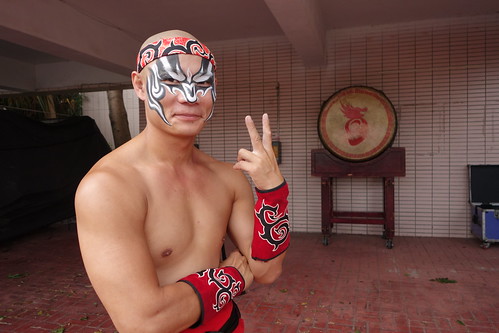
Went to a performance of the Chiotian Drum Troupe yesterday. Here is one of the troupe leaders.

Today brings us several articles on the Hong Kong protests, including one from Jeffrey Wasserstrom, the well known scholar, in Foreign Policy, and another from John Garnaut, the Australian journalist who actually gets Taiwan.

Several years ago I had a conversation with an acutely intelligent friend who is also an acutely intelligent observer of Taiwan, and he pointed out that the Chen Shui-bian Administration had done such a good job separating Taiwan from China that at academic conferences his work on Taiwan had less relevance because it wasn't about China, which was hot. Indeed, this separation has gone so well that Taiwan has vanished off the media radar, as we found when the Sunflower protests were so woefully underreported. Wasserstrom's piece surprisingly reproduces this China-centric view of the Hong Kong protests, reviewing the way the protesters replicate the past behaviors of students protesting in China, with a nod to the Occupy movement in the US:
The Hong Kong protesters have shown themselves tremendously resourceful, able to borrow freely and creatively from many different sorts of movements. They are aware of --and draw strength from local struggles of the past. They borrow from the playbook of Chinese revolutionary heroes and from the mainland students of 1989. As their leader, they have even picked Joshua Wong, a noted participant in the 2012 protests in Hong Kong. They have also looked for inspiration to other parts of the world. The student protesters allied with Hong Kong’s Occupy Central activists, for example, who embody the spirit of New York City’s Occupy Wall Street movement and are largely concerned with economics and inequality.
Yet though the piece is about searching for an analogy for the Hong Kong protests, it totally omits any reference to Taiwan, whose recent Sunflower protests in many ways shaped the current round of protests -- there are many links and parallels between the two, from the links between the protesters themselves to the reporters who covered both -- and were treated in the same way by the government, right down to the deployment of nationalist gangsters against the protesters. Moreover Hong Kong and Taiwan face a similar set of economic and social problems -- high housing prices, rampant income inequality, rule by tycoons, and so on, as well as an increasingly powerful non-China local identity, especially among the young, incompetent and divided pro-democracy parties, and an overarching China invasion that threatens many aspects of local lives and identities.This omission is all the more puzzling because Wasserstrom interviewed Shelly Rigger on the Sunflower protests in Dissent...

Thus, one could hardly find a better analogy for Hong Kong than Taiwan, but Wasserstrom thinks of China in terms of China -- deployment of Chinese history to explain Chinese history is a kind of legitimating shibboleth among China hands, like the way New Testament scholars deploy knowledge of Greek to fence the boundaries of their field, or business scholars use advanced statistics to turn data porridge into scholarly bisque. But the Hong Kong protests can't really be understood in terms of Chinese historical protests (isn't part of the issue the fact that Hong Kongers don't feel Chinese?). They have to be seen in some other context: globally as part of the global movement against the growing concentration of wealth in a few hands, the rule of corporate power, the widespread corruption at the top of governments, and the disappearance of economic opportunity for the middle classes, and locally, against the overarching drive of Beijing to annex and suppress democracy and local identities, like the protests in Tibet, Xinjiang, and.... Taiwan.

PS: Don't miss this piece on the secret history of Hong Kong democracy: the reason that Hong Kong never got self-governance from the Brits is because Beijing threatened to invade if Britain made Hong Kong a democracy. Hence the bullshit from fake leftists that compares/criticizes Britain's never giving Hong Kong representative government with China's current deal is.... bullshit.

John Garnaut, the Aussie journalist, does what Wasserstrom failed to do, and locates the Taiwan/Hong Kong protests in their proper context: the problems of "mainlandization" of China's peripheries and corporate power, where corporations serve Beijing's goals:
Before the umbrella protests of Hong Kong it was easier to believe that it was only a matter of time before the peripheries were fully absorbed into the empire and made safe for Chinese Communist Party rule. And that's the way the way that Hong Kong's great multinational banks, the world's top four accounting firms, and even the Australian Chamber of Commerce in Hong Kong still see the odds, judging by their recent statements.

"The present situation is damaging to Hong Kong's international reputation, may harm Hong Kong's international competitiveness, and is creating an uncertain environment that may be detrimental to investment, to job creation and to Hong Kong's prosperity into the future," said Austcham, in a statement on September 29 which echoed Communist Party propaganda almost word-for-word, and incited a heated internal backlash.

Geoff Raby, a former ambassador who represents Australian corporations in Beijing and sits on the board of Andrew Forrest's iron ore company, Fortescue, was empathetic with the protesters he surveyed in central Hong Kong. Indeed, their earnest faces were haunting reminders of those he'd seen a quarter of a century earlier in Tiananmen. And, to him, their hopes are as futile now as they were back then. To contemplate otherwise would not just be wrong, as he put it this week in the AFR, but "ideological". So much so that Canberra should resign itself and allow history to take its inevitable course if the People's Liberation Army is once again sent in. "It will be a time for cool reason, rather than ideological enthusiasm,"according to Raby.

Similarly, when the Sunflower protesters occupied the Taiwanese Yuan, in response to President Ma Ying-jeoh bypassing the island's hard-won democratic institutions to sign a wide-ranging economic integration pact with the mainland, economists at ANZ felt qualified to instruct the island's misguided youth what was good for them. "The protest in Taipei may heighten the anti-Mainland sentiment that is seen in Hong Kong," they said in a research note of March 26. "Turning back such economic integration will only exacerbate the current plight of the middle class, increase youth unemployment, and lead to a loss of thousands of high quality job opportunities."

The mainlandisation of China's peripheries has been accelerating and intensifying under the emperor-like Xi Jinping ever since he assumed the presidency – the third and least important of his titles – in March last year. Raby, and the anonymous author of that Austcham statement, and the China economics team at ANZ bank all assume that China's journey to empire is inexorable, whatever speed bumps lie along the road.
Kudos to Garneau! This linkage between China's power and corporate power is mirrored by the linkage between the Hong Kong protests and the Taiwan protests, and mirrored as well in the support of the American and European Chambers of Commerce for the KMT's pro-China politico-economic goals (noted most recently in my post on FTAs). Ma Ying-jeou and the KMT have deliberately cloaked their pro-annexation structural changes in the language of neo-liberal economic discourse to evoke just this response.

Independent Taipei mayor candidate Ko Wen-je is in the US at the moment. The always excellent Ketagalen Media covered his stop there....
On Wednesday, independent Taipei mayoral candidate Dr. Ko Wen-je (柯文哲) began his US tour, visiting San Francisco Bay Area and meeting with academics, students, industry leaders and Taiwanese American supporters. During a dinner speech Ko gave, he listed Taipei’s largest problem as the high housing prices, and Taiwan’s greatest issue as the social immobility caused by inheritance of wealth and power.
That same concern is mirrored in recent surveys of Hong Kong youth (here), who see social mobility as more difficult and the wealth gap in Hong Kong as growing since the handover. All over the world, it's the same cry for social justice in the face of the same issue: authoritarian government with its totalizing identity politics intertwined with corporate power with its totalizing economic dreams. Social identities, after all, are consumption identities...

Also see: Lorand Laskai on LARB connects Hong Kong and Taiwan. Ian Rowen on the Taiwan-HKK links.
_______________________
Don't miss the comments below! And check out my blog and its sidebars for events, links to previous posts and picture posts, and scores of links to other Taiwan blogs and forums!
Saturday, June 21, 2014

All sorts of corruption, but who is actually being punished?

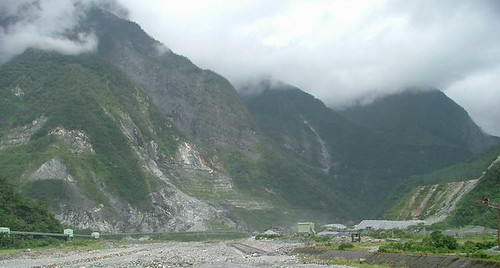
Suhua views

Today offered contrasting corruptions. First, Ex-Chiayi County Council Yu Cheng-ta skipped out on his prison sentence...(TaiwanNews)
The 53-year-old's guilty verdict was upheld by the Supreme Court on May 22 for soliciting a bribe of NT$1 million (US$33,000) from local businessmen in 2007 when the county organized street fairs for the Taiwan Lantern Festival that year. In the final verdict on the case, the court gave a sentence of 10 years and four months with a suspension of civil rights for five years. His jail term was set to begin June 6, but Yu did not show up.
What? A criminal convicted of corruption skipped out on his prison sentence? Who could have predicted that? It's not like it hasn't happened ten thousand times before. Where is Lo Fu-chu? Where is Wang Yu-yun? The list of such individuals is long, and the gov't has been stalling about a law for this for years. So disgusting sarcasm just fails. It's not only the politicians but the System itself that is corrupt.

WantWant China Times, the rabidly pro-China paper, today published a mournful commentary entitled Hung Ching-tai Scandal Spells End of KMT Election Hopes on the KMT chances in the 2014 elections, thanks to the corruption investigations that are hitting KMT-run local governments, the latest being Keelung...
Huang was planning a bid to become Keelung mayor in the year-end elections and the domino effect from his arrest will influence all other KMT-ruled cities and counties, prompting voters to cast their vote for other parties, which will will likely see the opposition Democratic Progressive Party (DPP) become the biggest winner in the seven-in-one elections.

...

President Ma's focus on the image of the KMT as "incorruptible," may very well be his party's downfall, as it has been used to back corrupt Keelung mayors, such as former mayor Hsu Tsai-li and incumbent Chang Tong-rong.

Nearly all of Ma's closest KMT allies and subordinates have been indicted, arrested or convicted for corruption, including Miaoli county magistrate Liu Cheng-hong, Nantou county magistrate Lee Chao-ching, Changhua county magistrate Cho Po-yuan as well as Chang, which has undermined the president's image.
Yada yada yada. It may have an effect but it won't be very strong. Voters in Taiwan have no trouble voting for corrupt politicians, and it is normal that in any given period any number of local KMT politicos are under investigation or being convicted of something or other. It is merely background noise to the local election process, since there is an endless stream of local faction politicians to replace them. Imprisoned politicians are one of the costs of doing business for the local factions...

Far more important will be the infighting at higher levels of the KMT and the incompetent, arrogant, indifferent performance of the President, who is also the KMT party Chairman. If Ma makes another strafing run at Speaker of the Legislature Wang Jin-pyng, who was the subject of a bruising political battle last year (search MaWangMess), that will do far more damage to the Party than corruption investigations. According to critics, the KMT has apparently moved to make sure the judges rule the way the KMT wants them to, which implies that Ma is going to go several more rounds with Wang. Let's hope he decides to move before the November local elections.

But the real corruption? Is it in the second police assault on the Executive Yuan protesters? The first merely involved fists. This second one involves using the law as a club.... Taiwan Voice posted this on Facebook. Click on Read More to see the whole sad story.

Taiwan Voice

171 Sunflower Movement and antinuclear activists handed over to the prosecutor's office
According to the police, 171 anti-CSSTA activists were swiftly handed over to prosecutors yesterday. Meanwhile, the investigation of state violence has been moving along at a snail’s pace. During the Sunflower Movement and the antinuclear movement, the police abused their power when responding to the non-violent demands. In fact, the police actively targeted the protesters for peacefully expressing their opinions. After three months, the police are still unable to identify the individual police officers who used excessive force on protesters, despite the fact that the police collected the evidence themselves, recorded the entirety the incidents, assigned tasks during the incidents, scheduled the duty roster, and had each individual officer sign in on duty sheets. Somehow, the collection of identities and actions of anonymous, peaceful protesters has proved much more easy for them to acquire. (http://on.fb.me/1giPnDG)

Sunday, May 11, 2014

Talking about my... generational issues

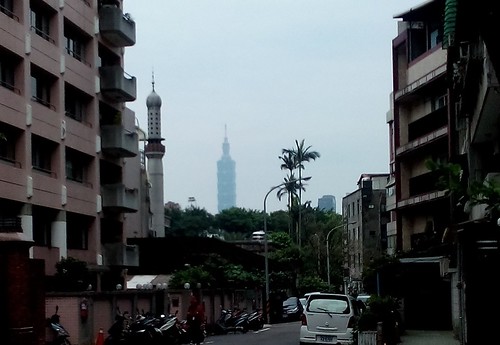
Towering.

Why don't you all fade away
And don't try to dig what we all say
I'm not trying to cause a big sensation
I'm just talkin' 'bout my generation

Popped over to Thinking Taiwan.com, where you should really be going, and read a lot today. One point that is made in various forms by many commentators there, and everywhere else, is that this generation of kids is different: it's the first to grow up under democracy.

Well, that's true, yet this generation is different in another way too: it is the first to face economic prospects worse than those of its parents. This generation is suffering under years of worsening income inequality (Gini coefficient), stagnant incomes, and slowing growth:

Year Growth Rate
Gini 


1990

6.87

0.308

1991

7.88

0.312

1992

7.56

0.315

1993

6.73

0.318

1994

7.59

0.317

1995

6.38

0.317

1996

5.54

0.320

1997

5.48

0.324

1998

3.47

0.325

1999

5.97

0.326

2000

5.80

0.350

2001

-1.65

0.345

2002

5.26

0.343

2003

3.67

0.338

2004

6.19

0.340

2005

4.70

0.339

2006

5.44

0.340

2007

5.98

0.341

2008

0.73

0.345

2009

-1.81

0.342

2010

10.76

0.342

2011

4.19

0.308

2012

1.48

0.312

2013

2.1


Source: DGBAS

Cruelly, this generation's growing environmental awareness confronts an environment increasingly traumatized by the construction-industrial state, while many of its best management and engineering prospects must look for work in China.

To put this in historical perspective, between 1895 and 1938, Taiwanese knew solid economic growth driven by Japanese subsidies for rice and sugar production which paid above-world-market prices for those items. For a brief period around 1936-37, per capita incomes in Taiwan may have exceeded per capita incomes in Japan proper. Thus the great-grandparents of this generation knew a land whose wealth and stability steadily grew.

The war intervened and trade with Japan collapsed after 1943 with the US sub blockade. When the war ended, Japanese were largely repatriated, and the island was catastrophically looted by the KMT. Incomes plummeted and with the advent of a million or so extra mouths to feed in 1949, per capita incomes probably did not recover until the mid-1960s (Mendel discusses this in the classic The Politics of Formosan Nationalism). The KMT, probably deliberately, marks the beginning of its records in 1950, which shows steady growth (experienced by the locals, until about 1965, as recovery) throughout the 50s to the 80s, with a few blips. Hence, until 1990, two generations came and went under steady GDP growth and constantly increasing economic prospects.

But the second of those two generations is still around, and it views things rather differently than the young. In its late 40s to early 60s, it is the true Strawberry generation, consolidating its gains, keeping its head down, not taking risks, deploring the action-oriented youth, and not taking to the streets to protect the future of its children. When their children took to the streets, they faced resistance from above: their parents cajoled, threatened, and forbade them from taking such action, according to many students I spoke to. When Hon Hai Chairman Terry Gou denigrated democracy the other day, saying that it didn't put food on the table, he was speaking as one in that older generation and many must have quietly agreed. Their experience is that democracy has brought slumping economic prospects and rising prices. What good can it be?

But there's another generational change quietly taking place: when Ma Ying-jeou finally steps down from the Presidency, he will likely be the last mainlander president born in China. The current generation of mainlander candidates for presidency were all born in Taiwan, the place where their faux mainlander identity was created, a true-born Taiwan identity even though it regards the island as an inferior place of exile. Their children, now in their 20s and 30s, are either emigrating, mostly to the US (like Ma Ying-jeou's daughters), or quietly adopting the rapidly evolving Taiwanese identity, which has both democracy and the island itself at its core. This generational change is happening within the KMT even as the DPP is finally handing off the torch to the generation that came of age after the democracy activism of the 70s and 80s.

While people note that the young are quite different than the old, in fact all the actors are in a place where no generation has ever been. What new Taiwan will they create? Stick around and see... because things are going to get real interesting...
_________________
Daily Links:
_______________________
Don't miss the comments below! And check out my blog and its sidebars for events, links to previous posts and picture posts, and scores of links to other Taiwan blogs and forums!
Friday, May 09, 2014

Student protests spark economy as Honhai Chairman pans democracy, says it won't put food on the table

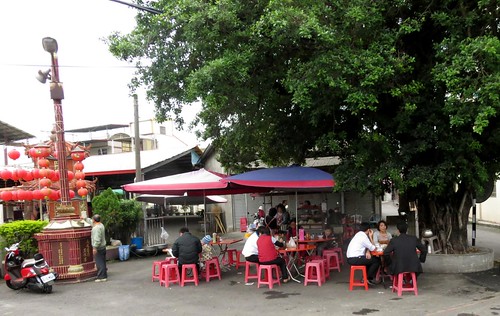
A temple in Pingtung.

Terry Gou made headlines this week, denigrating democracy.....
Hon Hai Technology Group chairman Terry Gou (郭台銘) said yesterday that “democracy makes no pottage” and that social movements were only a waste of social resources that did the nation’s GDP growth no good.
That's it, in a nutshell. J Michael ripped him excellently here, pointing out that Gou's real audience is might well be Beijing. Gou wants to import equipment from Huawei, the Chinese maker which is widely suspected of tight cooperation with Chinese security services and threatened to not pay his taxes if he couldn't import it. But it was Huang Tien-lin who deflated him most persuasively in today's Taipei Times, pointing out that blocking the trade pact gave the economy a boost....
Long before the protests against the cross-strait service trade agreement began on March 18, I had said that if the agreement were blocked, Taiwan’s economy would do better than forecast. Today we are faced with the facts. The student movement saved the nation just before the doors to hell were closed behind us and public confidence has increased. In March, during the student protests, exports reached US$27.76 billion, the third-highest month in history. Last month, economic indicators remained “green,” signaling steady growth, and foreign stock investors overbought for 26 days, with net purchases reaching NT$137.5 billion (US$4.6 billion).

These amounted to market approval of the political turmoil that went on for more than a month. Furthermore, the stock market index increased by 172 points during the student protests, or 1.98 percent, making it among the strongest markets in Asia.
This is part of a larger argument that Huang makes, which contends that keeping our distance from China enhances our economic growth. I think this argument is partly wrong -- from the end of the Lee Administration to the end of the Chen Administration was the Golden Age of Taiwan investment in China, when Taiwan exported stuff made in Taiwan and processed it there. We enjoyed reasonable growth, especially in the last couple of booming years of the Chen Administration. Huang links that to Chen's attempt to slow the drift into the China abyss:
The third was then-president Chen Shui-bian’s (陳水扁) announcement putting an end to the “active opening” policy on New Year’s Day 2006 and applying the breaks to further deregulation of cross-strait trade. The result was that the economy took a turn for the better, and 2006 and 2007 provided the best economic performance during Chen’s eight-year presidency, with the stock market almost breaking through the 10,000-point mark, reaching 9,859 points.
Should add that economic growth is expected, at the moment, to be better than last year. Cross-strait integration is slowly strangling Taiwan's economy. The government has become quite effective at deploying neo-liberal discourse to conceal its relocation of Taiwan into China's orbit. For example...
Both the Trans-Pacific Partnership (TPP) and the Regional Comprehensive Economic Partnership (RCEP) are important to Taiwan and will play a crucial role in the country's economic development, Cho said in his opening remarks at an international forum on the service industry.

The output of Taiwan's service industry could fall by US$1.9 billion if the country fails to join the TPP, but could increase by US$8.58 billion if it becomes part of the economic bloc, he said.

Although services account for 70 percent of Taiwan's gross domestic product, they make up only 1 percent of the global market, Cho said. "There is plenty of room for Taiwan to develop," he added.

Taiwan should open up its services market more, which could help upgrade its industries, increase output and create jobs, Cho said.
The last is actually correct. The catch is, you have to open up to a market that is better than you at doing these things and competes on quality, so you can learn from it, not from one that is less skilled than you are and competing on cost. China can't upgrade Taiwan's service industries; the effect will be the opposite. Indeed, we are already seeing that in manufacturing.

Respecting this neoliberal discourse, the students did not disavow the neoliberal economic religion itself, but rather emphasized that they were for a good trade pact, but the services pact isn't one. This was a clever move and even better, the international media reported it correctly.

Meanwhile, as if to prove that we don't need the services pact, two Taiwanese banks announced further overseas expansion this week.
Cathay Financial Holding Co. said it has obtained approval from the Central Bank of Myanmar to set up a representative office for Cathay United Bank in Yangon, which the parent company expects will open during the third quarter this year.
Yangon, in Myanmar. Lots of people predicting Myanmar will be The Next Asian Tiger. Taiwanese firms already trickling in, but other Asian states remain far ahead in investment there, with China in the lead. With new investment markets like Myanmar opening up, distancing Taiwan from China and slowing the pace of integration is a possibility that should be a policy... but not under the current Administration.
________________
Daily Links:
  • Taiwan hospitals suffer from nursing shortages. Hospitals and nurses are another example of the way female labor is exploited to maintain the profitability of local institutions.
  • The canals of Changhua County
  • US might tap into Taiwan early warning radar.
  • Head of national security bureau Tsai De-sheng resigns. Many observers are interpreting this as Ma's right hand King Pu-tsun sweeping out those who will not play ball -- Tsai was one who did not sing the praises of China.
  • Pro-KMT paper says students lack independence of thought and objectivity. Because you are only independent and objective if you do what the KMT tells you to do.
  • KMT under threat: Changhua County Chief KMT primary is contested by the losers (FocusTw reports winner). This is splitting the party in Changhua. In Nantou there are two serious pan-Blue candidates, helping the DPP. In both counties the KMT faces corruption scandals. Yeehah. The Changhua KMT and DPP likely nominees are both current legislators so the election of either will trigger a by-election, as will a couple of other races. With a tight race in Taichung, central Taichung politics will be fun this year.
  • High Comedy: the Taiwan rep office in Australia responds to Taiwan scholar Mark Harrison's piece on the Sunflowers. "Therefore, the story of Taiwan shouldn’t be simply or unfairly interpreted as the Taiwanese struggle against authoritarianism and for democracy, but the planned and consistent movement to prosperity and its unique, multi-opinion and vibrant democracy." and other fantasies. Every sentence in it is a gem, and so revealing of a certain mindset of authoritarian control. Note how the official presents the KMT's view of the past -- obviously thinking that KMT = ROC. The Party-State mentality is alive and well in the KMT and its minions, who communicate in declarations and commands, unable to persuade or lead. In a democracy, government officials who are not direct appointees should remain nuetral....
  • ADDED: Nuke plants may have to shut down early. Seems there is no place to store the waste. The gov't must have known this was coming....
_______________________
Don't miss the comments below! And check out my blog and its sidebars for events, links to previous posts and picture posts, and scores of links to other Taiwan blogs and forums!