Showing posts with label BOT. Show all posts

Sunday, June 15, 2014

The Developmentalist State is Cannibalizing Taiwan

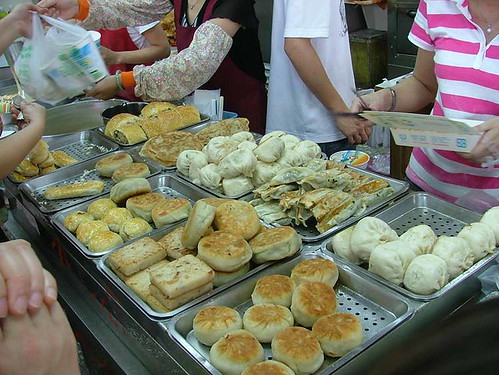
Goodies at a small shop near Jiufen.

It's a wondrous transmutation, where the blood of one man is turned into the money of another. Lead into gold is nothing to it. 

Several good pieces in Taipei Times this week on the developmentist state that runs the domestic political economy and its negative effects on local lives and the island's environment. Commentator Lai Min-huang observes that Chiayi floods are man-made:
On June 3, Changhua, Yunlin and Chiayi counties and Greater Tainan were hit by a series of thunderstorms. Most streets in Chiayi City are supplied by the high-lying Lantan Reservoir (蘭潭水庫) on the east side of the city toward lower areas on the west side. Given that Chiayi is built on hilly land about 100m above sea level and considering its geological composition of red soil and gravel beds, it is not an area in which floods should easily occur.

The main cause of the floods is connected to the rising property prices over the past decade. Before development, most of the land was hilly terrain that effectively drained and held back floods. The hinterland around Chiayi Park and the Chiayi Botanical Garden performed a similar function. However, almost all of these hills have been developed into luxury homes and non-agricultural village estates for the rich. These commercial developments are paved with impermeable surfaces.

Consequently, even Chiayi University’s Lantan campus is awash with mud. When rain fell on Fenci Lake (奮起湖) and the upper reaches of the Bajhang River (八掌溪) 20 years ago, it took about eight hours to reach the south side of Chiayi City 40km away. Now it takes little more than two hours to arrive.
The housing bubble is driving ever expanding development of hills and mountains near cities, a process that began in the 1990s after the first housing bubble. The author notes that the flooding is also linked to the greater power of storms and rising seas driven by humans heating the earth, an outcome of developmentalist mentalities everywhere. The rapidity with water from the hills now reaches the sea, thanks to construction-industrial state concreting of so many of Taiwan's rivers, was a major cause of the massive flooding in southern Pingtung after Morakot.

This constant development is laced with bitter irony for the island's ordinary people. Another TT commentator noted this week:
However, not long ago, the Ministry of Justice released data comparing housing prices and incomes. The comparison allows observers to estimate how affordable housing is. The ministry’s data ranked Taipei and New Taipei City first and third in the world, with housing price to annual income ratios of 15.01 and 12.67 respectively. The loan burden was 63 percent and 53 percent respectively, resulting from the government allowing the commercialization of housing.

The public housing that the administration promoted in the past was built at below-market costs, but it was common knowledge that once the properties were sold on to future buyers, their prices would be more equivalent to the going market rate.

This was undoubtedly because the government helped the public drive up housing prices, which was why the public housing policy failed and was called “lotto housing.”

.....

The affordable housing policy that the government started pushing in 2010 might sound novel and original in name, but it is not very different from the old public housing policy. It aims to cheaply sell land to developers who stand to make a profit on construction work.
The writer observes that this development proceeds apace, despite the fact that the cities are filled with empty homes. This is not difficult to explain: subsidies for construction and land development make it so lucrative that a developer need merely fill half the homes in a large project to break even.

The policy the government has selected to bring down housing prices is to build more housing. Who benefits? People who build homes and develop land, of course. There are many policies the government might choose, such as subsidizing rents, direct subsidies to workers to pay for housing, or buying empty residences and renting them. But none of these policies benefits the construction-industrial state that runs Taiwan because they do not result in new land being "developed" or new buildings being thrown up.

The writer's main point is simple: public housing should be for rent only. If you make it sellable, people will simply buy it at the below market price it is offered, and then sell it at the market price, realizing a quick profit. Boom! No wonder they say the lucky recipients of the right to buy public housing have hit the lottery! Thus, public housing simply becomes another speculator's tool helping to keep market prices high and the price of homes out of reach of ordinary people. The only reason people can survive is because rents remain astoundingly low; not many places where you can pay $300 US a month rent on a home that might sell for $500,000 US. The vast number of empty buildings paradoxically keeps rent low. If they ever rise, there'll be blood in the streets...

2012 piece commented on the government's intimate relation with construction firms in the public housing market:
Bidding for the government’s affordable housing project is finished and “lottery-style” public housing will be built next to the A7 station on the future airport MRT line. However, the Housing Act (住宅法) passed late last year does not define “social housing.” It states only that 10 percent of new social housing must be reserved for disadvantaged groups. The government shirks all responsibility for the project, which will be a BOT project favoring construction companies. Housing prices will be announced on a district-by-district basis so pricing is neither transparent nor based on real market prices.
That writer also noted that other countries in the region social housing provision exceeds Taiwan's.

Destroying the environment? Consuming the future of the nation's workers? Yes, and taking a wrecking ball to justice. A commentary in the Taipei Times pointed out:
The reason the corruption case involving former Taoyuan County deputy commissioner Yeh Shih-wen (葉世文) has caused such alarm is that Yeh was also for a long period in charge of the Construction and Planning Administration. In this position, he passed countless urban planning and renewal projects, as well as land zoning changes for non-urban areas, many of which would have involved forced land expropriation.

Past land expropriation appeals have been mere formalities, mostly for show, so if the Urban Planning Commission has passed a motion, the subsequent land expropriation is practically guaranteed. A case in point is the verdict handed down by the Greater Taichung High Administrative Court on the Dapu Borough (大埔) demolitions in Miaoli County, the appeals for which were cursory at best, taking on average little more than five minutes each to go through.

It has been many years since martial law was lifted, yet the government has not changed in terms of its excessive use of land expropriation. If anything, things have become worse in the past few years. For example, in the period up until late December 2012, the government completed the expropriation of 95 zones, involving about 7,672 hectares.
The mere formality aspect of appeals processes is common whenever the big money touches on an aspect of Taiwan life, from land development to ECFA and the services pact, whose KMT-led "review" was originally declared over before it had begun.
_______________________
Don't miss the comments below! And check out my blog and its sidebars for events, links to previous posts and picture posts, and scores of links to other Taiwan blogs and forums!

Friday, September 24, 2010

Invest in the Chung!

To see this in much larger size, go here.

UDN published an investment guide for foreigners in Taichung, in both Chinese and English. As you can see, all the projects listed are BOT projects, which are built by the private sector as a government concession and then transferred to the government after a stated period of time. It's hard for me to believe that any of these projects will make the promised returns -- for one thing Taichung already has more department store floor space per capita than any other city on the island, and yet the city government is proposing many projects that are shopping driven. Clearly these seem to be envisioning increases flows of/from Chinese tourists, and perhaps they are aimed at Chinese construction firms. Hmmm.....

Some of them appear to substantially misrepresent things: project 9 will be located next to the "historic old town areas" but as anyone who has been downtown can see, there is no historic old town area as such, just a few isolated older buildings without any specific identity along with a couple of preservation projects. Much of the old Japanese period architecture that might have given the area a unique flavor has been destroyed or left to rot (just another KMT success!). The "HSR Taichung Station" project calls for commercial development at the HSR station -- there is nothing there at present (it is in the middle of nowhere) and getting out there is a pain -- perhaps things will change after the metro reaches it. This appears to be another version of the original policy of the HSR to make money by developing the land around the stations, but they are so badly located that nothing has ever come of that in most cases.

I blogged on the BOT model in Taiwan a few years ago.

Speaking of business in the Chung, Dom sent me a link to his labor of love, a blog devoted to Taichung's eateries, mainly bakeries. Go thou and read!
_______________________
Don't miss the comments below! And check out my blog and its sidebars for events, links to previous posts and picture posts, and scores of links to other Taiwan blogs and forums!

Tuesday, September 22, 2009

Gov't to take over HSR

Big news this week has been the government's move to take over the Taiwan High Speed Rail corporation. Reuters reported today....
Current Chief Executive Ou Chin-der would take over immediately from Nita Ing as chairman, the company said, giving the government control over the popular 345-km (214-mile) north-south railway system, which opened in early 2007 as one of two bullet train routes in Asia after Japan's.

"The most important thing is to make sure the high-speed rail remains in operation," Taiwan Premier Wu Den-yih told reporters ahead of Ou's appointment.

The government would ultimately take over management of the company but had no plan to inject money or buy company, local media quoted Transport Minister Mao Chi-kuo as saying.
According to Reuters, the HSR Corp wants to turn a profit so it can list on the stock exchange. It has a combined debt of NT$380 billion in bank loans and European convertible bonds, and lost NT$25 billion last year, or $770 million in inflated US dollars.

Those are Reuters' facts. Now lets look at AFP's facts, which are sourced entirely from (where else?) The China Times. AFP says:
The company was 70.2 billion Taiwan dollars (2.14 billion US) in debt as of the end of June, compared with a capitalisation of 105.3 billion, the Times said.
AFP also notes the political aspect:
If confirmed, it would signal the failure of Taiwan's biggest build-operate-transfer project, under which the firm agreed to build the rail line and run it for 35 years before transferring ownership to the government.
The Taipei Times says:
The company has a paid-up capital of NT$105.3 billion (US$3.2 billion), but was reportedly NT$11 billion in the red last year, while its accumulated debts amount to NT$70.2 billion.
Taiwan News has the debt at a more precise NT$461 billion.

The China Post also has its facts in a pretty good piece detailing the ownership of the HSR:
As of the end of June this year, the THSRC had recorded total operating loss of NT$70.2 billion, equivalent to two-thirds of its paid-in capital of around NT$100 billion. The firm's outstanding debts have run up to over NT$450 billion, informed sources said.

The company is likely to be forced to go bankrupt within two years if the annual loss of around NT$25 billion lingers and if no additional fund is injected into the firm. But almost all the major shareholders declined to comment on the likely changeover of the firm's chairmanship and on whether to put fresh funding into the company.
According to the China Post, the project is owned by Continental Engineering (400 million shares), Fubon Financial Holding Co. (5.53%), Evergreen (4.05%), China Steel (5%+), and Taiwan Sugar (4%). All are apparently reluctant to dump more money into the project. Over 50,000 people are smaller shareholders, according to other articles.

The Post says that the HSR is supported by two syndicated loans, NT$279 billion from one banking consortium headed by the Mega Commercial Bank, and NT$65.5 billion from another consortium led by Taipei Fubon Commercial Bank, the banking arm of the Fubon Financial Holdings.

The trouble became more acute when the major shareholders refused to dump more money into the project, in turn triggering the banks to refuse to extend it any more credit. The CNA said, citing Premier Wu:
Wu said THSRC's monthly revenues exceed its operating costs, so it runs a small operating profit.

"But the surplus has been more than offset by its heavy burden of interest payments, depreciation and amortization, " Wu said, adding that high interest payments and amorization have been the main cause of the company's heavy indebtedness.
It is easy to see where this is heading: the government's "supervisory role" will enable it to force banks to keep the credit taps open, as Wu said, taxpayer funds thus guaranteeing private wealth. The government says it merely plans to have a majority on the board, not to actively take over the company. Reuters said in another report, citing the China Times, that
the HSR could get a loan of about NT$390 billion ($12 billion) as early as November after the government moves to keep it afloat. If the government can force interest rates down, the project can probably run on life support, servicing its debt and keeping up maintenance, without ever repaying its capital costs.

No administration can afford to have the HSR fail on its watch (nor would an HSR failure here be good for HSRs elsewhere in the world), and it is interesting that the company was handed over to current CEP Ou Chin-der, a Ma Ying-jeou intimate. The CNA report also said that the banks which had refused to extend more credit to the HSR when the shareholders failed to pump in more cash, would be more forthcoming if Ou became head of the company.

The HSR was in its day the largest BOT project in the world, built to run 35 years by private interests, and then turned over to the government. The turnover has just occurred 33 years early, is all. It was a massive pork barrel in its day, a $15 billion project that had a total length of 345 kilometers, connected by long-span viaduct bridges and 48 tunnels (the longest of which is 7.5 kilometers long). Continental Engineering Corporation (CEC) and Fu Tsu Construction Company became Taiwan's two largest privately owned contractors after completing their portions of the HSR project. Having splattered money all over the west coast of Taiwan, it has done its real work. Forbes noted a couple of years ago:
An official quoted estimates from the Council of Economic Planning and Development that construction of the high-speed rail network has created 480,000 jobs and may contribute 1 percentage point to economic growth.
Why doesn't it make money? The original plan, first proposed way back in 1987, when Taiwan's economy was quite different, called for the stations to be located far from the cities (BBC talks about this). At that time the population flow was all to urban areas, so the HSR was looked at as a way to develop more desolate places outside cities, and erect something akin to the English New Town. The land around the stations was going to be rented and developed, enabling the project to generate revenues from restaurants, hotels, and so on. A quarter million passengers a day were projected (Taipei Times says 300K a day in 2000). Then, after it opened, 150,000 a day were hoped for (total capacity is about 300,000 a day). It now carries about 90,000 passengers a day, according to Taiwan Today in 2008 (and Reuters).

The project went ahead under these plans, but then the economy changed. It switched technology in mid-project, from European to Japanese systems, adding to the costs. Now, as every passenger knows, the stations are forlorn in remote areas, massive buildings sitting on empty lots. The system also has other costs, dealing a heavy blow to the island's ailing airlines, and putting dents in its intercity bus and train services as well -- services whose financial health is important to small towns all around the island.

REFERENCE: HSR project in a post on BOT in Taiwan from 2006, project timeline and introductory article
_______________________
Don't miss the comments below! And check out my blog and its sidebars for events, links to previous posts and picture posts, and scores of links to other Taiwan blogs and forums!

Saturday, May 10, 2008

Taiwan Journal on Ma's Infrastructure Plans

Taiwan Journal offers two articles on Ma Ying-jeou's infrastructure policies. The first looks at the finances:


During the campaign, Ma stated a goal called "633," which stands for 6 percent economic growth, per capita income of US$30,000 and an unemployment rate of less than 3 percent by 2016. To achieve these targets, when the new government takes office May 20, it will launch "i-Taiwan 12 Projects," which are aimed at improving the country's infrastructure while stimulating domestic consumption. (For details of the projects, see the table to the right).

"Most of the construction projects focus on Taiwan's transportation and I think this is important because transportation benefits the development of the country's infrastructure," Lin Chu-chia, an economics professor at the Taipei-based National Chengchi University, said May 2.

Another proposal tabled by Ma during his campaign was the establishment of a "tourist service industry" as a major national project that allows tourists from China to visit Taiwan. The plan envisions attracting three million visitors per year, creating US$6 billion in revenue and 120,000 job opportunities.

The 12 construction projects, along with "Industrial Restructuring" and "International Linkage," form the incoming KMT government's blueprint for Taiwan's economy. To implement these initiatives, Ma estimates that over the next eight years, he will need a total investment of NT$3.99 trillion (US$130 billion). Of that amount, the government will invest NT$2.65 trillion, with the remaining NT$1.34 trillion contributed by private investors or via build-operate-and-transfer contracts.

To attract more private investment, the president-elect plans to build Taiwan into a "center of asset management for the Asia-Pacific region" in order to bring some of the NT$4 trillion that Taiwanese have invested in foreign countries home. Taiwan would also welcome foreign funds, including those from China, to help finance the projects, premier-designate Liu Chao-shiuan stressed May 1. "It would be a new beginning, so we won't reject funds from China," he said.

It also published a summary of his projects:


Estimated total budget (over eight years): NT$3.99 trillion (US$130 billion), including NT$2.65 trillion from government and NT$1.34 trillion from the private sector.

Transportation
Islandwide rapid transit networks
Build mass-rapid transit systems in north, central and southern metropolises; move existing city railways underground; introduce electrification and dual tracks to the east-coast railway and integrate the highway and expressway systems.
NT$1.45 trillion

Kaohsiung--a free port and ecopark
Establish an intercontinental container transhipment hub; expand storage facilities and logistics; rebuild existing harbor locales; transform the Chijin area into a world-class marine park; build an ecopark and establish a marine technology and cultural center.
NT$57.7 billion

Taichung--an Asia-Pacific sea-air logistics center
Build transportation networks between Taichung Harbor, Taichung Airport and nearby science and industrial parks; expand the central Taiwan international airport; establish a special storage, logistics and processing zone.
NT$50 billion

Taoyuan--an international air city
Transform the Taoyuan International Airport into an aviation city for the Asia-Pacific region; complete construction of the third terminal by 2018.
NT$67 billion

Industry
Intelligent Taiwan
Further enhance university research levels with NT$80 billion over eight years; make Taiwan the world's first wireless country; introduce smart technologies to enhance the quality of life.
NT$225 billion

Industrial innovation corridors
Establish four software parks and a science park in Taipei and Yilan areas; assist the east coast in developing the deep-sea water industry; develop agriculture and bio-tech industries in the southern Taiwan counties of Yunlin, Chiayi and Tainan; set up a global village for overseas professionals.
NT$115 billion

Urban and industrial district renewal
Renew existing industrial parks around the island; designate the Chunghsing Village in central Taiwan as a cultural and creative park; add new stations to the High-Speed Railway.
NT$57 billion

Rural revitalization
Create a retirement mechanism for elderly farmers; encourage professional farmers to expand their business operations; release farm lands that are no longer fit for cultivation purposes.
NT$150 billion

Environment
Coastal areas revival
Transform traditional fishing ports into modern ones; push to add Kaohsiung, Keelung and Hualien ports to international oil shipping routes.
NT$20 billion

Forestation
Increase forested area by 60,000 hectares over eight years; design three 1,000-hectare plain forest parks in central and southern Taiwan.
NT$30 billion

Flood and water pollution control
Conduct a full-scale examination of flood-prevention plans; push for regulating the Kaoping River; establish a landslide monitoring and early-warning system; budget NT$50 billion in four years for land conservation and rebuilding homelands for the indigenous peoples.
NT$186 billion

Sewage systems construction
Continue building underground sewage systems to boost the percentage of households connected to public sewage by 3 percent every year.
NT$240 billion
Some of these projects would be really great. In Taiwan more households have ADSL than sewage connections, and even if Ma put houses on sewage lines at 3% per annum for all eight years, only half the housing in the nation would be connected when he stepped down.

Who benefits? An industry analysis notes:


The construction industry is moving towards trade liberalisation as a result of Taiwan's membership of the World Trade Organisation (WTO) since 2002. With large state-owned contractors playing a dominant role in the Taiwanese construction industry, around 80% of the industry's total output is controlled by 25 construction companies or conglomerates with contracting subsidiaries. According to BMI's newly released Taiwan Infrastructure Report Q307, the nation's construction industry is forecast to grow at an average 3.38% during the 2007-2011 period.

Those "large state-owned contractors" have old links to the KMT. The report also notes that the industry suffers from labor shortages and from materials issues -- costs of structural steel, gravel, and other materials have risen. As I noted before, increasing expenditure on construction here means increasing demand for labor. And there's that attractive pool of Chinese-speaking labor right across the Strait... The positive political effects for the KMT as the effect of new infrastructure spending reaches into households around the island should also be profound -- if they are not lost due to inflation, and to local industry fleeing rising land prices.

Much of the policy discussion has focused on the effects of speculative spending in real estate on housing prices -- the pressure of rising housing prices is already being felt by low and middle income families -- but there hasn't been much discussion in the English-language press of the financial effects of massive government infrastructure spending on Taiwan's debt problems -- already public debt is 43% of GDP, though Taiwan's rating remains strong. It will also have significant inflationary effects.

Finally, there is the BOT model that Ma hopes to use to bring in private investment. That is a popular model in Taiwan and there have been some successes, but a US Dept of Commerce report notes:


The Taiwan Power Company's Tatan 438MW LNG power plant is on schedule and construction of the fourth nuclear power plant at Lungmen is progressing after a two-year delay. The Taipei 101 Financial Center project was completed at the end of 2004. Construction on the 345 KM Taiwan High-Speed Railway (THSR) project was completed in early 2005 and testing of its Japanese-made T700 rail cars is underway. The above-mentioned projects, formerly known as the "Big Four", account for a total investment of nearly US$ 25 billion. Both the Taipei 101 project and THSR projects were undertaken on a Build-Operate-Transfer (BOT) basis. Even though BOT has been touted as an innovative means for executing large-scale projects, neither the Taipei 101 project nor the THSR project are regarded as great successes in the eyes of private investors. There are sharply divided opinions in both academia and public circles about the practicality of using the BOT method to complete public infrastructure projects. The authorities are also considering taking over some failed BOT projects and have already regained control of major transportation projects such as the CKS airport-link MRT project.
The US Dept of Commerce also observes:


During the period 2004-2008, the BOT approach will be re-examined for its feasibility for large-scale infrastructure projects in Taiwan. The authorities, already financially constrained by a public debt ratio set by law (48% of the average GNP for the preceding three years), has allocated a NT$ 500 billion (US$ 15.6 billion) budget to support Taiwan's infrastructure projects through 2008. Viable projects proposed by state-owned companies like TPC and CPC will be supported by Taiwan's banking system. The central authorities are also considering tax increases in order to provide continuous support for Taiwan's infrastructure development.

For the time being, the Public Construction Commission (PCC) continues to have overall responsibility for administering the GPA, supervision of all public procurement activities and handling any GPA-related disputes which may arise over terms and conditions, qualifications of bidders or awards. Although articles of the Government Procurement Act (GPA) are periodically modified, there is feeling within the foreign business community that the Act still falls short of internationally accepted standards. The deficiencies continue to cause concerns for American companies seeking to enter, or expand their activities in, the market through bids on major projects in many sectors. The main conflict pertains to the lack of binding arbitration in disputes heard by the PCC's Dispute Resolution Panel (DRP), which, in turn, can lead to years of wasteful legal expenses in the court system and dissatisfaction even if a firm receives a favorable ruling from the DRP. Additionally, the PCC does not require procurement entities (end user clients or procurement management consultants) to strictly adhere to its guidance on tender preparation and the inclusion of key articles, such as the one pertaining to Limits on Liability. Without such protection, American firms, concerned about the risk of being assessed incalculable financial damages at a later date on a given project, must consider whether or not they should bid on a specific tender.
Given Taiwan's spotty record on BOT projects, it seems likely that many of the projects Ma wants financed by BOT will in the end be taken over and finished by the government.

UPDATE: Feiren notes in a long comment below:


Taiwan's BOT projects are largely a sham. Most of the money that goes into them comes from government controlled sources like state invested banks. And in projects like the THSRC, the government guarantees the private sector's investment. Taipei101 is another example. I heard that when Taiwan's government approached major international banks like Goldman Sachs about investing in the project, the international finance people told the Taiwanese government that if it liberalized Taiwan's financial services industries, they would build a finance center with their own money.
It will be interesting to see if the liberalization necessary for foreign financial firms to make money here actually takes place under the new government.

Sunday, July 30, 2006

Taiwan and BOT

On the Beautiful Isle the name of the infrastructure game is Build-Operate-Transfer, or BOT. BOT is in theory a system for getting private financing to pay for infrastructure projects. An Asia Times piece on the High Speed Rail describes the issue:

The problem touches at the heart of the BOT development model, which theoretically is a mechanism for private capital to fund public infrastructure projects. Each BOT case is of course subject to many variables, but generally the idea is to get private interests to fork out the money to build public facilities; for example, a bridge. In return for this largesse, the builder then gets to play toll-booth keeper for a set amount of time, long enough (the developer hopes) to generate a fat return on investment. Regardless, the developer must transfer the facility to the government at the end of the pre-set period. The system is commonly used to build highways and toll bridges in the United States and Britain.

Depending on your viewpoint, BOT in Western countries is an efficient and cheap way for a government to develop national infrastructure, or else it’s an efficient and fast way for corporate interests to bilk the public while maintaining a veneer of public-mindedness. Both outlooks are probably justified, but in any case, the theory is likewise gaining adherents in halls of power throughout much of Asia ex-Japan, where increasingly democracy-minded masses are beginning to demand social-welfare spending just as export-led economies have been hit by a slow US economy.


A US Dept. of Commerce report discusses the high speed rail project, the world's largest BOT project when announced, which has showered a rain of pork barrel money around the island:

The Taiwan High Speed Railway (THSR) project, initiated in early 1990, eventually resulted in a signed BOT contract between the THSR Corporation and the Taiwan authorities in 1998. Engineering companies and construction companies from all over the world have participated in this US$ 15 billion project. With a total length of 345 kilometers, connected by long-span viaduct bridges and 48 tunnels (the longest of which is 7.5 kilometers long), the THSR project has contributed to a substantial upgrade of the technical skills of Taiwan’s engineering and construction industry firms. Among those involved, Continental Engineering Corporation (CEC) and Fu Tsu Construction Company became Taiwan's two largest privately owned contractors after successfully completing their portions of the THSR project.

BOT become popular in Taiwan in the 1990s as the KMT's grip on the economy receded, the economy began to slow down, public debt began to mount, and new ways had to be found to continue the flow of funds out to the construction-industrial complex that underpins the Taiwan economy. Recently public debt constraints have also forced the State to reconsider the whole BOT concept:

During the period 2004-2008, the BOT approach will be re-examined for its feasibility for large-scale infrastructure projects in Taiwan. The authorities, already financially constrained by a public debt ratio set by law (48% of the average GNP for the preceding three years), has allocated a NT$ 500 billion (US$ 15.6 billion) budget to support Taiwan’s infrastructure projects through 2008. Viable projects proposed by state-owned companies like TPC and CPC will be supported by Taiwan’s banking system. The central authorities are also considering tax increases in order to provide continuous support for Taiwan’s infrastructure development.

The support of Taiwan's banking system in BOT projects was demonstrated today as the government announced another US$1.8 billion in financing for the High Speed Rail:

Taiwan High Speed Rail Corp (THSRC) confirmed yesterday that it has secured a loan of NT$60 billion (US$1.875 billion) from three banks to further fund the construction and the operation of Taiwan's first bullet train system, a build-operate-transfer (BOT) project that has cost the nation NT$480 billion.

The loan will help cover the costs accrued due to the company's decision last year to postpone the launch of the bullet train as well as the expenditure on the construction.

It will be jointly provided by the Bank of Taiwan, the Chiao Tung Bank and the International Commercial Bank of China. The company has yet to sign the loan contract with any of the institutions.


This is actually simply another instance of a government bailout, for the problem with the High Speed Rail project is that it has quietly become just another government project that a few privileged private investors are going to make a killing on. The Asia Times piece above notes:

Perhaps not, but these government concessions were demanded by the THSRC when it drew up its contract proposal—and, says Ing, were necessary for the deal to make business sense to her and her partners. When speaking with planning agencies, potential investors likewise say that they will only be interested in BOT in Taiwan if the central government backs them firmly, including tax breaks and other deal sweeteners. That’s public money—although few in either government or industry characterize it as such. But given its second-class (and decaying) infrastructure, Taiwan might not have any choice.

The rail project bears this assertion out. After promising to raise all of its equity from among the THSRC consortium members, banks or capital markets, the contractor ran into financial trouble, which forced the government to fund the project directly. Today, the original investors together hold about 40 percent of outstanding shares of the THSRC—but the single largest investor is the Taiwan government. State-owned Taiwan Sugar Corp owns a 10 percent stake, and the Executive Yuan’s Development Fund, which has been used in the past to fund companies such as Taiwan Semiconductor Manufacturing Corp, last year purchased a further 6 percent of THSRC shares.

That 16 percent stake has the potential to get much higher. The THSRC was unable to secure sufficient backing on its own, so the government agreed to guarantee another (roughly) US$9 billion in loans from a syndicate of 25 domestic banks. In other words, the government now must take over the entire project, assuming full financial responsibility, if the THSRC fails either during construction or at any time during the following two decades of operations before the scheduled transfer. The opposition-dominated legislature made a show of putting the brakes on public responsibility in June 2001, but it was already a done deal.


In addition to the government firms noted above, government-owned China Airlines took at stake in the project as well. Another well-known BOT project was Taipei 101. The BOT was coordinated by China Development Financial Holding Corporation, and was originally tendered for a 66 story building.

Massive infrastructure projects aside, Taiwan also uses BOT for the everyday stuff. At the moment the city of Kaohsiung is trying to make progress on Taiwan's awful rate of sewer linkage:

The Kaohsiung city government is planning to construct a sewage system on build-operate-transfer (BOT) basis in Nantzu District of Kaohsiung City. The project stems from the central government's six-year national development plan -- Challenge 2008 - focusing on economic growth and environmental protection. One of the objectives of Challenge 2008 is to boost the coverage rate of the island-wide sewage systems from current 8% to 24% by 2008. The Ministry of the Interior has identified two sewage system projects in Taipei County and Kaohsiung City as the priority for the promotion of private participation in infrastructure projects.

The city, other local governments, the military, and investors are all participating:

Kaohsiung City Government and the military will collaborate with the investor of the BOT project for the construction of the sewer network. Total expenditure for the investor is estimated at US$161.24 million. Commercial operation is expected to commence within three years after the contract is sealed.

It's not as glamorous as a high speed rail, but good sewer systems will do a lot more for the island than bullet trains. Another less glamorous use of BOTs is for resorts. Wild at Heart blogged a while back on a BOT project that threatened beaches in the Penghu:

At the public hearing held on 9 March 2006, the NPB admitted to having made an administrative error by failing to challenge Mr. Chen’s use of the land, but claimed to have responded to the 1998 ruling by pursuing rent in arrears for the illegally occupied area, and denied responsibility for managing the demolition of unlicensed buildings. This met with a series of challenges from the convener of the Forum, Li Gen-jheng, who questioned the NPB's decision to continue the lease, while pursuing an amount of money (a mere NT$1000 per hectare per year) vastly disproportionate to the profits made by the resort, allowing the proprietors to go completely unpunished. Indeed, as argued by the Forum’s chairman, Legislator Tian Ciou-jin, rather than the proprietors being penalized for breaking the law, they were instead being rewarded with a 50-year BOT project on the disputed land and NT$38 million in subsidies, all courtesy of the PNSAA.

According to the PNSAA's bidding manual, the BOT project aims to turn Jibei Island into a major harbour and holiday center, promoting tourism and stimulating local employment and prosperity. Yet there is no mention of local participation in the design and implementation of the development. Bidding companies are merely required to be a corporate person legally established in Taiwan with experience in running facilities of a similar budget size or floor space, and there is no limit on the proportion of foreign shareholders.


Taipei's CyberCity project is also a BOT:

The second stage of implementation, the "Taipei City Wireless Broadband Network Implementation Plan", was put out to tender as a BOT (Build, Operate and Transfer) project in 2004. Public resources all over the city were made available for hot spot installation, including 130,000 street lights, over 8,000 bus shelters, MRTS (Mass Rapid Transit System) stations, elevated expressways, the roofs of public buildings, existing underground conduits and more. The tender was awarded to Q-Ware in August 2004; the company received an exclusive license to provide WLAN service for nine years. Q-Ware is planning to invest over NT$3 billion to build up a wireless broadband environment in Taipei City and will be providing WLAN Internet access and value-added services. Subscribers will be able to choose between either a flat-rate fee or usage-based pricing. Q-Ware will pay between 1% and 3% of its operating revenue to Taipei City. The potential business opportunities are estimated around NT$5 billion.

BOTs have also been used to build schools, dorms at NCKU in Tainan, sewage systems in Taipei, an incinerator in Miaoli, and for administration of the Sun Moon Lake Scenic Area. Given the parlous state of the island's public finances, the relatively low ratio of tax revenues collected by the government, the incestuous links between the government big business, and the necessity of a constant flow of public construction to oil the political and economic machinery of the island, look forward to the continued dominance of the BOT model in public infrastructure in Taiwan.